Fearlessly Moving Forward into 2021 with Hope

It is because of hope that you suffer. It is through hope that you’ll change things.”– Maxime Lagacé

“Mrs. Hill, I hope you have a good Christmas,” the child stated in a formal voice unique to this person. “And, I hope that 2021 is better than 2020 because 2020 was really, really bad.”

Photo by Olya Kobruseva on Pexels.com

 I could not have summed up the sentiment any better, and yet those words clung to me like a sweaty t-shirt in the summer, clinging and bunching in ways that make me want to be shed of its weight.  As I pondered those words throughout the weekend, I realized that they weighed on me beyond the obvious.  Later, it occurred to me that reflected in those words were two seemingly opposing concepts: hope and control.

As a Reading/Language Arts teacher and writer, I rely on precise word meaning.  I teach students to not only use the Merriam-Webster online dictionary and thesaurus as a tool to begin to understand word meaning, but to also look at the parts of speech a word may possess because how a word is used is just as important as its definition.  Therefore, when I looked up the definition of hope, I immediately noticed that hope, according to Merriam-Webster, is most often used as a verb–an action.   However, its second most popular definition identifies hope as a noun–an idea.  Likewise, the same can be said for the functioning of the word control–verb first, noun second. 

The more you try to control something, the more it controls you. Free yourself, and let things take their own natural course.”–Leon Brown

Part of our collective suffering during 2020 is our desire for control.  We have wished, as the definition of control states, to “directly influence,” or “have power over,” numerous events of this past calendar year.  Whether we were desiring to influence others’ behavior, or wishing to exert power over the virus, vaccine, and/or authorities, in order for, “things to get back to normal,” most of us have looked, and maybe even continue to look, for ways to gain control and, “get our lives back.”  The thing is though, that very act of living means that we do have our lives, and we can only exert control over our own life behaviors, thoughts, actions, and reactions.  However, we can hope for a different way of interacting and living; and, that is the rub.  How do we hope, while attempting to not try to control others, situations, and outcomes? 

Photo by Ketut Subiyanto on Pexels.com

Most of us, including myself, want to control things that frighten us. 

I want my friend to stop smoking because I’m afraid she’s going to die of lung cancer, and I don’t want to lose her.

I want my parent(s) to be well because I am afraid of life without them in it.

I want my job to pay well because I am afraid I won’t be able to pay the bills and live the way I want to live.

I want my child to be successful because I am afraid they won’t be able to care of themselves.

On and on the examples could go, but the bottom line is our desire to control stems from our worry, but I would argue that, also from our hope.  Looking at the above examples, let me rephrase them.

I hope my friend is always around because I value her friendship and companionship.

I hope my parent(s) live(s) as long as I do because I love them so very much.

I hope my job’s salary continues to increase with the cost of living because I value living a certain way.

I hope my child is gainfully employed because I will not be their safety net forever.

Merriam-Webster’s definition of hope includes, to cherish a desire with anticipation.” 

To. Cherish. A. Desire.   

As a society, we had no idea how very much we cherished our so-called “normal” way of living–the freedom to gather where, when, and how we wanted without the confines of masks, distance, and limited numbers. We desired and relished in the freedom of dining out surrounded by the hubbub and energy that comes with a restaurant enlivened and energized with sounds of overlapping conversations and laughter.  Arenas, stadiums, or theaters filled with fans of a particular sport, performer, or other forms of entertainment were also treasured and long-established society traditions.  Gathering in groups with loved and/or friends in one another’s homes, churches, or social halls–the list could go on–was another cherished activity.  Nonetheless, we cannot control the outcomes of when/if any or all of these items will return.  Certainly, we can hope, as a child hopes for a prized present at Christmas, but we cannot control what/when (it) will happen.

Photo by Cliford Mervil on Pexels.com

What can we do?  We can start by taking cues from nature.  Nature naturally cycles through seasons; and, by the time this piece of writing is published, the winter solstice will have occurred at 5:02 am ET on December 21–the shortest day of the year.  With the coming of winter, the increased darkness and colder temperatures allow plants to go dormant in order to rest and gather strength for the upcoming growing season.  Additionally, the frost, and other cold weather events, act as a force to help plants grow stronger and produce more roots, leaves, branches, fruits, and flowers.  Insect populations are reduced. The nights are the longest and darkest of the year allowing the stars to seemingly shine at their brightest.  And, that, Dear Friend, was my lesson to learn.

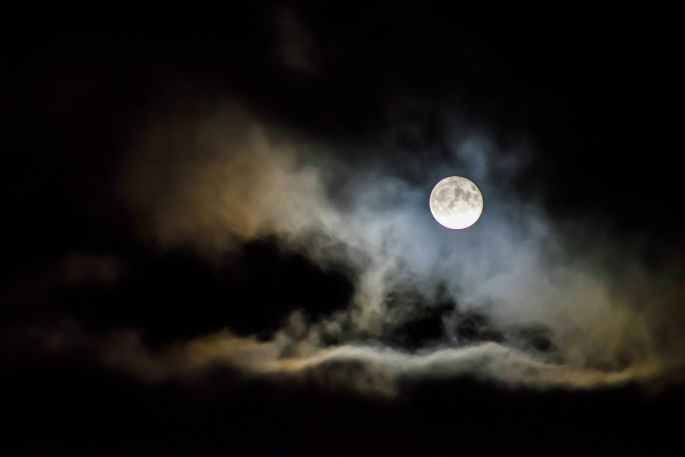
Like the stars in the winter sky, hope is twinkling in the darkened, but distant future.  Starlight may take light years to reach our eyes on Earth, but it does span the distance.  We cannot control the brightness of the stars any more than we control “the little virus that could” in 2020, but we can rest in the knowledge that we can control our reactions, our thoughts, our choices; and, we can let “it” go–let go our desires to influence or have power over things for which we cannot control.  Instead, let us, as the dictionary offers as a secondary definition for hope, “expect with confidence” that we can fearlessly move forward through our current darkness, and brightly focus on what we can do to make each day better for ourselves and others. 

Photo by Lukas on Pexels.com

Psychologists know that simply envisioning, aka hoping for, a better future, can make even the darkest of situations feel more bearable.  In fact, hope serves as a link from our past to our present day situation.  Envisioning returning to our former life habits can make the current negative changes and consequences of life during a pandemic more bearable.

With the coming of the winter solstice, each day grows one minute longer in the amount of light provided. Likewise, our future is growing brighter, bit by little bit. Soon enough, we will emerge into the spring of a new era.  We will forge ahead, creating a more positive future . . . . 

Let us infinitely hope. 

“We must accept finite disappointment, but never lose infinite hope.”— Martin Luther King Jr

Photo by Thirdman on Pexels.com


Beer Bread: A Christmas Tradition

The smell of good bread baking, like the sound of lightly flowing water, is indescribable in its evocation of innocence and delight.” —M.F.K. Fisher

Good bread is the most fundamentally satisfying of all foods; and good bread with fresh butter, the greatest of feasts.”–James Beard

It is a family tradition spanning over three to four decades.  I am not sure if I started baking it in my 20s or 30s, but baking beer bread for Christmas, and other special events, has been, and continues to be, a long-held Hill household custom.  From where the recipe came, I am not certain; however, I suspect I found it in the owner’s manual/recipe guide of the very first bread machine I ever owned.

Not long after John, my husband of over thirty years, and I were married, my grandparents gave us a bread machine as a Christmas gift.  It was an Oster, white in color, and it was highly popular in the late 80s.  In fact, even up until last Christmas (2019), I was still using this same Oster to help me bake bread.  

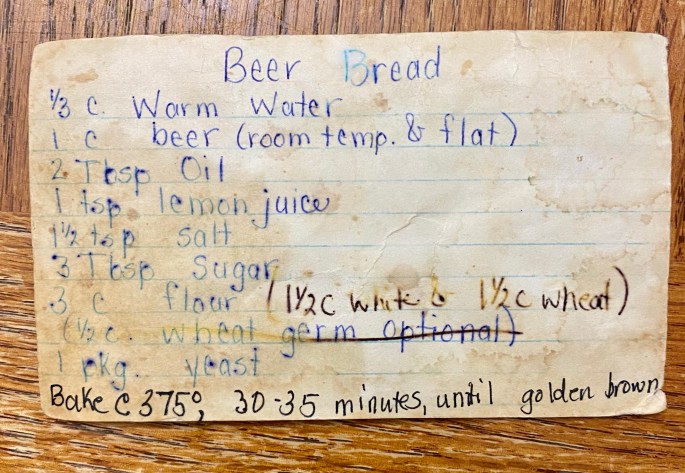
The original recipe card onto which I wrote the recipe is stained, tattered, and torn from decades of use.

This former bread making machine, for which I used to knead and rise bread dough–the loaves were baked in the oven rather than the machine–faithfully helped me bake beer bread every single Christmas after its original receipt.  When my daughter was still school age, I baked loaves for her teachers at Christmas.  Even now, I will still bake extra loaves at Christmas to give away. 

Christmas after Christmas, I go through pounds of flour, yeast, and of course, copious bottles of beer.  Typically, during the two weeks leading up to Christmas, the aroma of freshly baked bread seems to emanate from every pore of our house.  A week or two leading up to Christmas, my kitchen is typically covered with a fine dusting of flour, and a measuring glass filled beer often sits at the back of the counter in order to come to room temperature before mixing the dough.

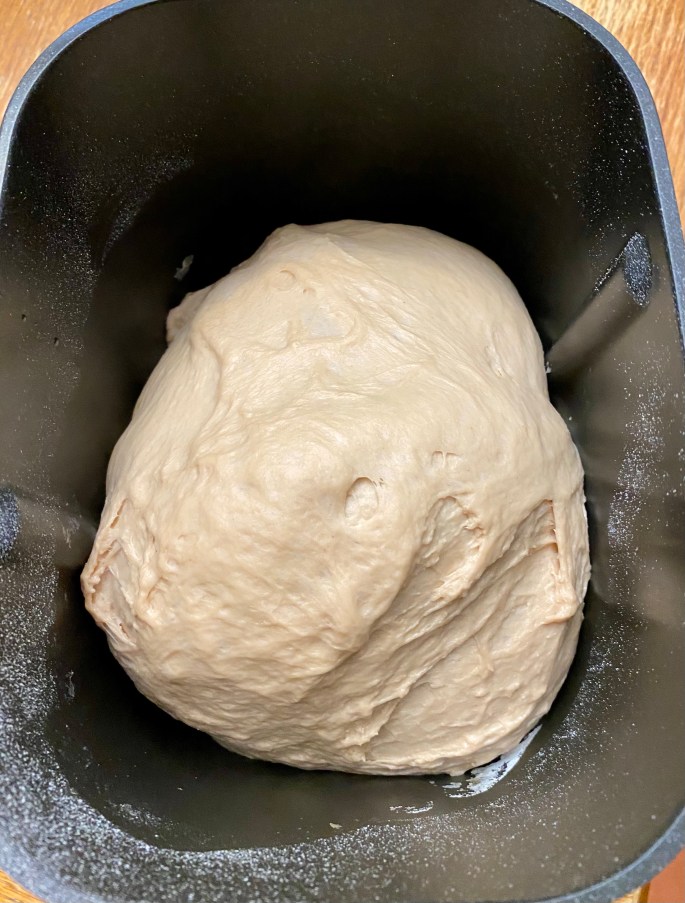
Dough finished rising in the bread machine.

Unfortunately, by last Christmas, this antique machine was bouncing across the counter, vibrating the entire length, in an exerted effort to mix and knead the dough.  After each batch, I would find feathery grains of black metal beneath the machine as if it were sacrificing its own blood in order to continue to help me produce bread.  I knew I “kneaded” to gently close its lid and carry it to its final resting place, but saying goodbye is never easy–especially to one that has faithfully served our family, Christmas after Christmas, and one special event after another.  To add further grief, it was a gift from my grandparents–setting this machine on its final rest cycle would feel as if I was breaking an unspoken contract with them.  (Although we still have the white Toastmaster toaster they gave us as a wedding present in 1989.)

Dough dropped into prepared loaf pan and ready for the oven.

However, by New Years Day of 2020, another day in which I typically make beer bread, it was clear, the little Oster could go on no more.  It was like an appliance doctor had steathfully snuck into the house and gently sent my loyal kitchen companion to its eternal reward. I am certain, if there is an appliance heaven, that good ol’ Oster is walking the streets of homemade bread alongside other trusted tools of the trade.

While I now have a new bread machine, the kitchen doesn’t quite look or sound the same when it is operating. It appears to be the strong, silent type that likes to work without drawing attention to itself.  Black in color, oblong in shape, it is the complete opposite of its predecessor.  While the former appliance, if set to bake dough, formed bread in the shape of a chubby stove pipe chimney; however, the newer machine, were I to actually use the baking function, will bake bread that is fashioned in the traditional shape and length, but is still rather tall. Nonetheless, it does perform the necessary functions of mixing, kneading, and rising the dough–ready to dump into a prepared bread pan and bake in the oven.

The owner’s manual for the sleak, new bread machine.

The recipe that I share can be varied slightly, but certain ingredients must go into the mix in order to bake and taste properly.  To begin, I have used a wide variety of natural sweeteners including sugar (as originally called for), molasses, honey, agave, as well as real maple and date syrups.  If choosing a liquid sweetener, it will influence the color of the crust as well as the dough.  Additionally, I have played with a variety of types of flour, including whole wheat, and I have even added ½ cup of wheat germ, but I have found that using bread flour works best.  Furthermore, I prefer to use jar yeast that is specifically designed for bread machines.

Regarding the beer, I have used both high end beer and bargain beer over the years.  It really doesn’t matter.  However, what I do find is that the darker the beer, the richer the flavor–but only for the most discerning of taste buds.  Most won’t notice the difference between light or dark beer.  Also, if you don’t typically drink beer, you can buy single cans of beer.

Another tip I have learned over the years is to cool and store the loaf in an airtight plastic bag or container before slicing it.  The reason I make this suggestion is because if you slice it while it is still warm, the bread is not firm enough and tends to collapse in on itself.  Additionally, crumbs from the crust go everywhere.  However, if you allow it to properly cool, and then store it for several hours in an airtight container, it will slice nicely for those social media worthy pictures.

Beautiful, freshly baked bread just out of the oven.

As a final tip, it should be noted that you may need to adjust the amounts of each ingredient and/or order in which the ingredients go into your machine, depending upon your machine’s requirements.  This is where the owner’s manual of your own machine comes in handy–to help you tweak and adjust amounts as needed.  (I know my new machine’s manual has several pages of tips for successful baking and recipe adjustments.)  

Furthermore, it should also be noted that I have only used this recipe in a bread machine.  I put the ingredients in the machine in the order recommended by the manufacturer and allow the machine to take care of the mixing, kneading, and rising.  Once through the rising process, I place dough in a prepared loaf pan and bake.  Sadly, this recipe is NOT gluten-free; and therefore, I now choose to not consume it–even at Christmas. It was a recipe I discovered years before I knew I had celiac disease.  Therefore, I bake only for the consumption of loved ones and friends to enjoy.

For those of you with bread machines sitting around waiting to be used, I hope you will enjoy this recipe.  It fills the house with an irresistible, aromatic scent, and tastes wonderful toasted, at room temperature, or slightly warmed.  Use it for breakfast, sandwiches, snacks, or even toast it for homemade croutons.  I hope that this recipe will bring your family as much joy as it has mine over the years.

From my home to yours, I wish you happy, homemade, and heavenly baked goods for the holidays!

Slice it, butter it, slather it with your favorite topping, and enjoy every yeasty bite!

Beer Bread

Ingredients:

⅓ warm water

1 cup beer (room temperature & flat)

2 tablespoons oil

1 teaspoon lemon juice

1 ½ teaspoon salt

3 tablespoons sugar (or other natural sweetener)

3 cups bread flour

1 yeast package or 2 ¼ teaspoons yeast

Directions:

Place all ingredients in the bread machine according to manufacturer directions, making any adjustments needed to amounts as per manufacturer directions.

Set machine for dough setting if baking in oven; otherwise, set for white bread setting.

Once dough is nearly finished with its cycle, preheat oven to 375 degrees if baking in the oven.

If baking in the oven, remove dough from the pan once dough has gone through the entire dough setting cycle, and place dough in lightly greased loaf pan.

Bake for 30-35 minutes or until golden brown on top.

Store in an airtight container or sealed storage bag.

Stays fresh, when properly stored in an airtight container at room temperature, for over a week.

Bake up a new holiday tradition:  beer bread!
Oh, there’s nothing like the aroma of freshly baked bread.

Storyin’

“Life is not a matter of creating a special name for ourselves, but of uncovering the name we have always had.”–Richard Rohr

Some of my favorite events as a child were those extended family events spent around a dinner table.  Depending upon the size of the gathering, we kids might have been interspersed among the grown-ups, or seated at our own table, but regardless of assigned seat, we often listened in on the adults’ conversations.  These beloved grown-ups were commanding narrators, needling out one anecdote after another.  The combining effect of each account felt as if a patchwork quilt of life were being stitched together before our childhood eyes.  Great guffaws of laughter flowed over and around us as each chronicler appeared to compete for the best speil.  As a child, I yearned for that ability . . .

Photo by Karolina Grabowska on Pexels.com

Perhaps it was the change of weather, the mostly cloudy days, filled with damp and chilly temperatures.  Of course, it could also have been the rising daily count of COVID cases.  Then again, it could have been the shifting job roles–depending upon those same numbers. Maybe it was the overwhelming loss of lives in 2020; the unemployment rate affecting many loved ones, friends, and acquaintances; the uncertain national, global, and political landscape; or maybe it is the fact that trying to find soft toilet paper and a safe cleaning products for home is still a never ending battle!  Whatever the cause, this past week, I personally found that sleep was often elusive, and by Thursday and Friday, I was often given to weepiness and felt down right melancholy as my mind slid into “story mode.”  

Depending upon the situation, the “Story of Steph,” if given permission to run out of control, can be quite tragic, valiant, humble, or any variation in between.  This week it was a well-rehearsed, negative narrative that began to echo around in my head. By the week’s end, the volumes of these fables were fully crescendoed.  

The week began with an appetizer of “you’re-not-good-enough,” followed up by a tossed salad of “you never-have-been” and “you never-will-be.” Next came the main-course of “you’re-a-failure,” along with sides of “you’re-never-right, not-smart, not-good, and not-worthy.”  The mental construct of poor-pitiful-me was tantruming into a full frenzy.

Photo by Andrew Beatson on Pexels.com

I suppose as an adult, I should not admit to such mental theatrics.  In fact, I suppose there is risk in sharing these stories.  However, I choose to share, partly in the hope that it will foster my own compassion and understanding of the truth, and partly with the hope that my experience may help others who may also undergo similar stories of the mind.  

Naturally, there are other stories that we all, myself included, prefer to show the world.  Stories regarding our role in our family; our careers; our perceived social, political, and economic status; our relationships, friends, and associations/affiliations; the list could go on.  The point is, the story-of-self is driven by the ego and our desire to survive, and perhaps fit-in (or not fit-in); and, 2020 has certainly made all of us feel threatened, insecure, and uncertain.  Therefore, it is even more critical that we understand that our mental constructs are not necessarily reflective of reality and often not the truth.  This is an especially important tool as we segue from one challenging year to another.

Photo by Anas Hinde on Pexels.com

Don’t laugh at a youth for his affectations; he is only trying on one face after another to find his own.” -Logan Pearsall Smith

Our self-prescribed stories change as we grow and develop depending upon influences, experiences, life-events, family status, career position and so forth.  The role of these stories are not necessarily bad. Roles and expectations of one’s personal role develop even as a baby/toddler.  If I behave this way, then a certain positive or negative thing happens, and we feel (or don’t feel) safe, secure, valued, and loved.  As we grow, and hormones kick in, we begin to try out new roles, new ways of be-ing, from the way we behave, to the ways in which we choose to appear to others, as peers begin to gain influence in our desire to feel secure, safe, and valued.  With each stage, new roles are tried on, and later tossed aside, in an attempt to find the role that brings us the greatest feelings of value, security and/or worth.  As a whole, this is a natural part of human development.

Unfortunately, as humans, we tend to attach too much to roles and to the should-das, would-das, and could-das of life roles and fulfillment.  The stories we tell ourselves often skew and mask reality. Social media adds to the distortion of who we should be, and often sends us to our proverbial closet of stories in an attempt to find the perceived right role, and soon another story is formed in an attempt to gain more self-perceived value.  The more we judge and compare our stories to that of others, the more we create discomfort by reinforcing and habituating judgement and critical patterns of thinking of what we should be do-ing and how we should be be-ing.  The compounding effect of all these stories is that we lose touch with what Fr. Richard Rohr refers to as “the face we had before we were born.”

Photo by Sunsetoned on Pexels.com

I have heard of your paintings too, well enough; God has given you one face, and you make yourselves another.” – William Shakespeare

The concept of, “the face we had before we were born,” is not original to Friar Rohr, but it was his words that reminded me of this notion in a recent reading.  In fact, Rohr likes to remind readers that if God created everything, and people were designed in God’s image, then all of us are stamped with the blueprint of God’s DNA.  Therefore, we are all infinitely and blessedly children of God.  

Unfortunately, this week, I had become so attached to the image of who I should be, how I should be, what I should be do-ing, and how others view me, that I became far removed from my so-called, “original God-given face.” I began to believe my own false-narratives, creating my own pain and suffering.  I suspect that I am not the only one who does this, especially in the year of 2020.  

If we could learn to let go of our false survival based stories, drop the self-limiting beliefs, and quit taking negative events so personally, and allow ourselves to relax, trusting that the Divine is ever-present with us, then we can begin to free ourselves from the need to be reactive, judgmental, self-critical, controlling, combative, or confrontational. Yes, I know this sounds too idealistic, but what if it really is that simple?  

Be kind to others, but always be compassionate to yourself.”–from Traditional Medicinals tea bag

My brother recently reminded me of what our Grandmother Helen would say, who often babysat us, if she thought one of my siblings or me was lying.  Her classic start to this conversation began by stating our name, followed up with her unique query.

Stethie,” (or whomever) “Are you storyin’?  Are you telling me a story?”  

At the time, my brother and I both had a good laugh at this fond remembrance.  It was only after I wrote this reflection, that Grandmother’s phrase once more returned to mind. Not only did it put a smile on my face, but it also gave me even greater insight to my own negative self-talk, and it empowered me with a new phrase to use as a reminder when I have given “stories” permission to hide my “original face.”  

Thank you, Grandmother Helen.  You always had a way of succinctly getting to the point.

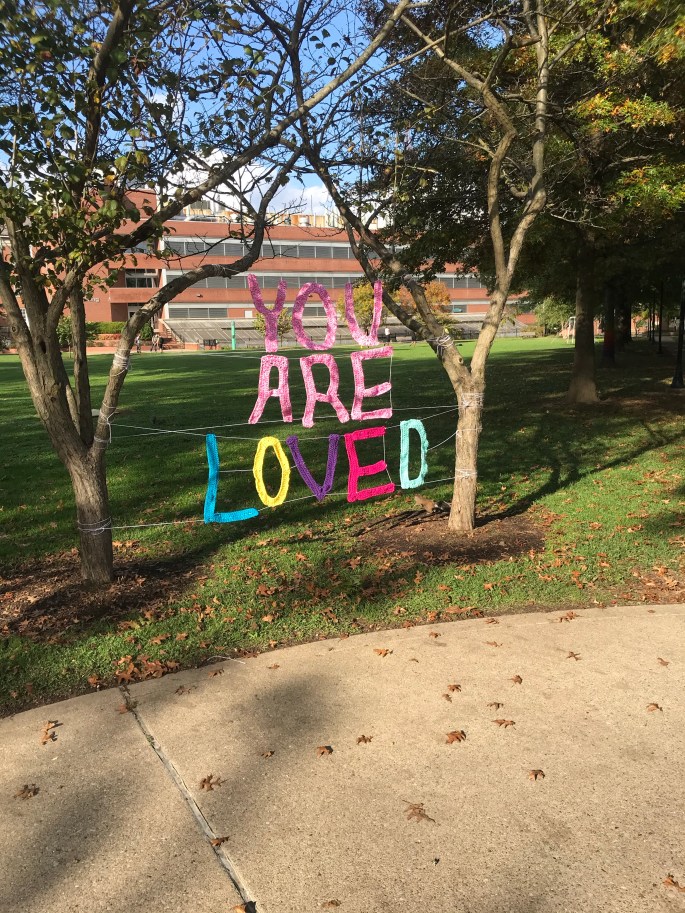
Always worth remembering: You are loved!

Teachers are Heroes with Heart

If you are planning for a year, sow rice; if you are planning for a decade, plant trees; if you are planning for a lifetime, educate people.”– Chinese Proverb

Photo by Christina Morillo on Pexels.com

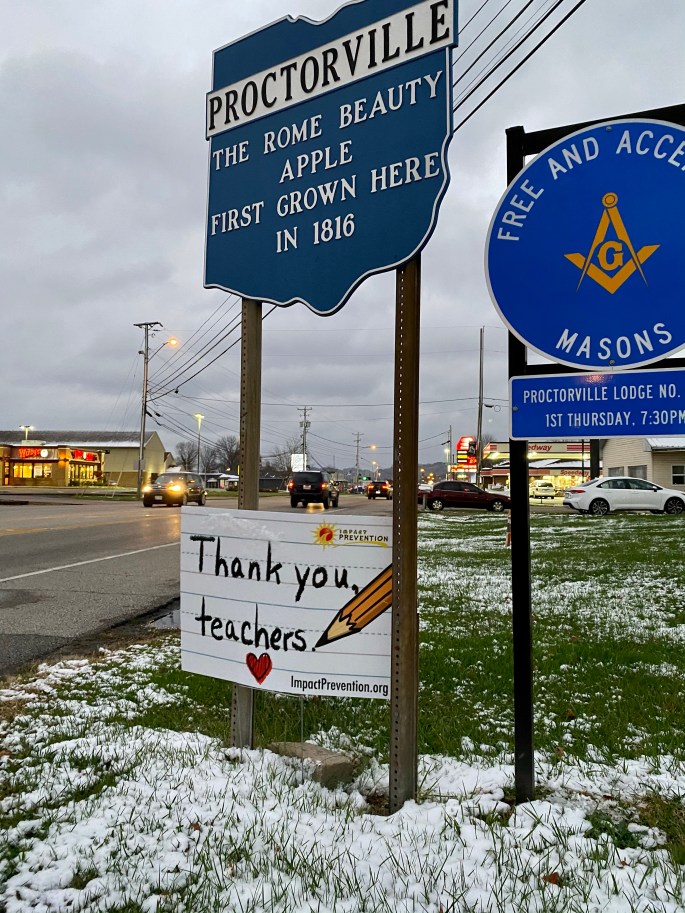
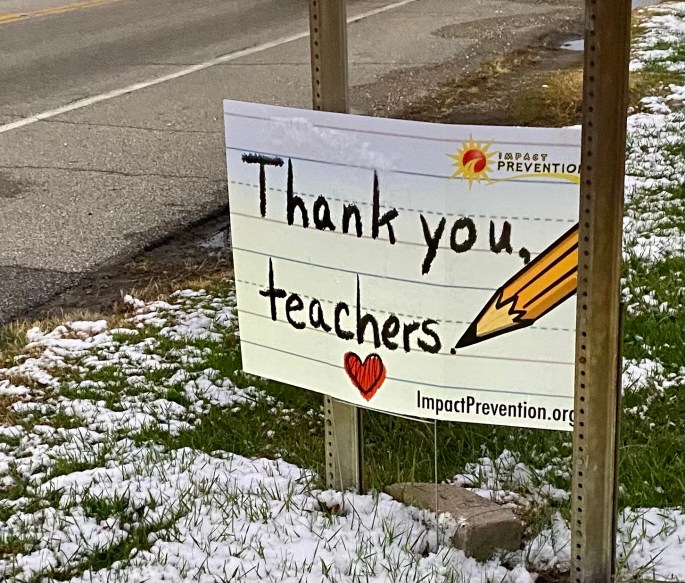
“Thank you, Teachers,” the sign read on the side of the road. 

Wait, what?  I couldn’t help but think.  Really?  It took a global pandemic to inspire appreciation for educators.  Hmm . . . 

I suppose that is how those who work in the medical field and first responders feel.  After all, like educators, those drawn to and working in the healthcare industry, by and large, have always been effective, efficient, and caring individuals. Naturally, praise was given to medical providers from the very beginning of the pandemic–and rightly so!  They were putting their own lives on the line while attempting to quell the flames of a ravaging wildfire sparked by a virus for which there was a dearth of knowledge.  Story after story would reveal the suffering and agony of the front line caregivers and their patients.  My heart, as well as those in my field, ached for those professionals, and we felt grateful for their long suffering service.  And yet, there was one question that continually niggled my mind . . .

Photo by Pixabay on Pexels.com

“Teaching is the one profession that creates all other professions.”– Unknown

Who were the early influencers of these various professionals that make up the health field?  Who taught them to read, write, and think mathematically?  Who helped to shape and foster their curiosity, their work ethic, and their quest for knowledge and understanding?  To be certain, parents are the first, most important, and long-lasting teacher in any child’s life.  Additionally, there are often other relatives that influence and impress a child, but guess who often spends more time with a child day-in and day-out?  Teachers.

It takes a big heart to help shape little minds.”– Unknown

Photo by ATC Comm Photo on Pexels.com

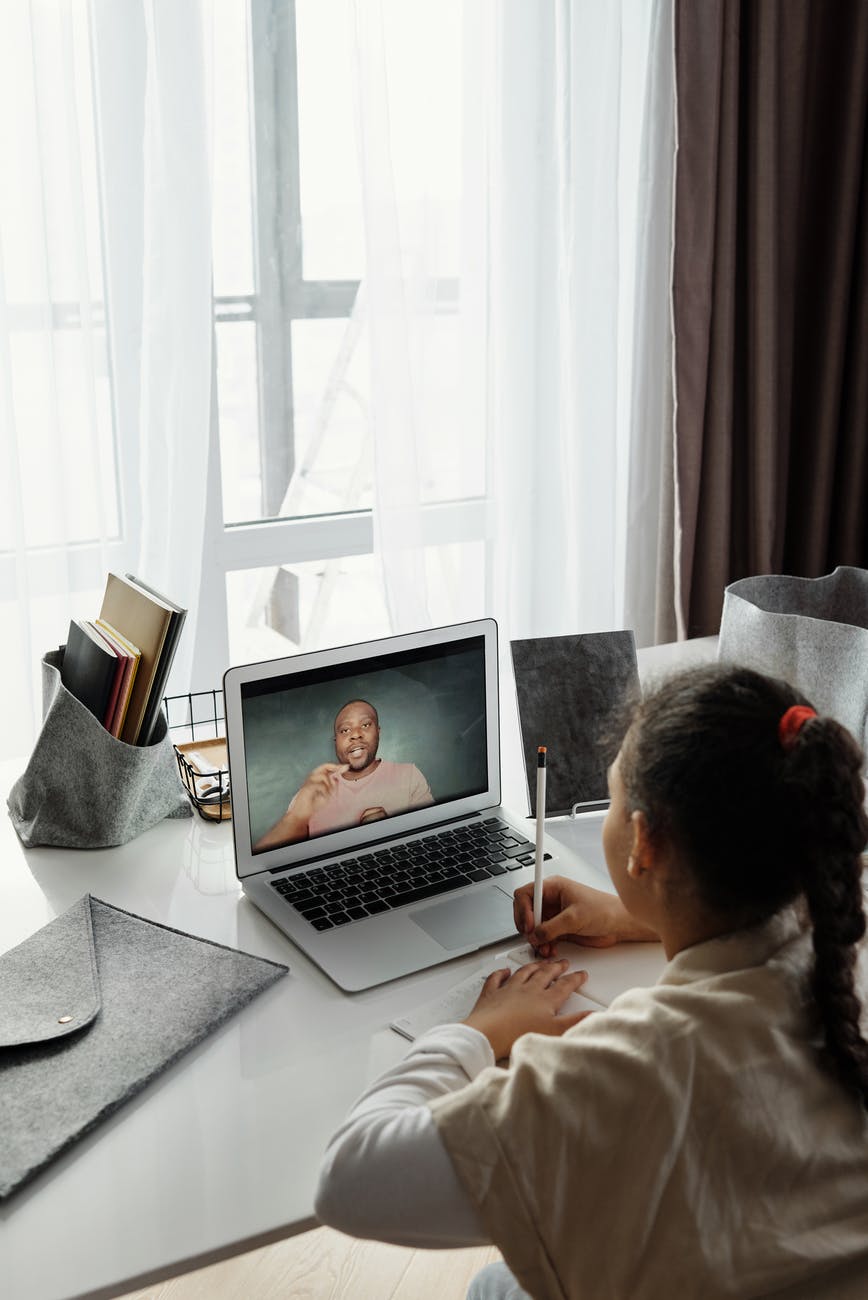
This past March (2020), many teachers across the country, as well as at a local level, were told on a Friday to get their students ready.  Educators directed students to pack up all of their personal belongings, textbooks, notebooks, personal implements, and any other necessary supplies.  Furthermore, on this same fateful day, schools–like the one in which I work–who were fortunate enough to have the resources, also directed teachers to quickly allocate technological resources to students who thought they might need one at home.  Those districts without these assets were rapidly scrambling for funds in order to likewise provide technology for students.

Once students were sent home with their overburdened school bags, teachers were likewise told to quickly gather what they thought they would need to teach from home.  Additionally, teachers were swiftly conferring with one another and administrators as to the types of resources available throughout the school that could be used to make teaching from home work.  Cobbling together this and that, gathering our own bags of wares, like ants marching in a line towards their hill mount, teachers exited the school on that pivotal Friday with the understanding that we were to be up and running as an online educator by Monday. Like a boulder plummeting onto US Rt 52, the dramatic educational paradigm shift had begun.  It was time to put on our proverbial hard hats and head into the construction zone.

Photo by Fernando Arcos on Pexels.com

“Teaching is the greatest act of optimism.”– Colleen Wilcox

News, gossip, and directives swirled around like flaming ash from a distant brush fire.  The heat of how to get virtual school up and running amidst worry about safety, closings, quarantines, supply shortages, deaths, headlines, and the never ending chain of one email after another compounded to the ever-building fear, anxiety, and sense of uncertainty.  One thing was clear, however, teachers would be there for our students and for one another–no virus was going to stop us.

By the time Monday rolled around, teachers had students enrolled in virtual classrooms–our school used Google products, but other platforms abounded in other school districts.  We communicated to students through the virtual classroom and through virtual meetings.  The technology was imperfect and full of glitches and hiccups, but students and teachers forged through each and every challenge thrown our way.  In a way, educators were pupils once more, learning right along with our students, relying on part innovation, part intuition, and a whole lot give and take via virtual forms of communication.

Photo by Pixabay on Pexels.com

The art of teaching is the art of assisting discovery.”– Mark Van Doren

Together, with our colleagues and our students, educators made many new discoveries about technology and pedagogy as well as how to tap into our creativity.  We had meetings with one another in which mutual tears were shed for the loss of “how it used to be,” but more often, the focus and concern was for students’ well-beings and how to best provide for their needs–both educationally and psychologically.  Additionally, there were a multitude of professional development virtual meetings in which we listened intently, scrawled notes, typed our questions in chat boxes, and discussed with one another in virtual breakout rooms.

This is not to say that they weren’t frustrations, nor am I trying to imply it was a perfect, seamless transition of rainbows, butterflies, and magical, mythical unicorns.  It was not.  Students would not show up to class meets or not complete their work.  Administrators asked for a multitude of documented records, such as, individual missing student work, student needs, staff needs, ideas for improvement and future planning–spreadsheet after spreadsheet and list upon list.  Towards the end of April, there were so many lists, spreadsheets, and schedules that it was easy to overlook one or another, and I certainly had my fair share of oversights.  However, I wasn’t the only one, and the compounded effect sometimes led to flared tempers, quiet resentment, or virtual words of implications–albeit, never for long.

Plus, there was the learning curve.  Educators were continually encouraged to be flexible and foster an attitude of expansive and forward thinking.  For those teachers possessing a technologically nimble mindset, this was a Montessori school of experience, full of opportunities to explore, expand, and engage.  For those of us with less technological deftness, it was like being asked to wake up each day and start walking in the opposite direction of fast and furious freeway traffic, leaving our brains often feeling short-circuited as our work day grew longer and longer.  However, regardless of which side of the technology tree one fell, a new phrase emerged from this experience, “COVID taught me this,” and together with our educational peers across the country, we emerged stronger and more resilient.

Photo by August de Richelieu on Pexels.com

Education is the most powerful weapon which you can use to change the world.”– Nelson Mandela

Educators are persistent, tenacious, kindhearted individuals who spend their own money, their own time, and give freely of their own hearts to students each and every day.  We did this before the pandemic, we are continuing this now, and we will likewise do this after the reign of COVID.  Teachers matter, with or without COVID–just as those in the health professions matter.

Recently, I overheard a confident middle school student reporting to a peer that women tend to choose low-value degrees, like teaching.  

“They choose not to make money,” he exclaimed, “because they don’t want to do the hard stuff like be a doctor or lawyer.”

I am not sure where or how he came to this conclusion, and perhaps he will always feel that way about my chosen profession.  Regardless of his sentiment, I, along with my colleagues (and my husband–who also happens to be an educator), will continue to work to educate him along with his peers–no matter what life throws our way, in spite of our so-called, “low value” degrees.  This is because we know the truth, and now it appears, based upon that sign alongside the state route, the word is spreading.  

Cranberry-pumpkin Muffins (Gluten-free and plant-based)

Historically, the health-promoting properties of cranberries have been based on folkloric remedies, which have existed for centuries. The healthy giving properties of this fruit were recognized by Native American Indians, and early New England sailors are said to have eaten the vitamin C-rich wild cranberries to prevent scurvy.”–Massachusetts Cranberries website

Cranberries are one of just three fruits native to the United States.”–The Humble Gardener website

Photo by Irita Antonevica on Pexels.com

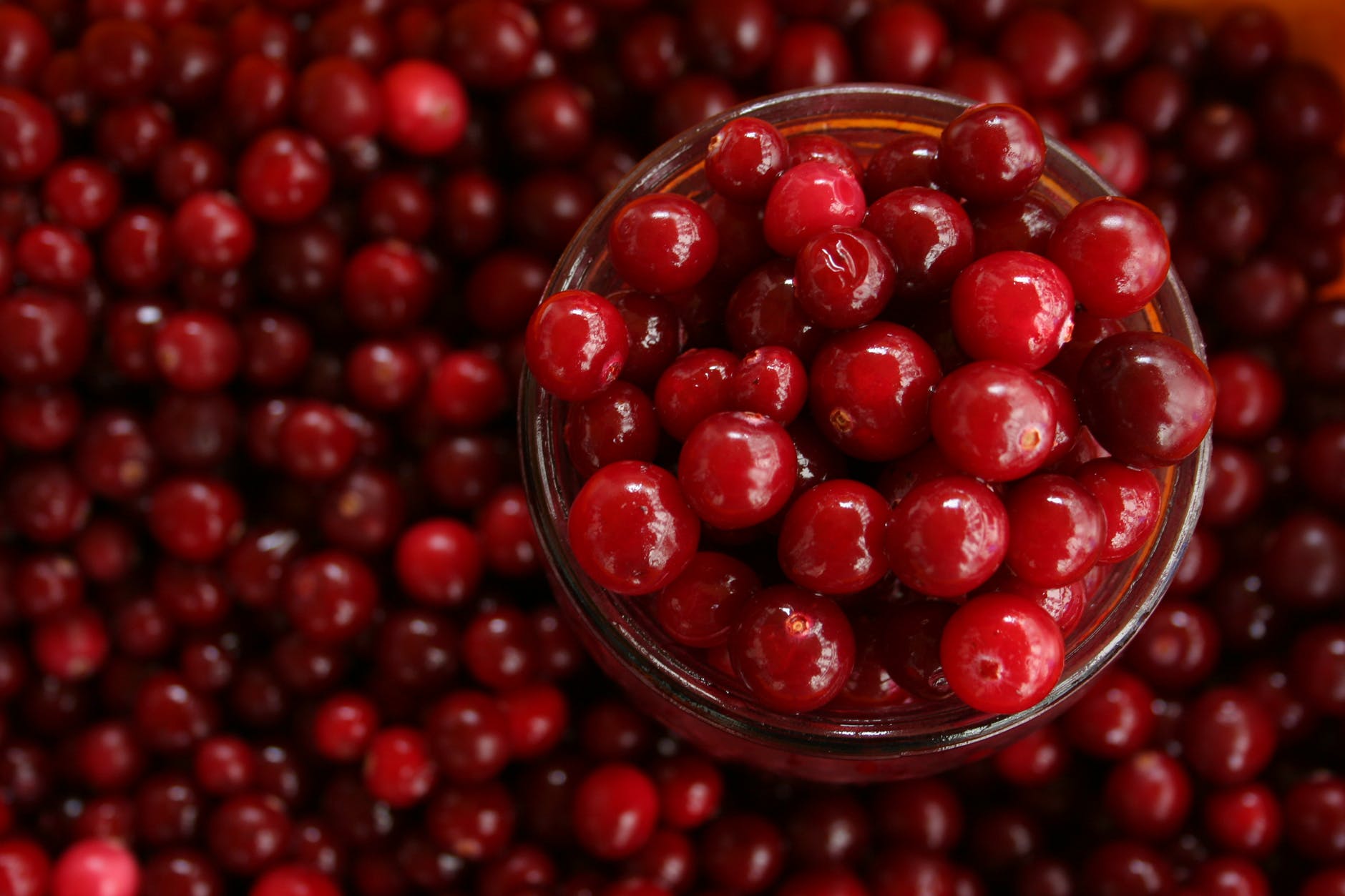
I couldn’t help but notice all of the ongoing fresh cranberry offerings and deals that have been found lately in the local grocery stores; therefore, I purchased a 12 ounce bag for myself.  Those inviting, bright crimson berries have often reminded me of mini Christmas baubles hanging from an evergreen branch.  Curiosity began to get the best of me, and I decided that I needed to learn more about these tiny ruby orbs.  Afterall, a fruit full of that much color had to have some redeeming qualities, and boy-oh-boy do they ever!

One of the first facts I noticed was that numerous medical and nutritional-based websites consider cranberries to be a so-called, “super-food,” due to their overall nutritional benefits.  Part of this designation is due to cranberries’ high levels of anthocyanins, a powerful antioxidant, that give cranberries their bright red color. (I knew that bright red color was important!) In addition to being consumed in its various forms as part of the treatment for and prevention of  UTIs, research has also linked cranberries to improving the function of the immune system as well as decreasing blood pressure. Additionally, there are several promising studies indicating cranberries may be helpful in slowing down the growth of cancer cells, particularly in certain types of tumorous growths.

Stir in fresh cranberries to your favorite fruit salad.

Several websites describe cranberries’ high levels of polyphenols may play a role in reducing the risk of cardiovascular disease.  Studies have also found that consuming cranberries, as part of a whole-foods healthy diet, regularly promotes the health of gums and teeth.  Cranberries are also believed to decrease inflammation associated with both chronic disease and aging, and these tiny powerhouse fruits offer numerous benefits to one’s gut health and microbiota. Additionally, the naturally low-sugar, high fiber berries possess anti-inflammatory properties.  Plus, like other berries, cranberries are high antioxidants, vitamin C, and vitamin K.

Cranberries are typically in season and widely available throughout the fall and into the early winter months.  They can be stored in a refrigerator for up to two months, and frozen for several more months for later consumption.  When choosing fresh cranberries, look for smooth skin that is firm to the touch and unwrinkled.  

Fresh, ripe cranberries have smooth, unwrinkled skin, and are said to bounce like a basketball.

Of course, cranberries are typically part of a traditional Thanksgiving meal, however, they are quite a versatile food that can be used in a wide array of recipes.  Add them to oatmeal, yogurt, fruit salads, and even dark, leafy green salads.  Cook them down into a sauce on the stove with some maple syrup, honey, or sugar, add a bit of cinnamon, and perhaps the zest or juice of an orange or a drop of orange extract.  Use this sauce as a condiment for toast, sandwiches, oatmeal, yogurt parfaits, or even in muffins.  Stir in fresh, or dried, cranberries into muffins, cakes, breads, and even cookie recipes.  The ways in which to use cranberries are only as endless as your imagination. 

Below is a recipe I created based upon one I found in an old Betty Crocker cookbook.  Betty Crocker cookbooks have been a mainstay for the members of my family, a tradition handed down to me and my siblings from both my mother and grandmother as Betty Crocker recipes are fairly easy to follow/create and typically use simple ingredients.  This recipe I adjusted to make it both gluten free and plant-based.  I added a few extras to it in order to, as my Grandmother Helen used to say, “doctor it up.”

Gently fold in cranberries into the batter, careful not to overstir the batter so that the muffins do not turn out “tough.”

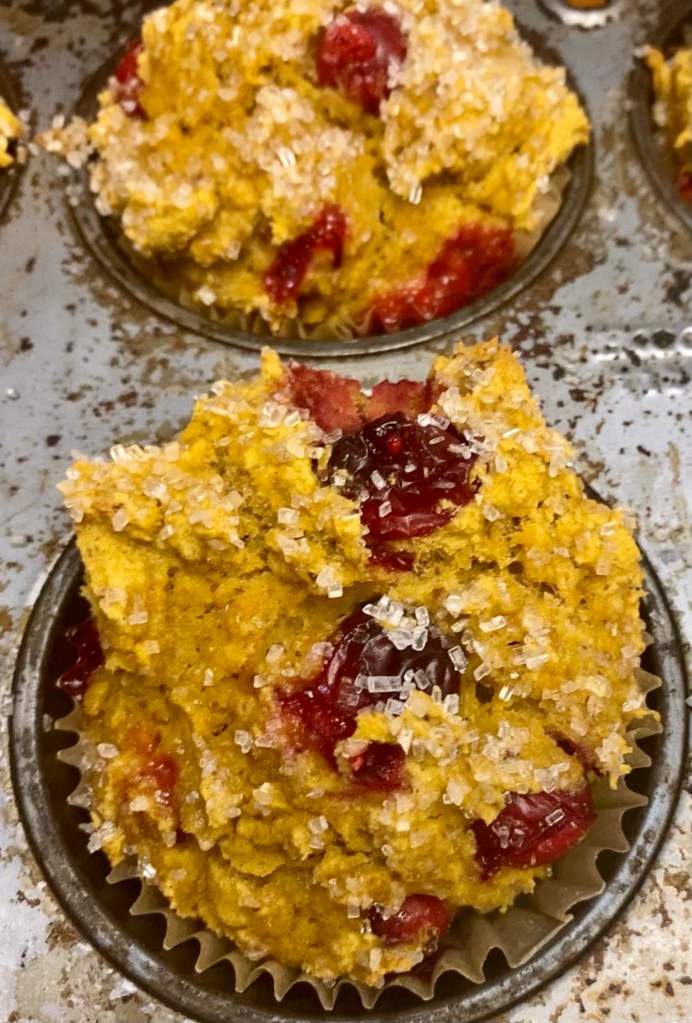
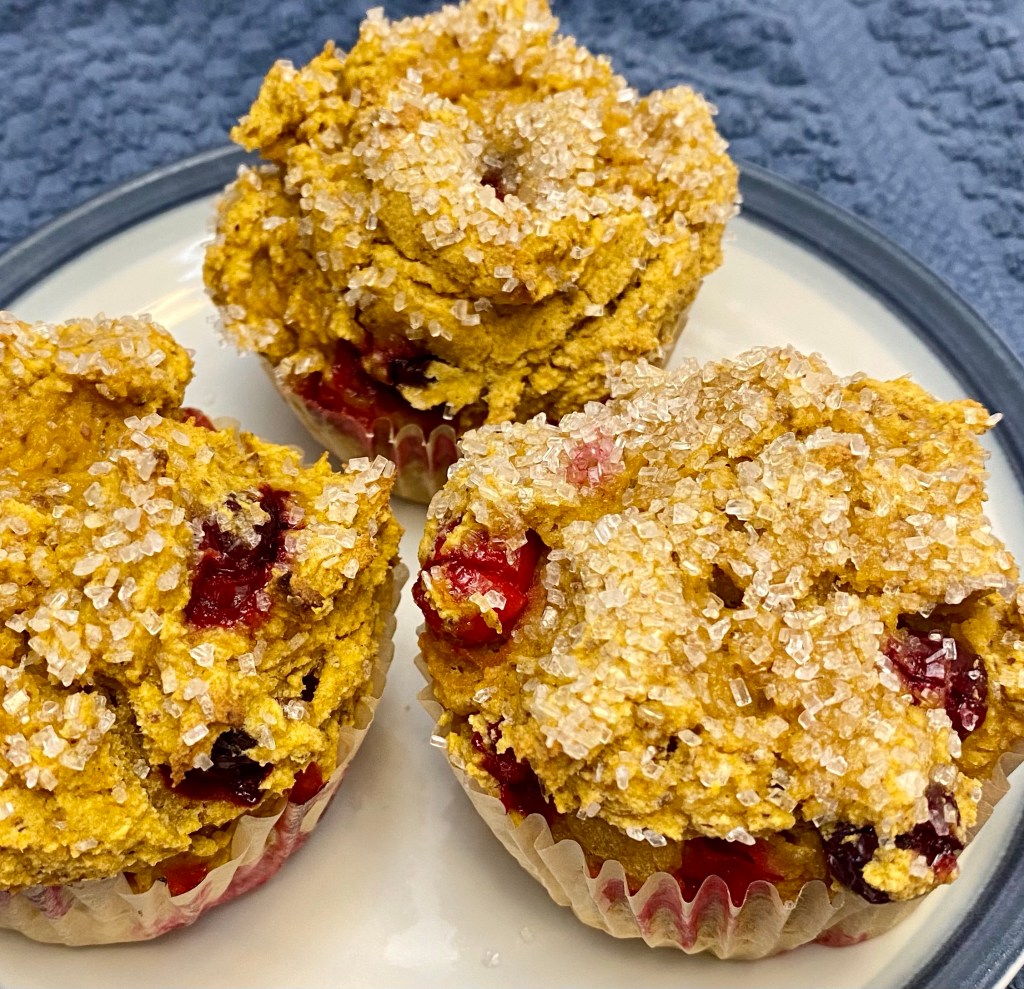
Both my daughter and husband tried these plump muffins of goodness, despite the fact that they do not, per se, like cranberries.  To their surprise, they both really liked this recipe.  It is moist, but springy–like a good muffin should be.  The sparkling sugar adds a thin crusting effect to the muffin tops.  Plus, a large portion of the berries burst open into the batter during the baking process creating a just the right amount of tang and sweet.  Enjoy these muffins slightly cooled, but still warm, from the oven or warmed over in the microwave.  Share the goodness of these muffins, chock full of healthful benefits, with someone you love, and be sure to store the uneaten muffins in an airtight container or bag in the fridge or freeze them for quick morning or a snack time reheat on the run.

From my home to yours, I wish you homemade, happy, and healthy meals.

Use an ice cream scoop to help divide the batter evenly among 12 muffin cups.
White sparkling sugar, sprinkled on top, creates a nice crust to muffin tops.
Cool muffins on a wire rack.

Pumpkin Cranberry Muffins

Ingredients:

2 cups (I use a gluten-free variation.)

¾ cup sugar (Can use a sugar substitute, such as Swerve.) 

3 teaspoon baking powder

1 teaspoon cinnamon

½ teaspoon ginger

¼ teaspoon salt

1 can (15 ounce) of pure pumpkin

½ teaspoon orange extract 

½ cup apple sauce (Can substitute ½ cup oil if preferred.)

2 eggs or “flegg” equivalent (2 tablespoons ground flax seed + 5 tablespoons water, allow to sit in the fridge for 5-10 minutes.)

2 cups cranberries

½ chopped pecans or walnuts, optional

White sparkling sugar (If you do not have this on-hand, simply use regular sugar.)

Directions:

**Note: if using egg replacement, “flegg,” please make first and set aside in refrigerator until ready to use.

Preheat oven to 375 degrees

Line muffin tins with parchment paper or lightly grease.

In a large bowl, mix together flour, sugar, baking powder, cinnamon, ginger, and salt. Stir in pumpkin, orange extract, apple sauce, and eggs. Until just mixed–careful not to over mix.  Gently fold in cranberries and nuts if using. 

Using an ice cream scoop or spoon, divide batter evenly among muffin cups and sprinkle with sugar.  Before sprinkling with sugar, you can also top with a few cranberries, a bit of pumpkin seeds, or a bit of oats.

Bake for 25-30 minutes or until a toothpick inserted comes out clean.  Allow muffins to cool on a rack.  Serve warm. 

Makes 12 muffins that can be stored in the refrigerator for up to six days or frozen for up to 3 months.

Serve slightly cooled, but still warm from the oven.

Have Faith Like an Artist

“Now faith is the assurance of things hoped for, the conviction of things not seen.”–Hebrew 11:1

“Art begins with resistance – at the point where resistance is overcome. No human masterpiece has ever been created without great labor.”–Andre Gide

Photo by Markus Spiske on Pexels.com

After two years of studying the black and white hard facts of science at the university level where she was doing quite well, my daughter, Madelyn, switched gears and decided to study art at a different university.  Nearly one and a half years later, she is thriving with the challenge of the creative process.  At this point in her art journey, she has worked with clay, ceramics, water colors, photography, printmaking, fabrics, charcoal, pen/ink, and several other mediums. I can’t help but feel a sense of wonder, as I watch her transform seemingly nondescript materials into works of art, at the level of her faith throughout each the process.  

It is her example of faith in action that got me thinking about my own faith and the faith of the world around me.  Personally, I catch myself repeatedly clasping and grasping for the way-it-should-be, the if-only-things-were-like-this, and the when-it’s-normal-again, rather than, like my daughter, trusting the process and allowing Divine Providence to work through her.  Instead, I keep resisting change and focusing on the down-side of 2020: negative attitudes possessed by so-called “others,” negative outcomes, negative requirements, negative situations, and on-and-on the list can go.  And, guess what, 2021 is just around the corner, and from the looks of things, the new year will continue with much of the same so-called obstacles of 2020.

This beautiful watercolor painting study of leaves took much effort, adaptation, and was an opportunity to learn a new skill that Maddie may not have otherwise learned.

When Madelyn first started in the art program, I witnessed her very real resistance to the process. Gone were the structures, rules, and methods of the scientific process on which she had relied for years. Instead, she was now being asked to create, out of a wide variety of materials, unique creations that adhere to the rules demanded by each requisite medium, course, and/or instructor(s).  While at the same time,  she is likewise expected to “break the rules” in order to avoid creating pieces that are commonplace, cliched, or conventional .

During these early months of her transition, Madelyn would make statements such as, “I don’t like ______;” “I don’t know how I’m supposed to create _______ with ________;”  “I don’t know why I have to ________;” and so on. The first few times this happened, I began to wonder if the field of art was the correct call on her part.  She seemed so opposed to the various requirements and loosely formed experimentations/expectations.  Nonetheless, by the end of each of those early projects and classes, she exited the other side having mastered a new skill and with tangible evidence as seen in each of the pieces.  

It is because of Madelyn’s example that I now understand that resistance is part of the process of faith. It is through the act of resistance, as counterintuitive as it may seem, that her faith is ignited.  Then, as she wrestles with each new style, material, and/or expectation, the embers of her creativity are fed, allowing the heat of the process to lead her through to the other side.  Thus, by acting in faith, Madelyn is able to push through the growing pains of each project and is ultimately able to create something new.

Like Madelyn’s initial struggles with art, I too have been rather contrary with the changes around me.  I have felt the opposition to things-not being-the way-they-used-to-be.   Like an indulged child, my mind has thrown numerous tantrums and protestations. I have mentally muttered countless grumblings and asked numerous questions as to why and how I am supposed to do ______.  Nevertheless, I am now realizing that it is this very resistance that continues to spark, not only me, but all of humanity into adapting, evolving, and creating a new way of living, being, and interacting with one another.  

Faith, I am learning, isn’t blind acceptance that encourages the wave of our Maker’s hand, and, boom, we get our heart’s desires.  Faith is work; it is a labor of love, devotion, AND effort.  It is having the ability to believe in the unseen/unformed and to see that there is something new and original that can be formed through the very real friction of the struggle. Step-by-step, through set-backs, changes, and adaptation, faith is fortified.  Through perseverance, sweat, and belief, the faith process continues to grow and burgeon.  Embracing belief throughout the struggle, The One greater than us is inspiring change and challenging us with new situations and demands in order to foster growth in the same matter as Maddie’s art teachers force exploration of new materials and tools in order to push her capacity for creativity as well as her skill level.

When Madelyn starts a new art project, she typically starts with an idea.  However, I have noticed that she cannot cling to one way strict vision of the concept.  Sometimes, certain materials aren’t available.  Other times, what she originally envisioned would work, does not work in the way in which it was initially conceived, plans get altered, materials and tools are changed, outcomes or time-lines change, and sometimes even temperature fluctuations alter her outcomes/production.  It seems as if there are hundreds of tiny little changes and adaptations that contribute and influence her endeavors as well as the final product.  However, in the end, through the humility of her strivings, a new product is created, and a new skill set has evolved.

That, to me, is 2020.  The canvas that we had at the beginning of 2020 was blank.  Individual and collective visions for the final outcome of the year varied, but we all relied upon a certain amount of consistently available materials, timelines, and predictable outcomes.  Then like the multitude of art projects I’ve observed Madelyn begin, things began to go off-plan. We have been asked to follow some of the same rules, but not all rules, use this material, but not that material; likewise, we are asked to improvise as needed, and, in-the-end, we are now developing a new way of living, being, and interacting. 

Therefore, like an artist, we must overcome our own resistance.  We must continue to work through the process, adapting and improvising when needed.  The end product may continue to evolve and change, but through our collective endeavors, energies, and faith in the unseen, we must trust that Divine Providence is inspiring us to create a new work of life-art. We are but tools in The Creator’s hands.  Have faith.

A reminder for all of us from Maddie.

Enjoy the Golden Present Moment, but Don’t Attach

“Life is short, and time is swift; Roses fade, and shadows shift.”–Ebenezer Elliott

It’s all just a carnival.”–Sri Swami Satchidananda

Photo by Brett Sayles on Pexels.com

I can remember as a preteen, our family made its first week-long vacation with all three of my siblings and me to Wrightsville Beach, NC.  We stayed in an old family-owned Inn just a short walk to the shoreline and pier as best I can recall.  The owner, it seemed to me at the time, was an older lady who enjoyed getting to know her guests and gathering them each afternoon/evening for some sort of simple family-centered event, such as sharing freshly cut watermelon or offering an ice cream social hour.

Honestly, I do not remember many details about this trip, but I do recall making friends with another family who stayed in the same inn.  With my parents permission, I accompanied this family to a local roller skating rink.  At the time, I loved to roller skate.  It was an older sibling in the family that drove all of us in a red-orange sports car, with the windows down, and with  rock music blaring–the likes of which I had never before heard.  Once at the roller rink, the same type of music continued, bright lights of colors were flashing, and a disco ball spun and sparkled in the center of the rink.  At the time, I felt so grown up.  I was certain that I was nearly touching adulthood as I skated around blissfully, ignorant of my very real youth.

Photo by Laura Stanley on Pexels.com

In a similar vein, I can remember on another family vacation a few years later.  This time we stayed on Outer Banks of NC, which was completely different from Wrightsville Beach because we were not near typical vacation attractions.  The beach, at the Outer Banks, was the center attraction, which was fine by my family and me. My family stayed in a house that was “fourth row” back from the beach.  While we could see a bit of the beach from the deck of the house, we still had about a 5-10 minute walk to the beach.

On this trip, my siblings and I made friends with another family. Their names were the Kirtleys, (I hope I am spelling their name correctly.) and they had three kids–two boys and one girl, if I am remembering correctly.  Their family had an ocean front vacation home with a line of glass windows that ran from bottom to top with a spiral staircase visible through the panes.  It seemed so spectacular in my teenage mind.

Photo by Pixabay on Pexels.com

Once, their family invited our family over for drinks and appetizers.  While my parents did not drink much in the way of alcohol, they still accepted their invitation.  I can recall walking the length of the spiral staircase with one of the Kirtley kids and looking out at the ocean from the top of the stairs that opened up into a large main floor with abundant and unspoiled views of the ocean.  I was certain that it was one of the finest things I had ever climbed and the ocean seemed so close and vivid–like I could hear the water breathing.

These trips were like visiting a carnival or amusement park, highly anticipated events that seemed the most important thing in the world, but like the numerous sand castles I have built over the years, the tide, like time, drew up, and washed the moment away.  How many moments of life are like that?  Graduating from high school, winning some sort of special event or game, attaining a job, planning and taking part in a special ceremony, and even the simple act of going to dinner with a loved one.  The people, the moment, the time, the event . . . so special, so sacred, so anticipated . . . Then, like the snap of your fingers, time’s tide rolls in, and it is over.  Just as the ocean shore in July is smooth and pristine in the dawn of the morning with no evidence of the previous day’s beach goers, so too is the present moment.

Photo by Kevin Menajang on Pexels.com

The present moment is so golden, and yet it is so overlooked.  Magical memories are being made, and we don’t realize it.  People come and go in our lives.  Events occur and pass.  One moment, you’re on the Big Dipper roller coaster in Camden Park with a friend surrounded by strangers, and then you, your friend, the other riders, as well as the amusement park’s employees move on. 

For a time period, a child is small and dependent, but soon becomes an adolescent with thoughts of independence.  For a season, you encounter the same person at the grocery store, week in and week out, then that employee is seen no more.  You work with a person for years, but eventually, the workplace changes.  One day you’ve earned your way to the top of the work heap, the next you are no longer there.  Attaching to titles, money, things, and even moments are all temporary.  We leave this earth the way we entered it: naked and with no belongings.

Photo by Martinus on Pexels.com

What remains in between is each present moment while it lasts. The kindnesses of gentle words, the acts of warmhearted acts of compassion, the peacefulness of the calm, the resonance of laughter and joy, and the humble tears streaming quietly down the cheek.  From the cantaloupe-colored sunrise, to the gleaming midday sun dancing through amber autumn leaves; from the purples and indigoes of sunset over the Ohio River to blinking of faraway stars and planets against an inky sky, and all other moments in between, the present moment is humbly, but fleetingly, waiting for us.  It is right there, in our sight, but cannot be grasped or attained–only lived in for that one moment–then, like the footprints in the shore line sand, it is washed away.

What also remains is the earth, the sea, and the heavens above. People come and go in our lives. Words and actions can build or destroy the present moment.  Let us all use our golden present moments to find the common ground, share kindnesses, so that one day we may walk the ultimate spiral staircase to a higher ground.

“Earth sky sea and rain  . . . 

Words that build or destroy . . .

I’d like to be around

In a spiral staircase

To the higher ground . . .” –excerpt from “Promenade” as performed by U2, written by Clayton, Evans, Mullen, & Hewson

Job: Pain is temporary, suffering is optional

“Therefore I will not keep silent; I will speak out in the anguish of my spirit, I will complain in the bitterness of my soul.”–Job 7:11

“Do your daily work, deal with everyone, move with everybody.  Be in the ocean, but learn to surf well.”–Sri Swami Satchidananda

Photo by Guy Kawasaki on Pexels.com

I had not read, or really, even thought much about the story of Job from the Bible in quite a while. Therefore, when I encountered it recently in a reading, I was reminded of my childhood days of flannel board Sunday School stories.  The large board covered with blue flannel cloth standing on a wooden tri-fold easel was used to temporarily, and seemingly, magically, attach characters, and other figures, from the Bible to help students visualize the lesson of the day.

My Aunt Janet was one of a handful of Sunday School teachers I had during my first 12 years of life, and I can still semi-remember our upstairs classroom in which she shared Bible stories with other children and me.  For some reason, as I reread parts of the story of Job, it was her flannel board lesson that filtered into my mind like the autumn fog slipping into the dark hours of morning only to fade with the light of sun.  That Sunday School memory slithered and slipped around the edges of my recollections, but no matter how hard I tried to fully summon it up, all that I could grasp was the memory of the flannel image of Job, covered with sores, on his knees, looking skyward in great anguish.  Still, that was more than I had had before reading this story.

Image is from my grandmother’s family Bible. She had a bookmark at this book and the book of Isaiah.

It was because of this memory that I began to read more from the book of Job.  Now, I do not want to lead anyone astray into thinking that I read the entire book of Job, I did not.  Nor do I want to imply that I am by any means a Bible expert, I am not. Nonetheless, as I started reading these passages, I began to see themes and parallels to present day life were held within this old book.  In fact, I found quite a few points of interest.  

Additionally, on the very same day, I encountered another story that I had previously read, but I had forgotten.  I was bowled over by the way in which it connected to the story of Job.  In this story, the writer suggests that while it is one thing to find peace by developing and fostering the habit of daily prayer and meditation, it is a completely different skill to maintain one’s inner peace when injured/sick, overwhelmed, or when feeling insulted by the actions or words of another. 

Photo by Ian Panelo on Pexels.com

Reflecting on the two stories, I realized both stories are of particular relevance in our current climate.  In fact, with each story, I was confronted by powerful truths.  One of the themes of Job, is that regardless of his suffering, he remained faithful to God. At the height of Job’s suffering and loss, he basically stated that if he was to accept the good things in life that God had given him, should he not accept the troubles from God as well?   Whereas, in the other story, the author essentially teaches the importance of living in the world, allowing for both the ups and downs of life, while maintaining a sense of equanimity.  Neither are easy truths. 

2020 though has certainly challenged me to learn to adjust, adapt, and accommodate all of the drastic waves of change it has brought.  From learning to stay at home for long periods of time, to teaching remotely from home; from adapting to a new normal of living and working at home, to returning to my work place in order to simultaneously teach students virtually and in-person; from thinking the discord and dissension would be temporary, to bearing witness to ever-increasing and supposedly acceptable levels of vitriol that seems to have to end in site; from viewing COVID as an illness that doesn’t affect me, to observing its lingering effects on my own mother; and from seeing others suffer with illnesses unrelated to the current pandemic, to observing and experiencing ever increasing levels of anxiety within myself and so many of my co-workers, family and friends; it all leaves me to ask, how much more injury and insult must we all accommodate, adjust, and adapt to?  

Image is from my grandmother’s family Bible.

As I read through the early chapters of Job, I did something I normally never do, I skipped over a large portion of the story, and went straight to the last chapter to see how the narrative concluded. Job’s story ended with the universal theme that good will ultimately triumph over evil, but it did not occur without some ranting and complaining by Job, it appears.  In fact, in the last chapter one can read Job admitting he was wrong and offering a humble apology to God. That is when it hit me.  The even bigger lesson of Job is that in life there will be pain, there will be suffering, there will be discord and illness, but it is our individual response that determines our level of personal suffering.  

 Job could not control events of his life any more than I can, or you can, for that matter.  Like Job, I am quick to grumble and protest things that I cannot understand.  It is easy to complain and demand answers.  It is far more challenging to choose to remain calm and ride the waves of uncertainty when life’s waters get choppy.  

I cannot pretend that I have lived a faultness life like Job any more than I can pretend to have his level of faith.  All I can humbly do is apply the lesson of his story by becoming more aware of my own petty, reactive complaints, learn to better surf the waves by adapting and accommodating to all of the changes, rather than resisting, and take heart from the words of Job towards the end of the story, “ . . . Surely I spoke of things I did not understand, things too wonderful for me to know.”  Job 42: 3  Lastly, I must put my faith that these current life-pains that we are all experiencing, like the waves of any storm, are only temporary.  Calmer waters are coming soon.

Photo by Kevin Menajang on Pexels.com
Image is from my grandmother’s family Bible.

Let’s Walk in Another’s Shoes

“Walk a little in my shoes; see what I see, hear what I hear, feel what I feel, then maybe you will understand why I am the way I am.”–Jerose

“If God sends us on strong paths, we are provided strong shoes.”–Corrie ten Boom

Photo by Artem Saranin on Pexels.com

Two emails found at the end of a full Saturday.  A day in which I tried to balance the needs of others and the mundane chores of life we all face.  The fading sunlight kissed the western sky with a melon-colored glow that felt warm on my neck as I completed the last little task for a dear one.  By the time I made it home, the dust remained in writable levels on all of my furniture, but I had managed to somehow be of small service to loved ones. After a quick shower, I started dinner.  It was already full-on dark, but I felt a good-kind of tiredness swathe me like a robe.  

In the kitchen, I scurried about like a mouse being chased by a cat throwing together a gluten-free pizza for myself, and salads for John, my husband, and me.  Our daughter was with friends for the evening, and John had already purchased a pizza for himself as he doesn’t require a gluten-free option.  Pouring myself a glass of golden wine, I sipped slowly as I relaxed in the rhythm and routine of the kitchen, my life-long source of comfort and creativity.   John would be back home soon, so could we eat, share conversation, and watch a bit of college football.  

An hour or so after dinner, John walked over to a neighbor’s house to visit with a couple of buddies.  I remained home, relaxing in the quiet.  What made me decide to do it, I don’t know, but I picked up my phone and began scrolling through emails.  I immediately began deleting all the junk and buy-me emails that so many companies send once they get your email address, and was about to close the app . . .

Photo by Torsten Dettlaff on Pexels.com

Wait, what? Who is this person?  Is this spam?  Hmmm . . .  Should I even click it open?  It seems real enough though.  Huh?  Oh my goodness!  Wow!

My heart began to race and pound as if I were running from a knife-wielding maniac in one of those B-level slasher movies. Instead, however, I was mentally attempting to run away from the words of an email sent by a person with a name that I did not recognize, but this person sure did seem to think he or she knew me.  While there was nothing life-threatening in the email, the unknown sender certainly meant for his or her words to cut, and I was definitely feeling the intended slashes.

Instead of closing the email app, I clicked over to my work email.  WHY????  Scrolling through, I began to make mental notes of things to complete tomorrow afternoon and delete spam.  That was when I ran across yet another negative note from a different person.  Why did I open my email?  Why didn’t I just leave the phone alone and focus solely on the book I had planned on reading or continue watching the football game?  Why did I pick up that blasted phone?

Immediately, I was reminded of a documentary that both a friend and my dad had recommended entitled, The Social Dilemma.  John and I had watched most of it.  While some of the acting and storyline felt a tad over-dramaticized, the gist of the documentary was not lost on us.  The internet, computers, and smartphones were all created, originally, to be used as tools–streamlining information, improving efficiency, easing communication, and so forth.  However, as competition and the market grew, the tech companies began to figure out ways to create consumer-driven platforms designed to be addictive, track behavior, and target ads/influence.   By picking up my phone without thinking and mindlessly scrolling through email, I had fallen prey to the attraction of the screen as this documentary pointed out. 

Ugh, I had allowed my phone to control me. There was positively no need to pick up the phone in order to relax.  Now, I was far from a relaxed mental state!  So, what did I do?  What any normal person would do, of course, reread both emails again!  After a second reading, the words of the emails still struck the same negative chord, and I thankfully decided it was time to put away the phone and focus my attention elsewhere.  

Photo by Pixabay on Pexels.com

In the wake of those two emails, I fell asleep that night pondering why people make assumptions, especially negative assumptions, about others?  Which then begged the question, why do I?  After all, I can’t be self-righteous and not include my own behavior.  As with so many big picture questions, I had to offer it up to Divine Providence and keep my heart and mind open to answer.  It came later in the form of a novel for youth. 

As I was reading a book my 6th grade students are currently reading, an elderly male character offers a long stick to a character who is a boy with severe anger issues.  The elder asks the boy to break off the left side of the stick, and the boy does this.  The man responds that the left side is still there, and he asks the boy to break it off.  

This is again repeated until the exasperated youth finally says, “This is stupid.  There will always be a left side.”  

The older man retorts, “There will always be a left and right side to life.”  The gentleman went on to explain that the young man will always have his anger and something for which to be angry, but likewise there will always be something for which to be happy or thankful.  The choice was his, focus on the left side or the right of the stick–the choice was his every day and every moment.

Photo by Pixabay on Pexels.com

Clearly, the writers of those letters were angry.  Both had made assumptions and implications about my life or my behavior that were viewed through their own personal lens without spending a day, much less a week, walking in my shoes.  Additionally, I had initially done the same thing–passing judgement on the senders of those emails.  

However, in the light of a new day, I chose to focus on the right side of the stick.  The first email, I decided not to answer because there was no sense in trying to defend my life and choices in a singular email to a person who doesn’t know me, much less live my life.  If the person needs to have someone with which to focus his or her anger, I can be that left side of the stick for this unknown reader.   I did, however, take time to respond thoughtfully and truthfully to the second, work-related email as I thought it was merely a misunderstanding. 

Bottom line, I don’t live in the shoes of the senders of the email.  I don’t know what life experiences have framed their thinking, much less what had happened within their life on the day they sent their emails.  Perhaps they were simply having a bad day and only able to see the left side of the stick when they chose to write to me.  I get it.  I’ve been there, and if I am to be fully honest, I have focused on the left side of the stick quite often in my own life.  

Photo by Lisa Fotios on Pexels.com

Just as screens have practically hardwired us to seek out their company with great frequency, humans also seem to be hardwired from an early age to seek out and focus on the negative.  It takes work, effort, and energy to focus on the positive, to feel gratitude, and to feel happy just as it takes focused choices to put down, or step away, from screens.

 I can’t always choose the path my shoes walk, as life is often full of curvy roads and unexpected hills and valleys, but I can choose to take care of my shoes, aka, my life, and regularly remind myself that there are, indeed, two sides to a stick.  Thus, when I find myself focusing on the fact I can’t break off one side of the stick, I can choose to redirect my thoughts to focus on the other side, trusting that, when others try to cloud my way, I’ll put my faith in the fact that the shoes God gave me will lead me to the light.

Photo by Nikolett Emmert on Pexels.com

(Almost) One-bowl Gluten pumpkin muffins with optional add-ins

“Oh my gourdness, it autumn!”–as seen on Country Living 

“Let’s give them pumpkin to talk about!” as seen on Elite Daily

Photo by cottonbro on Pexels.com

On October sixth, I wrote about when life hands you bad tasting, bitter ingredients turn them into a sweet slice of cake.  In response to that piece, a reader named Bonnie, sent me an email asking for the made-from-scratch pumpkin cake recipe to which I referred in the article.  When I read her email, I was touched by the fact, someone beside my parents and husband read my column!  Furthermore, I felt fortunate that she would take time out of her busy schedule to send me an email.  Then, I was gourd-smacked.  I didn’t have a recipe to share with her. Oh my gourdness! 

I didn’t have the guts (gourd it?) to tell her that when I wrote the original piece, I based my so-called recipe on my knowledge of ingredients of recipes for other cakes, muffins, as well as pumpkin pie.  The closest I ever came to baking a pumpkin cake was actually pumpkin muffins for Maddie, my daughter.  It soon became one of her favorite fall recipes which was made from a spice cake mix and blueberries.  Still, I couldn’t go(urd) breaking Bonnie’s heart.  She asked for a recipe.  I had to harvest something.

Photo by James Wheeler on Pexels.com

In the meantime, Maddie, who now lives at home, attends Marshall University as an art major, and works at La Famiglia at the MU student center, was showing me photos of the latest chalk art she had completed promoting the restaurant’s pumpkin cannoli’s.  In fact, her store manager had recently made one for Maddie to taste, and Maddie described in great detail how gourd the pumpkin cannoli tasted.  Maddie further added that she told her manager that the manager should try my pumpkin blueberry muffins. 

Maddie’s chalkboard art for La Famiglia at Marshall University Student Center

Hmm. . . I needed to patch some Zs on this thought.  After a good night’s rest, a new idea vined through my mind.  Why not create my own made-from-patch recipe for pumpkin blueberry muffins that could also double as a 9 x 13 cake if one desired?  I patched together some gourd research and soon enough, a new recipe was born, or should I say, carved.

Of course, I had to bake up a trail patch to taste.  Since I have celiac disease and should not eat wheat, I went with a gluten-free variation.  However, it should be noted that any all-purpose flour will work here just as well.  Additionally, I am not big on using a lot of oil in my food, mostly because it tends to create reflux which I prefer to avoid.   That said, you can always replace the applesauce with oil or melted butter if you prefer baking with a bit of fat.  Plus, with a variety of potential stir-ins, this recipe serves as a Jack-of- all-lanterns as there are many ways in which you could carve it up. 

This is the Jack-of-all-lanterns cake/muffin recipe. Pick your additions and stir up some gourdness!

Whether you are craving something a little sweet, or someone has asked you, “What’s cooking gourd-looking?”  Your answer can come straight from the vine!  Scoop out a bit of time to bake, and let the gourd times roll! Wishing you all of the pumpkin gourdness of fall!  

From my pumpkin patch to yours, I wish you happy, homemade, and hauntingly gourd pumpkin treats!  

P.S. Thank you, Bonnie, for your gourd inspiration.  Your email was the pumpkin of my pie, and it added spice to my life!

(Almost) One bowl Gluten-Free Pumpkin Muffins (or cake) with optional add-ins

Ingredients:

1egg or “flegg” (1 tablespoons ground flaxseed + 2 ½ tablespoons of water stir together and allow to sit for 15 minutes)

2 cups all purpose flour or oat flour  (I used oat flour to keep it gluten-free, but you could also use any gluten-free all-purpose flour)

1 cup brown sugar (Can substitute with other sugar or sugar replacement.)

1 teaspoon cinnamon

1 teaspoon pumpkin pie spice

1 tablespoon baking powder

¼ teaspoon salt

1 can (15 ounce) pure pumpkin 

½ cup unsweetened applesauce (Can also use oil or melted butter if preferred.)

½  cup milk (I like to use plant based, but any milk is fine.)

1 teaspoon vanilla extract or powder (I love vanilla powder for a more rich, vanilla taste.)

Optional stir ins: blueberries, cranberries, raisins, craisins, walnuts, even chocolate or white-chocolate chips

White sparkling sugar or cinnamon-sugar

Directions:

If  making a “flegg,” mix first and set aside.

Preheat the oven to 375 degrees.

Prepare 12 muffin tins by lining with paper, oil, or nonstick cooking spray.

In a large bowl, mix together dry ingredients until flour and spices are well blended.

Stir in egg (or flegg), pumpkin, applesauce, milk and vanilla until just combined without over-mixing.

If using an add-in, gently fold into batter.

Divide batter evenly among prepared muffin cups.

Sprinkle muffin tops with white sparkling sugar or cinnamon sugar.

Bake for 25-30 minutes or until a toothpick inserted in the center comes out clean.

Allow muffins to cool on wire racks before serving

Can also pour batter into a prepared  9 x 13 pan and bake for 30-35 minutes or until a toothpick inserted in the center comes out clean.  If choosing this variation, allow the cake to cool, and then frost if desired.

Store leftovers in the refrigerator or can freeze for up to a month.