College Memories

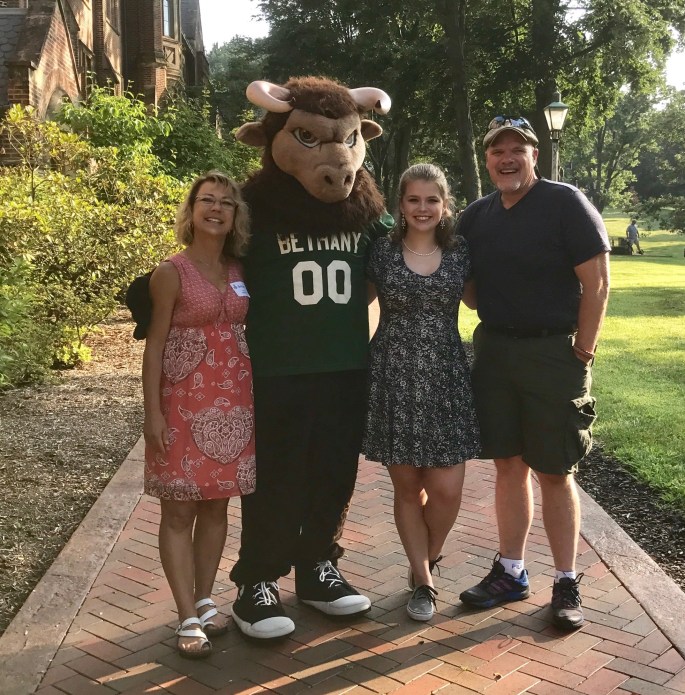
            “Halloween and hills (lots of them); burritos and bagels; squirrels and shuffles; brick streets and parking meters; East, West, South, and College Green; Court Street; Athens, Ohio”—as seen on a sign hanging in a store on Court Street in Athens, Ohio
5D42B682-9925-459E-BDFC-D2363B33A9AC
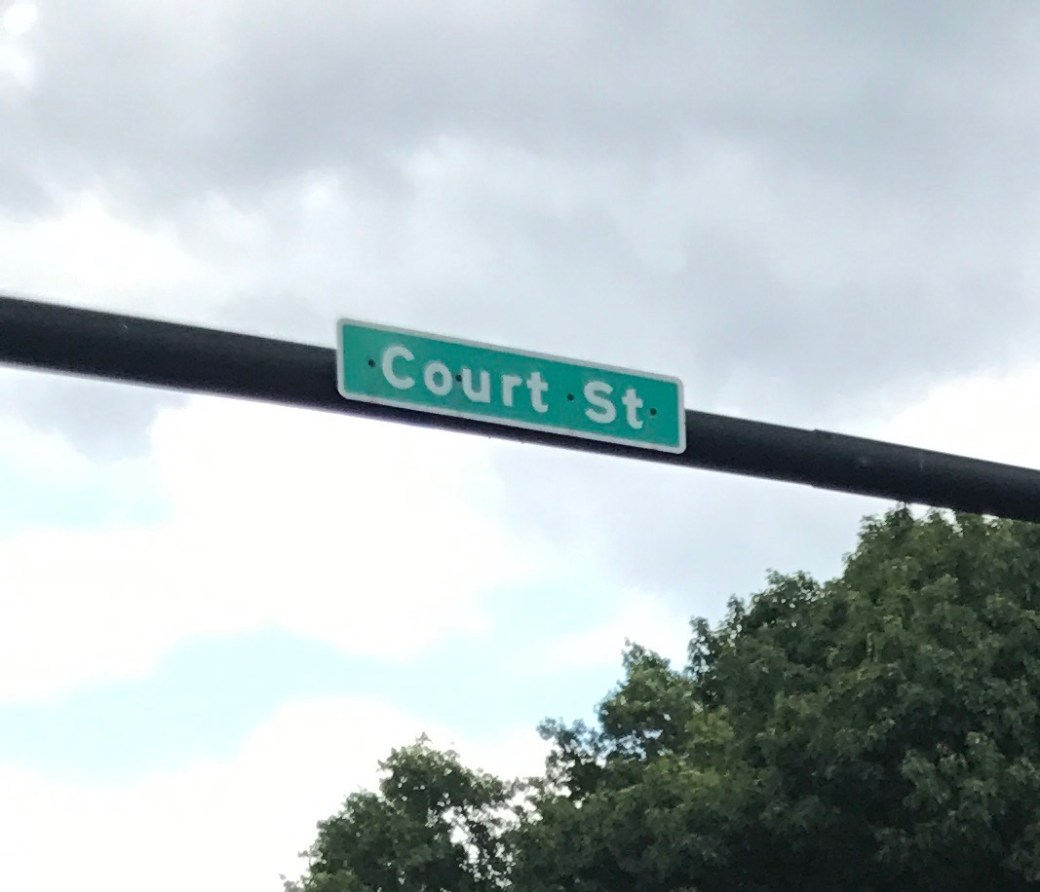
The famous Court Street of Athens, Ohio, center of uptown life.

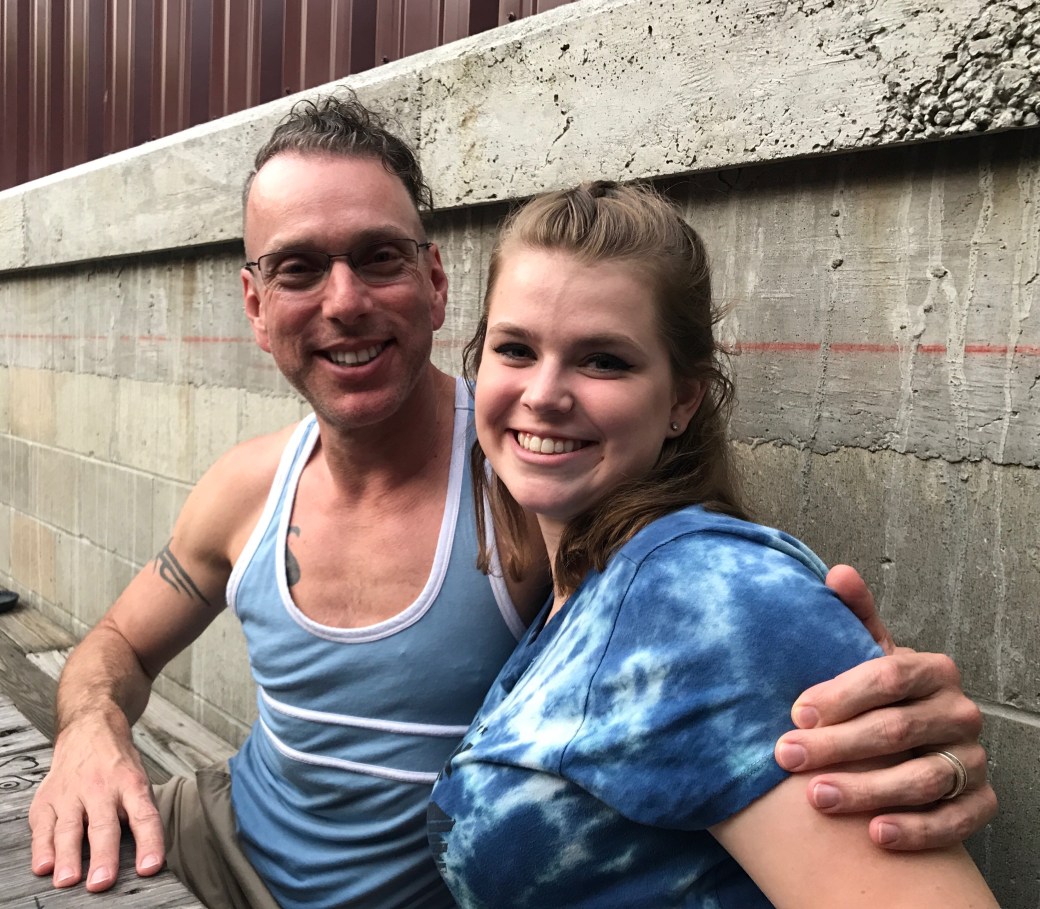
          “Enjoy your first year. No, really. I know it will be hard, but enjoy it.”—Scott Musick, my brother, offering college advice to my daughter, Madelyn.
5EA25B59-613A-49CD-9F34-228AC4907624
My brother, Scott, and my daughter, Madelyn, in Athens, Ohio, August 2017 where I attended college–just weeks before Maddie embarks upon her own college journey at Bethany College in Bethany, West Virginia.

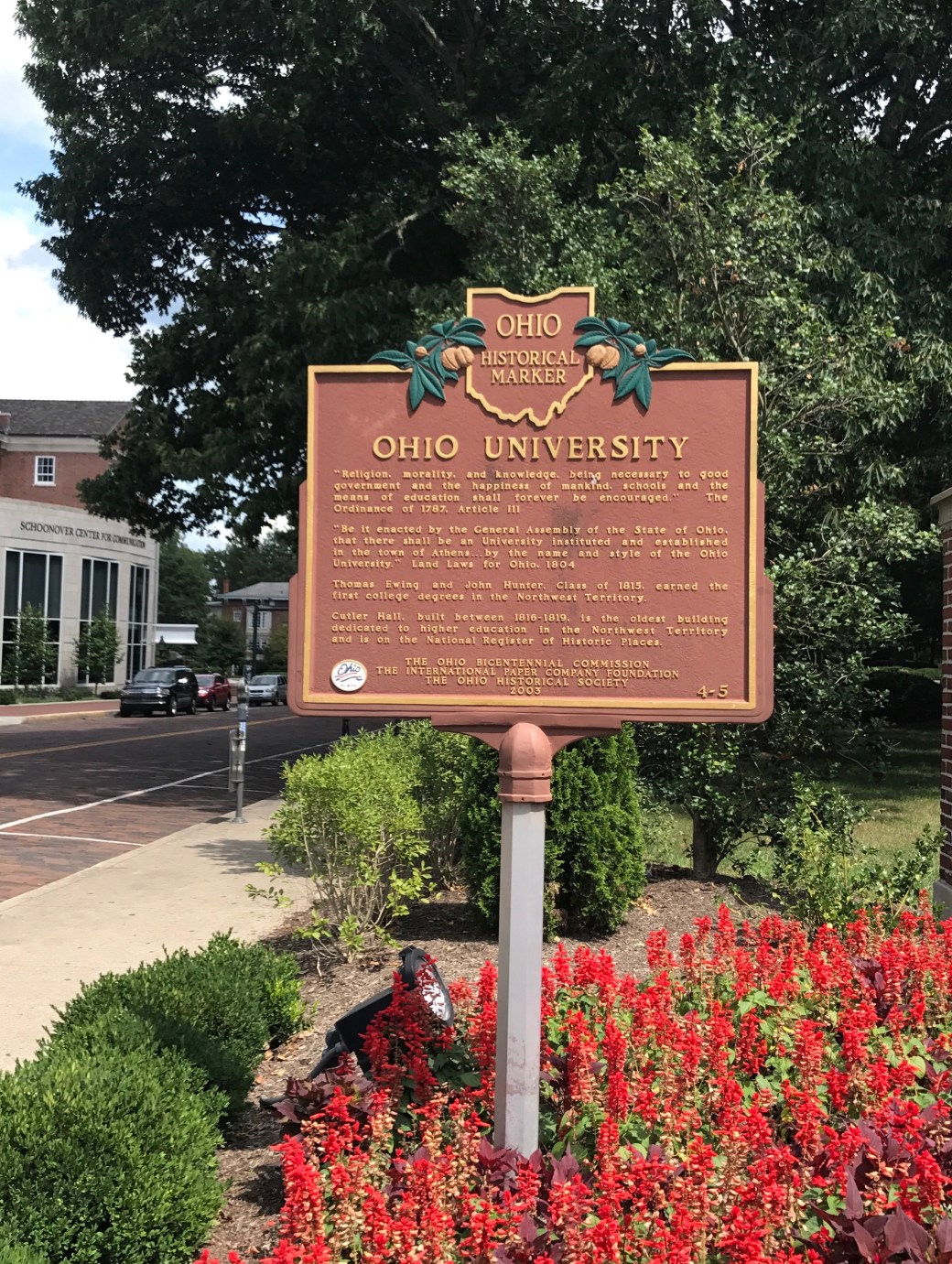
We arrived at campus early on a Saturday morning in August of 1984. I was eager to get started on a new college journey at Ohio University in Athens, Ohio. I had spent the prior year attending, “The Branch,” as it used to be called, of Ohio University in Ironton, Ohio, while also working close to full time, 37-39 hours per week, at the local McDonald’s
FE99D209-11DE-4046-A3D9-BAC9DCC76477

Many 18-year olds struggle to adjust to that first year of college, and I was certainly no exception. My job required a wake-up time ranging from 3:00 a.m. to 4:30 a.m., depending upon the shift I was working. Furthermore, I was not a so-called, night owl. Therefore, going to classes in the evening, from 5:00-10:00 pm, combined with my early morning start, was not the most conducive way for me to begin my college experience. Add to those facts, that most students in class with me during that time period were 10-20 years older; and needless to say, I was all out of sorts during that first year. Thus, I was ready for a change–a chance to start over, so-to-speak.

Driving the steep bricked streets of Athens towards my East Green dorm, my heart was pounding wildly with excitement. I didn’t notice that we were one of only a few cars arriving. I had not yet learned, as a general rule, college students do not rise early on a Saturday morning—even the morning of move-in day.


Naively, and optimistically, I walked with my parents into the dorm. No one else was entering the building, but, hey, that’s called good timing, right? As it turned out, my roommate, Susan, an international student from Singapore, had arrived a week or so prior to my entrance. Like me, she was a sophomore; however, unlike me, this was her second year living on-campus in Athens.


Susan, I soon learned—along with my parents—had a boyfriend. Despite the fact I had written a letter to her stating when I would arrive, she must not have expected me so early as the door was locked when my parents and me tried to enter my dorm room. Yes, Dear Reader, you have probably figured out the rest of the scenario by now. . . . After much knocking, and eventually assistance from the Resident Director, a sheepish and sleepy Susan, as well as boyfriend, ultimately welcomed my parents and me to OU. Needless to say, the next couple of hours were awkward, but made for a memorable learning experience!


I find myself reflecting upon eye-opening college experiences, such as that story, as John, my husband, and me, prepare to take our daughter, Madelyn, to Bethany College, four hours away from our home, for her first year of university life.  What will her move-in day be like? What types of experiences will she encounter? What classes will she take? What new friends will she make? How often will we see her? What degree will she ultimately earn? In fact, these queries are quite similar to the questions I asked myself as I walked across campus on that first day at OU after Mom and Dad left my side in 1984.


Recently, I had the opportunity to return to Athens along with John and Maddie. I felt quite nostalgic as I walked the familiar, inclined brick streets of long ago. Much had, of course, changed; and yet, much had remained the same. However, as I tried to share some of my college stories and experiences with Maddie, I began to sense she wasn’t all that interested. Oh, she was polite enough, but it seemed, my stories were old and dated, like the few articles of clothing I still have from that time period. That is when it hit me.


As much as I want to prepare my dear daughter for college by sharing my stories/experiences from those long ago days, they are not relatable to her because she has neither started college, and certainly will not be attending OU, nor is it the same time period, same living circumstances, or same generation. I cannot tell Maddie how great, how hard, how inspiring, how funny, how challenging, or how anything else college will be, because she has to experience it for herself in her own way. Furthermore, she is no longer the “little girl” who hangs on to every word I tell her. (If I am truthful, she hasn’t hung on to my every word for a while now!) She has her own thoughts and ideas, thank you very much; and, no doubt, these will evolve and change, but that is for her to decipher—not me. It is a natural part of her development that I need to honor, and let it play out in its own way and time.


In fact, just as I moved into a new life phase (or two) when I graduated from high school and began college; so too will Madelyn. And, just like all the other phases in my daughter’s development, there still won’t be a parents’ handbook on how to perfectly navigate these new streets. Therefore, I am going to have to rely on faith, the experience of others, and listen to that still-inner voice guiding me—praying that it is also guiding her too.


One thing I know for sure, Maddie is a great kid. She is far better, smarter, and with-it than I ever was at the age of 18. I’d like to think John and me had a little bit to do with that, but we cannot take full credit as she’s also been blessed with numerous positive adult influences including family, teachers, pastors, and friends.


Therefore, I pray that Bethany College will offer more of those quality mentors to guide Madelyn. May she have friends that are a positive influence surrounding her. May she learn from her experiences, but also may those experiences be more positive than harsh. May she continue to learn and grow in knowledge and as a person, but may she remain as compassionate and thoughtful as she is now. May she discover her true calling and passion. And, may she rest assured on the fact that mom and dad are still here, cheering her on, and loving her more than ever as she transitions into adulthood.   Oh, and one more wish, may her move-in day be memorable for reasons far different than my first move-in day!


Madelyn’s grand adventure at Bethany begins August 24, 2017.


Maps vs. GPS

            “True navigation begins in the human heart.  It’s the most important map of all.”—Elizabeth Kapu’uwailani Lindsey

            “It finally happened.  I got the GPS lady so confused, she said, ‘In one-quarter mile, make a legal stop and ask directions.’”—Robert Brault

            “Uh, oh,” I heard my husband, John say.  It’s the tone in his voice that jolted my attention out of the book in which I was reading.

            “I think I missed a turn,” his voice was filled with dread.

            I recalled looking up at a sign as John made a turn, thinking, “Hmm . . .this doesn’t feel right.”  However, I did not speak up because I figured I was wrong—just a crazy notion because we were traveling a new route.

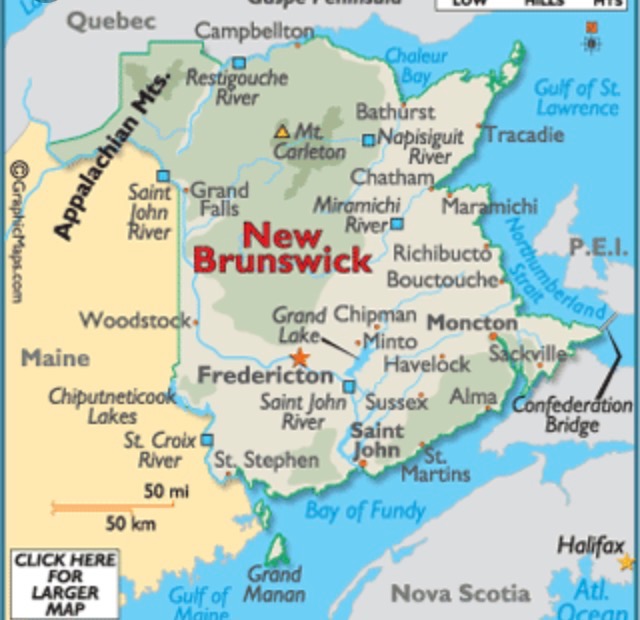
            Then, John pointed out that all of the road signs were in now French.  Oh boy, something was certainly wrong, and I felt horribly because I had been reading rather than looking at a map of New Brunswick in order to help John navigate.

            We were traveling home from a two-week stay in New Brunswick, Canada—the only officially bi-lingual Province.  While driving in New Brunswick, all road signs were labeled both in English and French.  The fact that road signs were now solely French could mean only one thing; we had inadvertently crossed into Quebec!

1B7E040F-9ABB-4292-8146-B5BA593353D2
We were traveling through the Appalachian Mountain area near Quebec for the return route home. Unfortunately, we made a wrong turn and ended up in nearby Quebec!

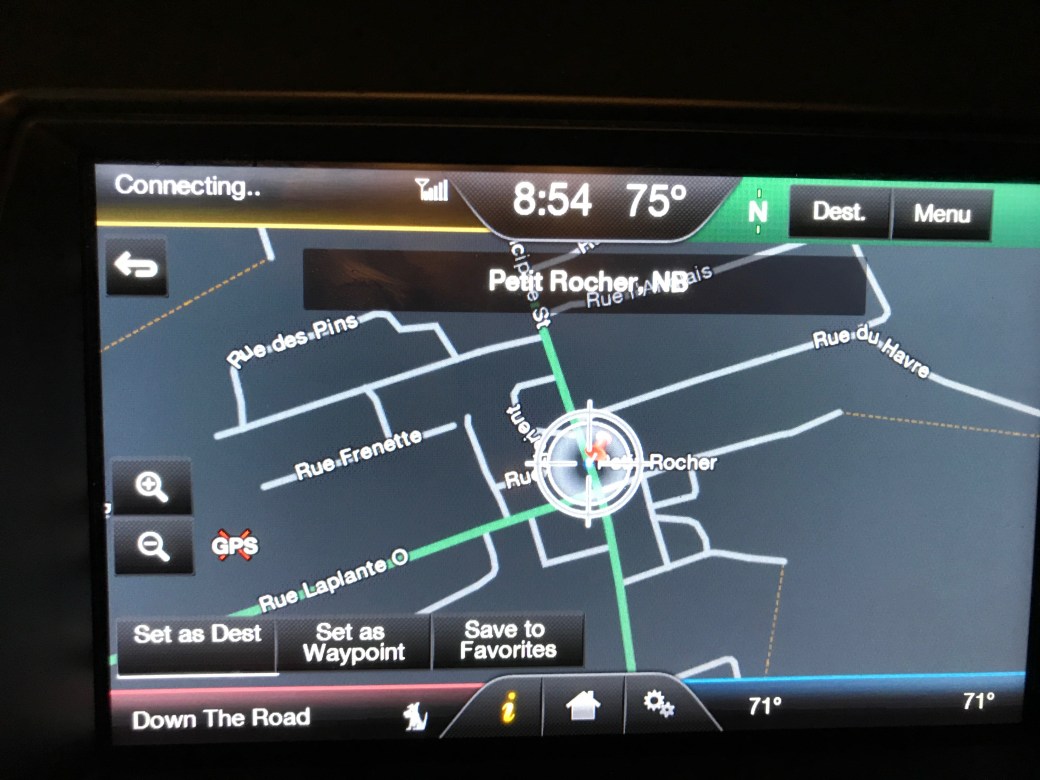
            While we had been using our car’s navigation system, it gets a bit wonky when traveling through remote areas or out of the country, and we were doing both. Therefore, we could only see the image of the road over which were traveling.  Typically, we rely on a map app on our phone when traveling.  Unfortunately, our phone company, which allows us to call Canada without any extra cost, triples and quadruples the cost of our phone use if we are in Canada trying to call/text to the U.S. or access cellular data. Thus, we turn our phones to airplane-mode when in Canada, rendering our phones unable to access apps without wifi—which our car does not have.

            Ultimately, we were able to find a safe place to turn around, stop, and look at our map.  It was at that singular moment, I knew that Divine Providence was providing me with a lesson.

C78BECE5-40D0-475C-9BD9-EF52CA15FA84
Oops! We had inadvertently crossed into Quebec!

            GPS navigation systems are great, but the image we see, especially when driving, is often quite small and out of context of the bigger map picture.  Further, GPS will usually get you there; however, it doesn’t replace experience, which often informs us of faster routes, less congested roads, and so forth.  Finally, a GPS system often emphasizes details rather than the big relational pictures such as borders.  Thus, the big take away is that we receive three benefits when a GPS in conjunction with a map.

A4FF7CCC-8473-41BB-AE08-841095D7014C
When driving out of the U.S., or in a remote area, our GPS can become a bit wonky!

            Isolation vs. Context.  When viewing our car’s navigation screen, we can only see the isolated route in which our car is traveling.  The overall context of the route, the roads from which we came, as well as the roads in which we will travel, are not visible.  However, looking over a map reveals the context of the entire route.

            This often happens in life.  For example, news blurbs, co-workers, or even loved ones, may focus upon, or share, one phrase or one point a person states in isolation, rather than reveal the entire context in which the words were spoken or written.  Likewise, well-meaning Christians sometimes use one Bible verse to support a certain belief or rule, rather than viewing that Bible verse within the context of the chapter, book, intended audience, or even time period in which it was written.

            Of course, there are many beautiful, singular phrases, quotes, and Bible verses from which there is much to be gained—I often use these to support and inspire my own writing, thinking, and speaking.  However, it worth remembering and taking time to view, or listen, to the full context in which both written and spoken words are derive, just as it would have benefitted John if I had been looking at the full map while he used the navigation screen.


            Inexperience vs. Experience.  When using a GPS or a map, you are choosing to rely another’s judgment or knowledge regarding which route, turn, or direction to travel.  This is especially true if when traveling to a new location.  It is often interesting to note that once the lay-of-the land in a new area is learned, we begin to realize better or faster roads/turns in which to take in order to arrive at a given destination.  This can only happen, however, with driving experience.

            Likewise, in life, when starting a new job, task, class, and so forth, we often choose to rely on the knowledge of others to inform our decision-making.  This mentoring is, of course, useful and quite valid; however, it is important to allow experiences, combined with the knowledge of others, to teach and affect the way in which we ultimately perform, make choices, and live our lives.   Further, it is often even more important to consider the internal, Divine voice offering valuable guidance.  Just as I should have listened to the inner voice that told me we were probably making a wrong turn, so too, should we listen to God’s guidance.


            Big Picture vs. Details.  Finally, the GPS navigation system does not reveal the broad picture of the full traveling route—only that route in which you need to be traveling at that moment.  Whereas, a map usually has the ability to reveal the entire route including borders, times zones, bodies of water, and so forth.  A map, however, does not possess the smaller details of exit numbers, upon what side of the road those exits will occur, etc. Certainly, though, if I had had that map open when we were traveling, in addition to the GPS image of the route number, I could have looked at the big picture.  I might have observed that even though we were indeed on the correct route, the signs for upcoming towns were the opposite direction of where we needed to drive.

            Similarly, in order to navigate life, sometimes we have to have a clear image of the grand scheme of our life’s direction.  Of course, it can be argued the importance of “one step at a time, one day at a time”– our life needs an ultimate direction/purpose/goal in which to direct those smaller, day-by-day turns.


The lesson of the GPS vs. paper map is this:  In order to navigate life, we need to not view all events in isolation, but within context of our life. (In the grand scheme of a two long days of driving, adding one extra hour due to our mistake was not that big of a deal.) Secondly, while a new adventure is always exciting, there is nothing like life-experience to inform our future choices.  (If we ever travel that same route, do you think we will make that same wrong turn again?)   Lastly, there is great benefit in taking life one day at a time; however, it is important to keep the big picture, the goal of our life, in mind. (Once we realized we were headed in the wrong direction, we turned around, and got back on our target route.)    The Divine Director will guide our life journey, but we must choose rely on this ultimate guidance.

F004AF93-E345-4E33-A102-1172715EE303
Ultimately, we must look to the Divine Director for guidance along our life journey.

A New Health Center for Southeastern Ohio School Employees

Scioto Health Plan and CareHere LLC hosted a ribbon-cutting ceremony on August 1 to celebrate the opening of Scioto Advantage health and wellness center located on Rhodes Ave in New Boston, Ohio.

“This process has been a year and a half adventure that began with this gorgeous building and an idea,” stated Sandy Mers, South Central Ohio Educational Service Center Superintendent, preceding the ceremonial ribbon cutting.

A94DA8AF-6C79-4574-8972-8FCB9C4EFDC1
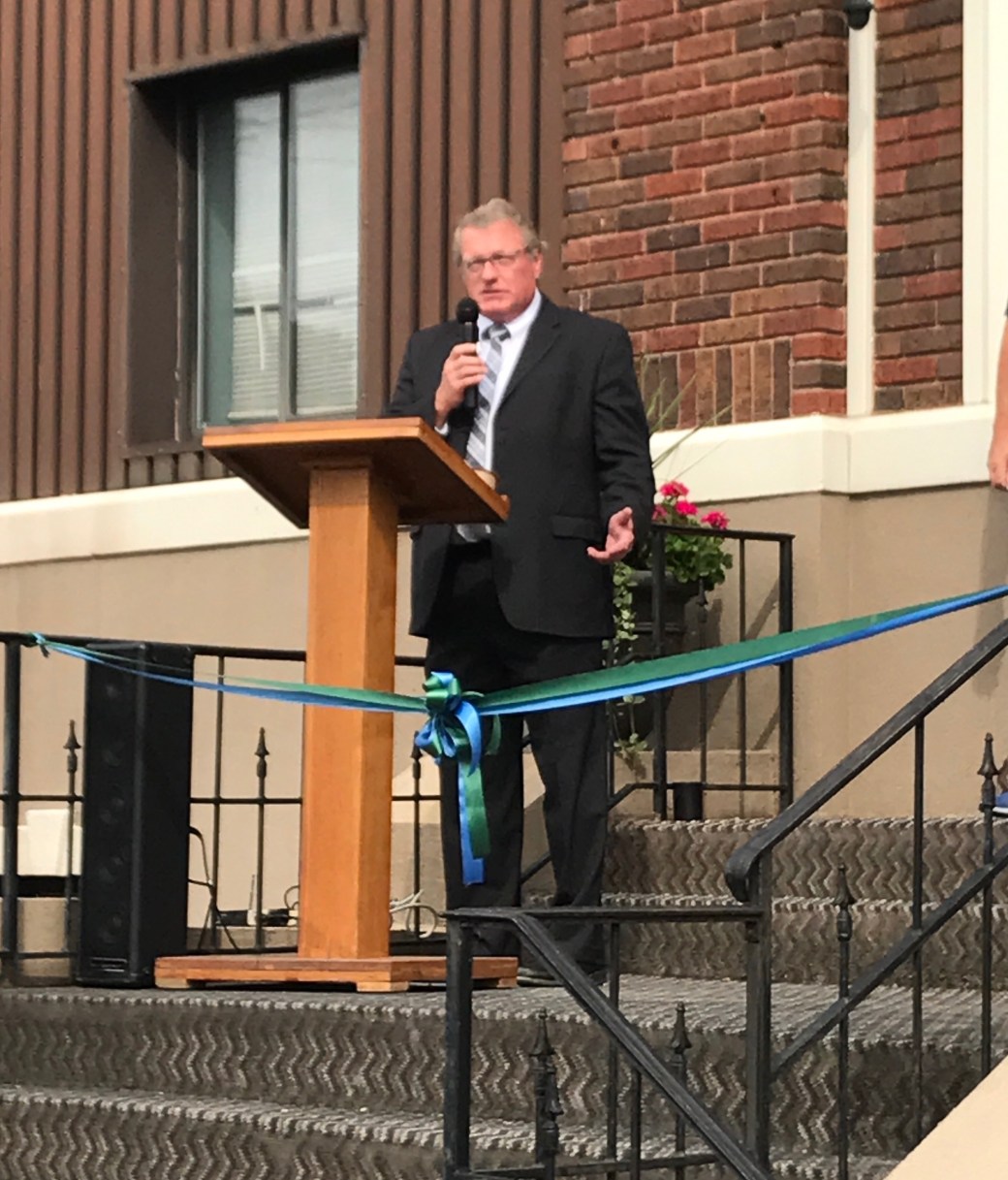
Sandy Mers, South Central Ohio Educational Service Center Superintendent, speaks preceding the official ribbon cutting for Scioto Advantage, a health and wellness center that will provide no-cost, primary and preventative service to the employees and their dependents in school districts across three southeastern Ohio counties .


Mers went on to offer a special word of gratitude to Steve Hamilton, New Boston’s village administrator, for initially helping the SCOESC find the owner of the building, as well as thanks for Mayor Junior Williams and the New Boston Council for their support of the project.

The unique center will provide primary and preventative health care services to school employees and their dependents covered by the Scioto Health Plan, which includes ten Southeastern Ohio school districts as well as the SCOESC. Types of services offered will include, but are not limited to, routine blood work, annual health screenings, immunizations, allergy treatment, minor illness visits—such as colds, flu, upper respiratory infections and so on, wound care, minor stitches, well-woman exams, well-child check-ups, chronic disease management, health coaching services as well as bus driver, sports, and other school-related physicals. Additionally, there will be an in-house generic prescription dispensary; and, all of this will be provided at no cost to the patients.

Appointments can be scheduled online or over the phone. These appointments will not be double-booked to allow little to no wait time for the patient. All records will be digitally maintained in accordance with HIPPA; thus, patients can be assured their records are private and secure.

CareHere LLC, a company based in Tennessee, will manage Scioto Advantage. Anthony Dallas, MD, chief medical officer for CareHere, stated that he was, “excited to be here, and excited about the partnership with such a great team.” He further added that he felt, “honored to be part of a group of people that want to give to their employees, and make differences in their lives long-term.”

75447BB4-93EE-4037-86BE-A59568108E39
Anthony Dallas, MD, Chief Medical Officer for CareHere, speaks at ribbon cutting ceremony for Scioto Advantage.


Staff members to Scioto Advantage will include: Stacy Carter, RN; Melody Craycraft, NP; Lisa Turoczy, Director of Clinical Services; and Melanie Sharp, Senior Director of Operations.

B4ACBA6C-744F-4994-AADD-3AB7BAFE0294
Scioto Advantage staff includes (bottom row, L to R): Lisa Turoczy, Director of Clinical Services; Stacy Carter, RN; Melodee Craycraft, NP; and, Melanie Sharp, Senior Director of Operations.

According to Mers, “Scioto Health Plan is our self-funded insurance consortium.” She went on to explain that the SHP controls the decisions and, “do our best to take care of our employees and their families.”

Mers added that the SHP is a part of a larger consortium, Optimal Health Initiatives, a not-for-profit health plan. This plan offers medical and dental coverage for the benefit of school districts across three southeastern Ohio counties, including Bloom-Vernon, Clay, Green, Manchester, Minford, New Boston, Northwest, Oak Hill, Scioto County Career Technical Center, Sciotoville, SCOESC, Valley, Washington-Nile, and Wheelersburg schools.

Mers gives special credit to Elaine Shafley, Executive Director of OHI, for initiating the idea and, “helping to make this happen.” In addition to Shafley, Mers credits both Andy Riehl, ESC treasurer, and the SCOESC board for partnering and supporting the project throughout its full development. Moreover, Mers had high praise for Kirk Donges of TSHD architects and Rob Seaman, project manager, who was “so detailed oriented.”

Other speakers at the ribbon cutting ceremony included former Clay Superintendent and former Chairman of Scioto Advantage , Tony Mantell; Anthony Dallas, MD of CareHere; and, New Boston Village Administrator, Steve Hamilton.

“What we have here is something so very special, that you don’t see in very many places,” stated an enthusiastic Mantell. “When you think about all of our people—great employees who work for their school districts. The fact that they can come here at no out-of-pocket expense to them—what a great benefit!”

C4DEA6C0-A2B6-42EB-918B-F23AF44B5DEA
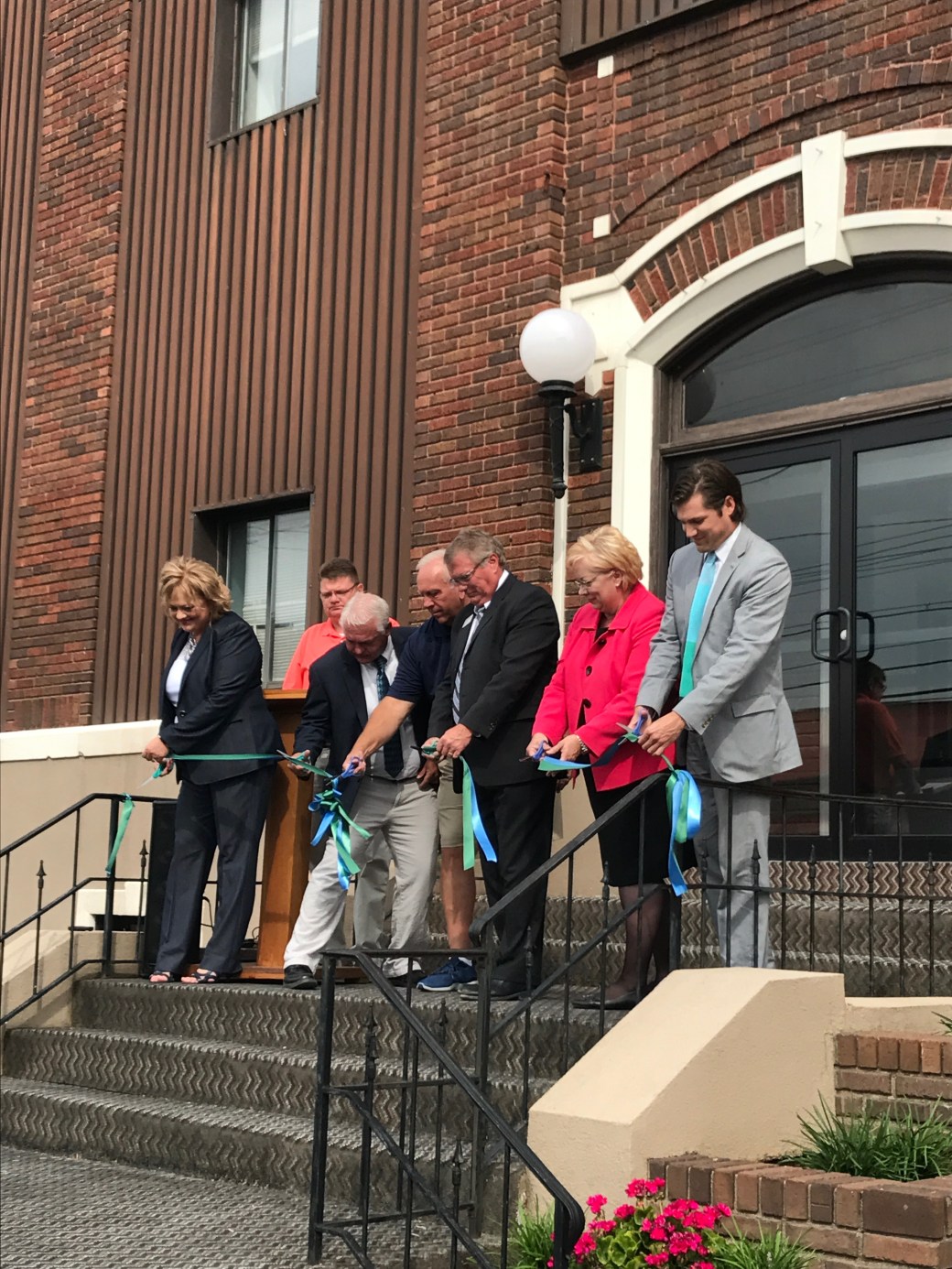
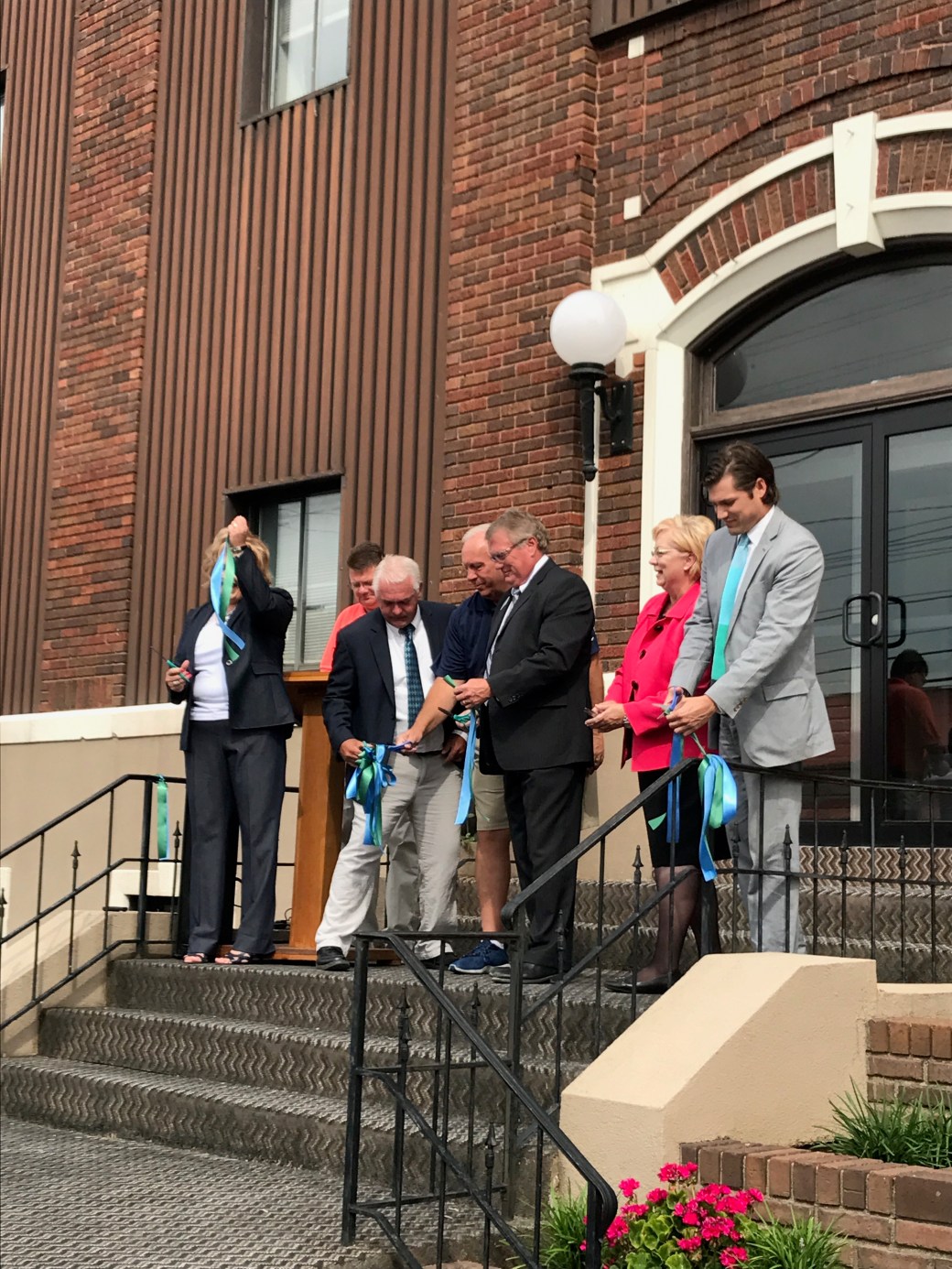
Steve Hamilton, New Boston Village Administrator, counts down for the official ribbon cutting for Scioto Advantage. Cutting ribbon, L to R, Sandy Mers, SCOESC Superintendent; Rob Seaman, Scioto Advantage Project Manager; Anthony Dallas, MD, Chief Medical Officer, CareHere; Elaine Shafley, Executive Director of Optimal Health Initiatives; and Chris Murphy, Business Development Manager, CareHere.

“Our employees deserve this,” added Mers following the ribbon cutting ceremony. “Appointments are already scheduled.”

6F4F4962-B464-4AB8-8228-E94CA7C21F82
The official ribbon cutting ensues for Scioto Advantage. Cutting ribbon, L to R, Sandy Mers, SCOESC Superintendent; Rob Seaman, Scioto Advantage Project Manager; Anthony Dallas, MD, Chief Medical Officer, CareHere; Elaine Shafley, Executive Director of Optimal Health Initiatives; and Chris Murphy, Business Development Manager, CareHere.

Currently, the Scioto Advantage hours are 6:00 am to 6:00 pm, but will be adapted, according to Mers, based on patient need.

4C8117FE-1C46-422B-B65E-72FC21986D76
The ribbon is officially cut for Scioto Advantage. Cutting ribbon, L to R, Sandy Mers, SCOESC Superintendent; Rob Seaman, Scioto Advantage Project Manager; Anthony Dallas, MD, Chief Medical Officer, CareHere; Elaine Shafley, Executive Director of Optimal Health Initiatives; and Chris Murphy, Business Development Manager, CareHere.


Sea glass Searchings

            “We need to find God, and he cannot be found in noise and restlessness. God is the friend of silence. See how nature—trees, flowers, grass—grows in silence; see the stars, the moon, and the sun, how they move in silence . . .We need silence to be able to touch souls.”—Mother Teresa

“Sea glass is symbolic of the magic of transformation.”—Unknown

“Look how much I found!”

Her voice was insistent as she entered through the sliding glass doors and into the living area of the summer cottage in which we vacationed for two weeks along the Bay of Chaleur in Petit Rocher, New Brunswick, Canada. Her face was flushed red; eyes sparkled with exhilaration. Her friend, Gracie, whose face was just as crimson, followed her.

“I taught Gracie how to look for it!”

Spreading their loot across the kitchen table, they began sorting by colors: green, white, brown, and one blue.

“I found this cool rock, too!”

F6EBB141-0BD0-45A6-A8BA-A5DC670DC615
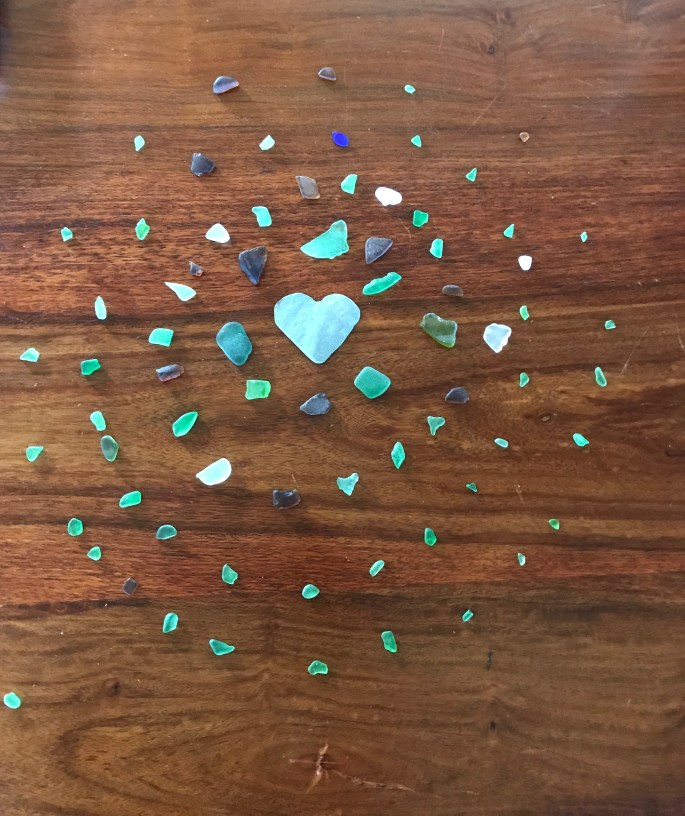
The first sea glass (and one heart-shaped rock) gathered on the shores of the Bay of Chaleur at the beginning of our two-week vacation in Petit Rocher, New Brunswick, Canada.

Madelyn, my daughter, placed a heart-shaped rock alongside the colorful sea glass they had collected. Then, seemingly, without thought, she began arranging the sea glass around the heart-rock in an aesthetically appealing rotating circular shape as she chatted about the bracing winds, the rocky shoreline, and the chilly, damp air. She smiled as she meticulously constructed her creation–though I do not think she realized she was doing this.

38259F56-AA31-4132-BCDA-96E7412080BE
The very first arrangement of the sea glass designed by Maddie.

Sea glass is, in actuality, discarded trash. Before the proliferation of plastics as popular storage vessels, most liquids and creams were housed in glass bottles. In fact, I can still fondly recall the small 10-ounce green bottles of Mountain Dew, the blue Noxzema glass jars, the red Avon decorative glass goblets, the brown glass bottles that held Mrs. Butterworth’s pancake syrup, and the clear, tall 16-ounce Pepsi-Cola glass bottles of my youth.   All of these various glass bottles, and many others during this time period, were often carelessly dumped into our streams, rivers, and oceans; or, buried in the sand along the shore with little thought.

4E62C456-21A3-4378-9891-F5B6364AB342
Sea glass is, in all actuality, trash–specifically–glass bottles–tossed carelessly into the earth’s streams, rivers, and oceans; or, buried in the sand of the shore.

Once in the ocean, these containers were tossed about in the waves like a colorful mixed green salad. As the waves violently thrashed the bottles against rocks, ocean floor, and various other inflexible objects, they were sharply broken down into smaller pieces, each with a unique shape. Eventually, the edges of these pieces were worn smooth, giving the glass found today a frosted and/or pitted quality.

4DE0CF13-C726-4BCF-BE62-BC8F39535650
Here are baggies of sea glass, sorted by color, collected by my daughter. Maddie’s collection reflects both the most frequently found colors such as green, brown, and white (clear); and the more rare colors, such as cobalt blue and red.


In fact, many sea glass jewelry makers consider sea glass a “reverse gem”. Traditional gems are created by nature, but refined by humans. Whereas, sea glass is created by humans; but then, transformed by nature.

Today, with the increasing use of plastics and numerous recycling programs, sea glass is becoming more difficult to find. I suppose that is part of the fun for Maddie–the challenge of spying scarce, multihued gems peaking through the milieu of rocks, pebbles, shells and other flotsam found along the shoreline. Perhaps, though, there is more to it.


Walking along the craggy shoreline of the Bay of Chaleur one day, I became totally immersed in the search for sea glass. My intention, when I left the cottage, was to enjoy a brisk walk along the bay’s edge, but with the sighting of one piece of green sea glass, briskness was set aside; and instead, all of my focus and energy was directed towards hunting for sea glass for Maddie. Earnestly searching for sea glass emptied my mind of all thoughts, allowing my vision to fully focus as I pursued multicolored oddities amidst shoreline debris. My breathing and heart rates were notably slower, and time was measured only by the present moment.


Occasionally, I noticed an abandoned house, a group of playful sea birds, or a passing sailboat; but then, my vision would return to my shoreline quest. During that walk, my mind was not attached to current worries, past failures, or future concerns—there was just the background sound of lapping water and the possibility of sea glass. Thus, I became the recipient of three lessons courtesy of the sea glass of the Bay of Chaleur.


           Nonattachment. While this wasn’t my first run-in with the concept of nonattachment, my experience with sea glass served as a reminder that nothing is permanent—change is a continual process, even when I cannot immediately see it. While I clearly observed Maddie happily creating various sea glass arrangements, she could not become attached to any of her creations if she wanted them to grow into something else. Likewise, in life, growth cannot occur when we remain attached to past events/failures, present-day worries, or future concerns. Growth can only occur with a release of mental grasping—just as the bottles could not become gems if they held on to their original shape.


          Transformation. Nonattachment can lead to transformation, the second lesson of the sea glass. Maddie’s artful creation of sea glass, formed at the beginning of our stay, was reworked several times, moved to another table, and ultimately disassembled in order to travel home where it will, no doubt, be changed again. Likewise, copious bottles of my youth, and even prior to my birth, are continually, and quite harshly, broken by the ocean’s waves; however, this seemingly brutal treatment creates exquisitely colorful treasures. Therefore, it is worth remembering, no matter how severe the seas of life become, there is transformative power for positive change especially if we seek it out. Even the sharpest edge of a glass bottle is eventually worn smooth.


          Connection to our Creator. Hunting for sea glass required Maddie and me to get outside and away from screens. The propagation of social media has the ability to distract and separate us from our natural world. Noise and visual stimuli distract our brains, leaving little room, or even time, for silence. When our minds remain attached to these stimuli, transformation can often become stalled. Time spent in nature, however, even in pursuit of sea glass, is an excellent conductor to our Divine Creator. If God created a sea with the ability to transform glass bottles into bits of colorful collectables, what sort of gems can we potentially discover within ourselves, and others, when we take time to unplug from what the world is telling us, and instead, spend a bit of time in nature, so that our souls may hear the whisperings of God?


Can you find the piece of sea glass hidden in each picture?


Friendships with Borders

            “There are no strangers here; only friends you haven’t yet met.”—William Butler Yeats

            “It’s easy to impress me. I don’t need a fancy party to be happy. Just good friends, good food, and good laughs. I’m happy. I’m satisfied. I’m content.”—Maria Sharapova

“I’ve gotta be that person. Where are you from?” The young girl queried with pink, spiked hair and curious, intent eyes that sparkled with her wide, youthful mischievous grin. She spoke with a delightful French accent.

It wasn’t the first time I had heard this question, nor would it be the last. I was with my family vacationing in the charming Petit Rocher area of New Brunswick, Canada nestled alongside the spectacular Bay of Chaleur. New Brunswick, one of Canada’s three Maritime Provinces in the eastern region, also happens to be the only province that is officially bilingual—meaning both French and English are the official spoken languages. Thus, most residents appear to seamlessly move between speaking French and English.

IMG_1546
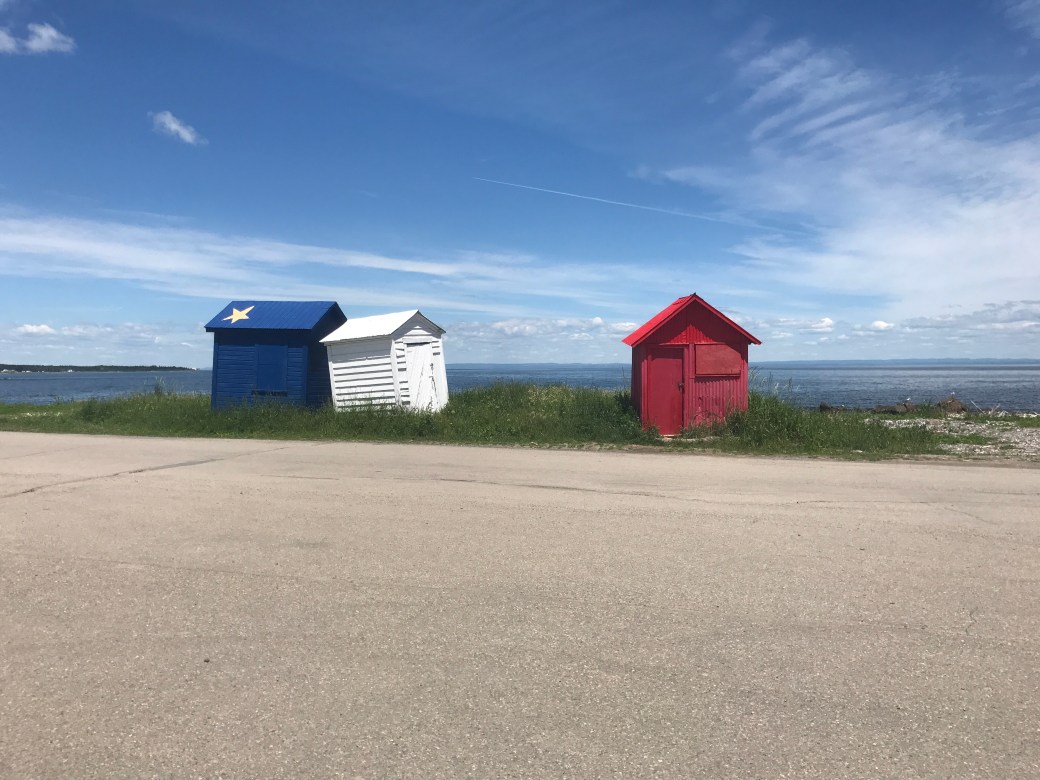
Petit Rocher Wharf of New Brunswick’s Acadian Coast.

Replying to this inquisitive youth, I explained that I was from the U.S., specifically the southern point of the state of Ohio between West Virginia and Kentucky situated in the hills of the Appalachian Mountains (These same mountains run through the western side of New Brunswick.) The young lady’s smile turned up at one side.

“So you left a rural area to vacation in a rural area?”

Her question aroused laugh as I added, “Yes, but you have the beautiful Acadian Coastal beaches that we do not have at home.”

Nodding in approval and understanding, she further asked, “How far away are you?”

When I explained that it was approximately a 24-hour drive split over two days, her eyes grew wide. I further added that this was our third trip specifically to New Brunswick, and our overall fourth to the Maritimes, she gasped.

“You like it here that much, then?”

Indeed, my family and I find the Acadian Coastal Region of New Brunswick lovely for both its picturesque scenery as well as its spirited and hospitable people. We discovered New Brunswick quite by accident five years ago. At that time, we were driving to another Maritime province, Prince Edward Island (PEI), the setting for our daughter’s beloved reading series, Anne of the Green Gables, for a family vacation. In order to reach PEI by car, we had to travel through the stunning countryside of New Brunswick. I recall wistfully observing through our car windows the stunning and ever-changing landscape. As much as we thoroughly enjoyed our time in PEI, the following year, our family decided to vacation in New Brunswick based upon that drive. The rest, as the saying goes, is history.

3500DDC8-E03B-423D-980A-04A5A2247366
John, me, and Madelyn in front of the charming vacation home we found on Airbnb, owned by Denise, in Petite Rocher area of New Brunswick.

During our first vacation in New Brunswick, we met Vincent and Gisele Theriault. Their summer cottage was next to the house in which we were vacationing in the bayside community of Janeville. Vincent and Gisele were our first insight into the generous, welcoming people that make up the Acadian Coastal Region. By our third day, we were sharing a traditional lobster dinner with them that also included fresh, steamed mussels, and crab in their cozy home. Throughout that meal, we shared stories and swapped laughs until we cried as if we had been life long friends. When week’s end arrived, our family decided we needed to return the following summer for two weeks instead of one.

24336CD9-D3AB-4A63-A4AD-28DB7A03324D
Vincent Theriault, John, Maddie, me, and Gisele Theriault when we first met in Janeville, New Brunswick. The house (church) in which we stayed is in background, and their summer cottage is directly behind us.

Returning the next summer to the same vacation cottage, we were able to pick right up with Vincent and Gisel as if we were life-long neighbors. Furthermore, we continued to explore and expand our experiences of the Acadian Coastal Region. No matter where we traveled, be it a small store to a large shopping center; from a quaint tourist shop to an historic village center; or, from encounters on the beach to meeting other Acadian residents; we were enthralled by the generous and gracious nature of the people.

F0427991-C9F2-4423-A85B-3ADB865AE4AE
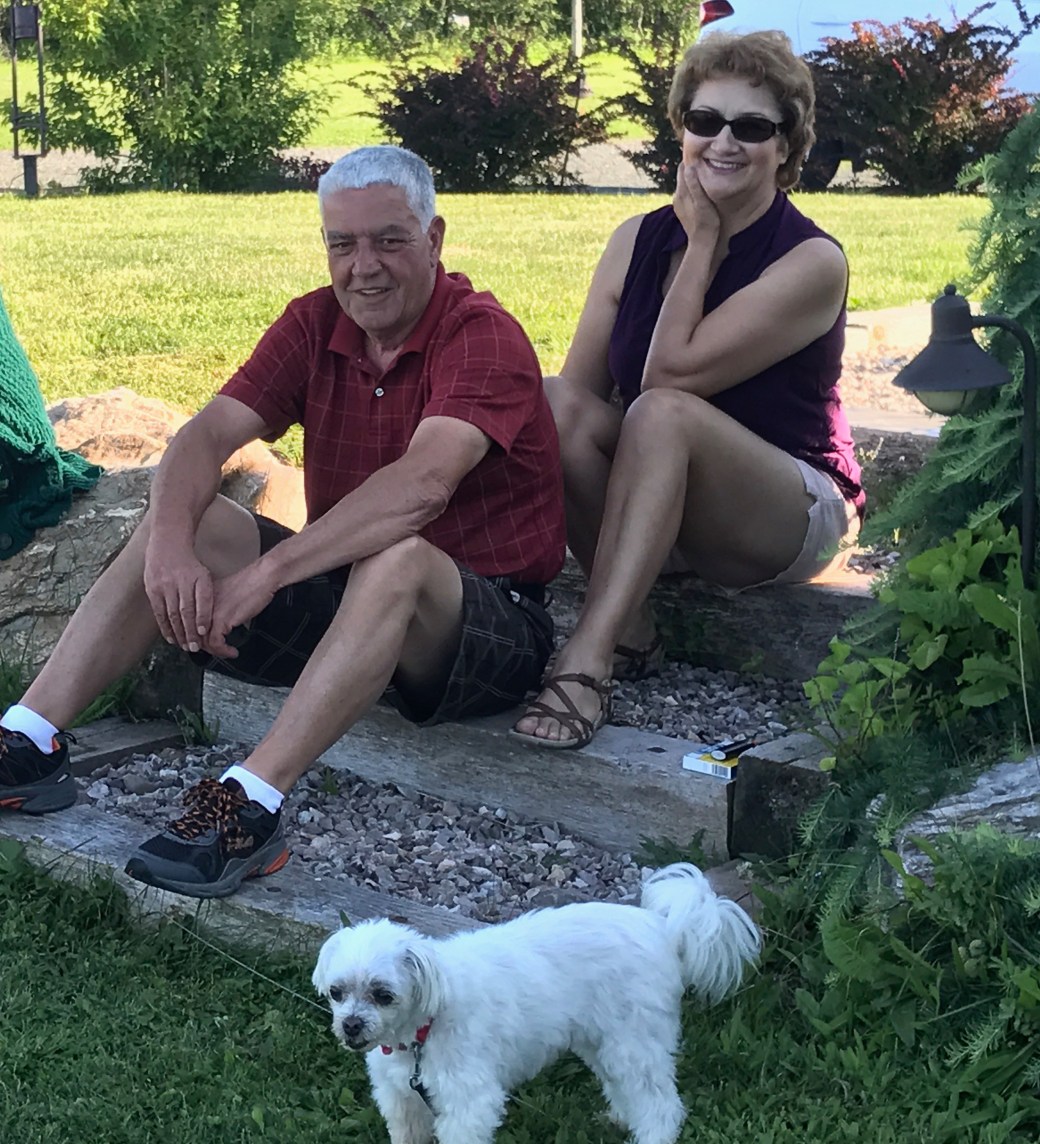
Vincent, Gisele, and Bijou Theriault of Janeville (summer) and Moncton, New Brunswick, Canada.

Life sometimes gets busy and takes you on unexpected turns—which is exactly what happened to our family. Therefore, two years passed before our family was able to return to New Brunswick, and in that time, much had changed. Specifically, the rental cottage in Janeville was no longer available, and the political world-view had drastically altered. Would we still be welcomed, and would the people of New Brunswick still remain as pleasant as in our past visits?

Initially, we were saddened that we could not find a rental home in the Janeville community, and instead would be staying in the village of Petit Rocher—only because our home would not be close to Vincent and Gisele. As Divine Providence would have it, however, the home and the village in which we did stay this past summer did not disappoint, nor did its people, especially all of our neighbors. Furthermore, we found the village of Petit Rocher, and the nearby villages/towns of Nigadoo, Beresford, and Bathurst, to be just as warm and welcoming as Janeville, as well as wonderfully situated along the beautiful Bay of Chaleur!

1C7AD900-68CE-46F6-A122-5748335982B4
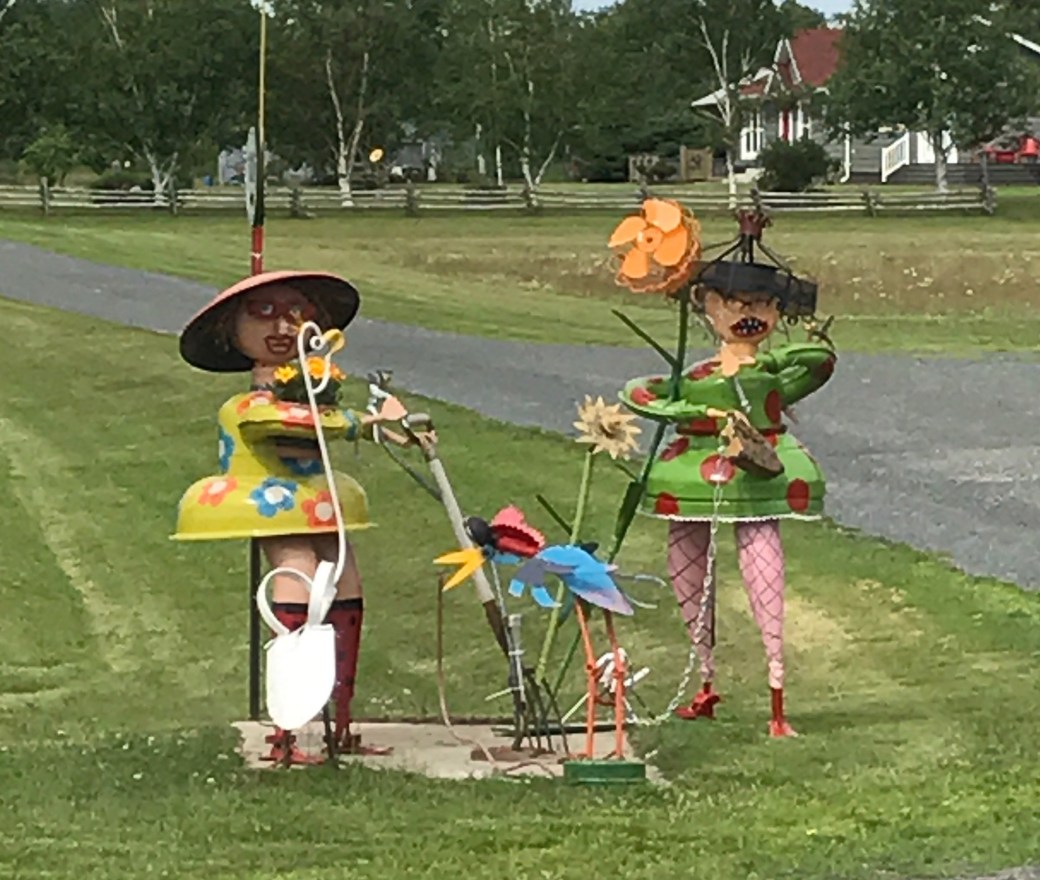
Whimsical art created by an unknown home owner in Petit Rocher, New Brunswick, Canada.

In fact, not only were we blessed to spend some time with Vincent and Gisele, but also we were able to meet so many other wonderful neighbors and local residents. One such neighbor, Bobby Roy (and members of his family), visited our evening campfires on a regular basis. Talk about nice! By the end of our first week, he had bestowed upon us, “honorary Canadian citizenship,” and sealed the deal by giving us a Canadian flag, a jar of bar clams (a New Brunswick culinary specialty), and two Canadian caps for my husband, John!


The owner of the house in which we rented, Denise, visited us a couple of times during our stay as well. During her last visit she shared an observation worth sharing, although I may not get her exact wording.

“Everyone who has met you and your family cannot get over how nice you are as Americans. I don’t think it was expected.”

Of course, I took that for what I believe she meant it to be, a sincere compliment regarding our family’s interactions with others during our stay; yet it also reflected the current culture of vituperative rhetoric and sounds bites, for better or worse, now often associated with Americans—and, therein is the lesson.

When people really talk, get to know each other, “break bread” (aka share a meal), swap jokes, or even share a beverage around a campfire, you see the commonalities more than the differences—gender, race, skin color, religion, politics, nationality, and even borders—don’t matter—just the common human experience.


On the next to the last evening of our two week stay in Petit Rocher, our family shared coffee with Denise in the morning; dinner with our friends, Vincent and Giselle; and shared a beer while swapping stories with Bobby around the campfire. As the fire embers burned low and I headed back into the house, an outside light revealed a rather large spider web anchored between two completely different plant species. The web was intricate with multiple strands radiating in all directions between the two plants linking them, at least momentarily, together. The spider did not seem to care that its web touched the borders of two very different plants. It only wanted to find a way to nourish its body.


I thought of the saying I have often heard spoken by a beloved teacher, “The resiliency of the web depends upon the strength and flexibility of every strand.” Our family is but one strand in a complicated and complex global world of different people, but on our trip to the picturesque Acadian Coast, we strengthened at least one strand between two different countries and numerous families. It’s but one drop in an enormous sea of life, but what would happen if more people did that? Naive, not really. I am all too aware that our globe, like that spider web, is in a tenuous state; however, on that night, it was indeed enough, exceedingly enough to provide an ember of hope.

Afterthought: What if a #breakingbread movement began on social media, including my website, stephsimply.com, where people around the world shared pictures of “breading bread” with another from a different culturally, nationally, ethnically, politically, etc? What ideas could be shared?  What understanding could be gained?

IMG_1792
The red rocky coast in Janeville, New Brunswick Canada.


60B6DCE5-218B-4DD8-A309-0A0092FF7F15
Maddie and Gracie B. stand in front of Miscuo Island Lighthouse–a place we visited after meeting and talking with Chris, a staff member of Joey’s Pub in Bathurst, New Brunswick.
4E220034-1CC1-446C-8FE6-D3700581F21B
Vincent Theriault graciously prepared us a traditional lobster dinner in his summer cottage in Janeville, New Brunswick, Canada.


992EF240-348F-48B9-ACE0-A9C60911C2C3
Sunrise over the Bay of Chaluer on the morning we left for our return trip home. We brought with us many fond memories.


Ducks and Dilemmas aka Lessons from the Waterbirds of the Bay of Chaleur, New Brunswick, Canada

            “Put the need for certainty aside. Focus on riding the best wave you can today. Don’t wait for the tide to be perfect tomorrow.”—as seen on strikingtruth.com

          “I intend to not allow the waves of change to knock me off my feet, but instead, learn how to ride them.”—as seen on intent.com

We arrived to bracing winds with gray clouds so low and heavy, it appeared as if the sky would drop its burdens at any moment. The water in the Bay of Chaleur was sliced with angry white caps rapidly forcing their way to the shore. While this was our third time to visit the province of New Brunswick in Canada, we had never before witnessed rough bay waters as the weather on past visits was typically mild, warm, and sunny with calm, serene waters.

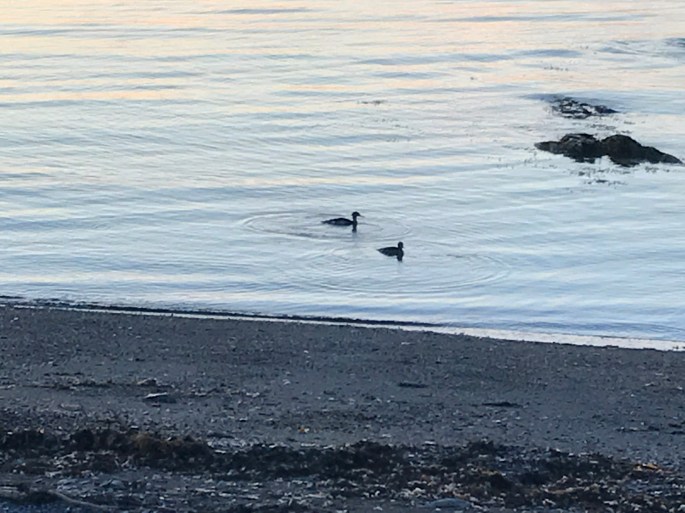
Nonetheless, as I continued to take in the unfolding scenery currently surrounding me, I noticed a family of ducks tranquilly navigating through the turbulent waves.   There appeared to be Mama duck in the front with several ducklings in tow. In fact, upon closer inspection, there were several types of waterfowl somehow remaining afloat on the enraged, swelling waters. How was this possible? They were clearly not in distress, despite the whipping winds tossing the waves about; rather, they seemed to glide over each growing surge with grace and ease. This image became imprinted upon my mind

Sunrise the following morning found the waters somewhat calmer, but still a bit choppy as rain was now a promise felt in the moist, heavy air. Looking once again towards the bay, there was the familiar duck family and numerous other waterfowl calmly rising and sinking with each lift of waves. Sometimes, they would dive below the water obtaining hidden fodder; but then, emerge with poise and dignity again and again. Even after the rains, heavy and cold, began to empty from the bloated, distressed clouds, the duck family managed to move up and down the shoreline feeding itself as if it were another playful day in the sun. Here were the whisperings of a lesson in which I was in need.

Throughout the rest of my stay in Petit Rocher, New Brunswick, Canada, nestled along the shore of the Bay of Chaleur; I would frequently and curiously observe the bay’s waterfowl, with a particular fondness for the duck family living near the summer cottage in which we were vacationing. Regardless of the weather, cool or hot; rainy or dry; blustery or calm; cloudy or sunny; that duck family never failed to lightheartedly swim to and fro as they dipped and darted for their daily diet. They seemed to possess great faith that all their needs would be provided by staying the course, no matter the current emotion of the atmosphere surrounding them. Oh, to be like that duck family!

The Bay of Chaleur, named by Jacques Cartier in 1534, translates into English as “bay of warmth” or “bay of torrid weather.” (Cartier is said to have arrived during a July heat wave.)   The waters of the bay during the summer months, indeed well-known by tourists and locals, are said to be some of the warmest saltwater north of the state of Virginia due to the warm ocean current that enters the bay from the Gulf of St. Lawrence. Furthermore, numerous freshwater river tributaries also flow into the bay creating a unique fishery. However, due to the bay’s shape, as well as the precipitous, red, rocky cliff line of the northern shore where we were staying, many Petit Rocher residents warned of hazardous wind conditions that sometimes develop, quickly creating large areas of treacherous waters. Thus, the abundant waterfowl, most likely attracted by the ample supply of food, must adapt and remain flexible to the ever-shifting water conditions.

I wish to navigate life more like that duck family and other waterfowl I watched on the Bay of Chaleur. Feeling pain? Breath, be curious, and ride it out. Feeling frustrated, hurt, confused, or uncertain? Dip into the warm waters of faith, and trust that all will be provided. Feeling sad, angry, or lost in a sea of changing, turbulent waters? Relax into, rather than resist, life’s current—the ducks don’t always control where they are going, but they still manage to remain afloat and are returned, in due time, back to their home estuary.

IMG_1559

In life, at least for me, it is so easy to feel overwhelmed by change, worry, and/or struggles. However, it is important to realize that feelings are often created, or at the very least increased (or even decreased) by emotions. Our emotions are like the weather of the Bay of Chaleur—they can quickly change. And while the physical shoreline is certainly altered from season to season by the weather, just as emotions sometimes can alter our constitution; the basic make-up of the bay–rocky cliffs, river estuaries, warm ocean current, and abundant wildlife–remain the same.

Change, pain, struggles, even emotions come and go like the wind blowing the waves on the Bay of Chaleur. However, just as the Gulf of St. Lawrence continually sends an undercurrent of warm waters to the bay, so too is there a Divine source flowing to, through, and around us. The lesson of the Bay of Chaleur’s ducks and waterfowl for me to share, and (hopefully) put into practice, is to let go of the attachment to struggle, pain, change, and so forth; and, relax into the warmth and love of our God. Those ducks, I observed, were always fed, never lost, and yet did not resist the waves of change—rugged or placid—they remained firmly in the water, but flexible in their course, trusting in their source. So too, must we remain firm in our faith, but flexible in life path, and trust our heavenly source to provide all we need.

IMG_1546


Welcome to My Blog! Sometimes we are so busy looking down, we forget where we are going

“Why are you starting a blog, Stephanie?” he asked me.

The question took me aback.  Why am I indeed? The simple and immediate answer was to add more beauty, positivity, and light into the world–which is absolutely true.  Yet,  I have been pondering that question ever since it was posed to me.  Then, after writing the following column for the Lawrence Herald section of The Herald Dispatch (Huntington, WV newspaper), I realized that I had, more or less, answered the question.  Therefore, I share this with you now, Dear Reader. I hope you will continue to follow along with me as I attempt to provide an alternative, albeit simple, narrative and musing regarding a few of the positive sides of life.

IMG_1393
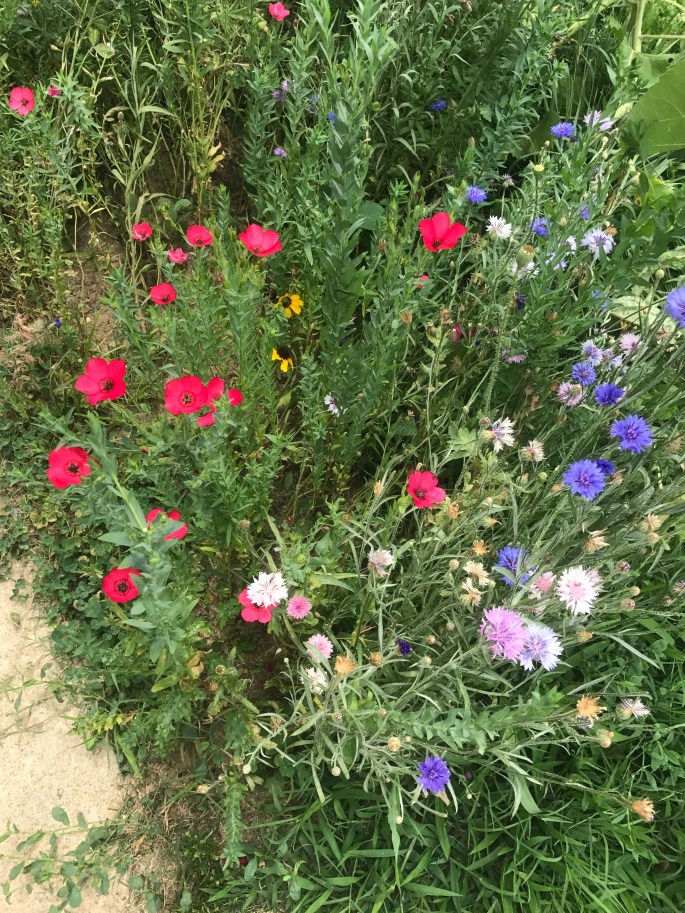
Just as these flowers add beauty to its sandy surroundings, so too, do I want to add beauty in what is often perceived as an ugly world.

To be certain, what I offer in my writing are my lessons to learn and my inner truths; however, it is my hope that a few of these pieces will resonate with you, my Dear Readers.  For it what is a writer and her writings, without a reader? As I develop this website/blog, I hope you will decide to follow along as I learn and grow in the many lessons life offers me.  Further, I welcome your feedback, comments, and your observations on all of the simple truths abounding around us as we are all spiritual beings sharing this earthly experience called life.

IMG_1489
Just as my daughter recently gathered beautiful sea glass & stones from the detritus of the sea shore after a storm, so too, do I hope to gather beautiful lessons from the storms of life.

“Sometimes you’re too busy looking down that you forget to focus on where you’re going.”—Unknown

“My life is full of mistakes. They’re like pebbles that make a good road.”—Beatrice Wood


“Mommy, Mommy,” her doleful voice implored me out of a deep sleep.

At the time, my daughter, Madelyn, was a mere five years of age and had nearly completed her first year of Kindergarten. Throwing back my covers and walking into her room, there sat my tiny daughter on her knees in the middle of her bed, donned in pink, silky-like pajamas, blonde hair tousled about her head like the blue bird’s nest just recently crafted near our barn. Tears streamed down her impish red face.

“What’s wrong?” I asked as I took her in my arms.

“My test, my test. Mrs. Miller is going to be mad at me. I missed two questions.” She described with great solemnity two questions on the end-of-the-school year standardized test she was certain she had missed. I did not realize it at the time, but this was my daughter’s first real anxiety attack. I’m not sure how I should have handled it even now as I reflect back to that night. I simply tried to assure her that I was positive Mrs. Miller, her Kindergarten teacher, would not be upset with her; however, Maddie would not be consoled for the longest time period. Her young child’s heart was overflowing with grief.

When I spoke to Mrs. Miller the next day, she confirmed that Maddie had indeed missed the exact two questions she vividly described to me during the previous night. However, Mrs. Miller further added that she was fairly certain that Maddie had also earned the highest score in the class. Further, Mrs. Miller added she would try to help Maddie change the narrative in her head from, “I made a mistake,” to “Look how many questions I answered correctly.”

This story often enters my mind for a number of reasons—not the least of which is wondering if I could have prevented what Maddie would later come to name as her “worries.” Did I do something, or not do enough of something, to cause her anxiety. Where did I fall short as mom? Then, just like long-ago Maddie, I lose sight of all of the ways in which I loved and parented well; and instead, focus on all of my mistakes.

IMG_0795
My daughter, Madelyn, at her Kindergarten graduation.

Recently, my husband, John and I were hiking a beautiful trail in Virginia. This wooded path followed, and even crossed over, a meandering shallow, rocky river. Along the path were ethereal butterflies, dainty wildflowers, and the orchestral sound of waterfalls.

About half a mile or so into this peaceful hike, John and I encountered two other hikers. They were affable and engaging. After a few exchanges of pleasantries, they warned us of a snake sighting they had just experienced on the trail. Five or so minutes later, I realized the whole dynamic of our hike had changed—at least for me.   Instead of taking in all of God’s wonders around me, my head was continually down as I searched for snakes. I even initiated a discussion with John about how well snakes camouflage into their surroundings, acknowledging that what often looks like a stick or twig could be a snake.


Both of these stories are such a metaphor for life, especially given our current cultural climate. How easy it is to become wrapped up in negative sound bites, trivialities, and short-lived dramas just as Maddie focused on questions missed, rather than questions answered correctly; and, I began searching for snakes, ignoring all the bountiful beauty along the mountainous, river trail. It often seems that our human nature has a tendency to overlook the numerous positives in life for which to be grateful, and instead, we drill down on the distraught, dire, and/or dreadful occurrences.

IMG_0968
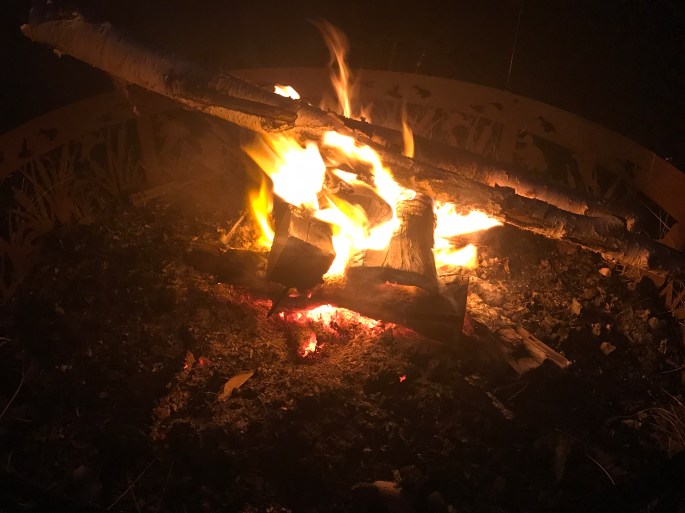
A fire can be a tool of damage or a tool of light, depending upon both perception and use. Perhaps, we too, can be ignited from within–shedding a positive tool of light for others.


God created us in His image. Further, he fashioned this beautiful planet, brimming with abundant resources, magnificent sights, and numerous good people. Yes, indeed, there is evil in the world—just as there was in the story of the Garden of Eden. While identifying good from evil is an important skill, we must not forget the goal of our ultimate heavenly journey, and willingly lead others to this same light.

IMG_1503
Just as the moon illuminates the night time sky after a storm, so too, should we offer a positive light to others.

Therefore, it is my belief (although it remains very much a practice of which I must continually remind myself), that we have a choice. We can focus on what we perceive as personal mistakes; such as, so-called flaws of self, loved ones, and friends; or, perceived errors at a local/national/global level; or, we can be the flashlight for others, and ourselves—shining a beam on all the good that has been produced and can be accomplished. Each person can choose to fall into the trap of drama; or, instead, create an alternative narrative—not only for you, but also for others, just as Mrs. Miller attempted to do for my dear, distraught daughter all those years ago.

IMG_1486
Clearly, this plant is thriving regardless of its rocky surroundings–so too, can we!

I recently read a quote stated, “In today’s world of accelerating change and challenge, those who know how to pray must teach those who need to.” These words symbolically resonated within me—not that we need to literally go around offering to teach others how to pray (Although, perhaps, that might not be a bad thing.)—Rather, I believe those of us who can, should limit the amount of time focusing on the “wrongs” in the world; and instead, refocus on how we can create a positive impact.

IMG_1500
In order to see the rainbow, we must learn to weather life’s storms.

From forgiving yourself for so-called past mistakes, to appreciating the lesson(s) they taught you; from smiling and conversing with the poorly paid cashier at the local grocery store, to offering a prayer for that same person later in private; from taking time to listen to an anxiety-ridden friend fighting an incurable illness, to initiating or participating in a campaign to help fund research for that illness; from sending an, “I’m thinking of you,” text to a friend or family member, to writing a positive letter of “thanks” on social media regarding a business, school, local church, or even community leader that “got it right”—there are copious ways to offer an optimistic story. Just as a spotlight directs the audience’s focus in a dark theater, so too, can we offer light in an often dark world.


IMG_1425
Image from yoga_digest as found on Instagram.  It’s just too positive not to share!


POST NAVIGATION

LEAVE A REPLY

Charlottesville, VA a historic and nature-centric place to visit

“I read; I travel; I become.”—Derek Walcott

“Traveling—it leaves you speechless, then turns you into a storyteller.”—Ibn Battuta

If you know my husband, John and me, then you know we thoroughly love to travel. In fact, we’ve become pretty good at traveling on a budget. Traveling is such an expression of whom we are, that we may forego other so-called luxuries, such as, up-to-date electronic gadgets, home decor, a gloriously flowered front lawn, and so forth, in order to set aside money for traveling. Therefore, even though our daughter is about to begin her college journey, and we already had a family trip planned, John still suggested that we should take a short excursion to celebrate our 28th wedding.

In order to keep it within our budget, we decided to travel during the workweek as lodging prices are often cheaper Monday through Thursday. After talking with our brother-in-law, Tony Humphreys, we decided to visit historic and nature-centric Charlottesville, VA. John investigated various travel sights, including one of our favorites, VRBO (Vacation Rentals By Owners), in search of reasonably priced lodging. He was able to find an adorable studio apartment for us to rent for less than the cost of a hotel room. Therefore, we could take in food/snacks and make use of the well-stocked kitchen. Additionally, the owners provided a variety of coffees, teas, juice, and milk as well as linens, paper products, soaps, shampoos and so forth.

The apartment was nestled inside and below a home built in the 1830s, and may have been servants’ quarters in a past time. We were less than five minutes from I-64, and one mile away from downtown Charlottesville. Additionally, the house was located near the Rivanna Trail, a 20-mile “urban wilderness” hiking trail, while its backyard bordered the Rivanna River, a 42.1 mile-long tributary of the James River. We were situated in what is called the Woolen Mills area, one of the oldest neighborhoods in Charlottesville that was developed around the Charlottesville Woolen Mill, which operated from the mid-1850s to the 1960s. Furthermore, three doors down from our place of stay was the historic Woolen Mills Chapel, built in the 1880s to provide a center for both ministry and meetings for the area; and, it continues to serve in the same capacity.

As we have visited the Charlottesville area on a number of occasions, usually from a historical perspective, we decided to explore the city, and beautiful area around it, with a fresh perspective. We began by taking advantage of the Woolen Mills neighborhood. Of the four days we were there, we took time out of three to explore, walk, and wander this charming, lush, and peaceful river area of town. From strolling along the banks of the Rivanna River, to visiting the historic church; from traversing through the neighborhood taking in the variety of architecture, to exploring our home owners expansive lawn/garden with numerous art pieces and sculptures created by the owner; and, from climbing a few local hills, to listening to a babbling brook that fed the Rivanna River—this was unique and pleasant area.


We had hoped to fish, but that did not work out as I had neglected to pack the proper footwear for wading. However, we did talk to several locals who stated the Rivanna River was great for ultra light tackle action for bluegill, rock bass, largemouth bass, sunfish, crappie, and John’s favorite: smallmouth bass. Additionally, there is a local outfitter company, Rivanna River Company, with whom we spent time talking. This company offers boats and equipment, self-guided and guided adventures via kayaks, canoes, and tubes. However, given we were adhering to a budget-friendly excursion, we stuck to exploring the Rivanna River via the trail and riverbanks.

Located a short walk from our apartment was Riverview Park, a nice community area directly beside the Rivanna River. The park has a paved, one-mile walking loop, playground, picnic tables, canoe/kayaking launching/landing, and even a small, sandy beach area complete with a short boardwalk. Additionally, there is a trailhead jutting off from the walking path that allows visitors direct access to the Rivanna Trail. John and I thoroughly loved this area and made it a point to explore it twice during the morning hours, including a ten-mile hike/walk one day.

Within a 10-15 minute drive, was the Historic Pedestrian Downtown Mall. We spent one afternoon ambling along and around this eight-block business area that also happens to be one of the longest pedestrian malls in the United States. Within the mall’s picturesque, redbrick pathways, lined with sprawling oak trees, is an eclectic mix of restored and renovated buildings, including a hands-on Virginia Discovery Museum for children, movie theaters, Charlottesville Visitor Center, and concert pavilion. Additionally, there are more than 120 shops as well as 30 restaurants, many, we noticed, with outdoor dining. Plus, for those interested, there is a bus running (for free) every 30 minutes between the mall and the historic University of Virginia for those inclined for more sight-seeing adventures.

Our last full day in Charlottesville was spent meandering along the Sugar Hollow area and hiking the Moorman’s River trail outside of the charming and quaint town of Crozet, VA.   This beautiful 5.0-mile path has a 460-foot elevation gain. However, the well-marked trail possesses such a gradual grade that we did not particularly feel as if we were hiking uphill until we noticed the ease with which we traipsed on the return.   The path follows a rocky, shallow spring that feeds into the Moorman River. Depending upon the water level and amount of recent rains, there may be several visible waterfalls and swimming hole. During our visit, the waterfalls were not per se prominent, but the swimming hole certainly appeared to be a popular spot.   Even without spectacular waterfalls, John and I never tired of the sound of babbling waters.

Lastly, no trip would be complete without tasty food; and we certainly had overall positive dining experiences while in Charlottesville. One travel trick we have learned to keep expenses low is not to dine out for breakfast and lunch. Then, for dinner, choose restaurants with happy hour specials for food and drinks. Additionally, with the help of Trip Advisor, we are able to find copious dining venues not only with excellent happy hour deals, but also offering a variety of gluten-free choices, a consideration for my personal dietary needs. Two such restaurants John and I would highly recommend when visiting the Charlottesville, VA area are the Sedona Taphouse and Travinia, an Italian Kitchen and Wine Bar.


Overall, our trip to Charlottesville was positive, pleasant, and peaceful. Needless to say, we highly recommend this engaging, educational, and entertaining area of Virginia near the beautiful Blue Ridge Mountains. For more specifics on our hiking adventures, dining experiences, and more photos please visit my website/blog stephsimply.com

IMG_1280


Sometimes we must quiet ourselves, look inward to find the right path

“Don’t spend time beating on a wall, hoping to transform it into a door.”—Coco Chanel

          “A man will be imprisoned in a room with a door that’s unlocked and opens inwards; as long as it does not occur to him to pull rather than push.” Ludwig Wittgenstein

As I stepped out of our car and into the garage, I immediately noticed the twittering of a bird. This was not, necessarily, an unexpected sound during the month of June with the garage door open. Chirp, chirp, chirp–it was a frantic sort of cry. Chirp, chirp, chirp–the sound became more rapid, more insistent. Chirp, chirp, chirp—why was this sound so loud? Something nagged at my subconscious until my full attention came to rest on the source of this sound.

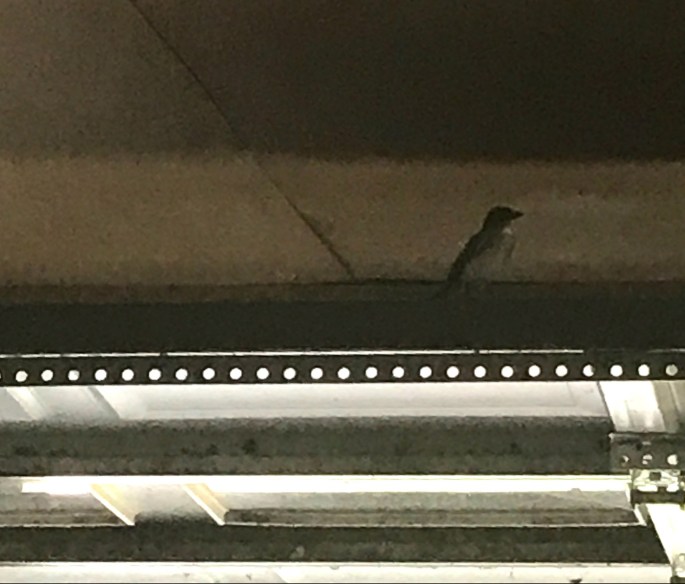
A small bird was in our garage. How long had it been here, I mused? I had left the garage door open while I ventured to the grocery store as my husband, John, remained home. It was perched on a shelf close to the ceiling directly opposite of the open door. Watching it, I noticed it fly upwards, hit its head on the ceiling, and alight once more on the shelf.   Next, it flew towards the wide garage door, but instead of banking down and left, it zoomed upward and right; then plopped down in seeming frustration on top of the garage door.

Tittering its complaints even louder, it burst into flight towards the narrow side door. By this time, John had stepped out into the garage and quickly opened this door in anticipation of the bird’s exit. Instead, our little winged friend mounted upwards and hit its head against the doorframe. Flittering in a dazed like fashion, it managed to make it back to the opposite side of the garage to that ceiling-high shelf once more. John dashed around the garage waving his arms, hooting, and saying things like, “Fly this way bird.” The bird attempted, several more times in fact, its urgent callings, miscalculations, and repeated banging of its head just above doors of escape.

John then opened the other garage bay door. Surely now, with three open doors, our mournful, anxious sounding bird could successfully escape the walls of our garage. Alas, no. Chirping lugubriously for an escape, it took full flight towards the newly opened door. Hope ballooned within my chest for this stressed creature of God, but then faded with an exhale as the bird mounted upwards, instead of gliding low, and came to roost upon the top of this door where it remained, appearing to surrender.

Meanwhile, John and I carried in groceries; however, because of the heat on the outside, and the air conditioning on the inside, a vexing fly worked its way into the house. As I put away groceries, it kept banging itself again one window and another. I would try to shoo it towards the back door while simultaneously opening the door, only for the insect to veer upwards at the last minute, missing the open door. What was wrong with these flying creatures? Then, the lesson hit me as Divine Providence was once again providing me with an object lesson.

I think back to one of my earliest dates with John. We were in a parking garage trying to exit it through a glass door. We could clearly see our destination on other side, yet the more we pushed the door, the more firm it held. Were we to be trapped in this garage forever? John pushed. I pushed. Why was this door locked? I pushed. John pushed. We pushed together. Pausing, we looked into one another’s eyes filled with questions of what to do.   Finally, it occurred to John to pull inward, instead of push outward, and the door opened easily.

As humans, so often we push and push under the illusion that we can control—control a situation, control our destiny, control another, and so forth. And yet, in all honesty, we are in control of very little. It is only when we relinquish control, look inwardly, and get quiet that we can hear the answers, the directions, and the solutions in whatever human situations we may find ourselves. Attempting to control an outcome, another human being, or a certain situation never works in the end. Ultimately, we can only control our own behaviors, actions/reactions, or words; and, we make the best choices when we take that inward gaze, allowing God to guide us. It is only when we put our full trust in God, that our direction, acceleration, and flight can be fully guided—but only our own—not that of others.

This was a hard and profound lesson as I witnessed the stunned bird, sitting motionless on top of the very door in which it could make its escape. Every now and then I would peek at this bird as it remained sitting, chest heaving, but voice now quiet. Had it given it up, or was it going inward to its earliest teachings with Mamma bird? Away I would walk, saying a prayer for the bird, and trying to ignore the pesky fly banging repetitively at the back door window. How many times have I witnessed loved ones, including myself, in a similar situation as that bird and fly? What a life metaphor.

Throughout my various positions in life, how many times have I tried to control another person or a certain outcome? Additionally, how many times have I tried to force something to happen in my own life without meditating on whether it was aligned with what I know to be true and right at my core? Further, how many times have I fretted over the behaviors, or circumstance of another, wishing these would change—wondering how I could change it? From war to politics, from drugs to poverty, from seemingly poor choices of friends to anxieties of loved ones, and so on, I must let it all go.

Instead, I must put into practice a saying I have often said to students of all ages in some variation: “You take care of you, that’s a full time job.” Life is not for me, or anyone else, to judge, push, and attempt to control. Instead, we must trust in Divine Providence, look inward, honor what we know to be true for self, and allow doors to open in Universal time—not ours.

Stepping out into the garage an hour or so later, I took in the bird, still poised on top of that garage door. Moments later, the birds wings defied inertia, gave lift, and accelerated swiftly, pitched right and slightly down, then soared, defying gravity and lifted out into the June afternoon never to be seen again.


Want to Feel Closer to your Creator? Spend Time in Nature

            “They will be like a tree planted by the water that sends out its roots by the stream. They will not fear when the heat comes; its leaves will be green. It has no worries in a year of drought and never fails to bear fruit.”—Jeremiah 17:8

          “One touch of nature makes the whole world kin.”—William Shakespeare

The day was mild and breezy with vivid turquoise skies that acted as a bright backdrop to billowy, clouds with ample spaces of blue in between. It was the kind of day that imbues my spirit with gladness, joy, and hope—hope for my loved ones; hope for my own personal journey; and hope, as corny as it sounds, for the world. It is as if I caught God smiling when He thought no one was looking—smiling at the potential instilled within each of us at our creation. Frankly, it was one of those gloriously cheerful days that if I were my younger self, I would have enwrapped myself with a mock-hug.

Alas, sigh, I am an adult; and, hugging myself in public would certainly provoke an odd look or two! Still, I walked along the familiar paths of Ritter Park with a Cheshire cat grin on my face soaking in as much of the radiance and positive energy my time permitted. Reflecting over the past months, it occurred to me how infrequently I have visited the park. In years past, I ran it almost daily, but a back injury abruptly halted my running, and for several months, even walking was prohibited.

Since August, when the back discomfort became too overwhelming to ignore and a doctor’s visit revealed three bulging discs and an extra vertebrae in my lower back, I began practicing yoga nearly every day in lieu of running, well, who am I kidding, slowly plodding along, in the park. That said, practicing yoga daily has been a positive side effect of my injury. My body, especially my back, core, and shoulders are certainly stronger. Additionally, because I tend to practice yoga first thing in the morning, I start my day with a mind that is more settled, centered, and peaceful—at least for a few hours!   However, I never realized how grounding it was for me to spend time outdoors with nature until this injury.

Therefore, each time I am fortunate enough to be outside for any length of time, especially at the park, I have a newfound appreciation for its uplifting benefits. One particular advantage for me is the lessons nature never fails to present my mind, especially if I am not plugged in to any device. It is as if brain fog lifts, and God is right there whispering lessons in the vibrations of the rustling leaves. And, this day, in particular, was no exception.

My eye was repeatedly drawn to the towering trees that line the paths throughout the park. In addition to taking in the outstretched and soaring limbs, I further observed the outspread roots splaying in all directions at the base of each trunk. So thick and sturdy were these roots, they seemed to be playing peek-a-boo through the grassy soil with passersby. Indeed, there was a lesson here for me to ponder.

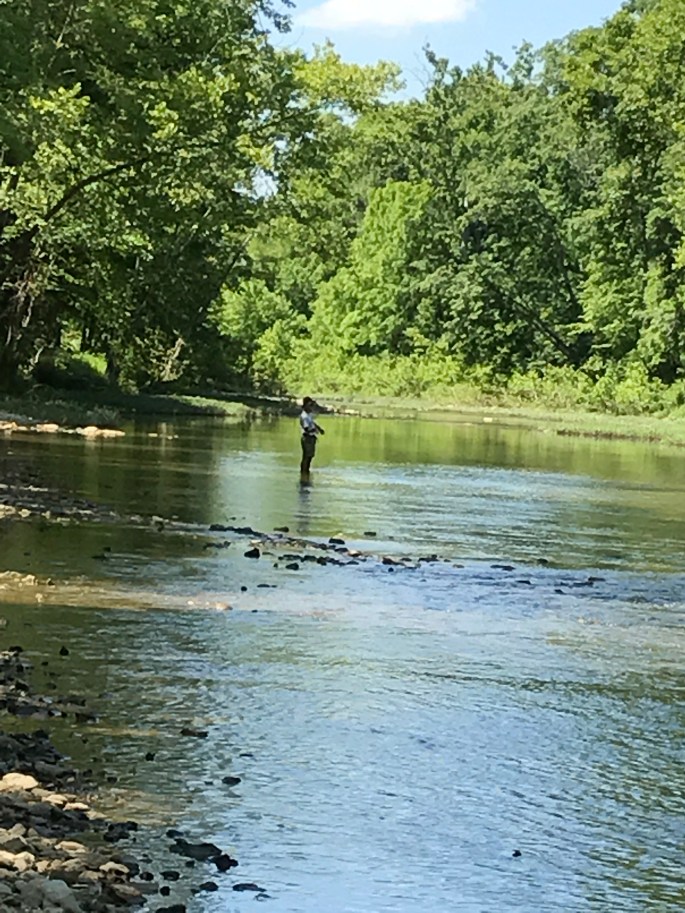
In the meantime, my husband, John, and my father, Larry Musick, were spending this glorious day fishing for small-mouth bass on Brush Creek, a nearly 60 mile-long stream that begins in Highland County, flows through Adams County, past the famous Serpent Mound and on to its ultimate merge with the Ohio River, approximately four miles west of Rome. As I continued on my ambling through Ritter Park, John began sending me pictures of Dad, the creek, and, of course, the smallies they were catching and releasing. Of noteworthy interest to me was a video of the bubblings, gurglings, and babblings of Brush Creek. The text accompanying the video simply stated, “I could listen to this all day.” I knew what he meant as I could listen to the sounds of the breeze playing in the trees, the twitterings of the birds, and the titterings of the squirrels all day as well.

Like the trees, Divine Providence is calling us to be deeply rooted in our faith, so deeply implanted, in fact, our roots, like the roots in the park, should be visible to those we encounter. Likewise, we must spread our branches wide enough to be open to receiving and appreciating the blessings that abound around us—even an injury has a blessing. In fact, it is those seemingly common miracles, like a beautiful sunny day, that should fill us with as much joy as those dancing leaves I overheard in the park.

Further, like the creek’s musical burblings flowing under, over, and around Dad’s and John’s feet, so we too should overflow with compassion and positivity to others even in the face of seemingly bad times—even droughts are eventually followed by life-giving rains. And, just like the stream kindly shared its “fruit” in the form of fish, we too must give to others—just as Dad and John gave back the fish to the stream.

All waters flow and merge together. Creeks flow into rivers, and rivers flow into oceans. Ultimately, all water evaporates to the heavens, returning to the ultimate Source. Likewise, so will our earthly bodies merge with all the souls before us, and the souls to come after us. The earth, the sky, the sun, the rain, the animals, the plants, and us—we are all from the same Creator. Why wouldn’t time in nature make us happy? My lesson to learn: time spent in nature brings me closer to my Creator the source of all energy, all peace, all wisdom, all hope, all joy, and most of all, love. We are one.