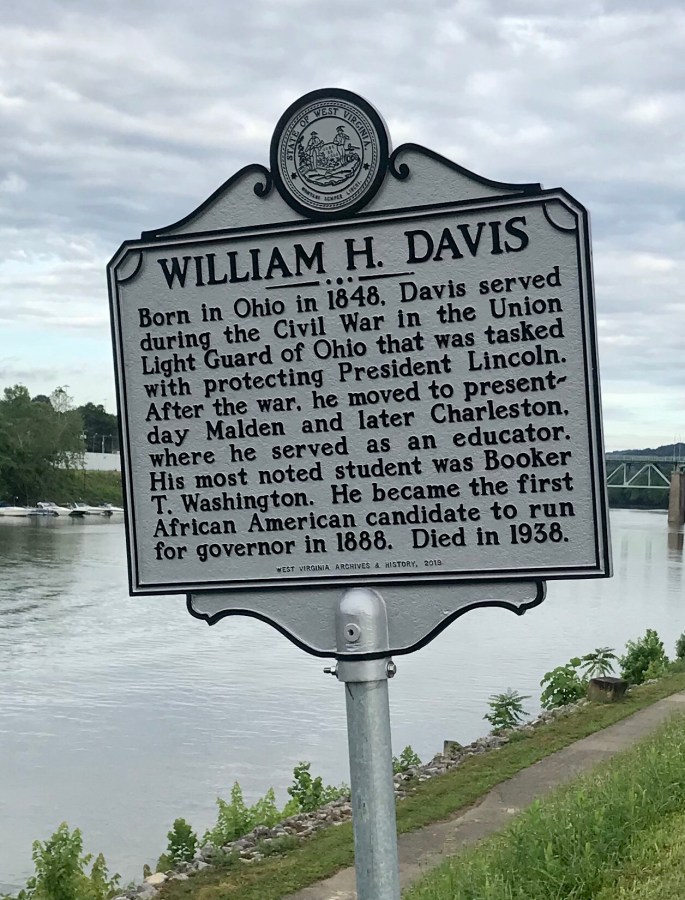
Explore WV, Part 1: Pearl S. Buck birthplace, Cranberry Glades, and the Falls of Hill Creek

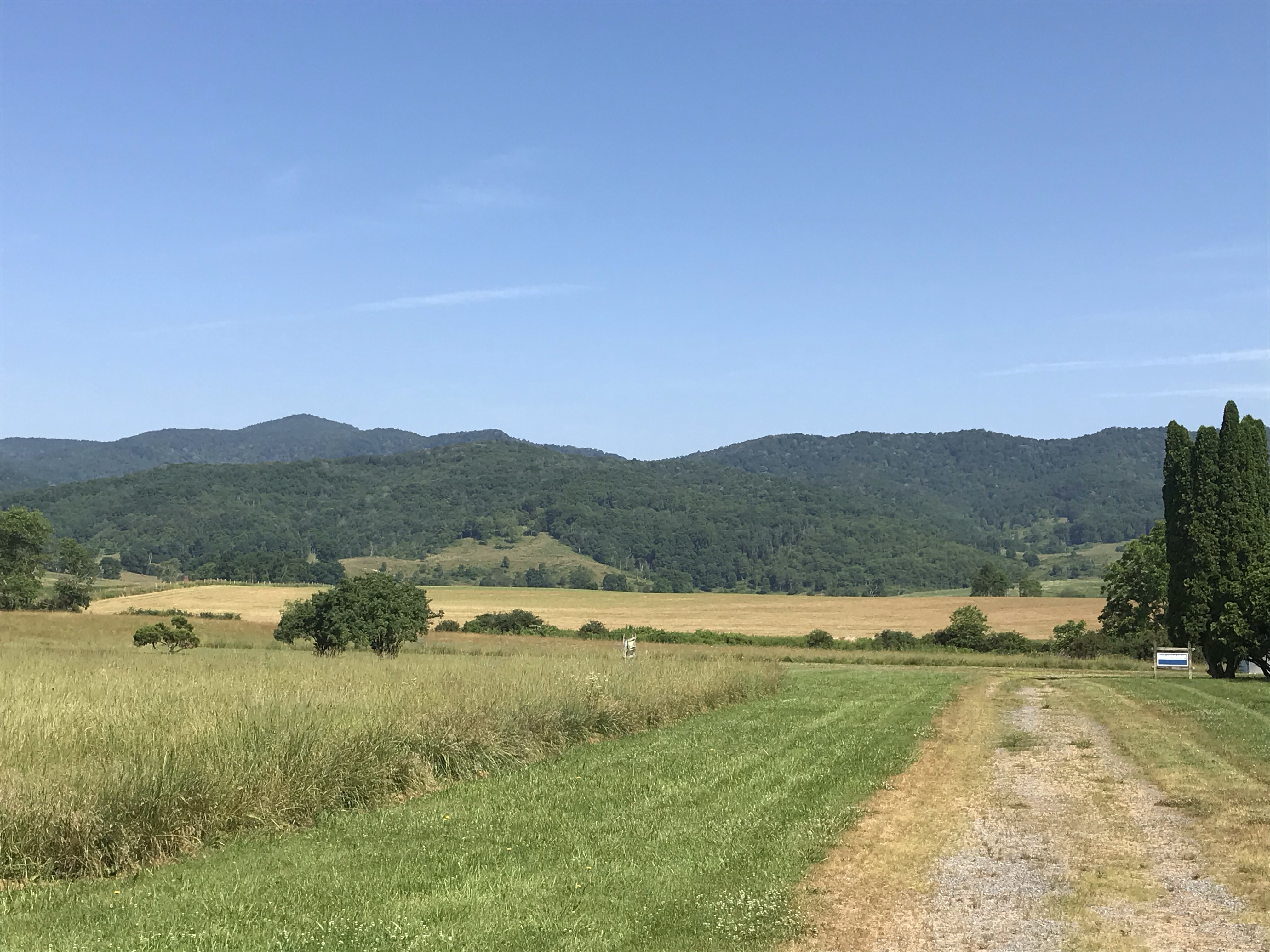
Pocahontas County has the largest concentration of public lands in WV.  Over 62% –totaling 349,000 acres–is either state or federal property, including five state parks and two state forests.

800 miles of hiking and biking trails can be found in Pocahontas County. 

Although there are approximately 9,000 residents in Pocahontas County, more than a million tourists visit the county each year. 

Eight WV rivers’ headwaters are located in Pocahontas County–All facts courtesy of WV of Tourism Research.

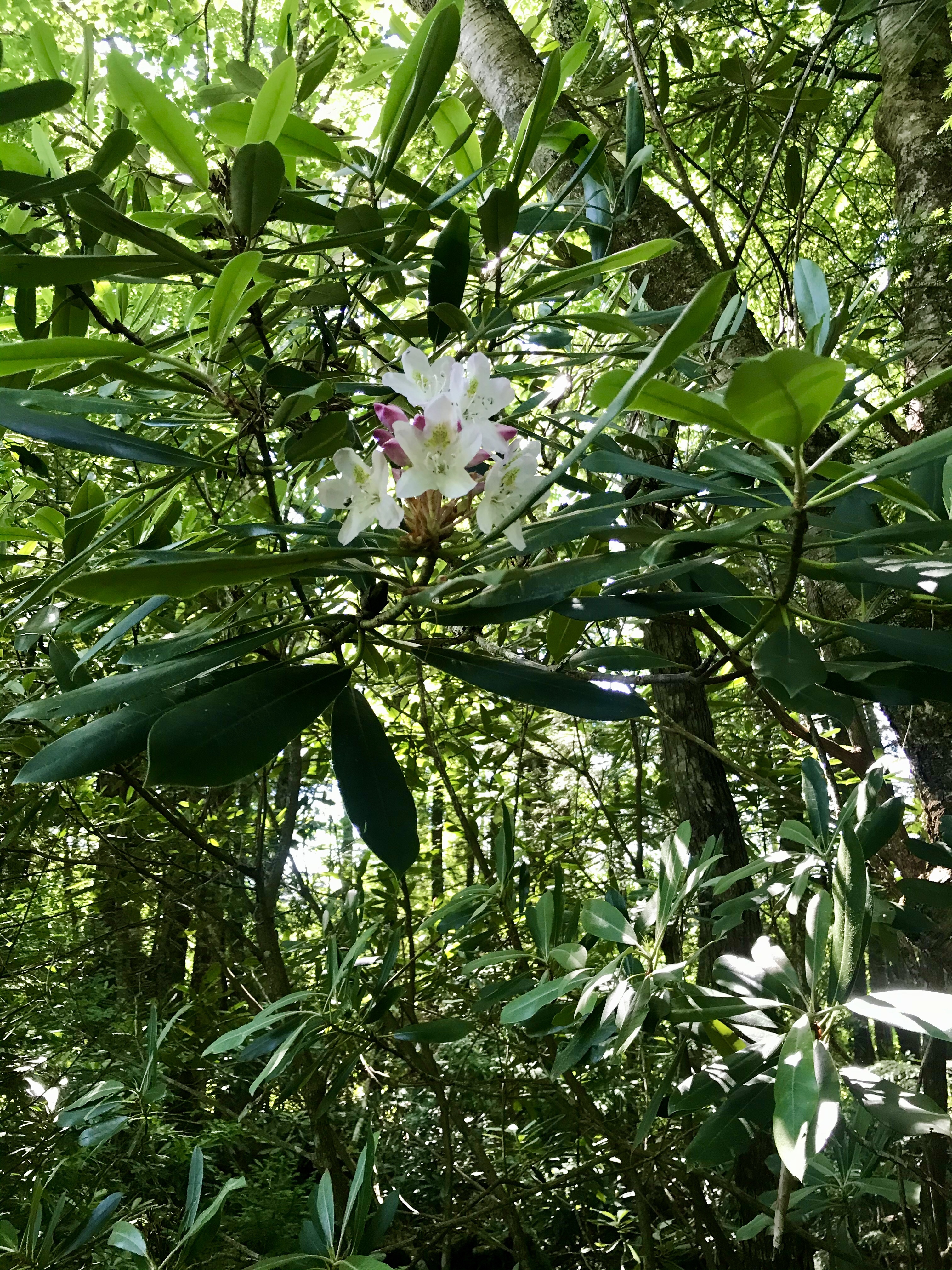
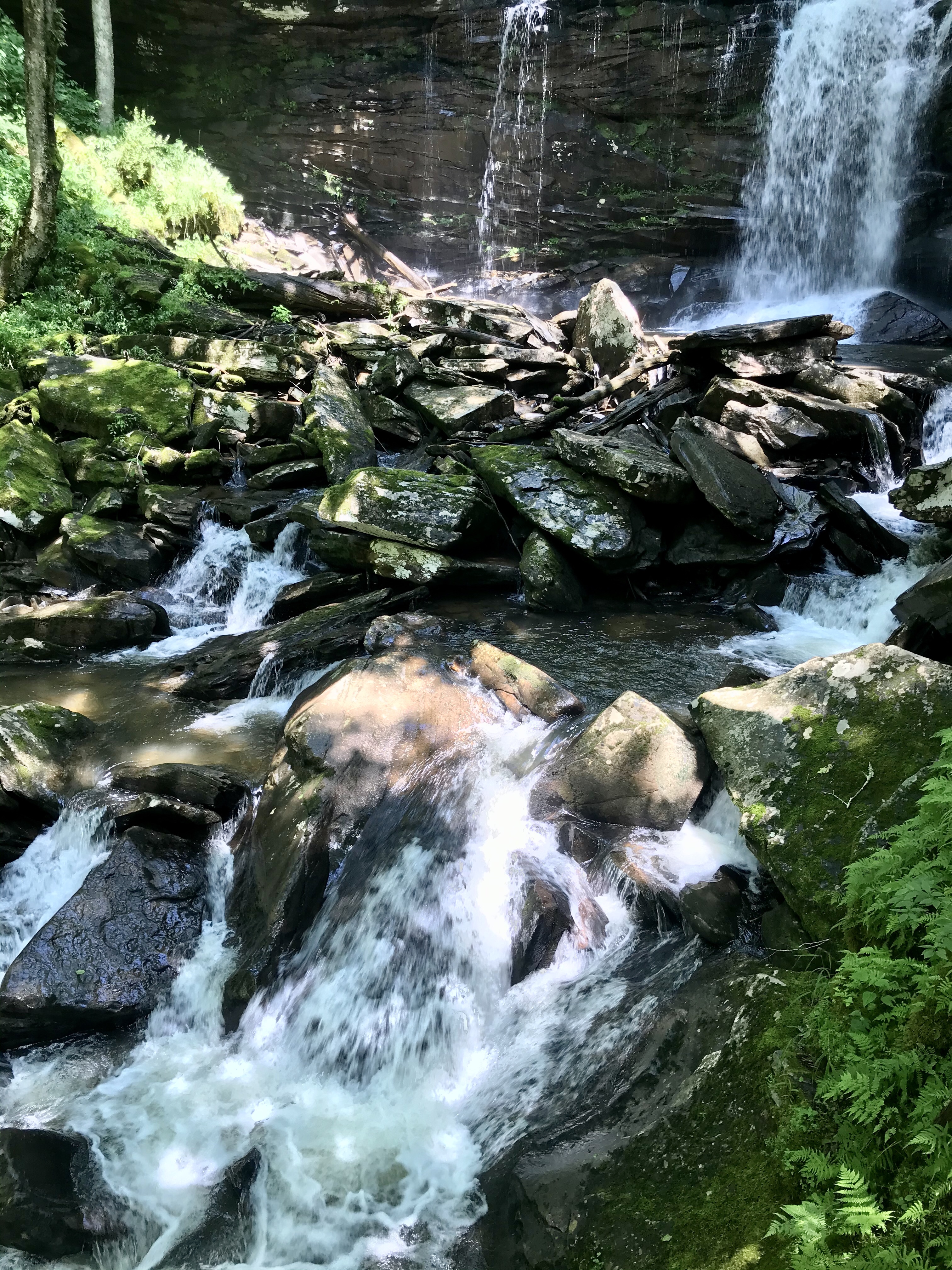
The Falls at Hills Creek in Pocahontas County, WV

We wanted to celebrate our 31st wedding anniversary with an excursion. However, there was (and is) no escaping the new reality of COVID-19–although, at the time of planning, cases appeared to be on the decline. Still, questions had to be asked.  Is it safe to take a vacation?  What risks are we taking?  If we do decide to try one, where do we go and for how long?  

Populated areas were immediately ruled out.  Additionally, we felt we should travel only a few hours away in case we needed to make a quick return trip home.  We kicked around several locations within our three state region in which COVID cases were low.  Then, I read the book, The Unquiet Grave by Sharyn McCrumb about the Greenbrier County ghost, and I knew where to visit. 

The book that inspired our trip.

Returning to Lewisburg, WV, designated one of the country’s coolest small towns, was the perfect fit for my husband, John, and I.  It is only 2 ½ to 3 hours away from the Tri-state area, it is a friendly town, close to out-of-doors/nature attractions, and home to several of our favorite eateries.  We could spend most of our time, weather permitting, bonding with the beautiful WV landscape, but still come back to town in time for dinner. (Again, at the time of trip planning, WV had very few COVID cases, and numbers nationally were on the decline. Little did we know . . .)

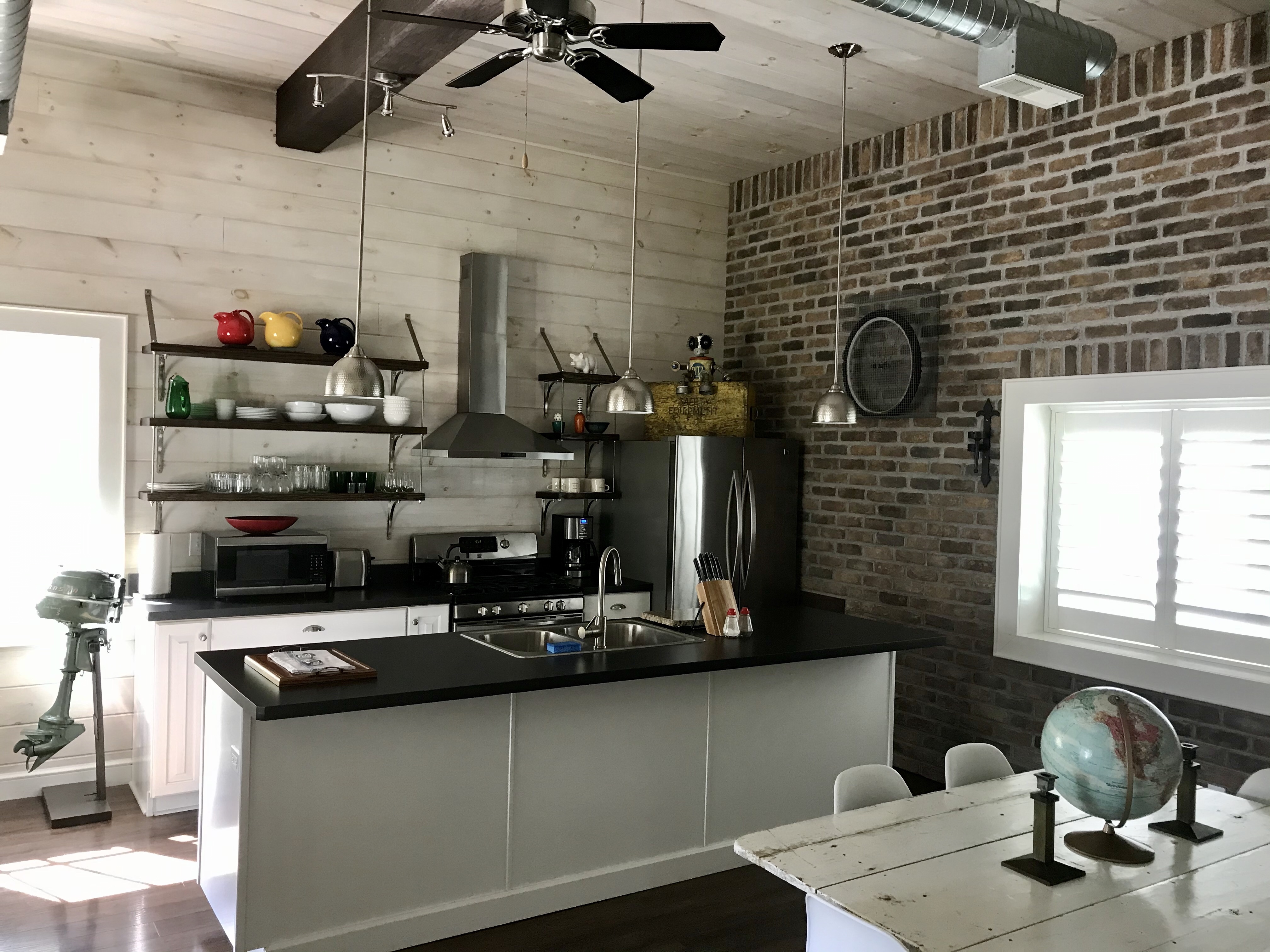
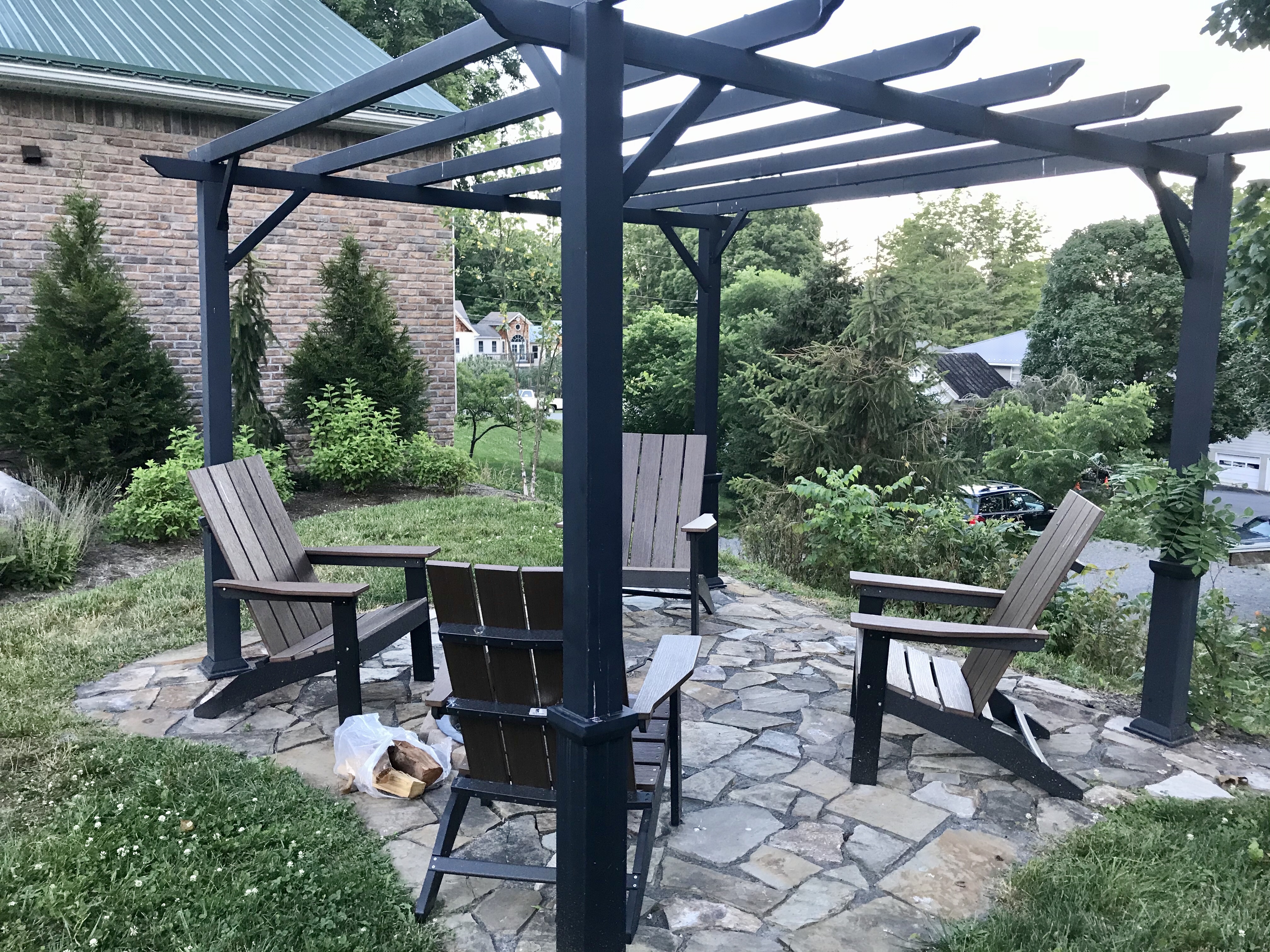
Originally, John had hoped that we could find a cabin along the Greenbrier River and its namesake trail, but all of the small cabins within our pocket-friendly budget appeared to be booked through most of the summer.  Instead, John happened upon a charming bungalow on Airbnb called, “Stone’s Throw Retreat” located, well, a stone’s throw from downtown Lewisburg.  It was super clean, comfortable, and well-appointed for our day-trippin’ needs.  Plus, the host, David, was attentive, communicative, and most helpful.

Nestled on a hillside, the bungalow was the perfect leaping off point for this trip. Located just off US Rt 60, and only two or so blocks from US Rt 219, aka, The Seneca Trail, “Stone’s Throw Retreat” allowed us to quickly escape town and head out to the less populous, and-oh-so-scenic, WV mountain side.  On a personal note, I did chew through an entire pack of gum during our trip to stave off car/motion sickness from the kiss-your-bottom curves winding up and down the mountains, but it was well-worth it–even if John bemoaned driving slower than he preferred to help assuage my heaving stomach, swimming head, and popping ears!

On this trip, we explored both Greenbrier County, and its next-door neighbor, Pocahontas County.  Both of these scenic counties offer plenty of options for out-of-doors explorations.  However, unlike other trips, we made very few plans regarding which sites we planned to explore!  In fact, with the exception of two locations, most of the locations we traversed were spur-of-the-moment decisions based upon what we saw along The Seneca Trail.

On our first full day in Lewisburg, we decided to explore parts of Pocahontas County, with the ultimate goal of hiking the Falls of Hills Creek Scenic Area.  This was a suggested spot by Jamie Surgeon, an employee of Del Sol, the restaurant in which we dined the evening of our arrival.  (Del Sol has a strict mask and disinfectant policy with large areas of empty tables in order to distance diners, and of course, offer take out options as well.)  What a great suggestion this turned out to be!  While in Pocahontas County, we spontaneously made the choice to visit two more places that were in route.

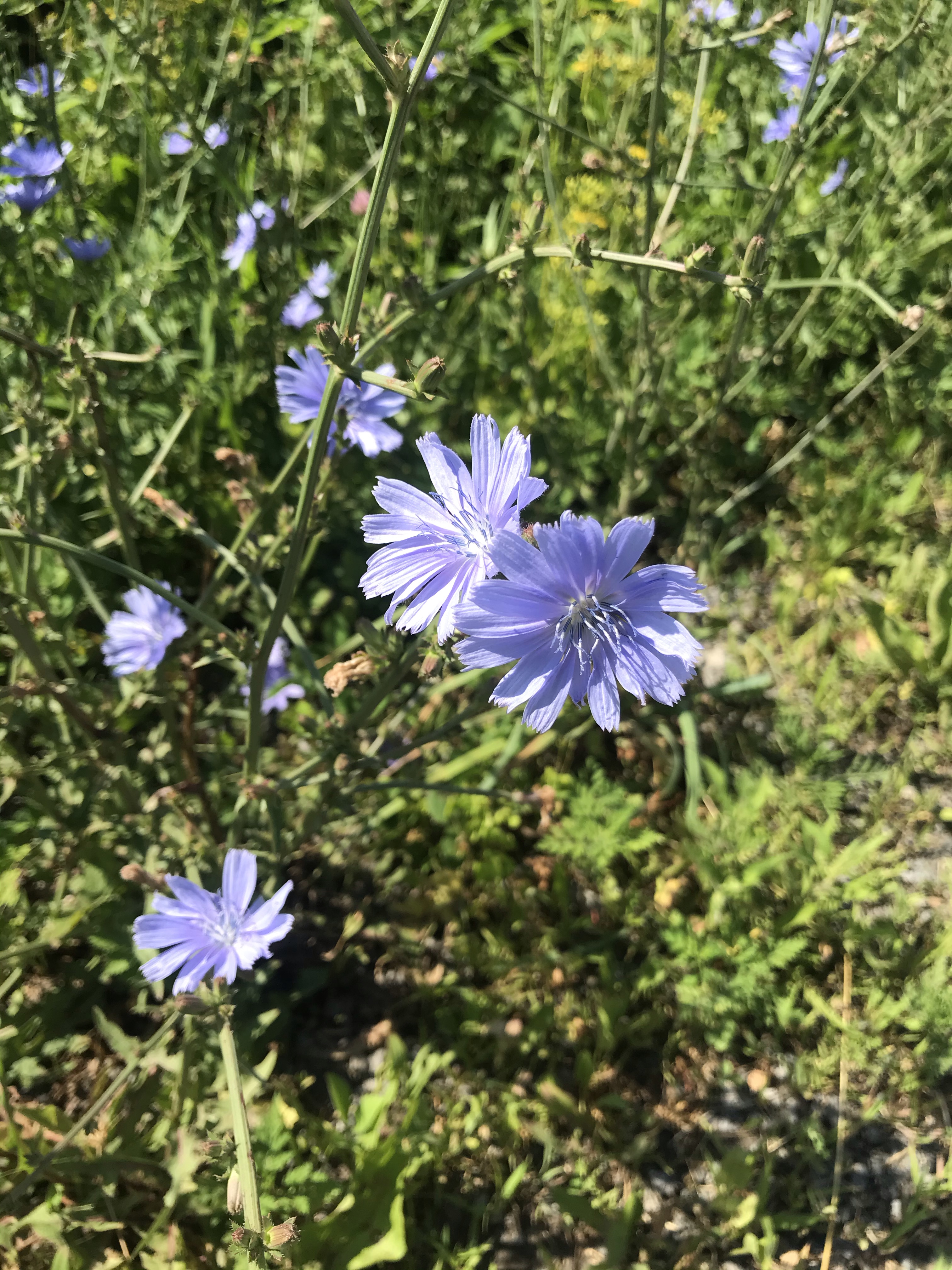
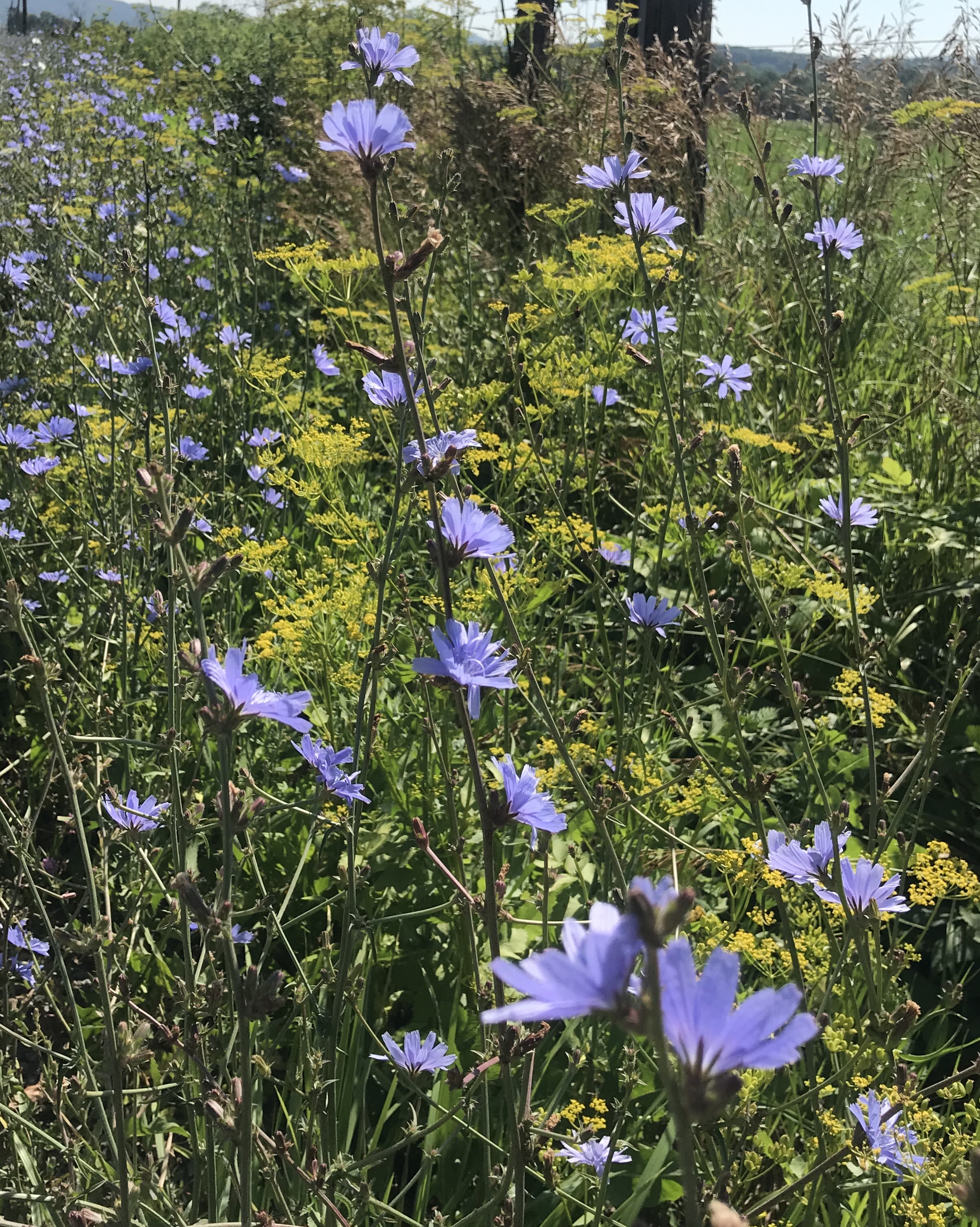
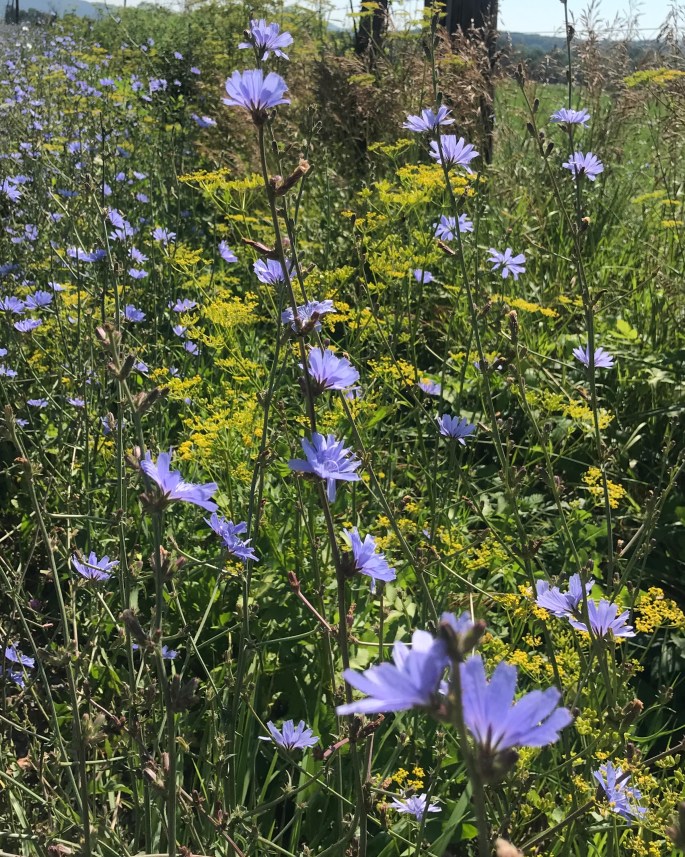
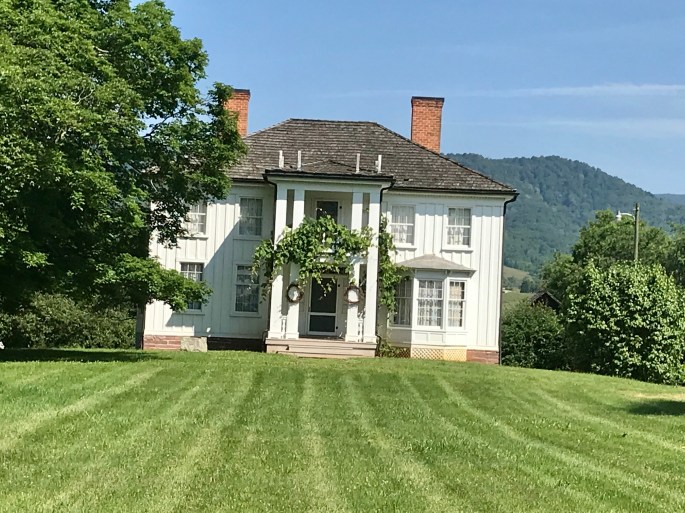
Our first spontaneous stop of the day was at the Pearl S. Buck birthplace in Hillsboro, WV.  This picturesque country home is located alongside The Seneca Trail. Unfortunately, due to COVID19, the museum and home were closed.  However, it was still wonderful to stand there and honor the memory of a noteworthy female author who began her life in WV and won both a Pulitzer Prize and a Nobel Peace Prize. Additionally, the road alongside her homestead was lined with beautiful wildflowers in all of their blossom glory seemingly bowing their heads in the breeze in homage to Buck’s memory.

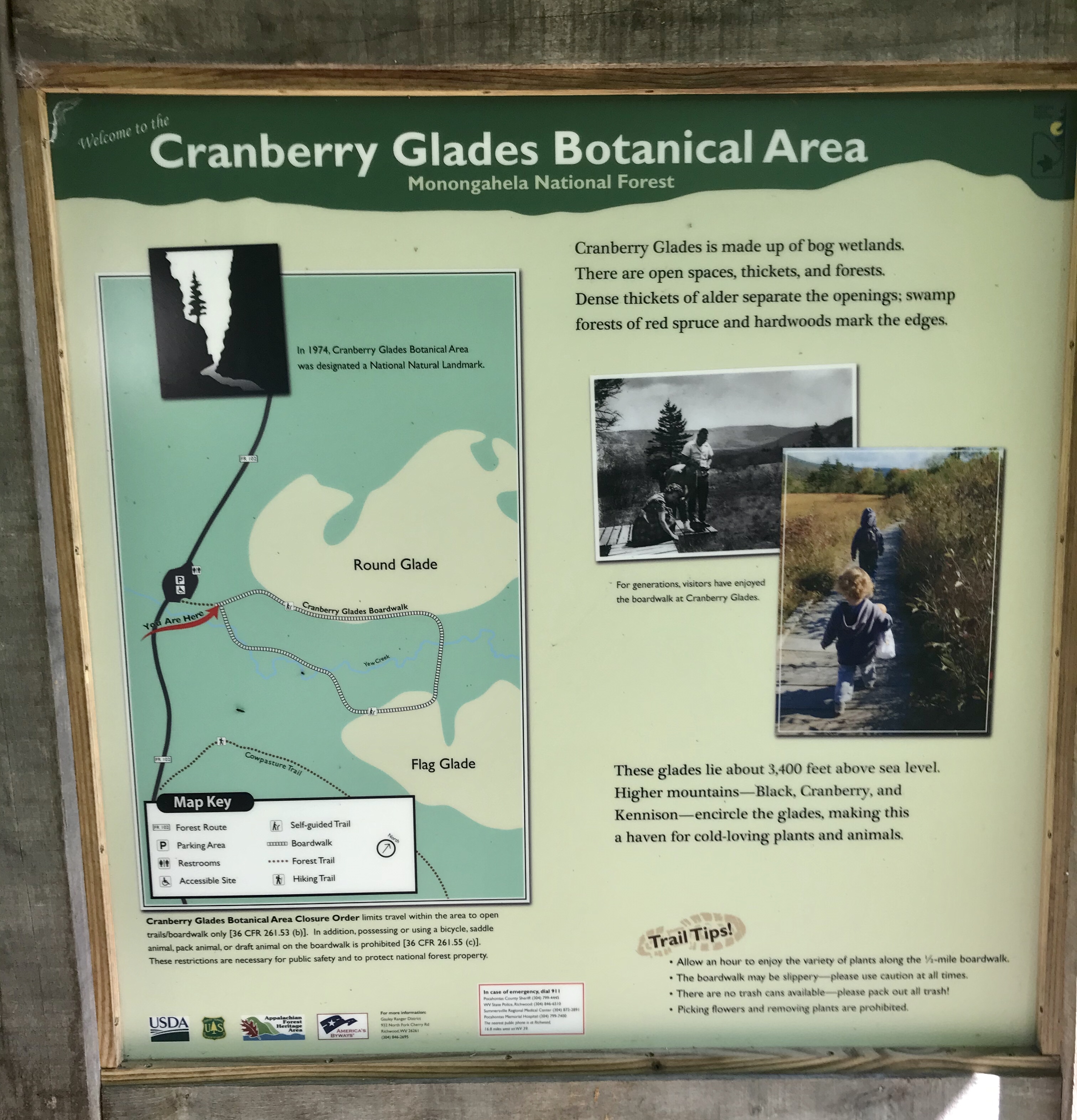
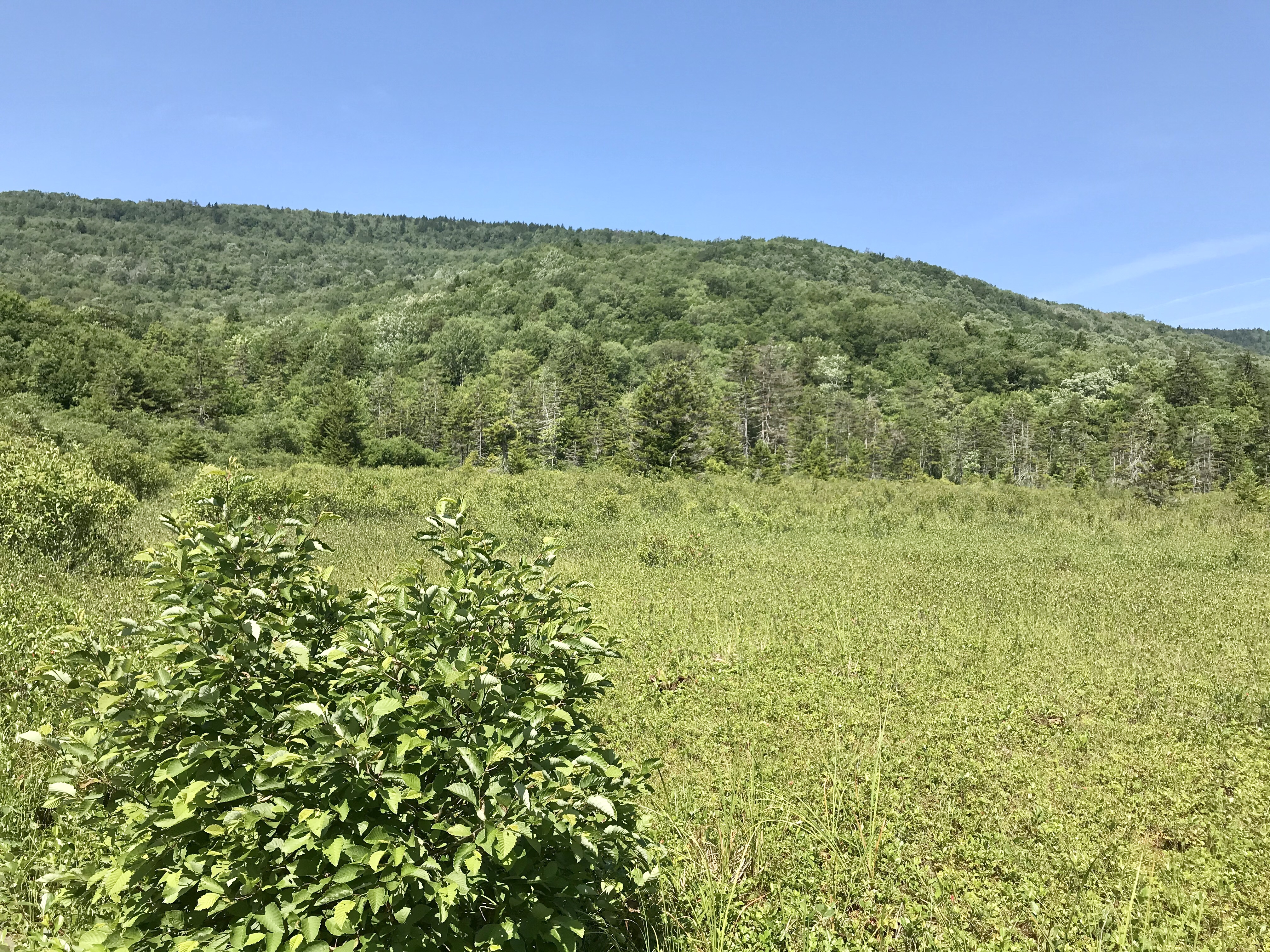
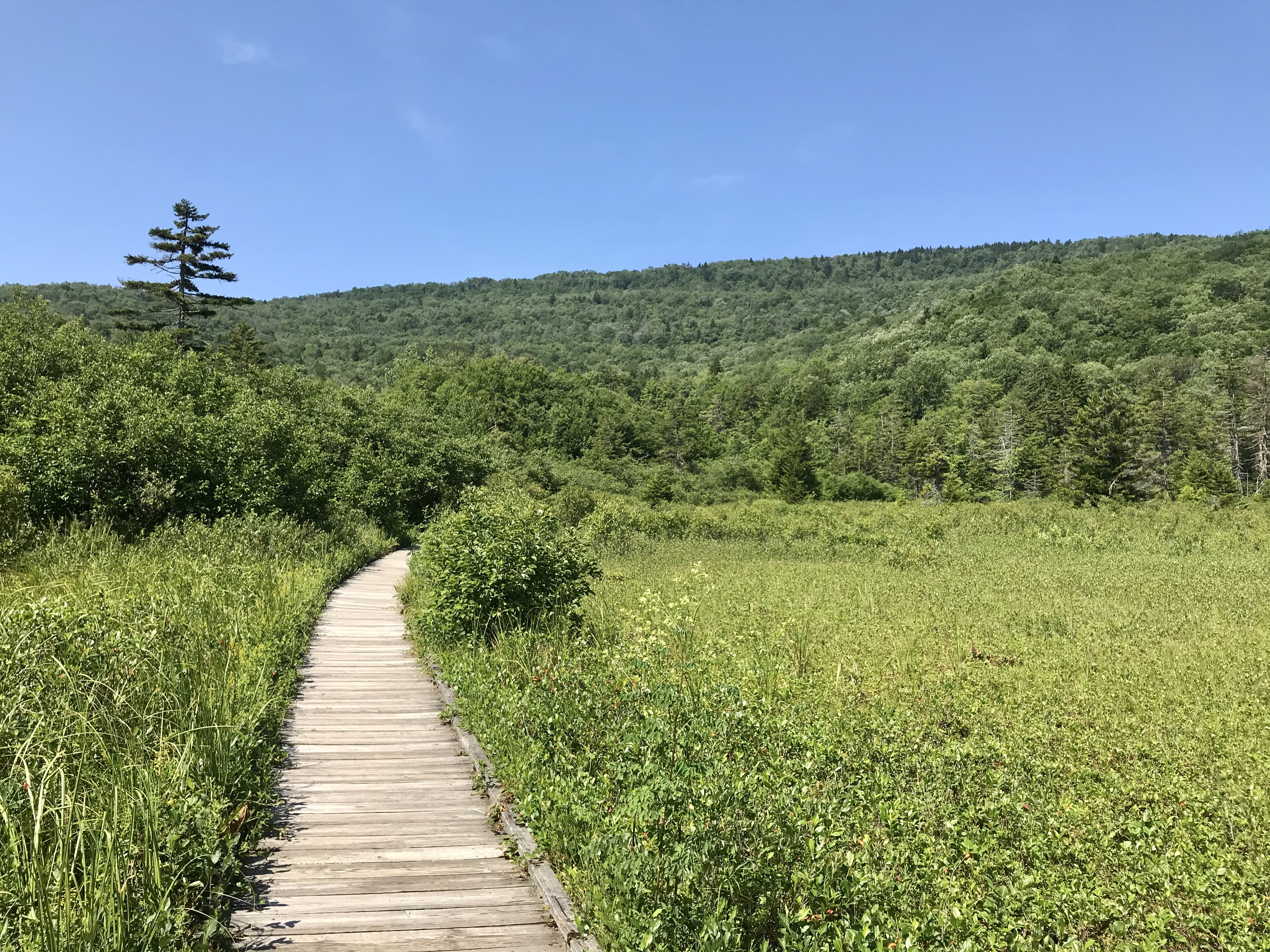
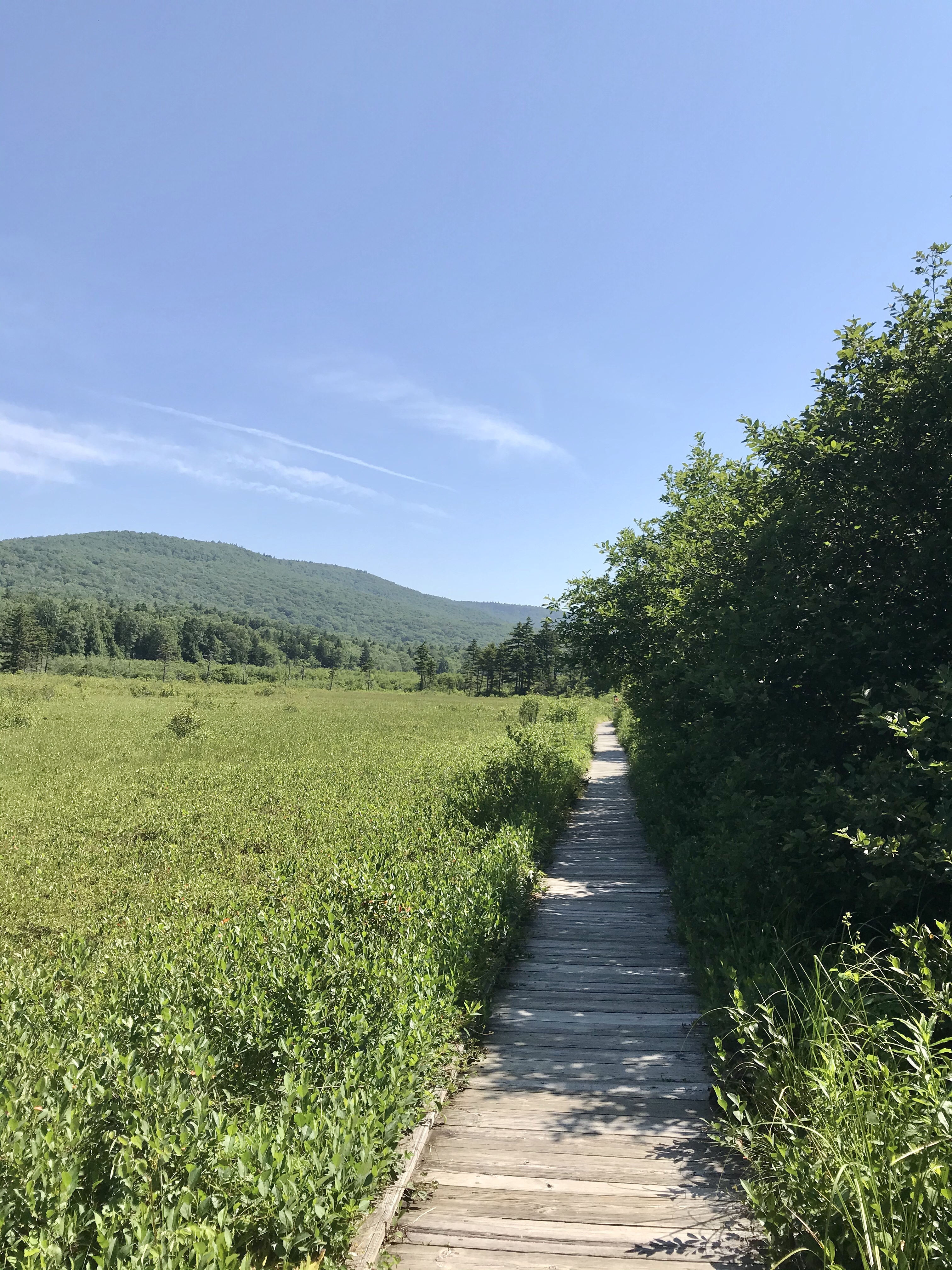
 Next, we made the impromptu decision to visit Cranberry Glades Botanical Area.  This protected area of bogs is the largest in WV.  Bogs, which are unique and ancient acidic wetlands, are typically found in northern regions of the US or, more commonly, in Canada.  Many of the plants, located in these four bogs, are said to be descendents of seeds from nearly 10,000 years ago, and a few of the bog plants are even carnivorous!  The half-mile boardwalk, constructed for visitors to view this unique landscape without harming it, was under construction for repairs/maintenance at the time of our visit, so we were only able to see part of the bogs.  Nonetheless, the sounds, pure air, and scenery were peaceful, serene, and certainly worth visiting!

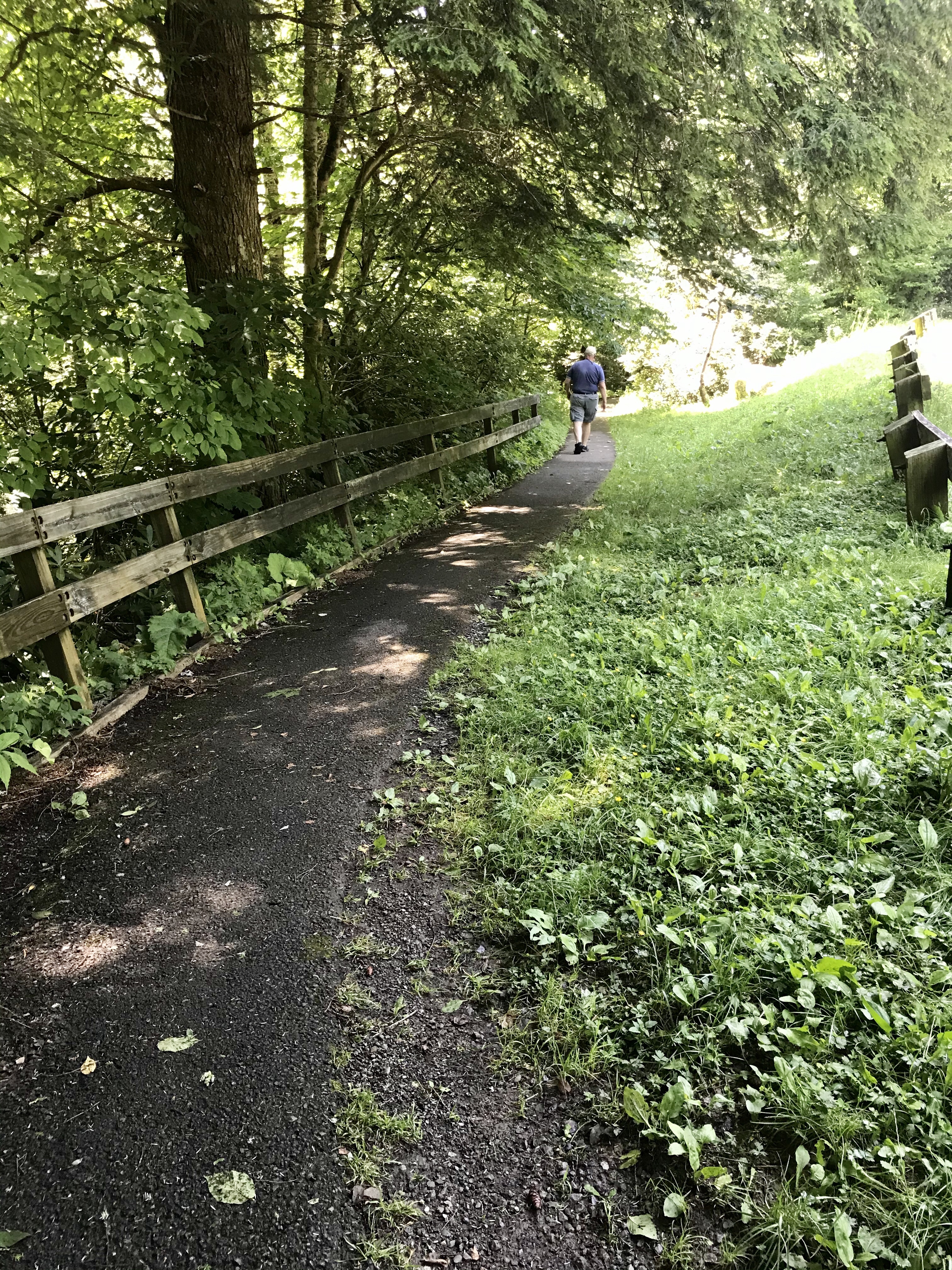
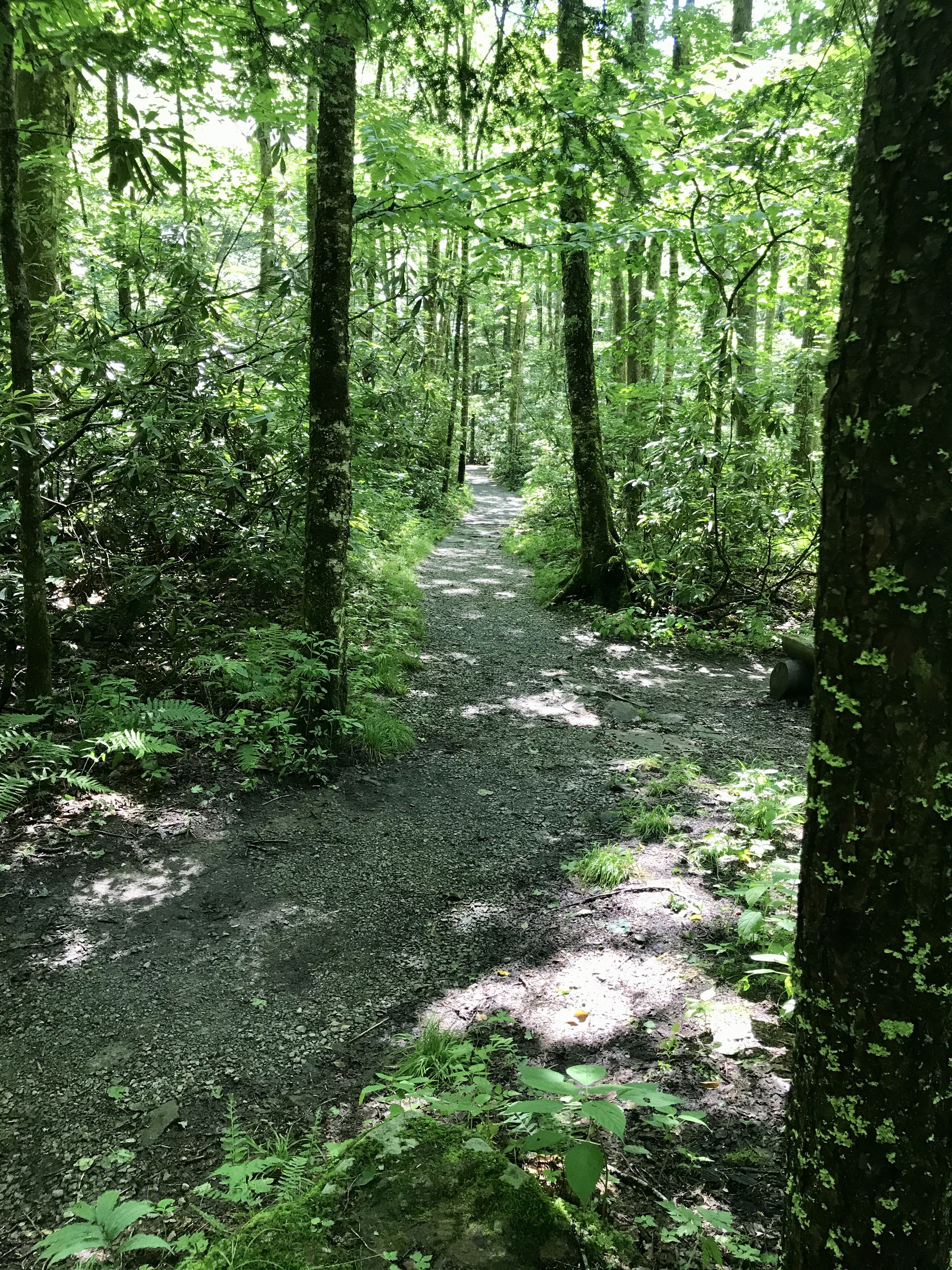
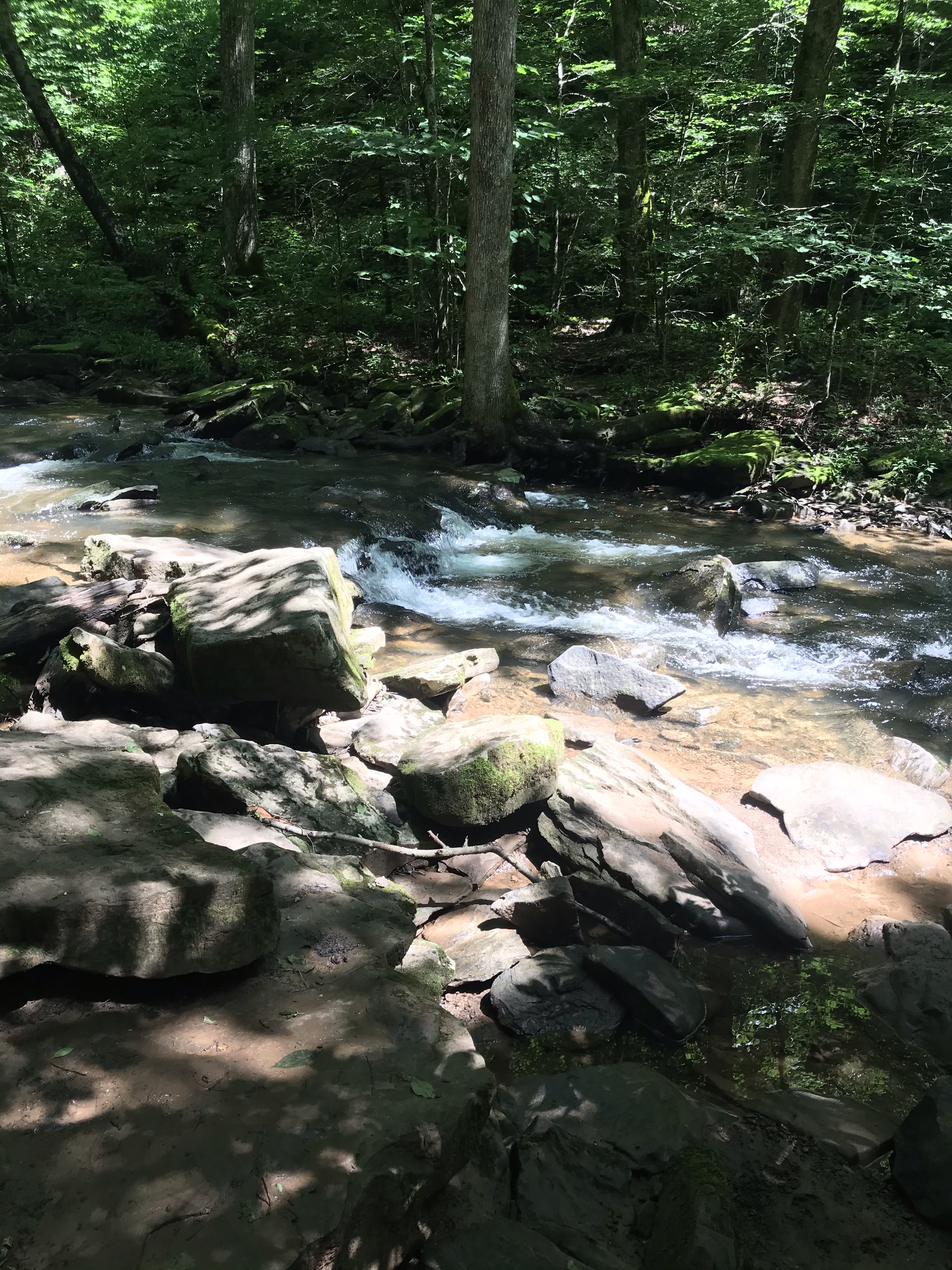
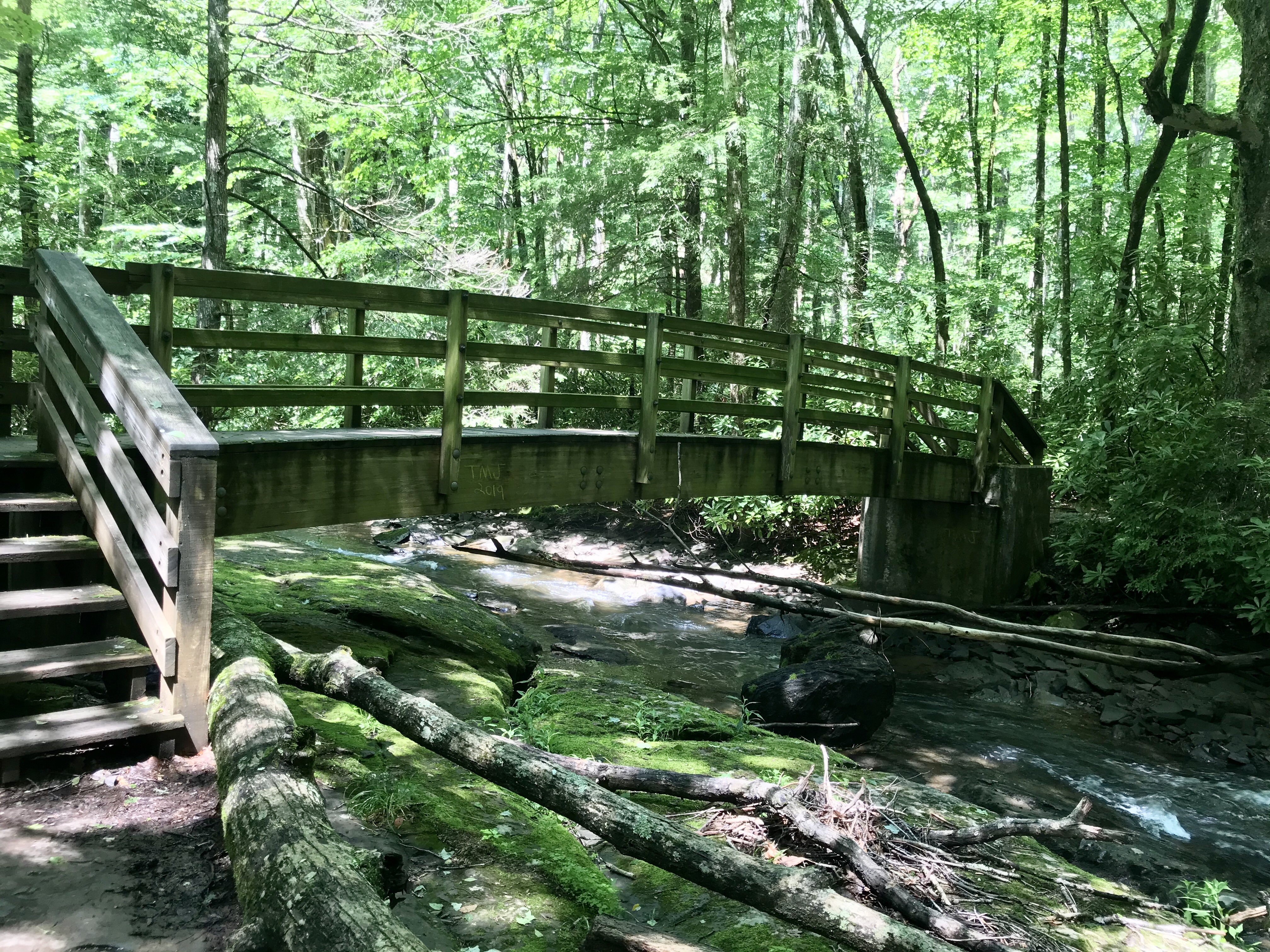
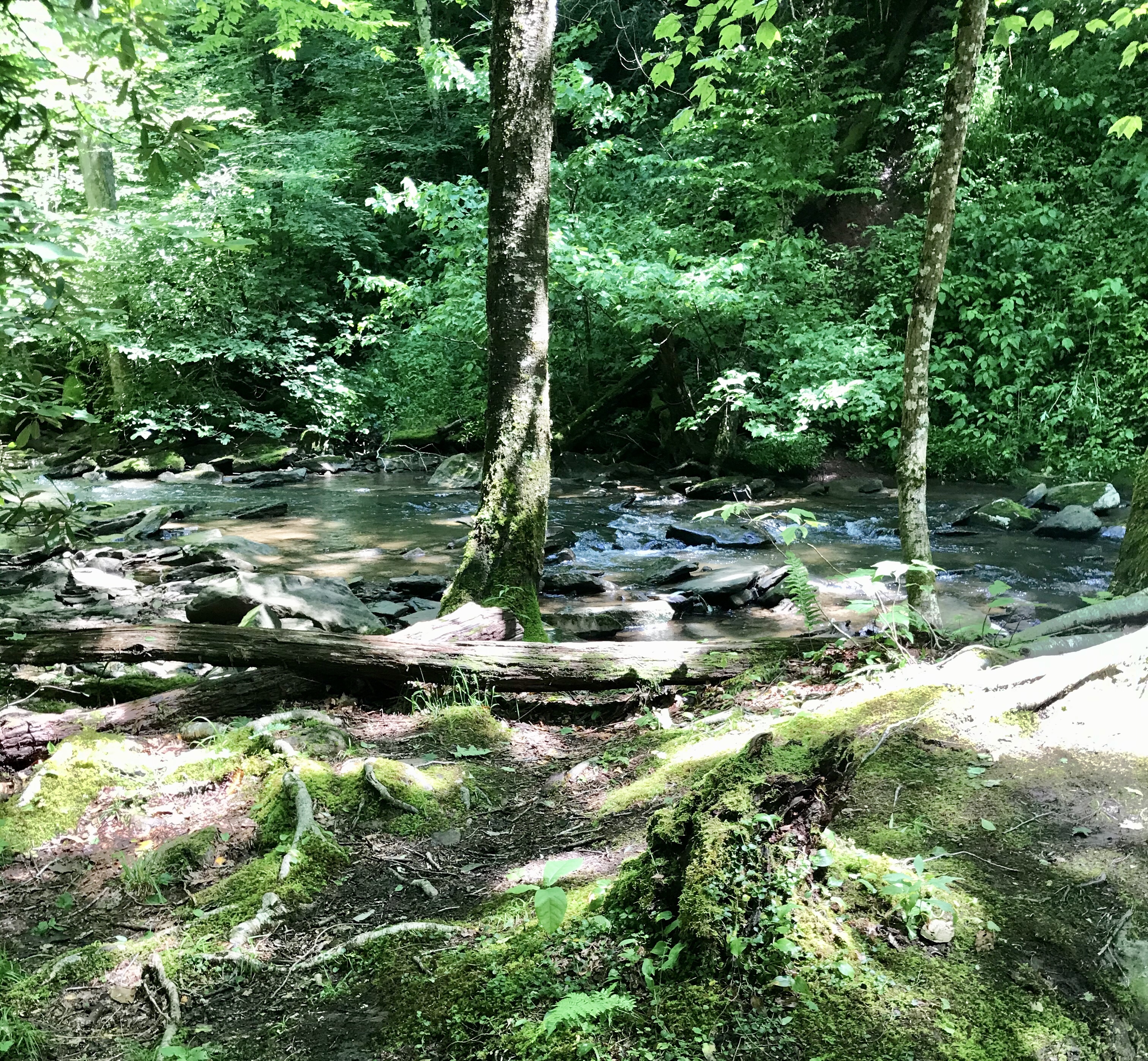
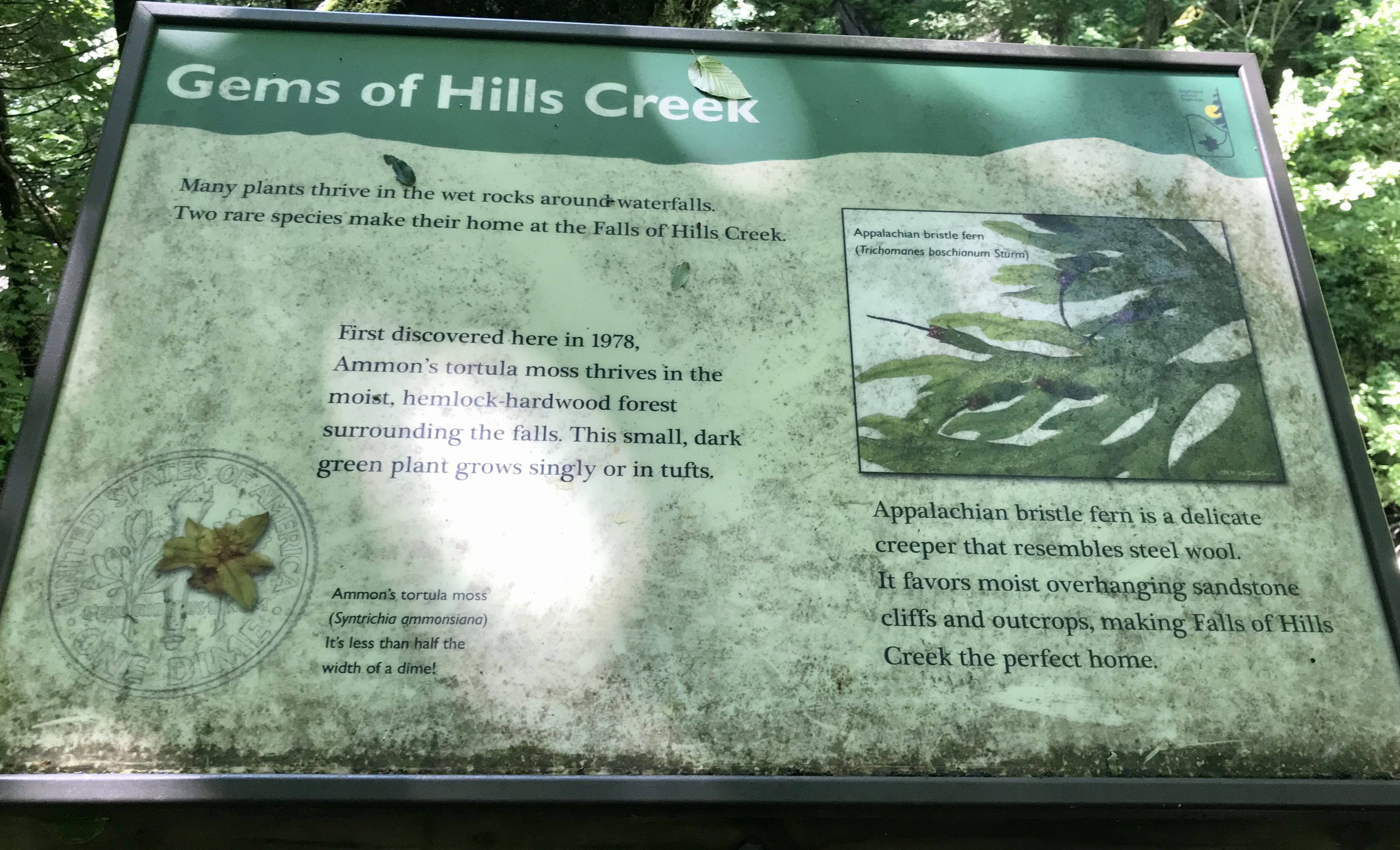
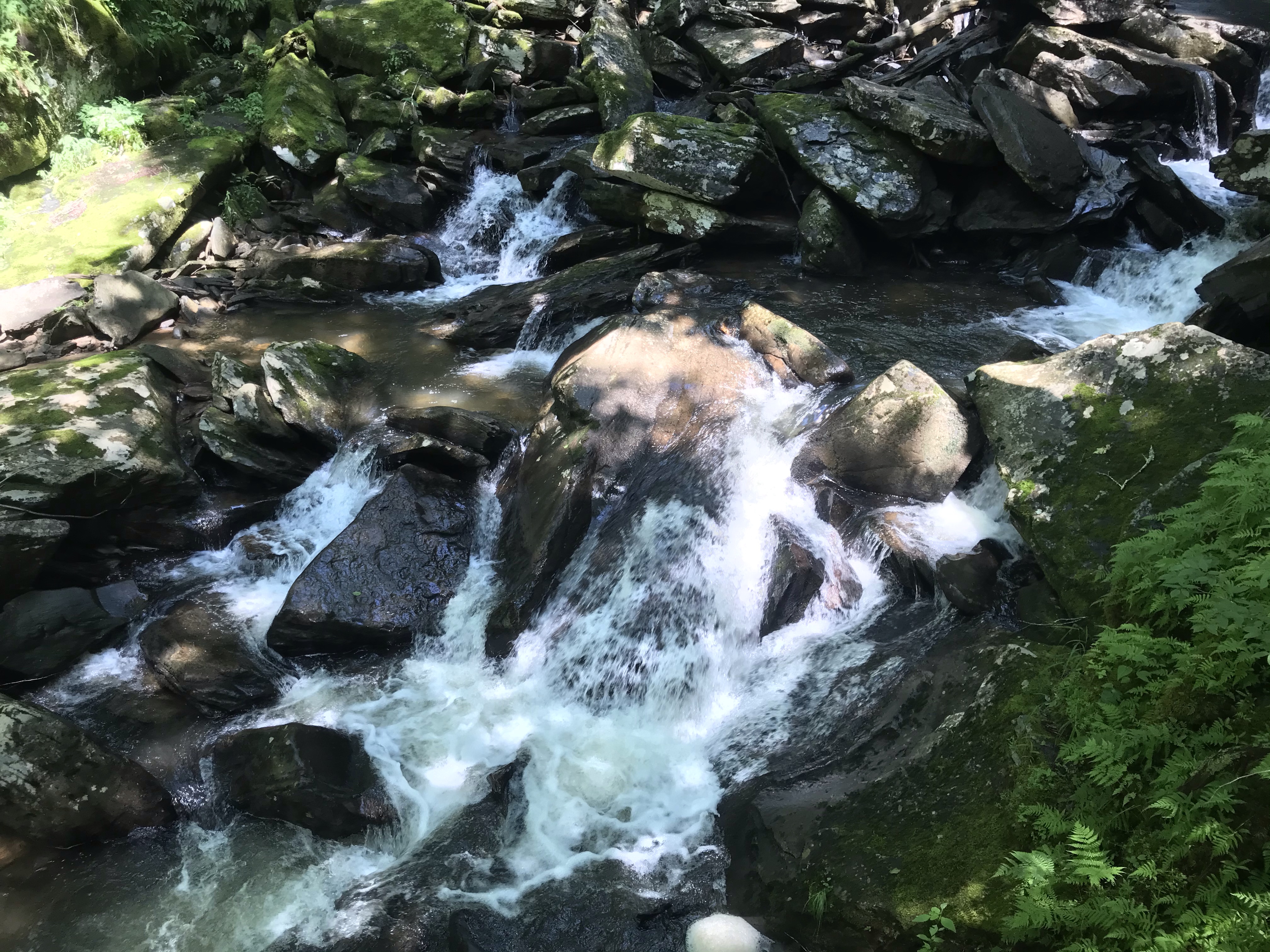
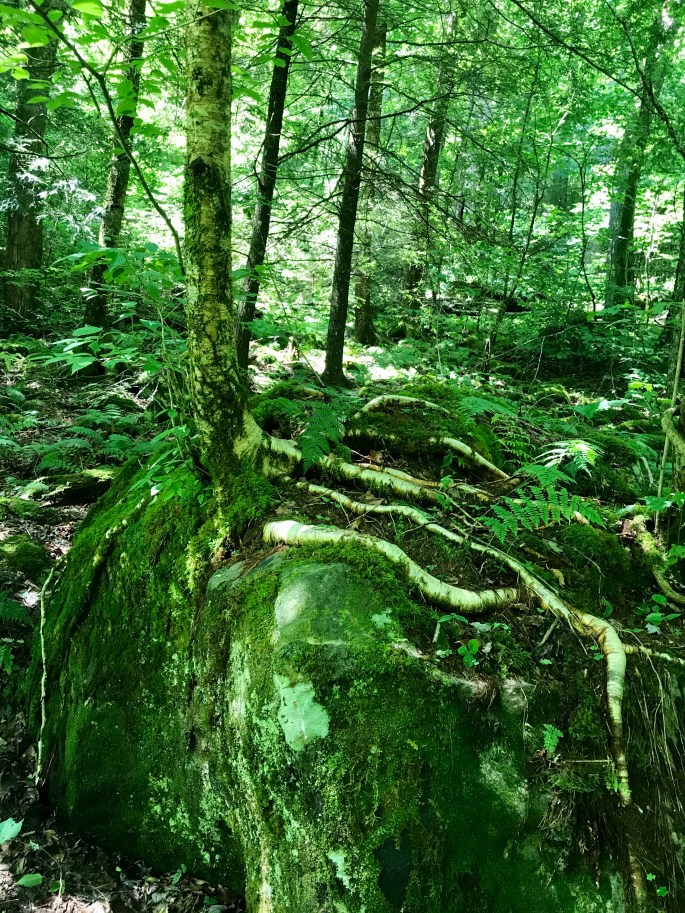
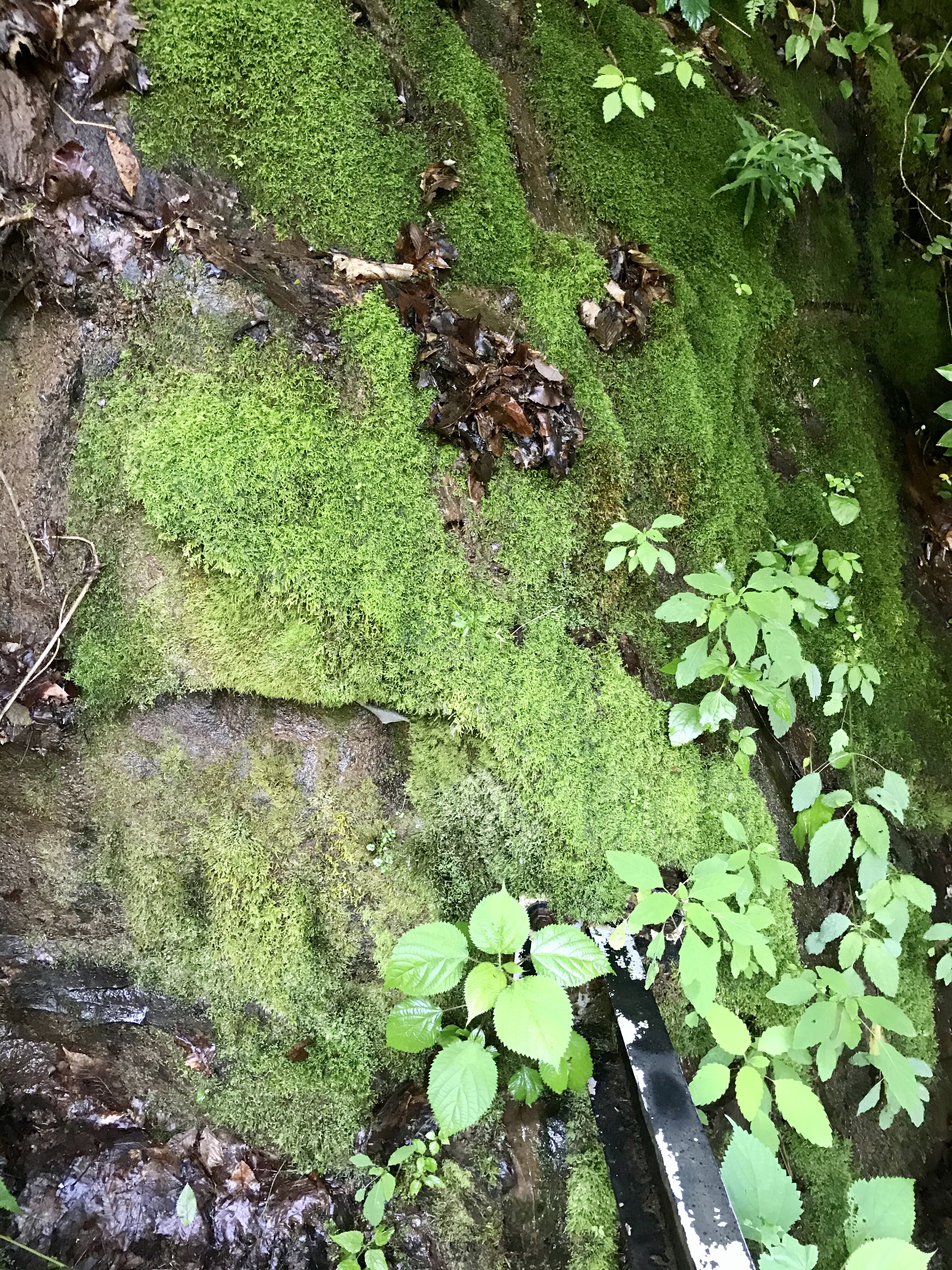
Last stop of this day was the intended, Falls of Hills Creek, and we were certainly glad we saved it for last.  For one reason, it is stunning–not just in the vivid greens and varying luscious shades of chocolate, but also in the surround sound of rushing water, the caress of a breeze brushing skin, and the comforting scents of earth!!  However, the second reason for making it the last stop of the day, was that while it was a delightful descending hike into the bottom of a breathtaking gorge with its cascading falls, it’s uphill all the way back!  Trekking downhill, the temperature dropped, the deeper into the vegetation and ravine we plunged; unfortunately, that was not the case on the way up!
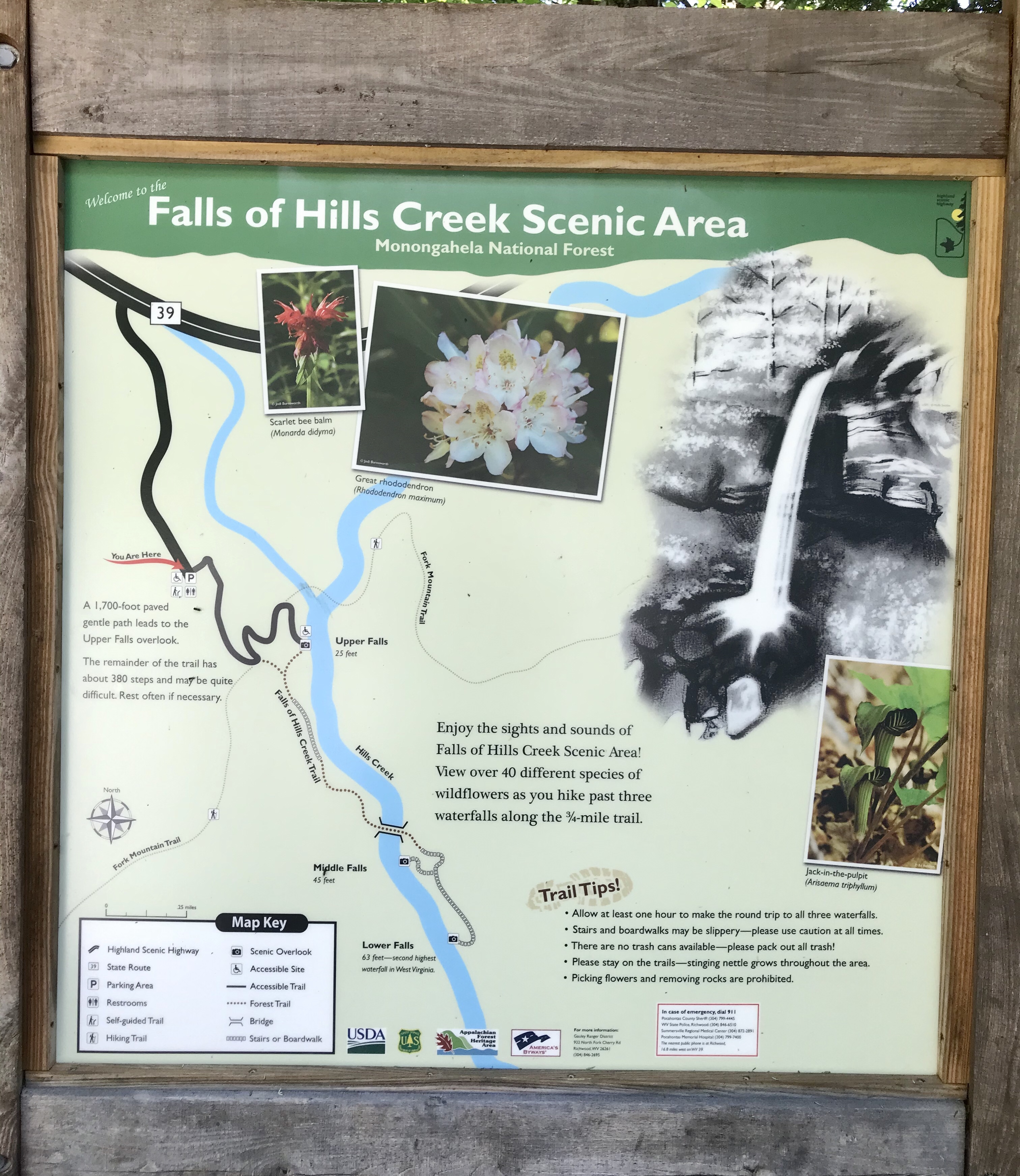
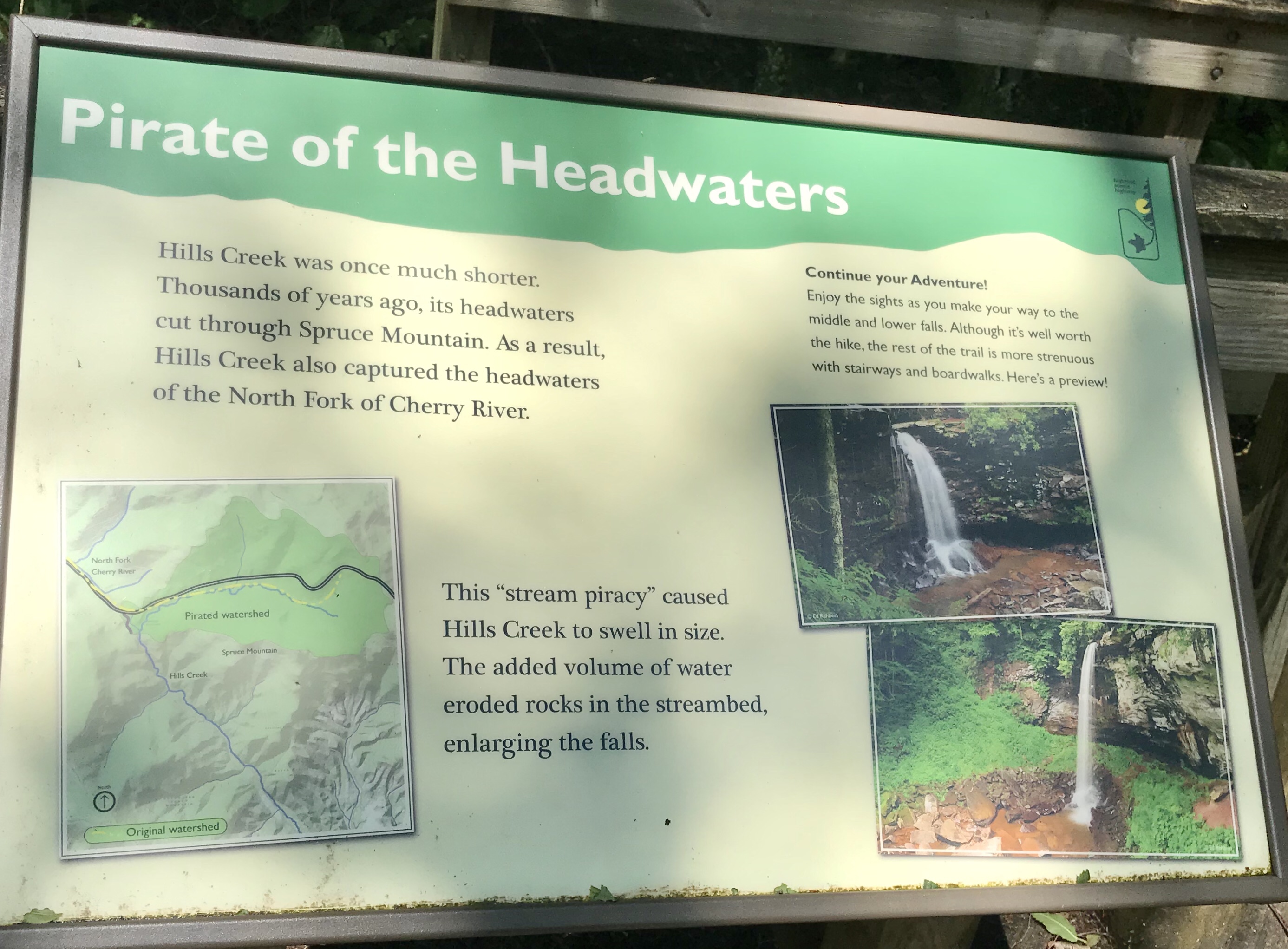
The Falls of Hills Creek Scenic Area is located on 114 acres and contains three waterfalls–each more spectacular than the previous–with the last falls offering up the greatest torrent of white water tumbling off rock.  In fact, the lowest falls has a height of 63 feet making it the second tallest waterfall in WV.  Whereas, the first falls are 25 feet in height, and the second falls are nearly double in size at a height of 45 feet.  Who needs a calming app when you can simply hike in WV to see, smell, and listen to such tranquil sounds?  Seriously, this lovely place was well worth the hike!   (Thank you, Jamie, for the recommendation!)
Next week, I’ll share a few other magical places worth visiting–even if just for a day excursion–along The Seneca Trail!  You most certainly do not have to stay in home like we did, WV is full of places to camp and/or take day-trips.  Get away from the blaring news, headlines, and the never-ending barrage of negative social media, and instead, reconnect with nature and its Ultimate Creator.  Your heart will smile and your spirit will feel revived.

From our home to yours, John and I wish you safe and healthy travels!

It Only Takes a Spark: Words Ignite

“Our brightest blazes of gladness are commonly kindled by unexpected sparks.”–Samuel Johnson

Photo by Pixabay on Pexels.com

Many of my recollections are beginning to take on a dream-like quality, such as the time I was home with Madelyn, our daughter, who was a toddler at the time.  Maddie was sick with a virus.  Continuously, I trotted Maddie to the bathroom, so she could throw up or upstairs to change her diaper.  It seemed impossible that a human so small could continuously produce so much vomit and repeatedly fill diapers.

Things had calmed momentarily, and we were cuddled up together on the couch, when I could feel her stomach begin its heavings.  On instinct, I began my rapid try-not-to-jar-her trot, but still boot-scoot-hurry to the bathroom, so Maddie could once more throw up.  Unfortunately, I could tell there was no stopping the oncoming rush of fluid.  I halted at the kitchen sink, the closest receptacle I could think of, and held her tiny, shaking body there, as she retched into the sink.  (Not the most sanitary choice, I know, but I chalk it up to sleep deprivation.)

Photo by icon0.com on Pexels.com

That’s when I felt the primal niggle.  My brain had noticed something important.  Glancing out the kitchen window, I saw flames spewing forth from the roof of our neighbor’s home.  Orange, red, blue, and yellow flames licked hungrily at the sky.  Black ashes rimmed with orange and red sparks soared toward our house.  I am sure if this had been a movie, the camera would have zoomed in on my widening eyes as the recognition of what was happening began to sink in.  

Fortunately, our neighbor’s were not harmed, their house, though damaged, was repairable, and our house was fine.  The sparks fell silently like dark, angry snowflakes, and without fuel, their brightly burning edges dwindled on the gray concrete on our driveway. 

Photo by Daria Shevtsova on Pexels.com

As a teenage girl, I loved the song, “Pass It On.”  

“It only takes a spark/ to get a fire going/ and soon all those around/ can warm up to its glowing/That’s how it is with God’s love . . .you want to pass it on.”–Kurt Kaiser

Photo by Tomáš Malík on Pexels.com

Words are sparks.  Tiny, miniscule notations of black and white either written or unleashed as phonemes by the tongue, teeth, and lips of a speaker. Eyes or ears take in the message.  Brain receives the message, attaches it to the current mental scaffolding of the reader or listener, and the process of comprehension and interpretation begins.  Input, analysis, and potentially, output.  Information computed, more sparks formed, knowledge is available to pass on.

Photo by Polina Zimmerman on Pexels.com

Words can be exhilarating.  Finding just the right words increases one’s ability to express a more precise and exact message.  Communication, I would argue, can be down right intoxicating.  Babies can spend countless moments babbling for pure pleasure. Once babies  grasp a few words, however, and realize that those few intonations can command the attention of another human, they want more.  Like a fire blazing in the hearth, the flames of linguistic command demand more fuel in their desire to communicate and exert some measure of control.

The birthplace of Pearl S. Buck, Hillsboro, WV.

Recently, I had the opportunity to visit the birthplace of Pearl S. Buck.  The site itself was closed, but as I stood along the old homestead’s fence line, I imagined Pearl as a baby within those walls.  As I understand it, Buck and her family lived in that home for only a few months.  Nonetheless, my inner narrator could envision her mom singing to her as diapers were changed, and I could hear the voices of both parents talking to baby Pearl throughout the day.  Her parents could not have known that one day Pearl would become a prolific writer, winning both a Pulitzer Prize and the Nobel Peace Prize for the way her writing promoted empathy, compassion, and understanding. They were simply passing on to their daughter the power of communication, and through their ultimate missionary work, modeling beneficial ways words can be used.

Like the floating sparks of the long ago house fire, ashes can soar fiery red, greedily seeking fuel for which to consume, or they can burn down into a pile of harmless ash.  In fact, an accumulation of ash, such as that left over from burning wood in a hearth, can be used as fertilizer for plants as it is full of lime, potassium, and other trace minerals that promote plant production.  Likewise is the potential for the messages we speak and write–fuel for the fire or fertilizer for nourishment.

Tweet. News. Memo. Email. Instagram. Facebook. Snapchat. Tik Tok. Rumors. Innuendo. Gossip. Reporting. Posting. Blog. Website. Novel. Novella. Fiction. Nonfiction.  The list goes on.  Big words. Little words. Powerful words. Meaningless words. Hurtful. Helpful. Salacious. Compassionate. Implication. Understanding. There is no end in the ways in which words can be conveyed.  

All of us contain a divine, expressive spark, a creative candle intended to light our path and that of our fellows.”–Julia Cameron

Photo by Gantas Vaiu010diulu0117nas on Pexels.com

It’s not only the words, but the intent behind those words that has power.  The heart of the message; the heart of the speaker; the heart of the writer; the heart of the listener.  We were all Divinely created from a Source I still struggle to understand; but I can tell you this, Dear Reader.  The more I understand about the amazing, resilient human body and its magnificent potentiality, the more I believe, with all my heart, that we were each lovingly created for a Divinely designed purpose.  Those purposes are unique as each individual, but all of us have the same potential as Pearl S. Buck.  It all comes down to our hearts.

But the wisdom from above is first pure, then peaceable, gentle, open to reason, full of mercy and good fruits, without uncertainty or insincerity.  And the harvest of righteousness is sown in peace by those who make peace.–James 3:17-18

Wildflowers peacefully swaying in the WV breeze.

While we may not all possess the ability to win prizes as Buck once did, we can all pray and focus on increasing what Christians call, the fruits of the spirit, that all major religions likewise focus: love, joy, peace, patience, kindness, goodness, faithfulness, gentleness, and self-control.  With these as kindling within the heart, we can be lit from within.  Our words, both written and spoken, can then be used to either light the way for others, warming them with the glow of thoughtfulness, or used as a tool for harm–burning bridges that otherwise could have been crossed through effective and empathetic communication.

Photo by Elina Sazonova on Pexels.com

I am reminded of the 15 or so years in which I taught Kindergarten aged students.  At the time, the practice was for the parents of soon-to-be-entering-school kindergartners to attend an orientation meeting.  During this meeting, each Kindergarten educator discussed with parents the classroom policies and procedures and addressed any concerns shared by parents. At some point during this meeting, we talked with the parents about the importance of their word choice and attitude towards beginning school.

We explained the power of possessing a positive, enthusiastic disposition towards this major childhood milestone by displaying an aren’t-you-a-big-kid-now attitude, rather than sharing sad tales of I-can’t-believe-my-baby-is-going-to-leave-me.  Parents were reminded that their child tended to mimic the parents’ perspective. As with most forms of communication, it is not only the word choice that creates influence, but also the intent behind those words that is often passed on.

Photo by Magda Ehlers on Pexels.com

As I write these words, I am challenging myself as well as you, Dear Reader, to kindle those fruits of the spirit, so that our words may be more reflective of those ideals.  I fear that without sensitive hearts, we will all suffer the rapid burn of uncontrolled tongues or dashing fingers and thumbs across keyboards. 

 As the saying goes, “be the change you wish to see in the world.”  And, while my individual words may never win any literary recognition or publication, I pray to improve so that my writing, my social accounts, and my day-to-day interactions reflect more of a positive light.

Photo by Suzy Hazelwood on Pexels.com

Fertilizer or fire.  Peace or Agitation.  Forgiveness or resentment.  Upliftment or downtrodden.  Written or spoken, our words matter. 

With human’s ability to create fire, darkness was shaken, and life was Divinely elevated, but at the flames’ edge remains the darkness.  

May our words pass on light, warmth, and illuminate a path out of darkness. 

Photo by Suzy Hazelwood on Pexels.com

Embrace Your Inner Oak

“Tell your heart to beat again/ Close your eyes and breathe it in/ Let the shadow fall away . . .Say goodbye to where you’ve been/ and tell your heart to beat again.”–as sung by Danny Gookey, written by Bernie Herms, Randy Phillips, and Matthew West

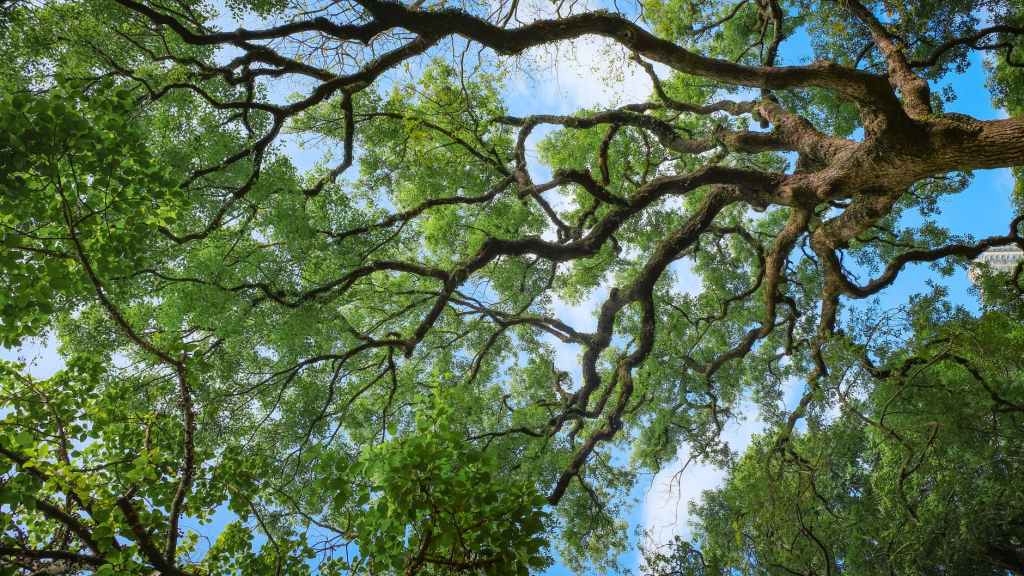
Branches splayed, offering glimpses of bluebird skies

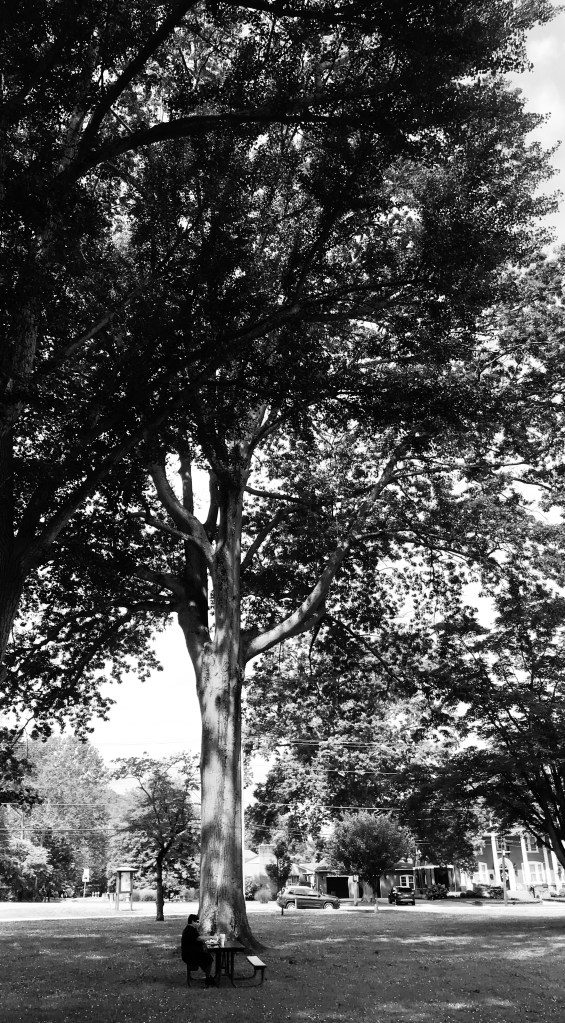
I listened to my companion.  Behind the person talking, an old oak tree stood proud and erect, sheltering us in her arms of shade.  The tree’s hefty roots thrust muscularly above and through the earth’s surface, foundational tentacles of nourishment and steadfastness, outstretched, ready to ensure the old sentinel’s position for future decades. The person spoke of loss, heartbreak, and missing the one who had provided a source of inner strength.

Photo by Magda Ehlers on Pexels.com

“You’ve lost your tree,” I impulsively stated.  “You no longer have a tree, like the one behind you, on which to lean.”

Later, I chastised myself.  What a stupid thing to say.  Why hadn’t I been more encouraging?  Even choosing to remain quiet and supportively listening would have been better than saying something like, “You’ve lost your tree.”  Open palm.  Insert face.  Think, Steph, think . . .

And so I thought.  I thought about my friend, I thought about life, and I thought about that grand oak whose shade in which we sheltered on that beautiful morning.  I pondered loss, heartbreak, life changes, aging, illness, changes in the world, changes in society, change, change, change . . . 

As seen on Instagram at andrew.w.fischer.

Oak trees.  Roots, trunk, branches, leaves, acorns, canopy, crown, greens and browns, weather and wind, sunshine and rain, hail and storms, dry and wet seasons, changing temperatures, changing weather, changing levels of groundwater . . . change, change, change.  In spite of it all, a typical oak tree has an average life span of 100-300 years, some may even live 700 or more years.  During that time, how many acorns must one tree produce–all with the potential to become another oak tree?

Acorns. A tiny nut, dense with nutrients, capable of feeding a wide array of woodland creatures, such as bear, moose, mice, deer, squirrels, chipmunks and so on.   What’s more?  Acorns, with proper germination, can produce trees of 40-80 feet in height and with wing-spans of 60-100 feet across.  While that is certainly no small feat, the root system of a mature oak tree can span up to hundreds of miles–and most of these roots remain unseen!  

One mature oak tree can potentially produce 10,000 acorns.

“For a seed to achieve its greatest expression, it must come completely undone.  The shell cracks, its insides come out and everything changes.  To someone who doesn’t understand growth, it would look like complete destruction.”–Cynthia Occelli

As I best as my non-science mind understands, when an acorn is planted, like many plants, most of its energy is used to begin the growth of the root system.  Starting with the tap root that grows and burrows deeply into the soil in search of a reliable source of water.  During this time period, very little growth above ground can be observed; however, once the taproot is established, branches and leaves begin to sprout with more regularity.  

Before much growth occurs above the ground, the tap root must develop thoroughly into its source.

Meanwhile, approximately 18 or so inches below the soil, where the eye cannot witness, roots are growing, expanding, spreading over a space four to seven times wider than the crown of the tree.  These roots, more gangly in shape and size than the tap, seek out moisture and essential nutrients, sending them circulating back through the root system in order to nourish the growth that is visible above the ground. Silently, lateral roots slither and probe through the soil, supplying continuous sustenance to all parts of the oak.  If these oak roots encounter roots of another oak tree, the roots will graft together to help one another. Still, it is each oak’s individual taproot that remains the principal form of support.

Hefty, muscular roots thrust through the earth in order to support the tree.

The taproot, combined with the ranging root system, is the oak tree’s source of health, or potential illness, and gives it the ability to weather all types of harsh environmental conditions and changes, including the ability to withstand the most severe storms of life.  It was this basic lesson in biology that I began to contemplate as I thought of my friend, myself, and all those in my life, present and past, who have suffered loss, stormy seasons, and major life changes/shifts. Finding that inner taproot and expanding that root system is key to not only withstanding turbulent times, but also to the ability to offer shelter, strength, and plant seeds of hope for others.

“When your heart is broken, you plant seeds in the crack and pray for rain.”–Andrea Gibson

As seen on Instagram at positiveenergyalways.

To be certain, mild, temperate weather in the shade of an old oak tree is splendid, and I could spend the rest of my life there in the vast, comforting blanket of its shade, gazing upward through splayed branches of green, spying glimpses of dappled sunlight and bluebird skies while a gentle breeze nuzzles my cheek.  While those sorts of moments are what I wish everyday could be like; life offers us a meteorological spectrum of experiences.  Therefore, like those expansive tree branches, we must embrace it all–the wonderful, the not-so-wonderful, and the downright heartbreaking.

Delighting in the dappled sunlight in the shade of an old oak.

We, like the oaks, have space in the soil of our soul for a taproot and a root system; and like the oak, this system is keenly connected to Divine Providence.  When we are small, others develop and influence the establishment of our roots–for better or worse–depending upon one’s childhood circumstances.  Eventually, however, we all reach a point of maturity in life in which it is up to each individual to nurture the inner self, foster personal strength (grit, if you will), and fortify our faith.  While it is a wonderful blessing to have our root system grafted with that of another’s, in the end, it is our individual tap root connection that must be our anchor, our mainstay of strength.  

As seen on Instagram at positiveaffirmations101.

Therefore, just as the rain waters the oak, so too must we water our inner taproot, encouraging it to delve deeply into that which cannot be seen or touched, but which offers a wellspring of strength, resiliency, and renewal.  With a taproot strongly secured to the Divine, our true source, we can persevere throughout the vicissitudes of life.  Winds may tear at your branches, bite off your leaves, and even snap off pieces of your life.  Lightening may crash all around as tears stream down like rainfall, and still, like the oak, you can withstand it all.  You, my friend, can continue to rise, and as your roots spread, so too will your reach. 

An oak tree, with a healthy root system, has an average life span of 100-300 years, but some can live as long as 700 years!

“You never quite know what you do in life that leaves a seed behind that grows into an oak tree.”–Michael Portillo

As many as 10,000 acorns can be produced in one year from one mature oak tree.  Acorns fall to the ground–even when there is no one to witness.  Some acorns feed wildlife.  Other seeds decay into organic matter that feeds and enriches the soil.  Finally, there are acorns that take root–perhaps carried off by an animal, blown by the wind, or gathered by human hands–and new life is formed  . . . 

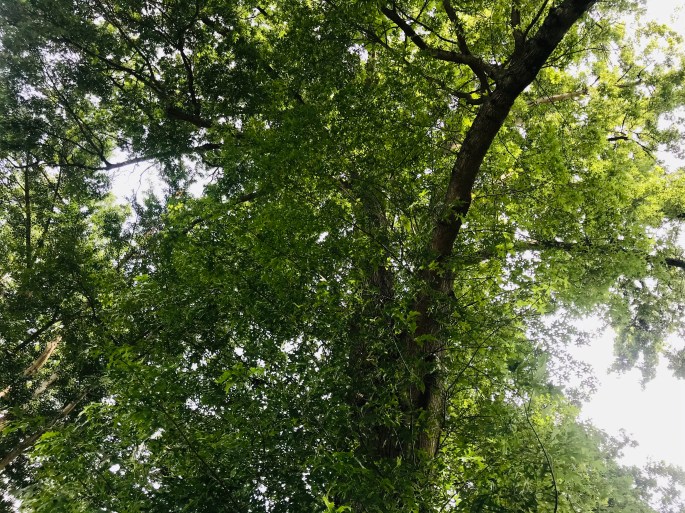
Sheltered in the shade of the canopy.

 Meanwhile, underneath the canopy of the towering oak, shade is proffered for those in need, spots for seasonal nests abound, roots continue to sink and spread, and the crown continuously reaches for the heavens.  Alone, but rooted; quiet, but engaged; humble, but life-giving; falling, but rising; yielding; but tenacious, and ever reliant upon The Source.  

May my life be more like that of an oak.

Photo by Felix Mittermeier on Pexels.com
As seen on Instagram at positiveenergyalways

Berry Beneficial Acai Smoothie

“Take care of your body.  It’s the only place you have to live.”–Jim Rohn

“The food you eat can be either the safest and most powerful form of medicine or the slowest form of poison.”–Ann Wigmore

Photo by Taryn Elliott on Pexels.com

With the warm, humid weather of summer making its way into the Tri-State area, I find myself craving smoothies again.  Since quarantine, I have once more fallen into the habit of not eating anything until lunchtime.  Sure, my stomach complains at times, but not enough to motivate me to pause for breakfast. As I have shared previously, I hop on and off the breakfast train–going for weeks at a time eating breakfast regularly, and then falling off that habit for weeks again.  Craving smoothies is a sure sign that it is time to hop back on that proverbial train.

However, I tend to have a sensitive stomach that has only become more sensitive with age.  I learned that I have to, unfortunately, limit my coffee intake in the early morning hours.  In fact, I typically down 16 or so ounces of water first thing in the morning before touching a coffee cup.  Additionally, I am sometimes downright nauseated in the morning, and the thought of food, even my favorite oatmeal, doesn’t even sound appealing.  (Yes, I am one of those people who loves oatmeal.)  Thus, I have learned that if I wait until lunch time, my queeziness will subside, and I am usually ready to eat.

I know some research states that one should “eat like a king” at breakfast and ensure the consumption of 30 grams of protein first thing in the morning, but those researchers don’t have my stomach and are often hocking their own protein product.  Still, I do recognize, especially as I age, the benefits of consuming quality, nutritious food at each meal–whether it’s two, or three, meals per day–for longterm preventative health care.  Additionally, there is some scientific data suggesting that making healthful choices in the morning typically leads to more positive choices as the day progresses.  Therefore, if my stomach can handle it, why not have a nutritious breakfast smoothie later in the morning, especially if exercising outdoors in hot, humid weather?

I know, I know, many diet experts warn about the dangers of drinking your calories, rather than chewing them.  Furthermore, other diet experts caution against all of the calorie laden ingredients that can be easily added to a smoothie.  However, I would argue that a properly prepared smoothie–one chock full of whole food ingredients based upon your unique dietary and caloric needs–can be a nutritious, healthy choice, especially if you have a sensitive stomach like mine.  One of those whole food ingredients is acai.

In fact, it’s impossible not to notice the proliferation of acai products, pronounced, ah-sigh-ee, in restaurants, grocery stories, and health food markets. From smoothies to smoothie bowls, from flavored yogurt to juice refreshers (think Starbucks), from flavored protein bars to pill/supplements, and from dark chocolate bars to infused margaritas, acai seems to currently have sweetheart status in the health community.  Although acai is generally referred to as a berry, it is technically a drupe, also known as stonefruit, like cherries, plums, olives, and peaches, and it is popularly lauded for its numerous health benefits.  

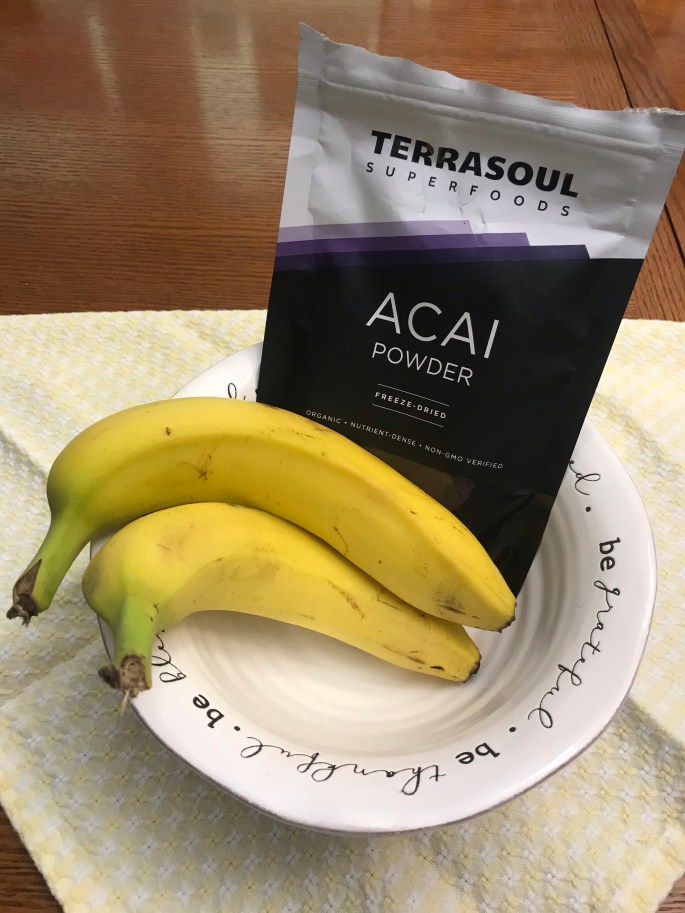
Based upon my reading though, there seems to be a general consensus to group the acai with berries. Furthermore, acai tends to have a short shelf life as it only grows on palm trees in Central and South America; and thus, it is most often available in three forms: frozen fruit puree, freeze dried powder, or pressed juice.  As a self-proclaimed foodie, my curiosity got the best of me, and I decided to give acai a try by purchasing a small bag of the freeze dried powder.

To be clear, I do not believe that acai is the panacea of health that many supplement companies try to convince consumers; however, acai does offer many health benefits similar to most dark fruits and berries. Acai possesses high levels of antioxidants (even higher than blueberries and cranberries), essential fatty acids, fiber, and are nutrient dense. Still, like any one single food, acai is not the magical key to health; however, when consumed as part of a larger diet based on wide array of colorful, fresh fruits and vegetables, acai is a wonderful addition.  

One word of caution though, many frozen fruit purees, juices, and other acai-flavored products are loaded with added sugar and/or other ingredients a health-conscious consumer may not want.  Therefore, if, like me, you want to reap the nutritional benefits without the junk, the freeze dried form of acai seems to have the greatest amount of fiber, essential fats, and health-boosting plant compounds.  

Below is the recipe-scaffolding that I created using acai freeze dried powder.  Do you have to use acai?  NO!  Instead, replace the acai with ½ cup of another fruit; or, if you want to stick with the drupe (stonefruit) family, add in cherries, Indian gooseberries, or slices of nectarines, peaches, and/or mangoes. Feel free to play with this recipe.  There is never an obligation, in my opinion, to follow recipes exactly as created.  Think of this recipe as a springboard of ideas for creating your own variation of this summer-time smoothie.  Want to make it a smoothie bowl? Then, fill a bowl with this smoothie and top it off with slices of fruit and the crunchy goodness of nuts, seeds, granola, and/or oats.  Summer is the time to have fun in the kitchen; and, yes, it can still be nutritious!  After all, one positive choice leads to the next!  
From my home to yours, I wish you healthy, happy, and homemade meals or smoothies! 

P.S. If you do find another variation that gets your taste buds excited, please share it with me by emailing me or tagging me on Instagram or Facebook!  I’d love to see what you create!

Here’s to your health! Cheers!

Berry Beneficial Acai Smoothie

Makes 1 serving, but can be doubled, tripled as needed.

Base Ingredients:

½ + ½ cup favorite smoothie beverage (water, milk, plant milk, kefir, coconut water)

½ to 1 cup of frozen or fresh berries (Pick your favorite! Frozen fruit leads to a thicker smoothie.)

½  cup frozen, plain–no other added ingredients–riced cauliflower (I know, it sounds weird, but it’s a wonderful thickener, and it’s a great way to sneak veggies into your day without tasting it!)

½ banana, frozen or fresh (Remember, the more frozen ingredients, the thicker the smoothie.)

**If wishing to use protein powder, see note below, and add in here.

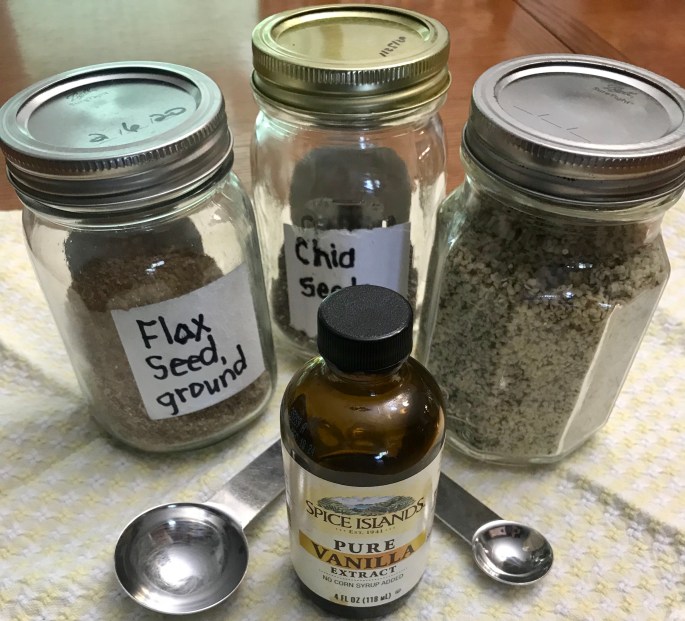
1 ½  – 3 tsp acai powder (depending upon the amount you want)

½ tsp vanilla extract

*Dash of sea salt and any other optional add-ins suggested below

*Optional add-ins:

**1-2 scoop(s) of favorite protein powder (This is an optional addition.  I make this smoothie with and without protein.  However, I found that even using a tablespoon of my favorite plant-based protein powder gives the smoothie a more rounded flavor and thickens the smoothie a tad bit more.)

1-2 tablespoons of favorite nuts or seed (Think walnuts, ground flaxseed, chia seeds, hemp hearts, and etc.)

1-2 tablespoons of favorite nut butter

¼ to ⅓ cup oats (As a thickening agent, and another boost of nutrition, especially if you need the extra calories.)

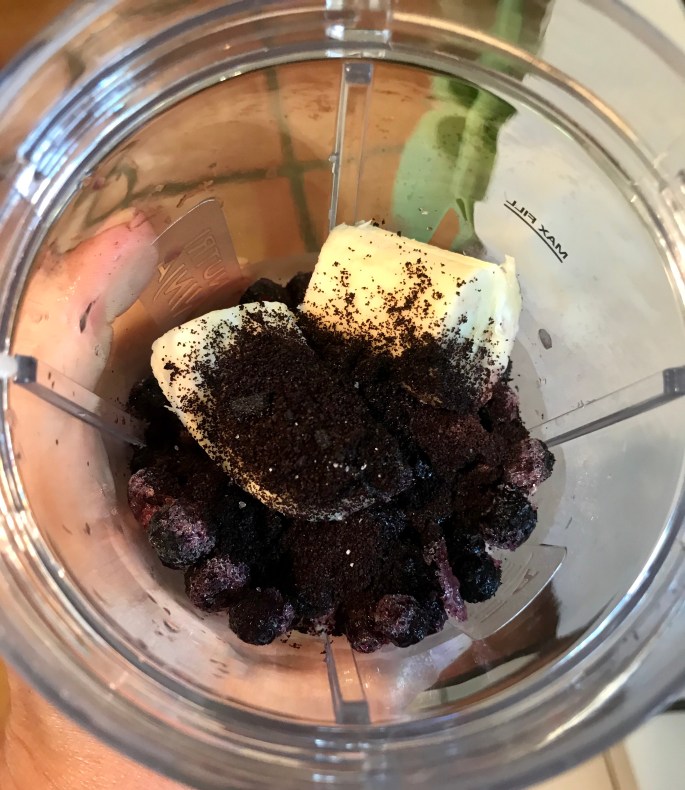
In a blender, or blender cup, add ½ cup of your favorite smoothie liquid. 

Next, add it fruit(s) and plain riced cauliflower 

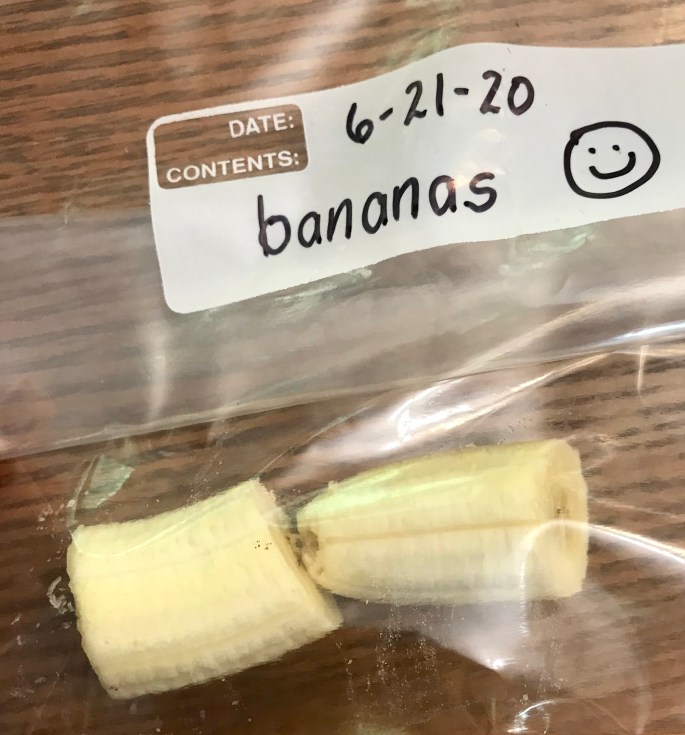
Add in banana, cut into chunks. 

Add in all other ingredients as well as any optional add-ins

Finally, top it all off with another ½ cup of preferred liquid.

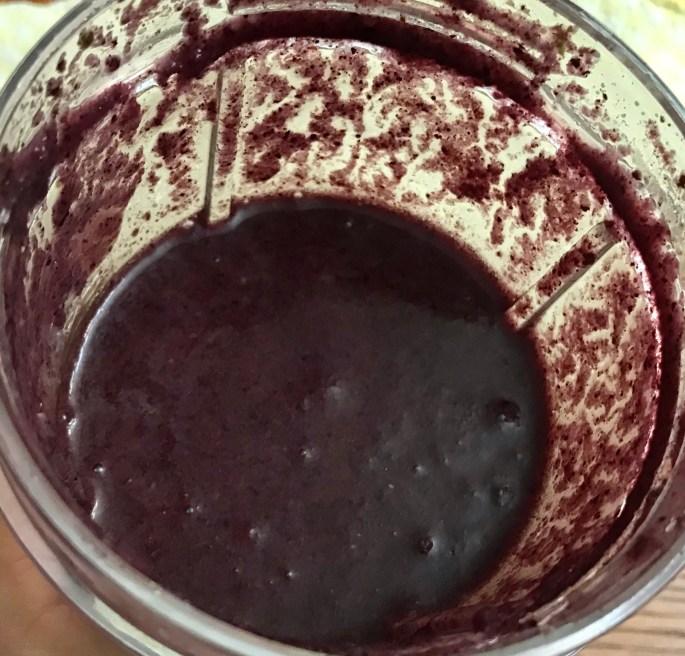
Blend until smooth.

Best if served immediately, but can be stored in fridge for later use.

Note:  Can add more or less liquid to adjust to desired consistency.

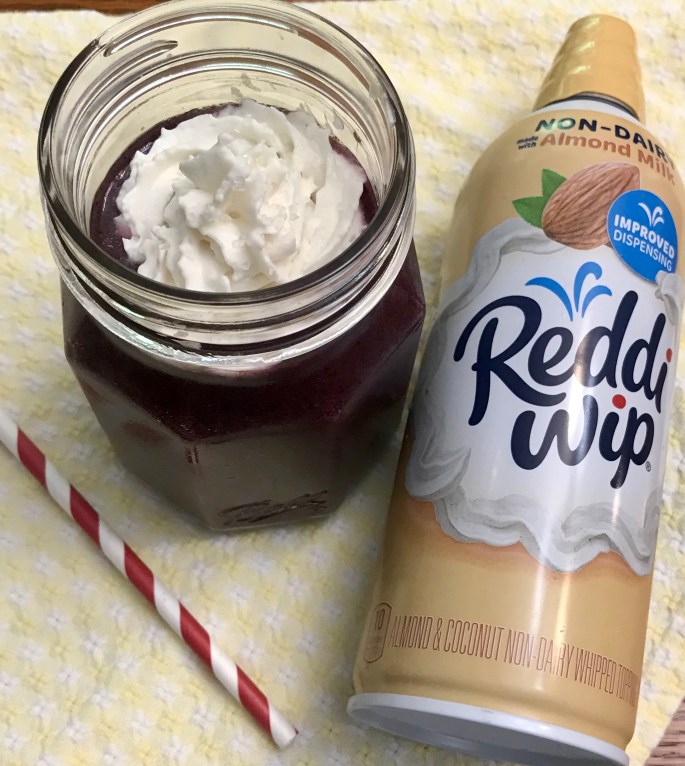
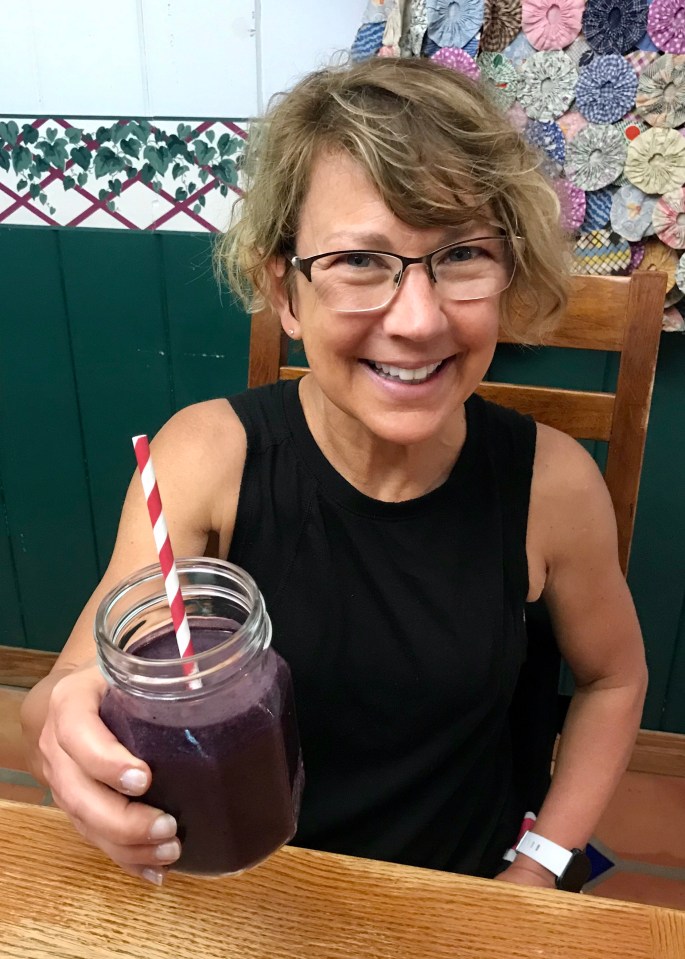
Mmm, drink in that refreshing fruit and veg!

The Nature of Outdoor Exercise

“The sky is the daily bread of the eyes.”–Ralph Waldo Emerson

“If you are seeking creative ideas, go out walking. Angels whisper to man when he goes for a walk.”–Raymond Inmon

Photo by Retha Ferguson on Pexels.com

If you have worked from home during this quarantine period, you have most likely experienced some form of frustration, isolation, emotional upheaval, or perhaps even anger, depression, and/or anxiety.  Add to the pandemic crisis a strong sentiment of public unrest due to social injustices and inequalities, as well as high unemployment, and it is no wonder that mental health issues are on the rise.  How does one cope with all of these stressors in a healthy manner?  Based upon my research, there is no one right answer.

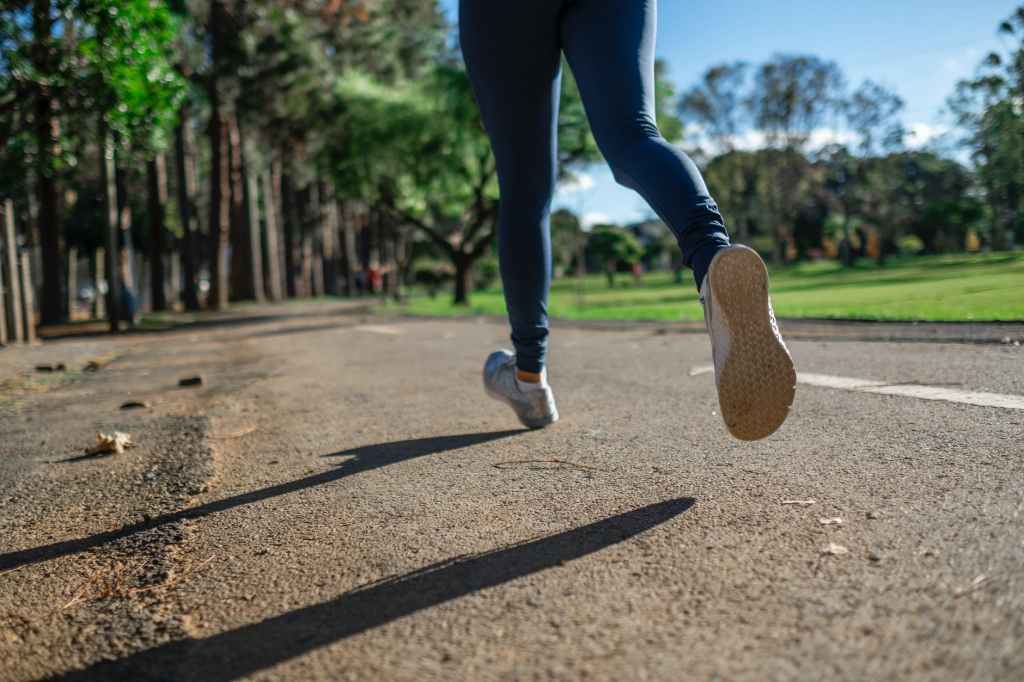
Many mental health experts tend to agree on the fact that we should all maintain and/or create a routine for sleeping and waking, hydrating, eating healthy food, and some experts will even emphasize the importance of taking a daily shower and not working in pajamas all day–which is amusing to me on a number of levels. Others suggest the importance of finding a creative outlet, reading those been-meaning-to-read books, gardening, cooking, organizing closets, and so forth–anything that feels productive and useful.  Still, others highlight the importance of exercise and spending time in nature as ways to maintain and/or strengthen mental health.  While all of those are noteworthy and worth exploring, due to the months-long quarantine period, I rediscovered the soul-healing power of exercising in the great outdoors.  

I’ll be honest, Dear Reader, and I suspect I am not alone when I write this, I have a history of battling bouts of depression, or my dark side as I humorously like to call it.  Usually, it’s seasonal or situational, never long lasting, and fairly easy from which to recover.  However, the quarantine period was different.  In fact, the months of March, April, and May, felt dark, difficult, and downright disheartening, and I was employed!  I have to wonder how much more devastated I would have felt if I had lost my job.

Initially, I would joke that as an introvert, I had been preparing to quarantine my whole life.  However, I quickly discovered that the new demands of trying to integrate work into home life, along with a couple of other major life shifts, made it hard to establish a routine, much less stick to one. I tried meditating every morning; then I tried practicing yoga every morning.  Still, no tangible routine ever formed that significantly pushed away the mental darkness. 

Photo by Burst on Pexels.com

One event that nudged away a few clouds were the days in which my husband, John, and I cut off the work day by a certain time, and then drove to a local walking path for a 30-40 minute walk. Unfortunately, so much of our local spring was, more often than not, wet, rainy, cloudy, and cool–exceptionally cool given the time of the year– for these afternoon excursions.   This was compounded by the fact, like many Tri-State residents, that we do not live in a neighborhood conducive to walking, we always had (have) to drive to a path.  

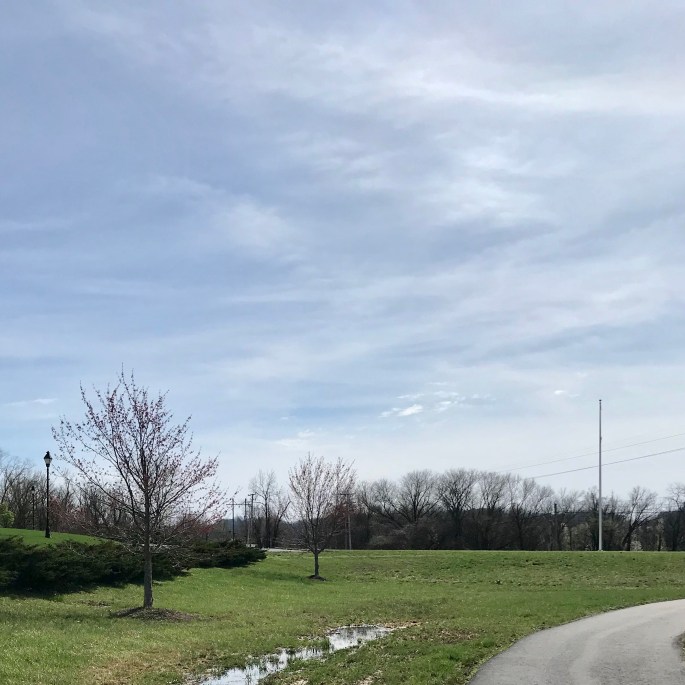
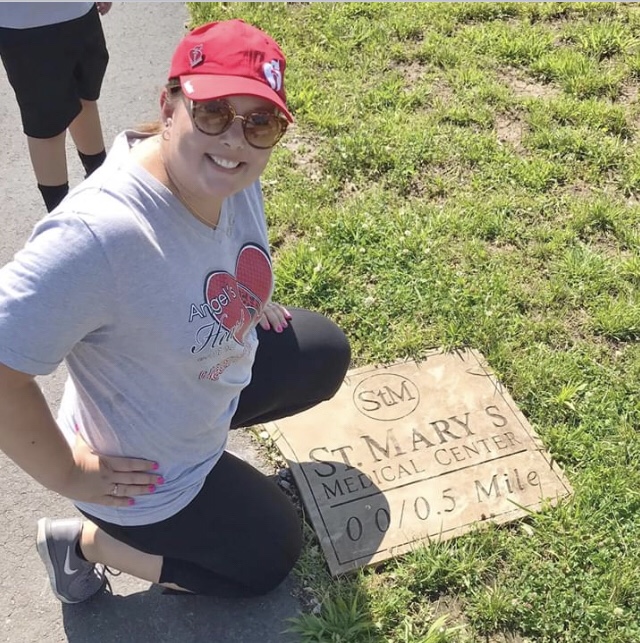
Image from St. Mary’s Proctorville Walking Path

One day, I began randomly googling exercises for back injuries as well as walking-to-running training plans for those recovering from a back injury.  Nearly ten years ago, I had begun running as a form of exercise and found that while I was not particularly fast, I thoroughly enjoyed being outside on trails, paths, or sometimes side-walks as well as following goal-setting plans.  In fact, I loved it so much that I ultimately ran several half-marathons, a couple of 15-milers, and even completed two marathons–one in honor of my 50th birthday.  All of that came to a screeching halt when I injured three discs in my lower back.  

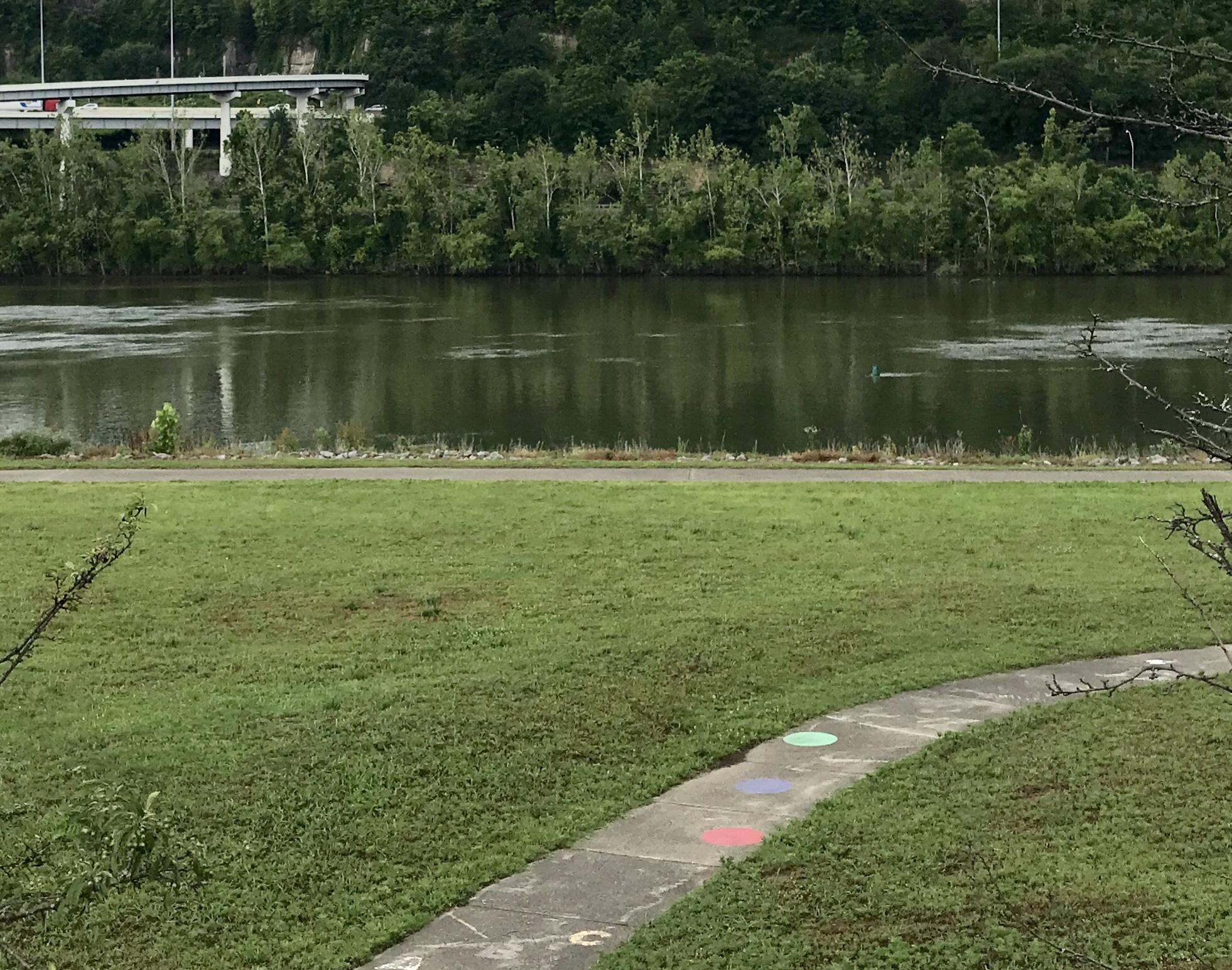
Image from Kanawha Trestle Rail-Trail.

It had been nearly four years since I last ran, but as I sat there that day, reading on-line, I began to wonder if perhaps I could run again.  Maybe slower and for shorter distances than last time, but what if . . . .

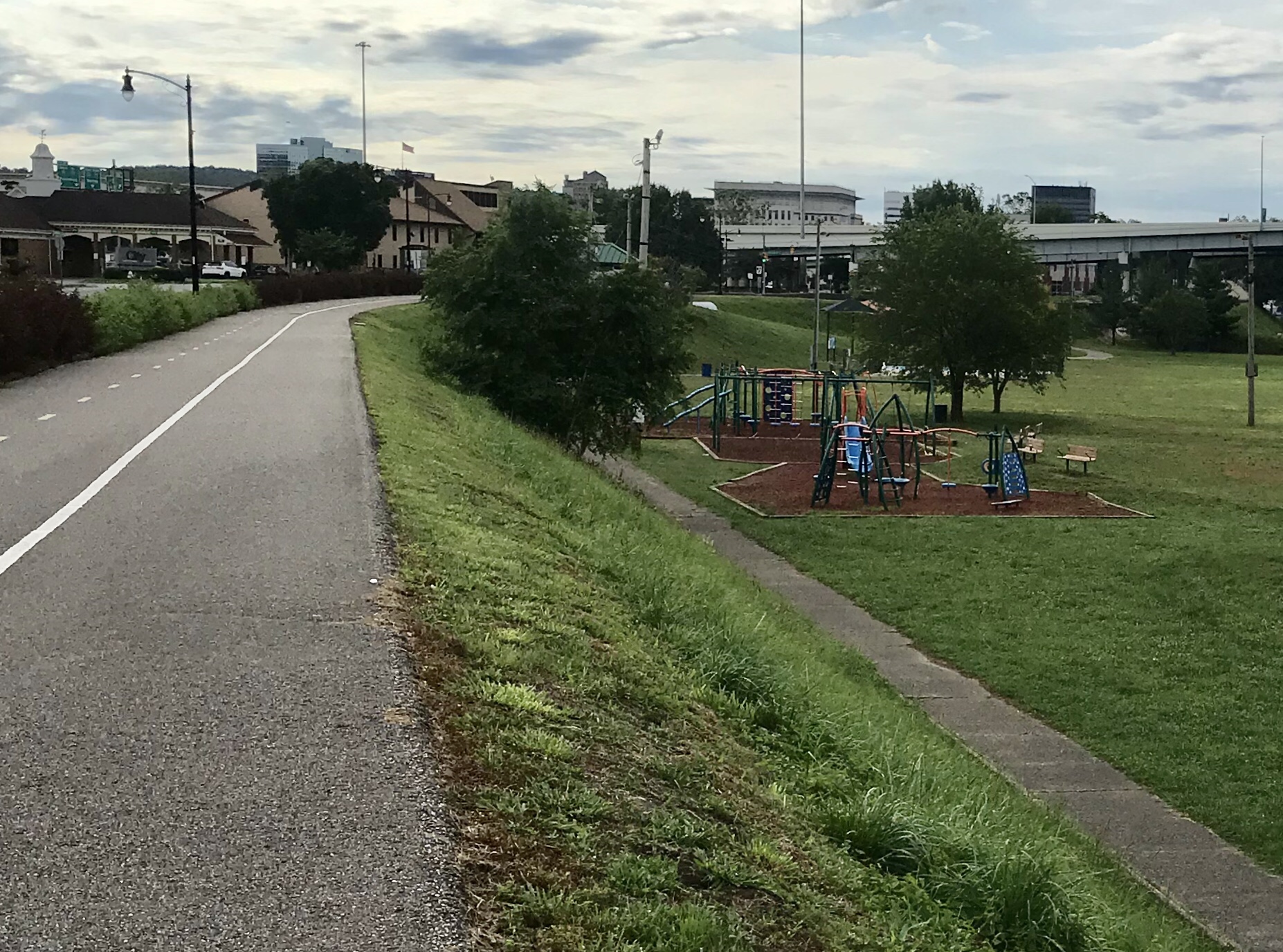
Images from Kanawha Trestle Rail-Trail

While researching, I also found a wealth of information regarding the benefits of exercising outside–especially as a way to cope with stress.  Some of the benefits of outdoor exercise include:  improvement of sleep; increased absorption of Vitamin D, increased productivity, creativity, and problem solving; alleviation of stress; reduced anxiety; boosted mood, and lowered blood pressure. Furthermore, for me, a training plan provides some semblance of a routine as well as the sense of accomplishment with each completed workout, especially when everything else in life feels chaotic. 

Images from Kanawha Trestle Rail-Trail

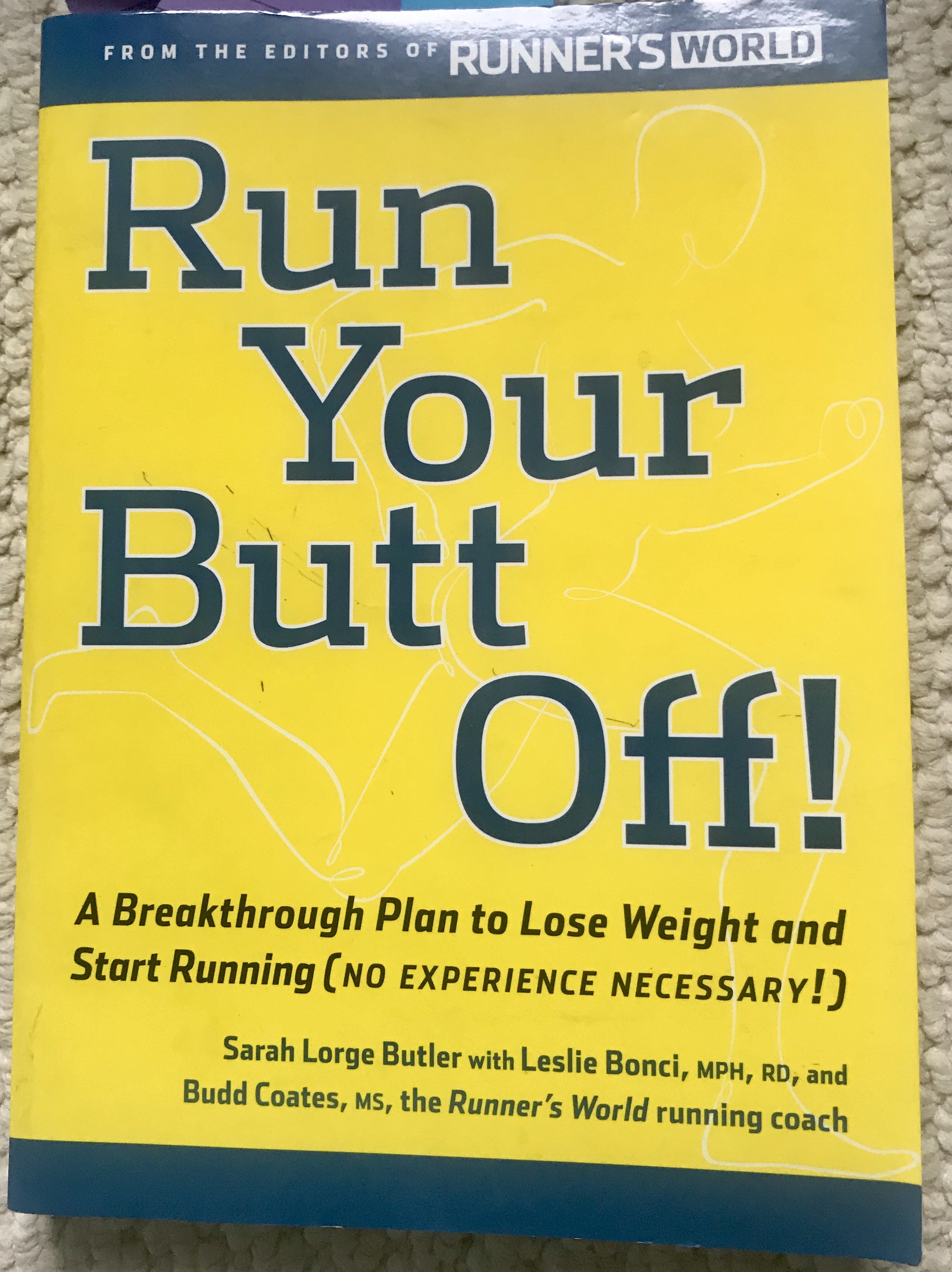
Then, as serendipity would have it, I ran across an on-line board that answers questions and provides reading material that solely focuses on recovering, healing, and preventing back injuries.  In one post, I read an article that referred to a book and walk-to-run training plan from 2011 called, Run Your Butt Off.  Quickly searching for it, I found and read the plan as well as the author’s notes.  This plan is fully available on-line; you do not have to buy the book, although I did purchase a used one later. 

The gentle and positive words of the authors of this plan have inspired my butt to get outside for exercise.

As I read the kind and encouraging words of the plan’s author, I  began to believe I might have stumbled onto something doable. While it is a 12-week plan, the author strongly and repeatedly encourages exercisers to work through the plan at their own pace, stating that most newbies take longer than 12-weeks.  With those heartening and gentle words, I decided to give the plan an honest try. (Full disclosure, the book also focuses on good eating habits, but who couldn’t benefit from a little nutritional 101, especially with the quarantine pounds many of us, myself included, have packed on.)

Images from Kanawha Trestle Rail-Trail

Without belaboring the details, those proverbial clouds are thinning, and the mental clarity is brightening once more. Sure, the gradual progression from walking to running feels good, but it’s the getting outside in nature and the people/critter-watching that are really at the heart of it.  Yes, I keep my distance from others, and I do have my mask nearby, but I typically do not wear it while exercising.  (The research seems to be mixed regarding whether one should or should not wear a mask, but all agree that social distancing is still the rule regardless.)  Seeing trees, smelling grass, feeling the uneven surface of a path under my feet, hearing the call of the red-winged black-bird, and even tasting the fresh air of each inhalation–I feel a renewed connection.

Image from WWI Memorial Path, Ritter Park, Huntington, WV

Several years ago, I learned that each person’s heartbeat is unique.  No two people’s hearts beat at the same rhythm. Add to that tidbit, the wonder and magnificence of each creature, each blade of grass, each birds’ song, each rock’s shape–all are distinctive and all are connected by the universal pulse of the Divine Creator.  Being outside and immersed in nature, I am reminded that I am connected to a bigger picture.  I am in awe of the wide-screen image of mankind, all of God’s creatures, Mother Earth, and the universe beyond; and in those moments, my mind is as free as the pitter patter of my own heart and two feet. 

Photo by Daniel Reche on Pexels.com

Whether walking, running, biking, kayaking, fishing, or simply enjoying a cool breeze in the shade, I hope you make time to get outside and soak up some of the sweetness of the natural wonder that is our world.

As seen on positiveaffirmations101 on Instagram

P.S.

Dear Reader,

Word Press, the company with which I use to produce this website/blog, recently updated, and I don’t quite have the hang of how to edit and arrange pictures. Please bear with me over the upcoming weeks as I learn to re-navigate this wonderful platform.

Angel’s Heart and Sole

Because women don’t expect to have heart disease, a lot of times they don’t seek help if they have early symptoms of a heart attack.”–Laura Bush


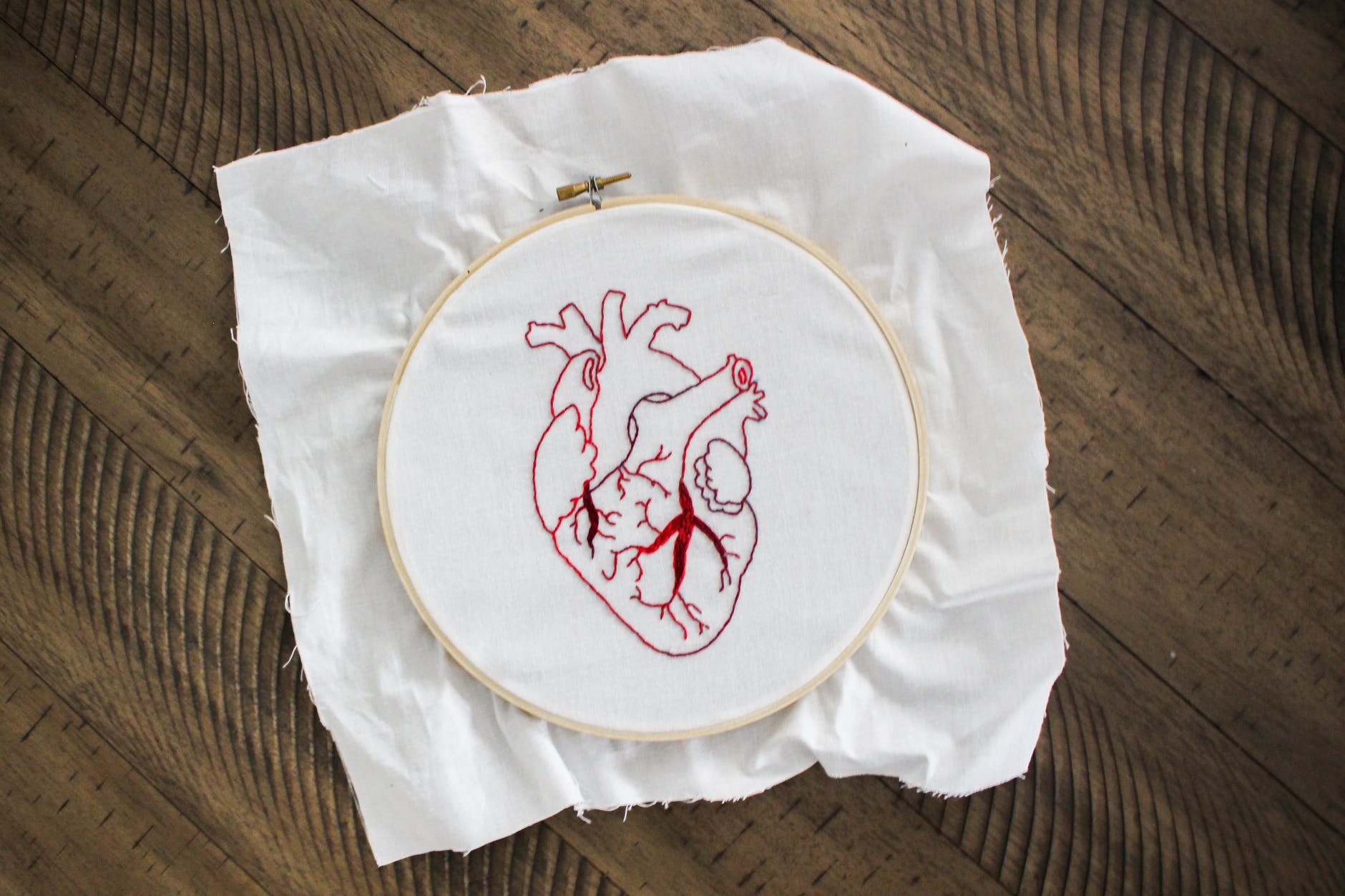
handmade embroidery
Photo by Magdaline Nicole on Pexels.com


I wasn’t supposed to still be there, but there was a pair of ladies 20+ years my senior with whom I spoke each time I passed them on the short local walking loop.  This was my third time to see them walking at this location, and I had already learned that one of the ladies had COPD and was also recovering from lung cancer. I had already completed my goal for the morning, but after realizing something the two ladies had told me, I added one more lap.  I wanted those ladies to know that they were actually completing two miles per walk, not one mile, as they had thought!  


Focused on the sense of accomplishment I was fairly certain those ladies would feel, I decided to jog back to them, and tell them the good news.  Lung cancer and COPD be danged, these ladies were unstoppable together. Little did I know that these women were the start of the morning’s theme–people supporting one another for the betterment of overall health.  I exchanged a few final pleasantries with them and went on my way.


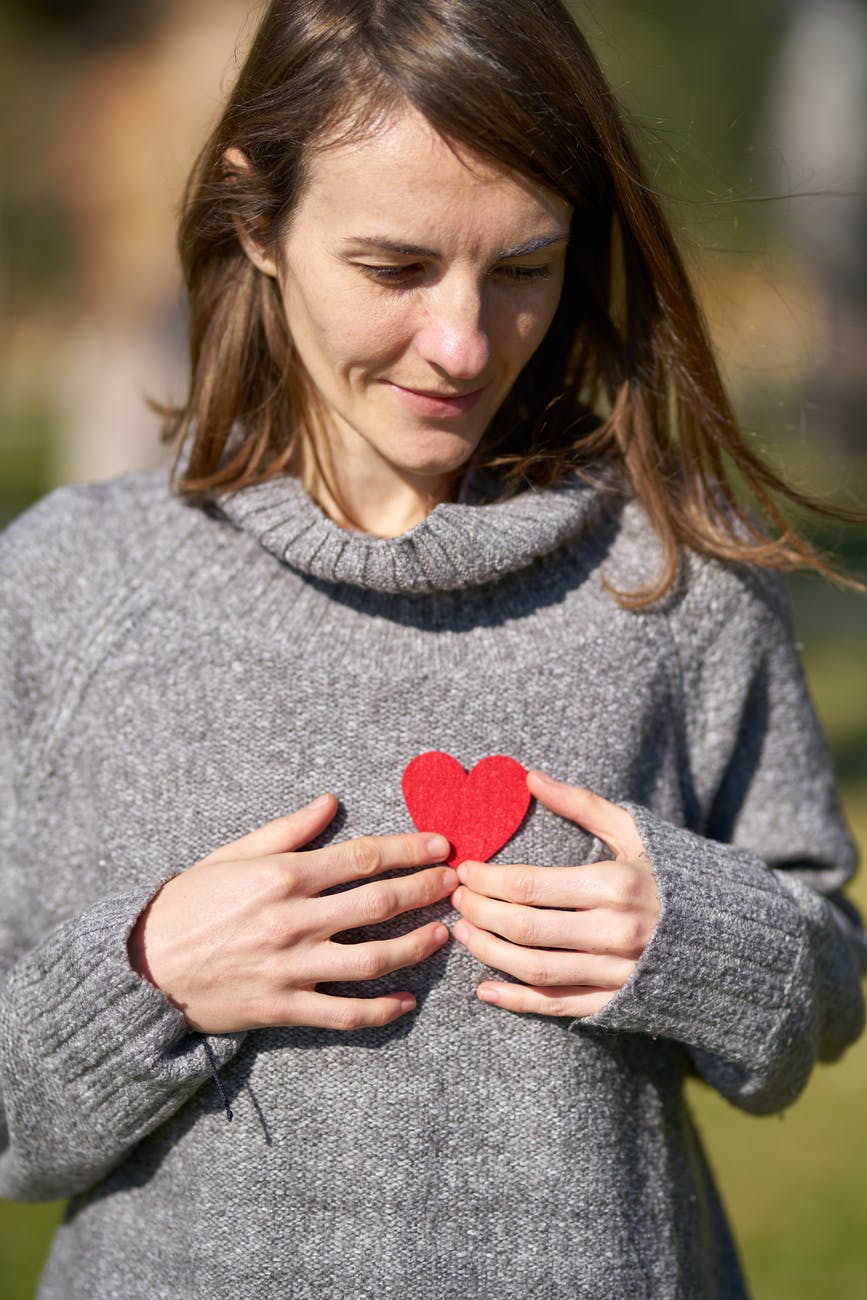
woman holding heart cut out
Photo by Engin Akyurt on Pexels.com


“Most women do not realize that heart disease is the #1 killer of American women.”–Monica Potter


heart with a red oil pastel
Photo by Kaboompics .com on Pexels.com


Moving on, lost in thought, it occurred to me that I was still jogging, albeit not very quickly.  


Well, Steph, why not jog the rest of the loop as an extra bonus since it is Saturday?


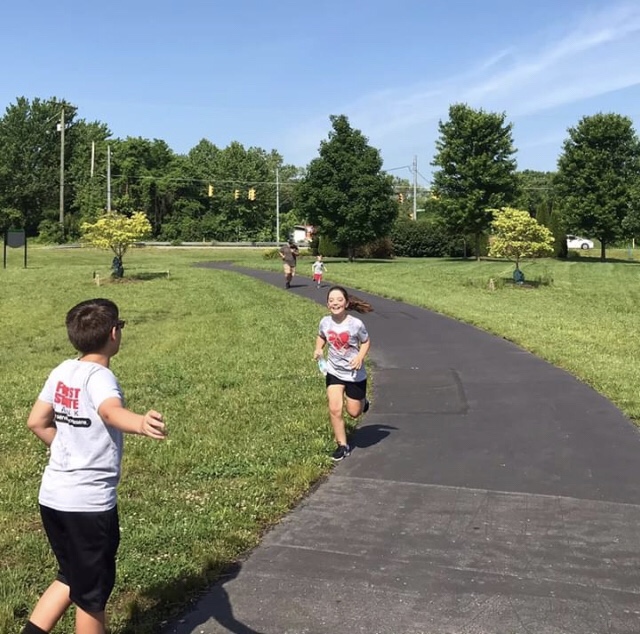
That is when I encountered two adorable kids, clearly brother and sister.  It was obvious, the sister did not want to continue moving around the path, but the brother wanted to keep going.  In fact, he began jogging as his sister began walking in the opposite direction.  Saying good morning to both kids, the boy began to talk to me, and within one minute, I could tell he wanted to run the rest of the loop, but he was filled with self-doubt.  I kept my pace slightly ahead of his, and offered words of encouragement.  Together, but at a socially appropriate distance, we crossed his perceived finish line, the entry point onto the path.


img_1764
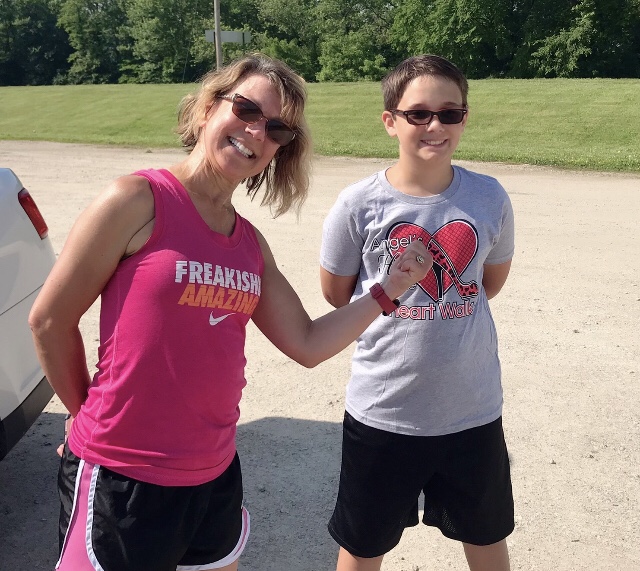
Me with Col Schneider after he ran a half mile loop with stopping as part of the AHA 2020 Virtual Huntington Heart Walk presented by St. Mary’s Regional Heart Institute.


I introduced myself to the adults waiting for the boy and then walked away to allow them to return to their group conversation as well as focus on the boy’s accomplishment.  Stretching and reflecting on the encounters of the morning, I overheard a conversation that led me to determine who the boy’s mother was.  


Do I introduce myself?


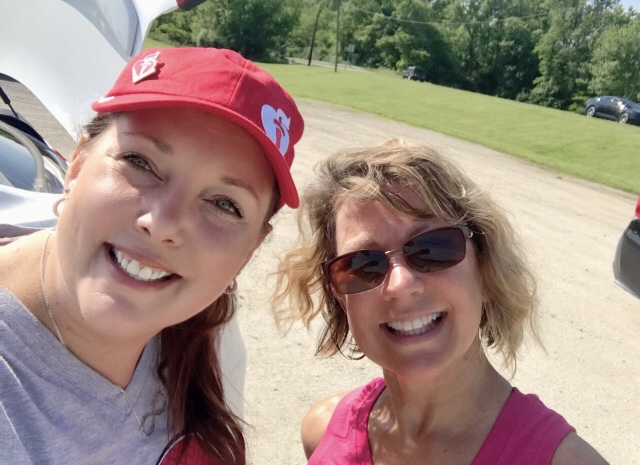
Gathering my courage, I introduced myself to the mother of the boy, and I was immediately put at ease with her enthusiasm and graciousness. She told me that her name was Angel Schneider.  Soon enough, I was lost in conversation with Angel as I learned that at age 43, she suffered a heart attack in front of her two kids, Col and Madeline, along with her husband, Tom on September 11, 2018.  She was at the walking path to meet up with friends and family for the Huntington Virtual Heart Walk for the American Heart Association.  Those who gathered, or who walked virtually, were acting in support of heart attack survivors, heart disease, and memory of loved ones lost to this disease. 


img_1763
Angel Schneider and me at after I ran with her son, Col, as he ran a nonstop half mile loop as part of the 2020 Virtual Huntington Heart Walk presented by St. Mary’s Regional Heart Institute.


As Angel I spoke, I noticed that she was wearing the same shirt as her two children and husband with the words, “Angel’s Heart and Sole.”  Angel explained that this was the name of her fundraising team for the AHA.  She added that two of her closest friends proposed the name after learning she was selected as the “heart hero” to promote the 2019 AHA Huntington Heart Walk as suggested by the staff at the St. Mary’s Hospital cardiac rehab program. This led to AHA asking Angel to speak at the rally before the event, and as her team began forming for the walk, Angel felt led to create the Angel’s Heart and Sole Facebook page/blog.


Through her Facebook page and word-of-mouth, Angel began fundraising for the AHA through the sale of t-shirts.  In fact, her first fundraising team for AHA Heart Walk, sponsored by St. Mary’s Regional Heart Institute, raised nearly $2,800 earning the award for top community fundraising team as well as top individual fundraiser.  This past Saturday, she was right back out there doing it again for the 2020 event–only with a virtual twist to it.  


img_1767
Tom Schneider, Angel’s husband in foreground, with group that met at OU Proctorville walking path for the AHA 2020 Virtual Huntington Heart Walk presented by St. Mary’s Regional Heart Institute.


“Women die sitting at home.”–Dr. Jean McSweeney


img_1772
Tom and Angel Schneider with their children, Col and Maddie.


However, despite Angel’s recovery from her 2018 heart attack, life has dished up some additional challenges.  In March of 2019, Angel returned to St. Mary’s Hospital for what she later learned were coronary artery spasms. Then, during the fall of 2019, she contracted a rare case of pneumonia caused by a bacteria called chlamydia pneumoniae.  It took Angel about six weeks to fully recover, and she had to endure not only three rounds of steroids, but also a steroid injection.  


img_1778
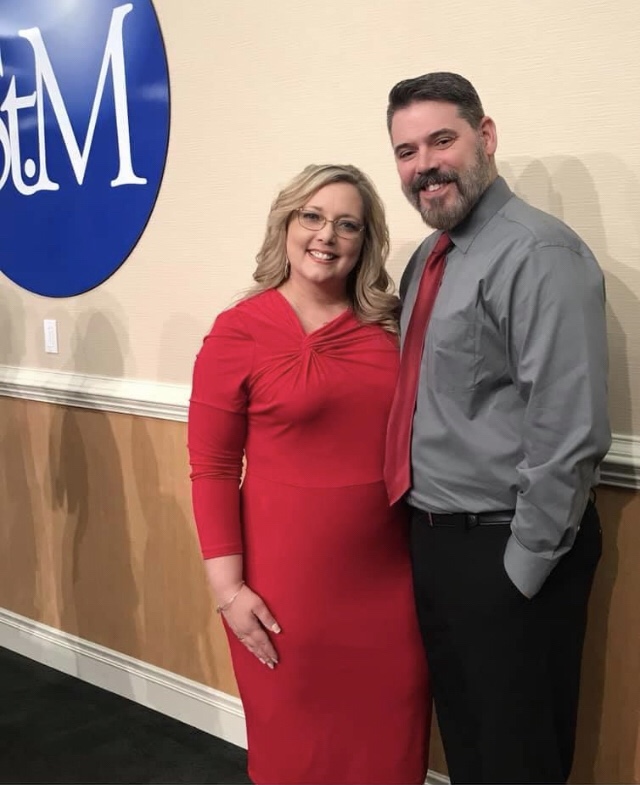
Angel and Tom Schneider at the 2020 Go Red luncheon sponsored by St. Mary’s Medical Center.


Angel’s life was also further impacted by the COVID-19 pandemic.  During the crisis, like many of us, she was working from home, trying to juggle her health, work, and personal life, while still trying to help her two kids complete school virtually. It was during this time period that she learned the job she had loved doing for over 11 years was coming to an end.  A new company took over her place of employment, and Angel was cut in the first round.   


Regardless of the bumpy ride of the past two years, Angel holds fast to her faith.  She states that God has, and continues to, open doors for her. 


“I don’t understand why some things in life happen the way they do, but what I do know is you can either use it for good, or let it consume you.  I choose to use what has happened to me for the good, for the glory of God, and to shine a light on women’s health.”


Angel is unsure what her next career step will be.  She would like to do more with her “Heart and Sole” page and continue to support AHA–perhaps even become more active at the national level.  However, no matter what direction Angel’s life takes, her husband will continue to be her greatest source of support, and her children will continue to be her greatest source of motivation as they were only ages eight and ten when she had her heart attack.  


“No young child should see his or her parent have a heart attack.” 


img_1770
Col Schneider with his sister, Maddie at the AHA 2020 Virtual Huntington Heart Walk presented by St. Mary’s Regional Heart Institute.


One thing is for certain, whatever life-path Angel ultimately traverses, she is sure to put her heart and soul into it.  


For more information about Angel’s Heart and Sole, women’s heart health, Huntington Heart Walk, St. Mary’s Go Red luncheon, and/or the AHA, please visit Angel’s Heart and Sole page on Facebook.  


img_1771
Angel Schneider at the AHA 2020 Virtual Huntington Heart Walk presented by St. Mary’s Regional Heart Institute.

Common Ground

“Whether we like it or not, we have all been born into this world as part of one big human family. Rich or poor, educated or uneducated, belonging to one nation or another, to one religion or another, adhering to this ideology or that, ultimately each of us is just a human being like everyone else.  We all desire happiness and do not want suffering.”–Dalai Lama


“The bond of our common humanity is stronger than the divisiveness of our fears and prejudices.”–Jimmy Carter


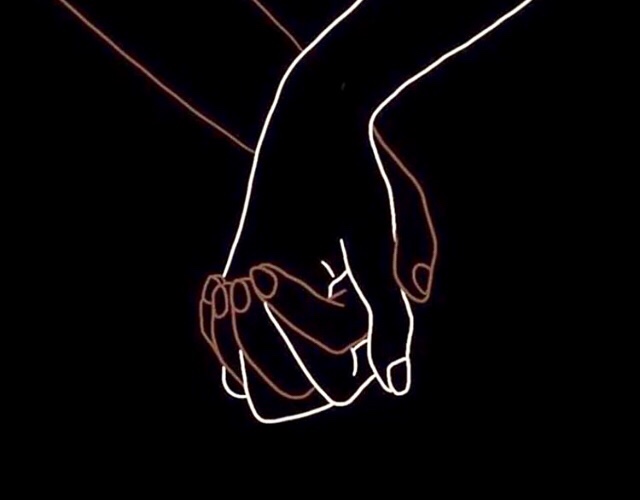
person gather hand and foot in center
Photo by Pixabay on Pexels.com


Like many of you reading these words, I have been experiencing a great deal of turbulence of the mind and heart.  From COVID-19 to the seemingly never ending struggle for racial equality, the world–from both the macro to the micro–is feeling a bit upside down and sideways.  There is so much political and societal divide that I cannot pretend to fully comprehend it all.


img_1743


In my early adulthood, my grandmother shared a story about a time my papaw and she came to my elementary school to pick me up.  Since this did not occur with any regularity, I must have eagerly anticipated this event.  Grandmother did not remember why they were picking me up, so I can only assume it was to help my parents.


It is my understanding that I exited school skipping in excitement and holding hands with another girl.  Grandmother explained that, as she took my hand, she asked a question.


“Why were you holding hands with that colored girl?”  


According to my grandmother, I replied, “What color was she?”  I was around seven years of age, and up until that moment, I had not noticed the shading of skin.


photo of girls wearing dress while holding hands
Photo by cottonbro on Pexels.com


What a marvelous thing to realize that kids are not born with innate prejudices.  As a professional educator, I have spent all of my adult life devoted to the classroom.  From Kindergarten to grade 12, and every grade in between, I have spent over 30 years instructing children, ages 5-20, and I can tell you that kids, especially the younger ones, do not make assumptions about skin color, or other dividing factors unless it has been taught/modeled by someone or something.  


img_1745
As seen on jayshetty on Instagram.


Specifically, 15 years of my career were spent with kindergartners, the overall most eager, curious, and loving age group as a whole.  While I can only speak to my experience, the majority of five year olds that I encountered were too focused upon themselves, and who or what they were going to play at recess, than to care about so-called differences.  However, they were certainly curious about what they perceived as differences for which they may not have been exposed, such as when a fellow classmate began to wear glasses, had to wear an insulin pump, or was sporting a cast.  However, if as the teacher, I allowed for both structured and organic conversations about the change to occur, within less than a day, the so-called difference became inconsequential. 


That is not to imply that the conversation of skin color, or other differences, never came up because kids are observant and inquisitive by nature.  For example, one school year, a white male kept playing with the hair of one of his black female classmates.  She always wore it in braids with colorful beads, and he often chose to sit beside her when he could.  This shy, quiet girl did not like him touching her hair, and I often had to remind him to keep his hands to himself, and I encouraged her to use her words to tell him to stop.  On and on this boy’s obsession with the girl’s hair continued as he specifically loved to take his hand, place it gently on the top of her head, and “pet” the braids from top to bottom in a repetitive motion.


Finally, the girl had had enough one morning, and blurted out during opening circle activities, “Stop it! Why you always touchin’ my hair?”


The boy burst into tears, covering his eyes with his hands. Eventually, he explained to her with great gulps of breath in between each word, “I like your hair.  It’s not like mine.”


True enough, the boy had medium brown hair that was closely cropped to his head except for his bangs that hung straight over his freckled forehead.


A few days later, I overheard the same two students talking as they practiced writing their names with scented markers.


“Do you want me to see if my mom can fix your hair like mine?”


The boy emphatically nodded his head and added, “Ask her when you get home.”


Reflecting upon my own family, specifically my nine nieces and nephews, they reflect a variety of appearances, interests, and beliefs. From very dark skin to the palest pale; from light blue eyes to black; from curvy to trim body shapes; from pink to black, brown to blonde, curly to straight hair; from conservative to liberal views, and all variances in between, these special family members reflect a wide cross-section of young adults.  Yet, when we gather together, whether it’s in person or virtual, the only thing that matters is mutual respect and love.  


We certainly do not see eye-to-eye on all subjects.  We do not have the same interests, jobs, hobbies, and so forth. Differences abound.  What we do possess, though, is a bond–the humankind connection, with emphasis on kind.  Sure, we are linked by family, but we are also woven into the web of humanity.  And like all webs, the resiliency of it is dependent upon the strength of every strand–and each strand of this human network, it is worth remembering, is a unique creation of God.


Neither my nieces and nephews, nor my past and current students had any control over who would be their parents.  They did not get to choose their address, their family income, their family make-up, their family circumstances, much less control the color of their skin, eyes, hair, and so forth. In fact, none of us could, so why should we judge one another by circumstances for which we can not control?  


img_1744


Why should I be more likely, as a white, middle-aged female, to be given a warning if stopped by the police for a traffic violation?  Why should my white, 58-year old husband be stopped by police over 14 times during the course of his life and not be ticketed?  It wasn’t until his 15th violation–forgetting to turn on his turn signal at the foot of a local bridge–that he actually received more than a warning.  


I’ve watched Spanish speaking, brown skinned students play side-by-side their mostly white peers.  While they weren’t able to verbally communicate, they were still able to construct the “tallest, most awesome block building ever!” Similarly, I observed a student, originally from Jordan, with only rudimentary English, being taught to dance by his English-speaking cross-country teammates. This year, I further observed a group of middle school boys notice a new Chinese student standing by himself during an extra recess.  Eventually, despite the fact he did not speak the same language, the boys were able to coax him into playing basketball with them.  While he did not participate for the entire game, for the ten or so minutes that he did play, the smiles and high-fives abounded. My point?  Children find a way to discover common ground.  Why can’t adults?


img_1753
As seen on Instagram at stephsimply. I posted this pictures years ago of my daughter, Maddie, playing dress-up one Christmas, with her cousins, Lexi and Naomi. They hadn’t been around one another in a couple of years at the time of the photo, and yet, they found common ground within minutes of being together.


In the words of Dr. Martin Luther King, Jr. . . 


“I have a dream that my four little children will one day live in a nation where they will not be judged by the color of their skin but by the content of their character.


I have a dream today.”


So do I, Dear Reader, so do I, for all the world’s children, including the newest members of our family, my great-nieces and nephews.


img_1747
As seen on heartcenteredrebalancing on Instagram.

Strawberry-Rhubarb Crisp

Blueberries, strawberries, raspberries and other varieties have anthocyanins that can help reverse some loss of balance and memory associated with aging.”–David H. Murdock


“Strawberries!  Fruit from the heart.”–Anthony T. Hincks


img_1657
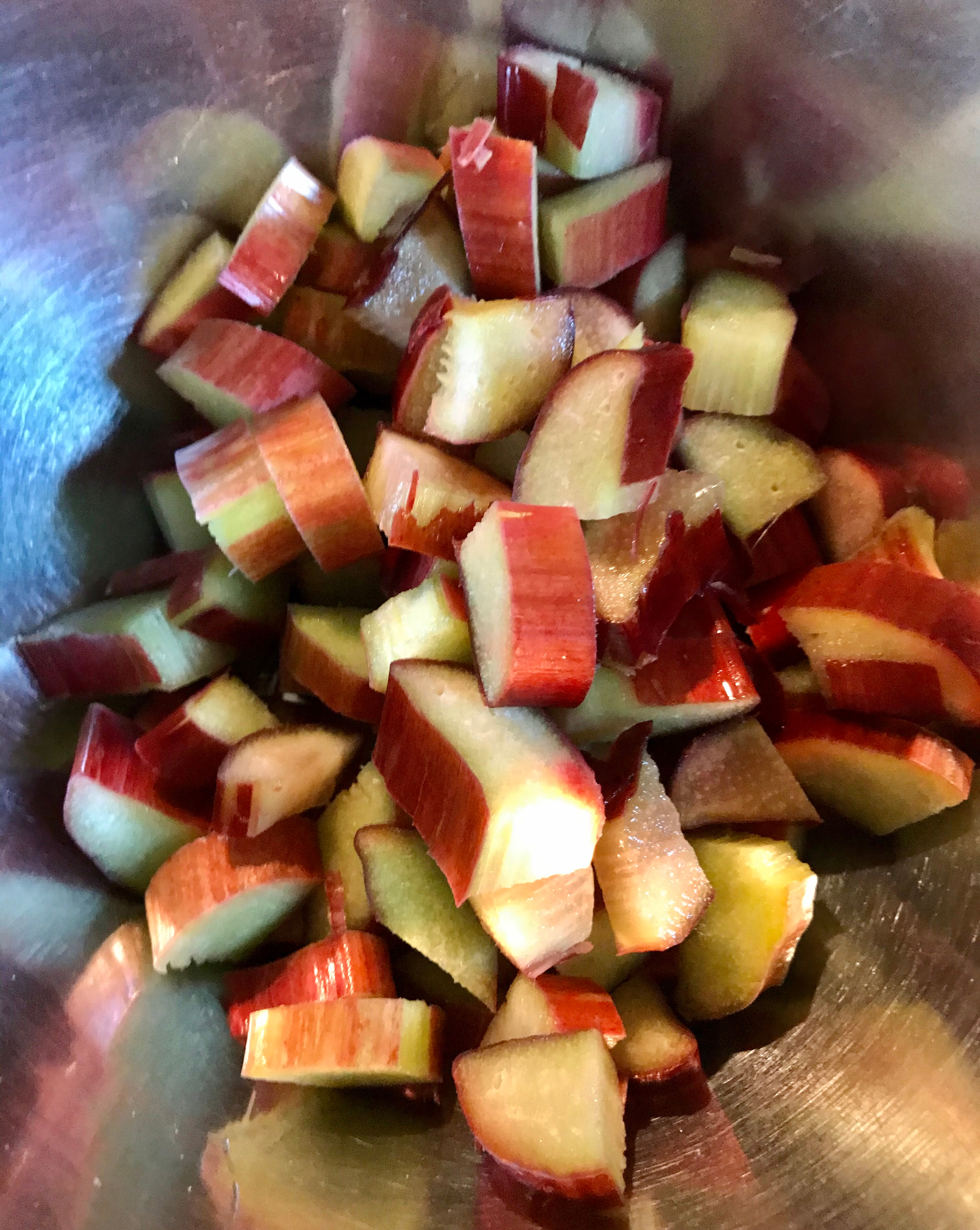
Slice the sugar soaked rhubarb and place into a mixing bowl.


Long ago, in a far away land . . .


Oh, wait, it only seems like that.  


When I was a very young girl, my dad kept a small vegetable garden for a few years. While it didn’t seem to last for many years as our family grew, I was young enough to be fascinated with its order. I recall watching Dad as he planted and staked tomatoes then surrounded them by marigolds.  He explained to me that those unique smelling flowers would protect the tomatoes from pests.


img_1660
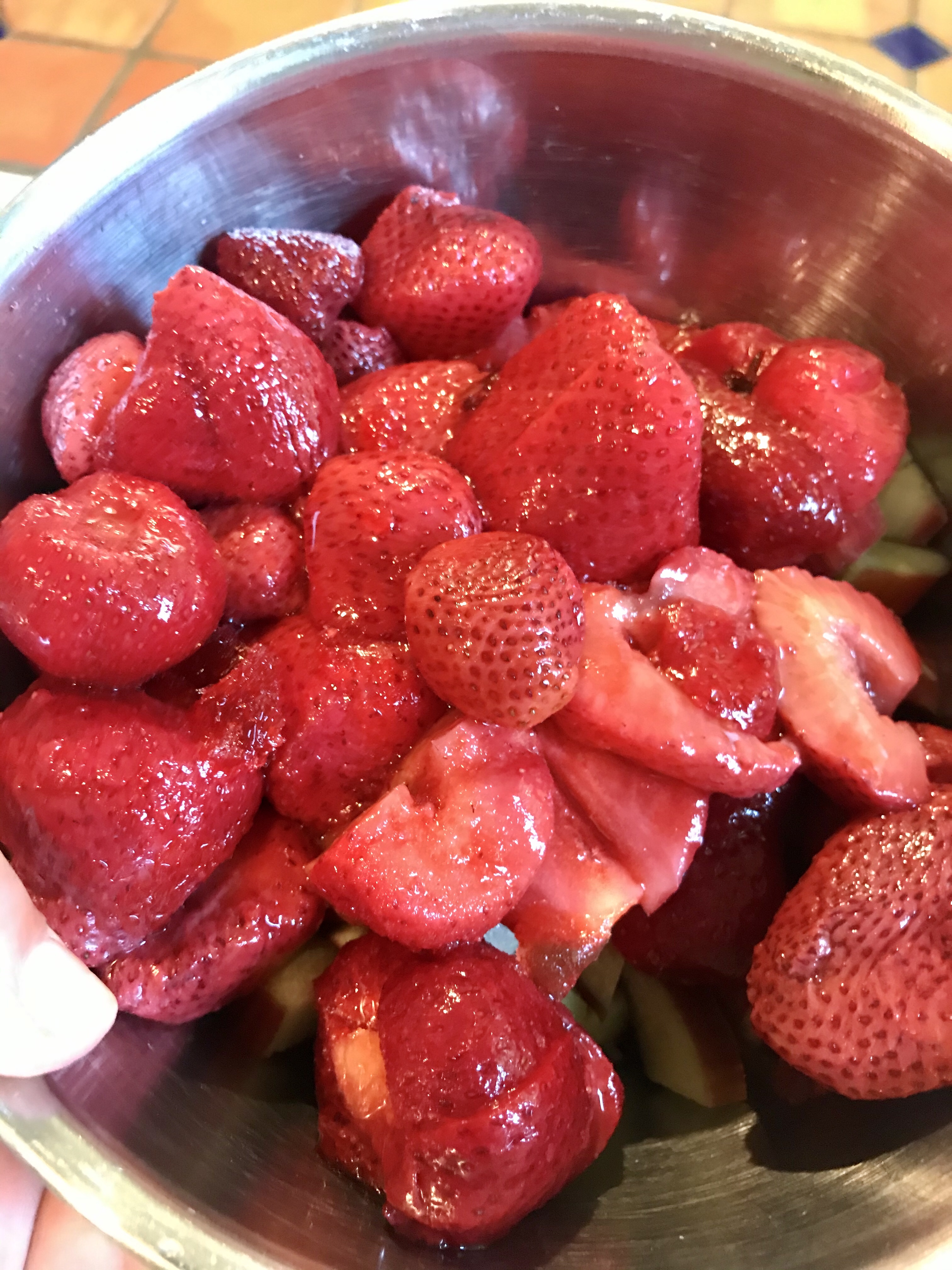
Halve the larger strawberries before adding all of the strawberries to the bowl with the rhubarb.


One year, I was especially interested in a new plant he was going to grow. Rhubarb.  I had never heard of this plant, and wondered about it as Dad described it as fruit that looked like red celery.  At the time, I was well-acquainted with celery from the holiday “relish trays” my grandmothers and mom made that contained both peanut butter and pimento cheese stuffed celery.  While I never liked the celery, (although I love it now) I would lick the peanut butter off, sneak over to a trash can, and furtively toss the celery!  Dad explained that rhubarb was sour (He may have said tart, but my small mind translated it as sour.) and needed sugar added to it, but that it made good crisps, pies, or cobbler.  I liked desserts, so it sounded like a good food to me!


img_1314
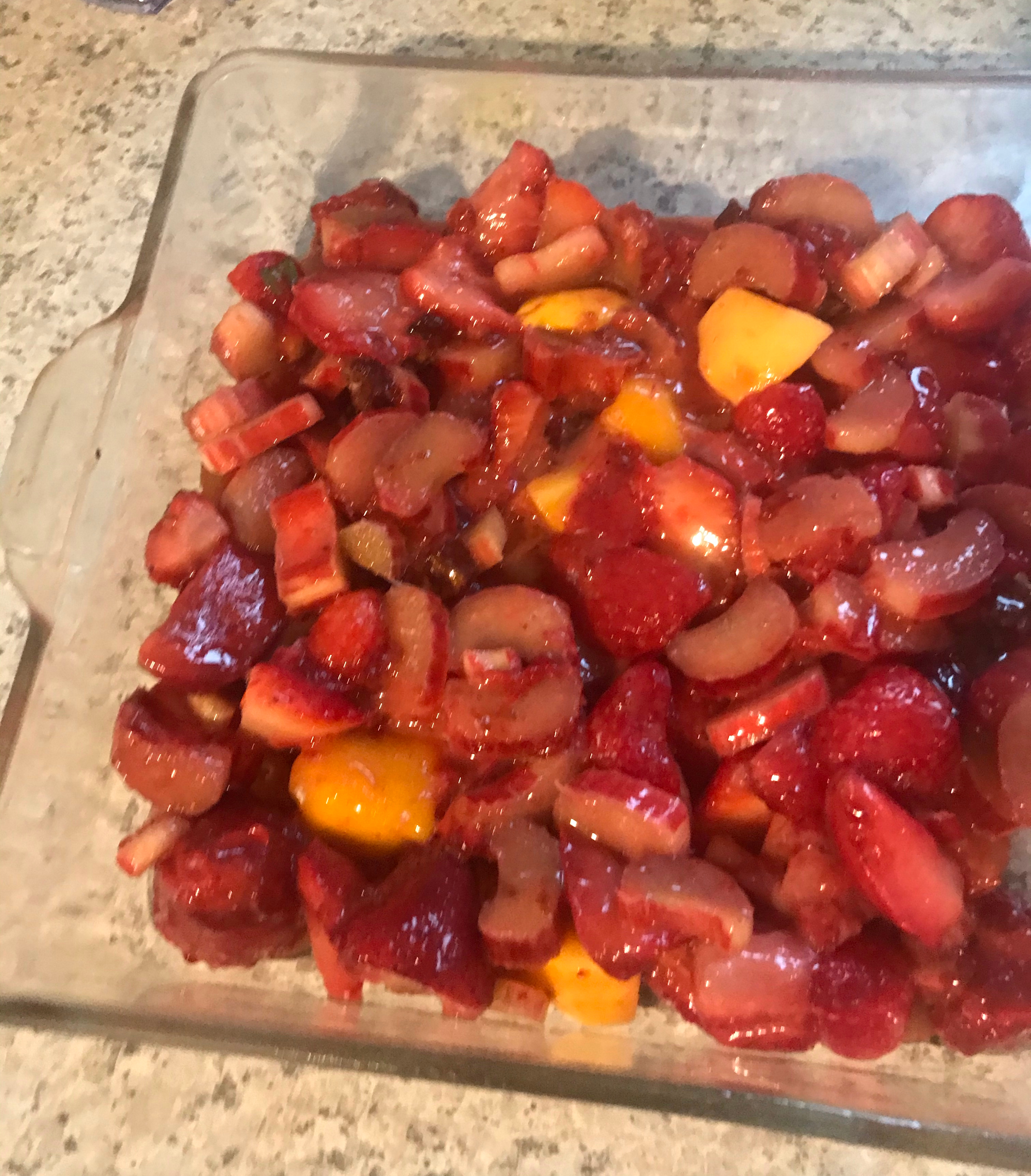
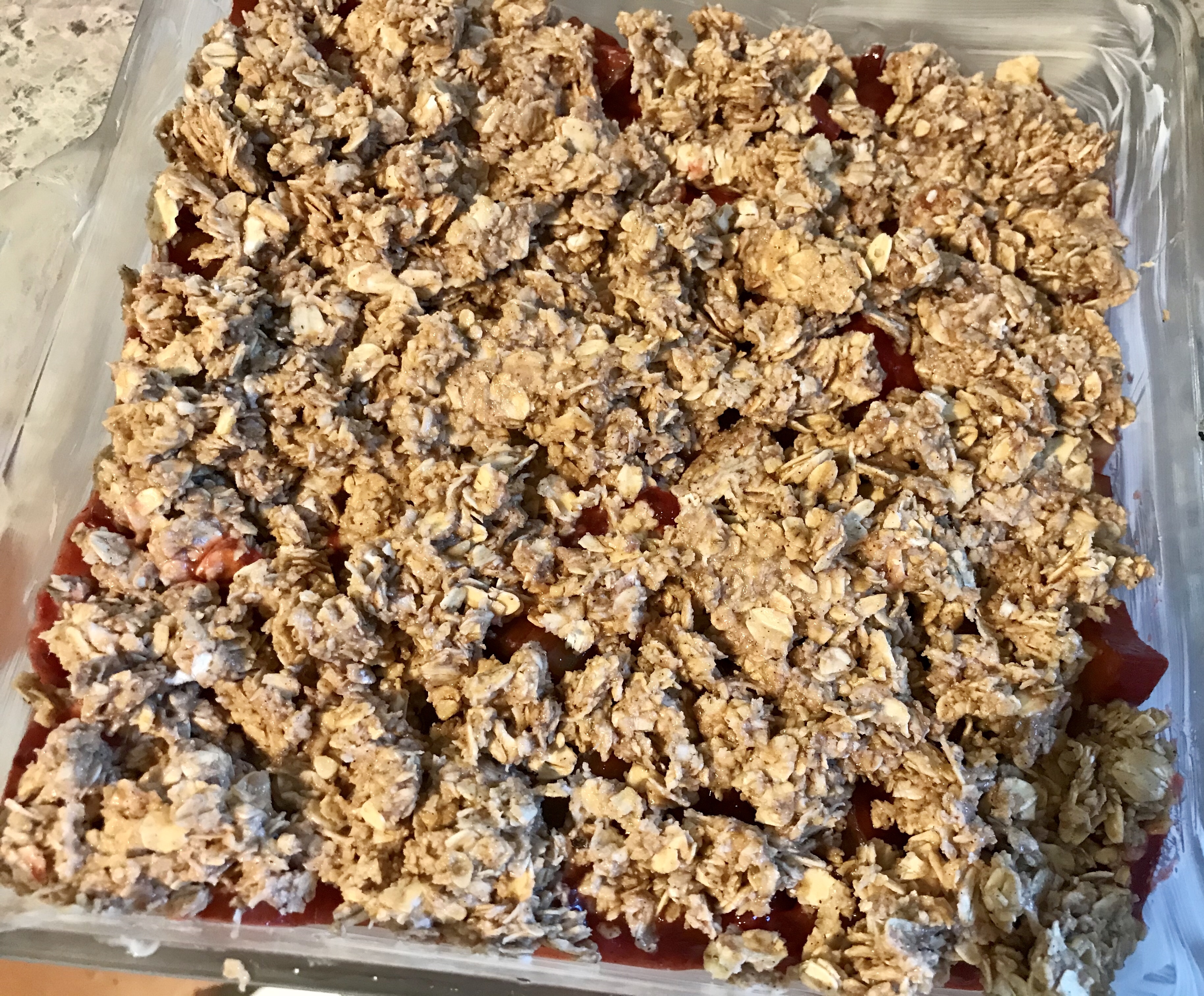
Combine the fruit mixture ingredients and pour into a prepared square baking dish.


I was saddened to learn that we could not eat rhubarb that first year, but instead I would have to wait another year before I could taste it as the plant needed to mature and become established. Unfortunately, I don’t remember much more about Dad’s rhubarb growing beyond one fading memory of Dad bringing a small batch of rhubarb into the house near the end of the school year–so it must have been early to mid-May.  I recall my childlike wonder with its appearance, and my eagerness to eat the pie Mom was going to bake up.


img_1662
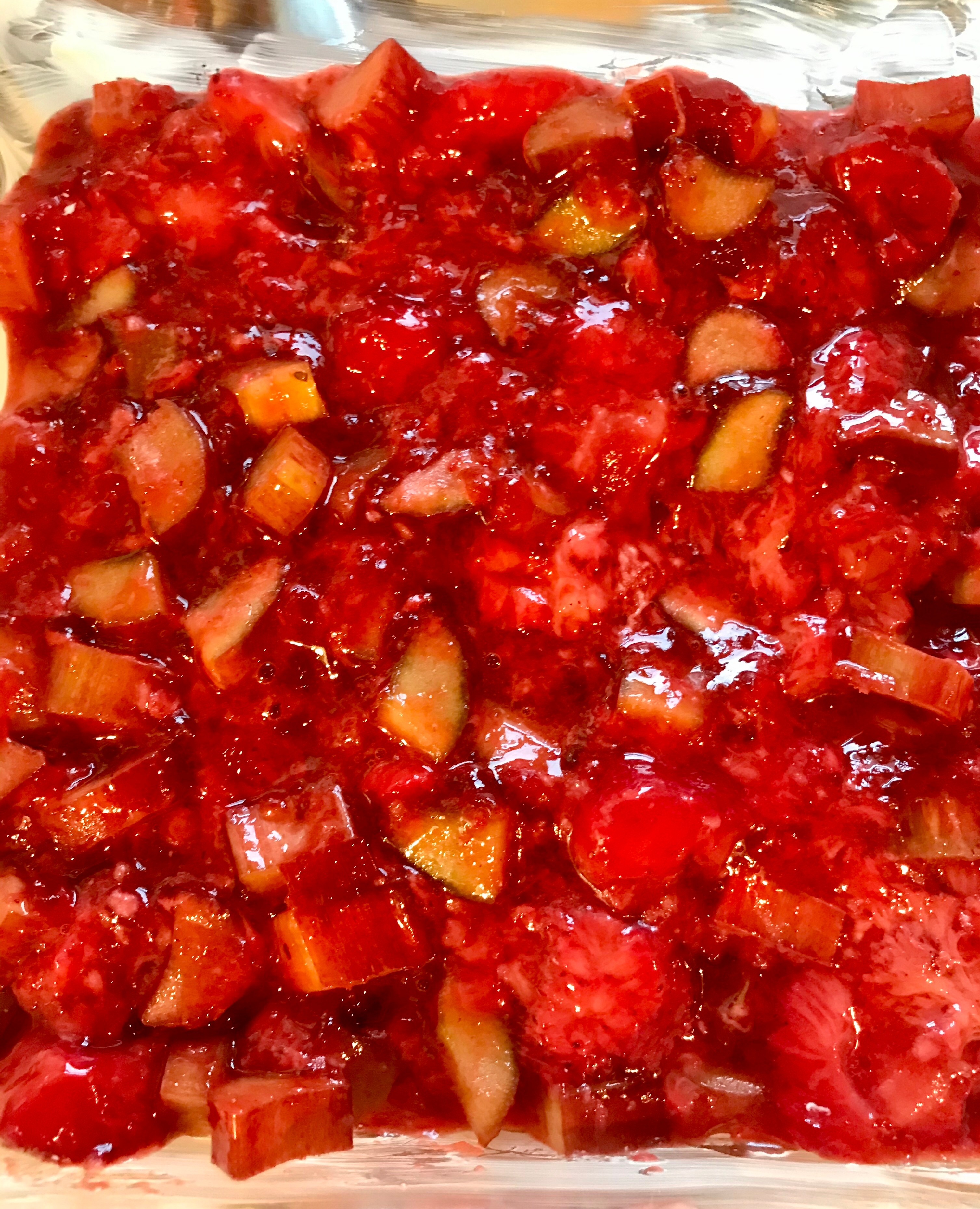
Spread fruit evenly in baking dish.


In addition to following Dad around when he was working, I also loved hanging out with my mom in the kitchen.  I am sure I drove her nearly crazy with my incessant chatter and seeming desire to help.  However, my intentions to help were not always pure as I ultimately hoped to taste whatever it was she was making–especially if she was baking!


Unfortunately, I do not remember much about “helping” mom as she prepared to bake that rhubarb pie. One part that does stand out was the amount of sugar mom added to the bowl.  She explained that rhubarb pie required more sugar than most fruit pies because of its tartness.  That did not seem like a bad thing to me, but as a mom who often tried to limit our sugar intake–and, let’s be honest, with four kids, who would want them all sugared up–she wasn’t thrilled with the prospect of me eating that much sugar.  Still, my dad had fond memories of rhubarb pie and was eager to eat it despite my mom’s mutterings in opposition. 


img_1667
Spread oat/flour mixture gently over fruit.


I have another faded recollection of sitting in our avocado green dine-in kitchen and eagerly awaiting a piece of rhubarb pie.  


Did I want ice cream on it?


You betcha, I did.  


img_1319
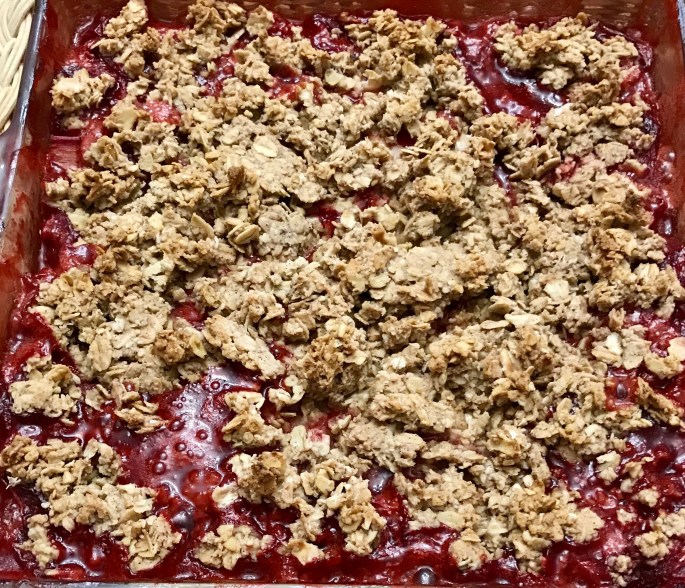
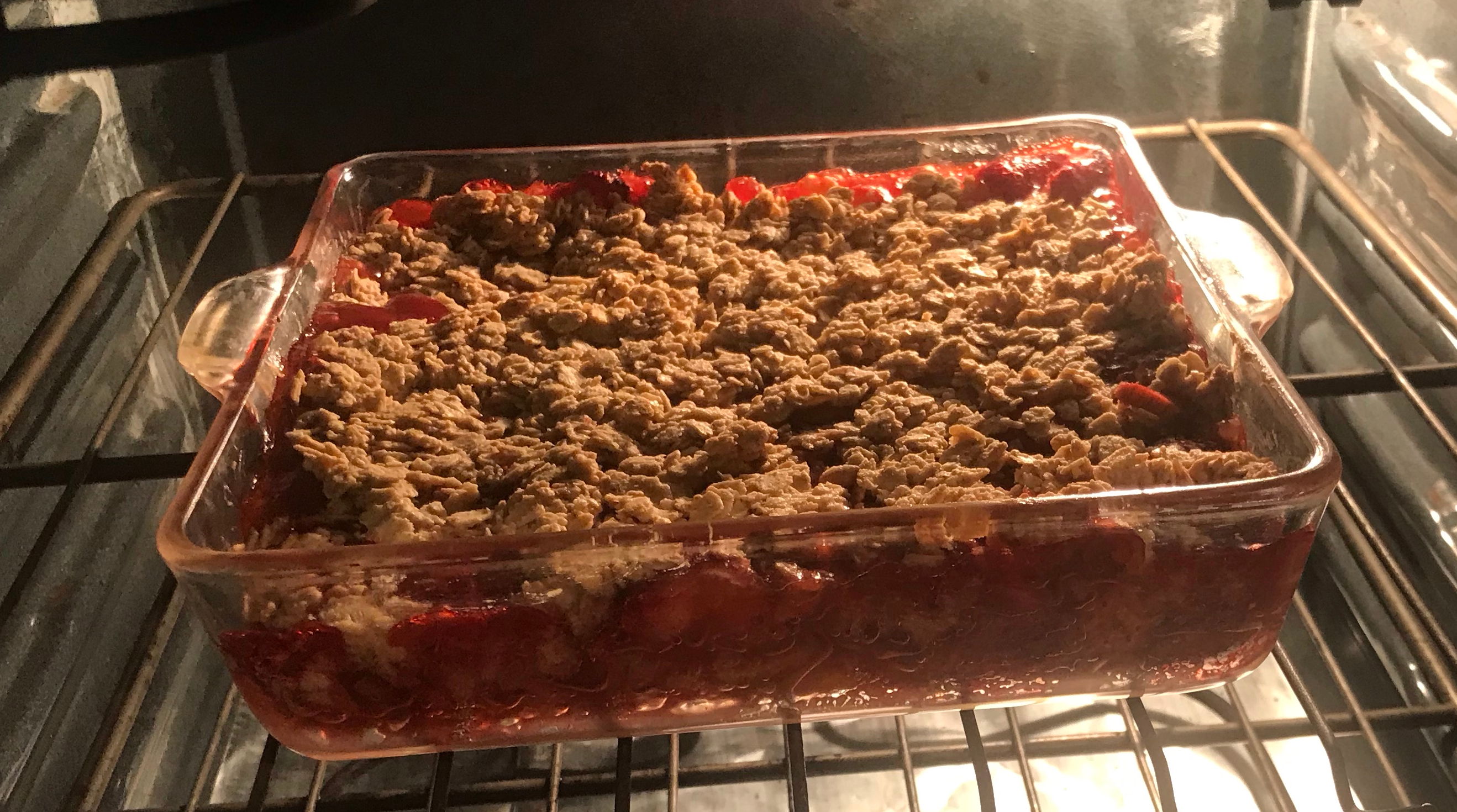
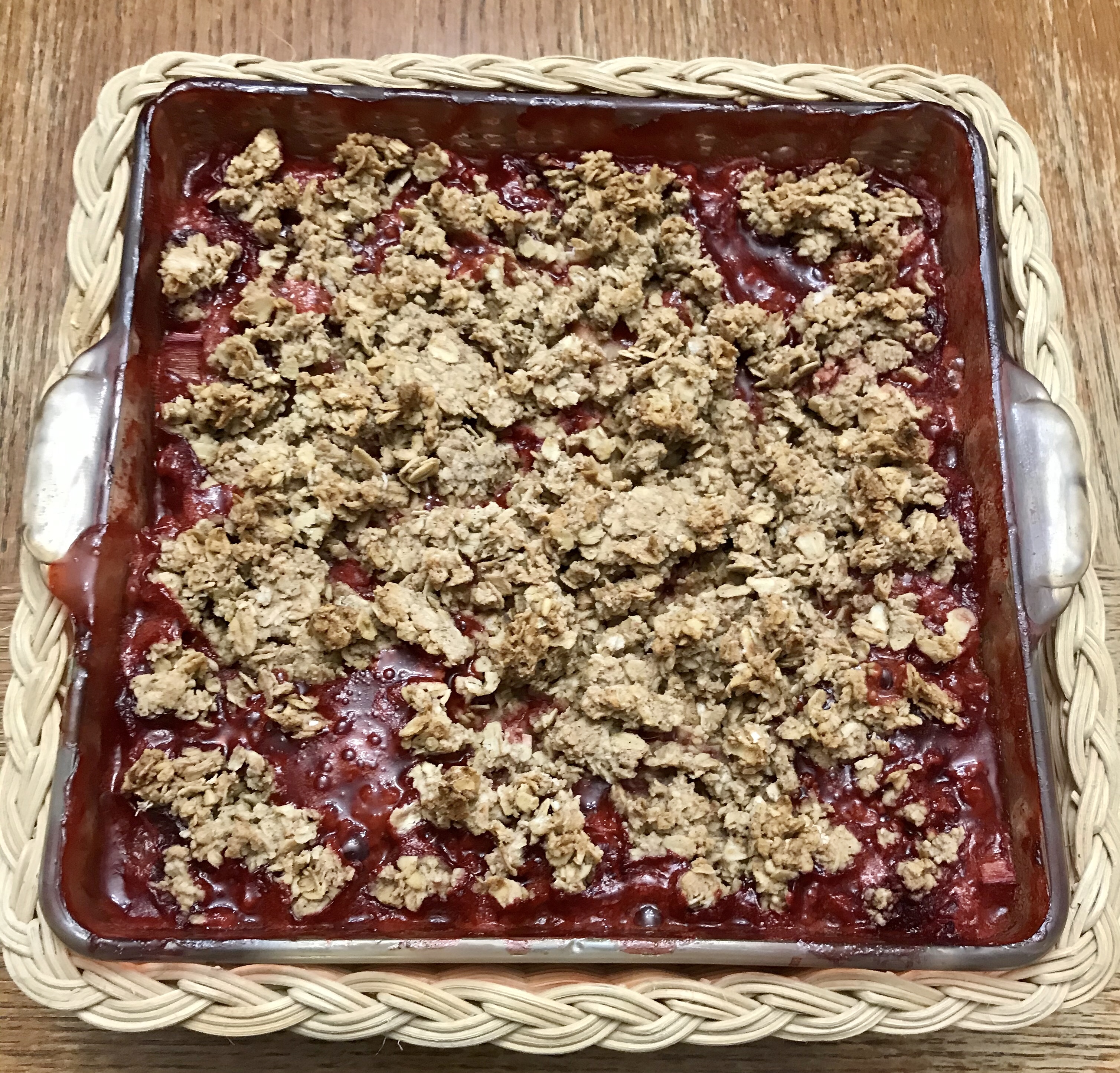
You will know when the crisp is done because the fruit will be bubbling and the topping will be golden brown.


My younger brother did not want to try it at all–he was a bit more picky about what he ate, and our middle sister was a baby/toddler age–still in a high chair, so she did not get any either. (I don’t think our youngest sister had yet been born.)  I sat with my unbreakable Corelle bowl, and took in the vanilla ice cream as it melted over the pie into all those cracks and crevices.  Beyond that, I don’t remember much more than I feel I must have liked it because to this day, I still have positive feelings about rhubarb.


When I recently saw rhubarb in a local store, along with plenty of red, ripe strawberries, I realized both fruits were in season.  It then occurred to me that recipes often combine the two ingredients for a fresh, plant based treat.  Therefore, I decided it was high time to research and play with rhubarb in honor of Dad’s rhubarb growing and Mom’s pie baking.  Both fruits are in season now through the first half of June, so it’s the perfect time to give this recipe a try!  This is a much lighter dessert than that pie of my childhood, but it earned a tasty stamp of approval from my daughter and husband as well as my taste buds. Let me know what you think.


img_1669
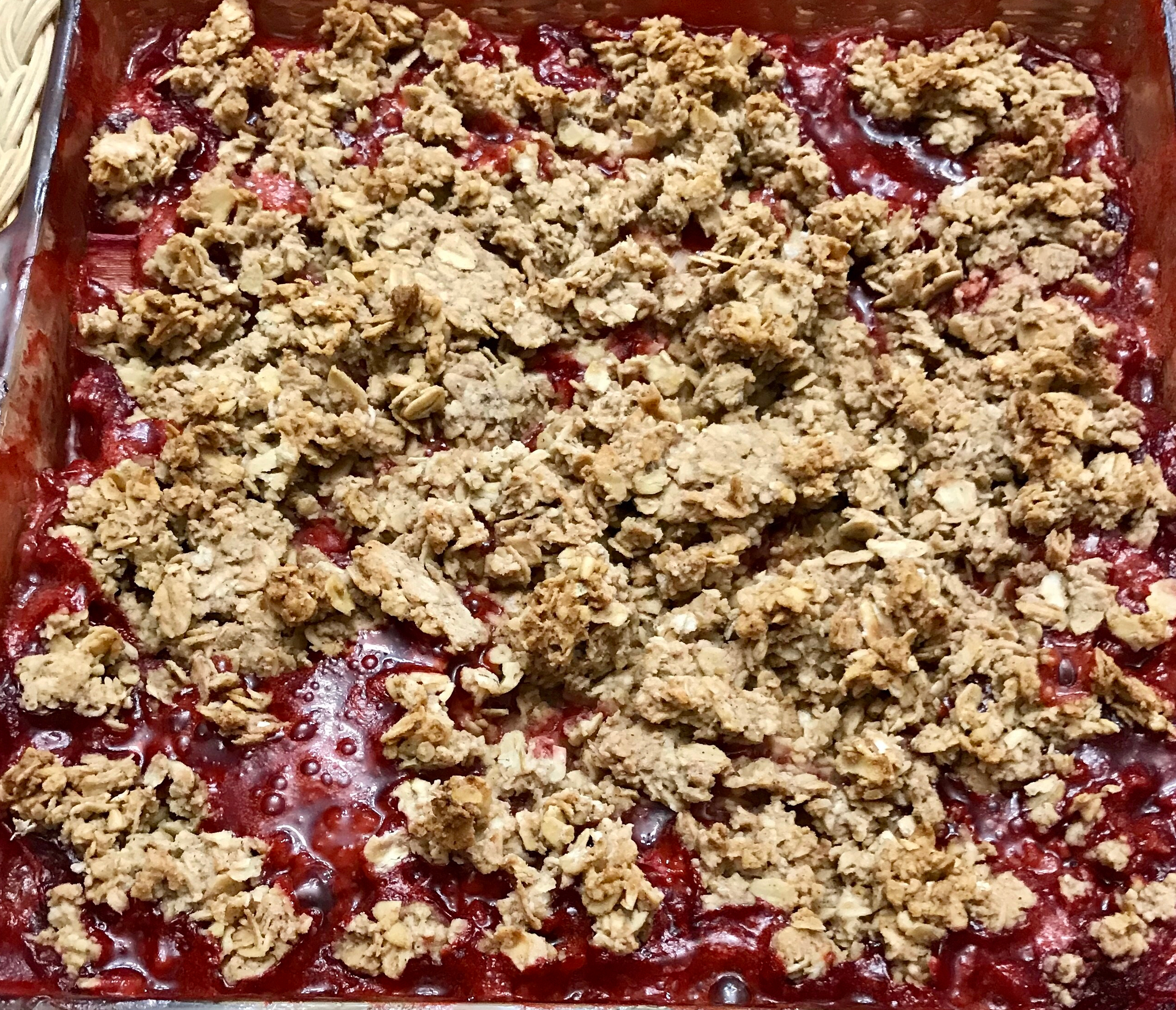
You’ll know that it’s done when the topping is golden crisp, fruit is bubbling & it looks jammy.


From my home to yours, I wish you healthy, happy, and homemade meals and/or treats–as the case may be!


img_1670


Strawberry-Rhubarb Crisp

Ingredients

For filling:

3 cups strawberries, halved if large

3 cups of sliced rhubarb

¼ teaspoon orange extract 

⅓ cup strawberry jam  

2 tablespoons arrowroot or cornstarch (or can substitute 1 teaspoon xanthan gum)

For topping:

1 cup rolled oats (I use gluten-free.)

½  cup sliced almonds or almond meal, or ½ more oats (I chose more oats, but I think almonds would be delightful!)

¼ cup all-purpose flour or all-purpose gluten free flour

3 tablespoon softened butter (plant-based if desired) or other vegetable/coconut oil

4 tablespoon maple syrup (Can use date syrup, honey, or agave, if preferred.)

2 medjool dates chopped, optional (Just for a bit extra sweetness if desired.  Can also use 2 teaspoons of date syrup.)

½ teaspoon cinnamon

Pinch of salt


Directions:

Place stalks of rhubarb in a glass with 1-2 tablespoons sugar (maple syrup, honey or agave) in ¼ -½ cup water and allow it to soak overnight, but really 2-4 hours will do it!

When ready to bake:

Preheat oven 350 degrees

Lightly coat a square baking dish (8 x 8, 9 x9 or similar dimensions) with nonstick cooking spray or with a light coating of coconut, vegetable oil, or butter.

Slice presoaked rhubarb, and add to a small mixing bowl.

Halve strawberries, if needed, and add to rhubarb.

Add orange extract, strawberry jam, and arrowroot (or cornstarch) to fruit and gently stir.

Spread fruit mixture into prepared baking dish.

In a separate larger bowl, stir together oats, almonds (if using) and flour.

Using a pastry cutter or fork, cut in rest of ingredients, until mixture becomes course and crumbly.

Gently spread oat mixture over fruit.

Place in the oven and allow to bake for 45-55 minutes or until the fruit is bubbling and the top is crisp and golden brown.

Serve warm as is or with your favorite topping such as ice cream or whipped topping.

Store leftovers for up to a week in the fridge, or can freeze for up to a month.

Enjoy leftovers gently warmed.  

Makes not only a great dessert or snack, but is also a delicious breakfast!

Makes 6 generous servings, or 9 smaller servings.


Power of Kind Words: Reciprocity is not Mandatory

Kind words can be short and easy to speak, but their echoes are truly endless.”–Mother Teresa 


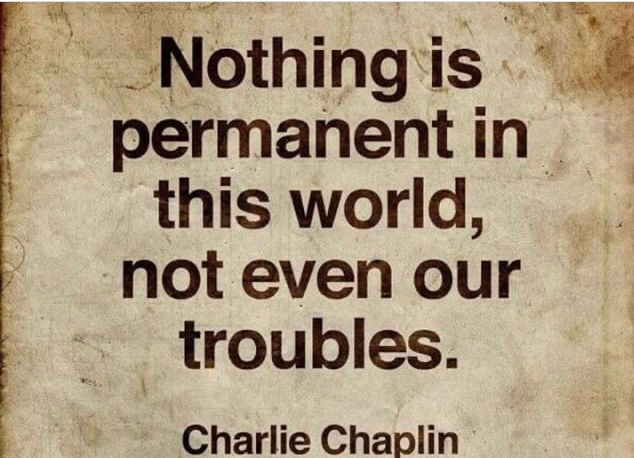
“Act with kindness, but do not expect gratitude.”–Confucius


img_1639
As seen on Instagram @mylifesbt.


Oh no, not again.  Surely, my memory is mistaken.


I stood patiently.  Waiting my turn to enter the aisle.  I needed an item directly in front of a man standing in the middle of the aisle examining all of the choices.  I get it.  Looking at all of the available choices (or alternate choices, if your favorite is unavailable) can be overwhelming.  Plus, add in the new directional rules that are in effect at some stores as well as shortages of certain items, shopping can now take more time than ever. 


“What’s your problem?”


Oh, no, here we go again.  It. Is. The. Same. Man. 


“I’m just waiting.  Take your time,” and I added a smile, but then realized, unless I was also smiling with my eyes, he couldn’t see my mouth due to my mask.


That’s when I noticed he wasn’t wearing a mask, nor gloves as I am used to doing when now going out to shop.  However, wearing personal protective gear is a choice.  I get, honor, and respect personal choice.  My own choice stems from my desire to err on the side of caution.  Regardless, everyone views things differently.


“Well, here you go,” he said in a voice rich with sarcasm as he feigned a gallant bow extending an arm in a sweeping gesture.


Oh boy, apparently, he thought I was waiting to go through and past him.  Why didn’t I communicate more effectively?  


“It’s ok.  I can wait.”


Again, I try to smile, but of course, it’s not visible.


That’s when it happened.  The very thing for which I was afraid.  Expletives exploded from his mouth, his face contorted into a fiery red emoji worthy expression.  He tried to march past me, saw there wasn’t any room, said some more finely selected words, and stomped around a display that was arranged in the center of an aisle.


woman wearing mask in supermarket
Photo by Anna Shvets on Pexels.com


I am fairly certain this was the same man, who only three weeks ago, I had encountered in this same store–only in a different aisle.  At that time, he was offended, I think, because I stepped aside to let him pass six feet away from me, despite the fact he was not following the store’s directional arrows.  He took one long look at me then and about-faced with a nearly purple visage, spewing curse words for all to hear.  


This time, I momentarily froze, shaken once more by the negative emotional energy left in his wake.  It was almost as if I wanted to let his surrounding Pig-pen-like dark cloud of anger dissipate before I walked on.


grocery cart with item
Photo by Oleg Magni on Pexels.com


Later, as I moved through the store, I kept encountering a woman who appeared to be just off work based upon her tired, but kind, eyes, scrubs, and hospital lanyard.  It always seemed as if wherever I pushed my cart, she ended up right behind me waiting as I made my choice and moved on.  She never said a word, never indicated a hint of impatience. 


In the freezer section, I was taking an exceptionally long time as I thoroughly searched for bags of frozen chopped peppers and onions, which had not been in-stock for weeks.  Not finding them, I slid down to the next set of freezer doors to grab a few bags of frozen vegetables that were in stock.  That’s when I noticed the same woman was behind me.


“I am so sorry if I was holding you up,” I sincerely stated.


“No, no, no. Not at all.  In fact, I was going to offer to hand something to you in case it was out of reach.”


Of course she’s significantly taller than me.


“Aw, thank you, but no.  There’s nothing.  They’ve been out of frozen chopped peppers and onions for weeks now. I was just double checking to make sure I wasn’t overlooking them.”


We chatted a few more minutes, both of us keep a safe distance, but still continuing to shop.


“Listen, just so you know, I figure it like this.  I’m going to let you take your time picking out what you need because I sure plan to take my time when it’s my turn.”


Exchanging polite farewells, I moved on and wrapped up my shopping.


img_1641
As seen on Instagram at heartcenteredbalancing.


Some days later, I reflected on the two experiences within the context of COVID-19.  The man’s anger, despite the fact I did not know him, had bothered me.  It was an irrational response, I know, but I tend to struggle with shaking off any form of strong emotion, but especially those of a negative nature.  However, the unknown woman’s words were like the sip of nice wine or bite of good chocolate at the end of a hard day–you don’t need or want a lot–just enough to calm the nerves.


Which led me to the renewed lesson of the power of words. Kind words, spoken or written, are never wasted.  Never.  In fact, my mom has often advised me to etch sweetly spoken words–or any positive moment for that matter–into my heart’s memory for those times when there seems to be void.  


make this day great quote board
Photo by Alexas Fotos on Pexels.com


Unfortunately, my encounters with this man most likely reflect his level of frustration and/or anger at the COVID-19 situation.  Perhaps, he has lost his job, is isolated from loved ones and/or friends, and he doesn’t have an outlet–a viable way to deal with his disappointment.  Of course, he could be reacting to any number of things, and I just happen to be in the wrong place, at the wrong time–although I suspect I am not the only one with whom he’s blown up.  Bottom line, I don’t know his story, but he is clearly suffering some form of anguish, and I sincerely hope some form of ease enters his life–preferably before I encounter him again.


pexels-photo-4031867.jpeg
Photo by Edward Jenner on Pexels.com


About a month ago, my 8th grade students and I considered a quote from a novel that stated, “Reciprocity is not mandatory.” These words refer to an idea that when giving a gift, one should give it freely without any expectations. Thus, my students and I, through virtual means, discussed the notion of whether or not it is possible to give without expectations. It was a lively debate and inspired thoughtfully written responses which ran the gamut of opinions.


img_1644
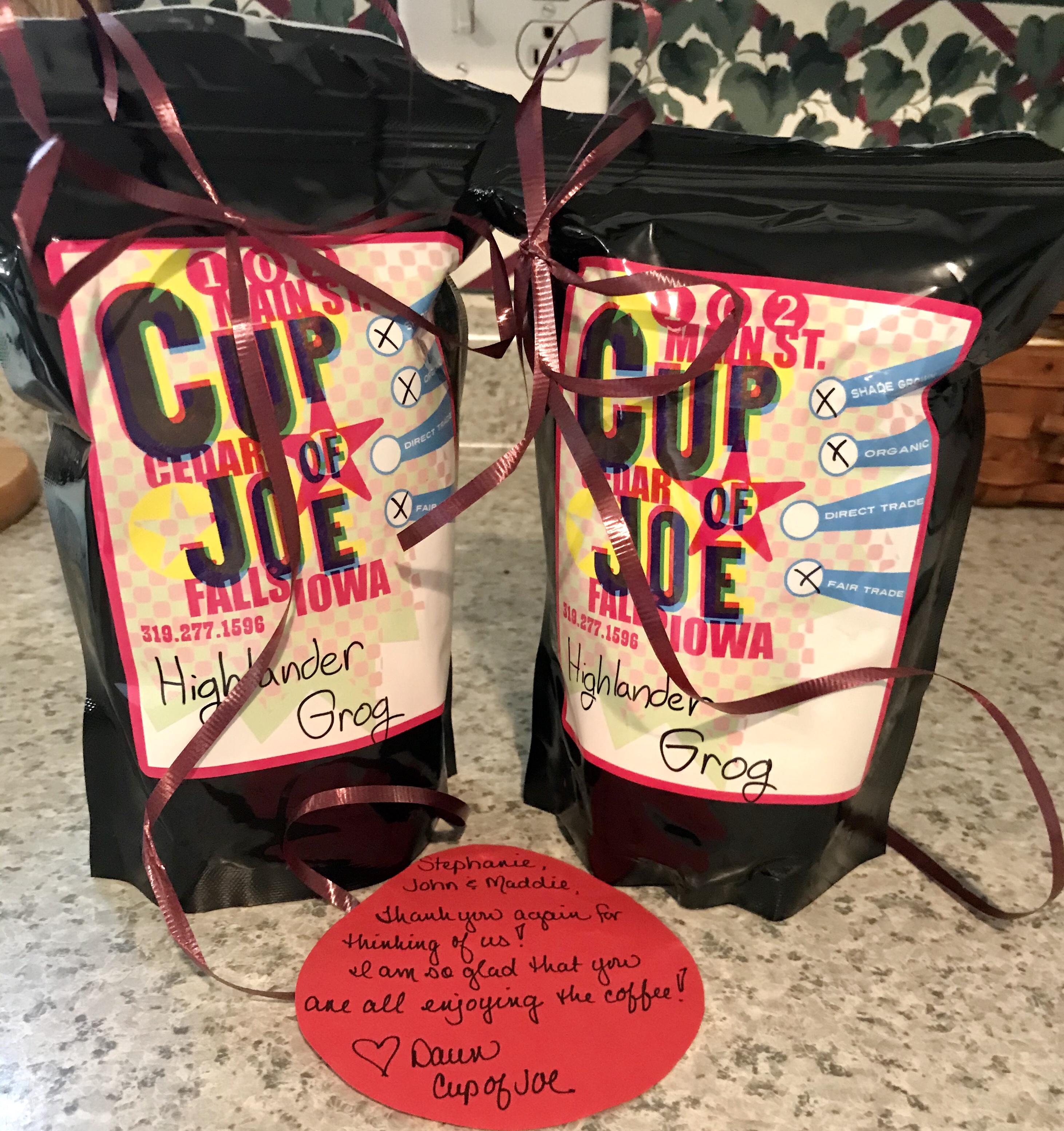
I love it when a business takes time to personalize and offer kindness for an on-line order. We began ordering from this locally owned and operated coffee shop, Cup of Joe, in Cedar Rapids, Iowa. I always look forward to the personalized notes we receive from the owner, Dawn.


Personally, I fall on the side of freely giving simple acts of kindness without expectations.  Smile at a stranger.  Thank the employees who help you check-out groceries.  Hold the door for a person whose hands are loaded.  Offer heart-felt compliments.  Help an elderly/disabled (or short LOL) person grab something from a top shelf or rack.  Call or text a loved one. Write a letter.  Send a card.  There are so many free, nearly free, or inexpensive ways to spread kindness.  


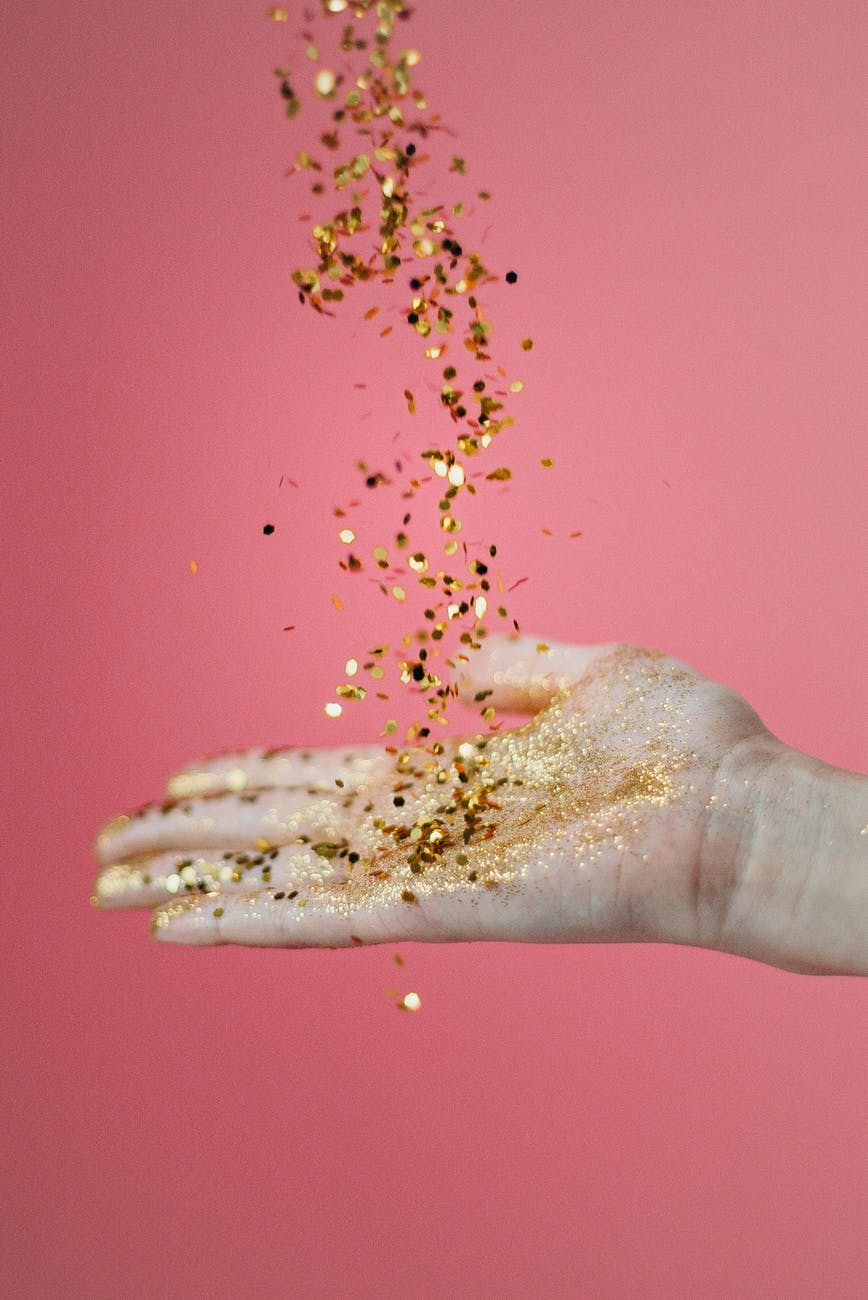
photo of confetti on person s hand
Photo by cottonbro on Pexels.com


It is my sincere belief that while reciprocity is not mandatory–eventually, all that goodness you put out in the world makes it way back to you in some form–even if you don’t recognize its original source.  Thus, don’t let the negative behavior of some override the good that is out there because . . . IT. IS. THERE.  It’s like glitter.  


Remember making a craft with glitter in school?  Hours, why, even days later, you could still find a bit of sparkle in the darndest places.  That’s what kindness is like. And, if you don’t see it, then by golly get out your proverbial bottle of kindness glitter and start sprinkling bits of it here and there.  Just like that glitter from that long ago art project, you’ll soon find a few random sparkles returning right back to you in the most unpredicted ways.


assorted color sequins
Photo by Sharon McCutcheon on Pexels.com

img_1638
As seen on Instagram @ postiveenergyalways.

Relax, Recharge, and Reflect.

“Relax, Recharge and Reflect. Sometimes it’s OK to do nothing.”― Izey Victoria Odiase


 “Farmers learned to plant fallow fields with clover, which recharges the soil with nutrients.”― Charles C. Mann


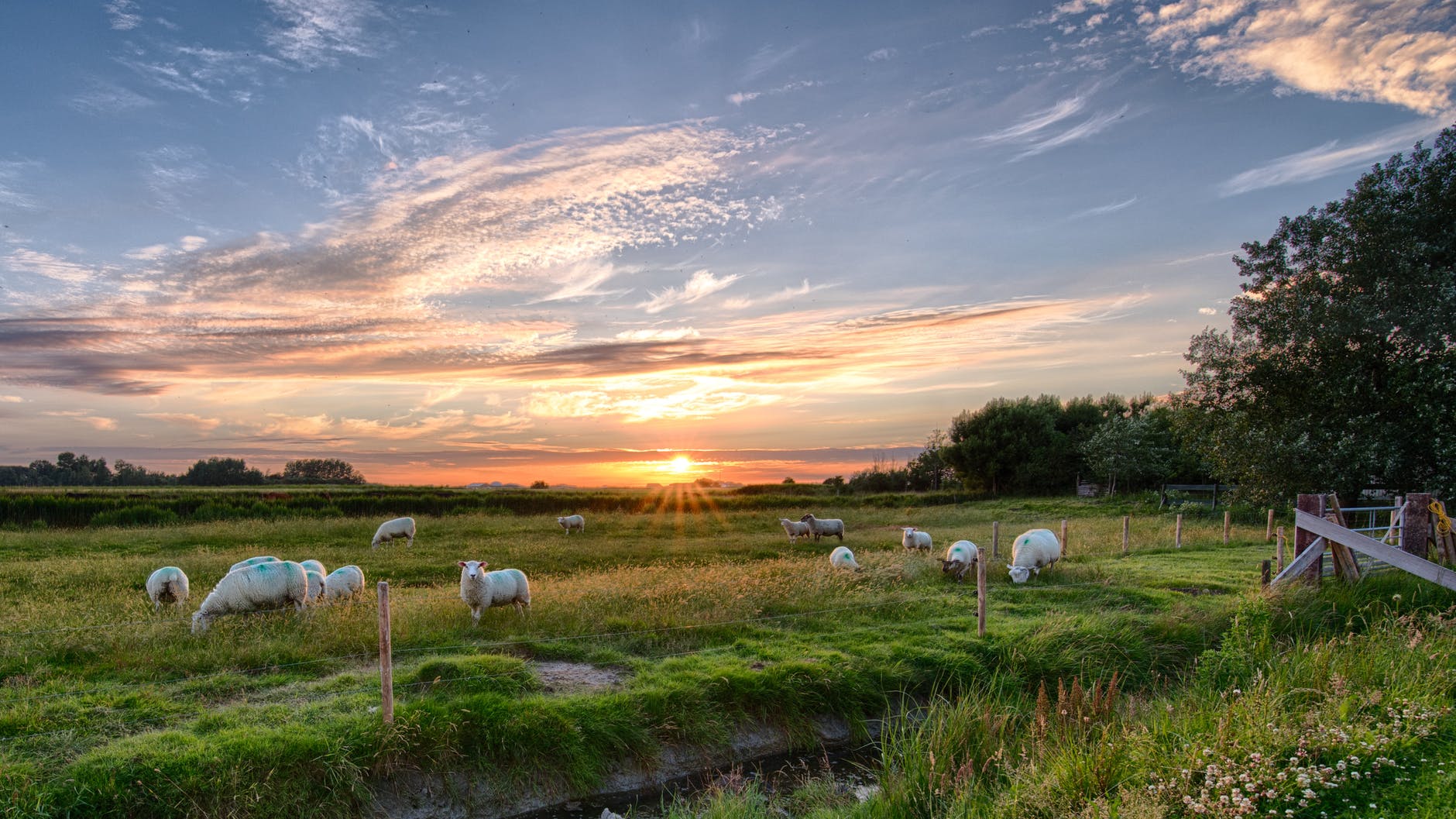
herd of sheep on grass field
Photo by Pixabay on Pexels.com


“I got him!”  I said in reply to John who said he thought he heard our newest house member calling from the back of the house.


“I’ve spotted him!” I shout down the length of the short hall back toward the kitchen/dining/family area.


“Oh, no!  He’s hurt!”


As I bend towards him, I can see the broken arm.


“Poor little, guy!” I say as I gently pick him up, along with the broken arm, and I carry him back towards the kitchen.


img_1611
As seen on positiveaffirmations101 on Instagram.


Ever so carefully, I place him on the kitchen counter as he remained still and lifeless.


“If you weren’t such a spot-rod, zipping in and out of all of the rooms.  I warned you that you needed to clean up your act, and be more careful.  Like all youth, you’re determined to keep spinning your wheels,” I state with a sigh to the now inactive sweeping beauty.


Before Spot, our COVID-19 sense-of-humor was, like my towering 4’ 11” stature, on short-order. Days upon humorless days were, well, sucking the life out of us    However, since we’ve adopted Spot, our level of one-liners has been on a sweeping-frenzy.  Seriously, our level of laughter is piping spot.


img_1599


Spot is a Roomba iRobot vacuum.  We named it Spot when it swept us off our feet with its first spin around our home gathering dirt on us. It’s been cosweeping with us ever since!  Gazing down at it as it quietly remained inactive on the counter, barely alive, I could feel the wheels in my mind spinning to the days of Steve Austin, the Six Million Dollar Man. 


Soundtrack cued . . .


Camera close-up on Steph’s Surgical home-club operational suite.


“We can rebuild him.  We have the technology.  We can make him better than he was.  Better, stronger, faster.”


“Flat-head screwdriver?”


“Check!”


“Bionic arm?”


“Check!”


“Forceps?”


“What do you need those for?”


“Wound hair removal. It most likely created stress, and ultimately, precipitated the fracture. We must proceed with caution. It could be a hairy situation.” 


“New air filter?”


“Check, but will it be spot-blooded, again, doctor?”


Moments later . . .


“There you go, Little Buddy.  Now, be careful. You’re spot off the presses, so don’t go binge-spinning.”


img_1612
As seen on Instagram @ postiveaffirmations101


My daughter once told me that I am like Spot in that I am small and always moving, but need to be recharged at the end of the day.  She is spot-on when it comes to my personality as I am an introvert.  Most people assume being introverted means being shy; and while that can be true for some introverts, it has more to do with how a person recharges.  


For example, my husband, John, loves being around people, the more he’s talking and interacting with others, the more energy he absorbs and generates. Whereas, for me, while I enjoy interacting and conversing with others, small talk does not come naturally for me.  In fact, I have to focus really hard to keep a conversation going and would much prefer to listen rather than initiate conversation. It’s not that I don’t like talking, it’s keeping the conversation going that I find challenging and often draining to me.  This can lead to nervous energy, which leads to overthinking, which can sometimes lead to rambling about self-experiences in an attempt to connect with the person speaking– which can sometimes lead to unintentional, insensitive, thoughtless, or down right stupid comments.  Afterwards, I ruminate for great lengths worrying about all of the words, phrases, and questions I should have or should not have said instead. It can be exhausting.


img_1589
As seen on Instagram @ thoughtrepreneurs.


Therefore, one of my biggest jokes during this COVID-19 quarantine has been that as an introvert, I was preparing for quarantine my whole life!  And, in a way, it’s true.  The older I get, the more I have found that I feel emotionally depleted at the end of my pre-COVID work-days.  I describe it as feeling as if little bits of me are taken and/or given throughout the day from all of the interactions and/or energy absorbed by those with whom I come into contact.  Currently, (pre-COVID) those interactions would include over 80 students, nearly 50 co-workers, and anyone else with whom I would typically encounter throughout a workday.  By the end of the day, especially around holidays, special events, full-moon days, and the like, I was emotionally drained and fought the urge to go home, hug my knees to my chest, curl into a tiny ball in silent space, and simply decompress. 


You would think, then, that quarantine has been the greatest event of my life, but it is not.  Being at home means I cannot avoid all of my emotions, insecurities, and fears I have attempted to quash over the years through my busyness.  Now, with all the stillness in my life–the get up, drink coffee, work at the computer all day, eat, and repeat–those inner demons have time to rear their heads, causing my emotional wheels to spin until, like Spot, I am fractured–only not by hair wound around my arms base–but, by something seemingly inconsequential such as my inability to understand the newest technology platform/skill that I am expected to master on my own within a short amount of time in order to meet an imminent deadline.  


img_1613
As seen on Instagram @ thepositiveminds.


Unlike Spot, though, I can’t wait for someone to fix me.  There isn’t someone who will empty my proverbial bin of emotional detritus. I have to fix myself–my mind, my outlook, my emotional state of being.  It must begin with me, and that, at times, is not an easy undertaking.  


img_1614
As seen on Instagram @ positiveaffirmations101.


Therefore, if like me, you find this social isolation revealing ugly hidden truths about yourself, it’s okay.  You’re not alone in this, well, sweeping development.  Reach out to others, pray/meditate more, take time to read, get outside, practice yoga, walk or participate in other forms of exercise, garden, paint, create, or, like me, write your way through these emotions. Be your own source of peace.  If you have a bad day dealing with emotional dirt, take a cue from Spot, feel your pain, let it all drain out through whatever activity you choose, then plug into your higher Source for energy renewal, and start all over.  Like all devices, any moment can turn into a reboot moment, if we choose it.


img_1618
As seen on Instagram @ ashtangayoganaples.


Who knows? You may discover new seeds to sow, new skills to harvest, and the winds of emotional freedom blowing within you as you lighten your load, or should I say, empty your bin.   You might even find you are on a spinning streak and shouting, “Aye Caroomba!” as you look at yourself, your problems/challenges, and our world with new eyes.


So strike while the iron is spot, put on your spinning cap, and get caught up in a self-care sweeping frenzy. 


This spinning-streak spot of humor was brought to you by a writer learning to sweep with the enemy by poking holes, or should I say, spots, into her inner demons.  I hope I was able to spin a web of humor, and perhaps a bit of a lesson, into your day!

img_1616
As seen on Instagram @ spiritualmovement.