A Handful of Mother’s Day Love

“Happy Mother’s Day, Mom! (And while I have you, quick apologies for ages 13-21)–PureWow

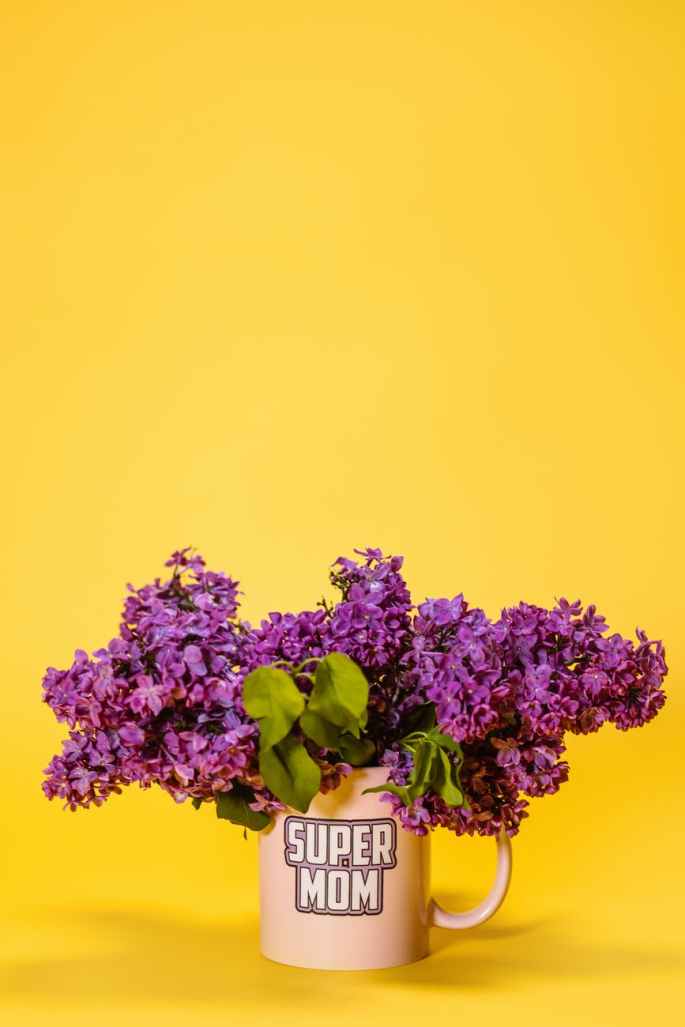
Photo by Giftpundits.com on Pexels.com

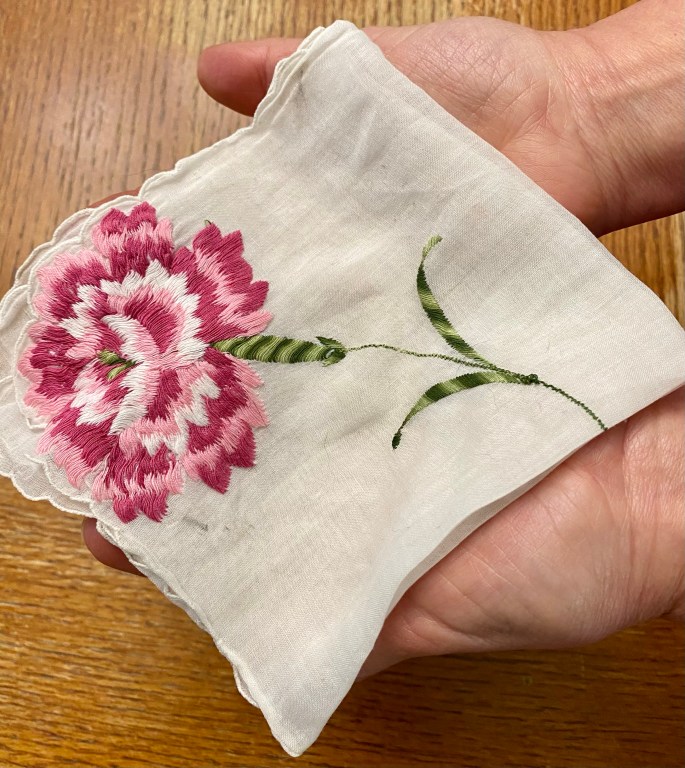
As I get ready for work in the morning, I often notice my maternal grandmother’s handkerchief draped over a framed print on a dresser.  It was a gift from my mother several years ago.  Recently, as I took in its gentle embroidery work, I picked it up and sniffed it in a futile attempt to pick up the scent of Helen, my grandmother.

Grandmother, whose scent was a unique blend of Folgers coffee, Avon cream, peppermint, and Estee Lauder’s Youth Dew, was always reassuring.  This morning, I was fatigued and feeling particularly nostalgic as I held Grandmother’s kerchief.  Her scent would have at least provided some small measure of comfort.  Instead, I was left to trace the delicate stitching.  Upon closer inspection, I noticed what appeared to be a stray pencil mark or two and I was taken into the past.

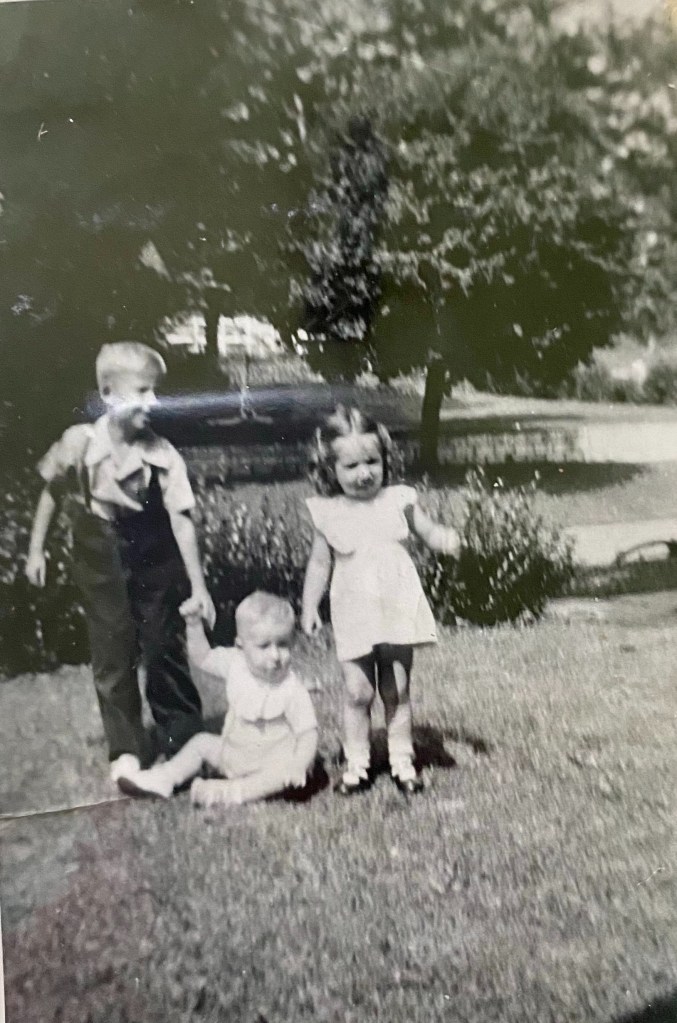
My mind drifted to that fundamentalist, country church of my youth.  I often begged my mom’s permission to sit with Grandmother and Pappaw.  Grandmother’s handbag, the size of a shoebox, was always well-supplied for church services that were sure to be long.  Unclasp the top, and inside, one could find mints, assorted candy, gum, pencils, pens, and old C & O notepads from Papaw’s time of working on the railroad.  While both my grandmother and my mom expected that I stand and hold the hymnal anytime we sang, grandmother permitted me to continue holding the hymnal on my lap as a makeshift desk in order to write, draw, or even play the dot game or hangman with a sibling or cousin–if they were seated with me. In this manner, I was able to remain respectfully quiet, which was also expected by both of my “ruling” women.

If the sermon offered to the attending flock hit a certain emotional note, or if someone sang a special song, such as one originally performed by a popular gospel group at the time, the Happy Goodman Family,  “What a Beautiful Day,” “God Walks the Dark Hills,” or if the congregation simply sang, “Amazing Grace,” I would often see tears stream down Grandmother’s face.  She’d reach in her purse for a handkerchief, dab at her eyes, and continue to hold on to that handkerchief, squeezing it as if her life depended on it.  Looking at the handkerchief, I suddenly remembered with great realism, Grandmother’s strong hands squeezing mine.  It was faint, and then it was gone.

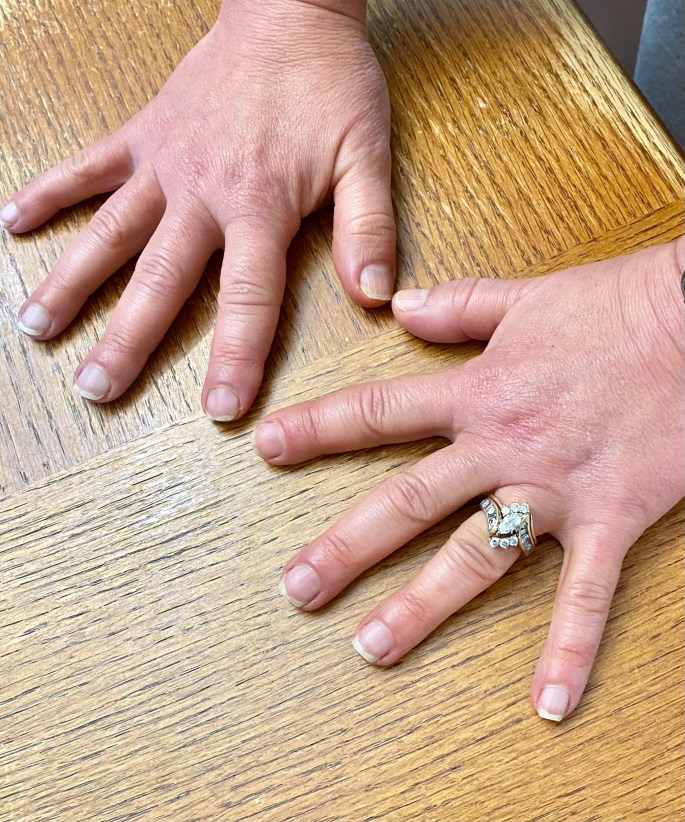
I looked at my own hands.  They are the hands of mother’s and my grandmother’s.  Already, at age 55, they are starting to slightly misshapen from squeezing/holding too tightly onto things.  My fingers, like the women before me, are short and wide–nothing like the Palmolive hand models of long ago commercials. However, like both women, my hands are strong as I am typically better at opening jars and bottle tops than my husband. 

Grandmother’s own hands were strong from years of manual labor.  She single-handedly ran a grocery store and managed/cooked/served for its lunch counter, butchered the store’s meat, maintained and sliced it’s deli cheese and lunch meats while also raising two young boys.  (She would not have my mother until over a decade later.) Later, after my grandparents lost nearly everything in the flood of 1937, they moved to higher ground, left the grocery store business, and Papaw began working exclusively for the railroad.  Grandmother then became a full-time devoted housewife and mother.  Those hands of hers ran a precise schedule for daily, weekly, and annual cleanings, cooking, laundry, ironing, and so forth.  In fact, looking at her handkerchief, I can tell it has been worn thin from repeated washings and ironing.  If there was one thing Grandmother knew how to do well, it was to create a reliable routine and schedule.

“My mother menu consisted of two choices: take it or leave it.”–Buddy Hackett

My mom likewise employed her mother’s ability to create a reliable daily structure with my three siblings and me. We got what she cooked (although Grandmother was far more indulgent with her grandkids), and we cleaned with regularity.  In fact, every Saturday we were expected to strip the sheets off our bed, remake our beds with clean sheets, and then dust/sweep our bedrooms.  Later, when we were older, we were also assigned another room in the house to likewise clean on Saturday.  It wasn’t until I was in high school that I realized very few of my friends had the same expectations!  In fact, one of my sister’s friends once shared, years later, that she drew inspiration from my mom’s Saturday schedule when raising her own children.

“I especially loved that when I spent the night with your sister, one of the siblings had to pick up her chore for that morning.”

In Grandmother’s daily routine, and later,  in Mom’s schedule, there was also set aside time for rest and relaxation.  You worked hard, when it was time to work, but likewise there was built in time for reading, relaxing, and rest. Grandmother’s house, and later my own childhood home, was filled with books, magazines, and, of course, several bibles.  Perhaps, it was because Grandmother’s 8th grade education bothered her, even though she was more educated than Papaw, reading was especially important to Grandmother, hence reading was also important to my own childhood home.

Recently, my mom has spent a good deal of time talking with me about her church.  She states that one of her friends at church loves Vestal Goodman, and all the rest of the Happy Goodman Family, whose songs were frequently sung at my Grandmother’s church.  Mom additionally has played Facebook videos of the church pianist who performs the ol’ time gospel tunes of Grandmother’s long ago church, and praises the pastor who knows how to touch her both intellectually and spiritually.  I can’t help but be reminded of Grandmother and secretly wonder if my mom carries a hanky to church too.

Preparing to write this piece, I clicked through a few youtube videos of the Happy Goodman Family, remembering their albums echoing through my grandparents house as Grandmother dusted and swept.  It wasn’t until I paused long enough for the entirety of “God Walks The Dark Hills,” that I noticed that Vestal was holding a handkerchief. As I clicked back through previously viewed videos, Vestal indeed was holding a hanky in each one!  I walked back to my bedroom and once more to pick up Grandmother’s delicate hanky.  Holding Grandmother’s handkerchief, I caught a glimpse of myself in the mirror, and I saw both my mom’s and grandmother’s faces staring back at me.  

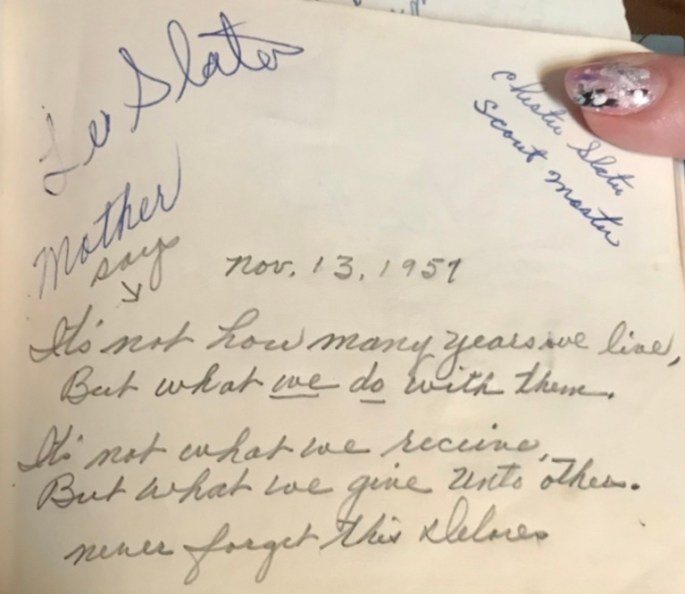
“It’s not how many years we live, but what we do with them.  It’s now what we receive, but what we give unto others.”–written by my grandmother, Helen Slater, on November 13, 1957 in my mother’s autograph book

Grandmother Helen, thanks for the “handy” reminder of the importance of faith, family, and all of those intangibles that I once took for granted.  Even now, you’re still giving me a hand. If you can see me in heaven, I’m sending you a hand-ful of gratitude on this coming Mother’s Day.  

And, Mom, I know that I was a hand-ful, so I’m especially sending you these words of Mother’s Day appreciation along with much love. You taught me not to start a sentence with “and,” but you know I often struggled with obedience.

P. S. This quote is for you, Mom . . .

“When your mother asks, ‘Do you want a piece of advice?’ it’s a mere formality. It doesn’t matter if you answer yes or no.  You’re going to get it anyway.”–Erma Bombeck

Photo by picjumbo.com on Pexels.com

When Cardinals Appear . . .

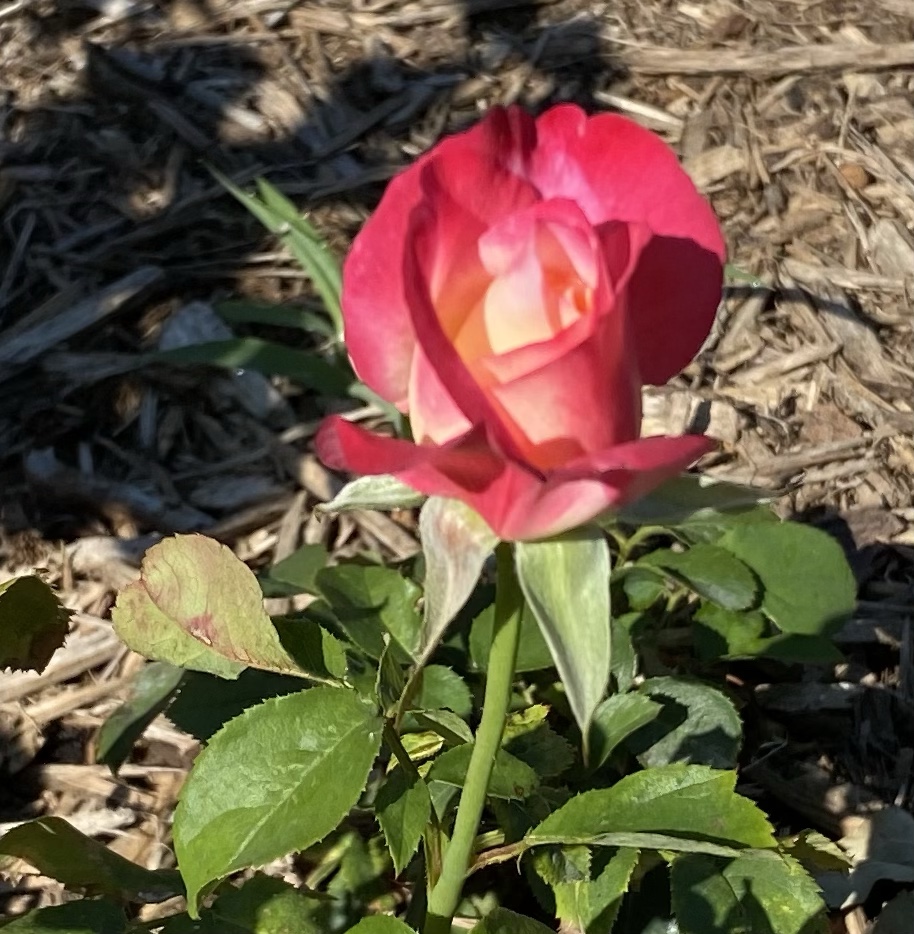
“When cardinals appear, angels are near.”–Unknown

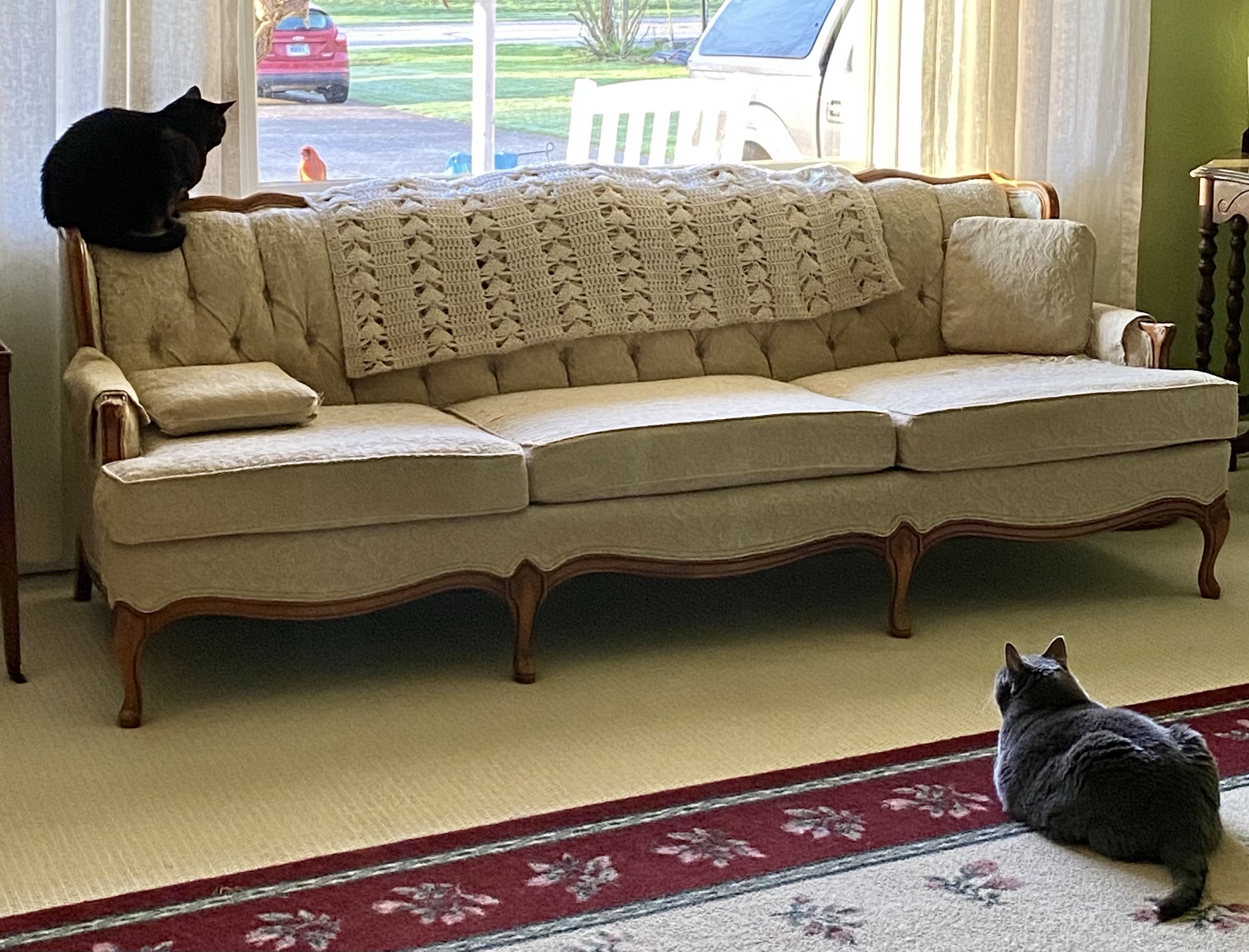
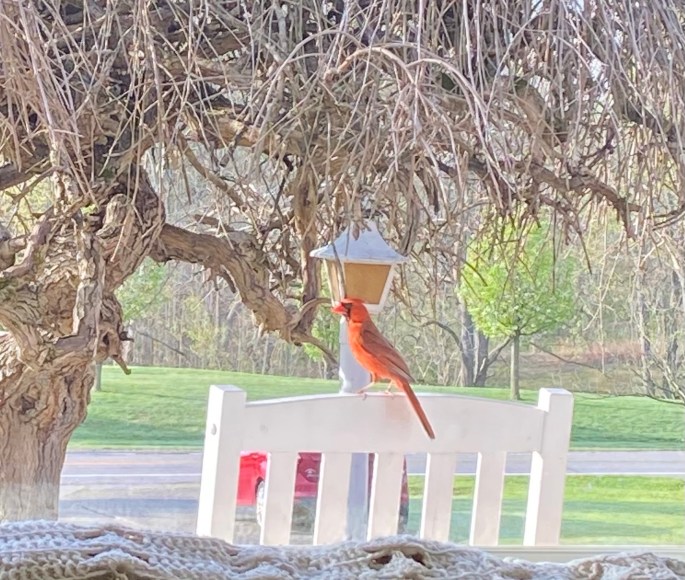
Tink, plink, tink. It’s 6:00 am, and the first light of the dawn is beginning to show.  While the actual sunrise won’t occur for another 40-50 minutes, I hear the newest members of our neighborhood at it again. If this were a school day, I would have been awake.  However, on this occasion, it is the weekend, and I typically give myself permission to sleep in until 6:00 or 6:30.  Ugh! 

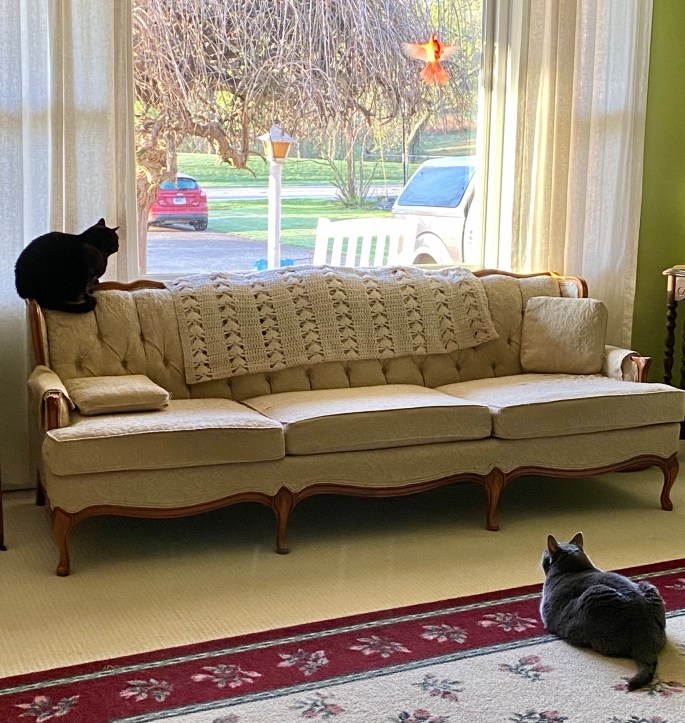
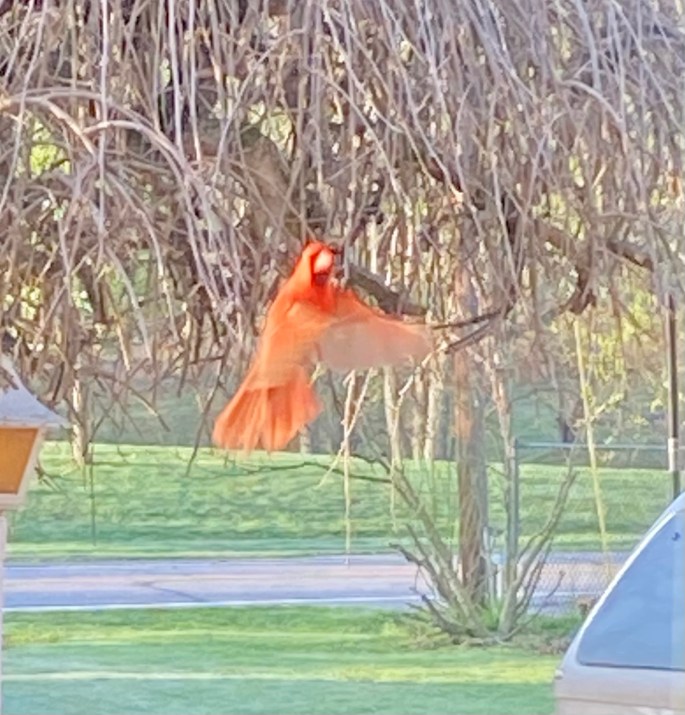
Boink. Doink. Boink.  The sound varies depending upon which room I am in.  Persistent.  Insistent. Relentless. All members of my household, human and feline, have moved from fascination to annoyance to down-right sympathy for our neighbor’s continuous need to pound, rattling both the living room picture window and the master bedroom window.  Don’t they ever get tired?

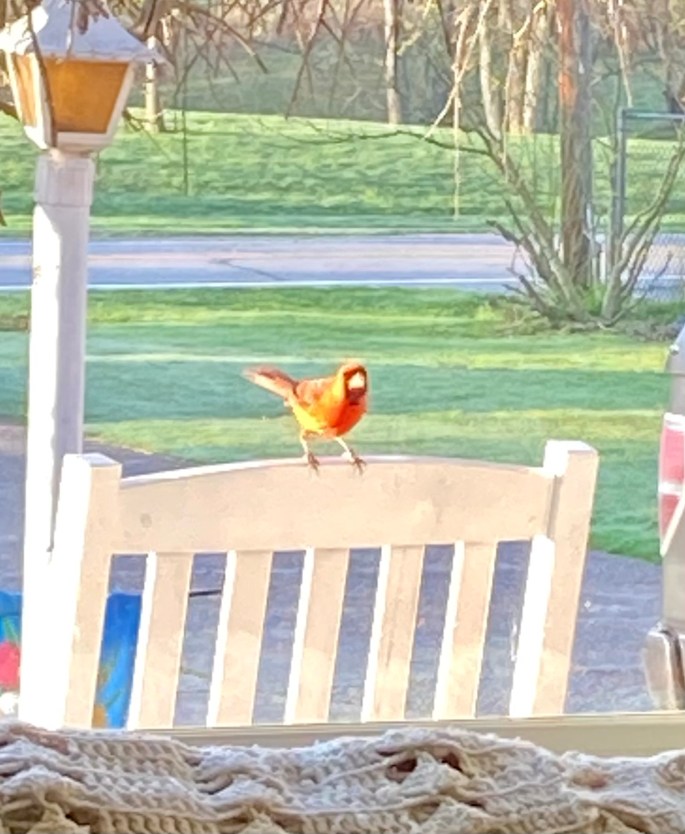
Our newest neighbors moved in around the beginning of April.  John, my husband, Maddie, our daughter, and me, did not really think much about them.  Each couple, one across from the front of our house; and the other, across from the bedroom end of our house; seemed peaceful and pleasant enough.  In fact, both pairs could often be heard singing to one another, especially during the first light of morning and the last light of evening.  The practice seemed like such a romantic thing to do.  Clearly, they were deeply in-love, or at the very least, highly infatuated with one another.

Furthermore, we couldn’t help but notice both males have a predilection for parading around dressed in bright red with flamboyantly styled hair.  While their female partners dress more subduedly in colors of brown and buff, they do appear to try to complement their male counterparts by donning caps with red feathers and hints of red skirt their lower half.  On an odd note, both couples seemed to only own black facial masks. 

Not long after both couples moved in, we also noticed they each had the habit of dining outside.  While that wasn’t particularly unusual, given the mildness of our early April weather, it was the habit of the males feeding the females that was most striking.  In fact, it appeared as if they kissed first, allowing the female to take the food from the male’s mouth.  What love birds both pairs appeared to be!

When their habit of banging around first began, the two pairs could be observed pounding away with great intent.  This, hysterically, drew great attention from both of our lacidzical cats.  Our feline companions could, with great regularity, be found wherever our neighbors could be seen industrially belting away–so curious were our cats’ desire to see our neighbors’ carrying-ons. 

By the second week of April, however, it was only the male partners that appeared to knock around–not that we were truly keeping tabs on them.  Meanwhile, their female partners were only occasionally detected outside of their new home.  It was whispered that the females were holed up inside privately nesting.  Although, it was reported that one couple, during this same week, was observed publicly engaged, in their odd practice of kissing-before-swapping-food-mouth-to-mouth.  

As I write this during the third full week of April, both couples seemed to have somewhat settled.  While the males can sometimes be heard plinking away, they are blessedly less active than when they first moved in.  However, the tune of the pair’s vocalizations still fills the air at the day’s beginning and end.   The rarely seen females can be heard from inside of their home singing a wide repertoire of choruses, while the male confidantes still proudly sing the same ol’ melody, over and over, right outside their home.
John, Maddie, and I recently stood at the front picture window looking out at one set of our newest neighbor’s home. Rumors were continuing to circulate regarding the state of the hidden females.  Most fodder contended that due to all of the hanky-panky-dining-habits, both couples must be in the family-way.  After all, what is to be expected from all of those acts of public display of affection and strange exchange of food?  Bunch of granola-eating hippies if you ask one commentator!

Of course, John and Maddie, used to my crunchy, granola-eating, tree-hugging ways, seem to have come to terms with our newest neighbors who munch, mouth, and swap nuts, seeds, and berries.  

“What’s one more plant-based eater in the neighborhood?” Maddie teases.  “You can make friends with them, Mom.  You know, swap recipes!”

John, more prone to roam the neighborhood, than Maddie and I, claims the latest tittle-tattle accuses both couples of sometimes eating insects and spiders.  

“Supposedly, someone watched one of the males spewing an entire bug into the mouth of his partner.”

Maddie cringed with disgust.  I quickly reminded her how some people do go on and on about things for which they have little to no knowledge.

“Yeah, but eating bugs is just, well, gross.  And, I thought eating nuts and seeds was weird . . . .”  

As Maddie walked away from the conversation, one of our new male neighbors determinedly drummed a window as if for effect.  At this sound, I walked closer to the window and waved my arms above my head.  I looked at him, as he moved towards his home.  I am fairly certain that, since the windows were open, he could hear me through the screen, so I told him to stop. 

“It’s like banging your head against the wall, Buddy.  It’s not productive.  Your partner needs your protection; I get it, but you’ve got no worries with us.  We’re cool if you guys have kids out-of-official-wedlock.  I mean, it’s my understanding that you and your partner have been together for life.  The neighbors you’ve got to worry about aren’t us anyway.  The more menacing neighbors are on the hills and in the woods around us.”

I thought he was listening.  He cocked his head from one side to the other, keeping his black mask in place. (Boy, does he take this COVID crisis seriously.)  However, right as I thought my message was getting through his tiny bird brain, (I hate to be rude, but seriously, our new neighbors are TOTAL bird brains.) he flitted away as if my words meant nothing to him.  

“Don’t say I didn’t warn you when you meet our hawkish neighbor on the hill!”  I exclaim to him, but I am expending energy on one who doesn’t want to listen.  Hmph!  Just like a male to not accept advice.

I am not sure that I would call our newest neighbors angels, and in spite of their red wardrobe, I wouldn’t refer to them as devils either. One thing is for sure, from the looks of their homes, all bound up tightly like twigs of a nest, I think our new neighbors are here to stay for a while.  Maybe Maddie is right, perhaps I should ask them for their granola recipe.  After all, if it inspires all that kissing, it might be worth trying!

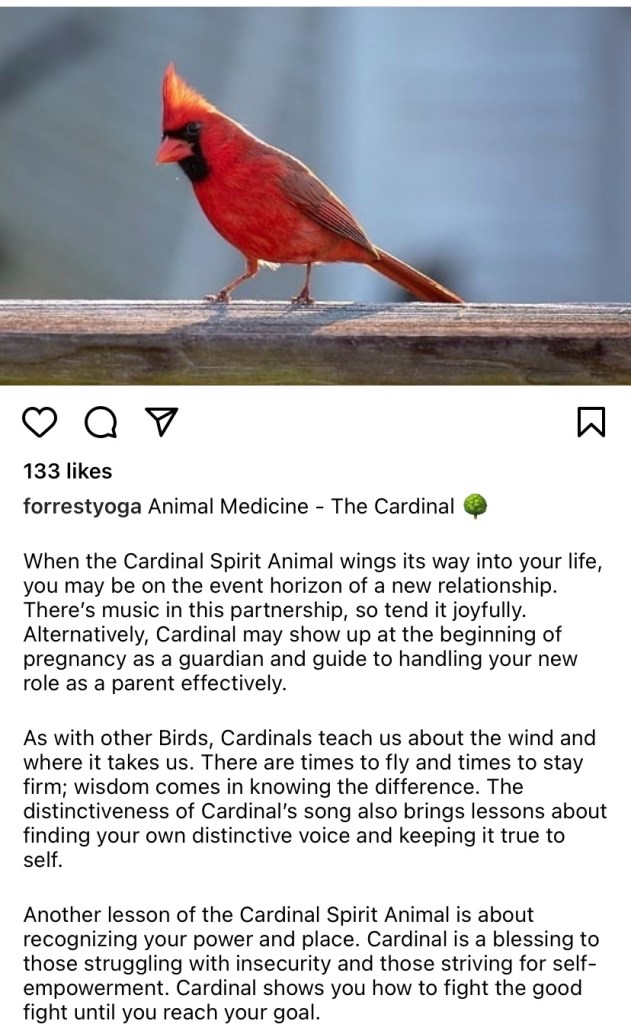
“Cardinals may protect a territory size of 1/2 to 6 acres during breeding season. Males will chase other males and females will chase other females from the pair’s territories.  Cardinal birds often fight with their reflection in house windows and car mirrors.” –Wild-Bird-Watching.com

As seen on Instagram @ forrestyoga

Visit Virginia Beach

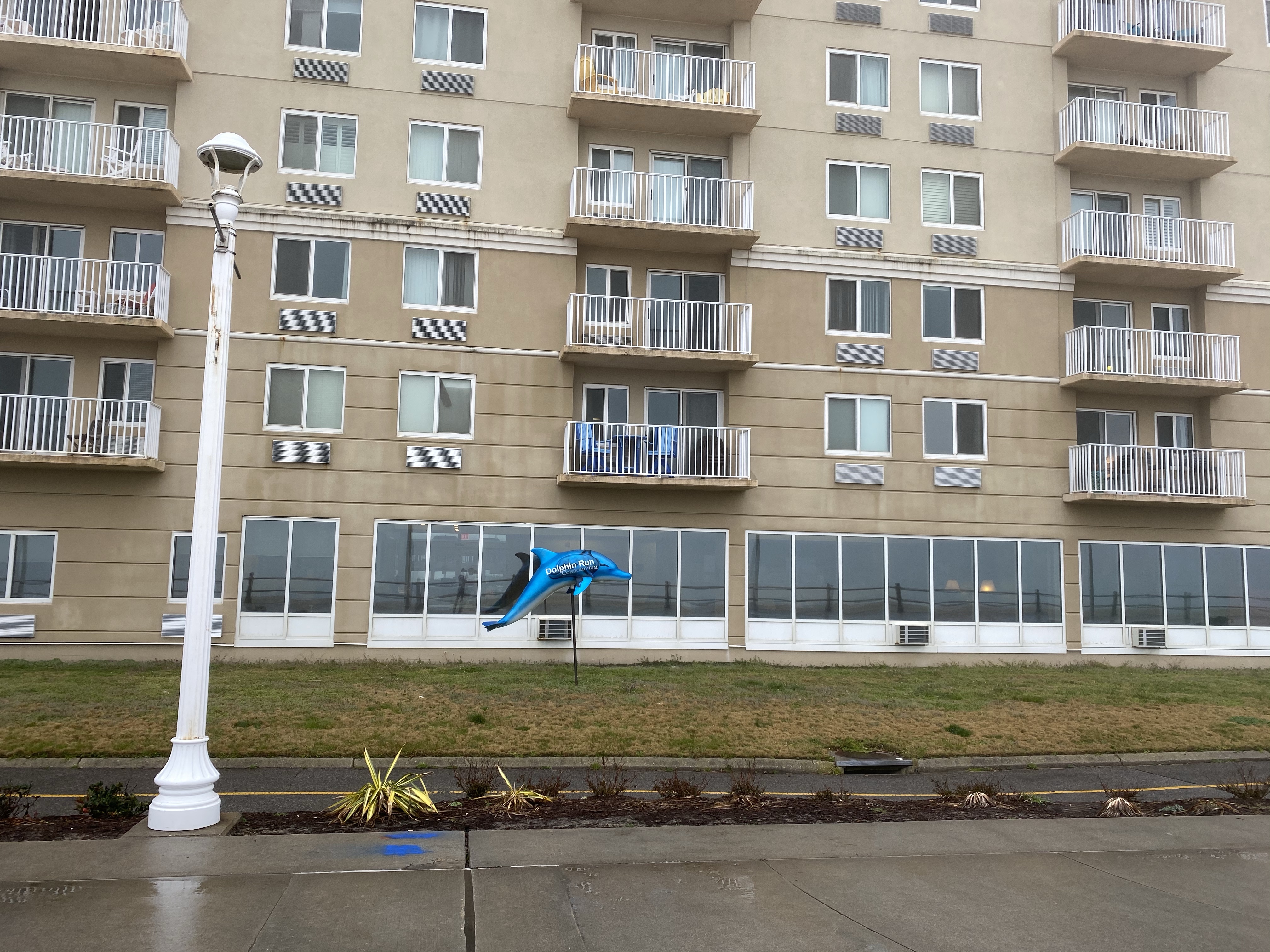
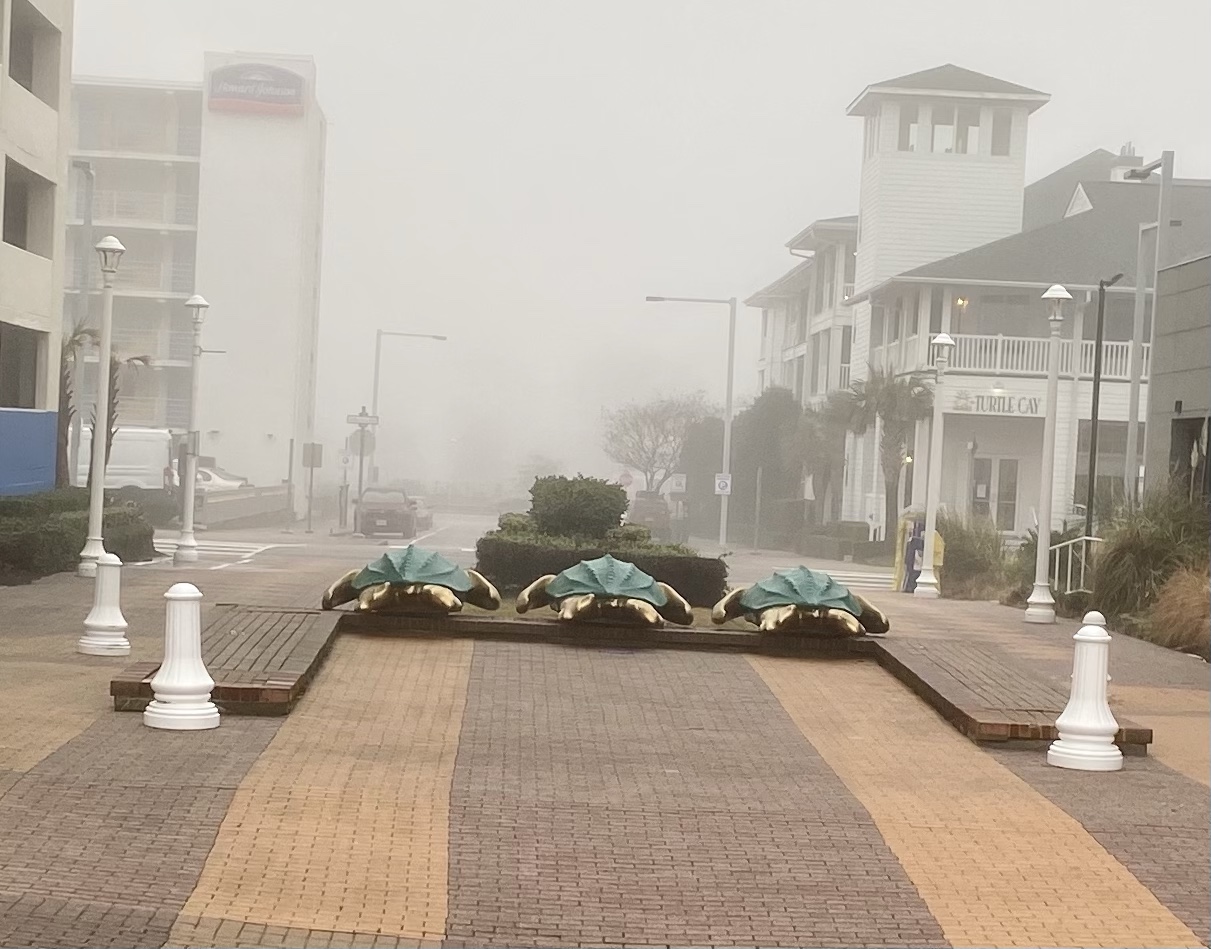
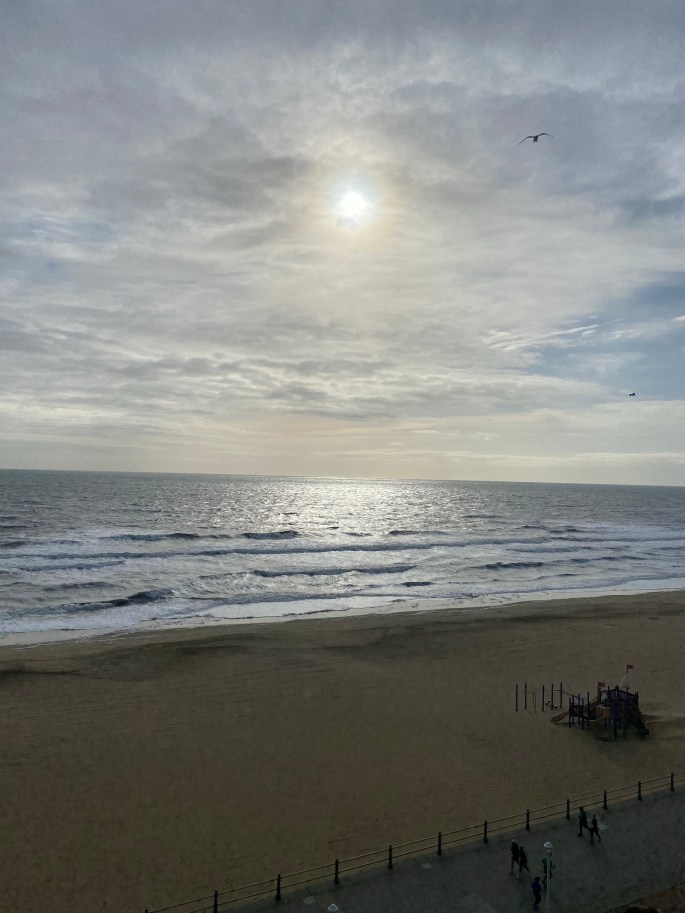
This was the view out of our beach front hotel room at Virginia Beach. (It was clearly Rita’s day!)

“Because there’s nothing more beautiful than the way the ocean refuses to stop kissing the shoreline, no matter how many times it’s sent away.” – Sarah Kay

Recently, as some readers may recall, John, my husband, and I had the opportunity to visit Virginia Beach for its annual event, The Shamrock Marathon, Half-Marathon, and 8K event.  Of course, the 2020 event was cancelled due to pandemic restrictions, and the 2021 event, in which I participated, was a hybrid virtual event–it could either be run virtually from any location, or ran any day of the designated three-day weekend of the event on-site via a self-guided route that was well marked and supervised.  In spite of the not-so-cooperative weather during our stay, John, and I thoroughly enjoyed our stay at Virginia Beach so much that we have talked about returning.  Therefore, as more families begin to travel again, I wanted to share our experience in this family and couple friendly town.

While we were there, we took in a few sites, but quickly realized that we did not have enough time to adequately explore this area of Virginia.  Additionally, with a few clicks of the keyboard, while relaxing and taking in the view of the Virginia Beach boardwalk and beach from the comfort of our hotel room, I learned that there is so much more to Virginia Beach than just the boardwalk/town area in which we were staying!  Therefore, I will share a few of the highlights from our visit as well as a few tidbits I discovered from a short bit of research. 

‘‘In the planning and preparation to re-open the beaches of Virginia Beach, we believe we’ve defined the Gold Standard for beach safety and cleanliness, and our Hotel and Restaurant Associations followed suit with their own new protocols with the same important goals.’’–Virginia Beach CVB

To begin, John and I checked the usual sites, AirBnB and VRBO for budget friendly rentals.  However, since we were hoping to stay in a place with an ocean view, we quickly realized that those homes came with a price–either out of our budget or the houses were nearly as small as a hotel room.  We then compared home rental costs with oceanfront hotels and condos.  Much to our surprise, it turned out that the latter were much more reasonably priced and conveniently located within walking distance to restaurants, shops, and the Virginia Beach boardwalk.  Furthermore, due to the short nature of this trip, we knew we would not be taking time to cook, nor would we spend much time in the place in which we were staying. Therefore, the hotel seemed like the way to go.

The Hampton Inn, with its restaurant on the beach, in which we stayed.

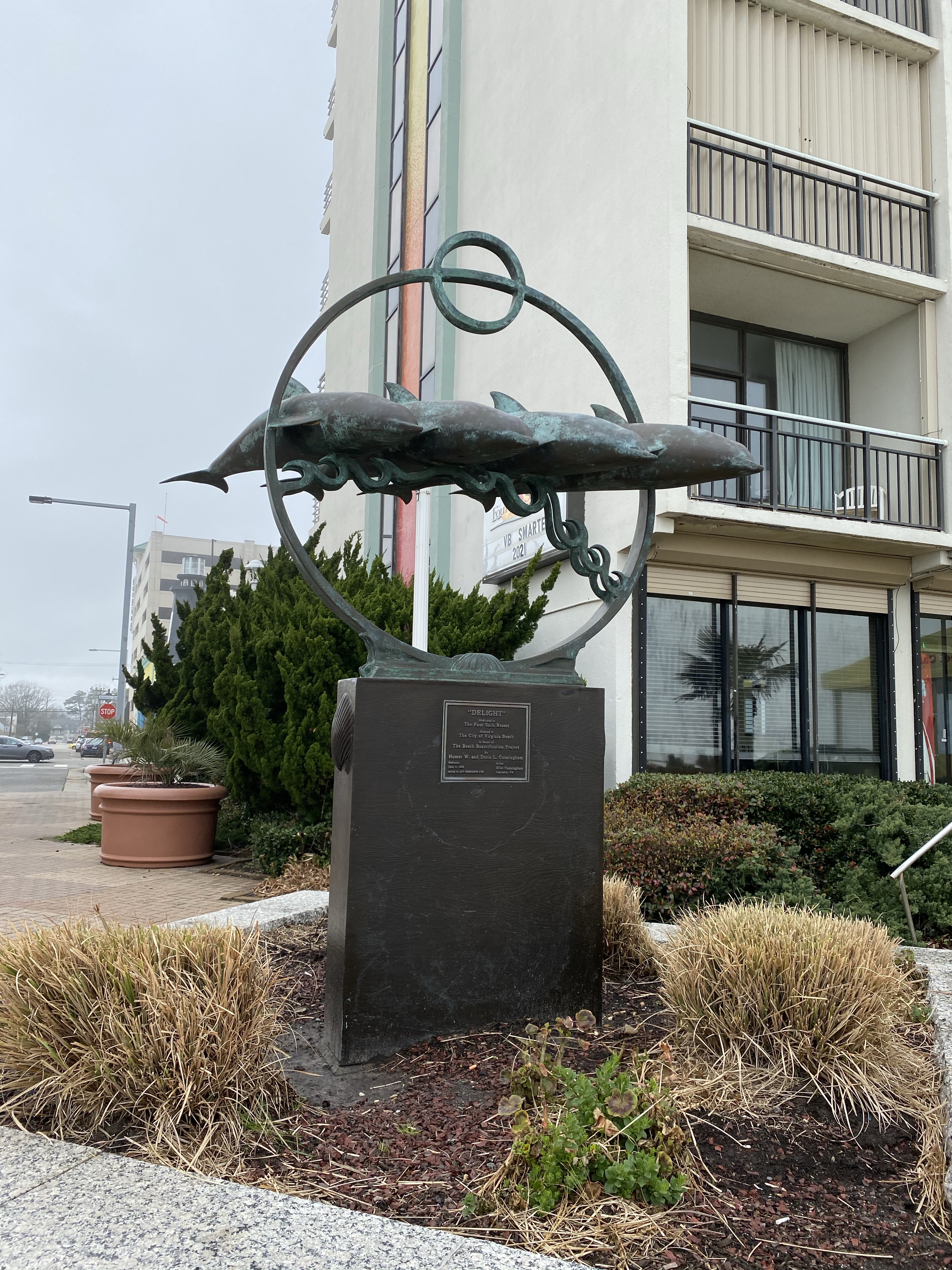
“Together, we’ve all made a pledge to VB Smarter – and adhere to these protocols without compromise. It is Virginia Beach’s way to shine a light on our collective commitment to ensuring a safe, fun, and relaxing environment for all.”–Virginia Beach CVB

John and I were super impressed with the protocols throughout the oceanfront area of Virginia Beach.  We felt safe, and likewise, did not feel restricted in our travel or experiences. The city definitely seemed to have the right balance.  While we did walk to several of the restaurants and shops near our hotel, and we also enjoyed visiting other parts of the town due to the free parking that was in place until April 1.

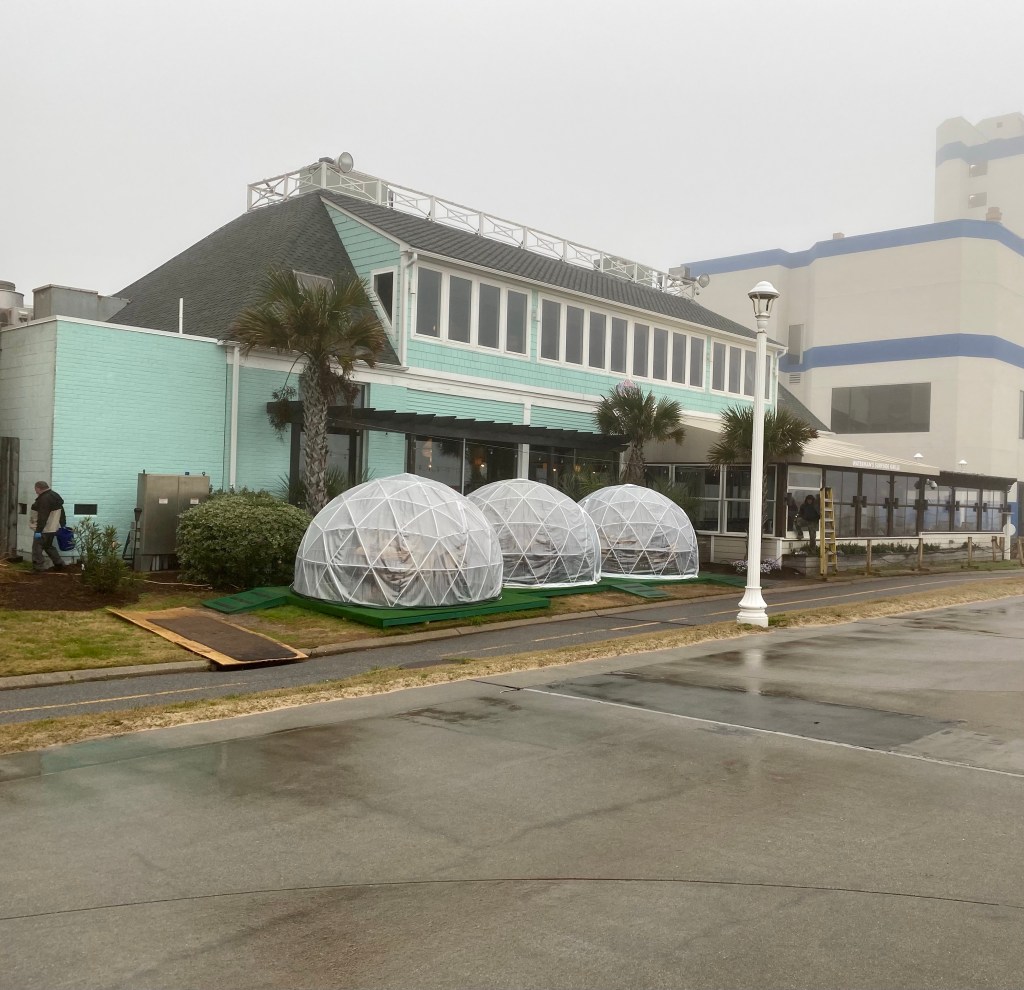
One creative approach to out-of-doors dining in the era of COVID–Individual geodomes for groups!

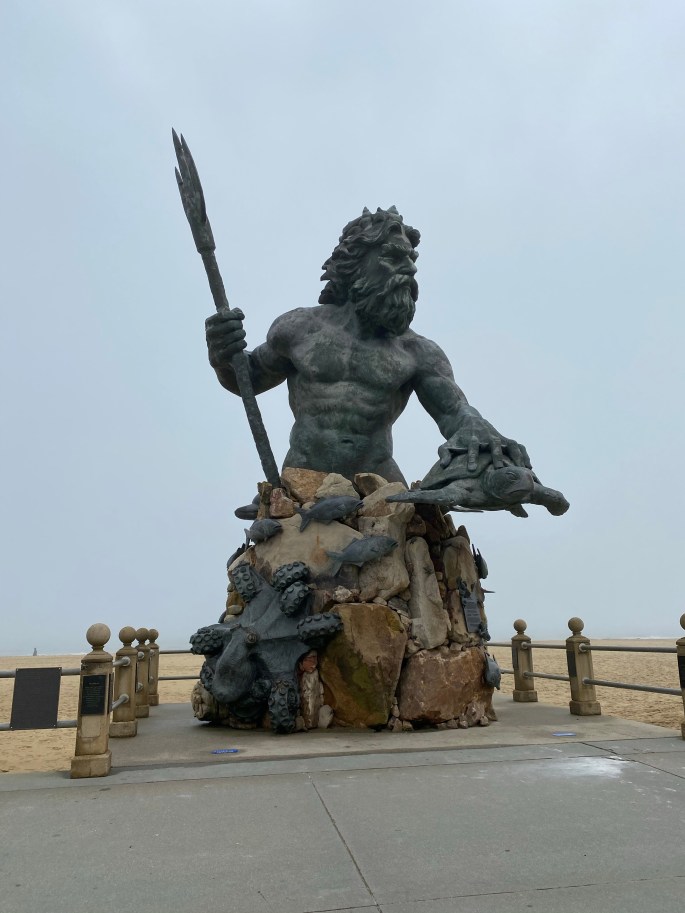
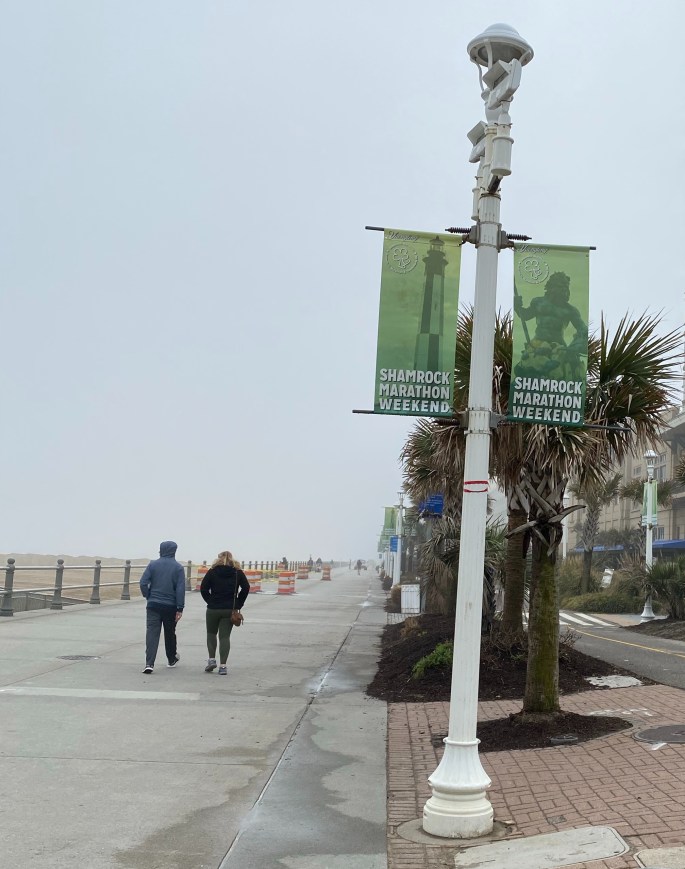
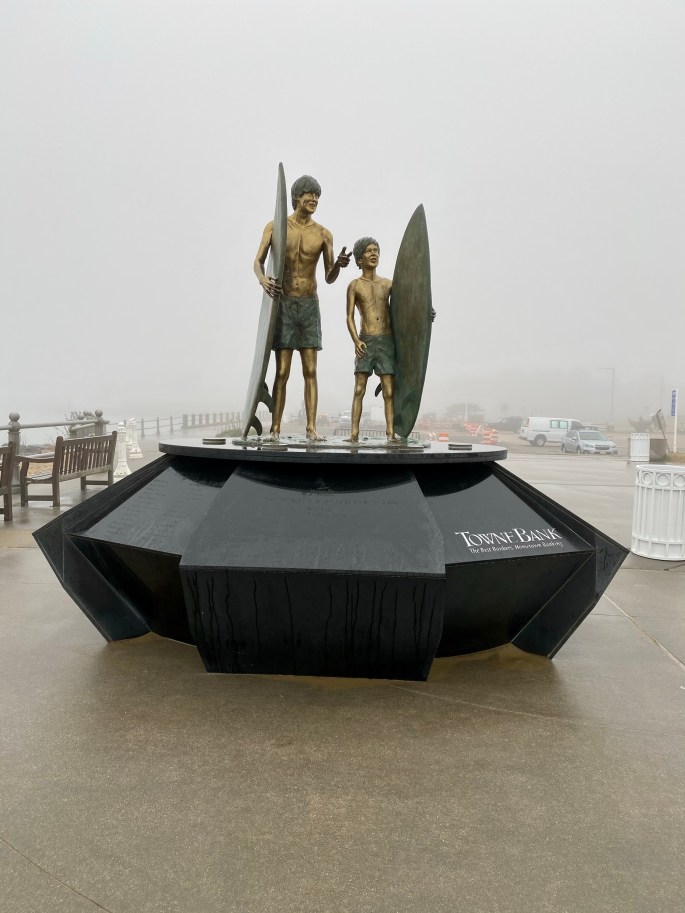
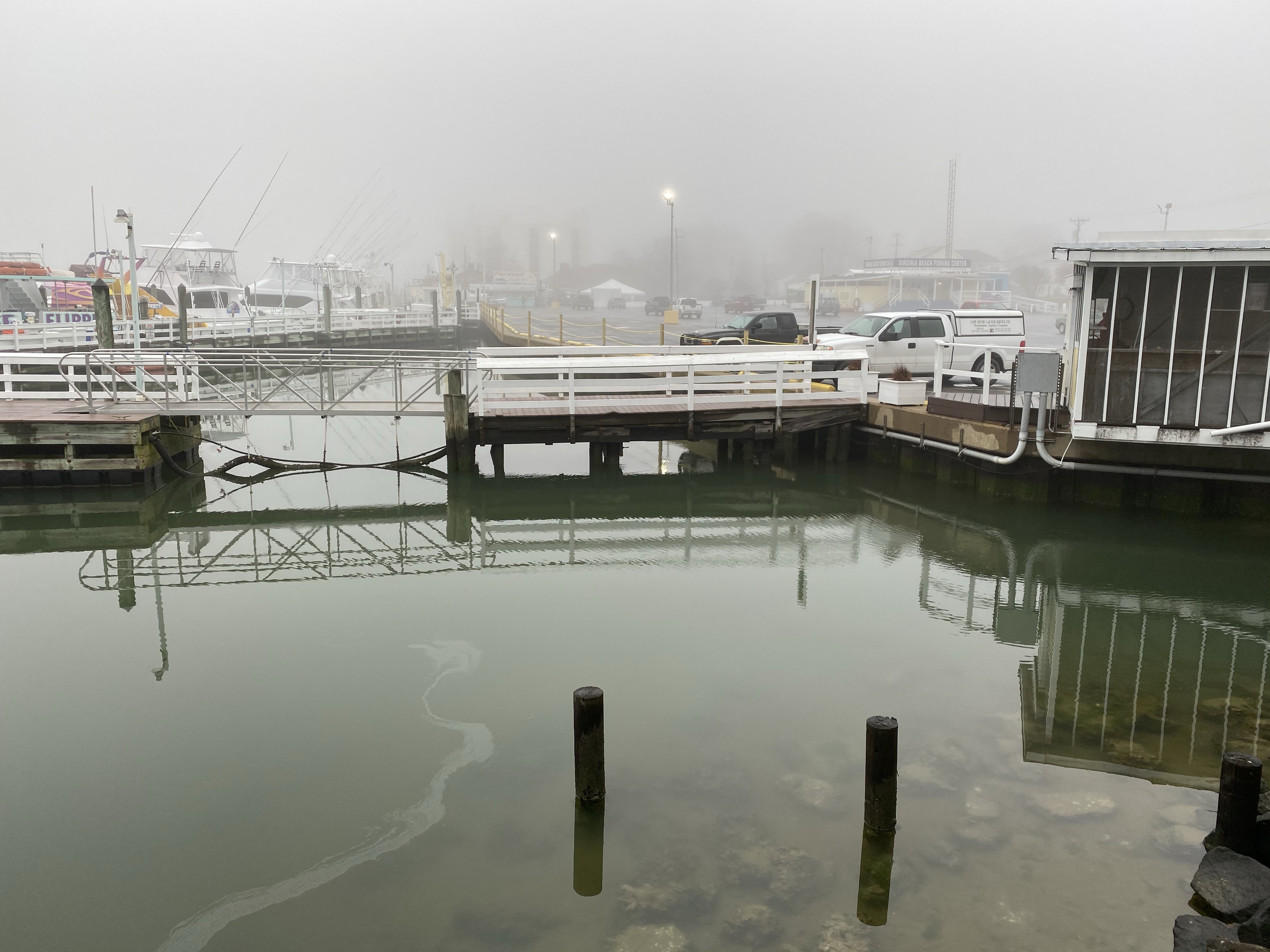
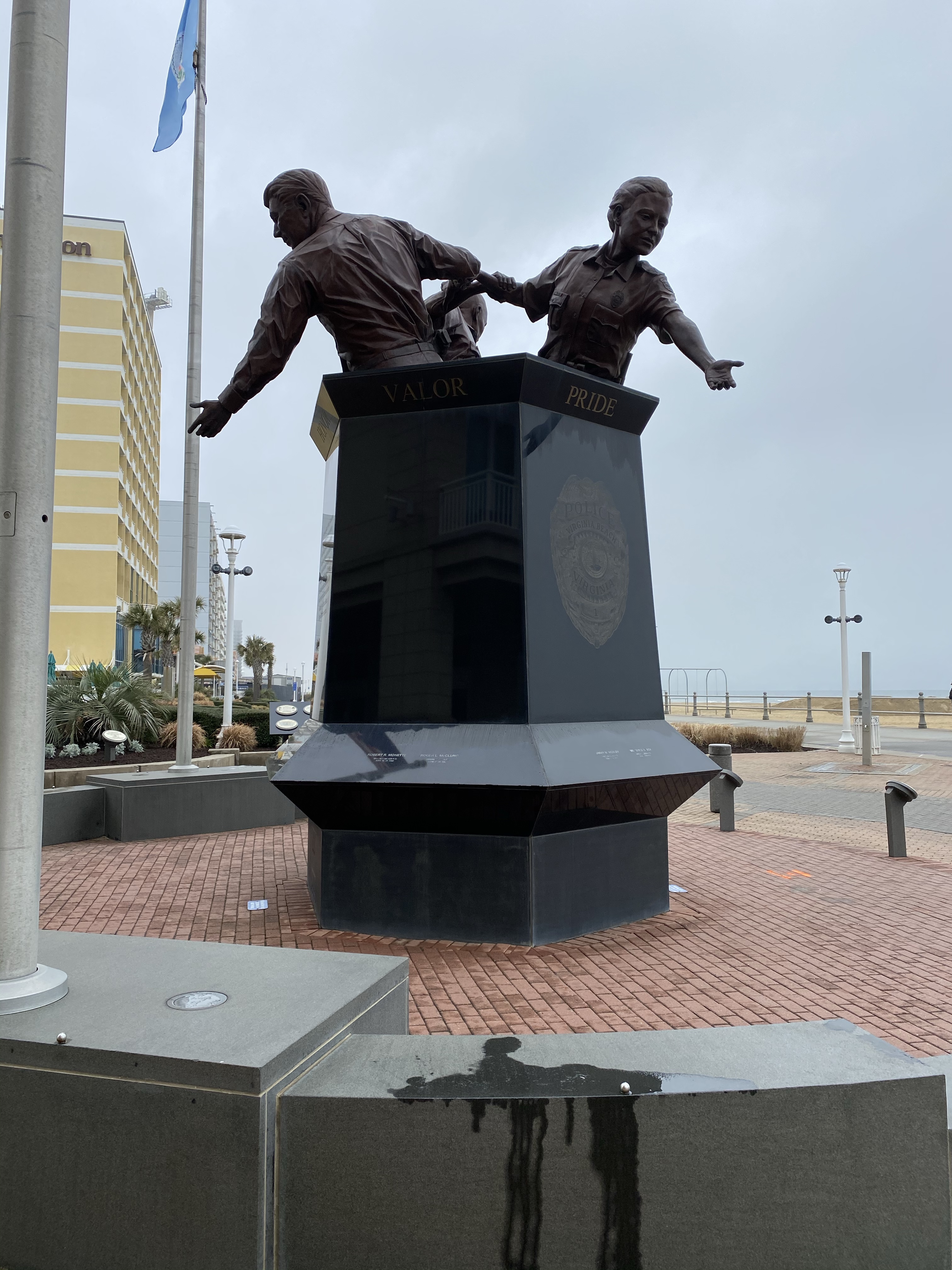
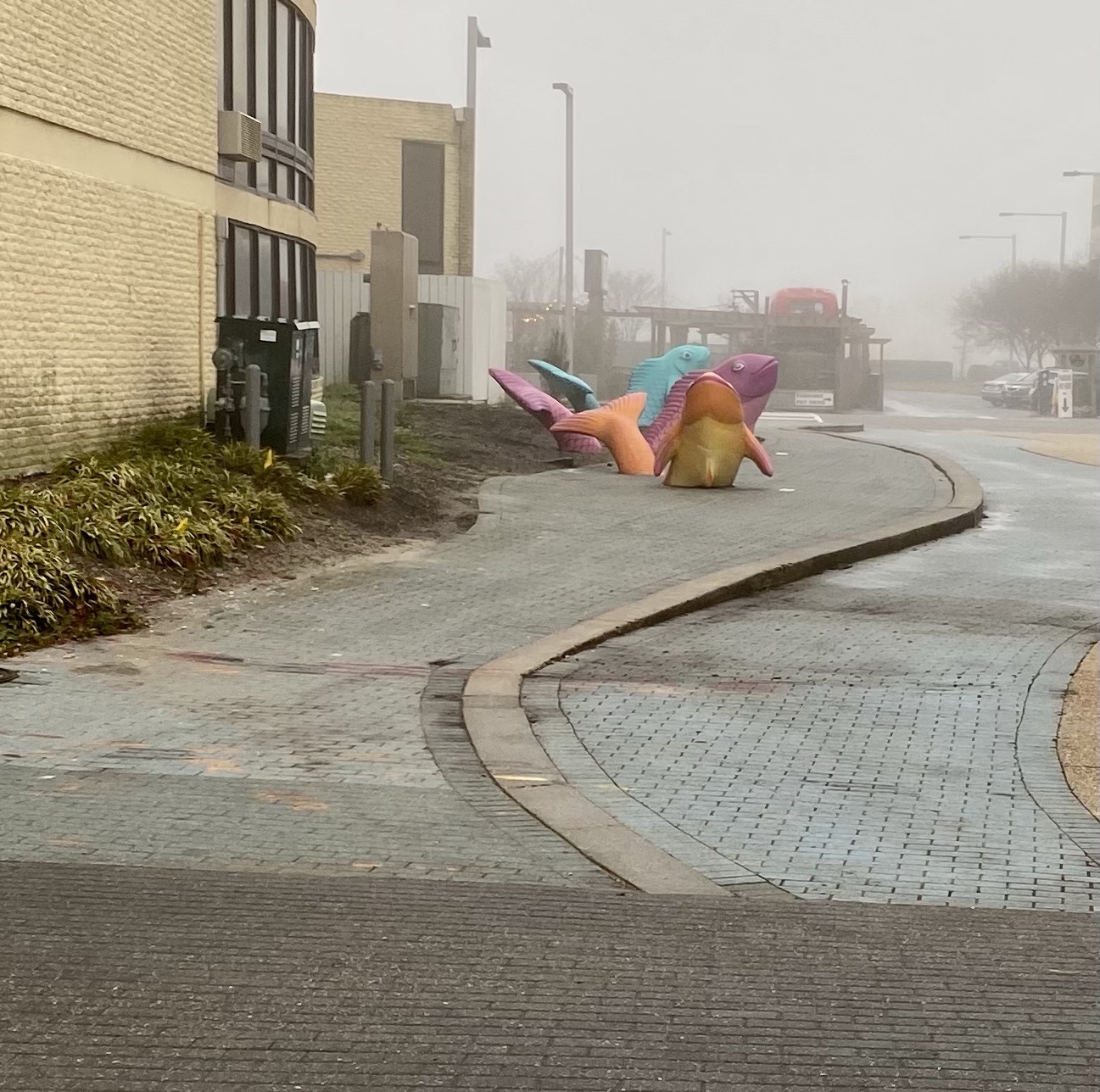
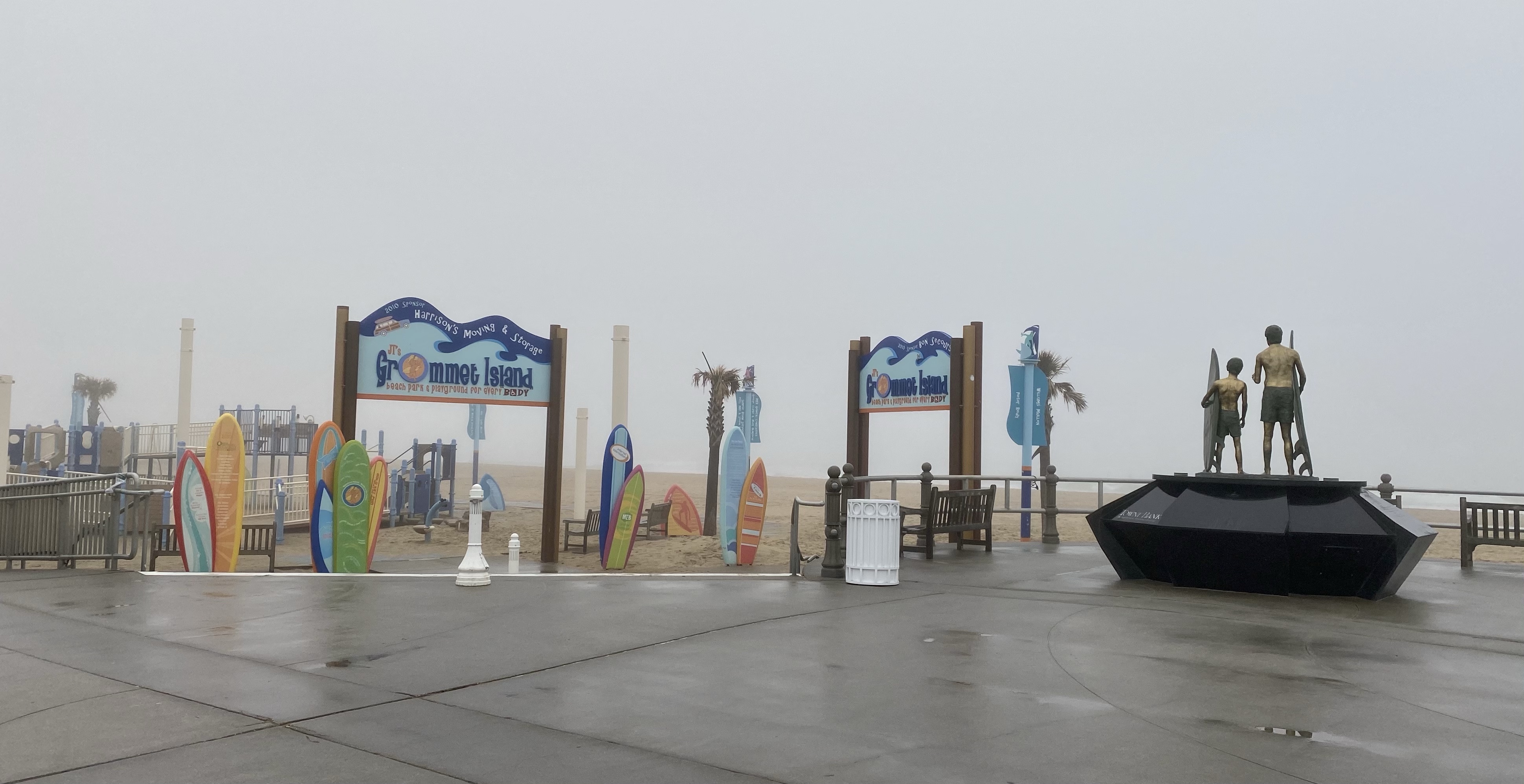
Since our hotel’s back door literally opened out to the Virginia Beach boardwalk, John and I took full advantage of this area daily.  This three mile long and 28 foot wide expanse, equally divided with lanes for biking versus walking, runs from 2nd Street to 40th Street.  It is full of local attractions and numerous oceanfront restaurants and eateries.  Highlights include the JT Grommet Island Park, a perfectly shaded park for active children to let off some energy while parents still remain oceanfront and near public restrooms/showers.  Along the path are also two museums, the Atlantic Wildfowl museum, located in the de Witt Cottage, built in 1895, and the Surf and Rescue Museum, housed in a former U. S. Life Saving Station that is now listed on the National Register of Historic Places.  Near our hotel was the well-known Virginia Beach Fishing Pier that does not require a fishing license.  Finally, further down from the pier was the festive 31st Street Park, home of the iconic King Neptune which was also the start/finish line for the Shamrock Marathon events.

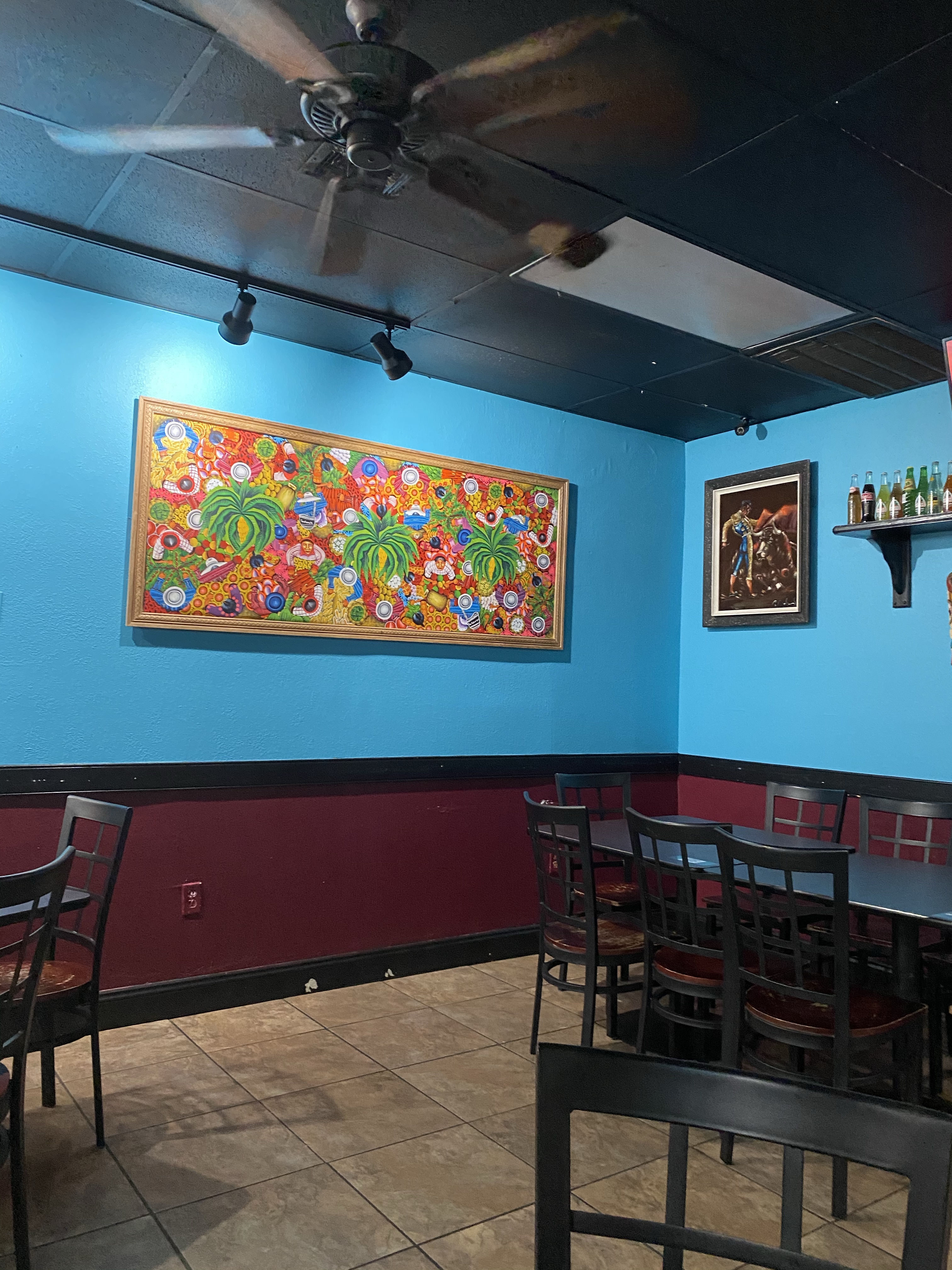
Of course, food was a big part of our short stay; however, restaurants can be a bit tricky for me due to the fact that I have celiac disease, so I cannot eat products with wheat and gluten. Additionally, I choose to eat plant-based.  Virginia Beach, however, did not disappoint me or leave me feeling hungry.  We serendipitously discovered a hidden gem within a short walking distance from our hotel, Side Street Cantina, filled with Peruvian-influenced Mexican fare. Located in a colorful building with vibrant and funky decor, the staff worked hard to accommodate my dietary needs.  In fact, John and I loved it so much, we ended up dining there twice!  The menu was lengthy and varied, portions were generous, the drinks were cold, and food was cooked to perfection.  This is the perfect casual dining experience within walking distance from the beach.

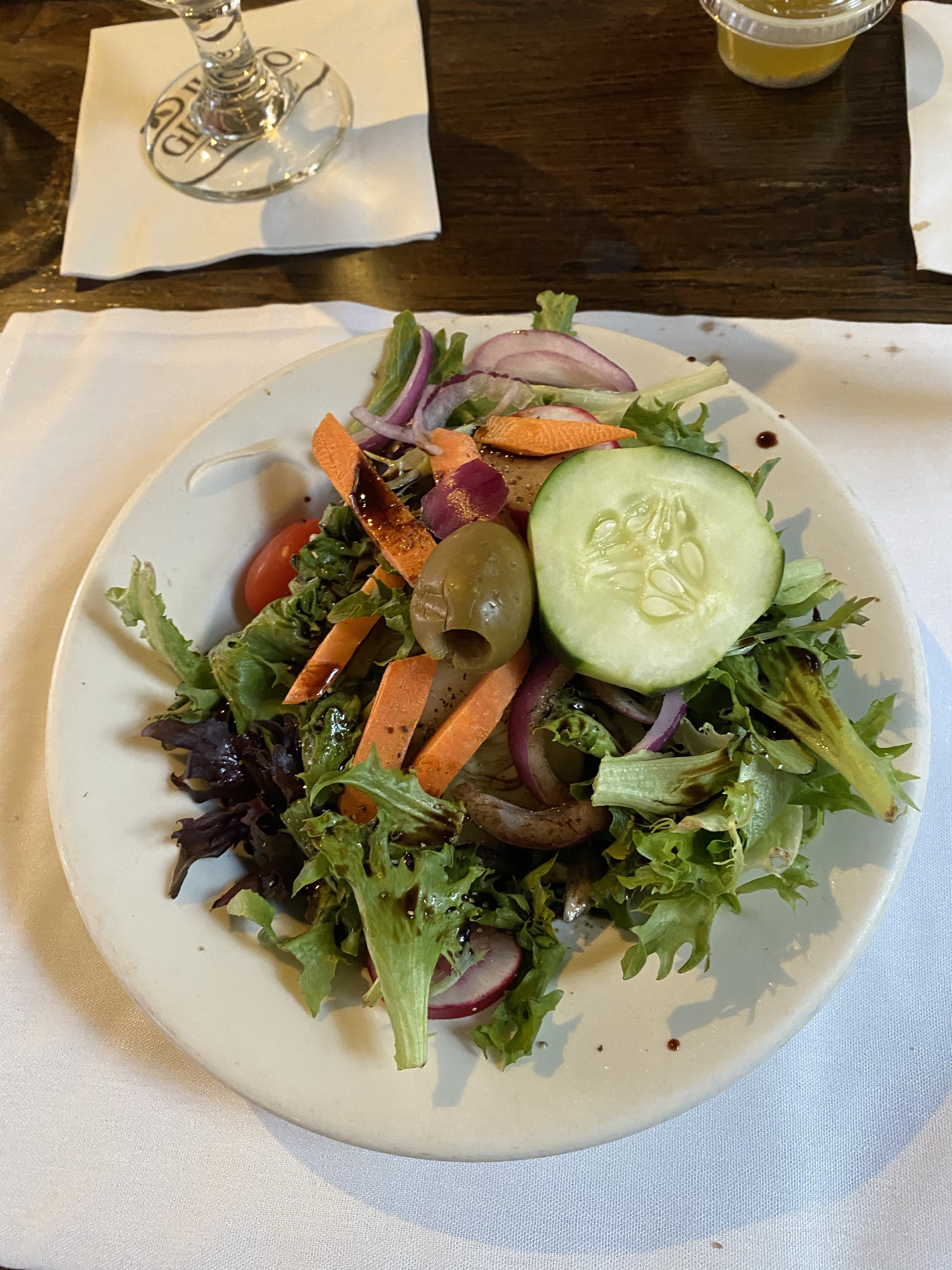
Another restaurant within walking distance was Il Giardino Ristorante. Self-described as “upscale dining,” John and I found this restaurant to be the perfect place to celebrate the fact that I survived 12 weeks of half-marathon training and the extreme weather conditions of the actual event. Filled a wood-burning oven–creating a warm, aromatic scent emanating throughout the dining area–a wide variety of green plants, and an enormous wine collection lining the walls, the vibe of the restaurant felt clubby, and yet, relaxing.  It turned out that the exceptional service and outstanding food ended up being the shining star! Wow, did we ever enjoy this meal. 

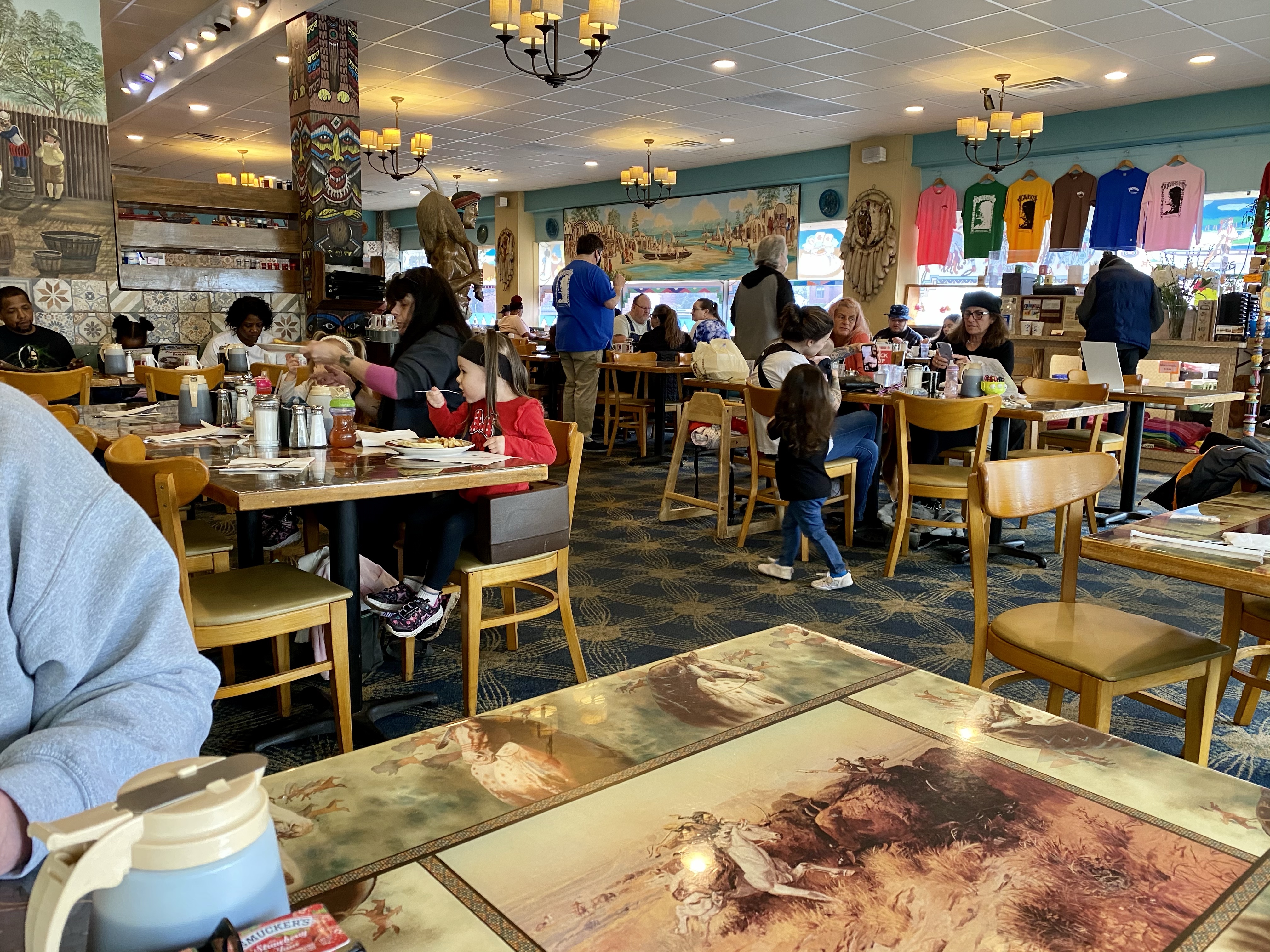
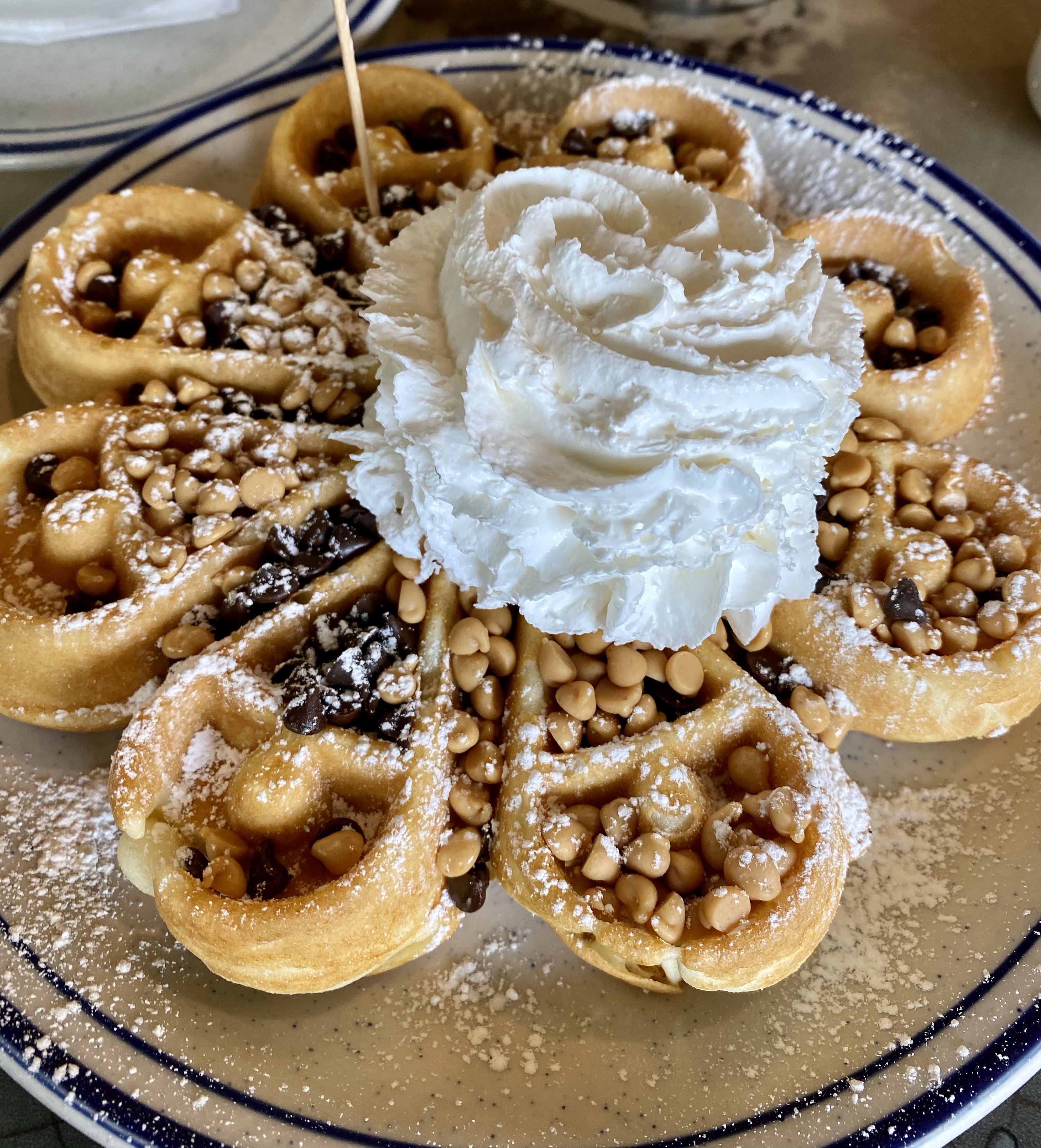
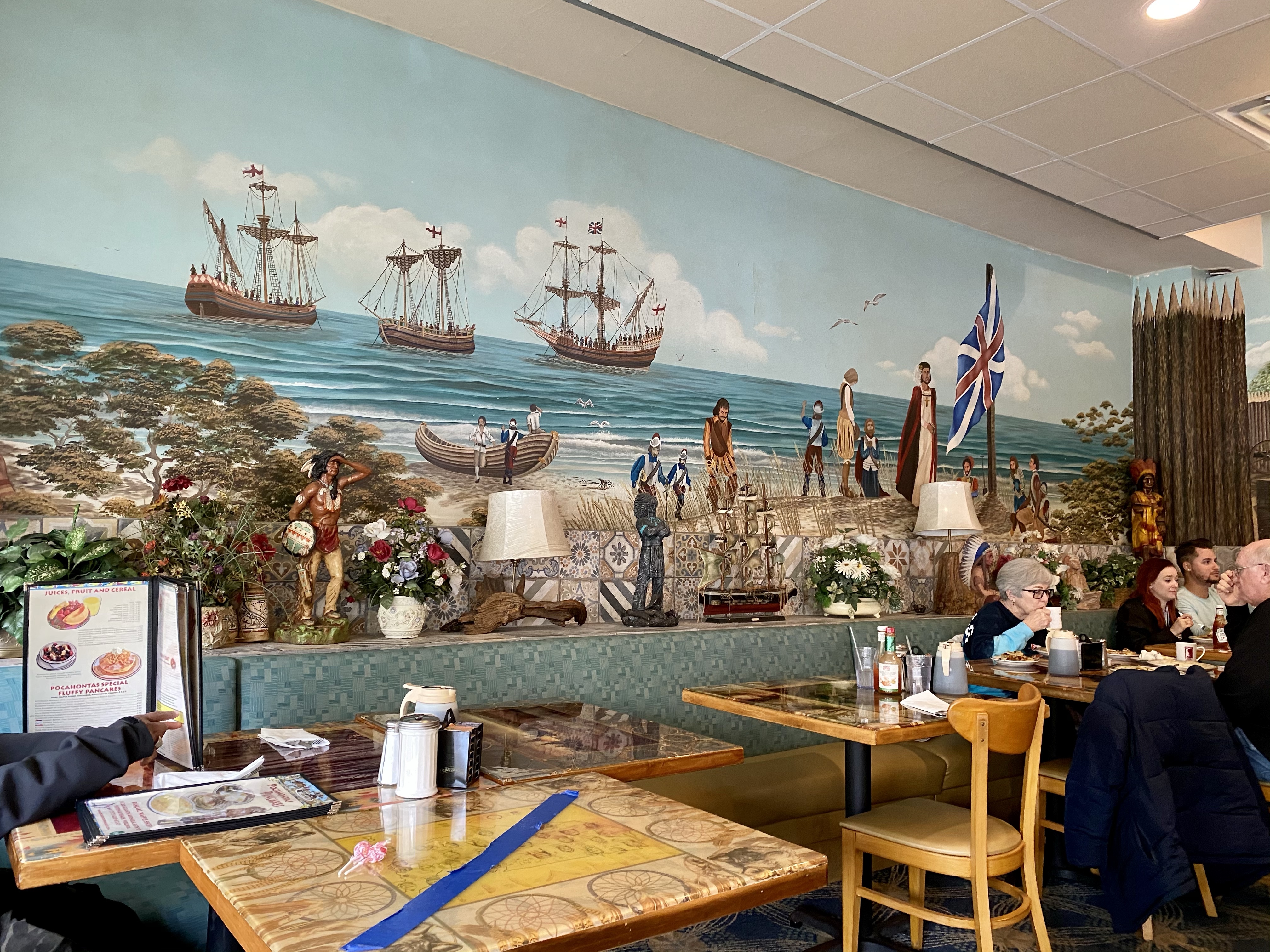
One more exceptional dining experience that John and I discovered was Pocahontas Pancake House.  Decked out in slightly cheesy Jamestown & Powhatan murals with a teepee, this family owned, super-clean eatery turned out to be gluten free heaven for me!  Clearly, a local favorite based upon the crowd, this breakfast and lunch only diner, served up more breakfast and lunch gluten free options than I have ever before experienced.  Their menu was more like a novella, and my choices ranged from waffles, pancakes, bagels, muffins, bread, and wraps!  Plus, numerous vegan/vegetarian options, along with countless meat/egg-centric options for John.  We dined here twice and relished every single bite!

“Whether you’re a history buff, outdoor enthusiast, or die-hard foodie, or you’re just looking to do little bit of everything, Virginia Beach is an adventure you just have to experience for yourself.”–Virginia Beach CVB

While John and I did take a quick trip to visit the Lynnhaven Mall, one of the largest malls on the East Coast, we spent the remainder of our time taking in the sights and sounds along the boardwalk and beachfront town areas of Virginia Beach.  However, as I discovered with quick internet search, there is MUCH more to discover in the Virginia Beach area.  From outdoor adventures throughout the beach and Chesapeake Bay areas to more inland adventures, from historic explorations to arts and cultural discoveries, from micro breweries and distilleries to Town Center adventures and family fun, and from Sandbridge to Pungo, the areas of Virginia Beach offer a wide variety of unique beach vacation opportunities.  John and I look forward to exploring more of what this area has to offer especially since it is only a short six-to-seven hour drive away!   

From our vaccinated family to yours, we wish you the return of safe and happy travels!

Sun Kissed Stranger

“I cannot do all the good that the world needs.  But the world needs all the good that I can do.”–Jana Stanfield

Photo by Lisa Fotios on Pexels.com

I was walking into a local coffee shop as I typically do nearly every Saturday morning.  It was one of those delightful early spring mornings overflowing with abundant sunshine that enlivened the brisk air.  New green grass stretched through the manicured town patches after its long winter hibernation while newly formed flowering buds and blossoms bobbed and bobbled to the rhythm of the breeze.  

Inhaling, I slowed my typical hasty pace and felt a smile forming in response to all the sensory overload.  Absorbing the glow of my surroundings, I noticed a few people, in spite of the morning chill, sitting on benches, faces tilted towards the luminescence.  Visages, unknown to me, radiating with the joy of appreciation after dreary days of darkness.

On the right side sat a young woman most likely around the age of my daughter–early to mid twenties.  Short, flaxen hair, tucked neatly behind her ears, her face wiped clean of any makeup except for lipstick, the shade of spring tulips.  Tall and curvy, she wore a lavender spaghetti strap shirt that struck me as a bit underdressed for the morning crispness, but what did I know–I am nearly always cold. Chin thrust high, eyes shut, a close-lipped smile across her face.  She seemed happy, content, and at ease.  How lovely, I thought, as I walked past her and on into the coffee shop.

It was only when I walked out of the coffee shop that I noticed what lay at the youthful feet of the woman.  There was an overstuffed worn backpack with a rather faded and worn water bottle inserted into one side of the bag that she heaved it upward in one practiced swoop.  Then, with much effort, she picked up another bag and what appeared to be some sort of walking stick.

Photo by Rachel Claire on Pexels.com

“Blessed are they who see beautiful things in humble places where other people see nothing.”–Camille Pissarro

Was she a hiker?  Maybe, but she was wearing a spaghetti strap shirt, which didn’t strike me as hiking apparel for this time of year.  Besides, if she was a hiker, why would she be in-town?  I tried to put the pieces together and kept coming up short.  As I neared my car, I looked across the street, and I watched her begin to amble away from the community patio, moving westward, the opposite direction of where I would be traveling. Her shuffle and bent back stabbed at my heart.  Then, as I took one last glance at her, with the sun on her bare shoulders, she paused, straightened her posture, tucked stray strands of hair behind her ears, threw back her shoulders, and determinedly continued moving on.

 Who was she?  What was her story?  Where was she headed?  Why was she walking around with a backpack, much less alone?  Was she okay?  Did she have family and friends who loved her?  On and on my mind spun with the worry of a mother.  

Then, it occurred to me that I hadn’t truly seen her entire circumstance until she was walking away, and yet I did nothing.  I could have bought her a cup of coffee, a breakfast sandwich, a bottle of water, a piece of fruit, or something, yet I took no action.  Why hadn’t I been more observant?  Why hadn’t I taken time to check on her?  I felt an onslaught of self-criticism and disappointment.

My imagination was certainly getting the best of me.  There could have been numerous valid reasons for her carrying such a heavy load.  She could have been traveling solo, visiting random places off the beaten path.  Perhaps she was a university student heading home for the weekend, but why would she have a walking stick?  Maybe she was training to hike a big trail, such as the Appalachian Trail.  On the flip side, however, there were as many unfortunate circumstances that could have caused her to be so overburdened. I could not then, and still haven’t, been able to shake this young woman’s image.

Photo by Rishiraj Singh Parmar on Pexels.com

“Love calls us to look upon anyone and say: You are a part of me I do not yet know.”–Valarie Kaur

Since that encounter, I have often thought about this unknown female.  I have asked myself repeatedly why I didn’t pay closer attention upon first seeing her as well as wonder why I can’t forget her image. What lesson was I to glean from this chance sighting?  Then I read an essay in which the author’s main point seemed to say that it is the very people about whom we wonder that fosters our capacity for compassion, empathy, greater understanding, and sometimes even prompts us to take action for others for whom we see as different within our community and/or the world.  She (the author) suggested that by “seeing others as part of us we do not yet know,” we can begin to stop the cycle of separateness.

While the author’s vision was/is highly aspirational, it nonetheless was/is a catalyst for personal reflection.  Reflecting upon my own actions, I’d like to think I am open-minded and compassionate; however, there are still multiple ways in which I have failed to see others as part of me, to share another’s pain, grief, or dared to understand their seemingly self-absorptions.  In fact, some of my most vociferous and worst behaviors often occur while driving.  However, I have also been known to be guilty of a condescending look, a sarcastic thought, or even in my ability to look the other way.  While I can soften the blow and claim that I am a human being, having a human moment, it doesn’t make my actions in those moments any better, and it also doesn’t mean that I shouldn’t work on eliminating, or at the very least, reducing them.

Photo by Pixabay on Pexels.com

“Perspective is the way we see things when we look at them from a certain distance and it allows us to appreciate their true value.”–Rafael E. Pino

My lesson to learn, at least as I presently reflect upon it, is a reminder of what I know to be true as an educator.  Every person starts as a child of someone–a symbol of hope and promise for the future.  Each child is part of a family, whether known or not, a being of a community, and a citizen of the world–the same as which we all began.  While I will never know the story of the unknown young lady, she is a part of the same humanity as me.

If the human collective could be thought of as one large web, my life would only be one of the hydrogen or oxygen atoms forming a drop of dew on one strand glistening in the early morning light alongside all of the other droplets.  If each orb of dew were a family, each uncrossed part of strand were a community, the full length of each individual strand would be a county, and the entire web would be the world, the resiliency of the web’s ability to support all of  dew drops on the strands, as well as to sustain life, depends on the integrity of each strand.  The strength of the web’s silk depends upon the bonding of various atoms to form the proteins forming the web in the first place.  If one part of the web is damaged, it must quickly be rebuilt, or the entire web will cease to exist.  To take this analogy one step further, those atoms making up the dew drops at the top of the web may perceive the green tips of grass, while those at the bottom may only discern the brown of dirt–and yet, no matter their view of the world, they all belong to the same web.

I pray that my thoughts and actions more regularly reflect the fact that every person is part of the same web of life as me.  When my brain deems someone as “another,” may I begin to habitually remember with each encounter that they are part of me that I may not yet know, and their existence matters.  I would do well to see the world from their position on the web. While it is overwhelming to think of repairing the entire web of the world, I can begin to repair, foster, and reshape my thinking and interactions within my own communities. I may not be perfect in my efforts, as the story of the young woman illustrates, but with each shortcoming, I can likewise use it as a reminder to try again.

As seen on Instagram at MyLife ( Formally Stop, Breathe, Think)

Marble Jar Living

“When you get tired, learn to rest, not quit.”–Bansky

I have a photo of myself from early in my teaching career.  It was taken in an old portable classroom, located a good distance from the rest of the K-5 elementary school in which I worked with students with severe behavioral problems.  Filled mostly with odds and ends of what the custodians and myself could piece together, and a few study carrols that a special education resource center provided, I was tasked to help students whose behavior was considered far too disruptive/dangerous for the so-called, “regular” classroom.  These students came from diverse backgrounds across the entirety of our rural county, rather than solely the local school community, and were aged five through twelve.  Complicating matters further, roughly 75 percent of the students had been affected by drugs and/or alcohol while in the womb.  The challenge to remediate behavior while educating these students was overwhelming at times.  As a look back, it was a good thing I was young and naive! 

While behavior management is not without its criticism, I found these techniques to be effective in this particular classroom setting.  One such practice that I employed was the marble jar.  Using an empty jar, I set a clear behavior goal, such as students engaged in on-task classwork for 15 minutes (without outbursts or tantrums).  Using a timer as a clear measure of time, I added a predetermined number of marbles to the jar each time the goal was successfully reached.  Students would then be praised, take a short three to five minute break, and then resume work again for another time period. However, if the behavior goal was not reached, I would remove that same number from the jar and remind students of their goal.  As the length of time increased for appropriate on-task behavior, the more marbles could be earned or detracted.  Once the jar was filled, we celebrated with a “reward” as determined by the students, such as an extra or longer recess, a “dance party,” extended storytime, popcorn party, and so forth.

Photo by Anthony on Pexels.com

I worked to make the marble jar, and other behavior management procedures, more class-owned.  Holding group meetings, students discussed and selected group and individual behavior goals.  We talked about red light, yellow light, and green light behaviors that detracted or benefitted their own learning and the classroom community as well as the power of personal choice/accountability of behavior.  

Writing about it now, it seems like such a simplistic, idyllic world.  It was FAR from that.  The developmental, emotional, and cognitive functioning levels in this K-5 classroom were an incredibly wide gulf. Furthermore, since it was the early 1990s, I recognize now that several of my students had been misidentified/misunderstood and were actually on the autism spectrum, but that was not as recognized as it is now.

If you ask my husband, John, he will tell you of the long hours this class demanded of me.  He will further tell you the physical toll it took upon me as the job often required the instructional aides and me to restrain students who were acting out.  Emotionally, I did not leave my job at the door.  Many students–not all–were impoverished, lacked resources, and/or returned to homes that were the source of their behavior issues in which to begin.

Photo by Grafixart_photo Samir BELHAMRA on Pexels.com

“It is not the mountain we conquer but ourselves.”–Edmund Hillary

I can recall days, and even weeks in that former special classroom, in which there were no more marbles to remove and none had been added.  These were discouraging time periods for me because, in my youth and arrogance, I could not understand why I could not make a difference.  Why couldn’t I make them want to change their behavior?  Why couldn’t I do this or do that?  It was a bitter pill to swallow; to know that no matter how much I loved and cared for these students, I could not make them change. In fact, while I could provide a safe and consistent classroom environment with clear procedures and boundaries as well as maintain a professional, caring, and calm demeanor, I could not control the chemistry in their body, the functioning of their brain, or their environment outside of the classroom.  However, I could choose to adapt my thinking. It wasn’t easy, and it took a long time.

My students were with me due to multiple negative events in their personal lives and/or educational history.  They did not need a visible representation of another failure, another negative.  Instead, they needed a visual representation of their success–a reminder that they can “do good.”  Therefore, I made the adaptation to quit removing marbles from the class jar–life was already doing that for them.  I added weekly “positive meetings” in which each student, staff, and me had to state at least one positive behavior/event/thing that they witnessed, thought, or chose to do.  We added at least one marble per positive observation during this pause in our week, and celebrated the good, no matter how small.  These meetings were difficult in the beginning, but with practice and grace, we all began to take notice throughout the week of the acts of “good” we needed to remember for our weekly meetings.  

Reflecting on those marble years, I realize that many of us (myself included) have spent much of 2020 and have continued into 2021 focusing on the marbles taken from our life jar.  One negative event upon another has left many of us, at times, feeling as if our life jar is empty. However, if we allow our minds/hearts to open, there has also been at least one–if not more–positive event(s) that have occurred during this same time period, and they need to be honored/remembered.

Therefore, I realize that like my early marble jar days of education, continually focusing on the losses of our proverbial life jars only reinforces the negative.  While the losses need to be remembered for perspective, and those lives lost need to be held within cherished memories, there remain many positive events that currently fill our life jars, such as family, friends, and life itself.  Additionally, COVID numbers are dropping, more vaccines are rolling out, and daily life is beginning to feel closer to normal, it is important to recognize and feel grateful for positive steps and events, no matter how small. 

“Practice makes permanent.”–Bobby Robson

Like those weekly positive meetings of long ago, let us likewise take time to pause, reflect/look for items/events/people for which to feel grateful, acknowledge these, and perhaps even offer a “positive statement” to at least one other person–even during those days & weeks when it feels as if no marbles other are being added.  It takes practice and patience as the brain seems to automatically focus on the negatives–at least mine does.  However, with regular pauses of gratitude and appreciation, we can begin to feel, well, more “pause-i-tive,” if not every day, then at least, with greater frequency.  

Gazing at that old classroom photo, I was reminded that seeing those marble moments is about practice, not perfection.  That is what I had to learn then, and it remains true today.  Positivity and gratitude take time to foster, and, like me, for many people, it is not easy, especially after so-called negative, life-altering experiences.  
Spring eventually arrives after winter; and yet, even spring has rainy days and downpours.  There is good and bad, light and dark in every season, every year, and sometimes every day.  If we only focus on the rains of spring, we miss the birdsong and blooms.  If we only focus on the darkness of night, we fail to see the brilliance of the sunrise that follows.  Plink, plink, marbles are available if only we take time to see them.

“God brings men into deep waters, not to drown them, but to cleanse them.”–John Aughey

When It Rains, It Pours

Lions, tigers, and bears. Oh my!” states the famous quote from The Wizard of Oz.  Recently, I rewritten it, “Covid, snow, ice, rain, flooding. Oh my!”  While my rhythm and words don’t quite line up with the original, it certainly fits the 12 month period from March 2020 to March 2021.  Of course, other words like loss, death, pandemic, quarantine, masks, virtual meetings, virtual learning/teaching, work from home, job loss, business closures and so forth, could likewise be added to this list.

However, there are other words too.  Words such as faith, opportunity, growth, stretch, change, appreciation, home, family, friends, compassion, community, kindness . . . . No, I am not trying to make light of the seriousness of everything our local and global community collectively have experienced, not in the least.  Instead, I am trying to discern the lesson(s) that Divine Providence has placed within my own life path, and perhaps, yours too, Dear Reader.

Photo by Markus Spiske on Pexels.com

“There is always a good lesson in whatever happens to us, even in the midst of our losses . . . Every individual should think, ‘I am the only student. Everyone and everything are my professors.’”–Sri Swami Satchidananda

Personally speaking, like so many within our local Tri-state community, my family and I have been directly impacted by, not only all of the ramifications of the pandemic, but more recently, the power outages, water outages, and flooding.  As the saying goes, “When it rains, it pours,” and this adage most certainly fits mid-February through early March.  Beginning with steady rains, followed by snows, followed by ice, and wrapping up with more rain, the resulting effects of each one was felt by thousands within our three state region.

I have listened and overheard many stories from co-workers, friends, and acquaintances describing life without power for up to 14 days during the height of our coldest weather. Several more were without water for part or all of that same time period.  Meanwhile, I have encountered, or read accounts, of those working within our local communities–braving the frigid temperature, dangerous conditions, icy roads–working extraordinarily long hours to restore power, wifi, communication, water lines and so forth.  Their past and present acts of labor cannot be underestimated or underappreciated.

A major state route covered with water in recent early March flooding.

“He says to the snow, ‘Fall on the earth,’ and to the rain shower, ‘Be a mighty downpour.’”–Job 37:6

Just as power, communications, water lines, and roads began reopening–as well as the beginnings of the vaccination process–thoughts of life settling down with slightly warming temperatures seemed like an imminent reality.  Then came rain, a steady pitter patter of several days of rain during those final few days of February, in an already water-logged Tri-State area, giving way for March to come in like a lion.  

As the rains fell, more roads closed as the burgeoning Ohio River waters backed up its tributary waters.

“The nicest thing about the rain is that it always stops.  Eventually.”–Eeyore

Throughout the weekend, John, my husband, and I were keeping a close eye on Symmes Creek, a 76.4 mile long tributary of the Ohio River, which runs alongside OH 243, in a small section of Lawrence County.  By the end of the last weekend in February, The Symmes, as it is often called, was rebelling against its banks.  Additionally, the backwaters of the Ohio River, along OH 7, were spilling into the lowlands along the river.  

The National Weather Service issued, changed, and updated flood warnings all along the Ohio River and its tributaries.  However, the last time this type of widespread flooding occurred, our daughter, Maddie, was five years old–she is now 21.  Surely, this wouldn’t happen again, right?  We had had close calls in recent years, but we had not been flooded in, or flooded out, for that matter, since that singular year of Maddie’s life.

For the record, our family home is not in harm’s way with regards to flooding; however, the stretch of road on which we must travel to and from work and home, can potentially flood.  However, it takes unusual, long-term circumstances of wet and rainy conditions in order for this to occur.  Therefore, while we kept our eye on the waters, we really didn’t think it would happen.  Still, there was that little niggle . . .

In the early morning predawn hours, with rain pouring down, it was becoming evident, there would be wide-spread road closures.

Monday evening, driving home from a local gym after work, I couldn’t help but notice that all along OH 7, water was up to both sides of this state route.  Driving alongside OH 243, Symmes Creek was beginning to slip closer to the edge of the white line.  This. Was. Not. Good.  

“Steph, I think we’d better pack a bag in case we can’t get home,” John resolutely stated Tuesday morning.

Really?  Really?  As if going without power and water for nearly a week wasn’t enough.  As if a pandemic wasn’t enough.  As if . . .well, the tunes from WHINE radio station were spinning through my mind like a commercial-free power hour.  Packing my bag was an act of resentment and anger–spoiled adult that I am.  However, driving to work, as John and I tried to find a safe route out–the waters were swiftly advancing–my attitude quickly tempered as it became clear, there was only one route open, and it would be a close call.

Unable to get home due to widespread flooding, we stayed in local hotels overflowing with power & communication workers as well as numerous members of the National Guard still making repairs and cleaning up from the ice storm from the previous weeks.

“After the rain, the sun will reappear.”–Walt Disney

Without belaboring the point, John and I spent two days unable to return home while still working.  It was equal parts of stress and adventure.  Local hotels were still overflowing with National Guard and laborers who continued to work in surrounding areas that remained without power, water, reliable forms of communication, fallen trees and limbs, as well as blocked roads from the February ice storms. Thus, we were unable to stay in the same hotel.

Meanwhile, Maddie, who was flooded in, sent us daily reports of the rising, and eventually, falling waters.  Thursday evening, when we were finally able to make it home, I was, well, overflowing with joy.  Our home, be it full of flaws, in need of multiple repairs with a yard full of downed trees and limbs, was still our home.  It was, and is, a sanctuary of personal comfort and calm. Cooking my own food, sleeping in my own bed, hugging my daughter and listening to her stranded adventures, petting our cats, wearing my favorite stretch pants (You know you have a pair too!), and the sun shining brilliantly through our dirty windows–home never looked so good.

Sections of OH 243 remained completely submerged in spite of the lovely weather following days of rain, snow, & ice

And maybe, that is part of the lesson–appreciation for one another and for what we have–be it ever so modest–not to mention the realization that we are not in control. We can grasp, plan, and strive for future plans, such as vacations, bigger home, better job, more money, and so forth.  However, none of these “things” bring us inner peace, nor do they offer us any form of control.  Certainly, having the ability to pay the bills and meet your basic needs does bring about a certain peace of mind; but happiness and inner peace start with appreciating what you have in the here and now.  

To be happy, we don’t need much.  Family, friends, a safe place to live, meaningful work and/or life purpose, with faith acting as the glue that holds it all together, is, at the end of the day, more important than any title, job status, fancy address, or extravagant vacation. All the names and titles we use to define ourselves, all the carefully crafted plans and routines, all of our meticulously curated possessions and dwellings–all of these can be gone in a moment’s notice.  Therefore, it is vital to have faith in the Divine Force greater than all that has happened or can happen to us. I am walking away from the past 12 months with a greater understanding of what TRULY matters, a deepening faith in the Divine, and appreciation–while it is cliche– that it genuinely is the simple things in life that matter most. 

“Do not fear, the rain is only here to help you grow.”–Jennae Cecelia

Photo by Sasha Martynov on Pexels.com

Thank You to All Those Working Tirelessly to Recover from Ice Storm

Comments from Governor Mike DeWine, Ohio, respectively, February 17 & 19, 2021: 

 “Gallia County has been placed under a state of emergency. Lawrence County was put under a state of emergency Wednesday night.” 

“Thousands of people in the area are still without power because downed trees are getting in the way of utility crews that are trying to fix the power lines. By calling in the Ohio National Guard, we can help restore power faster and also prevent future flooding by removing debris from the water before the weather warms up.”

When the first ice storm hit on a Thursday evening, John, my husband, and I had just eaten an early dinner.  Within the hour of finishing dinner, the power kicked off.  We tried to get our generator working, but to no avail.  Ultimately, the power only ended up being off 6-8 hours.  No big deal in the grand scheme of things.  

Life went on as normal for John, our college-aged daughter, Madelyn, and me.  However, we could see some signs of storm demolition all along the state route on which we live in Ohio.  Additionally, many of our co-workers living in WV were without power for days, with a few never regaining power before the second round of ice hit February 15.  

The following Monday, due to the storm’s impending presence, I made the call to once again, prepare dinner early.  (My Depression-era Grandmother Slater would be so proud by the way in which I prioritized food on the nights of both storms!)  We had just sat down to eat, when we heard what sounded like a gun-fire.  Then came another, and another, and another as branches all around our rural home began breaking.  ½ inch, or thicker, of ice coated trees making them look like winter goblins with tentacles of certain danger and doom.

Next began, what at first my confused mind thought was, lightning.  Lightning in the midst of snow, ice, and sleet?  Wait a minute . . .the cogs in my brain spun faster. Flashes of light repeatedly displayed all around us.  Transformers and power lines were exploding like bombs as the pop, pop, pop of trees branches continued to battle on.  Craaack!  With the snap of a limb, our home’s power seemed to disintegrate along with the trees.  Darkness enveloped us, and the sound of the weather war soldiered on all around.  This. Was. It. 

Scrambling for flashlights, candles, and emergency radio, Maddie and I made our way through the house as John kept stepping outside checking on the house and our vehicles.  Gallon jugs of water were strategically placed throughout the house because when we lose power, we likewise lose running water due to the fact we have well-water that makes its way into our pipes via an electric well pump.  We made jokes regarding the toilet.  “If it’s yellow, let it mellow; if it’s brown, flush it down.”  Resorting to potty humor was, indeed, juvenile, but laughter seemed better than crying.  Little did we know we were in for five days worth of no power or running water.

Going to bed that night, extra quilts on the bed (Thank you, Mammaw Musick!), we fell asleep to the snap, crackle, pop of what was NOT the famous cereal, but instead the very real surrounding woodland.  Waking in the morning, the house temperature had significantly dropped.  Walking quietly into the kitchen, as I was the first one up, I realized I would not be starting my day with a hot cup of coffee.  The fun had only begun.

Using an emergency lamp/radio/weather alert/thermometer, temperatures inside our family room, even with the fire going, hovered in the low to mid-fifties as seen here.

Facts from Jeff Jenkins, Saturday, February 20, 2021, Metro News The Voice of West Virginia:

 “Ice storms hit on Feb. 11 and then again on Feb. 15.”

“After the two storms, outages peaked at 97,000.” (In WV alone)

 “Around 44,000 customers remain out of power. Counties most affected include Cabell, where 15,019 customers are without service; Wayne, 14,203; Putnam, 5,074; Lincoln, 3,973; Jackson, 2,343; and Mason, 2,402.” (As of February 20)

  “A total of 27 bunkhouses are now in place at the Huntington Mall to house the additional (power) workers. Due to COVID-19 precautions, they will be filled only at half capacity, or 15 workers per trailer.”

Our neighbor shared with us that early Tuesday morning–he typically leaves for work around 4:00 a.m.–when he attempted the short three mile drive to the next state route in order to reach his place of employment, he was stopped by a sheriff deputy who told him that 20 or more trees were down over the road!  Hours later, when John and I finally ventured out for more gallon jugs of water, instant coffee (I found a camp stove pot for heating water.) and a few other supplies, it was like traveling an obstacle course over those same three miles.  We navigated around downed trees and limbs, fallen telephone and electric poles, power lines, and so much natural debris.  All around us, the typically scenic route looked like a war zone.  There were countless dark, injured homes and vehicles with shattered safety glass.  Shrapnel of wood covered the roads and glistening white snow.  Meanwhile sparkling tree limbs, weighed down by ice, bent their weapons of glassy appendages toward those of us daring to drive under and around their glacial shafts. Scraaape! Their frosted tips like fingernails scraped our windows, hood, and doors.

Ever the conscientious recyclers, John and I veered off-course on our way to Huntington, to drop off our recyclables in the designated receptacles located in a large parking lot behind the local post office.  Much to our astonishment, this parking lot of a large abandoned storefront was not empty as it usually is.  Instead, there were twenty to thirty power vehicles loaded with buckets, bulldozing equipment, transformers, power poles, and so forth.  Men were gathered in circles talking–hard hats and traditional cold weather garments adorned these burly, red faced men.  John and I felt an overwhelming surge of gratitude.  These men, based upon their truck identification, were from Indiana, parts of Ohio–near and far, as well as Kentucky.

“Feeling gratitude and not expressing it is like wrapping a present and not giving it.”–William Arthur Ward

John rolled down his window.  I rolled down mine.  Out each of our windows, we began thanking these unknown men for the efforts to abate the surrounding devastation and destruction.  Meanwhile, in an ironic twist of fate, sea gulls circled and called, seemingly encouraging these workers onward. 

Seagulls that had been circling around the power workers, lifted in flight and landed on a more empty part of the parking lot as we drove closer to the power trucks and workers.

We repeated our words of gratitude any time we ventured for supplies throughout this past icy week.  Often, opportunity would occur after waiting for our turn to drive in a single lane as we slowly made our past men working on power lines along our state route.  It was important to us that they know their efforts were heartfully appreciated, especially given the bitter weather conditions.

While I know that these power workers, tree removal specialists, state troopers, local law enforcement, National Guard members, and other community members were compensated for their time, they were, nonetheless, sacrificing time away from their family, friends, and loved ones.  This is time that they will never get back in order to help restore power for complete strangers. Hours spent in frigid temperatures, snow squalls, and dangerous conditions is not for the faint of heart.  This type of work requires grit, determination, and empathy–the ability to feel the needs of others. 

Therefore, to all the men and women who have and/or are working to repair the power, remove the fallen trees, restore safe road travel, and return water and power services to the many without, my family and I thank you.  Thank you for your long hours, your exposure to the winter elements, and your personal risk in often dangerous situations.  We are grateful for your time, energy, focus.  Behind each repair that you make, were/are people’s lives for whom your work is making a difference.  May your generosity circle back to you in some form.  Thank you, thank you, thank you.

May Her Steps Be Remembered

“Nothing is impossible: The word itself says “I’m possible!”–Audrey Hepburn

“Your body will argue that there is no justifiable reason to continue. Your only recourse is to call on your spirit, which fortunately functions independently of logic.”–Tim Noakes

Photo by Daria Shevtsova on Pexels.com

I am so cold.  I’m freezing.  

I was shaking so badly as I stepped out of bed during this nocturnal, chilly wake up call;  my legs did not want to hold me up.

What is happening?

Waves of nausea immediately flooded my middle, and I became suddenly aware of the sharp tinges of a headache that reminded me of an illness, but I couldn’t think clearly enough to define the association.  Did I have a stomach bug? The flu, or something else? 

In the bathroom, I retrieved sweatpants and a sweatshirt and donned them in protection of my pervasive cold shivers.  On wobbly legs, I humbly returned to my bed knowing that something was off.  Trembling under the covers, sleep came in fitful waves, with bouts of shuddering wakefulness and nausea in between. Tossing about from side to side, my left shoulder was noticeable tender each time I rolled onto it.  The injection site. Images danced dreamily around in my head.

Photo by Karolina Grabowska on Pexels.com

“You have the hardest arm to stick,” the young pharmacy student stated with a grimace as she pushed harder to get the vaccine needle inserted into my arm. 

Across the way, I watched as another pharmacy student injected my husband, John, as if his arm were a stick of room temperature butter, despite the fact he has spent years exercising with weights.  John winked at me as I winced at the second effort of pushing by the pharmacy student into my arm.

Oh, yes, I had my second dose of the COVID-19 vaccine.  My arm was sore last time; it is sore again. 

When the alarm eventually did go off at its usual Saturday morning time of 5:30, I groggily reset a new alarm for 6:00.  This was followed with a 6:30 alarm, and a final 7:00 am alarm.  

I never sleep this late on a Saturday.  Must. Be. A. Stomach. Bug. Surely, it’s not a reaction to the vaccine.  Can’t be, right?

Saturday was also the day I was to run my first 10 miler in preparation for my first virtual half-marathon since my back injury five years ago, and I could barely walk due to my convulsing shivers.  With sudden clarity, it occurred to me that I could take acetaminophen to mitigate the symptoms.  

Why hadn’t I thought of that during the night?

Opening the childproof medicine bottle, I discovered that I had five pills.  Great.  I decided to start with two and see what happens. 

Photo by Anna Shvets on Pexels.com

Making my way into the kitchen area, I started a pot of coffee, guzzled down several ounces of water, although my stomach protested, and sat staring out the window.  The nausea was pervasive, my headed pounded, and the chills were ever-present as I pondered the day ahead.  I felt extremely thankful that it was Saturday, and I did not have to work. Otherwise,  I would already be at school preparing for the arrival of students at 7:30.

Slowing sipping coffee–not sure if my stomach would revolt or not, a plan for the day began to take shape–assuming the acetaminophen kicked in.  By 8:15 am, the chills had mostly subsided, the nausea and headache were present, but felt more the muzak of years ago softly played in elevators.  I made the decision; I was going to try to run.  First, however, I needed to locate a name to honor from the Honor the Fallen website. 

A few clicks later, there came a name.  Sgt. Christina M. Schoenecker, a  26-year-old was an Army Reserve soldier assigned to the 89th Sustainment Brigade, out of Wichita, Kansas.  She was so young looking.  Her eyes were bright and full of empathy, but her slightly crooked smile looked wry–as if engaging in conversation with her was sure to be filled with quick-witted, sharp comments.  As I read her story, I felt a surge of inspiration. 

Given my suppressed chills, I ruled out running outside and opted instead for the treadmill. Besides, I told myself, the treadmill offers less impact on my back. An hour or so later, I was on the treadmill hoping for the best, but ready to abandon the training plan if needed.  

Don’t look down at the numbers.  Eyes straight ahead, arms at right angles, melt those shoulders away from your ears, keep the speed slow and steady.  One mile at a time, Steph.  One mile at a time.  Focus on the name:  Sgt. Christina M. Schoenecker.  Pretend her name is written on the wall.

Podcast playing, my mind semi-focused on its content as my stomach continued its somersaults.  I decided to save walk breaks until later, when all of my reserves might be running low. Walk breaks would be the reward for early efforts.

Photo by Bogdan R. Anton on Pexels.com

As a teenage girl, I often rode my bike to and from summer bandcamp. There was a hill on the way home that was steep and wound round a hill. At that time, a childhood jingle would enter my mind, “Just think you can, and know you can just like the engine that could.”  This same jingle entered my mind as I jogged on the revolving belt of the dreadmill, I mean, treadmill.  Sgt. Christina M. Schoenecker.   Sgt. Christina M. Schoenecker.   Sgt. Christina M. Schoenecker.

One mile turned into another and another.  One hour passed, and one podcast was over.  Walk break taken long enough to start a new one.  Thirty more minutes passed; another walk break began.  Can’t take another moment of the incessant talking.  Time for the power button–music.  A driving playlist of beats began its encouraging cadence.  Nausea grew greater and legs grew wobbly again.  So close now.  Increase the determined self-talk.  More nausea, more achiness. . . keep pushing.  Sgt. Christina M. Schoenecker.   Sgt. Christina M. Schoenecker.   Sgt. Christina M. Schoenecker.

It wasn’t pretty.  It wasn’t fast, but it was purposeful. My struggle was nothing compared to the struggle of those who have served in our military. Christina M. Schoenecker, the name I found on the website, served during Operation Inherent Resolve. Assigned to the 89th Sustainment Brigade, Christina was an Army Reserve soldier out of Wichita, Kansas. This young woman died in a non-combat incident in Baghdad, Iraq.  She was the third casualty of this operation at the tender age of 26. 

It is through the mission of wear blue: run to remember that I often run, “in honor of the service and sacrifice of American military.”  My contribution is minimal.  There are local and national groups who do so much more work and efforts to increase awareness and honor the fallen and their families.  My only contribution occurs each Saturday, when I search the name of a fallen person–someone’s family member–write their name on a post-it note, place that paper the zippered pocket of my running tights, and send up words of gratitude to the heavens for this person’s service as well as to the family each one left behind.  My steps, no matter how challenging, still do not equate to the service of those brave men and women freely gave to our country.  It is my hope though, in some minor way, I honor their memory and offer their family some form of unseen comfort.

Thank you, Christina, for your service.  Thank you, for your ultimate sacrifice.  Thank you, Christina’s parents.  Your daughter was remembered this past Saturday, step by step.  Her memory truly inspired me to finish.

For more information regarding wearblue: run to remember, visit their national website, or look/join the local Ashland community, found on Facebook, or via email:  Ashlandcommunity@wearblueruntoremember.org.

It Starts with One Seed

“In this earth, 

In this soil, 

In this pure field

Let’s not plant 

Any seeds 

Other than seeds of compassion

and Love–Rumi

Photo by Mary Taylor on Pexels.com

While it’s nerdy to admit this, my husband and I love shows about nature, with PBS’s Nature among one of favorites.  Go ahead, make fun of us, or roll your eyes. We teach middle schooler students; we can take it! 

Recently, an episode of Nature featured animals who survive on the highest and most extreme terrain of the Alps.  While you may continue to giggle and guffaw at our choice of entertainment, this episode fed our minds with its breathtaking cinematography of an extraordinary landscape and the unique variety of animals adapted to the Alpine mountain climate, including the chamois, ibex, marmot, golden eagle, and the spotted nutcracker.  It was while the narrator and filming focused on the nutcracker scene that, shall I say, planted a seed.

Photo by Trace Hudson on Pexels.com

In the Alpine world, the Swiss stone pine exists, thanks in large part to the work of the spotted nutcracker. The nutcracker relies on the seeds of the Swiss stone pine for food.  Even though this tree only produces seeds between the months of August and October, this bird is able to survive year ‘round in the harsh conditions of the Alpine climate because of its ability to stockpile these seeds in a wide variety of locations and remember their hiding spots. The birds’ naturally seem to select places that prevent their collection from being stolen by scavengers.  Interestingly, these carefully selected locations are also less likely to support seed germination–at least for a several months.  Thus, these hidden seed-pantries enable the spotted nutcracker to eat year ‘round, including feeding its young in the spring.

Fortunately, for the Swiss stone pine, it can live for as many as 500 years–which works in the favor for both the tree and spotted nutcracker.  In fact, even if only one to two seeds per year from the nutcracker’s hidden caches remain uneaten, and therefore germinate, it is enough to keep the tree viable for hundreds of years.  Thus, making this symbiotic relationship an ideal partnership for the continuation of both species.

Photo by eberhard grossgasteiger on Pexels.com

“Keep on sowing your seed, for you never know which will grow—perhaps it all will.”–Ecclesiastes 11:6 TLB

One seed.  Hidden, dropped, or lost–dormantly remains idle until the conditions change.

One seed.  Full of potential–enough energy to fuel the growth of a new seedling.

One seed.  Serendipity–precise temperature, water, oxygen, light.

One seed. Free to break through its hardened shell and begin growing.

From one seed of the Swiss stone pine, a root first forms, followed by a shoot that will grow into its stems, branches, and needles.  Over the years, as the seedling extends into maturity, the tree will endure countless challenges throughout the entirety of its life. From strong winds to Alpine avalanches, from temperatures well below freezing (think -30 to -40 degrees) to extremely warm temperatures, from blizzard conditions to summer storms, and all conditions in between, this tree finds a way to persevere for hundreds of years.  

However, the Swiss stone pine does not survive all those hundreds of years without breakage. In fact, the trunk of this tree is so brittle that its top may be repeatedly broken off in harsh conditions.  Despite its brokenness, it continues to grow and produce seeds that are editable–not only for the nutcracker, but also for other birds, animals, and even human consumption.

Often referred to as the “Queen of the Alps,” the Swiss stone pine survives its brokenness and storms by forming lateral shoots that often resprout in response to the weather conditions.  Furthermore, the nutcracker typically only consumes about 80% of the Swiss stone pine seeds it hoards.  Therefore, thanks in large part to the work of the nutcracker, groups of seeds often germinate together in one spot, and the numerous trees sprout together.  What often appears as one tree with multiple trunks are actually several trees growing together in one root system. Additionally, even if the nutcracker–or for that matter, other creatures– would happen to eat all of the trees’ seeds for several seasons in a row, the Swiss stone pine’s seed cycle includes a mast season, every four or five years, producing so great a quantity of seeds that it would be impossible for all of its seeds to be consumed. Thus, ensuring the tree’s survival, but also the survival of any Alpine creature who may rely on this tree for shelter or food, such as the spotted nutcracker.

One seed. One tree. One bird.  Watch the ripples expand.

Photo by Pixabay on Pexels.com

We can’t change people, but we may plant seeds that may one day bloom in them.”–Mary Davis

Reflecting upon this unique symbiotic relationship, I was reminded of our own human to human interactions.  From day to day, month to month, and from year to year, imagine the seeds each human being can potentially plant.  Many of these seeds foster our own well being and the well being of others as we cultivate friendships and relationships for the mutual benefit of all involved.  These relationships eventually sprout into new families and new friend groups. 

Furthermore, seeds planted with coworkers, neighbors, professionals with whom we regularly interact, as well as complete strangers, can germinate ideas, thoughts, and other notions that, one day, may benefit that person.  From the compassionate gesture of helping a complete stranger to private gestures of kindness unseen or unheard by those benefiting, from one tender word of encouragement to one empathetic ear ready to listen, we all have the ability to sow seeds wherever we go.

Even when we are broken by the squalls, obstacles, and difficulties of life, through the rooted and interconnected relationships of our germinated seeds, we can find the strength to rise again.  In conditions ranging from the most arid to emotionally drowning episodes, from the frozen heart to impassioned flare of tempers, it is our propagation of seeds that comes back to us again and again, making us more resilient, more strong, and ultimately able to persevere, allowing us to continue to produce even more seeds

Photo by Pixabay on Pexels.com

One positive word. One helpful deed. One encouraging smile.  Seeds are planted.  Perhaps, they remain dormant in the recipient’s being for days, weeks, months, even years.  Nonetheless, one moment, under the right circumstance, that seed will take root, sprout, and soon enough branches and roots systems, like Swiss stone pine trees, will expand over the mountains of time.  You may not see it, but your one choice, your one act, repeated throughout your life, may create a forest from which many will be nourished and find shelter. 

Don’t judge each day by the harvest you reap but by the seeds that you plant.”–Robert Louis Stevenson

No Longer At Ease

“I had seen birth and death, 

But had thought they were different; this Brith was 

Hard and bitter agony for us, like Death, our death.  

We returned to our places, these kingdoms, 

but no longer at ease here in the old dispensation . . .”–T. S. Eliot

Photo by Johannes Plenio on Pexels.com

During the early fall months of 2020, I decided to try growing my own vegetable sprouts.  Using a sprout kit, I placed the seeds on a prepared cloth in a tray, gently watered them, covered them loosely, closed them inside a drawer, and dubiously left the container in the dark.  48 hours later, to my great astonishment, nearly a hundred tiny green seedlings, like hairs on a newborn head, were sprouting across the bottom of the tray. 

What makes night within us may leave stars.”–Victor Hugo

As a child, I was prone to vividly bad dreams.  Those early years were filled with twice weekly sermons delivered by an impassioned country preacher who warned his flock of the wailing-and-gnashing-of-teeth in hell if one remained a sinner.  Additionally, this same fervent minister also sprinkled regular doses of sermons that focused on an impending rapture.  As an impressionable child, I inferred that if I wasn’t a good girl, free of all sin, I was either doomed to the fiery eternity of hell, or my parents might get called to heaven, via the rapture, without me.  Therefore, if I went to bed having committed the slightest of sins–and I was indeed a precocious child–it wasn’t unusual for one of two things to occur.  I would either have terrorizing dreams of a flaming hell filled with snakes (My child’s mind added those.) that woke me in a sheer fright, or I would startle awake (not necessarily from a dream) to the silence and shadows of the dark, certain the rapture had taken place, my parents and siblings were gone, and I had been left on earth to suffer the numerous plagues with all of the other sinners.

It is not that I didn’t have the same fears during the daylight; however, my focus tended to be occupied with childhood activities: play, reading, school, and even invented stories that typically began with, “And so she . . . ”.  Even when I committed minor infractions, as I often did, and “got into trouble,” my child’s mind was not near as apprehensive during the waking hours as it was at night.  The dark, as a youngster, was rife with foreboding and frightening images as all my wrongs seemed to be made more plain–Satan was out to get me in the thick of the night, and God’s love was nowhere to be found.

Photo by Andre Moura on Pexels.com

It was on these nights, I would often call out to my mom. 

“Mommy, I had a bad dream.”

I might repeat it several times before she heard. 

“Roll over on your other side,” she would groggily declare.

As a mom, I recognize the plight of a young mother who needs sleep.  If you can get the kid to self-soothe and go back to sleep without having to get up, that is a win.  Plus, the genius is, whether my mom purposefully knew this or not, she gave me an action to solve the problem. 

In that moment, I was “no longer at ease” in my little bed after my nightmare.  Mom did not deny that I had had a bad dream, nor did she dismiss that I was upset.  Instead, she instructed me to roll over, go with the flow, and return to the river of sleep. By following her directive, though my troubling dream still lingered, as smoke lingers in a room long after the smoker has exited, and my heart still pounded, my mind began to shift with the action of turning over. Sleep still did not come easily, even “on the other side,”  but I rode out the night anyway.  Soon enough, one of my parents would be waking me in the morning, and I would rouse from sleep surprised that I had, indeed, returned to the ebb and flow of sleep.

Photo by Olha Ruskykh on Pexels.com

“Do everything with a mind that has let go,”–John Chan

Throughout most of 2020, and lingering still in 2021, our world is enveloped in the shadow of COVID.  It is a night terror, of sorts, from which, as a civilization, we have not yet been able to escape. We have suffered deaths beyond comprehension, and our way of living is no longer at ease.  There is no denying that we are living during dark times.

Due to my early childhood experience with hellfire and brimstone sermons, as an adult I find comfort in liturgical based Christian denominations, as well as other faiths, that focus on God’s love and light.  I embrace the image of an ever-present, ever-loving God that offers brightness and clarity; and, through the vehicles of prayer, meditation, and a devoted life,  Divine Providence will illuminate THE WAY for each of us.  

Photo by eberhard grossgasteiger on Pexels.com

“The LORD spoke these commandments in a loud voice to your whole assembly out of the fire, the cloud, and the deep darkness on the mountain . . .”–Deuteronomy 5:22 

However, despite the fears fostered by the sincere believing, well-meaning pastor, this church, nonetheless, instilled within me many wonderful concepts, that to this day, I still honor. Sunday School and Junior Church, as it was called, offered me wonderful Bible stories full of life-long lessons and church history. One such story was the narrative of Moses trekking up a dark and ominous storm-swathed mountain in order to attain Ten Commandments. In fact, as those long ago flannelgraph images presented, God came to Moses, “out of the fire, the cloud, and the deep darkness on the mountain,” in order to give Moses and his people rules for living a faithful life.  

We are in the darkness much in the same way Moses had to brave the darkness on his faith-walk up the menacing mountainside. However, as the story of the Ten Commandments reminds us, dwelling in the dark does not mean God is not with us, nor does it mean that nothing good can come of the dark.  Seeds burst forth in the darkness of soil.  Infants grow in the darkness of the womb.  Our body heals, repairs, and builds up its immune system in the darkness of sleep. Stars are only illuminated in the darkness of night.

To be certain, in Eliot’s words, we are “no longer at ease in the old dispensations.” However, let us remember that while God is present in the light, God also dwells in the darkness. Like Moses and his people, and like the journey of the Magi of which Eliot eloquently described in his famous poem, we must be willing to travel in the dark, release our grasp on the past, and die to its previous ways. We must allow our proverbial kayaks to float with the current of life’s river, instead of attempting to paddle against it. This new way of living may even require us to, “roll to the other side.”  Nonetheless, like my seedlings in the dark of the drawer, Divine Providence is present in the darkest of times birthing new life.

Photo by Jacob Colvin on Pexels.com