Running with Purpose: The Charleston Distance Classic and My Marathon Journey

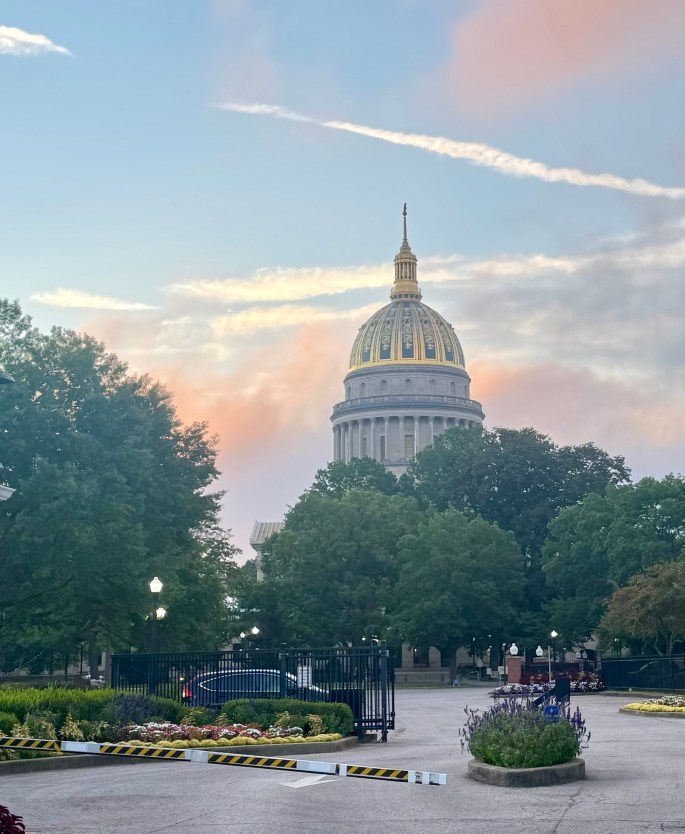
The West Virginia State Capitol building with a golden dome, surrounded by trees and a pastel sky at dawn.
The CDC starts in front of the state capitol of WV.

A Quote to Carry Me to the Start

Dean Karnazes is often credited with saying, “Run when you can, walk if you have to, crawl if you must; just never give up.” His words echoed in my mind while I was experiencing a case of collywobbles as my family and I drove to Charleston, WV, in the predawn hours of Labor Day weekend. Only weeks earlier, I had decided I had built enough base fitness to run the Charleston Distance Classic (CDC), “America’s 15-miler.”

A joyful runner in a race, wearing a white shirt with a 13.1 badge and black shorts, excitedly posing with a water bottle while making a peace sign.
Ready to run the CDC!

Returning to the Classic After Ten Years

It had been more than ten years since I last ran it. In my previous two runs of the CDC, the weather was formidable, with the typical August heat wave bringing high heat and humidity. In fact, it wasn’t unusual to see runners collapse on the course—or cross the finish line only to collapse into the arms of medics from heat exhaustion.

Two women pose together smiling in front of a large government building with a golden dome, one wearing a race bib and athletic attire while the other is in casual sportswear.
My daughter was texting me messages of support throughout the race, so Siri could read them to me in my ear as I ran.

How Running Has Changed for Me

Life was different ten years ago. Besides being younger, I was fairly new to running and relied heavily on veteran runners for guidance. On one hand, I was fortunate to have others with whom to train; on the other hand, I didn’t yet have the aerobic base they had built over years. Plus, when I started running, I gave up strength and flexibility exercises, which I now know would have helped me. Instead, I focused on keeping up with others and hitting the weekly mileage goals.

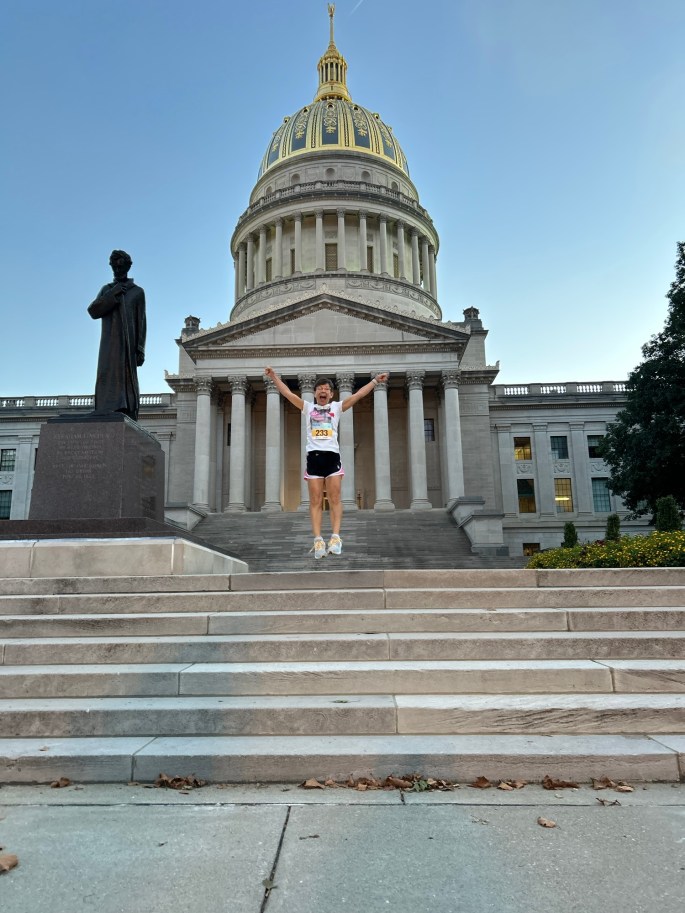
Runner stands on a swing-shaped structure in front of the West Virginia State Capitol, smiling and wearing a race bib, under a clear sky.
Ready to swing into action.

Building Balance and Training for a MarathoN

Over the past decade, I’ve taken breaks from running—first from burnout, when I missed other forms of exercise. I rotated through strength training, yoga, walking, and cycling, always circling back to running. The pandemic brought running back to the forefront, as gyms and studios were closed.

Since then—and one major surgery later—I’ve learned to build a more balanced approach to exercise that includes a wide array of modalities, running among them. I exercise now for the joy of movement, as well as overall wellness. Still, I enjoy the discipline of a challenge. This year, in honor of another decade milestone, I’m training for the Marshall University Marathon (MUM)—the full 26.2 miles. Rather than follow a standard 16-week plan, I began in January, gradually building my aerobic base.
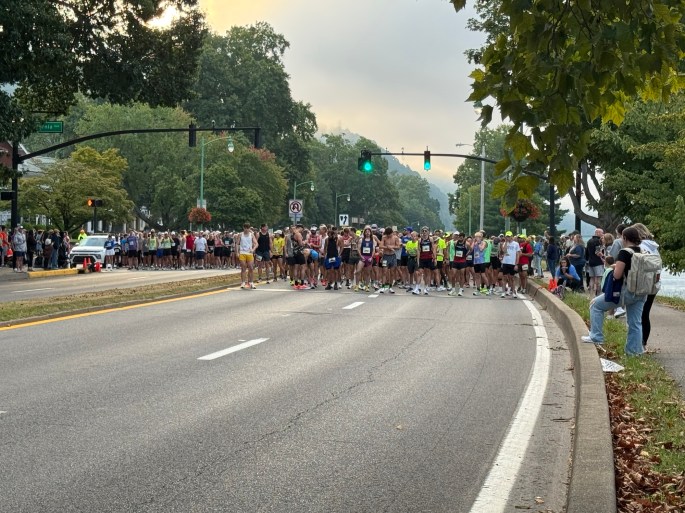
Runners lined up at the starting line of a race on a road, with traffic lights and spectators in the background.
The starting line for the CDC.

A Perfect Day to Race

It was this extended training that gave me confidence to run the CDC again. In addition, the weather worked in my favor. Temperatures were in the 50s when the race began in front of the state capitol. Running along the Kanawha River in the first mile, runners quickly spread out as paces varied.
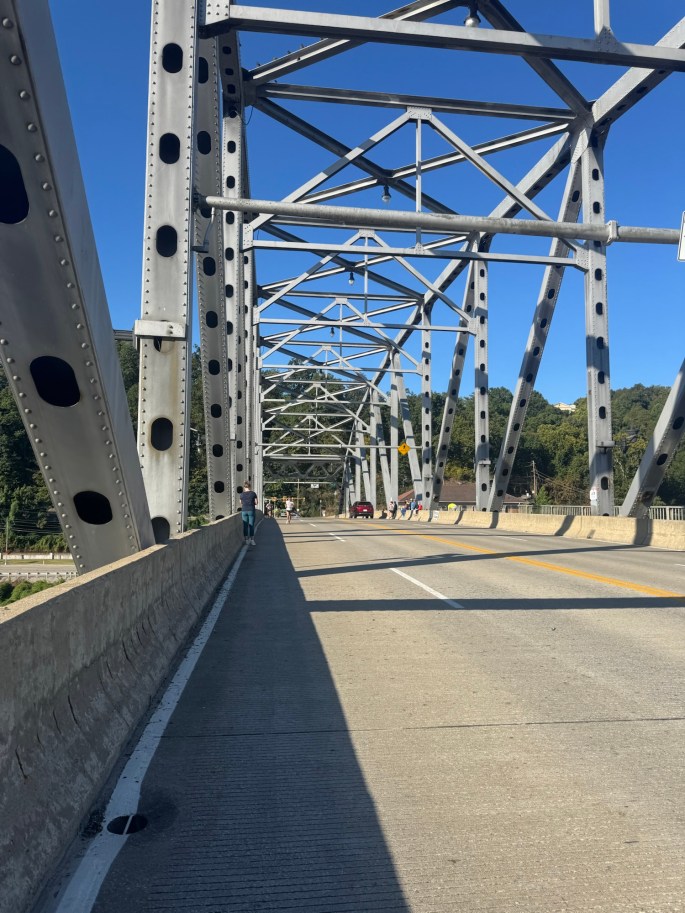
View of a bridge with steel beams and a roadway, featuring a few pedestrians in the distance.
The South Side bridge, which runners crossed twice–near mile 3 and again at mile 8.

“Capital Hill PUnishment” and the Course Challenge

Before long, we crossed the South Side Bridge and began the long trudge up Corridor G, aptly nicknamed “Capital Hill Punishment”—two miles of climbing. As if that weren’t enough, the course then wound through three hilly miles of Charleston’s South Hills neighborhoods. By the time we returned to the South Side Bridge, eight brutal miles were behind us. The final seven were mostly flat, except for one last incline near the end—just when our legs were good and toasted.

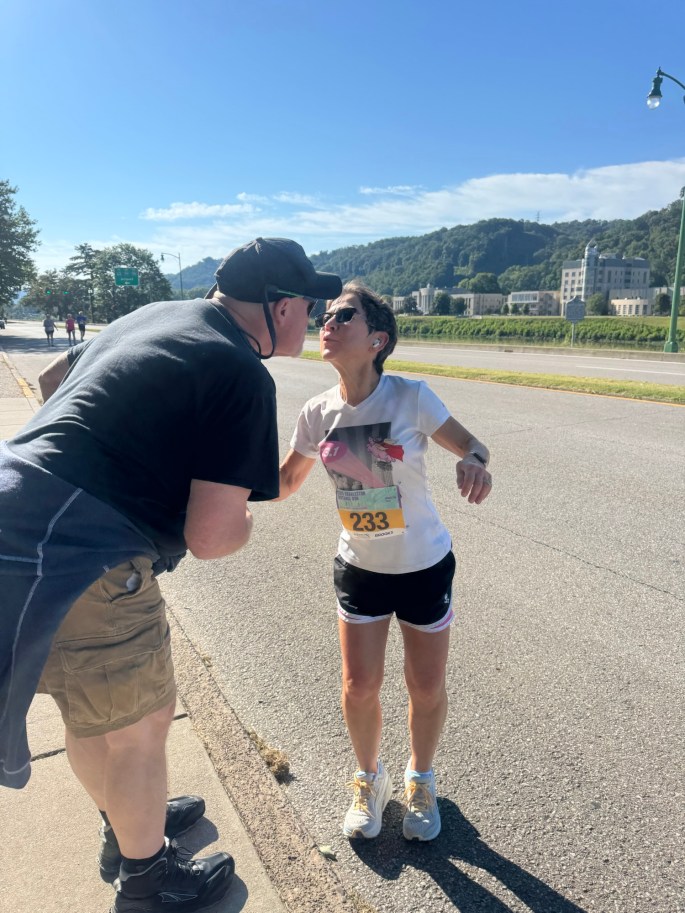
My Cheer Squad: John and Maddie

The CDC is a great spectator race, and I was lucky to have my husband, John, and daughter, Maddie, there. They were tireless cheerleaders, walking all over Charleston to encourage me. At the start, Maddie urged me on with excitement. At mile eight, as I crossed the South Side Bridge for the second time, she even ran alongside me for a short stretch, offering encouragement.

Between miles 11 and 12, they found me again, cheering and taking my empty handheld water bottle—by then more of an annoyance than a help. At Laidley Field, Maddie’s voice carried as soon as I stepped onto the track, her shouts of encouragement giving me the final push.
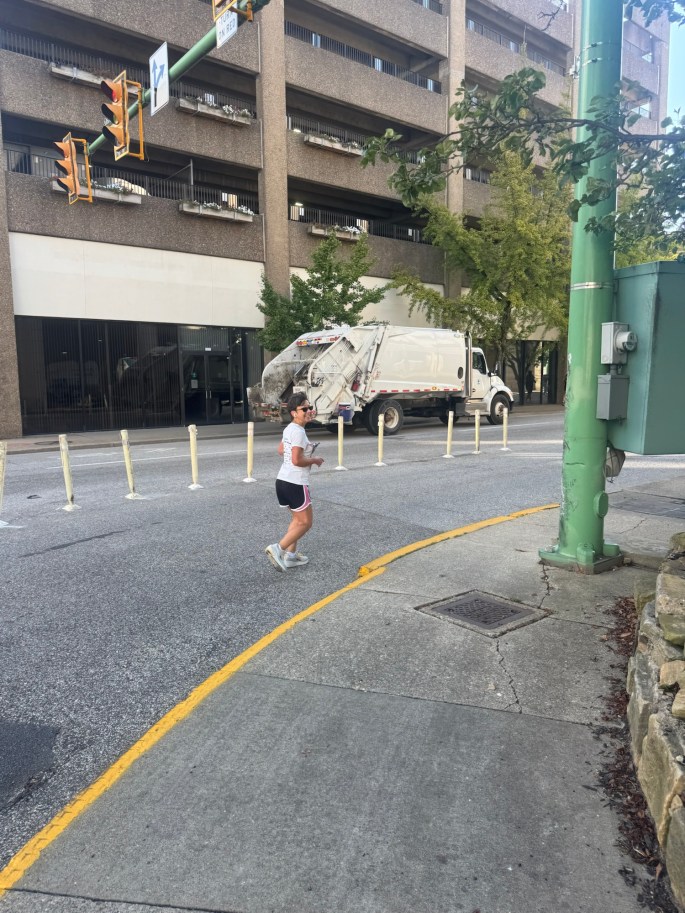
A person jogging on a city street with a garbage truck parked nearby and a multi-story building in the background.
This was mile 8. Afterwards, there was mostly flat course, EXCEPT for a last incline during the very last mile before the finish line. UGH!

Lessons from the Endless Last Mile

Honestly, that last mile seemed endless, and I learned a powerful lesson: even the final mile is still a mile long. My mental discipline slipped, and the fortitude that carried me there begged for rest. I grew whiny and irritable, which only amplified the aches and pains I had managed to ignore until then. It reminded me of my reaction in the last mile of a half marathon I ran this past spring in Asheville, NC.

Scenic view of a riverbank with lush greenery, walking path, and a bridge in the distance under a clear blue sky.
The beautiful Kanawha River that flows through Charleston, WV.

Strengthening My Fortitude

That last mile taught me what I must carry into the last weeks of marathon training: when the long runs get longest, I need to focus on strengthening my fortitude—especially at the very end. This, for me, is the hardest part. I try to follow the advice of Olympian Jeff Galloway (who is also credited with establishing the “Run-Walk-Run” method) to smile at each mile marker—since smiling releases those feel-good chemicals and helps relax the body. He also suggests repeating a mantra or power word. Perhaps I need to lean into this more.

Remembering My “Why”

I also need to remind myself of my “why” when the going gets tough. With the MUM, I hope to raise awareness for Branches Domestic Violence Shelter. Branches provides emergency shelter, legal assistance, counseling, case management, and even meal delivery for domestic violence survivors. Their work saves lives. If my miles can help encourage even a few people to support them, that will mean as much to me as crossing the finish line.
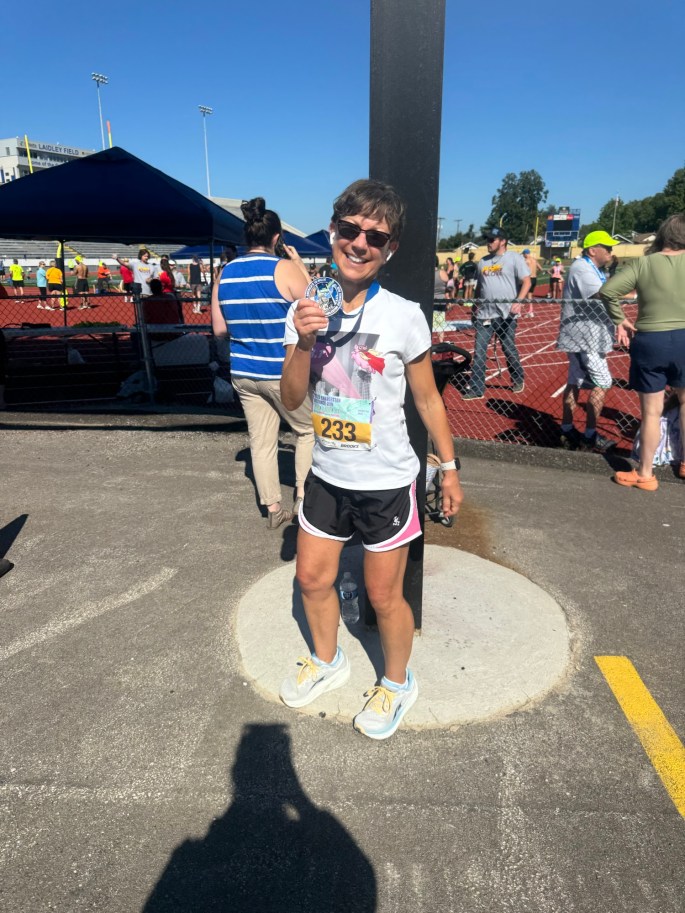
A smiling woman holding a medal, wearing athletic clothing, stands next to a post in a race finish area, with a crowd and tents in the background.
Feeling so grateful for my family, love, and support at the end of the CDC.

Running Differently, Running with Gratitude

Ten years later, I run differently. I take walk breaks when needed, and I’m grateful to still have my health. Running gives me energy, provides structure, and fills me with joy and purpose. Not every run is great, but each mile contributes to my community by keeping me connected to local races and to my own mental, physical, and spiritual well-being. Running also pulls me outdoors, connecting me with the Creator and with the delight of each season.

Never Give Up—In Running or in Life

Running the CDC reinforced the lesson of never giving up. I may be entering a new decade, but that doesn’t mean I have to give up striving for new goals—even if it means crawling to achieve them. Perhaps I’ll see you at the MUM. If not, I hope you’ll create your own journey. Either way, I invite you to celebrate with me—by supporting Branches or by committing to your own goal. Adjust as you must, but never give up. Step by step, with fortitude, tenacity, and a few deep breaths, you can do it.
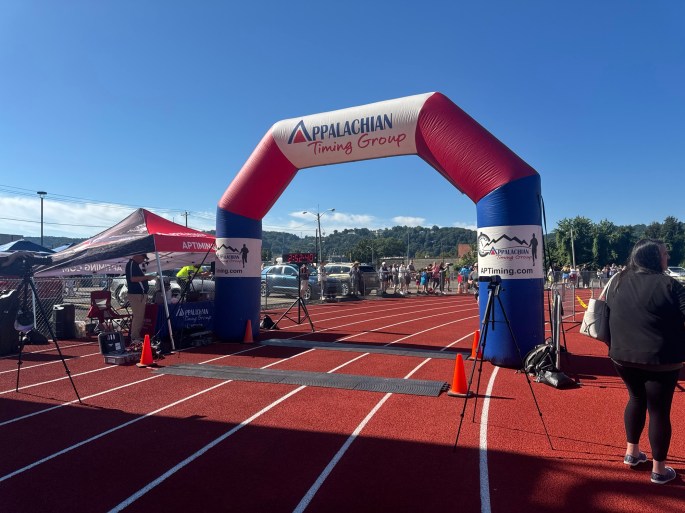
A running event starting line with an inflatable arch labeled 'Appalachian Timing Group' on a red track, set against a clear blue sky and distant hills.
Never give up! You can cross whatever finish line in life you need to cross!

Exploring Meeks Mountain Trails: Miles of Magic

“Time spent among trees is never time wasted.” — Katrina Mayer

A Cool Morning in the Woods

The path is clearly marked.

It was one of those rare cool mornings in July after a long-held heat wave broke. The earthy summer scents of damp ground and musky moss filled the air. The crunch of detritus under our hiking shoes rose as the sounds of traffic on WV 34 faded into the background. 

My dad and I were in our happy place, discovering new trails hidden in plain sight in the woods.  However, it was clear from the start, we were not alone. Imprints of four-footed friends as well as knobby tire tracks indicated an array of outdoor enthusiasts were also enjoying these well-worn paths.

Discovering Meeks Mountain Trails

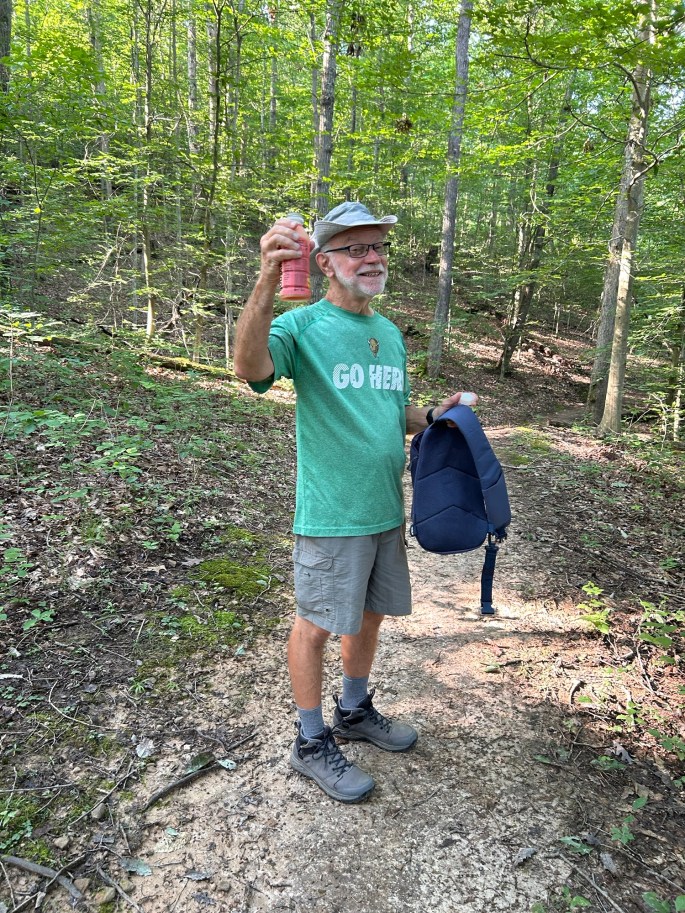
Welcome to Meeks Mountain Trails! (My Dad, Larry Musick, featured in this photo.)

We arrived at Hurricane Park to hike Meeks Mountain Trails, a printed map of all the trails in hand. However, we were unsure where to start since this was our first visit. As luck would have it, we encountered a park worker who enthusiastically explained the trail system—including the way the trails were marked and the level of challenge for each trail. He recommended the red and white trail on our first visit and offered advice for future, more challenging, hikes.

A Community-Built Gem

Photo by Philipp M on Pexels.com

Meeks Mountain Trails is a gem of a trail system close to home.  With more than 34 miles of trails, it is a haven for hikers, runners, mountain bikers, and primitive campers alike. Despite being interconnected, the trails are well-marked, with varying degrees of difficulty and length. It is easy to dip in for a short hike, commit to a long trail run, or tackle a challenging mountain bike route. 

According to the Meeks Mountain Trail Alliance website, the trail project began in 2018 with a desire to increase the health and well-being of the surrounding communities as well as increase opportunities for economic growth. Since then, over 600 volunteers have logged over 35,000 hours building and maintaining trails in cooperation with the city of Hurricane and private landowners, the Meeks family. 

Our First Hike: The Red and White Trail

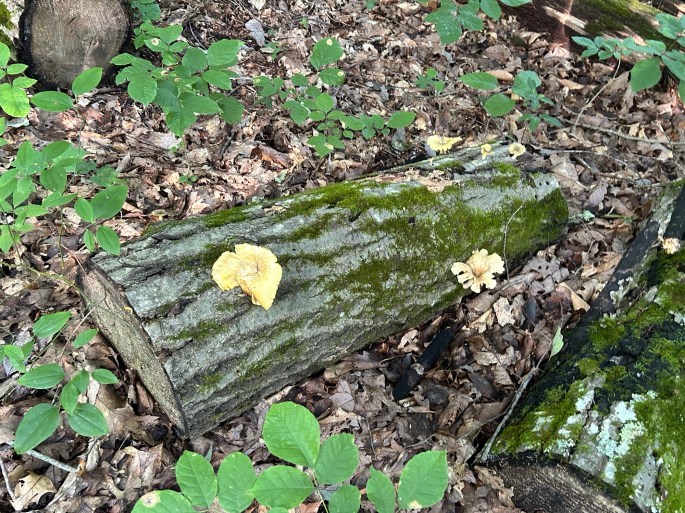
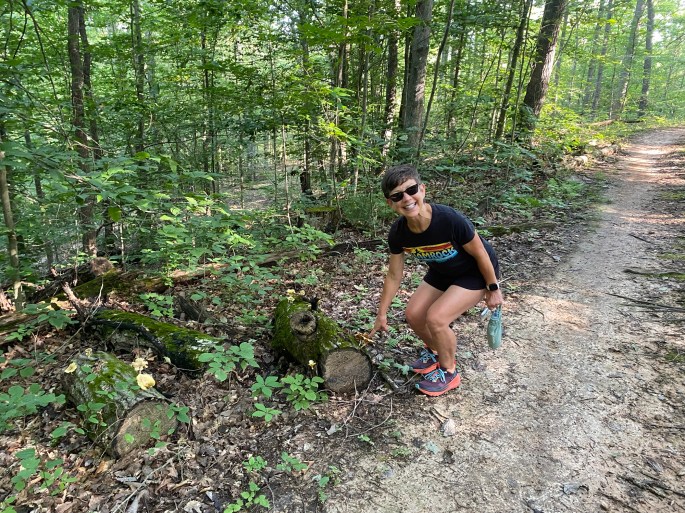
A fallen log with beautiful, flower-like growth on it.

My dad and I followed the park worker’s advice and hiked the red and white trail–a gentle introduction to the Meeks Mountain Trails (MMT) system. This 3.2-mile trail offered us comfortable challenges, with exposed roots, rolling, rocky ascents and descents, a stream crossing, and switchbacks to keep things interesting. We thoroughly enjoyed the dappled morning sunlight as we made our way up, over, and around the trail. We marveled as a mountain biker powered up a sharp, twisting incline. A hesitant dog appeared to balk at the idea of crossing a stream while his running companion tried to coax the dog across, leaving us smiling.

Something for Everyone

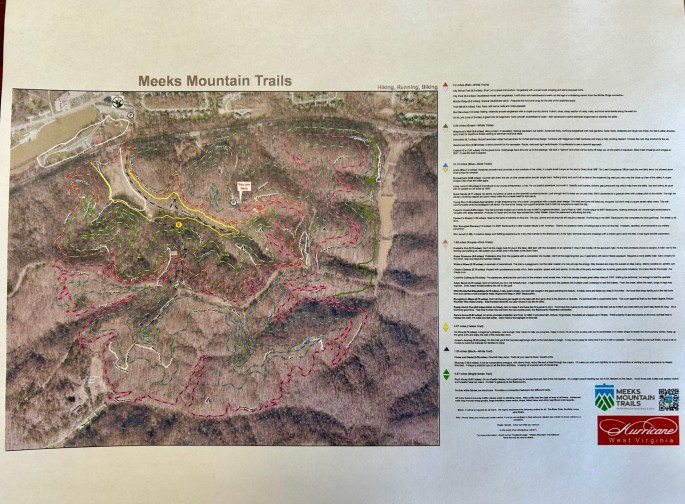
Trail map that can be found online for Meeks Mountain Trails.

The MMTA offers a wide array of trail lengths and challenges, from one mile to over ten miles. It appears to be one of those places in which the more you visit, the more complex and nuanced you can make your outdoor adventure. The trails are well-marked by a color-coded system, but it’s advisable to look over the trail map and descriptions of each trail, found on the MMTA website, before embarking on a Meeks Mountain Trails adventure.

There are trails for beginner-friendly walks, which is what the Hurricane Park employee described to us as family-friendly trails, appropriate for parents with younger children. There are more moderate for those looking to elevate their running, hiking, or biking game, and challenging trails for the more adventurous and skilled. What I most noticed was the diversity of plant life: ferns, moss, lichen, colorful mushrooms and wildflowers, fallen trees teeming with insect life, and deciduous trees of all types reaching for the heavens amidst rocks of varying sizes. 

As my dad and I hiked, we marveled at the large amount of work hours it must have taken to not only build the trails, but also to maintain them.  We admired the work of local scout troops who provided benches in several scenic spots along the path we trod. Most of all, we simply enjoyed the trail, feeling grateful for its existence so close to home.

Tips for a Great Visit

Be sure to pack in water, snacks, bug repellant, or even a picnic lunch!

If you’ve never been to Meeks Mountain Trails, and you are considering visiting it for your next outdoor adventure, there are a few things to keep in mind. First of all, parking is free and easy to access as it is available at Hurricane City Park. The trailhead to all trails is only steps away from the parking lot. Restrooms are also available near the parking lot. 

Before entering the trails, consider bringing: 

  • Tick and mosquito repellent 
  • Proper trail shoes or bike gear 
  • Water, snacks, or even a picnic lunch 
  • Flashlights and/or headlamps if hiking early or late 

As a bonus, you can even support the MMTA by visiting their online shop to purchase official MM gear.

Sharing the Trail

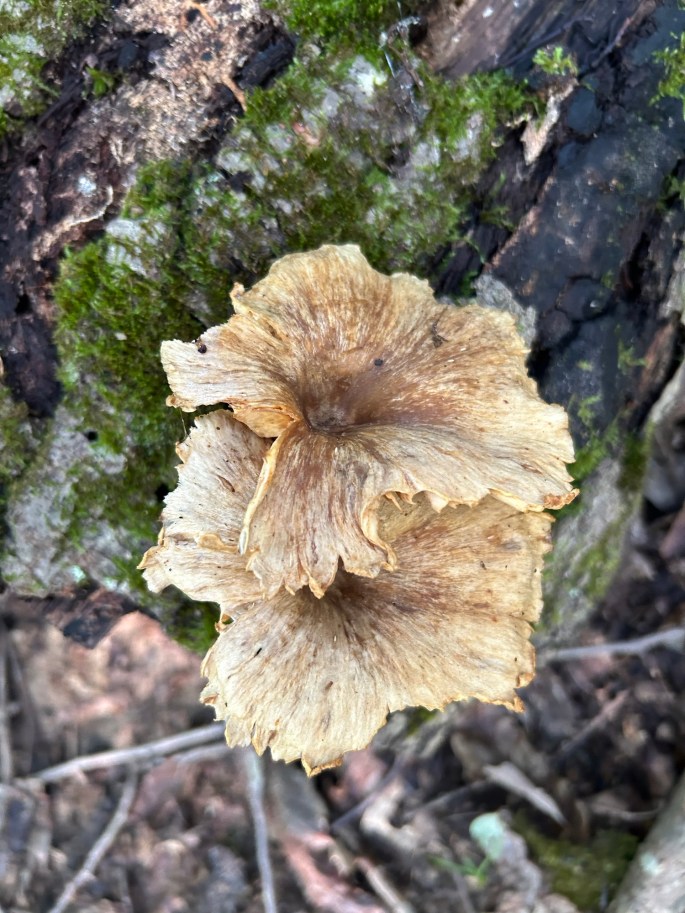
Another one of those flower-like fungi that I found all along the trail.

Additionally, once out on the trail, as my dad and I learned, it is important to be aware of other hikers, runners, and mountain bikers. Maintaining appropriate etiquette allows all outdoor enthusiasts to share and enjoy the trails. This includes stepping aside for faster climbers and bikes, while offering a friendly wave or voiced greeting when passing by someone, especially when passing from behind as you don’t want to startle or scare a fellow adventurer. Lastly, remember to “leave no trace”: pack out whatever you pack in.

Finding Peace Close to Home

My Dad kept teasing me about how frequently I would pause along the trail to take a closer look at something that caught my eye.

You don’t have to be a serious trail runner, hiker, or mountain biker to enjoy Meeks Mountain Trails. These community trails welcome all levels of adventure while giving every visitor the opportunity for peace, solitude, and healthy movement. Best of all, they are right here in our own backyard. Whether you move on two feet or two wheels, consider visiting Meeks Mountain Trails this fall. After all, in the words of John Muir, “Keep close to Nature’s heart . . .and break clear away, once in a while, and climb a mountain or spend a week in the woods. Wash your spirit clean.” This is exactly how I felt as we drove away from our morning spent in the heart of the woods.

In the end, Dad and I agreed, it had been a very good hike, and we looked forward to returning again in the future.

Tamarack: A Cultural Day Trip in West Virginia

As those who have spent time in West Virginia know, this is truly a special place.”-Oliver Luck

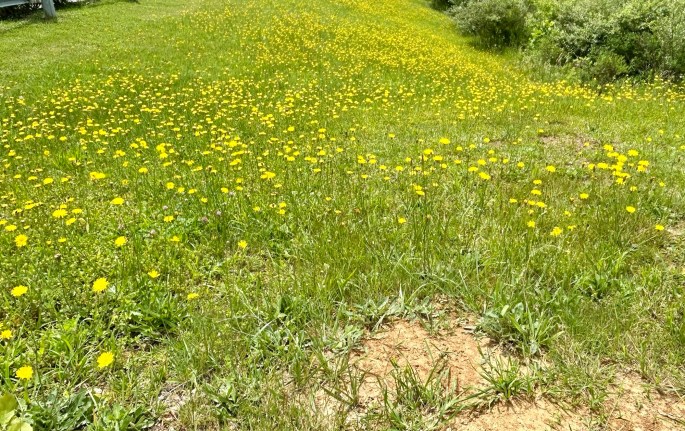
A vibrant field of bright yellow wildflowers blooming in a grassy area.
Yellow wildflowers in bloom along the fields surrounding Tamarack.

A Day Trip Decision 🚗

What started as a casual idea on the drive quickly turned into a relaxing and memorable day in Beckley, WV.

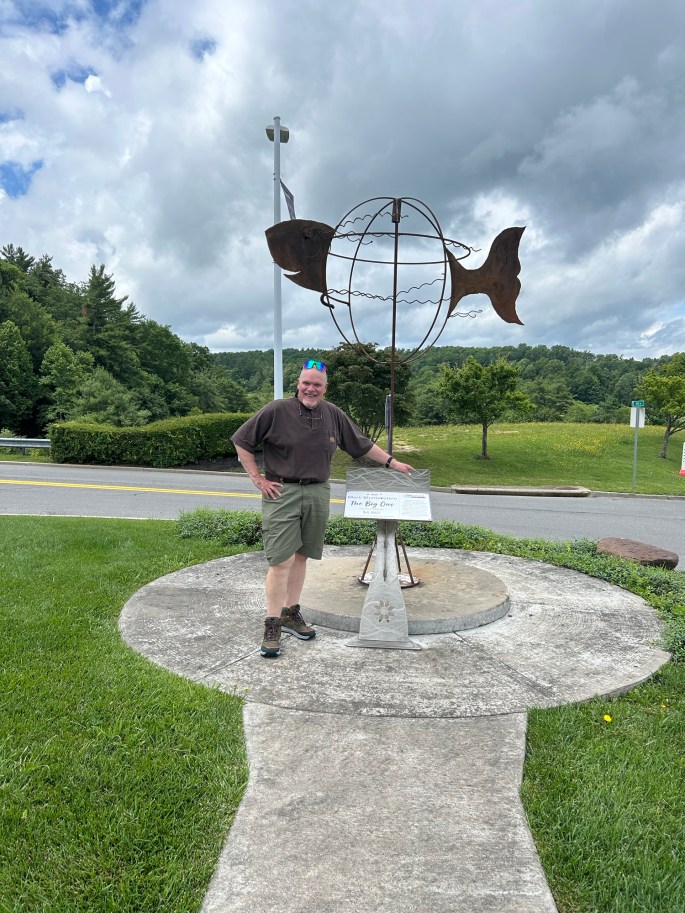
A man stands next to a large fish sculpture on a circular concrete platform, surrounded by grass and trees, under a cloudy sky.
John is standing in front of one of several outdoor sculptures found at Tamarack.

“Do you know where I’d like to go — and not just because we need a restroom break?”

My husband, John, laughed and, of course, asked where.

“Tamarack!”

That choice turned into a relaxing day trip full of fun. We were fortunate to have clear skies as we began the less than two-hour drive to Beckley, WV. On our way, we stopped in Charleston for a tasty brunch at a local restaurant, then continued to Tamarack–discovering it to be so much more than the quick roadside stops we’d made on past trips.

Wildflowers, Swings, and Sculptures 🌸

From fields of yellow blossoms to playful swings and striking outdoor art, Tamarack’s grounds are an experience in themselves.

A field of vibrant yellow wildflowers blooming in a grassy area, with lush greenery surrounding the scene.

Upon arrival, wild flowers bloomed in the fields surrounding the Tamarack’s grounds. John and I wandered the paths, pausing playfully to enjoy one of the West Virginia swings–part of the collections of swings installed at scenic spots in WV. This one looked over bright yellow blossoms dancing in the breeze..

Nearby stood a number of outdoor sculptures, each one well-crafted, yet playful, celebrating the wonders and beauty of WV. These pieces, scattered along a walking path, drew plenty of attention from visitors and added to the sense that Tamarack is far more than a rest stop–it’s a vibrant center for state arts, crafts, and cuisines.

The Vision Behind Tamarack 👷‍♂️

Born from a 1989 initiative, Tamarack set out to showcase “The Best of West Virginia” — and it continues that mission today.

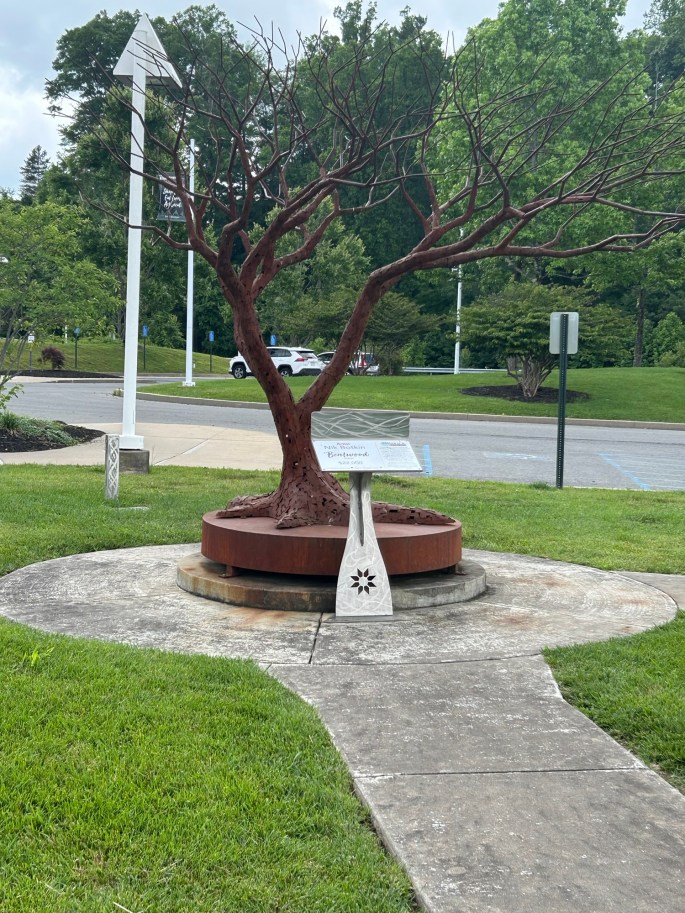
A sculptural tree installation with bare branches, situated on a circular stone base, with a descriptive plaque nearby.
One of several outdoor sculptures found around the entrance of Tamarack.

Envisioned in 1989 under Governor Gaston Caperton and opened in the mid-1990s, Tamarack was created as a way to promote and showcase WV artisans and boost local economy. Its mission is to feature the “Best of West Virginia” while fostering artistic excellence. Tamarack connects the Mountain State to the broader Appalachian community, celebrating heritage, pride, and craftsmanship. 

An Immersive Artistic Experience 🎨

Step inside and discover pottery, textiles, jewelry, woodworking, and edible creations — all crafted by local hands.

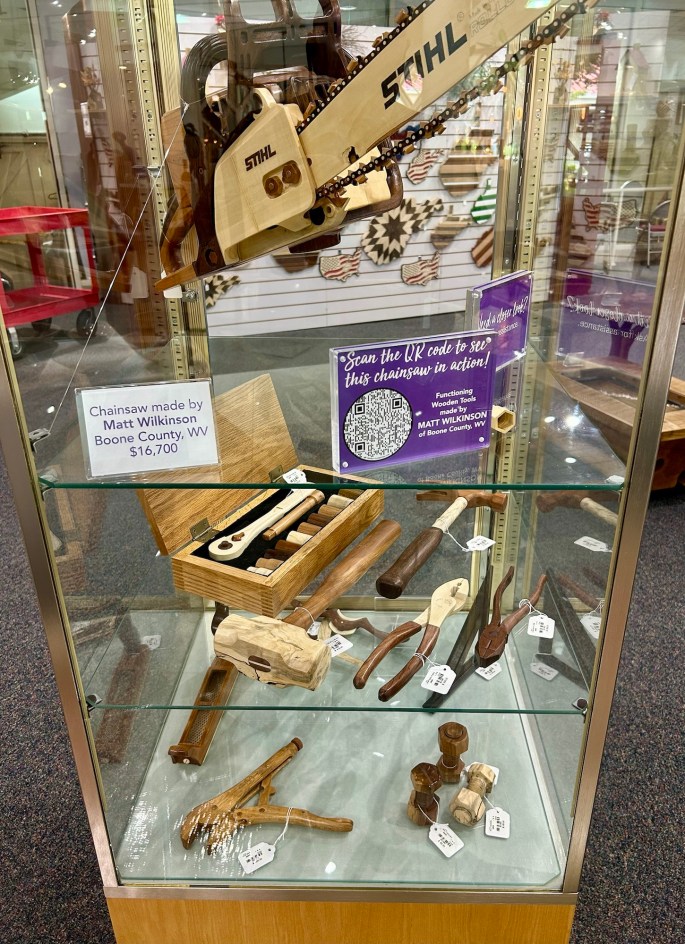
Showcase of handcrafted wooden tools and a chainsaw sculpture made by Matt Wilkinson from Boone County, WV, displayed in a glass case.
Amazing, one-of-a-kind craftsmanship can be found at Tamarack.

Inside, visitors are immersed in this time honored tradition. Displays feature pottery–including WV-made Fiestaware–woodworking, textiles, jewelry, painting, sketches, sculptures, and so much more. Locally produced treats abound: craft beers and ciders, wines, honey, syrups, jams, and even pet treats. Each item goes through a juried selection process, with artists submitting applications in hopes of earning the coveted title “Juried Artist of Tamarack.” Seasonal gallery exhibitions of local artists rotate by theme, each one planned months in advance.

Flavors of West Virginia 🥓

Whether it’s pepperoni rolls on the go or fried green tomatoes at the café, Tamarack serves up a true taste of the Mountain State.

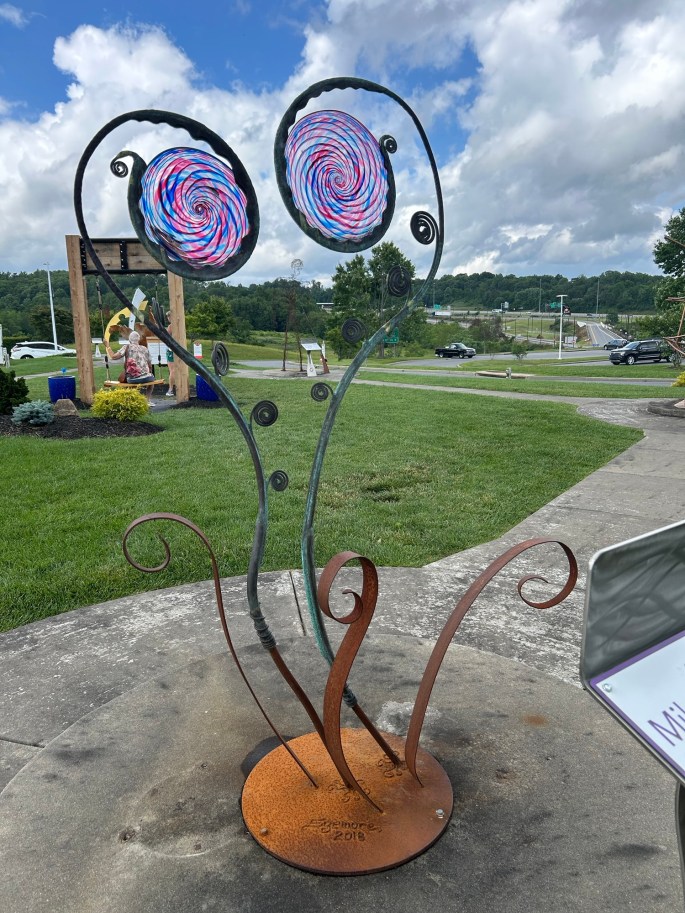
A colorful outdoor metal sculpture featuring two spiral-shaped elements atop slender, twisting stems, set against a grassy landscape and cloudy sky.
An outdoor sculpture at Tamarck.

If you arrive hungry, you’re in luck!  The cafe and quick market stand offer plenty of options. The market stocks cold beverages, ice cream and other sweet treats, snacks–many of which are gluten free and/or vegan–and West Virginia’s beloved pepperoni rolls. The cafe’s talented culinary team serves regional and seasonal favorites, such as fried green tomatoes, chicken pot pie, and the classic fried bologna sandwich. Breakfast is served from 9-11 a.m., with lunch/dinner being served from 11 a.m.-7 p.m., Monday through Saturday.  Gluten free and vegan/vegetarian options are available.

Live Music and Events 🪕

From courtyard concerts to seasonal festivals, Tamarack is alive with performances, artist demos, and community celebrations.

Vibrant pink flowers blooming amidst green foliage.

Tamarack offers live events throughout the year. Upcoming dates include Courtyard Concerts (Aug. 23, 12-3 pm), Dueling Pianos (Aug. 29), Fall Festival (Sept. 14), plus numerous artist demonstrations and book signings. 

An Afternoon Well Spent 🛍️

Shopping, chatting with artisans, and soaking up the atmosphere made our visit both inspiring and fun.

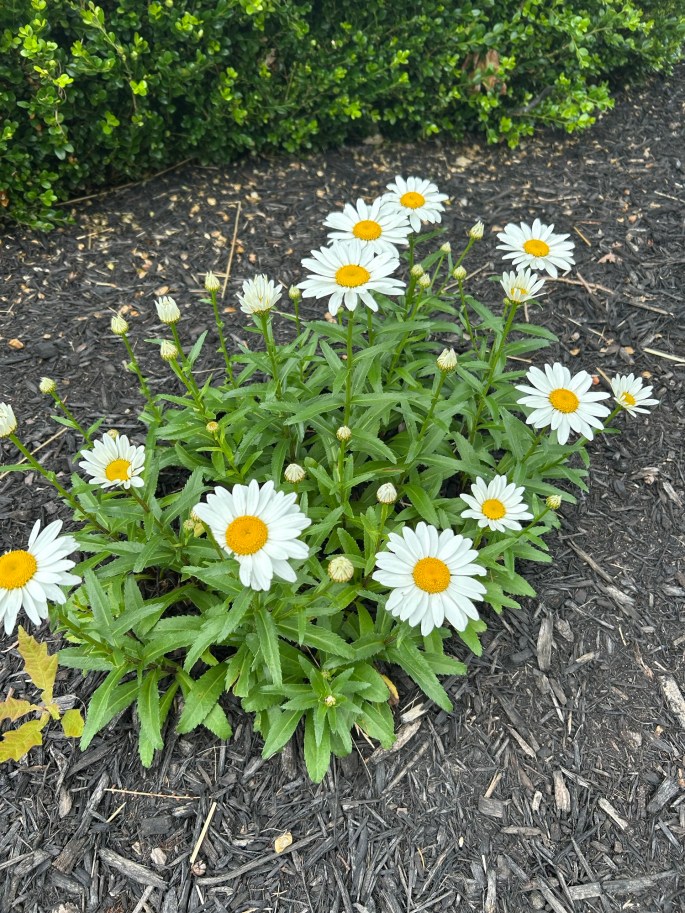
A close-up view of white daisies with yellow centers growing in a garden, surrounded by dark mulch and green foliage.

All in all, John and I spent a lovely afternoon strolling the gallery halls, shopping local artisans’ booths, and chatting with artists and staff. We picked up a few gifts and enjoyed admiring the plethora of regional talent. We even decided it would be the perfect spot for one-stop Christmas shopping.

If you are looking for a day-trip adventure within easy driving distance, consider visiting the Tamarack. Whether you love shopping, savor good food, appreciate art, or simply enjoy soaking up the atmosphere as John and I do, Tamarack is a cultural and creative escape close to home! 

Beyond Tamarack: Exploring Beckley

Pair your visit with the New River Gorge, Glade Creek Trail, or the Exhibition Coal Mine for a full weekend of adventure.

A rustic wooden side table with a round design featuring a dark finish and metal accents, standing on a carpeted surface.
A table handcrafted from a bourbon barrel for sale at the Tamarack.

If you want to make the weekend of it, Beckley offers plenty nearby:  the stunning New River Gorge National Park, Glade Creek Trail, Exhibition Coal Mine, historic landmark of Foster’s Main Street Tavern,  unique and local restaurants, and The Resort at Glade Springs  All told, they make for a weekend full of fun, flavor, and Appalachian charm.


A Perfect Getaway: Discovering Acadia National Park

“Keep close to Nature’s heart . . . and break clear away, once in a while, and climb a mountain or spend a week in the woods. Wash your spirit clean.”–John Muir 

A Place Where Mountains Meet the Sea ⛰️

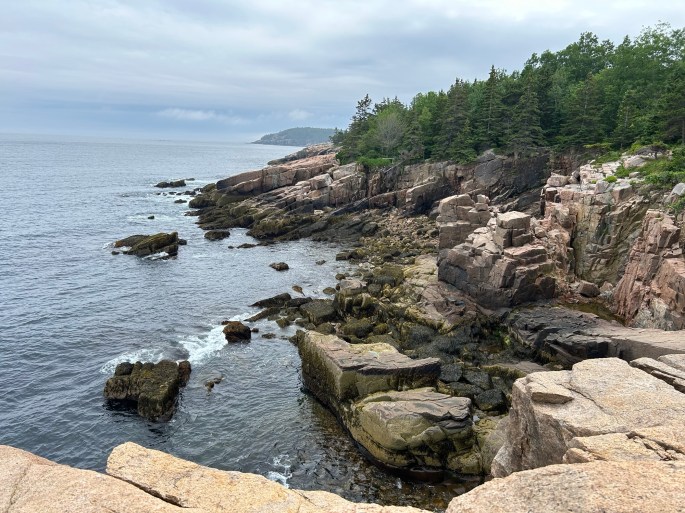
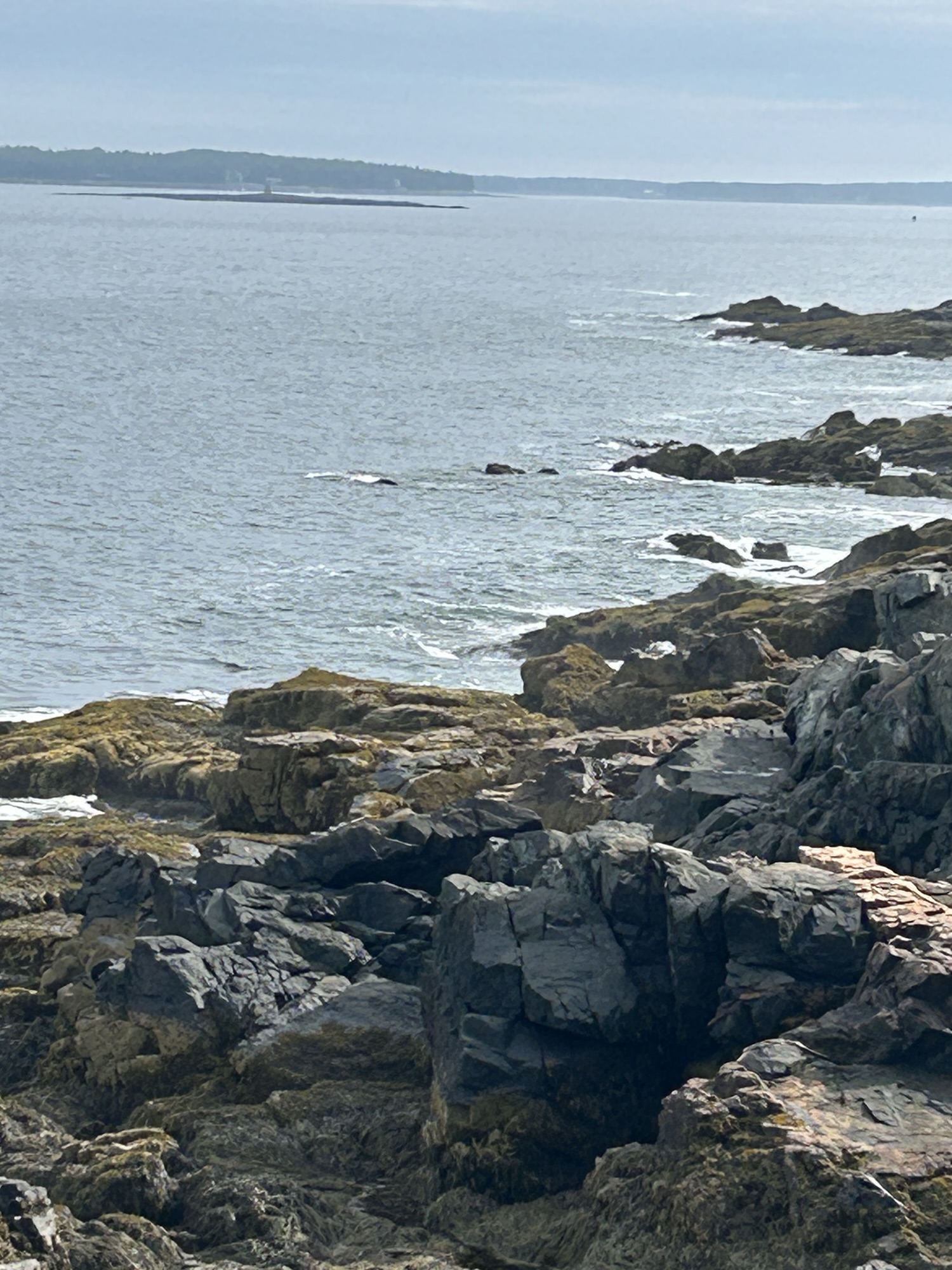
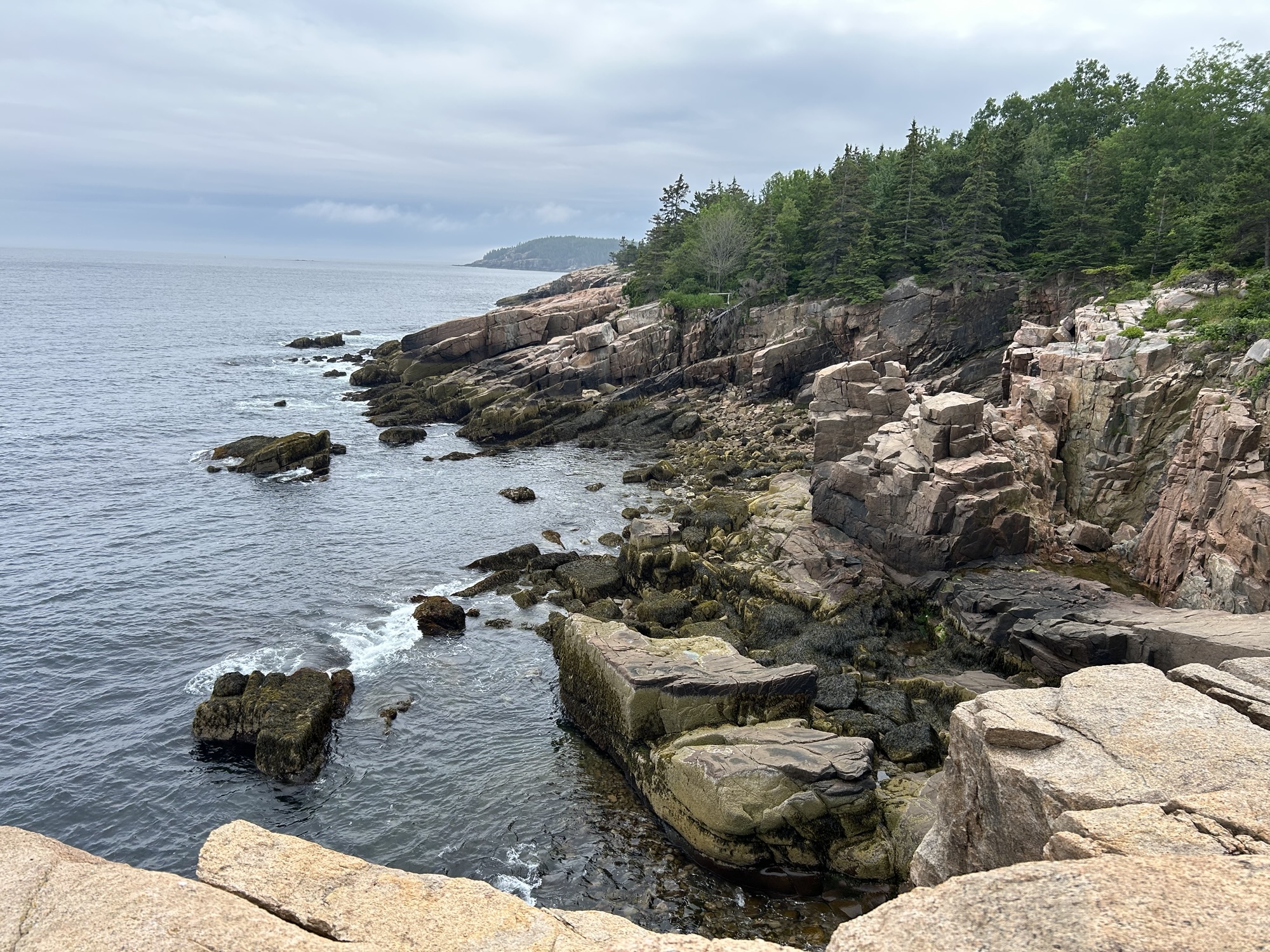
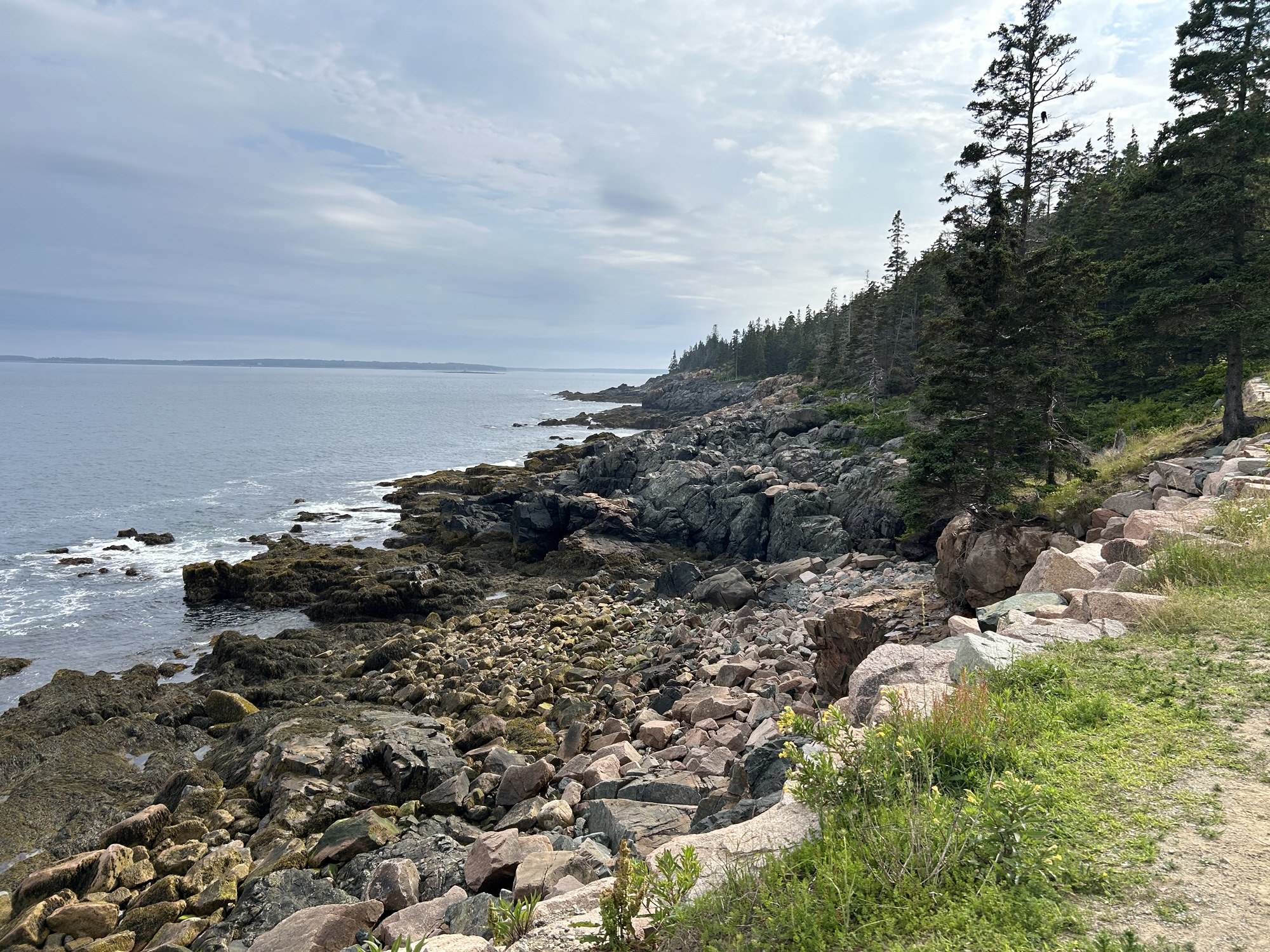
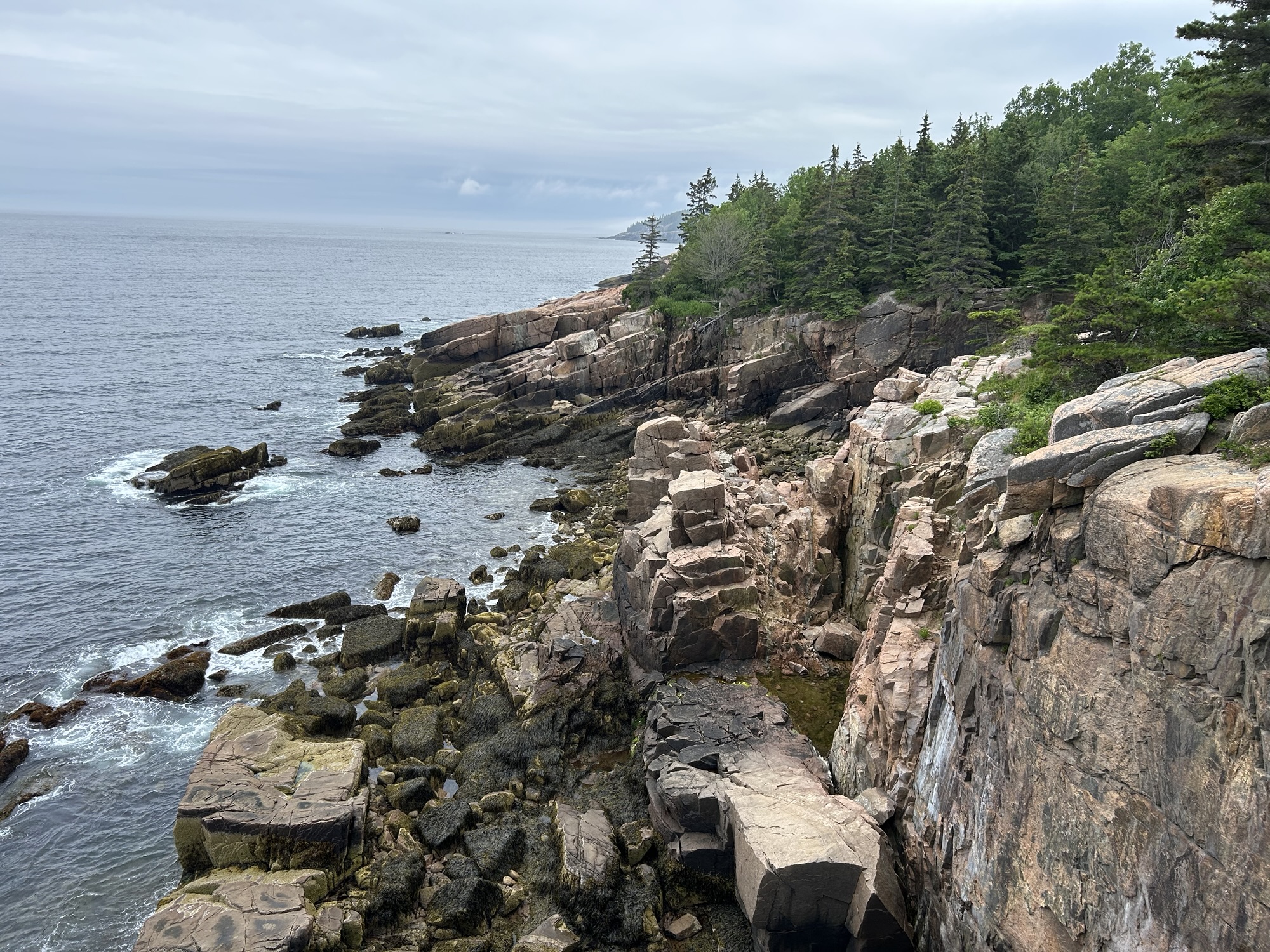
Rocky coastline of Acadia National Park with trees and calm sea under a cloudy sky.
One of the views along Park Loop Road in Acadia National Park.

“I heard that you’re heading to Acadia, too, this summer!  When are you going?”

That casual question was our first clue about Acadia’s dual nature—a place where the ocean meets the mountains and where natural wonder collides with popularity. John, my husband, and I hadn’t realized, when planning our trip, that Acadia National Park is one of the most visited parks in the U.S. 

Why Acadia Draws Millions 🌄

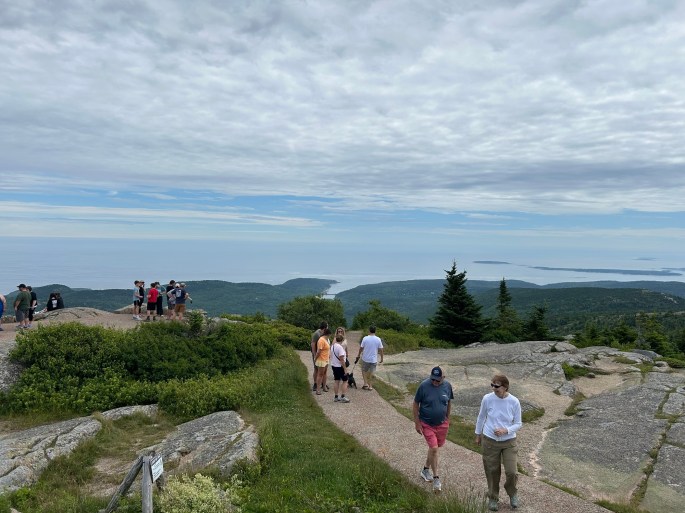
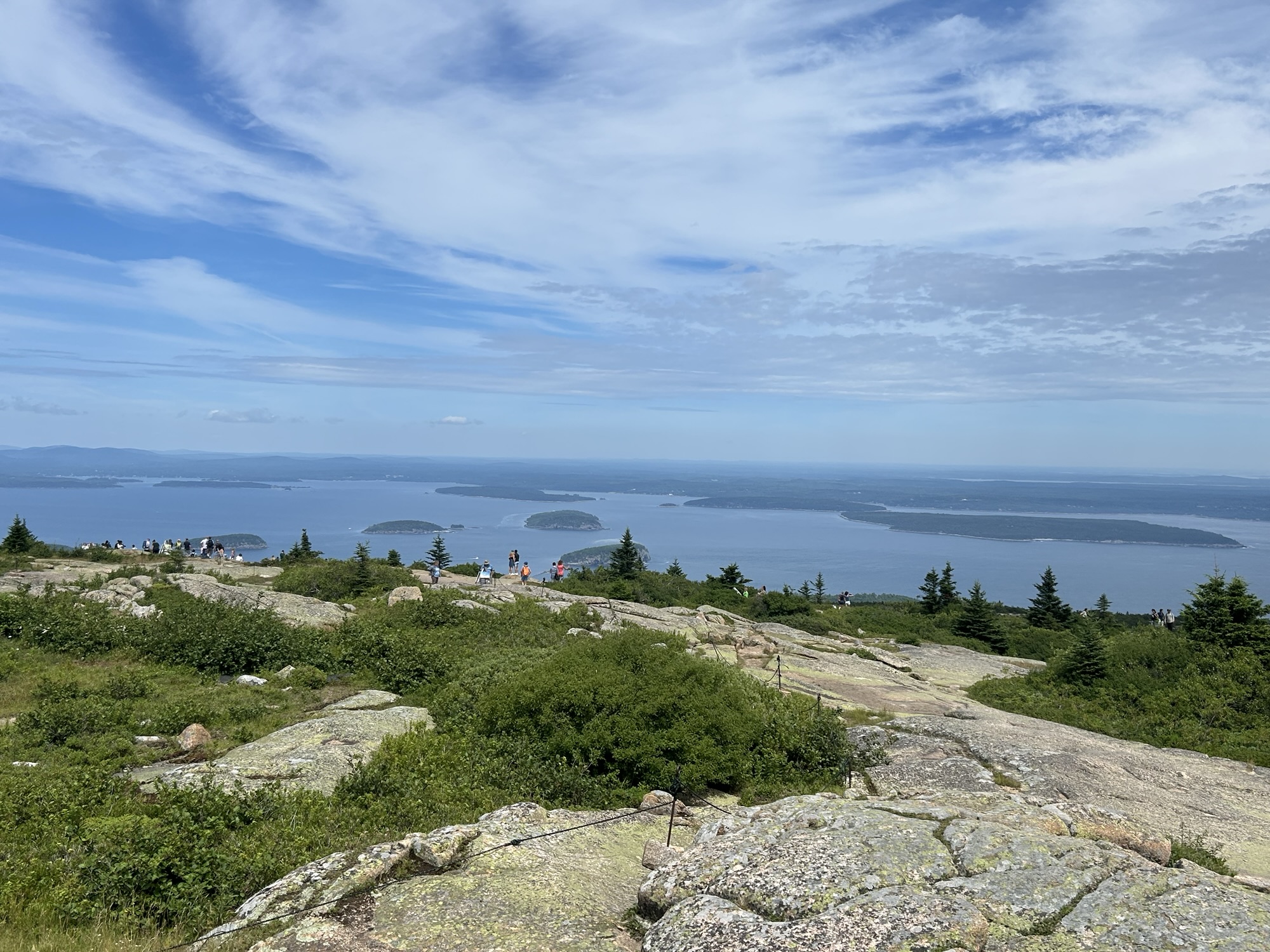
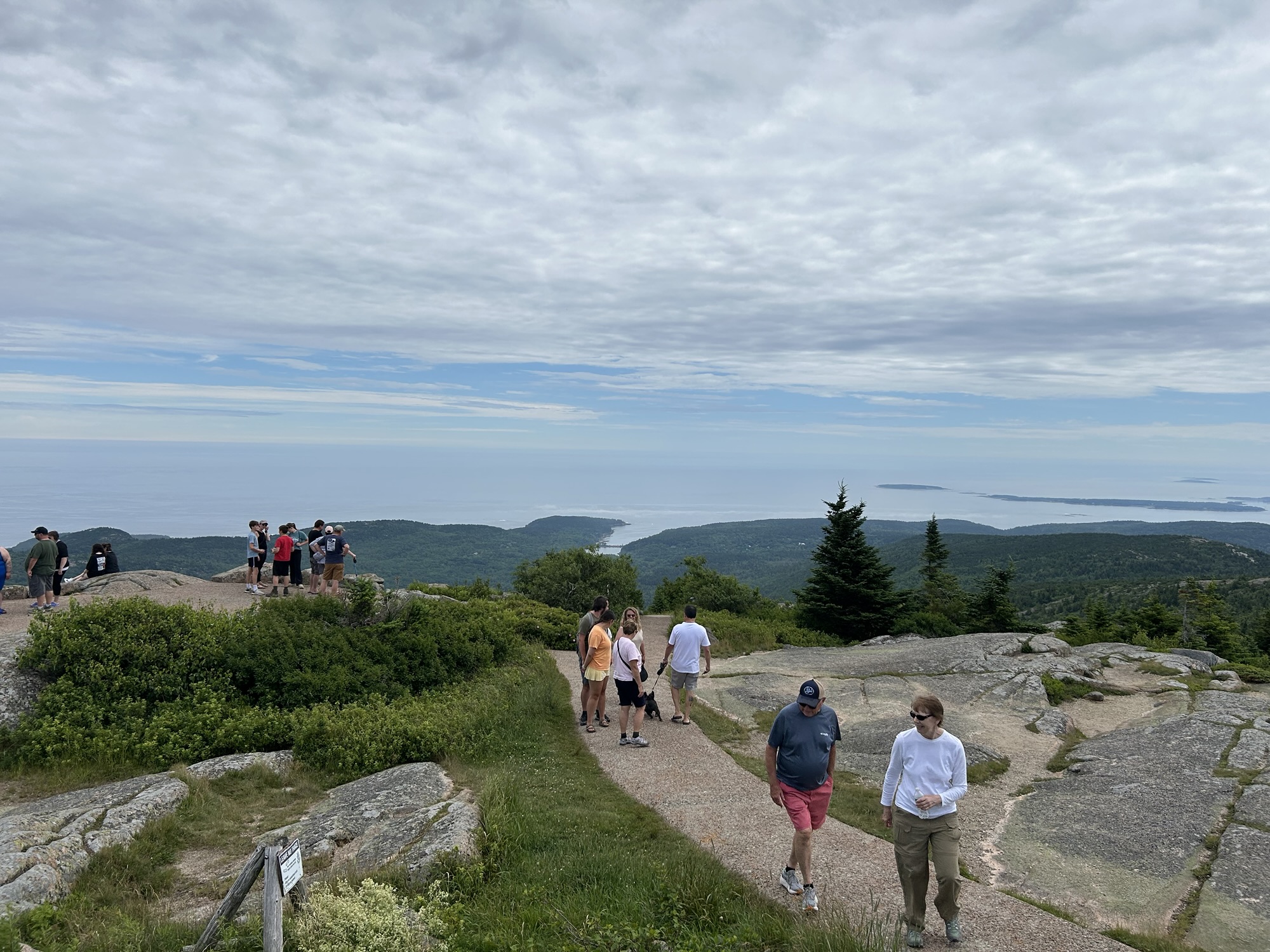
A group of hikers enjoying the scenic views from the summit of Cadillac Mountain in Acadia National Park, with lush greenery and ocean in the background under a cloudy sky.
View from atop Cadillac Mountain in Acadia National Park.

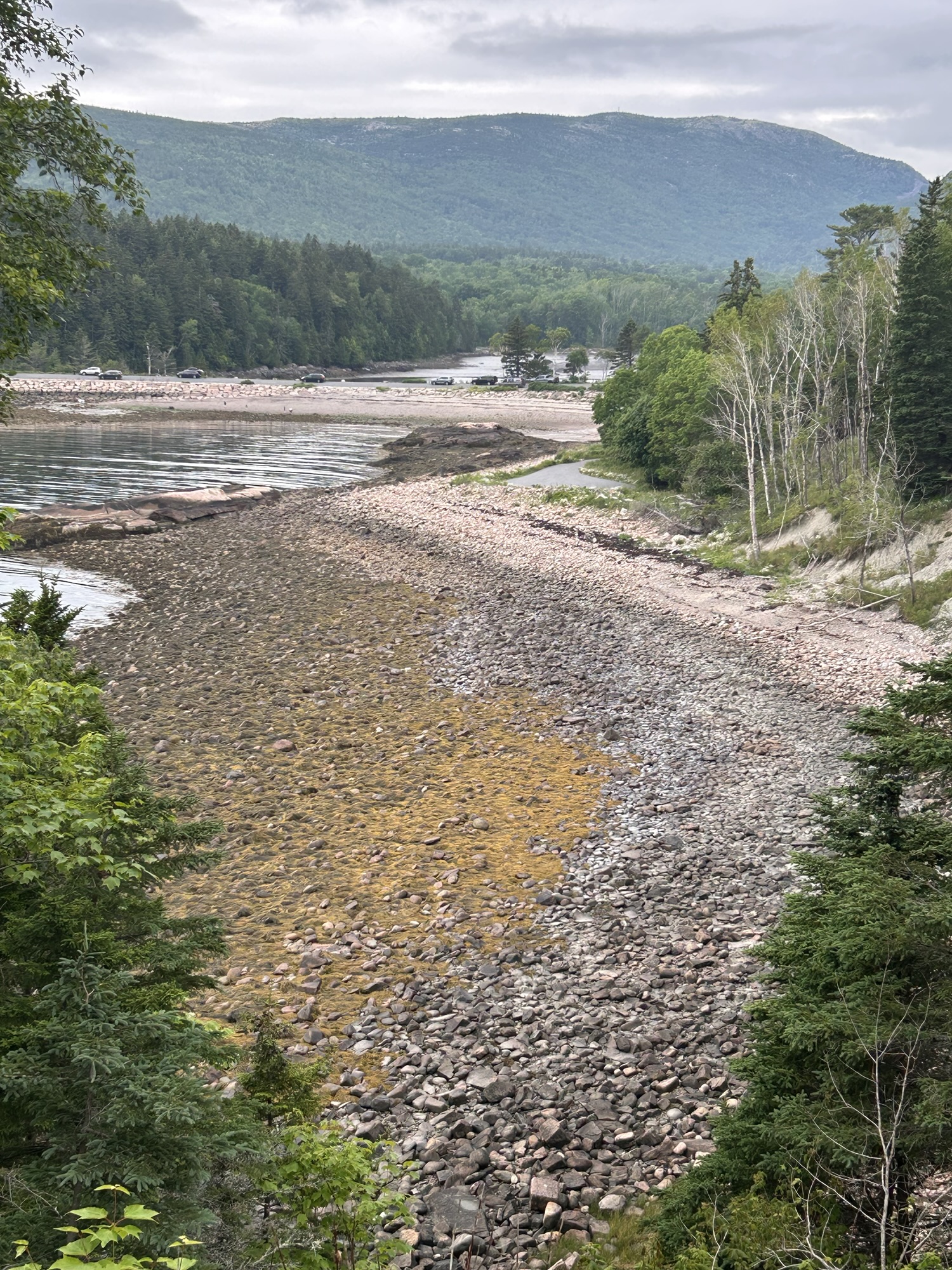
We now know why! With its dramatic coastlines, granite peaks, and network of trails, it’s no surprise Acadia draws over four million visitors a year, especially during July through September. Few places offer so much to do in a day: bike/jog/walk trails built by a millionaire at sunrise, summit a picturesque mountain, stroll a rocky shoreline, cross a tidal land bridge, and end the evening with a sunset dinner overlooking the bay

According to the National Park Service, Acadia ranks among the top-ten most visited national parks. Its compact size—about 50,000 acres—makes many attractions easily accessible. John and I spent five days exploring Acadia and Mount Desert Island, the largest island off the Maine coast encompassed within the park. Though we experienced several highlights, we left feeling we’d only scratched the surface. Therefore, we are already planning a return next summer.

A Cozy Stay in the Woods 🦌

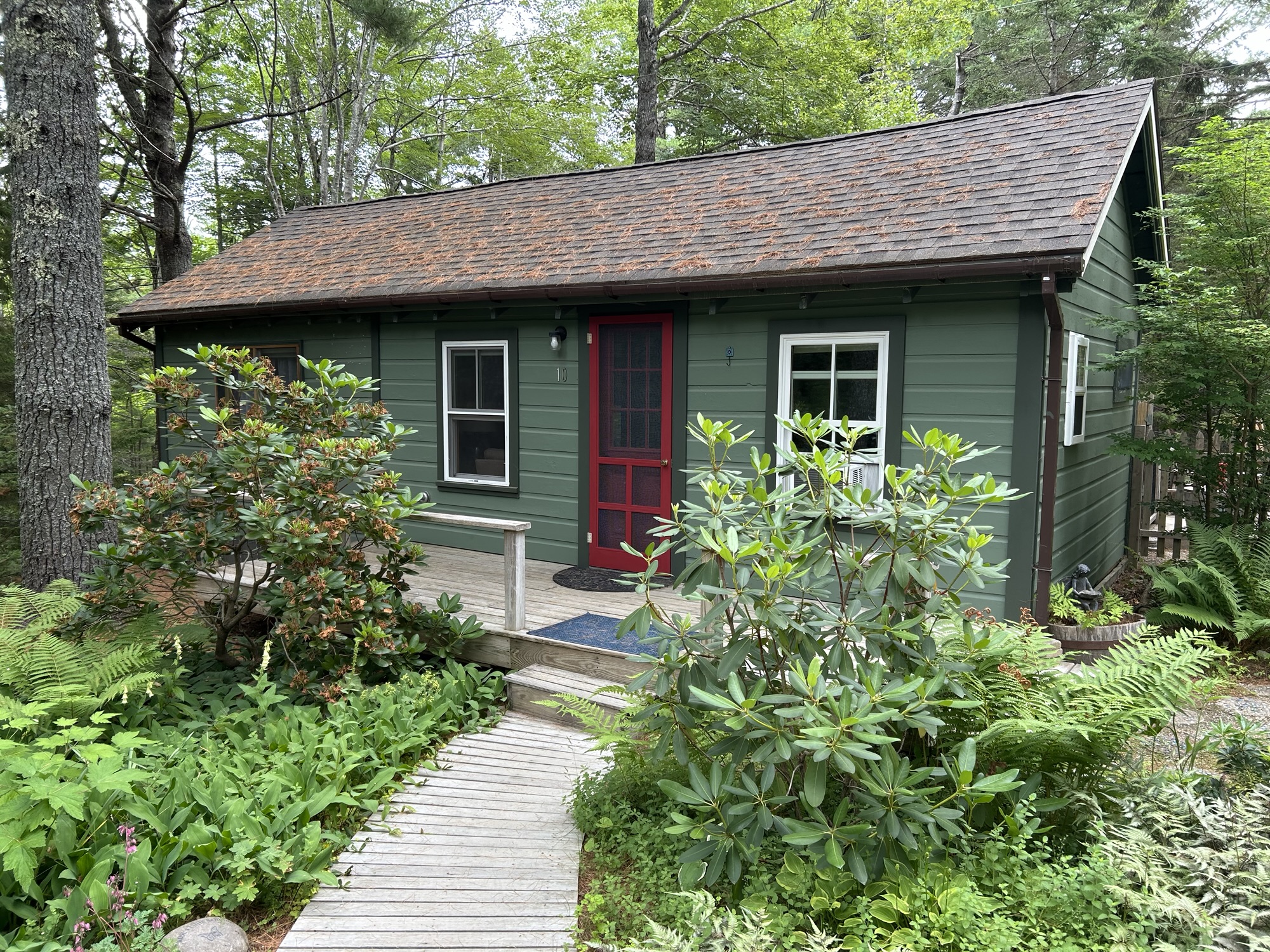
Our cozy cabin in the woods of Mount Desert Island, perfectly situated to all things Acadia.

We stayed in a cozy cabin, we found on VRBO, surrounded by acres of woods. However, in less than a three-minute drive, we were driving along a major route central to Acadia and the surrounding areas. In fact, its central location gave us short, easy access to major attractions, trails, and dining options.

Scenic Drives and Iconic Sights 🚘

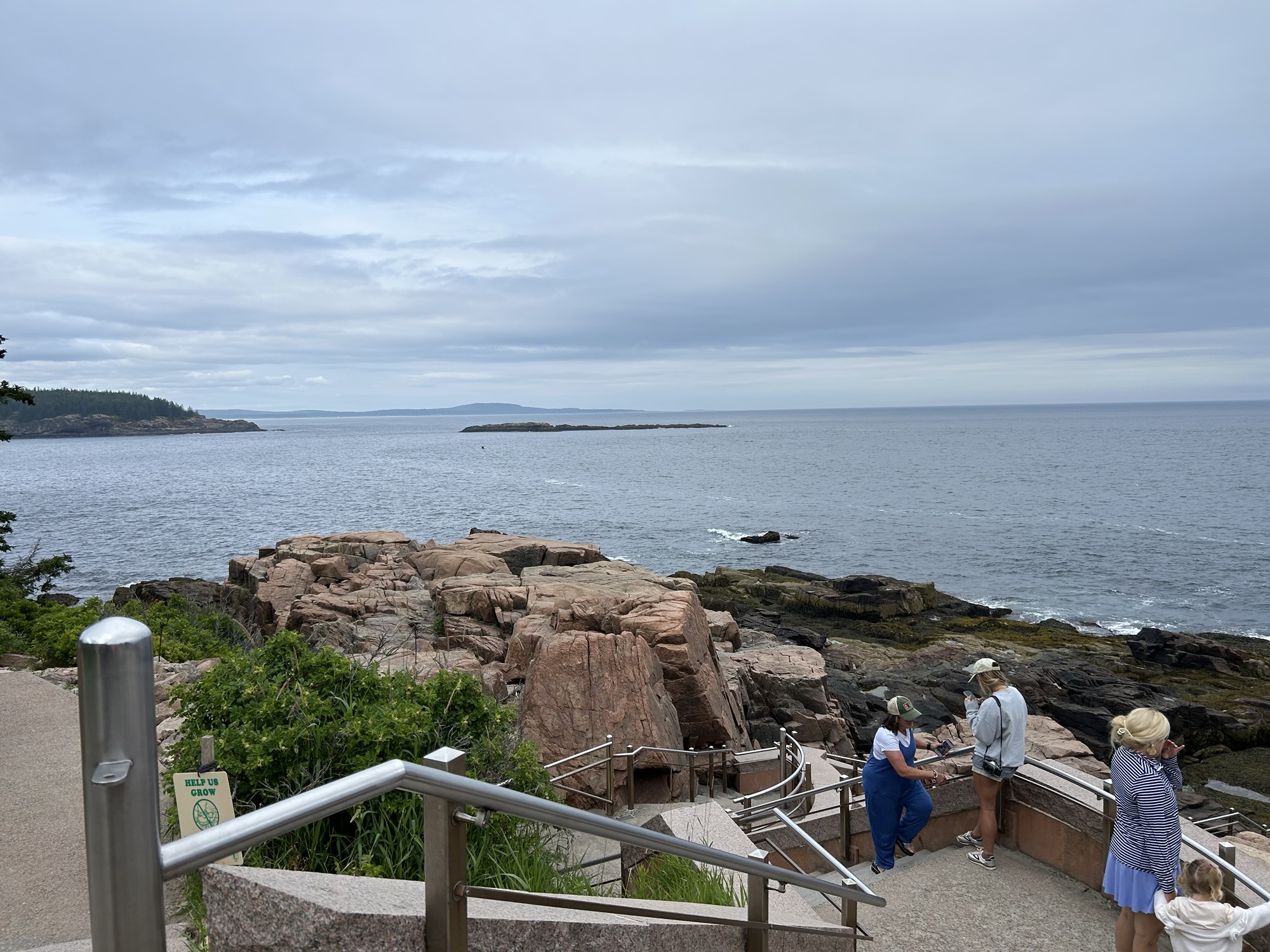
The views along Park Loop Road were spectacularly stunning.

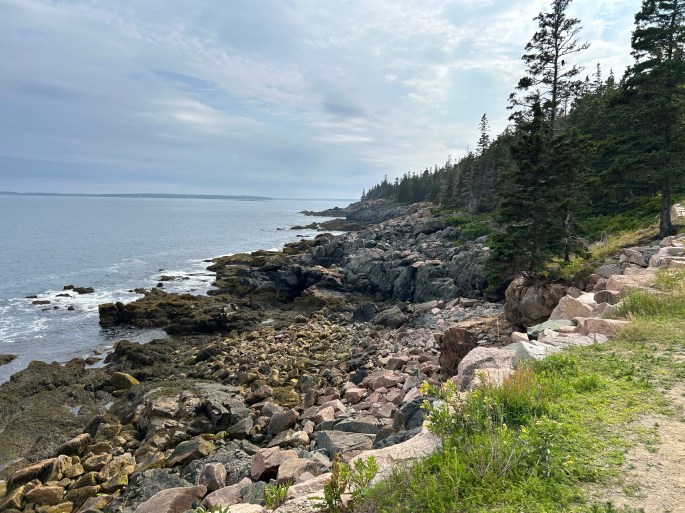
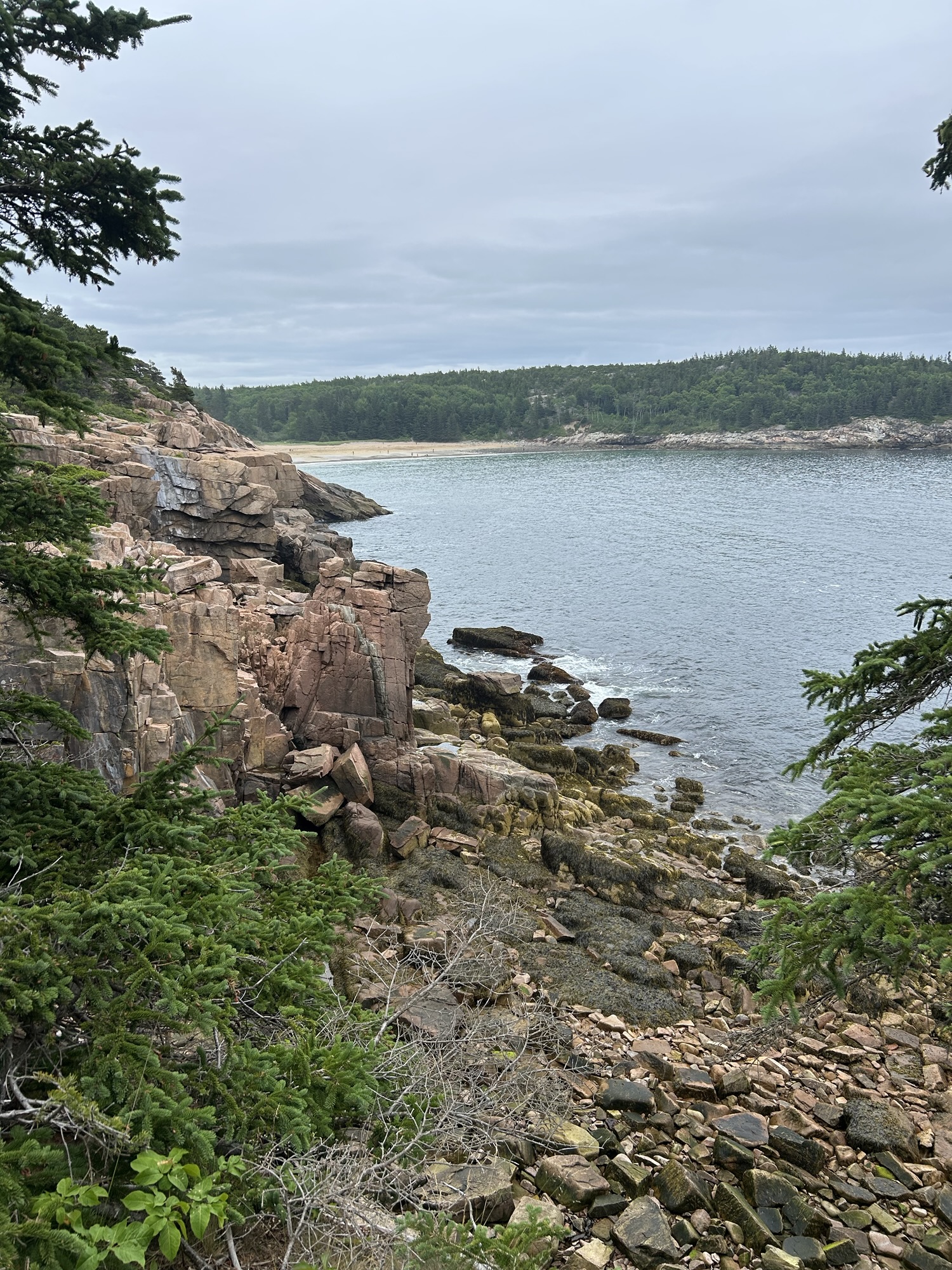
One of our favorite parts of our trip was driving the scenic 27-mile Park Loop Road. We used a narrated app that provided directions, history, and geology of the surrounding areas as we drove, taking in spectacular vistas. Stops included Sand Beach, Thunder Hole, and Otter Cliffs to name a few. We spent the day hiking and sightseeing along the sublime beauty of the route—a perfect introduction for first-time visitors. The downside?  The park road is heavily trafficked, especially midday, so parking can be a challenge for some stops.

Peace and Solitude on the Carriage Roads 🌅

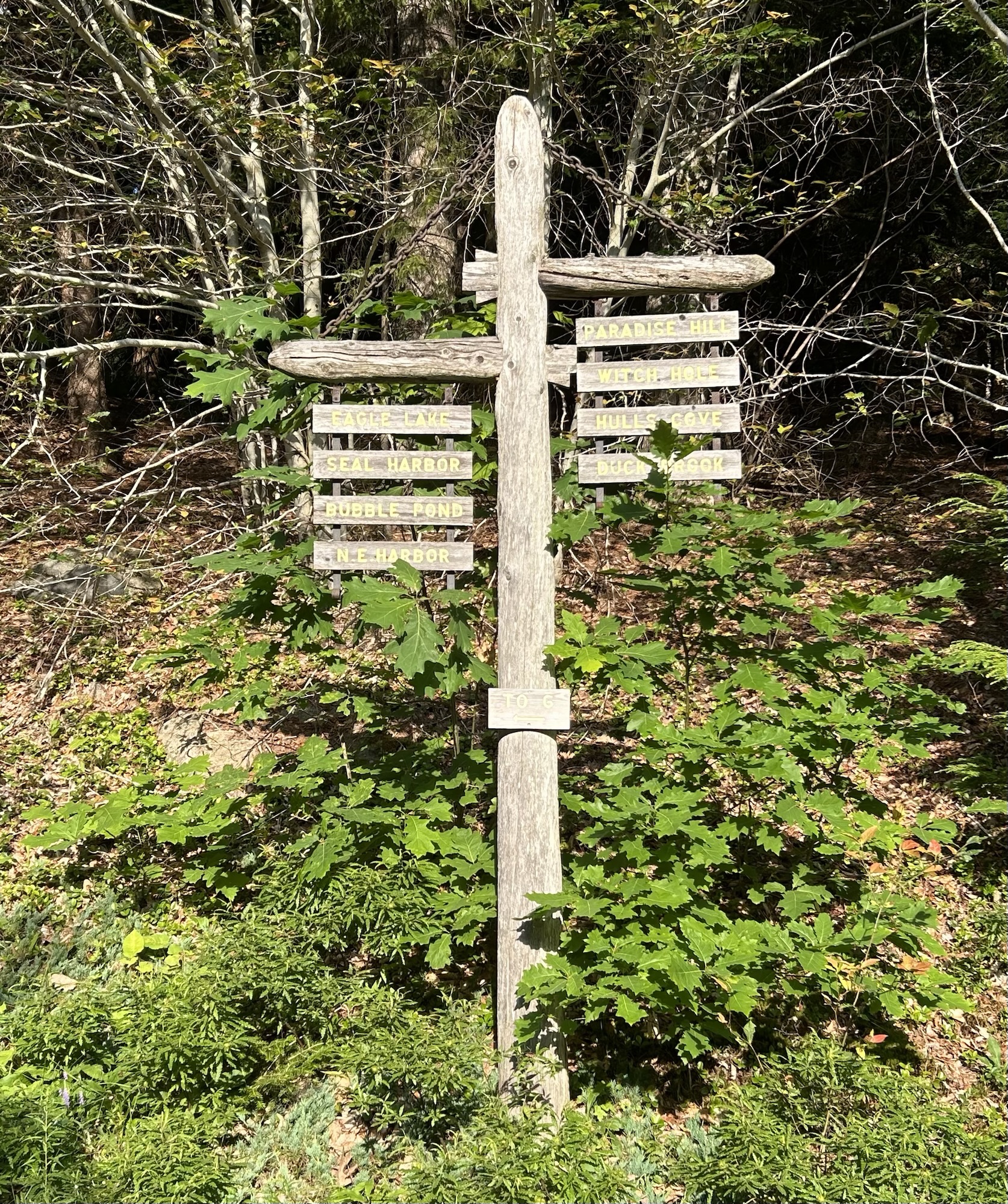
I was fortunate to run Eagle Lake Loop each morning, one of the numerous paths that make up the Carriage Roads of Acadia National Park.

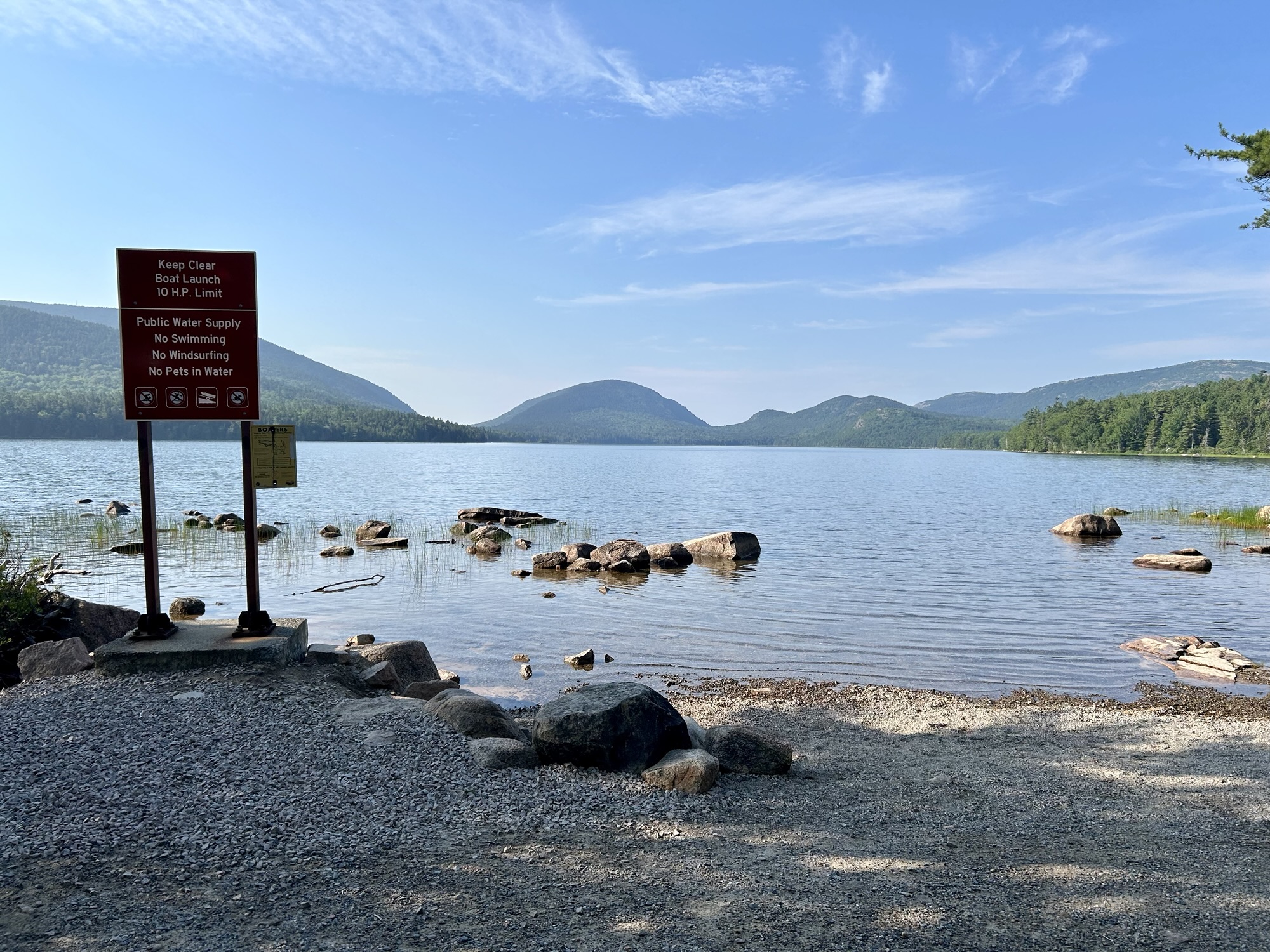
Most mornings, I ran on the peaceful Carriage Roads—45 miles of tree-lined trails donated by John D. Rockefeller Jr. originally built for horse-drawn carriages. These 16-foot-wide gravel paths follow the land’s natural contours and were built to preserve the line of hillsides, protect trees, and align with the landscape contour. The trails offer scenic views and safe, car-free routes for walkers, joggers, cyclists, and cross-country skiers. Additionally, several trails permit horseback riding. The potential downside to these peaceful and winding trails is that parking is limited at some trailheads and fills up quickly. Additionally, cell service is spotty, so plan ahead with trail maps.

Reflections at Jordan Pond 🥾

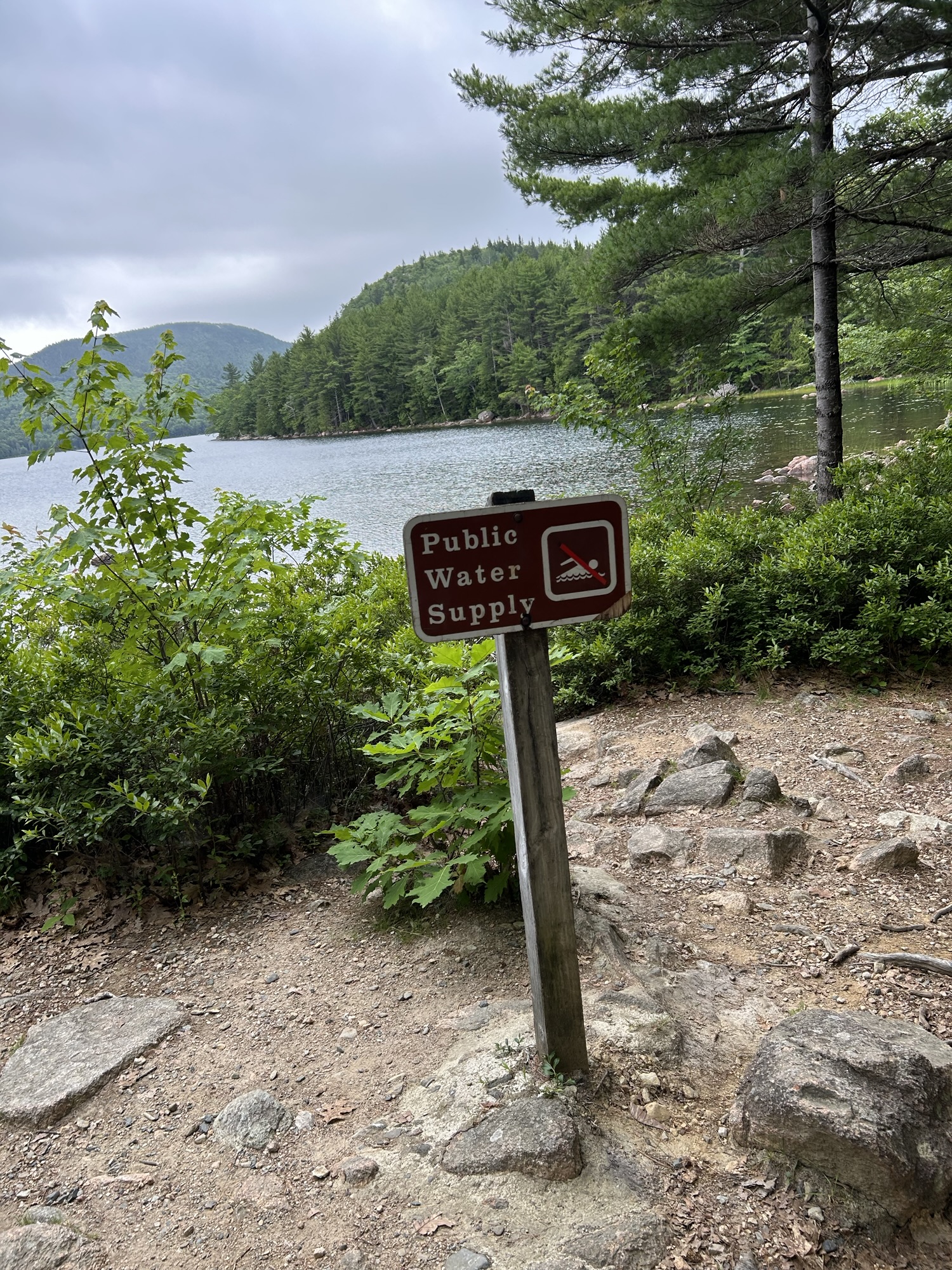
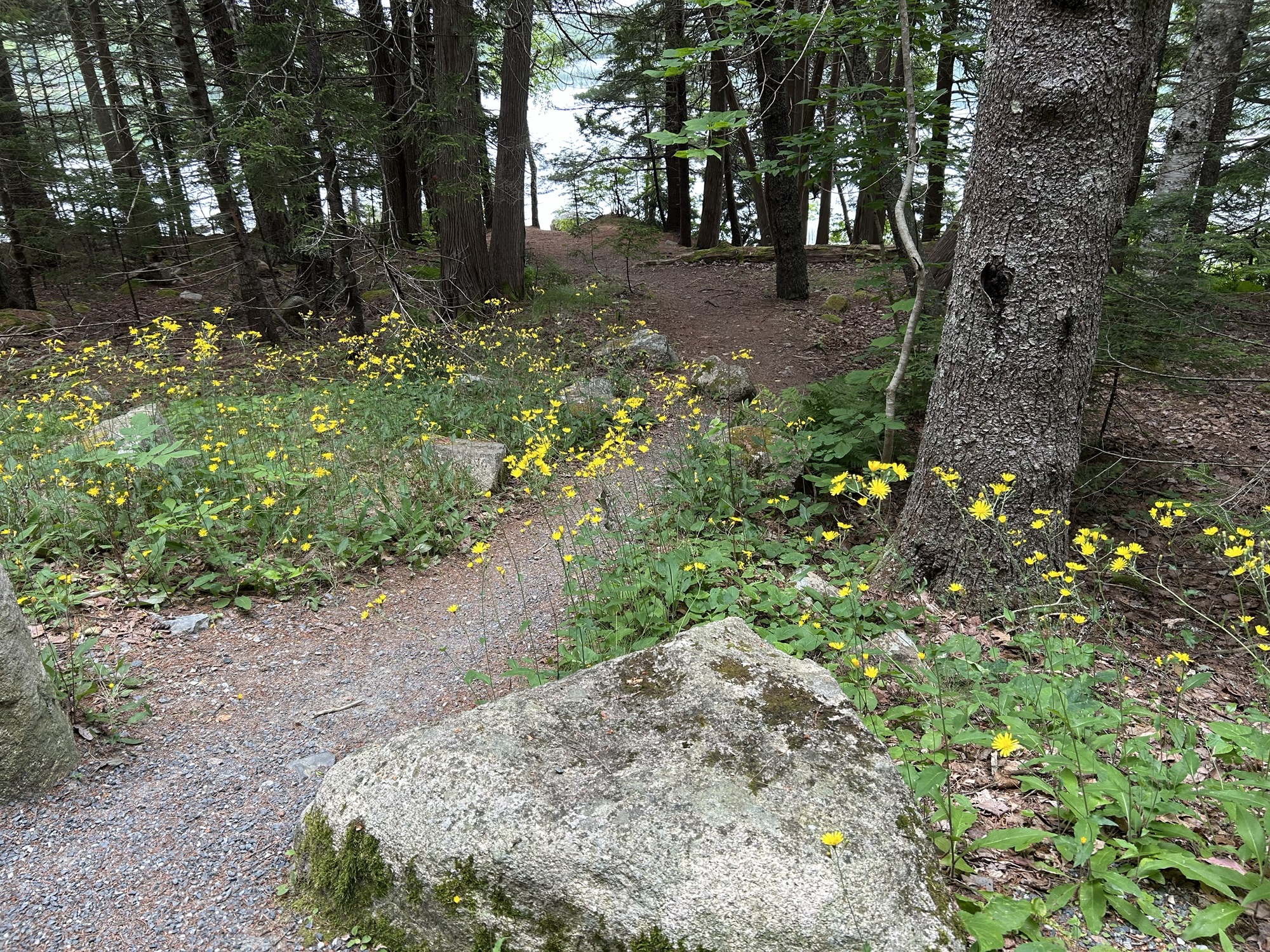
The water of Jordan Pond, and its trails, were pristine despite the foot traffic.

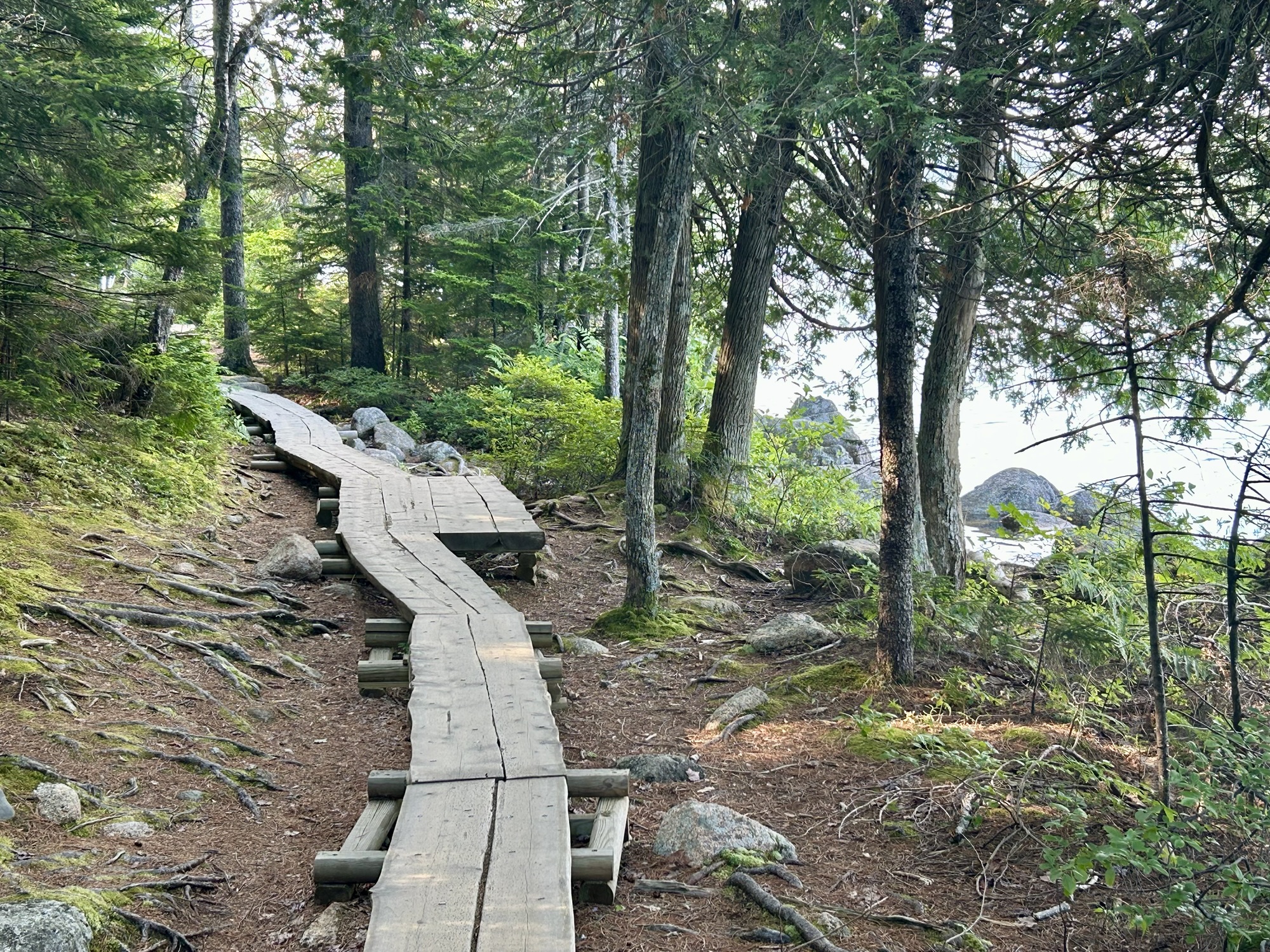
Another favorite site John and I enjoyed was the 3.3-mile Jordan Pond loop—a mostly flat trail with boardwalks and views of the Bubble Mountains reflected in crystal-clear water. In fact, swimming is prohibited to preserve its purity. At the trail’s end is the popular Jordan Pond House, renowned for its quintessential popovers as well as other refreshments/snacks. As with many Acadia spots, prepare for long waits for food and crowded trails during peak hours.

Cadillac Mountain’s Unforgettable Views 🌄

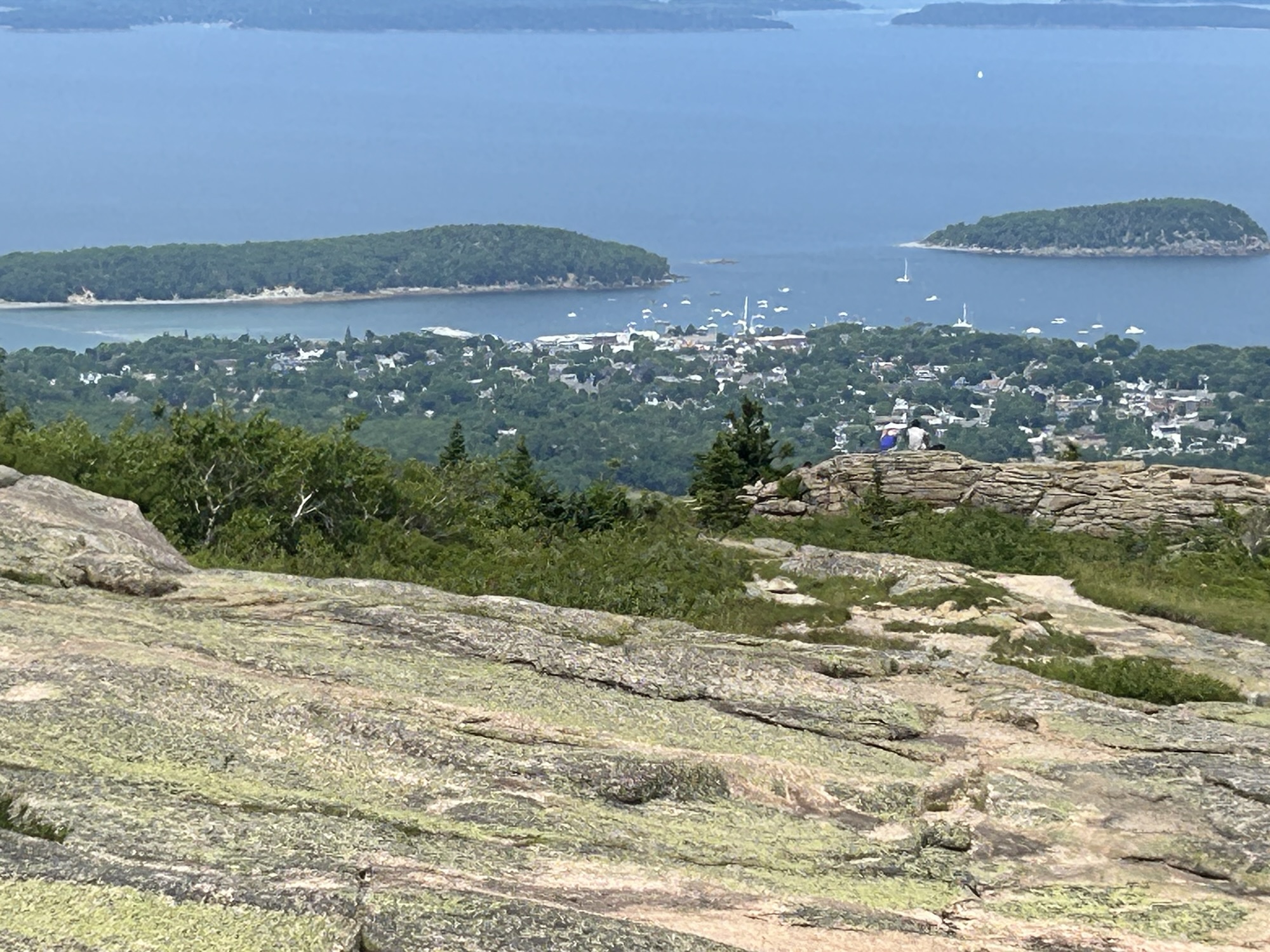
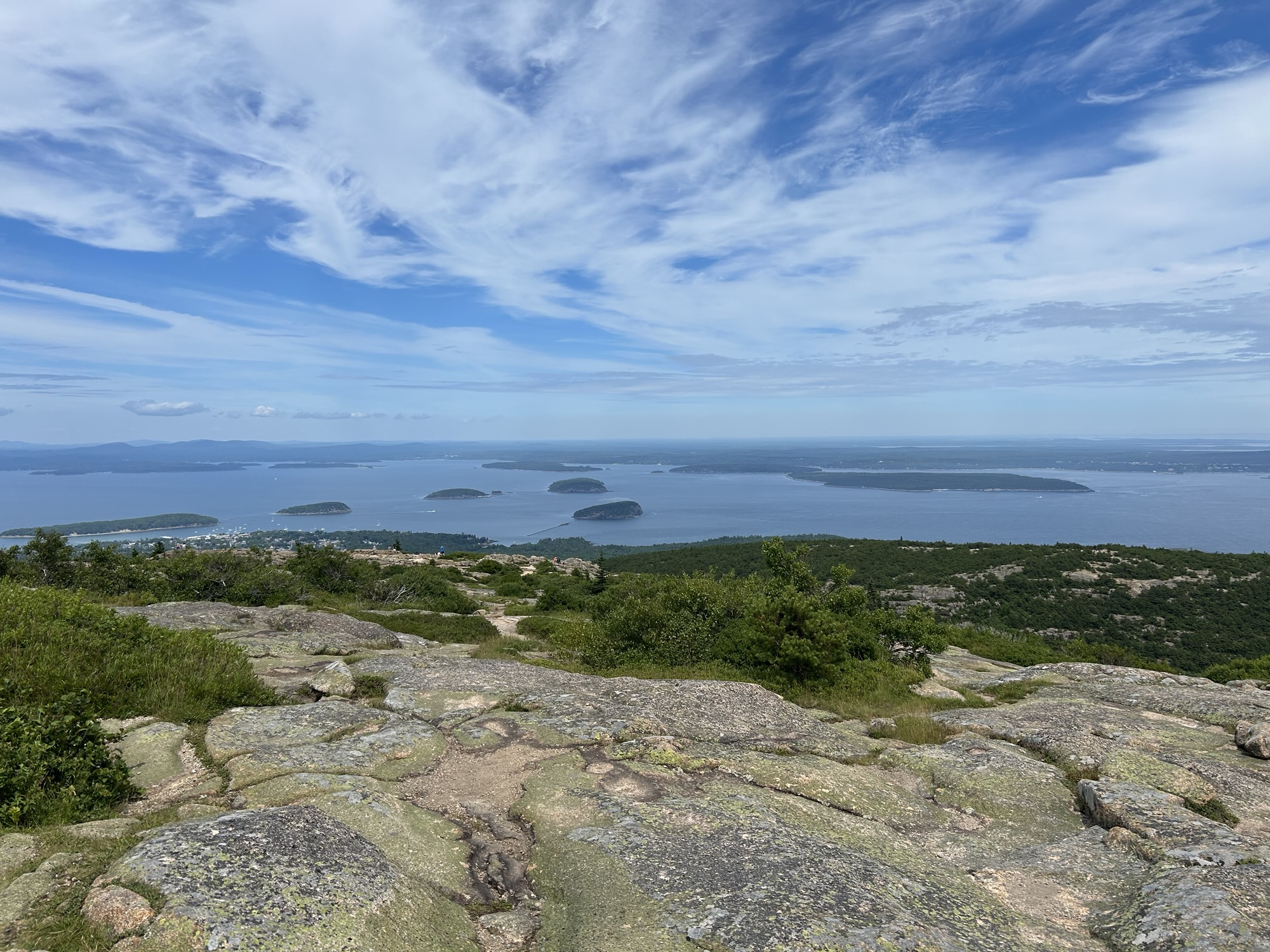
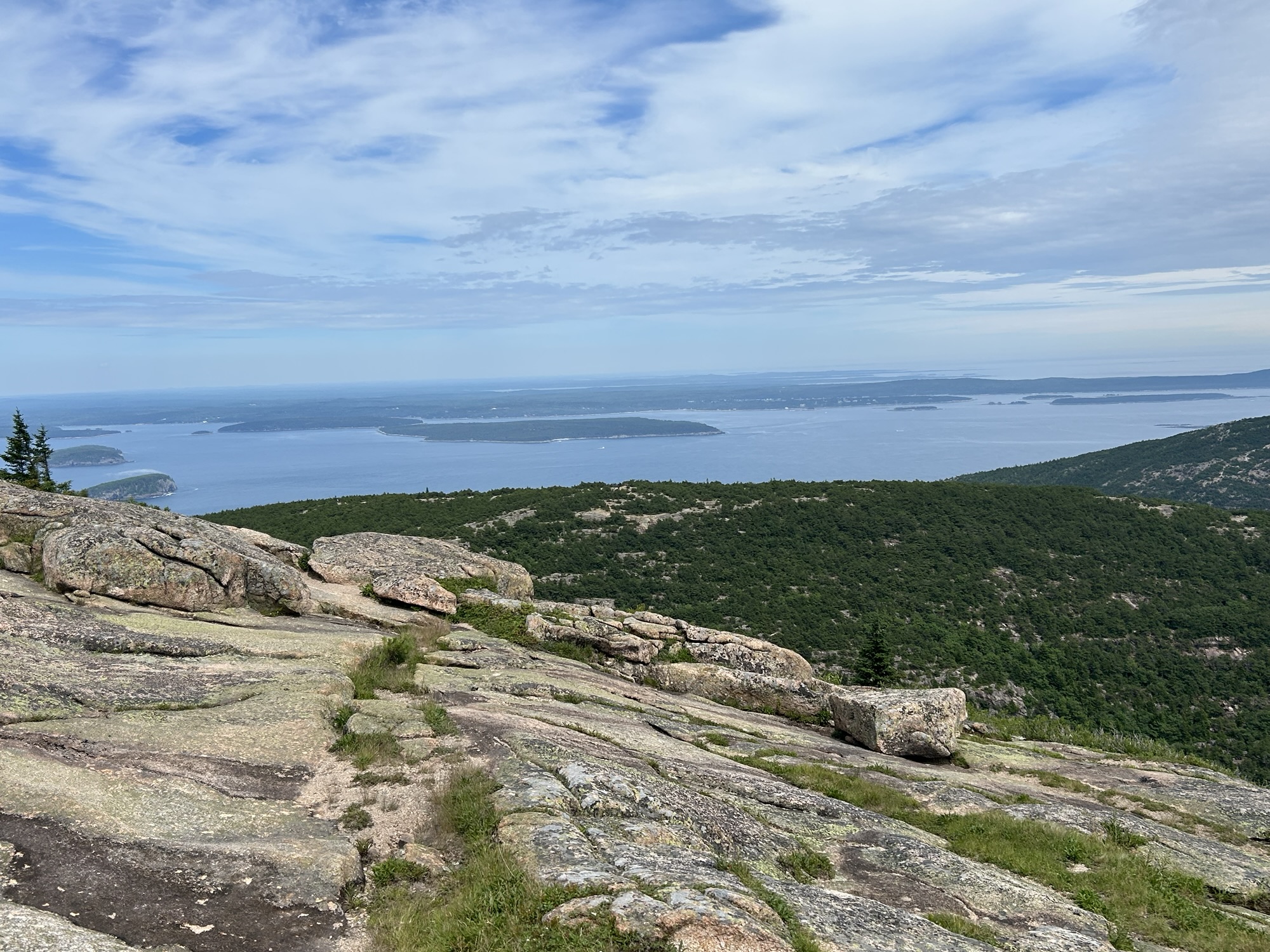
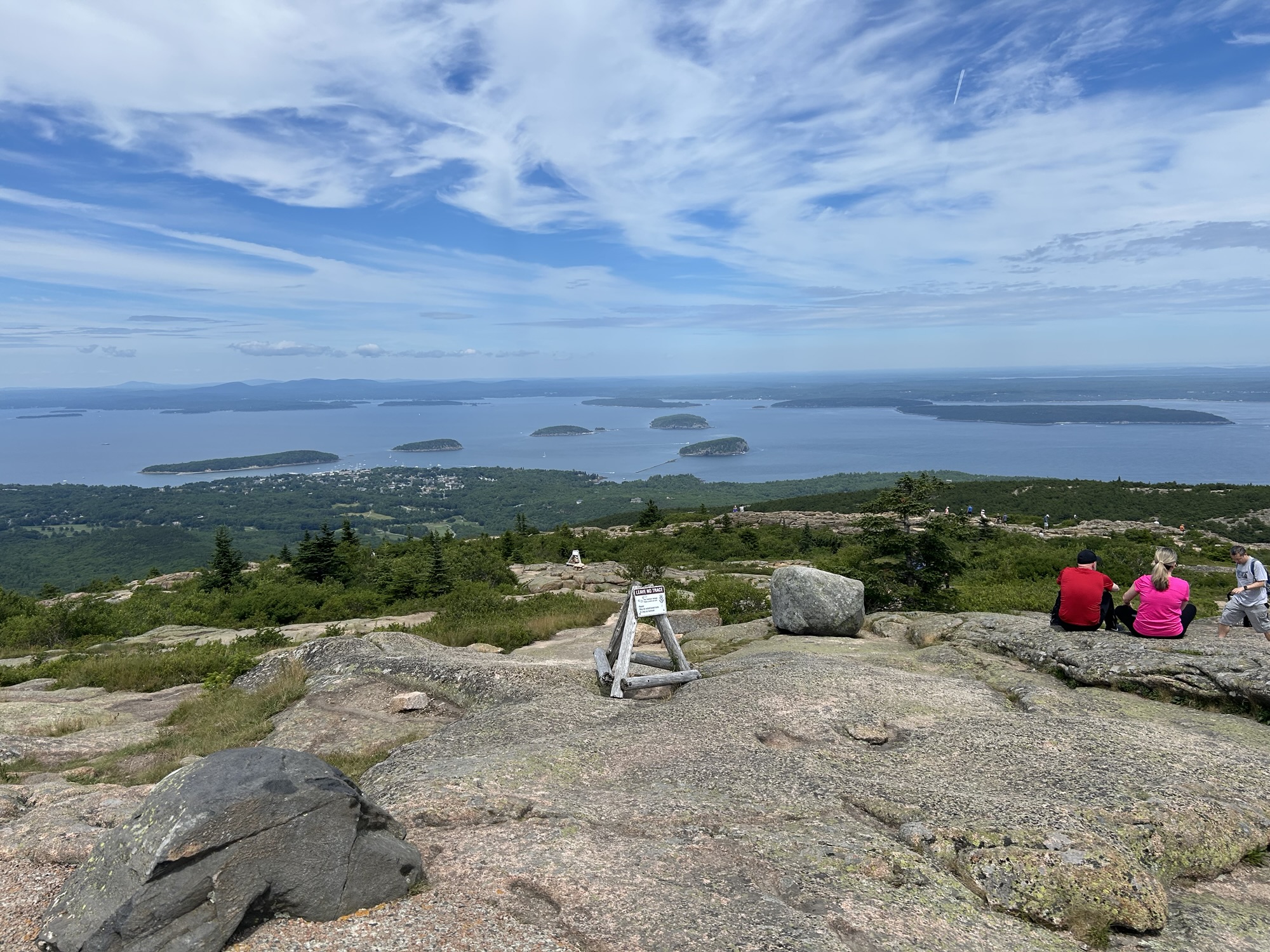
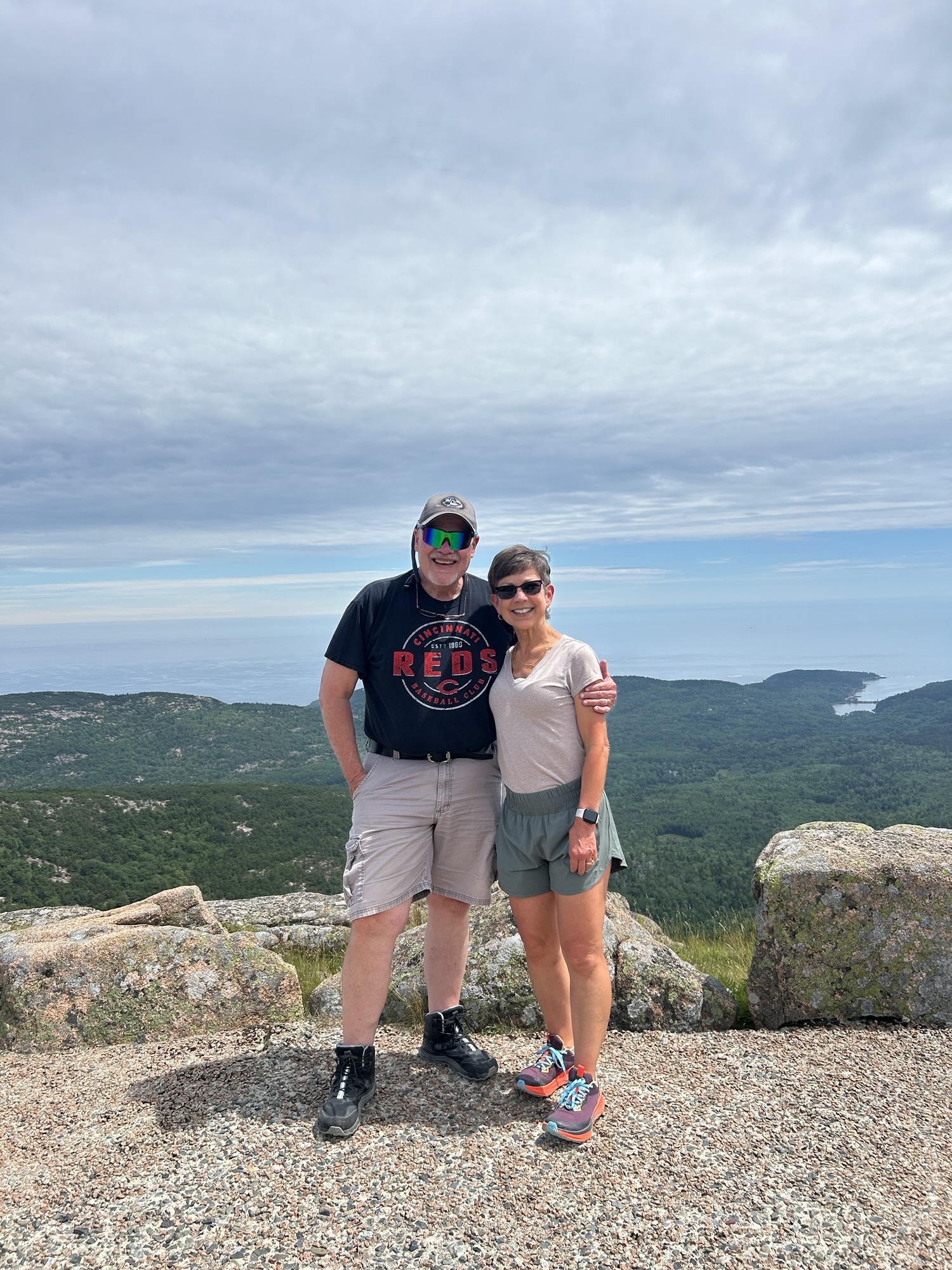
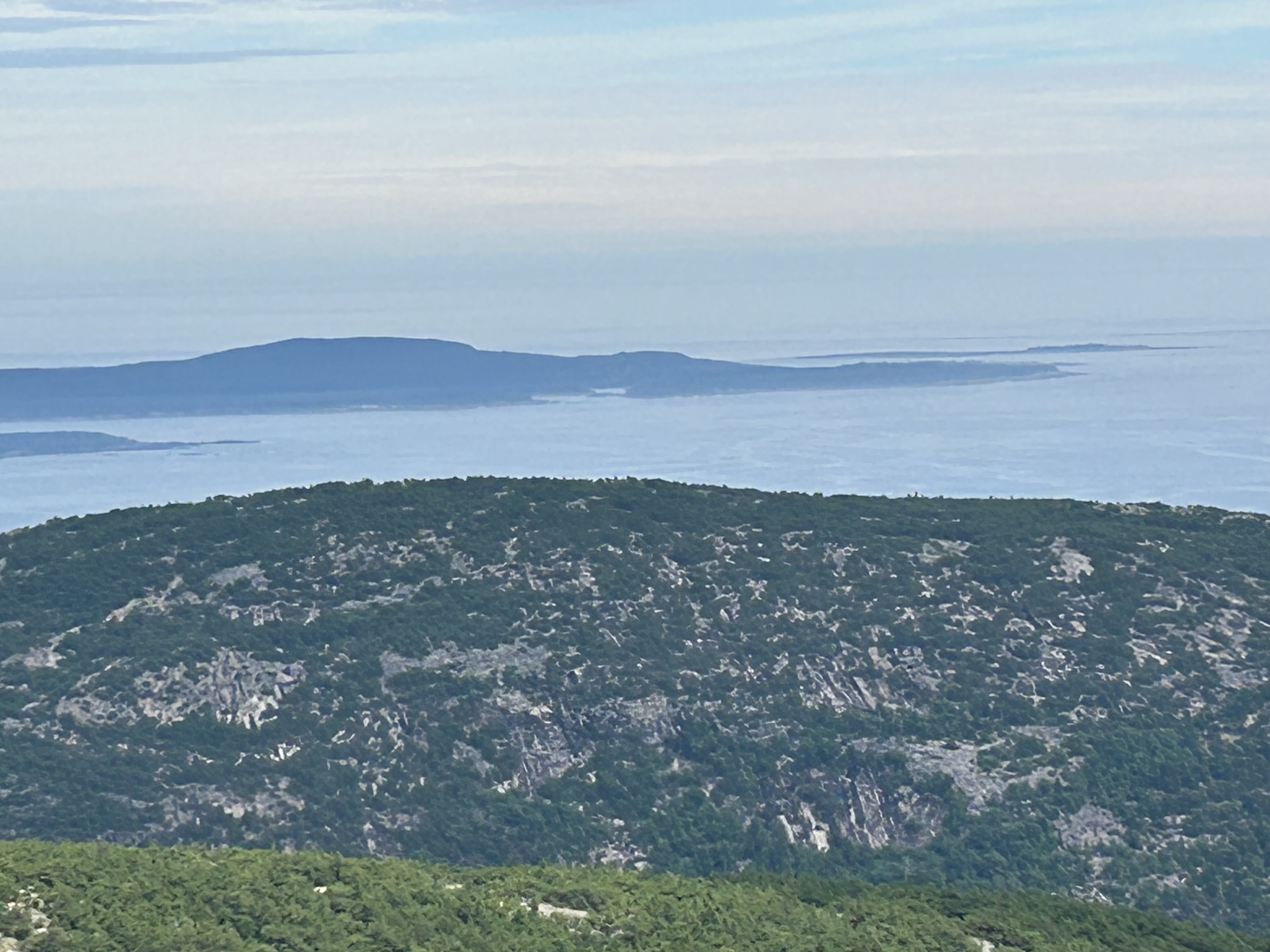
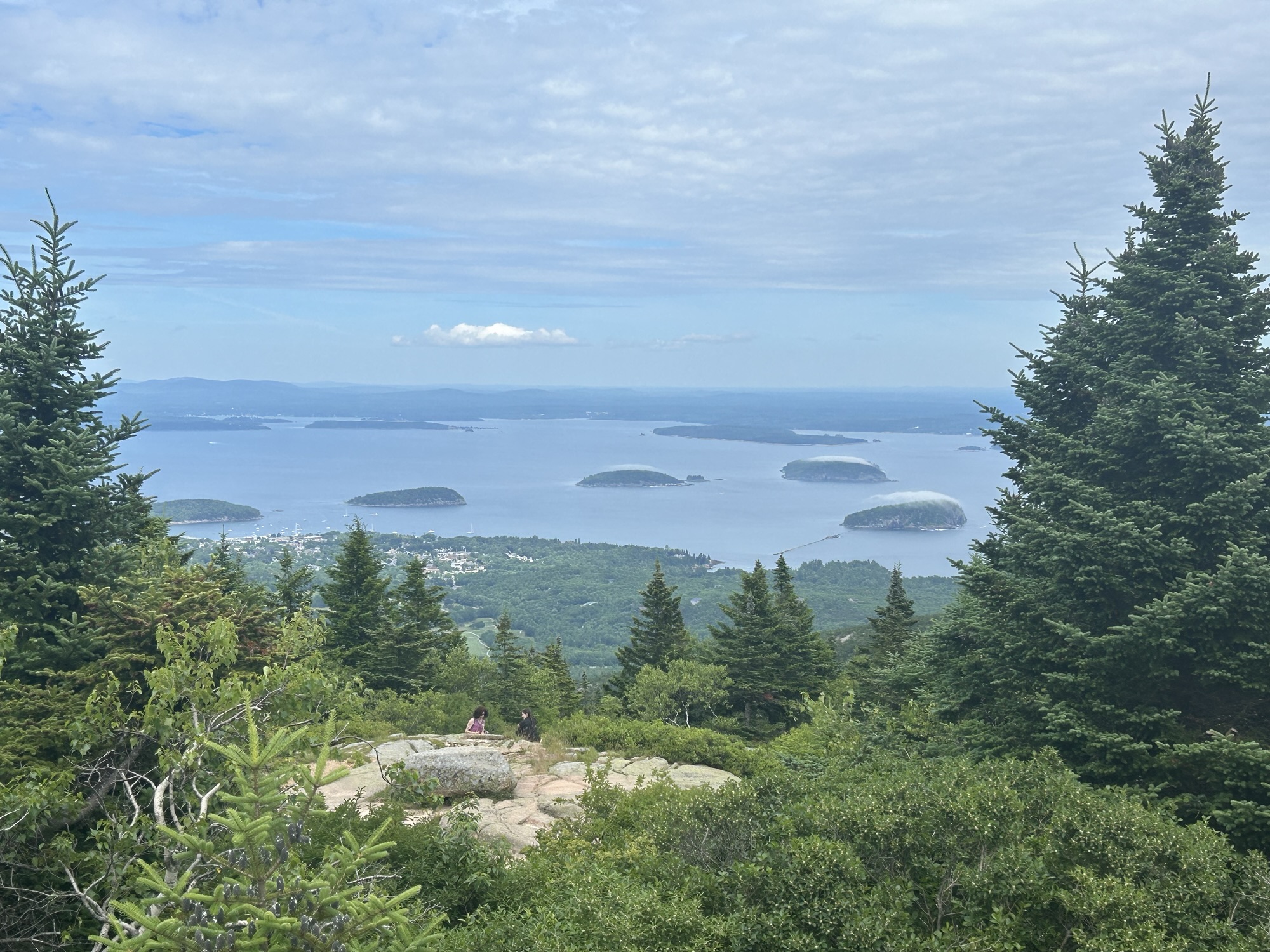
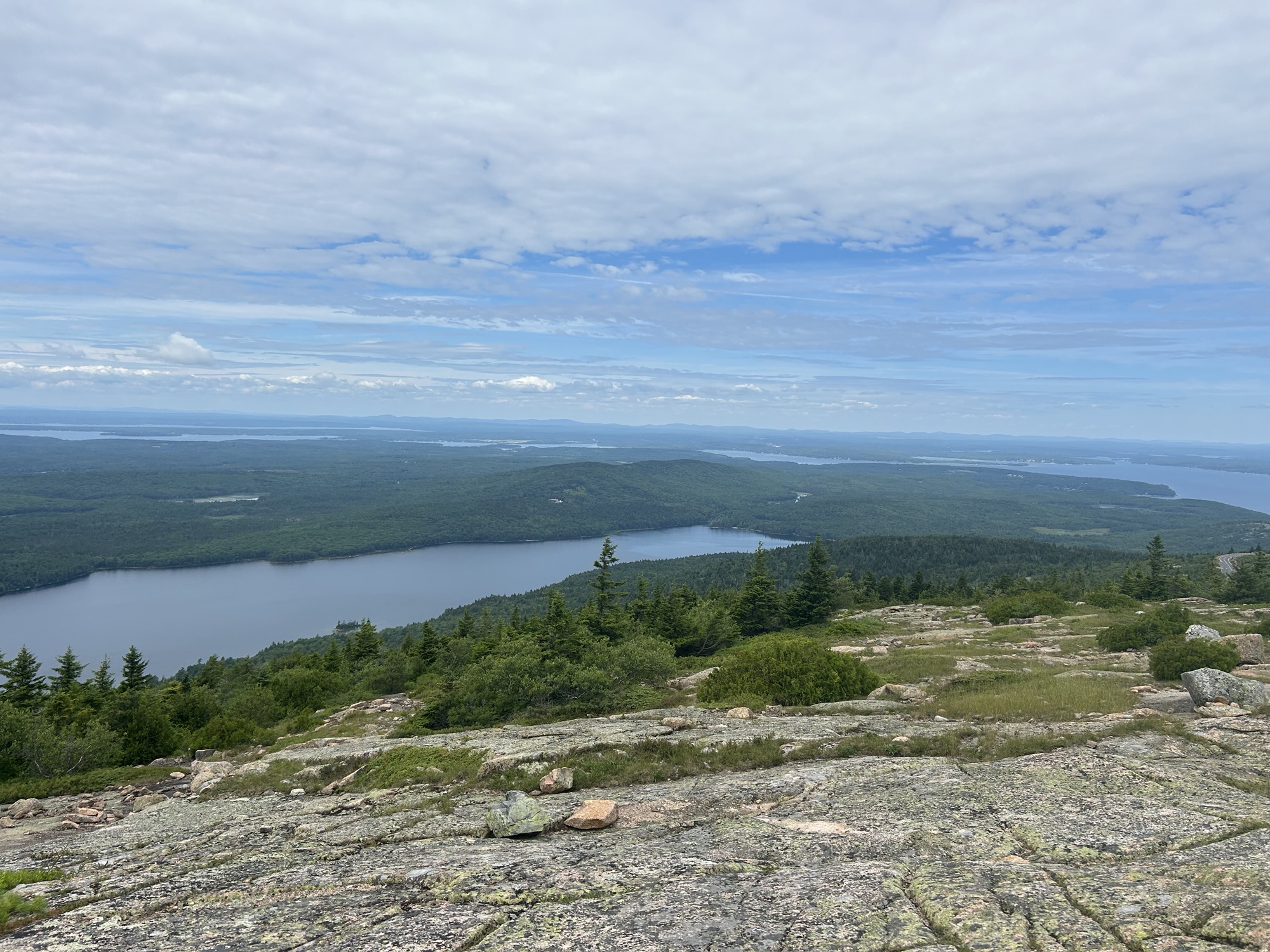
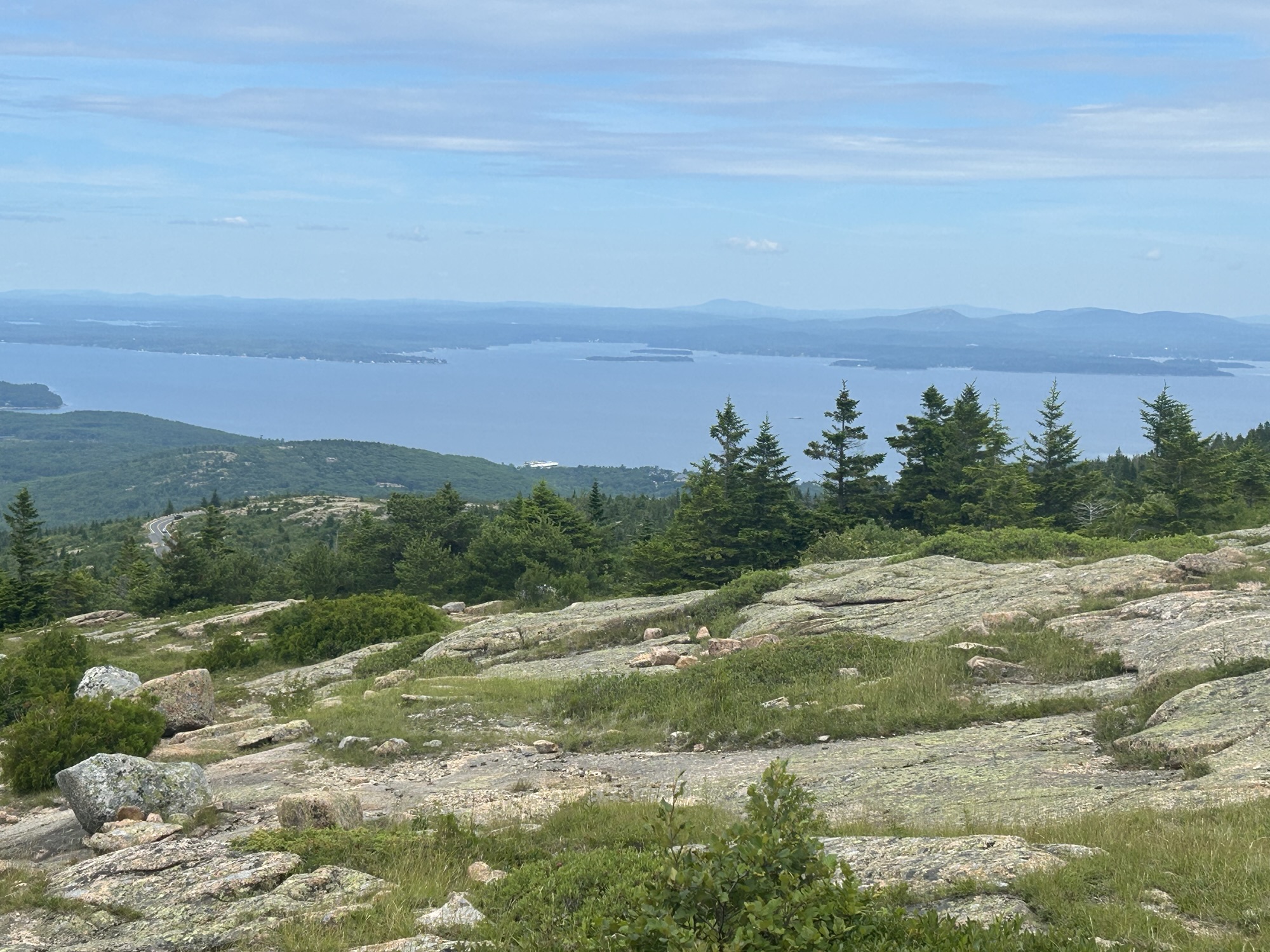
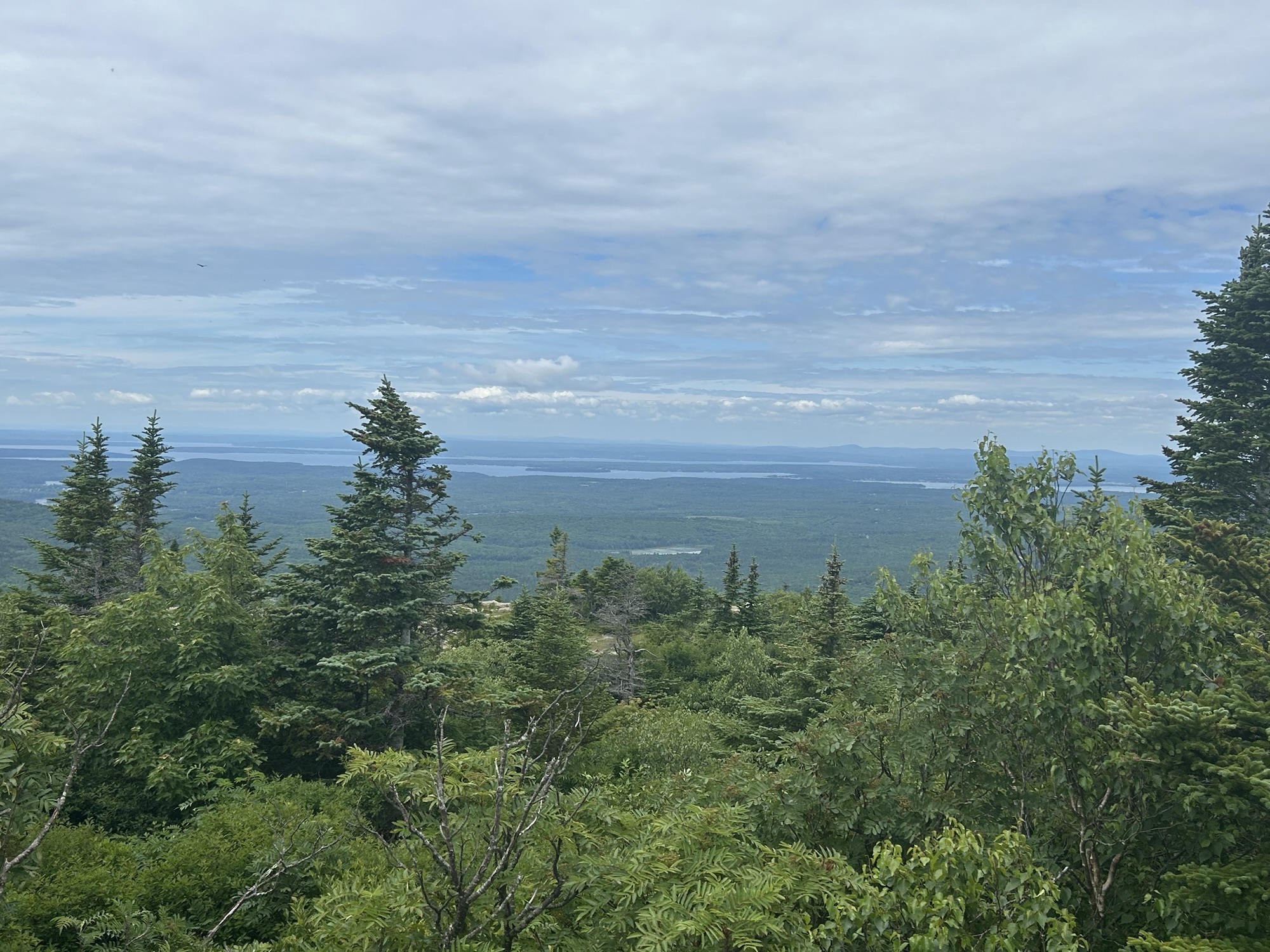
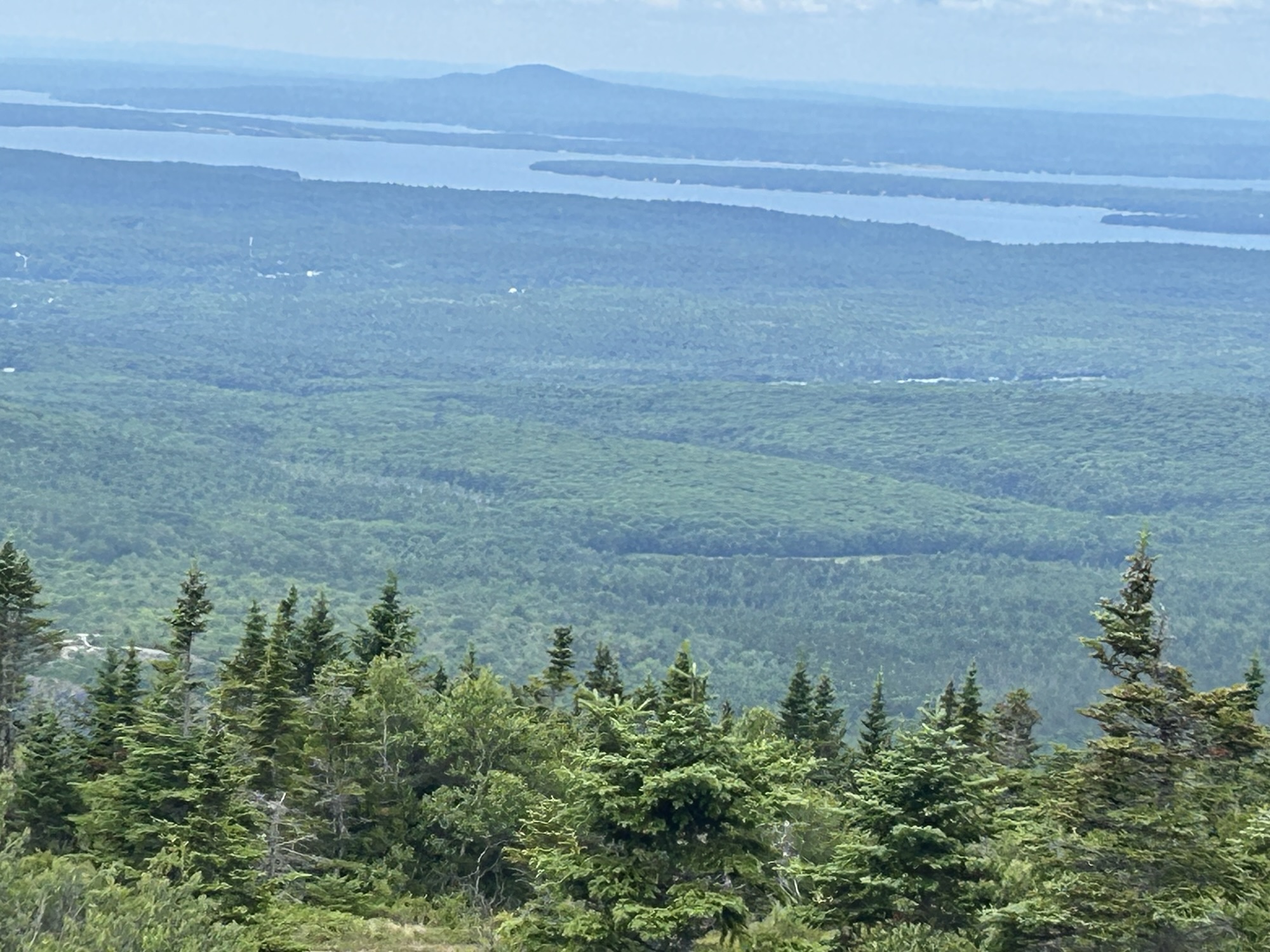
The views from Cadillac Mountain were breathtakingly beautiful.

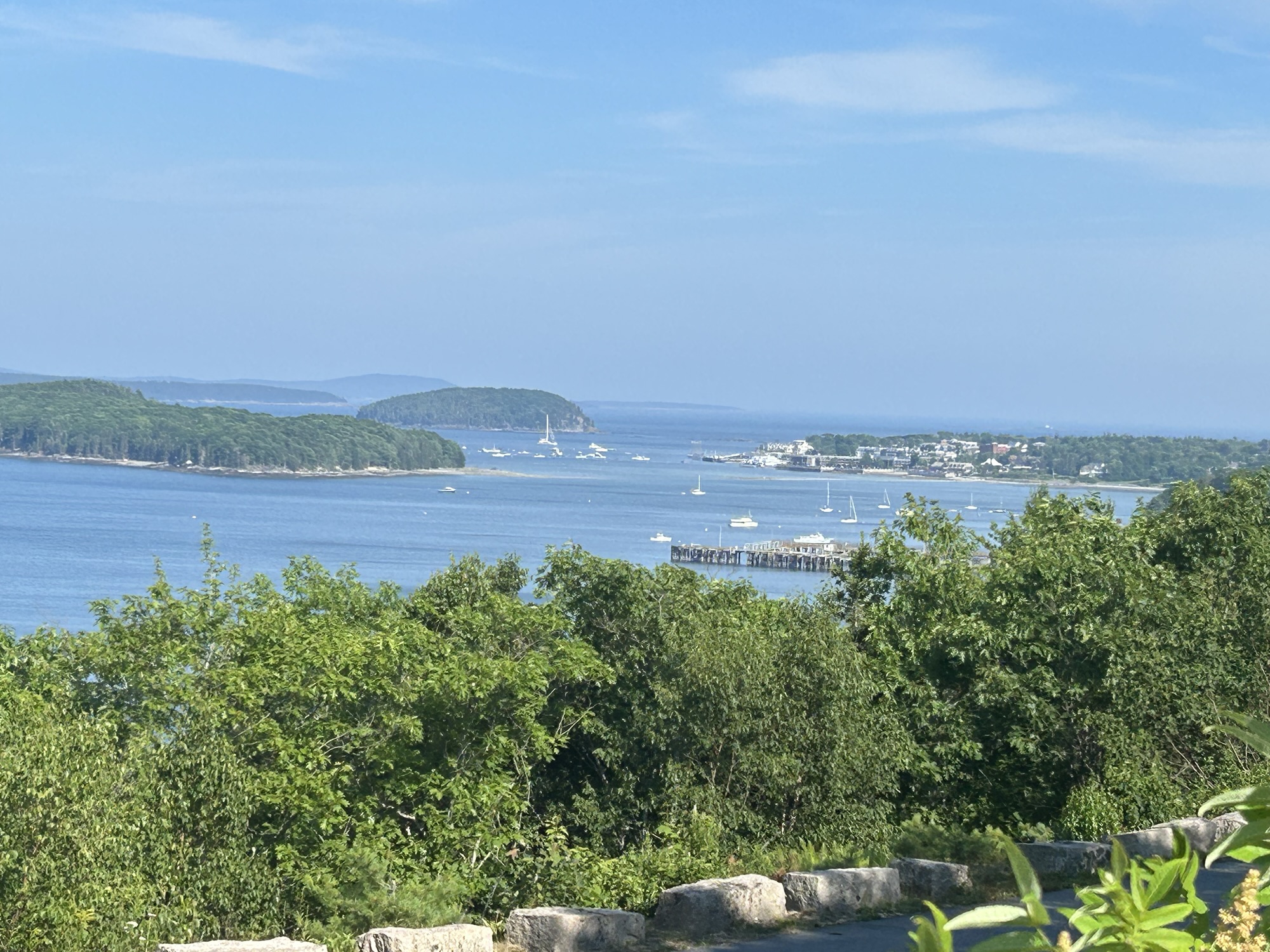
Cadillac Mountain, with its rocky, pink granite outcroppings, is the tallest peak on the eastern seaboard and a true gem of the park.  The summit offers stunning views of Frenchman Bay, Bar Harbor, and surrounding islands. Sunrise and sunset are especially popular times to visit, though weather can limit visibility. It is also a prominent spot for stargazing. Due to its popularity, the National Park Service requires advance reservations to drive the winding 3.5-mile summit road—an effective measure to reduce overcrowding.

Walking Across the Sea: Bar Island Trail 🚶🏽‍♀️🚶🏿‍♂️🚶

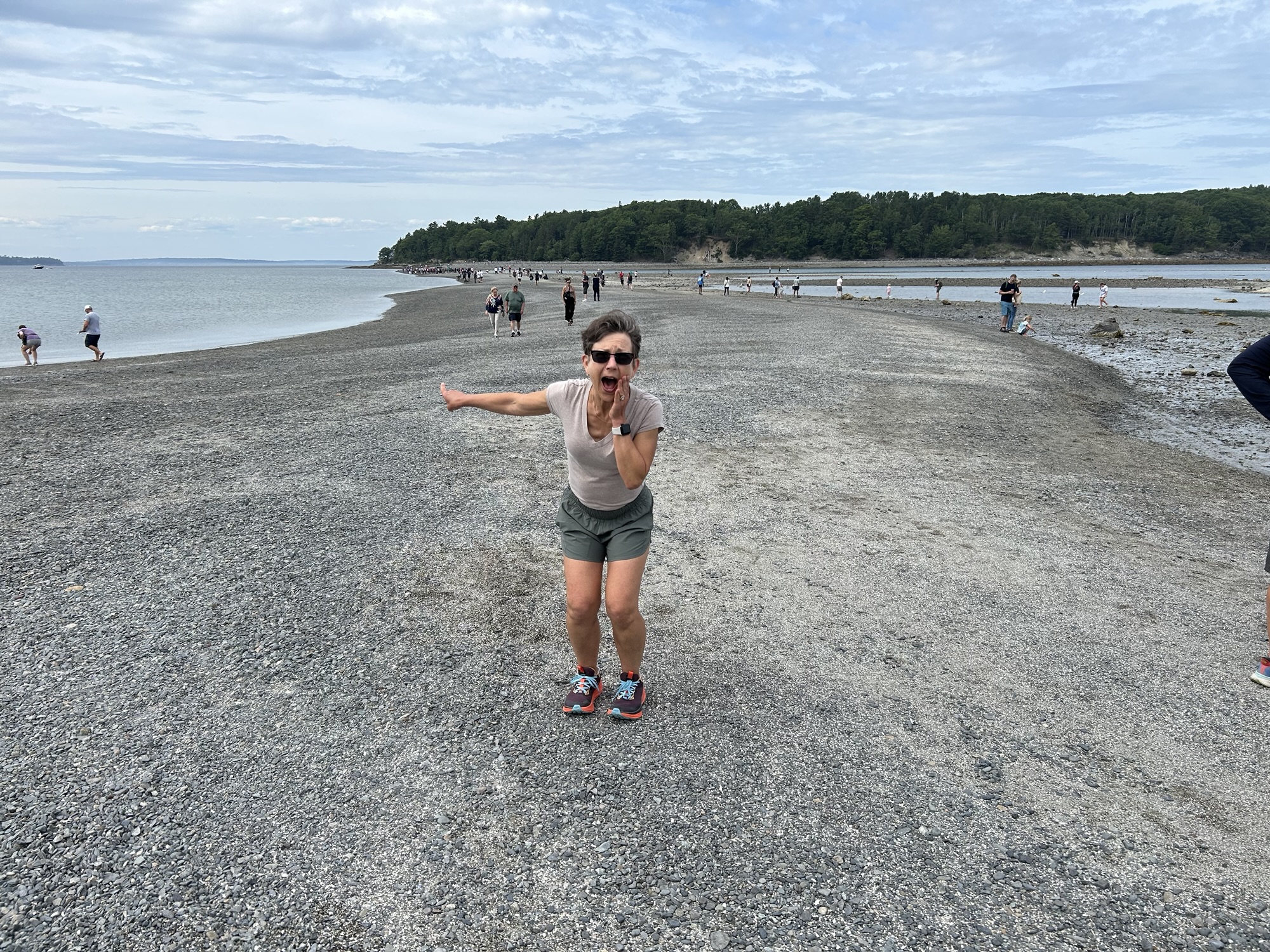
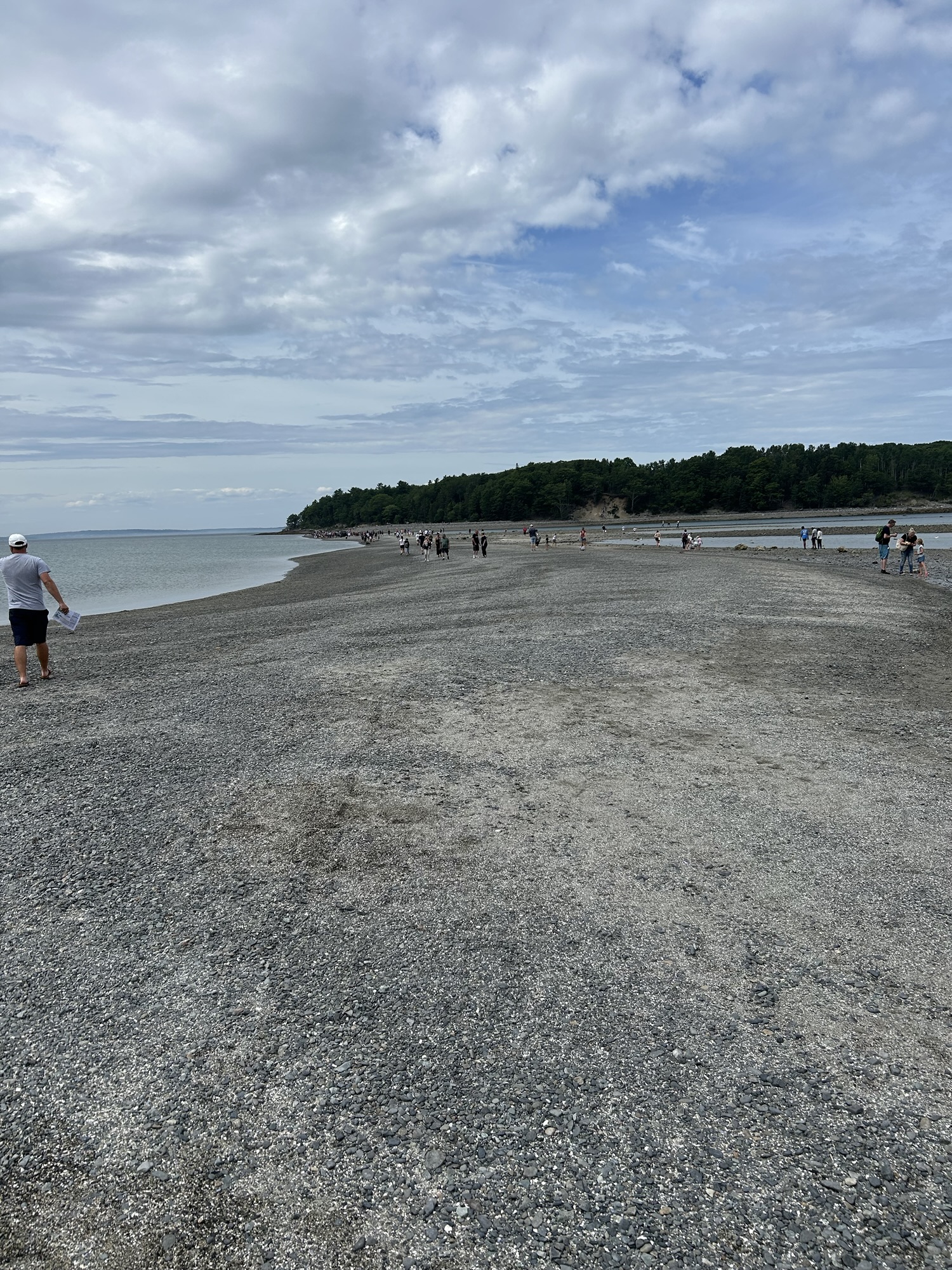
In the bottom center picture, I am standing at the edge of the path during high tide, the other pictures illustrate what the path looks like as the tide recedes. Notice the number of people waiting for the tide to fully recede in order to walk to the island.

One exceptionally unique trail in Acadia is the Bar Island Trail, a sand and gravel land bridge, which is only accessible at low tide. Visitors have about 90 minutes after low tide to cross and explore the short trail to the top of the island with views of Bar Harbor. Miss the low-tide window, and you’ll be stuck on the island for hours until the tide recedes again.

A Foodie’s Delight in Bar Harbor 🍦🍔🥗🍝🦞

Bar Harbor offers so many tasty places to eat!

Having unique and tasty dining experiences are a memorable part of most vacations, and the Bar Harbor/Mount Desert Island community does not disappoint. For such a small community, there is a diverse food scene: freshly caught seafood, lobster, and classic lobster rolls; decadent ice cream, baked goods, and sweets; pasta, pizza, steak, burgers, sandwiches as well as hearty breakfast options. What’s more, I was thrilled to find numerous restaurants offering gluten-free, vegetarian, and vegan options—plus staff who understood allergies and made dining easy. From cozy cafés to surf and turf spots, from pubs to roadside stands and burger joints, there are delectable treat possibilities for everyone.

The Spirit of Acadia

There are so many delightful places to visit on Mount Desert Island, Maine, in addition to Acadia National Park. It is definitely worth the trip!

Acadia National Park is absolutely worth visiting. While crowds, required park permits, occasional spotty cell service, and unpredictable weather can present challenges, they’re small trade-offs for what the park offers. Personally speaking, the scent of pristine pine, the crunch of gravel on quiet trails, the shimmer of granite in the sun, the morning mist over coastal shoreline, and the haunting call of a loon over a sparkling mountain lake left an indelible mark on my heart—one that refreshed my spirit and deepened my gratitude for our National Parks. I look forward to returning. Maybe I’ll see you there.

Navigating Dietary Restrictions While Traveling: Tips for Positive Food Adventures

“One of the most daunting parts of celiac or gluten sensitivity diagnosis is figuring out how to travel safely eating gluten free.”–Celiac Canada Association

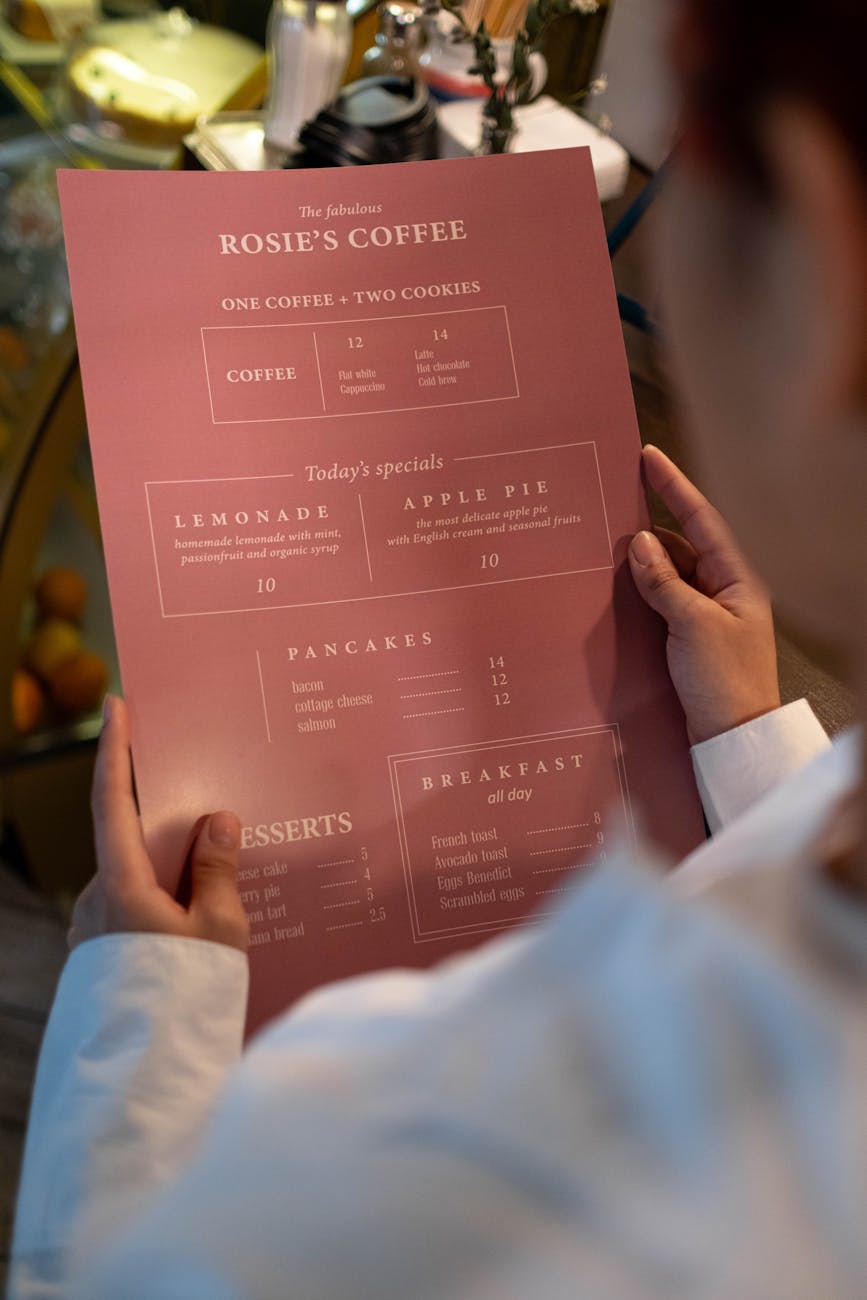
A person holding a pink menu titled 'Rosie's Coffee' displaying various food and beverage options in a cafe setting.
Photo by Ron Lach on Pexels.com

When the Menu Doesn’t Work: Dining Out Dilemmas 🍽️

“Is your veggie burger gluten free?” I asked with crossed fingers

“No—we use breadcrumbs,” she replied.

Since I don’t eat meat, and the only gluten-free option was a bun, we had to leave. It was a trendy burger spot, but like many places, it couldn’t accommodate both my plant-based and gluten-free needs.

John, my husband, and I were visiting our daughter, Maddie, and her boyfriend, Connor, in Boston where Connor was currently completing a summer internship. John and I were on our way back home after spending several days in the Bar Harbor/Acadia National Park area in Maine. And, just as it had been in Maine, and really, how it ALWAYS is when dining out, finding places where I could eat was a challenge. 

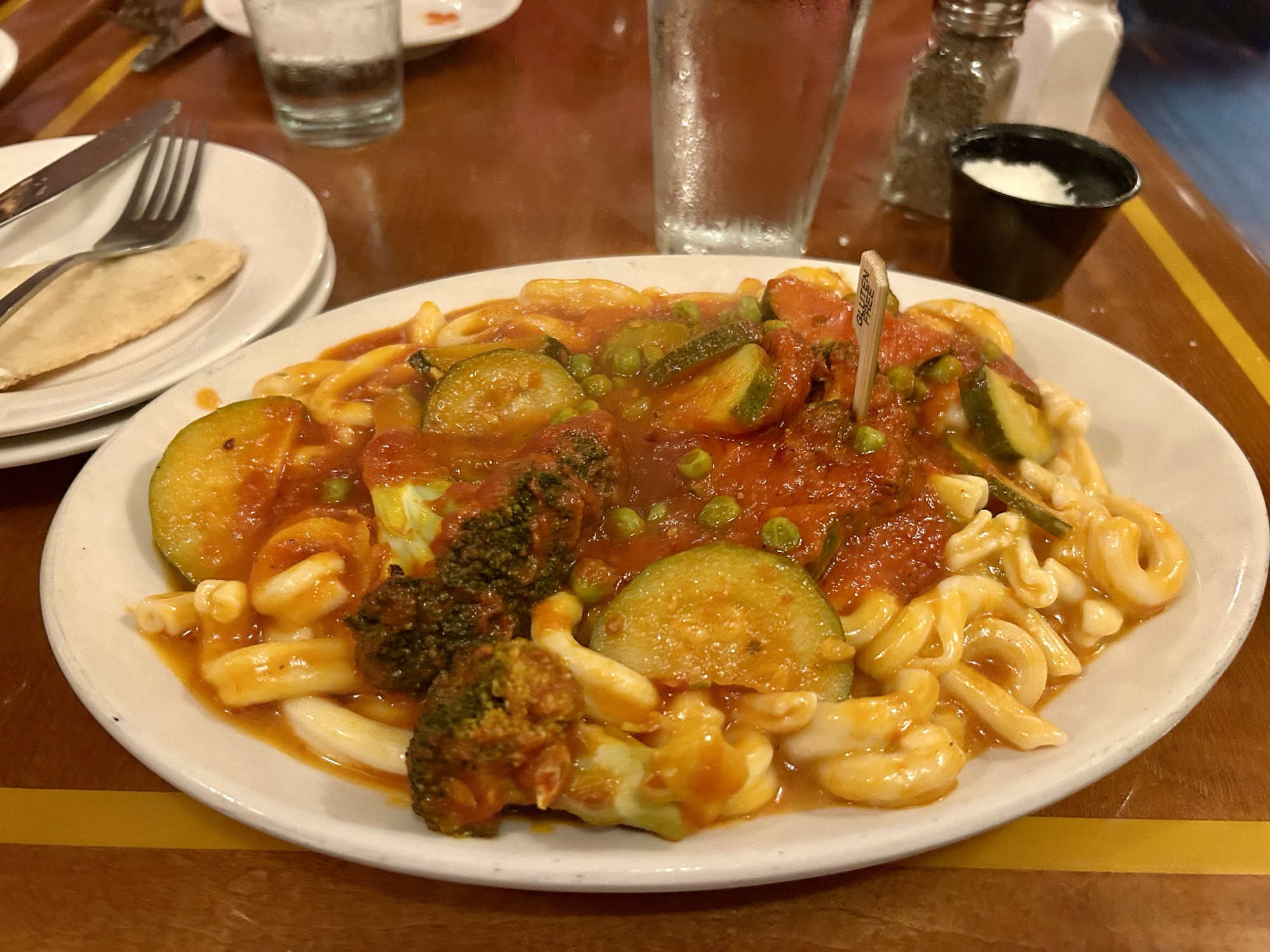
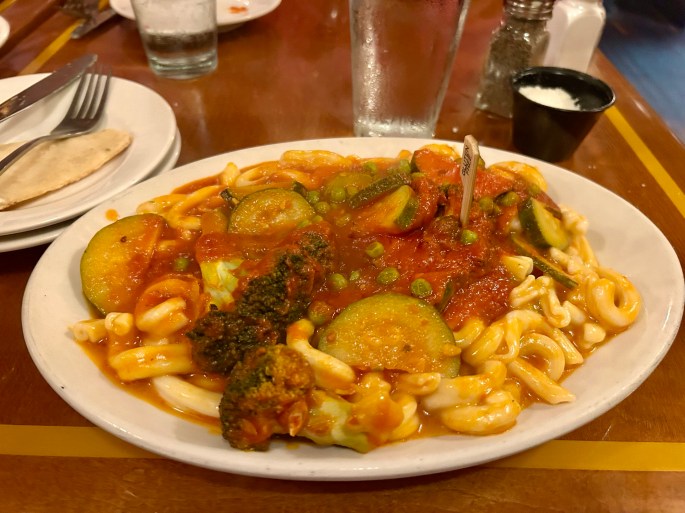
A plate of pasta topped with marinara sauce and mixed vegetables, including zucchini, broccoli, and peas, served in a restaurant setting.
Pasta is one of the hardest things to get when eating out. Fortunately, La Famiglia Giorgio’s Restaurant in Boston, MA, has an entire menu page devoted to those who need to eat gluten-free.

The Root of the Challenge: Living with Celiac Disease 🌾

The difficulty stems from the fact I have celiac disease–a chronic autoimmune disorder, as defined by Mayo Clinic, that is triggered when eating gluten, a protein found in wheat, rye, and barley. Consuming gluten significantly damages the small intestines of the person with celiac, preventing the absorption of essential nutrients, which can lead to serious health problems down the road. Additionally, the side effects of eating gluten are NOT pleasant– diarrhea, abdominal pain, nausea, reflux, fatigue as well as numerous other symptoms.

A bowl of granola topped with fresh berries and sliced apples, placed on a marble table next to a takeout coffee cup.
Eating gluten free and whole food plant based has helped my body heal and recover from decades of undiagnosed celiac disease. Tatte Bakery, Boston, MA

Why I Eat Plant-Based, Too 🍓🫐🥦🥗

I wasn’t diagnosed with celiac disease until my late 40s, after years of digestive issues and unnecessary medications. Healing began when I cut gluten and adopted a whole food, plant-based diet that excludes meat and most dairy. Eating a diet rich in plants bathes my body with the nutrients it was unable to previously absorb for most of my life.

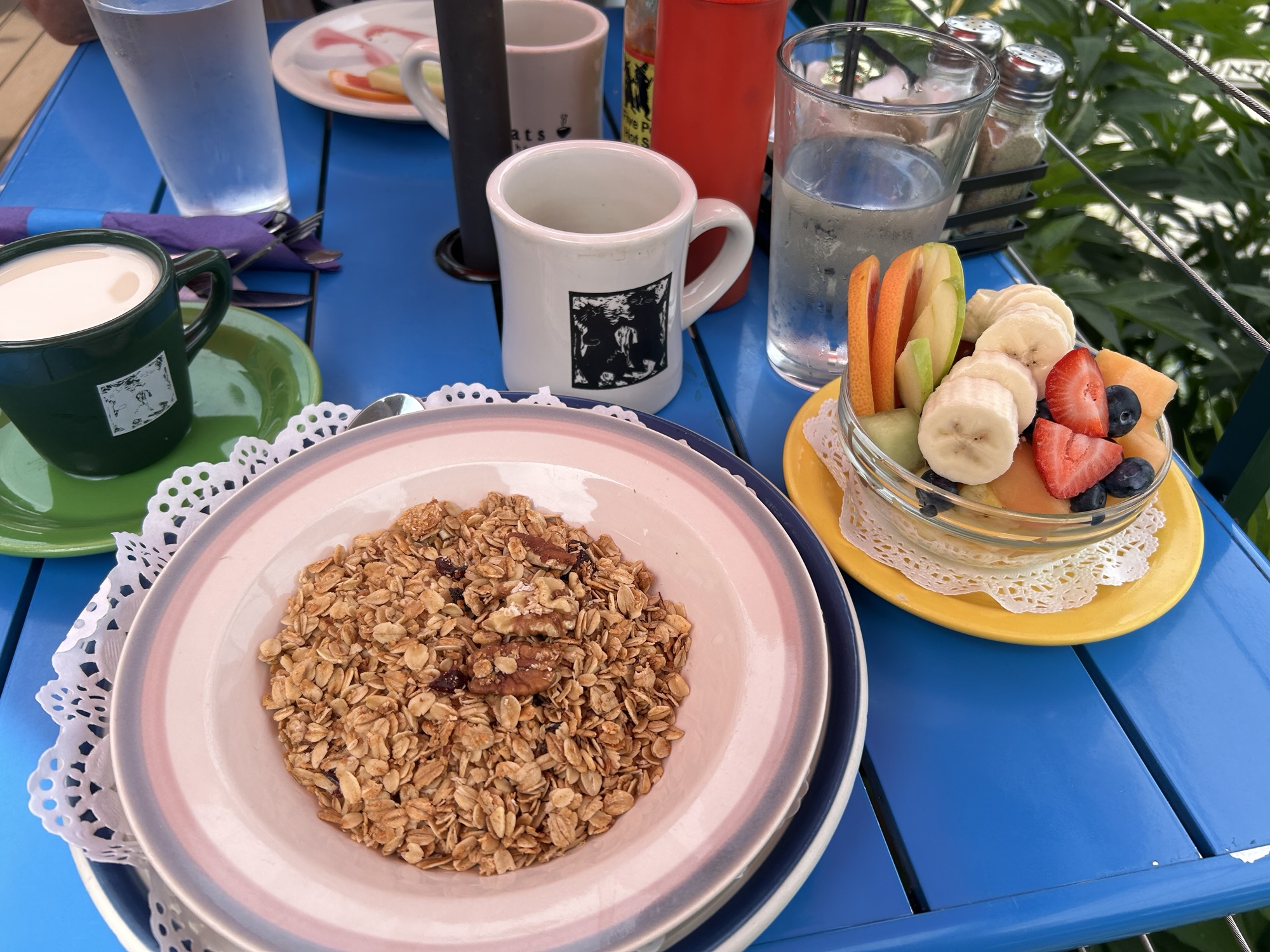
Two Cats Restaurant and Inn, Bar Harbor, ME

Travel: Inspiration and Complication 🌄

However, traveling with my dietary restrictions creates unique challenges.  On one hand, vacation sojourns are enriching, informative, and inspiring. These trips provide me with an opportunity to experience awe, wonder, and delight in the rich tapestry of life. On the other hand, travel requires deft navigation of dietary hazards. However, my trips have taught me that with a bit of planning, research, flexibility, and determination, I often discover and enjoy tasty culinary adventures as part of the travel experience.

Strict adherence to a gluten free diet is a necessity, especially when traveling. As anyone with celiac knows, it is no fun being stuck in a bathroom when you’re supposed to be out hiking, sightseeing, or experiencing a new setting. Additionally, I know that for my body, consuming meat and dairy products can also create digestive distress and discomfort. Therefore, those two dietary restrictions often limit my restaurant choices, create possibilities for cross-contamination, and can sometimes create a lack of understanding of restaurant staff.

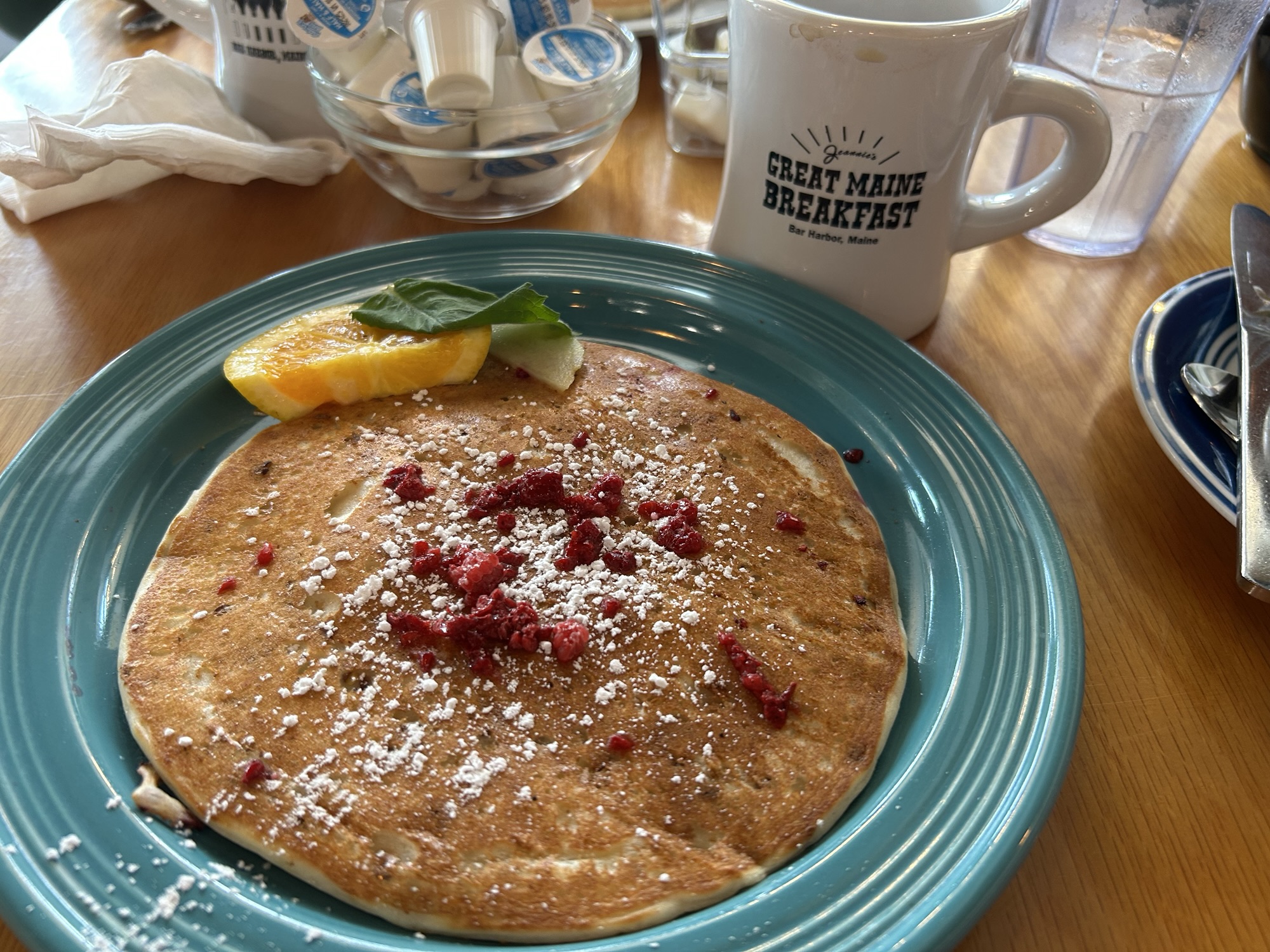
A plate of a gluten-free pancake topped with powdered sugar, raspberry pieces, and garnished with orange and mint leaves, next to a mug of coffee labeled 'Great Maine Breakfast'.
Gluten free pancakes with plenty of fresh fruit at Jeannie’s Great Maine Breakfast, Bar Harbor, ME.

Research Is My Best Travel Companion 💻

For example, John often completes dining research in advance of any trip.  He uses Trip Advisor and refines his search to restaurants identified as good choices for gluten free, vegan, and vegetarian diets. What he has discovered is that we have to look closely at menus because eateries tagged as “gluten friendly” are often limited to meat-based dishes, and establishments labeled as “vegan or vegetarian friendly” often involve choices that include wheat (noodles/pasta, seitan, breaded vegetables, and so forth). 

A plate featuring a burger topped with cheese, served alongside a small salad of mixed greens, red peppers, and a dipping sauce, with a side of steamed broccolini.
Blaze, Bar Harbor, ME offered numerous gluten free options on their menu, including this gluten free veggie burger with gluten free bun. YUM!

The Cross-Contamination Trap 🪤

Of further issue is the concern with cross contamination. For example, Mexican food can be a good choice for me; however, if the fryer used for tortilla chips is also used for cooking flour tortillas and meat, these factors can negatively impact my digestive system. Additionally, shared food prep areas, unclear labeling of menu items, and even communication between wait staff and kitchen can lead to hazards.  For instance, if I order a gluten-free pizza crust, but it is prepared on a commonly shared counter on which wheat pizza crust is rolled out, this might upset my digestive tract.  

I’ve also had the experience of ordering a gluten-free pizza crust and still getting a pizza made with wheat due to miscommunication. And, while the only other country in which I have traveled is the English speaking parts of Canada, I can only imagine the chance for miscommunication in a country in which I don’t speak the native language.

This is why advanced research is important when traveling.  When I don’t have a game plan, or plans change, as was the case when we tried to go to the burger establishment in Boston, things can very quickly go awry. I end up feeling terrible because I feel I am limiting my loved ones from having a positive dining experience. After all, part of the fun of traveling is eating in new places.

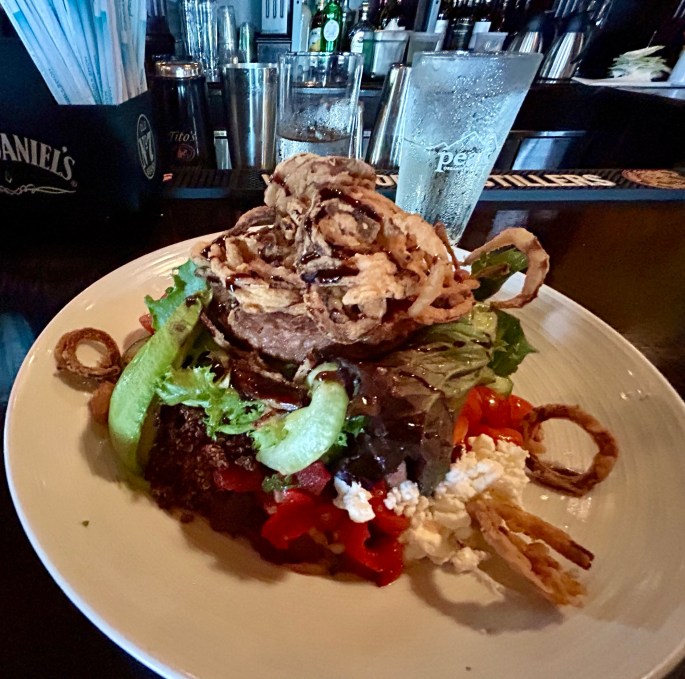
A colorful salad topped with a fried onion ring stack, featuring greens, tomatoes, and cheese, served at a bar setting.
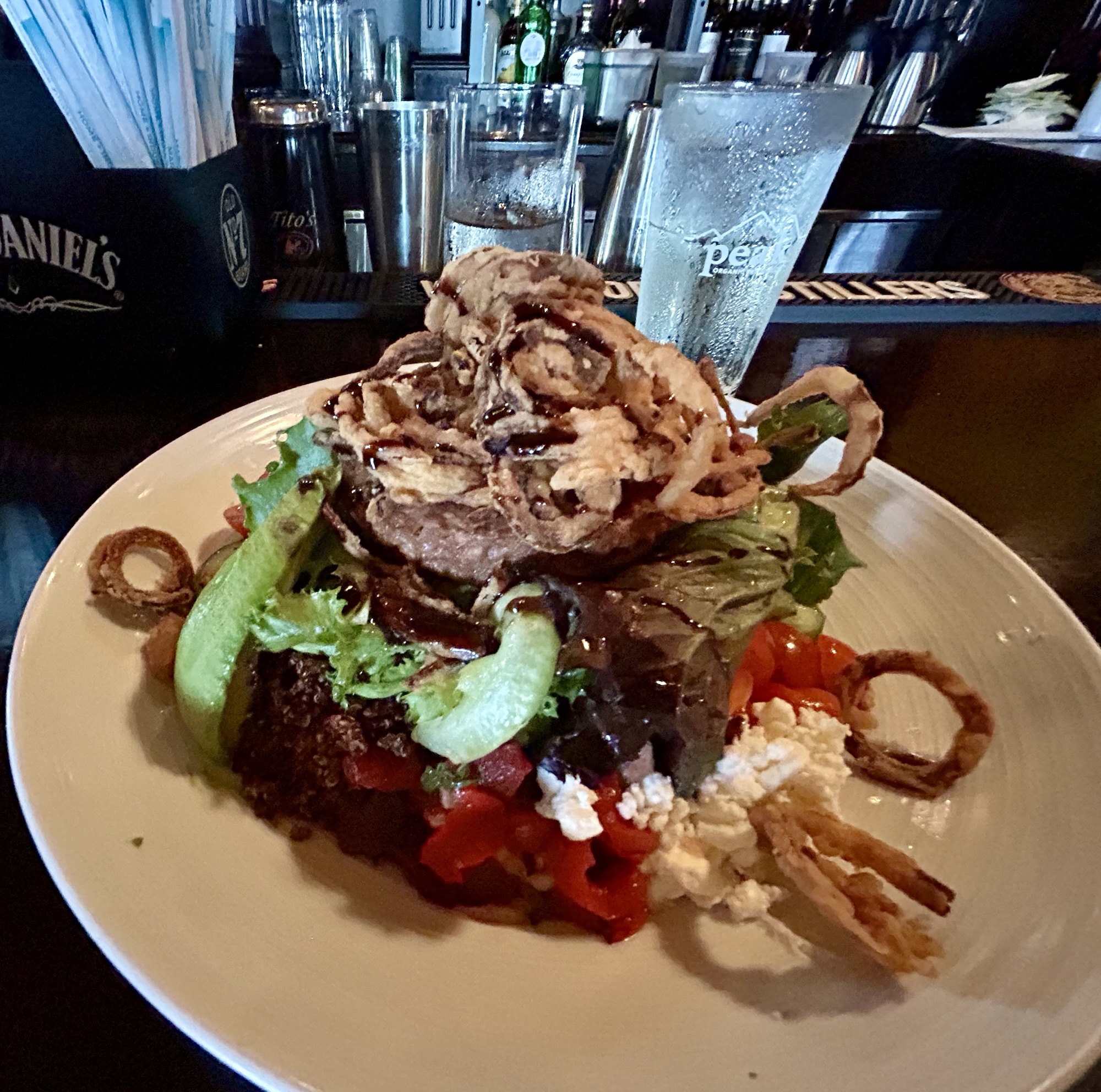
The EARTH BOWL at Paddy’s Irish Pub & Restaurant, Bar Harbor, ME: Grilled , Gluten free, Plant-Based Burger, Tri-Color Quinoa, Roasted Pepper Salad, Heirloom Tomatoes, Garden Cucumbers, Ruby Red Beets, Avocado, Local Chevre, Sweet Balsamic Syrup.

Planning Ahead and Packing Smart 🧳

In addition to researching and using apps, such as Happy Cow, AllergyEats, and Find Me Gluten Free, John and I tend to stay in places with a microwave, refrigerator, and nearby grocery stores. I always pack food from home, and I’ve learned to bring supplemental items with me to restaurants if needed, such as gluten free bread, crackers, salad dressings, and so forth.

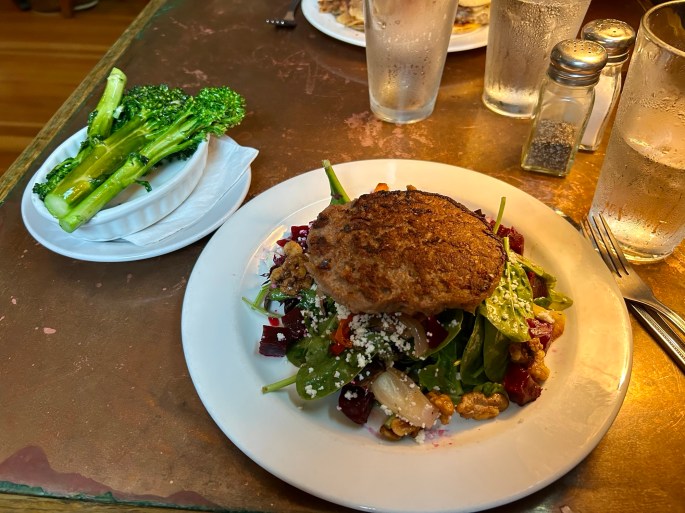
A plate of salad with mixed greens, nuts, and beets topped with a vegetable patty, accompanied by a side of steamed broccoli.
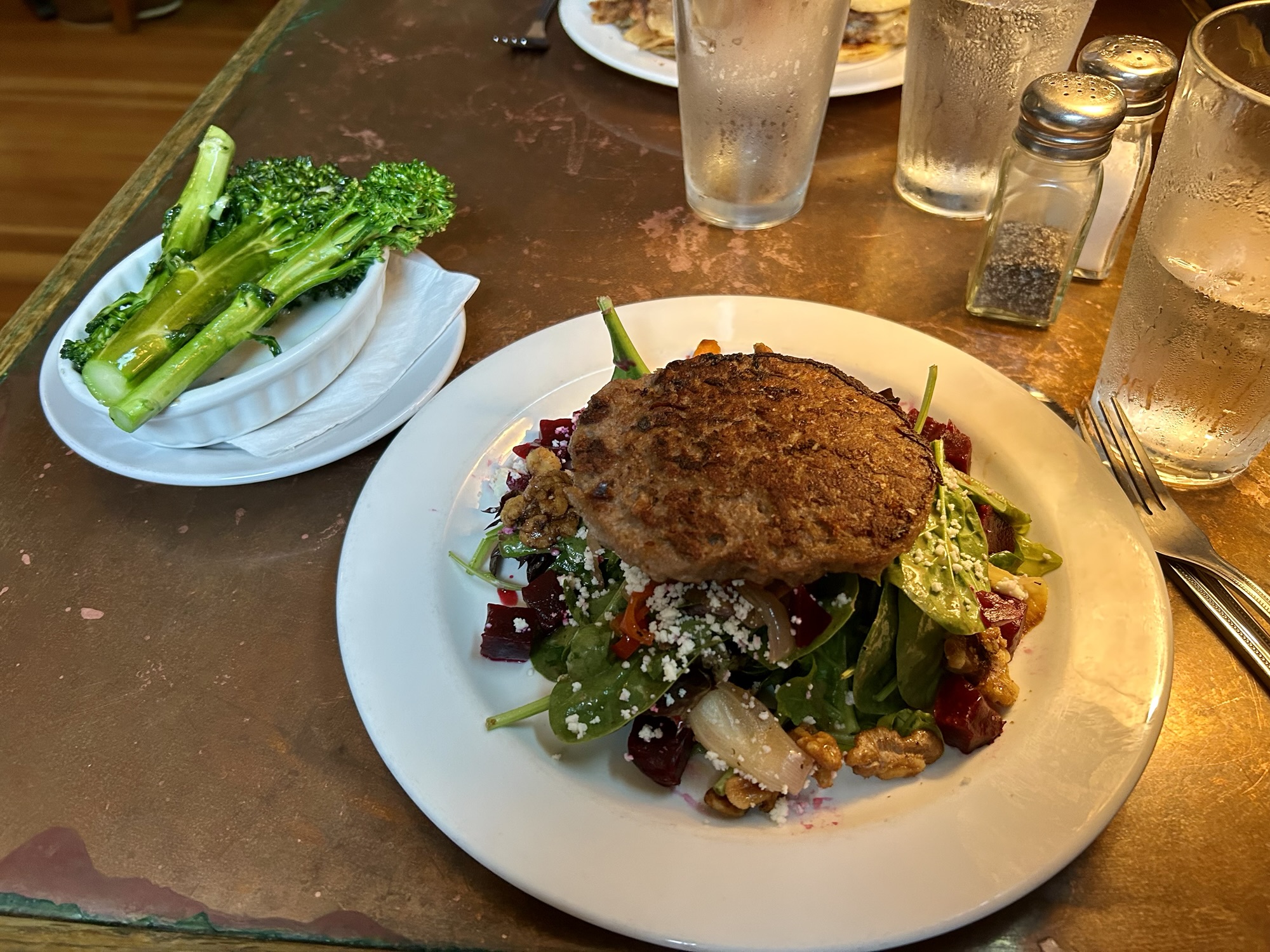
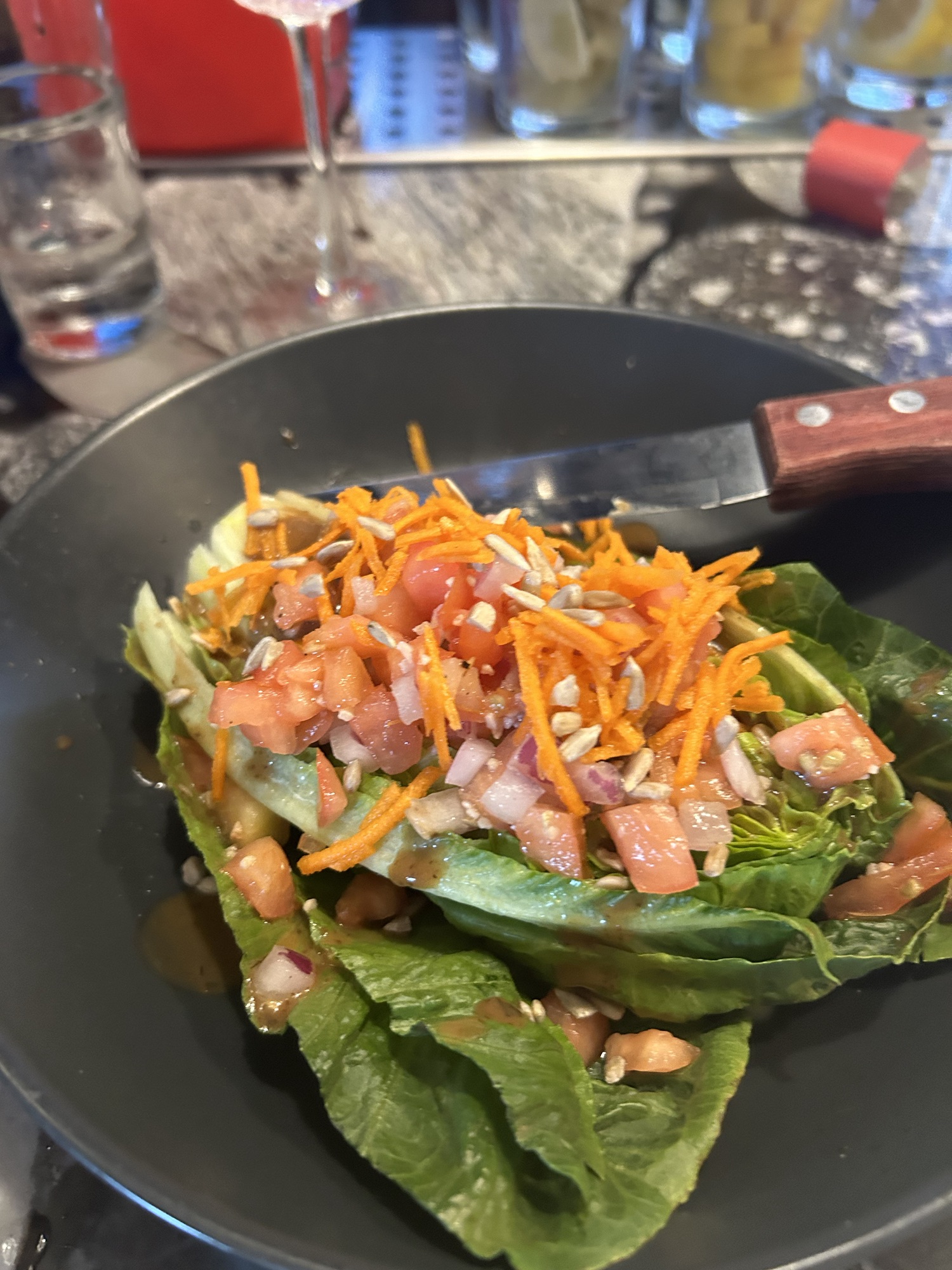
McKays Public House at Bar Harbor, ME: mixed greens tossed in maple dijon dressing, with roasted onions, carrots, and beets, feta cheese, candied walnuts topped with a gluten free veggie burger and served with a side of broccolini.

Connection and Communication: The Human Side of Dining 😊

I have also learned to befriend the wait staff.  Honestly, I try to do this anyway because I like meeting new people, and I cannot imagine how demanding it must be when working with the public, especially in popular travel destinations. When I politely explain my situation and dietary preferences to the staff without demanding it, most staff and chefs are willing to work with me. I have even had the rare chef visit my table to discuss the best way to prepare my food, which I appreciate more than words can adequately express.

A plate featuring a serving of colorful salad topped with various vegetables, accompanied by a side of grilled asparagus and a bowl of green beans. The setting appears to be a casual dining location.
Brewhouse Bowl BJ’s Restaurant and Brewhouse, Hagarstown, MD: Roasted barbacoa cauliflower; Peruvian quinoa + brown rice; black beans; corn + fire-roasted red pepper succotash; cucumbers; pickled red onions; pico de gallo; feta cheese; housemade guacamole; Greek yogurt crema; and,cilantro served with a side of broccoli and asparagus.

Flexibility and Food Choices: Finding Balance ⚖️

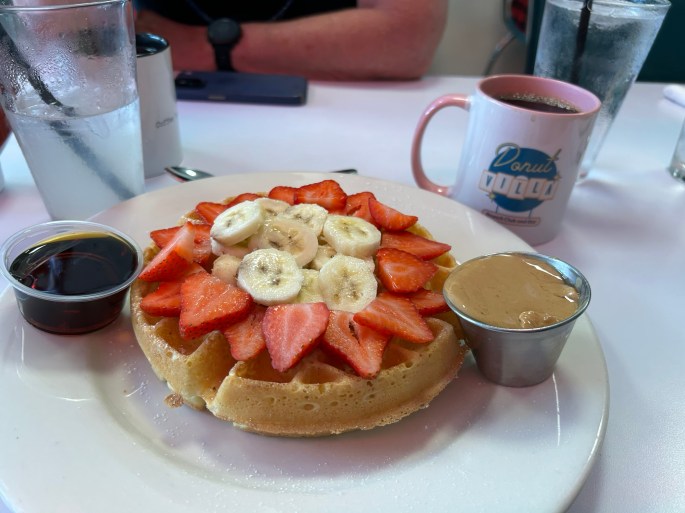
A plate with a waffle topped with sliced strawberries and bananas, accompanied by a small cup of peanut butter and a small container of syrup, set on a table with beverages in the background.
Gluten free, vegan Belgian waffle at Donut Villa Brunch Club and Bar, Boston, MA: topped with strawberries and banana served with sides of peanut butter and syrup.

One other thing I have learned to do is to compromise. While I prefer to eat whole food, plant based, I medically need to eat gluten free. Therefore, if it comes down to it, I will compromise somewhat on my plant based eating. For example, I don’t mind consuming a bit of goat or Parmesan cheese, yogurt, butter, or even the rare egg (think baked goods) if it allows my family to find meals they enjoy. Since I don’t regularly consume these products, I don’t think eating a bit here and there, such as during travel or other special occasions, will hurt me, and it makes the food feel like a real indulgence.

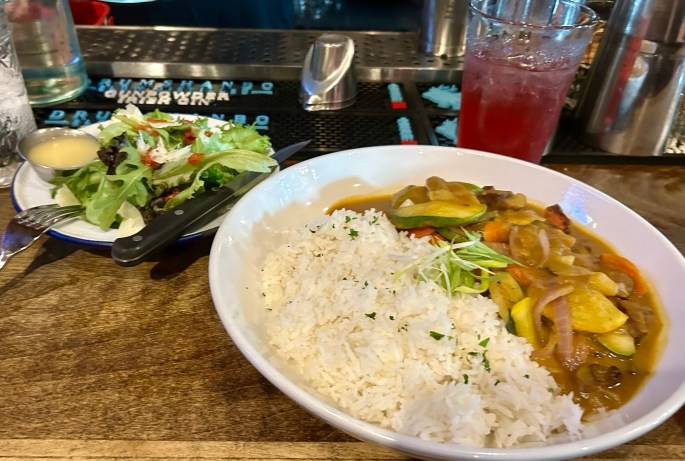
A plate of rice accompanied by a colorful vegetable curry, served with a side salad and a drink in the background.
Butternut Squash Curry at Leary’s Landing Irish Pub, Bar Harbor, ME, with roasted seasonal vegetables and jasmine rice.

A New Way to Experience the World Through Food

Traveling with celiac disease and/or other dietary restrictions is undoubtedly challenging, but I have learned over the years that it is not impossible with enough preparation, advocacy, and an adventurous spirit.  I have found that I now value and appreciate eating establishments who craft foods to appeal to a wide array of dietary desires. Additionally, I have met unique and wonderful people while doing this, and I have enriched my own knowledge of possibilities when it comes to cuisine.  It’s like, well, having your gluten free cake and eating it too! 

A bowl of chia seed pudding topped with banana slices, strawberries, and blueberries, accompanied by two slices of toasted bread with peanut butter, served in a diner setting.
“Morning Jump Start” at J’s Diner, Hagarstown, MD, with chia pudding, berries, banana, coconut flakes, and toast with almond butter.

Share your experiences

If you have tips for traveling with dietary restrictions, or if you have experiences you’d like to share regarding traveling with dietary restrictions, please share your comments!

A sizzling plate of colorful sautéed vegetables served at a restaurant, accompanied by tortilla chips, condiments, a glass of water, and a bowl of black beans.
Fajitas at Angela’s, Taste of Puebla, Mexico, Boston, MA, with sauteed onions, green and red peppers. Comes with shredded cheese, pico de gallo, guacamole, sour cream and flour tortillas. Served with rice and beans.
A cup of chocolate ice cream with chocolate chunks on a paper napkin.
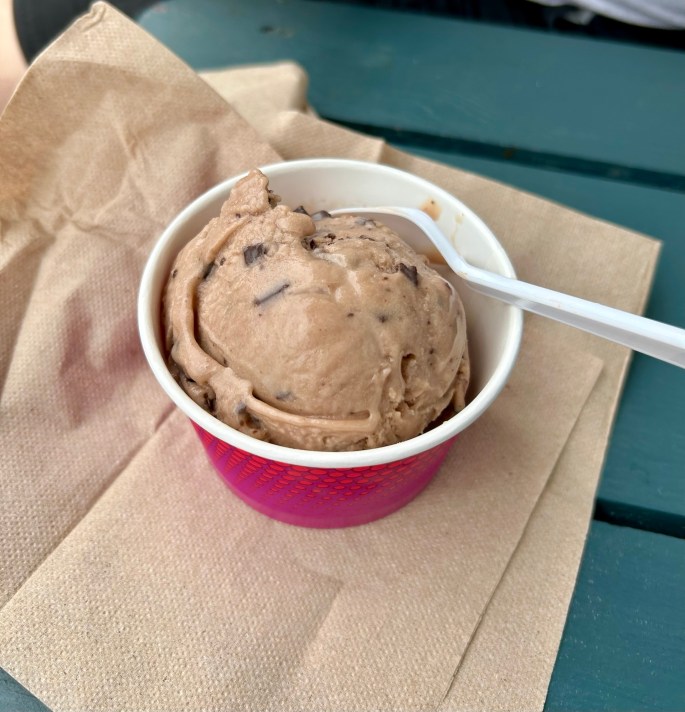
Plant based chocolate ice cream at Salt Shop, Sweet and Savory Snack Bar, Southwest Harbor, ME.

Embracing Limitations: Lessons from the Asheville Half Marathon

God, grant me the serenity to accept the things I can not change, the courage to change the things I can, and the wisdom to know the difference.”–Prayer for serenity

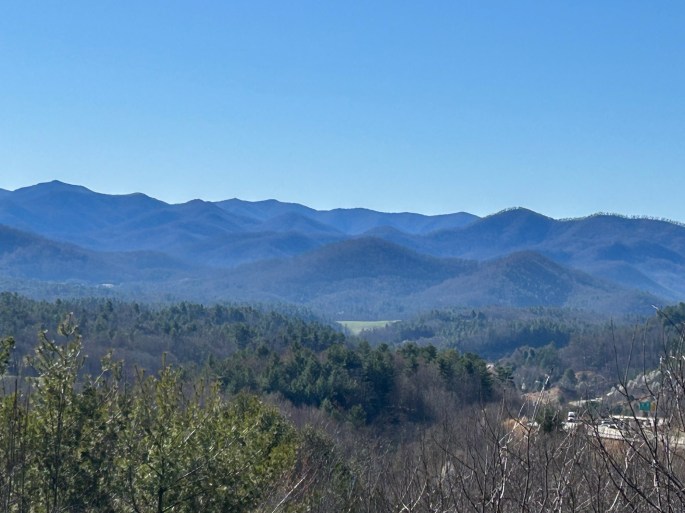
The Blue Ridge Mountains outside of Asheville, NC.

“the mountains are Calling . . .” ⛰️

I had been training for months, despite the challenges winter threw at me. Cold? I can handle it. Snow? I can run in it. Gusty wind? I can run that too. However, after my husband, John, and I crested hill after hill making our way into Asheville, North Carolina, I knew the town’s half marathon would offer a whole new level of challenge. 

To be clear, participating in the Asheville Half Marathon was an insignificant hurdle compared to what the people in Asheville, and all of the other residents of the surrounding areas/towns along US 23, have been facing as they deal with the aftermath of Hurricane Helene.

Driving along US 23, John, and I were able to witness that six months after Hurricane Helene angrily chewed through a large portion of the western Appalachian region, the recovery is still ongoing. However, the willful, and not-to-be-deterred, spirit of the residents was unmistakable. 

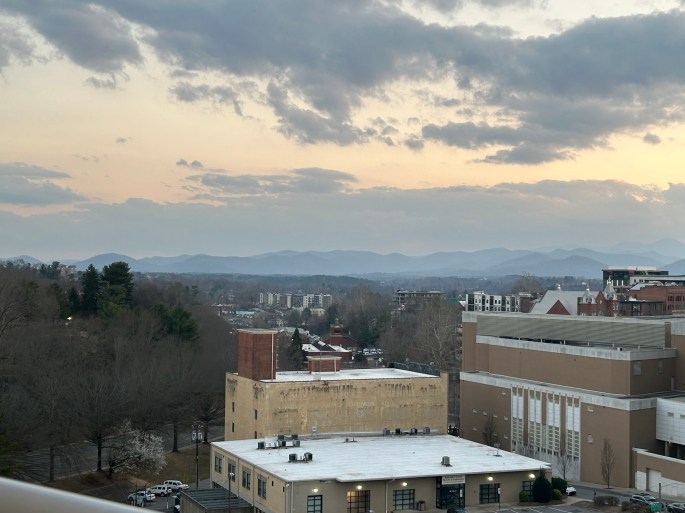
Rooftop view from Asheville of surrounding Blue Ridge Mountains.

A Tale of Two Sisters 👧 👧

This past fall, not long after Helene hit, the high school in which John and I work, welcomed two sisters into the student body.  They were from the Asheville area and were staying with relatives while their parents and older brother dealt with the devastation and destruction back home.

The girls were engaging and well-poised, especially considering their circumstances. Over the course of a couple months, I got to know them–not well due to the short duration of their stay–but well enough to swap personal stories from time to time. 

When they learned that like their dad, I often trained for half marathons, they immediately invited me to run the Asheville Half Marathon in March. They explained that by the time spring rolled around, the community would not be fully recovered, but the local economy would need the boost that runners and the accompanying spectators could bring. 

“You should definitely come, Ms. Hill.  You’d like the people of Asheville, especially the running community.” 

Once Asheville High School opened, the girls returned back home. And though I haven’t heard from them since, they planted a seed that grew into a shoot of curiosity. 

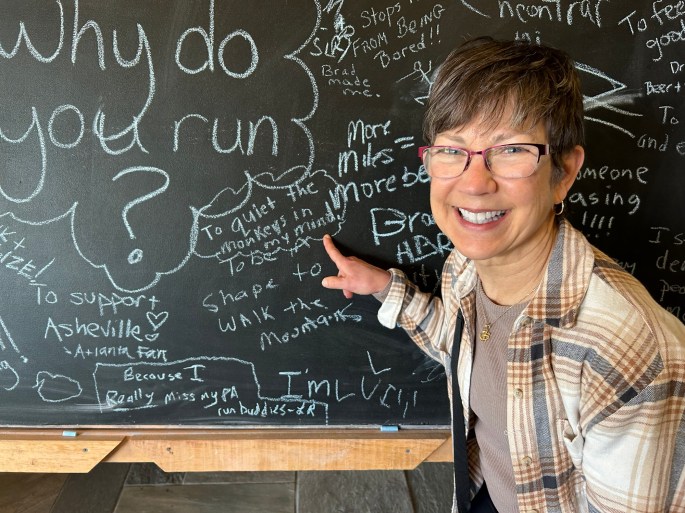
Runners were asked to sign the board stating why they ran.

Sign me up! 📝

Around Christmas, I checked the Asheville Marathon/Half Marathon website, and the powerful and persuasive prose describing the event increased my interest. The website’s editors artfully articulated the community’s belief in the significance of the annual running event. They stated the course’s route would not be “pristine or predictable.” Therefore, the event was for those who “thrive on resilience.” However, the line that sealed the deal stated, “If you’re ready to run in the face of adversity and be a part of Asheville’s comeback story, we can’t wait to see you on the start line!” 

John and I at gathering with other runners and spectators at the starting line before the race began.

Ready, set, Go! 🏁

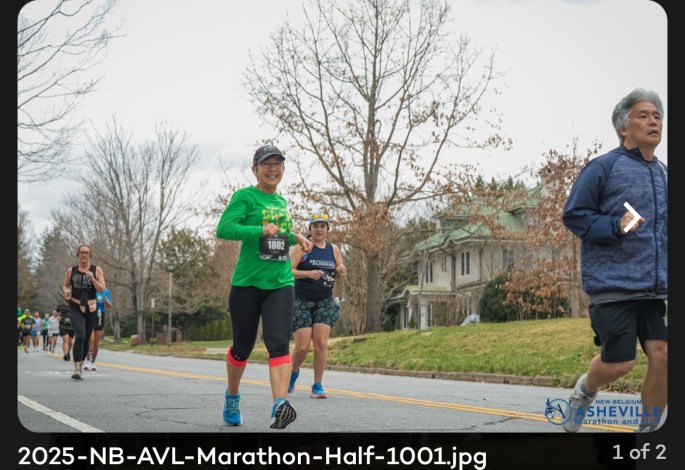
Soon enough, on a chilly, dark March morning, I waited at the starting line with approximately 2,200 runners from 40 states and three countries who also heeded the call to help support Asheville, according to The Weather Channel. The positive vibe was palpable as runners mingled with spectators. Nonetheless, I was feeling a bit nervous as I recalled the half-marathon route’s elevation gain was nearly 800 feet, and its elevation loss was over 900.  

And, it was hilly.  From start to finish, there were no flat stretches. In the beginning, I read spectator signs claiming, “It’s all downhill from here,” with hope. It didn’t take long to realize those signs lied!  Even the finish line required running uphill, but I am “running” ahead of myself.

Running is a metaphor for living life, and it is always whispering (or sometimes shouting, as this event seemed to do) lessons to those of us willing to listen. Accepting limitations–was the lesson those relentless hills of Asheville taught me. Which makes sense since this is what many of the residents of Asheville and the western Appalachian area had to do during, and now after, the storm–accept and deal with limitations. 

Whether literal or metaphorical, storms of life cause us to suffer. As I repeatedly tried to power through those uphills during the first half, my ego kept telling me to push harder, creating suffering. However, as a late-in-life runner lacking inherent running talent, the reality is that race events for me are more about creating motivation and structure to consistently get me out the door to exercise. At the end of the day, I am not about to set any records; I am not even close to winning my age group, so why was I pushing so hard?

And so, it was on a hill, not long after milepost seven, that I decided to accept my limitations. Sure, I had trained on hills at home, but nothing like this. Why not power walk up the rest of the hills, and then run the downhill portions?

Asheville taught me to accept my limitations.

There is a newfound freedom in accepting one’s limitations 🏃‍♀️

Once I accepted my limitations, there was freedom. I had a new way of being present with the race challenges as they unfolded. This acceptance gave me permission to slow down, take in the sites, and feel a sense of gratitude for my health and ability to make this trip. 

Additionally, by walking the hills, I had more energy to offer encouragement to fellow runners I encountered who also seemed to be struggling. (After all, I run at the back of the pack, where we could all benefit from a little encouragement.) Furthermore, I was also able to offer thanks to the spectators who manned drink stations, rang cowbells, or waved motivating signs with clever phrases such as, “Touch here for power,” “You’re stronger than any storm,” or “You’re running better than our government.” 

By the time I crossed the uphill finish line, tears filled my eyes as I raised my hands in the air.  No, I wasn’t celebrating a personal record, but instead, I was able to celebrate that I crossed the finish line with grace, humility, and a lesson learned. 

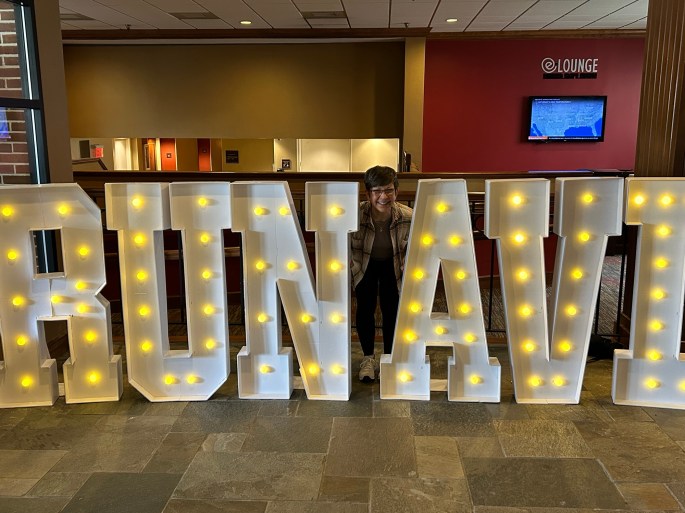
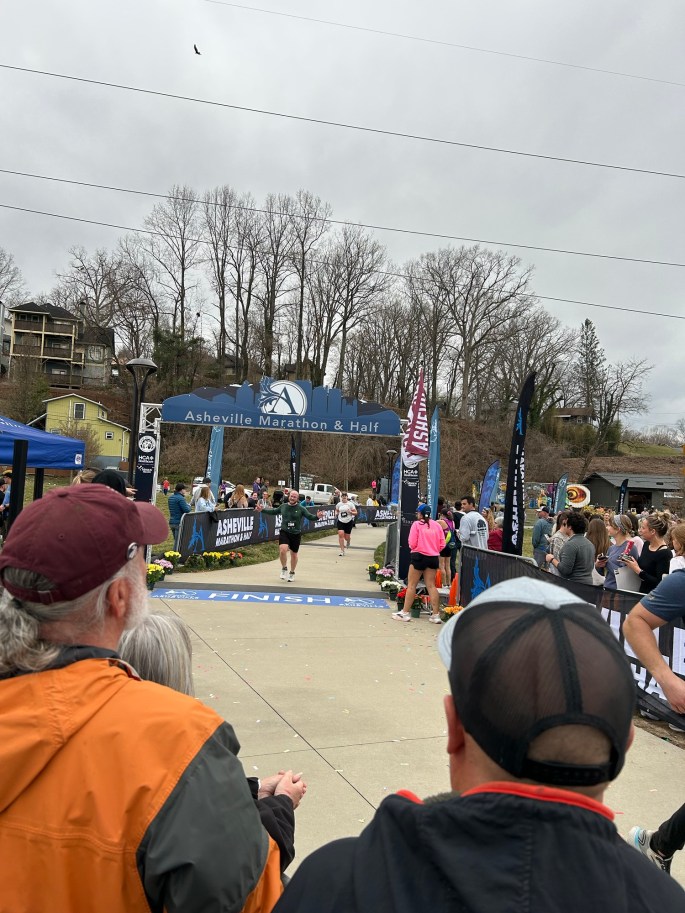
The AVL finish line of through which I would later cross humbled, and grateful, by another lesson running once more provided me.

The lesson? Transforming suffering can only occur if we are willing to be with it and accept the limitations it creates. Accepting limitations can be transformatively freeing, allowing us to lean into newly created possibilities we may not have been able to previously envision. I am not saying that accepting our limitations is not easy. However, once we let go of ego and embrace humility, it is possible to embrace the freedom that comes with focusing on what we CAN do.

Thank you , Asheville! I walk away from the finish line with grateful heart and a lesson learned. Furthermore, thank you, Hannah and Allison! I wish your family the best! 💜

Charming Rodanthe: An OBX Gem Facing Erosion Threat | Beach Memories

“The greater the love, the greater the tragedy when it’s over.”–Nicolas Sparks from the novel Nights in Rodanthe

Rodanthe, NC 🏖️

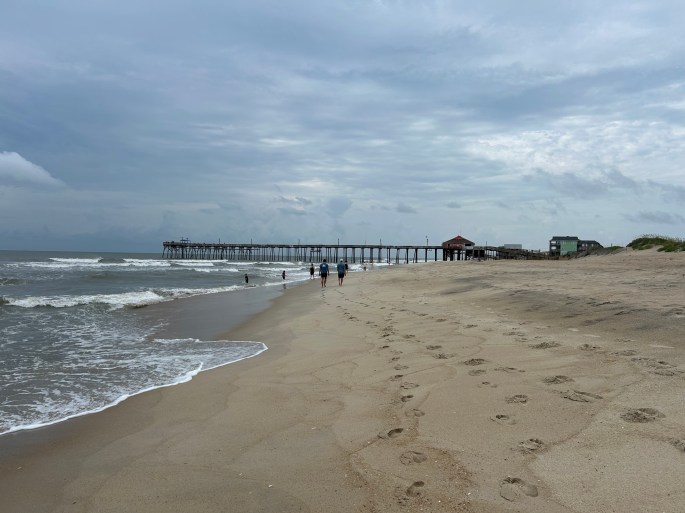
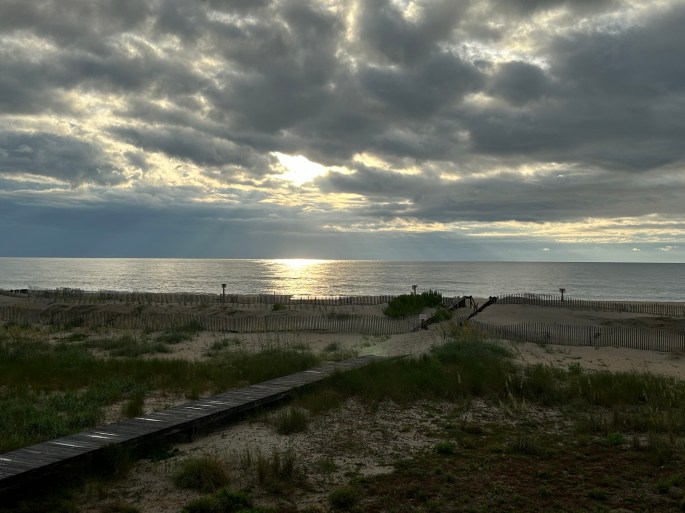
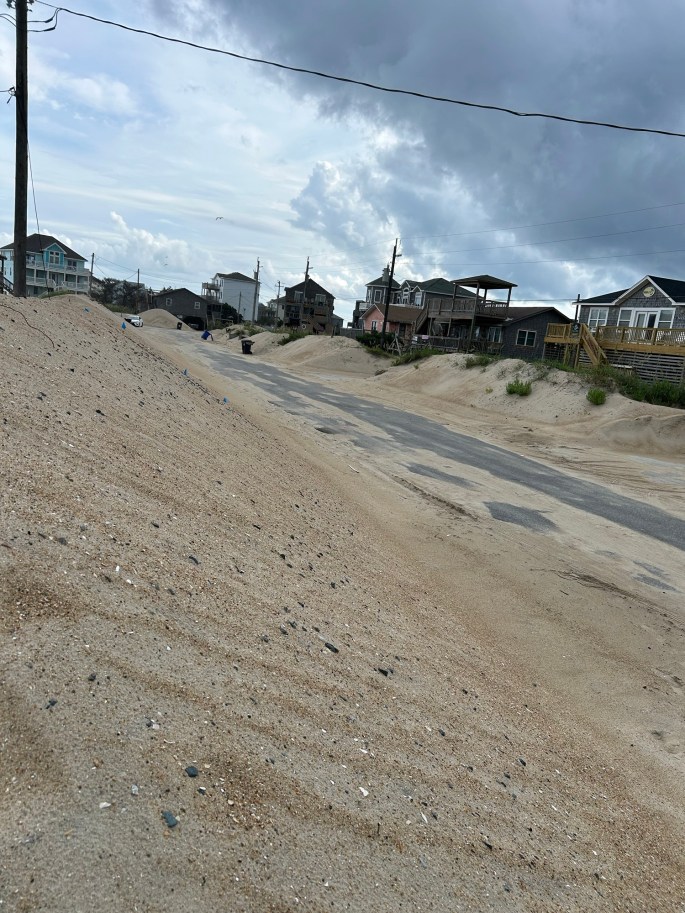
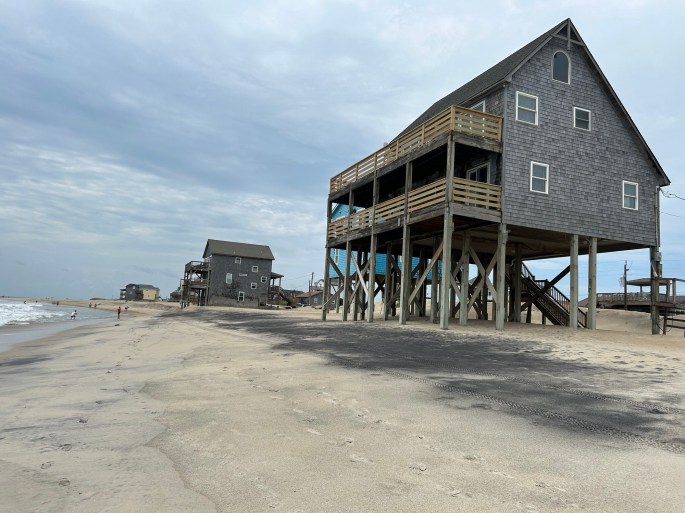
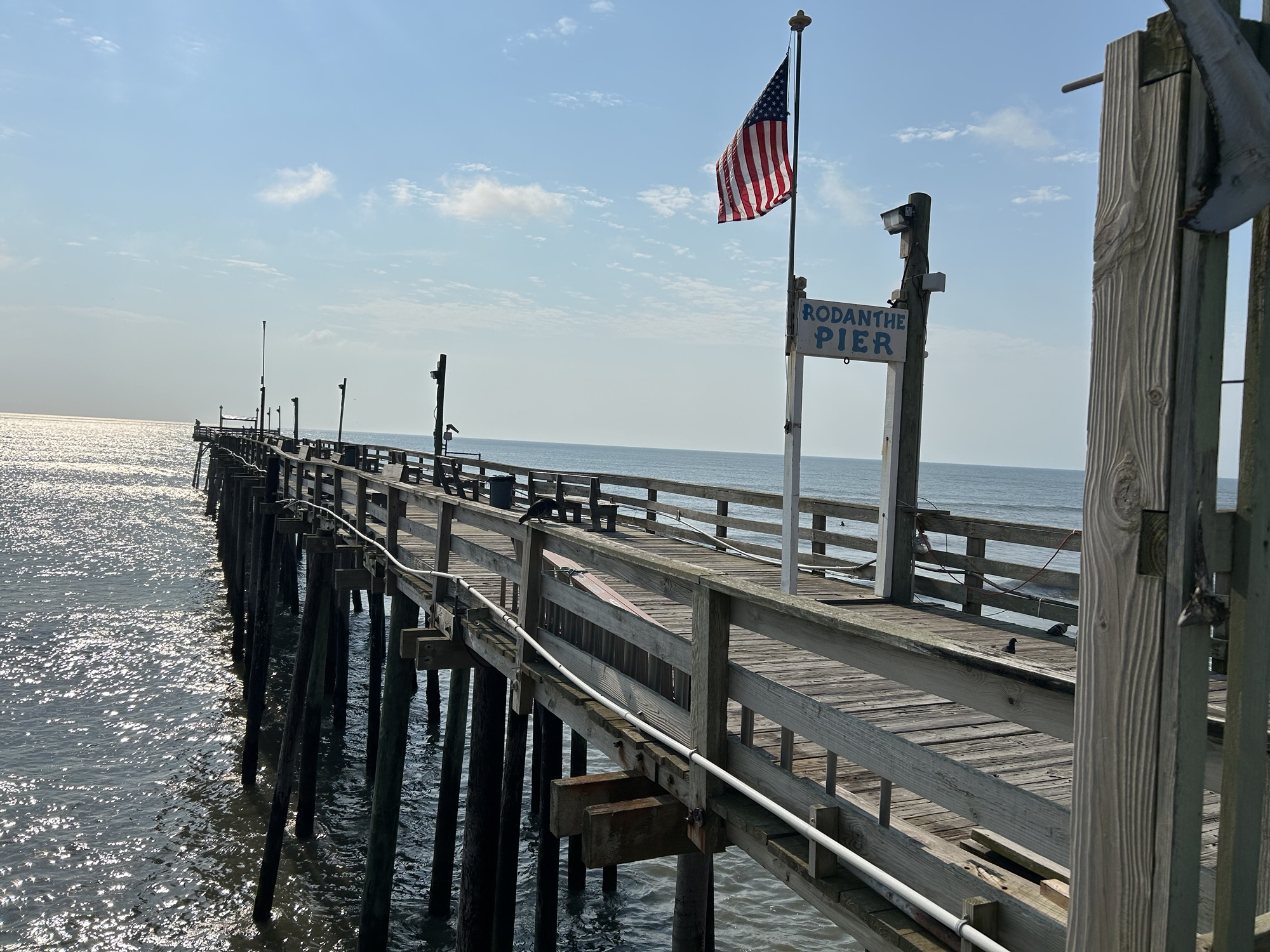
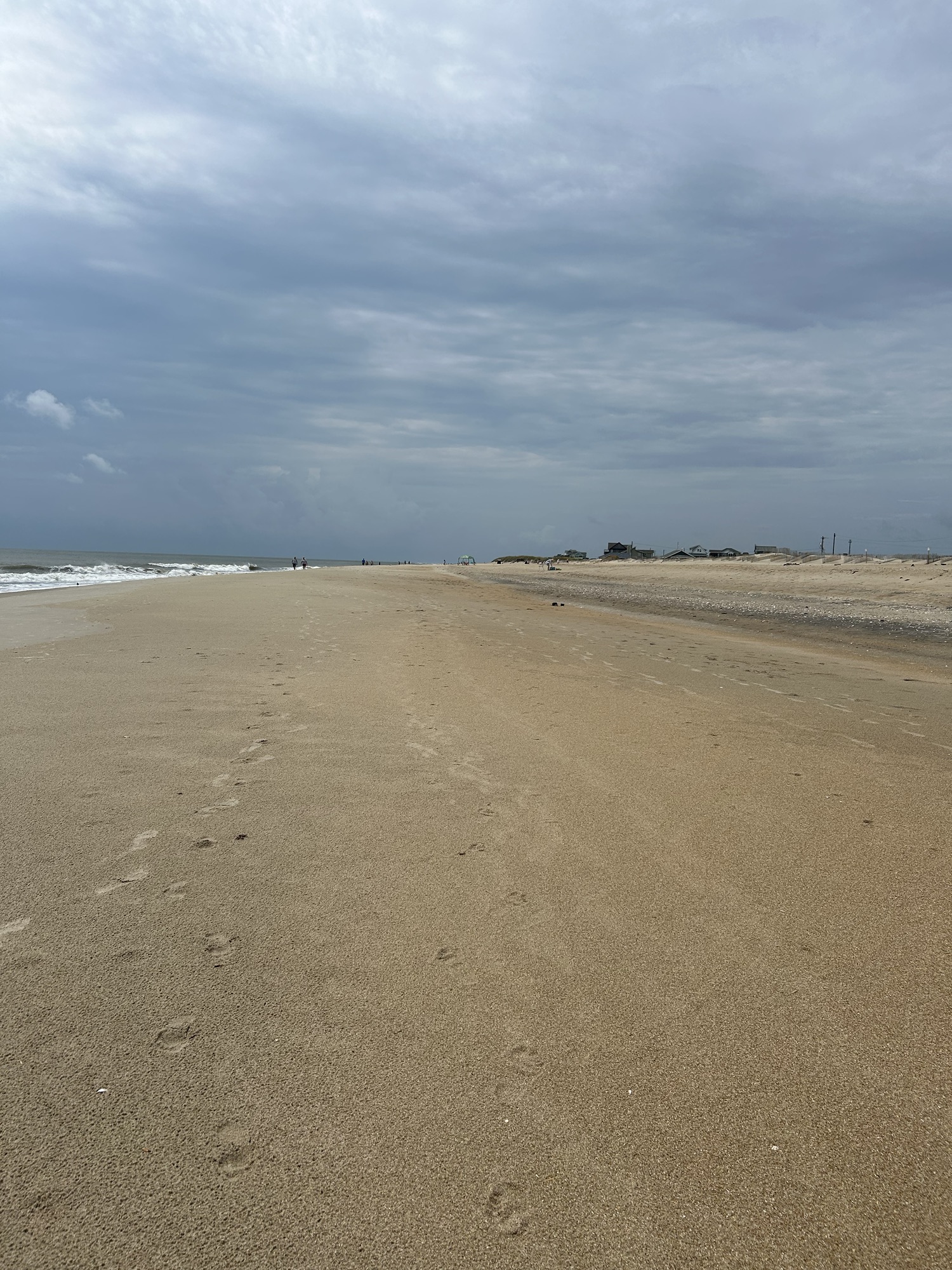
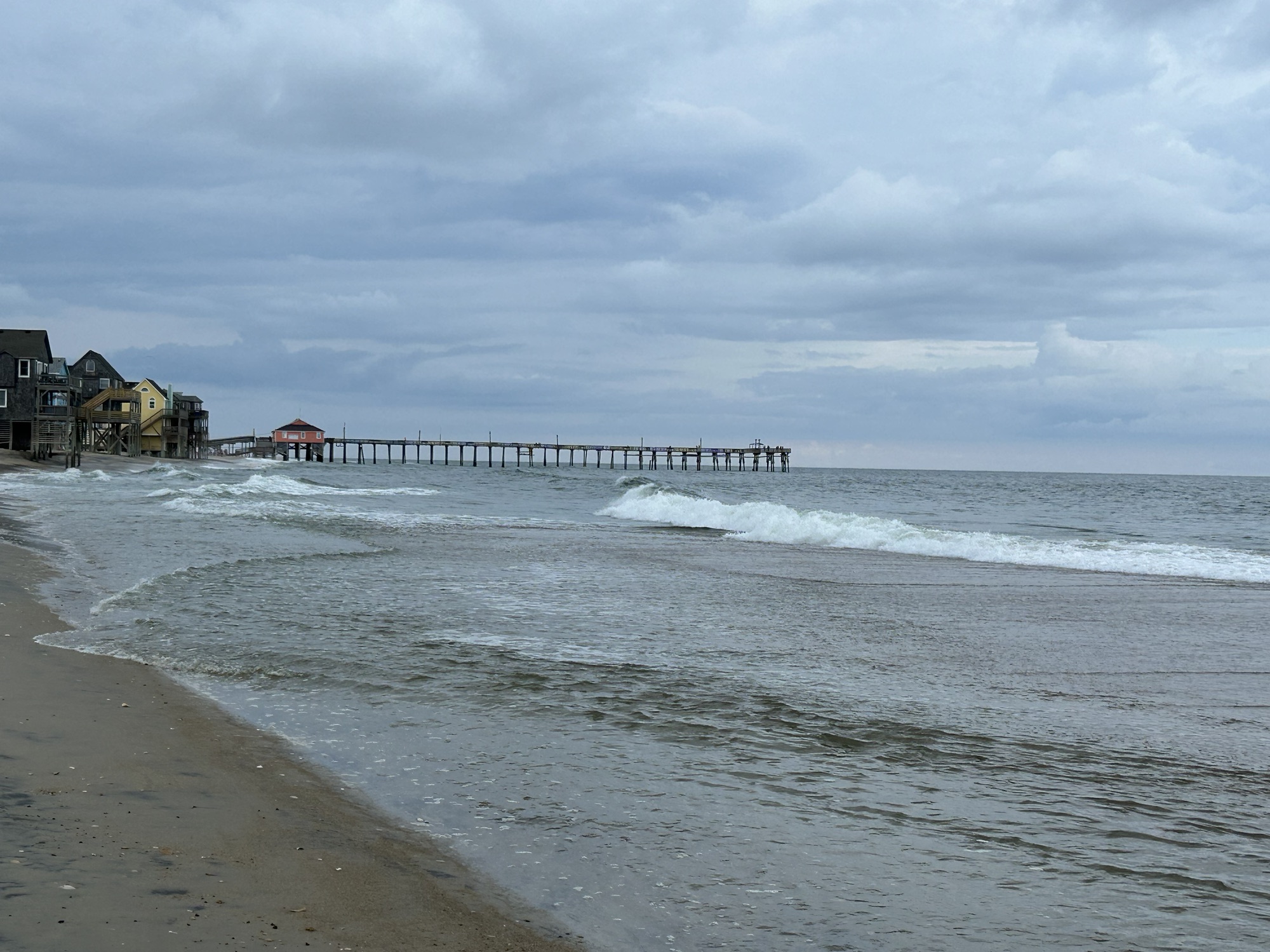
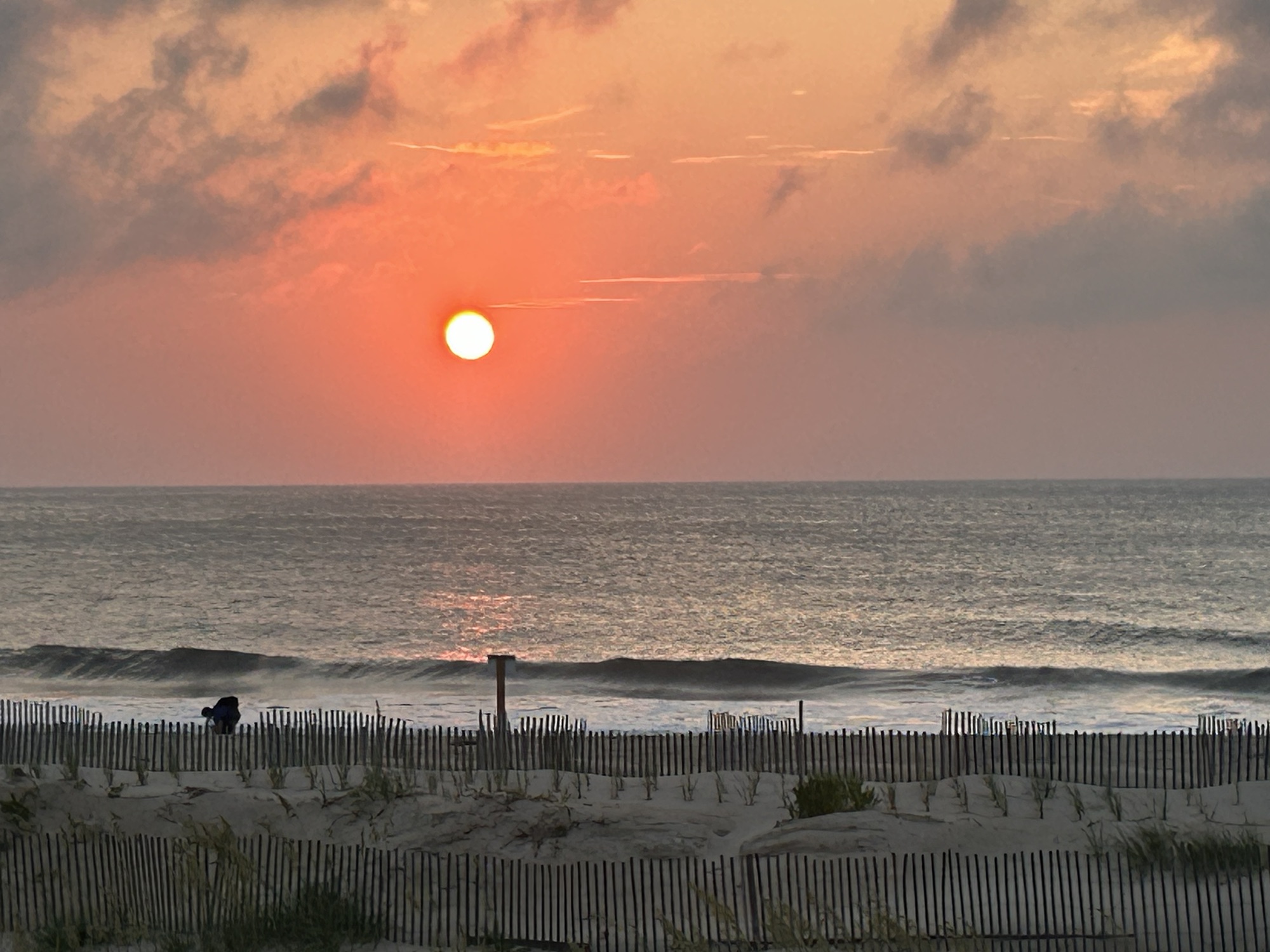
If you love the beach, especially the Outer Banks’ Hatteras Island, then you may experience something akin to heartbreak as more and more erosion occurs along its shores, especially to the small unincorporated community, Rodanthe, NC.  My daughter, Madelyn, and I visited Rodanthe, located on Hatteras Island, this past summer, and we certainly felt that way as we walked along its shores and witnessed the devastation first hand.  Walking along the Rodanthe beach, we noticed the remains of several beach homes and those that had been moved and/or jacked up on tall pilings.  Only a month after our visit, another home was washed out to the ocean with Hurricane Debby. 

Beach Memories 🌊

Years ago, when I was a teenager, my family financially reached a place in which our budget allowed us to schedule an annual week-long vacation in the Outer Banks of NC.  These trips were often book-ended with educational/informational side trips. But of course, as a kid, my interest, as well as my younger three siblings’ interest, was more focused on the beach.  

While most of our peers’ families spent time at Myrtle Beach, we were happy at the OBX, spending time building sandcastles, collecting sea shells, or writing our names and words of “wisdom” in the sand.  We learned to jump waves and stay atop boogie boards. And, if the surf was too rough, or we needed a break, we’d bask in the sun and read books.  At some point during the day, we’d walk back to our rental, usually “fourth row back,” and grab lunch or a snack. Then, we’d head right back down to the beach until it was time for dinner.

Beach Vibes 🌊

Even then, once dinner and showers were completed, my three siblings and I would head right back down to the beach in the evening to goof off with other kids who happened to be around or just hang out with one another.  We usually didn’t swim much in the evening, but we still found things to do that entertained us.  Of course, this was well before the age of the internet, much less cell phones, so we were easily amused by chasing ghost crabs, seeing who could do the best cart wheel, or loudly singing lyrics to a popular song into surf, and making fun of one another if one of us messed up or forgot a word.

During our first visit, OBX was not what it is now.  It was not as populated, and it was definitely not commercialized.  In fact, there were few stores and restaurants, especially where we stayed–just beyond Duck, NC–and there were virtually no grocery stores other than a couple of local gas/convenience type stores.  Therefore, as I best recall, we packed coolers and boxes with a fairly large quantity of groceries to take with us from home. There were a few beachy/trinket shops and bookstores nearby, but most souvenir shops were a considerable drive away. But, oh boy did that change over the following decade. . .

Traditions change ⏱️

As the years progressed, and I married my husband, John, we continued to visit the OBX from time to time, but gradually the yearly tradition faded.  It was not because we were no longer enamored with the OBX; rather, there were so many other locations across the country and Canada that we had not yet explored.  Nonetheless, from time to time, we would get the urge, and once more spend a week or so in various places along the OBX, including as far north as Carova Beach and as far south as Avon–even visiting Ocracoke a time or two. 

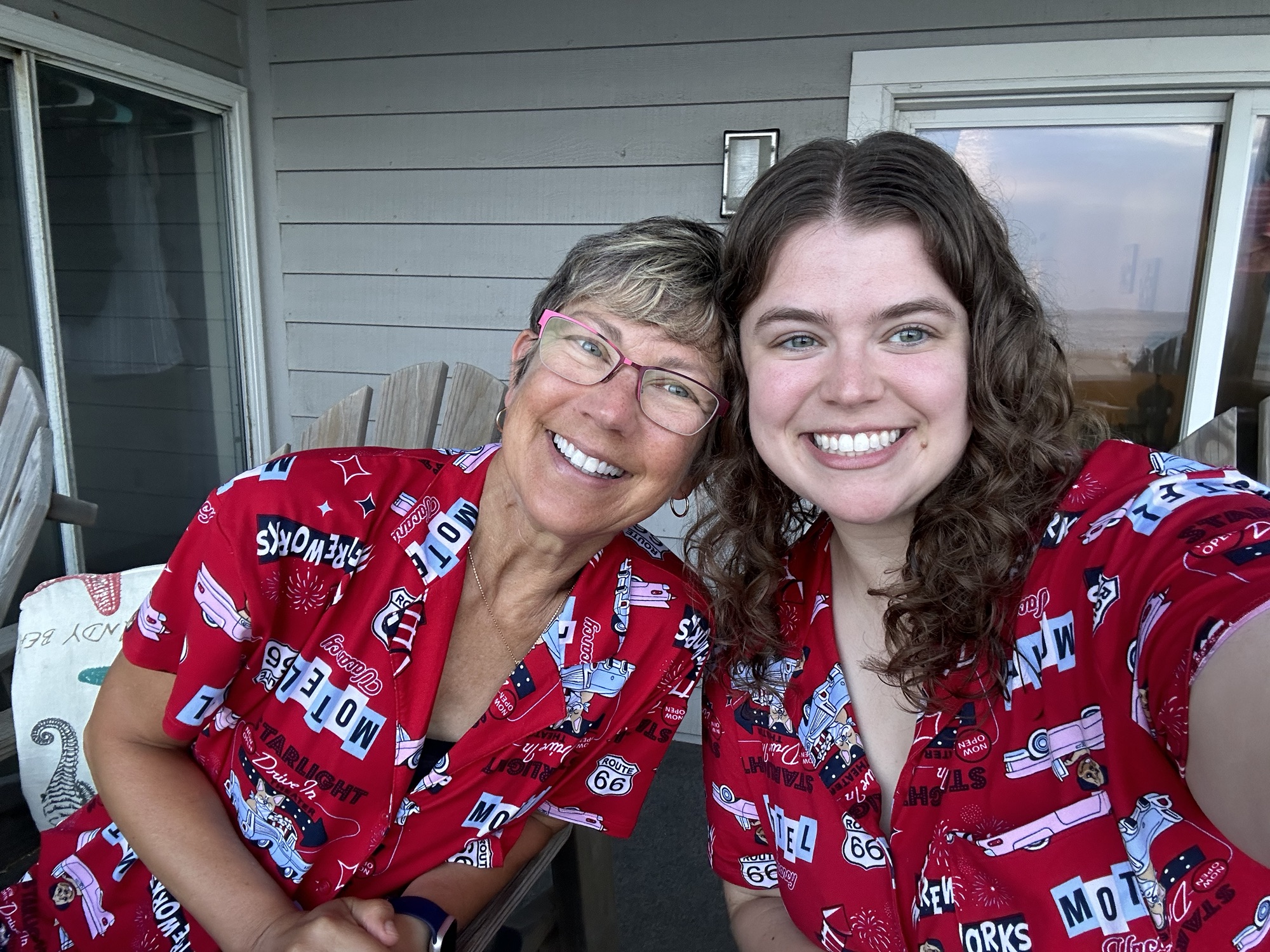
Such was the case this past summer.  It had been years since our last OBX visit, and Maddie and I had grown nostalgic with a desire to visit its shores once more.  There was a week in July when John was heading north once more fishing, so Maddie and I decided that would be an ideal time for a mother-daughter escapade.  We settled for a condo in Rodanthe, an OBX locale we had only driven through on previous stays.

Mother-Daughter time 🐚

Before heading to Rodanthe, we decided to take one night to stay in Nags Head, experience a couple restaurants and do some shopping.  However, after that first night, we drove on to Rondanthe and did not leave the island. We absolutely loved the community of Rodanthe and further enjoyed the sights and sounds of its beaches and surrounding nearby Hatteras communities. 

Rodanthe, Waves, and Salvo are charming beach communities connected like colorful beads on a chain. Each one has its own special appeal, but seemed to work best as a collective.  There is a well-maintained sidewalk on the sound side of North Carolina Highway 12 that spans the length of the three communities, and the communities often have shared events for the public to enjoy. 

Island Time ☀️

While the closest national chain grocery store is a Food Lion, located in Avon–about a 22 or so minute drive–there are several smaller grocery and convenience stores that are well-stocked.  There were also several restaurants and shops nearby that Maddie and I enjoyed visiting. One of our favorites was Good Winds restaurant located on the Pamlico Sound–a perfect spot for watching the sunset.  That said, we mostly found our favorite activities centered around the ocean–walking, swimming, and sitting by its side experiencing the full sensory spectrum of being on the shore. Personally, I have yet to lose my sense of awe and wonder at the sight of crashing waves on a shoreline.

Eroded shores 🌊

Ironically, it is those very crashing waves that have taken seven homes from Rodanthe in the past four years! This most eastern point of NC is sadly experiencing 15 feet of erosion per year, according to a recent post (August 2024) by WRAL News. According to this source, Rodanthe doesn’t have a large enough tax base to pay for the beach renourishment required to maintain such a large quantity of erosion.  However, given the island itself is about a quarter of a mile wide, I can’t help but wonder about Rodanthe’s future and feel heartbroken at the prospect of so much loss at such a beautiful, serene location. 

All I can say is that I absolutely hope to return in the coming years.  While I do love exploring new sights, there is something comforting about spending time at the OBX.  For me, it’s like putting on a comfy pair of sweatpants and t-shirt at the end of a long day, relaxing into the soft familiarity of being able to relax because I am home.  OBX was my first beach love, and while I know there are beaches, there are none that will quite replace the embrace I feel from those NC 12 shoreline winds.

Discovering Niagara-on-the-Lake: A Hidden Gem of Ontario 🌟

Nestled in the corner of the Niagara Region just beyond Niagara Falls, the picturesque Niagara-on-the-Lake epitomizes old town charm.”–niagarafallstourism.com

Hidden Gem 💎

Green Oaks Bed & Breakfast

Niagara Falls is a popular travel destination with good reason.  John, my husband, and I visited the falls last year for the first time. However, not far from the falls, and to the north, is an often overlooked gem-of-a-destination: Niagara-on-the-Lake. John and I traveled to the idyllic NOTL after spending a week in Charlton Lake Camp in the northern part of Ontario. 

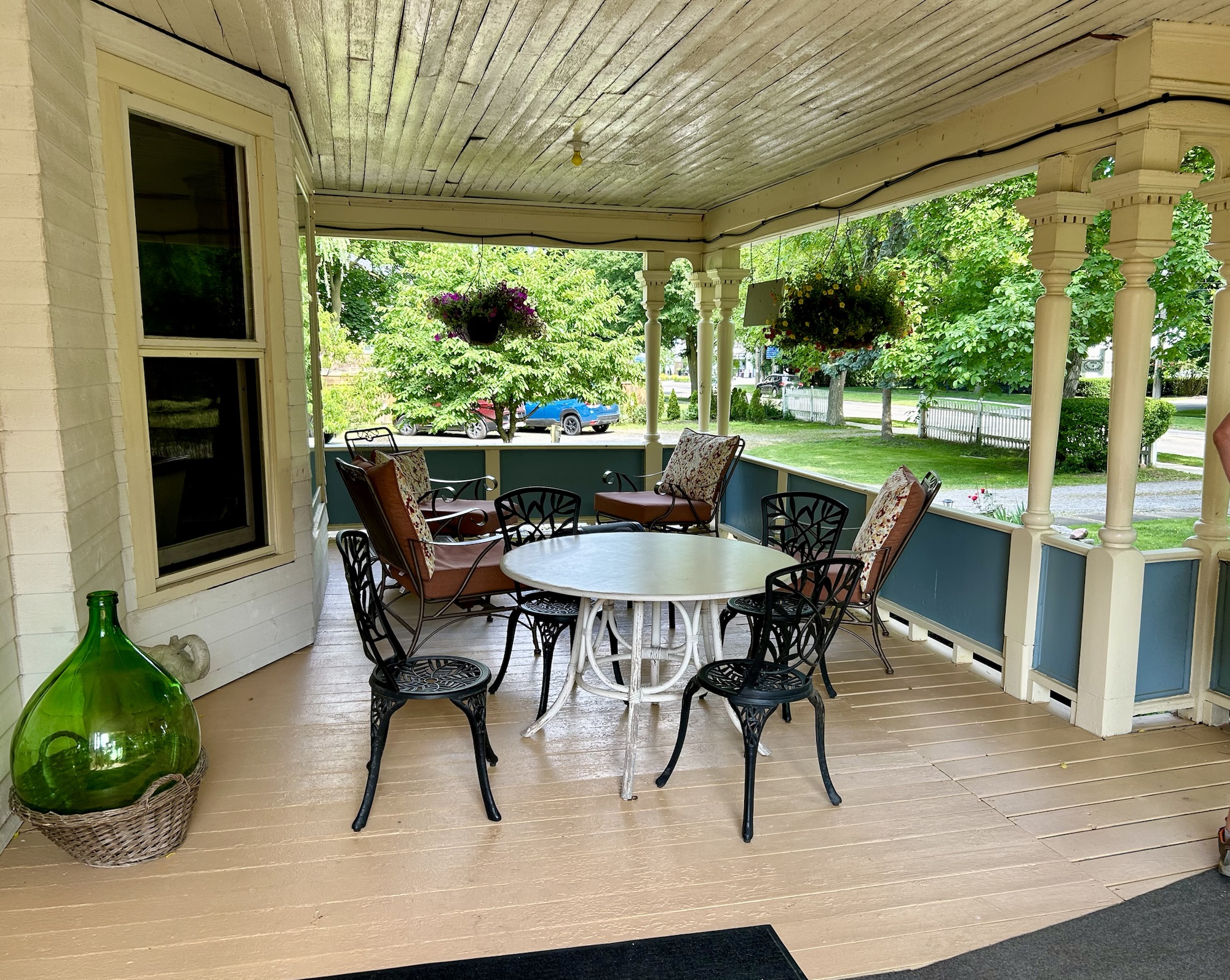
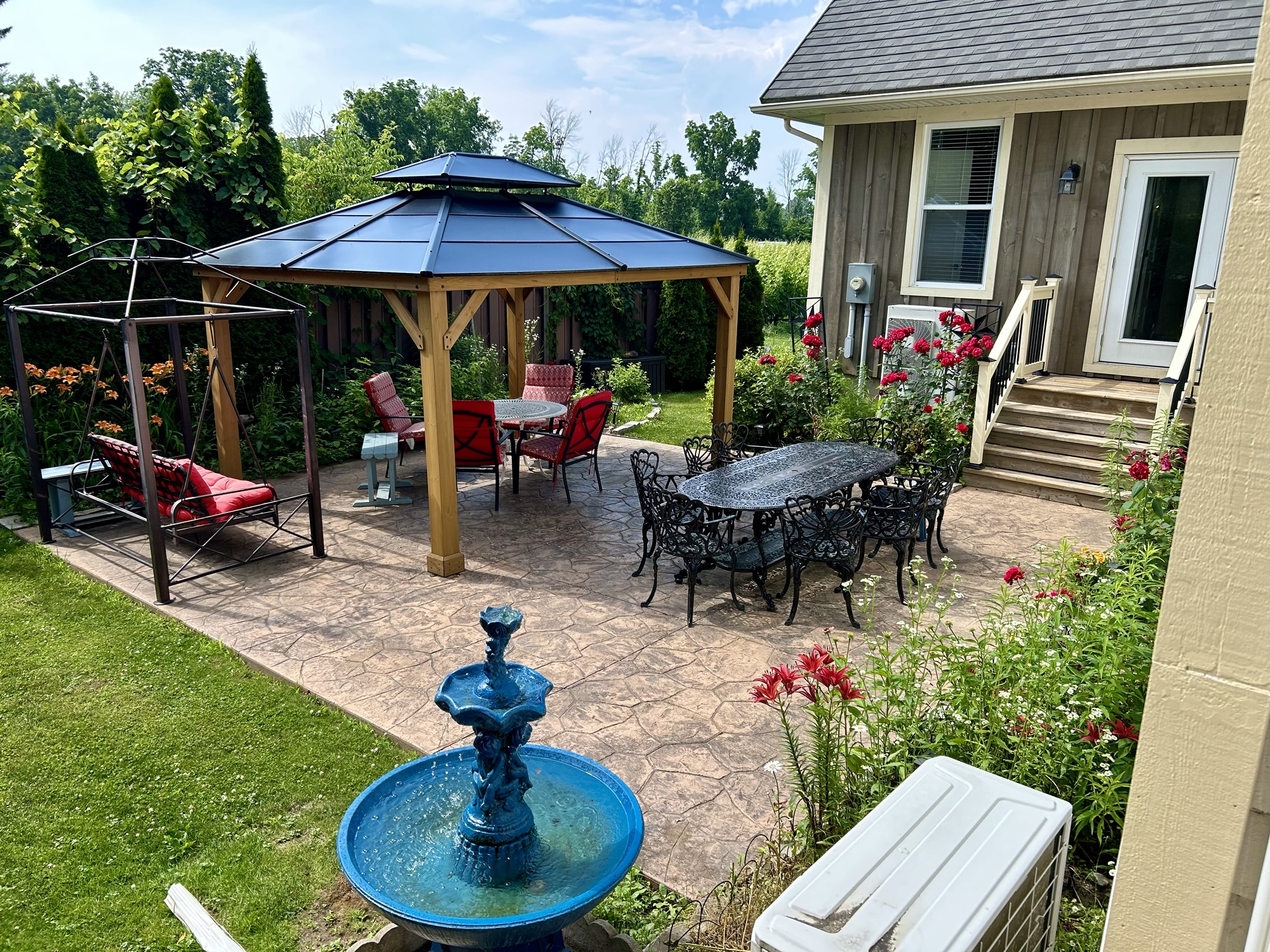
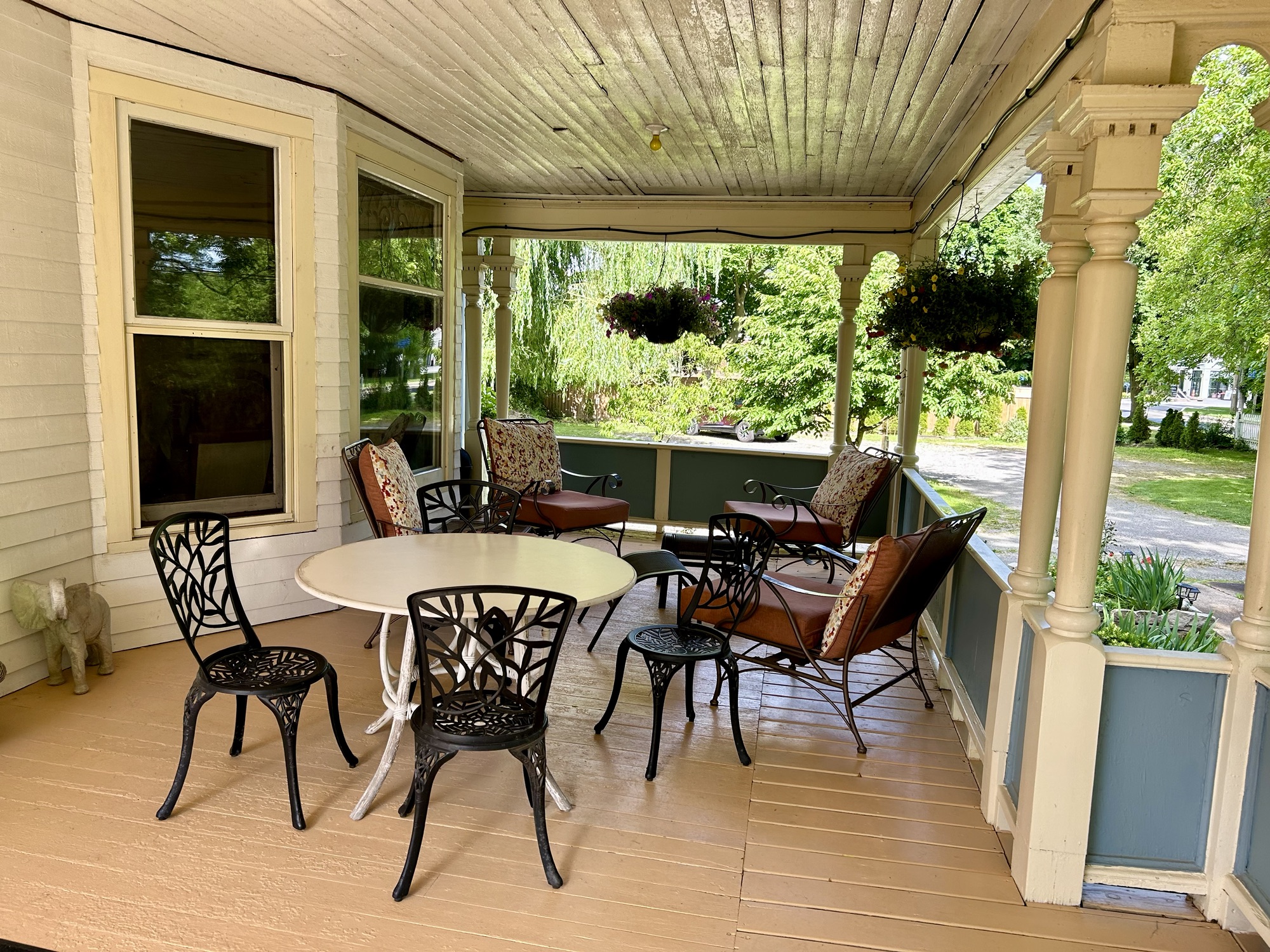
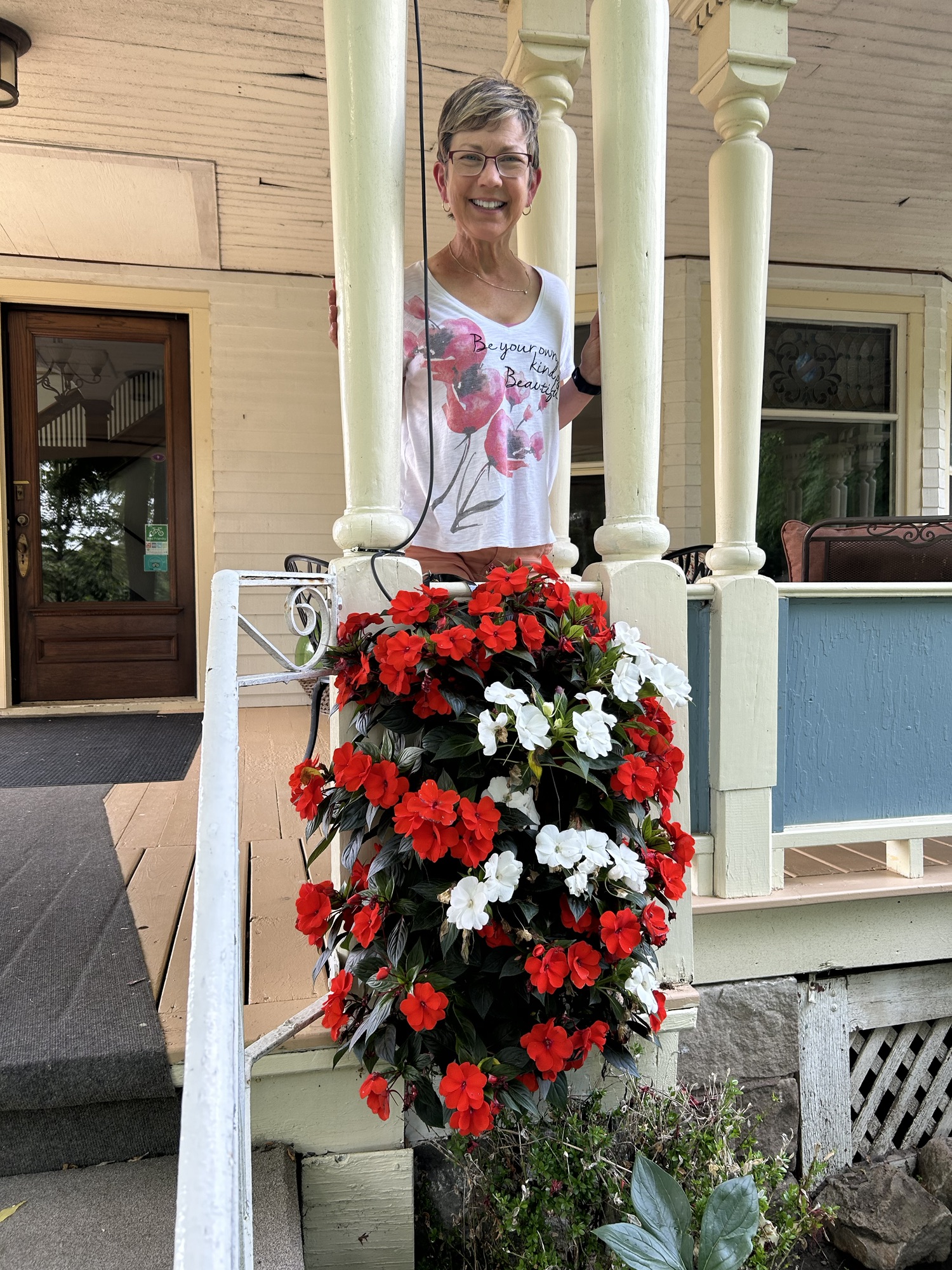
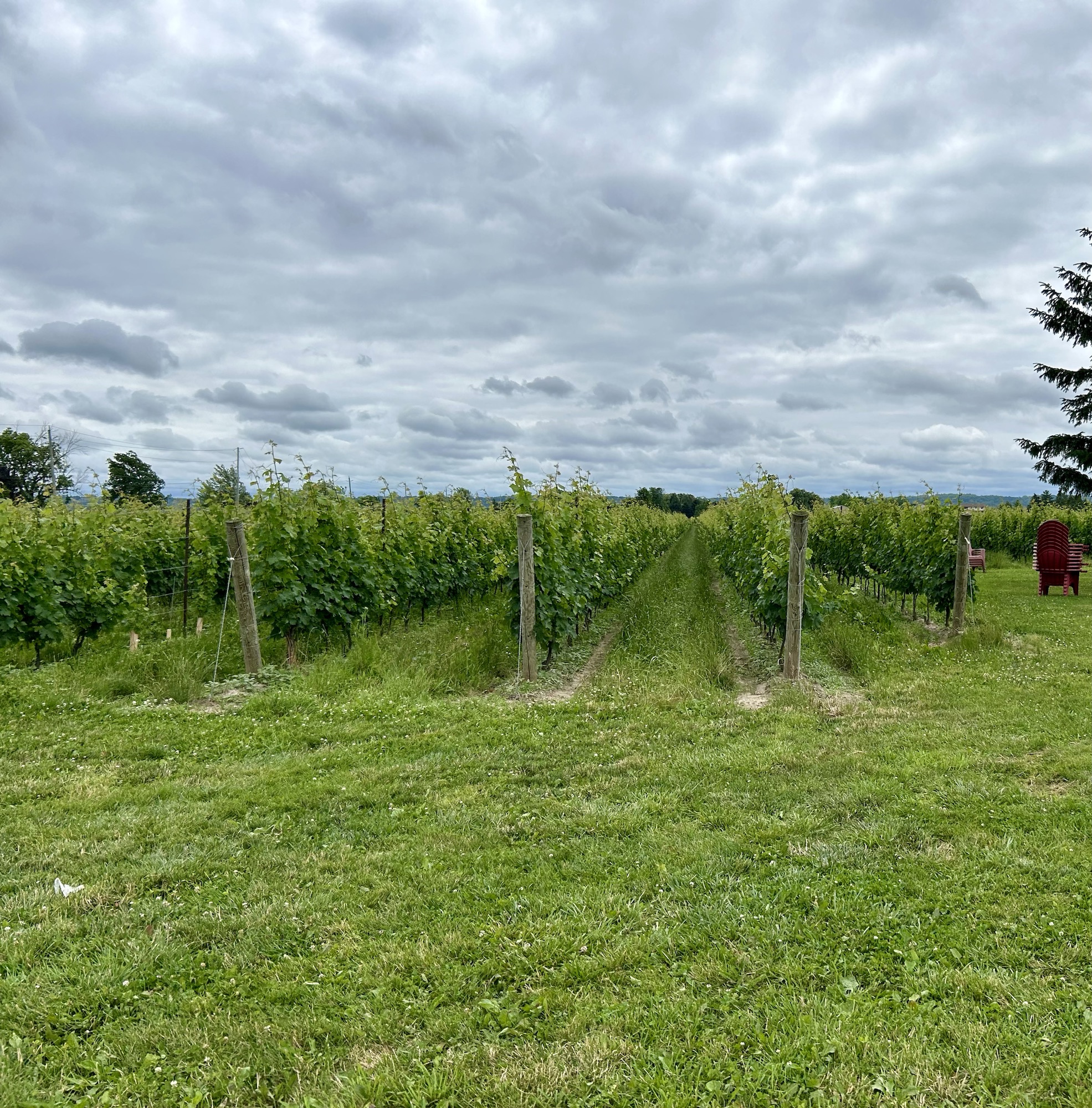
We had the good fortune of booking a couple of nights at Green Oaks Bed and Breakfast, conveniently located to all things Niagara. Surrounded by vineyards, farms, orchards, and scenic views, our B & B was located in St. David’s, not far from Niagara-on-the-Lake (NOTL). As we arrived, we took note of the B & B’s picturesque setting: draping willow trees, flower-lined walks, the expansive front porch with a patio off to one side, a large vegetable garden in the back, and chickens–as well as a few rogue squirrels–roaming a side yard. 

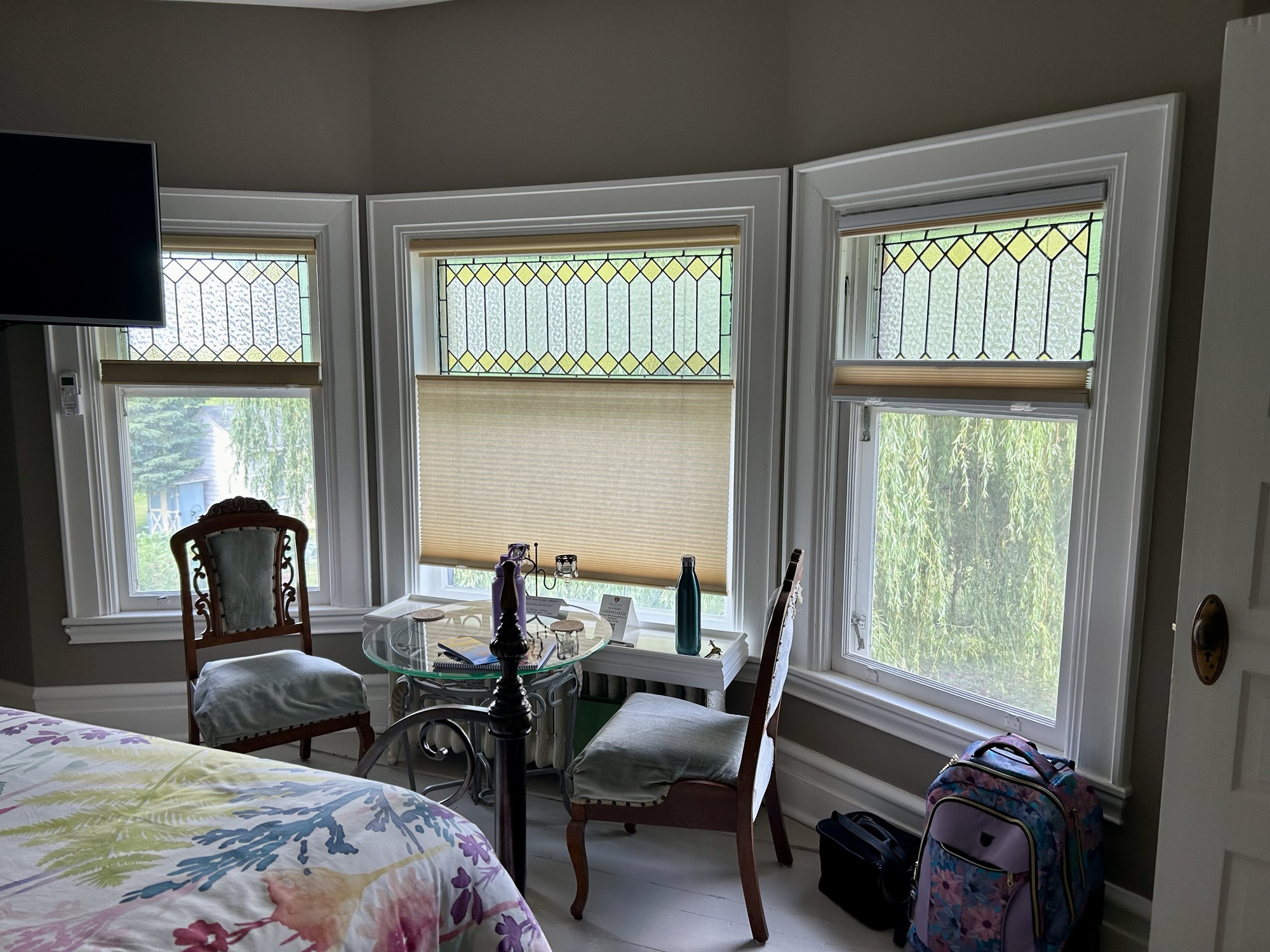
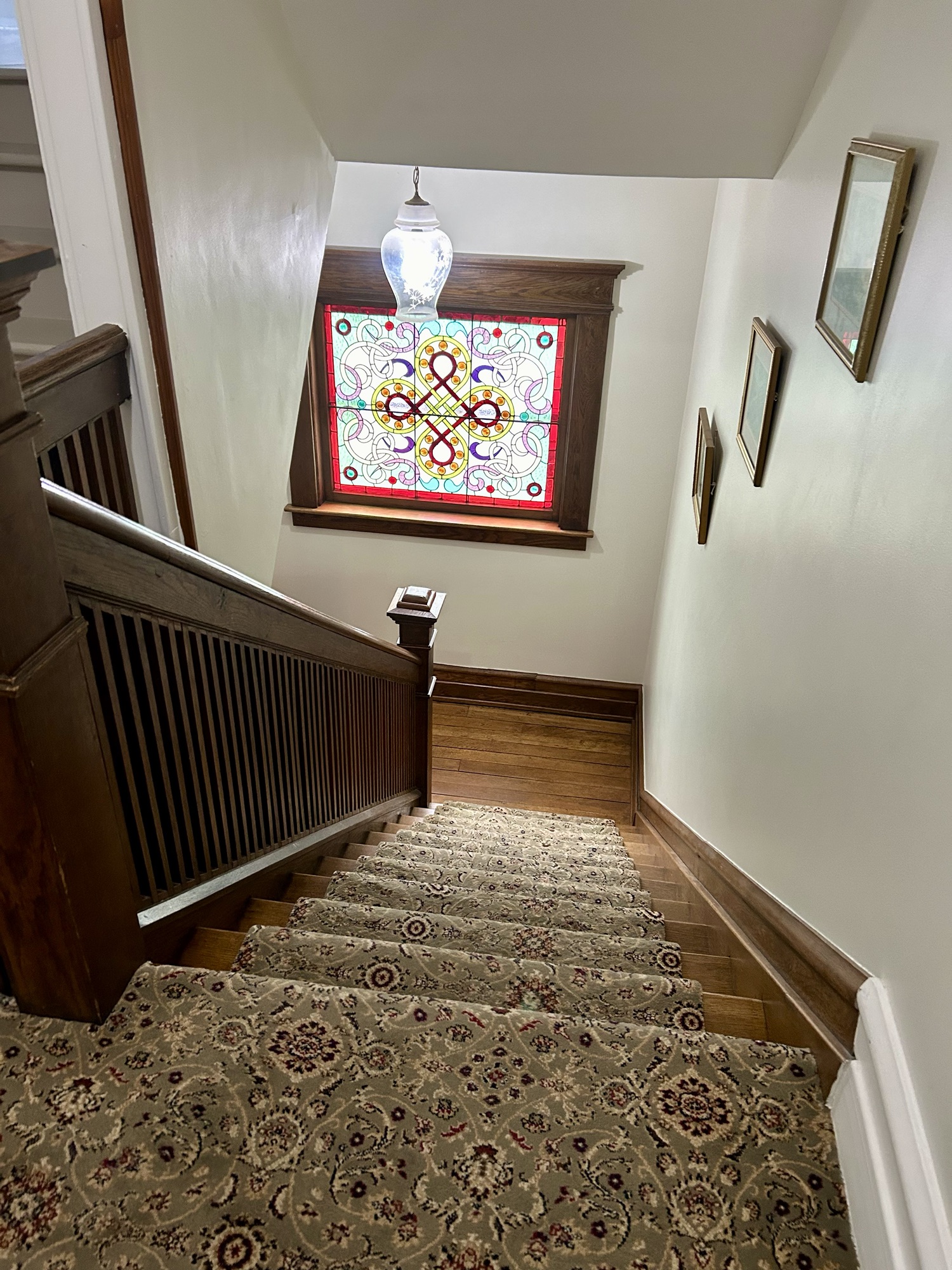
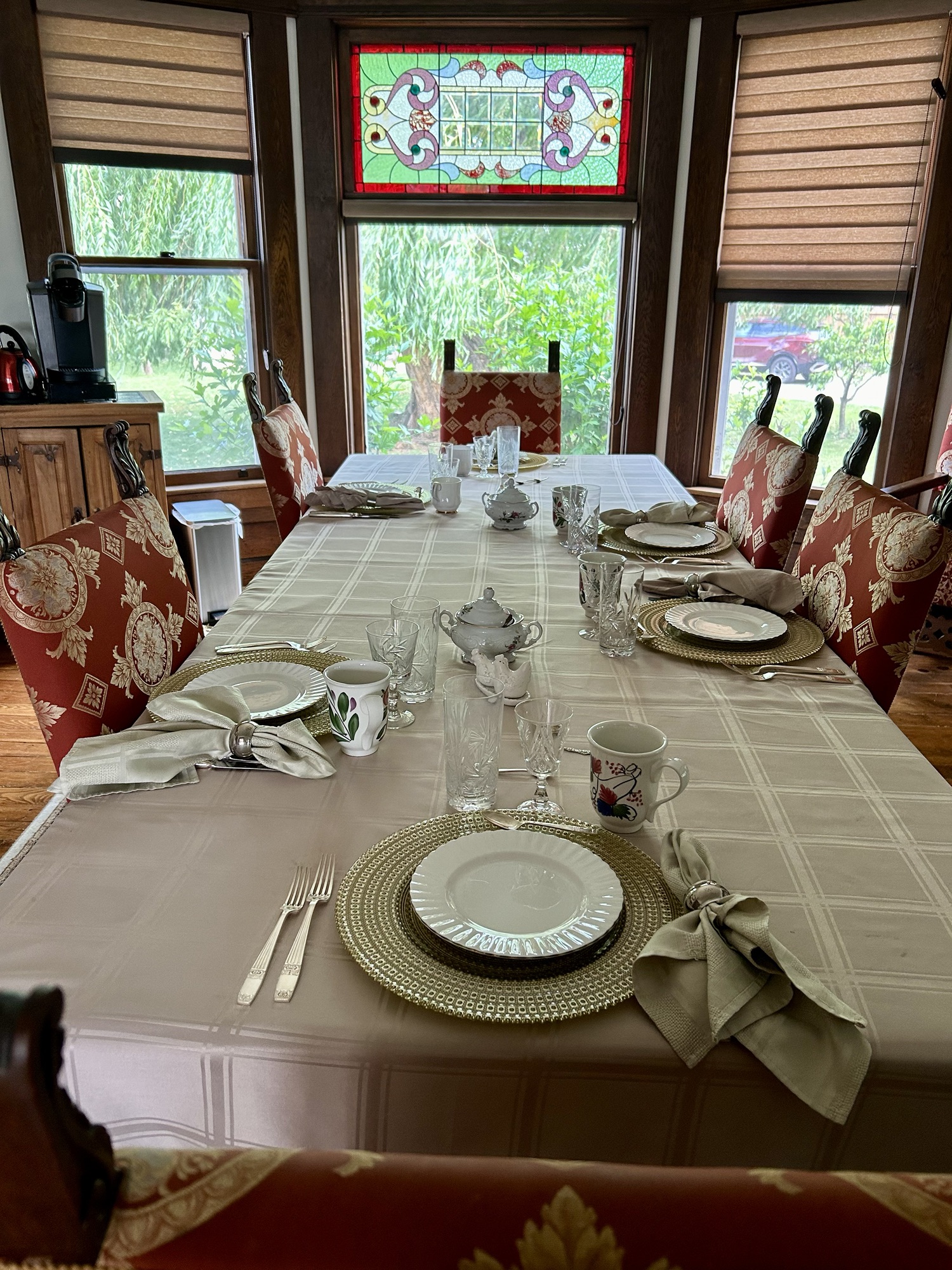
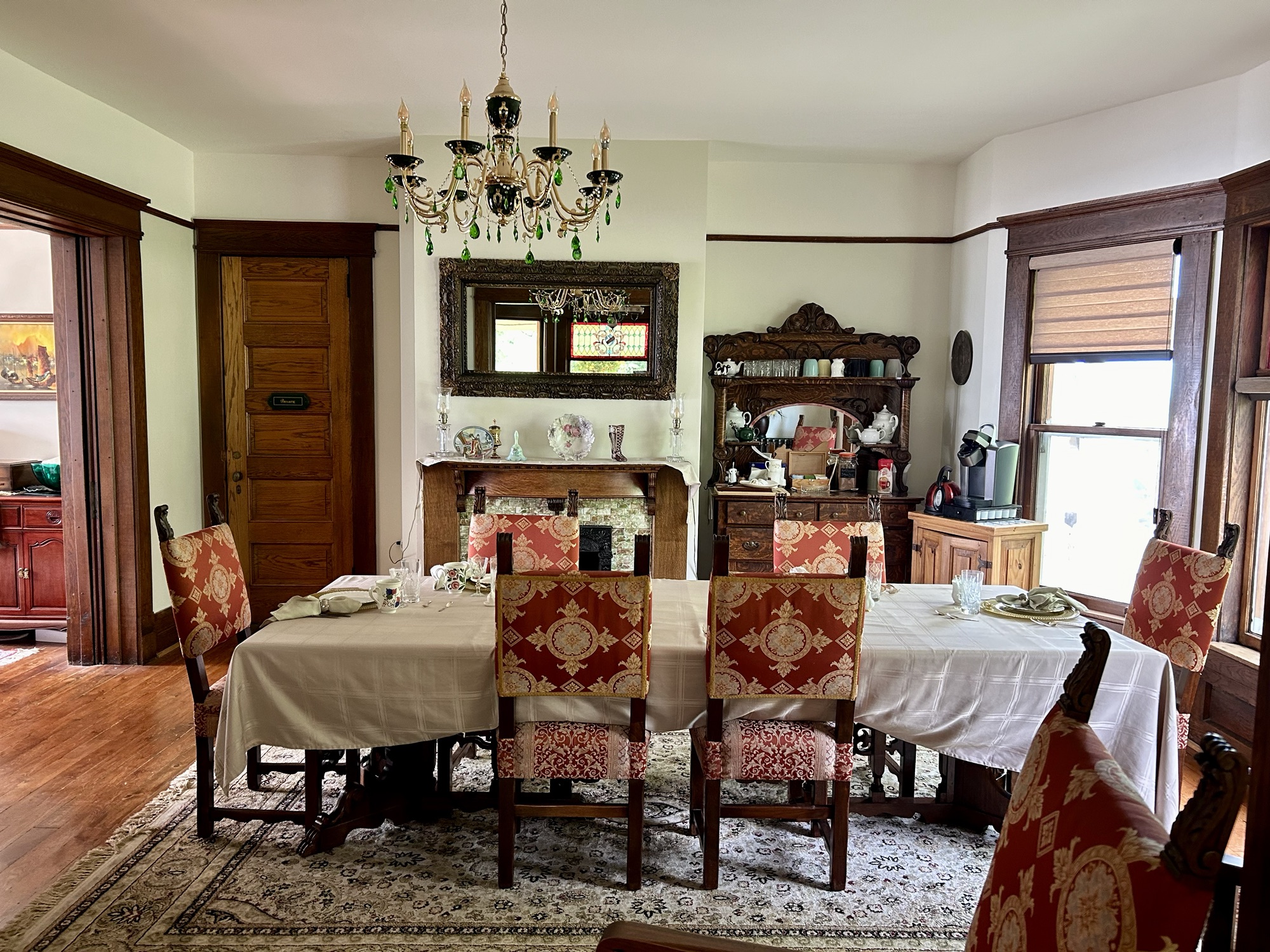
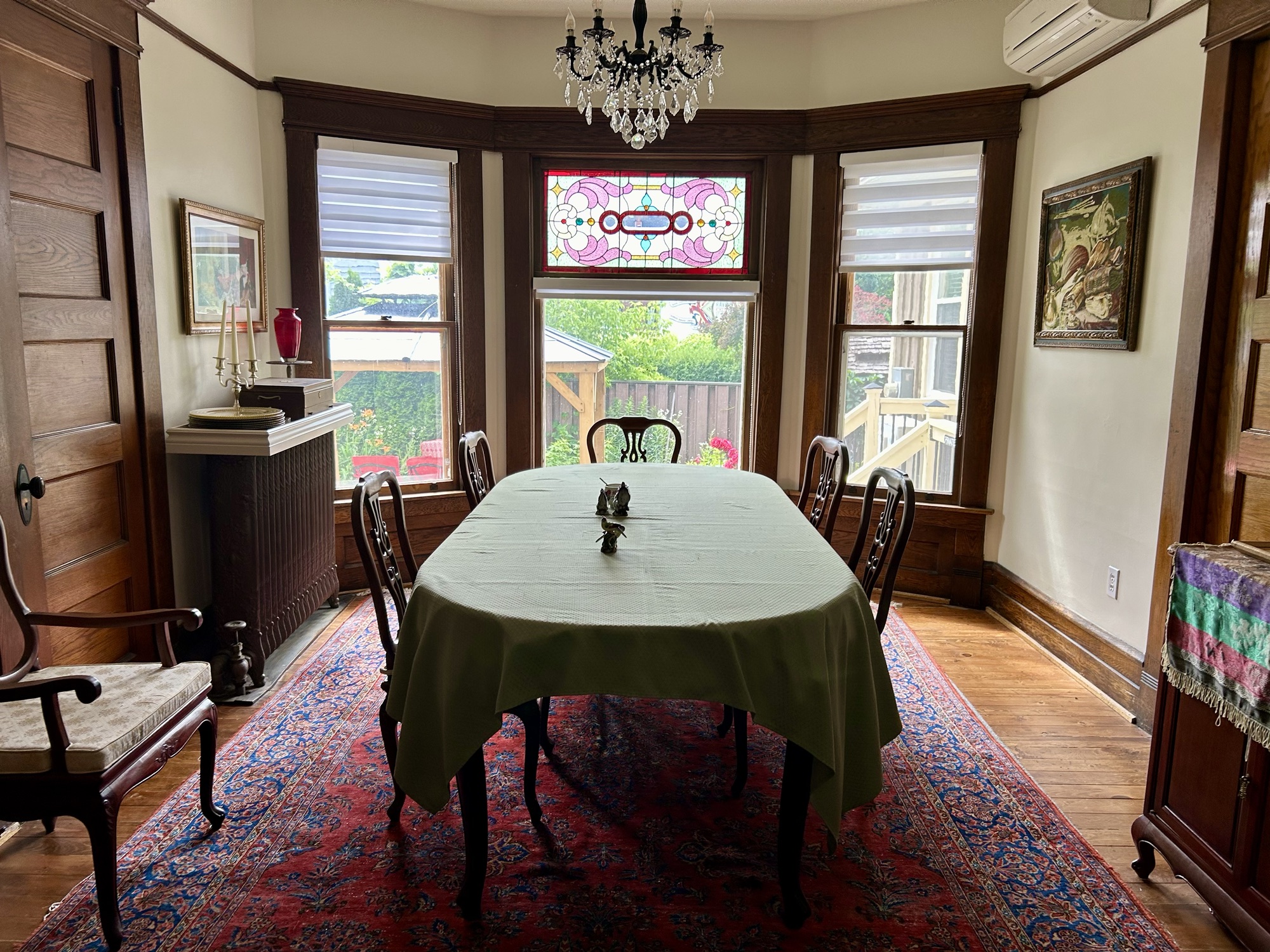
 Trish, our host at Green Oaks B & B, was  warm, welcoming, and quite engaging in her beautifully appointed home, circa 1908-1910. Her B & B sits on a winery, Ravine Vineyard Estates, and it is located 15 minutes from Niagara Falls and 10 minutes from NOTL. Numerous wineries, restaurants, and biking/walking paths are all around it, so upon our arrival, Trish set us up with a map of the area and offered tips and advice for our stay. I should further add that her “country breakfast” proved to be wonderfully delicious, and she even accommodated my dietary restrictions.

Charming and Historic 🌆

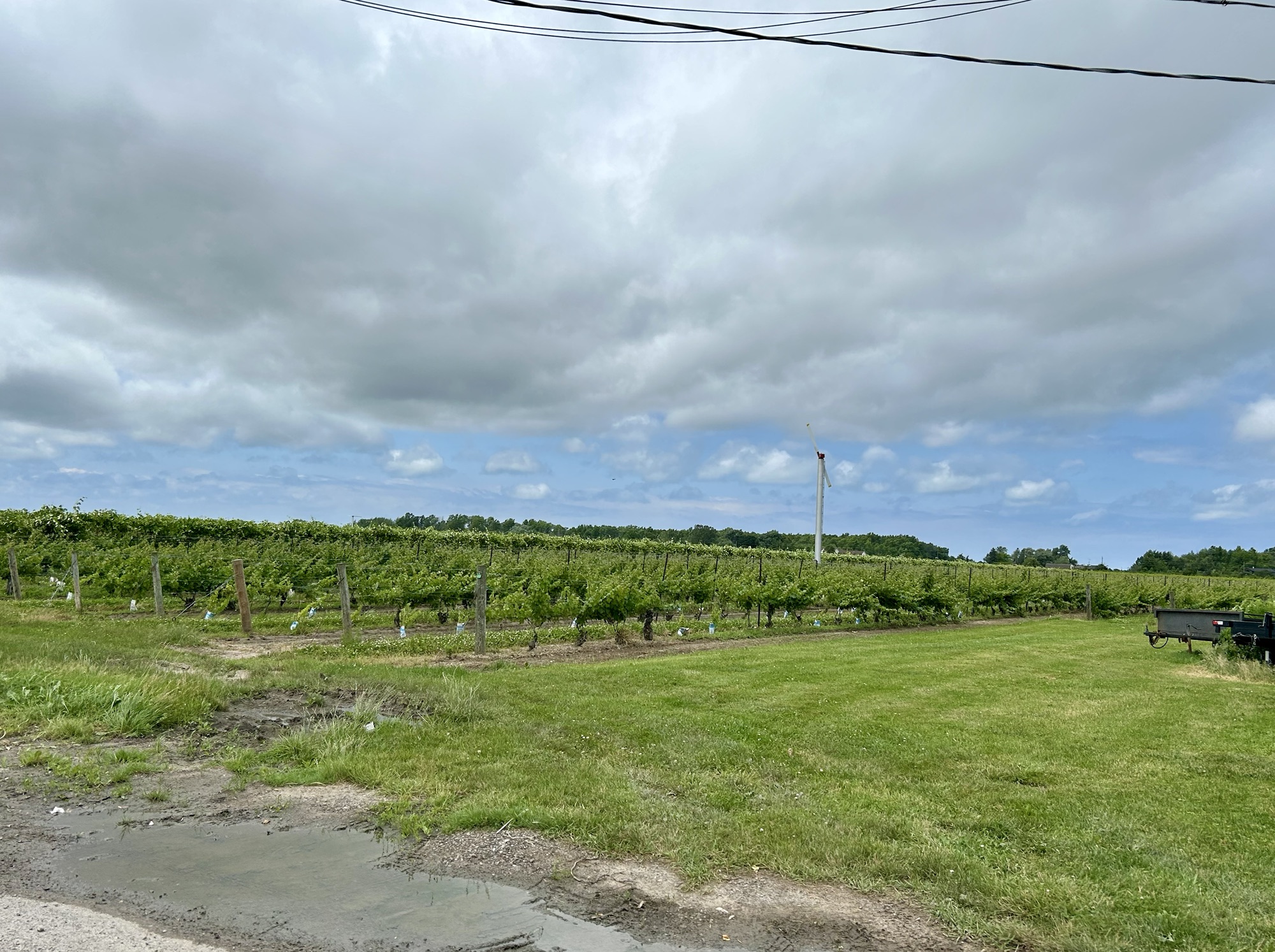
 “Old Town” NOTL, we discovered, maintains its historic, 19th-century charm.  It is often described, with good reason, as the “prettiest town in Ontario.” It is located in the heart of Ontario’s wine country.  In fact, there are nearly 100 wineries in the NOTL and Niagara Escarpment.  While the area boasts around 40 different grape varieties, the area is well-known for its Riesling, Chardonnay, Cabernet Franc, and Pinot Noir.  However, it is best-noted for its Icewine and traditional method sparkling wines. 

In fact, the availability of wine, fresh produce, and stunning floral gardens are a large part of the area’s appeal.  Wine tastings and tours are easy to schedule and quite popular.  Roadside stands and markets dot the countryside, brimming with fresh fruit, vegetables, honey, and cheeses. Some orchards and farms even advertise, “Pick your own _______,” depending upon the season, and all throughout the thoroughfares are flowers galore.

According to several sources, 90% of Ontario’s tender fruit is produced in what is known as the Niagara peninsula.  And most of that fruit is grown in orchards in and around NOTL, which John and I witnessed first hand.  We drove by miles and miles of orchards and vineyards. Specifically, we noticed the area focused on its local peaches with numerous peach-centered dishes as well as peach wine varieties in many shops and restaurants during the time we visited.

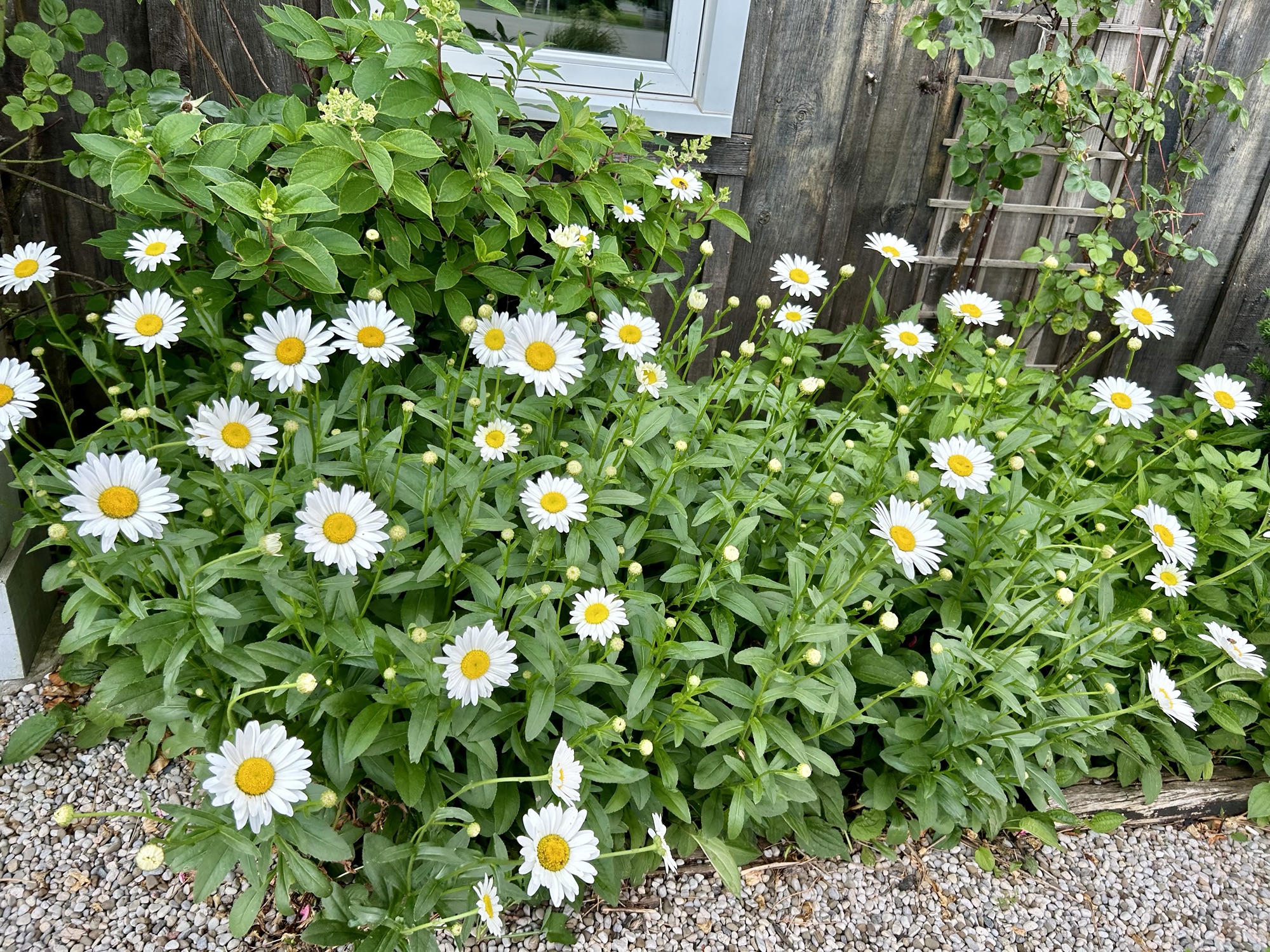
Flowers, vineyards, and orchards . . .oh my!

Places to go 🚗

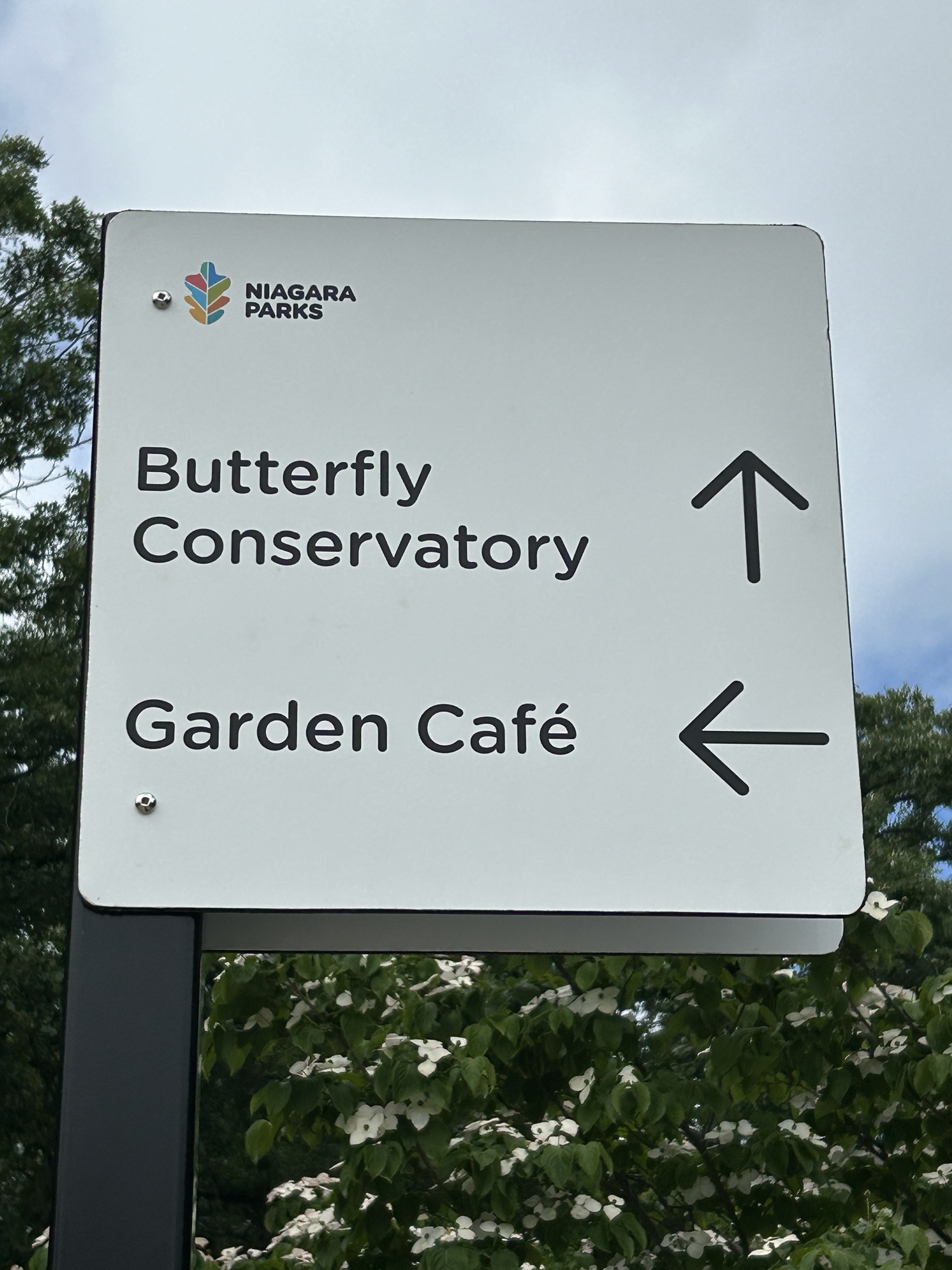
While in NOTL, John and I visited a few sites, including spending a good deal of our time strolling through the historic area of NOTL on both days of our stay.  We also visited a small, local winery, Niagara Parks Butterfly Conservatory, and  Centennial Lilac Garden.  Additionally, we had dinner at local favorites, The Grist and The Irish Harp

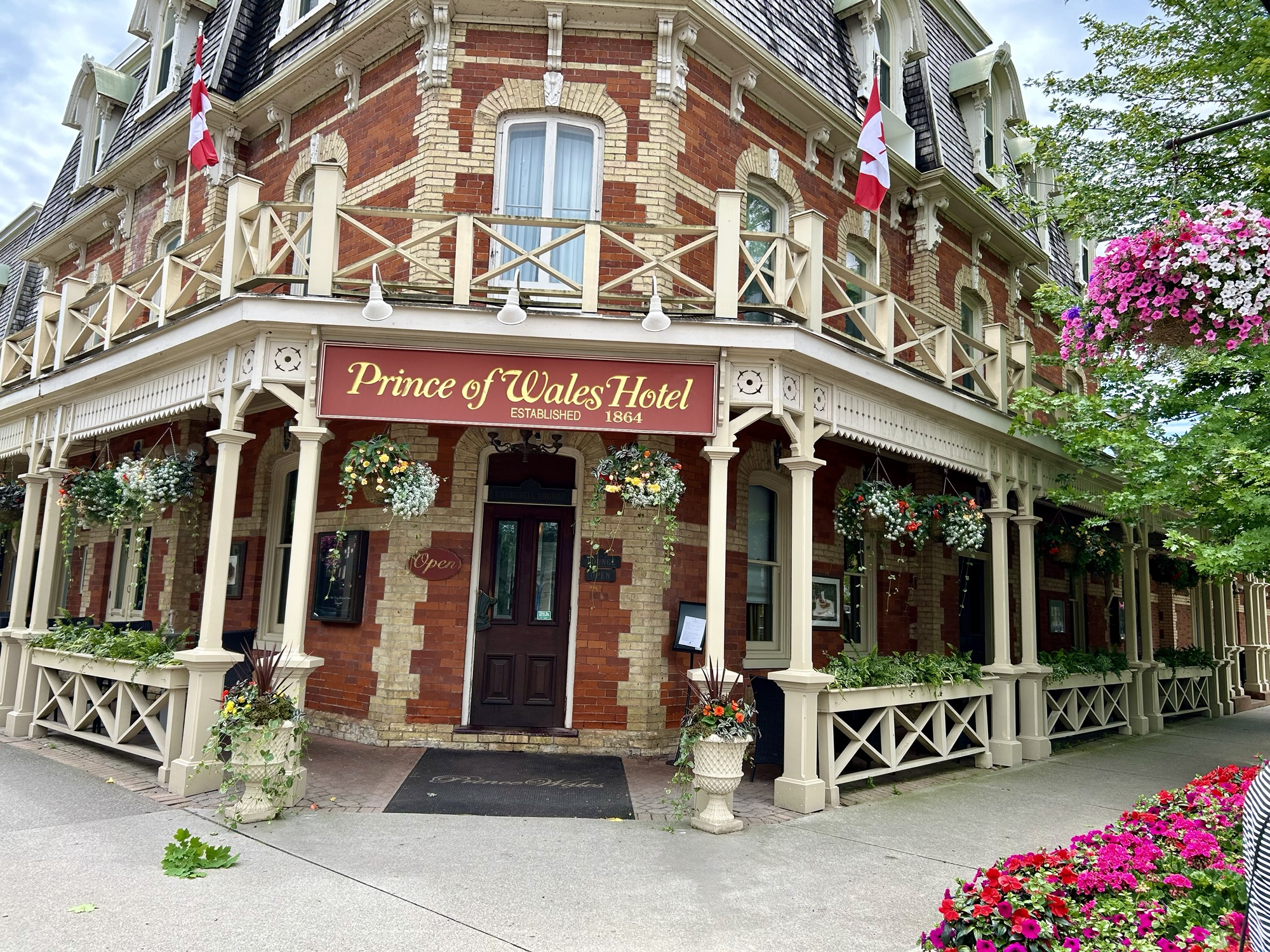
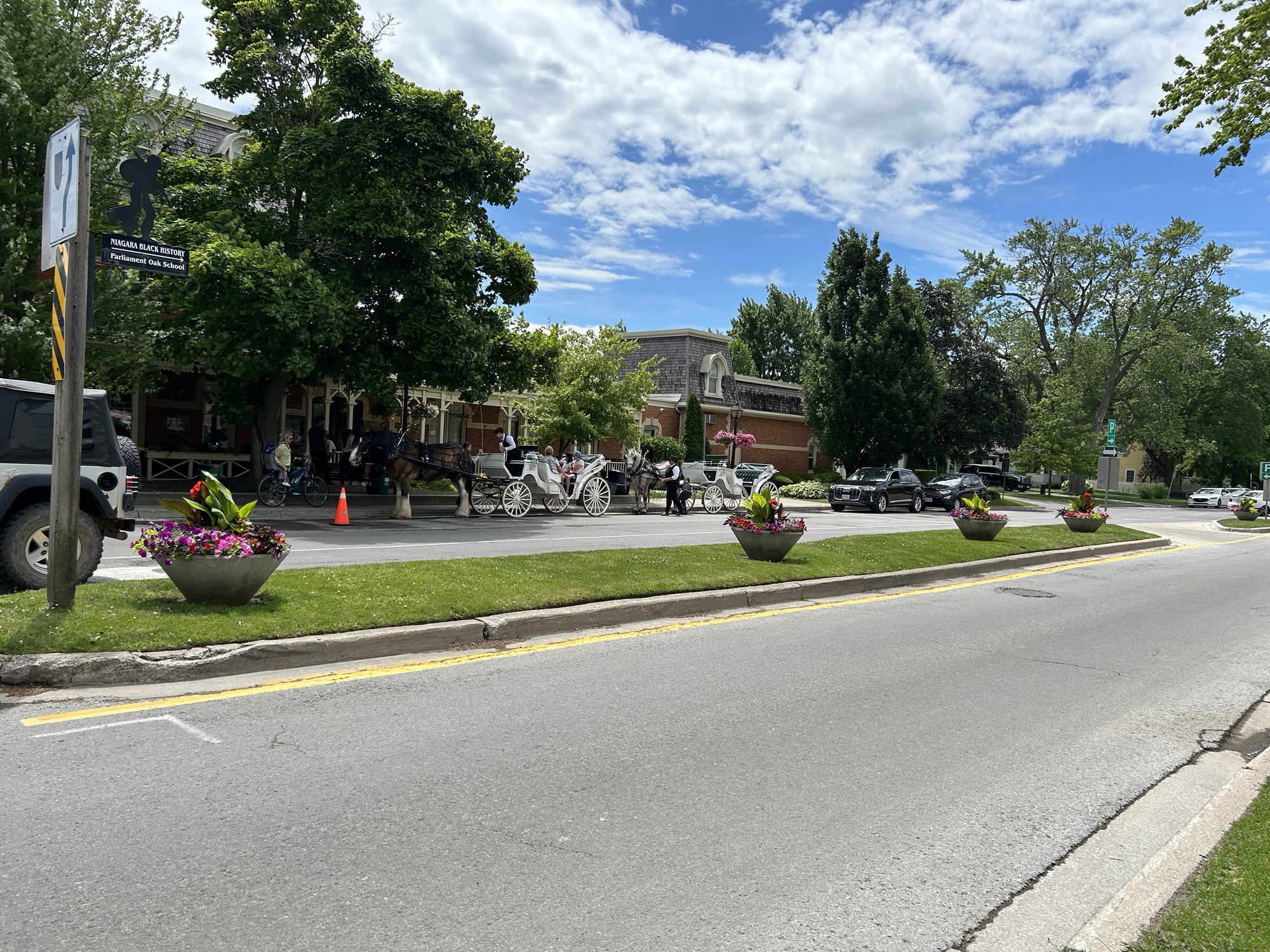
The Old Town of NOTL is picturesque. The streets are lush with flower gardens and lined with quaint shops.  Horse drawn carriages clip-clop through the streets, and numerous bistros and restaurants can be found interspersed between shops. Historic buildings can be seen throughout the town, while throngs of tourists mingle about the sidewalks. Honestly, simply walking along the streets and side streets was a fascinating experience for John and I as we listened to multiple languages being spoken all around us. 

Wine Country 🍷

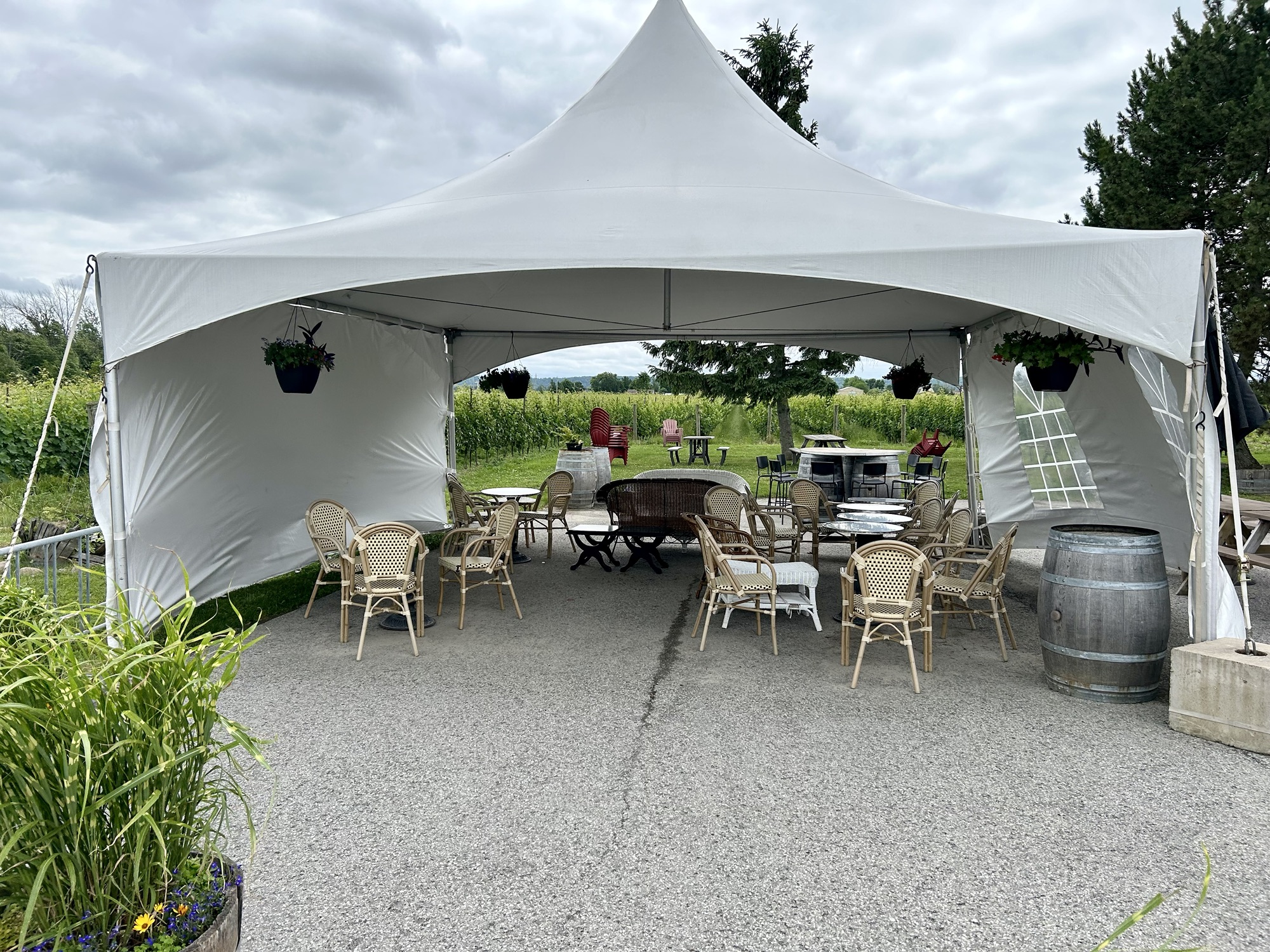
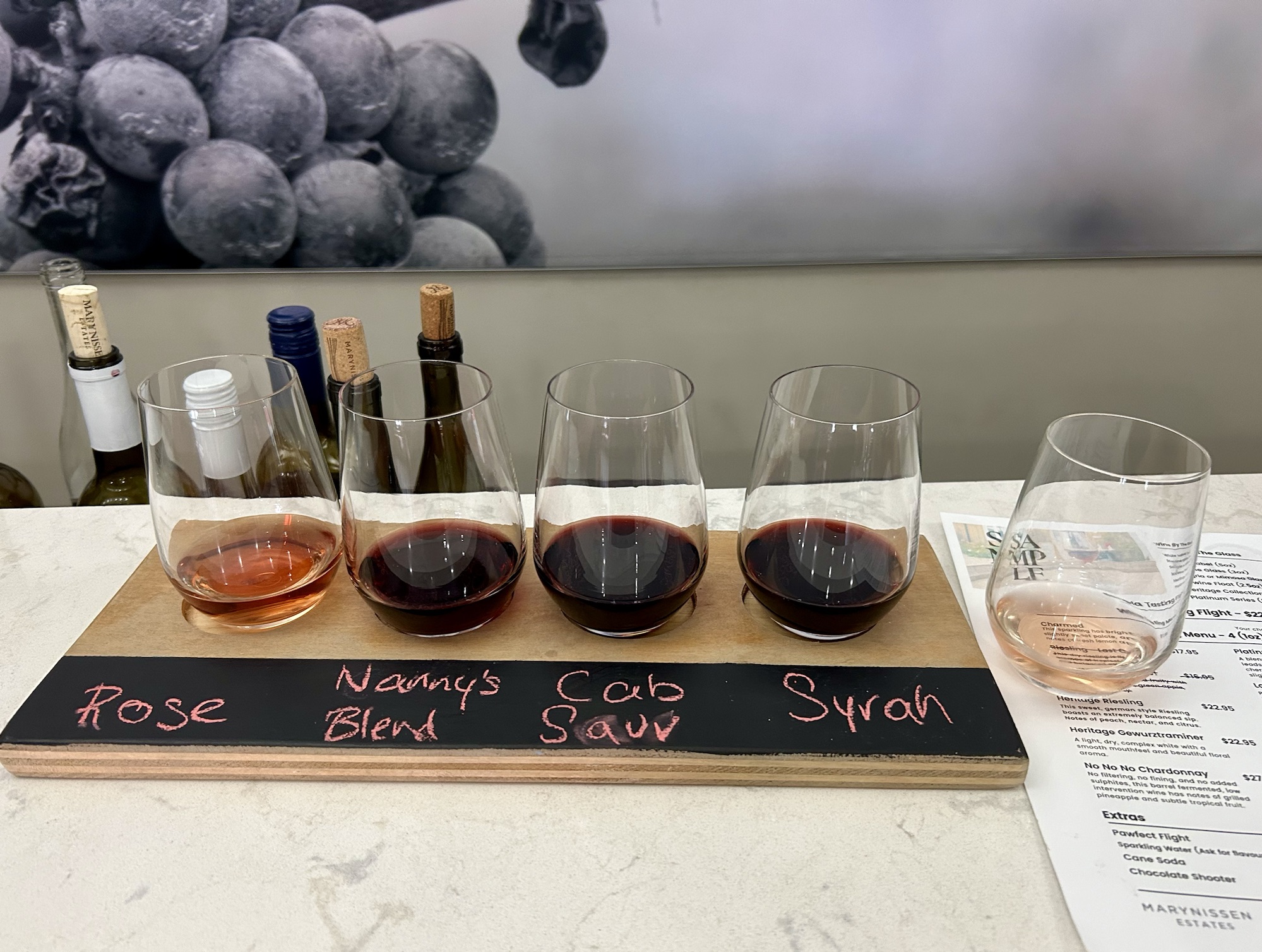
The local winery we visited was Marynissen Estates. This winery was not far from our B & B.  This estate focuses on “small-lot winemaking.”  A former pig-farm, the Marynissen Estates’ land was purchased in 1953 by founders, John and Adrianna Marynissen, and it has the oldest commercial planting of Cabernet Sauvignon in Canada. This vineyard offered tastings or a by-the-glass experience.  John and I opted for a tasting flight while learning about the estate’s winemaking process and history. 

butterflies and flowers

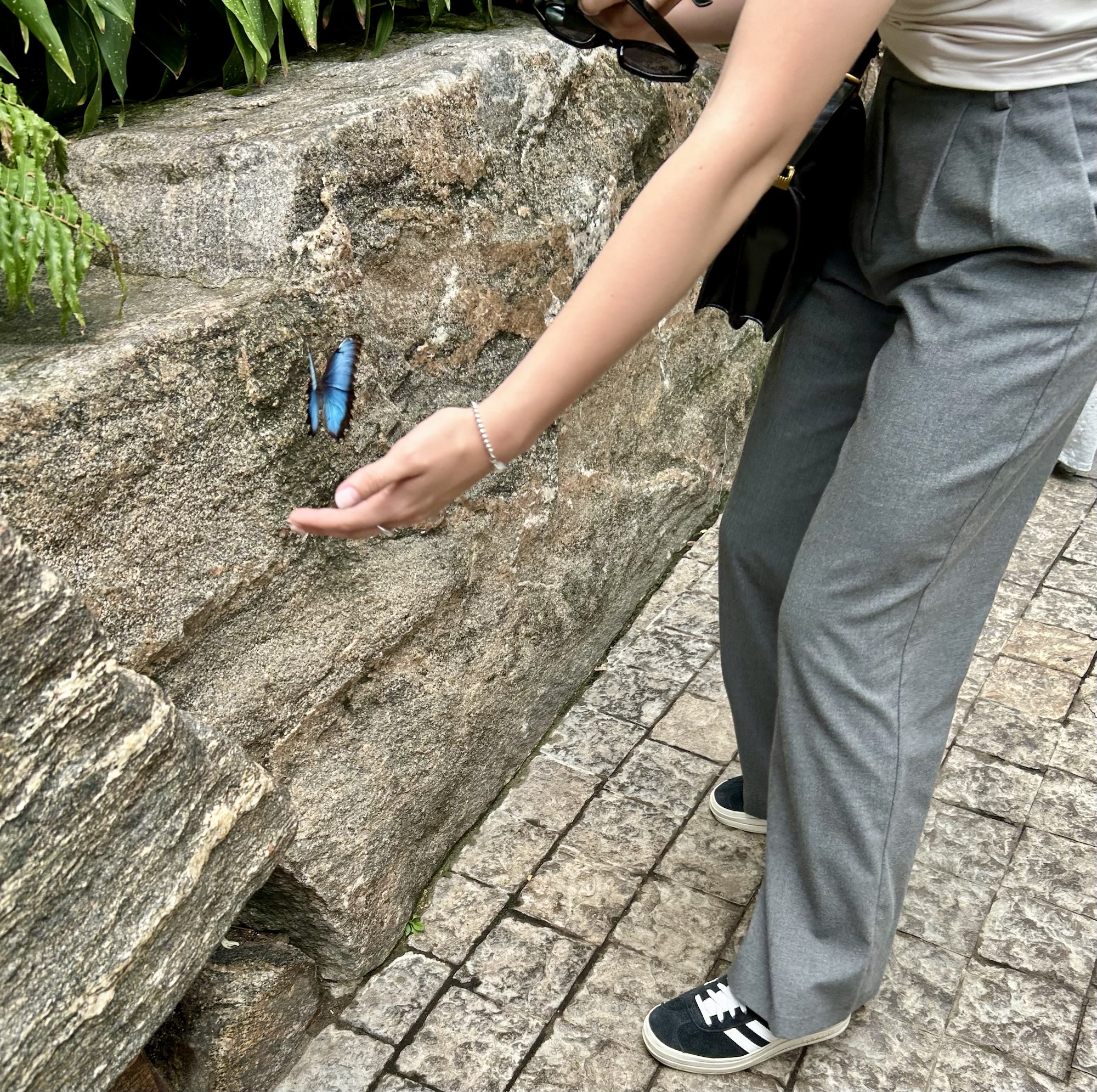
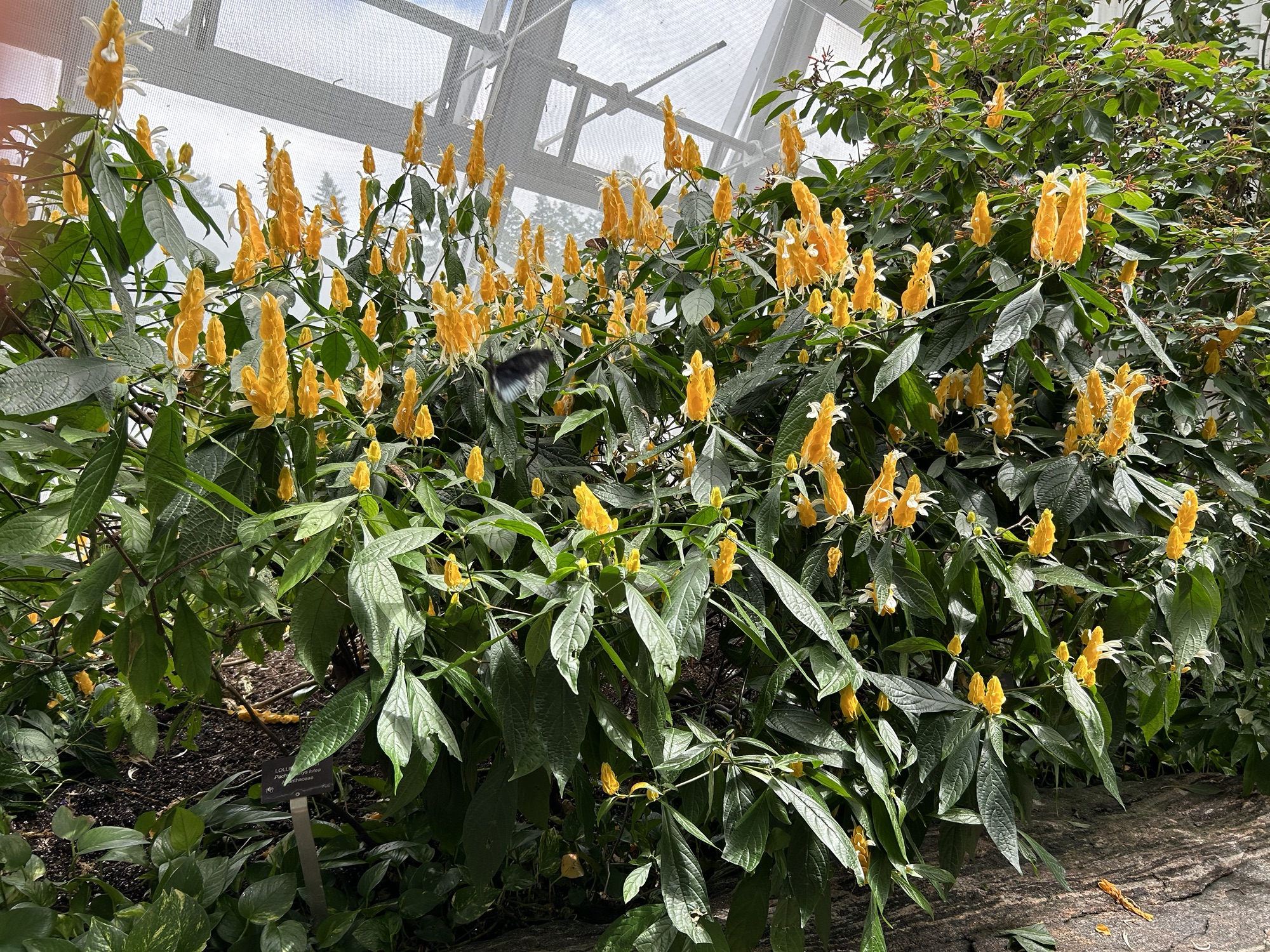
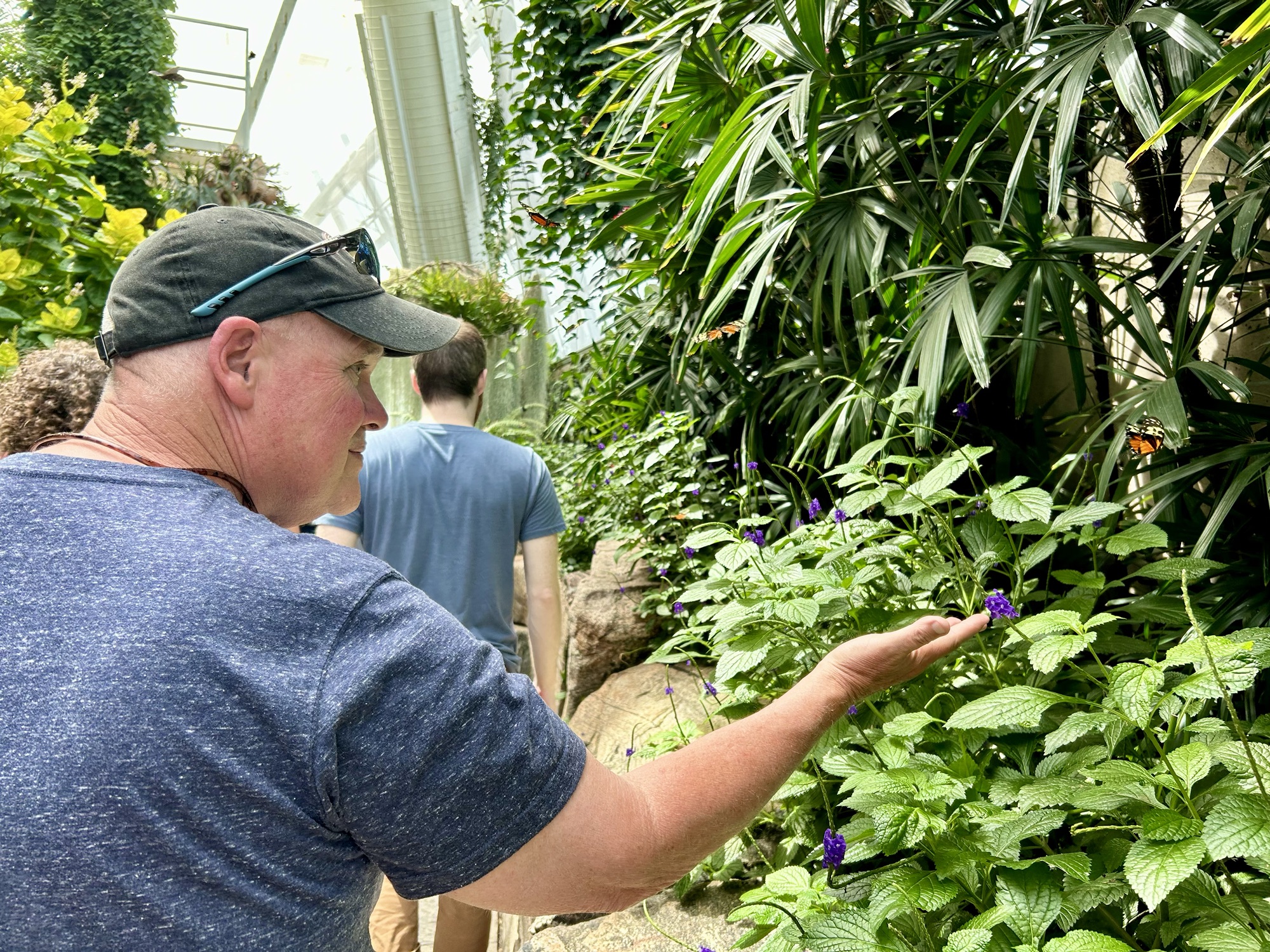
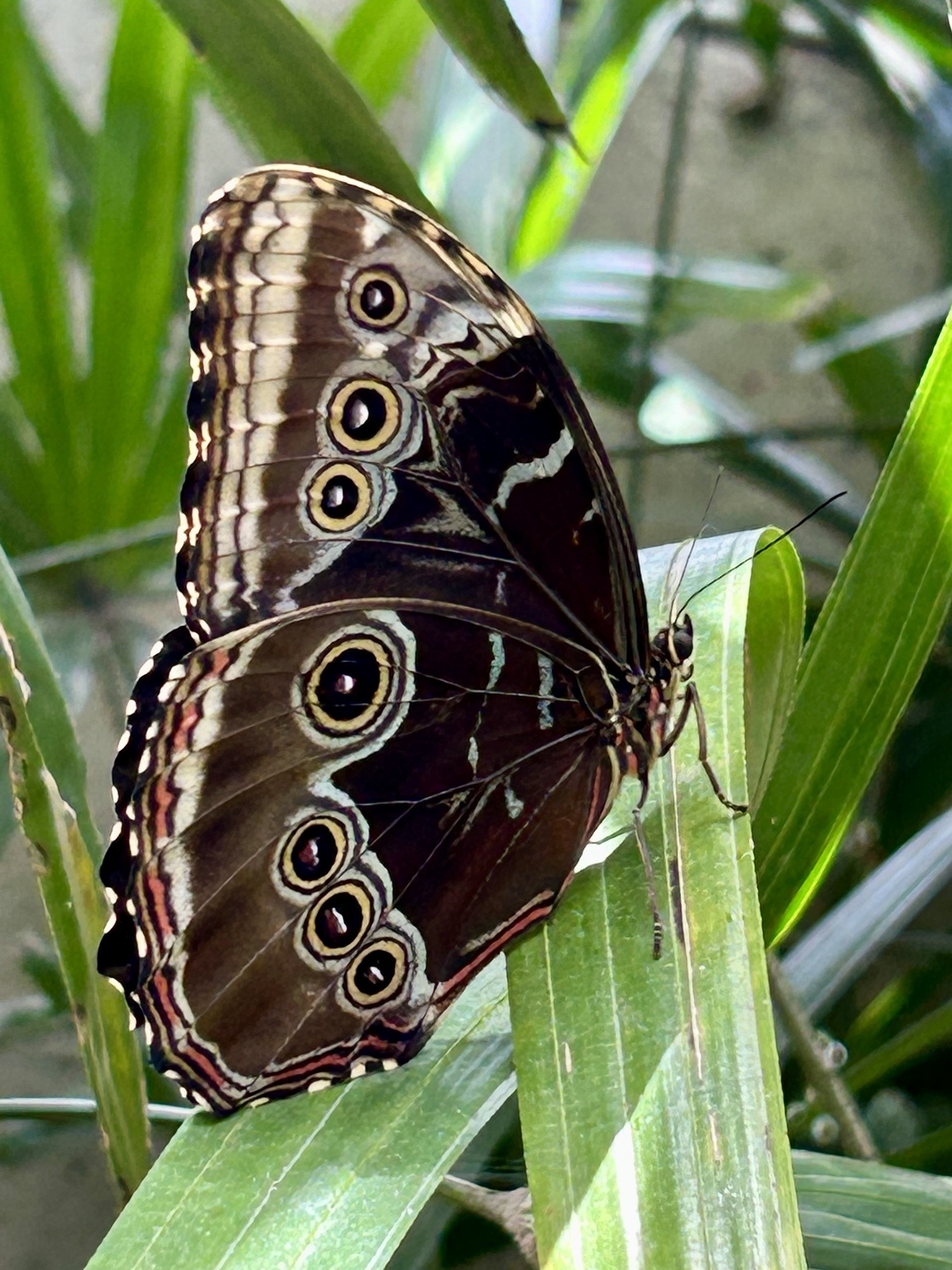
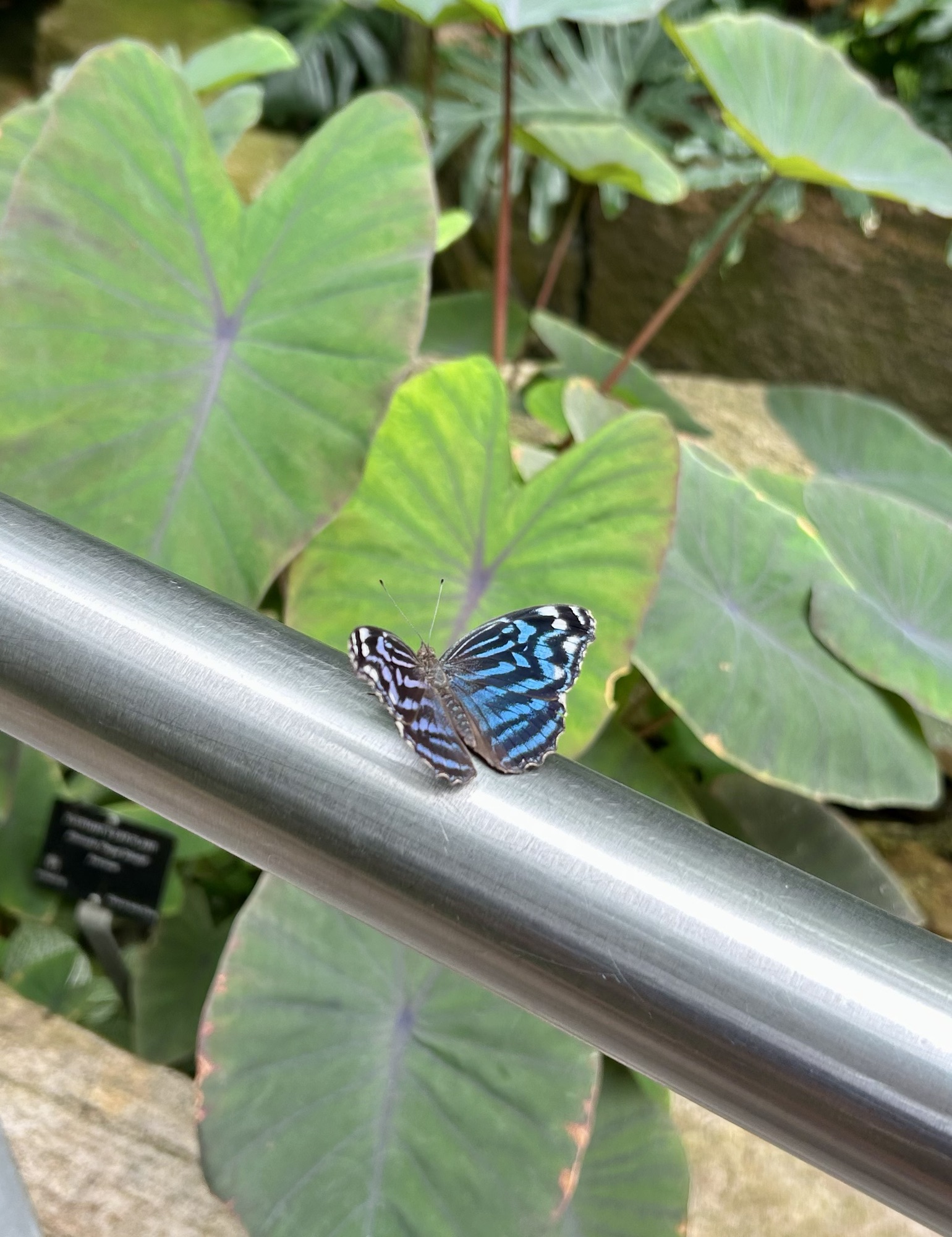
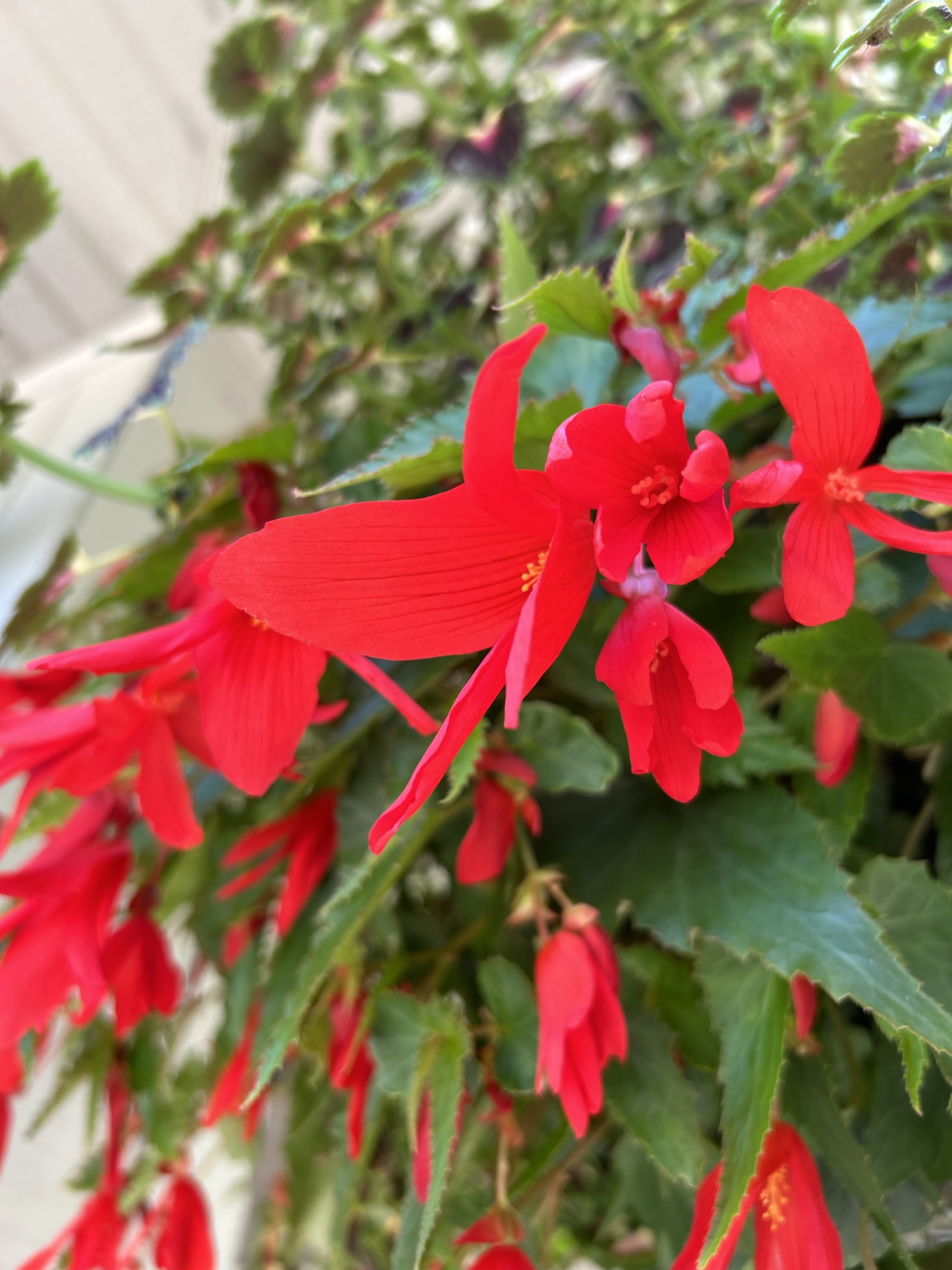
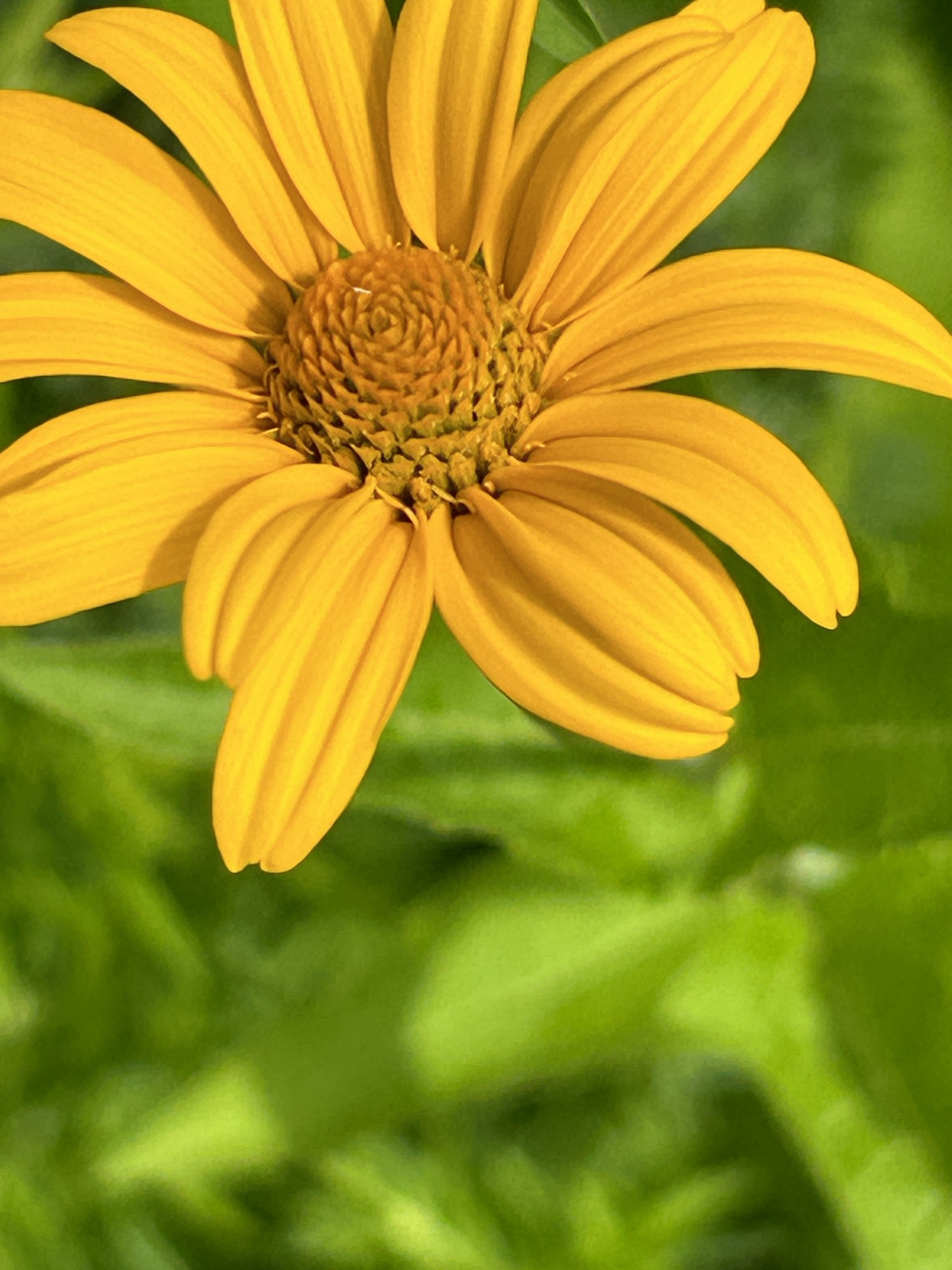
Afterwards, we drove through the verdant countryside, on the Niagara River Parkway towards the Butterfly Conservatory. This was an amazing experience as it boasts the largest glass-enclosed butterfly conservatory in North America, and it was filled with a plethora of prolific tropical vegetation. Within those glass walls were over 2,000 colorful butterflies zipping about the plants, waterfalls, and visitors.  Outside the conservatory, the grounds offered winding paths with benches surrounded by a proliferation of flowers, grasses, shrubs, and other forms vegetation all labeled and identified for visitors   

On the way back from the butterfly conservatory, we stopped by the Centennial Lilac Garden.  This ten acre area of land was overflowing with lilacs in a range of colors as well as a heady variety of fragrances. 

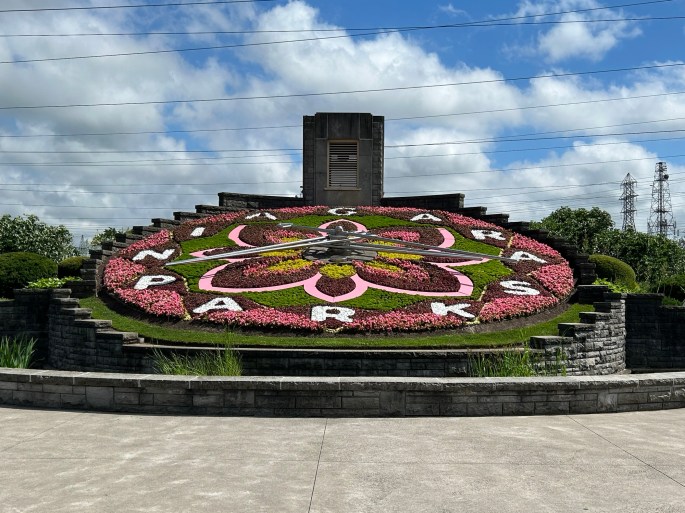
While visiting the lilac garden, we were also able to check out the Floral Clock, a clock made of flowers that keeps time and chimes every quarter hour! According to the official website, the floral design is changed twice per year with 15,000 to 20,000 carpet plants and annuals.  It was quite the impressive attraction!

Good Eats 🍔 🥗

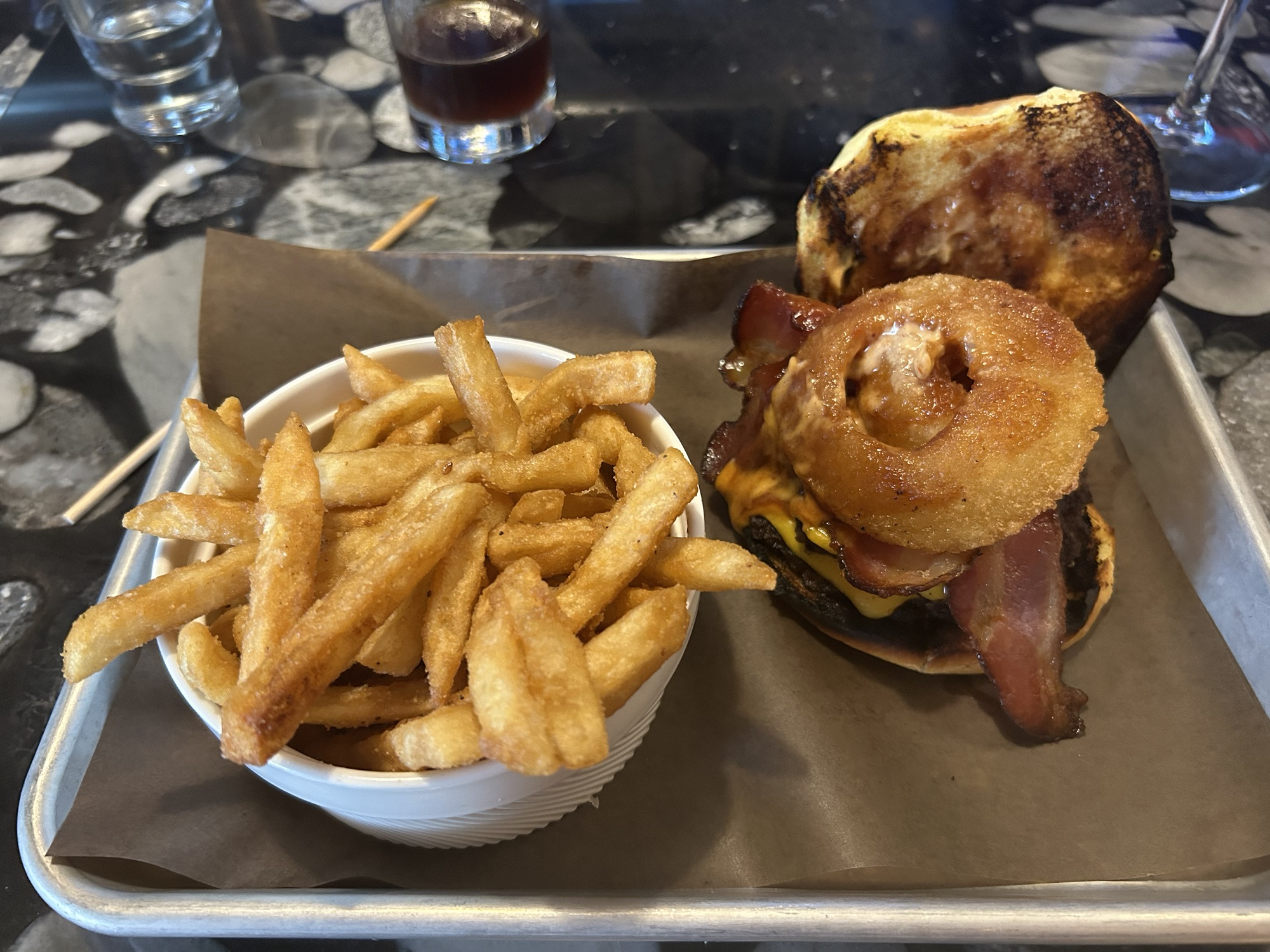
Both nights were filled with delicious dinners. The Grist advertised itself as a “craft kitchen and brewery” with a family-centered atmosphere located in a refurbished barn that was once used as a packing shed.  It was located in St. David’s, about 10 or so minutes outside of NOTL, in the midst of farm/vineyard/orchard country, not far from our B & B.  Their pizzas, burgers, and other eclectic original dishes were clearly favorite fare with local residents as the place was packed. 

Meanwhile, for the second night’s dinner we headed into historic NOTL and dined in The Irish Harp, which had live music. Though the food offerings were completely different from the previous night, our meals were every bit as tasty.  As with the other restaurant, the pub was absolutely packed on the night we visited.

If you are looking for a unique adventure, and you don’t mind traveling, NOTL offers something for everyone–from the shopper, to the outdoors enthusiasts, and from the site-seer to the foodie.  While we happened to visit the area when it was alive with peak produce, flora, and fauna, I have every reason to believe that all seasons in NOTL offer unique and exceptional experiences for travelers.  This is definitely one area I highly recommend visiting if you have never before visited.  I know I hope to return one day!

Blossoming Amidst Difficulties: Lessons from Bodie Lighthouse

“Stuck between a rock and a hard place . . . You’d better stop. Put on a kind face.”–Mick Jagger and Keith Richards

Overcoming Rocky circumstances 🌺

I was walking quickly back to my vehicle with a couple of coffees in hand.  Wait. What did I just see? Walking back a few feet, I looked at the spot in between the concrete wall and the sidewalk that abutted to it. Oh my heavens! It was a flower!

How it was possible for a flower to grow in such a tight crevice was mind-boggling.  The blossoming plant was the very definition of being “stuck between a rock and a hard place.”

Photo by Pixabay on Pexels.com

How many life situations feel like that–thrusting us between rocky and hard circumstances? 

Most of us can identify times in which we were (or are) in situations in which there was no good solution or easy way out.  Like a praying mantis trapped in the web of a spider, our hands may be lifted in prayer, but the various strands of a difficult situation continue to remain sticky and taut. We can see life going on all around us, and yet, we remain stuck between an “unknown outcome” and “continued pain.” 

Confronting Difficulties 🪜

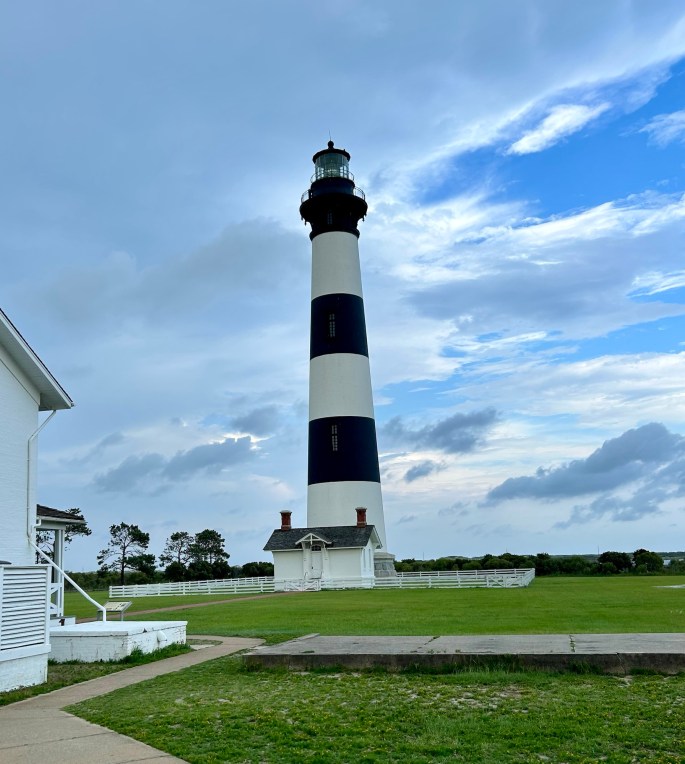
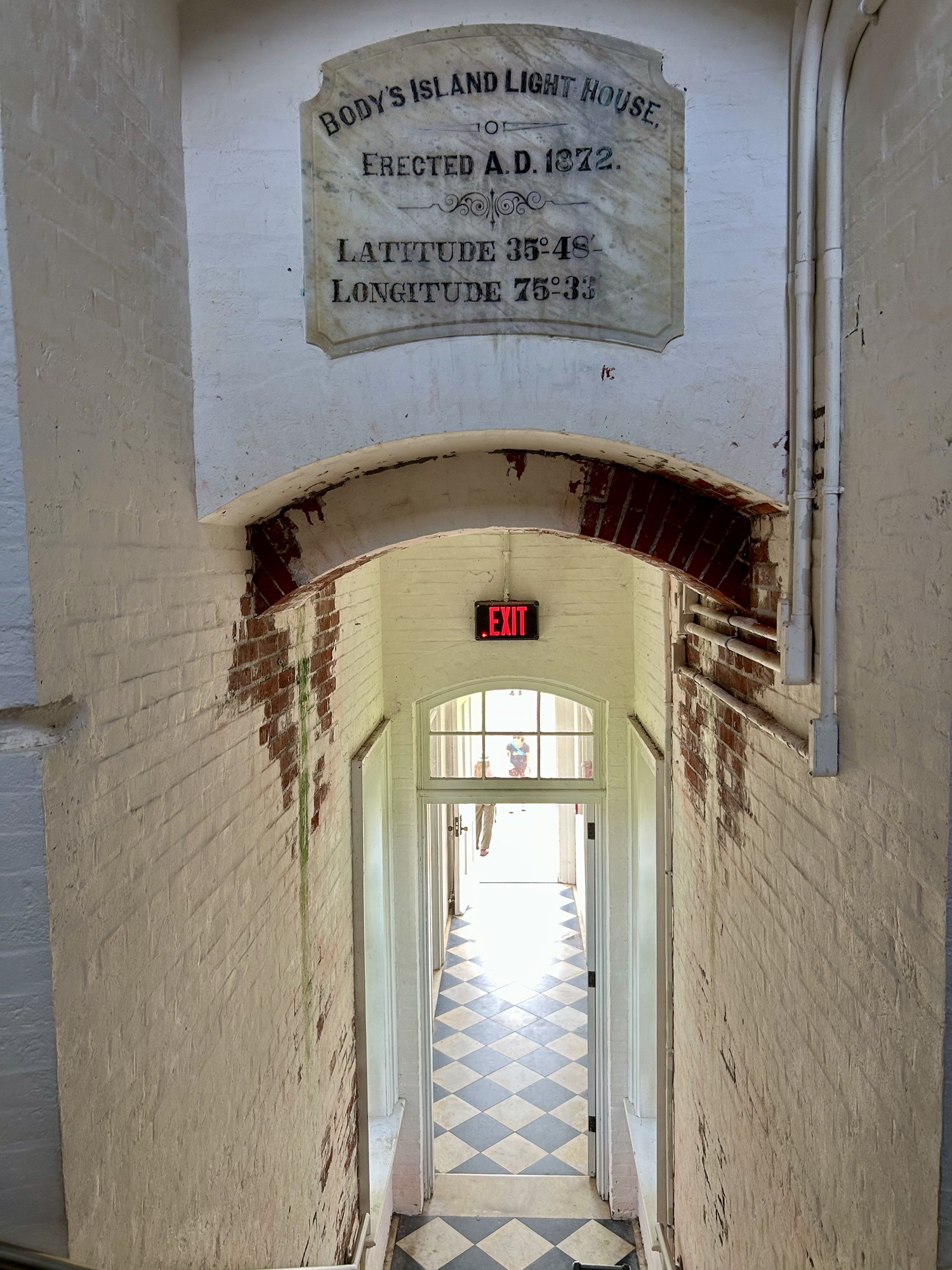
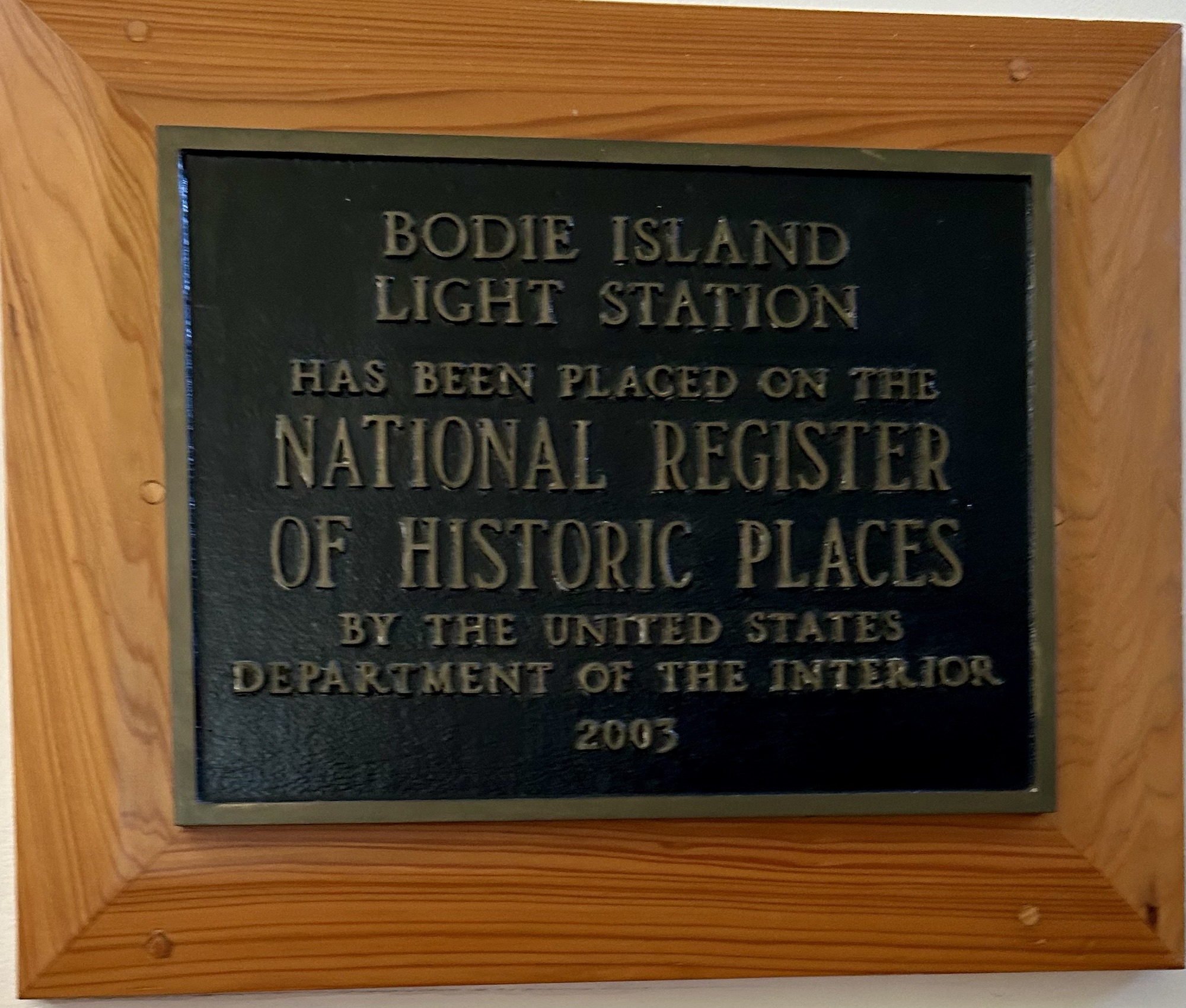
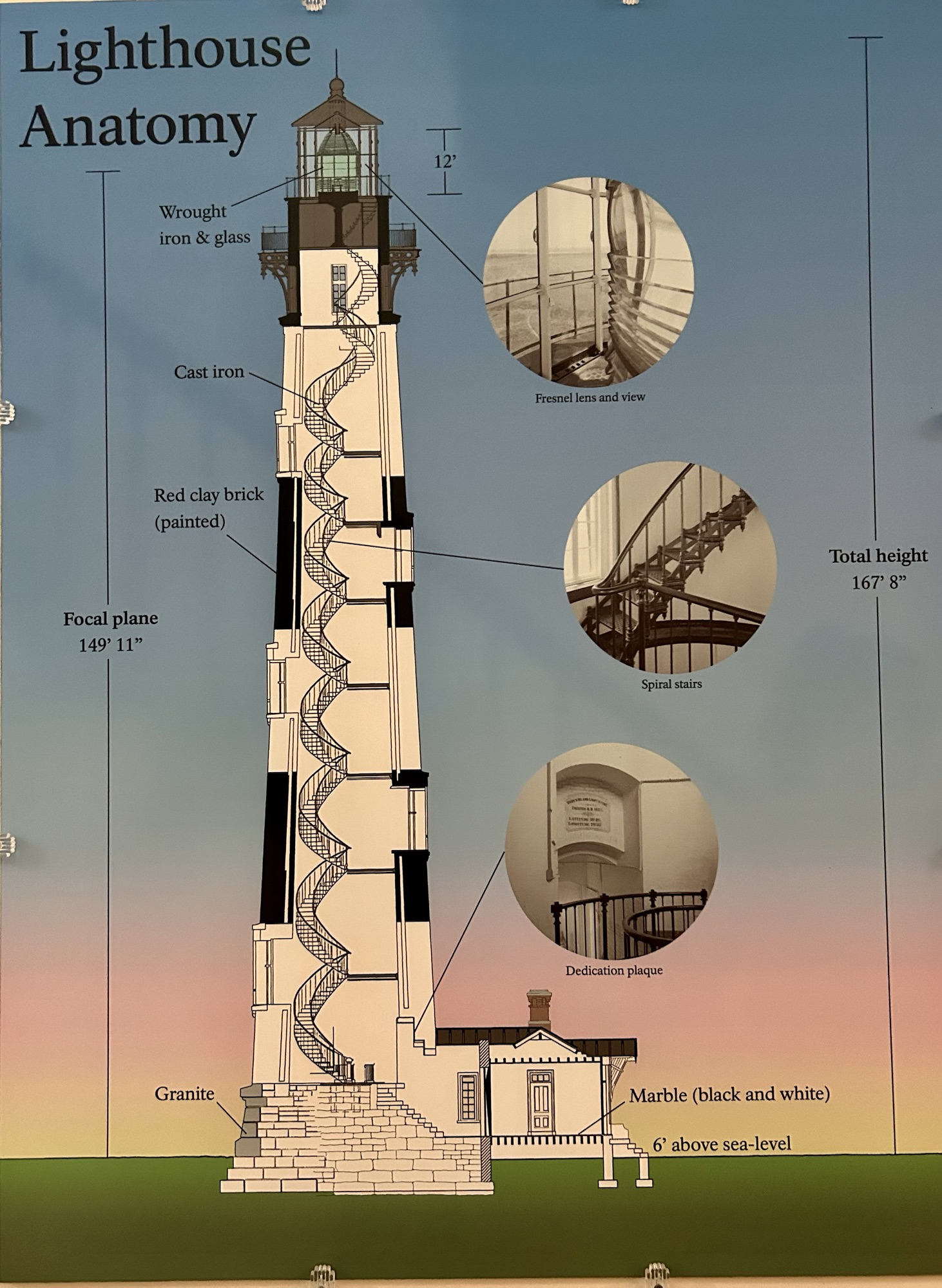
My daughter and I visited the Bodie (pronounced “body”) Lighthouse located on the Cape Hatteras National Seashore on a warm July afternoon. Once inside the lighthouse at the scheduled time, we were facing over 200 spiraling steps, equal to climbing 10 stories.  It contained no air conditioning; however, there were nine landings on which we could rest and catch our breath.

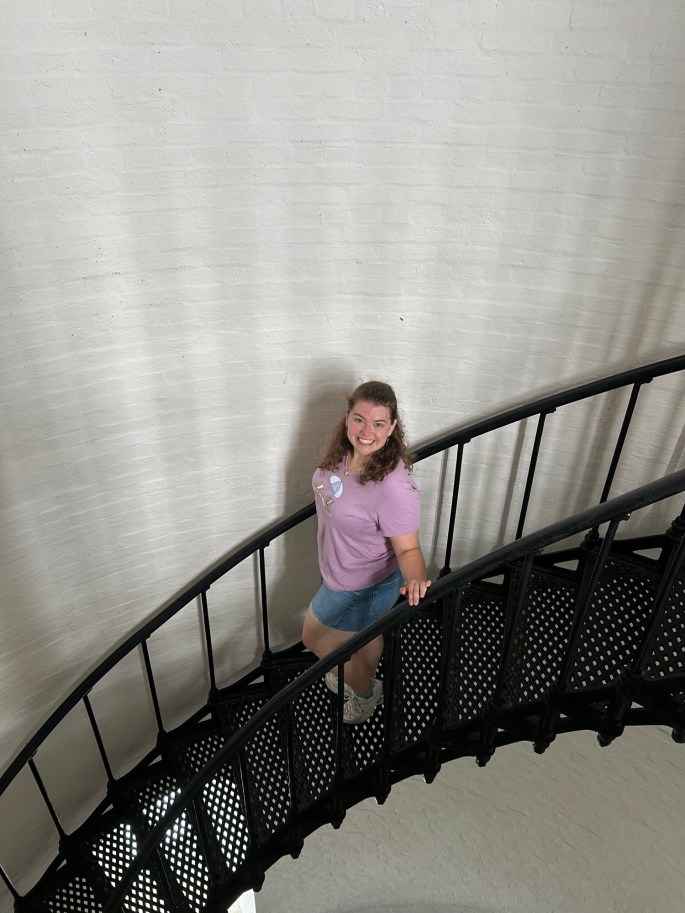
While climbing those steps, visitors must coordinate with other climbers as only one person at a time is allowed on a section of steps.  Therefore, when arriving at a landing, I had to yell “clear” to my daughter below, so she knew she could begin climbing the next section of steps.  Then, I had to listen and look above to the next section of steps to ensure there was no one coming down the steps from the top before I embarked to the next level. 

One step at a time 🚶🏽‍♀️

On and on we climbed.  Our thighs were burning, and none of the windows on the lighthouse’s walls were open.  Although there were small fans on each landing, they did little to prevent the sweat that accumulated on our brows and backs. Each time I reached a landing, I would marvel at the number of steps still above me, but I also felt a sense of amazement as I looked back down at the number of steps I had already climbed before shouting, “Clear!”

When we finally reached the top landing and were able to step outside onto the platform, the air felt exquisitely cool.  The breeze lifted and lightened our spirits, but it was the expansive view that took our breath away. 

A greater perspective 🌅

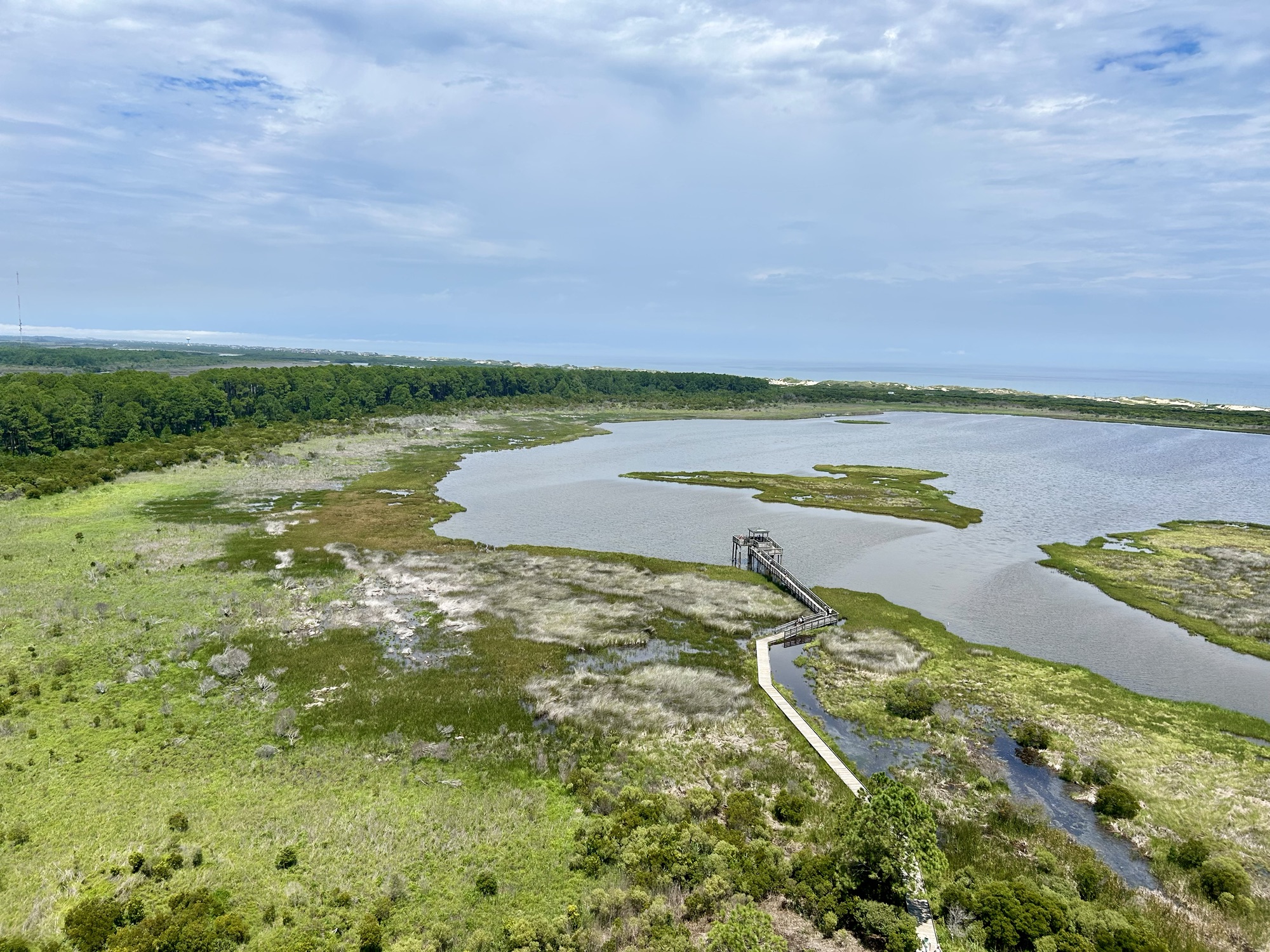
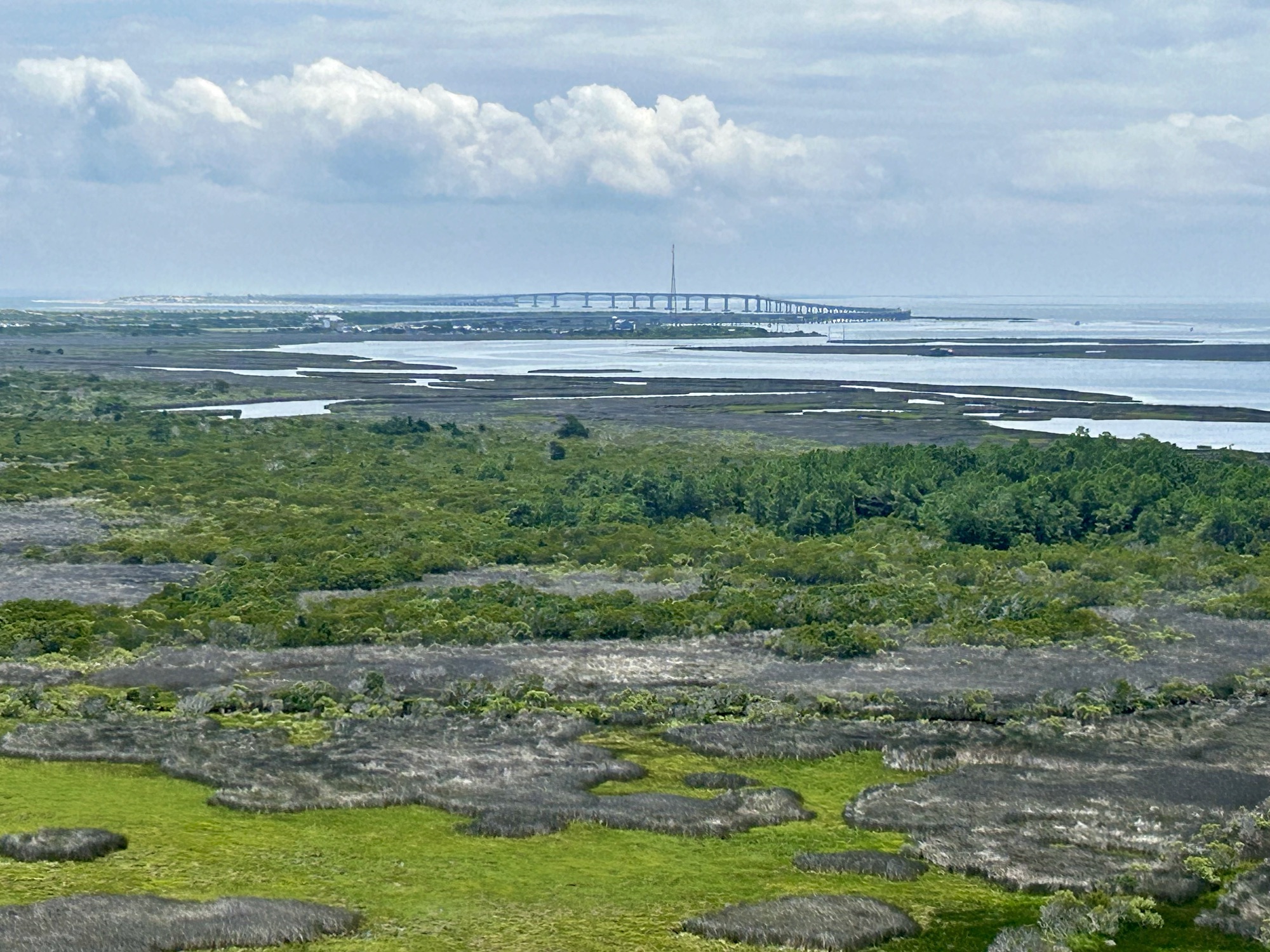
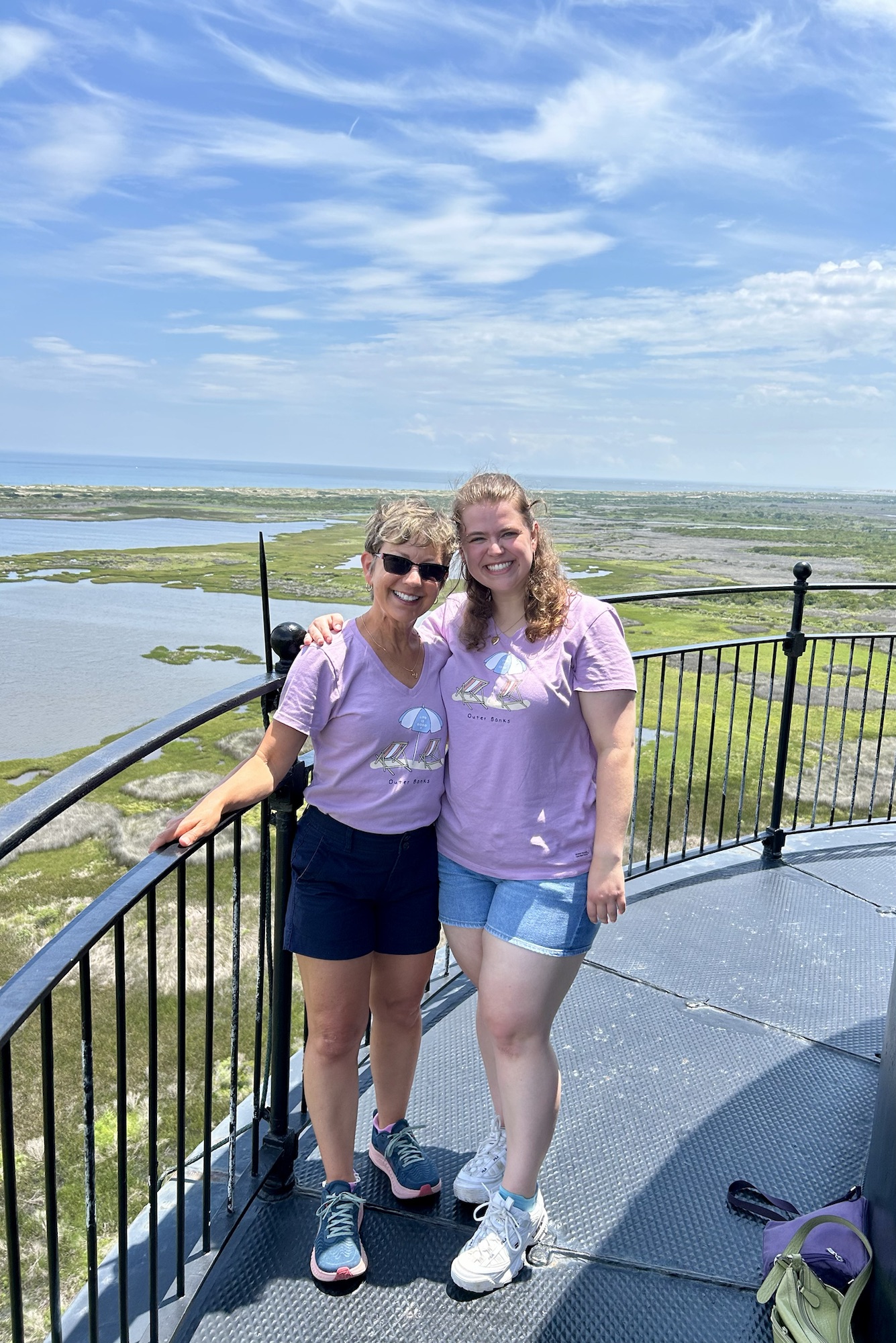
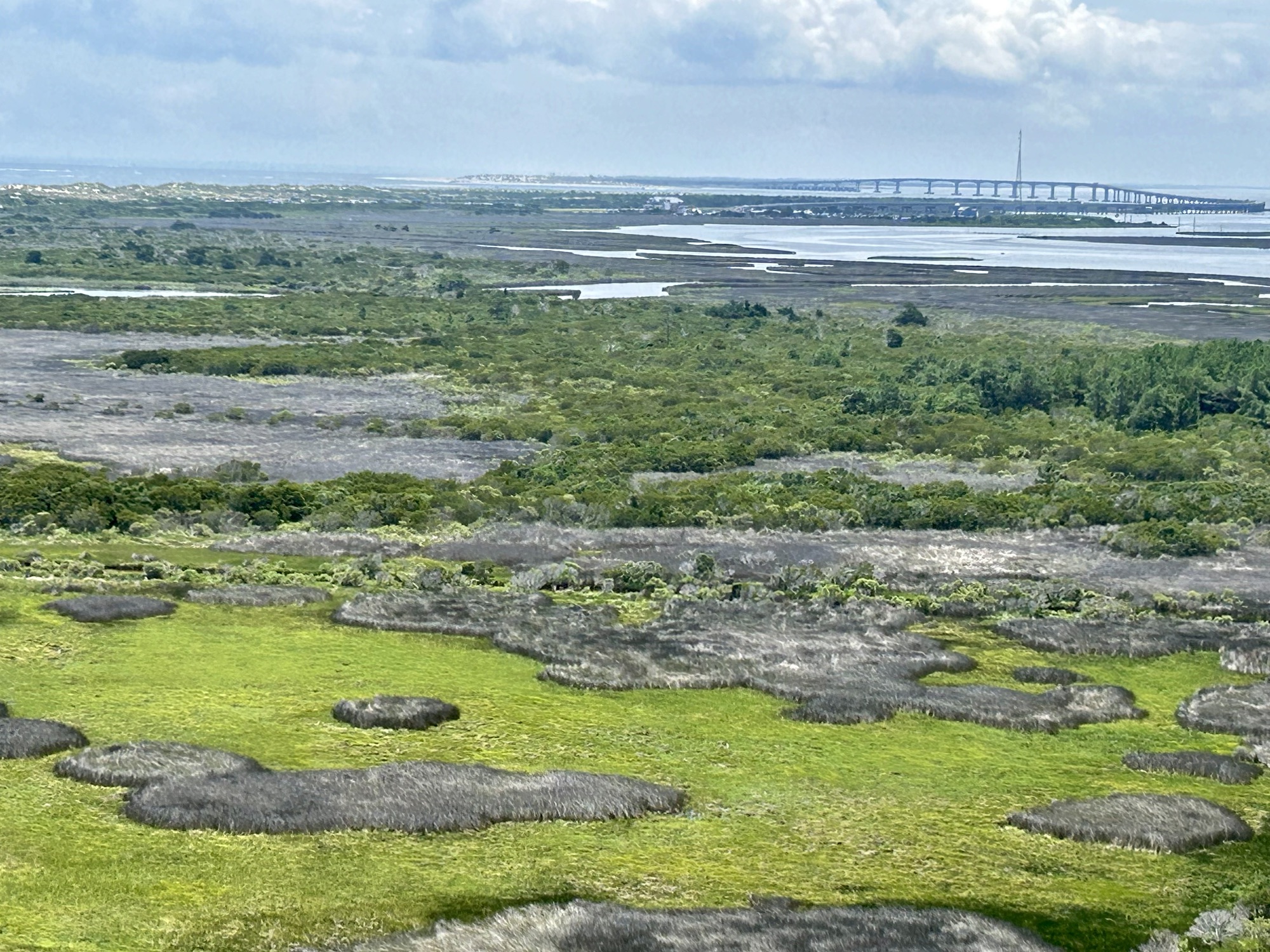
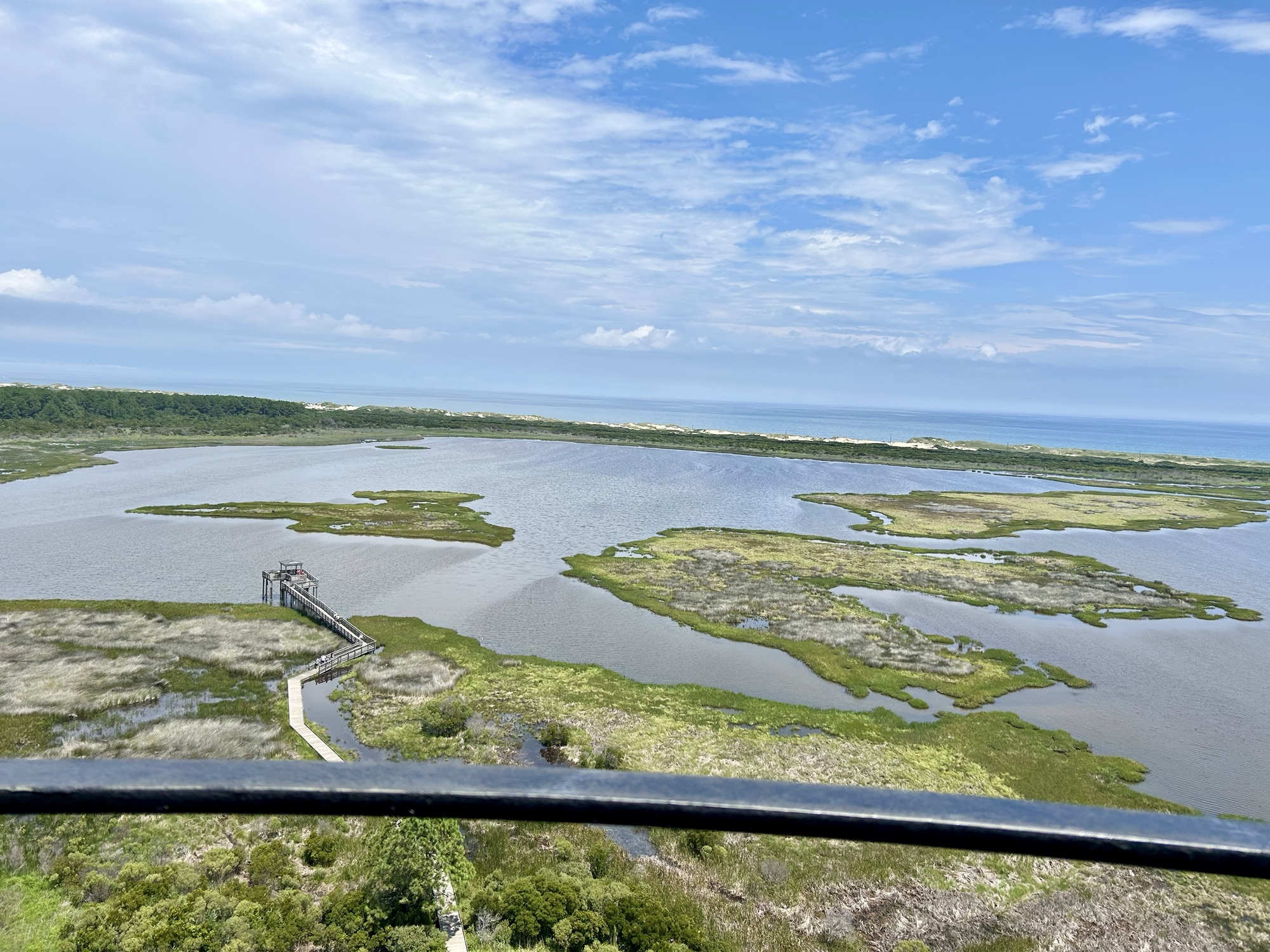
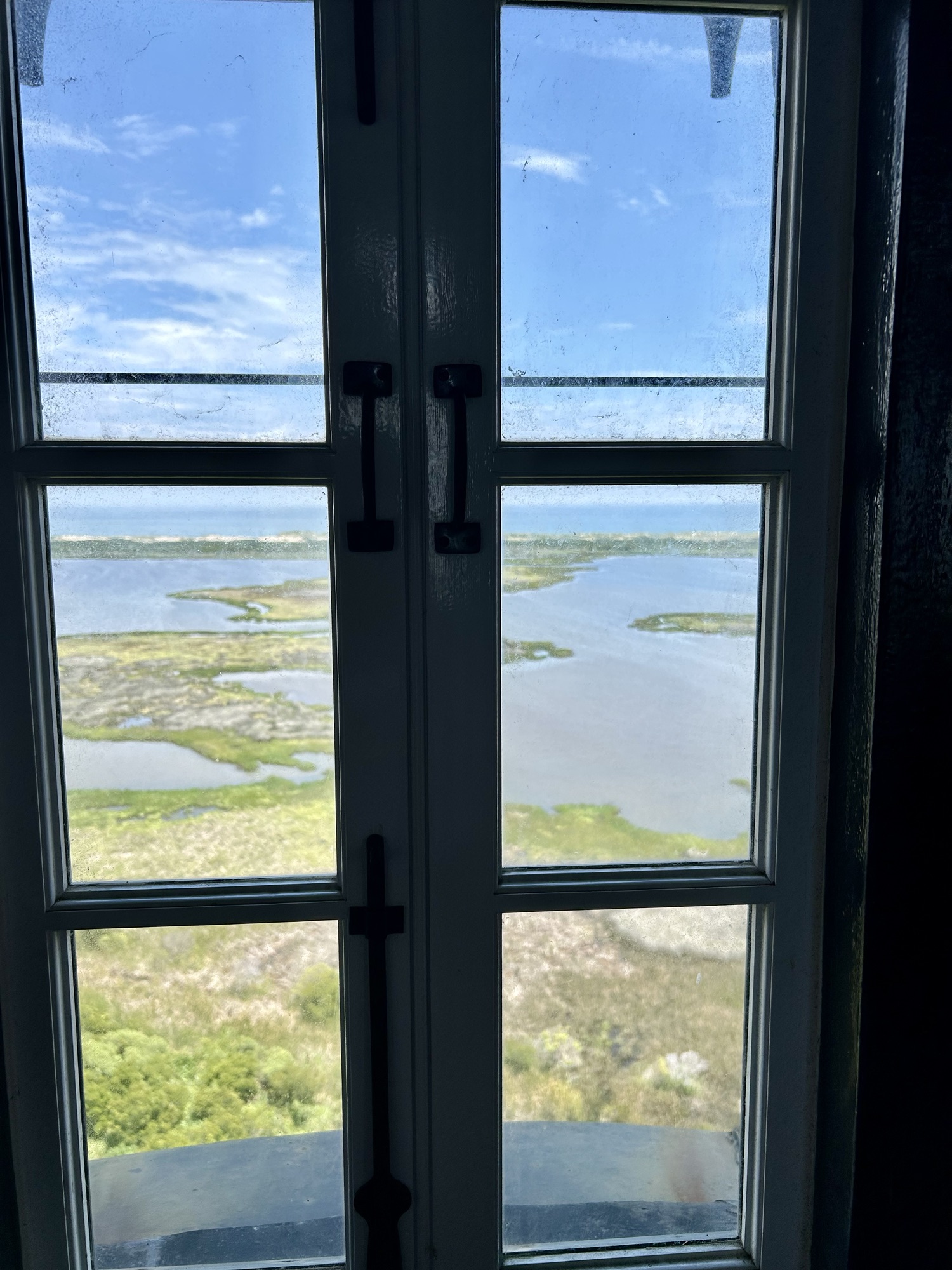
Spread out before us was 360 degrees of the sweeping sights of Bodie Island, Pamlico Sound, and the Atlantic Ocean.  Astonished by the surrounding marshlands, pine trees, distant bridges, the various bodies of water, and a map-like view of the vicinity, we appraised how different the Hatteras Seashore looked from a bird’s eye view. In fact, we realized that we only saw a fragment of what was all around us whenever we drove along NC Route 12 to and from the lighthouse.

We would have loved to have stayed longer, but our time was limited by default of the National Park visitor schedule.  Of course, the only way to exit was to climb down those 200+ steps, one level at a time.

The Only way Through is Through ⬇️

Just as the way up took time, especially coordinating with others, so did the climb down.  However, this time, it felt different.  We now possessed the confidence of knowing that we had conquered the climb and made it to the top.  We stepped down the steps with a certain satisfaction one feels from having successfully “blossomed,” as that flower did between the cracks, with the completion of a difficult task.  

Many of life’s struggles and challenges are like that lighthouse climb. 

Sometimes we face situations in life that are so difficult, we feel stuck.  If we don’t tie up our laces and start climbing, we’ll remain stuck, unable to move the boulder of a problem.  However, if we start climbing, it’s going to hurt, and we will sweat from the effort–at least proverbially speaking. 

Start climbing anyway

Similarly to those nine landings, we may climb over one rock, only to realize there are more to maneuver around. There are more sides, more stony surfaces relating to the struggle than we initially think.  Thus, there is more climbing to do, more problems to solve.  

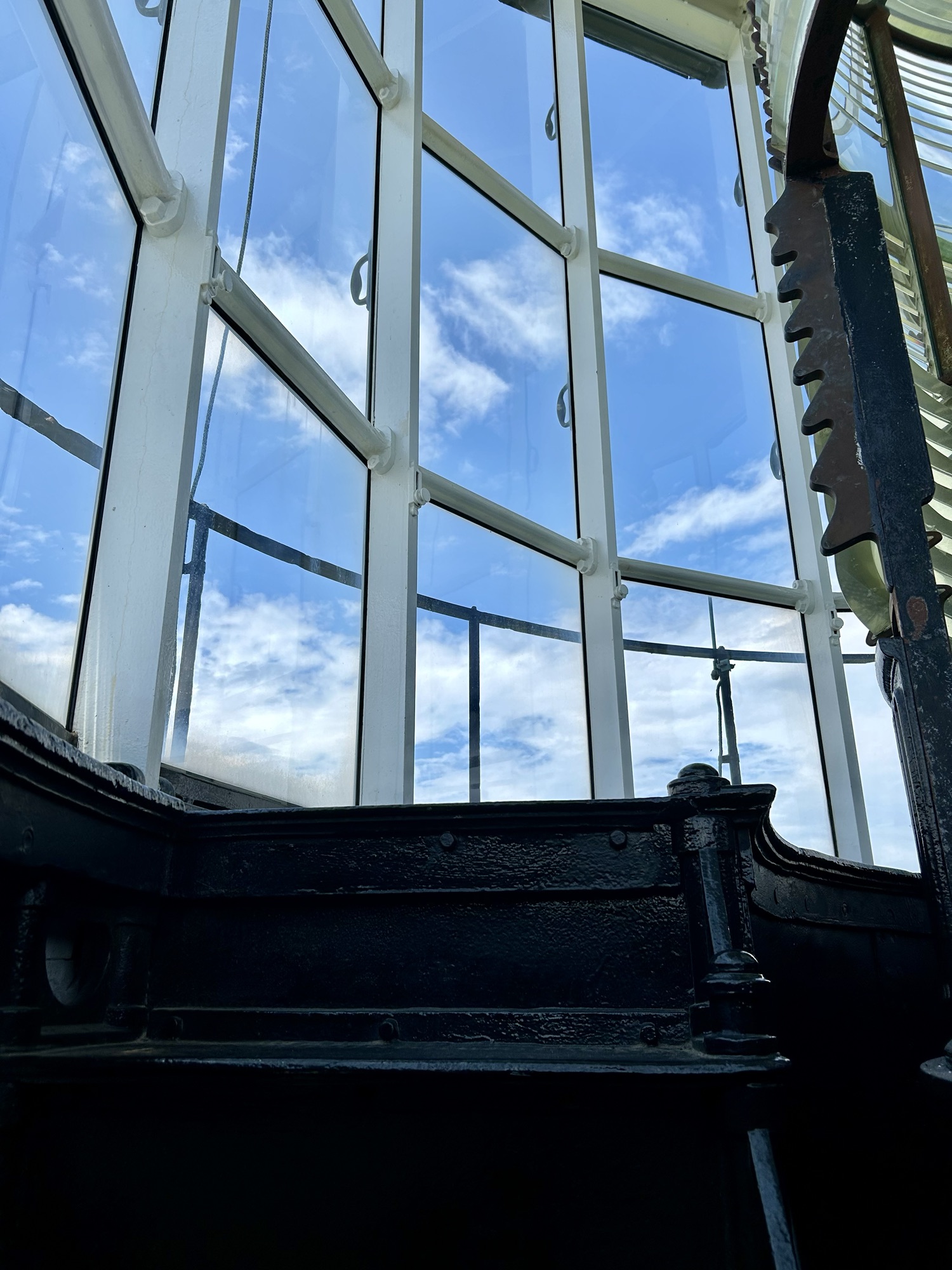
Looking through the lighthouse window, I could see the progress we were making.

Appreciate how far you have come

No matter how much more there is to go when dealing with life’s challenges/changes, it is worthwhile to notice how far you have come.

Taking a moment to pause and celebrate the challenges that you were able to “clear” is important. It not only serves as an opportunity for gratitude for what has been overcome, but also provides time to symbolically catch your breath before attempting to conquer the next step of the challenge.  Certainly, the “unknown” will remain in wait; however, by pausing and not rushing towards a quick solution, we are better able to gather enough strength for tackling the next part of the challenge.

Making the climb together made a difference.

Seek Support

When working through a life challenge, it is often beneficial to enlist the help of a friend or loved one.

Climbing up the Bodie Lighthouse steps, not only did I have my daughter with me, but there was a group who had reached the top before us. As they descended, they offered words of hope.

“The view is gorgeous from the top!”

“You’re almost there!”

“It is so worth the sweat!”

Seeds of encouragement, whether spoken or written, along with the presence of another dear soul helping us along the way, can make all the difference when we are striving from level to the next as we navigate the challenge/change.  

Invoking your Higher Power can light the way through rocky and rough patches.

Have Faith

Invoking the help of our Higher Power can offer further strength and resolve.

With each step taken, and each landing reached, hope increases.  When that sense of hope is nourished with support, encouragement, and faith, it fortifies us–feeling akin to love–a love that can see us through the difficult time.

Hope often feels akin to love. 💜

Eventually, each of life’s challenges and changes reach their pinnacle, allowing for a reprieve to bask in the breezes of accomplishment and the joy of the new lifeview. 

Of course, like those summer blossoms, we can’t remain on top forever.  Eventually, we all must descend from the height of accomplishment.  However, we can make that descent with a greater sense of resiliency, strength, and a deepened faith that we can not only move up, over, and around life’s rocks and hard places, but we can also help others do the same.

Charlton Lake Camp in Killarney Provincial Park, Ontario: Your Canadian Adventure Destination

“You get a strange feeling when you are about to leave a place, like you’ll not only miss the people you love but you’ll miss the person you are now at this time and place, because you’ll never be this way ever again.”–Azar Nafisi

Welcome to your Lake Charlton Camp cabin!

Looking for a Canadian Adventure? 🇨🇦

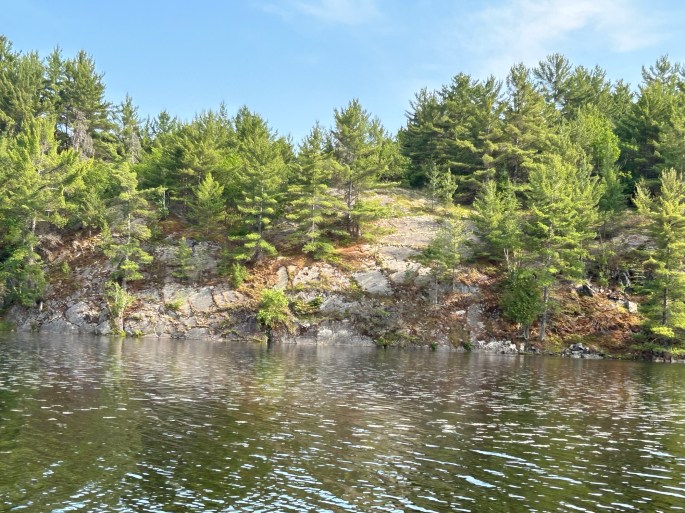
If you have ever considered traveling to Canada, and you enjoy scenic, out-of-doors vacations, then add Charlton Lake Camp (CLC) to your list of places to visit. Situated in Killarney Provincial Park in Willisville, Ontario, CLC is surrounded by clear, tea-stained waters, heavily wooded islands, and rocky outcrops with the craggy, quartzite rise of the La Cloche Mountains in the background. The camp sits along the Whitefish River connecting visitors to the sparkling waters of Charlton Lake, Frood Lake, and Cranberry Lake.  
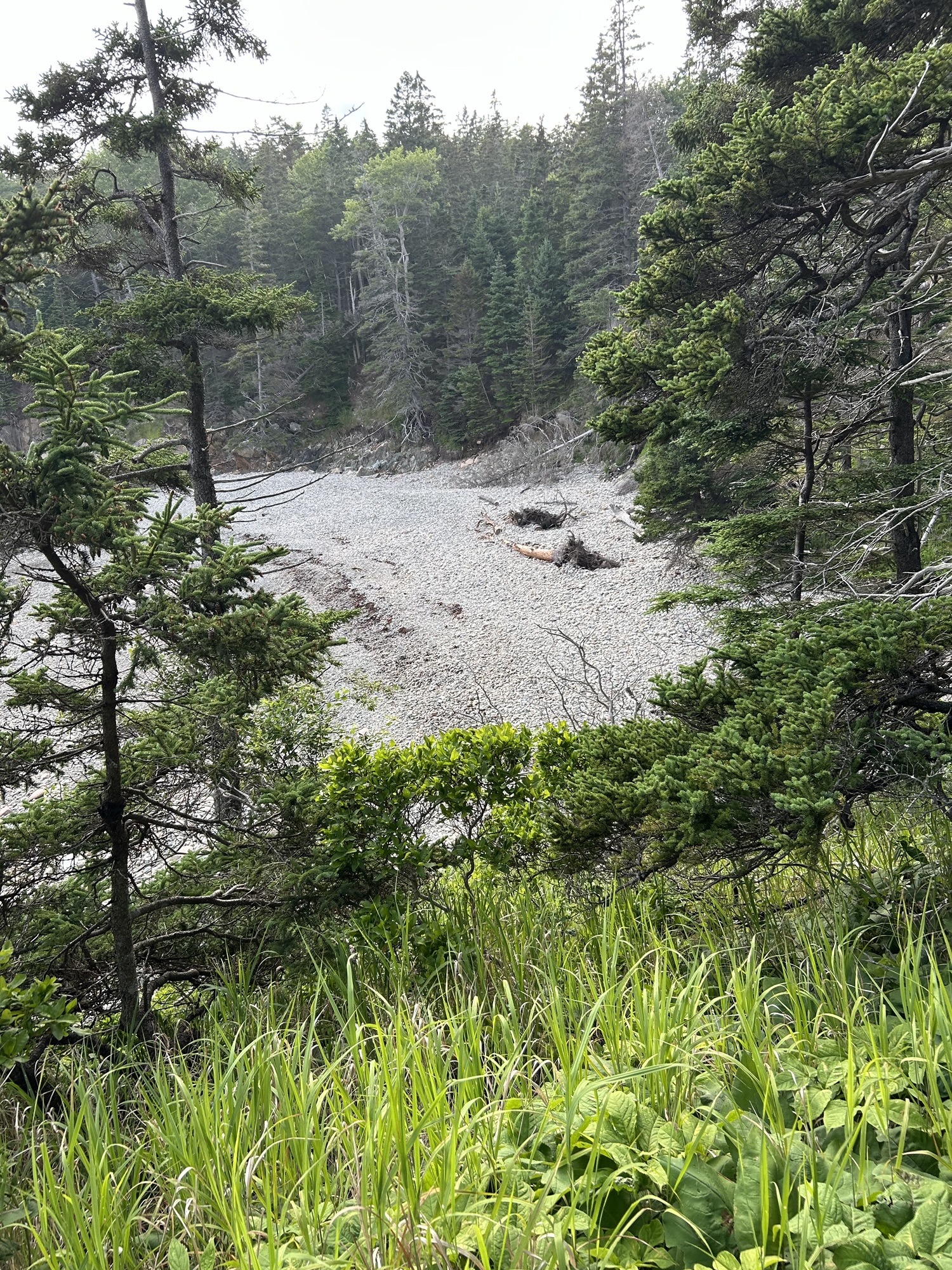
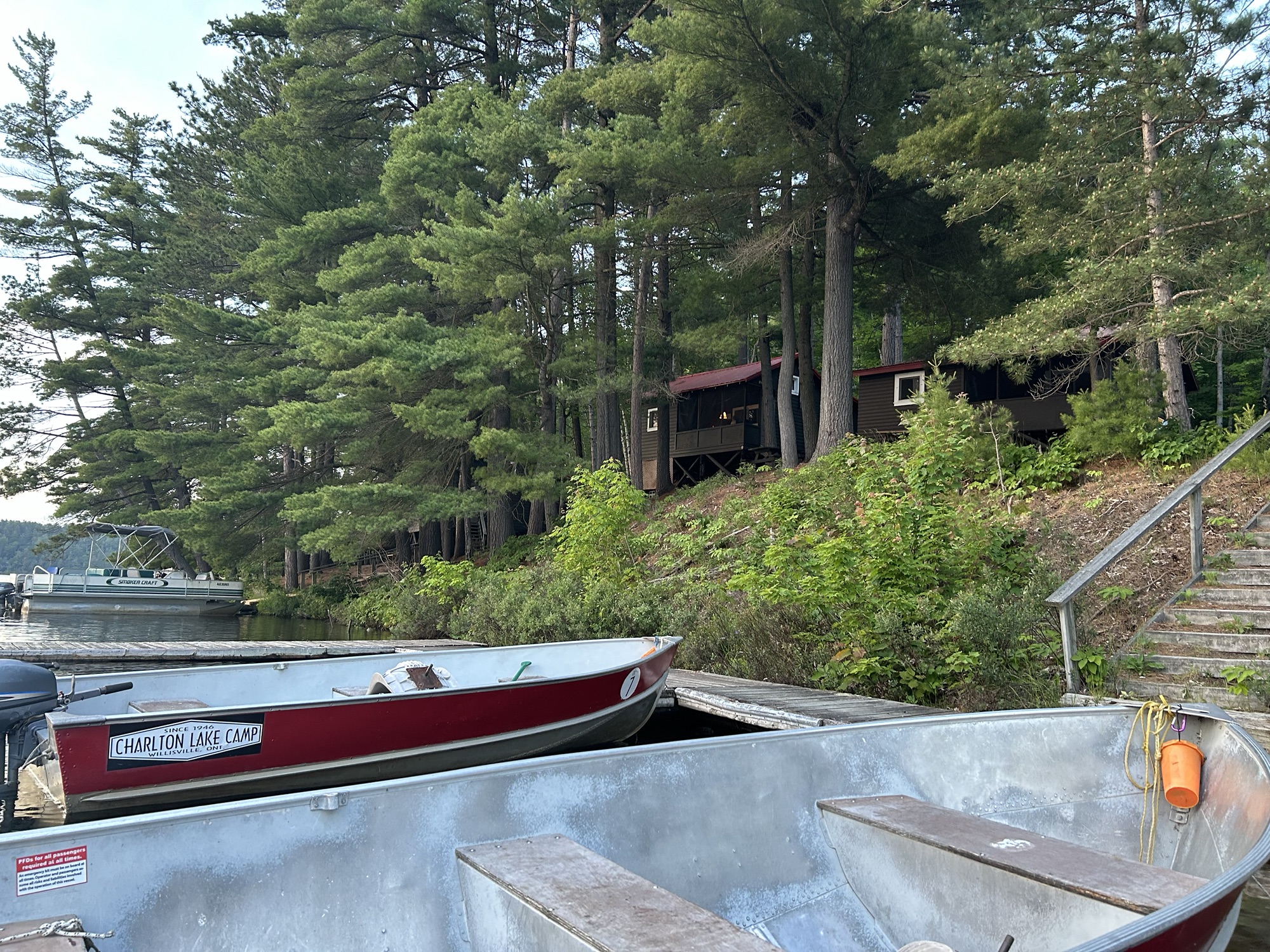
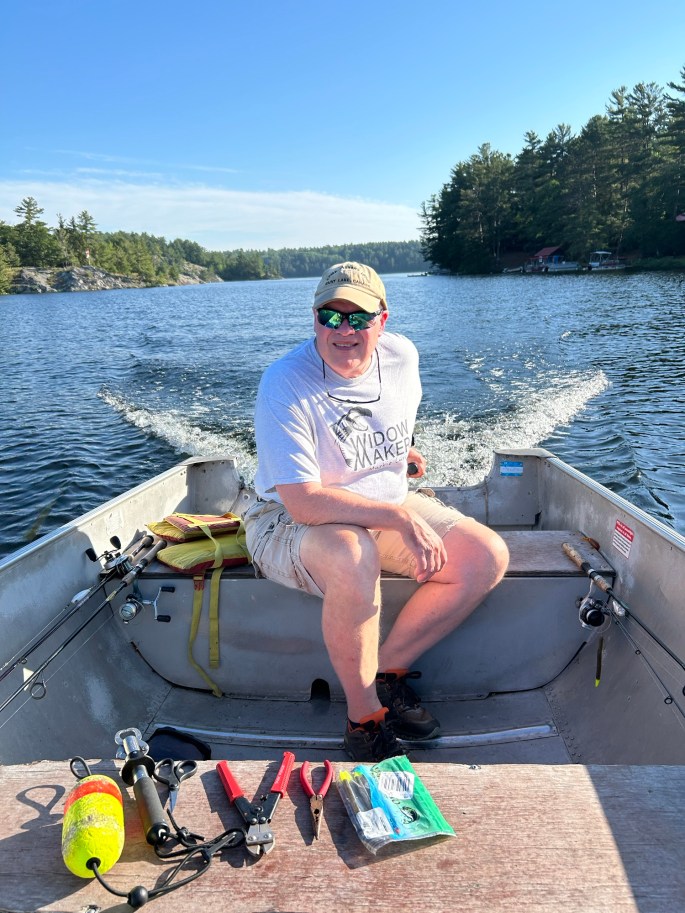
Bring your own boat or rent a boat, the choice is yours at Charlton Lake Camp.

Clean, Well-Equipped Cabins 🏕️

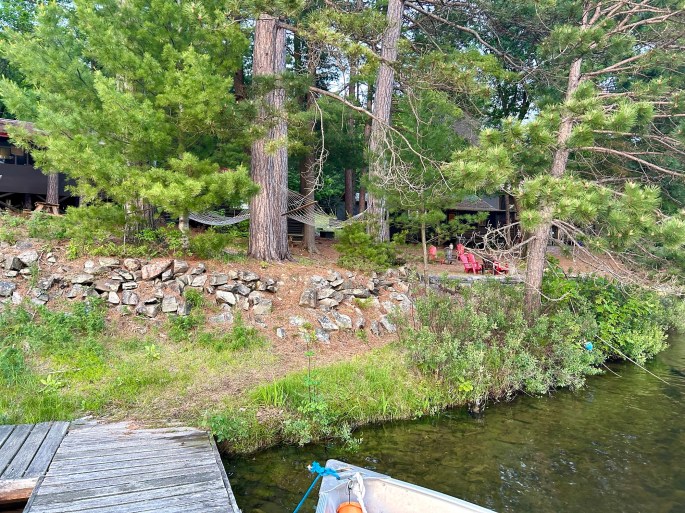
Charlton Lake Camp offers a variety of cabin sizes designed to accommodate families, friends, couples, or even a solo retreat. From fishing to boating, from swimming to hiking, and from exploring to plain ol’ relaxing, there’s plenty to do when staying at CLC.  Throughout the camp there are plenty of hammocks and Adirondack chairs for reading and lounging about. Each cabin has its own picnic table, barbeque, and a screened porch overlooking the Whitefish River.  Additionally, there is a boat dock for every cabin, and visitors can either bring their own boat or rent one from CLC.  The camp also has well-marked hiking trails on and near the property.
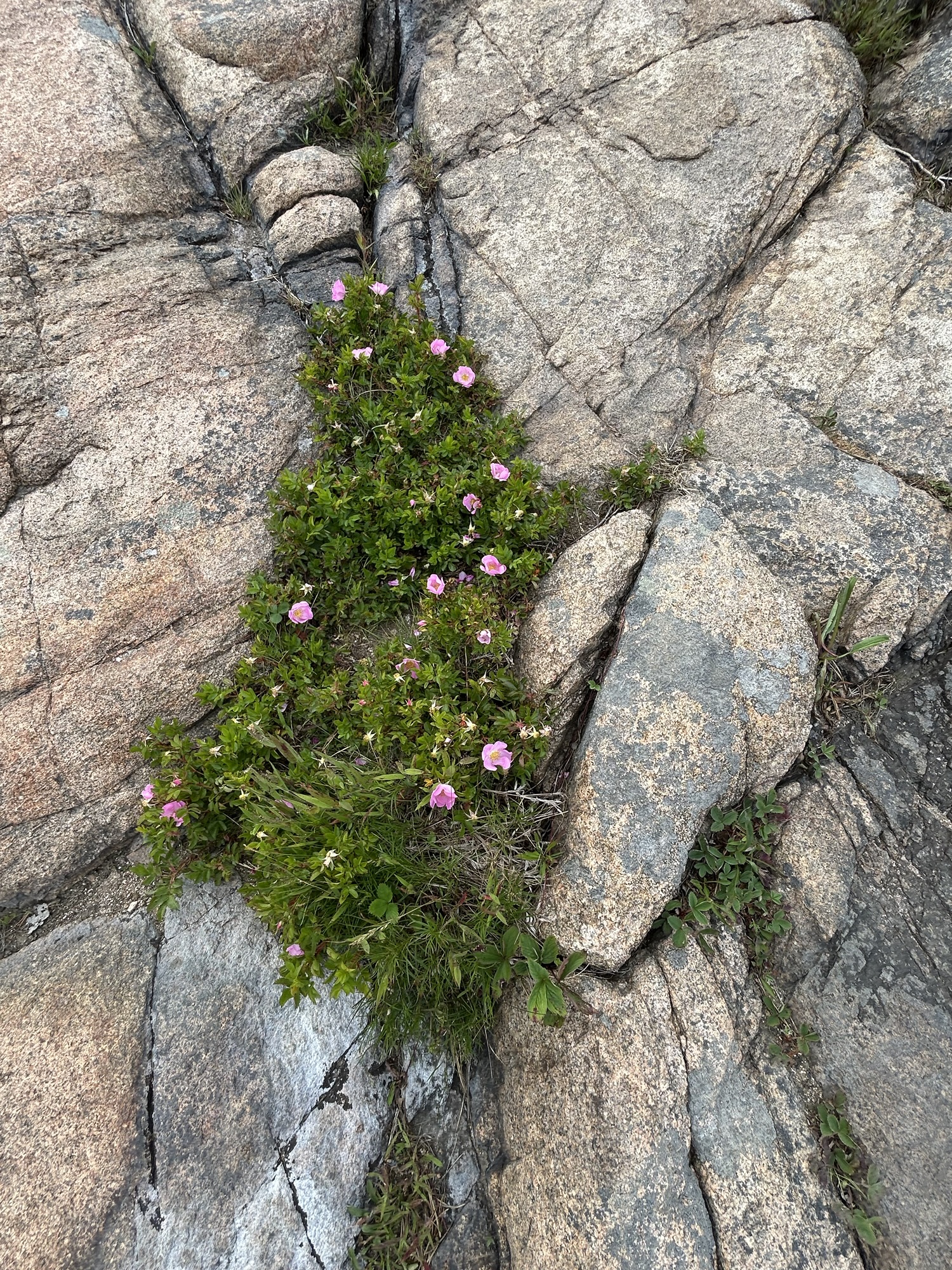
Roped-off area for swimming, and in the background you will see the fish cleaning cabin as well as the camp’s official pontoon boat.

Kayaks, canoes, and peddle boats, oh my! 🛶

CLC has kayaks, pedal boats, and canoes available for every camper to use. For those who like to cool off in the heat of a summer day, there is a roped-off swim area with a platform and its own beach area. Plus, in the center of the camp is a large fire pit area for which the camp provides wood for those interested in roasting hot dogs, making smores, or simply swapping tales at the end of the day. And, yes, there is wifi!  

Dan and Lisa help you shift into vacation mode, so you have more time for enjoying scenes like this from your cabin’s front porch.

Welcome to Charlton Lake Camp 🏕️

The owners, Dan and Lisa McGuire, go out of their way to welcome guests and help new arrivals get situated on their first day.  The McGuires meet and pick-up visitors in a pontoon boat at the camp’s parking lot. From there, visitors and their belongings are boated across the short distance of water to their camp. Once across the river, Dan typically has a four-wheeler with a trailer available for loading up campers’ belongings, and he will then drive those belongings straight to the assigned cabin.  This makes it much easier to get everything unloaded and unpacked, so visitors can quickly get started on vacation mode.

It’s a quick, easy trip back to the CLC’s parking lot to get you back to town for anything you forgot or any other adventures you wish to partake.

No worries if you forgot something 🤔

Once campers are settled, Dan will go over the boat basics for those renting one of CLC’s boats.  From that point on, campers can travel with ease to the three different lakes for sight-seeing or fishing adventures.  Additionally, anytime visitors want to travel back to town, they can either boat themselves across the river to the camp’s parking lot, or Dan and Lisa will take campers across the water on their pontoon. It’s a win-win situation, especially on those days when kids (or adults, for that matter) get a bit restless.

Espanola is a friendly, welcoming town.

Hiking, shopping, dining, Exploring . . . 🥾

The closest town, Espanola, has several stores, grocers, and restaurants, including one of our favorite pizza places, Toppers.  Additionally, in the opposite direction, a little bit further down the road, is Manitoulin Island, with its closest town, Little Current . This town offers unique shops, grocer, and restaurants. Additionally, Manitoulin Island possesses a wide-array of day-trip worthy activities, including numerous hiking trails, stunning lookout points, beautiful beaches, golf courses, and museums to name a few.

A fishing paradise 🎣

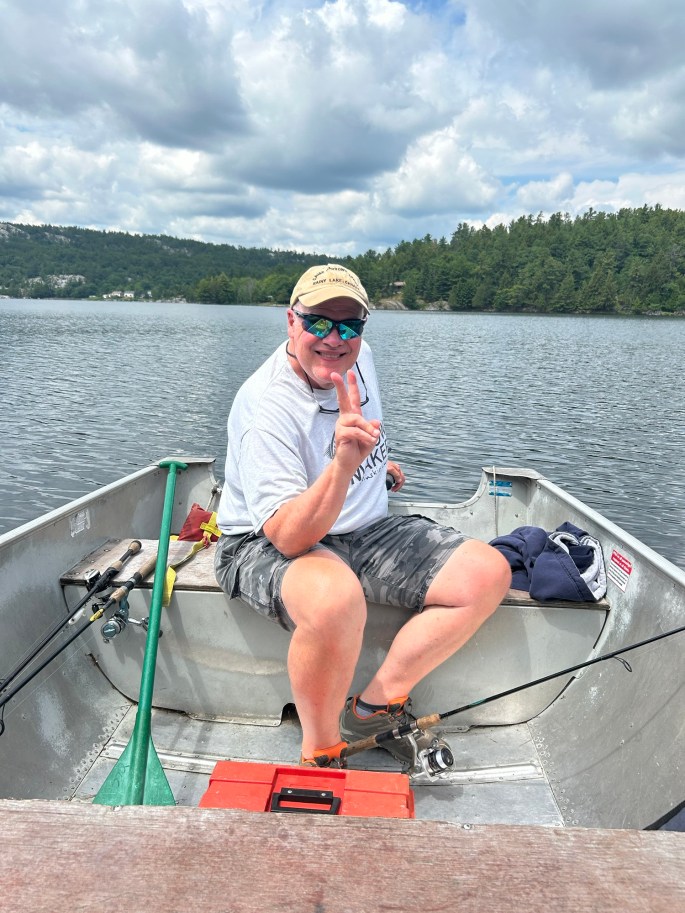
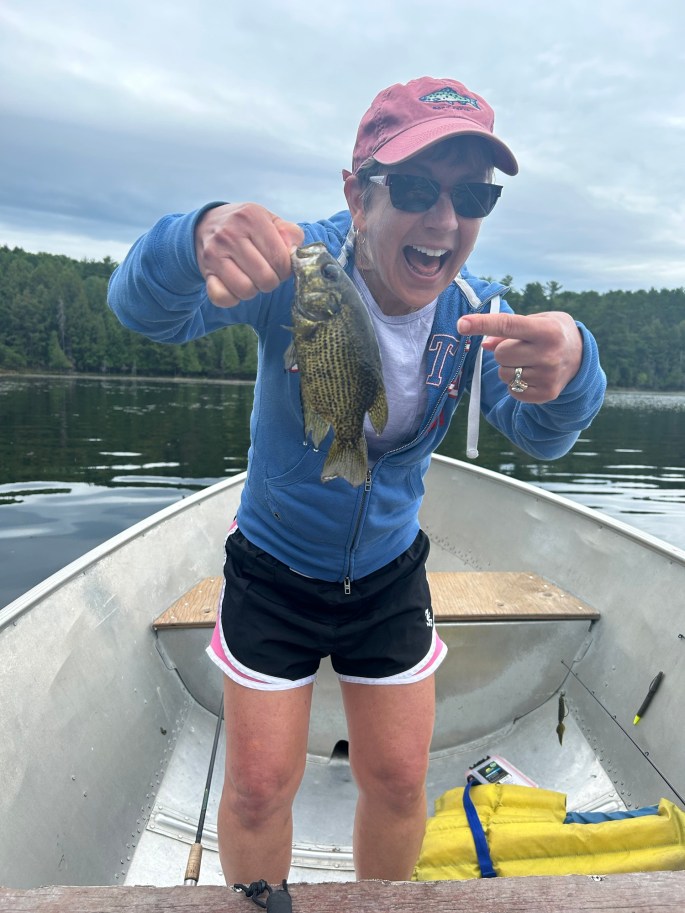
However, with all that Charlton Lake Camp has to offer, it can be difficult to tear yourself away from its picturesque surroundings. This is especially true for those who enjoy fishing. The waters at this camp are teeming with small and largemouth bass, walleye, pike, and a variety of panfish. John and I have had the pleasure of staying at CLC twice, and both times we were able to find excellent fishing spots. This is because the water is full of structure, baitfish, rocky points, channels, weed beds, and plenty of boat docks.  It is truly a fisherman’s paradise.

Idyllic surroundings 🏞️

That said, for those who love canoeing and kayaking, this camp is situated in a wonderland of picturesque and tranquil surroundings. Whether you canoe or kayak for exercise, fishing, observing nature, or the simple pleasure of being on the water, the waters surrounding CLC are ideal for all types of boating adventures. Plus, the camp offers paddle boats for the kid in all of us.

Mother nature Likes to play 🌦️

While staying at CLC this past June (2024), there were drastic weather shifts.  We arrived with a cold front that sent temperatures into the 40s at night. The subsequent highs during those first two days were in the 60s.  During this time, rain moved in, followed by a heat wave.  With the heat wave, lows never went below 70 degrees, and the high temperatures reached 90 degrees Fahrenheit (30s Celsius). However, by the very end of the week, temperatures moderated a bit.  
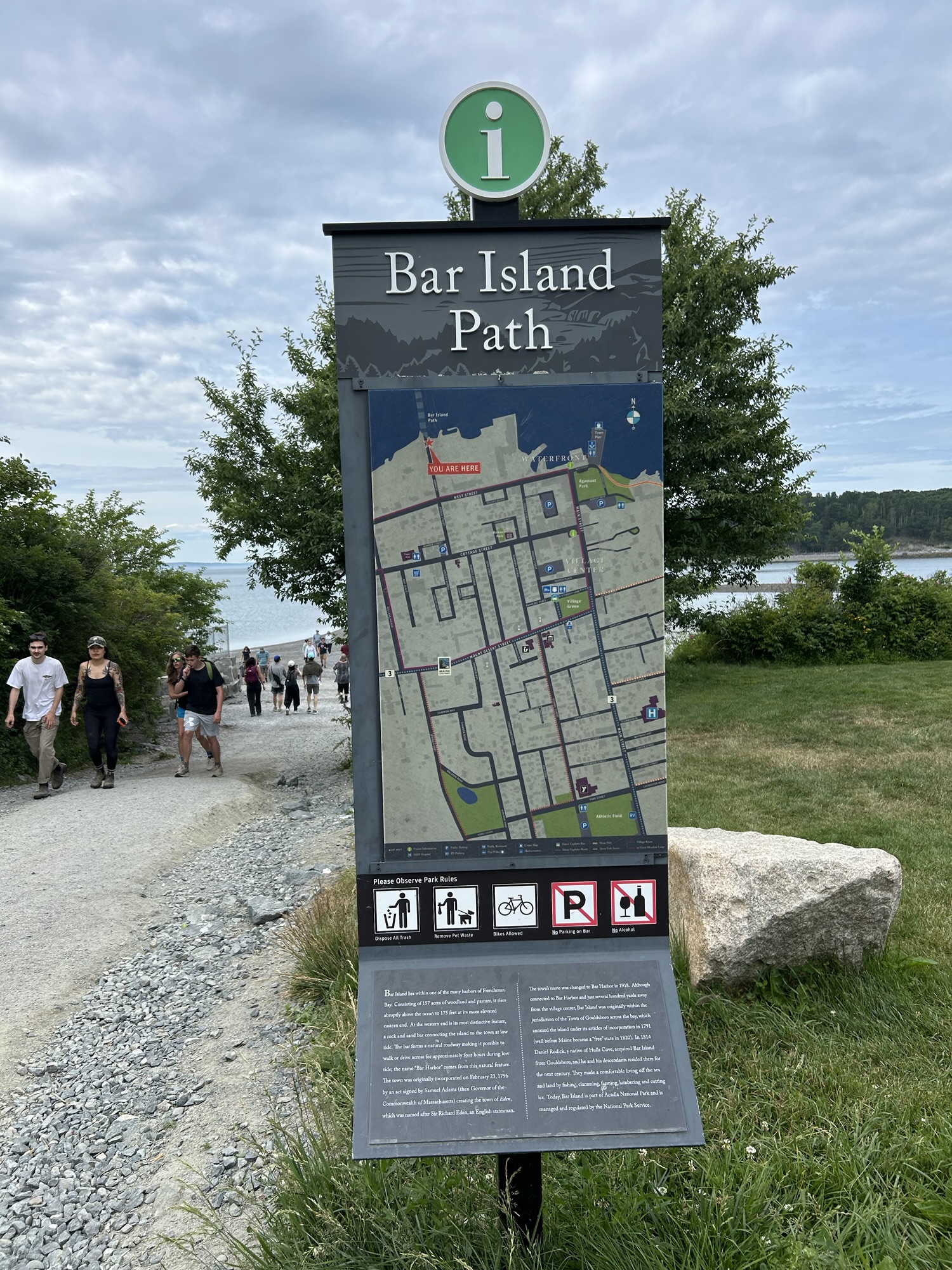
Fat-Bellied, Chunks 🐟

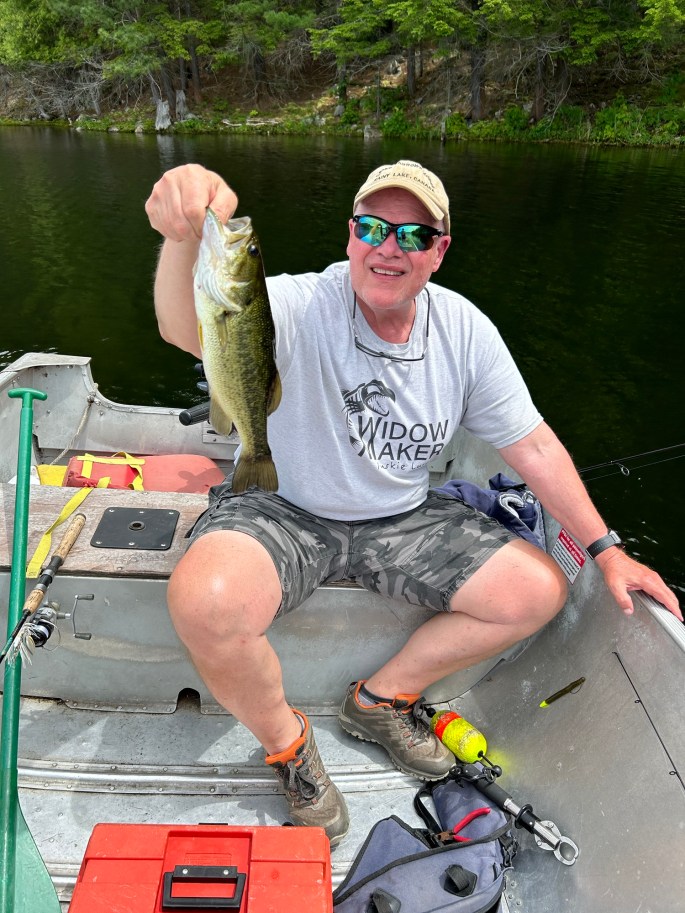
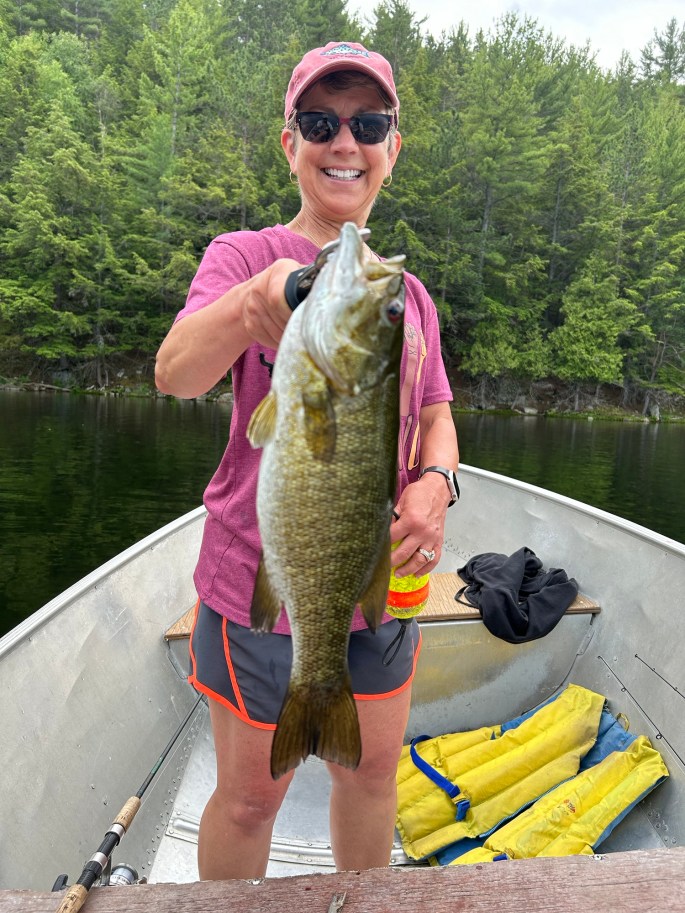
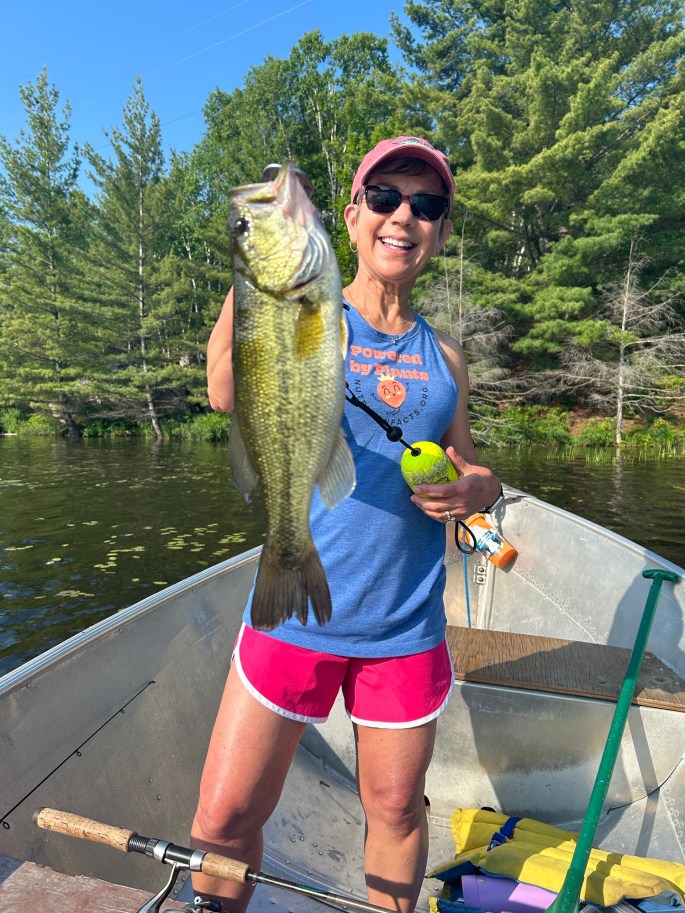
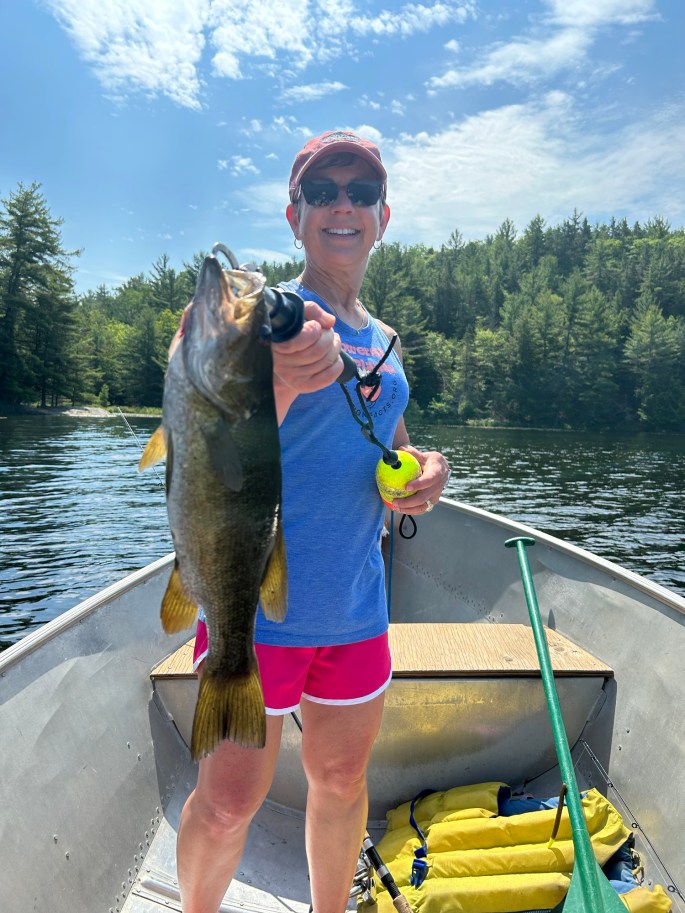
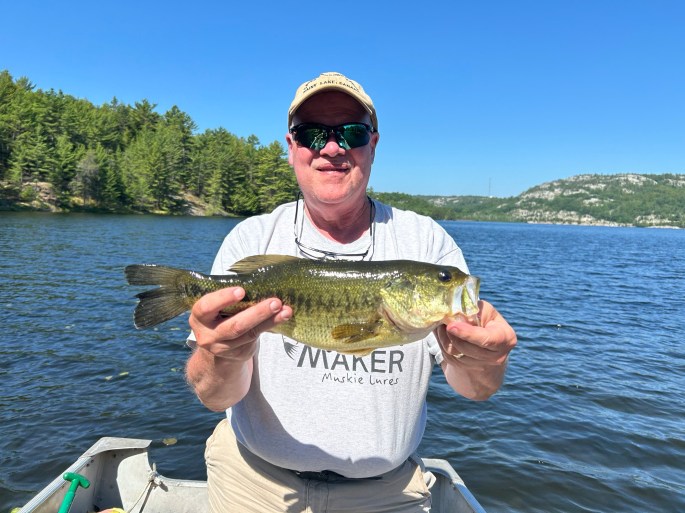
The extreme weather shifts made for some interesting fishing conditions. Therefore, we weren’t able to catch as many fish as we did the year before, but we did catch fish daily. We caught some real beauties too!  There were numerous fat-bellied smallmouth bass, which are always fun to catch and release. Plus, there were several chunky largemouth bass, a few random panfish, and John even caught a pike while fishing for a bass!  

licensed for fun 🤩

In fact, we caught over 40 fish by the week’s end, which was great, given the weather. We released all that we caught; however, the camp does offer a nice fish-cleaning station for those who keep and eat their catch-of-the-day. That said, anglers need to ensure they purchase the right fishing license in order to do this (conservation license vs sport fishing license).

sensory experience

Personally speaking, while John and I do enjoy catching fish, it is the pristine beauty and serene surroundings that sent us back to CLC for a second visit.  Honestly, there is nothing like gliding along in a boat on the still morning waters of a backwoods, upnorth lake, listening to the call of the loon, feeling a light breeze nuzzle your cheek, and inhaling the aromatic scents of pine and moss.  Furthermore, spending time with nature for hours at a time stokes an appetite, making even the simplest of food taste like a feast. Plus, all that sun and fresh air lulls you into the most restful sleep at night.
Make Memories that last a lifetime 🍁

If you’ve ever considered experiencing a Canadian wilderness trip with friends or family, consider giving Charlton Lake Camp a look. The owners are fantastic, the cabins are clean, and they are fully stocked for your camping needs. With its panoramic scenery, tranquil waters, and plenty of choices for your out-of-doors activities, CLC is a spot where vacation memories are made to last a lifetime. This is one place John and I hope to visit again at some point in the coming years.