Charlton Lake Camp in Killarney Provincial Park, Ontario: Your Canadian Adventure Destination

“You get a strange feeling when you are about to leave a place, like you’ll not only miss the people you love but you’ll miss the person you are now at this time and place, because you’ll never be this way ever again.”–Azar Nafisi

Welcome to your Lake Charlton Camp cabin!

Looking for a Canadian Adventure? 🇨🇦

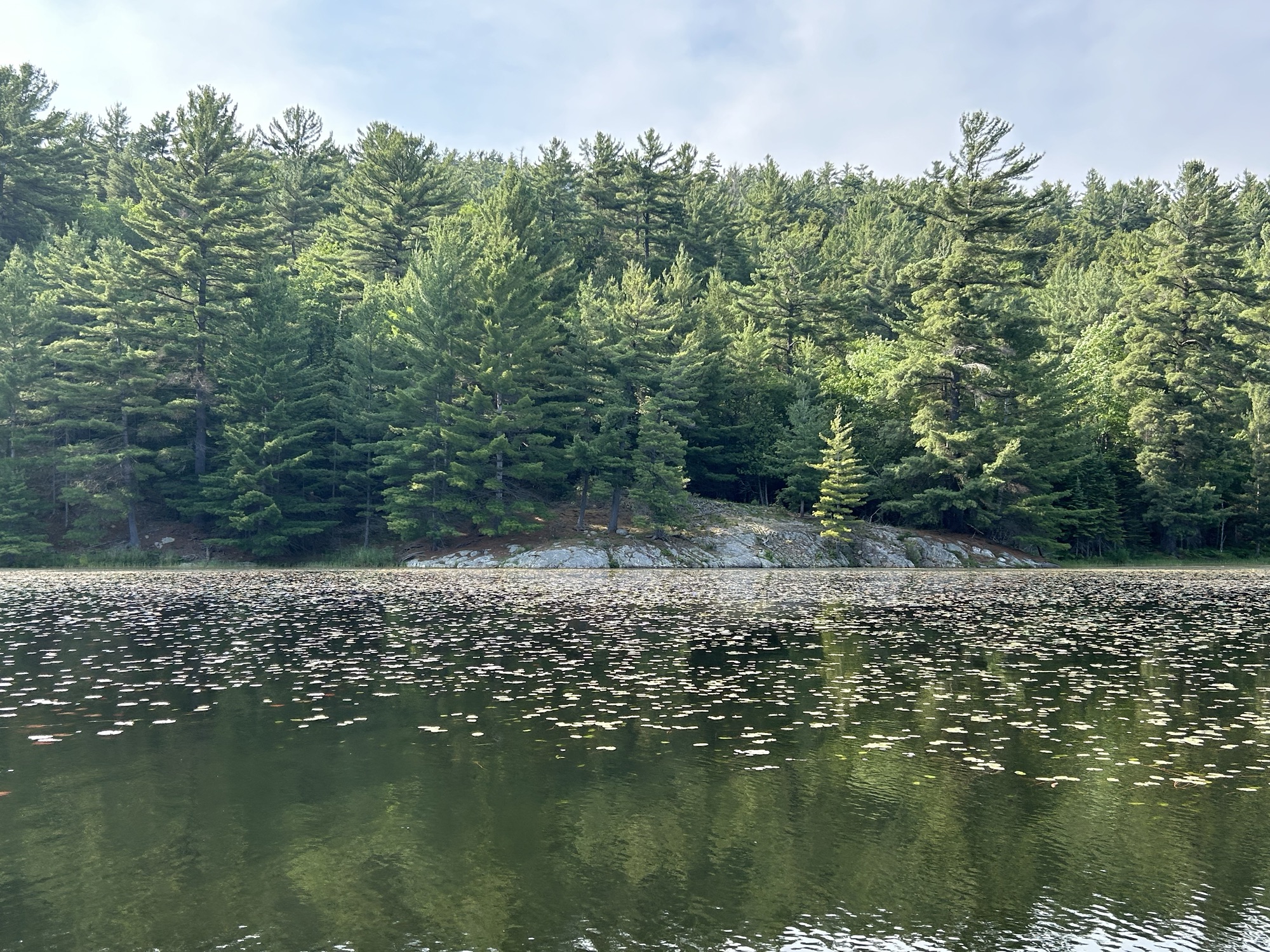
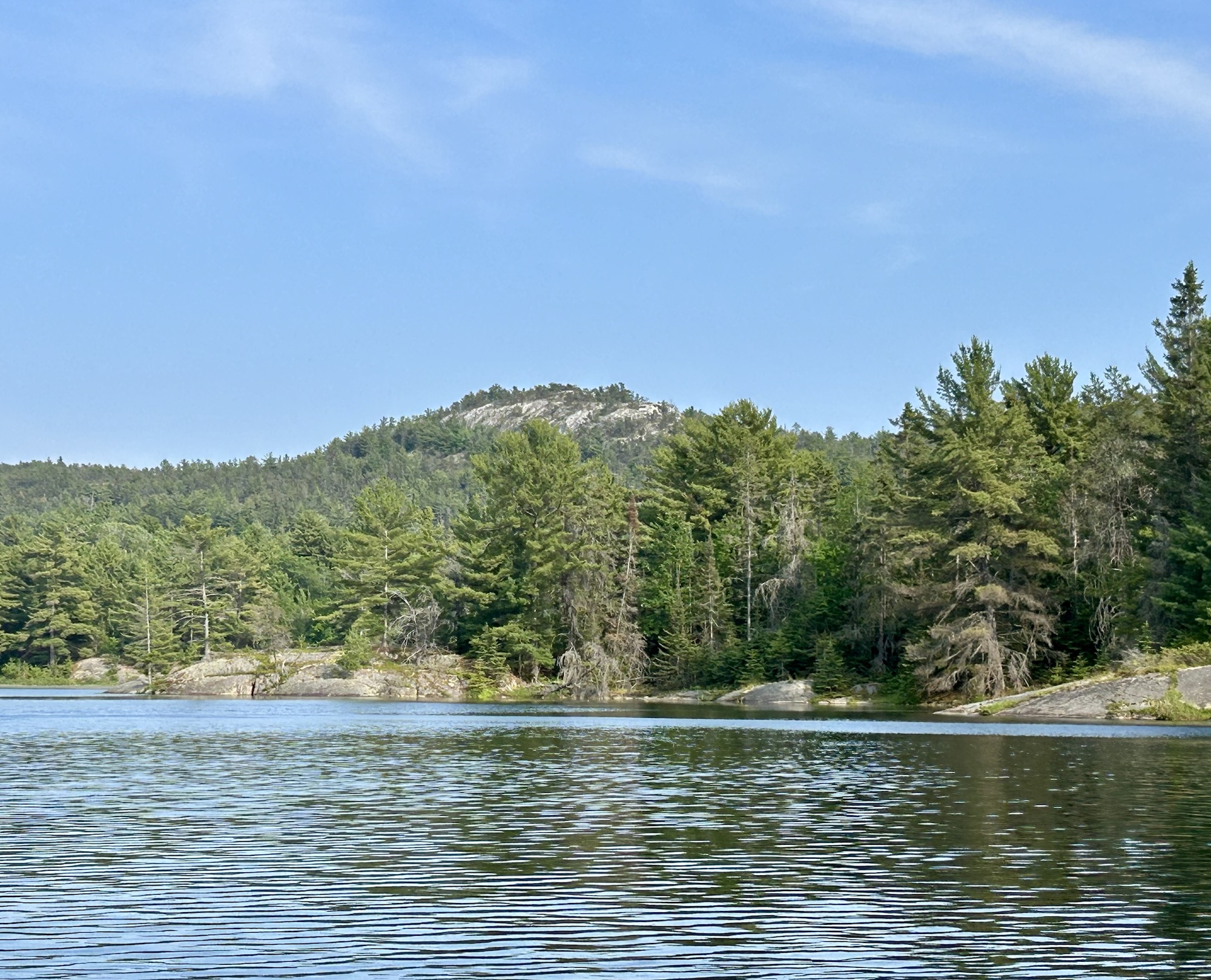
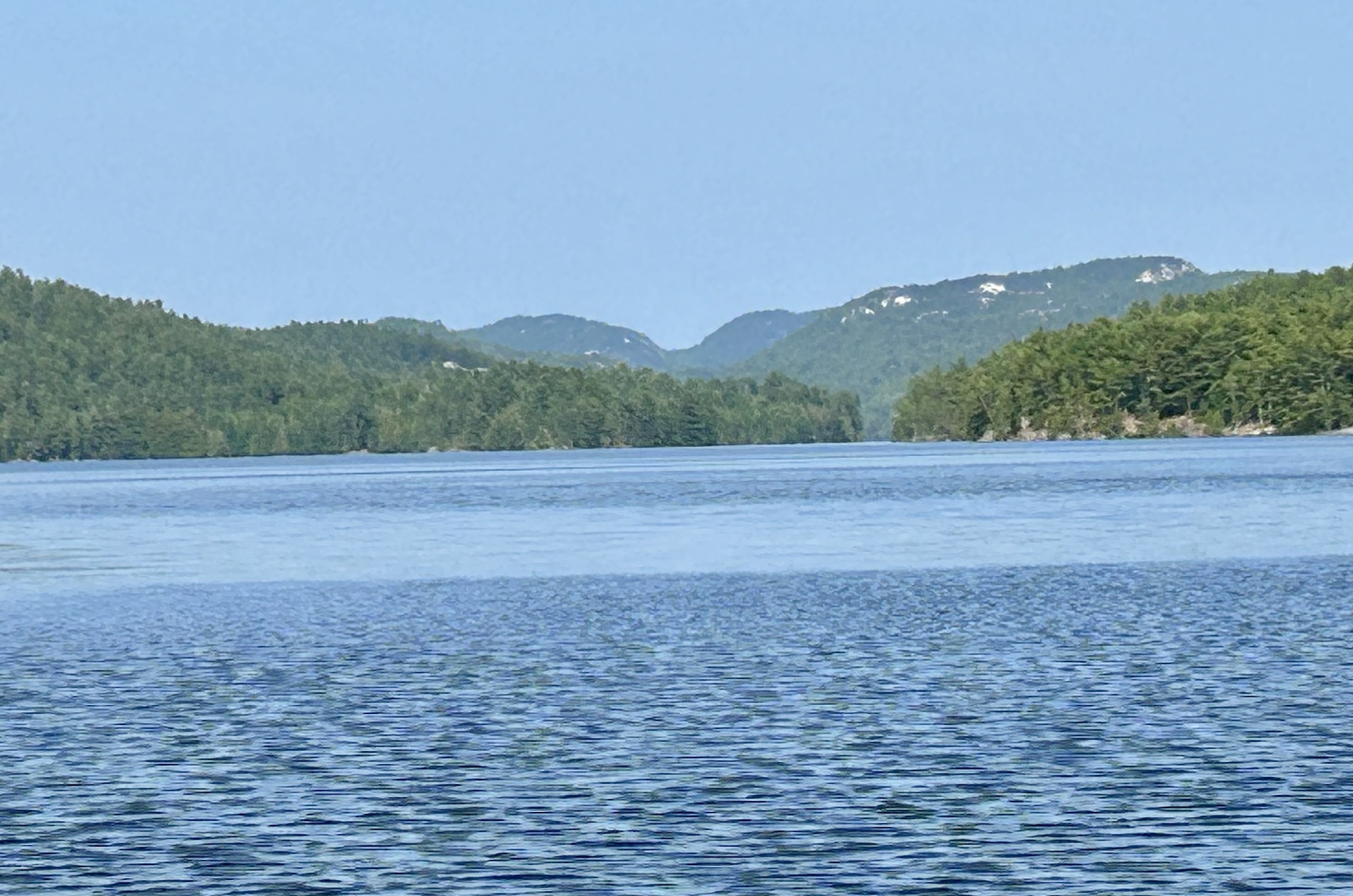
If you have ever considered traveling to Canada, and you enjoy scenic, out-of-doors vacations, then add Charlton Lake Camp (CLC) to your list of places to visit. Situated in Killarney Provincial Park in Willisville, Ontario, CLC is surrounded by clear, tea-stained waters, heavily wooded islands, and rocky outcrops with the craggy, quartzite rise of the La Cloche Mountains in the background. The camp sits along the Whitefish River connecting visitors to the sparkling waters of Charlton Lake, Frood Lake, and Cranberry Lake.  
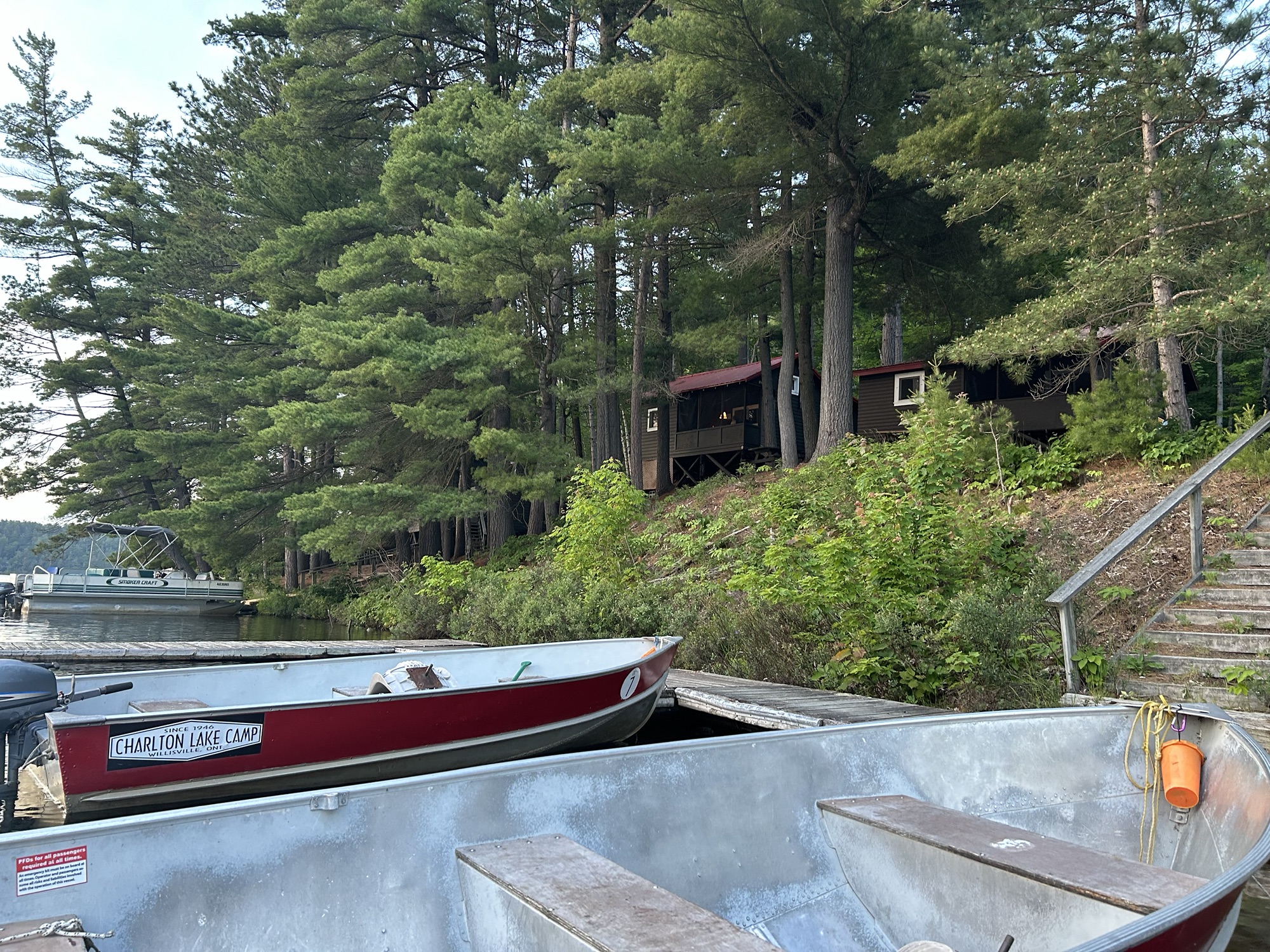
Bring your own boat or rent a boat, the choice is yours at Charlton Lake Camp.

Clean, Well-Equipped Cabins 🏕️

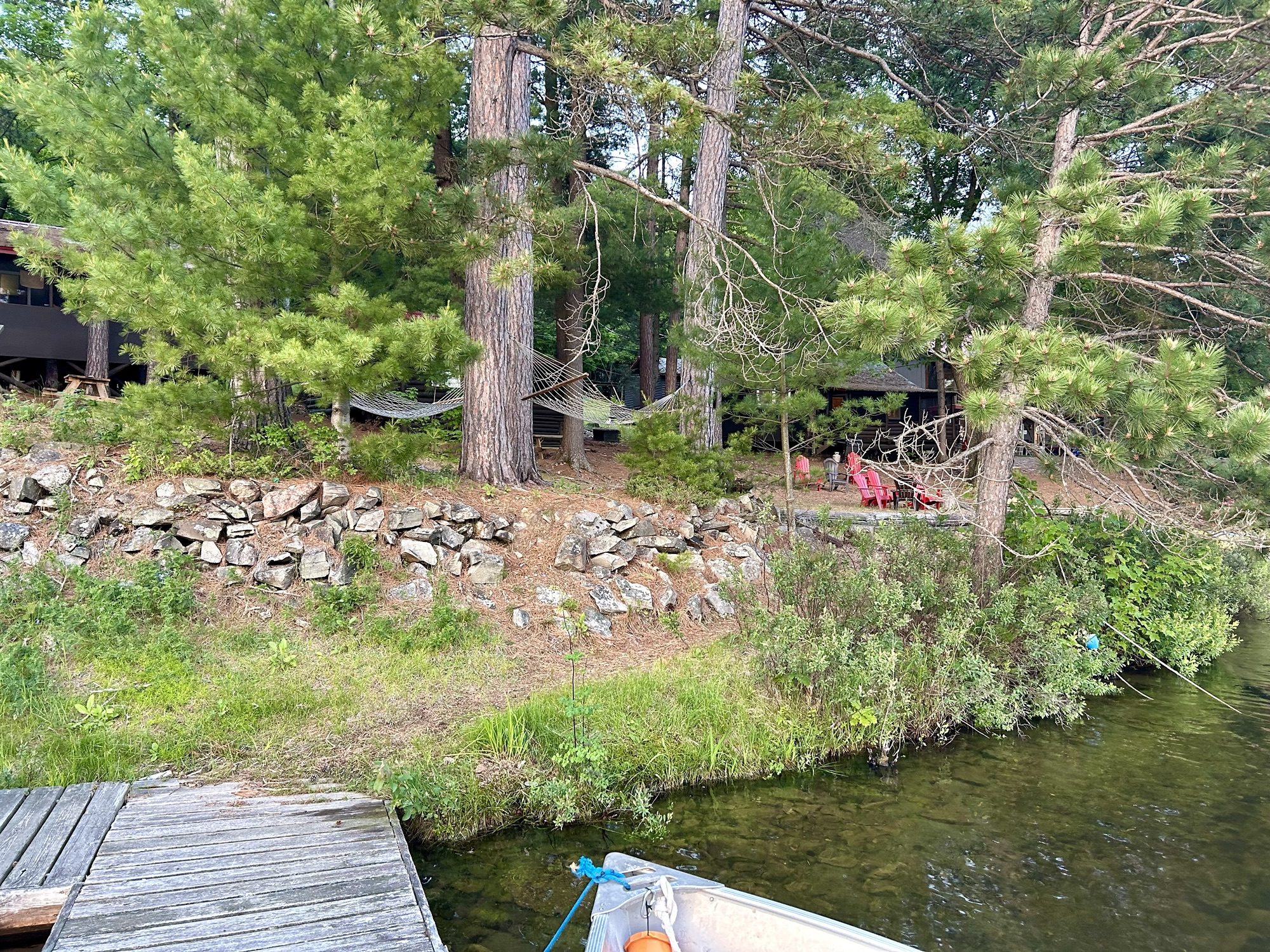
Charlton Lake Camp offers a variety of cabin sizes designed to accommodate families, friends, couples, or even a solo retreat. From fishing to boating, from swimming to hiking, and from exploring to plain ol’ relaxing, there’s plenty to do when staying at CLC.  Throughout the camp there are plenty of hammocks and Adirondack chairs for reading and lounging about. Each cabin has its own picnic table, barbeque, and a screened porch overlooking the Whitefish River.  Additionally, there is a boat dock for every cabin, and visitors can either bring their own boat or rent one from CLC.  The camp also has well-marked hiking trails on and near the property.

Roped-off area for swimming, and in the background you will see the fish cleaning cabin as well as the camp’s official pontoon boat.

Kayaks, canoes, and peddle boats, oh my! 🛶

CLC has kayaks, pedal boats, and canoes available for every camper to use. For those who like to cool off in the heat of a summer day, there is a roped-off swim area with a platform and its own beach area. Plus, in the center of the camp is a large fire pit area for which the camp provides wood for those interested in roasting hot dogs, making smores, or simply swapping tales at the end of the day. And, yes, there is wifi!  

Dan and Lisa help you shift into vacation mode, so you have more time for enjoying scenes like this from your cabin’s front porch.

Welcome to Charlton Lake Camp 🏕️

The owners, Dan and Lisa McGuire, go out of their way to welcome guests and help new arrivals get situated on their first day.  The McGuires meet and pick-up visitors in a pontoon boat at the camp’s parking lot. From there, visitors and their belongings are boated across the short distance of water to their camp. Once across the river, Dan typically has a four-wheeler with a trailer available for loading up campers’ belongings, and he will then drive those belongings straight to the assigned cabin.  This makes it much easier to get everything unloaded and unpacked, so visitors can quickly get started on vacation mode.

It’s a quick, easy trip back to the CLC’s parking lot to get you back to town for anything you forgot or any other adventures you wish to partake.

No worries if you forgot something 🤔

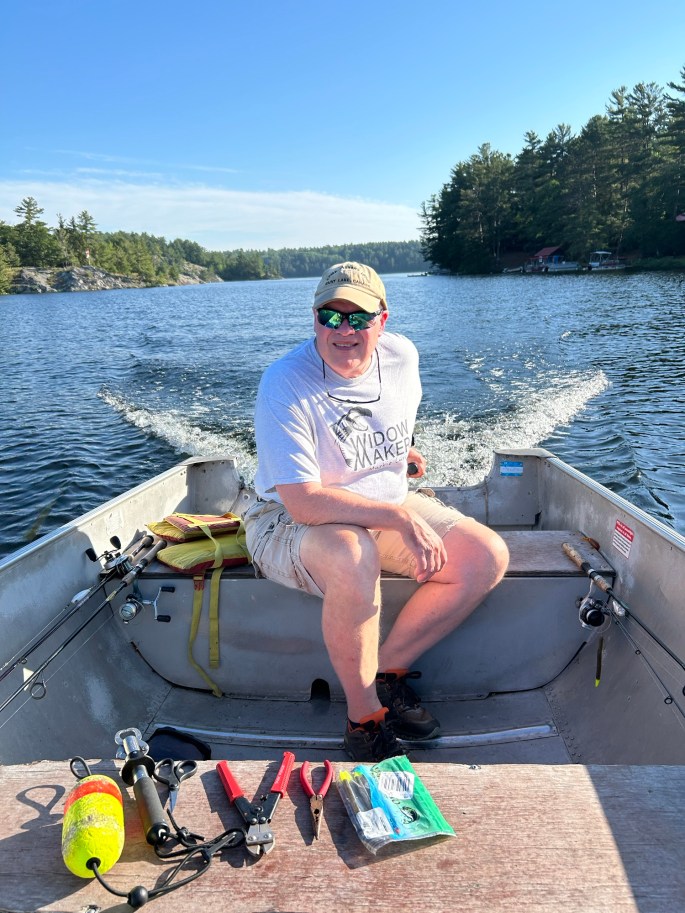
Once campers are settled, Dan will go over the boat basics for those renting one of CLC’s boats.  From that point on, campers can travel with ease to the three different lakes for sight-seeing or fishing adventures.  Additionally, anytime visitors want to travel back to town, they can either boat themselves across the river to the camp’s parking lot, or Dan and Lisa will take campers across the water on their pontoon. It’s a win-win situation, especially on those days when kids (or adults, for that matter) get a bit restless.

Espanola is a friendly, welcoming town.

Hiking, shopping, dining, Exploring . . . 🥾

The closest town, Espanola, has several stores, grocers, and restaurants, including one of our favorite pizza places, Toppers.  Additionally, in the opposite direction, a little bit further down the road, is Manitoulin Island, with its closest town, Little Current . This town offers unique shops, grocer, and restaurants. Additionally, Manitoulin Island possesses a wide-array of day-trip worthy activities, including numerous hiking trails, stunning lookout points, beautiful beaches, golf courses, and museums to name a few.

A fishing paradise 🎣

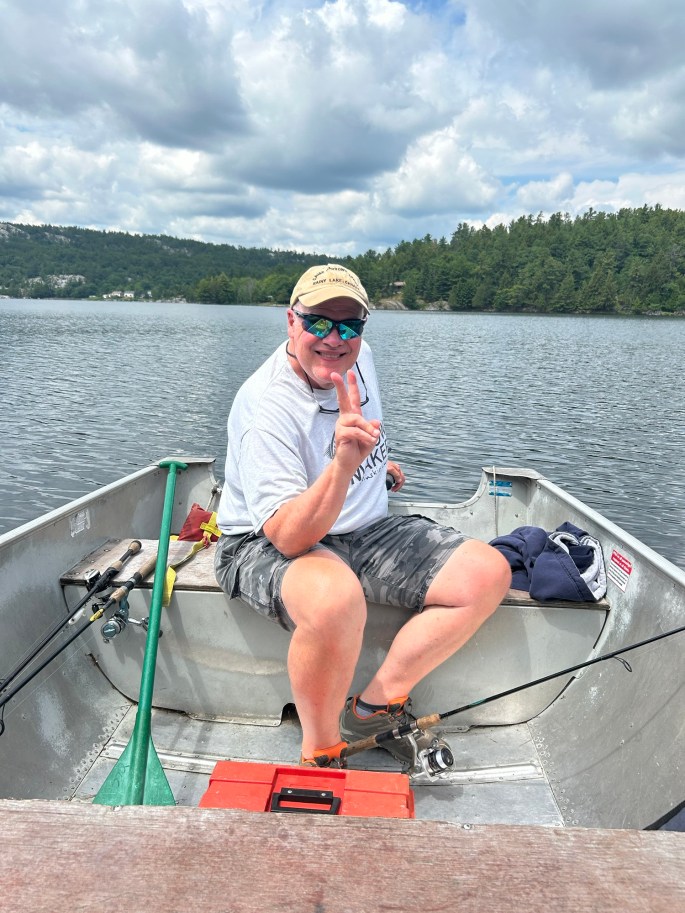
However, with all that Charlton Lake Camp has to offer, it can be difficult to tear yourself away from its picturesque surroundings. This is especially true for those who enjoy fishing. The waters at this camp are teeming with small and largemouth bass, walleye, pike, and a variety of panfish. John and I have had the pleasure of staying at CLC twice, and both times we were able to find excellent fishing spots. This is because the water is full of structure, baitfish, rocky points, channels, weed beds, and plenty of boat docks.  It is truly a fisherman’s paradise.

Idyllic surroundings 🏞️

That said, for those who love canoeing and kayaking, this camp is situated in a wonderland of picturesque and tranquil surroundings. Whether you canoe or kayak for exercise, fishing, observing nature, or the simple pleasure of being on the water, the waters surrounding CLC are ideal for all types of boating adventures. Plus, the camp offers paddle boats for the kid in all of us.

Mother nature Likes to play 🌦️

While staying at CLC this past June (2024), there were drastic weather shifts.  We arrived with a cold front that sent temperatures into the 40s at night. The subsequent highs during those first two days were in the 60s.  During this time, rain moved in, followed by a heat wave.  With the heat wave, lows never went below 70 degrees, and the high temperatures reached 90 degrees Fahrenheit (30s Celsius). However, by the very end of the week, temperatures moderated a bit.  
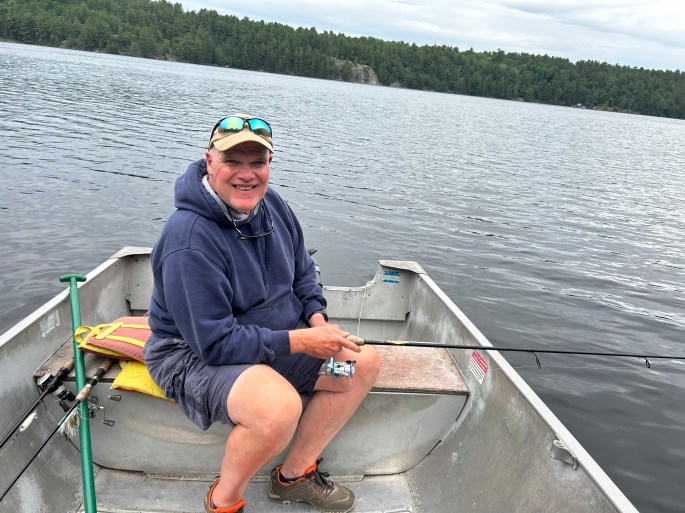
Fat-Bellied, Chunks 🐟

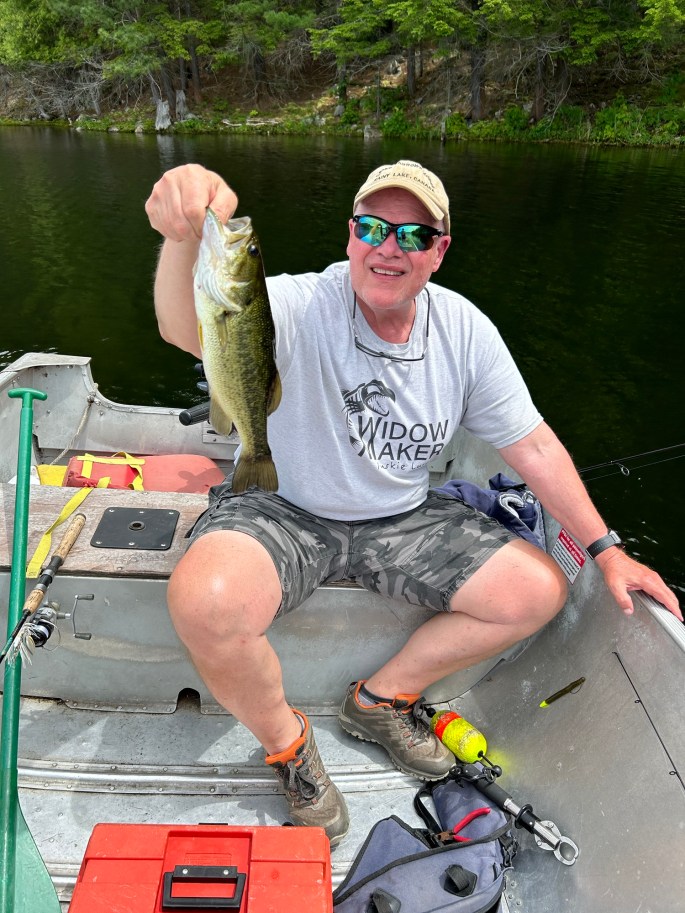
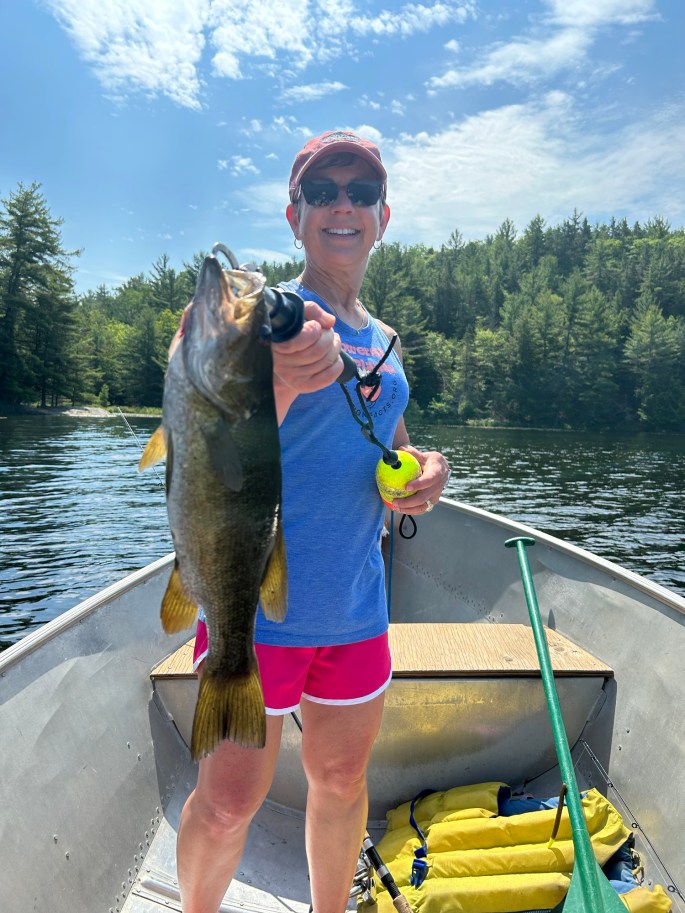
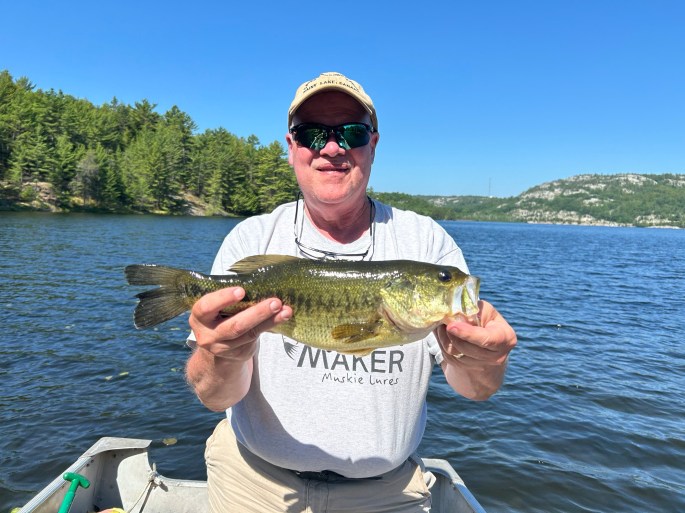
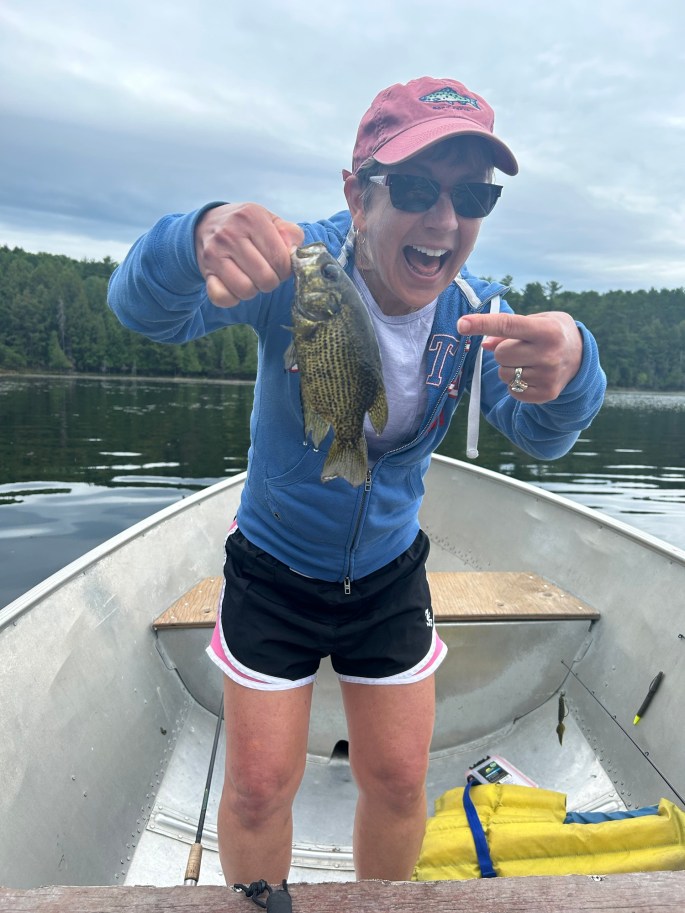
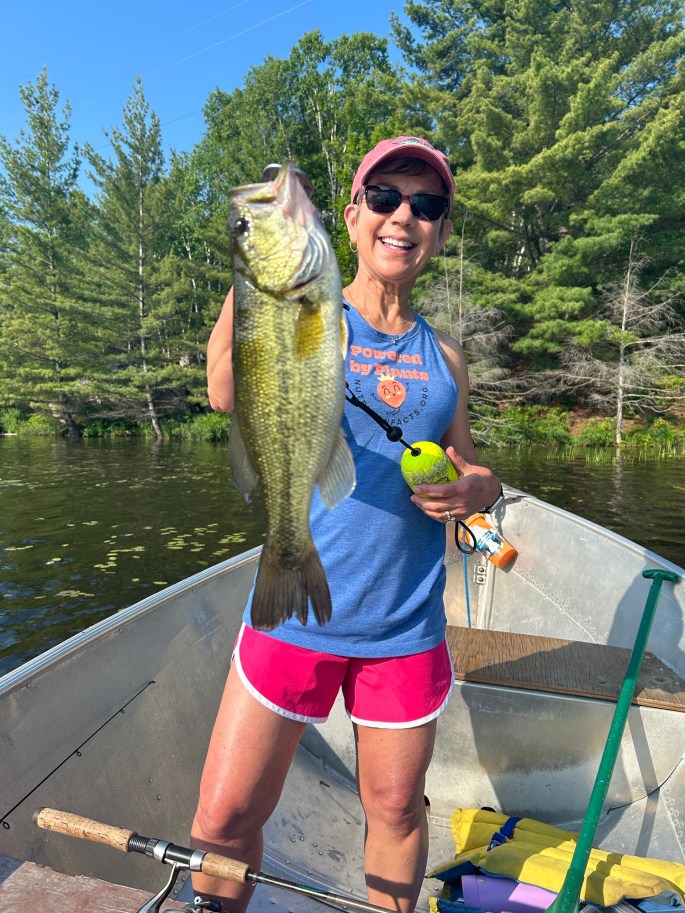
The extreme weather shifts made for some interesting fishing conditions. Therefore, we weren’t able to catch as many fish as we did the year before, but we did catch fish daily. We caught some real beauties too!  There were numerous fat-bellied smallmouth bass, which are always fun to catch and release. Plus, there were several chunky largemouth bass, a few random panfish, and John even caught a pike while fishing for a bass!  
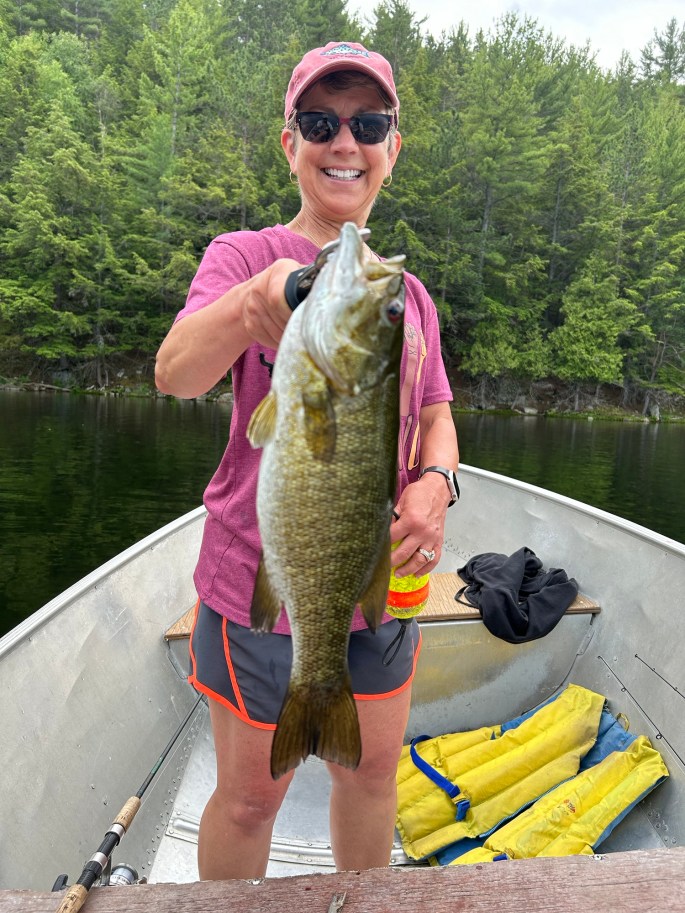
licensed for fun 🤩

In fact, we caught over 40 fish by the week’s end, which was great, given the weather. We released all that we caught; however, the camp does offer a nice fish-cleaning station for those who keep and eat their catch-of-the-day. That said, anglers need to ensure they purchase the right fishing license in order to do this (conservation license vs sport fishing license).

sensory experience

Personally speaking, while John and I do enjoy catching fish, it is the pristine beauty and serene surroundings that sent us back to CLC for a second visit.  Honestly, there is nothing like gliding along in a boat on the still morning waters of a backwoods, upnorth lake, listening to the call of the loon, feeling a light breeze nuzzle your cheek, and inhaling the aromatic scents of pine and moss.  Furthermore, spending time with nature for hours at a time stokes an appetite, making even the simplest of food taste like a feast. Plus, all that sun and fresh air lulls you into the most restful sleep at night.

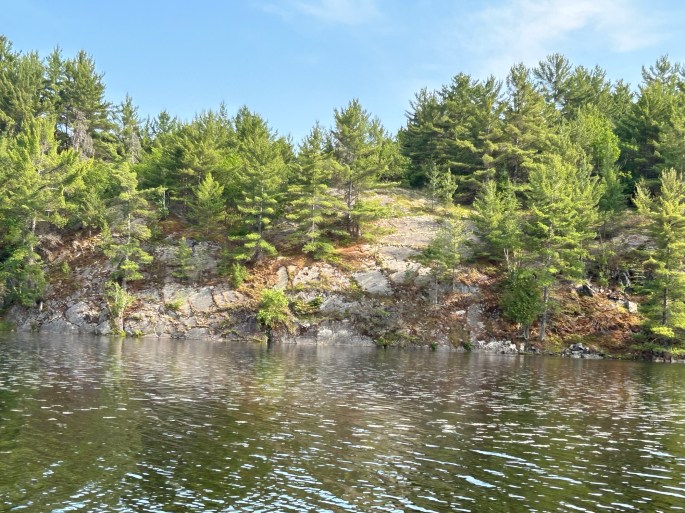
Make Memories that last a lifetime 🍁

If you’ve ever considered experiencing a Canadian wilderness trip with friends or family, consider giving Charlton Lake Camp a look. The owners are fantastic, the cabins are clean, and they are fully stocked for your camping needs. With its panoramic scenery, tranquil waters, and plenty of choices for your out-of-doors activities, CLC is a spot where vacation memories are made to last a lifetime. This is one place John and I hope to visit again at some point in the coming years.  
Finding Stillness at Charlton Lake Camp: A Reflection

“Only in quiet waters things mirror themselves undistorted. Only in a quiet mind is adequate perception of the world.”–Hans Marggolius

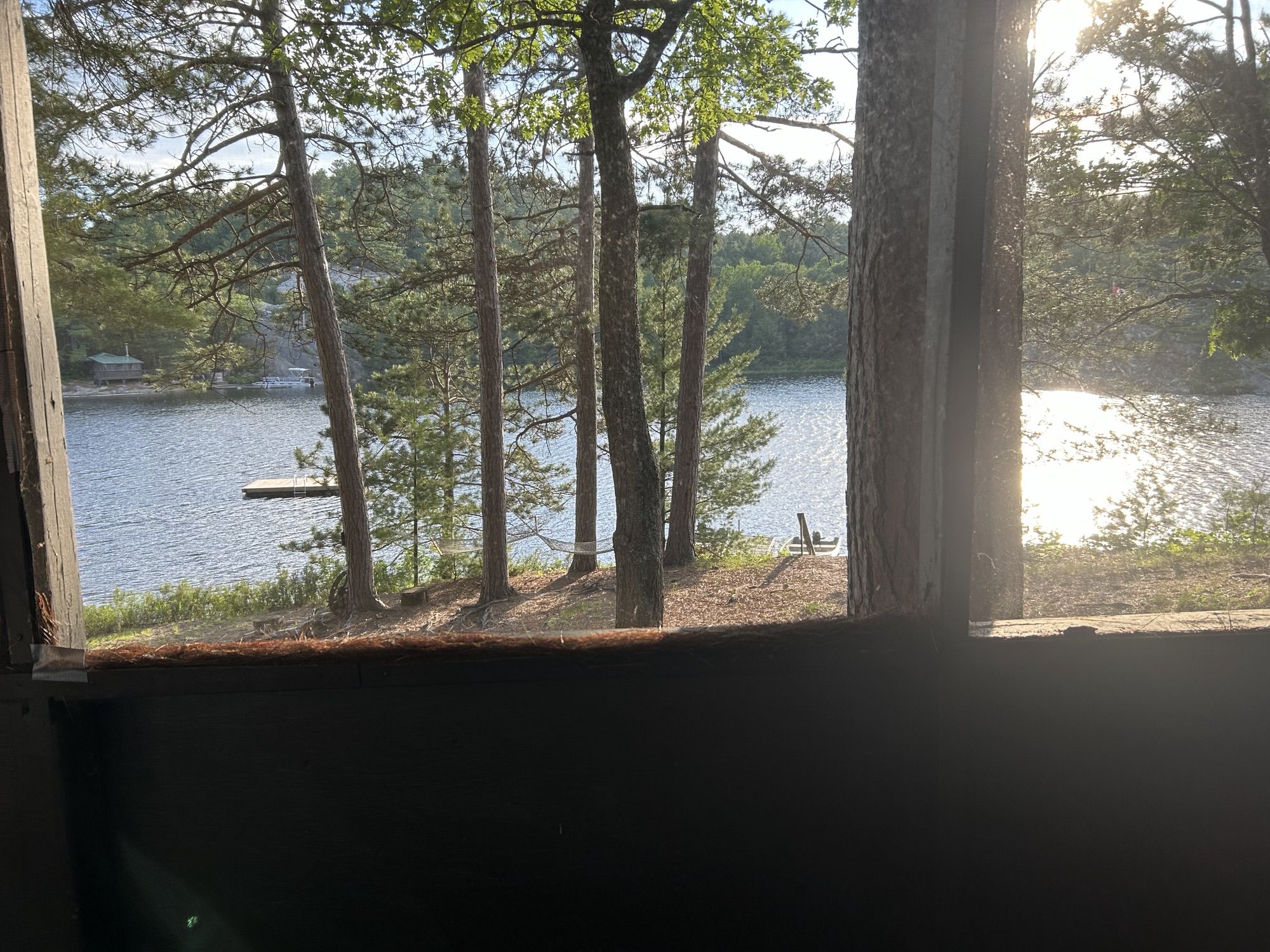
The view through the screened in porch overlooking Whitefish River a throughway to Charlton Lake, Frood Lake, and Cranberry Lake.

Still Waters 🏞️

I sat observing the waters of the Whitefish River flowing toward stillness–moving from one lake to the next, but in a relaxed state of flow that most often seemed to occur in the early morning or late evening.  Occasionally, something would break the surface, and rings would begin spreading outward from the epicenter. When this would happen, I often caught myself holding my breath in anticipation until the last ring dissipated, and the water was once more placid.  Then, with the stillness restored, I resumed my own cadence of breathing slow and steady, matching the river’s pulse.

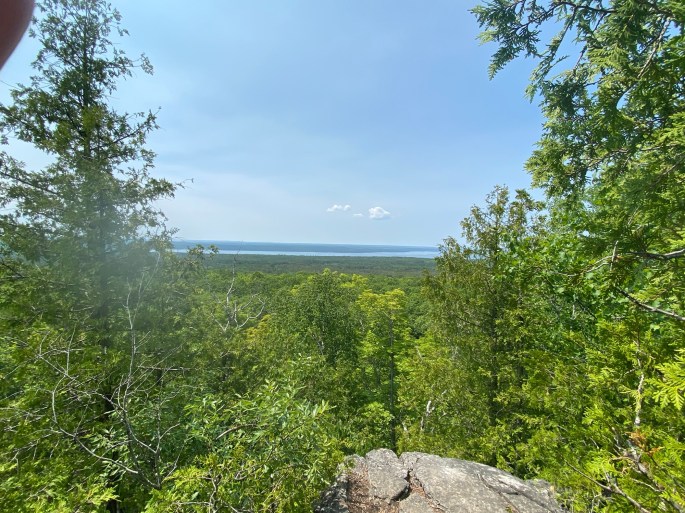
The peaceful, craggy rise of quartzite rise of the ancient La Cloche Mountains surrounding the lakes.

Lake Charlton Camp 🏕️

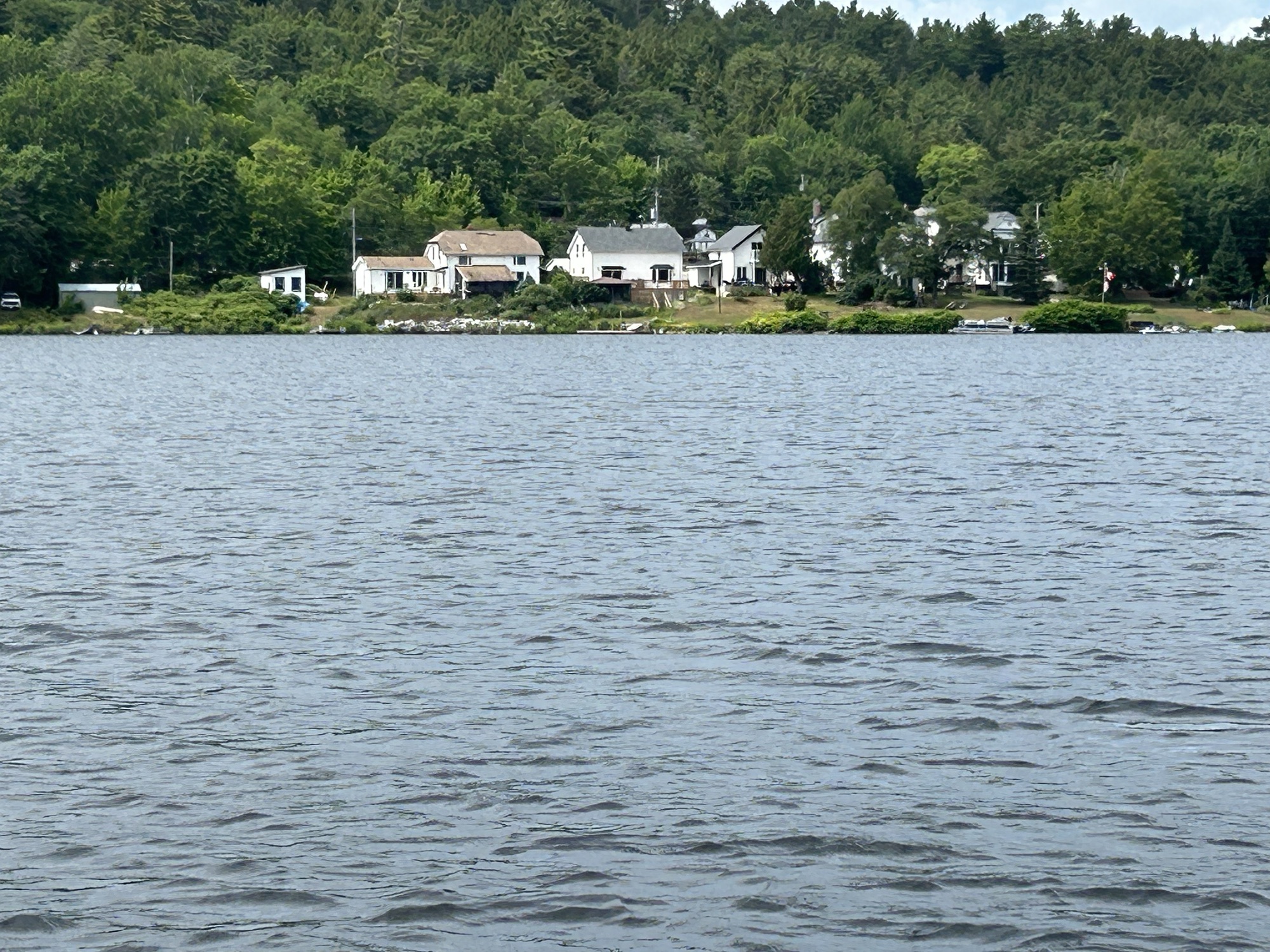
My husband, John, and I were staying in Charlton Lake Camp (CLC) located in Killarney Provincial Park, Willisville, Ontario. This was our second trip to CLC, situated in a natural showcase of diverse pines, surrounded by the white quartzite crests of the La Cloche Mountains and translucent, tea-stained waters of Charlton Lake, Frood Lake, and Cranberry Lake with the Whitefish River providing a throughway to the lakes. In the morning, CLC was filled with a wilderness chorus of birdsong, loon calls, bull frogs, lapping sounds of water against rocky shores, and, of course, the buzzing hum of countless varieties of insects. 

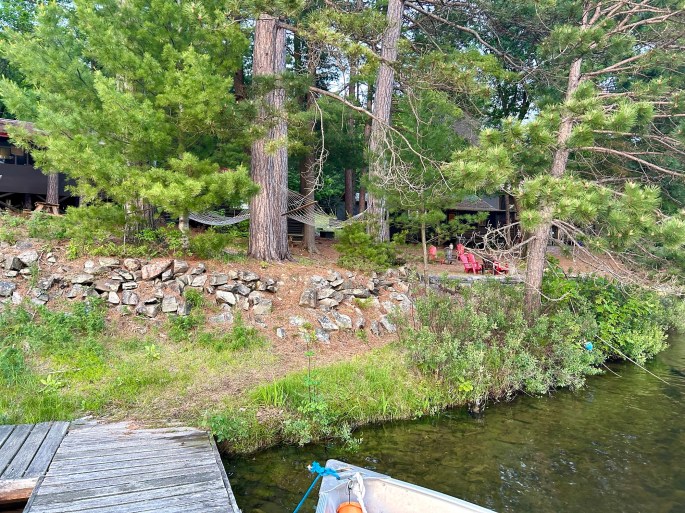
The cabin in which we stayed at Lake Charlton Camp is just beyond the steps that lead to the dock.

Settling into Quiet 🤫

Breathing in deeply, my lungs filled with the aromatic aromas of pines, damp soil, sunned rock, and a hint of morning coffee as I continued to sit and observe, communing with my surroundings. The sun would soon begin lifting above the craggy cliffs behind the cabin in which we stayed, and life would soon begin stirring with those gleaming rays. But, in that moment, hovering between the hush of night and the dawn of daybreak, there was a stillness in which my heart was soft and open–receptive to that still small voice that resides within.

Boating through Frood Lake with the La Cloche Mountains in the foreground.

Slipping into the Gap of peacefulness 😌

I once read that praying is talking to the Divine Creator; whereas, meditation is stilling the mind for the purpose of listening.  Sitting there on that screened porch on the cusp of a new day, I was reminded of that idea.  My heart, head, and soul had relaxed enough to hear the truth–to really parse the ongoing narratives that, when left unchecked, my brain tends to repeat on an endless loop. By settling into the surrounding peacefulness, I could focus on listening, and begin to see how many of those narratives were (and are) often baseless claims forged by past experiences, trauma, anxiety, negative self-talk/criticism, and even a little fear. 

Sitting, breathing calmly, and savoring CLC’s peaceful surroundings through my senses, I found I could let my mind rest easily as if the wheel of ceaseless chatter had ground to stop, or at the very least, slowed its revolution. Taking in a deep breath of the clean, wilderness air, I softened my gaze on the water and continued listening. 

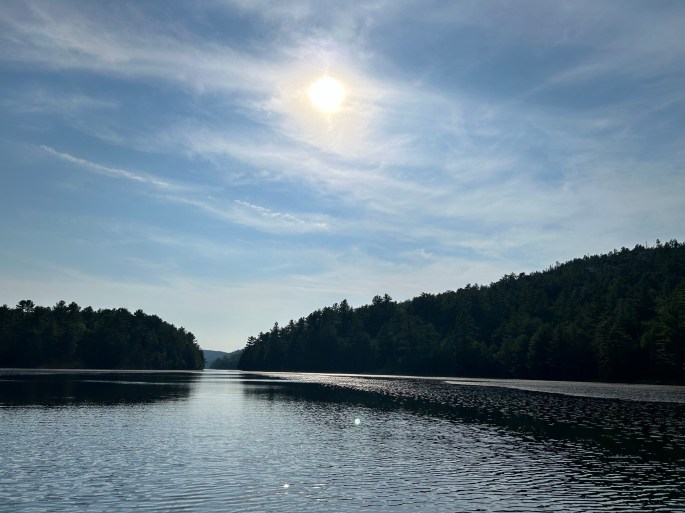
Afternoon sun glistens off the calm waters of Frood Lake.

Riding the waves of emotional influence🌊

Matching my inner calmness to the stillness of the river led me to a realization. My own mind often mirrors those waters of CLC. My mind tends to be at its calmest in the early morning or at night–just before drifting off to sleep, letting go of the day’s worries.  However, once the day fully begins, I am immersed in work and various tasks with multiple decisions being made throughout the day.  As my decision making increases, my judging brain kicks into high gear.  With that continued judgment comes an inner dialogue often influenced and affected by emotions, which rise and fall throughout the day much like the water around me did during the week.

Throughout our time fishing, resting, and relaxing in CLC, I observed how the river and surrounding lakes could quickly become stirred up, rising and falling with the winds of the day, tossed about with a changing weather front, or even fill with large waves when an occasional boat sped across the waters to the farthest end of a lake. There were additional times, when for no discernable reason, the waters would suddenly ascend and descend, jostling the boat John and I were in. 

Riding out the waves of emotions can be similar to navigating a fishing boat over wave-filled waters.

Restless emotions 😬

Fishing during those moments of restless waters and winds was challenging.  The wind would take hold of a perfectly thrown cast and carry the line and lure in a completely different direction than intended. Likewise, when the waters were lifting and dipping with waves, the view beneath the waters was clouded and murky–not allowing the eye to determine if the boat was above rocks, a weed bed, a submerged tree, or any other number of possibilities. Conversely, during the moments of calm, settled waters, navigating and fishing those waters was fairly easy and what was beneath the boat was clearly visible.  

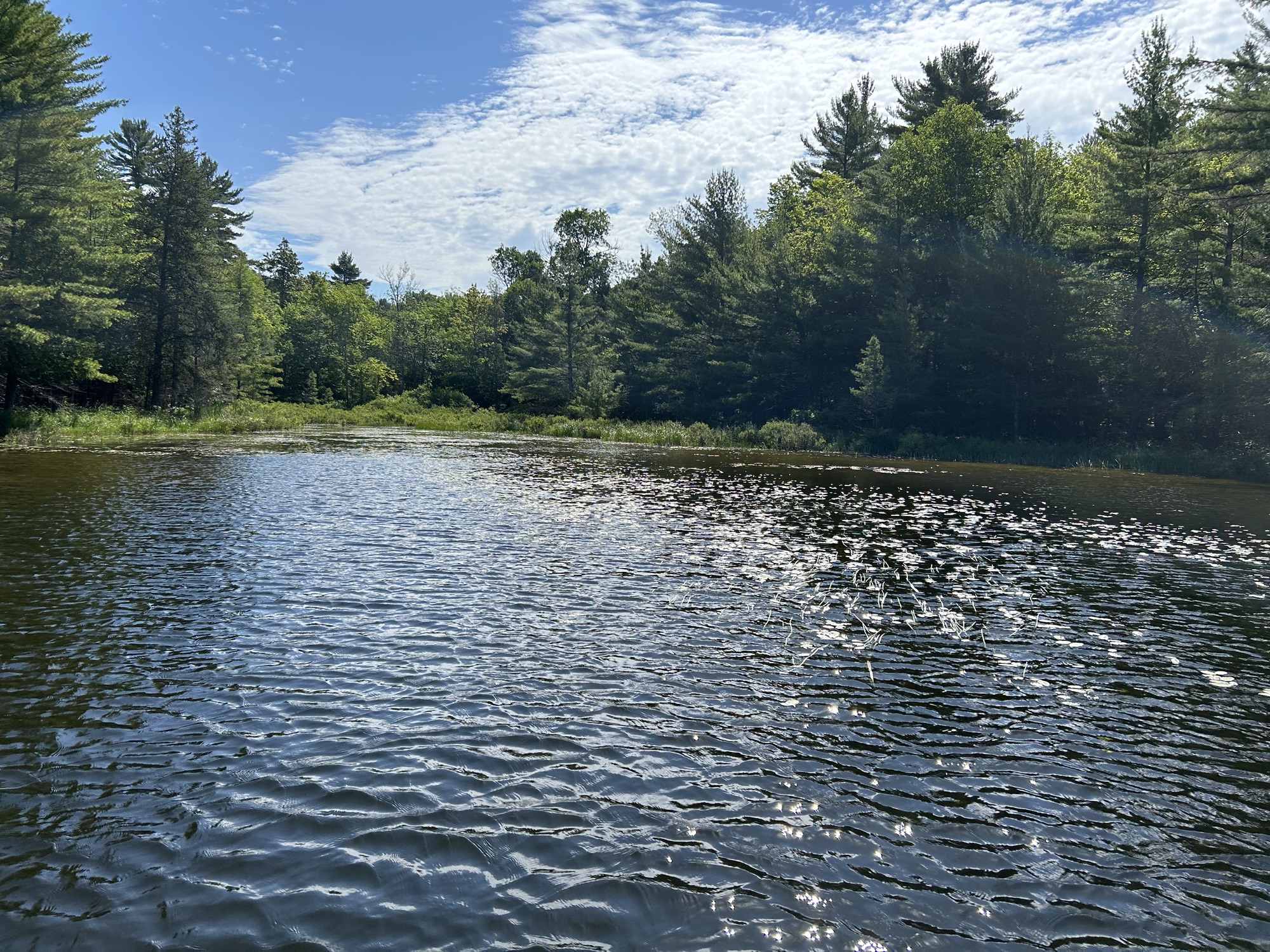
Looking out at the peaceful waters of Whitefish River through the screened porch.

The influence of a RAcing Mind 🤯

The riverview before me, in that early morning hour, was emblematic not only of ideal fishing waters, but also a peaceful state of mind.  Unfortunately, our modern world tends to create and drive the opposite effect–a constant flurry of stirred-up waters–our minds fidgety and/or frantic, racing from one thought to another, moving through agendas of busyness, entertainment, and avoidance. Therefore, if we don’t set aside time to allow our minds an opportunity to cease its chatter and rest easy, how can we ever feel calm and think clearly?

Settle into into the stillness.

The importance of intentional Quiet 🤫

Our inner dialogue is often affected by the changing weather of our emotions.  Those emotions vacillate and shift with each decision we make and with each event we encounter.  And while I fully admit that mind chatter, and all of the emotions that come with it, cannot necessarily be avoided, in similar manner to the weather fronts we experienced during my time at CLC, our emotions can vastly change within the course of a day, much less a week. Therefore, deliberately providing pockets of time for stillness allows us to detach from the emotional narratives, and instead, fosters listening to that still, small voice of knowing, which allows us to, well, “fish” for the truth.

Listen for the whisper of our Creator, the great I AM.

LeT us Listen for the whisper 👂

Ralph Waldo Emerson once penned, “Let us be silent, that we may hear the whisper of God.” What a powerful reminder of the importance of settling the mind, like the still waters that were before me on that morning at Charlton Lake Camp. The type of quiet we choose can be a formal meditation/reflection, but it could also be achieved through walking or other forms of exercise, tending to your flowers/plants, or simply sitting on the porch sipping coffee or tea and listening to the birds. It really doesn’t matter as long as it is an intentional moment set aside to calm those mental waters of ceaselessly, flowing chatter. Prioritizing time for quiet reflection or meditation, however you define it, allows the flow of our hearts and minds to settle, soften, and encounter the “whisper of God.” 

Willisville, Ontario

Nutritious Maple Walnut Salad Inspired by Alzheimer’s Study | Health Recipe

“I am cautiously optimistic and very encouraged by these findings, which may give many people new hope and new choices,” Dr. Dean Ornish

highly anticipated study 📈

Photo by Greta Hoffman on Pexels.com

I recently returned from a trip to Ontario, Canada. While I was there, a major study, led by Dr. Dean Ornish, was released in BioMed Central’s Alzheimer’s Research and Therapy. This highly anticipated research was widely promoted across various news outlets weeks earlier. Despite the fact I had read the earlier press releases, reading the report, one peaceful early morning in a rustic cabin along the shores of backwoods lake, provided greater understanding.

As I have previously written, Alzheimer’s disease (AD) and dementia are part of the genetic make-up on both sides of my family history.  Watching it take the minds of my beloved grandparents was heartbreaking. Ultimately, they required extensive care in large part due to AD, the burden of which fell upon their children. Therefore, I want to do all that is possible to avoid placing that type of burden upon my loved ones.

Ornish’s study is the first controlled clinical trial to demonstrate that lifestyle habits can delay the onset and progression of mild cognitive impairment (MCI) or early dementia due to AD. The study initially enrolled 51 patients and their designated partners, aged 45-90, for 20 weeks, but two withdrew. Nonetheless, the study guided the remaining 49 patients through a series of interventions, including a plant-based diet; walking 30 minutes per day; strength training three days a week; stress management including yoga, breathing exercises, and meditation, to name a few; group support via Zoom meetings, and specific supplementation, all of which is clearly spelled out. 

Excitement Incitement 💡

The excitement of this study got my recipe-creating gears grinding, especially as a major heat wave sank its talons in a large swath of the U.S. and Canada, including where I was staying with my husband. With the extreme heat we were experiencing, the last thing I wanted to do was turn on the cabin’s stove or oven, especially since there was no air conditioning. Therefore, throughout our stay, I created several dinners of seriously large salads, adding additional inspiration for this month’s recipe.  

Of further influence was the wide availability of Canadian maple syrup.  In fact, I encountered a representative of White Meadows Farms, out of St. Catherine, Ontario.  This family-owned farm, established in 1937, has been harvesting sap to make maple syrup for over three generations. After one sample, my taste buds were “stuck” on the flavor of their dark syrup. I knew I had to put their syrup to good use as part of this recipe creation. After all, sweet moderation is an important part of good health.

Nuts for health 🌰

Another point of inspiration for this recipe was the wide availability of bulk walnuts at the local market near our camp. Nut and seeds are a healthy part of the Ornish diet. In fact, according to the Cleveland Clinic, walnuts provide a good source of omega-3 fats and antioxidants for heart health, benefit gut health due to their high fiber content, help stave off inflammation, and may reduce risks for certain cancers.  Additionally, those healthy fats and antioxidants may boost brain health–perhaps that is why walnuts are shaped like a brain!

A rainbow recipe of pride 🏳️‍🌈

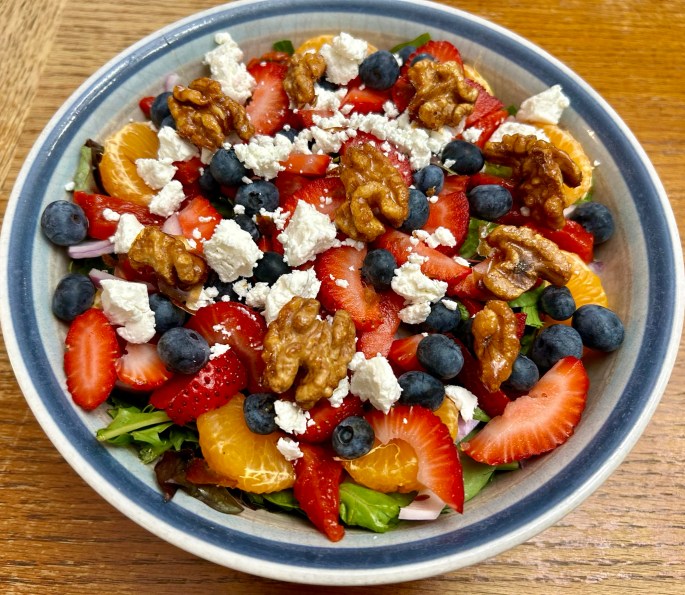
One final source of inspiration for this recipe was the fact that it was created during June, the month of Pride, dedicated to celebrating my friends and loved ones in the LGBTQ+ community, including my brother and two nieces.  It is with great, well, “pride” and celebration that this recipe will debut on June 28, International LGBTQ+ Day.  This gorgeous salad offers a RAINBOW of tasty colors and textures designed to nourish EVERY body.

From my home to yours, I wish you health, happiness, and hope for an optimistic future free from dementia and Alzheimer’s disease!

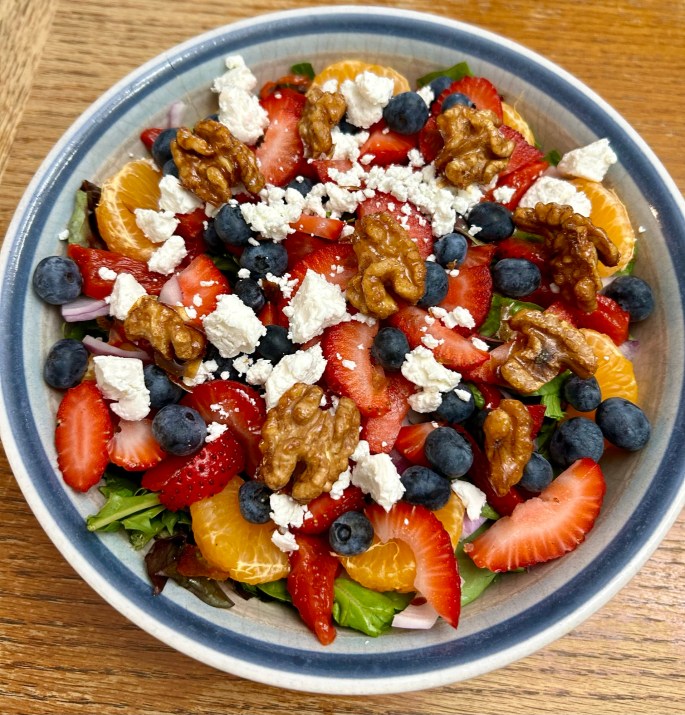
Rainbow salad with maple walnuts and vinaigrette, gluten-free with vegan options

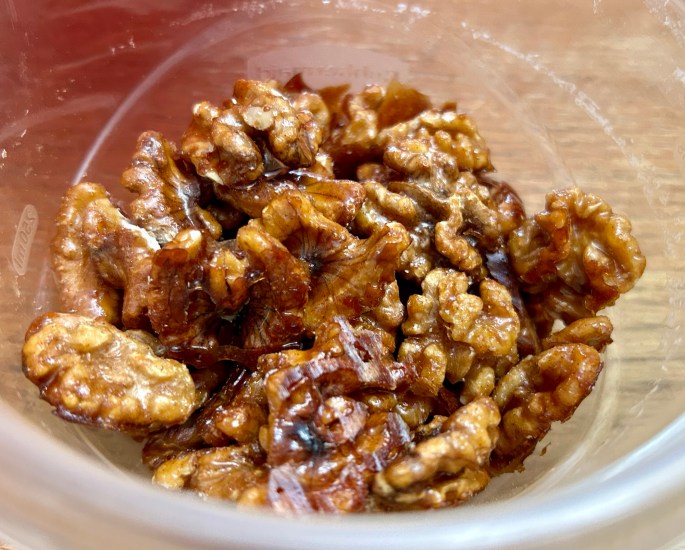
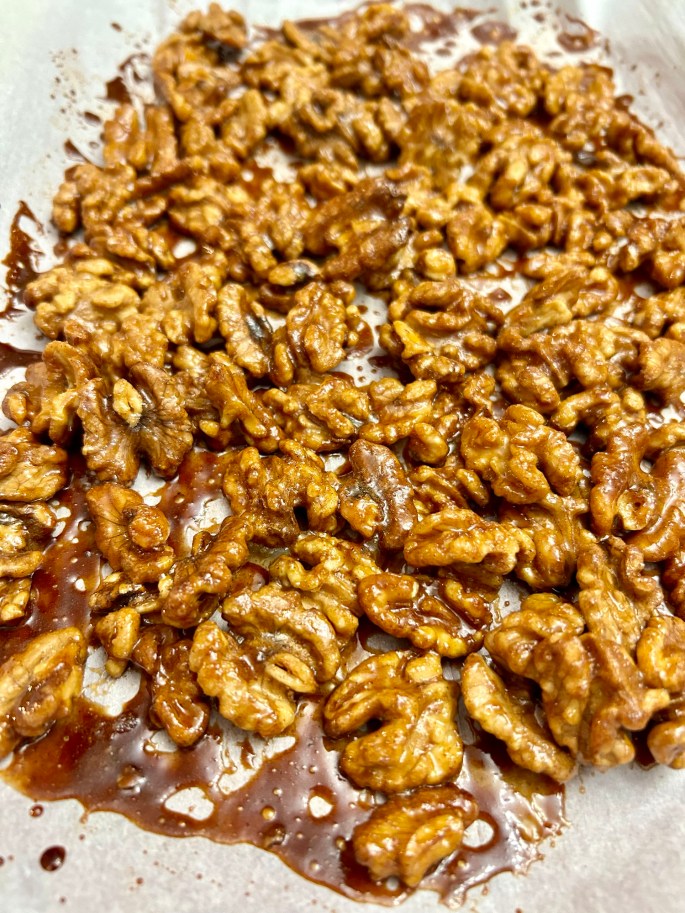
Maple walnuts ingredients:

2 cups walnuts

⅓ cup pure maple syrup

½ to 1 teaspoon vanilla 

¼ to ½ teaspoon cinnamon 

⅛  teaspoon sea salt

Salad ingredients:

5 or more ounces of favorite baby greens

1 cup sliced strawberries

¾ cup blueberries

2-3 clementines, sectioned

½ sliced large red onion

½ cup roasted red peppers and/or shredded carrots

2-4 ounces goat, or equivalent vegan, cheese or 1 cup beans, drained and rinsed

Maple walnut balsamic vinaigrette ingredients:

¼ cup walnuts

½ cup water

¼ cup balsamic vinegar

2 tablespoons maple syrup

1 tablespoons dijon mustard

½ teaspoon dried onion powder

½ teaspoon dried oregano

⅛ teaspoon salt

Pepper to taste

Maple walnut directions:

Preheat oven to 350 degrees

Line baking pan with parchment paper or lightly grease and set aside

Place maple syrup in a small, microwave safe bowl.

Heat syrup for 30-60 seconds

Stir in vanilla, cinnamon, and sea salt until thoroughly mixed

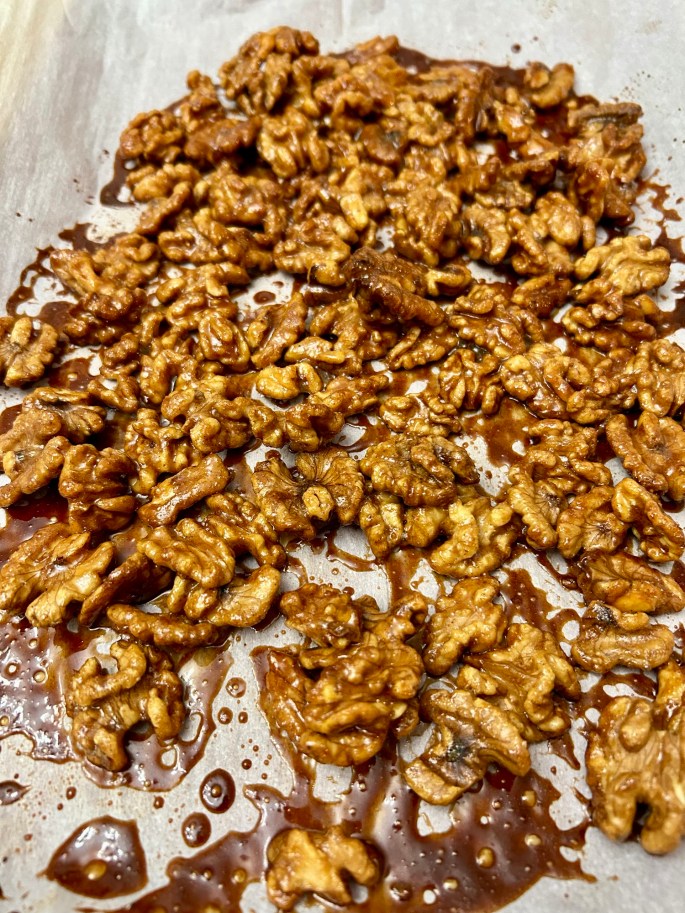
Pour syrup mixture over walnuts, and stir until well coated

Spread coated walnuts onto prepared baking sheet

Bake 5-7 minutes, then stir and rotate 

Continue baking for 3-5 minutes or until walnuts are golden brown

Remove walnuts from oven and allow to cool on baking sheet 

Break walnuts apart and store in airtight container or baggie for up to 3-4 for weeks

Enjoy these maple walnuts as a snack or sprinkle over salads, fruit bowls, oatmeal, yogurt parfaits, ice cream sundaes, etc 

Maple walnut balsamic vinaigrette directions:

Place all ingredients in high powered blender and blend until smooth, approximately 45 seconds

Pour into glass container (I like to use canning jar)

Store in refrigerator for up to 4 weeks

Makes approximately 1 cup dressing

To assemble salad:

Add greens to large salad bowl

Add sliced strawberries, blueberries, clementines, sliced red onion, sliced red pepper, and/or shredded carrots, if using.

Toss with desired amount of dressing, divide among plates/bowls and top with goat or vegan cheese (or top with beans instead, such as roasted chickpeas)

Serves 2-4

This recipe also took inspiration from the following websites and articles: Better with Cake, The Garden Grazer, Hello Nutritarian, “Effects of intensive lifestyle changes on the progression of mild cognitive impairment or early dementia due to Alzheimer’s disease: a randomized, controlled clinical trial,” an article on BioMed Central,“‘A study to give us hope’: Lifestyle changes improve Alzheimer’s symptoms for some,” an article on CNN, and Shane and Simple.

Discover ‘The Soo’: Friendly Charm and Scenic Waterfront of Sault Ste. Marie, Ontario

“Situated at the heart of the Great Lakes, along the banks of the St. Mary’s River, Sault Ste. Marie is an international port of entry to the United States and continues to be an important destination for business, trade, and travel.”–City of Sault Ste. Marie website

Welcome to “The Friendliest City” 🏙️

If you have ever traveled to the Upper Peninsula of Michigan, then you most likely are familiar with “The Soo.” Despite the fact John, my husband, and I traveled to and briefly stayed in this area June 2023, I never picked up on the name.  However, after spending a short time in Sault Ste. Maria, Ontario, I can say with confidence that I now not only know what “The Soo” is, but also I have been there and would highly recommend visiting this welcoming, community-centered place.

According to the city’s website, Sault Ste. Marie is known as the “Friendliest City” in Algoma, a district in Ontario.  I can certainly believe that assessment based upon our encounters during our recent visit. John and I met numerous friendly and helpful people throughout our short stay. During our stay, the Sault Ste. Marie was energetic and bustling during a temperate June weekend. The city was dressed in its best, filled with murals, gigantic art sculptures, and stunning, overflowing flower-lined streets and walks.

A bridge apart

The view of International Bridge from Sault Ste. Marie, Ontario.

Sault Ste. Marie is nestled along the St. Mary’s River, which serves as an international divide between the US and Canada.  The city was incorporated 1912, but it was founded in 1680.  The town’s rich history makes sense given the fact it is situated among three of the five Great Lakes, including Superior, Huron, and Michigan. Specifically, The Soo Locks, located on the St. Mary’s River, allow freighters to travel between Lake Superior and the lower Great Lakes.  In fact, according to Sault Ste. Marie Pure Michigan, these locks move 86 million tons of cargo each year, which includes 95% of the United States’s iron ore.

Walkable/Bikeable City 🚶🚲

One view of Sault Ste. Marie Waterfront Boardwalk overlooking the St. Mary’s River.

One of the first noticeable highlights of Sault Ste. Marie is how walkable the town is!  Sidewalk lined streets, a boardwalk along the St. Mary’s River, and numerous other trails connected various parts of the city.  We were fortunate enough to stay at the Delta, a hotel right along the Sault Ste. Marie Waterfront Boardwalk. Measuring 2.6 km (1.6 miles), this boardwalk offers delightful views of the river, The Soo Locks, river traffic, and ample opportunities for people watching at the Roberta Bondar Park and Tent Pavilion. There are numerous picnic tables, benches, and gorgeous landscaping along the path.  

Visual Appeal 🖼️

The Art Gallery of Algoma at the foot of the Waterfront Boardwalk.

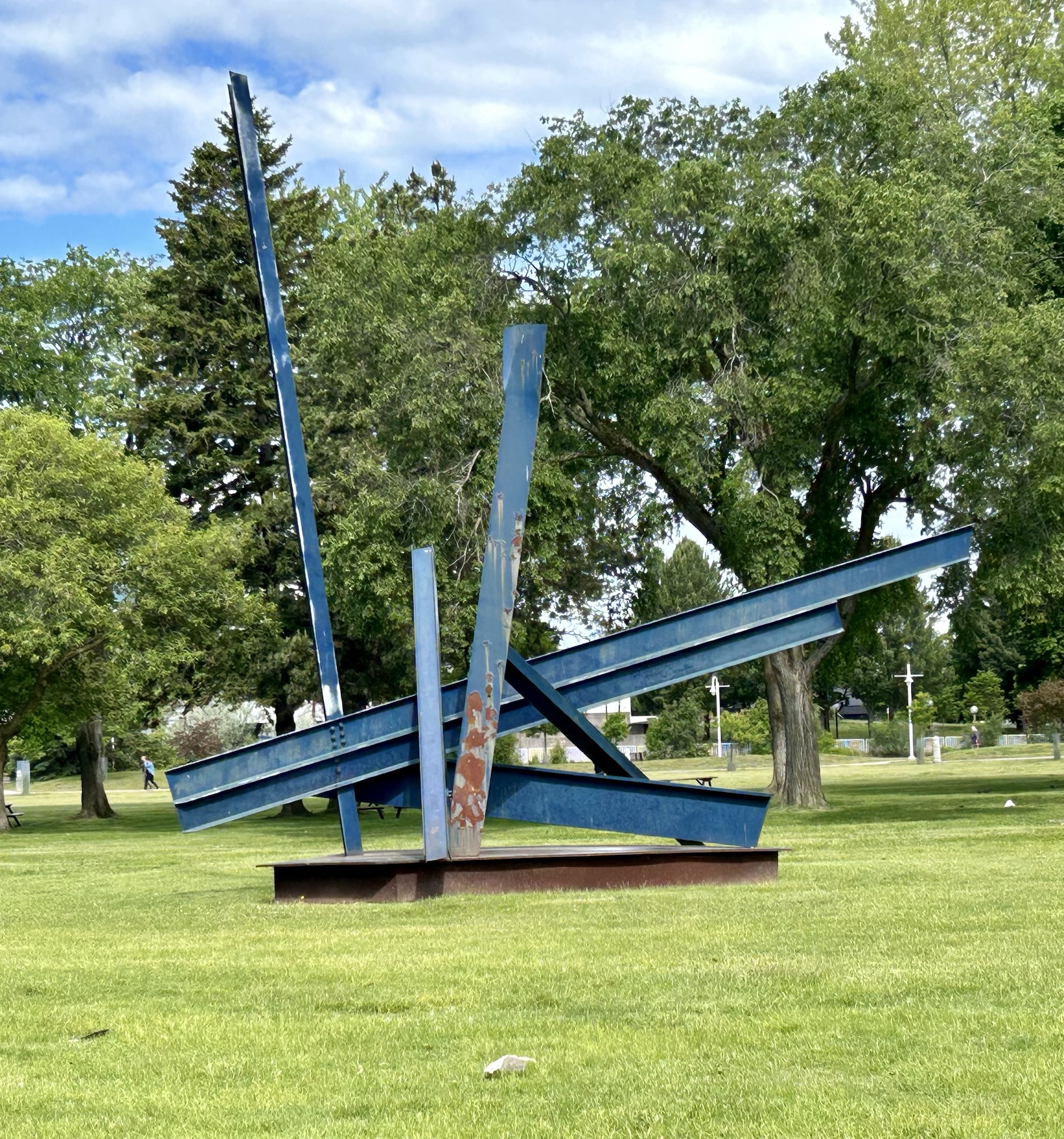
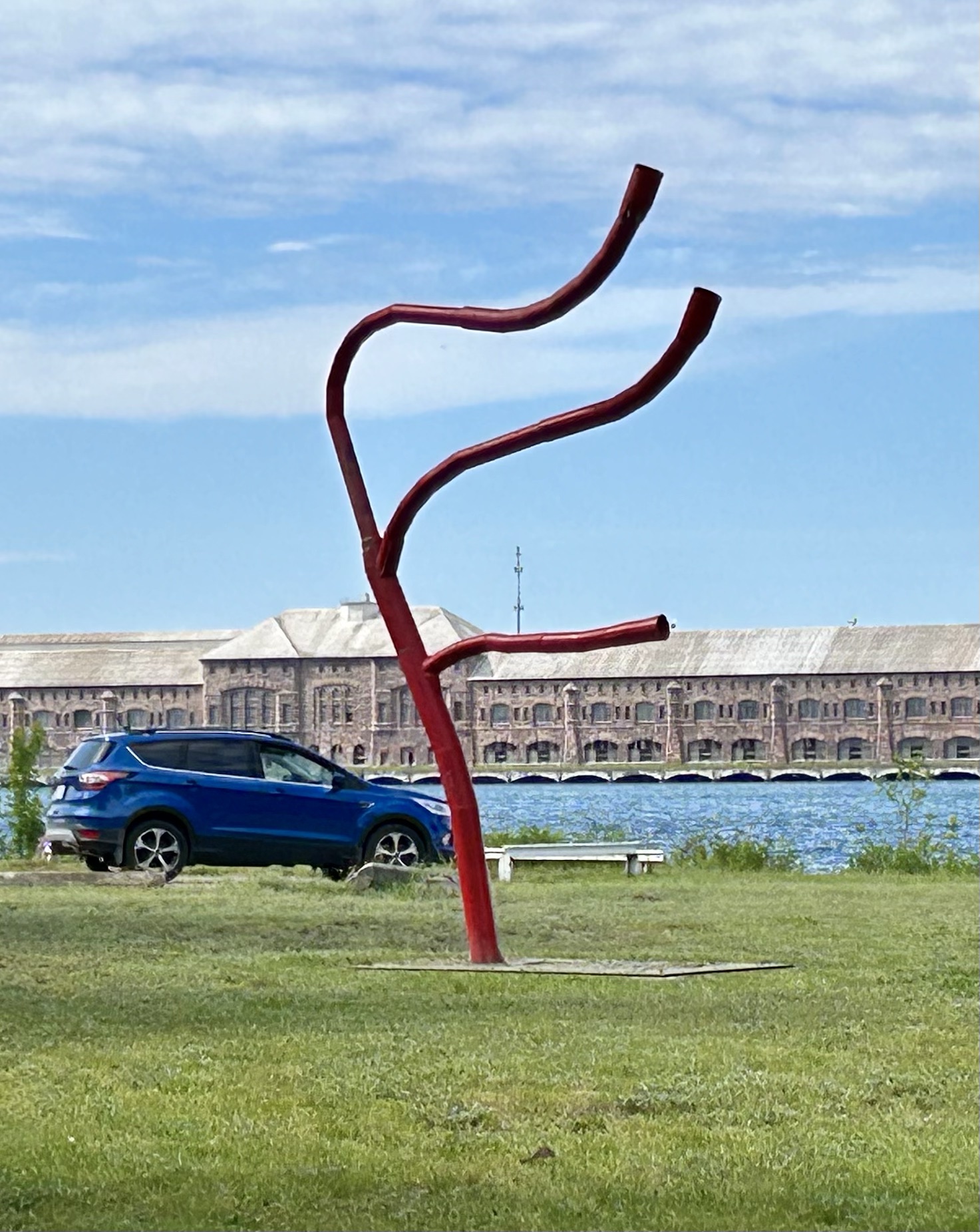
Images from the Elsie Savoie Sculpture Park at  the Art Gallery of Algoma.

Just steps from the end of Sault Ste. Marie Waterfront Boardwalk is the Art Gallery of Algoma. Overlooking the St. Mary’s River near public parks and trails, the Art Gallery of Algoma, according to its website, is committed to “celebrating culture, educating visitors, and enriching lives through the visual arts.” This commitment could be clearly seen and felt from the outside (They were closed on the day of our visit.) via their permanent outdoor exhibit, the Elsie Savoie Sculpture Park. These larger than life sculptures feature both Canadian and American artists and offer visitors and pedestrians alike visual interest, and, of course, plenty of one-of-a-kind photo opportunities. Additionally, the gallery offers numerous tours, a gallery shop, a cafe, numerous special programing, and rotating exhibitions throughout the year.

Historical Walk 🏢

The Sault Ste. Marie Canal National Historic Site, Saint Mary’s Island, and the Attikamek Trail are near the International Bridge.

At the other end of the Waterfront Boardwalk is the Sault Ste. Marie Canal National Historic Site, Saint Mary’s Island, and the Attikamek Trail. The island can only be explored by walking or biking along the Attikamek Trail. This 2.5 km (1.5 miles) loop offers visitors spectacular opportunities to view and photograph wetlands, wildlife, the International Bridge, and the Canal Historic Site.  Additionally, visitors can also view Sault Ste. Marie, Michigan directly across the river. According to one person, the island and trail are popular attractions for both locals and visitors.

The Hub of the City 🚶🏽‍♀️

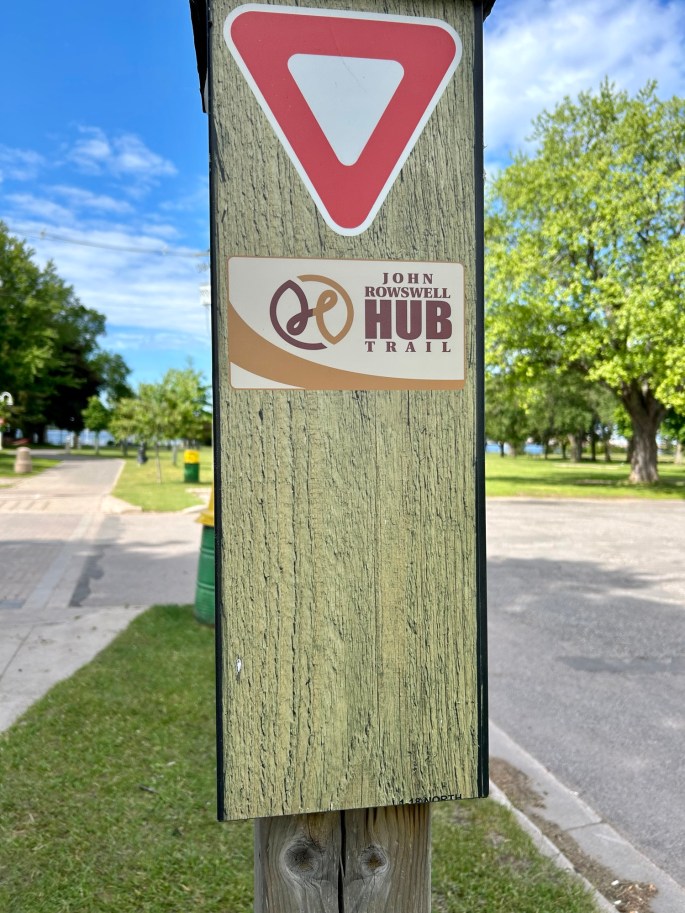
The John Rowswell Hub can be found in the heart of Sault Ste. Marie.

Additionally, the Sault Ste. Marie Waterfront Boardwalk is part of the 25 km (15.52 miles) John Rowswell Hub.  This trail was designed to create recreational opportunities for residents and tourists alike as it connects several important sights of historical, cultural, and natural areas throughout the city.  John and I couldn’t help but notice that our hotel offered bike storage for those visitors hoping to take advantage of this trail and numerous other nearby biking and hiking trails. (There are even opportunities for winter fat biking!)

Flying High 🚁

Not far from the Waterfront Boardwalk is the Canadian Bushplane Heritage Centre.

Unfortunately for John and me, our visit was short, so we only had time to explore the riverfront area of The Soo.  However, one attraction we would have loved to have visited was the Canadian Bushplane Heritage Centre. This unique museum, according to its website, was established in 1987 by a nonprofit (www.bushplane) to safeguard Canada’s beloved bush planes and their history of forest fire protection. Most reviewers wholeheartedly recommend setting aside two-three hours to get the most out of this museum.  Appropriately located in a waterfront airplane hangar, this interactive center offers visitors 24 aircraft exhibits, including a CL-215 water bomber and the original De Havilland Beaver.  If we have the opportunity to travel to Sault Ste. Marie, Ontario, this is one attraction that we definitely plan to visit.

A Boatload of Fun 🛳️

Be sure to include Miss Marie Sault Lock Tour on your visit to Sault Ste. Marie.

Another fun draw to The Soo includes a boat tour on the Miss Marie Sault Lock Tours. This two hour tour takes visitors through both the Canadian and American Locks. It does not require a passport, and offers various package and group rates.  Based upon the group John and I saw heading out, these boat tours look like a popular, and highly demanded attraction, and it is another adventure we wouldn’t mind experiencing on another visit.

Goat what?

Photo by KATRIN BOLOVTSOVA on Pexels.com

Imagine a goat beside you on the yoga mat instead of your beloved dog or cat? Sound impossible, but it’s not!

One of the more whimsical sites I wished I could have visited was Goatopia. This singular business, according to its website, offers goat therapy as a way to feel “calmer, lighter, and internally more spacious.” Goatopia offers group socials where participants of all ages can go to interact, groom, and learn about goats.  They also offer goat-yoga, which involves practicing yoga while goats roam freely throughout the space, interacting with practitioners. Plus, they offer group classes/corporate team building, community events, and birthday parties with their mobile goat petting farm!  

Catch the Soo Vibe 🤙

Catch the positive vibe of Sault Ste. Marie.

Sault Ste. Marie, Ontario offers has much to offer tourists. From the local farmer’s market to numerous parks and beaches, from a wide array of shopping opportunities to a number of museums and cultural events, and from sports and recreational activities to numerous restaurants and dining venues, this town has something for everyone.  The welcoming vibe of “The Soo” can be felt in its warm people, interconnected footpaths, and centrally located, community-focused commerce, culture, and recreation along the beautiful St. Mary’s River. Whether you’re visiting the Upper Peninsula, traveling through Ontario, or simply looking for a unique destination, Sault Ste. Marie is a vibrant and highly recommended locale.

Effective Teaching and Coaching: Cultivating Student Achievement and Self-Improvement

Lessons from a Lifetime of Teaching series, Part 3

“The road to success is not a path you find, but a trail you blaze.”–Robert Breault

Author’s Note: This is the third installment of stories from decades of teaching students grades K-12.  It is my hope that by sharing these stories, I will cultivate lessons of compassion, empathy, and understanding

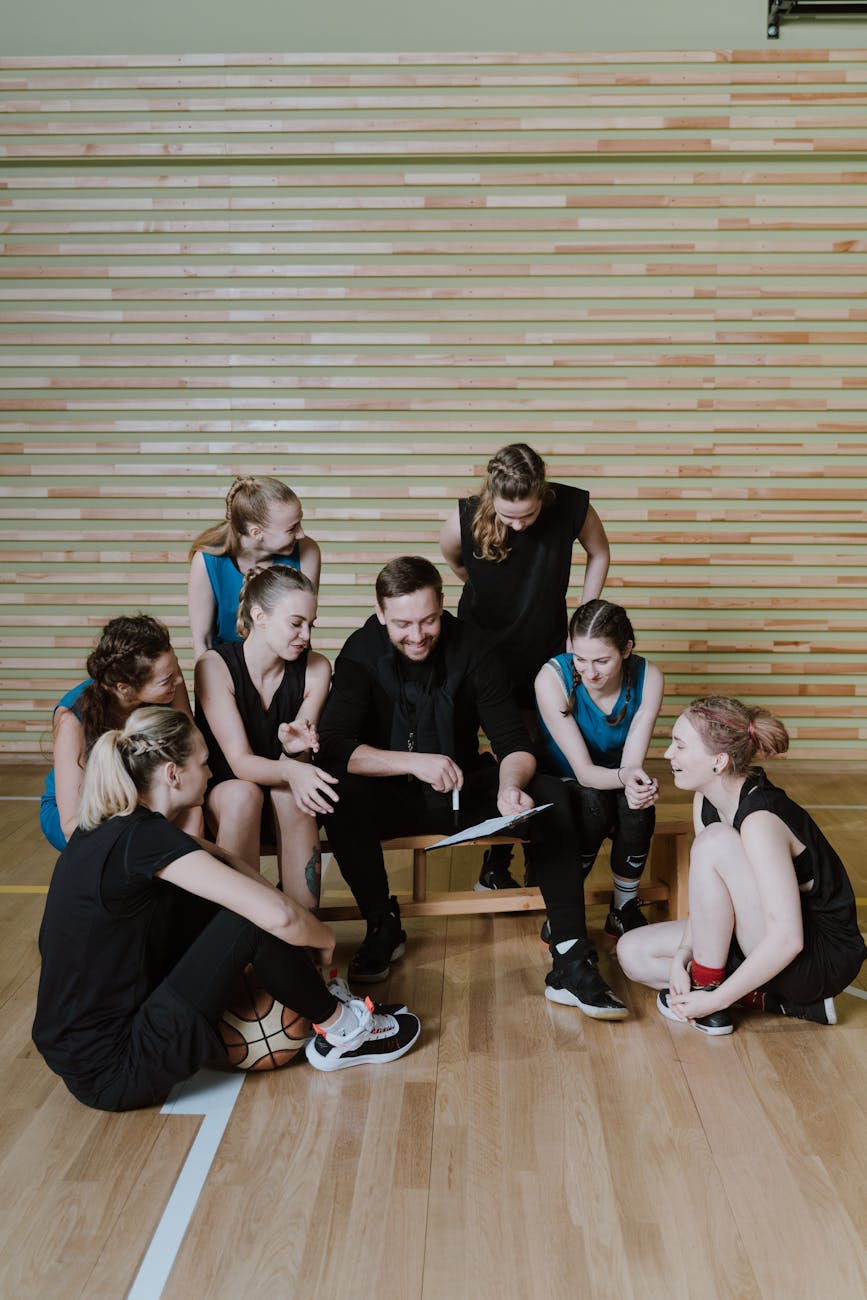
Photo by cottonbro studio on Pexels.com

Coaching requirement ⛹️‍♀️

My educational career began at a rural Kentucky high school. I was one of five special education teachers. One of the requirements for teaching at this high school was coaching a team in some capacity. Therefore, I assisted with the women’s cross country and track teams. 

At the time, I didn’t know a thing about either sport, but the head coach of the cross country team was another special education teacher, Coach Bailey (name changed for privacy). I didn’t realize it when I first met him, but in the end, Bailey became a role model for me as an educator and coach.  

As luck would have it, our classrooms were side by side, divided only by a rolling chalkboard.  In the two years I worked with “Coach,” as everyone called him, I rarely heard him raise his voice, and if he did, you can bet he had a darn good reason. Mostly, Coach was a naturally soft-spoken man who could both nurture and challenge students and athletes alike.

Photo by cottonbro studio on Pexels.com

Meet the Coach 🏃‍♀️

Coach, in my mind, was “older” with salt and pepper straight hair parted down the center and a thick mustache.  His face was browned and weathered from years spent in the sun that contrasted his light aquamarine eyes.  His typical attire was khakis with a school logo polo shirt with a matching ball cap–the cap was only for sporting events. When the temperatures turned cold, he added a school logo v-neck polyester pullover that was popular with coaching staff in the late 80s.

On our first meeting, Coach gave me a tour of the “department facilities,” such as they were.  Three of the five special education classrooms were underneath the visitor side of the gym bleachers, and the other two classrooms were found at the end of the gym, just beyond the baseline.  As we walked, he politely introduced me to the faculty and staff we encountered. 

Later, when Coach discovered I had been assigned to “assist” him with the cross country team, he did not roll his eyes, sigh, or mutter under his breath upon hearing I had no coaching experience, which I feared he would do.  Instead, he said he was glad to have me as part of the team because the young ladies needed a female leader.

Photo by RUN 4 FFWPU on Pexels.com

Ladies Cross Country Team 🏃‍♀️🏃‍♀️

He then explained that the cross-country team had already begun practicing and invited me to join them that afternoon. It was then he asked if I ran.  Not wanting to disappoint him, I said that I did, which was sort of true. I had begun jogging during my last quarter of college just before graduating. I continued to jog two-three days per week around town after moving in with my grandparents that same summer, but I was by no means fast or knowledgeable about running beyond the basics. I knew I would have much to learn.

By 3:00 pm, I was on an access road along the Ohio River meeting the team. As Coach introduced me to the young ladies, they welcomed me with warm smiles.  As the weeks progressed, I would come to love these ladies, especially for the mature way they approached running, academics, and life in general. They were a driven group with gritty spirits, and they supported one another throughout the season even though they were competitors in races.

During this first practice, I learned that my job was to run, jog, or walk with whoever was at the back of the pack during the team’s long training runs while Coach rode his bike with the girls at the front of the group.  I was worried because I did not know if I had that level of fitness to keep up with even the so-called “slowest” runner.  

Photo by Tirachard Kumtanom on Pexels.com

The IMportance of Grit 💪

It turned out that there were two ladies who had joined the team with no running experience. Coach already knew they were not yet able to keep up with the other seasoned runners. Therefore, he asked that I remain steadfastly encouraging.  It was a role I relished. 

As the season progressed, one of the two newer runners was a “natural,” and was soon running with the rest of the team.  But Coach still insisted that I mostly focus on helping “Amy,” the runner who still struggled. He shared that while winning races was nice, developing stamina and perseverance were lifelong skills applicable to many settings, not just running.

Throughout the cross country season, Coach fostered a team attitude of, “You’re only in competition with your best time.”  His coaching style was gentle, but firm; supportive, but with high expectations.  However, those expectations were individualized to each runner, including Amy.  This philosophy was most evident after the regional meet.

Photo by Chiara Caldarola on Pexels.com

Individualized Success 🏅

We had two runners who finished in the top spots who qualified to move on to the sectional meet.  While Coach was happy with those two and praised their efforts, he also pointed out a few techniques they could use to improve their times for the next race.  

Additionally, since it was the last meet for the rest of the team, Coach took time to speak to each of the runners, showing them their running times from those hot days of August until the end of October.  All team members had improved significantly, and he made sure each runner knew how much they had achieved over the season. Coach conveyed heartfelt pride in each lady’s accomplishment, and he encouraged each one to run track in the spring.

Later, I watched Amy, who was always the last finisher for our team, walk over to her parents and chatter away about her improved times and how she couldn’t wait for spring track season.

Photo by Gerd Altmann on Pexels.com

Nudges of Success 🙌

Coach taught his students in the same manner in which he coached.  His expectations were high, but his capacity for compassion and empathy was deep. Coach was attentive and intentional when talking with students and athletes alike. He could be firm when needed, but mostly, he taught and coached with a gentle, kind, and encouraging spirit.

How fortunate was I to have taught with Coach for two years. He modeled that effective teaching–and coaching–is about the importance of each student–how you make them feel and the impact of motivating students to improve and stretch to be better versions of themselves. Every student’s best is different, and it is the job of a teacher and/or coach to see this and purposefully nudge each student forward to the next level in order for students to blaze their own trail of success.
Mindful Breathing for Inner Peace: Embracing the Wisdom of Native American Tradition

“We are what our thoughts have made us; so take care about what you think. Words are secondary. Thoughts live; they travel far.”–Swami Vivekananda 

Author note: A reader requested I write another meditation.  I hope this benefits not only that reader, but anyone else who may be in need of a quiet mind, even if only for a few moments.  

Photo by Rachel Claire on Pexels.com

Wakeful Worries 😏

As I rose early on a recent morning, thoughts were bouncing around on the trampoline of my mind.  I had a to-do list that was growing and several creative ideas sprouting.  Overriding all of this, however, were stresses and worries springing about like jackrabbits in the desert. In fact, those negative thoughts, I realized with a sudden clarity, had been vying for residency in my mind for several weeks to the point they were disrupting my sleep.

Feeling the inner war, I opened a window, sat down in a chair near it–cup of coffee in hand–and welcomed nature’s morning muzak.  I took in a deep inhale, and slowly let it out. 

Inhaling, I felt the expanse of my ribs. Exhaling, I sensed bits of tension releasing. Focusing on my breath, I gently closed my eyes in an attempt to relax my body and release the mind noise.  Inhale, soften. Exhale, dissolve.

Photo by Anete Lusina on Pexels.com

Focused Breathing 😮‍💨

I am unsure how long I remained in this focused state of breathing, but soon, my mind drifted–as it tends to do–back into thoughts.  Thoughts of past events, worries of future events, and pressing concerns for the day ahead kept popping up. I had to keep redirecting my mind back to my breath and gently pushed aside those niggling thoughts.  It wasn’t easy.  Like a curious toddler trying to tempt fate, my mind kept circling back to those all-consuming worries and concerns.  

Inhale, redirect the mind back to the breath.  Exhale.  Let go of the negative thoughts jostling for attention. 

As my mind engaged in this game of ping-pong, I was reminded of a story I heard years ago during my yoga teacher training.  

Inhale, notice how easily the body can breathe.  Exhale, notice how naturally the body releases. 

Photo by Shelby Waltz on Pexels.com

The Parable of the two Wolves 🐺

The story, as I recall, is based on a Native American parable.  An old tribal leader was teaching his grandson about life. The grandfather tells his grandson that there is a fight going on inside of him. He describes it as a terrible fight between two wolves.  

Inhale, notice the ease of breath.

One wolf is evil, the story goes. He is filled with anger, envy, superiority, regret, greed, arrogance, self-pity, guilt, resentment, inferiority, lies, false-pride, and ego.  

Exhale, let go more.

The other wolf is good. He is filled with joy, peace, love, hope, serenity, humility, kindness, benevolence, empathy, generosity, truth, and compassion.  

Inhale, lungs fill.

The grandson thought about it for a minute, and then asked his grandfather, “Which wolf will win?” 

Exhale, lungs release.

The old tribal leader smiled and replied, “The wolf you feed will win.”

Inhale truth; exhale falsities. 

Photo by Polina Tankilevitch on Pexels.com

our Thoughts can be shackling ⛓️

I sat with the story, returning to the ebb and flow of my breath. The nourishment of the inhale continued to fill me with a sense of peace.  The long, slow exhale showered the soul, washing away worries, fears, and anxieties.

Many of us have experienced moments when we feel shackled by memories and traumas of past events. For some of us, those past occurrences created deeply-rooted fears, planted in our minds like cancerous tumors. Those seeds of fear from long-ago have a tendency to create clouds of self-doubt, blocking rays of hope and joy that can be found in the present moment.

Inhale, strength.  Exhale, dread.

However, there are times when all the present can offer you is a stem full of thorny events as if the sweet blossoms of life have been stolen. Illness, disease, work-day stressors, financial struggles, and numerous other difficulties prickle and needle our days with seemingly no balm for the soul. At these times, it can be easy to dip into the waters of sorrow, the woe-is-me story.

Inhale, perseverance. Exhale, detachment from the story.

Photo by Gary Barnes on Pexels.com

mindful connections 😌

However, even when we are surrounded by the chaos of life, there is a place of peace and ease. All it takes is a moment to reconnect with our breath, the river of calm and life-giving force within us. By giving up the struggle for one moment, we can let go of the bubbles of tension held within our depths, and allow them to rise and release with each exhale.  With each inhalation, we strengthen our connection to our True Source, our Infinite Creator.  With each exhalation, we can surrender our illusion of control and trust that all is as it should be.  

Inhale, fortitude. Exhale, liberate the mind.

By watching the ebb and flow of each inhale and exhale, we can lay down our burdens of our fear, doubt, and pain for the time being, and allow the Universe to carry the load for us. We can inhale the peace, and with the exhale, perceive the lightness of nothing is weighing us down in the moment. We can allow ourselves to feel the Divine creations that we are, and have faith in the process.  All is well in this moment as we breathe.

Inhale, trust.  Exhale, believe.

Photo by Arthur Brognoli on Pexels.com

breathe. connect. have faith. 😌

  In the same way that we trust our lungs to breathe for us–even when we are not focused on them–so too must we put our trust in our Creator and the flow of our life.  It doesn’t mean all will be perfect, for life is not simple. However, when life, and/or those around you, choose to feed the bad wolf, take a breath, and remind yourself that you have the power to choose to feed the good wolf, simply by pausing and taking a few deep breaths. 

Inhale, faith. Exhale, peace. 

Cultivate Inner Joy and Watch It Spread: Lessons from a Lifetime of Teaching, part 2

“The soul’s joy lies in doing.”–Percy Bysshe Shelley

Author’s Note: This is the second installment of stories from decades of teaching a wide array of students from grades K-12.  It is my hope that by sharing these stories, I will cultivate lessons of compassion, empathy, and understanding

Photo by Surja Sen Das Raj on Pexels.com

Bus Ride 🚌

My first two professional years were spent teaching students placed in special education classrooms in a large rural high school that served an entire county in Kentucky.  Some of my students faced a two-hour ride each morning and afternoon to get to and from school.  Those students rode a “feeder line” out of their hollow, or “holler,” as it was locally pronounced, because the roads were deemed unsafe for school bus passage.  The feeder line drove students to the end of the hollow where the students would then board their school bus.

School began at 8:00 and ended at 3:00, and students could begin arriving as early as 7:30.  This meant several of my students left their house around 5:30 am and would not arrive home until after 5:00 pm.  Additionally, the “holler” roads were often impassable during bad weather.  Therefore, there was a high rate of absenteeism among those students, especially during the winter months.

Photo by Pavel Danilyuk on Pexels.com

Learning methods 📝

One of those students who rode a feeder line was named “Gladys.” (Name change for privacy) Gladys had been identified as having a lower IQ. Reading and math were not easy for her.  It was as if Gladys’ brain was wired to process at a slower pace and needed expanded time to practice and play with whatever new skill she was learning.  

However, what worked to Gladys’ advantage was that she was incredibly verbal. When learning something new, most students, after instruction, think through the steps or the words to complete a task, but not Gladys. She would speak through each step and/or say each word aloud as she worked through assignments.  It seemed she had to have a conversation with herself in order to learn. 

Photo by Mary Taylor on Pexels.com

Joy Filled Spirit 😁

What I most appreciated about Gladys, however, was her spirit.  She was naturally joyful, but when she learned a new skill, she became highly animated.  And her joy was expressed in a loud and eager voice.

“Miss Musick, Miss Musick!  Did you hear that?  I read that story!  Want me to tell you all about it?”

“Miss Musick, Miss Musick!  I made change correctly!  You think the store will hire me?  I’ve always wanted to work at a cash register and push all those buttons!”

“Miss Musick, Miss Musick . . .” she sang out with every microstep of progress she made, a smile wide across her face.

On and on, Gladys would talk from the time she entered the classroom until it was time to go home.  On days she was absent, there was a void in the classroom.  However, upon Gladys’ return after an absence, her habit of sing-songing my name twice before asking or telling me something seemed to be in overdrive as if she had been saving up all her questions and thoughts to deposit them into the bank of our classroom.

My grandparents house that was viewed as a “mansion.”

Hope Filled adventure 🚙

I had much hope for Gladys.  So much so that I wrote to her parents and invited Gladys to come home with me after school one evening. She had not ventured out much beyond her “holler” except for school, and I wanted her to practice “applying for a job”.  Her parents agreed to this as long as it occurred on a school night, so Gladys could ride to school with me the next day.

At the time, I lived with my grandparents, 20 or so minutes from the high school.  Talking the entire ride to my grandparents home, I listened as she narrated all of the new things she was seeing for the first time.  When we arrived at the house, Gladys declared that I lived in a “mansion,” which gave me pause to consider what type of home she must live in. 

Once she met my grandparents and deposited her meager bag in the bedroom where she would sleep, I drove her to the fairly new Huntington Mall.  Gladys’ eyes were wide with wonder the entire drive, but when we walked inside the mall, she was beside herself. 

A shopping trip like none other 🛍️

Sounds of  “Miss Musick, Miss Musick!” followed me everywhere we walked. 

While I made a meager salary at that time, I knew I was making more than most of my students’ families brought in.  Therefore, when I could afford it, I would get items of genuine needs for my students, such as socks, sanitary supplies, toiletries, and even clothing items.  It wasn’t unusual for my grandparents to pitch in. With their help, I was able to get Gladys a couple warmer shirts (She mostly wore t-shirts.) and a warm coat for winter.  Plus, a few “fun” items: a packet of hair scrunchies, lip gloss, and a packet of  plastic bracelets that were popular at the time.  

For dinner, I took her to the Big Loafer–classic teenage food at the time–where Gladys talked more than she ate. After dinner, we practiced walking into stores and asking for job applications. It was the first time I ever noticed Gladys appear sheepish or lacking confidence in her own voice.  However, by the end, she could make her request in a clear and competent voice, even asking about interviews.

 I took the applications we gathered and made copies at school for my students, including Gladys, in order for them to practice reading and completing job applications. They also rehearsed appropriate ways to respond to interview questions.  Not that I expected my students to make the two-hour trip to the Huntington Mall to seek employment.  Rather, I wanted them to feel confident enough to apply for nearby jobs once they left high school. 

Hopeful application ✍️

Most of my students’ parents did not work; therefore, one of my biggest dreams for my students was that they would ultimately become gainfully employed and feel a sense of pride that comes from hard work.  I knew that I was fighting a difficult battle, but students like Gladys, whom I taught for two years, filled me with hope. 

Years later, I ran into one of my former co-workers who said that Gladys did indeed have a job at a local convenience store and had saved enough money to buy a used car that someone in her family helped her maintain.  

Photo by Andrea Piacquadio on Pexels.com

Joy is contagious 🤓

If I close my eyes, I can imagine Gladys’ sing-song voice greeting customers and cheerily chirping her way through each customer’s purchase. Gladys found joy in doing.  As a result, her cup of life bubbled and overflowed with contagious delight. One couldn’t help but smile and feel joy when interacting with Gladys. 

Finding joy in our day-to-day tasks and the infectious nature of a smile were the two life lessons Gladys modeled.  How fortunate was I to be her teacher.

Simple Steps to Improve Brain Health and Reduce Risk for Alzheimer’s Disease and other forms of Dementia

with Tasty Thai-style Recipe to get you started

“A healthful, whole plant–based diet appears to yield the greatest risk reduction.”The Journal of Alzheimer’s Disease (published December 2023)

Photo by Kindel Media on Pexels.com

The statistics of Dementia 🔢

According to the World Health Organization, over 55 million people globally suffer from some form of dementia, and approximately 10 million new cases are identified each year. Of these cases, 60-70% of them will be identified as having Alzheimer’s Disease.  Additionally, women are most affected by dementia either directly or indirectly as a caregiver.

Family history and genetics are one obvious risk factor for dementia, but there are other contributing factors.  These include: age, head injury, high blood pressure, high cholesterol, cardiovascular disease, diabetes, smoking, social isolation, stress, and excess alcohol intake. As a further consideration, recent research points to the fact that a person’s diet can either increase or decrease risk of developing AD, and this is exciting news, especially on a personal level.

Family History of Dementia 👵🏼 👴🏻

From a family lineage perspective, I am at high risk for developing some form of dementia, including Alzheimer’s Disease (AD).  My maternal grandfather (and his mother) suffered from AD, and my paternal grandmother lived with a form of dementia in her final years. This is of great concern to me for obvious reasons, but especially for my daughter. She is an only child, and I do not wish for my final years to be such a heavy lift for her without the support of siblings.

Therefore, I try to stay up to date on the latest developments for prevention as well as treatments. While there are dozens of promising treatments for AD currently researched around the world, at the time of writing this piece, there is still no known medical treatment to slow or stop the progression of AD.  It is considered fatal.

Dietary Habits can reduce or Increase Risk 🥦🍎🫛🍑

However, The Journal of Alzheimer’s Disease published, in December 2023, a comprehensive review of three decades worth of research that points to evidence that “dietary factors play important roles in the risk of AD.”  This review reveals that the dietary practice of reducing meat consumption, and increasing whole, plant-based food decreases one’s risk for AD.  Specific dietary approaches, such as MIND and DASH, appear to reduce one’s risk for AD  40-50%. However, the greatest reduction risk was found among those who did not include meat in their diet, and instead focused on whole grains, legumes, nuts/seeds, and plenty of fresh fruit and vegetables.

Photo by Centre for Ageing Better on Pexels.com

Lifestyle Habits that Reduce Risk of Dementia 🚶🚶🏽‍♀️

In addition to diet, there are other lifestyle habits that are also believed to reduce one’s risk for AD.  These include:

  • Not smoking
  • Daily physical activity for approximately 30 minutes per day
  • Maintaining a weight that is healthy for you
  • Consistent quality sleep, 7-8 hours worth
  • Social engagement
  • Mental/cognitive engagement
  • Limit alcohol consumption
  • Protection of head and protection from falls
Photo by Caio on Pexels.com

The Joy of a Plant-based Diet🍓🍆🫐🍠

Personally, I adopted a mostly whole food, plant-based diet nearly fifteen years ago for other health reasons. However, if eating this way also reduces my risk for AD, it is further motivation to continue.  

One of my greatest discoveries about a whole food, plant-based diet is that there are so many tasty ways to prepare foods.  I never feel deprived because my meals are full of an abundance of colorful, flavorful, and satiating foods.  A great example is the dip recipe below.  This peanut dressing/dip is beyond good!  It is tasty on salads (as shared here), but it is also wonderful mixed into stir-fry as a sauce, drizzled over a bowl or pasta recipes, and it makes a savory dip worthy for a crudités platter for a holiday cookout or social gathering.

Customizable REcipe🥗

The recipes below can easily be modified to suit personal taste or dietary preferences. For example, the peanut butter can be replaced with almond, cashew, or sunflower seed butter if desired.  The salad ingredients can be adapted too.  Don’t like cabbage?  Use all romaine.  Not a fan of asparagus?  Eliminate it.  Rather use red onion over scallions?  Go for it.

Anyway you prepare them, these recipes can be one tasty way to increase your consumption of healthful, whole, plant-based foods. Even if you are not willing to give up meat, research supports that consuming less meat and more plants will still provide some preventative measures against AD. Who knows? With the power of this type of research, you might even decide to try a few more recipes and incorporate even more plants into your diet! And the more you add, the more your body will benefit!

From my home to yours, here’s to your health, and especially preventing all forms of dementia to the degree possible! 

Recipes inspired by: Three Little Chickpeas, This Healthy Kitchen, and Detoxinista

Peanut Dressing/Dip (Thai style) (gluten free)

Ingredients:

½ cup natural peanut butter 

3 tablespoons tamari, liquid aminos, or soy sauce

2 tablespoons fresh lime juice

2 tablespoons maple syrup, honey, or agave

1 tablespoon rice wine vinegar

½ inch grated fresh ginger OR 1 ½ teaspoon ginger paste OR ¼ teaspoon ground ginger

1 teaspoon garlic powder

1 teaspoon onion powder

¼ teaspoon crushed red pepper or 2 teaspoon sriracha

3-5 tablespoons of water

Directions:

Either whisk together or use blender to blend all ingredients, gradually adding in water until reaching desired thickness, using less water for dip and more water for dressing 

Thai-style Salad (gluten free)

1 heart romaine lettuce, roughly chopped

3 cups slaw mix OR red & green cabbage, roughly chopped

1 red pepper, chopped

3-4 green onions, chopped

½ cup shredded carrots

½ cup fresh cilantro

5-6 stalks asparagus, chopped, optional

½ cup chopped peanuts or cashews, optional

Directions:

In a large bowl, toss together chopped lettuce, cabbage, red pepper, and green onion with shredded carrots.

Heat asparagus in microwave for 30-40 seconds and toss into salad

Drizzle with desired amount of dressing and top with chopped peanuts or cashews, if extra crunch is desired.

Makes 2 large servings or 4 small servings.

Store leftovers dressing in the refrigerator for up to two weeks.

See the soul and ignore the story: Lessons from a lifetime of teaching, part 1

Ignore the story and see the soul.  And remember to love. You’ll never regret it.–Seane Corn

First years of teaching 👩‍🏫

Over the decades of teaching, I have accrued numerous experiences.  Several of these stand-out memories occurred during my earlier years of education.  Therefore, in honor of another school year’s conclusion, I will share some of these memories over the coming weeks, and the many lessons these interactions provided. 

My first teaching position was at Kentucky high school in the late 80s.  Newly graduated and exceptionally young, I was ready to change the world.  Like all first year career experiences, the theoretical training of a university was quite different from the reality I faced.  

I was one of five special education teachers.  Our classrooms were separated from the rest of the school.  We were part of the gymnasium facilities, and my classroom was one of three under the visitor’s side of the bleachers. 

Lines of Separation 📚

In order to get to my “classroom,”  I had to walk through two other “classrooms.”  One wall was slanted because it was the underside of the bleachers, and one wall was a rolling chalkboard separating my classroom from another.  One wall was painted concrete block, and the other side was a giant metal wall with a locked door that stored the ROTC weapons.  The desks were mismatched leftovers from a previous era, and classroom supplies were limited.

My first day of school was filled with nerves, and the isolation of my situation led me to feel even more anxious. However, there was little time to dwell on it as the students began arriving.

The Encounter 🗣️

The last student to arrive stood over six feet in height and brawny.  (I would later learn he worked as a hired-hand at various tobacco farms across the county.)  With one cursory glance, he sized me up, spit tobacco on the floor, and picked me by my shirt collar.

“You ain’t teachin’ me nothin.  I ain’t here to learn.  Only here cause it’s the law.”

His startling blue eyes conveyed his disdain for me as we locked eyes.  I knew this was a make or break moment, and I was determined to not break. So I said the most brilliant set of words.

“Put. Me. Down.”

It was an intense moment.  On the inside, I was filled with fear.  Fear I would lose my job after only one day.  Fear I was about to get hurt.  Fear I wasn’t strong enough to withstand the discipline this job would require.

Wordless Truce ☮️

Outwardly, my eyes never wavered from his.  I would not be intimidated by him.  Seconds seemed to stretch, although I am certain this was not a long moment.  However, it was long enough for me to take in the acne scars on his face as well as a few other scars that looked as if he had experienced his fair share of altercations.  His blonde curly hair was cut in a mullet.

I was acutely aware of the other students’ quiet stares taking in the situation as I once more repeated, “Put. Me. Down.”

Through some act of Divine Intervention, or perhaps the I-am-not-messing-around look in my eye, the student put me down.  I recall the way he smugly looked around at the other students as if to convey he had shown me.  

Peace Offering 🕊️

I could have taken him to the office or written his behavior up, but I chose not to.  Even though I was inexperienced, I knew that would immediately build a wall between not only him, but the rest of the students and me.  Instead, I believed I needed to find out more about him, and work on building a relationship with him and the other students. But, I wasn’t sure how, or even if, it could be done.

In the meantime, once things cooled down, I gave him cleaning supplies and asked him to spit out his tobacco in the trashcan and clean up the floor. Then, I walked away and busied myself with other students.  It took several minutes before he started, but he did clean it up.

Seasons of Change 🍁❄️

By late fall, the young man would occasionally engage in conversations with me, especially if I focused on his knowledge of raising tobacco and his work ethic.  He explained that he had worked alongside his dad, but at some point that stopped.

By winter, I had learned that his father was disabled, and no longer worked, but apparently still knew how to lift his arm to drink and hit. This partly explained the young man’s tough-guy persona. The student often stayed overnight with buddies around the county, or during certain parts of the growing season, he’d stay over at the farms on which he was working.

Misdiagnosis 📖

By mid-year, I felt certain that the student was misidentified.  He was no doubt dyslexic, but that had nothing to do with his IQ or his abilities.  There were so many life and reading skills that I wanted to work with him on, but time was running out.  The young man was determined to quit school once he turned 18, even though he was only a junior. 

One class in which this young man thrived was shop.  He could build and repair seemingly anything.  One of the special education teachers often talked about the young man’s talent and sometimes hired this student for work on the teacher’s farm.

By March, I had established a good working relationship with the student.  I teased him about his haircut and cowboys boots, and he made jokes about my height and “easy” job. Along with the other students, he learned to read and complete job applications, manage a budget, how to dress/act during a job interview, and even how to plan, shop, and prepare a week’s worth of simple meals. He was even reading short books with adapted text about famous athletes. 

Rumor Has It 😔

One day in April, the young man did not show up for school.  That wasn’t unusual.  Many of my students had irregular attendance.  After his third consecutive day of absence, I went to see an administrator to inquire about the student’s absence. He said he would check into it, but the gossip among students said he wasn’t coming back. The young man had had his birthday.

I have no idea what became of this student.  I would like to think the best, but I am not so sure.  Maybe he has a job, family, and even grandkids by now.  I can only hope, but I’ll most likely never know..

Lessons learned 📝

Nevertheless, I am grateful for this student.  He was the first to teach me to ignore the bluster of the student’s story, and see their soul–see the person they can be at their best self and recognize their potential.  I accepted him as he was, envisioned a better future for him, and tried to help him see it too.  

He also taught me that no matter how hard I work with students, they are still individuals who will determine their own fate.  That was, and still remains, a hard lesson to swallow.  So instead, I will focus on his best, albeit unintentional, gift:  See the soul, not the story.  You will never regret it; I haven’t yet.

Educational Light: Reflections of a life of teaching

“Just as one candle lights another and can light thousands of other candles, so one heart illuminates another heart and can illuminate thousands of other hearts.”–Leo Tolstoy

Sweet Welcomes 🤗

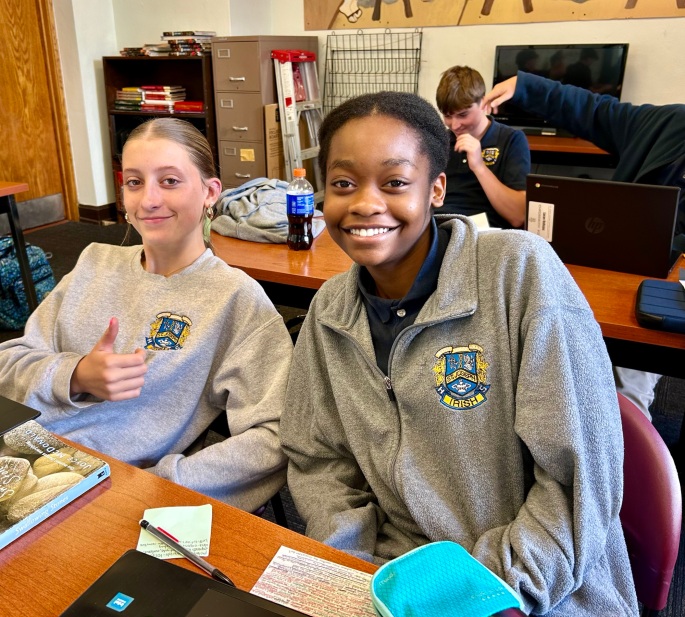
By the time you read this, Dear Reader, National Teacher Appreciation Week will be coming to an end. However, mine began, in its own unique way, the week prior.  As I walked into the high school on a Friday  after being out for a few days, an early arriving student exclaimed, “Ms. Hill, you’re back!  I missed you!” Then, she surprised me with a hug.

Later, before the beginning of mass, our weekly church service, another student said she was happy to see me as I sat down beside her.  Two rows in front of me, an additional student, and his buddies, all started waving at me with smiles on their faces.  I was definitely touched.

The Dog Ate My Homework 🐶

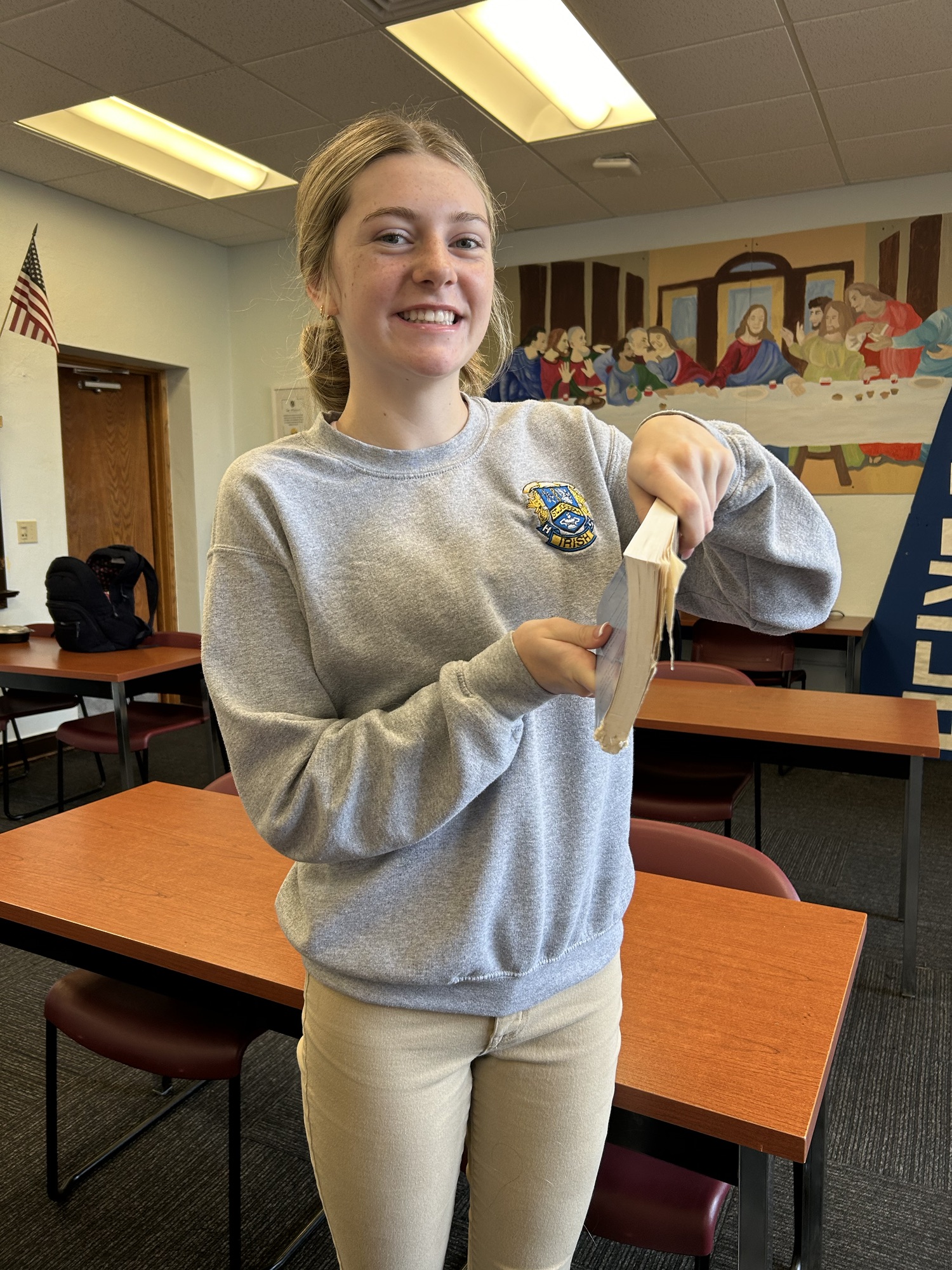
There are many times, as an educator, especially in more recent years, where it feels I am engaged in a battle with a myriad of student-distraction, and I therefore wonder what kind, if any, impact I can make in my students’ lives.  Video games, travel sports, youtube, and phones are just a few of the numerous diversions vying for students’ attention. “The dog ate my homework” excuse has been replaced with more modern tales. 

 “I stayed up late playing video games with my friends and lost track of time.”  

“I didn’t come to class this morning (or yesterday) because I was so tired from playing in the tournament this weekend.”  

“I completely forgot to ________ (read, study, write) because there was phone drama last night with my ________ (friends, boyfriend, girlfriend).”

“I performed four shows (or competitions) this past weekend, and I completely forgot about __________ (assignment).”

None of their distractions are any better or worse than distractions of the earlier decades in my career.  They are simply different.

Therefore, I do empathize with my students’ level of fatigue and distractions.  My teenage world was vastly different from their current teen world, but I still recall the angst, the hormones, the emotions, and my own unique set of distractions. Plus, I am professional enough to recognize that their excuses are not personal; it’s just their reality, shaped by society, parents, and peers.  

checking in 😃

Which is why I try to work with, rather than against, the current tide, taking time to talk to the students in order to get to know them.  What makes them tick?  What are their interests?  I try to notice when one, or several, are having a bad day, so I can check in with them and offer help or a compassionate ear.

Still, I am not perfect–not by any means.  There are days where all the best-laid instructional plans go wrong, technology in the classroom doesn’t work, and/or multiple interruptions occur.  On those days, I look around the empty classroom after students have exited and wonder if I am making a difference?  Am I preparing the students, not only for the next level of English, but also, am I adequately conveying that I care even more about the type of people they are becoming?  Am I making that personal connection that communicates to them that their life matters and is important? 

Words Matter 🗣️

As a writer and educator, I know that words matter. Words are tools.  Words can be used to build up another person, encourage a hurting soul, and foster a healthy relationship.  Likewise, words can deeply wound, leaving scars that can be felt for years. Therefore, when those students used their words to tell me that I was missed, it felt as if, perhaps, I do make a difference, even in a small way.

Later, that same day, I ran into a national chain store to pick up a couple of items.  As I was darting to the self-checkout station, a young lady greeted me with, “Hey, gorgeous!”

Now, at my age, that is not a line I often hear, but I also know from being around teens that is a phrase females will sometimes use with one another.  The speaker’s face was familiar, but my brain struggled to match the face to the correct moment in time. Then, I looked at her name badge.

It was a former student of mine from over 20 years ago during the time period in which I taught kindergarten. We talked for several moments, and she shared pictures of her two sons.  She caught me up on the lives of her siblings and parents. Listening to her talk, I took in her smile and dancing eyes.  I could tell she was happy, which, in turn, made my heart smile because, ultimately, I want all of my students to have an overall happy and successful life, however they define it.

Unforgettable Moments 🙌

As I prepared to walk away, I thanked her for stopping me and marveled that she would even recognize me. 

“How could I forget you?”

Those five words may not seem like much. They won’t grab national headlines, and they won’t earn me a six figure income.  Nor will her words put my name in lights.  Still, those words lit me up from within. Her words touched  me in ways headlines, money, and fame could never feel.  To know I made a difference with at least one past student, and to hopefully continue to affect current students to feel empowered about their own future choices is what continues to motivate me all these years later.

Thank you, Teachers 👩‍🏫 👨‍🏫

To all the educators who taught me, thank you.  I don’t need National Teachers Recognition Week to remind me of the impact your teaching had on me.  I continue to carry the torch you lit within me in your classrooms of long ago.

To all the educators in the trenches with me, thank you. Teaching is a challenging and often undervalued role, but the light you bring to your students matters.  And that is why we teach–to pass on the light to our students that was given to us. 

Thank you, Students 🙇 🙇‍♀️

Finally, to all of my students, past and present, thank you.  Thank you for sharing your light with me. You make my life richer, more interesting, and definitely a more engaging experience!  Never hide your light, continue to shine it, and may you bless the future world with your many talents and gifts.  Heaven knows, this ol’ world needs more light.

If you look closely, you can see, this student’s book, (Madelyn) was truly “eaten” by her dog. He took several bites out of the tops of the pages of the novel she was reading for my English 9 class.