Embracing Aging: Opportunities for Growth

“Aging is not ‘lost youth’ but a new stage for opportunity and growth,” Betty Freidan 

Another Year Celebrated 🎂

Photo by Genaro Servu00edn on Pexels.com

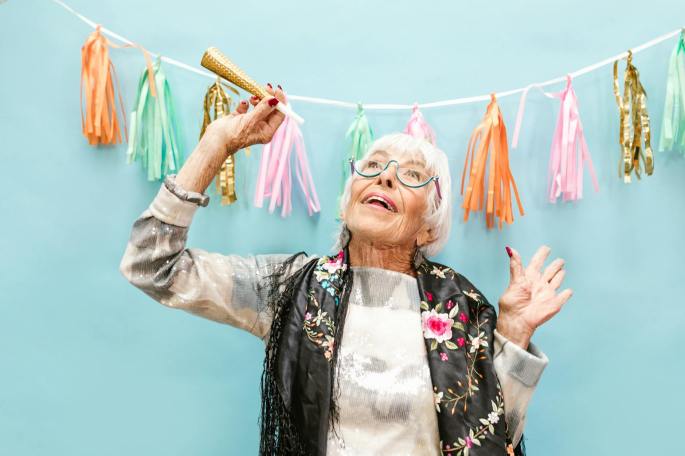
By the time you read this, I will have added a new score to my age.  If life were a game, I’d definitely be a winning football score, and accruing a lead score in a basketball game. You know what?  I am okay with that.  Next year, I’ll be in a new decade, but for now, I plan on savoring my last full year in this decade. 

A Chance Encounter 👩🏽‍🦳

Photo by Mauru00edcio Mascaro on Pexels.com

The night before writing this piece, my husband, John, and I chaperoned a high school homecoming dance for the school in which we teach. It was held at a local country club. Throughout the evening, guests at the club’s restaurant often exited via the hall outside of the room, where the students were dancing, and I happened to be supervising. Many of the restaurant’s patrons tended to speak as they walked by, mostly asking questions about what group was inside the buffet/ballroom.

One lady was particularly chatty, energetic, and enthusiastic.  She talked out of one side of her mouth as if everything she was telling me was a secret for my ears only.  In particular, she wanted me to note that she refused to have any surgical enhancements done to her face, including botox, “. . . and don’t I look good?”

Sound Advice 🧑‍💼

Photo by RDNE Stock project on Pexels.com

Her comment made me smile as she went on to “give me some advice.”  She explained that she used to say that she was 78 years old, “but I wised up a few years ago.”  Instead, she states her age without adding the phrase, “years old.”  In her words, this reframed her way of thinking about her “years on earth,” and allows her to focus on the fact that she has “lived experience,” with room for more. 

She wrapped-up her short, one-sided conversation by saying, with a tilt of her head towards the room with dancing and singing students, that she didn’t want to “do that again.”  

“We’re supposed to age.  You know?  It’s part of life. The real question, honey, is, are you living?  It’s the living that counts!”  With that, she winked and walked away.

Conscious Aging

Photo by RDNE Stock project on Pexels.com

The unknown women’s spunk got me thinking about attitudes towards aging. It seemed she was echoing the idea of “conscious aging,” also known as “conscious eldering.” According to the Association of Health Care Journalists, the goal of conscious aging is aimed at shifting “attitudes and thinking away from self-limitation, isolation, and fear” to viewing the senior years as the time of life for pursuing “passion, engagement, and service in the community.” 

This same woman further touched on this point by talking about her lack of medical, anti-aging intervention. As it turns out, depending upon the source, the global anti-aging market is currently valued at $37-62 billion, and it is projected to grow in value to $65-93 billion.  These estimates speak to the fact that as a whole, we culturally tend to reject the aging process.

It is unfortunate because it creates a climate that fosters a fear of aging rather than viewing it as a natural and normal part of life. Therefore, it’s important to examine where our beliefs about aging come from.  Just because a parent/grandparent/other relative had a health condition associated with a certain age, doesn’t mean we will do that same. The stories we tell ourselves matter as they tend to affect and influence our attitudes, beliefs, and even our relationship with aging according to a 2023 New York Times article. 

Identify age-appropriate Role models

Photo by Yan Krukau on Pexels.com

In order to flip our own personal narratives about aging, let’s identify role models around us who embrace or model a healthy view of aging. They don’t have to be record-breaking 95-year olds, rather seniors who are active, engaged, and living with purpose. At the same time, let’s make choices related to aging that are authentic to our own values.  We may admire our 85-year old neighbor who still plays golf, colors their gray hair, and volunteers at a dog shelter, but it doesn’t mean all of their choices are right for us. Instead, let’s use that admiration as inspiration to forge our own unique path of embracing and fully living during the senior years.

Engage across decades

Photo by Andrea Piacquadio on Pexels.com

Additionally, let’s engage across generations. Interacting and engaging with all ages across a multitude of decades is beneficial for all.  It allows us to see a broad range of perspectives, which can prevent us from becoming too narrow-minded. And, in my experience, being around those who are younger, keeps us younger.

embrace change as a natural part of Life

Photo by Wellness Gallery Catalyst Foundation on Pexels.com

Another big issue related to aging is learning to cope with and accept change associated with the aging process. Conscious aging means just that–we are conscious of the aging process, which means we are dealing with age-related changes in our bodies as they occur. What it doesn’t mean is tossing in the proverbial towel and sitting on the sidelines. We still need to take care of ourselves by exercising and eating well, but we may need to adjust our expectations according to our own bodies’ needs–which varies from person to person.  For example, there are plenty of people older than me who can run faster, but I run at the pace that is best for me. 

Embrace REality with optimism
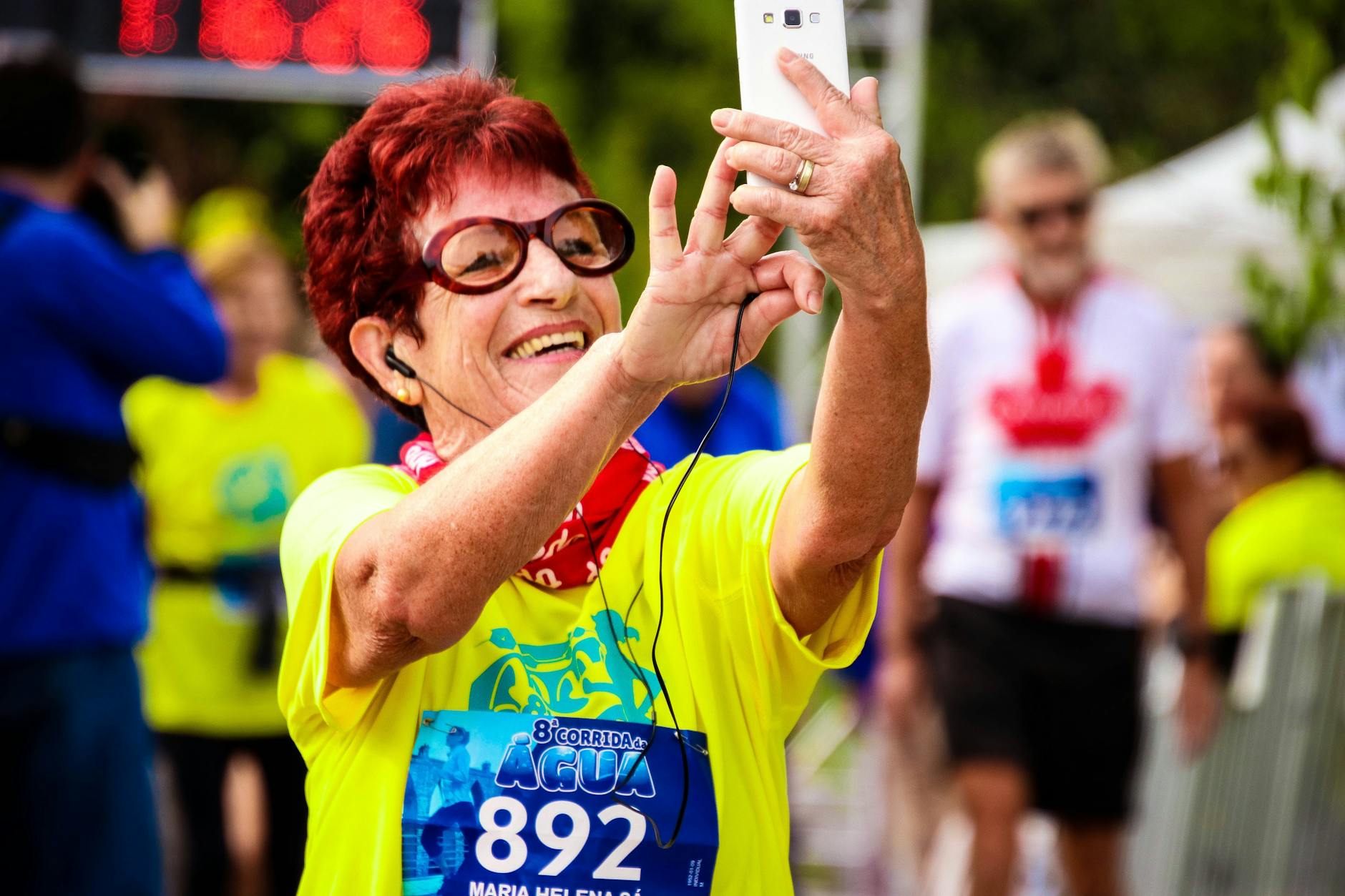
Photo by RUN 4 FFWPU on Pexels.com

Additionally, embrace reality, including the changes, optimistically.  For example, when training for a half-marathon, I focus my training on crossing the finish line, rather than focusing on my finish time.  I am grateful for a healthy body, and I am grateful that I can train for a marathon.  However, I still work full-time, and I have plenty of other interests, so I focus on the adventure that goes along with training and the joy that comes from experiencing the event instead of a specific finish time goal. 

Live with purpose
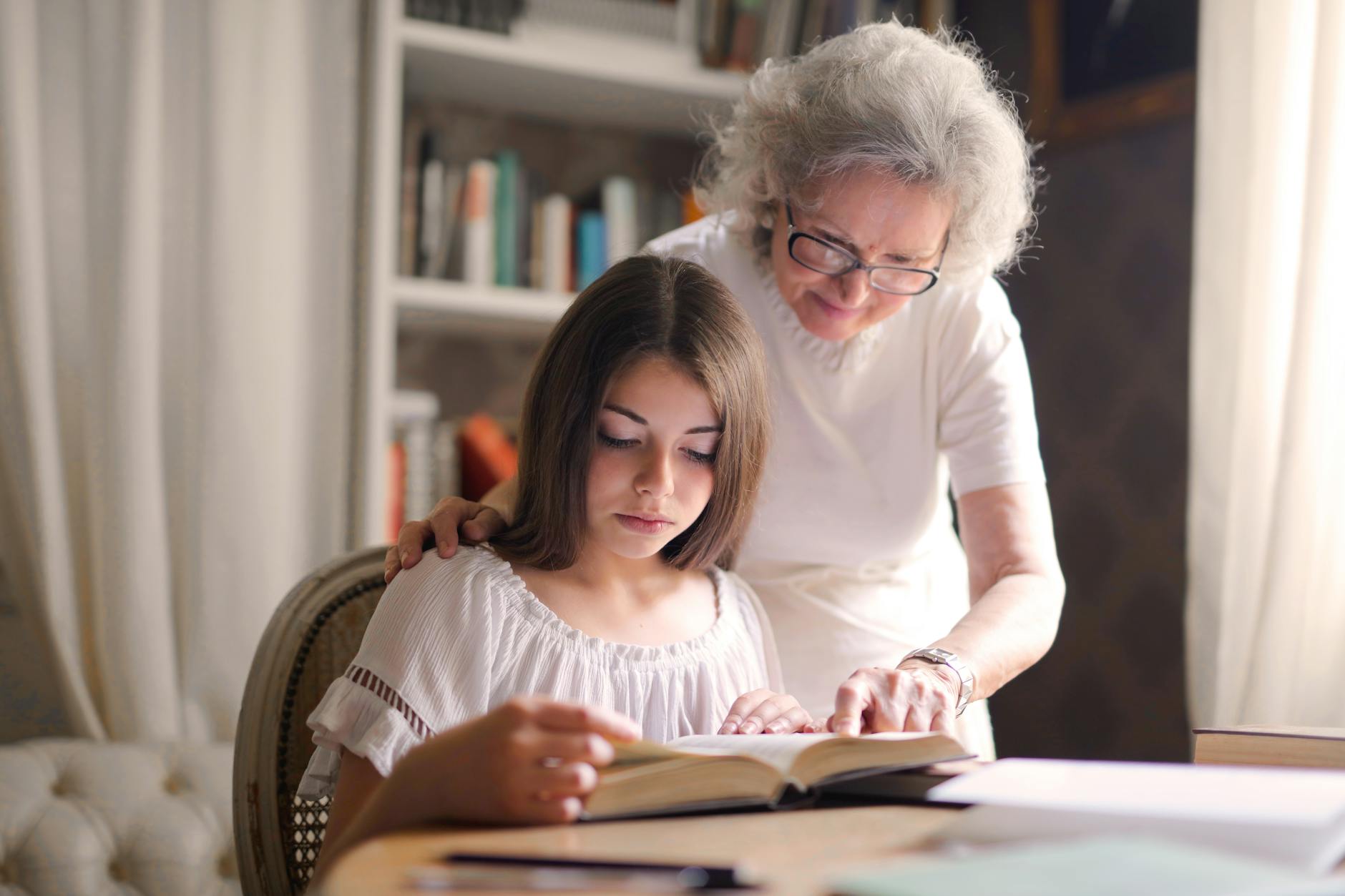
Photo by Andrea Piacquadio on Pexels.com

This brings me to my next point, let’s live and age with purpose. While I do have plans to eventually formally retire from full-time work, as long as my body and mind are healthy, I don’t ever see myself not engaged in some form of teaching. I may one day change to a setting outside the formal constraints of a school system, or focus instead on my writing, which is, for me, is a form of teaching. However, I optimistically plan to continue teaching, in some form, because it gives me purpose, allows me to help others, and keeps me cognitively and socially engaged with others. It is my fountain of youth!

learn new things
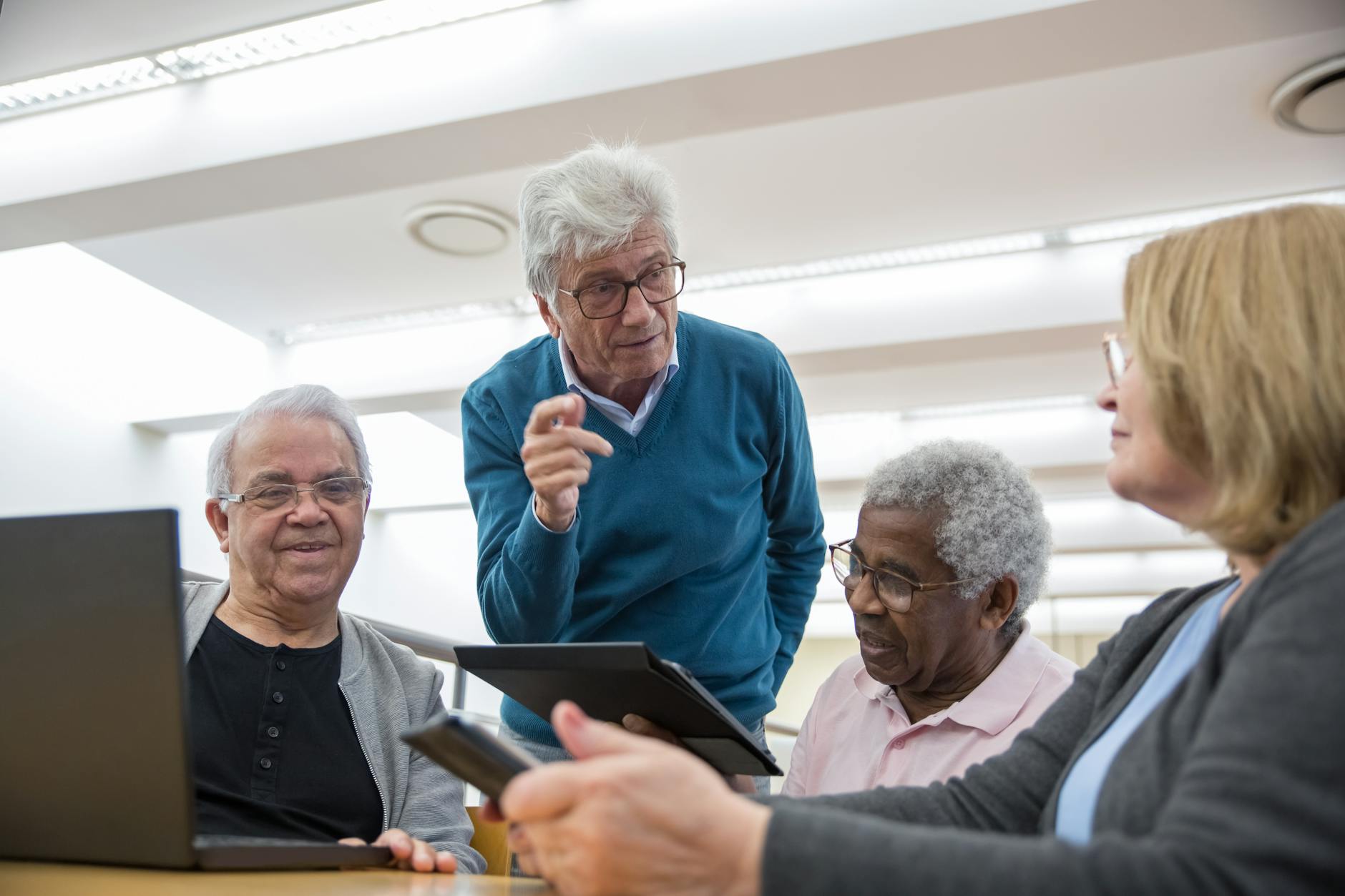
Photo by Kampus Production on Pexels.com

 Plus, teaching also forces me to continuously learn new things, which is beneficial at any age.  Furthermore, by consciously choosing to continue to work, older adults challenge societal ageist-constructs that often purport the notion that older adults aren’t as capable as their younger counterparts.  When in reality, most workplaces often benefit from employees across a spectrum of ages and experience levels.

In the end, the woman I met summed it up well when she pointed to the fact that humans are supposed to age, but it’s “the living that counts!”  Therefore, instead of focusing on the number of our age, let’s focus on living well.  

Make a difference.  Share the joy.  Celebrate life.
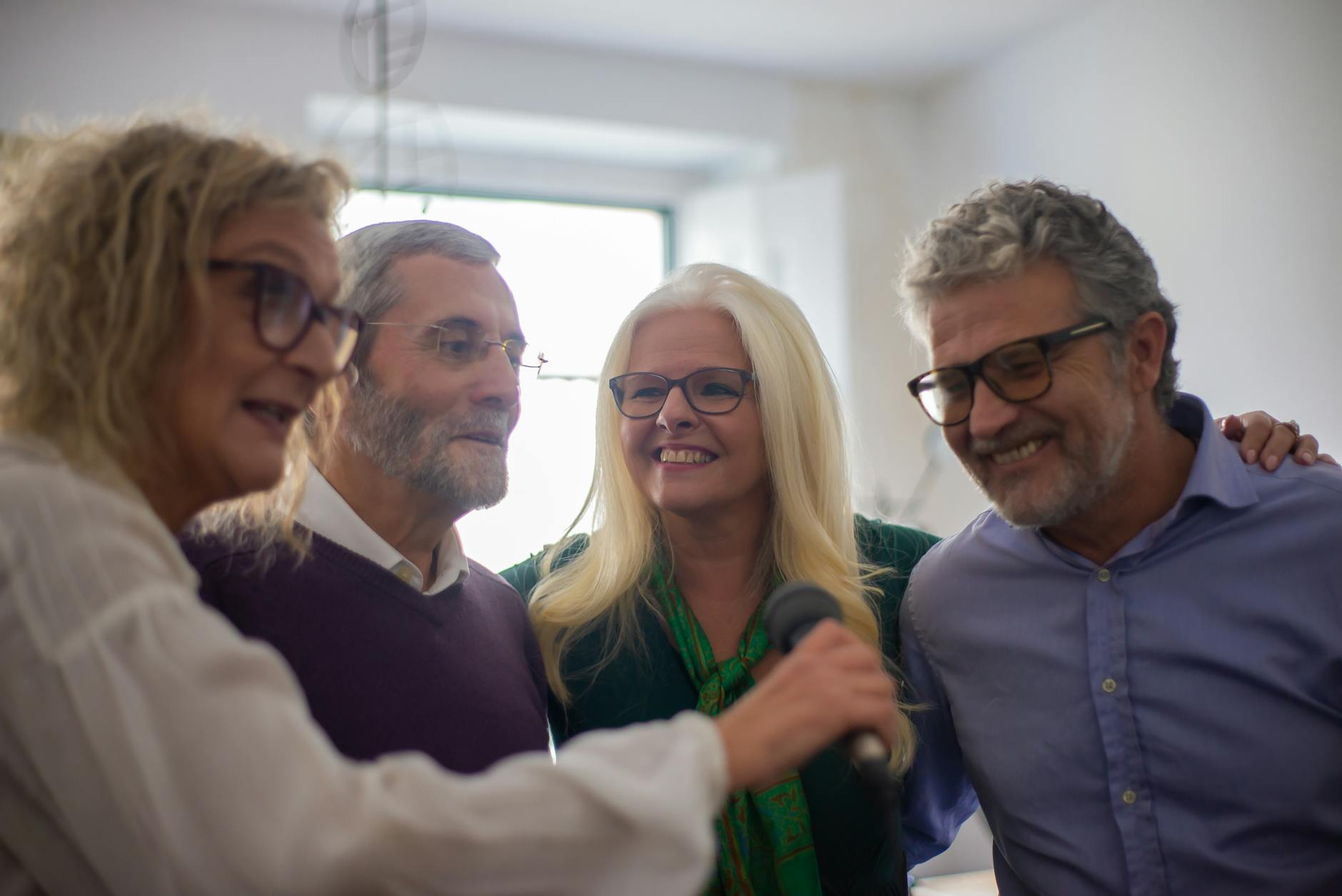
Photo by Kampus Production on Pexels.com

.

Are you seasoned? Appreciating the finer points of aging

“It’s important to have a twinkle in your wrinkle.”–Anonymous

Green beans Days of summers past

Photo by Ravi Kant on Pexels.com

During the summer months, my grandparents typically made a weekly trip to the local produce market to buy fresh green beans.  Once home, they sat kitty-corner from one another, an open width of newspaper in front of each of them, a pile of green beans in the center of each, and a large bowl between them.  Then, they went to work.

Over an advertisement or yesterday’s news, they would string each side of a bean, break each one into two or three pieces, and toss the broken beans into the bowl. 

“Pinch, zip, crack, plink. Pinch, zip, crack, plink.” 

The bean strings would pile high like tangled pieces of a preschooler’s hair on the floor of a barber shop after their first haircut, and the bowl would gradually fill with broken, strung beans. Sometimes Grandmother and Papaw talked; other times, they simply tuned into the percussive beat of their efforts, but never for long.

Once Chessie, their large, solidly gray, and very temperamental cat, heard the pinch, zip, crack, plink of the beans, her head would raise from her designated napping spot, and she would come trip, trop, trotting into the kitchen, tail raised, and voice meowing. Grandmother and Papaw would both talk to Chessie in that unique sing-song quality used only with pets and children.  She would meow incessantly, rubbing and darting in and out of their ankles until given an unstrung bean with which to play.  Bean gently held between her upper and lower jaw, she pranced to the center of the kitchen, plopped the bean onto the floor, and proceeded to bat it around between her front paws, then pounce on it, pick it up in her mouth again, carry it to another area, drop it onto the floor again, and repeat the entire process enthusiastically entertaining herself for long periods of time.

Photo by cottonbro studio on Pexels.com

Once the beans were strung and rinsed, they were placed into a large pressure cooker pot on the stove, and the cooking commenced.  Steam would belch and burp out of the “jiggler,” aka the weighted valve that released pressure.  All the while, Chessie still toyed with her bean, often pausing to rest with her front paws on top of the bean, as if it were a treasure, while the redolent aroma of beans filled the air.

The scent saturation grew even stronger once the lid was removed and Grandmother  seasoned the beans, adding this and that from an unseen recipe forged into her mind over the years. Those green beans cooked all day, and by the time supper rolled around, Grandmother and Papaw made a meal that mostly consisted of those beans.  

What is ‘real’ seasoning?

Real magic occurred, according to my grandmother, once the beans were cooled and stored in the refrigerator.  That’s when the real seasoning began–over time.  I would see them eat on those beans all week long, heating them up each time, and diligently returning the leftovers to the fridge, declaring that the beans were better tasting as the week progressed.  

“They’re good and seasoned now,” Grandmother would say mid-way through the week.

Nothing like seasoned green beans when I am feeling a bit nostalgic for those seasoned summer green beans of my grandparents’ kitchen.

Meanwhile, Chessie’s green bean also became “seasoned.”  That bean would be hidden, seemingly lost, only to be found again, looking more ragged as the week progressed, but it appeared to grant her the same pleasure nonetheless.

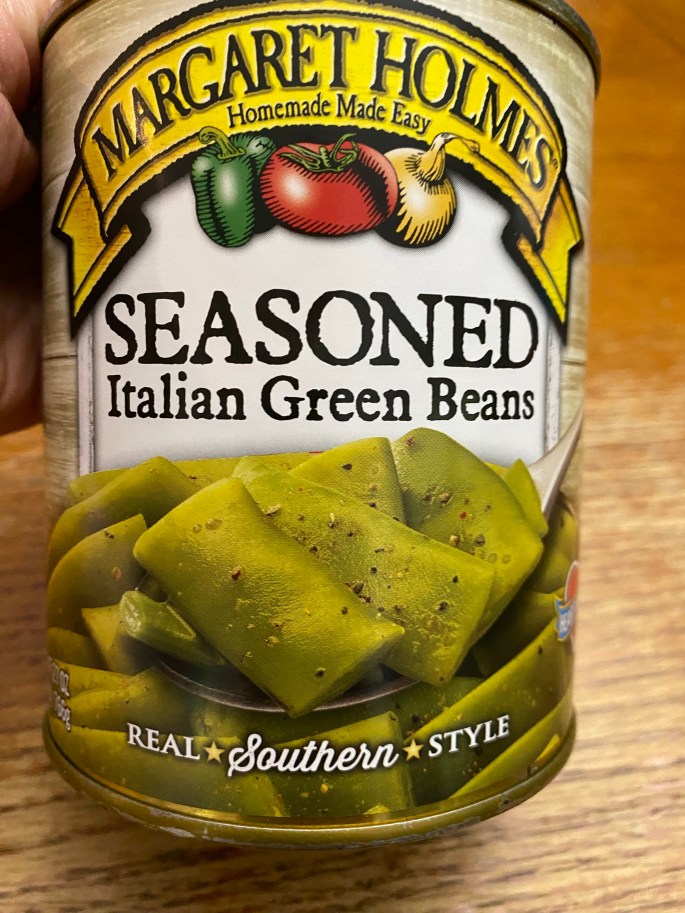
I found myself smiling recently, reflecting on those green bean days of summer so long ago, when I heard someone say, “Oh, I am proud to say I’m a seasoned bean, I mean, seasoned being.  My gray hair and wrinkles remind me that I am seasoned like the best food on the table.”

The Gifts of Seasoning

I had stumbled across a podcast discussing the finer points of aging with the overall premise being that the definition and understanding of aging is changing.  The speaker pointed to the shifting of retirement age to later years for many healthy adults.  She further promoted the importance of wellness, preventative care, and longevity practices as a valid part of this cultural evolution in work life.  

Honestly, I tuned out a large portion of the podcast because I was so wrapped up in remembrances of Grandmother, Papaw, Chessie, and seasoned green beans.  Even so, the speaker had a point, wrinkles and gray hair don’t hurt–at least not physically.  Sure, the body does not respond like it once did–parts shift, aches and random discomforts are more frequent visitors–but would I really want to go back to my former self with all her insecurities and self-doubt?  Nah!  

Therefore, I must take the good with the not-so-good, and find the sweet-spot for which to be grateful. Afterall, the longer those beans were from their “birth” in a pressure cooker, the better their taste, and that, my friend, is true of so much in life.  

When I reflect over the years, and recall long-ago moments that will never return, such as time spent in my grandparents’ kitchen, I appreciate the seasoning that got me to this point–the good, the bad, and the oh-so-ugly. Each moment provided lessons–many of which I am still learning, but that’s part of the process–similar to the way in which Grandmother’s beans got better over time. With each year of seasoning, the more our knowledge, understanding, and patience expands.

Photo by Andrea Piacquadio on Pexels.com

Sure, not every day of life can be idyllic, but I find that with age, I want to capitalize on days, or even moments, that are good because I now better appreciate the value and rare exquisiteness of such moments.  I accept–most of the time–that there are going to be bad days and moments, sometimes as high pressure as that old pan of green beans cooking on Grandmother’s stove, but it’s the part of the seasoning process, albeit, sometimes wrinkles and gray hairs are sure to be a byproduct of those moments! 

The point of being a seasoned human-being is to realize and appreciate what we have been given, move on from mistakes of the past, and focus-forward on the goals still to be achieved.  Depending upon our stage in life, Dear Reader, some of us are more seasoned than others, but we can all use our current level of seasoning to help/mentor others, enjoy the way that extra-seasoning often enhances our understanding of numerous situations, and continue to sip enthusiastically from the life for which we are still living.

Here’s to our continued seasoning, my friend!

Photo by Mehmet Turgut Kirkgoz on Pexels.com