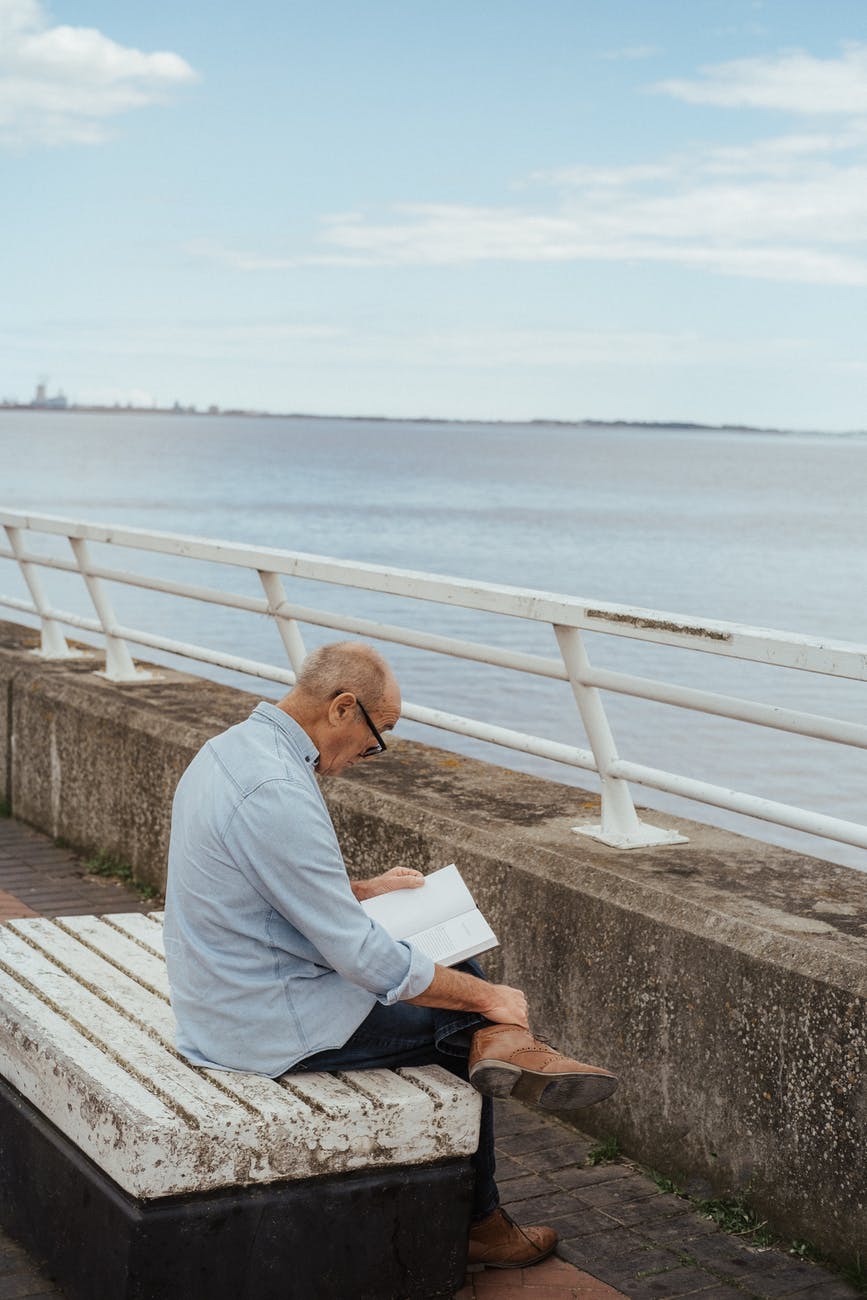
Always wanting more? Try looking inward instead

Photo by Jensen R on Pexels.com

“Things are just that–things.  They don’t make us who we are.  They make us look better on the outside, even when we’re hollow on the inside.  They’re an illusion–the shiny objects that distract us from the really important things.”–Chelle Bliss 

Trapped in the Wax 🕯️

  The day had been cool and cloudy, and I had come home with a bit of fresh produce, including a variety of fruit.  Given the weather, I thought it seemed like the perfect time to light the fragrant candle, a gift from a student.  I did not think about the fact that fresh fruit, during certain times of the year, is often accompanied by tiny little flying insects.

There they were, though, tiny bugs trapped in the melted wax because they had been drawn to the light of the candle.  Their attraction to shiny things had caused their demise in the end.  I wonder what they sensed the candle light could offer them–if they felt the candle’s sparkling flame would somehow improve their lives.  

Did those bugs confuse the candlelight with sunlight or moonlight?  Did they think it would help them navigate through the otherwise overcast day?  Perhaps, those pests confused the candlelight with bright flowers that nourish insects with nectar?  Were they trying to escape some unseen predator and sense that the bright light would blind their predator from seeing them.  Then again, maybe they were the predators looking for a meal, or were they looking for a suitable mate?  
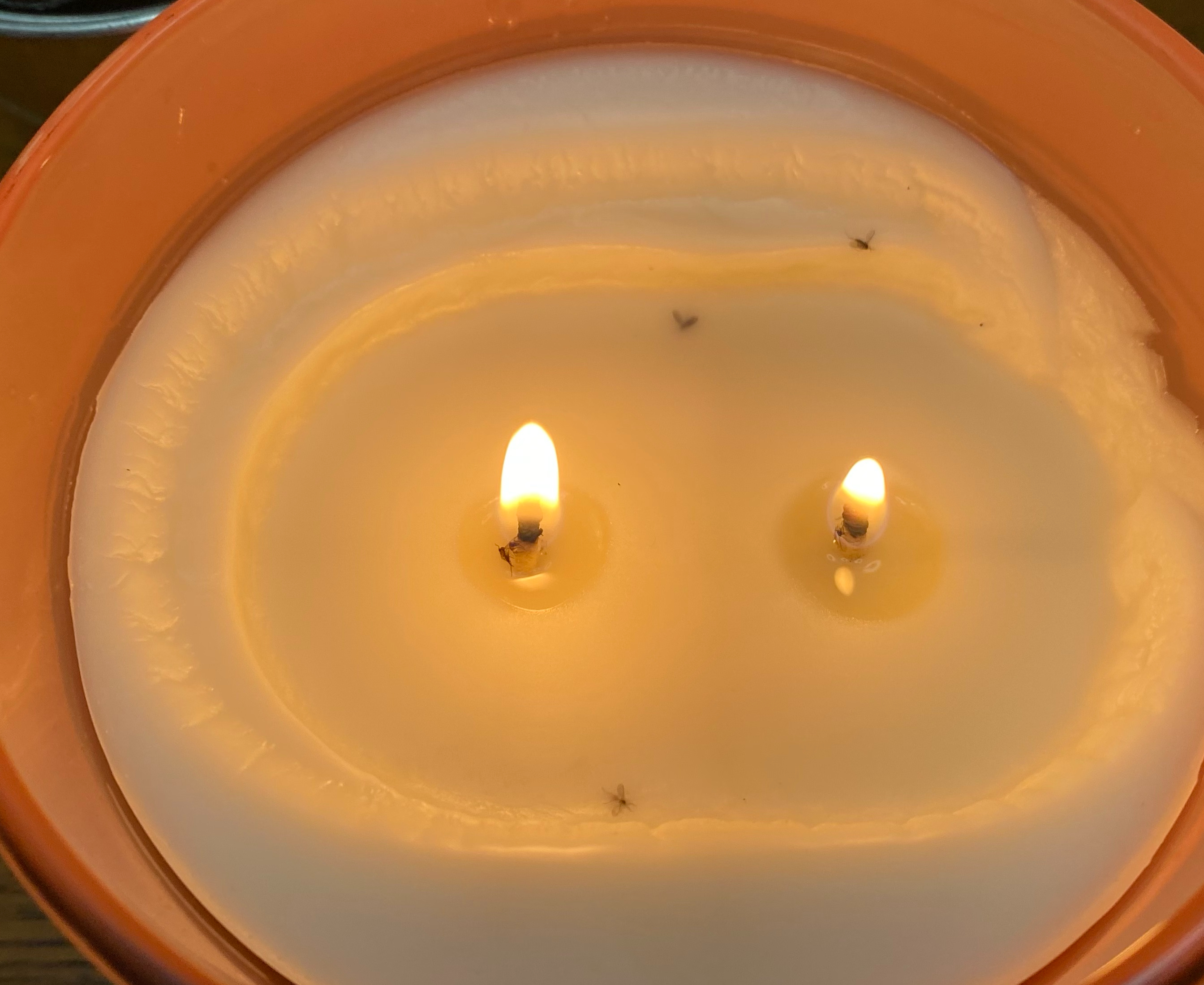
They were so attracted to the flames, they lost their way and became stuck in the melted wax.

Attracted to the Brilliance ✨

Even science doesn’t seem to know the exact reasons bugs are drawn to light, and it made me wonder why humans, likewise, are drawn to shiny things?  Big vehicles, the bigger and shinier the better.  Large homes filled with sparkling appliances, a multitude of large screens, and a variety of other collections, depending upon a person’s interests and means. Closets gorged on a feast of clothes and shoes. Not to mention the cultural attitude about prosperity: those with means have been “blessed.” (I’m not sure what that means for the rest of us.) 

Then there is the shininess of beauty, youth, and attractiveness, especially since our culture tends to place more value on the looks of youth over the experience and wisdom that comes with aging. Cosmetic injections, surgeries, and implants to change looks and/or stave off aging, no matter your gender.  Your face should be blemish-free–no saggy eyes, no droopy chin, and while a few laugh lines are acceptable on men, wrinkles are not so appealing on women. 

Photo by Jack Sparrow on Pexels.com

Window shopping 🛍️

We are attracted to the nectar of status, wealth, and beauty, and yet we are often as trapped as those insects, feeling as if what we have of it is not enough.  This drives us into a perpetual cycle of needing more things, needing more investments, needing more dressings to make us look shiny to others. We are window shopping the lives of others to see if our own shop window is as appealing and competitive-looking as our peers.

Do we, like insects, confuse the brilliance of status and/or youthful beauty with the light of inner peace that can help shine a path through life?  Do we sense that when times get overcast, the more things we have, the better able we will be to find our way through dark times?  Could our obsession with window dressings come from our own insatiable, ego-driven hunger?  Perhaps, we have an unspoken belief that we can protect ourselves from bad things happening to us if we attain a certain income status.  Then again, maybe these objects make us feel/seem more attractive to others, in the hope of luring some attention.

Photo by Pixabay on Pexels.com

Is it enough? 🤔

While I recognize that the words I write sound hyper-critical, please know that I am asking these same questions of myself.  Should I do more to “improve” my looks? Is my career enough at this point in my life? Afterall, I am choosing to remain an educator, rather than administrator, because I still find intrinsic value in what I do, even though it doesn’t have the same monetary value? 

My husband and I have a home, and it may not be the best.  But, it is dry, safe, and warm.  We have food on the table, and we certainly have clothes–albeit not necessarily the most up-to-date styles. At the end of my life, I often remind myself, I can’t take any of it with me.  Nonetheless, I also know I must save for those end-of-life years, for which I hope/think we are doing enough, but is it?  

Why do I sometimes feel I am not doing enough? Why do I feel like I should do more? Am I trapped in the wax of envy?  Am I trapped in the wax of our cultural beliefs of worth and value? Am I the only one with these questions/feelings? I don’t think so.

Photo by Arthur Brognoli on Pexels.com

Self-Reflection 🙏

I’ve concluded that it is only through self-reflection, contemplation, and meditative prayer that the answers are found.  What is right for me, may not be right for others.  By examining our attachments, we can begin to ask ourselves what things/what part of our lives are bringing us true fulfillment, and which are merely fueling our ego?  When we look deeply, we see that many, if not most of our things, paint an illusion of happiness for us.  

Much of what we have externally is impermanent.  Even our relationships, as much as we value them–have a limited time.  Therefore, through introspection, we can perhaps see the importance of living more fully in the present moment, completing our responsibilities without attaching to specific outcomes (because we really aren’t in as much control as we think we are) and surrendering the outcomes of our efforts to a higher power. 

By shifting our focus more frequently to our internal world, we can begin to detach more from our external trappings. Then, we can learn to dampen the sounds of our ego’s attachments to societal values, and discover richness and fulfillment that comes from fostering our own spiritual growth and the expanding sense of peace that comes with it. The more we shift to an internal focus, the less trapped we feel, and the more we can enjoy and appreciate this gift of living. 

Photo by James Wheeler on Pexels.com

Starting Over

“A sunrise is God’s way of saying, ‘Let’s start again.”–Todd Stocker

Before typing this, I spent nearly 2 ½ hours trying to decide the best way to begin writing.  I looked at photo ideas, quotes, inspirational readings, ideas I have saved on a document, and so forth . . . all the usual starting points for me.  I would start typing, then moments later, delete all the words.  Type, delete, repeat. My mind was filled with a revolving door of thoughts as I reflected upon the new year and all the possibilities it held.  No matter the number of do-overs, this repeatedly blank document likewise remained an opportunity for a new start–full of the hope and promise that exploring an idea through writing offers, and the enhanced understanding that comes with it.

As we close the saga that was 2020, I can say with confidence that it was certainly a year like no other.  While it began, full of hope and promise, it quickly spiraled out of control globally, nationally, professionally, and personally.  Often, when it seemed the year could not get any worse, 2020 somehow managed to throw more curve balls than a record breaking MLB pitcher.  In fact, it seems to me that 2020 pitched a no-hitter of a game.   

Photo by Erica Busick Batten on Pexels.com

As a lifelong learner, one of the reasons I write is to increase my own understanding. The process of writing slows down my thoughts, and reduces my emotions which can cloud my thinking. Writing also coaxes my analytical brain to engage more with the world rather than my intuitive/sensitivity center that, from decades of training, extends from me like antenna–seeking, searching, and constantly evaluating the temperament of a room, situation, and people.  While this so-called sensitivity is a pretty handy awareness to have, especially as an educator, it can unfortunately become overwhelmed by the feelings, energy, and attitudes of others, short-circuiting my emotional center and nearly shutting down my brain, filling me with overwhelming negative feelings and stories.

Writing is not the only way in which I tap into my logical brain.  As an educator, I must also remain centered in logic, task-analysis, and effective communication.  While I use my sensitivity skills to help navigate the world of middle school students, parents, and coworkers, I have trained myself to not react nor take situations personally.  I am not implying that I am perfect, rather that my professional and creative self have more in common with one another than private me.

Photo by Julia Volk on Pexels.com

When left alone with my own thoughts, I am often given over to emotional waves.  This was especially true during 2020.  Far too often this past year, I slipped into the stories and/or negativities that seemed to be surrounding me on all sides. Therefore, one of my hopes for 2021 is a greater sense of equanimity, no matter my circumstance or setting, and I can’t help but think I am not the only one feeling this way. 

I am reminded of a former yoga instructor who once warned students of the danger of attaching to and/or becoming our negative thoughts.  He gave the illustration that if we nourished our body with good food in order to maintain a healthy body, why shouldn’t we feed our brain positive thoughts and ideas.  Therefore, when this recollection randomly entered my mind, as I sat at my kitchen table trying to tease out the precise writing idea floating just outside the periphery of my thinking, I began to look around my kitchen. 

Photo by Nicole Michalou on Pexels.com

Due to the holidays, my kitchen was filled with foods that we normally do not keep on hand.  In fact, there was so much excess, as I glanced around, that food was visible on the top of my fridge and counter–something that is normally a no-no for me.  Those foods were as lovely to the eye as on the tongue, but they lacked any real nutritional value.  These were foods, my body reminded me throughout the holiday season, that did not keep me feeling full for very long, and they created cravings I typically don’t experience.  Additionally, I found that these same foods also tended to generate a sense of fatigue and/or lethargy; and yet, my brain kept telling me to consume more of those delectable special sweets, salty-snacks, and other rich treats.  Each time I overindulged, which I did on several occasions, my mind would spin into negative thoughts about myself, my food choices, and lack of willpower–which was so silly since all of the foods were truly special occasion foods only made and eaten in this quantity one time per year.

In fact, by January, most, if not all, of the treats will be out of the house, and we will return to a more healthy, sustainable way of eating, but it supports my point.  2020 was like the sweets and junk food in my house for the holidays, it continually served up an abundance of low-quality fodder wrapped in bright screens, attention-seeking sound-bites, and eye catching headlines promising “breaking news” that was mostly devoid of any positive and fulfilling sustenance.  One sad, frustrating, or anger-inducing event after another kept emotions running high while nutrient-rich content was as hard to find as fresh produce at a local convenient mart.  

Photo by Anete Lusina on Pexels.com

If 2020 has taught me anything, it is that change is inevitable and ongoing, but no matter the change, I have a choice with what I nourish my mind and how I choose to react to change.  While I am unable to rid the world of “junk,” as I can in the kitchen of my own home, I can fuel my mind at the start of each day, as I do for my writing, by spending a bit of time in quiet reflection and devotion, with an open heart and mind, and a prayer that Divine Providence will fortify me throughout the day with those positive morning messages, providing with a greater sense of equanimity in all situations.

Happiness is not the absence of problems; it’s the ability to deal with them.”–Steve Maraboli

2021 is like this once blank document, an opportunity for each of us to start again. Of course, the new year starts with much of the baggage of this past year, but that doesn’t mean we don’t have the ability to deal with it and learn to better understand it. Just as a new black document each week offers me a choice as to what I idea or thought I choose to focus my attention, each of us likewise has a choice of where we focus our attention and how we react to each problem or challenge that may occur.  Equanimity of mind seems to me like happiness–everyone wants it, but we wouldn’t know either one without the opposite extreme.  

May the blank page of 2021 serve as a reminder that life is about progress, not perfection.  Let us remember that nature does not create a storm without an end. We may not always feel happy, or remain in a state of equanimity, but we can choose what we nourish our thoughts with.  May we say goodbye to poisoning our minds with discord, disharmony, and dissension–even if the storms of 2020 continue into the new year. Instead, may we focus on what we can control: our thoughts, our prayers, and our actions/reactions. 2020 is done, and 2021 has just begun.  It’s an opportunity for a new start– even if only on the personal level.

“And the one who was seated on the throne said, ‘See, I am making all things new.’ Also he said, ‘Write this, for these words are trustworthy and true.’”–Revelation 21:5

Photo by Oleg Zaicev on Pexels.com