Movement as Medicine: Staying Active in Your Older Adult Years

“Movement is medicine for creating change in a person’s physical, emotional, and mental states.”–Carol Welch

Photo by Roman Biernacki on Pexels.com

Let’s get Ready to Move! 🏃‍♀️

By the time you read this, I will be close to one week out from running (ok, jogging, “slogging”, whatever you want to call it) the Marshall University Half-Marathon. This annual community event motivates and inspires hundreds of locals and nonlocals to train, improve their current fitness level, and participate in the 5K, the half-, or the full-marathon distance.  Plus, it brings together a whole host of volunteers who support participants along the way.

Each year that I’ve participated, I hear numerous stories about those who haven’t trained for MUM, still participate, and do well.  My hats off to them; I appreciate that they can do that.  However, I find the training, and the build-up to the event, are part of the excitement and joy of the journey that includes completing the event.

Photo by RUN 4 FFWPU on Pexels.com

Giving meaning and purpose to Exercise through signing up ✍️

It typically takes weeks, or even months, of deliberation before I decide to sign up for a running event–even an annual event such as the MUM. Therefore, once I make the decision to pay the entry fee for an event, I am fully committed to a training plan. This is not because I have any desire to place or set records, but because signing up for an event is the extra motivation that gives meaning and purpose to my exercise.  Plus, it keeps me simultaneously excited and nervous in a good way.

Photo by RUN 4 FFWPU on Pexels.com

Exercise at any age! 👵🏼

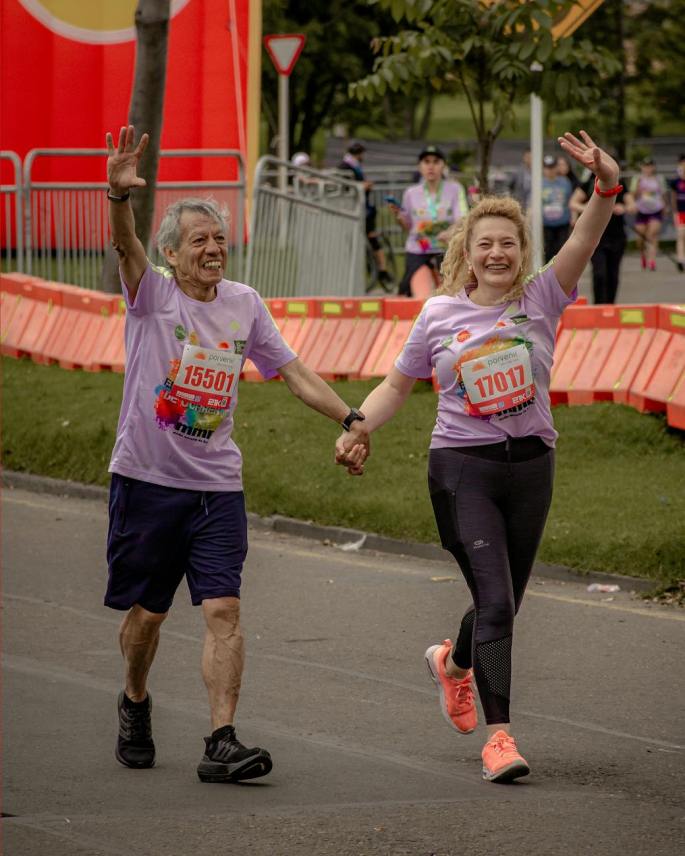
Still, I have those who ask me if running is still safe for someone at “my age.” News alert! There is no milestone-age at which you should cut-off exercise.  In fact, exercise and/or movement can, and probably should, be embraced across all ages, including those of us in the AARP years, which is anyone over the age of 50. That said, you do have to manage your expectations, but movement and/or structured exercise can be a healthy part of the “golden years.”

That said, of course, if you have had an injury or have certain health conditions, you must respect your body’s limits and boundaries, but it doesn’t mean you give up on exercise and/or purposeful movement forever.  By working with a healthcare professional, you can find ways to adapt, modify, and/or create your own exercise plan that fits your body’s unique needs.  

Photo by Vincent Peters on Pexels.com

Tips for moving through those senior years 🚶🏿‍♂️

Here are some key tips and pointers I’ve learned along the way, gathered from other senior exercisers, as well as a few I researched, when thinking about exercise/movement in the, a-hem, “senior” years.

  1. Establish meaningful AND realistic goals appropriate for where your body is now that motivate and excite you.  This is why I enjoy signing up for a half-marathon.  My mantra is: “Set your own pace, and run your race.”  I don’t put pressure on myself that running has to be or look a certain way.  No time is too slow, and I can take as many walk breaks as I need.  That said, you can approach ANY form of exercise in a similar manner 

Set off in your own unique direction down the the tracks towards empowering your own health and fitness.
  1. Notice your narratives.  This is something that I have begun to notice more frequently. Reflect on how you talk/think about age with peers/friends/family AND self.  Is there often negative talk and thoughts associated with your current age and/or exercise?  Perhaps, you can begin to reframe those thoughts/chatter by leading by example.  Furthermore, look to role-models that motivate you to move more.  I personally often look at my Dad who still walks or hikes daily anywhere from 2-8 miles per day.
  1.  Find your edge. Whatever form of exercise we choose should challenge us, but not too much.  If something changes, and you sense you can do a little bit more, then do so.  But if doing a bit more causes serious discomfort, then back off, and try again another time. 
Map out your own fitness challenge.
  1. Strength train, stretch, and work on balance through practices such as yoga. The CDC in an article entitled,  “Older Adult Activity: An Overview,” states that in addition to cardiovascular exercise, such as jogging and walking, older adults also need to strength train and work on balance.  In fact, AARP offers a 10-minute, strength-training video that can be completed daily, seated or standing. 
  1. Manage your sleep and nutrition: There is a reason these two are often spoken/written about due to the fact both contribute positively, or negatively, towards your own health.  That said, one bad night’s sleep, one indulgent meal, or a day of eating very little, will not necessarily impact your overall health; however, consistently not getting enough sleep and not consuming proper nutrition will gradually, and negatively, begin to impact your physical and mental well-being. 
  1. Find your support or pave your own way.  There’s no one right fitness plan that works for everyone.  Find the type of movement/exercise that best suits your body and motivates you, which may mean exercising with a group, a friend, or at a club. That said, don’t be afraid to go it alone either and share the experience with others later.

Find your support!
  1. Exercise can be therapy. Personally, I know my mental health greatly benefits from movement. The National Institutes of Health, The Mayo Clinic, Mount Sinai, and numerous other institutions all point to the fact that exercise is a mood and mental health booster.
  1.  Tune in to your body’s needs with honesty and integrity. If you’re sick, tired, and/or run down, then maybe a day or two of rest may be what you need. If a joint, such as knee, elbow, wrist, or ankle begins to feel irritated.  Be curious about it.  Are you pushing a certain exercise too hard, too often? Or, are you not moving enough? Learning to listen to the signals our bodies send us is an important part of the exercise/movement journey.

Photo by RUN 4 FFWPU on Pexels.com

movement is medicine! 💊

When it comes to movement, no matter your age, focus on the positives of the experience–whether it is spending time with friends, benefiting your mental health, or feeling more overall strength, steadiness, and/or energy. To be sure, it is often hard to get started, but it is often that feeling of accomplishment you have afterwards that can keep you going. Finally, for those in the official AARP years, keep in mind, “older” doesn’t have to mean sitting on the sidelines. Becoming and staying active, however you define it, truly is medicine for imbuing well-being: socially, mentally, and emotionally. 

Dad and I pausing for a moment during hike this past summer at Barboursville Park.


Conquering Perfectionism: Tips for a Balanced Life

“Perfectionists strive to never make mistakes. Excellence is striving high but offering yourself grace for mistakes made and things you don’t know yet.”–Sharon Martin

Photo by RDNE Stock project on Pexels.com

imperfect pressure 😰

I watched in horror before school began as a student began pulling at their hair so hard, strands of it landed on the table. I quietly walked over to offer help/support. The child was a known perfectionist and quickly angered if they were unable to complete their work with total accuracy. As it turned out, they were completing math homework that was due at 8:00 a.m., which was less than ten minutes away. It was homework they had procrastinated completing and were feeling the pressure of not having the time needed to complete the work “perfect.”  

As a teacher, I encounter both students–and adults–that appear to strive (either intrinsically or extrinsically), for “perfection.” However, the idea of perfectionism is a human-construct. When we look at the natural world, we can see multiple examples of this.  Think of any three-legged animal you may have encountered.  One could argue that those creatures are not “perfect” specimens, but they are still able to function “perfectly.”  Another example is the number of plants that are classified as “imperfect” because they do not have both the male and female parts needed to produce flowers.  However, through adaptation, they are able to produce flowers.

Photo by Fox on Pexels.com

Intrinsic vs. extrinsic “perfectionism” 🗂️

Perfectionistic behavior in humans can manifest itself in various ways. So-called “perfectionism,” for some, can be intrinsically-driven. These are people who hold themselves and their work/performance to higher standards. They are self-motivated and often view mistakes as setbacks from which they can learn.  Their goals are realistic and achievable. Overall, this type of “perfectionism” can be healthy unless it evolves–either from internal or external forces–to an unhealthy, maladaptive state.

An “unhealthy” state of perfectionism can often be attributed to others–cultural and/or societal cues, well-intended friends, or even family. In fact, think about how often the word “perfect” sneaks into day-to-day interactions and conversations.  Even sports’ analysis is rife with its use of “perfect”–perfect pass, perfect catch, perfect save, perfect pitch and so on.  Similarly, from many outward appearances, one could argue life rewards those who are “perfect.”

Unfortunately, perfectionism can become problematic when people begin to set standards that are extreme and often unattainable. This can lead to a sense of “failure,” a constant feeling of stress, and/or develop procrastination/avoidance habits because the tasks/work can seem so overwhelming because it can’t be completed “perfectly.”  Perfectionism can reduce feelings of joy/happiness, diminish one’s self-esteem, and often leads to burnout. It is worth further noting that perfectionism can sometimes evolve as an extension of anxiety, OCD, ADHD, and/or depression.

Photo by energepic.com on Pexels.com

Downside to perfectionism 😫

Perfectionism, when left unchecked, is beyond “trying to be your best.”  It’s more about setting standards that are so high, they are either difficult to maintain or unrealistic to achieve. Many people think that perfect work/performance is the only way to be accepted and/or valued, often because they have a fear of not being good enough or worry about how others perceive them. 

In particular, I have noticed that students (and adults) with perfectionistic tendencies place extreme amounts of pressure on themselves to perform “perfectly.”  Then, if their work/performance misses the high-mark they have established in their mind, their self-talk becomes highly critical and often leads to self-loathing that can spiral into depression and harmful coping mechanisms.  Sometimes, this need to be perfect can spill over into their relationships in which friends and acquaintances who don’t meet “perfect standards” are berated, belittled, and shamed for not having the ability to perform at a specific level.

Photo by Christina Morillo on Pexels.com

Reframing the way we talk 🗣️

What can be done about this?  One important step that any of us can take is to reframe the way we talk about performances.  Rather than being quick to say, “that was perfect,” consider focusing on acknowledging/praising the effort or the process. This is especially important for parents or anyone working with children and teens; however, it is also equally important in the work setting or within close relationships. For example, instead of saying that a presentation is “perfect,” focus on the process.  “Your presentation was so clear and to the point. Tell me about how you came up with that idea.” The point is that we bring harm to others when we foster the myth of perfectionism.  

Proactive practice and tips for 📋overcoming perfectionistic tendencies

I’ve gathered several tips from a wide array of sources as well as a few anecdotal tips I have observed students and/or adults employ to combat perfectionistic tendencies.  Even if you are not battling perfectionism, per se, some of these tips are overall proactive practices for a healthy work/life balance.

  • Become aware of perfectionist tendencies, and reduce self-imposed pressure. Sure, you could spend hours crossing every t and dotting every i, but after a certain amount of, there is a diminished return on time invested.  Sometimes, it’s okay to complete the task well (read: not “perfect”) in a reasonable amount of time
  • Break a big job into smaller tasks, and habit bundle in order to avoid procrastination. If the thought of a task is overwhelming, break it down into smaller tasks spread out over several days, and “bundle” it with something you enjoy doing while completing the task or afterwards, i.e. Instead of cleaning the entire house, commit to cleaning two rooms while listening to your favorite playlist or podcast. Then repeat the process with two more rooms at another time.
  • Celebrate small successes and praise yourself.  When completing a step of a major task/job/assignment, take time to acknowledge and feel good about each completed step. 
  • Limit your time on task(s), and focus on meaning over “perfect.”  See the big picture/goal, so that you can be less perfect about some things and focus more on the overall, most important goal.
  • Acknowledge that “perfect” is a human construct, and reframe how you talk to others about work/skills/projects. This is one that takes practice and awareness due to how easy it is to interject the word, “perfect” when acknowledging/praising one’s job.
  • Allow yourself to make mistakes, and view them as learning opportunities. This is a big step towards a more healthy mindset. We all make mistakes, and they provide important lessons that can potentially impact future work.
  • Cut out negative influences and accept/seek constructive feedback. While it may not be completely possible to avoid those who place unrealistic expectations on you or others, it is possible to ignore those messages and seek advice from mentors who truly have your best interest at heart.
Photo by fauxels on Pexels.com

Final Thoughts 🤔

Coping with perfectionism can be challenging, especially when family, friends, and/or other outside influences may be sending other messages.  While it’s good to have high standards for ourselves, those standards should not be at the expense of our mental health and well-being. Finding a more balanced approach to work/performance can increase our peace of mind, overall well-being, and give us permission to live and work with a bit more grace and kindness towards ourselves and others. 

The Power of Whitespace

Whitespace should not be considered merely “blank” space — it is the element of design that enables the objects on the page to exist.–The Segue Creative Team 

As a middle school Reading/Language Arts teacher for grades 6-8, I spend a good portion of my time teaching various writing techniques.  Currently, in my 7th grade classes, we are focused on writing various styles of poetry with the emphasis on exploring various elements of figurative language techniques and literary devices.  Of particular importance to writing poetry, I believe, is to draw the reader into an image/story/feeling in the way a good song has the power to  draw in the listener and attach a particular feeling/image to it. 

Part of the skill in writing a relatable poem is not only using specific words, figurative devices, and imagery, but also incorporating the power of white space.  In the same way my grandmother taught me that our eyes eat food before we taste it, a poem should likewise draw readers’ eyes into the arrangement of the piece first.  In order to do that, writers must learn to use the white space.

Photo by Du00f3 Castle on Pexels.com

Whitespace 

Creates

Balance and  Style

Although it is often called “negative” space, there is nothing negative about appropriate use of white space.  In fact, when duly used, white space increases readability–up to 25% according to some sources.  White space provides breathing room for the reader, a purposeful pause, or point of emphasis. It can create a sense of balance, harmony, and style.  The eye has time to “catch its breath” and focus on the meaning of each line, word, phrase.  A sense of play, intense emotion, or serious tone can also be emphasized and enhanced through the appropriate use of white space–adding power and emphasis to select words.  By giving students permission to incorporate white space, they are more focused on words that are specific and succinct.  This is an important and transferable skill when switching to more formal writing styles that require a clear, concise, and compelling writing style. 

Whitespace is THE fundamental building block of good design . . .  provides visual breathing room for the eye.–The Segue Creative Team

Photo by Robin Schreiner on Pexels.com

On a recent long Saturday morning run, it occurred to me that the notion of white space, as a mental construct, is underused and undervalued in our daily lives.  It is one of the things I most appreciate about my longer weekend runs is the fact that it gives me permission–and time–to let my mind wander.  Many, if not most, of my weekday runs are completed on a treadmill before I do a few strengthening exercises.  During these workouts, I typically wear headphones to listen to music, podcasts, or audible books–depending upon the workout and my mood/interest.  However, when I run outside, I rarely wear headphones; and thereby, I experience the freedom of mental whitespace.

Much of our daily life is consumed with some form of media content consumption.  From the time we get up and, quite often, until we go to bed, many of us are continually interacting and engaging with screens.  Emails, social media, work, news, even cooking, project-building, and other how-to content require some form of on-screen encounter. From content that is audible, to content that is visual, to an interplay of both, much of human interaction is now completed on-line.  As a result, our mind has become trained to repeatedly and frequently seek points of what I call distracted-focus.  Furthermore, it has never been easier to do this at any time, day or night.

Photo by PhotoMIX Company on Pexels.com

As society’s utilization of technology changes, shifts, and evolves, our minds have been forced to adapt.  Our phones wake us up, and while I can never do this for fear of falling back to sleep, I am told that many people remain in bed for several minutes, and upwards to an hour, upon waking, scrolling through media content that happened during those hours devoted to sleep. While we drive our kids to school, they are busy with screens, and we are engaged in handsfree calling or texting.  Once at work, many of us, myself included, utilize multiple devices at once as our eyes and minds shift back and forth from screen to screen, and, depending upon your career, from person to person.  At day’s end, despite eye fatigue and even brain drain, our minds still desire to scroll through social media and news outlets as the brain, like a tired toddler, still craves even more stimulation to keep going.  In a sense, our minds have become the proverbial “Energizer bunny,” continually banging on the drums of our consciousness for more, more, more.

Whitespace not only creates harmony, balance, and helps to brand a design. . . .–The Segue Creative Team

Photo by Pixabay on Pexels.com

Personally, I need breathing space, and I honestly believe that most of us do.  Time away from screens, schedules, and scintillating images/demands.  Unplugging from the visual and auditory distractions of our devices, provides our brain with whitespace–the space to pause and breathe.  I liken it to opening the door and letting a child, or even a pet, go outside to run off steam at the end of the work/school day. When you unplug, it frees the mind to mentally roam or simply be still.  By unplugging, you begin to notice the sounds of nature or even household appliances.  Unplug, and you might see things through new eyes–eyes that are fully focused, rather than distracted.  Unplug, and your senses have permission to roam–noticing the way air caresses your face, the aromas of your surroundings, the full flavor of your coffee, or other favorite beverage, as it dances over your taste buds.  Unplug, and you can breathe deeply and luxuriously as if you have all of the time in the world. Even your ability to think creatively and/or problem-solve increases more when you unplug.

Photo by Asad Photo Maldives on Pexels.com

In the same way white space creates harmony and balance to the design of a web page, book, or even a 7th grade poem, creating “white space” moments in life, allows us to also feel more harmonious, balanced, and perhaps even, peaceful.  As a deep breath or sigh is gratifying to the lungs, and bring calmness to a tough moment, time unplugged offers the mind moments to rest, refresh, and recharge, providing you with more clarity and the ability to focus on what’s really important as well as give you permission to see the extraneous for the distractions they actually are. 

 It doesn’t matter if you take a break from screens inside the comfort of your own home, or outside in fresh air, unplugging and not-doing, is never a waste of time, or well, waste of space.  I especially enjoy unplugging when I am outside for a run, walk, or hike, but I also have found white space moments in the quietude of a car with all distractions turned off, including radio, or in the quiet moments of my home when others are still sleeping or momentarily out.  The ability to unplug may not occur every day, but white space of the mind, be it vacations, exercise, hobbies, or other down-time moments, judiciously scattered throughout the week and/or even month, offers innumerable benefits and is certainly worth prioritizing.  

In the same way white space creates harmony and balance to the design of a book or web site, creating "white space" moments in life, allows us to feel more harmonious, balanced, and perhaps even more peaceful.
Photo by Mabel Amber on Pexels.com