Navigating Dietary Restrictions While Traveling: Tips for Positive Food Adventures

“One of the most daunting parts of celiac or gluten sensitivity diagnosis is figuring out how to travel safely eating gluten free.”–Celiac Canada Association
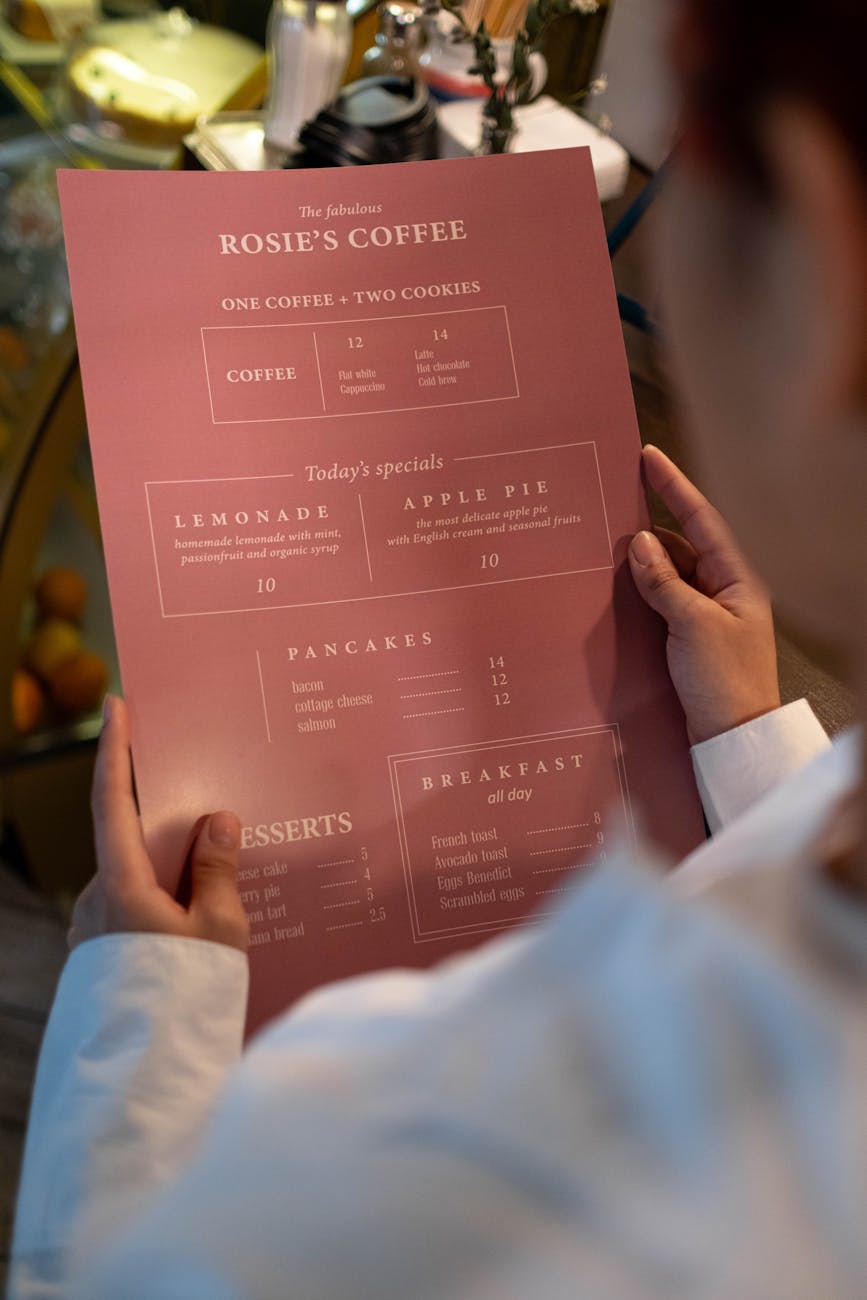
A person holding a pink menu titled 'Rosie's Coffee' displaying various food and beverage options in a cafe setting.
Photo by Ron Lach on Pexels.com

When the Menu Doesn’t Work: Dining Out Dilemmas 🍽️

“Is your veggie burger gluten free?” I asked with crossed fingers

“No—we use breadcrumbs,” she replied.

Since I don’t eat meat, and the only gluten-free option was a bun, we had to leave. It was a trendy burger spot, but like many places, it couldn’t accommodate both my plant-based and gluten-free needs.

John, my husband, and I were visiting our daughter, Maddie, and her boyfriend, Connor, in Boston where Connor was currently completing a summer internship. John and I were on our way back home after spending several days in the Bar Harbor/Acadia National Park area in Maine. And, just as it had been in Maine, and really, how it ALWAYS is when dining out, finding places where I could eat was a challenge. 
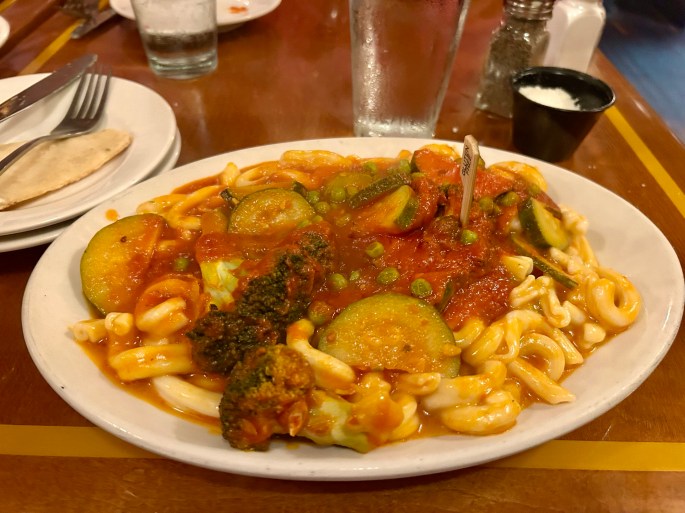
A plate of pasta topped with marinara sauce and mixed vegetables, including zucchini, broccoli, and peas, served in a restaurant setting.
Pasta is one of the hardest things to get when eating out. Fortunately, La Famiglia Giorgio’s Restaurant in Boston, MA, has an entire menu page devoted to those who need to eat gluten-free.

The Root of the Challenge: Living with Celiac Disease 🌾

The difficulty stems from the fact I have celiac disease–a chronic autoimmune disorder, as defined by Mayo Clinic, that is triggered when eating gluten, a protein found in wheat, rye, and barley. Consuming gluten significantly damages the small intestines of the person with celiac, preventing the absorption of essential nutrients, which can lead to serious health problems down the road. Additionally, the side effects of eating gluten are NOT pleasant– diarrhea, abdominal pain, nausea, reflux, fatigue as well as numerous other symptoms.

A bowl of granola topped with fresh berries and sliced apples, placed on a marble table next to a takeout coffee cup.
Eating gluten free and whole food plant based has helped my body heal and recover from decades of undiagnosed celiac disease. Tatte Bakery, Boston, MA

Why I Eat Plant-Based, Too 🍓🫐🥦🥗

I wasn’t diagnosed with celiac disease until my late 40s, after years of digestive issues and unnecessary medications. Healing began when I cut gluten and adopted a whole food, plant-based diet that excludes meat and most dairy. Eating a diet rich in plants bathes my body with the nutrients it was unable to previously absorb for most of my life.

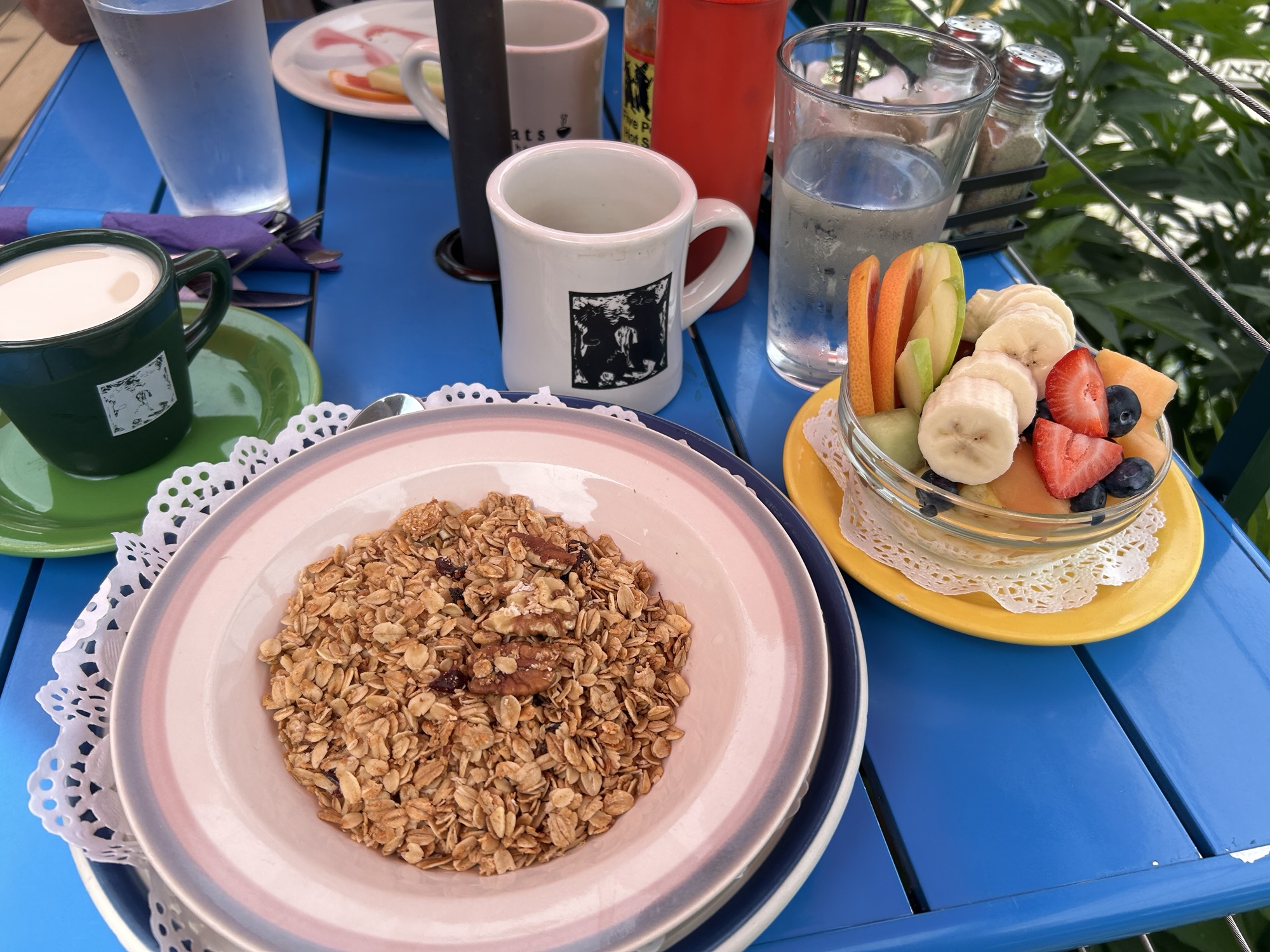
Two Cats Restaurant and Inn, Bar Harbor, ME

Travel: Inspiration and Complication 🌄

However, traveling with my dietary restrictions creates unique challenges.  On one hand, vacation sojourns are enriching, informative, and inspiring. These trips provide me with an opportunity to experience awe, wonder, and delight in the rich tapestry of life. On the other hand, travel requires deft navigation of dietary hazards. However, my trips have taught me that with a bit of planning, research, flexibility, and determination, I often discover and enjoy tasty culinary adventures as part of the travel experience.

Strict adherence to a gluten free diet is a necessity, especially when traveling. As anyone with celiac knows, it is no fun being stuck in a bathroom when you’re supposed to be out hiking, sightseeing, or experiencing a new setting. Additionally, I know that for my body, consuming meat and dairy products can also create digestive distress and discomfort. Therefore, those two dietary restrictions often limit my restaurant choices, create possibilities for cross-contamination, and can sometimes create a lack of understanding of restaurant staff.

A plate of a gluten-free pancake topped with powdered sugar, raspberry pieces, and garnished with orange and mint leaves, next to a mug of coffee labeled 'Great Maine Breakfast'.
Gluten free pancakes with plenty of fresh fruit at Jeannie’s Great Maine Breakfast, Bar Harbor, ME.

Research Is My Best Travel Companion 💻

For example, John often completes dining research in advance of any trip.  He uses Trip Advisor and refines his search to restaurants identified as good choices for gluten free, vegan, and vegetarian diets. What he has discovered is that we have to look closely at menus because eateries tagged as “gluten friendly” are often limited to meat-based dishes, and establishments labeled as “vegan or vegetarian friendly” often involve choices that include wheat (noodles/pasta, seitan, breaded vegetables, and so forth). 

A plate featuring a burger topped with cheese, served alongside a small salad of mixed greens, red peppers, and a dipping sauce, with a side of steamed broccolini.
Blaze, Bar Harbor, ME offered numerous gluten free options on their menu, including this gluten free veggie burger with gluten free bun. YUM!

The Cross-Contamination Trap 🪤

Of further issue is the concern with cross contamination. For example, Mexican food can be a good choice for me; however, if the fryer used for tortilla chips is also used for cooking flour tortillas and meat, these factors can negatively impact my digestive system. Additionally, shared food prep areas, unclear labeling of menu items, and even communication between wait staff and kitchen can lead to hazards.  For instance, if I order a gluten-free pizza crust, but it is prepared on a commonly shared counter on which wheat pizza crust is rolled out, this might upset my digestive tract.  

I’ve also had the experience of ordering a gluten-free pizza crust and still getting a pizza made with wheat due to miscommunication. And, while the only other country in which I have traveled is the English speaking parts of Canada, I can only imagine the chance for miscommunication in a country in which I don’t speak the native language.

This is why advanced research is important when traveling.  When I don’t have a game plan, or plans change, as was the case when we tried to go to the burger establishment in Boston, things can very quickly go awry. I end up feeling terrible because I feel I am limiting my loved ones from having a positive dining experience. After all, part of the fun of traveling is eating in new places.
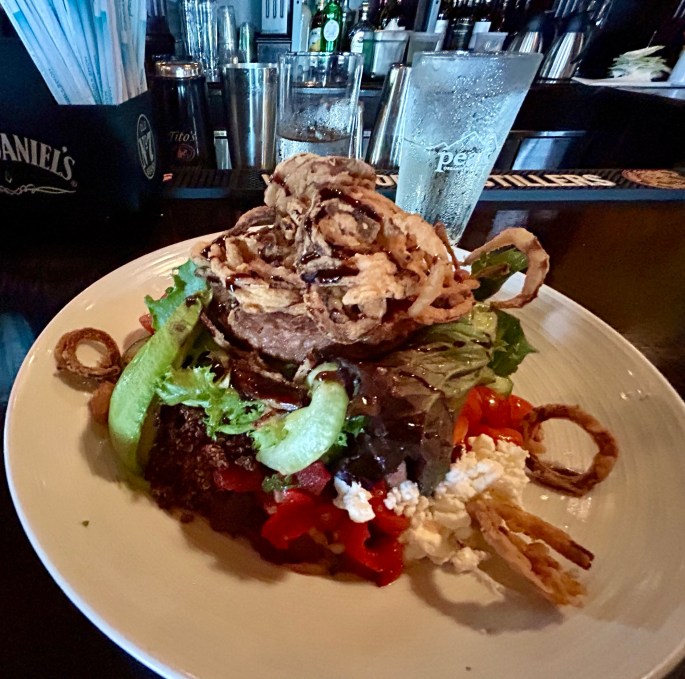
A colorful salad topped with a fried onion ring stack, featuring greens, tomatoes, and cheese, served at a bar setting.
The EARTH BOWL at Paddy’s Irish Pub & Restaurant, Bar Harbor, ME: Grilled , Gluten free, Plant-Based Burger, Tri-Color Quinoa, Roasted Pepper Salad, Heirloom Tomatoes, Garden Cucumbers, Ruby Red Beets, Avocado, Local Chevre, Sweet Balsamic Syrup.

Planning Ahead and Packing Smart 🧳

In addition to researching and using apps, such as Happy Cow, AllergyEats, and Find Me Gluten Free, John and I tend to stay in places with a microwave, refrigerator, and nearby grocery stores. I always pack food from home, and I’ve learned to bring supplemental items with me to restaurants if needed, such as gluten free bread, crackers, salad dressings, and so forth.
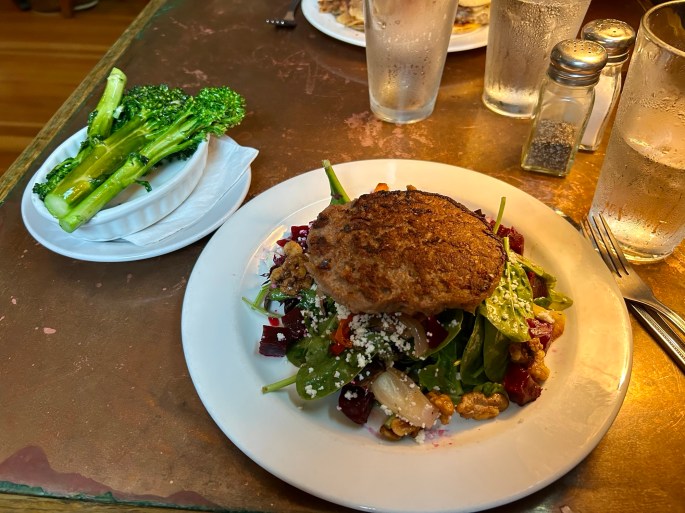
A plate of salad with mixed greens, nuts, and beets topped with a vegetable patty, accompanied by a side of steamed broccoli.
McKays Public House at Bar Harbor, ME: mixed greens tossed in maple dijon dressing, with roasted onions, carrots, and beets, feta cheese, candied walnuts topped with a gluten free veggie burger and served with a side of broccolini.

Connection and Communication: The Human Side of Dining 😊

I have also learned to befriend the wait staff.  Honestly, I try to do this anyway because I like meeting new people, and I cannot imagine how demanding it must be when working with the public, especially in popular travel destinations. When I politely explain my situation and dietary preferences to the staff without demanding it, most staff and chefs are willing to work with me. I have even had the rare chef visit my table to discuss the best way to prepare my food, which I appreciate more than words can adequately express.

A plate featuring a serving of colorful salad topped with various vegetables, accompanied by a side of grilled asparagus and a bowl of green beans. The setting appears to be a casual dining location.
Brewhouse Bowl BJ’s Restaurant and Brewhouse, Hagarstown, MD: Roasted barbacoa cauliflower; Peruvian quinoa + brown rice; black beans; corn + fire-roasted red pepper succotash; cucumbers; pickled red onions; pico de gallo; feta cheese; housemade guacamole; Greek yogurt crema; and,cilantro served with a side of broccoli and asparagus.

Flexibility and Food Choices: Finding Balance ⚖️
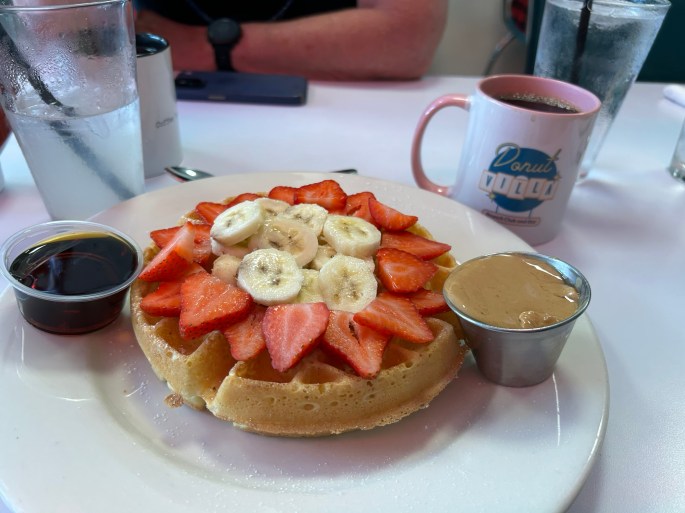
A plate with a waffle topped with sliced strawberries and bananas, accompanied by a small cup of peanut butter and a small container of syrup, set on a table with beverages in the background.
Gluten free, vegan Belgian waffle at Donut Villa Brunch Club and Bar, Boston, MA: topped with strawberries and banana served with sides of peanut butter and syrup.

One other thing I have learned to do is to compromise. While I prefer to eat whole food, plant based, I medically need to eat gluten free. Therefore, if it comes down to it, I will compromise somewhat on my plant based eating. For example, I don’t mind consuming a bit of goat or Parmesan cheese, yogurt, butter, or even the rare egg (think baked goods) if it allows my family to find meals they enjoy. Since I don’t regularly consume these products, I don’t think eating a bit here and there, such as during travel or other special occasions, will hurt me, and it makes the food feel like a real indulgence.
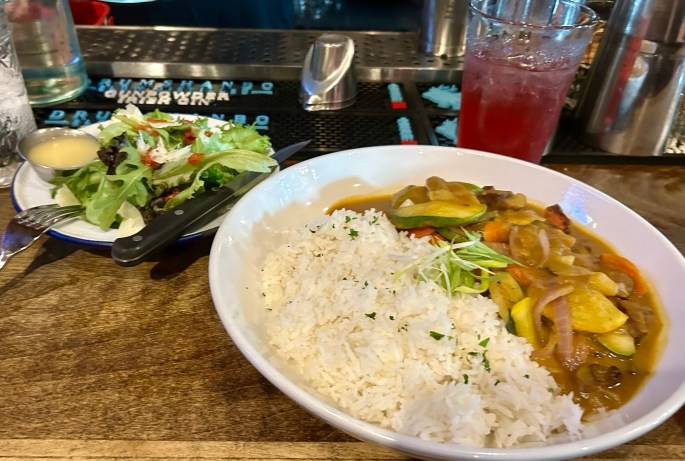
A plate of rice accompanied by a colorful vegetable curry, served with a side salad and a drink in the background.
Butternut Squash Curry at Leary’s Landing Irish Pub, Bar Harbor, ME, with roasted seasonal vegetables and jasmine rice.

A New Way to Experience the World Through Food

Traveling with celiac disease and/or other dietary restrictions is undoubtedly challenging, but I have learned over the years that it is not impossible with enough preparation, advocacy, and an adventurous spirit.  I have found that I now value and appreciate eating establishments who craft foods to appeal to a wide array of dietary desires. Additionally, I have met unique and wonderful people while doing this, and I have enriched my own knowledge of possibilities when it comes to cuisine.  It’s like, well, having your gluten free cake and eating it too! 

A bowl of chia seed pudding topped with banana slices, strawberries, and blueberries, accompanied by two slices of toasted bread with peanut butter, served in a diner setting.
“Morning Jump Start” at J’s Diner, Hagarstown, MD, with chia pudding, berries, banana, coconut flakes, and toast with almond butter.

Share your experiences

If you have tips for traveling with dietary restrictions, or if you have experiences you’d like to share regarding traveling with dietary restrictions, please share your comments!

A sizzling plate of colorful sautéed vegetables served at a restaurant, accompanied by tortilla chips, condiments, a glass of water, and a bowl of black beans.
Fajitas at Angela’s, Taste of Puebla, Mexico, Boston, MA, with sauteed onions, green and red peppers. Comes with shredded cheese, pico de gallo, guacamole, sour cream and flour tortillas. Served with rice and beans.
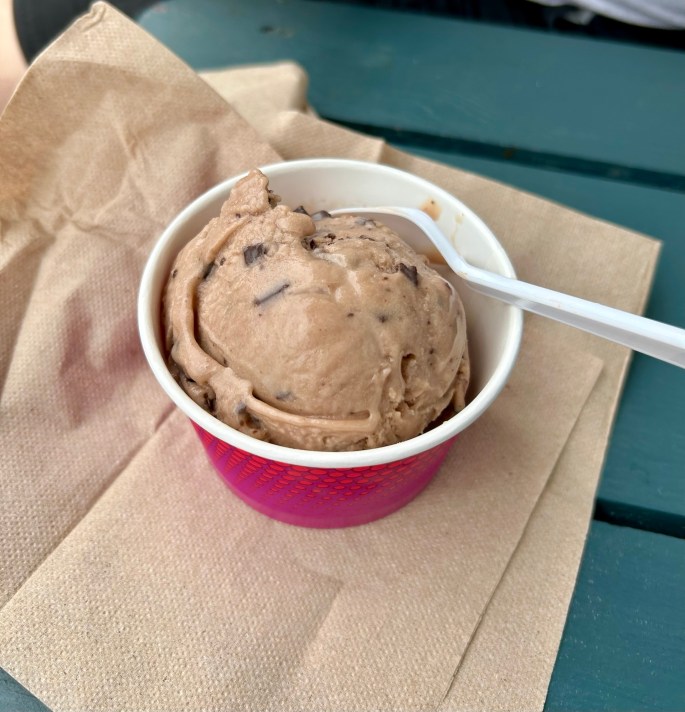
A cup of chocolate ice cream with chocolate chunks on a paper napkin.
Plant based chocolate ice cream at Salt Shop, Sweet and Savory Snack Bar, Southwest Harbor, ME.

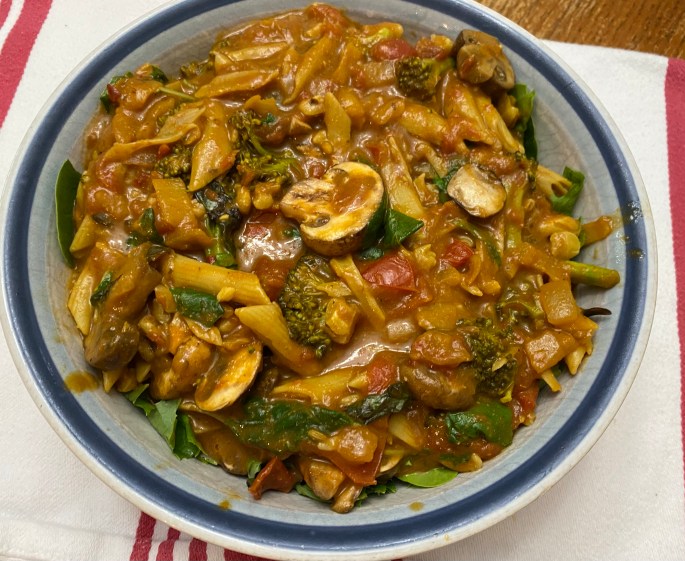
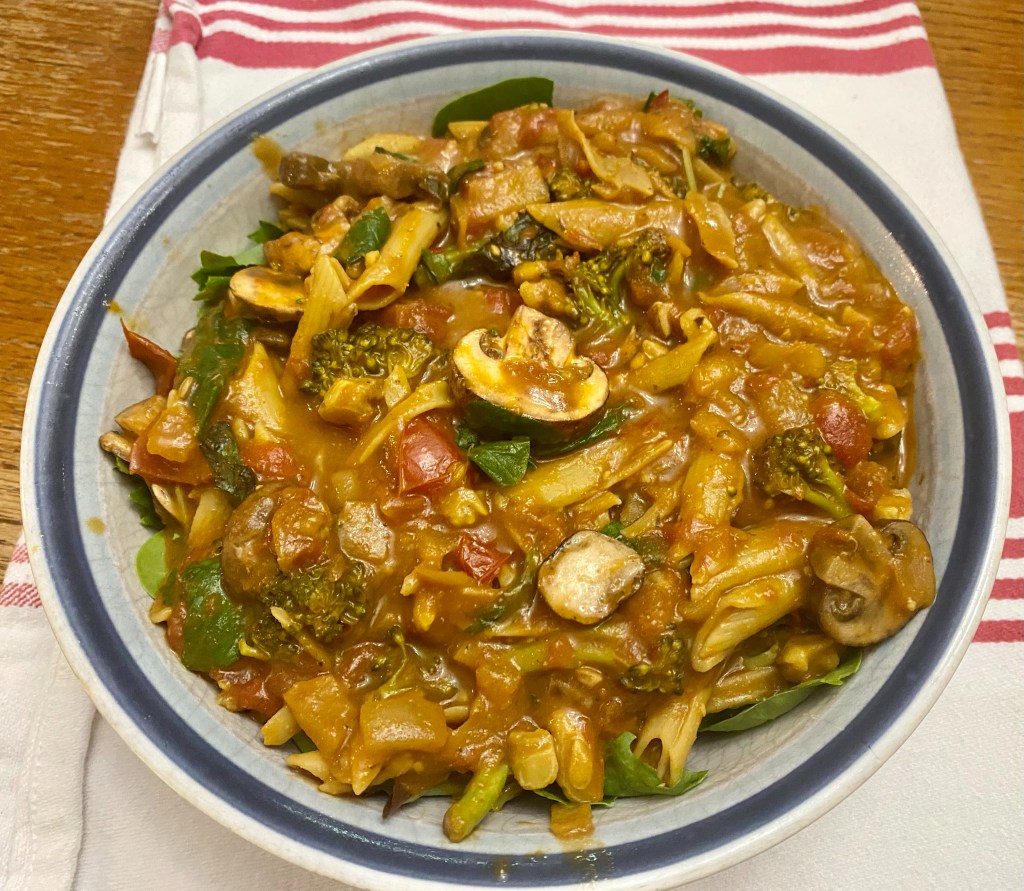
One pot walnut and mushroom penne, with gluten free option

“One pot meals make a lot of sense . . . because so much of what people hate about cooking is really the clean-up, the mess, the grease.”–Tom Douglas

Photo by Teona Swift on Pexels.com

Autoimmune diseases, according to John Hopkins University, unbelievably affect about 23.5 million Americans, 80% of which are women, of which I am one. While scientists are busy trying to understand the biological gender differences that contribute to this higher prevalence among females, one unexpected discovery is the contributions of the intestinal (gut) microbiome as a driver for these excessive numbers according to Scientific America. Furthermore, those identified with gut-centered autoimmune diseases, including irritable bowel disease (IBD), irritable bowel syndrome (IBS), ulcerative colitis, Crohn’s disease, and celiac disease, tend to have micronutrient deficiencies, in particular iron, folic acid, zinc, vitamins B6 and B12, copper, zinc, and vitamin D–which can really put the microbiome in dysbiosis.  

If left untreated, nutritional deficiencies can lead to an array of other health concerns, such as neurological complications, psychiatric symptoms, cancer, and bone health issues.  This is particularly of concern if adults have not been properly diagnosed.  For example, symptoms of celiac disease often vary from person to person; therefore, it is possible to go decades without identification as was the case with me.  I was in my late forties experiencing numerous unexplained, uncomfortable symptoms before one doctor finally suggested an endoscopy along with a blood test and a colonoscopy.  As it turned out, the endoscopy and blood work both identified celiac disease.

This dramatically changed my life, especially the way in which I eat.  In addition to eliminating gluten, the doctor advised a nutrient-rich, whole food diet, heavily emphasizing fruits, vegetables, whole grains (without wheat, barley, and rye), as well as legumes.  This is because I spent most of my life with malabsorption issues due to the damage of the lining of my small intestine as well as the inflammation and atrophying of the villi that absorb nutrients and minerals. Hence, the reason I was often sick as a young child.

Photo by Pixabay on Pexels.com

Specifically, vitamin D deficiencies are especially high with those who have celiac disease, which is crucial for growth of bones.  Chronic deficiency of vitamin D can lead to cancer, cardiovascular disease, and osteoporosis to name a few. Additionally, zinc is another nutrient often deficient in those with celiac disease. This nutrient promotes wound healing, virus recovery, growth, and development. 

Therefore, how I now choose to cook and eat is heavily influenced by this knowledge.  While, I can’t, per se, play catch up, I am aware of my need to focus on healthy eating and supplementing with a few key vitamins. The recipe below, based upon recipes by Simple Veganista and California Walnuts is reflective of this focus as it is chock full of nutritionally dense plant foods. 

In particular, this recipe emphasizes foods high in zinc, such as walnuts, mushrooms, spinach, and legumes as the pasta I use is made out of chickpea flour.  Mushrooms, especially those grown under UV light, are one of the few non-animal sources of vitamin D. Additionally, walnuts benefit gut, heart, and brain health while spinach (or other green vegetable I may use) is rich in flavonoid antioxidants and vitamins and possesses anti-inflammatory properties. 

With or without an autoimmune issue, we can all benefit from eating more healthy, homemade meals.  These meals don’t have to be complicated or time consuming and can even be completed in one pot as demonstrated in this recipe. Feel free to swap out the chopped walnuts with your favorite ground meat or meat alternative.  Don’t want spinach? Replace it with another favorite green vegetable. The point is eating healthfully doesn’t have to be hard, tasteless, or make clean-up challenging.  One pot and you’re done! 

From my home to yours, I wish you the best in health!

One pot Walnut and Mushroom Penne (with gluten free option)

Ingredients:

1 tablespoon olive oil

1 cup chopped onion

2 teaspoons minced garlic

1 pound mushrooms

1 tablespoon tomato paste

1 tablespoon balsamic vinegar

1 tablespoon dried oregano

1 tablespoon dried basil

¼ teaspoon black pepper

¼ red pepper

½ teaspoon fennel seed, options

1 28-ounce can crushed tomatoes

1 cup chopped walnuts*

1 cup chopped fresh or 14.5 ounce canned tomatoes

4 cups low sodium vegetable broth

1 pound penne pasta (I use gluten-free, chick-pea pasta.)

2 cups fresh spinach or other favorite green vegetable

Directions:

In a large pot, heat oil over medium heat. (Can also use ¼ cup water if you prefer oil-free cooking.)

Add in onion and garlic, saute until translucent. (If using water, you may need to add more water to prevent sticking.)

Stir-in mushrooms and cook until soft, stirring occasionally.

Stir-in tomato paste, balsamic vinegar, oregano, basil, black pepper, red pepper, and fennel, if using.

Add crushed tomatoes, walnuts, and chopped tomatoes and bring to a boil.

Reduce heat and stir in vegetable broth and pasta.

Allow to simmer and gently bubble for 15-20 minutes, stirring occasionally.

Remove from heat, stir in spinach or other green vegetable.

Allow to rest 3-5 minutes, then divide between 4 serving bowls.

Sprinkle with your favorite topping, such as parmesan or pecorino cheese, fresh parsley, and/or chopped scallions. 

Notes: 

*Walnuts can be swapped out with your favorite ground meat or meat alternative.

Celiac Disease is Real

Celiac disease is a serious autoimmune disease that occurs in genetically predisposed people where the ingestion of gluten leads to damage in the small intestine.–Celiac Disease Foundation

Recently, I went to dinner at a popular local restaurant with a friend.  The wait staff person, whom I will call Sam, was friendly and appeared to listen as I politely explained that I had celiac disease and needed to eat gluten free. I further added that I had not previously eaten there, so Sam pointed out all of the gluten-free items on the menu, directing my attention to several items that might be of interest to me since I also added that I was a plant-based eater. 

Later, after our food had arrived, my friend and I were deep in conversation, when Sam returned to the table to tell me that the dish I had been served was not in fact gluten-free.

Photo by Ana Madeleine Uribe on Pexels.com

At least you only ate part of yours, unlike your friend here.

Wait, what?  First of all, not only was that response rude to my friend, but it was also insensitive to the realities of celiac disease.  Sam then offered an apology and launched into stories of a friends who have celiac disease, but my head would not stop buzzing with worry.  Sam then added a story of a sibling with food allergies who required an epi-pen with the final words, “at least you won’t die.”  

People with celiac disease have a 2x greater risk of developing coronary artery disease, and a 4x greater risk of developing small bowel cancers.–Celiac Disease Foundation

Later, a person, who I can only assume was either a kitchen or restaurant manager, arrived at our table.  I was told that normally there was an upcharge for gluten-free items and another upcharge for vegan cheese, but since I had been wrongly served, I would not be charged any additional fees.  There was no apology, hint of remorse, or even concern in this person’s words or voice.  Meanwhile, my mind kept wondering how I was going to get through the next work day.   

Photo by Kampus Production on Pexels.com

When people with celiac disease eat gluten (a protein found in wheat, rye and barley), their body mounts an immune response that attacks the small intestine. These attacks lead to damage on the villi, small fingerlike projections that line the small intestine, that promote nutrient absorption. When the villi get damaged, nutrients cannot be absorbed properly into the body.–Celiac Disease Foundation

Afterwards, sharing my experience with my daughter, Maddie, she was enraged since she has worked in the restaurant industry for the past two school years.  She shared this story with her current kitchen manager as well as the rest of the staff with whom she works.  They all agreed that the restaurant’s response was inappropriate, and I should to do something, such as leave a bad review on Facebook, Yelp, or Trip Advisor.  Instead, I decided to try to increase awareness of celiac disease through writing. 

It is estimated to affect 1 in 100 people worldwide.–Celiac Disease Foundation 

This is gluten

I am often faced with people, especially in the restaurant industry, who do not believe that celiac disease is serious, much less real.  Perhaps, this is because so many popular diet trends include avoiding gluten and/or because gluten-free items are now so widely available and seen as healthier options.  Often, those who are avoiding gluten for health/diet purposes will still drink beer or consume products with gluten when it suits their situation.  I understand that as someone who is mostly vegan, but will, on occasion, still splurge on cheese.  Unfortunately, this can leave the impression that those of us with celiac disease can do that too.  In fact, I have had family and friends say to me, “Can’t you just take a pill before you eat it?”  If only it were that easy for me.

Celiac disease requires consuming

Ingesting small amounts of gluten, like crumbs from a cutting board or toaster, can trigger small intestine damage.–Celiac Disease Foundation

It wasn’t until the mid-forties that I was diagnosed with celiac disease.  I had been experiencing severe abdominal pain and acid reflux, as well as bloating, cramps, and other, shall we say, digestive issues.  My doctor was treating me with a variety of prescription medications.  My life became a series of timers and pills, and nothing was helping.  After several months of no improvement, he ordered a colonoscopy and an endoscopy.  When the official hospital letter came in the mail informing me that the endoscopy revealed severe damage to my small intestine, suggestive of celiac disease, I was stunned. (It also revealed a hiatal hernia, but that’s a whole other topic!)  When a later blood test confirmed this diagnosis, my life was forever changed. 

Two and one-half million Americans are undiagnosed and are at risk for long-term health complications.–Celiac Disease Foundation 

As my doctor and I talked, it was clear that I had suffered from this disease my entire life, but I had become so accustomed to the symptoms that I didn’t realize anything was wrong.  The entire diagnosis process was spread out over a few months.  Part of the protocol included strictly removing gluten from my diet for two weeks, and then seeing what happened when I re-introduced it to my diet.  Ugh! Talk about pain.  All the stomach pains/issues returned after one day of eating glutinous foods as well as a persistent headache that would not dull.  That was it!  I walked away from gluten products at that point and never looked back.  My life quality has completely changed for the better–including none of the prescriptions of the past.

I buy and order special gluten free products. This is one of my favorite gluten free pizza crusts brand!

Currently, the only treatment for celiac disease is lifelong adherence to a strict gluten-free diet. People living gluten-free must avoid foods with wheat, rye and barley, such as bread and beer.-Celiac Disease Foundation 

Living with celiac disease is typically most challenging when dining out.  It is important that a kitchen staff understand that, no, I won’t die immediately from consuming gluten.  However, within hours of consuming gluten, side effects begin.  Furthermore, with each consumption of gluten–which can even be found in over-the-counter medications, vitamins, lipstick, and toothpaste–I am damaging my body, in particular, my small intestine.  The more gluten I eat, the more likely I am to develop other health issues, such as Type 1 diabetes, muscular dystrophy, anemia, epilepsy, migraines, osteoporosis, shortened stature, heart disease, early on-set dementia, and intestinal cancers.

Celiac disease can develop at any age after people start eating foods or medicines that contain gluten. Left untreated, celiac disease can lead to additional serious health problems.–Celiac Disease Foundation

In the end, I sincerely wish that all restaurants, local and elsewhere, would understand that celiac disease is real; it is not made up.  When I ask for gluten-free food at a restaurant, I will happily pay the upcharge for this choice.  Additionally, I will go out of my way to let staff know that I sincerely appreciate the extra steps taken to prepare my food.  I only ask that restaurants take my request seriously.  If a mistake is made, it is best to tell the customer as soon as possible and sincerely apologize. Mistakes can happen.  However, please don’t write it off as an “at least I won’t die” moment because it will take 24-48 hours for the gluten to work its way through my system–causing unnecessary discomfort, interrupted sleep, endless rest room visits, headache, and body aches–as if I have the flu.  Additionally, at the risk of sounding dramatic, consuming gluten potentially contributes to a premature life-ending, or at the very least, life-altering disease that may have otherwise been avoided.  While celiac disease does not define me, it is part of who I am–a valid part that should be respected and honored.

For more information regarding celiac disease or for those wondering if they, or a loved one, have celiac disease, please visit the Celiac Disease Foundation at celiac.org as well as talk to your health care provider. 

Another tasty brand of bread products.

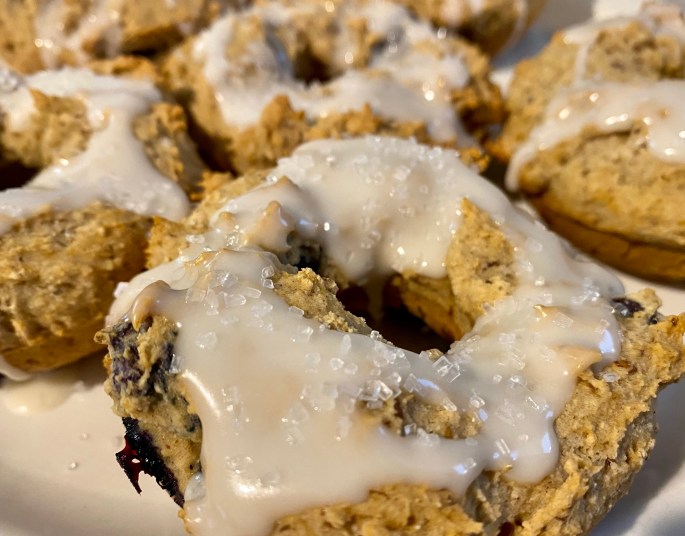
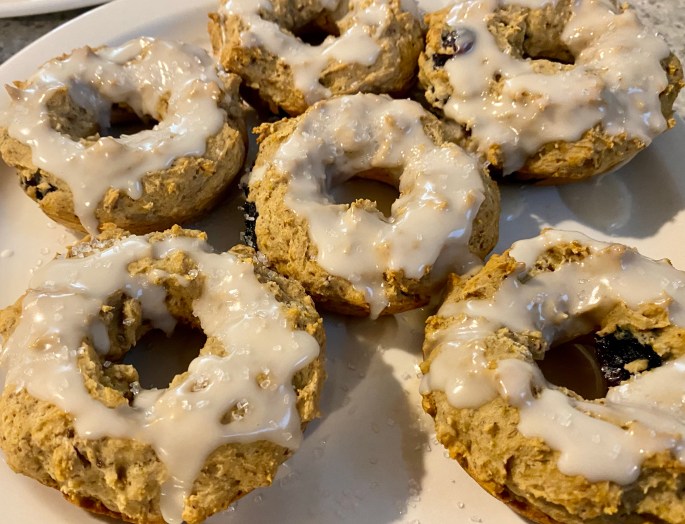
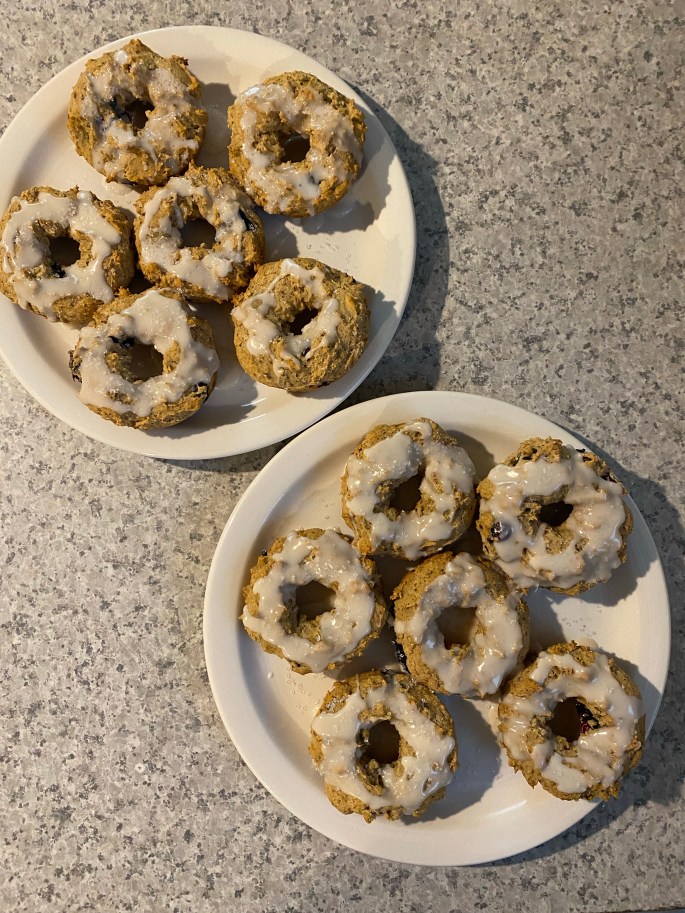
Blueberry Lemon-drop Donuts with gluten-free and vegan options

In all my work, I try to say ‘You may be given a load of sour lemons, why not try to make a dozen lemon meringue pies?'”–Maya Angelou

Photo by Tara Winstead on Pexels.com

One snow storm followed by another within the span of one week, and this snow was then followed by the coldest temperatures of the year.  It seems that old man winter has already tossed a few iced lemons our way in the month of January. I can’t help but wonder what frosted goodies he has in store for February!  Of course, there’s always the hope that January has dished up the worst that winter has to offer!  Hey, it could happen . . . 

Perhaps it was due to all of the snow, but I decided last week that if life was going to hand us lemons, I might as well make something out of those tart orbs of joy!  Picking up a lemon in my hand last week, it reminded me of sunshine on crisp winter snow.  I kept thinking of the way in which mid-morning winter sunlight slanted over trees that looked as if they had been dunked in a bag of confectioners sugar as decoration for the crystalized sugar frosted white hills.  Those frolicsome winter rays make me feel as lighthearted as that vibrantly colored lemon in my hand. 

Truthfully, I had already been researching the various ways in which I could bake gluten-free, plant-based donuts. Since my diagnosis of celiac disease over ten years ago, donuts are not something I necessarily crave, but every now and again, I think eating one would be a nice treat.  In fact, it wasn’t until last year during a visit to Lexington, KY, that I actually ate my first gluten-free (and surprisingly plant-based) donut since that diagnosis at Gluten-Free Miracles Bakery & Cafe.  Ever since enjoying the cakey-goodness of that treat, I have wanted to recreate it at home.

While I am dedicated to eating a whole-food plant based diet, with as little processed food as possible, I do believe in balance, and that includes occasional sweet treats–especially if I am the one controlling the ingredients.  That said, it is not my desire to determine how others should eat.  Everyone has to figure out what foods work best for their own unique bodies.  Therefore, when creating this recipe, I tried very hard to make it as inclusive as possible, so no matter the dietary preferences, this is a doable and fairly easy recipe.

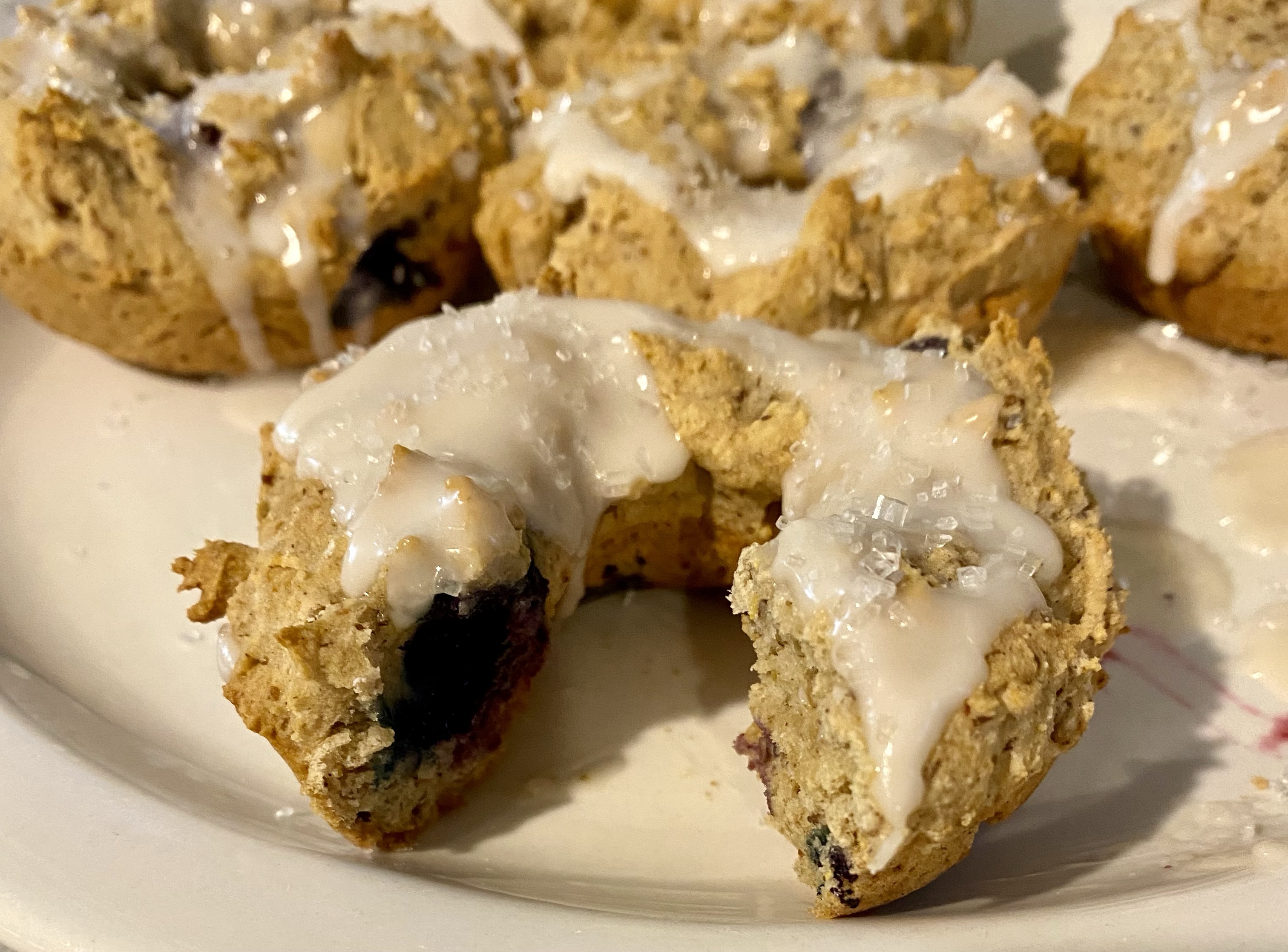
Moist and springy inside, bursting with blueberry goodness!

On a final note, my family (God bless them for being my ever-willing taste-testers.) found the limoncello to be overpowering in the glaze when it was first made; however, the taste mellowed within hours of mixing it.  In fact, they determined that they preferred the glaze a bit thicker with only a small amount of lemon juice (1 tablespoon or less) and no limoncello.  Additionally, in terms of flavor and texture, they preferred a light sprinkling of sparkling sugar over the glaze, but that is totally optional!

Regardless of how you choose to make this recipe, I sincerely hope that you do give it a try.  Whether you dunk one of these lemony rings in coffee, tea, or favorite milk, or if you choose to simply serve it warm, enjoying it bite by tangy, sweet bite, may this recipe brighten and warm your heart with a taste of baked sunshine on a chilly winter day. 


Blueberry Lemon-drop Donuts with Glaze 

(with gluten-free and vegan options)

Ingredients

*2 eggs or fleggs 

**1 ½ cup all purpose (gluten free) flour 

¾ cup oat flour

2 teaspoons baking powder

1 teaspoon baking soda

½ teaspoon salt

¾ teaspoon cinnamon

Zest of one lemon

1 tablespoon vinegar 

2 tablespoons lemon juice

2 teaspoons vanilla extract

¼ cup sugar

¼ cup maple syrup

½ cup milk

¼ cup applesauce (can substitute melted butter, melted vegan butter, or melted coconut oil)

⅓ cup fresh blueberries lightly dusted with (gluten free) flour of choice

Glaze

1 cup confectioners sugar

***1-2 tablespoon limoncello, lemon flavored vodka, or lemon juice–depending on desired strength of flavor

½ teaspoon vanilla extract

Pinch of salt

1-2  tablespoons favorite milk, if/as needed

Directions

If using “flegg,” mix together first and set aside as directed below

Zest lemon and set zest aside.

Preheat the oven to 375 degrees.

Prepare two 6-donut pans by coating with non-stick baking spray or other preferred method of “greasing”

Combine flours, baking powder, baking soda, salt, cinnamon, and lemon zest in a large bowl.

In a medium bowl, whisk together eggs (or fleggs) with vinegar,  vanilla extract, lemon juice, sugar, syrup, milk, and applesauce (or butter or oil).

Stir into dry ingredients until just combined.

Gently fold in blueberries.

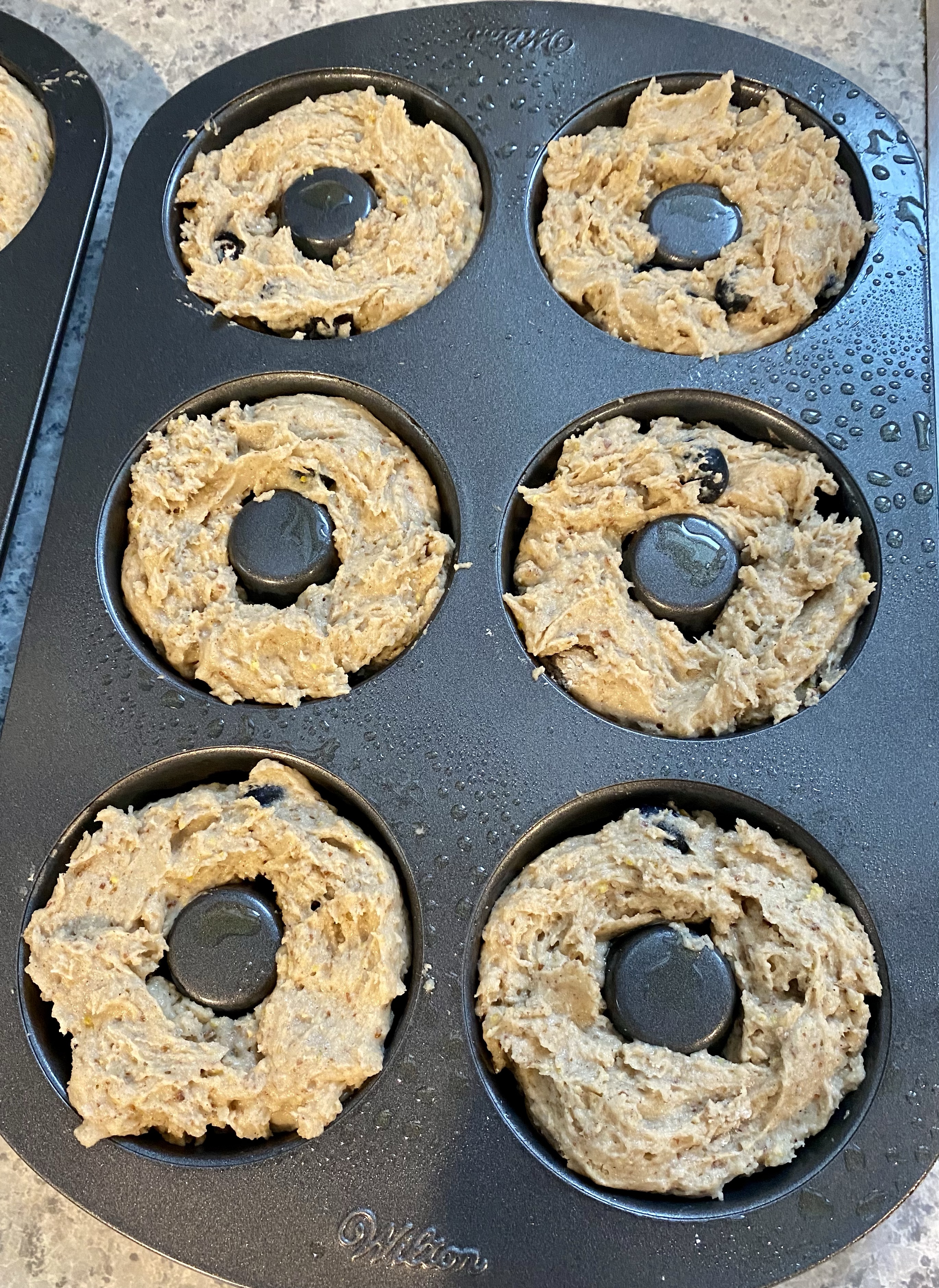
Divide batter evenly among donut pans.

Bake for 10-15 minutes or until a toothpick inserted comes out clean.

Allow to cool in the pan for 5 minutes before flipping onto the rack to cool 5-10 more minutes.

Meanwhile, using a fork, stir together glaze ingredients using less liquid at first until desired consistency is reached with the glaze looking white and thick, rather than translucent and thin. Drizzle glaze, as desired, over donuts.

Sprinkle tops of glazed donuts with lemon zest, colorful sprinkles, crystal sugar, or chocolate sprinkles, if desired.

Store in an airtight container in the refrigerator for up to one week.

Can freeze, unglazed donuts up to one month in an airtight container.

Recipe Notes:

*flegg = 2 tablespoons ground flaxseed with 5 tablespoons water, stir together gently, set in fridge 15 minutes 

**Can use all-purpose flour if gluten-free variation is not needed due to allergy/celiac disease

***If a vanilla glaze is preferred, eliminate the limoncello, lemon flavored vodka, or lemon juice, and increase amount of milk as needed to achieve desired pourable thickness 

Divide the batter evenly in two 6-donut pans.
When baking with blueberries, whether frozen or fresh, it helps to dust them with a bit of flour
Allow to cool in the pan for five minutes before cooling the rest of the way on racks. Then, glaze as desired!