A Lesson on the Power of Positivity

Lift up your two hands; remember one is for helping others while the other is for helping you.”–Israelmore Ayivor

“So, what do you do?”

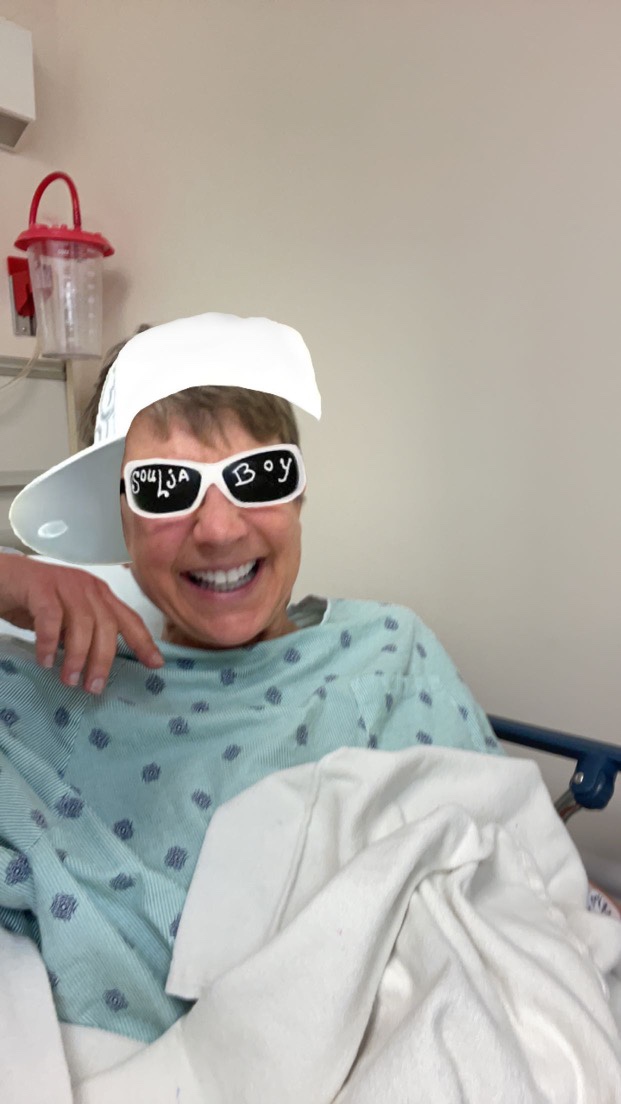
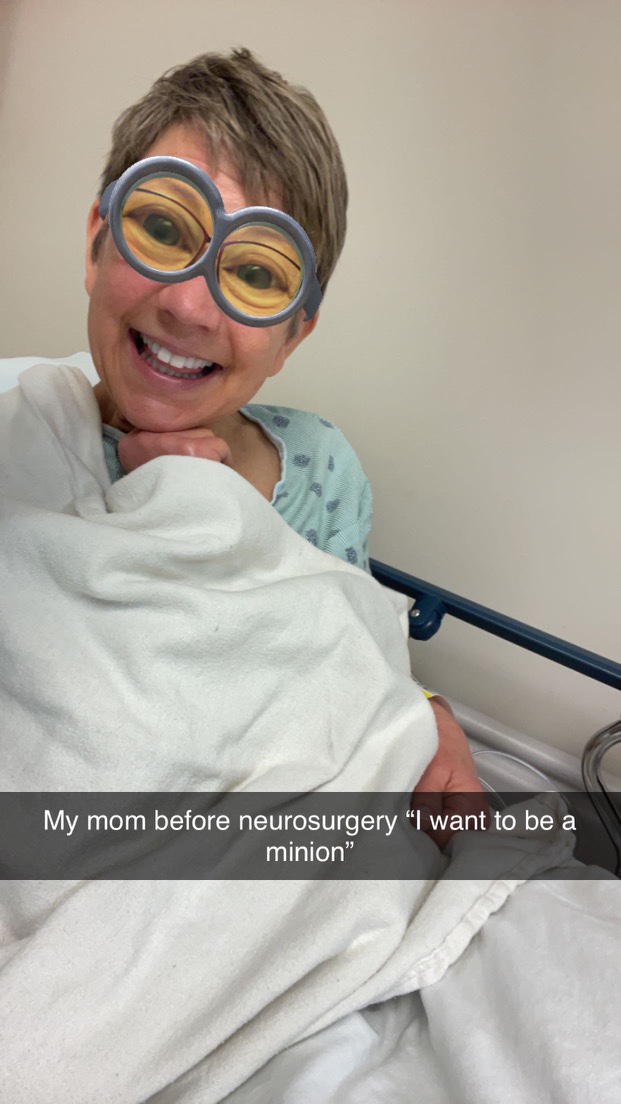
Her name was Pam.  I did not get her last name, but she was one of several nurses with whom I came into contact during my recent stay in a local hospital due to a surgical procedure.  Pam was a competent, no-nonsense, veteran nurse, and she was asking me this question on my second day when my thinking was a bit less clouded by anesthesia and pain meds. 

“I am a teacher, and I write,” was my simple response.

She asked several more polite questions regarding teaching while taking my vitals and dispensing meds; in turn, I asked about her work experience.  

Photo by RF._.studio on Pexels.com

Then, she asked what I wrote about it.  I tried to describe the various topics about which I most often wrote, and I ultimately summed it up by explaining that I tried to focus my writing on the positive topics, especially the ways in which readers can positively impact themselves and/or others.

My response really got her talking about the fact she believed there was too much negativity put out into the world.  Pam then invited John, my husband, and me to imagine what would happen if people would take time to say one nice thing to another person?  She went on to ask us to further envision those people, in turn, saying one nice thing to another person, and the way in which the chain of positivity would most likely continue.  

 Then, she looked at me and implored, “That’s what I want you to write about next.”

Photo by Binti Malu on Pexels.com

Pam made an excellent point. There is way too much negativity in the world, and I do not want to disappoint Pam.  That is because she, along with Jennifer, Natalie and Brittany took excellent care of me immediately following surgery.  However, Pam spent the longest amount of time with me over those two days, so this piece is written, not only in honor of Pam, but also in honor of all those who positively impacted my recovery.

 Based upon my interactions with Pam, her professional conduct exemplifies what she was preaching to me. Specifically, when Pam first took charge of my care, when I was transferred from the post-surgery area to a hospital room, she insisted that I walk from the stretcher to the bed in the room.  Of course, she guided and steadied me, as I was still strongly under the influence of anesthesia and pain meds, but her insistence established a positive tone for my recovery: the affirming belief that I could take ownership of my recovery.

Pam urged me to walk within the first 30 minutes of arriving on the floor.  Again, she steadied me.  When I asked how far I was supposed to go, she did not limit me.  In fact, she told me to choose my directions and go as far as I wanted to go within the confines of the floor.  Therefore, I felt compelled to go the full length of my boundaries, albeit ever-so-slowly and on wobbly legs initially.

Photo by Brett Jordan on Pexels.com

Those first walking efforts were then met with praise and encouragement.  Phrases like, “You’re doing great,” or “That’s good,,” buoyed my bruised spirit.  Furthermore, when I apologized for moving slowly, she kept encouraging me.  When I worried about being so unsteady, she instructed me to look straight ahead in the direction in which I was moving.  

Furthermore, Pam (and the rest of the nurses) insisted I do as much as I could on my own.  She did not hold onto me long, once my muscle memory of walking returned.  To be sure, her hands were at the ready each time I waivered a bit, but she always maintained a stance that facilitated as much independence as I could muster.  

Of course, I fully admit several of my memories are veiled under a haze of postoperative fog.  Nonetheless, the ones that remain, I believe, are stored there because of the positive efforts of nursing staff, family, and friends.  

In fact, several studies validate that the way in which a person reacts to specific events or situations determines, not only one’s ability to commit to memory what happened, but also affects one’s ability to recall that event/situation later.  What’s even more interesting is that memories of emotional events are more vivid and remain more accurate as time passes.

Photo by Anna Shvets on Pexels.com

This explains why, when I was first separated from John and my daughter and taken to a pre-operative area, I began to feel real tinges of fear.  I was left alone in a curtained off corner with operating staff moving all around while other patients were being wheeled by for surgery.  Furthermore, I did not have my glasses on, so my vision was not clear. Panic began to set in, and slow tears began to trickle out of my eyes. 

Two distinct and separate memories remain from that time-period.  First, there was a female who kept looking at me from across the room.  I have no idea her position, but suddenly she walked over to me with a small box of hospital-issued tissues.  I do not remember precisely what she said, but her voice was soothing, her eyes were kind, and her gentle pat with her gloved palm communicated understanding.

In contrast, several long moments later, the anesthesiologist arrived with a nonplussed look that quickly turned into a look of frustration when he heard that I had Raynaud’s disease, which could potentially affect the arterial line he needed to draw for the surgery.  While I knew it wasn’t my fault, as I had repeatedly shared this information throughout the numerous paperwork, somehow the information had missed him.  Immediately, my level of fear increased, not only because I irrationally felt he was angry with me, but also because my brain began to overthink about the two IVs, arterial line in my wrist, and a slew of other needles that would be involved during the procedure.

The unknown female in the pre-op room actions versus the aggrieved attitude of the anesthesiologist, perfectly illustrate Pam’s point.  If you spread negativity, even unintentionally, it lingers with others, and can potentially spread.  Likewise, when you offer others kindness, generosity, patience, and positivity it ripples out in waves across humanity; however, instead of stirring up little fires of fear, those positive qualities quell the fears and anxieties of troubled hearts, and perhaps, offer hope to those in need.

Thank you, for the exemplary reminder, Pam.  Wherever you are, may your day be filled with positive moments worth remembering in the same way I will remember you, and the rest of the nurses, who not only cared for me, but chose, and continue to choose, to positively impact lives.  Thank you.
Photo by alleksana on Pexels.com

Let’s Walk in Another’s Shoes

“Walk a little in my shoes; see what I see, hear what I hear, feel what I feel, then maybe you will understand why I am the way I am.”–Jerose

“If God sends us on strong paths, we are provided strong shoes.”–Corrie ten Boom

Photo by Artem Saranin on Pexels.com

Two emails found at the end of a full Saturday.  A day in which I tried to balance the needs of others and the mundane chores of life we all face.  The fading sunlight kissed the western sky with a melon-colored glow that felt warm on my neck as I completed the last little task for a dear one.  By the time I made it home, the dust remained in writable levels on all of my furniture, but I had managed to somehow be of small service to loved ones. After a quick shower, I started dinner.  It was already full-on dark, but I felt a good-kind of tiredness swathe me like a robe.  

In the kitchen, I scurried about like a mouse being chased by a cat throwing together a gluten-free pizza for myself, and salads for John, my husband, and me.  Our daughter was with friends for the evening, and John had already purchased a pizza for himself as he doesn’t require a gluten-free option.  Pouring myself a glass of golden wine, I sipped slowly as I relaxed in the rhythm and routine of the kitchen, my life-long source of comfort and creativity.   John would be back home soon, so could we eat, share conversation, and watch a bit of college football.  

An hour or so after dinner, John walked over to a neighbor’s house to visit with a couple of buddies.  I remained home, relaxing in the quiet.  What made me decide to do it, I don’t know, but I picked up my phone and began scrolling through emails.  I immediately began deleting all the junk and buy-me emails that so many companies send once they get your email address, and was about to close the app . . .

Photo by Torsten Dettlaff on Pexels.com

Wait, what? Who is this person?  Is this spam?  Hmmm . . .  Should I even click it open?  It seems real enough though.  Huh?  Oh my goodness!  Wow!

My heart began to race and pound as if I were running from a knife-wielding maniac in one of those B-level slasher movies. Instead, however, I was mentally attempting to run away from the words of an email sent by a person with a name that I did not recognize, but this person sure did seem to think he or she knew me.  While there was nothing life-threatening in the email, the unknown sender certainly meant for his or her words to cut, and I was definitely feeling the intended slashes.

Instead of closing the email app, I clicked over to my work email.  WHY????  Scrolling through, I began to make mental notes of things to complete tomorrow afternoon and delete spam.  That was when I ran across yet another negative note from a different person.  Why did I open my email?  Why didn’t I just leave the phone alone and focus solely on the book I had planned on reading or continue watching the football game?  Why did I pick up that blasted phone?

Immediately, I was reminded of a documentary that both a friend and my dad had recommended entitled, The Social Dilemma.  John and I had watched most of it.  While some of the acting and storyline felt a tad over-dramaticized, the gist of the documentary was not lost on us.  The internet, computers, and smartphones were all created, originally, to be used as tools–streamlining information, improving efficiency, easing communication, and so forth.  However, as competition and the market grew, the tech companies began to figure out ways to create consumer-driven platforms designed to be addictive, track behavior, and target ads/influence.   By picking up my phone without thinking and mindlessly scrolling through email, I had fallen prey to the attraction of the screen as this documentary pointed out. 

Ugh, I had allowed my phone to control me. There was positively no need to pick up the phone in order to relax.  Now, I was far from a relaxed mental state!  So, what did I do?  What any normal person would do, of course, reread both emails again!  After a second reading, the words of the emails still struck the same negative chord, and I thankfully decided it was time to put away the phone and focus my attention elsewhere.  

Photo by Pixabay on Pexels.com

In the wake of those two emails, I fell asleep that night pondering why people make assumptions, especially negative assumptions, about others?  Which then begged the question, why do I?  After all, I can’t be self-righteous and not include my own behavior.  As with so many big picture questions, I had to offer it up to Divine Providence and keep my heart and mind open to answer.  It came later in the form of a novel for youth. 

As I was reading a book my 6th grade students are currently reading, an elderly male character offers a long stick to a character who is a boy with severe anger issues.  The elder asks the boy to break off the left side of the stick, and the boy does this.  The man responds that the left side is still there, and he asks the boy to break it off.  

This is again repeated until the exasperated youth finally says, “This is stupid.  There will always be a left side.”  

The older man retorts, “There will always be a left and right side to life.”  The gentleman went on to explain that the young man will always have his anger and something for which to be angry, but likewise there will always be something for which to be happy or thankful.  The choice was his, focus on the left side or the right of the stick–the choice was his every day and every moment.

Photo by Pixabay on Pexels.com

Clearly, the writers of those letters were angry.  Both had made assumptions and implications about my life or my behavior that were viewed through their own personal lens without spending a day, much less a week, walking in my shoes.  Additionally, I had initially done the same thing–passing judgement on the senders of those emails.  

However, in the light of a new day, I chose to focus on the right side of the stick.  The first email, I decided not to answer because there was no sense in trying to defend my life and choices in a singular email to a person who doesn’t know me, much less live my life.  If the person needs to have someone with which to focus his or her anger, I can be that left side of the stick for this unknown reader.   I did, however, take time to respond thoughtfully and truthfully to the second, work-related email as I thought it was merely a misunderstanding. 

Bottom line, I don’t live in the shoes of the senders of the email.  I don’t know what life experiences have framed their thinking, much less what had happened within their life on the day they sent their emails.  Perhaps they were simply having a bad day and only able to see the left side of the stick when they chose to write to me.  I get it.  I’ve been there, and if I am to be fully honest, I have focused on the left side of the stick quite often in my own life.  

Photo by Lisa Fotios on Pexels.com

Just as screens have practically hardwired us to seek out their company with great frequency, humans also seem to be hardwired from an early age to seek out and focus on the negative.  It takes work, effort, and energy to focus on the positive, to feel gratitude, and to feel happy just as it takes focused choices to put down, or step away, from screens.

 I can’t always choose the path my shoes walk, as life is often full of curvy roads and unexpected hills and valleys, but I can choose to take care of my shoes, aka, my life, and regularly remind myself that there are, indeed, two sides to a stick.  Thus, when I find myself focusing on the fact I can’t break off one side of the stick, I can choose to redirect my thoughts to focus on the other side, trusting that, when others try to cloud my way, I’ll put my faith in the fact that the shoes God gave me will lead me to the light.

Photo by Nikolett Emmert on Pexels.com