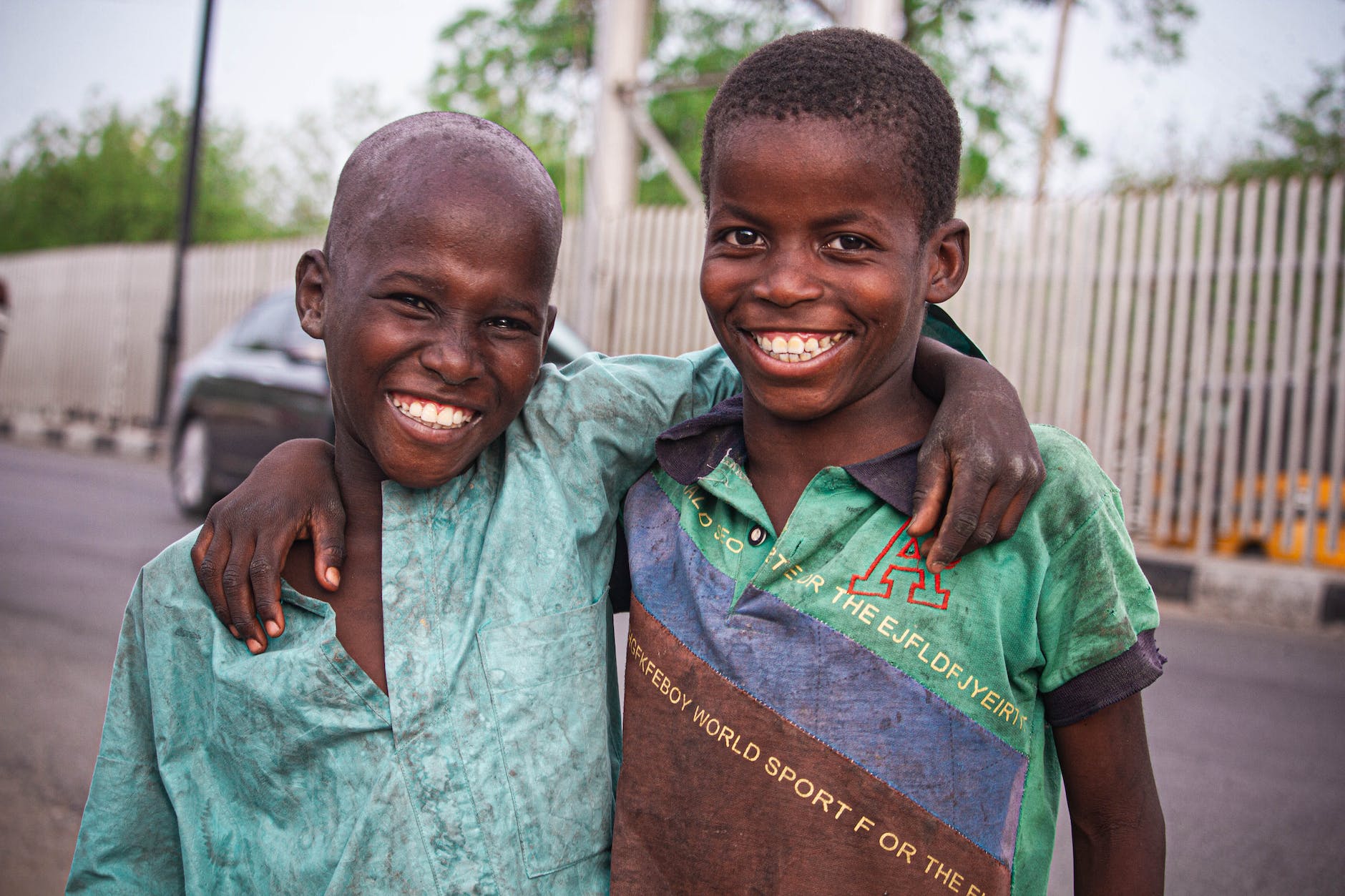
The Power of Smiling: Benefits for Health and Happiness

“If you see someone without a smile today, give ‘em yours.”–Dolly Parton

Photo by Adenir Figueiredo Carvalho on Pexels.com

How often do you smile? 😃

I recently came across a fact that stated children smile about 400 times per day . Whereas, most adults on average tend to smile anywhere from 20 times per day to, at the most, 50 times, depending upon their level of happiness for the day. That is a stark contrast!  

Whether you are grinning, beaming, twinkling, smiling from ear to ear, all smiles, or even offering a partial smile, when you look at another person, it tends to communicate a positive feeling.  Think about what happens when you see someone else smiling, especially a baby or toddler smiling–most of us typically smile in return!  I find even writing about seeing another person smile is instigating my own smile.

Photo by Teddy Joseph on Pexels.com

REasons we may not smile often 😒

In the words of the Joker, “Why so serious?” Why don’t we smile more often? What is it about adulting that doesn’t inspire us to smile more often?  According to a 2019 Psychology Today article, there are numerous adults who are simply not prone to smiling.  Reasons vary including: feeling shy or unsure of self; feeling self-conscious of own smile, especially if in need of dental work; believing it is silly or inappropriate to smile, especially those raised to not to smile frequently due to cultural or family mores; and, some don’t smile due to state of  their mental health. Furthermore, psychologists have also noted that when people have a smartphone in their hands, most of us are less likely to smile and engage because we are so focused on our phone screen. 

Photo by Mwabonje Ringa on Pexels.com

Benefits of smiling more 😁

Believe it or not, though, there are both physical and mental health benefits to smiling. First of all, dopamine, the feel-good chemical (neurotransmitter) in our brain, is released when we smile. Smiling also releases endorphins, a mild-pain reliever, and serotonin, an antidepressant that can reduce stress.  The more we smile, the more these neurotransmitters can work together to boost our overall sense of well-being, reduce our sense of pain, and increase our sense of positivity.

Smiling, along with laughter, causes our brain to also release neuropeptides which are small proteins found in the brain. These chemicals are known for staving off illness by initiating the body’s immune-system response to increase production of antibodies to fight off disease and illness. Along with warding off illness, there is evidence that smiling–and its cousin, laughter–can also help lower our blood pressure as well as heart rate.

Science still has more research to conduct regarding the specific benefits of smiling, according to the National Library of Medicine, but the studies consistently demonstrate that smiling produces a number of health-related benefits. Smiling more can foster a longer life by positively exerting influence over the immune system during times of acute stress or illness, improving recovery, and thereby reducing illness, or its duration, over time. Now, that’s worth smiling about!

Smiling also makes us appear more attractive and likable.  When we beam at another person, we are often considered courteous and trustworthy. In fact, shining those pearly whites also makes us appear more confident, successful, and knowledgeable.  Keep that in mind the next time you have an interview or have to give a presentation. 

Plus, smiling is contagious. When we smile at another person, it is hard for the other person not to smile back. To be sure, it doesn’t work on every person, but it can certainly go a long way to lightening the mood–even if it’s just our own.  So why not try smiling more? 

Photo by Kampus Production on Pexels.com

Practical, and not-so-practical, ways to increase those grins 😆

  • Practice smiling in the mirror: It sounds silly, but the more we practice smiling, the more confident we become at doing it. 
  • Try the smile challenge: One way to practice smiling more is to look up the different types of smiles.  Depending upon the source, most experts claim there are 18-19 types of identifiable smiles, but only six are for genuine happiness. Grab a friend and a mirror and see how many you can make. This is just silly enough to bring on some laughs and joy-filled smiles.
  • Waiting challenge: Stuck in a line at your favorite fast-casual dining or coffee shop?  Waiting in a doctor’s office? Waiting in any sort of line?  Instead of scrolling through your phone, try the smile challenge. See if you can maintain a gentle smile throughout the entirety of your wait, or see how many people you can make smile by smiling at them. 
  • Smile timers: Set reminders or post-it notes throughout the day to smile, especially for those time periods for which you know you most likely won’t feel like smiling. 
  • Create list(s), picture file, journal, or write positive post-it notes of things that naturally make you smile when you see/think about them. Purposely place them, so that you will encounter them throughout the day or week and be reminded to smile.
  • Daily smile challenge:  Challenge yourself to be the reason one (or more) person smiles today.  
  • Watch something funny: Whether choosing a social media/youtube reel/short, movies, comic strip, or other source jolliness, taking time to embrace humor is an immediate mood booster.

Photo by Craig Adderley on Pexels.com

unleash the power of your smile 😃

In the words of Buddy the Elf, from Elf, “I just like smiling.  Smiling’s my favorite.” And, now we know why. Smiling is a superpower, and it is not just for elves or children. Those grins are for all of us to enjoy in our everyday life. When we smile, our health, our well-being, and the well-being of those around us, benefits. So the next time you’re feeling down, frustrated, sick, or even angry, see if you can’t sneak in a smile or two.  Even if you don’t feel like it, the overall benefits seem to point to the fact that those few extra smiles might just be worth the effort. In the words of the late Jim Begg, “Before you put on that frown, make absolutely sure there are no smiles available.”

Through the eyes of a child

“Chin up, chin up. Everybody loves a happy face.’–E. B. White, Charlotte’s Web

“If in our daily life we can smile, if we can be peaceful and happy, not only we, but everyone will profit from it. This is the most basic kind of peace work.”–Thich Nhat Hanh

Landon and Grayson often greet me in the morning with bright-eyed smiles and plenty of discoveries about the morning.

One of the special joys in my life are the smiles of toddlers and young children at the school in which I work.  As an educator working on a school campus setting that provides care/education for children, ages 6-weeks through 12th grade in different buildings, I often see parents and other educators dropping off their children for daycare or preschool.  Some of the little ones are sleepy in the morning, others are crying, some are shy, and others walk in–or are carried in—with a smile on their face and a twinkle in their eye.  They jabber, babble, talk, or even sing with joy, depending upon their age/stage of development.  

I could be having a rough start to my day, but if I happen to walk through the campus parking lot alongside a staff member’s bright-eyed child, smile as wide as the sky itself, I can’t help but smile too.  Before long, the child has engaged me into a conversation, and all the previous negative energy of the morning fades.  I share in the delight of their discovery of a rock or a piece of mulch, and smile back enthusiastically when they show me their shoes, their mittens, or their hat.  They find happiness in the very things I tend to overlook or take for granted.

Then there are the babies–wrapped, swaddled, and layered into their parent’s arms.  Face peeking out over their caretaker’s shoulder, eyes blinking in the morning air.  Those large round orbs, of all shades, take me in, and then, as if I were a royal subject, reward me with a smile.  I can’t help but smile back.

Photo by Shanice McKenzie on Pexels.com

The babies, toddlers, and young children look at me and the scenario unfolding around them with fresh eyes and innate good cheer.  Eyes that are free from judgment.  Eyes that do see my age, my skin color, my size, or care about my socioeconomic status, religious/political affiliation, and so forth.  They only see me smiling back at them and hear my affirming voice.  

Possessing the ability to look at the world and others without motive is a powerful concept.  This is the lesson young children and babies teach, but because we are so busy, or our lives are so removed from young children, we miss the lesson.  Imagine, looking at each new day, event, person, even the great outdoors with fresh eyes.  What magic, what wonders, what friendly people do we miss because our brains have a tendency to be drawn to to-do lists, work, worries, irritations, conflicts, gossip, bad news, and so forth. 

However, children, until we teach them otherwise, are inherently open and accepting. They have no preconceptions about all the things we, as adults, begin to define, discern, and draw lines of division around.  A dog’s tail is a thing of wonder to a child.  Common dandelions are flower puffs to be plucked, sniffed, touched, and held as an object of fascination.  Birds are special creatures who fly and sing for their amusement. Time is of no consequence, and space is meant to be explored–be the space a sidewalk, yard, a floor, or even cabinets of a kitchen.

Miss Evalynn often greets me in the morning with bright, inquisitive eyes.

Of course, as adults, we cannot conduct ourselves exactly in the same manner as young children.  However, there are certain behaviors for which we can adopt and put into practice more often.  The first of which is smiling.  

The late Thich Nhat Hahn was once asked why someone should smile when they weren’t feeling happy.  He responded that smiling was a practice.  Hahn went on to explain that when we smile, we release tension from our face muscles which in turn releases body tension.  The less tension we have, the more we smile. And the more we smile, the more others notice, and in turn, they smile back, often initiating a chain event of others smiling too.  A smile, he explained, is “an ambassador of goodwill”.

The act of smiling is contagious, as Hahn pointed out, and a sincere smile has the potential to change the trajectory of a moment.  Imagine the power of one person smiling, which triggers another person to smile in response.  Then that person’s smile causes another person to smile, and so the chain continues.  This is the first lesson of young children.

Photo by Atsahyel Aaron on Pexels.com

Another lesson of young children is viewing the world and others with an open mind:  Looking widely, listening carefully, and taking in your surroundings without jumping to conclusions and immediately passing judgment.  Obviously, there are certain situations in which quick judgements/decisions are required; however, by remaining a calm, lucid, and observant presence, the more likely a pragmatic outcome can be achieved.  

Appreciation for the small things is another lesson provided by children.  When my own daughter was young, we would sometimes walk through the woods.  Her dad’s pant’s pockets would get weighed down from all of the “treasures” she would find along the way.  From sparkling rocks to a kaleidoscope of leaves–crimson, gold, and burnt orange, and from a discarded snail shell to a special stick perfect for digging, it was those little delights that added up to big pockets of joy!  The world continues to be full of small treasured moments that we too can collect along life’s path, if we view the world as a child. 

Photo by Ron Lach on Pexels.com

Finally, there is the lesson of the restorative power of laughter and the healing power of love.  One needs only to observe–or recall–the ease with which a child can transition from tears to laughter with the embrace of a trusted loved one, and then the way in which they can explode into laughter, when afterwards, an adult gives them a raspberry.  Laughter and love are also contagious, and as the children demonstrate to me on a regular basis, can be the salve to a world full of hurt and sorrow.

Therefore, I encourage you to try, if only for one day, or part of a day, to practice viewing the world with the eyes of a child.  Smile at others and even to yourself.  Observe events and others with openness and without motive.  Notice and gather the small blessings. Enjoy a good belly laugh, or five, and, like a child offering you a flower, offer love to others (think: generosity, gentleness, patience . . .), and see what happens.  Who knows how many lives/situations your child-like focus will affect . . . including your own!  

Photo by Darina Belonogova on Pexels.com