Embracing Darkness: The Lotus Flower’s Lesson of Hope and Resilience

“Most people are afraid of suffering. But suffering is a kind of mud to help the lotus flower of happiness grow.  There can be no lotus flower without mud.”–Thích Nhất Hạnh

FAcing Difficult Days 😟

How many of us have endured through difficult and murky situations?  How many more of us have observed/supported a loved one undergoing a dark and/or dire situation?  Whether it is personal suffering or suffering of a loved one, we have all either experienced or observed painfully dark days; I know I have. 

Sometimes the difficulty can create so much suffering, it feels as if a pack of wolves have hunted us down, snipped and yipped at our heels, and are now chewing away at our insides.  Sleep may no longer feel like an escape, and even if part of the difficulty causes physical pain, it is often the pain caused by our own minds and heart that can hurt the most. 

Photo by Pixabay on Pexels.com

Quotes to Get you Through 📝

There are a couple of quotes and an image I have come to appreciate over the years. They tend to come to mind when I feel knocked down by life. I think of them as a mental antidote for counteracting my fear when facing down a difficult situation.

Keep getting up no matter how many times you fall.

One quote is a Japanese proverb: “Fall down seven times, stand up eight.” This saying is hope-centric, and it means a great deal to me.  It serves as a reminder that no matter how many times we make a mistake or life events knock us down, we must still find a way to get back up.  This doesn’t mean it’s easy.  Sometimes, all we can do is claw, crawl, and clatter until we find the resolve and strength to stand once more.

Rise like the sun

Another inspiring quote by Maya Angelou: “Still I rise.”  While the author writes of her oppressive and challenging experiences as a black woman, the phrase’s universal theme of resilience in the face of struggles can speak to all of us. Those three words are filled with a bold defiance in the face of suffering.
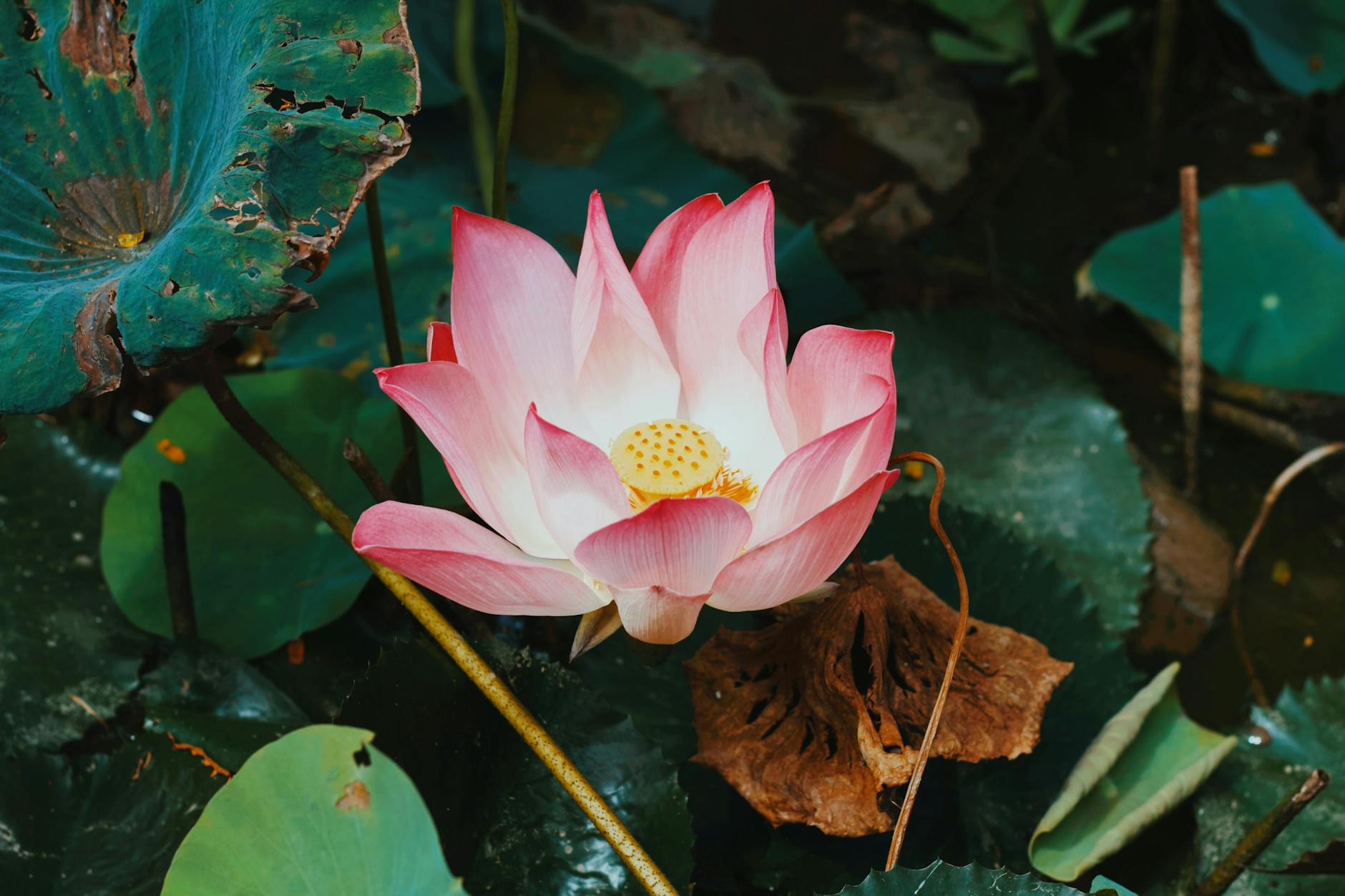
Photo by Celeste 2305 on Pexels.com

Lotus are Adaptable 🪷

Both of those quotes culminate in the symbol of the lotus, the ultimate emblem of perseverance and tenacity. This aquatic flowering plant has been admired and a part of lore for centuries.  The more colorful lotus are tropical in nature and are most notably found in Asian countries.  However, the lotus plant is quite adaptable, and an American variation can be found along the east coast in waters ranging from Ontario, Canada to Florida. 

Lotus Persist 🌱

Because the lotus plant grows in a variety of environments, it has developed a method of ensuring its continuation. Once pollinated, the lotus releases large quantities of seeds into the environment. Many of these seeds will be eaten by aquatic life; however, the seeds, as I understand it, are quite durable.  Some lotus’ seeds can get up to 1.5 inches in size, surviving for several years, long past the life of the flower.  In fact, the seeds can persist in conditions that would prevent many other types of seeds from germinating. 

Lotus Aren’t AFraid of The Dark 🌑

Once germinated, the seeds begin sprouting in the mud, sending roots down even deeper into the muck.  Depending upon the plant and the depth of water, it can take from two weeks to two months for the plant to grow up to six feet tall through the murky water. As the round leaves reach the top of the water they can fan out in width up to 36+ inches wide. Once the plant has fully surfaced, the flower will begin to grow and ultimately bloom. 

Short life, Deeply rooted 🙏

Each American Lotus flower, with its butter yellow petals and fragrant aroma, will only last a few days, opening its petals during the day and closing the petals at night. The blossom appears to be free floating, but it remains rooted in the mud. During its short duration, the flower will bear seed pods that resemble the end of a watering can or shower head, ensuring multiple seeds from each flower will be dispersed back into its environment.

Lotuses ShaRe 🫱 🫲

Both the seeds and roots can be eaten, and parts of the plant can be used for medicinal purposes. Seeds pods can be dried and used in flower arrangement.  Additionally, due to the fact that lotus flourish easily in a variety of areas, even in the murkiest of waters, these plants provide shelter, habitat, and food for a variety of aquatic wildlife.  Each fall, however, the plants die away.

Gifts can arise from dark places

Therefore, the lotus is a prime example of the way in which gifts can rise from the darkest of places. Despite the fact the lotus is born in the mud, it rises to stand victoriously every spring.  Upon rising, its blossoms bear seeds to ensure it has a way to stand back up.

Seeds of hope, help, and healing

Beyond the fact the lotus has planned for its inevitable fall, it also offers seeds of hope and nourishment for others. Each flower produces an overabundance of seeds, many of which will settle into the mud for rebirth, but many more of those seeds will provide food for other living creatures. Additionally, those mud-buried lotus roots also provide nourishment not only to the plant itself, but can also nourish others.  Not to mention that the plant has medicinal qualities, offers shelter to others within its aquatic community, and beautifies a variety of environments.
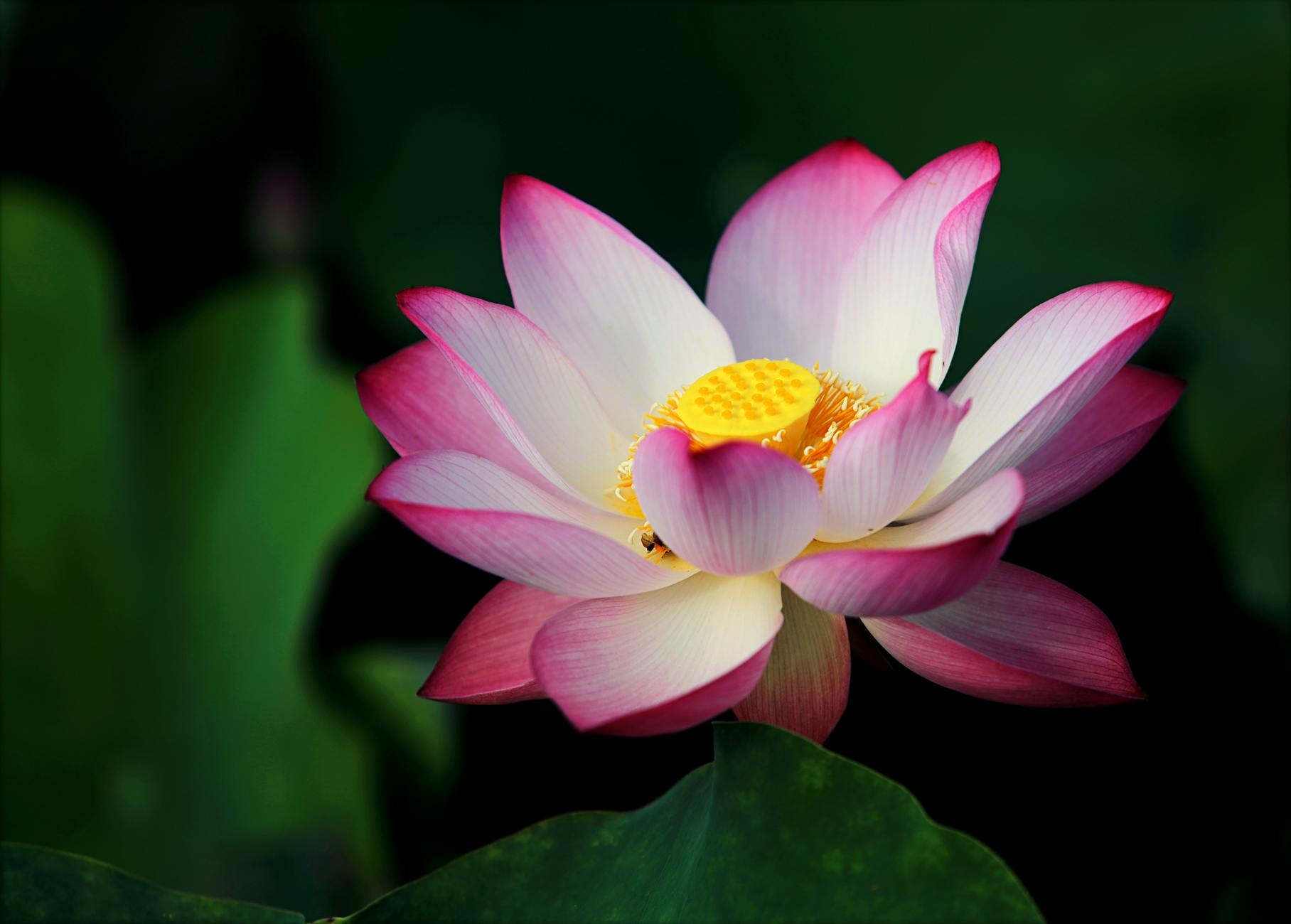
Photo by Hiu1ebfu Hou00e0ng on Pexels.com

Lotus Life 𑁍

Let us live like the lotus flower. When we experience those dark and difficult times in our life, let us root down into the loam of our soul and allow faith to germinate a seed of hope. By rooting through the muck and into the nourishment of our faith, we can rise. It may take weeks, months, or even years, but we can rise and blossom once more.

Once on the surface, it is our job to produce good seeds of hope and help for others.  Even if our calm waters fade away and we find ourselves sinking into the inky dark once more, still we can rise.  We have done it before; we can do it again.  And with each new revival, our blooms can continue to offer more gifts to the world.  No matter how darkly rooted our past or present was/is, no matter the number of times it occurs, we can stand up, we can rise, we can bloom, and we can embody the lotus, offering shelter, nourishment, and healing hope to others. 
No Longer At Ease

“I had seen birth and death, 

But had thought they were different; this Brith was 

Hard and bitter agony for us, like Death, our death.  

We returned to our places, these kingdoms, 

but no longer at ease here in the old dispensation . . .”–T. S. Eliot

Photo by Johannes Plenio on Pexels.com

During the early fall months of 2020, I decided to try growing my own vegetable sprouts.  Using a sprout kit, I placed the seeds on a prepared cloth in a tray, gently watered them, covered them loosely, closed them inside a drawer, and dubiously left the container in the dark.  48 hours later, to my great astonishment, nearly a hundred tiny green seedlings, like hairs on a newborn head, were sprouting across the bottom of the tray. 

What makes night within us may leave stars.”–Victor Hugo

As a child, I was prone to vividly bad dreams.  Those early years were filled with twice weekly sermons delivered by an impassioned country preacher who warned his flock of the wailing-and-gnashing-of-teeth in hell if one remained a sinner.  Additionally, this same fervent minister also sprinkled regular doses of sermons that focused on an impending rapture.  As an impressionable child, I inferred that if I wasn’t a good girl, free of all sin, I was either doomed to the fiery eternity of hell, or my parents might get called to heaven, via the rapture, without me.  Therefore, if I went to bed having committed the slightest of sins–and I was indeed a precocious child–it wasn’t unusual for one of two things to occur.  I would either have terrorizing dreams of a flaming hell filled with snakes (My child’s mind added those.) that woke me in a sheer fright, or I would startle awake (not necessarily from a dream) to the silence and shadows of the dark, certain the rapture had taken place, my parents and siblings were gone, and I had been left on earth to suffer the numerous plagues with all of the other sinners.

It is not that I didn’t have the same fears during the daylight; however, my focus tended to be occupied with childhood activities: play, reading, school, and even invented stories that typically began with, “And so she . . . ”.  Even when I committed minor infractions, as I often did, and “got into trouble,” my child’s mind was not near as apprehensive during the waking hours as it was at night.  The dark, as a youngster, was rife with foreboding and frightening images as all my wrongs seemed to be made more plain–Satan was out to get me in the thick of the night, and God’s love was nowhere to be found.

Photo by Andre Moura on Pexels.com

It was on these nights, I would often call out to my mom. 

“Mommy, I had a bad dream.”

I might repeat it several times before she heard. 

“Roll over on your other side,” she would groggily declare.

As a mom, I recognize the plight of a young mother who needs sleep.  If you can get the kid to self-soothe and go back to sleep without having to get up, that is a win.  Plus, the genius is, whether my mom purposefully knew this or not, she gave me an action to solve the problem. 

In that moment, I was “no longer at ease” in my little bed after my nightmare.  Mom did not deny that I had had a bad dream, nor did she dismiss that I was upset.  Instead, she instructed me to roll over, go with the flow, and return to the river of sleep. By following her directive, though my troubling dream still lingered, as smoke lingers in a room long after the smoker has exited, and my heart still pounded, my mind began to shift with the action of turning over. Sleep still did not come easily, even “on the other side,”  but I rode out the night anyway.  Soon enough, one of my parents would be waking me in the morning, and I would rouse from sleep surprised that I had, indeed, returned to the ebb and flow of sleep.

Photo by Olha Ruskykh on Pexels.com

“Do everything with a mind that has let go,”–John Chan

Throughout most of 2020, and lingering still in 2021, our world is enveloped in the shadow of COVID.  It is a night terror, of sorts, from which, as a civilization, we have not yet been able to escape. We have suffered deaths beyond comprehension, and our way of living is no longer at ease.  There is no denying that we are living during dark times.

Due to my early childhood experience with hellfire and brimstone sermons, as an adult I find comfort in liturgical based Christian denominations, as well as other faiths, that focus on God’s love and light.  I embrace the image of an ever-present, ever-loving God that offers brightness and clarity; and, through the vehicles of prayer, meditation, and a devoted life,  Divine Providence will illuminate THE WAY for each of us.  

Photo by eberhard grossgasteiger on Pexels.com

“The LORD spoke these commandments in a loud voice to your whole assembly out of the fire, the cloud, and the deep darkness on the mountain . . .”–Deuteronomy 5:22 

However, despite the fears fostered by the sincere believing, well-meaning pastor, this church, nonetheless, instilled within me many wonderful concepts, that to this day, I still honor. Sunday School and Junior Church, as it was called, offered me wonderful Bible stories full of life-long lessons and church history. One such story was the narrative of Moses trekking up a dark and ominous storm-swathed mountain in order to attain Ten Commandments. In fact, as those long ago flannelgraph images presented, God came to Moses, “out of the fire, the cloud, and the deep darkness on the mountain,” in order to give Moses and his people rules for living a faithful life.  

We are in the darkness much in the same way Moses had to brave the darkness on his faith-walk up the menacing mountainside. However, as the story of the Ten Commandments reminds us, dwelling in the dark does not mean God is not with us, nor does it mean that nothing good can come of the dark.  Seeds burst forth in the darkness of soil.  Infants grow in the darkness of the womb.  Our body heals, repairs, and builds up its immune system in the darkness of sleep. Stars are only illuminated in the darkness of night.

To be certain, in Eliot’s words, we are “no longer at ease in the old dispensations.” However, let us remember that while God is present in the light, God also dwells in the darkness. Like Moses and his people, and like the journey of the Magi of which Eliot eloquently described in his famous poem, we must be willing to travel in the dark, release our grasp on the past, and die to its previous ways. We must allow our proverbial kayaks to float with the current of life’s river, instead of attempting to paddle against it. This new way of living may even require us to, “roll to the other side.”  Nonetheless, like my seedlings in the dark of the drawer, Divine Providence is present in the darkest of times birthing new life.

Photo by Jacob Colvin on Pexels.com