Use the RAINDROP technique to weather life’s emotional storms

“Peace is this moment without thinking that it should be some other way, that you should feel some other thing, that your life should unfold according to your plans.”–Dorothy Hunt

Several months ago, during the fall of the year, I was walking on a local, circular path.  Suddenly, I heard the loud rev of an engine.  VROOM!  I saw a large SUV type vehicle, careening, plowing, and then swerving off the road, straight towards the path over which I walked.   

My heart began to race, and my thoughts quickened, trying to process what I was witnessing.  The SUV drove along the slope that forms a ditch line surrounding the path.  KREECH! The sound of metal collapsing was ear-splitting as the vehicle crashed into a heavily staked, metal line, thick and entwined like a rope, that supported a power line pole.  Fear raced through my veins as I ran towards the vehicle to see if the person inside was ok while grabbing my phone to call 911.

Photo by Mike B on Pexels.com

I find this event to be an excellent illustration of what it means to witness.  I was the bystander.  My senses heard, saw, and even felt this scene as it unfolded in a surreal manner.  This same skill of witnessing as a bystander is a tool we can use to help navigate difficult emotions/feelings when they come crashing into our life path.  And, let’s be honest, difficult emotions can be a regular occurrence at all stages of life.

From anxiety to depression to life event stressors and work stressors, I daresay none of us are immune to challenging emotions such as anger, insecurity, sadness, fear, and numerous other less-than-kind emotions.  This is where tapping into the bystander part of the brain can help us navigate through the mental storm clouds with a technique called RAIN and its counterpart DROP, acronyms first coined by Michele McDonald, a mindfulness teacher.

Photo by Ron Lach on Pexels.com

There are times when we may not initially recognize that our emotions/feelings are impacting our thinking, but with a bit of practice, we can begin to recognize that they are.  Actions such as, lack of focus/feeling distracted; binge eating/drinking/scrolling/watching; avoidance/procrastination, and so forth can be indicators that something is awry.  Even seemingly positive actions can be a side effect of not-so-great feelings trying to bubble to the surface, such as busyness; continuously working; over-exercising; frequent napping, and so on.

This is when the RAIN technique can be effective.  RAIN gently asks us to become a bystander in our minds to determine what we are feeling or perhaps trying to avoid feeling.  Then, it takes us through a process of reflection to bring us to a point of compassionate self-awareness.  Like all techniques, however, it takes practice, and it is not a one-stop-fix-all solution. However, it can be one more tool in life’s toolkit for managing difficulties and suffering.

Here are the steps, based upon my interpretation and personal application of the technique. However, it is worth noting that there are numerous free apps, videos, books, and websites that offer guided versions of this technique that can be quite helpful, especially in the beginning.

Recognize what is going on and name it. “I’m feeling angry, hurt, lonely, sad . . . .”  Then you might also notice if you’re judging those feelings or feeling guilty for having the feelings in the first place.

Acknowledge and Allow. Once you’ve named it, begin to witness your feelings as a bystander would at the scene of an accident. If thoughts pop up that tell you that “shouldn’t feel this way,” gently tell yourself that it is ok to have this feeling.  

Investigate your emotion/feeling with curiosity and interest minus judgment or blaming self or others. What are you feeling and where are you feeling? Similarly to the way I experienced the accident–first in my heart, next in my mind, and finally in my body–where in your body do you feel this emotion? How is it affecting you?  Do you want to cry, eat, move, hide, nap, and so on?

Natural Awareness, Non-identification and Nurture.  This is where you can tell yourself that just because you feel it, doesn’t mean it defines who you are.  Instead, use this as a lesson for how ________ (name the emotion) feels like, similar to the way you feel symptoms of a cold, the flu and so on. Then, take time to offer yourself compassion just as you do when experiencing a cold or flu. You could even place a hand on your heart center or gently pat your cheek as an act of self-compassion.

Contrastly, each stage (letter) of DROP to a corresponding, often knee-jerk, reaction to each step (letter) of the RAIN process.  It creates a greater understanding of those monkey mind tendencies that want to interrupt or impede the RAIN process in order to confuse the bystander role of our brain. 

Distraction and Delusion. Our brains would often rather distract or delude us from the truth of the matter instead of allowing us to recognize and name what we are really experiencing. 

Resistance. Sometimes, this means, we have to push past our mind’s initial resistance in order to allow and accept the emotion we are experiencing.

Obliviousness. When you take time to honestly investigate a so-called negative feeling, you are overcoming the self-obliviousness, the “I lie to myself all the time, but I never believe me” habit, so many of us unwittingly practice.

Personalization. Your feelings do not have to be the narrative of your life.  You might feel angry, but it doesn’t mean you’re an angry person. You might cry when you feel insecure, but it doesn’t mean you’re unworthy.  In other words, don’t make the emotion/feeling personal, it just is.

Raindrops are going to come and go in life, and some time periods are cloudier than others. There are times when it seems those rain-filled clouds will not leave.  And so it can be with our emotions.  We cannot always control the stormy feelings and thoughts that we encounter throughout life’s ups and downs, but we can choose to change our relationship to them. With the RAIN practice, we can tap into our brain’s ability to witness the impending storm clouds and offer ourselves an umbrella of self-compassion and understanding to help us weather the storms of life with a greater sense of resilient grace.  

Rain and Umbrella by Fu00e9lix Hilaire Buhot (French, 1847u20131898) is licensed under CC-CC0 1.0

Anxiety Awareness

“Anxiety is a thin stream of fear trickling through the mind.  If encouraged, it cuts a channel into which all other thoughts are drained.”–Arthur Somers Roche

Our anxiety does not come from thinking about the future, but from wanting to control it.”– Kahlil Gibran

When I was in fourth grade, I had the privilege of traveling with my grandparents and a cousin. We had taken a train to Washington DC, and I have a dream like remembrance of riding in a taxi transporting us towards an airport from the train station.  It was the first time I had ever traveled in major city traffic.  We were propelled with what seemed like great velocity through busy traffic, zigging and zagging in and out of traffic, bright lights of oncoming and passing vehicles playing tag in the dark of an evening.  

The route took us through a menacing tunnel with blazing lights for the evening rush hour.  This was my first experience in such a claustrophobic, wreck-inducing, our-lives-were-about-to-end, multi-lane, city tunnel. We were hurtling through a tube of neon lights, clamorous noises, and untold dangers surrounded and threatened our yellow tin can.  My heart was racing; I felt simultaneously scared and angry.  

Photo by Alex Powell on Pexels.com

Danger! Danger!  We. Were. Out. of. Control.  We were going to die in a fiery collision of metal upon metal.

Like projectile shot from a military caliber cannon, we emerged unscathed from the tunnel, and signs indicated the airport was near.  That was when I saw the vwoop, vwoop, vwoop of the rotating light of the airport beacon.  That circling source of luminescence became the focus of my vision, my heart rate began to slow, and my rate of respiration resumed to more normal levels.  Safety was within sight.  I was calm again–although my poor Grandmother, I am quite certain, based upon her wide-eyes and ever-rubbing hands, was not. 

Photo by Vojtech Okenka on Pexels.com

As I think back on that experience, I can’t help but wonder what it would be like to feel that way ALL of the time.  In fact, I am told that feeling is quite similar to how someone with an anxiety disorder feels daily. In fact, generalized anxiety disorder, and its fraternal twin, depression, and the other siblings in this family of mental anguish including: panic disorder, social anxiety disorder, specific phobias, stress, obsessive-compulsive disorder, post-traumatic stress disorder, major depressive disorder, persistent depressive disorder, and their cousins of related illnesses often manifested and/or co-occurring with these disabling siblings, affect more than 40 million adults in the US alone.  Without including the population 18 years or younger, these illnesses affect 18.1% of the population– and that statistic was determined before COVID.  Sadly, it is estimated that nearly 80% of those affected by GAD, or other related disorder(s), do not seek professional help.

Like my first recollection of anxiety, it is perfectly normal to experience bouts of situational anxiety from time-to-time. However, it is when symptoms are persistent and pervasive, affecting day-to-day life, that anxiety can become a significant issue.  Unfortunately, because anxiety can express itself in numerous ways, many people may not realize that they are experiencing chronic anxiety.  Researching and preparing for this column, I soon discovered that I had very little understanding of this frequently occurring mental health issue.

Photo by Elina Krima on Pexels.com

While I did know there was a genetic component to anxiety, I did not realize that anxiety was twice as likely to occur in women than men.  Additionally, I understood that there was a relationship between anxiety and depression; however, I did not realize anxiety can cause memory problems and issues with anger.  Furthermore, I realized years ago that anxiety can cause physical symptoms, but I did not fully understand the way anxiety can increase one’s risk for health complications.  I also learned that those experiencing anxiety as adults, often begin experiencing this suffering in their childhood, and it is often misdiagnosed and treated as ADHD.

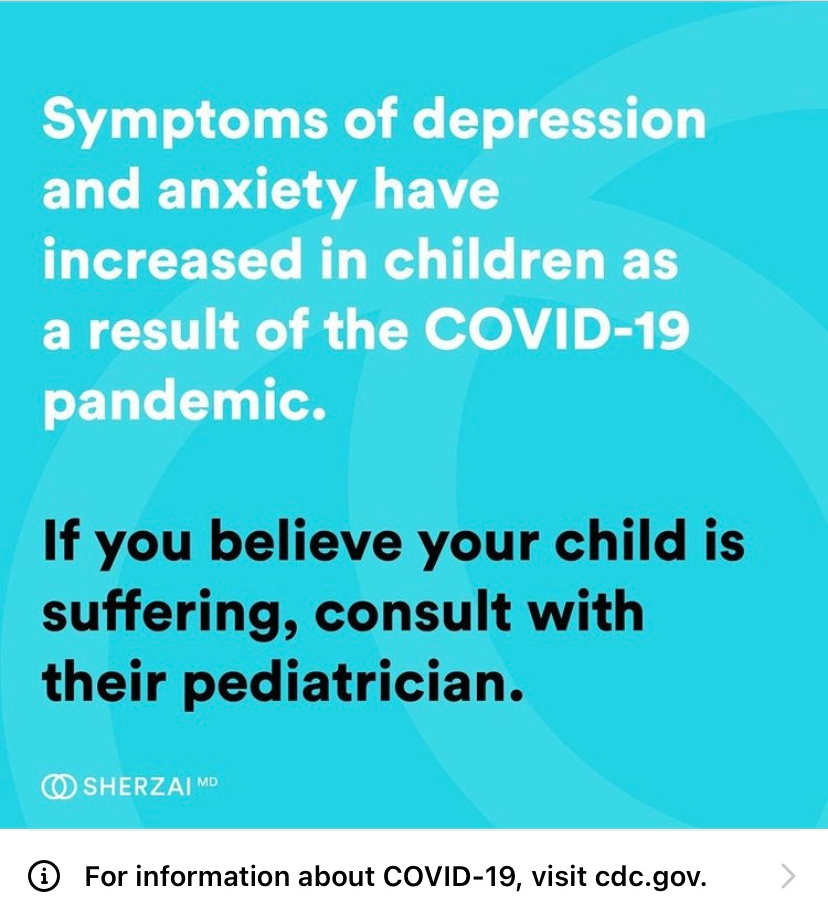
As an educator, I have anecdotally observed a rise in anxiety-related issues in students.  This fact bears out statistically according to the CDC which notes that a rise in anxiety, and related disorders, began to be observed between the years of 2007 to 2012. Additionally, according to the American Psychological Association in an article published in 2019, there was a significant rise in anxiety disorders among young adults during the decade between 2010 and 2020, well before the pandemic.

Numerous factors have been attributed to cause this increase of mental distress, including the rise of social media; however, the purpose of this writing is not to point a finger at sources.  Additionally, I am not trying to parade as an expert on the subject, because I am most certainly not.  Instead, I humbly write as someone who now realizes that not only have I experienced very real bouts of anxiety, but I have also witnessed countless others suffer from anxiety, and all of its variants, especially over the past few years. I hope my few words can shine a light on what can be done to help, support, and understand the very real anguish anxiety creates.

Photo by KEHN HERMANO on Pexels.com

One tip I repeatedly read is the importance of remaining calm, accepting, and patient with those experiencing anxiety with applying pressure to “get over it.”  Do not dismiss their fears with logic or rational arguments as this can feel belittling. This is especially important for those in the midst of a panic attack.  Additionally, listen openly without judgement and without offering advice, but instead ask if there is something that you can do.

If a friend or loved one is experiencing a panic attack, no matter how upsetting it is to witness, remain a calm presence.  Let the person know you are there.  Remind him or her to breathe deeply and slowly.  Stay with the person until they are calm; and again, it is okay to ask what she or he needs.  They may not need anything, but by simply asking the question, allows the person to know you care and encourages him or her to focus on the question rather than the sensations coursing through their body.  For some people, it may help to ask them to name one thing they can feel, see, hear, taste, and smell.  Panic attacks, however, are not the time for preaching, setting ultimatums, or any other perceived negative or judgmental behaviors.

Photo by Meru Bi on Pexels.com

Try to understand.  Read as much as you can on the subject.  Ask questions regarding what you can do to better help and/or support them, especially if they are prone to panic attacks.  Simply having a plan in place can offer assurance to both you and the person for whom you are supporting.

Additionally, encourage your friend or loved one to seek professional help.  Be willing to call and schedule the first appointment for them.  You may even need to help them figure out what to say to the doctor or therapist. Offer to drive and/or go with them to appointments in a show of support.  Be willing to attend therapy sessions with them to learn what you can do to help.  Group support, acupuncture, mindfulness techniques, cognitive behavioral therapy, and so forth, may also be helpful for the person experiencing anxiety.  Likewise, medications may be useful in order to better manage it. 

In the end, anxiety is not a simple matter of stress.  It is a very real mental disorder that affects millions of people daily, making even the most seemingly simple task a stress-inducing event.  Anxiety can be manifested in a wide variety of ways; and therefore, there is no one-size-fits-all form of treatment.  However, all expressions of anxiety require both personal and professional support.  If you, or a loved one, are experiencing symptoms of anxiety, know that you are not alone.  Help is available, and it is typically either a phone call or a click away.

As seen on Instagram on sherzaimd