Three Pauses: On breath, attention, and the quiet work of returning to ourselves

Almost everything will work again if you unplug it for a few minutes… including you.”–Anne Lamott

A Reminder to Pause

I was driving to work this past Monday after an extended break, thinking about my to-do list for the day, when an alarm on my phone began a soothing piano melody. Bringing my car to a rolling stop as I fell in line with traffic at a stop sign, I tapped the alarm off. I wanted to ignore it. Instead, I reminded myself this would help me complete those “to-do” lists with a more calm mind, so I paused my thinking and took three slow, deep breaths–the first of the day.

How a Friend Planted the Idea

This practice of setting a gentle sounding alarm as a reminder to take three deep breaths was a serendipitous seed of an idea that a friend unintentionally planted within me. We met for lunch one day, well before I returned to school from winter break. During the course of a deep conversation, her phone alarm accidentally went off. Surprised that it was going off, she quickly turned off the alarm and then–seemingly on a whim–said “Let’s take three deep breaths.” She shut her eyes and began inhaling, so I followed suit. Our conversation resumed afterwards and nothing more was said.

Turning an Accidental Moment into a Daily Practice

However, on the way home, I reflected upon how much better I felt after we took those three deep breaths. I further examined a few of the benefits that I knew regarding deep breathing. What would happen, I wondered, if I took time more often to take three deep breaths daily like I did with my friend? As I reflected over my typical work week and subsequent weekend, I identified three common times of the day, whether at work or not, in which pausing for three deep breaths would be beneficial. 

I realized that I would never remember to take time to do that without a reminder, which meant setting an alarm. Not any ol’ alarm sound would do.  Once home, I took a few moments, played around with various tones. My intention was to make the alarm sound invitational, not demanding. I knew if it felt like a chore, I would feel more resistant. Plus, the reality was I knew I wouldn’t be “perfect,” especially in the beginning and given the unpredictabilities that can occur on any given day.

Three Breaths, Three Times a Day

When the piano melody alarm now subtly tinkles, I pause what I am doing, close my eyes (if alone or not driving), and take three deep, expansive belly breaths. The alarms are set to ring before the arrival of students, during lunch, and at the end of the day, right after students leave. On the weekends, when I am busy with household chores and errands, the times still work well. 

Creating a Practice That Feels Gentle, Not Demanding

If I am alone, and not driving, I sometimes place one hand on my low belly and another hand on my heart. The hand placement reminds me to initiate the breath from my diaphragm and allow the air to expand the belly, then expand the ribs fully, and allow the inhale all the way up into the heart space. 

Other times, especially if I feel stressed or worried I place both hands on my heart in a gesture of self-care. Most of the time, however, I am not alone, given the nature of my job, but I can still pause and take three deep breaths without drawing any attention to myself. 

What Happens in the Body When We Breathe Deeply

Our bodies are miraculously created. They are designed, when properly cared for, to function like a high-performance team–each system working synergistically with other systems for the ultimate benefit of the whole. Pausing to take three deep breaths is my way of working with my body. The body responds by lowering the heart rate, decreasing blood pressure, and increasing a sense of calm. The body already knows how to do this. Taking deep breaths cooperates with the body’s natural process and simply allows it to intentionally happen.

When the Mind Begins to Follow the Breath

Our minds naturally follow the breath. If our breathing is short, shallow, or choppy, our mind readies itself for a stress-inducing event. Consistently setting aside time throughout the day to breathe in a relaxed, calm manner, even for a couple of minutes, incrementally creates a shift in our mind. While I wouldn’t say my practice has been transformative, per se, I would say that there are days my stress and anxiety are decreased, other days I notice a bit more mental clarity and focus, and other times I feel a subtle, but real, shift in my energy and vitality. While I cannot say I have eliminated all of the negative thoughts in mind, I am noticing that I am better able to handle my emotional response to a difficult moment with a bit more grace.

A Quiet Conversation Within

Another benefit I have observed is sometimes when I pause, I feel a connection to the “still, small voice within,” that source of wisdom that hovers beneath all of the distractions and noise. It is as if, for the briefest of moments during my busy day, my body, mind, and heart are at peace. I momentarily feel an overall sense of gratitude, a reminder of the positives in my life, despite those negatives that remain. There’s also a sense of connection to other hearts and souls moving in, around, and throughout my day. All told, it provides me with an overall feeling of solace.

Why Three Times a Day Matters

One thing I did not realize before starting this small practice is that by setting aside three times per day to take three deep breaths, it harnesses the power of the “rule of three.” The “rule of three”, I learned by happenstance a few days into my practice while I was listening to a podcast. This rule employs the principles of habit formation to increase focus, productivity, and well-being. The frequency of three breaths, three times per day is enough to establish the habit without it feeling overwhelming, which, lucky for me, is an important consideration. 

Imperfect Practice, Faithful Returning

Are there times I don’t heed the timer? There certainly are. I am not perfect, and I am not pretending it is easy to create a new habit. But I do continue to return to the practice, even if I miss a timer, or three, throughout the week. I know that when I do take time for that brief pause to nurture myself with a few deep breaths, I will show up better, more fully for myself and others.  

An Invitation, Not a Prescription

Perhaps there is a pause waiting for you too.

Embracing Life’s Unanswered Questions

“Be patient toward all that is unsolved in your heart and try to love the questions themselves. Live the questions now. Perhaps you will then gradually, without noticing it, live along some distant day into the answer.“–Rilke 

A vibrant sunrise with deep orange and golden hues peeking through soft clouds, symbolizing new beginnings and hope.
Photo by Bradley Hook on Pexels.com

When the Mind Won’t Stop Asking 😕

Those words of Rilke, written over a century ago, remind me that some of the hardest seasons in life are the ones that offer no answers—only questions that echo back in silence.

A silhouette of a person walking towards a bright sunrise, symbolizing hope and introspection.
Photo by Dom Gould on Pexels.com

Running into the Questions ⁉️

I was driving home Saturday morning after my weekly long run with a podcast playing in the background. The previous week had been difficult, and I had hoped the run would provide a reprieve from my worries. I started running well before the sun rose under the cloak of a starry sky, which served to keep my mind calm. Then, the rich crimson of dawn edged up the horizon, deepening from vermilion to the fiery orange of full sunrise. As if on cue, the monkeys in my mind began chattering—an endless loop of questions followed by equally endless, devastating possibilities. 

I tried to redirect my thoughts: “If only this or that would happen, then everything will be fine,” I told myself. The problem with this if–then principle is that it’s meant for building new habits or personal change; I can’t magically apply it to others—or to the world at large. Even after my run, the mind monkeys continued their spirals. Then a line from the podcast caught my attention, “What I think Rilke’s words are stating is that if we can learn to live in peace alongside the questions, this may allow us to witness the unfolding of the answers in some indeterminate future.” 

A hand reaching out towards a shimmering body of water under a bright sky.
Photo by Lukas on Pexels.com

An Invitation, Not a Reprimand 🙂

Of course, I had not heard Rilke’s words, so I had to rewind the podcast in order to focus on the original quote. Those words felt like an invitation to hope, rather than a reprimand for my monkey mind. To be clear, it did not feel like a promise of a positive outcome, but rather hope for a greater understanding one day. Rilke’s words seemed to affirm my questioning, as long as I let the questions simply “be,” like one ingredient in the stew of life. 

Hands holding a small, gift-wrapped box with a ribbon against a soft, patterned background.
Photo by Kim Stiver on Pexels.com

The Unsolved Nature of Life 🧐

While I cannot speak for everyone, I think many of us live with unanswered questions—and I’m probably in the camp that has more than a few. Seasons of life bring different questions, but they often center around themes of health, purpose, relationships, concern for others, and the future. It is often uncomfortable–the unsolved nature of life. We desire, like the fairy tales of our childhood, resolutions to problems in which we “all lived happily ever after.” We like knowing what is next; we desire to wrap up answers neatly and hand them over like a present. But life, as we eventually learn, isn’t wrapped in tidy endings. 

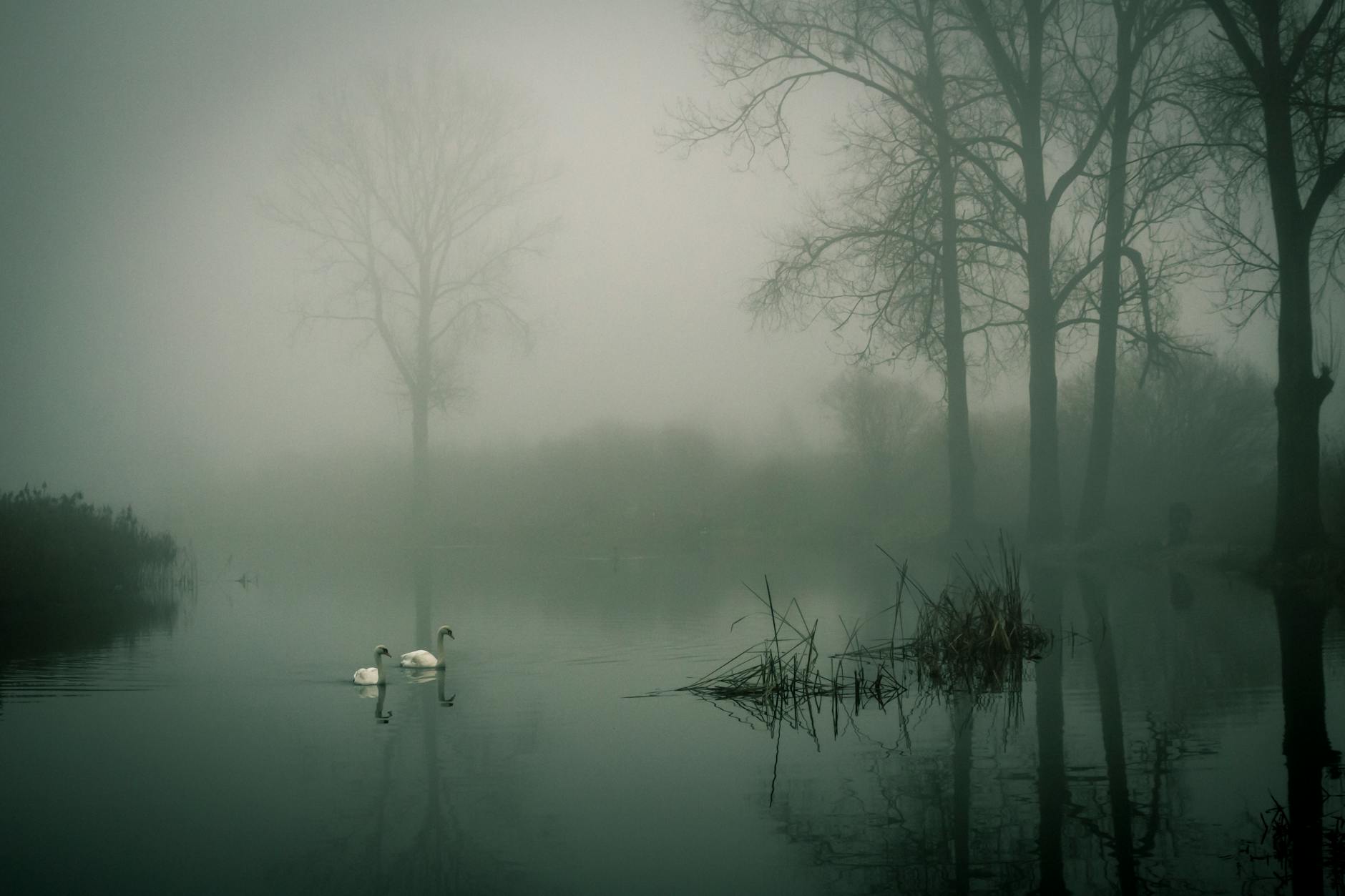
A serene landscape shrouded in fog, featuring two swans gliding on a calm body of water, with bare trees reflecting in the misty surroundings.
Photo by Karol Wiu015bniewski on Pexels.com

When Answers Refuse to Come 🤨

If you have ever encountered a personal crisis, or that of a loved one, you know the “hurry up and wait” sense of time that often accompanies these scenarios–appointments scheduled off into the distant future, followed up by more appointments with no answers, only more maybes and/or more questions or concerns. It can feel like an autumn fog settling over a town in the early morning hours. You can see outlines of various possibilities, but still not know what the future holds. And yet, even in that fog, life quietly continues. 

A chalk-drawn question mark on a black background, symbolizing uncertainty and curiosity.
Photo by Pixabay on Pexels.com

Coexisting with Uncertainty ❓

On one hand, Rilke seems to invite us to love the questions—an improbable ask, given the weight of so many of life’s uncertainties. Perhaps, as the podcaster suggested, Rilke’s words invite us to coexist with uncertainty rather than chase quick answers. Personally, when I face challenges, my first instinct is to “fix it,” whatever “it” may be. However, most of life’s bigger questions are not, per se “fixable” in a vacuum. There are many uncontrollable variables that often fill me with an anxious energy. 

This is when I tend to lean into writing, outdoor movement (especially running and walking), as well as reading–trying to learn as much as I can about the current challenge I am facing. Additionally, I will offer help (if I can be of service) to those for whom I am concerned. In this way, I feel like I am stretching and growing in understanding and empathy, rather than grasping and silently suffering. 

A close-up image of colorful daisies, featuring hues of pink, yellow, orange, and purple, surrounded by green foliage.
Photo by Leigh Patrick on Pexels.com

The Garden Rule: Sleep, Creep, and Leap 🪻

I’ve lived long enough to know that many answers only emerge with the sweet relief of distance and time—like the three-year rule of a perennial garden: sleep, creep, and leap. A long-ago biology professor once explained that in the first year of a newly planted garden, the plants appear to grow very little because they’re focused on developing and strengthening their roots. The following year, roots are still growing and establishing, but they do have enough energy to create a bit more growth above ground. However, by the third year, the roots are fully established and the plant appears to “leap” out of the ground with growth. So it can be with the answers to life’s questions. 

Three white blocks arranged to spell 'WHY' in black uppercase letters.
Photo by Ann H on Pexels.com

Growing Through What We Don’t Yet Understand 📈

There are times in life where we cannot figure out why we keep facing one roadblock and one challenge after another. We wonder how much more we can endure, why we are faced with a certain situation, or why things are not going the way we imagined. Like that early decorative landscaped garden, we cannot see that our experiences are developing roots of strength and stability. We may not see that our ability to empathize, our talents, our emotional well-being, and even our souls, are stretching and strengthening. Later, we may look back and see that those setbacks were quietly shaping us—building the strength we’d need for what came next. 

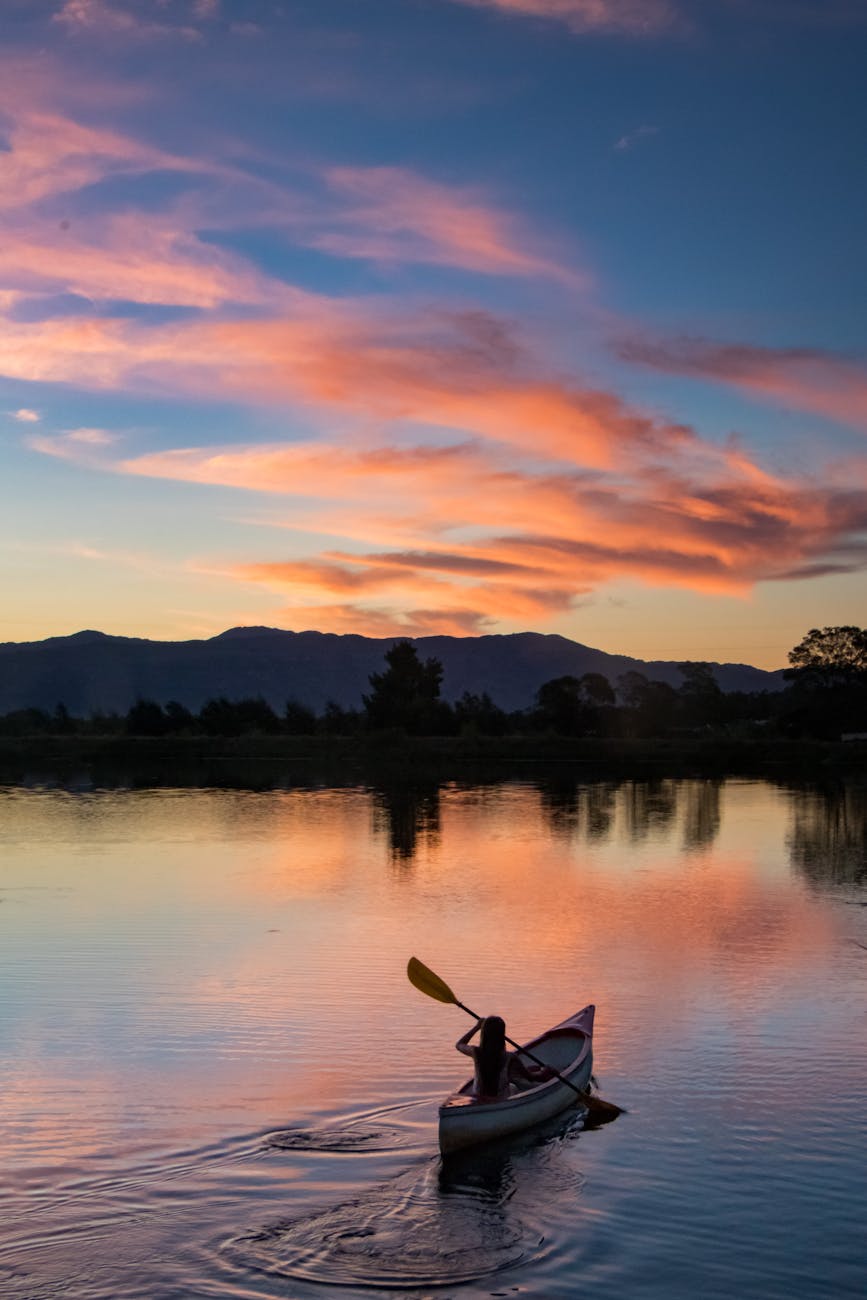
A person kayaking on a calm body of water during sunset, with vibrant pink and orange clouds reflected in the water.
Photo by Taryn Elliott on Pexels.com

The Ineffable Beauty of Living with Questions ✨

As I further reflected on Rilke’s words and my own lived experiences, I realized that there is a certain ineffable beauty that is created by living with questions because it asks us to rely upon faith and grace, granting us a greater purpose as a seeker and a doer. 

We are not here to solve life, but to live it—with curiosity, patience, and hope.

While hope does spring eternal, it is not the same as knowing the answers. Perhaps, that’s the point–it is more about trusting that our life story is continuing to unfold in its own time and season. 

A calm, reflective body of water at sunset, with vibrant streaks of orange and blue in the sky, and a small island featuring lush greenery and palm trees.
Photo by Johannes Plenio on Pexels.com

Light, Grace, and the Unfolding of Answers 💫

Finishing the drive home, I realized that Rilke had a point. As long as I have questions, as long as I seek answers, I am not only living, but I am living with an open, loving heart and a curious, empathetic mind. I have been fortunate to live to see questions answered, but I still have more questions to go–about loved ones, about the world, and about myself. 

Like the sunrise that began my run, the light of understanding will come again—slowly, beautifully, and in its own time. Until then, I feel grateful for life’s questions. They have strengthened my life in numerous ways and provided me with unpredicted opportunities for growth. In the words of John O’Donohue, “Perhaps the beauty of not knowing is that it keeps our hearts open enough to be surprised by grace.” I welcome that grace into my life—and I hope you do too.