Movement as Medicine: Staying Active in Your Older Adult Years

“Movement is medicine for creating change in a person’s physical, emotional, and mental states.”–Carol Welch

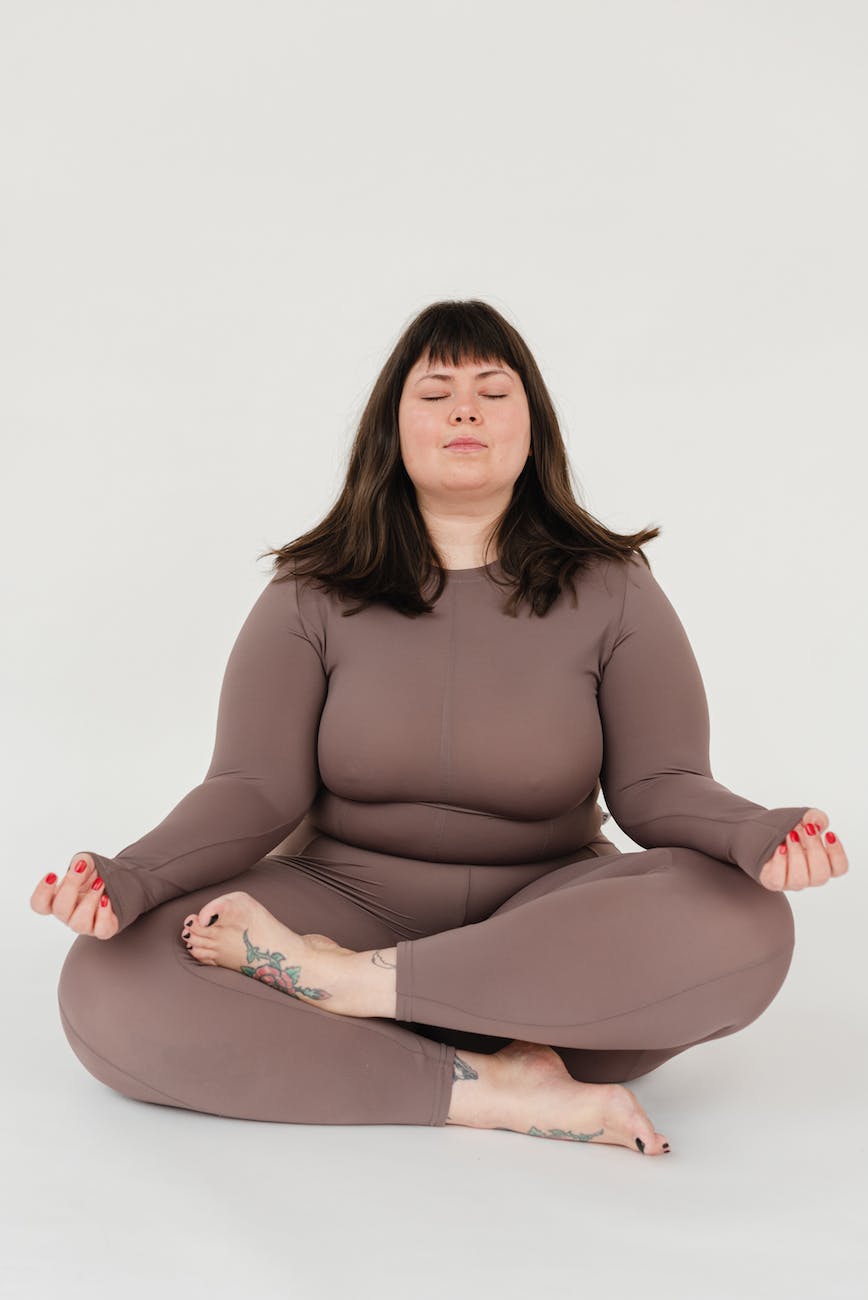
Photo by Roman Biernacki on Pexels.com

Let’s get Ready to Move! 🏃‍♀️

By the time you read this, I will be close to one week out from running (ok, jogging, “slogging”, whatever you want to call it) the Marshall University Half-Marathon. This annual community event motivates and inspires hundreds of locals and nonlocals to train, improve their current fitness level, and participate in the 5K, the half-, or the full-marathon distance.  Plus, it brings together a whole host of volunteers who support participants along the way.

Each year that I’ve participated, I hear numerous stories about those who haven’t trained for MUM, still participate, and do well.  My hats off to them; I appreciate that they can do that.  However, I find the training, and the build-up to the event, are part of the excitement and joy of the journey that includes completing the event.

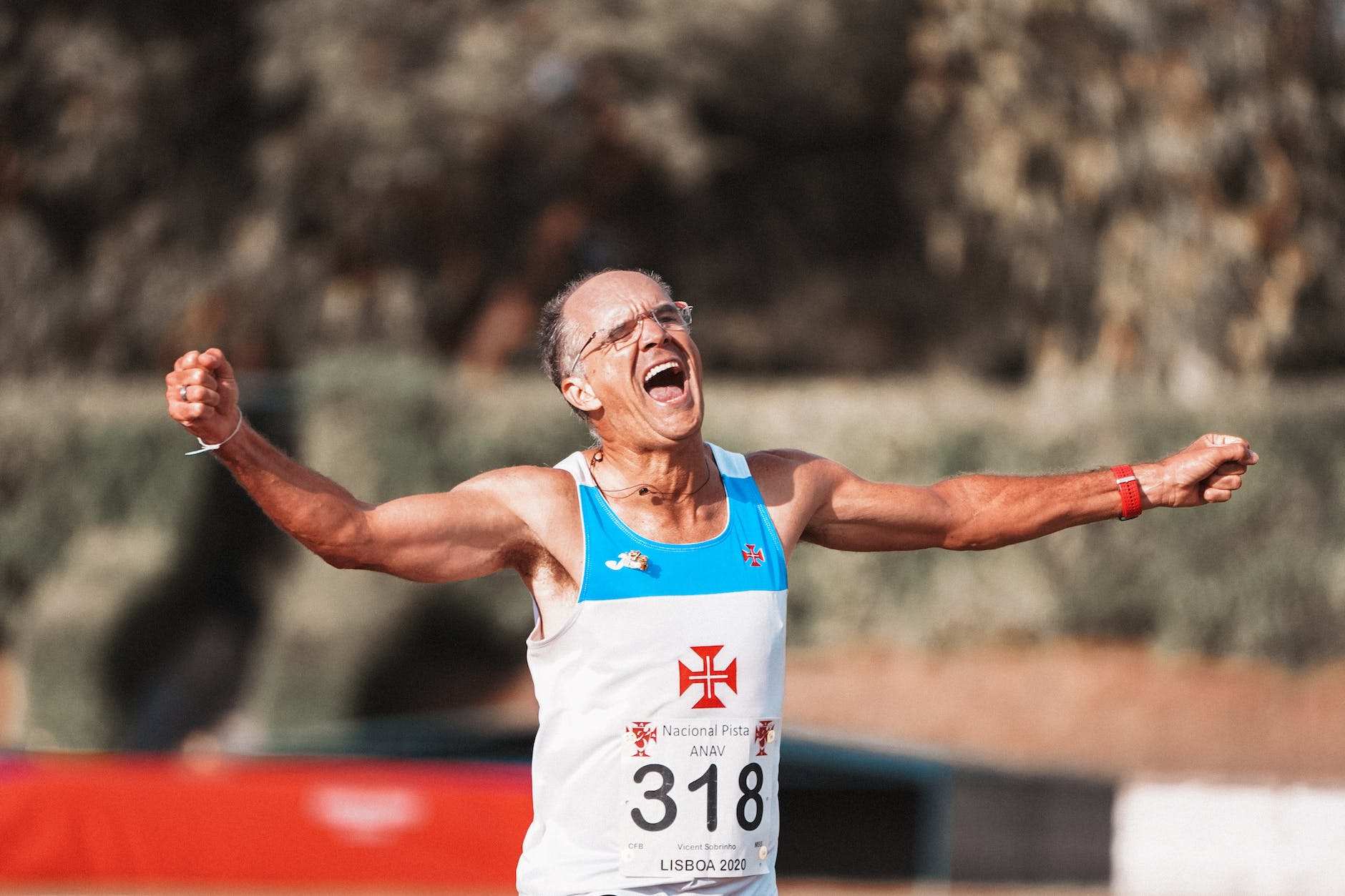
Photo by RUN 4 FFWPU on Pexels.com

Giving meaning and purpose to Exercise through signing up ✍️

It typically takes weeks, or even months, of deliberation before I decide to sign up for a running event–even an annual event such as the MUM. Therefore, once I make the decision to pay the entry fee for an event, I am fully committed to a training plan. This is not because I have any desire to place or set records, but because signing up for an event is the extra motivation that gives meaning and purpose to my exercise.  Plus, it keeps me simultaneously excited and nervous in a good way.

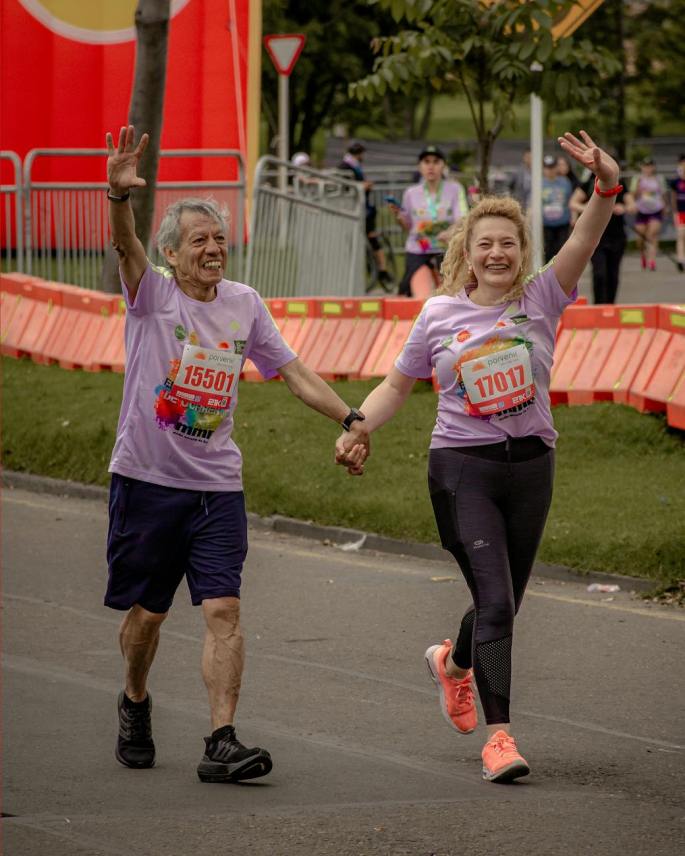
Photo by RUN 4 FFWPU on Pexels.com

Exercise at any age! 👵🏼

Still, I have those who ask me if running is still safe for someone at “my age.” News alert! There is no milestone-age at which you should cut-off exercise.  In fact, exercise and/or movement can, and probably should, be embraced across all ages, including those of us in the AARP years, which is anyone over the age of 50. That said, you do have to manage your expectations, but movement and/or structured exercise can be a healthy part of the “golden years.”

That said, of course, if you have had an injury or have certain health conditions, you must respect your body’s limits and boundaries, but it doesn’t mean you give up on exercise and/or purposeful movement forever.  By working with a healthcare professional, you can find ways to adapt, modify, and/or create your own exercise plan that fits your body’s unique needs.  
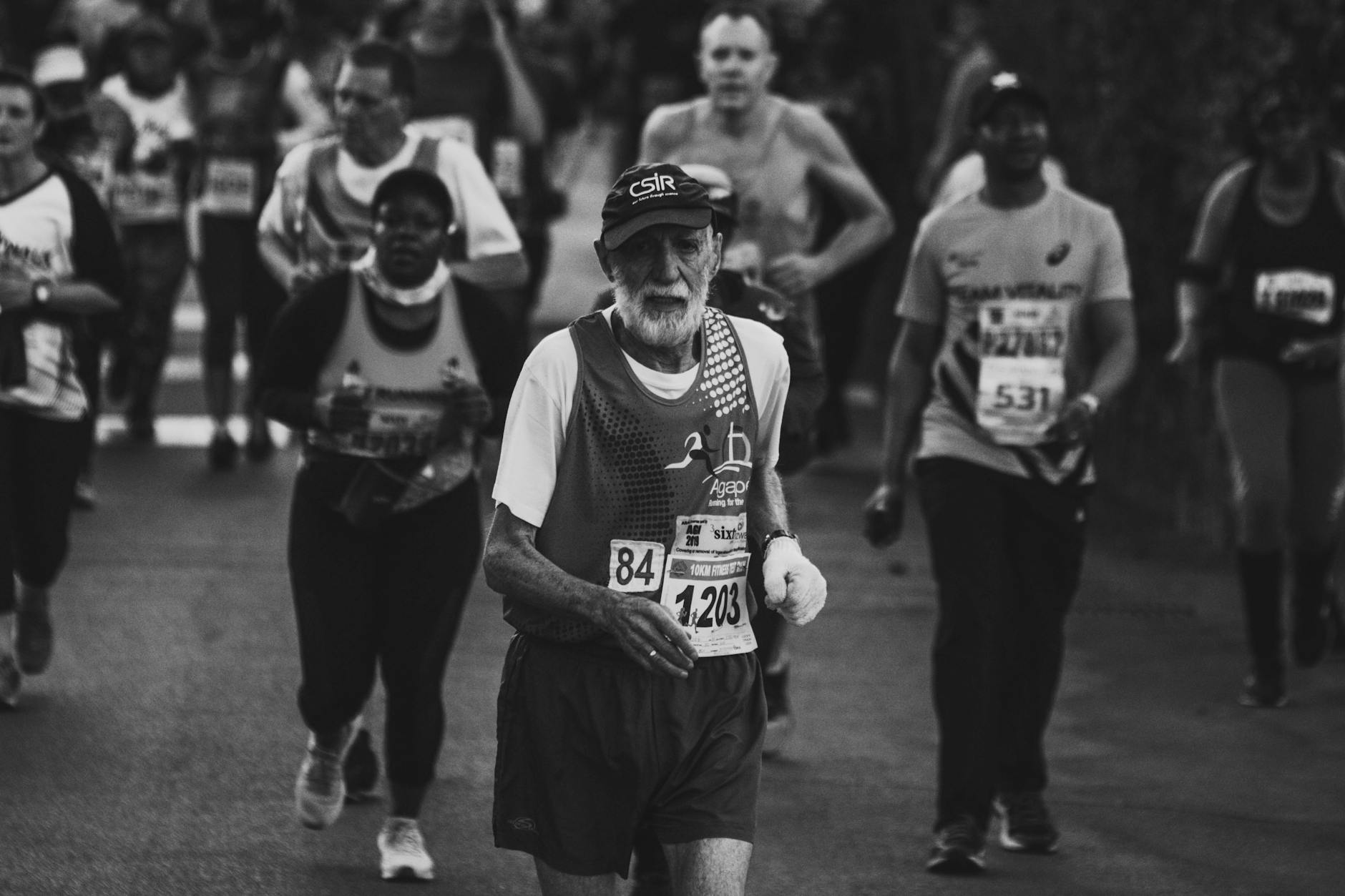
Photo by Vincent Peters on Pexels.com

Tips for moving through those senior years 🚶🏿‍♂️

Here are some key tips and pointers I’ve learned along the way, gathered from other senior exercisers, as well as a few I researched, when thinking about exercise/movement in the, a-hem, “senior” years.

  1. Establish meaningful AND realistic goals appropriate for where your body is now that motivate and excite you.  This is why I enjoy signing up for a half-marathon.  My mantra is: “Set your own pace, and run your race.”  I don’t put pressure on myself that running has to be or look a certain way.  No time is too slow, and I can take as many walk breaks as I need.  That said, you can approach ANY form of exercise in a similar manner 
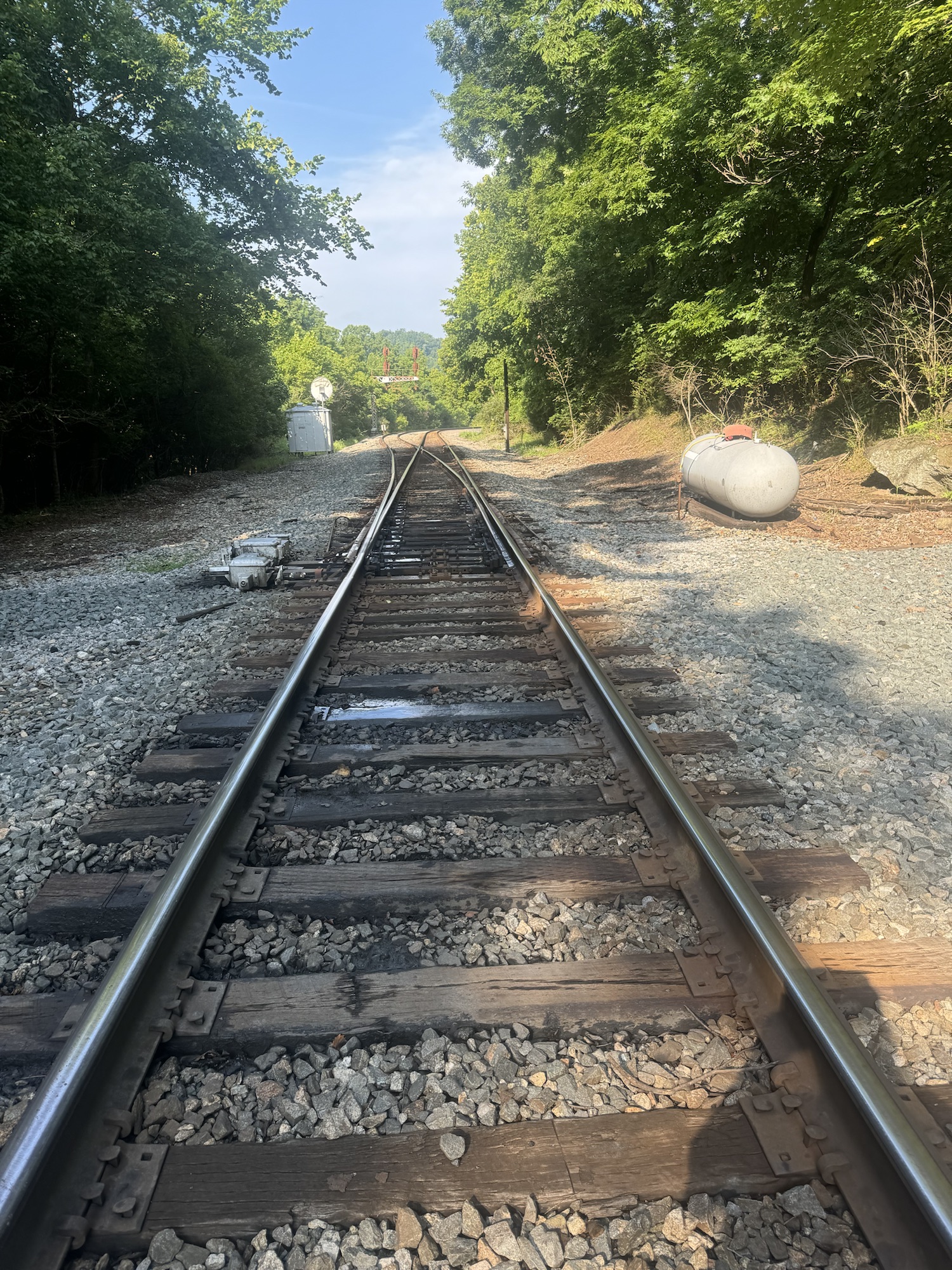
Set off in your own unique direction down the the tracks towards empowering your own health and fitness.
  1. Notice your narratives.  This is something that I have begun to notice more frequently. Reflect on how you talk/think about age with peers/friends/family AND self.  Is there often negative talk and thoughts associated with your current age and/or exercise?  Perhaps, you can begin to reframe those thoughts/chatter by leading by example.  Furthermore, look to role-models that motivate you to move more.  I personally often look at my Dad who still walks or hikes daily anywhere from 2-8 miles per day.
  1.  Find your edge. Whatever form of exercise we choose should challenge us, but not too much.  If something changes, and you sense you can do a little bit more, then do so.  But if doing a bit more causes serious discomfort, then back off, and try again another time. 
Map out your own fitness challenge.
  1. Strength train, stretch, and work on balance through practices such as yoga. The CDC in an article entitled,  “Older Adult Activity: An Overview,” states that in addition to cardiovascular exercise, such as jogging and walking, older adults also need to strength train and work on balance.  In fact, AARP offers a 10-minute, strength-training video that can be completed daily, seated or standing. 
  1. Manage your sleep and nutrition: There is a reason these two are often spoken/written about due to the fact both contribute positively, or negatively, towards your own health.  That said, one bad night’s sleep, one indulgent meal, or a day of eating very little, will not necessarily impact your overall health; however, consistently not getting enough sleep and not consuming proper nutrition will gradually, and negatively, begin to impact your physical and mental well-being. 
  1. Find your support or pave your own way.  There’s no one right fitness plan that works for everyone.  Find the type of movement/exercise that best suits your body and motivates you, which may mean exercising with a group, a friend, or at a club. That said, don’t be afraid to go it alone either and share the experience with others later.
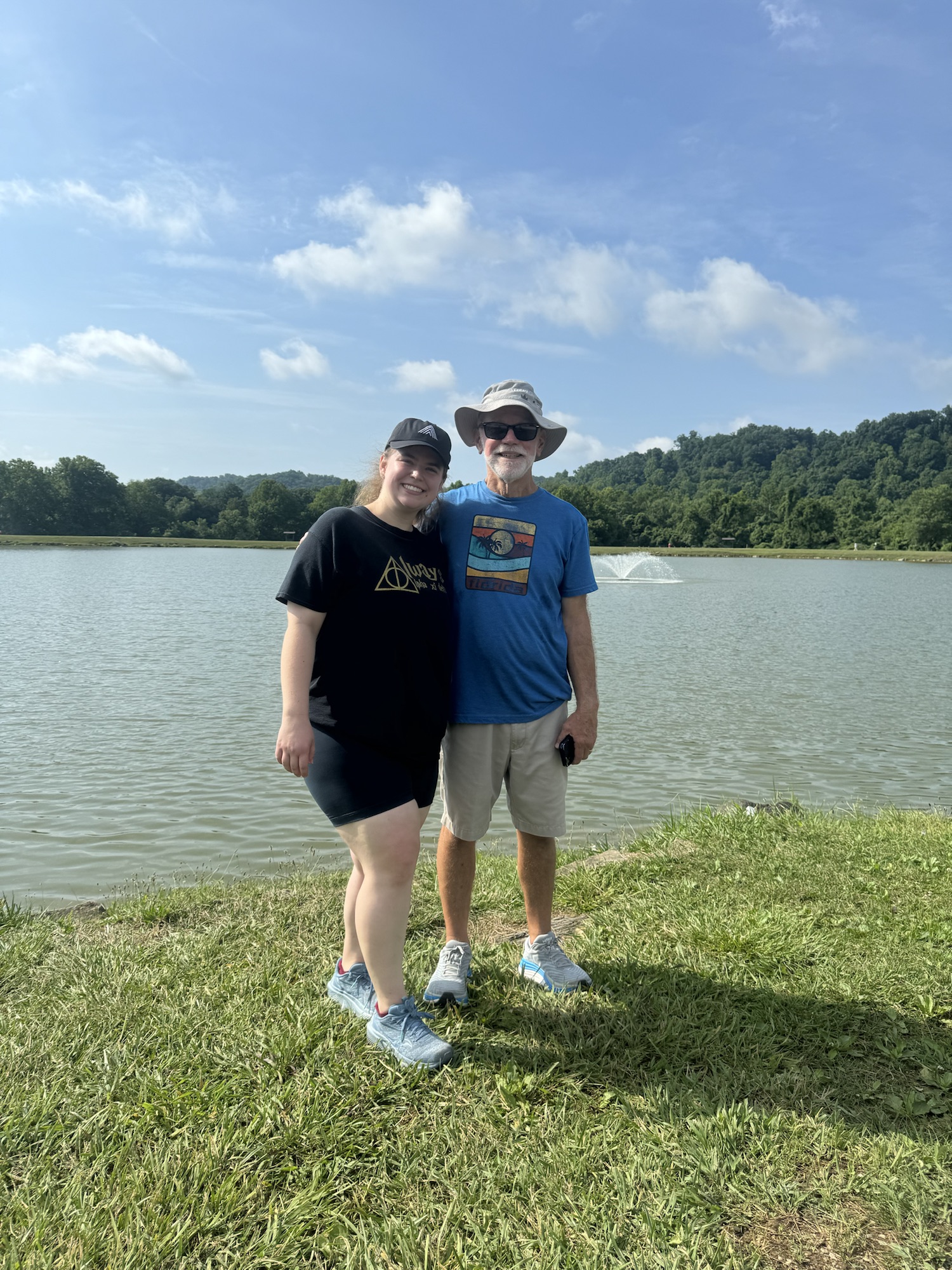
Find your support!
  1. Exercise can be therapy. Personally, I know my mental health greatly benefits from movement. The National Institutes of Health, The Mayo Clinic, Mount Sinai, and numerous other institutions all point to the fact that exercise is a mood and mental health booster.
  1.  Tune in to your body’s needs with honesty and integrity. If you’re sick, tired, and/or run down, then maybe a day or two of rest may be what you need. If a joint, such as knee, elbow, wrist, or ankle begins to feel irritated.  Be curious about it.  Are you pushing a certain exercise too hard, too often? Or, are you not moving enough? Learning to listen to the signals our bodies send us is an important part of the exercise/movement journey.
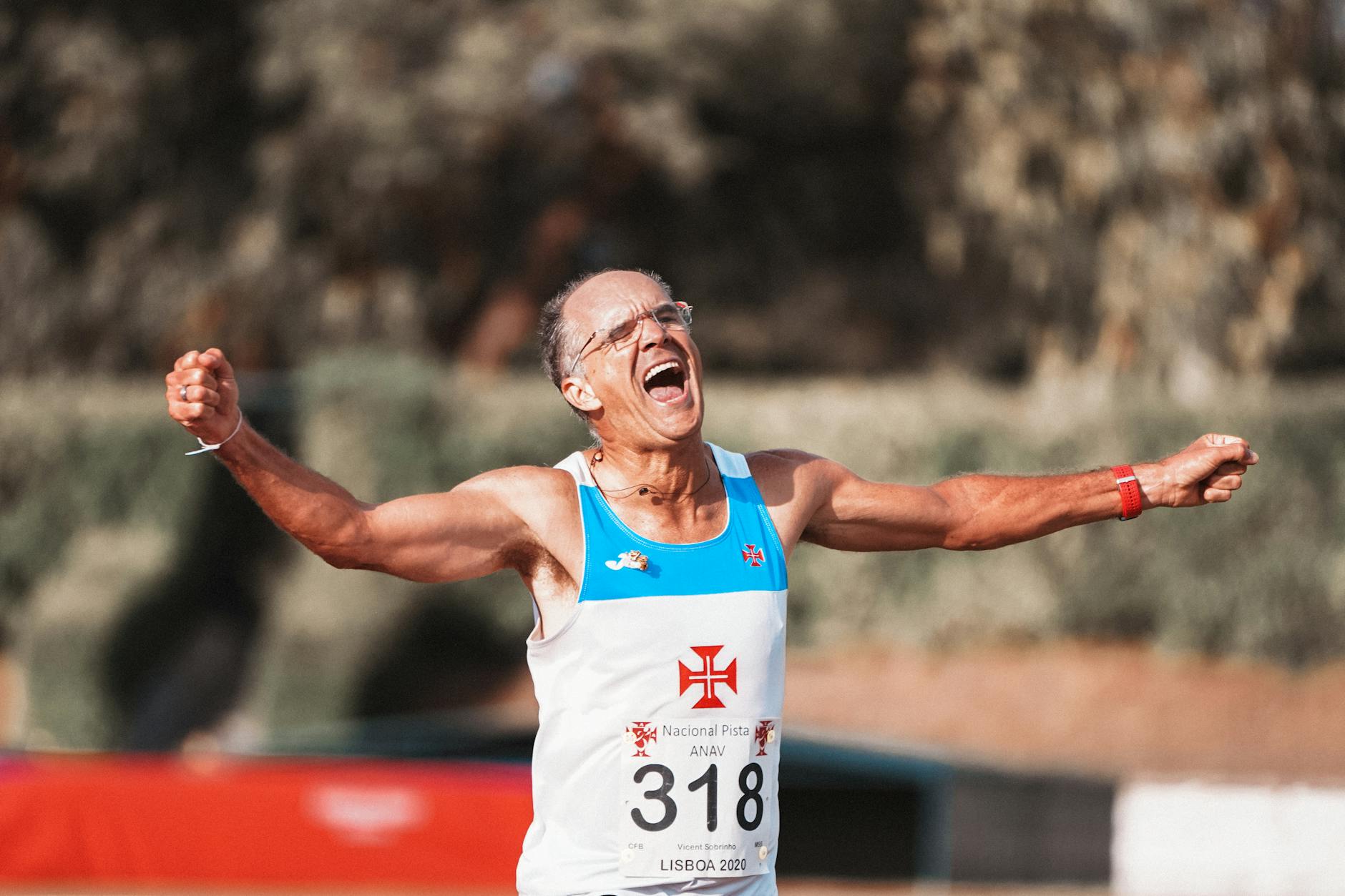
Photo by RUN 4 FFWPU on Pexels.com

movement is medicine! 💊

When it comes to movement, no matter your age, focus on the positives of the experience–whether it is spending time with friends, benefiting your mental health, or feeling more overall strength, steadiness, and/or energy. To be sure, it is often hard to get started, but it is often that feeling of accomplishment you have afterwards that can keep you going. Finally, for those in the official AARP years, keep in mind, “older” doesn’t have to mean sitting on the sidelines. Becoming and staying active, however you define it, truly is medicine for imbuing well-being: socially, mentally, and emotionally. 

Dad and I pausing for a moment during hike this past summer at Barboursville Park.


Mind Over Matter: Mental Strategies to Push Towards Your Movement Goals

“Put all excuses aside and remember this:  You are capable.”–Zig Ziglar

During my Saturday morning run this past week, there were numerous times I wanted to quit. It had taken me nearly two hours to complete, and it had not felt nearly as good as my last run at the exact same distance.  Nonetheless, I kept employing different mental strategies I’ve learned over the years and, ultimately, completed my goal.

Photo by Volker Meyer on Pexels.com

That run got me thinking about the importance of mindset and the mental strategies/techniques we sometimes need to employ to incorporate more movement and exercise into our lives.  Therefore, in this 8th installment of my “Move into Health” series, I will share several research based mental strategies for exercise/movement for those days when we “aren’t feeling it.”  Moreover, many of these tips can be applied to other areas of life, such as tackling difficult tasks.

The mind-body connection is powerful. Whether discussing exercise, or tackling a difficult/challenging project, it is important to recognize the influence of the mind-body connection.  From having a churning stomach in response to an upside routine change, such as shift workers, to coming down with a cold after prolonged exposure to a stressful event, our bodies respond to the changes in our mind.  Therefore, by understanding this connection, we can unleash its potential to positively influence our attitudes and choices, especially with regards to movement goals.

Photo by SHVETS production on Pexels.com

Be patient; remember the long game, and avoid comparison: As my decades continue to stack, the long-game is most often at the forefront of my thoughts.  By prioritizing the fact that I want to remain injury free, healthy, mentally engaged, and purpose-driven for years to come, I’ve had to slow down, make moderation a priority, and avoid comparisons to my past self, previous workouts, and definitely not to others.  It’s important to be clear on long-term life goals and determine how movement/exercise can benefit that plan.  When we see how exercise and movement can contribute to and enhance our bigger life picture, it provides a bit more motivation to get out there, even when we don’t “feel like it.”

  Let go of attachments, especially to perfection and the all or nothing mindset: Our mind can be a bit of a trickster and convince us that exercise and movement should feel, be, or look a certain way. That’s all nonsense. Sometimes, it doesn’t feel great, but if nothing is hurt or injured, we have to keep going.  Other times, we may have little in the tank or reduced time. Rather than throw in the towel, try another workout or shorten your workout time.  Some form of added movement is always better than nothing!

Photo by SHVETS production on Pexels.com

Embrace the unknown, including discomfort: Along with letting go of attachments to how exercise/movement should be, it is important to embrace the unknown.  Whether it is going to a new gym, a new exercise class, or walking in a new area, accept that it will feel uncomfortable and new for the first few times.  Likewise, it is important to understand that with muscle growth comes some discomfort, including sore muscles.  This is where it is important to discern the good pain from the “I-might-be injured” pain.  Most of our pain is the good kind, but we do need to pay attention to unusual or persistent pain.

Muscle has memory:  The more we exercise/move, the fitter we become, and the “easier” it is for the body to move.  This is important for those of us who are not “naturally” gifted athletes, or no longer spring chicks for that matter!  As our fitness levels increase, our likewise energy increases, making even everyday movement tasks feel easier.  Now that’s motivating!

Photo by Timothy on Pexels.com

Break “large” workouts into smaller tasks and start easy: When I am faced with a long run, I think about it in chunks, and I start slowly with a walk to build success.  With each successfully completed chunk, I mentally celebrate, “One-third down, only two-thirds left to go!”  I continue in this manner until I attain my goal mileage.  Additionally, I’ve applied this mindset across a multitude of workouts and projects unrelated to exercise.  

Visualize the feeling of success that comes with finishing, and don’t underestimate the potency of a smile:  This is a tool I employ before and during a workout.  I think about how good it will feel to know I accomplished whatever it is I set out to do.  By focusing on that feeling, I automatically smile.  Smiling starts a chain reaction of positive feelings coursing throughout my body, but especially my brain.  It is those good vibes that keep me going, and they can keep you going too!

Photo by Pixabay on Pexels.com

Adapt a “no-fail” mindset.  Since we do have that mind-body connection, we can harness the power of words to move our bodies. Create a mantra, or saying, for when your workout or movement gets tough.  I often talk to myself during, especially hard workouts.  I’ll use phrases like, “You can do this, Steph.”  “You’ve got this, Steph.” Other times, I use one word, such as, “Fortitude,” “Perseverance,” and “Tenacity,” which are a few of my favorites.  The key is finding the motivating word(s) that strengthen your resolve.

Power up with music and songs: Music doesn’t motivate everyone, but it certainly does a large number of us.  The right playlist can motivate and move you into action.  

Photo by Ketut Subiyanto on Pexels.com

Create a reward system: I call it the if-then principal.  If you do this, then you get to do this. Have some sort of reward system in place for yourself, and focus on it during those challenging workouts.

Have a purpose for your run:  I often have a prayer/meditation that I repeatedly say.  Other times, I run in honor of a veteran (Team Red White & Blue and Wear Blue) by writing the name of a veteran on my hand, or creating a list of several vets and tucking the list into a tiny pocket in my tights.  The point is that by adding a higher purpose to my workout, I attach greater meaning to a workout that increases my motivation.

Everyday may not offer ideal situations for movement; therefore, having a toolkit of mental “hacks” can help us push past our own resistance and/or excuses.  Exercise not only works only our muscles, but also our mental strength and, ultimately, our overall well-being. Combining the power of the mind-body connection, especially over time, improves both our physical well being and creates a more disciplined and determined mind.  So grab your toolbelt, and learn to attach and switch out any of these various tools to motivate you to move into health, so you never have a reason to give up.

Photo by RUN 4 FFWPU on Pexels.com