Embracing Limitations: Lessons from the Asheville Half Marathon

God, grant me the serenity to accept the things I can not change, the courage to change the things I can, and the wisdom to know the difference.”–Prayer for serenity

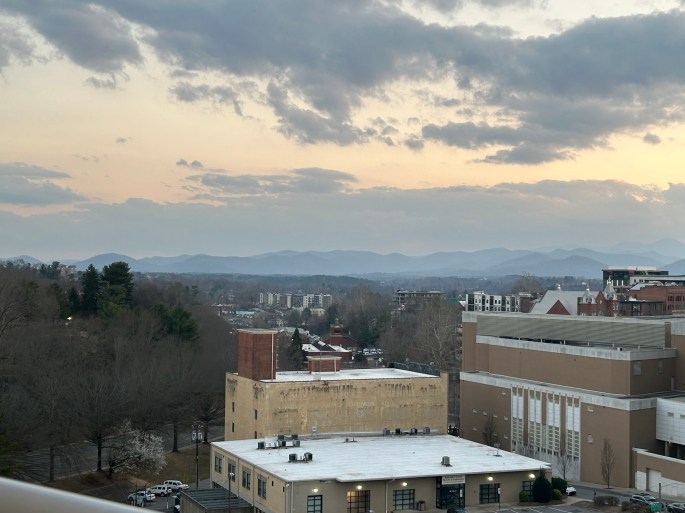
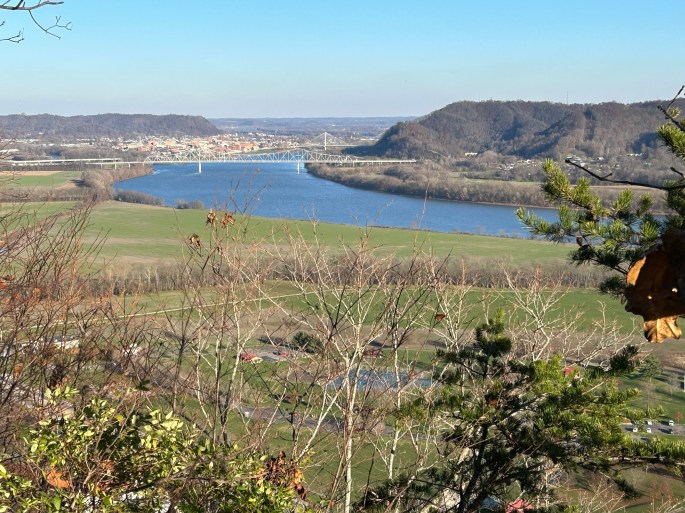
The Blue Ridge Mountains outside of Asheville, NC.

“the mountains are Calling . . .” ⛰️

I had been training for months, despite the challenges winter threw at me. Cold? I can handle it. Snow? I can run in it. Gusty wind? I can run that too. However, after my husband, John, and I crested hill after hill making our way into Asheville, North Carolina, I knew the town’s half marathon would offer a whole new level of challenge. 

To be clear, participating in the Asheville Half Marathon was an insignificant hurdle compared to what the people in Asheville, and all of the other residents of the surrounding areas/towns along US 23, have been facing as they deal with the aftermath of Hurricane Helene.

Driving along US 23, John, and I were able to witness that six months after Hurricane Helene angrily chewed through a large portion of the western Appalachian region, the recovery is still ongoing. However, the willful, and not-to-be-deterred, spirit of the residents was unmistakable. 

Rooftop view from Asheville of surrounding Blue Ridge Mountains.

A Tale of Two Sisters 👧 👧

This past fall, not long after Helene hit, the high school in which John and I work, welcomed two sisters into the student body.  They were from the Asheville area and were staying with relatives while their parents and older brother dealt with the devastation and destruction back home.

The girls were engaging and well-poised, especially considering their circumstances. Over the course of a couple months, I got to know them–not well due to the short duration of their stay–but well enough to swap personal stories from time to time. 

When they learned that like their dad, I often trained for half marathons, they immediately invited me to run the Asheville Half Marathon in March. They explained that by the time spring rolled around, the community would not be fully recovered, but the local economy would need the boost that runners and the accompanying spectators could bring. 

“You should definitely come, Ms. Hill.  You’d like the people of Asheville, especially the running community.” 

Once Asheville High School opened, the girls returned back home. And though I haven’t heard from them since, they planted a seed that grew into a shoot of curiosity. 

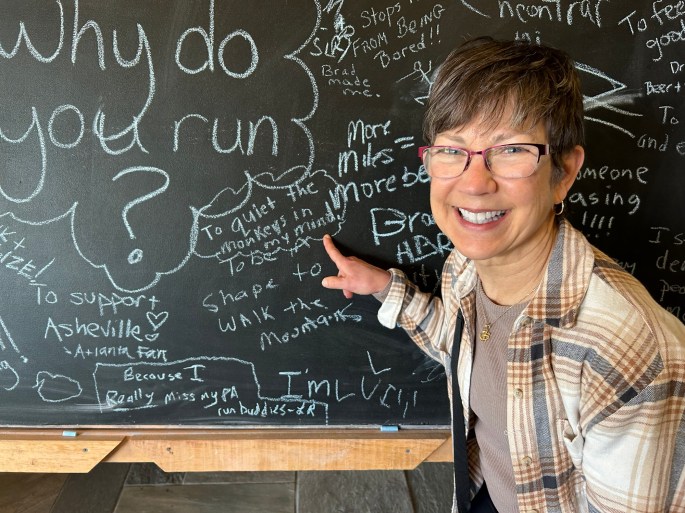
Runners were asked to sign the board stating why they ran.

Sign me up! 📝

Around Christmas, I checked the Asheville Marathon/Half Marathon website, and the powerful and persuasive prose describing the event increased my interest. The website’s editors artfully articulated the community’s belief in the significance of the annual running event. They stated the course’s route would not be “pristine or predictable.” Therefore, the event was for those who “thrive on resilience.” However, the line that sealed the deal stated, “If you’re ready to run in the face of adversity and be a part of Asheville’s comeback story, we can’t wait to see you on the start line!” 

John and I at gathering with other runners and spectators at the starting line before the race began.

Ready, set, Go! 🏁

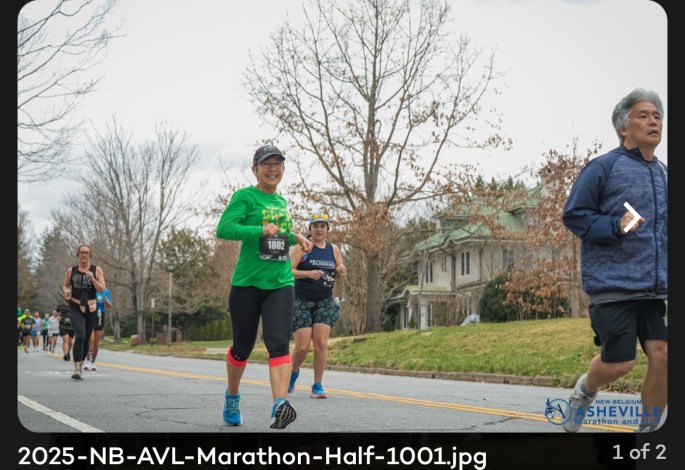
Soon enough, on a chilly, dark March morning, I waited at the starting line with approximately 2,200 runners from 40 states and three countries who also heeded the call to help support Asheville, according to The Weather Channel. The positive vibe was palpable as runners mingled with spectators. Nonetheless, I was feeling a bit nervous as I recalled the half-marathon route’s elevation gain was nearly 800 feet, and its elevation loss was over 900.  

And, it was hilly.  From start to finish, there were no flat stretches. In the beginning, I read spectator signs claiming, “It’s all downhill from here,” with hope. It didn’t take long to realize those signs lied!  Even the finish line required running uphill, but I am “running” ahead of myself.

Running is a metaphor for living life, and it is always whispering (or sometimes shouting, as this event seemed to do) lessons to those of us willing to listen. Accepting limitations–was the lesson those relentless hills of Asheville taught me. Which makes sense since this is what many of the residents of Asheville and the western Appalachian area had to do during, and now after, the storm–accept and deal with limitations. 

Whether literal or metaphorical, storms of life cause us to suffer. As I repeatedly tried to power through those uphills during the first half, my ego kept telling me to push harder, creating suffering. However, as a late-in-life runner lacking inherent running talent, the reality is that race events for me are more about creating motivation and structure to consistently get me out the door to exercise. At the end of the day, I am not about to set any records; I am not even close to winning my age group, so why was I pushing so hard?

And so, it was on a hill, not long after milepost seven, that I decided to accept my limitations. Sure, I had trained on hills at home, but nothing like this. Why not power walk up the rest of the hills, and then run the downhill portions?

Asheville taught me to accept my limitations.

There is a newfound freedom in accepting one’s limitations 🏃‍♀️

Once I accepted my limitations, there was freedom. I had a new way of being present with the race challenges as they unfolded. This acceptance gave me permission to slow down, take in the sites, and feel a sense of gratitude for my health and ability to make this trip. 

Additionally, by walking the hills, I had more energy to offer encouragement to fellow runners I encountered who also seemed to be struggling. (After all, I run at the back of the pack, where we could all benefit from a little encouragement.) Furthermore, I was also able to offer thanks to the spectators who manned drink stations, rang cowbells, or waved motivating signs with clever phrases such as, “Touch here for power,” “You’re stronger than any storm,” or “You’re running better than our government.” 

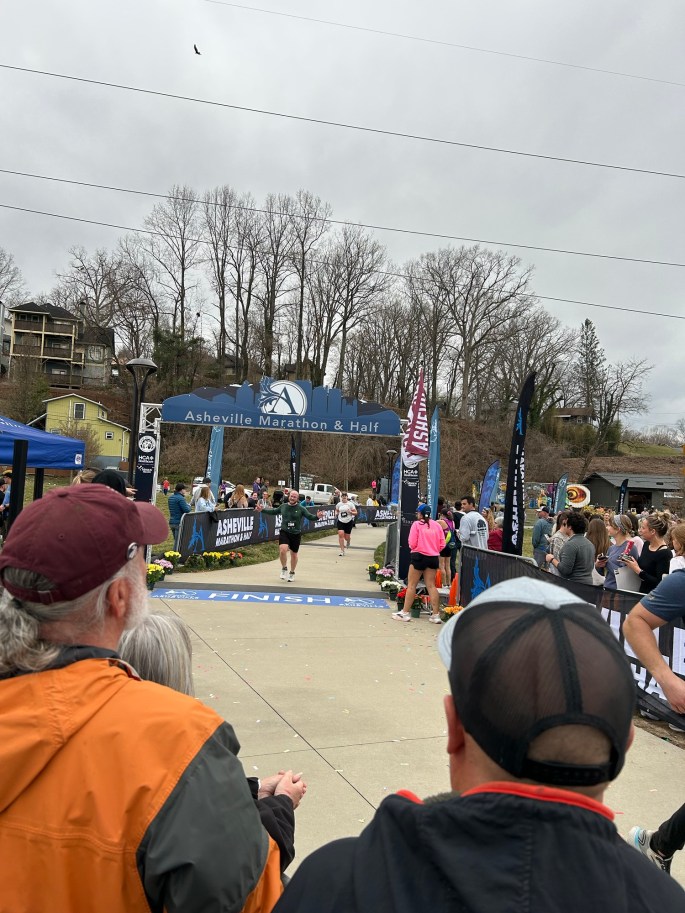
By the time I crossed the uphill finish line, tears filled my eyes as I raised my hands in the air.  No, I wasn’t celebrating a personal record, but instead, I was able to celebrate that I crossed the finish line with grace, humility, and a lesson learned. 

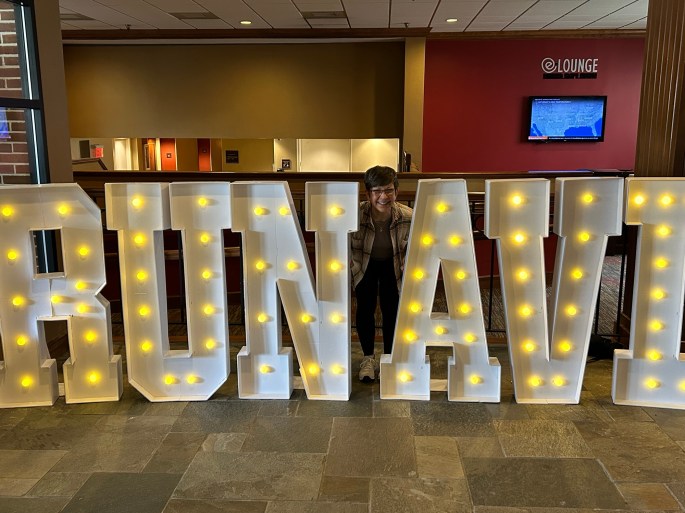
The AVL finish line of through which I would later cross humbled, and grateful, by another lesson running once more provided me.

The lesson? Transforming suffering can only occur if we are willing to be with it and accept the limitations it creates. Accepting limitations can be transformatively freeing, allowing us to lean into newly created possibilities we may not have been able to previously envision. I am not saying that accepting our limitations is not easy. However, once we let go of ego and embrace humility, it is possible to embrace the freedom that comes with focusing on what we CAN do.

Thank you , Asheville! I walk away from the finish line with grateful heart and a lesson learned. Furthermore, thank you, Hannah and Allison! I wish your family the best! 💜

Finding Peace Amid Life’s Storms

Incredible change happens in your life when you decide to take control of what you do have power over instead of craving control over what you don’t.”–Steve Maraboli

Photo by Pixabay on Pexels.com

WArning: Shifting Life weather ⛈️

My husband, John, and his sister, Jacki, have birthdays during the last days of February. This year, we celebrated both birthdays on the day in between their two respective birth dates. As John and I drove towards Jacki’s house, we revelled in the warm-ish, slanted sunlight of late February. However, a stiff, cold breeze hinted of a dramatic weather shift.

Soon enough, we observed layers of dark gray and black clouds encroaching from the northwest as if ready to aggressively lash out in a fit of rage.

By the time we arrived at Jacki’s house, the wind gathered more intensity. Layers of clouds silently slinked closer, blanketing the sunlight. Warning rain drops, heavy with intention, randomly fell at intermittent intervals. 

Our daughter met us in the parking lot of a restaurant as a menacing mass of mayhem loomed above us. The winds forcibly fought against our efforts to walk into the establishment. The restaurant door resisted opening against the wind and then likewise fought to be closed. Seconds after John struggled to shut the door, a hostile bolt of lightning loudly landed nearby, shaking the building.

After being seated, torrents of truculent rain burst forth from swirling chaotic clouds soaking the next few guests who entered through the front doors. 

Photo by Dan Prado on Pexels.com

Change The focus 🎁

Soon enough, however, we diverted our attention away from the storm, talking and swapping stories. John and Jacki opened gifts, and we spent the next hour and a half engrossed in one another’s company with little focus on the discord of the storm unfolding around us. The storm was there, lashing and railing against the walls and windows, but it no longer disturbed our peace of mind as we focused on the unfolding celebration.

Yet, how many times in life do we allow surrounding storms and worries to shake and distract us from the moment at hand?

Photo by Jo Kassis on Pexels.com

Rough Waters Ahead 🌊

Many years ago, our family visited the shores of the Outer Banks in North Carolina when our daughter was quite young. It was a last minute trip during the first week of August, just before the start of school. The three of us made daily trips to the shoreline with books, umbrella, cooler, and boogie boards in tow. 

Unfortunately, the temperatures were incredibly hot, even in the early morning. Therefore, we spent most of our time in the cool water on our boogie boards. We would wade out until our daughter was knee deep, then plop ourselves, belly down, on our boards. Next, we would paddle and kick to where the waves were breaking. When we saw what we thought was a “good wave,” we’d point our boogie boards back to the beach, start paddling and kicking, catch the wave, and ride it in towards the shore.

Each time we rode the wave in, we were taken a little further up the shoreline from where we had set up “camp” due to the strong undertow. Eventually, we would be taken so far north that we could no longer see our belongings, and we would lumber out of the water, walking back to our starting point. This would occur repeatedly as we had no control of the undertow.

Photo by Maria Orlova on Pexels.com

Possible strong Undertow 😵‍💫

The other thing that would happen is that one, or all, of us would get flipped off our boards by a rogue wave. The rough waters hurled us to the sandy, shell-covered bottom, and we would come up sputtering and coughing, completely disheveled–banged up and sand abraded. This often forced us to take a break in order to catch our breath. Nevertheless, it wouldn’t be long until we were right back out there again, trying to catch a wave in the wild surf, despite the fact we knew we would ultimately get dumped again.  

Yet, despite the extreme August heat, strong undertow, and often rough surf, we focused more on our laughter and the joy of being together, creating memories that still make my heart smile.

Photo by Tyler Lastovich on Pexels.com

You can choose your Response 🤔

Like the birthday storm and those long ago OBX waves, life has times when it rages with rough rains of hurt, blows wild winds of change, drifts us along an undertow of misleading information, or chucks us under waves to the bottom of mental anguish. If we choose to focus on the suffering, we will inevitably suffer more.  

We can, however, choose to direct our attention away from the storm and other difficulties. It doesn’t mean we’re not aware of the situation–or completely ignore it. Instead, we can focus on what we can control. The challenge will still be there, but we can choose to live with it, and in the meantime, redirect our attention like we would a toddler in a seaside gift shop drawn to the glass figurines. 

In the end, the chaos of life storms are often not controllable, but our responses and/or level of reactivity can be. Our minds, with practice, can be trained to ride those waves. By focusing on what we can do, such as stepping out of the fray, walking along the shores of self-care, choosing an alternate, renewing activity, and/or turning inward for reflection/prayer, we can redirect our mind in a more positive/productive manner until either when the stormy wave passes, or we are ready to begin kicking and paddling in the waters of life once more.

Finding Service and Joy in Every Job: Lessons from a cleaner

recalling unceasingly before our God and Father your work energized by faith, and your service motivated by love and unwavering hope . . .” 1 Thessalonians 1:3 (Amplified Bible)

What a difference one person can make😃

I had a feeling when I walked into my classroom one frosty January morning and observed the unswept floor, Mr. King (name changed for privacy) had not been in my classroom over Christmas break. Not that I typically permit my students to leave trash and debris on the classroom floor; however, I noticed there were a few pieces of notebook paper, pink pencil eraser dust, and a random pen lid dropped to the floor.  

Thanks, in large part to Mr. King, my classroom floor was usually immaculate. Was he sick? When I saw him, he appeared to be fighting some sort of virus. Picking up what I could off the floor, I thought of Mr. King, and the way he approached his work. However, students had begun to arrive, and I knew I would have to set aside my current strands of thought.

Later in the week, I ran across a quote that reminded me of Mr. King: “You are always doing spiritual work. It is not necessarily the action that is important, but how you do it.” (Satchidananda) I thought of his smile, his positive attitude, and the can-do energy he brought with him to his work. 

Photo by Liliana Drew on Pexels.com

Each Job is part of a Bigger Picture 🧹

I first met Mr. King during the summer before school started. He was part of a professional cleaning crew hired by our school. We occasionally chatted while we both worked, if he happened to be completing a task in my classroom. During one of those chats, we said his cleaning job mattered because he felt he was part of the team helping the students to have a successful school year.  

“If I don’t do my job, then you have to do my job, which means you don’t have as much time to focus on your students and that means their learning suffers.  It’s all a chain, y’see?”

Photo by RDNE Stock project on Pexels.com

Working with Joy 🎶

Once the school year was under way, I would often hear Mr. King, after school hours, singing/humming in the next classroom as he swept. It was a joyful energy, his voice pitching high and low as he worked. 

Some days, after students were dismissed and I remained getting caught up on work, Mr. King would respectfully knock and ask if I minded him coming in to sweep. Never wanting to interfere with his cleaning schedule, I welcomed him in. 

No matter how busy Mr. King was, he would take time to ask about my husband and me. Then, he tended to have some sort of question or story for me to ponder. It was a delightful give and take, and he was most interested in improving himself, body, mind, and spirit.

Though our conversations were never longer than three or four minutes, I was left with the impression that Mr. King was a deeply faith-filled man who had made mistakes, knew he wasn’t perfect, but still had the desire and heart to improve.

He especially seemed to want his life to be of good service. To this end, he once said, “I am working. Am I not? But how am I doing it? That’s what’s real.” 

Photo by Antoni Shkraba on Pexels.com

OUr Work Ethic speaks for us 🤓

Later in the month of January, another coworker said Mr. King went back to Florida, from where he was originally, in order to be closer to his family

Upon hearing this, I recalled he once took a phone call from his daughter while sweeping my classroom. Returning from the hallway into which he had stepped to talk with her, he looked wistful, adding, “I worry about her.”

Photo by Ivan Samkov on Pexels.com

simple ways we can be of SErvice to others: 😃

The memory of Mr. King’s work ethic now serves as a reminder to me that no matter what job we have, we can find ways for our work to be of service to others. Here are some of the ways, Mr. King demonstrated this:

Work with joy. It doesn’t mean that we don’t have challenging or difficult days. Rather, we can still have something for which to feel joyful IN SPITE of circumstances, and that joy can become contagious. Mr. King appeared to find and share joy by singing/humming and smiling outwardly. Even on those days where I could tell something was bothering him, he still offered me a smile and a sincere greeting. 

Find the meaning in your work. Mr. King believed his work was important because he was contributing to the overall well-being and success of students, teachers, and staff. He often spoke about how much he liked the teachers and students he met and was glad he could do his part to help our school. 

Work hard, but take time to pay attention to others. Mr. King was an efficient and effective cleaner, but he still took time to greet staff members by name. If he learned something special about someone, he would ask questions about that special-something and would later refer to it in passing conversations. He was the master of personalized small talk.

Remain flexible and responsive to the needs/priorities of the day. If a worker was out, or a new worker was being trained (which was often), I would frequently overhear Mr. King fielding calls to answer questions and/or offer help. He appeared to adapt his schedule in stride to accommodate necessary changes. Even then, if he saw John, my husband, or me, he’d pause with a “Y’all doin’ ok?” or “You and Mr. John take care this evenin’.” 

Be empathetic and compassionate. Throughout the time Mr. King worked at our school, I observed several occasions when he took time to interact with students who looked frustrated, down, or who simply seemed alone. He’d ask, “You doin’ ok, buddy?” or offer another kind phrase in an attempt to bring a smile to a kid’s face. Then he went right back to work, whistling or humming as he went.  

It’s not what you do, but how you do it. Mr. King epitomized this. A radiant smile never seemed to leave his face while working. Furthermore, he demonstrated to his coworkers, and those with whom he encountered, that he cared, was interested, and desired to uplift the small piece of world his work-life encompassed.  

Photo by Ketut Subiyanto on Pexels.com

final thoughts🤔

None of Mr. King’s skills are life shattering or new ideas. However, in a world where it currently appears acceptable to be ill-mannered, ill-tempered, non-empathetic, and even outright bully others to get your way, Mr. King’s skills and attitude were a refreshing change of pace. Imagine the amount of good that could be generated if more people thought about HOW they worked, spoke, and acted–if more people would choose to be truly service-driven, energized by faith and motivated by love and hope. How much more would be accomplished . . .if only.

Navigating Change: Lessons from a Supertanker’s Course

“Nothing happens until something moves.”–Albert Einstein

Photo by Pixabay on Pexels.com

Why isn’t Change easy? 🤔

“ . . . and that is still my goal,” I overheard a young woman ahead of me in a grocery checkout-line respond to an inquisitive acquaintance, “but change takes time, and it’s not easy.”

My eyes were drawn to the woman who spoke of goals and change as the person with whom she spoke walked away. She had a child in a carrier on her back, and another kid was holding onto the hem of her shirt. A third child she carried on a hip, and there was a baby in a stroller. 

When all of the same young woman’s groceries had been scanned, she realized that her method of payment was in her vehicle. I observed with amazement as she traipsed back outside with four kids in tow to the vast parking lot; several long minutes later, they all marched back inside–the woman clutching a wallet. I was sincerely impressed with the young lady’s calm demeanor throughout the ordeal. 

Upon later reflection, the woman’s reply regarding change brought to mind an expression I once heard: “Making change is like turning around a supertanker.” 

Photo by RANJITH AR on Pexels.com

IN order to change, we have to understand the Problem 🧐

Whether turning around a supertanker or making a life-change, we have to first understand the problem. The problem of turning around a supertanker requires understanding some physics, which I barely recall. Therefore, I did a bit of brushing up, and I was able to learn that turning a supertanker is a problem of inertia, friction, force, and momentum. The same, I think, might also be true in life.

NASA defines Newton’s first law of motion as “every object will remain at rest or in uniform motion in a straight line unless compelled to change its state by the action of an external force.”  Resistance to change in motion is a result of inertia. The larger the mass and/or the greater the speed, the greater the inertia. Therefore, due to the supertanker’s mammoth mass, speeding up, slowing down, turning, or stopping cannot be quickly accomplished. 

Another difficulty in turning a supertanker is due to the role friction plays. According to BBC Bitesize, friction is a “force between two surfaces that are sliding, or trying to slide, across each other.” The amount of friction depends upon the makeup of the two surfaces, but regardless, friction always slows down movement. 

Along with friction, force is another factor influencing the ability of the supertanker to slow down and turn. ByJus describes force as an “external agent capable of changing a body’s state of rest or motion” Given the supertanker’s oversized mass and its momentum (how hard it is to stop an object), the friction and force of the water is relatively weak– similar to sliding on ice. This further explains why a supertanker requires a longer distance and longer time to adjust its speed, turn it around, or bring it to a complete stop in order to avoid damaging the vessel and/or its cargo. It is likewise true for life.

Understanding the role of inertia, friction, force, and Momentum when it comes to change 🤨

Photo by Pixabay on Pexels.com

Similar to moving a super tanker, the greater our inertia and momentum in one direction, the greater the challenge to turn around and/or make a change in our life. Creating life changes, major or minor, typically takes time and planning to overcome the inertia, friction, and/or force that has either stopped our progress or has kept us moving in one (perhaps wrong) direction.

Many of us have experienced some friction that caused us to sense a need for change, but we may have ignored it or lacked the momentum to change. However, as problems, difficulties, or challenges increase their force, our momentum shifts, and we begin to take small steps that can lead to a turn-around. An example of this could be taking an online course or two per semester. While it may take years, eventually a degree or certification of training can be earned, which could lead to the start of a new career and perhaps eventually, better pay and living circumstances.

Unfortunately, there are other times when a major health or life event such as a heart attack, job loss, or an estranged relationship, creates enough of a force to bring us to a full-stop and necessitate us to change course.  However, given the momentum of the life-path that led to the colossal event, there may be physical, personal or relational harm experienced as a result, similar to the damage caused to a supertanker when forced to come to a stop too quickly.

Knowing where to apply the force 😰

Photo by Bilge u015eeyma Ku00fctu00fckou011flu on Pexels.com

The irony of turning a supertanker is that it doesn’t necessarily require a lot of effort to turn it. Sure, it could be pushed and turned from behind, but the amount of force and effort required would be unbelievably great. Another option would be to apply constant pressure to the supertanker’s large rudder at the back of the vessel, which would ultimately turn it, but it would take a lot of force in the form of manpower. 

Instead, ships (and airplanes), such as a supertanker are equipped with a trim tab on their rudder.  As described in Success Engineering, trim tabs help “fine tune the ship’s steering without the need for the ship’s operator to apply constant pressure on the steering controls.”  Hence, the ship can be turned slowly, but with minimal effort and force. 

Your North Star will serves as a guide as you walk along life’s path.

REmember your North Star? 🌟

While people may not have trim tabs, they can have a “North Star.” In the same way the North Star helped sailors navigate waters years ago, having a guiding-light–aka a purpose, goal, or principle–can fine tune our life steering. Life changes and course directions will still need to occur and will also take time, especially if our North Star has been clouded over for some time. Perhaps, this was the case for the young woman at the store. 

Once we understand a problem and set a goal to change, if we follow (or realign) to our guiding light–our true North Star–it can serve as captain of our ship, applying the trim tab when needed to our life’s rudder in order to guide change and course directions as needed.  It doesn’t mean there won’t be friction or rough water ahead; it doesn’t mean we won’t encounter outside forces, such as strong, stormy winds.  And, it doesn’t guarantee that change occurs quickly.  

The point is that in order to turn things around in life, it may be a matter of learning to apply our focus on the right force that can help us overcome our inertia and better manage our friction. Then, we can allow momentum to carry us, course corrections and changes included, as long as we faithfully follow our true North Star.

Embracing Darkness: The Lotus Flower’s Lesson of Hope and Resilience

“Most people are afraid of suffering. But suffering is a kind of mud to help the lotus flower of happiness grow.  There can be no lotus flower without mud.”–Thích Nhất Hạnh

FAcing Difficult Days 😟

How many of us have endured through difficult and murky situations?  How many more of us have observed/supported a loved one undergoing a dark and/or dire situation?  Whether it is personal suffering or suffering of a loved one, we have all either experienced or observed painfully dark days; I know I have. 

Sometimes the difficulty can create so much suffering, it feels as if a pack of wolves have hunted us down, snipped and yipped at our heels, and are now chewing away at our insides.  Sleep may no longer feel like an escape, and even if part of the difficulty causes physical pain, it is often the pain caused by our own minds and heart that can hurt the most. 

Photo by Pixabay on Pexels.com

Quotes to Get you Through 📝

There are a couple of quotes and an image I have come to appreciate over the years. They tend to come to mind when I feel knocked down by life. I think of them as a mental antidote for counteracting my fear when facing down a difficult situation.

Keep getting up no matter how many times you fall.

One quote is a Japanese proverb: “Fall down seven times, stand up eight.” This saying is hope-centric, and it means a great deal to me.  It serves as a reminder that no matter how many times we make a mistake or life events knock us down, we must still find a way to get back up.  This doesn’t mean it’s easy.  Sometimes, all we can do is claw, crawl, and clatter until we find the resolve and strength to stand once more.

Rise like the sun

Another inspiring quote by Maya Angelou: “Still I rise.”  While the author writes of her oppressive and challenging experiences as a black woman, the phrase’s universal theme of resilience in the face of struggles can speak to all of us. Those three words are filled with a bold defiance in the face of suffering.

Photo by Celeste 2305 on Pexels.com

Lotus are Adaptable 🪷

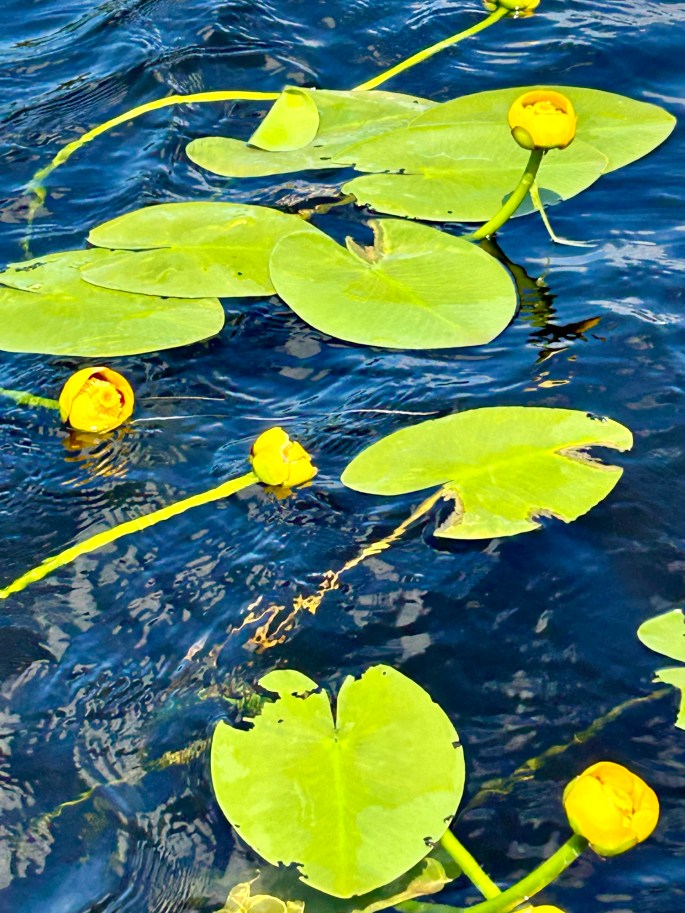
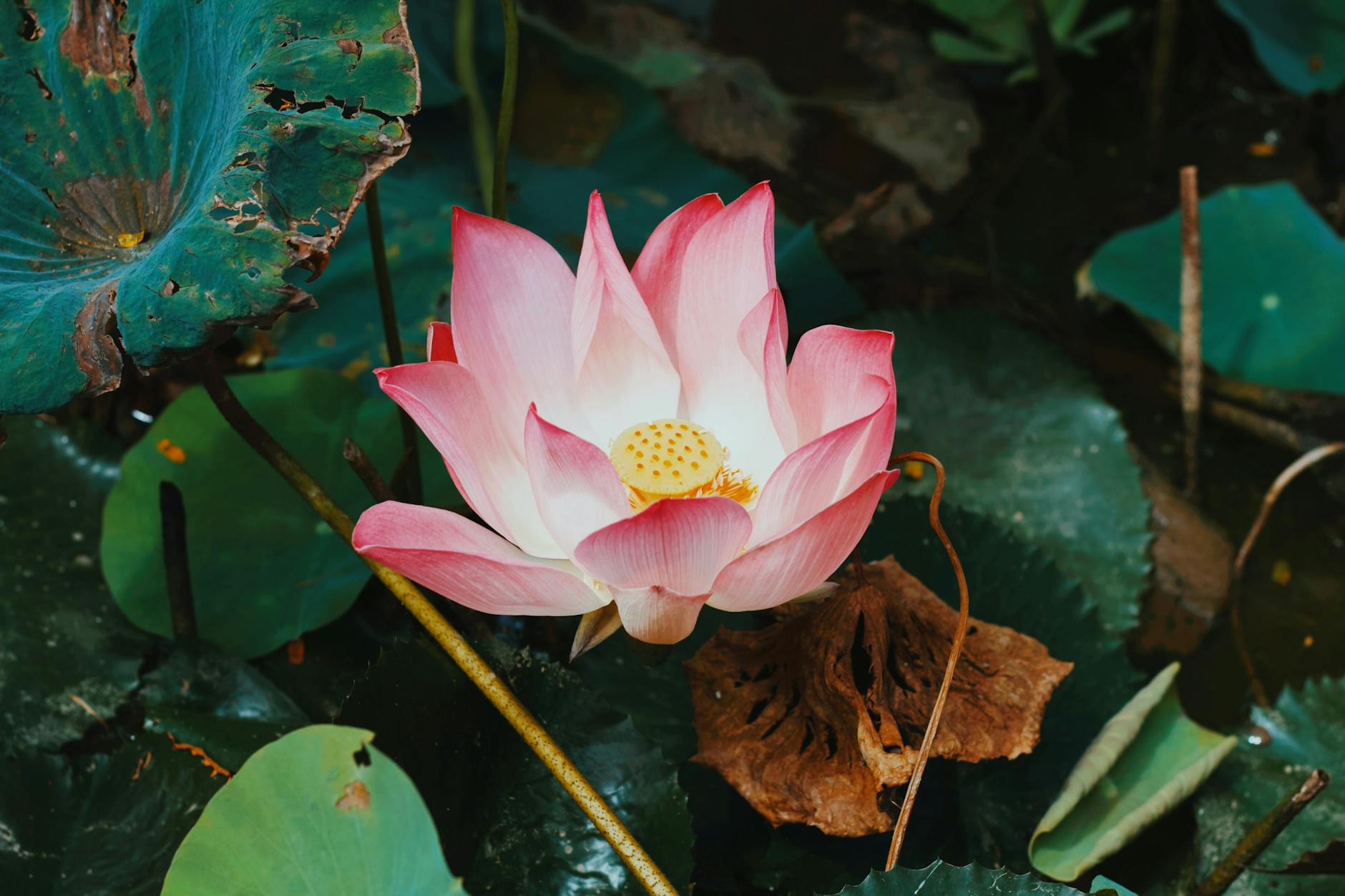
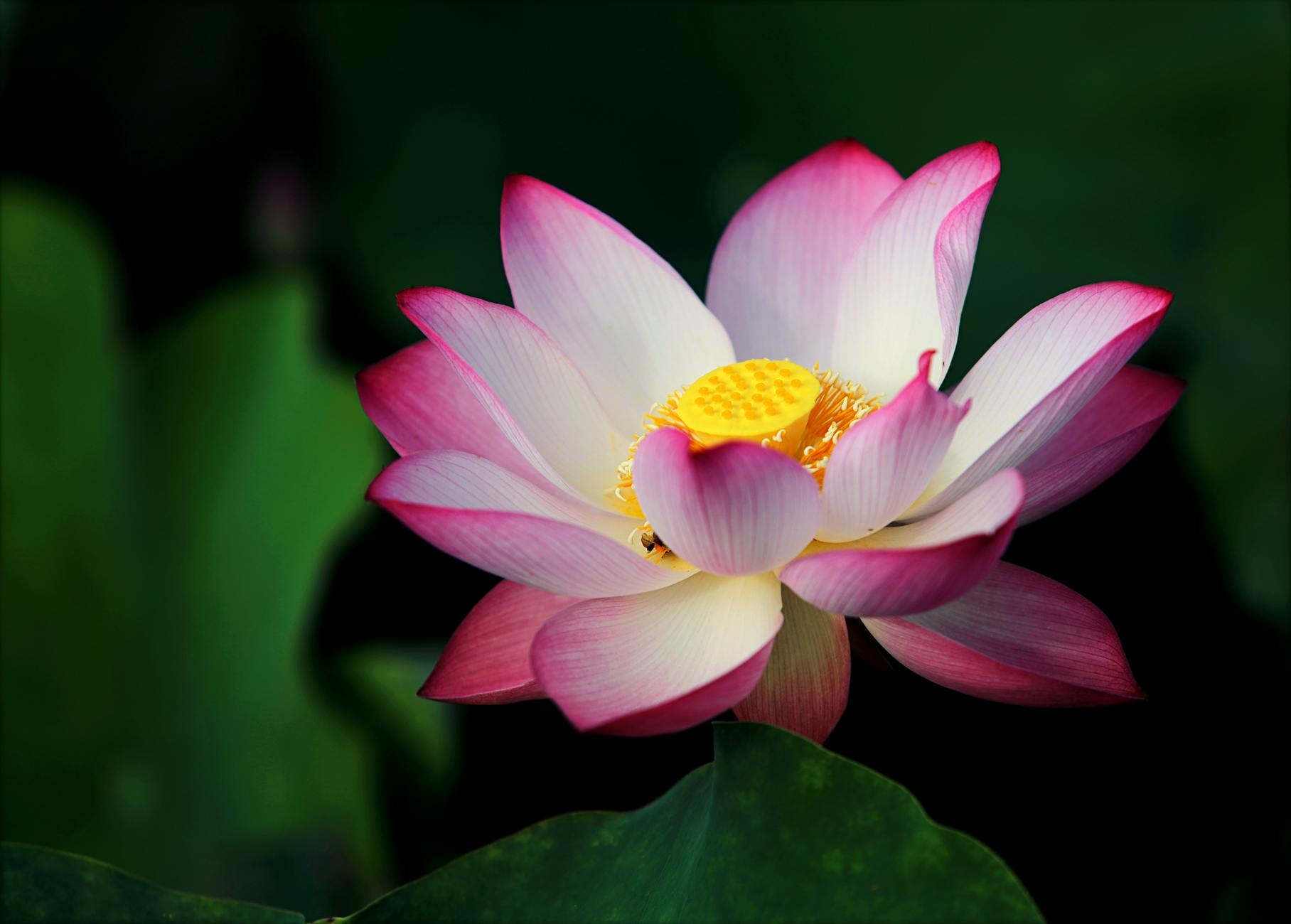
Both of those quotes culminate in the symbol of the lotus, the ultimate emblem of perseverance and tenacity. This aquatic flowering plant has been admired and a part of lore for centuries.  The more colorful lotus are tropical in nature and are most notably found in Asian countries.  However, the lotus plant is quite adaptable, and an American variation can be found along the east coast in waters ranging from Ontario, Canada to Florida. 

Lotus Persist 🌱

Because the lotus plant grows in a variety of environments, it has developed a method of ensuring its continuation. Once pollinated, the lotus releases large quantities of seeds into the environment. Many of these seeds will be eaten by aquatic life; however, the seeds, as I understand it, are quite durable.  Some lotus’ seeds can get up to 1.5 inches in size, surviving for several years, long past the life of the flower.  In fact, the seeds can persist in conditions that would prevent many other types of seeds from germinating. 

Lotus Aren’t AFraid of The Dark 🌑

Once germinated, the seeds begin sprouting in the mud, sending roots down even deeper into the muck.  Depending upon the plant and the depth of water, it can take from two weeks to two months for the plant to grow up to six feet tall through the murky water. As the round leaves reach the top of the water they can fan out in width up to 36+ inches wide. Once the plant has fully surfaced, the flower will begin to grow and ultimately bloom. 

Short life, Deeply rooted 🙏

Each American Lotus flower, with its butter yellow petals and fragrant aroma, will only last a few days, opening its petals during the day and closing the petals at night. The blossom appears to be free floating, but it remains rooted in the mud. During its short duration, the flower will bear seed pods that resemble the end of a watering can or shower head, ensuring multiple seeds from each flower will be dispersed back into its environment.

Lotuses ShaRe 🫱 🫲

Both the seeds and roots can be eaten, and parts of the plant can be used for medicinal purposes. Seeds pods can be dried and used in flower arrangement.  Additionally, due to the fact that lotus flourish easily in a variety of areas, even in the murkiest of waters, these plants provide shelter, habitat, and food for a variety of aquatic wildlife.  Each fall, however, the plants die away.

Gifts can arise from dark places

Therefore, the lotus is a prime example of the way in which gifts can rise from the darkest of places. Despite the fact the lotus is born in the mud, it rises to stand victoriously every spring.  Upon rising, its blossoms bear seeds to ensure it has a way to stand back up.

Seeds of hope, help, and healing

Beyond the fact the lotus has planned for its inevitable fall, it also offers seeds of hope and nourishment for others. Each flower produces an overabundance of seeds, many of which will settle into the mud for rebirth, but many more of those seeds will provide food for other living creatures. Additionally, those mud-buried lotus roots also provide nourishment not only to the plant itself, but can also nourish others.  Not to mention that the plant has medicinal qualities, offers shelter to others within its aquatic community, and beautifies a variety of environments.

Photo by Hiu1ebfu Hou00e0ng on Pexels.com

Lotus Life 𑁍

Let us live like the lotus flower. When we experience those dark and difficult times in our life, let us root down into the loam of our soul and allow faith to germinate a seed of hope. By rooting through the muck and into the nourishment of our faith, we can rise. It may take weeks, months, or even years, but we can rise and blossom once more.

Once on the surface, it is our job to produce good seeds of hope and help for others.  Even if our calm waters fade away and we find ourselves sinking into the inky dark once more, still we can rise.  We have done it before; we can do it again.  And with each new revival, our blooms can continue to offer more gifts to the world.  No matter how darkly rooted our past or present was/is, no matter the number of times it occurs, we can stand up, we can rise, we can bloom, and we can embody the lotus, offering shelter, nourishment, and healing hope to others. 

Blossoming Amidst Difficulties: Lessons from Bodie Lighthouse

“Stuck between a rock and a hard place . . . You’d better stop. Put on a kind face.”–Mick Jagger and Keith Richards

Overcoming Rocky circumstances 🌺

I was walking quickly back to my vehicle with a couple of coffees in hand.  Wait. What did I just see? Walking back a few feet, I looked at the spot in between the concrete wall and the sidewalk that abutted to it. Oh my heavens! It was a flower!

How it was possible for a flower to grow in such a tight crevice was mind-boggling.  The blossoming plant was the very definition of being “stuck between a rock and a hard place.”

Photo by Pixabay on Pexels.com

How many life situations feel like that–thrusting us between rocky and hard circumstances? 

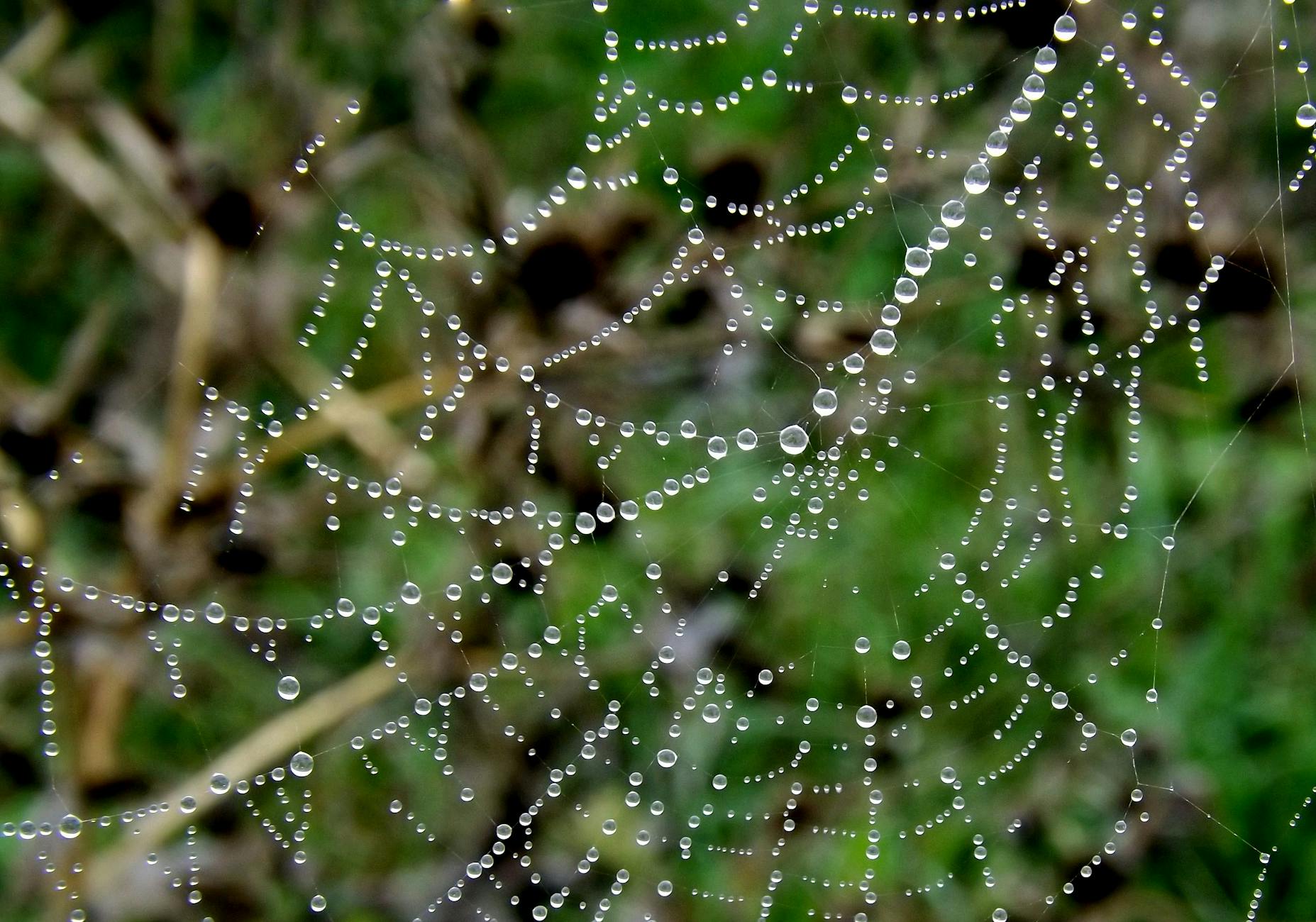
Most of us can identify times in which we were (or are) in situations in which there was no good solution or easy way out.  Like a praying mantis trapped in the web of a spider, our hands may be lifted in prayer, but the various strands of a difficult situation continue to remain sticky and taut. We can see life going on all around us, and yet, we remain stuck between an “unknown outcome” and “continued pain.” 

Confronting Difficulties 🪜

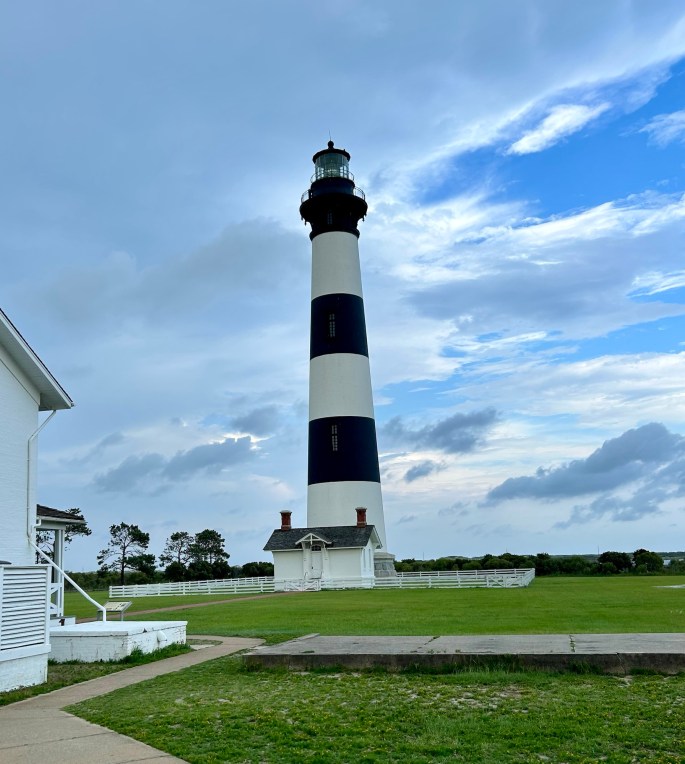
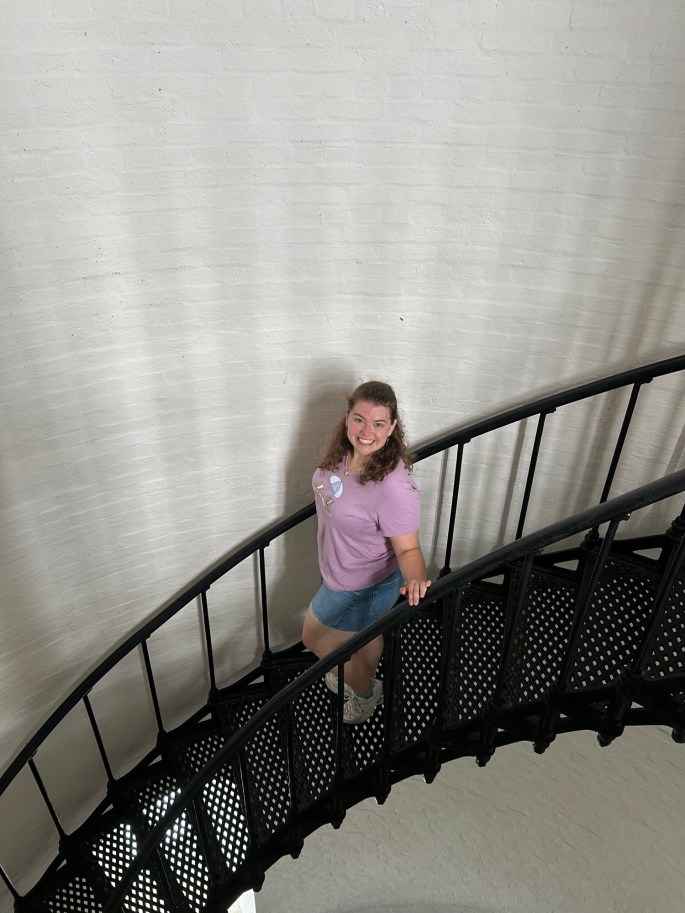
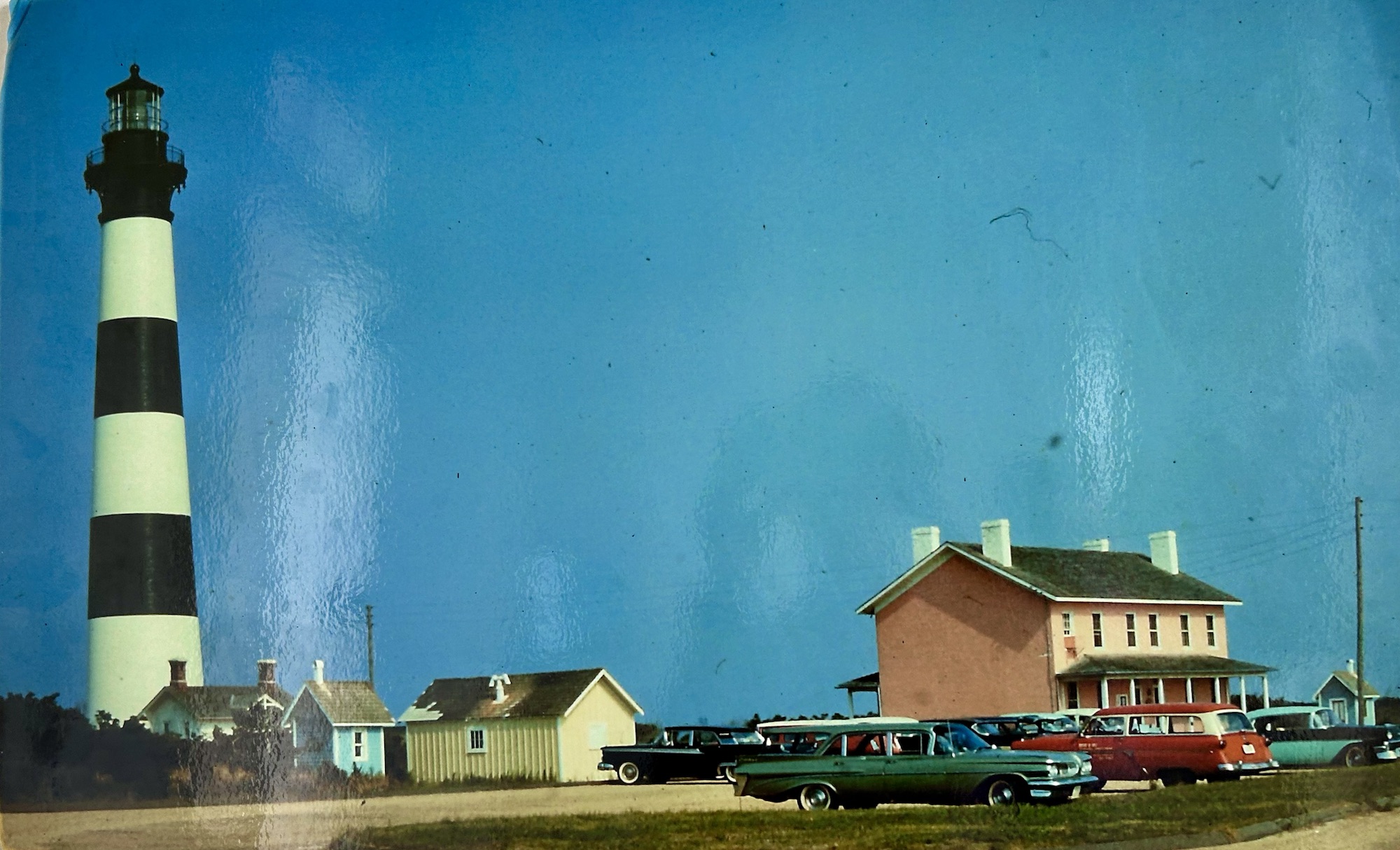
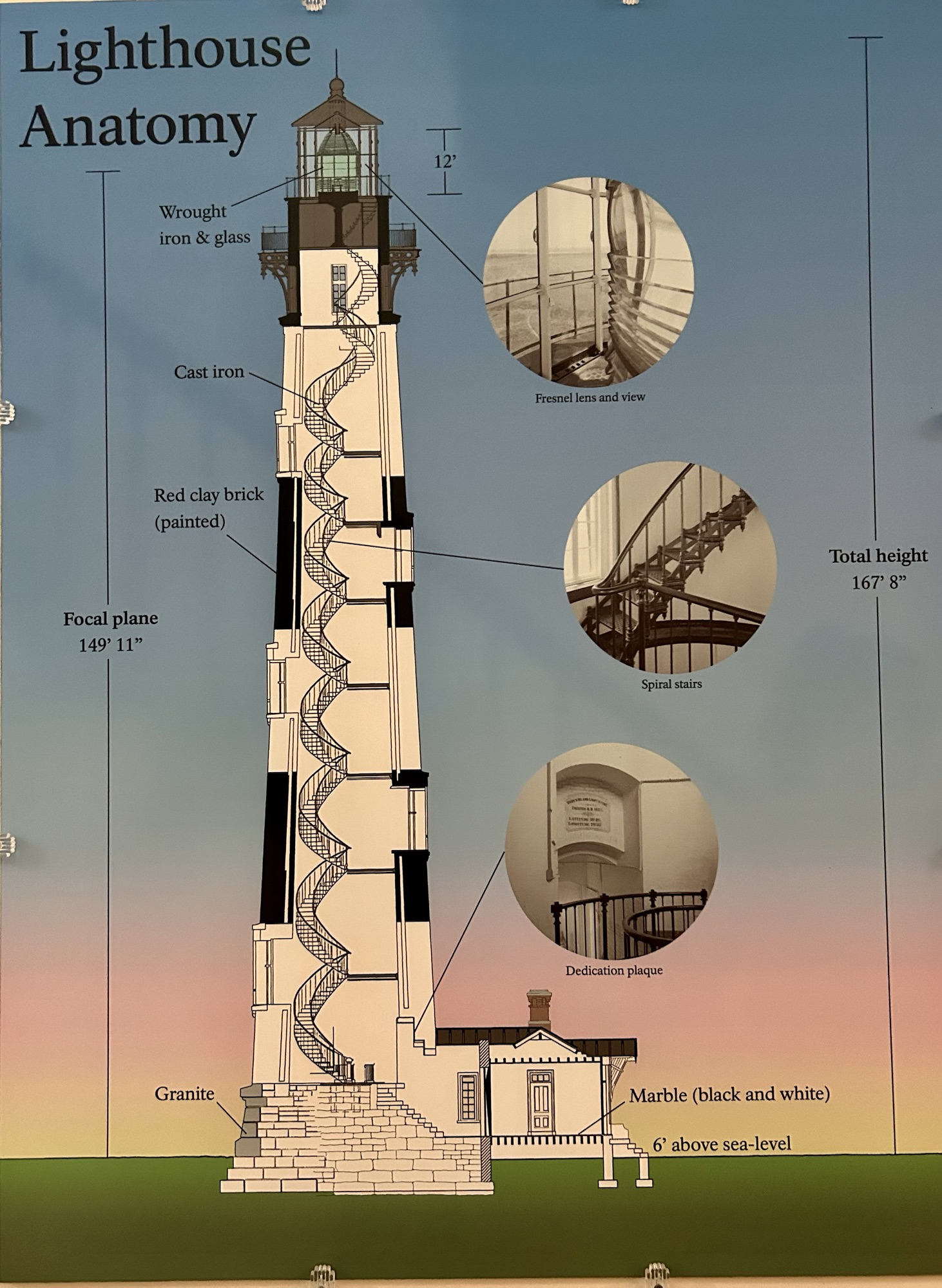
My daughter and I visited the Bodie (pronounced “body”) Lighthouse located on the Cape Hatteras National Seashore on a warm July afternoon. Once inside the lighthouse at the scheduled time, we were facing over 200 spiraling steps, equal to climbing 10 stories.  It contained no air conditioning; however, there were nine landings on which we could rest and catch our breath.

While climbing those steps, visitors must coordinate with other climbers as only one person at a time is allowed on a section of steps.  Therefore, when arriving at a landing, I had to yell “clear” to my daughter below, so she knew she could begin climbing the next section of steps.  Then, I had to listen and look above to the next section of steps to ensure there was no one coming down the steps from the top before I embarked to the next level. 

One step at a time 🚶🏽‍♀️

On and on we climbed.  Our thighs were burning, and none of the windows on the lighthouse’s walls were open.  Although there were small fans on each landing, they did little to prevent the sweat that accumulated on our brows and backs. Each time I reached a landing, I would marvel at the number of steps still above me, but I also felt a sense of amazement as I looked back down at the number of steps I had already climbed before shouting, “Clear!”

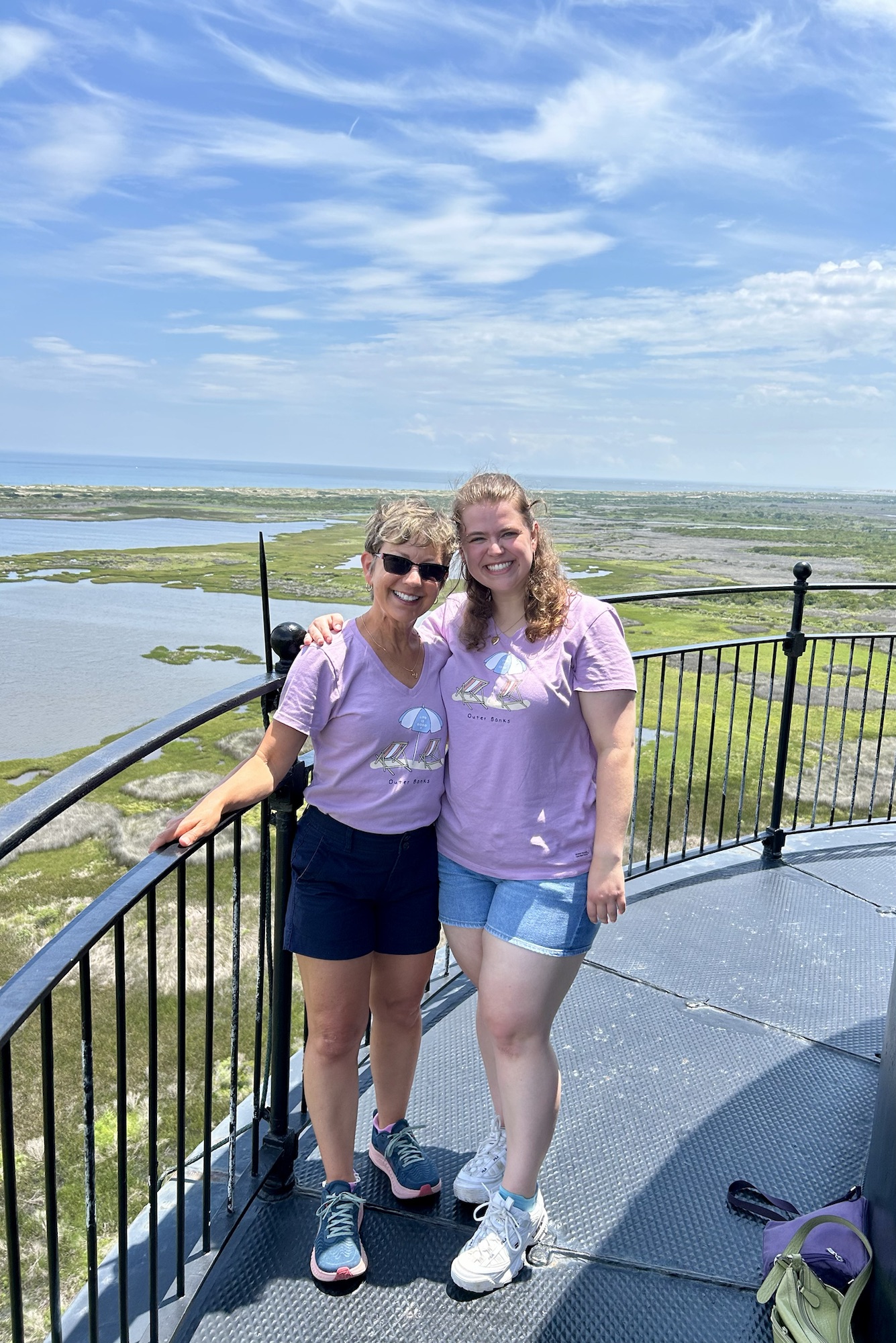
When we finally reached the top landing and were able to step outside onto the platform, the air felt exquisitely cool.  The breeze lifted and lightened our spirits, but it was the expansive view that took our breath away. 

A greater perspective 🌅

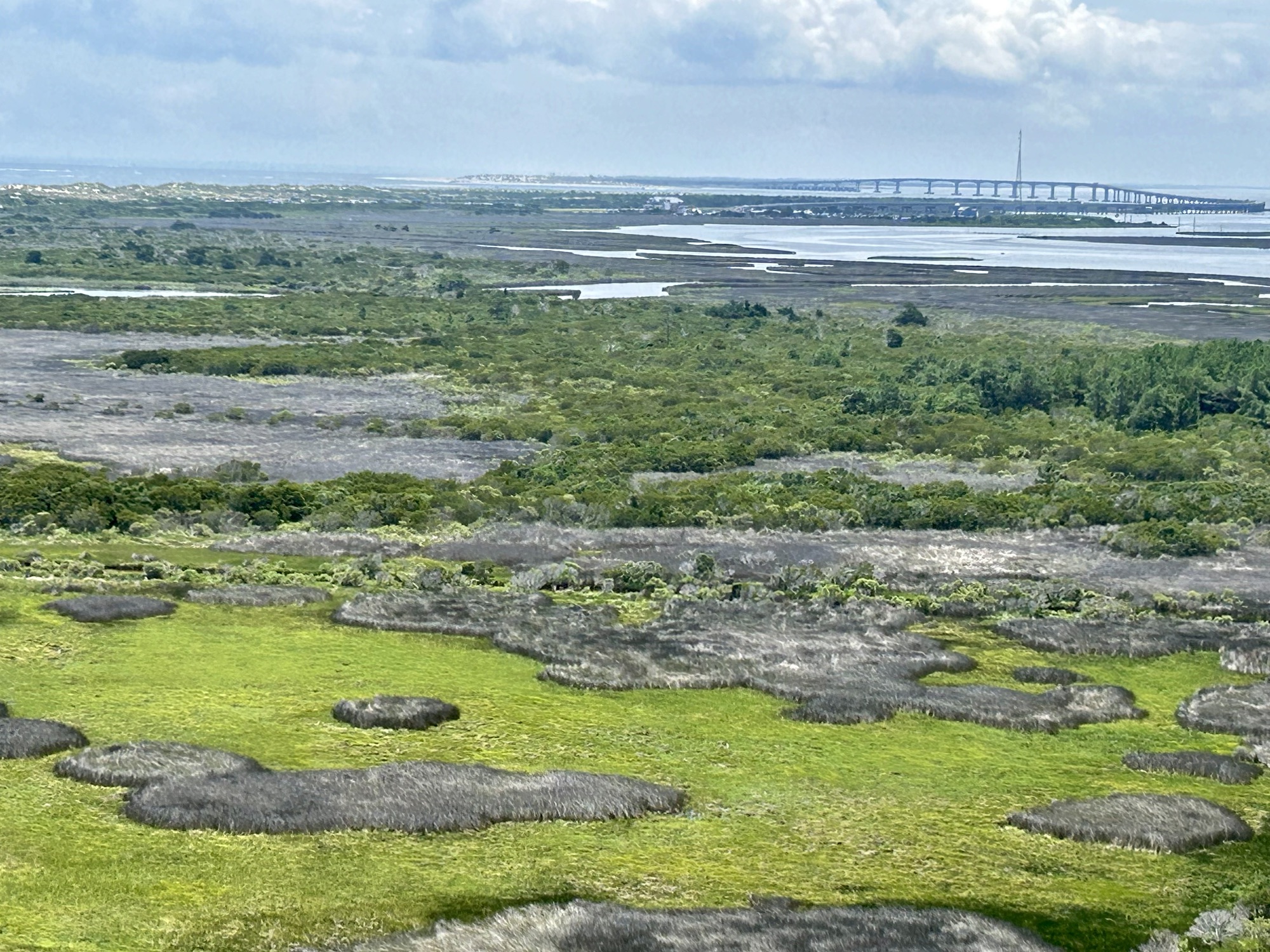
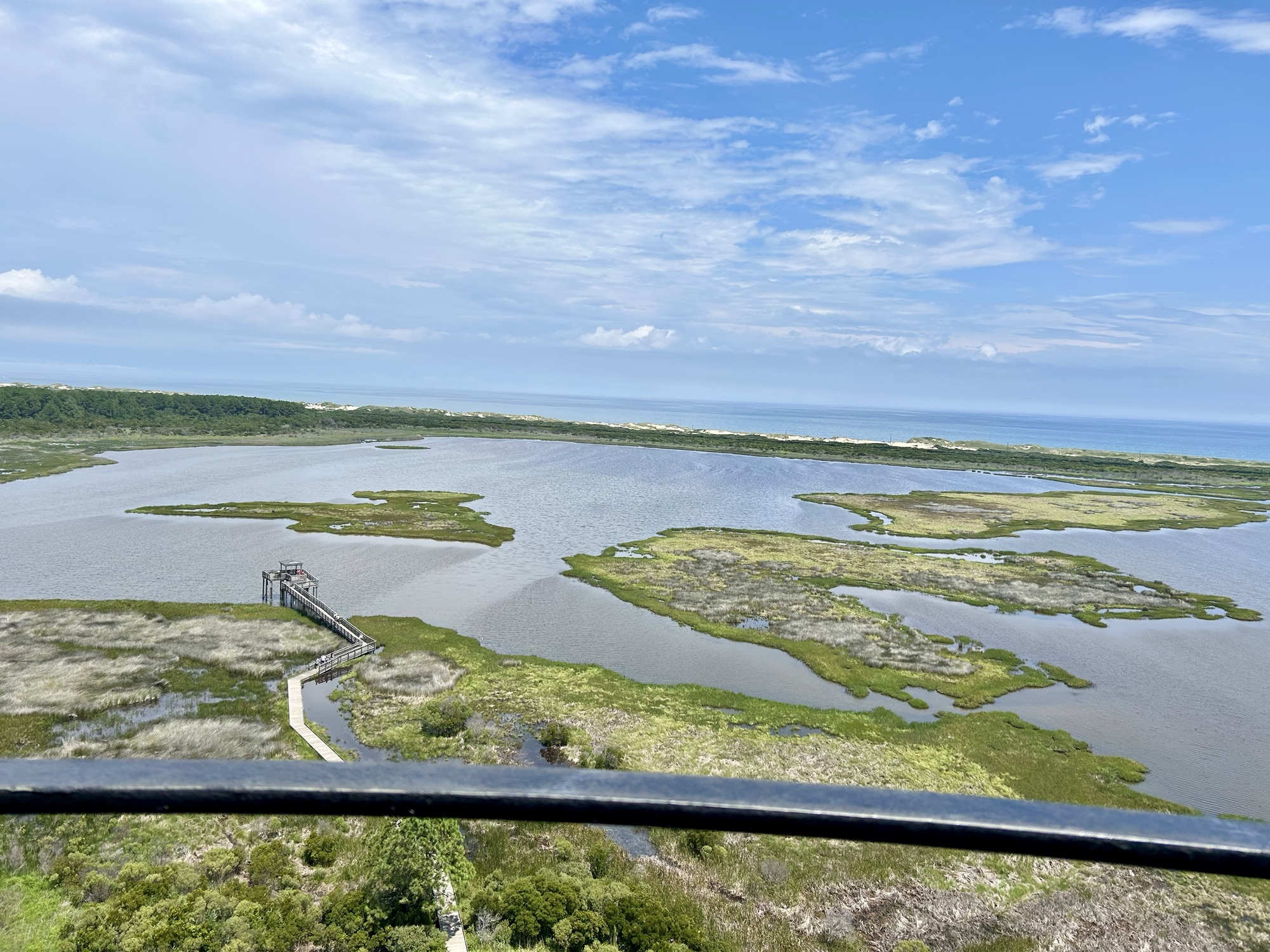
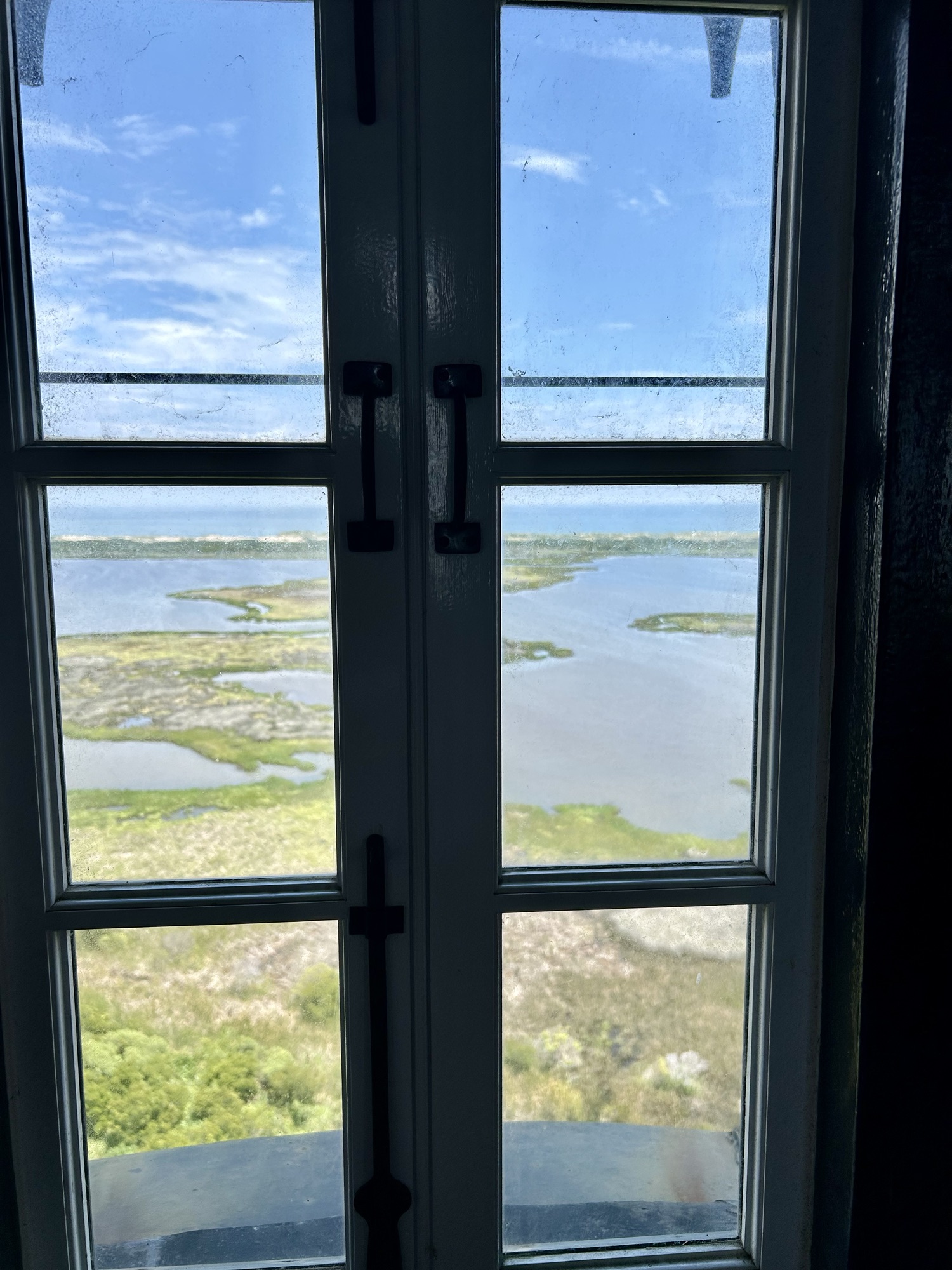
Spread out before us was 360 degrees of the sweeping sights of Bodie Island, Pamlico Sound, and the Atlantic Ocean.  Astonished by the surrounding marshlands, pine trees, distant bridges, the various bodies of water, and a map-like view of the vicinity, we appraised how different the Hatteras Seashore looked from a bird’s eye view. In fact, we realized that we only saw a fragment of what was all around us whenever we drove along NC Route 12 to and from the lighthouse.

We would have loved to have stayed longer, but our time was limited by default of the National Park visitor schedule.  Of course, the only way to exit was to climb down those 200+ steps, one level at a time.

The Only way Through is Through ⬇️

Just as the way up took time, especially coordinating with others, so did the climb down.  However, this time, it felt different.  We now possessed the confidence of knowing that we had conquered the climb and made it to the top.  We stepped down the steps with a certain satisfaction one feels from having successfully “blossomed,” as that flower did between the cracks, with the completion of a difficult task.  

Many of life’s struggles and challenges are like that lighthouse climb. 

Sometimes we face situations in life that are so difficult, we feel stuck.  If we don’t tie up our laces and start climbing, we’ll remain stuck, unable to move the boulder of a problem.  However, if we start climbing, it’s going to hurt, and we will sweat from the effort–at least proverbially speaking. 

Start climbing anyway

Similarly to those nine landings, we may climb over one rock, only to realize there are more to maneuver around. There are more sides, more stony surfaces relating to the struggle than we initially think.  Thus, there is more climbing to do, more problems to solve.  

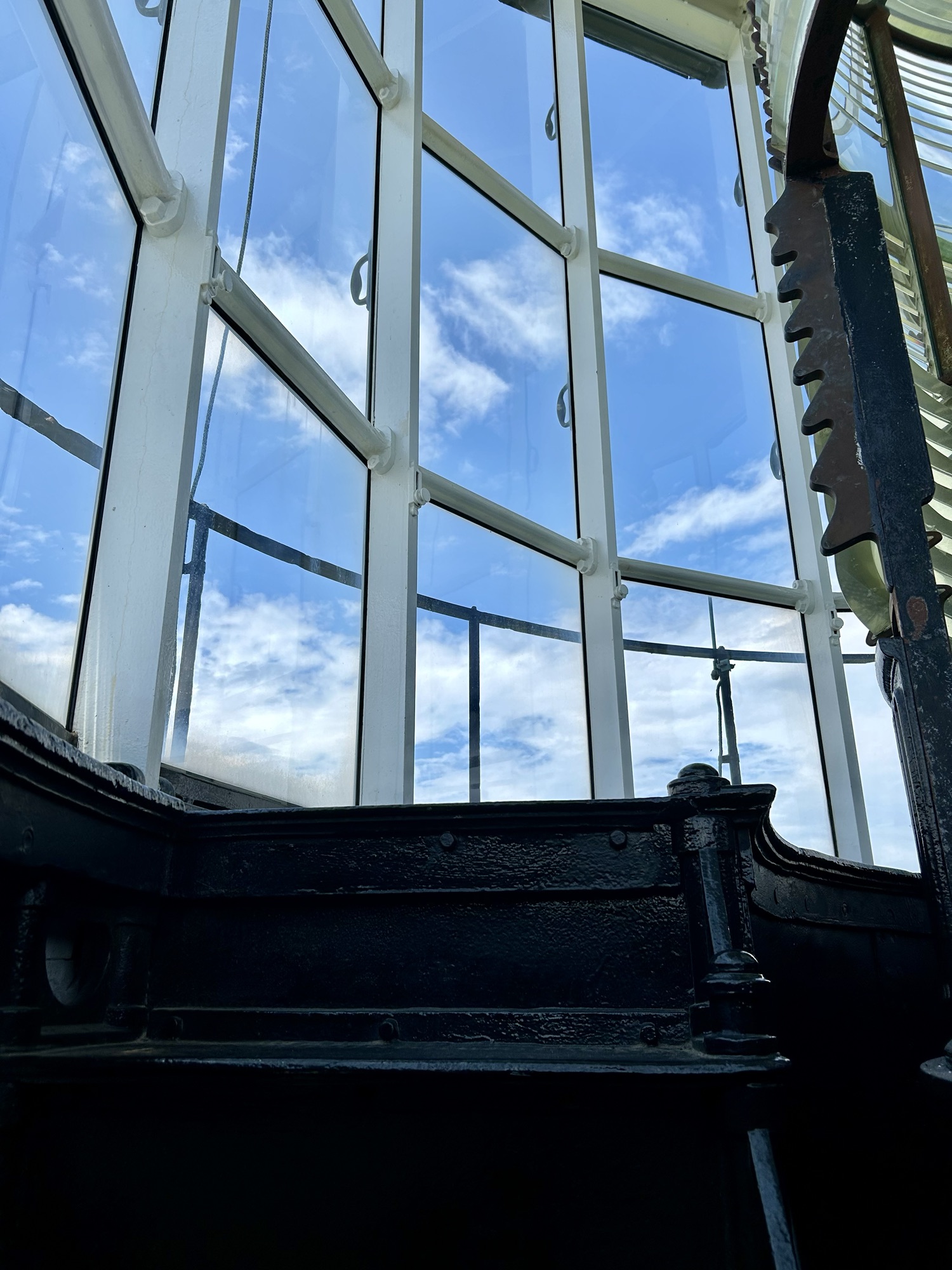
Looking through the lighthouse window, I could see the progress we were making.

Appreciate how far you have come

No matter how much more there is to go when dealing with life’s challenges/changes, it is worthwhile to notice how far you have come.

Taking a moment to pause and celebrate the challenges that you were able to “clear” is important. It not only serves as an opportunity for gratitude for what has been overcome, but also provides time to symbolically catch your breath before attempting to conquer the next step of the challenge.  Certainly, the “unknown” will remain in wait; however, by pausing and not rushing towards a quick solution, we are better able to gather enough strength for tackling the next part of the challenge.

Making the climb together made a difference.

Seek Support

When working through a life challenge, it is often beneficial to enlist the help of a friend or loved one.

Climbing up the Bodie Lighthouse steps, not only did I have my daughter with me, but there was a group who had reached the top before us. As they descended, they offered words of hope.

“The view is gorgeous from the top!”

“You’re almost there!”

“It is so worth the sweat!”

Seeds of encouragement, whether spoken or written, along with the presence of another dear soul helping us along the way, can make all the difference when we are striving from level to the next as we navigate the challenge/change.  

Invoking your Higher Power can light the way through rocky and rough patches.

Have Faith

Invoking the help of our Higher Power can offer further strength and resolve.

With each step taken, and each landing reached, hope increases.  When that sense of hope is nourished with support, encouragement, and faith, it fortifies us–feeling akin to love–a love that can see us through the difficult time.

Hope often feels akin to love. 💜

Eventually, each of life’s challenges and changes reach their pinnacle, allowing for a reprieve to bask in the breezes of accomplishment and the joy of the new lifeview. 

Of course, like those summer blossoms, we can’t remain on top forever.  Eventually, we all must descend from the height of accomplishment.  However, we can make that descent with a greater sense of resiliency, strength, and a deepened faith that we can not only move up, over, and around life’s rocks and hard places, but we can also help others do the same.

One breath in, one breath out for peace and calm

 “We need to find God, and that cannot be found in noise and restlessness. God is a friend of silence. See how nature–trees, flowers, grass grows in silence . . . We need silence to be able to touch souls.” –Mother Teresa

Photo by John-Mark Smith on Pexels.com

The Miracle of EArly Morning 🌅

One of my favorite times of day is the stillness of the early morning.  Don’t get me wrong, depending upon how early I have to get up, it can be a chore to drag myself out of bed.  However, once I am up, enveloped by the hum of the house and the ambiance of the celebratory, daybreak birdsong, I feel a peace begin to zip up around me like my favorite hooded jacket. 

Now that daylight arrives earlier, it is especially delightful on the weekends to sit at my desk, steaming mug of coffee beside the laptop, and gaze out the open window as the birds continue their lilting praise of the arrival of daybreak. Sometimes I see the contrails from a jet writing across the sky.  Other times I observe the rustle of trees or my neighbor’s cat stalking some unseen prey. Regardless of what I notice, I take a deep breath, and invite the silence within.

Gazing out into the trees and grass of my backyard, there is a peacefulness of the Divine Presence.  Observing the continual miracle of seasonal change, I am bearing witness to the continuity, strength, and resiliency of nature.  With one breath in and one breath out, I can connect to Divine life force within, silently supplying me with continued strength.

Photo by Engin Akyurt on Pexels.com

Welcome the Silence 🤲

I continue to welcome the silence, and I allow it to wash over me, cleansing the stresses and worries of the night that interrupted my sleep.  I ask God to hold space for me within the silence as my soul settles into place. One breath in. One breath out. Each breath, rich in the silence, nourishing my peace of mind, if only for a few minutes.

Momentarily, I become part of the silence and my brain softens into the quiet, temporarily liberated from its continuous lists of things to do, notice, and concerns. One breath in. One breath out. I feel the silence breathing peace through me, filling my cells. I ask for the peace to live through me and to emanate from my actions, knowing even then, I will still stumble into mistakes.

The early morning silence centers and anchors me to the importance of being more mindful of the here and now.  One breath in. One breath out. I allow the silence to cultivate peace within that moment, and I ask that it remain with me as I move through my day, understanding that disturbances of my inner peace will also most likely occur throughout the day. I further pray the silence will infuse and imbue my day with moments of peace I can offer others, if only through the simple act of a smile or kind word.

Photo by Csankovszki Tibor on Pexels.com

Whispers of Silent Inspiration 🙏

If I am fortunate, the silence will sometimes whisper inspiration when I do encounter stress in a later moment. It only requires that I momentarily bring awareness to my breath, and once more, I can connect to the True Source filling my lungs, giving me life. One breath in.  One breath out. 

When the silent morning meditation begins to wind down, I become more aware of my surroundings and my own physical body.  I look for those poetic plane contrails, but they have usually vaporized, reminding me of the impermanence of struggles, strife, and life in general.  One breath in. One breath out. My words, my thoughts, my deeds are like those contrails, here, in this moment, but eventually given to the heavens.

Bringing awareness to the moment, I will feel the tendrils of morning silence loosening its grip, and I mourn briefly that I must leave its embrace. There are more words to be written, more students that need taught, and more people that need loved.  One breath in. One breath out. I remind myself that I can always come back to the comforting peace of the silence of my mind with one moment of conscious breathing. 

Photo by Dom J on Pexels.com

The antidote to noise and Chatter 🧘

It seems to me that we currently live in a world where many of us have forgotten, or even fear, silence.  Chatter and noise seem to flow in an endless supply, alongside daily routines filled with responsibilities and heaping portions of distractions. However, by seeking the solace of silence and focusing on your breath, if even for a few moments, we may discover our heart rate slows, racing thoughts may decrease, and the body may relax a bit.  One breath in.  One breath out. 

The older I get, the more my appreciation and need for silence grows.  If we listen too long to the noise of the media, news, traffic, screens, chatter, and so on, our stress increases, our worry increases, and our anxiety increases.  We forget that silence soothes our souls and brings us back to the presence of God within and around us. All it takes is one breath in and one breath out. 

Clouds attaching to my story of sunshine: A lesson on detaching from the plan and surrendering to your Higher Power

“When things don’t go as you planned, don’t be let down. Make new plans. The sun doesn’t stop shining just because of dark clouds.”–unknown

Photo by Jess Bailey Designs on Pexels.com

Who loves a good plan? 🙋‍♀️

Are you a planner?  I can be.  I love a good plan like a kid loves her teddy bear. I can say the same about a solid routine.  Various routines and/or plans give me structure, a scaffolding, to ensure I remember to do, find, and complete various short and long term tasks.  

Without plans and routines, I am a total right-brainer who just goes with the flow.  Free-styling is fine for many of my creative endeavors. Unfortunately, most of my creative endeavors bring little to no income to pay the bills.  However, I love my creative side.  It’s the joyful part of me.  Thus, creating structure and routine to my day, allows me to pay the bills and have fun too.

I will fully admit that I have different plans/routines for different compartments of my day/week, and I work hard to fit those various plans together into the patchwork quilt that is my life. Routines for my profession are obviously far more important and detailed than routines for household chores.  Nonetheless, no matter the plan’s level of so-called importance, if I create or find a plan that truly works, I prefer to stick to it, cling to it if I must . . . but . . .

Photo by Wendelin Jacober on Pexels.com

Uncooperative Plans 😩

Unfortunately, life isn’t always so cooperative.  It keeps flowing like a river reacting to the weather trends unphased by “Stephanie’s plan”.  Sometimes the river of life flows steady ‘round bends and curves.  Other times it is dried to a near trickle, and I wonder if the rains of inspiration will ever arrive.  Then there are those storms that wildly overflow the banks of life’s river sending its waters over rocky embankments and into uncharted territory.

As I sat at my writing desk this morning, contemplating how to begin writing, I spent time staring out the window.  Dawn’s light had broken upon clouds and fog. I could see peaks of brighter blue sky in between the gaps of the clouds overlaid with gauzy fog, and I realized that is often what happens to my plans.

Photo by Tim Mossholder on Pexels.com

planned laughter 😆

I often joke that I must make God laugh all the time by saying that I have a plan.  Despite the fact that I know I need plans to organize myself and my hot-mess of a mind, I also know I cannot attach too tightly to those plans because God and life are going to do what they are going to do with me. And that is exactly what I am now experiencing.

One of my plans for 2024 is to run a spring half-marathon–the Virginia Beach Shamrock.  It is one I ran last March weeks before having a fairly major surgery in April.  Months later, in November, I ran the Marshall University Half-Marathon as a celebration of recovery from that surgery. 

My training plan for the MUM was long and protracted in order to allow my body to heal and recover from surgery.  After returning to work in May, I began gradually increasing my walking endurance throughout May and into June.  

Then, in July and August, I gradually added bouts of jogging into my walking. Gradually, the running sections increased as the walking sections decreased, but there was always permission to walk at any time, and even for the entire work out time, if needed. Due to careful planning, I was able to build up to running the entire half-marathon in November.

Therefore, I thought why not continue training through winter and once more run the VB Shamrock Half-marathon.  I had a plan.  It was mapped out from Thanksgiving week until March 17, the day of the half-marathon.  It was a beautiful and doable plan–not too hard–and fully manageable with my work schedule. 

Photo by Adrien Olichon on Pexels.com

Who’s doing the Steering? 🛻

But as I said, I told God I had this plan, and He had a good ol’ belly laugh at it. I mean He must have enjoyed a real guffaw because very little of “my plan” has gone “as planned.” In fact, I have had to rework and adjust this plan so many times, I have finally, less than three weeks out, metaphorically thrown my hands in the air and surrendered because only Divine Providence knows what will happen on the day of the event. 

Therefore, as I sat at my desk staring at the clouds, the rising mist of the fog, and the interspersed glimpses of blue sky, I reflected on my so-called plan.  The plan included four days per week of running and/or walking, with one longer session per week, completed outside on the weekend, gradually increasing in distance. 

Most of the early weeks into the plan, I was able to complete four days, running outside (translated, not on a treadmill) at least two of those runs.  However, at some point after Christmas, I had to begin making adjustments.  Runs were missed due to conflicts in schedules, and numerous runs were completed inside of a gym on a treadmill due to inclement weather. Plus, I battled several colds and even a random ear infection, which is something I haven’t had since I was a child, so more running time was missed.

Photo by paul voie on Pexels.com

Cloudy thinking 🤔

The thing about running, or any workout journey for that matter, is that it is a microcosm of life.  Lessons learned on the running (walking, hiking, lifting etc) trail are often tangible life lessons.  My plan was those fluffy white clouds in the sky that, in my mind’s eye, I could step comfortably from cloud A to cloud B and so on.  The morning fog, however, was the realities of life. Sometimes my planned path was clear, but most often, there was some sort of, metaphorically speaking, weather event occurring preventing a smooth transition from one step to the next.  

The cerulean sky, to continue the metaphor, was (and is) the Universe, the great I-AM, and that is to whom, in the end, I must surrender.  As Carrie Underwood once sang, I need to let go of the steering wheel because clearly I am not the one in charge despite my illusions of control.

By taking a step back, away from the great “Stephanie-said-so-plan,” I can gain a new perspective.  Firstly, I am grateful for overall good health. Sure, I have had a few minor illnesses this past winter, but nothing life threatening.  

Furthermore, perhaps all those challenges and obstacles were Divine Providence’s way of giving my body the rest I wasn’t giving it. Perhaps, I have been pushing too hard for too long.  Maybe some rest and recovery, like I gave myself after surgery, is what my body needed–especially as a more, ah-hem, older adult.

Photo by Thirdman on Pexels.com

Surrender 🙏

Similarly to the way I witnessed the morning surrendering the events of the coming day to the Creator, I too must surrender the events of the future.  What will be, will be.  End of story.  As my grandmother used to say as a preface, “Lord willin’ and the creek don’t rise,” I will still have the opportunity to travel for a short trip to the shores of Virginia and live to tell another story.  And, where’s the joy in life without stories to tell and lessons to share?  

Surrender the plan

Let your Life Be a Work of Art

“Make your lives a masterpiece, you only get one canvas.”–E. A. Bucchianeri, Brushstrokes of a Gadfly

Photo by Ana vu00ea Ana Fotografa on Pexels.com

I recently came across the line, “Let your life be a work of art.”  These words were spoken by the late Thich Nhat Hanh, and they inspired me to reflect upon their deeper meaning.  As often happens, I could feel the tendrils of my brain entwining around this notion and exploring all of its complexities.  In fact, the next day, I found myself in meditation asking myself how to “live artfully” and contribute more beauty to the world.

It seems to me that all lives are pregnant with possible ways to share unique artistry with others. While I know, as Bucchianeri once wrote, we only get one life canvas, I’d like to think, that with the gift of each new day, we are each bequeathed a new canvas on which to create. Therefore, how do we bring about awareness and intention to our daily opportunity to create quality life art? 

Photo by Steve Johnson on Pexels.com

I think many great religious and thought leaders would point to nourishing your innerworld as a start. Initially this may sound self-centered.  However, I am reminded of the repeated directive instructing passengers, when flying on an airline, “put the oxygen mask on yourself first before helping others.”  This is because you cannot be of assistance to another person, if you don’t have a one true source for life. 

Therefore, it makes sense to foster a rich, more faith-filled inner life in order to create a more inspired and productive outer life.  Personally, I know when I mindfully start my day with time set aside for thoughtful devotion and contemplation, my actions are apt to be more harmonious and positive with others.  In fact, I find that if my inner world is unclouded, my actions and choices are more thoughtful and in better service to others.  

Photo by Kelvin Valerio on Pexels.com

That said, I don’t think it’s a linear or perfect process, but a gentle ebb and flow. When we seek, pray, read, meditate, and/or focus upon living more peacefully, as described in most major religions, we can then draw from a wellspring of faith, purposely seeking guidance for serving others.  However, that doesn’t mean we always remember to do that.  Mistakes, stress, anxiety, emotional overload, and so forth, can take us off our A-game for a span of time, but like a swing responding to gravity, our faith can draw us back to the path. 

The more we return to cultivating that inner-world, the more we begin to live in closer alignment with our higher purpose.  Life, it seems, begins to evolve and flow with greater ease, enhancing our ability to constructively contribute to the world and others around us. The greater the sense of ease, the less resistance and/or friction in life, thereby allowing for more effective and productive communication and actions.  Thus, the “art” we hope to create in life, organically continues to evolve and spread to others.  

Photo by Kampus Production on Pexels.com

 In fact, at least based upon my current reflections on the subject, it seems to me, the more we get clear in our inner world, the more we learn to accept responsibility for our own actions and choices.  As we assume more responsibility for our own actions, we can begin to also foster more responsible reactions as well.  In fact, when our reactions become more moderated and considered, the more effectively we can generate a sense of calm, creating less distress in our own lives and the lives of those around us. 

Of course, writing about “life as art” is easier said than done. Nonetheless, I do believe it is worth trying. As with any work of art, the process is often filled with struggle, but as any artist can tell you, the process of creation can often be messy and imperfect.  Therefore, learning to artfully live with more intentionality and tempered reactivity is a process also permeated with struggle as it takes awareness, time, and a large quantity of patience with self and those around us. 

Photo by Afta Putta Gunawan on Pexels.com

However, by repeatedly returning to the cultivation of our inner life, our hearts and minds are gently reminded to remain in alignment with the higher purpose of our faith.  Even after those less-than-stellar days, that we all experience, we can return to our practice and consciously redirect.  In the end, this not only benefits you, but others also profit by your choices, and even more so, by your example.  This give and take of constructive and purposeful living creates a dynamic design of a colorful criss-cross of actions and interactions.

Admiring the beauty of a large pot of flowers, vincas, on my front porch brought me full circle in this “living artfully” thought exploration.  The flowers began as four tiny individual plants. In spite of all the crazy weather, the vincas have multiplied ten-fold, it seems, with eye popping color. The vincas are a reminder that our lives can flourish in similar fashion. 

Our Creator designed us with the ability to withstand dry times, heavy rains, and even stormy seasons. However, the more often we return to nurturing our inner world, the better able our True Source can work through us. By more frequently listening and surrendering to that deeper voice of God, the more we allow our lives to become the design of the Creator’s hands; and like the vincas on my porch, our lives can become unique and colorful works of art to which Hanh encouraged so many years ago. 

By creating the practice of cultivating our inner world, we can become aligned with our higher purpose.  Through the ebb and flow of practice, we learn to accept responsibility for actions, consider our reactions, and allow the "art" of our life to flow with greater ease.
Photo by Jennifer Murray on Pexels.com

Sometimes We All Benefit From Unplugging

“Today, when nearly every question can be handled instantly by Siri, Google, or Alexa, we’re losing the habit of pausing to look inward, or to one another for answers.  But even Siri doesn’t know everything.  And Google can’t tell you why your son or daughter is feeling hopeless or excited, or why your significant other feels not so significant lately, or why you can’t shake chronic low-level anxiety that plagues you.”–Vironika Tugaleva

 My classroom now includes the integration of an Apple TV through which I connect a  computer or iPad in order to project content onto a whiteboard.  One day recently, it wasn’t working, and after completing a few troubleshooting steps, I was at a loss.  A co-worker suggested that I unplug the device for a short time, then plug it back in.  Which led me down a path of reflection . . .

It is amazing to think I incorporate the Apple TV with all of the other forms of technology in my classroom after beginning my career with little to no technology in the classroom, much less in my own life.

I find the technology I integrate into my classroom a point of marvel.  The most advanced technology that I used with my students during my early years of teaching in the late 1980s was a rolling chalkboard that was also magnetic!  Since then, the role of technology, not only in my classroom, but also in life in general, has remarkably transformed.  It reminds me of making a snowperson as a kid. 

Forming the largest part of the snowperson required concerted effort, and it was slow work. With each segment, however, the snowperson became easier to form, and the results came faster until everyone in the neighborhood had access to see and enjoy its newest member.  Eventually though, no matter how much more snow did or did not fall, the snowperson melted away into the soil, and the once novelty then became part of the neighborhood’s foundational ground without the kids and their families releasing it.

Photo by Balu00e1zs Benjamin on Pexels.com

In a similar, but much more complex fashion, technology became integral to humans.  First, its development was a slow, laborious process that required the endeavors of many. People would gather and marvel at the latest creation, until eventually those cow-spotted boxes became a common home delivery sighting. However, as information began to gather, momentum picked up, and soon the technological developments started evolving at an even more rapid pace until the technology melted and integrated into the very foundation of society, no longer a curiosity.

Information can be gathered in one or two keystrokes of a computer or handheld device.  Additionally, one can gather statistics, facts, figures, and so forth, at any time of the day or night.  As a general rule, this acquisition of material is neither good nor bad–it all comes down to the producer and user of information. Unfortunately, there seems to be a growing sea of pride developing among those who can amass large quantities of data, gathering facts in their head on a daily basis–as if the more data one can gather, the more important their opinion becomes. 

Photo by cottonbro on Pexels.com

This has also led to a new mantra regarding disdain for one another’s feelings.  I have seen it crudely phrased on bumper stickers and yard flags/signs, and I’ve likewise overheard it stated slightly more civilly (although often still aggressively) in conversations.  In fact, I have even made similar statements. However, I do believe there is a danger in discounting feelings/emotions. 

I could make the argument that those who state that they dismiss feelings or emotions are still unwittingly attached to their own.  This is due to the fact that their pursuit of intellectual facts/data/statistics, on which they make their various stands, is motivated by the good feelings that accompany their accumulation of data.  In fact, according to the latest data, the use of technology–even in intellectual pursuits–is designed to create positive sensations driven by dopamine, those feel-good chemicals released by the brain.  This is the exact same chemical response that is the force behind both positive habits and negative addictions.  Therefore, to say a person’s feelings don’t matter is ironic, since at the most biological level, it is dopamine driving one’s attachment to gather facts, data, and statistics.

Photo by Vie Studio on Pexels.com

Now, before I am sent outcries of defensive outrage, let me continue to lay out my points in order to get to my thesis.  I absolutely value knowledge, and I enjoy listening, reading, and discussing valid research content.  In fact, without it, I would not have an education, nor would I have a job.  In fact, without these intellectual endeavors, society as a whole would not have made many of the significant advances that contribute to our well-being.  

Instead, I think that the danger resides in valuing data/statics/facts above all else, causing us to lose sight of the importance of unplugging and listening to that still, small voice that resides within each of us.  It is that voice–that level of consciousness–that allows us to discern, not only right from wrong, but also develops and fosters those less-intellectual, but critical pursuits, such as compassion, empathy, communication, adaptability, creativity, interpersonal skills, teamwork, collaboration, and so forth . . . .   Without these so-called soft-skills, humanity is not any different from the technology on which I write this piece.

Photo by Alena Koval on Pexels.com

At the time of writing, the Northern Hemisphere is in the early stages of spring.  The ground is softening, and soon, the soil will be prepared for cultivation.  Branches, rocks, and any other debris will need to be removed, the soil will require proper tilling, leveling, and fertilization in order for those tiny seeds to grow into a harvest of bountiful, nutrient dense food. Likewise, it is only by unplugging and pulling ourselves away from devices that we can prepare, fertilize, remove mental detritus, and grow a harvest of intra- and inter- personal skills–which starts when we take time to plant inner-seeds of faith in order to grow our relationship with our Creator.

Faith is not about intellectuality–although people certainly try to do this.  Instead, I believe faith requires conviction, and that conviction comes from the cultivation of one’s inner world–the heart center, the residence of, yes, emotions. Faith is not tangible, it cannot statistically be verified.  However, I argue that without faith, we cannot fully develop emotionally.  In fact, I would go so far as to state that without faith, we cannot understand, offer, and receive love; and without love, we are little more than a “resounding gong or a clanging cymbal” as one of my favorite Bible verses states. 

Photo by Inna Lesyk on Pexels.com

 As such, I strongly suspect that many of the wars waged around us, both at home and abroad, have as much to do with a lack of faith and development of all those so-called soft skills, as they do intellectual evaluation of facts, statistics, and data. Unfortunately, we may not be able to control conflict around us, but we do have a choice in how often we unplug, look within, and cultivate/enrich our own faith/heart.  It is through these unplugged pauses that our faith becomes more strongly rooted, increasing our trust in the belief that Divine Providence will provide for a path through–maybe not the way we had hoped, but a plan, nonetheless, for all things to work towards the higher good.

So pardon me if I do value unplugging from all that input, and stand in the center of my faith–the heart of my emotions. I believe that it is through regular bouts of unplugging–even for short periods–that my faith is renewed, my resolve is strengthened, and I am refreshed and once more ready to move forward in the data-driven world–just as the Apple TV in my classroom ultimately did. The difference, however, between the Apple TV and me, however, comes down to my faith–my emotional heart center.  I believe the same is true for humanity.