Navigating Life’s Construction Zones: A Path to Self-Improvement

Construction is a matter of optimism; it’s a matter of facing the future with optimism.”–Cesar Pelli

A construction site on a road featuring orange traffic barrels, traffic lights indicating a red signal, and a view of green hills in the background.
Photo by Robert So on Pexels.com

Summer Roads and Slowdowns: A Familiar Frustration 🚧

It’s the height of the summer travel season. This year, AAA projected that 61.6 million Americans will travel by car between June 28 and July 6. That’s a lot of drivers on the roads! And more likely than not, most of those drivers will encounter some sort of delays or rerouting due to construction. 

Those orange barrels, detour signs, and dusty, smoke-filled roads can wreak havoc on estimated times of arrival, impeding drivers’ progress. Traversing a construction-filled route recently, it occurred to me that just as roads need maintenance, upkeep, and improvement, our lives can also benefit from similar attention. In fact, summer road construction serves as an excellent reminder for how we, too, must assess, repair, and improve our own lives.

Like it or not, road repairs are a necessary part of travel. Winter and spring often ravage roads due to ice, snow, freeze, thaw, excessive rain and so forth.  Potholes, cracked pavement, faded lines, and broken shoulders or guardrails can reduce safety and severely damage tires, rims, alignment, suspension, and so forth. Thus, in order to function properly, roads require regular repair and upkeep. 

A woman in a pink blazer sitting at a table, looking stressed or overwhelmed while using a laptop.
Photo by Edward Jenner on Pexels.com

The Wear and Tear We Can’t Always See 😓

The same is true for our own lives; we, too, experience wear and tear, but it is expressed differently in each of us. Signs may include physical and/or mental fatigue, burn out, and/or incremental increase of poor habits.  Other signs might include unresolved conflict, a sense of drifting or lack of purpose; and/or for others, it could be increased feelings of anxiety, sadness, or indifference. Like potholes on a road, it is important to not ignore these symptoms and instead cultivate a sense of caring curiosity as if we were concerned for a child–only it is concern for ourself–and it begins with an honest self-assessment of our emotional, mental, physical, and even relational well-being.

A woman with red hair looks stressed while working on a laptop, resting her forehead on her hand, in a bright interior setting.
Photo by Alexander Dummer on Pexels.com

Reading the Signs: Time for a Personal Detour ↪️

As with construction, upon reflection we might discover that many of our difficulties and discomforts created ruts, broken shoulders and cracks in our own personal life. These impediments signal that we may need to reroute our own life in order to make internal repairs. In the same way construction zones temporarily create detours, rerouted traffic, and lane shifts, personal redirection can likewise be thought of as a temporary, but necessary setback for long-term improvement. 

A person sitting on a couch, resting their chin on their hand, looking thoughtfully at a laptop with papers and a pen on the table.
Photo by Keira Burton on Pexels.com

Detours with Purpose: Reframing Setbacks as Redirection ↩️

These life detours, be they physical-health and/or mental well-being crisis, a death, divorce, and so on, typically create obstacles–a change in what we think is “the plan.”  However, just as construction zones are there to repair the road, our healing, growth, and ability to move towards wholeness often begins as we experience these hurdles. Therefore, it is helpful to reframe our thinking around these life detours and obstacles as opportunities for not only healing, but also reflection, intervention, or a necessary challenge to a long-held personal perspective.

A woman sitting in a chair, looking contemplative and holding a pen near a notebook, with her hand resting on her forehead in a thoughtful manner.
Photo by cottonbro studio on Pexels.com

Grit, Heat, and Hard Work: The Labor of Self-Growth 🥵

Another important point to consider with regards to road construction is that the work crew must endure a wide array of weather conditions, including extreme heat and humidity that accompanies summer. A return to safe and smooth roads cannot occur without their effort, perseverance, sweat, and labor. Likewise, personal growth and/or physical healing often requires a similar level of grit. 

Whether we participate in therapy, work to improve or create beneficial habits, set clear–and perhaps new–boundaries, work to forgive, and/or learn a new skill or life lesson (or both), personal construction demands that we put in the work. Discomfort, like construction, is a necessity.  Growth and healing are not easy and rarely occur without challenge and effort.

Two women engaged in a conversation at a table in a modern office setting, with one woman wearing glasses and a blue dress, and the other facing away.
Photo by Christina Morillo on Pexels.com

Preventive Maintenance: Investing in Long-Term Well-Being 😃

Another important consideration to effective road repair is that maintenance should be ongoing, rather than deferred, as this can lead to greater road damage and travel hazard. By taking care of ongoing small issues as they arise, bigger problems can be prevented in the future. 

Similarly, our own “self-maintenance” is also a worthwhile investment in order to reduce the likelihood of a major life-repair. Taking time to invest in our own daily health through quality sleep, good nutrition, stress management, physical exercise, fostering healthy relationships, and even learning new things–can be thought of as small personal investments that pay dividends towards our own long term “infrastructure.”  

A woman and a man sitting on a couch engaged in a conversation, with a woman taking notes in the foreground. The room features plants and wall art.
Photo by Antoni Shkraba Studio on Pexels.com

Building a Support Crew: Don’t Travel Alone 😁

That said, sometimes personal maintenance can sometimes feel like “one more thing to do” especially when we’re in the midst of a life-storm. Therefore, it can be helpful to cultivate a “crew,” a few good people who can share our times of smooth sailing, encourage our development and/or maintenance of positive habits, and also support us during those bumpy passage days. Ultimately, with regular self-care maintenance and a good support crew, we can cultivate a strong inner foundation that is better able to withstand life’s pressures and storms.

Black and white image of a close embrace between a woman and a child, capturing a moment of warmth and connection.
Photo by Nataliya Vaitkevich on Pexels.com

Freshly Paved Paths: Signs of Inner Progress 🥹

One of the best parts of road construction occurs when it is finally completed. Routes are once more open, and the ease and smoothness of traveling these roads signals tangible progress. In fact, driving effortlessly over a direct route without detours, potholes, or bumps can be a liberating feeling. 
A smiling man with curly hair, laughing joyfully against a wooden background.
Photo by Pixabay on Pexels.com

Progress, Not Perfection: Life Is Always Under Construction 🦺

Unfortunately, it never lasts for long. Rainy season, freeze-thaw season, excessive travel, or 1,000 other scenarios means construction will once again occur, if not specifically on the newly refurbished route. It’s all part of the process of progress–one never attains perfection when it comes to infrastructure–there’s always room for improvement.

Equally, on the other side of our own personal repairs, detours, and/or maintenance, we gradually return to a sense of homeostasis.  Our rerouted life may possess a greater sense of clarity, restored confidence, better decision making skills, and perhaps even a deeper sense of joy. We, too, may feel the momentum to move forward in a renewed direction and embrace the possibilities that come with an unexpected, but freshly paved path.

Smiling woman wearing a cozy sweater, expressing joy and warmth.
Photo by Dellon Thomas on Pexels.com

Final Thoughts: Be the Engineer of Your Own Journey 👷

To be sure, summer construction can seem like a real drag on travel; however, it ultimately leads to new routes, expanded systems of travel that are safer and more efficient. However, even when the summer construction season comes to an end, the maintenance of these roads does not end, and that is worth remembering.

Likewise, summer construction reminds us that we are the engineers of our own lives. No, we cannot control everything that happens to us, but we can control our reactions AND we can also make repairs as needed as well as prevent some issues from arising. Therefore, let’s be as proactive as possible through regular sustainment of our own life-construction, so that when life’s storms create a pothole–or five–we are fortified with the strength our regular maintenance and upkeep provides us. In life, as in roads, it’s about progress, not perfection. 

I’ll see you out there on the road of life!

.

Effective Teaching and Coaching: Cultivating Student Achievement and Self-Improvement

Lessons from a Lifetime of Teaching series, Part 3

“The road to success is not a path you find, but a trail you blaze.”–Robert Breault

Author’s Note: This is the third installment of stories from decades of teaching students grades K-12.  It is my hope that by sharing these stories, I will cultivate lessons of compassion, empathy, and understanding

Photo by cottonbro studio on Pexels.com

Coaching requirement ⛹️‍♀️

My educational career began at a rural Kentucky high school. I was one of five special education teachers. One of the requirements for teaching at this high school was coaching a team in some capacity. Therefore, I assisted with the women’s cross country and track teams. 

At the time, I didn’t know a thing about either sport, but the head coach of the cross country team was another special education teacher, Coach Bailey (name changed for privacy). I didn’t realize it when I first met him, but in the end, Bailey became a role model for me as an educator and coach.  

As luck would have it, our classrooms were side by side, divided only by a rolling chalkboard.  In the two years I worked with “Coach,” as everyone called him, I rarely heard him raise his voice, and if he did, you can bet he had a darn good reason. Mostly, Coach was a naturally soft-spoken man who could both nurture and challenge students and athletes alike.

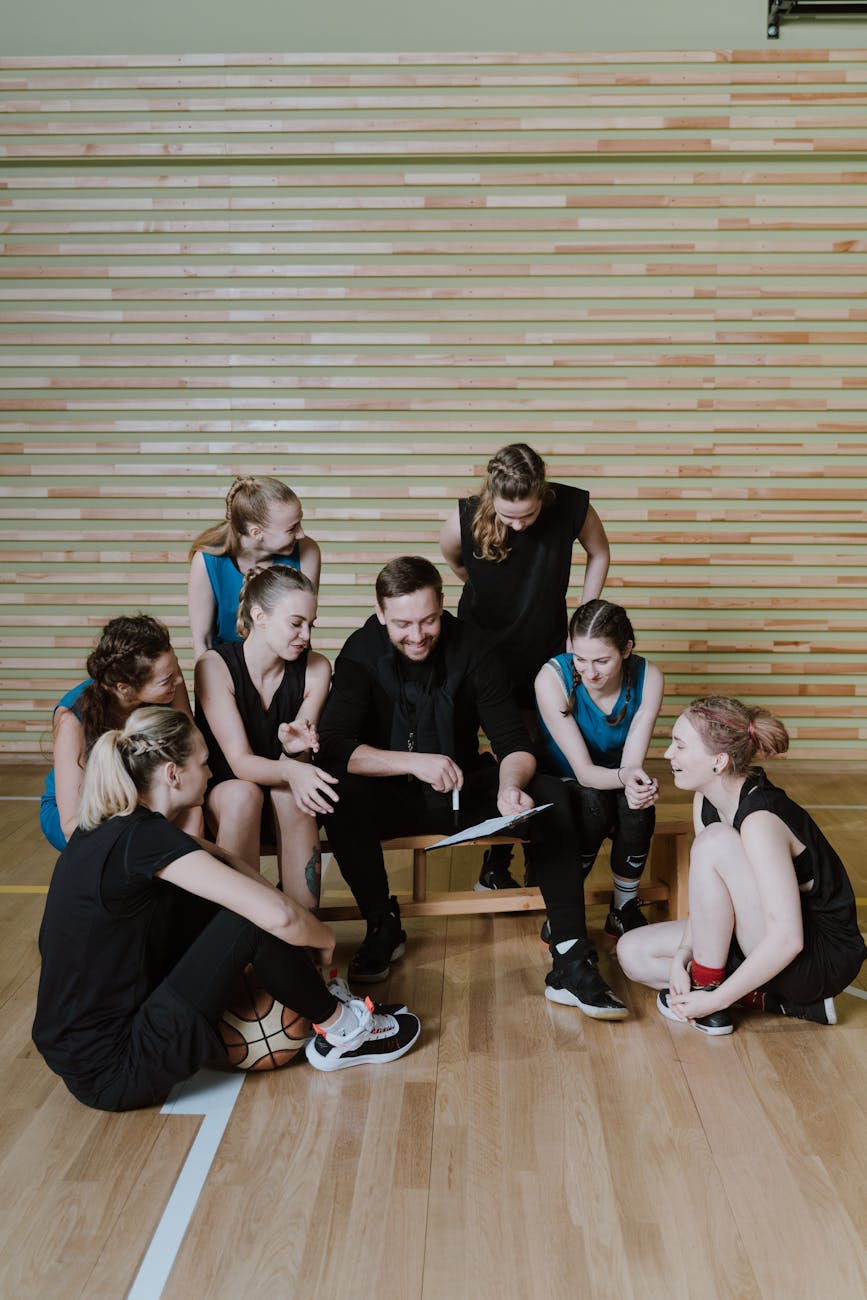
Photo by cottonbro studio on Pexels.com

Meet the Coach 🏃‍♀️

Coach, in my mind, was “older” with salt and pepper straight hair parted down the center and a thick mustache.  His face was browned and weathered from years spent in the sun that contrasted his light aquamarine eyes.  His typical attire was khakis with a school logo polo shirt with a matching ball cap–the cap was only for sporting events. When the temperatures turned cold, he added a school logo v-neck polyester pullover that was popular with coaching staff in the late 80s.

On our first meeting, Coach gave me a tour of the “department facilities,” such as they were.  Three of the five special education classrooms were underneath the visitor side of the gym bleachers, and the other two classrooms were found at the end of the gym, just beyond the baseline.  As we walked, he politely introduced me to the faculty and staff we encountered. 

Later, when Coach discovered I had been assigned to “assist” him with the cross country team, he did not roll his eyes, sigh, or mutter under his breath upon hearing I had no coaching experience, which I feared he would do.  Instead, he said he was glad to have me as part of the team because the young ladies needed a female leader.

Photo by RUN 4 FFWPU on Pexels.com

Ladies Cross Country Team 🏃‍♀️🏃‍♀️

He then explained that the cross-country team had already begun practicing and invited me to join them that afternoon. It was then he asked if I ran.  Not wanting to disappoint him, I said that I did, which was sort of true. I had begun jogging during my last quarter of college just before graduating. I continued to jog two-three days per week around town after moving in with my grandparents that same summer, but I was by no means fast or knowledgeable about running beyond the basics. I knew I would have much to learn.

By 3:00 pm, I was on an access road along the Ohio River meeting the team. As Coach introduced me to the young ladies, they welcomed me with warm smiles.  As the weeks progressed, I would come to love these ladies, especially for the mature way they approached running, academics, and life in general. They were a driven group with gritty spirits, and they supported one another throughout the season even though they were competitors in races.

During this first practice, I learned that my job was to run, jog, or walk with whoever was at the back of the pack during the team’s long training runs while Coach rode his bike with the girls at the front of the group.  I was worried because I did not know if I had that level of fitness to keep up with even the so-called “slowest” runner.  

Photo by Tirachard Kumtanom on Pexels.com

The IMportance of Grit 💪

It turned out that there were two ladies who had joined the team with no running experience. Coach already knew they were not yet able to keep up with the other seasoned runners. Therefore, he asked that I remain steadfastly encouraging.  It was a role I relished. 

As the season progressed, one of the two newer runners was a “natural,” and was soon running with the rest of the team.  But Coach still insisted that I mostly focus on helping “Amy,” the runner who still struggled. He shared that while winning races was nice, developing stamina and perseverance were lifelong skills applicable to many settings, not just running.

Throughout the cross country season, Coach fostered a team attitude of, “You’re only in competition with your best time.”  His coaching style was gentle, but firm; supportive, but with high expectations.  However, those expectations were individualized to each runner, including Amy.  This philosophy was most evident after the regional meet.

Photo by Chiara Caldarola on Pexels.com

Individualized Success 🏅

We had two runners who finished in the top spots who qualified to move on to the sectional meet.  While Coach was happy with those two and praised their efforts, he also pointed out a few techniques they could use to improve their times for the next race.  

Additionally, since it was the last meet for the rest of the team, Coach took time to speak to each of the runners, showing them their running times from those hot days of August until the end of October.  All team members had improved significantly, and he made sure each runner knew how much they had achieved over the season. Coach conveyed heartfelt pride in each lady’s accomplishment, and he encouraged each one to run track in the spring.

Later, I watched Amy, who was always the last finisher for our team, walk over to her parents and chatter away about her improved times and how she couldn’t wait for spring track season.

Photo by Gerd Altmann on Pexels.com

Nudges of Success 🙌

Coach taught his students in the same manner in which he coached.  His expectations were high, but his capacity for compassion and empathy was deep. Coach was attentive and intentional when talking with students and athletes alike. He could be firm when needed, but mostly, he taught and coached with a gentle, kind, and encouraging spirit.

How fortunate was I to have taught with Coach for two years. He modeled that effective teaching–and coaching–is about the importance of each student–how you make them feel and the impact of motivating students to improve and stretch to be better versions of themselves. Every student’s best is different, and it is the job of a teacher and/or coach to see this and purposefully nudge each student forward to the next level in order for students to blaze their own trail of success.