Discovering Daily Delights: Boost Your Happiness Practice

Right in the difficult we must have our joys, our happiness, our dreams: there against the depth of this background, they stand out, there for the first time we see how beautiful they are.” —Rainer Maria Rilke

A night sky filled with stars, with a shooting star streaking across the horizon, silhouetted by trees and distant hills.
Photo by Erike Fusiki on Pexels.com

A Spark in the Sky 💫

I was on an early morning run. Orion and his dogs, Canis Major and Canis Minor, were hunting above me in the eastern sky. As I ran, I periodically glanced upward, marveling at the stars’ movement. Suddenly, a star appeared to shoot sparkling light through the predawn sky. Was it a satellite, the Perseid meteor shower, or another heavenly body? I am not sure, but something inside me shifted. I felt delighted. That event was my daily delight.

A doe and her fawn walking together along a sandy path, surrounded by vegetation.
Photo by Mehmet Turgut Kirkgoz on Pexels.com

How Daily Delights Began 🤔

A few weeks before that shooting star sighting, I began my ‘daily delight’ practice in August. Numerous uncontrollable negative events were filling me with worry, anxiety, and fear. Despite taking proactive steps to reduce the negativity I was exposing myself to, it still found ways to seep in—almost as if it permeated the very air I breathed. Then, at first light on a quiet Saturday morning, a doe and her fawn strolled out of the woods alongside my running path. Pausing for a moment, I watched the mother nudge the little one across the trail and toward a nearly dry creek. It felt sacred. Later, I described it to my family as my daily delight, and the concept was born.
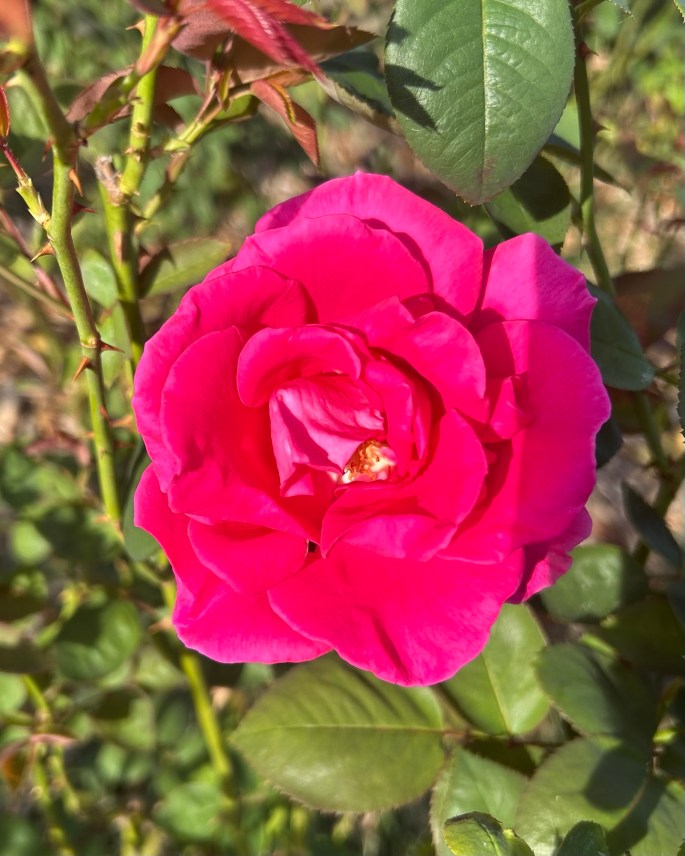
A close-up of a vibrant pink rose surrounded by green foliage, showcasing its full bloom and delicate petals.

Why This Practice Matters 😌

From that moment, I began cultivating an intentional practice of looking for at least one daily delight each day. As a result, I noticed that my mindset shifted, and my stress began to ease. More importantly, these little delights reminded me that goodness still exists—even on the darkest days.

A steaming cup of coffee rests on an open book, symbolizing a moment of warmth and reflection.
Photo by lil artsy on Pexels.com

What Counts as a Daily Delight? ☑️

To me, daily delights are moments that cost nothing, big or small, that spark joy or wonder. They might be a kind word from a stranger, the first sip of bargain coffee that tastes surprisingly better than the pricey brand you had been purchasing, the symmetry of flowers along a walking route, or the brilliant explosion of color as the sun rises over the Ohio River while driving to work. Ordinary moments are transformed and elevated simply by the act of paying attention.
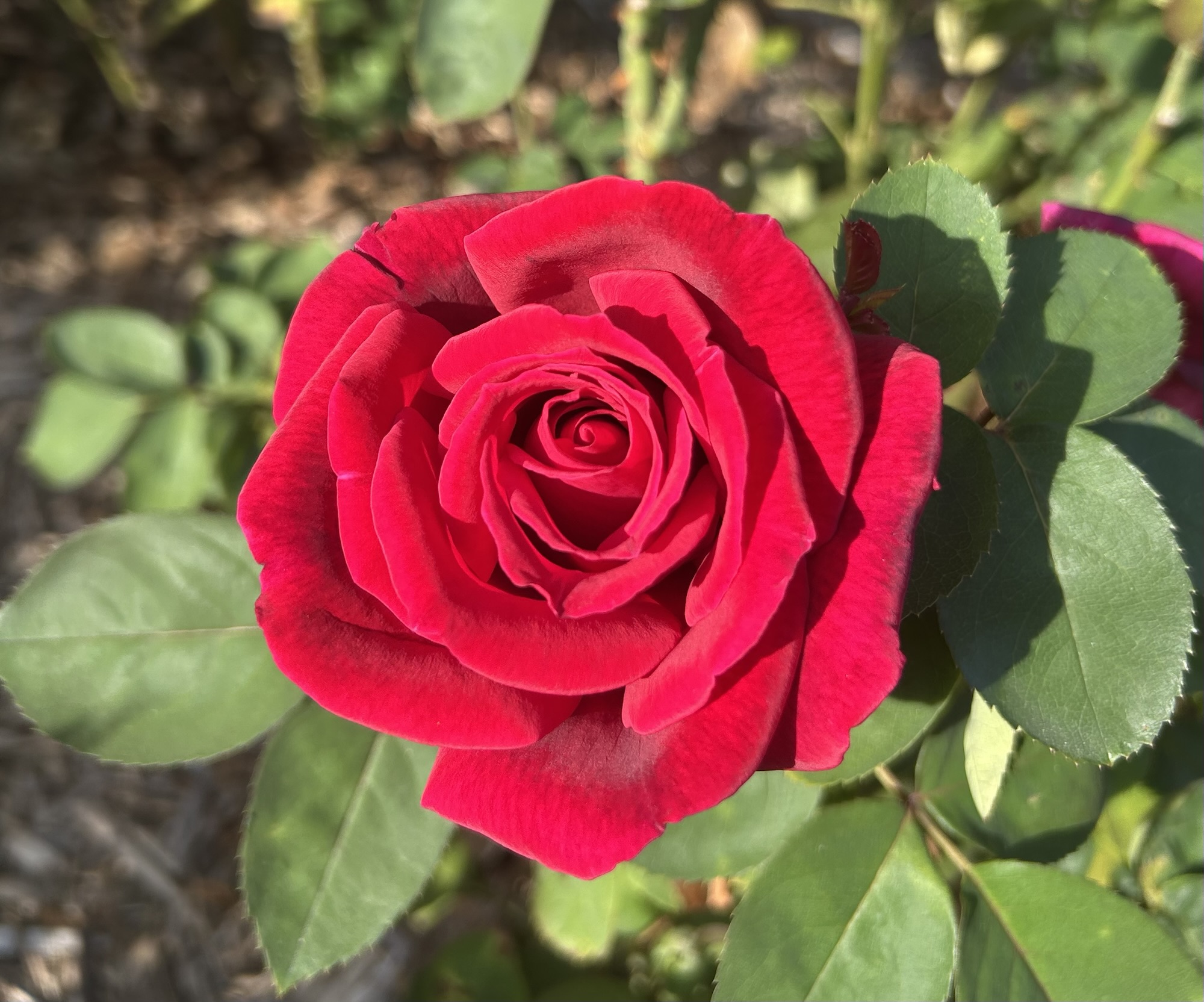
A close-up of a vibrant red rose in full bloom, surrounded by green leaves, capturing the beauty and intricate details of the petals.
Photo by lil artsy on Pexels.com

How to Find Them 🔎

The practice begins in the morning by setting an intention to look for the daily delight. As the day unfolds, I keep my mind’s eye alert—like a scavenger hunt—for hidden treasures, knowing that some days require more searching than others. The daily delight could be birdsong during my run, the sprawling sunlight lighting up the grain of my old oak desk, or a video of my daughter’s friend’s baby babbling and giggling at her new-found ability to pretend to cough. The practice is accessible, requires no extra time, and costs nothing but intention.

A close-up of a pink and white rose blossom surrounded by green leaves.

The Science Behind It 📖

Our brains, as a survival mechanism, are hardwired to notice threats. They fixate on bad events to help us avoid future peril. Unfortunately, in a 24-hour news cycle, this tendency takes a mental toll. Our brains often can’t distinguish real threats from repeated media images, leaving us anxious, restless, or fearful.

Intentionally noticing delights, however small, helps counterbalance this wiring. It reduces stress, builds resilience, and—most importantly—fosters hope. Practiced regularly, it becomes a bridge to gratitude and a more grateful outlook.

A couple sitting on a couch, wrapped in a blanket, smiling and laughing while playing with a light-colored dog.
Photo by Andres Ayrton on Pexels.com

Low-barrier Maintenance ✅

Fostering a daily delight practice is accessible to anyone, anytime, almost anywhere. It’s what I call a low-barrier activity—it doesn’t require journaling, a special setting, or money (no hidden fees or price hikes here!). You might keep a journal of delights or share them with friends or family. Personally, I enjoy sharing mine with others when appropriate because it amplifies positive feelings within. However, there are no other requirements beyond noticing and savoring the event.

A person gently touching foreheads with a cat in a sunlit room filled with plants.
Photo by Yuliya kota on Pexels.com

Even on Hard Days 😓

Of course, some days are less than stellar, especially when hardships pile up. In those times, it’s tempting to slip into cynicism. Yet even then, finding one joy—however small—can ease our uneasiness and calm our agitation. While we cannot erase challenging circumstances, we can coexist with them and still find good.

Two men laughing together outdoors, enjoying a moment of joy in a natural setting.
Photo by Ketut Subiyanto on Pexels.com

The Ripple Effects ↝

The ripple effects of this practice are profound: reduced tension, greater resilience, increased gratitude, and more positive interactions with others. Sharing a delight can spark connection, deepening bonds, and spreading positivity. Over time, this simple practice trains us to notice light even in the darkest corners of our world.

A close-up of a garden sign reading 'JUMP FOR JOY' with the word 'Floribunda' beneath it, surrounded by dried leaves and grass.

Shining Light in a Dark World 🔦

Like those hidden picture games of childhood, simple joys abound; they just need us to notice and color them in. They’re free, accessible, and powerful in shifting perspectives. Daily delights don’t excuse us from facing hard truths, but they open our eyes to possibilities—even on the hardest days.

A close-up of a pink rose flower blooming among green leaves.

Your Turn

So, what daily delight will you notice today??

Let your Life Be a Work of Art

“Make your lives a masterpiece, you only get one canvas.”–E. A. Bucchianeri, Brushstrokes of a Gadfly

Photo by Ana vu00ea Ana Fotografa on Pexels.com

I recently came across the line, “Let your life be a work of art.”  These words were spoken by the late Thich Nhat Hanh, and they inspired me to reflect upon their deeper meaning.  As often happens, I could feel the tendrils of my brain entwining around this notion and exploring all of its complexities.  In fact, the next day, I found myself in meditation asking myself how to “live artfully” and contribute more beauty to the world.

It seems to me that all lives are pregnant with possible ways to share unique artistry with others. While I know, as Bucchianeri once wrote, we only get one life canvas, I’d like to think, that with the gift of each new day, we are each bequeathed a new canvas on which to create. Therefore, how do we bring about awareness and intention to our daily opportunity to create quality life art? 

Photo by Steve Johnson on Pexels.com

I think many great religious and thought leaders would point to nourishing your innerworld as a start. Initially this may sound self-centered.  However, I am reminded of the repeated directive instructing passengers, when flying on an airline, “put the oxygen mask on yourself first before helping others.”  This is because you cannot be of assistance to another person, if you don’t have a one true source for life. 

Therefore, it makes sense to foster a rich, more faith-filled inner life in order to create a more inspired and productive outer life.  Personally, I know when I mindfully start my day with time set aside for thoughtful devotion and contemplation, my actions are apt to be more harmonious and positive with others.  In fact, I find that if my inner world is unclouded, my actions and choices are more thoughtful and in better service to others.  

Photo by Kelvin Valerio on Pexels.com

That said, I don’t think it’s a linear or perfect process, but a gentle ebb and flow. When we seek, pray, read, meditate, and/or focus upon living more peacefully, as described in most major religions, we can then draw from a wellspring of faith, purposely seeking guidance for serving others.  However, that doesn’t mean we always remember to do that.  Mistakes, stress, anxiety, emotional overload, and so forth, can take us off our A-game for a span of time, but like a swing responding to gravity, our faith can draw us back to the path. 

The more we return to cultivating that inner-world, the more we begin to live in closer alignment with our higher purpose.  Life, it seems, begins to evolve and flow with greater ease, enhancing our ability to constructively contribute to the world and others around us. The greater the sense of ease, the less resistance and/or friction in life, thereby allowing for more effective and productive communication and actions.  Thus, the “art” we hope to create in life, organically continues to evolve and spread to others.  

Photo by Kampus Production on Pexels.com

 In fact, at least based upon my current reflections on the subject, it seems to me, the more we get clear in our inner world, the more we learn to accept responsibility for our own actions and choices.  As we assume more responsibility for our own actions, we can begin to also foster more responsible reactions as well.  In fact, when our reactions become more moderated and considered, the more effectively we can generate a sense of calm, creating less distress in our own lives and the lives of those around us. 

Of course, writing about “life as art” is easier said than done. Nonetheless, I do believe it is worth trying. As with any work of art, the process is often filled with struggle, but as any artist can tell you, the process of creation can often be messy and imperfect.  Therefore, learning to artfully live with more intentionality and tempered reactivity is a process also permeated with struggle as it takes awareness, time, and a large quantity of patience with self and those around us. 

Photo by Afta Putta Gunawan on Pexels.com

However, by repeatedly returning to the cultivation of our inner life, our hearts and minds are gently reminded to remain in alignment with the higher purpose of our faith.  Even after those less-than-stellar days, that we all experience, we can return to our practice and consciously redirect.  In the end, this not only benefits you, but others also profit by your choices, and even more so, by your example.  This give and take of constructive and purposeful living creates a dynamic design of a colorful criss-cross of actions and interactions.

Admiring the beauty of a large pot of flowers, vincas, on my front porch brought me full circle in this “living artfully” thought exploration.  The flowers began as four tiny individual plants. In spite of all the crazy weather, the vincas have multiplied ten-fold, it seems, with eye popping color. The vincas are a reminder that our lives can flourish in similar fashion. 

Our Creator designed us with the ability to withstand dry times, heavy rains, and even stormy seasons. However, the more often we return to nurturing our inner world, the better able our True Source can work through us. By more frequently listening and surrendering to that deeper voice of God, the more we allow our lives to become the design of the Creator’s hands; and like the vincas on my porch, our lives can become unique and colorful works of art to which Hanh encouraged so many years ago. 

By creating the practice of cultivating our inner world, we can become aligned with our higher purpose.  Through the ebb and flow of practice, we learn to accept responsibility for actions, consider our reactions, and allow the "art" of our life to flow with greater ease.
Photo by Jennifer Murray on Pexels.com