A Quieter Resolution for the New Year: Listening, Learning, and Loving Without Agreement

“When we listen, we offer with our attention an alms far more precious than anything else.”— Simone Weil

The Season of New Year’s Resolutions—and a Different Invitation

The ritual setting of resolutions for a new year is a ubiquitous January practice. Gym memberships flourish, trackers are checked and rechecked, meals are planned and prepped all in the hope of self-improvement. One quick scroll of social media offers a wide array of options for  workouts, diets, and methods of accountability. While health resolutions matter, our culture needs a quieter resolution–one that prioritizes listening deeply, learning humbly, and choosing neighborly love without agreement.

What We Miss When We Stop Listening

One cultural trend I have noticed–and am often guilty of myself–centers around listening, or a lack thereof. Many of us talk past one another, make snap judgments, and curate words of certainty. Conversations become overlapping monologues–ears present, but attention is elsewhere. In doing so, we miss the quieter forms of communication: facial expressions, postures, and the subtle cues that reveal complexity and lived experiences. When we rush past these, we lose the opportunity to understand another person, and we deny ourselves the opportunity to be changed, even slightly. Making time for focused listening does not mean we are agreeing with another person’s position.  It is choosing understanding over reflex.  

Learning to Listen as a Daily Practice

Learning to listen well is an acquired skill, at least for many of us, myself included, but it is attainable. Engaged listening requires more than ears; it requires intention. It asks us to pause before responding to another person, to consider what was said, and to ask a thoughtful question, rather than immediately offering a counterpoint. Asking a thoughtful question or two can increase understanding of another person, especially if we are willing to sit with discomfort if their viewpoint challenges or counters our own. This type of listening takes time and requires humility. If you are like me, you won’t be perfect–but it is a worthwhile endeavor.

Listening Without Agreement

Frankly, it is easier to relegate people based on our assumptions.  It is inconvenient to take time to ask questions that might alter our long-held beliefs.  However, by listening and respectfully seeking understanding, we incrementally begin to learn more about an alternate point of view without necessarily agreeing with it. 

Lessons from the Classroom About Understanding Others

 This is an ongoing practice for me as a veteran educator separated by generations from my students, and even many of my colleagues, in a high school setting. I have entered numerous conversations over the years in which either I had assumptions about a situation involving a student, parent, or peer or they had assumptions about me. Those conversations did not always lead to agreement, but they almost always led to greater understanding–and that is the difference that mattered most.

What It Means to Love Our Neighbor Today

By taking time to listen and ask questions, we are putting into practice a foundational belief of most world religions and philosophies: “Love your neighbor,” emphasizing respect, compassion, and doing non-harm to others. This Golden Rule practice is neither affectionate nor approving. It is also not remaining silent when faced with harm. In today’s world, “loving your neighbor” can be as simple as showing restraint in how we speak–refusing to reduce a person to a single action or belief. Practicing the Golden rule can also be as simple as not reducing a person to a single belief or action. Loving others is simply a daily choice. It is a posture that can feel costly, especially when it would be easier–or less stressful–to walk away or erupt into outrage. 

Small Ways to Practice Kindness in Everyday Life

Standing in neighborly love takes practice, and it doesn’t have to occur in grand, sweeping gestures. We can begin to put into practice in small, cumulative ways that can still have a bigger impact than we realize.  During gatherings of friends and/or family, try listening longer than feels comfortable to that contrarian relative/acquaintance.  During community, work, or church meetings, instead of immediately refuting a counter point-of-view, respond with curiosity rather than certainty. While interacting with online spaces, try choosing kindness when sharpness would be easier, even if the kind act is not to respond at all. We won’t always be perfect, but the more we practice, the more natural it becomes.

A Resolution That Doesn’t Fit on a Checklist

When setting resolutions, health coaches often ask clients to create goals that are SMART: specific, measurable, achievable/attainable, relevant/realistic, time-bound/timely. Setting a resolution to listen, learn, and “love” others may not, therefore, appear “SMART.” Nonetheless, it remains an attainable and relevant practice through small, incremental steps. 

What Might Change If We Listened First?

Consider what might change if we listened a little longer? If we attempted to learn more than we defended? If we treated others the way we would want to be treated? If we “loved” more than we proved?  

A Practice Worth Returning to All Year Long

These actions are not about “perfection” with a clear-cut checklist that offers overnight transformative results. Instead, they are more about presence and intention–the intention to listen, learn, and love others. It is a resolution that does not have to end with guilt in February; rather, it is a practice that can be picked up and practiced again and again throughout this year and years to come. 

“You don’t have to agree with someone to treat them with dignity.” 

As the year begins, may we all strive to engage in a more neighborly discourse and actions. 
Pearls of Morning: Lessons from Spider Webs and Stillness

“Heavy dew this morning and every spider web in the garden is strong with pearls of moisture…. webs wherever I look, all shining things of silver beauty.–Edwin Way Teale

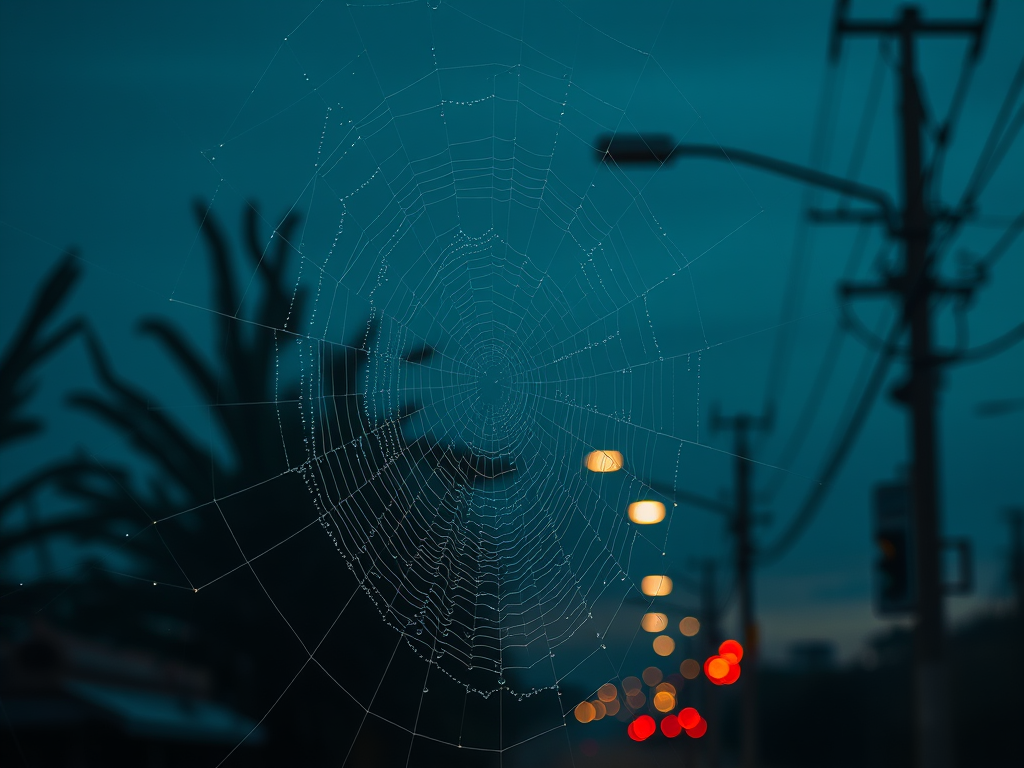
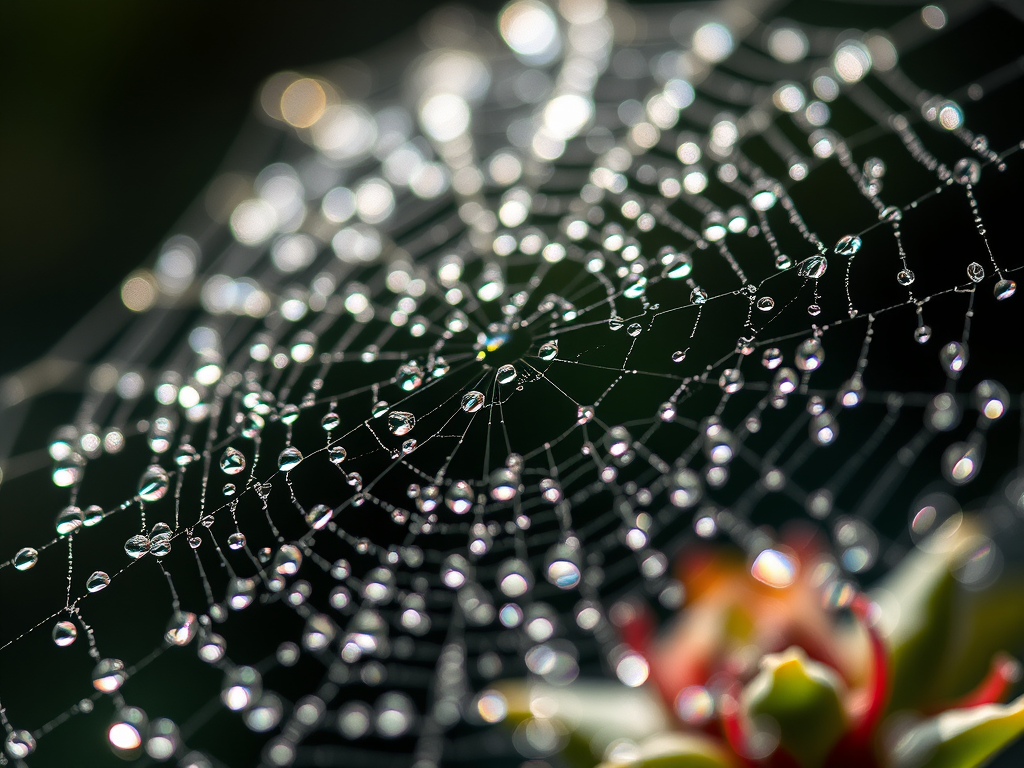
A close-up of a dewy spider web illuminated by streetlights in a quiet early morning setting, with blurred traffic lights in the background.

The Quiet Wonder Before Dawn 🌅

It was an early fall morning. Darkness still clung to the earth in a cool embrace. The traffic lights—green, yellow, red—continued their rhythm despite the empty streets. The air was cool and humid, and the hush before dawn rested easily upon the road. Pausing at the red light before continuing my jog, I noticed a spider web dappled with dew within the frame of the traffic light. I stopped in my tracks; upon closer inspection, I saw countless spider webs, draped with baubles of dew, hung from light poles and electric lines—even within the traffic lights themselves.

Hidden Beauty in Plain Sight🚦

I was awestruck by the beauty of the webs, looking ever-festive in the glow of lights—an unexpected wonder, shimmering high above me. After a few moments of appreciating the beauty, I jogged on through town, questions forming in my mind. How did they get so high? Why had I not previously noticed something so extraordinary hiding in plain sight? How many other marvels were hiding in plain sight, waiting for someone to notice?

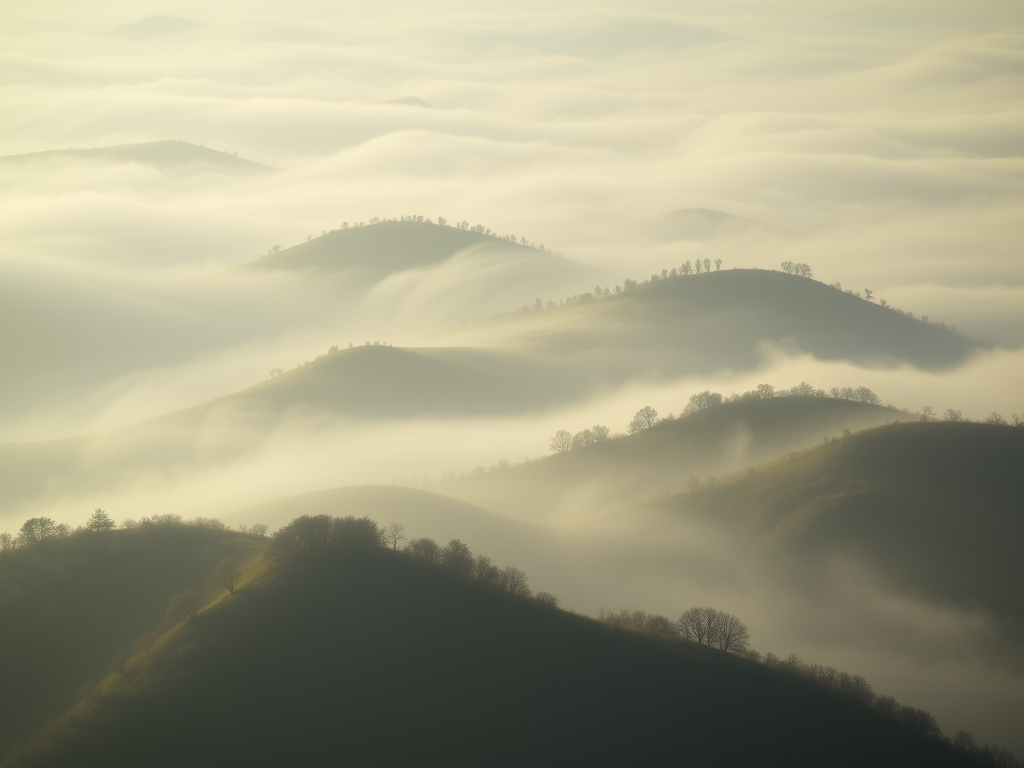
A serene landscape featuring rolling hills partially obscured by a thick layer of fog, bathed in soft, diffused light, creating an ethereal atmosphere.

When We Slow Down Enough to See 🤓

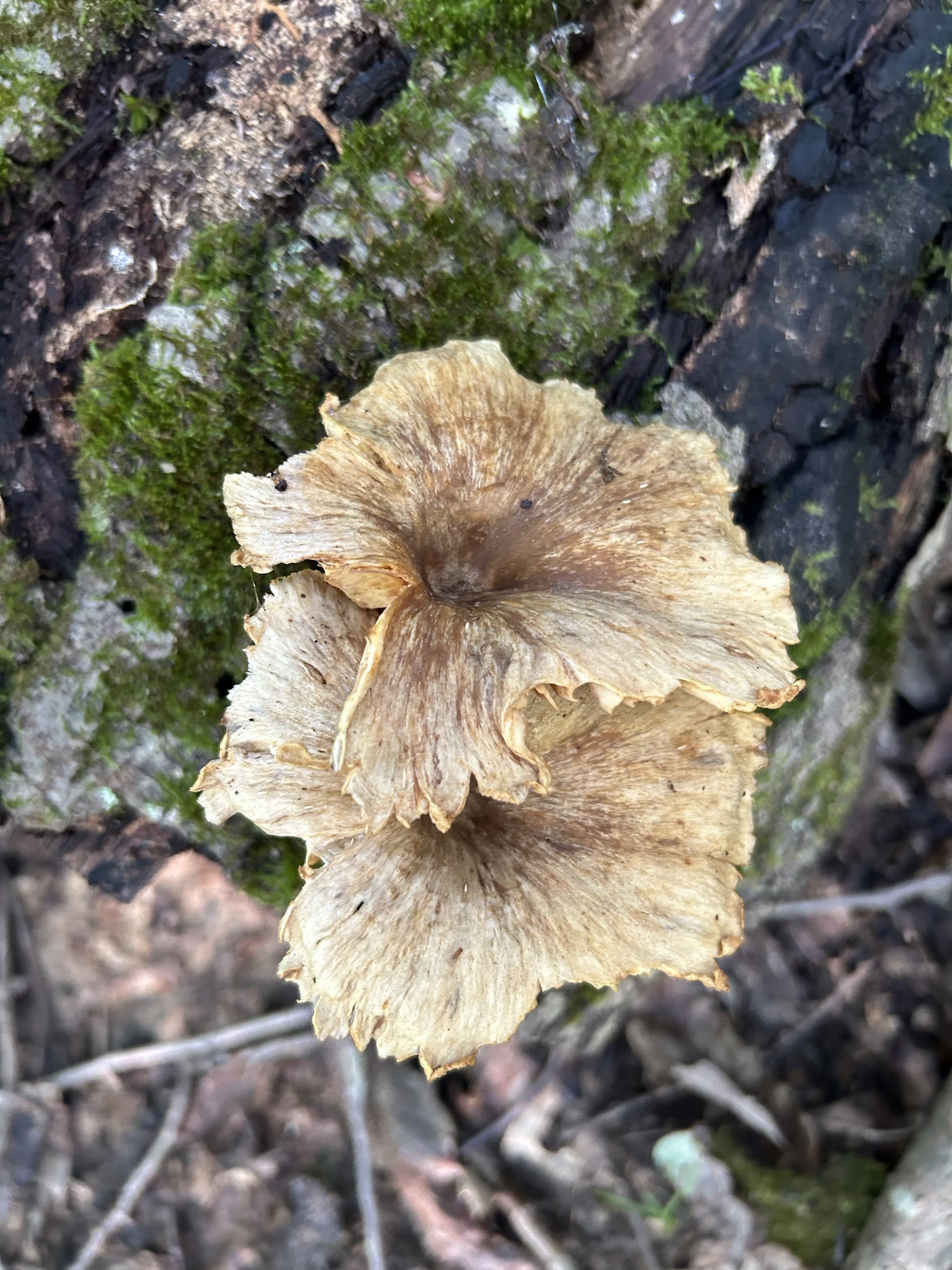
It occurred to me that more often than not, we rush through the routine of life overlooking these mini-marvels—the ballet of fall leaves chasséing from tree to stream, then pirouetting along water currents; sinuous streamers of fog tendrils meandering around hilltops; or, the multiplicity of ice crystals frosting over a car’s windshield to name a few. These wonders are woven into daily life: from the cantaloupe-colored brilliance of sunrise over the Ohio River to the glimmer of moonlight on a frost-covered lawn; from flower-like fungi blooming on fallen logs to a puppy seeing its own reflection in a puddle. Beauty surrounds us, waiting to be noticed. Like the invisible art gallery of spider webs in traffic lights on my morning jog, most go unnoticed until the light hits just right. However, when we take time to pause and pay attention, beauty will often reveal itself in unexpected yet common places, including stoplights.

A close-up image of a brownish mushroom growing on a tree trunk, highlighting its textured surface and natural surroundings.
Flower-like fungi “blossoming” from fallen tree branch

The Power of Morning Stillness 😌

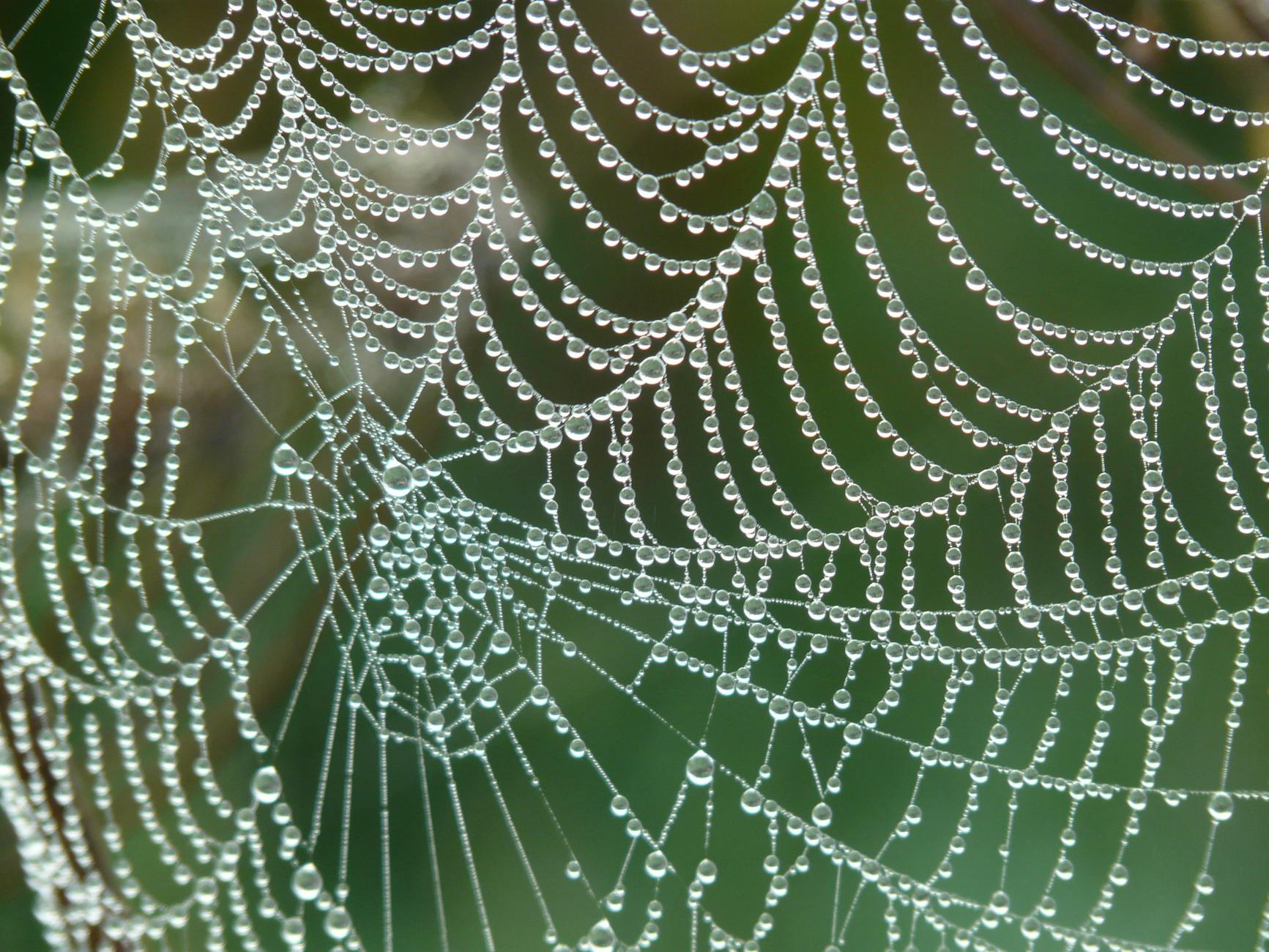
That early-morning observation turned meditation centered my day. It offered more than one lesson and served as a reminder that the morning placidity can bring a sense of calming clarity before the noise of the day. Making time for stillness in the morning, whether sipping coffee, walking a beloved pet, or sitting in prayer meditation—offers an opportunity for spaciousness at the day’s start. A moment to center, notice, reflect, and connect. Even a few minutes of stillness can offer us an opportunity to ground ourselves and recalibrate our perspective. If we grow quiet enough, we may remember that peace resides within us. That is not to say that peace is the absence of movement, purpose, or challenge, but rather it is a strong presence within us—much like the hidden strength within the delicate spider web. 

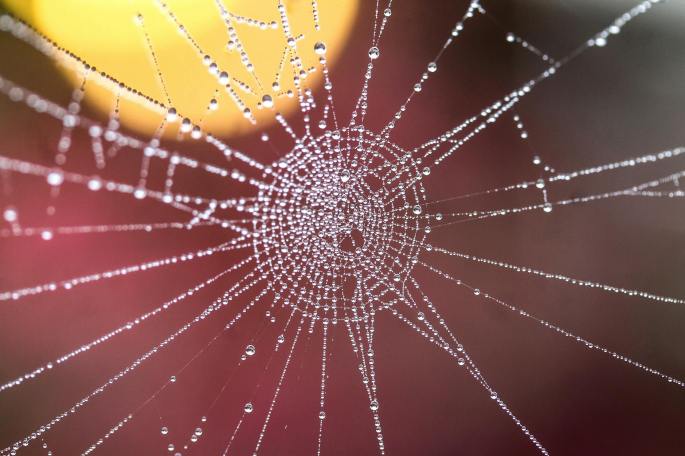
A close-up of a spider web adorned with dewdrops, creating a sparkling effect against a blurred green background.
Photo by Pixabay on Pexels.com

Lessons from the Web: Resilience and Renewal 🕸️

As I reflected on the morning jog through town, I realized that each web represented perseverance, fortitude, and tenacity–three key qualities essential for growth. Each morning, orb-weaving spiders consume their protein-rich webs to reclaim the silk for rebuilding. This ensures the new web they build in the evening is fresh, sticky, and strong enough to catch plenty of prey. Through practice, the spiders gain strength and instinctively how to rebuild after storms and strong wind.

The spiders’ resilience serves as a reminder that we, too, have the grit to rebuild after disappointments, setbacks, and loss. Like the spider, rebuilding our lives is often quiet work that begins only after we have nourished body, mind, and spirit. The spider’s persistence mirrors our own–delicate and determined–reconstructing through incremental, small steps. Life, like the spider’s web, is fragile, yet we too possess tensile strength—centered in faith—that guides us as we restore, renew, and rebuild. 

A close-up view of a spider web adorned with numerous droplets of dew, reflecting light and creating a sparkling effect against a dark background.

The Threads That Bind Us 🕷️

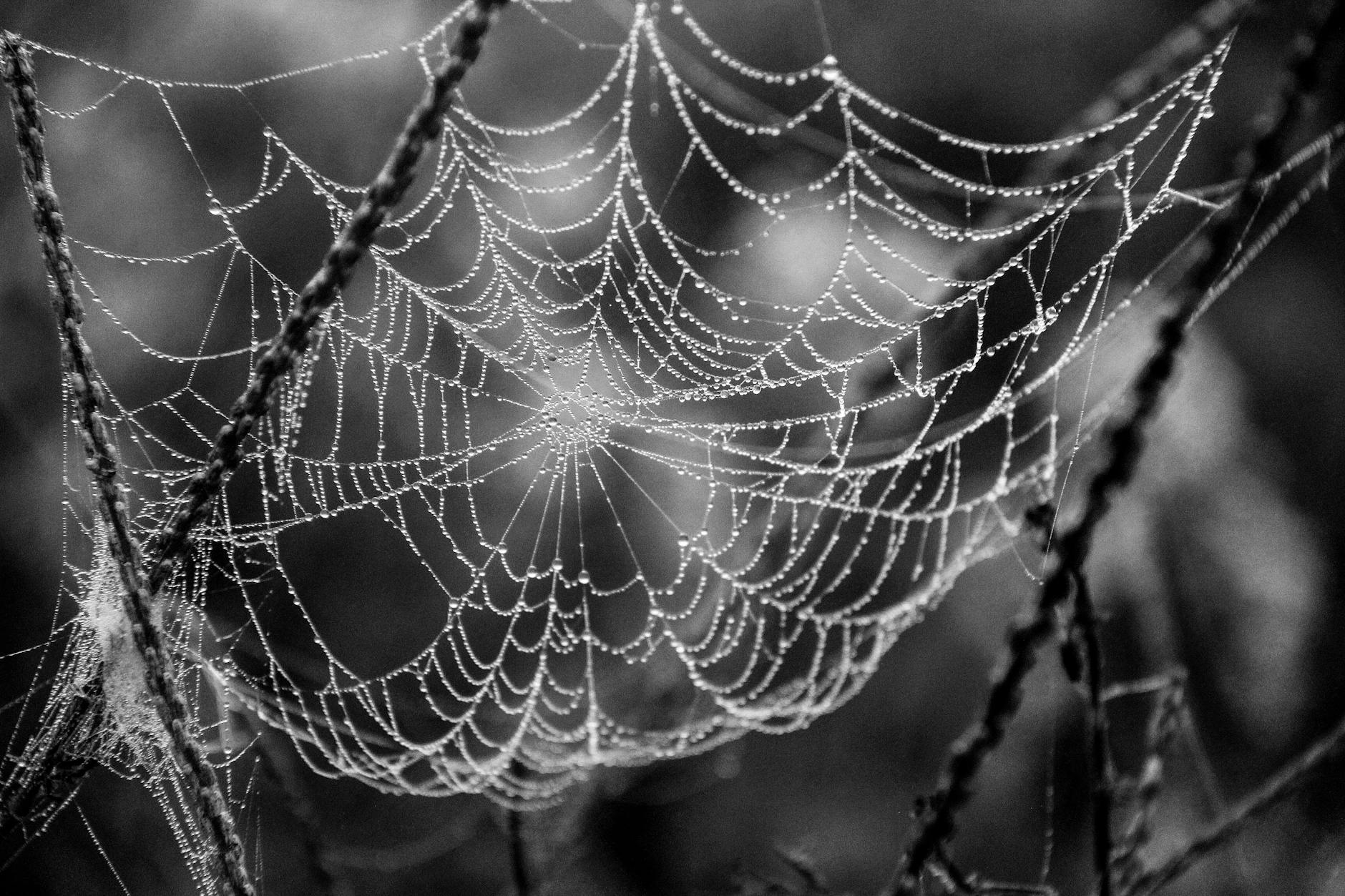
The spider’s web, where no thread stands alone, echoes the interconnectedness of our own lives. We are part of a collective. As the light shone through the webs, each dew drop caught the light, refracting color and seemingly creating miniature worlds. Just as the traffic/street lights played across the spider webs’ dew drops, our connected lives reflect multiple roles–friend, spouse/partner, worker, neighbor, parent, child, citizen . . . . Each strand of life possesses a quiet strength that is integral to the whole. In fact, the integrity of the web depends upon the strength and resiliency of every strand. Each facet of our lives holds and reveals meaning; together, the varied strands of our lives unite the whole, creating an array of meaningful relationships.

A close-up view of a beautifully intricate spider web adorned with dew droplets, creating a delicate display of nature's artistry in black and white.
Photo by don chowdhury on Pexels.com

Finding the Extraordinary in the Ordinary 🌃

In the end, the light changed, and I crossed the street as the sun rose, erasing the glimmer of those webs. Yet the image remains—reminding me to keep looking for the extraordinary in ordinary places. Perhaps it waits in the quietude before dawn, a pause at a red light, or the hush of nightfall. So many interlaced moments shimmer within the droplets of daily life, waiting for those willing to see. Those silky webs may vanish with daylight, but their pearls of wisdom still glimmer within me, reminding me that beauty often hides in ordinary light.  

May we all learn to look a little longer, to pause at life’s red lights, and to notice the silken threads of beauty connecting us in the quiet hours of dawn.

When It Rains, It Pours

Lions, tigers, and bears. Oh my!” states the famous quote from The Wizard of Oz.  Recently, I rewritten it, “Covid, snow, ice, rain, flooding. Oh my!”  While my rhythm and words don’t quite line up with the original, it certainly fits the 12 month period from March 2020 to March 2021.  Of course, other words like loss, death, pandemic, quarantine, masks, virtual meetings, virtual learning/teaching, work from home, job loss, business closures and so forth, could likewise be added to this list.

However, there are other words too.  Words such as faith, opportunity, growth, stretch, change, appreciation, home, family, friends, compassion, community, kindness . . . . No, I am not trying to make light of the seriousness of everything our local and global community collectively have experienced, not in the least.  Instead, I am trying to discern the lesson(s) that Divine Providence has placed within my own life path, and perhaps, yours too, Dear Reader.

Photo by Markus Spiske on Pexels.com

“There is always a good lesson in whatever happens to us, even in the midst of our losses . . . Every individual should think, ‘I am the only student. Everyone and everything are my professors.’”–Sri Swami Satchidananda

Personally speaking, like so many within our local Tri-state community, my family and I have been directly impacted by, not only all of the ramifications of the pandemic, but more recently, the power outages, water outages, and flooding.  As the saying goes, “When it rains, it pours,” and this adage most certainly fits mid-February through early March.  Beginning with steady rains, followed by snows, followed by ice, and wrapping up with more rain, the resulting effects of each one was felt by thousands within our three state region.

I have listened and overheard many stories from co-workers, friends, and acquaintances describing life without power for up to 14 days during the height of our coldest weather. Several more were without water for part or all of that same time period.  Meanwhile, I have encountered, or read accounts, of those working within our local communities–braving the frigid temperature, dangerous conditions, icy roads–working extraordinarily long hours to restore power, wifi, communication, water lines and so forth.  Their past and present acts of labor cannot be underestimated or underappreciated.

A major state route covered with water in recent early March flooding.

“He says to the snow, ‘Fall on the earth,’ and to the rain shower, ‘Be a mighty downpour.’”–Job 37:6

Just as power, communications, water lines, and roads began reopening–as well as the beginnings of the vaccination process–thoughts of life settling down with slightly warming temperatures seemed like an imminent reality.  Then came rain, a steady pitter patter of several days of rain during those final few days of February, in an already water-logged Tri-State area, giving way for March to come in like a lion.  

As the rains fell, more roads closed as the burgeoning Ohio River waters backed up its tributary waters.

“The nicest thing about the rain is that it always stops.  Eventually.”–Eeyore

Throughout the weekend, John, my husband, and I were keeping a close eye on Symmes Creek, a 76.4 mile long tributary of the Ohio River, which runs alongside OH 243, in a small section of Lawrence County.  By the end of the last weekend in February, The Symmes, as it is often called, was rebelling against its banks.  Additionally, the backwaters of the Ohio River, along OH 7, were spilling into the lowlands along the river.  

The National Weather Service issued, changed, and updated flood warnings all along the Ohio River and its tributaries.  However, the last time this type of widespread flooding occurred, our daughter, Maddie, was five years old–she is now 21.  Surely, this wouldn’t happen again, right?  We had had close calls in recent years, but we had not been flooded in, or flooded out, for that matter, since that singular year of Maddie’s life.

For the record, our family home is not in harm’s way with regards to flooding; however, the stretch of road on which we must travel to and from work and home, can potentially flood.  However, it takes unusual, long-term circumstances of wet and rainy conditions in order for this to occur.  Therefore, while we kept our eye on the waters, we really didn’t think it would happen.  Still, there was that little niggle . . .

In the early morning predawn hours, with rain pouring down, it was becoming evident, there would be wide-spread road closures.

Monday evening, driving home from a local gym after work, I couldn’t help but notice that all along OH 7, water was up to both sides of this state route.  Driving alongside OH 243, Symmes Creek was beginning to slip closer to the edge of the white line.  This. Was. Not. Good.  

“Steph, I think we’d better pack a bag in case we can’t get home,” John resolutely stated Tuesday morning.

Really?  Really?  As if going without power and water for nearly a week wasn’t enough.  As if a pandemic wasn’t enough.  As if . . .well, the tunes from WHINE radio station were spinning through my mind like a commercial-free power hour.  Packing my bag was an act of resentment and anger–spoiled adult that I am.  However, driving to work, as John and I tried to find a safe route out–the waters were swiftly advancing–my attitude quickly tempered as it became clear, there was only one route open, and it would be a close call.

Unable to get home due to widespread flooding, we stayed in local hotels overflowing with power & communication workers as well as numerous members of the National Guard still making repairs and cleaning up from the ice storm from the previous weeks.

“After the rain, the sun will reappear.”–Walt Disney

Without belaboring the point, John and I spent two days unable to return home while still working.  It was equal parts of stress and adventure.  Local hotels were still overflowing with National Guard and laborers who continued to work in surrounding areas that remained without power, water, reliable forms of communication, fallen trees and limbs, as well as blocked roads from the February ice storms. Thus, we were unable to stay in the same hotel.

Meanwhile, Maddie, who was flooded in, sent us daily reports of the rising, and eventually, falling waters.  Thursday evening, when we were finally able to make it home, I was, well, overflowing with joy.  Our home, be it full of flaws, in need of multiple repairs with a yard full of downed trees and limbs, was still our home.  It was, and is, a sanctuary of personal comfort and calm. Cooking my own food, sleeping in my own bed, hugging my daughter and listening to her stranded adventures, petting our cats, wearing my favorite stretch pants (You know you have a pair too!), and the sun shining brilliantly through our dirty windows–home never looked so good.

Sections of OH 243 remained completely submerged in spite of the lovely weather following days of rain, snow, & ice

And maybe, that is part of the lesson–appreciation for one another and for what we have–be it ever so modest–not to mention the realization that we are not in control. We can grasp, plan, and strive for future plans, such as vacations, bigger home, better job, more money, and so forth.  However, none of these “things” bring us inner peace, nor do they offer us any form of control.  Certainly, having the ability to pay the bills and meet your basic needs does bring about a certain peace of mind; but happiness and inner peace start with appreciating what you have in the here and now.  

To be happy, we don’t need much.  Family, friends, a safe place to live, meaningful work and/or life purpose, with faith acting as the glue that holds it all together, is, at the end of the day, more important than any title, job status, fancy address, or extravagant vacation. All the names and titles we use to define ourselves, all the carefully crafted plans and routines, all of our meticulously curated possessions and dwellings–all of these can be gone in a moment’s notice.  Therefore, it is vital to have faith in the Divine Force greater than all that has happened or can happen to us. I am walking away from the past 12 months with a greater understanding of what TRULY matters, a deepening faith in the Divine, and appreciation–while it is cliche– that it genuinely is the simple things in life that matter most. 

“Do not fear, the rain is only here to help you grow.”–Jennae Cecelia

Photo by Sasha Martynov on Pexels.com