

“When I was a child, I spoke like a child, I thought like a child, I reasoned like a child; when I became an adult, I put an end to childish ways.”–Corinthians 13:11 NRSV

Push or pull 🚪
Years ago, when I first started dating my husband, we traveled to a local town center and parked in its parking garage. In order to access the stairwell from the garage, you had to go through a set of glass doors, but we encountered a problem.
The doors would not push open for us. John tried. I tried. For the life of us, we could not get those doors to open. We nervously stood there wondering if we would spend the entirety of our second date standing in a parking garage. Finally, one of us, and by now, I do not remember who, read the sign on the door, “pull here.” It was really that easy. The doors opened as if by magic.

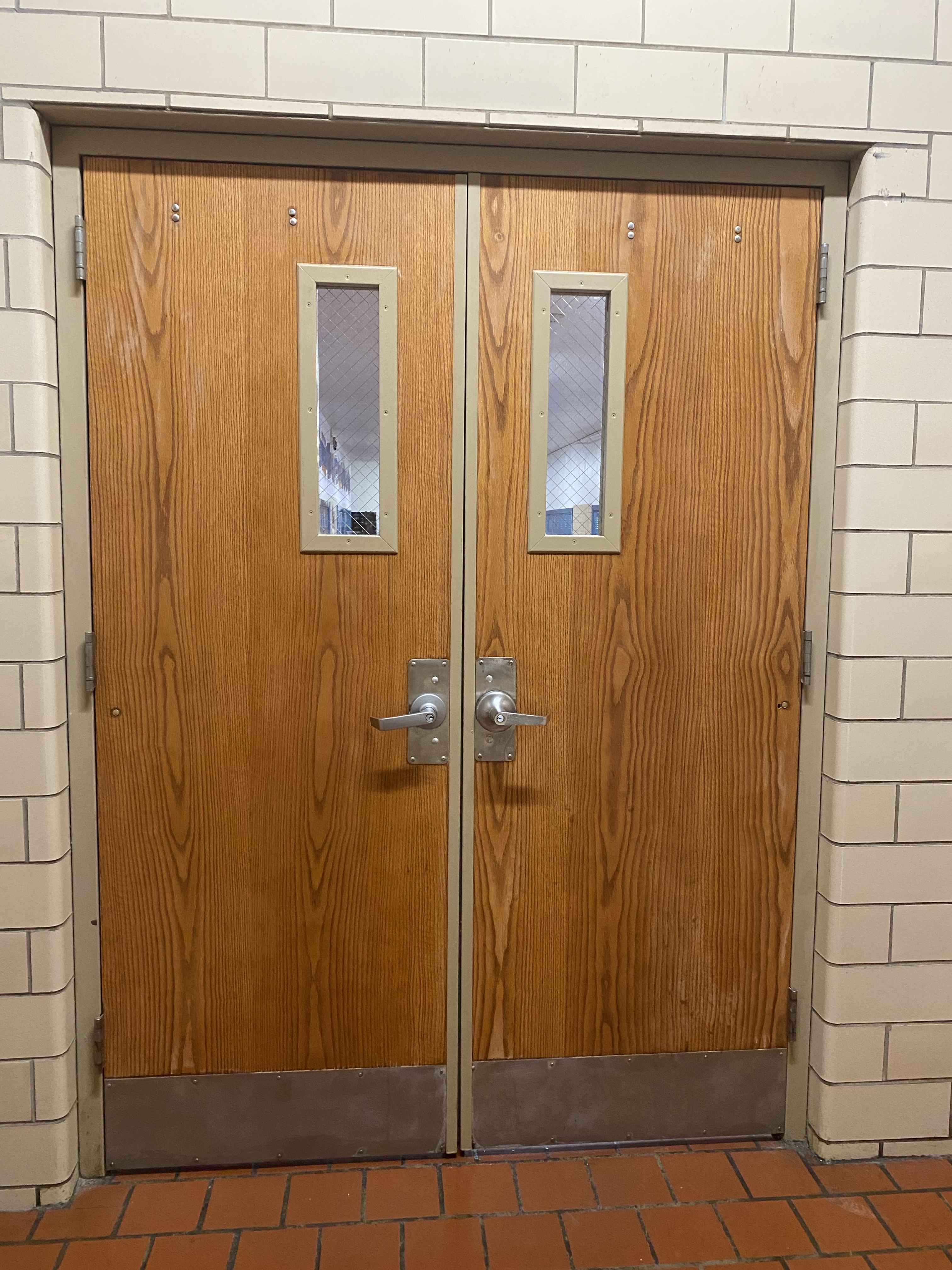
This past week, I was reminded of that memory. Throughout my workweek as an educator, I travel between the high school and the middle school, in order to teach classes. Structurally, the two buildings are designed quite differently based upon the era in which they build. Therefore, their doors are designed differently as well.
While I don’t have an issue, as you may have predicted, between pushing and pulling the doors open for either building, instead, it is remembering, on the high school side, which of the double doors leading to each floor is the correct door to pull to open. Exiting any floor, both doors push open, but when entering the floor, only one door pulls open, and you guessed it, I tend to grab the wrong door and try to pull it open. You’d think by now, I’d have it down.
When I once more tried to pull the wrong door open again this past Friday, I thought back to that second date with John, and I began to reflect on all the ways life can be like those doors. How often do we continue to push through something in life, when really we only need to gently pull. Or, how many times have we reached for the wrong door to open, when the “right” door was there all along?
Those unidentified LImiting Beliefs 🤔
Many of us, at one time or another, have allowed limiting beliefs to influence our choices and actions in life. These beliefs could have been established in our childhood, steeped in the culture of our local environment, or even part of time-specific attitudes of a specific decade. For example, you may have been raised in one set of faith practices and remained faithful to that belief system because it seemed like the “only one.” Another example might be that you were raised in a community with a limited mindset, and therefore, that influenced a large portion of your choices in early adult years. Then, again, due the decade or family situation in which you were raised, you may have only felt as if you could only pursue specific career paths.
None of the scenarios, or any of the other hundreds of examples, are inherently bad or wrong. In fact, for many people, it works out just fine until one day it doesn’t. Specifically, I recall a young lady I once knew. Throughout her young life, she was pushed by parents and their social group to focus on her looks, and she was encouraged to have boyfriends from a young age. This young lady was beautiful, but she was also bright and kind hearted. Still, the message she received was that her purpose was to finish high school, marry, and be a mother.
Again, there is nothing wrong with beauty, dating, marriage, and motherhood. It was the fact that these ideas were valued and encouraged at a young, impressionable age, and indeed, she did what was expected of her. However, when she became pregnant by her senior year of high school and dropped out of school, she was suddenly the object of gossip and rumors. Her parents were furious with her, unable to see their role in this situation.

Coming face to face with limited Beliefs 🧐
In one fell swoop, the young lady appeared to lose her support system, and her shift suddenly shifted from what she had been taught her whole life to the well-being of herself and her child. Eventually, she went to live with a friend and her family.
It took her years of struggling, but eventually, I am told, the young woman moved out of the area, worked numerous part time jobs in an attempt to support herself and her child. As her child grew, she began to take online classes. First, she earned her GED, and later, she earned her associates degree in business. Some years later, I learned this tenacious woman married and worked for a fairly large business firm. She never had another child, and she rarely sees her family. Her child, at last count, was in graduate school.
What I do remember about this young woman was that she once shared with me, early in her pregnancy, how she felt pushed to meet what she thought were the expectations of her. She reflected that she had spent most of her teen years starving herself to maintain a certain size. Her education was not prioritized, but rather her social life, specifically dating. She was pushing through her youth to meet what she thought was her family and community expectation.
Recognizing internalized beliefs 🤨
This is only one example. When we only know one way to push, that’s how we open doors in life. Racism, sexism, bias against other religions or religious bias, prejudice, limiting beliefs about gender roles, and the list could continue, can be restrictive, and even detrimental, ideas that we may not realize we have internalized. These types of belief systems typically occur due to the way in which we were raised, the groups with whom we socialize, the community in which we live, or, the social media platforms we choose to follow.
Many of us don’t recognize that we may have these internalized limited belief systems until something changes. All of the sudden, we come face-to-face with a situation in which our beliefs will no longer open the proverbial life door. For example, years after the young lady moved away, I ran into her mother. Her mom was divorced, living in a different community, and added she was attending a completely different type of church.
The mom openly shared with me her regrets about the way she raised and treated her daughter. Hindsight–and a perspective shift–caused her to see life differently. At that last encounter, she said she was trying to re-establish a relationship with her daughter, son-in-law, and grandchild. I hope it worked out for her.

The case for Contemplative Practice 🙏
This is where having contemplative practice is important. Whether you do this through meditation, praying, formal scripture study with a trusted mentor, or simply set aside time to be with your own thoughts. Self-examination and reflection of our actions and attitudes is critical for our personal growth as well as our spiritual growth. This includes taking time to identify areas in which we may still exhibit childish or limited beliefs, attitudes, and actions. Once identified, the key is to consider the ways in which we can work to replace them with more mature, open-minded, and loving ways.
In the end, we can keep moving through life pushing through doors based upon untested assumptions, or we can pause when we begin to feel resistance and ask ourselves if it’s time to pull, or at the very least, push open another door.
 Steph Simply