Finding Service and Joy in Every Job: Lessons from a cleaner

recalling unceasingly before our God and Father your work energized by faith, and your service motivated by love and unwavering hope . . .” 1 Thessalonians 1:3 (Amplified Bible)

What a difference one person can make😃

I had a feeling when I walked into my classroom one frosty January morning and observed the unswept floor, Mr. King (name changed for privacy) had not been in my classroom over Christmas break. Not that I typically permit my students to leave trash and debris on the classroom floor; however, I noticed there were a few pieces of notebook paper, pink pencil eraser dust, and a random pen lid dropped to the floor.  

Thanks, in large part to Mr. King, my classroom floor was usually immaculate. Was he sick? When I saw him, he appeared to be fighting some sort of virus. Picking up what I could off the floor, I thought of Mr. King, and the way he approached his work. However, students had begun to arrive, and I knew I would have to set aside my current strands of thought.

Later in the week, I ran across a quote that reminded me of Mr. King: “You are always doing spiritual work. It is not necessarily the action that is important, but how you do it.” (Satchidananda) I thought of his smile, his positive attitude, and the can-do energy he brought with him to his work. 

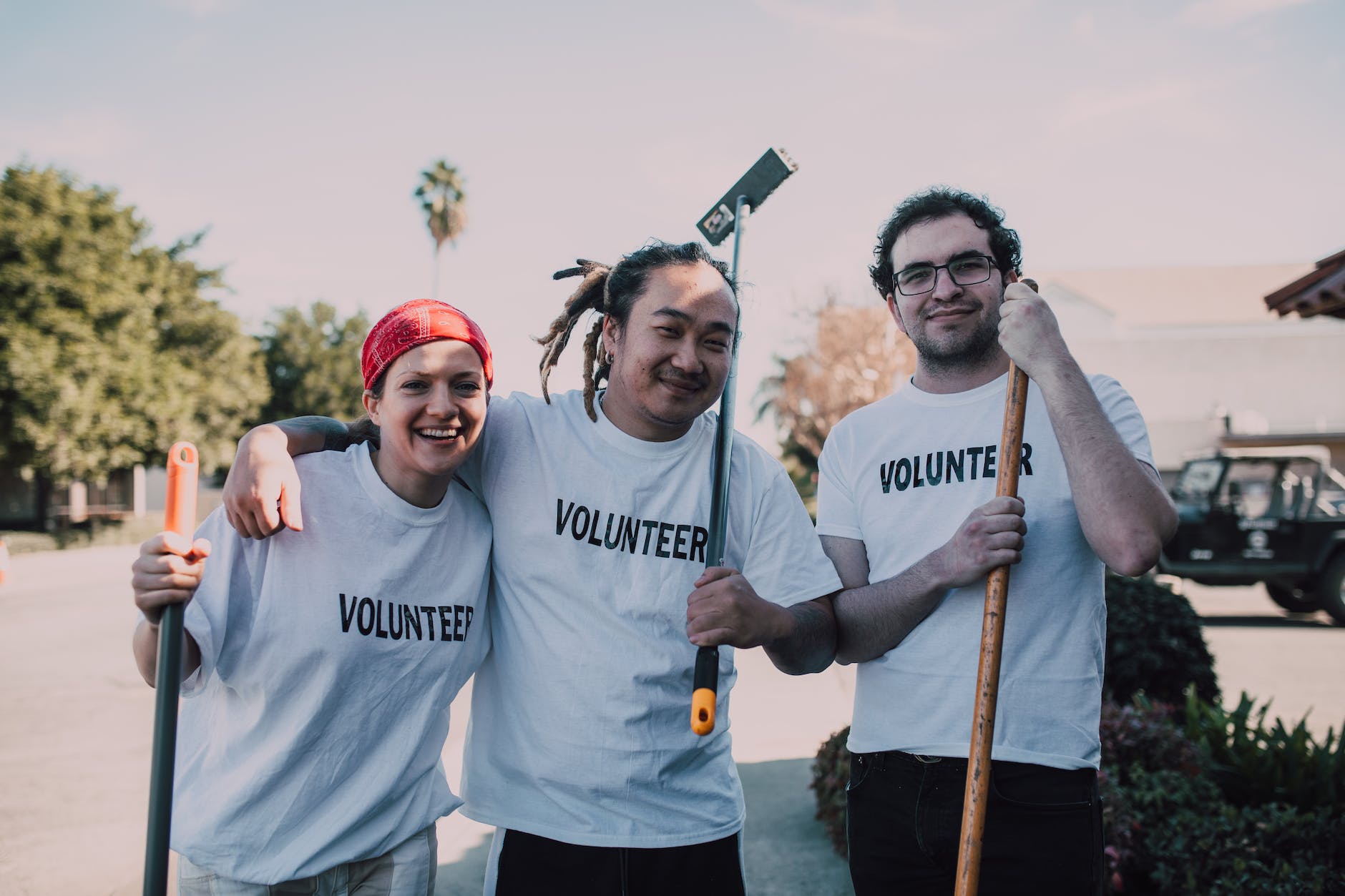
Photo by Liliana Drew on Pexels.com

Each Job is part of a Bigger Picture 🧹

I first met Mr. King during the summer before school started. He was part of a professional cleaning crew hired by our school. We occasionally chatted while we both worked, if he happened to be completing a task in my classroom. During one of those chats, we said his cleaning job mattered because he felt he was part of the team helping the students to have a successful school year.  

“If I don’t do my job, then you have to do my job, which means you don’t have as much time to focus on your students and that means their learning suffers.  It’s all a chain, y’see?”

Photo by RDNE Stock project on Pexels.com

Working with Joy 🎶

Once the school year was under way, I would often hear Mr. King, after school hours, singing/humming in the next classroom as he swept. It was a joyful energy, his voice pitching high and low as he worked. 

Some days, after students were dismissed and I remained getting caught up on work, Mr. King would respectfully knock and ask if I minded him coming in to sweep. Never wanting to interfere with his cleaning schedule, I welcomed him in. 

No matter how busy Mr. King was, he would take time to ask about my husband and me. Then, he tended to have some sort of question or story for me to ponder. It was a delightful give and take, and he was most interested in improving himself, body, mind, and spirit.

Though our conversations were never longer than three or four minutes, I was left with the impression that Mr. King was a deeply faith-filled man who had made mistakes, knew he wasn’t perfect, but still had the desire and heart to improve.

He especially seemed to want his life to be of good service. To this end, he once said, “I am working. Am I not? But how am I doing it? That’s what’s real.” 

Photo by Antoni Shkraba on Pexels.com

OUr Work Ethic speaks for us 🤓

Later in the month of January, another coworker said Mr. King went back to Florida, from where he was originally, in order to be closer to his family

Upon hearing this, I recalled he once took a phone call from his daughter while sweeping my classroom. Returning from the hallway into which he had stepped to talk with her, he looked wistful, adding, “I worry about her.”

Photo by Ivan Samkov on Pexels.com

simple ways we can be of SErvice to others: 😃

The memory of Mr. King’s work ethic now serves as a reminder to me that no matter what job we have, we can find ways for our work to be of service to others. Here are some of the ways, Mr. King demonstrated this:

Work with joy. It doesn’t mean that we don’t have challenging or difficult days. Rather, we can still have something for which to feel joyful IN SPITE of circumstances, and that joy can become contagious. Mr. King appeared to find and share joy by singing/humming and smiling outwardly. Even on those days where I could tell something was bothering him, he still offered me a smile and a sincere greeting. 

Find the meaning in your work. Mr. King believed his work was important because he was contributing to the overall well-being and success of students, teachers, and staff. He often spoke about how much he liked the teachers and students he met and was glad he could do his part to help our school. 

Work hard, but take time to pay attention to others. Mr. King was an efficient and effective cleaner, but he still took time to greet staff members by name. If he learned something special about someone, he would ask questions about that special-something and would later refer to it in passing conversations. He was the master of personalized small talk.

Remain flexible and responsive to the needs/priorities of the day. If a worker was out, or a new worker was being trained (which was often), I would frequently overhear Mr. King fielding calls to answer questions and/or offer help. He appeared to adapt his schedule in stride to accommodate necessary changes. Even then, if he saw John, my husband, or me, he’d pause with a “Y’all doin’ ok?” or “You and Mr. John take care this evenin’.” 

Be empathetic and compassionate. Throughout the time Mr. King worked at our school, I observed several occasions when he took time to interact with students who looked frustrated, down, or who simply seemed alone. He’d ask, “You doin’ ok, buddy?” or offer another kind phrase in an attempt to bring a smile to a kid’s face. Then he went right back to work, whistling or humming as he went.  

It’s not what you do, but how you do it. Mr. King epitomized this. A radiant smile never seemed to leave his face while working. Furthermore, he demonstrated to his coworkers, and those with whom he encountered, that he cared, was interested, and desired to uplift the small piece of world his work-life encompassed.  

Photo by Ketut Subiyanto on Pexels.com

final thoughts🤔

None of Mr. King’s skills are life shattering or new ideas. However, in a world where it currently appears acceptable to be ill-mannered, ill-tempered, non-empathetic, and even outright bully others to get your way, Mr. King’s skills and attitude were a refreshing change of pace. Imagine the amount of good that could be generated if more people thought about HOW they worked, spoke, and acted–if more people would choose to be truly service-driven, energized by faith and motivated by love and hope. How much more would be accomplished . . .if only.
Loneliness is a major health problem, and we can be part of the cure

“Be somebody who makes everyone feel like somebody.”–unknown

Photo by Bob Price on Pexels.com

The Write Stuff ✏️

It was supposed to be a creative writing piece.  A visual writing prompt given for the sole purpose of working with new vocabulary words.  On the white board, I projected a picture of a fully clothed person, leaning against the wall of what appeared to be a school, but the physical person was invisible.  The clothes the person was wearing were gender neutral.  I assigned no gender, race, religion, etc. to this person.  My directions were for the freshmen students to use their current vocabulary words to write this person’s story.  

Most of the time, when I assign such a piece, only a handful of students really get jazzed about the chosen topic/challenge of the week.  I am a realistic teacher and writer, so I get it. Not every topic can be inspiring.  

However, this past week was different.  Nearly every student was engaged, focused, and wanted more time to write.  This was unusual since I did not assign a required length to this writing assignment.  Rather, I required the correct use of all of the vocabulary words and that students fully write to the prompt. 

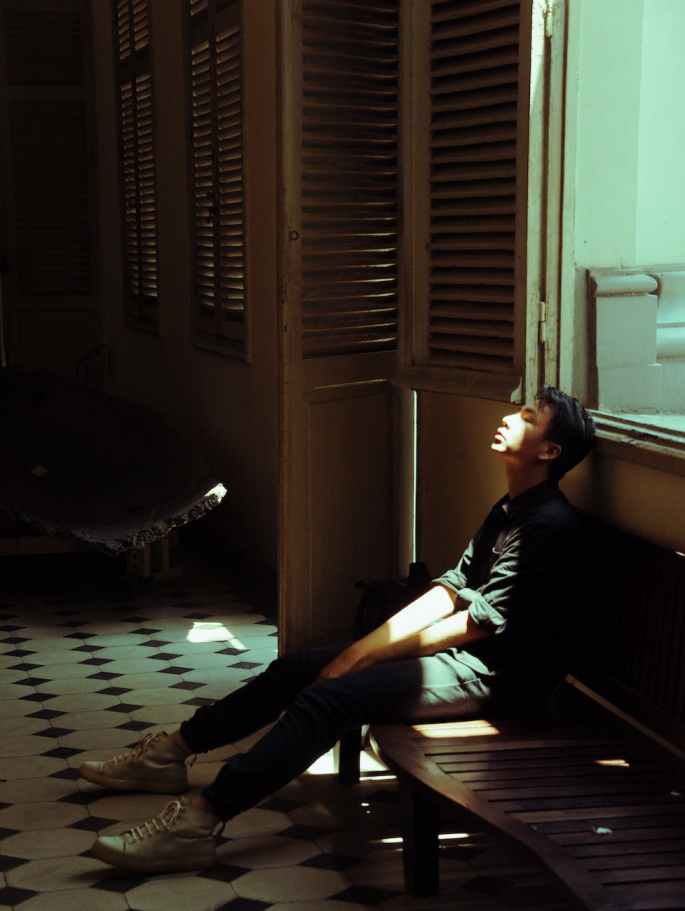
This picture of a student, Madeline Garcia, was taken with permission to demonstrate students’ feeling of loneliness. While she was not one who wrote that she felt invisible, she was happy to help out with the photo illustration.

Invisible Ink ✒️

Given the nature of my job and the number of students/grade levels I teach, it took me a couple of days before I read those creative writing responses. What surprised me the most was the repeated theme of feeling “invisible” to others.  Depending upon the student’s situation/perception, this included friends, social groups, family, and other important adults in their life such as teachers, pastors, and coaches. It was clear to me that social isolation and loneliness is a very real phenomena amongst an age group known for their social connectivity. 

To be sure, there were those students who wrote fantastical, fictional stories, and there were those who did the bare minimum with little creativity in order to complete the task.  However, a large number of students wrote heart-wrenching stories of feeling overlooked, disregarded, or ignored by people they consider to be important in their lives.  Many students spoke of possessing good qualities that went unnoticed or unappreciated by others.  They described the utter loneliness they felt inside, even when surrounded by others.

Photo by Anna Tarazevich on Pexels.com

Public Health Warning ⚠️

I was reminded of a couple of podcasts interviews I have listened to with the current U.S. Surgeon General, Vivek Murthy, in which he discussed an advisory he released this past spring (2023) proclaiming loneliness and social isolation a public health epidemic in the United States.  According to his findings, as seen in a release from the U.S. Department of Health and Human Services, loneliness is as bad as smoking on our health.  When we experience long-term loneliness and social isolation, it can put us at risk for heart disease, stroke, and dementia. 

However, for teens, this feeling of extreme loneliness, according to Murthy, predates COVID, despite all of the social media connections.  Murthy warns that loneliness and social isolation negatively affects the mental health of all who experience it, but he states that it is especially troubling for teens. In fact, Murthy went on to issue another advisory this past June (2023) regarding youth and their use of social media, warning that extreme exposure, defined as more than three hours per day, is a major contributor to the uptick of teen anxiety and depression.

Photo by cottonbro studio on Pexels.com

Face-to-face, heart-to-heart💖

Reflecting on my own student’s writing, it is clear, at least anecdotally, that loneliness is a very real feeling among teens. Of course, I do not want to totally dismiss the use of social media among teens as I know there are numerous benefits that can be found. However, it was interesting to note that when talking with all of my students, at all three grade levels (7, 8, 9), most stated they would rather spend time in person with their friends than text or connect with them via a social media platform.  Of course, there were a few outliers, but by and large, most spoke of the fact that since COVID, they place greater value on spending time with their friends and family face-to-face.

As it turns out, my students’ stories reinforce the fact that we all have the basic need to love and be loved.  We want to know that someone sees us, respects us, and truly “gets” us.  Knowing that we matter to someone, that we make a difference, is paramount to our mental health. 

When we engage with others face-to-face, we experience the nuances of communication–tone, facial expression, body language and so forth.  Eye contact can communicate so much without words, and it can be an even more powerful tool when combined with meaningful words. I imagine that our most successful earliest ancestors survived by staying with their pack–not venturing out on their own to face the dangers and predators of the world.  The same is true now, only our dangers and predators are more subtle and cunning.

Photo by Andrea Piacquadio on Pexels.com

Our problem; Our Solution

Of course, it’s easy to dismiss my students’ writing as the grievances of angsty youth.  In fact, Dear Reader, you could tell me, “It’s your problem, Stephanie.  I didn’t choose education as a career.”   However, have you ever noticed that when you peel the “y” off of the word your, you are left with the word our.  

This is our problem, and while I cannot pretend I have the answers for such a far-reaching issue, I do believe in the power of small acts of kindness.  We can look for ways to help others, and I don’t just mean the traditional “Give money to the City Mission” or “Work at the Salvation Army” serving Thanksgiving dinner.  Not that I am putting either of those down–they are worthwhile deeds.  Instead, I am referring to our day-to-day real-life interactions and encounters.  How can we make a difference daily?

Can we give our loved ones, including friends and family, more of our undivided attention for a few minutes with the cell phone put away?  Can we make more eye contact and speak a few kind words with the person who serves your coffee, lunch, or an employee at your favorite grocery store?  Can we take time to help another person with the door, or be more patient with that co-worker that honestly gets on your nerves?  

Photo by RDNE Stock project on Pexels.com

kindness matters😎

The list could go on, but my point is this. Small acts of service communicate to others that they matter and that they are not invisible to you. I know it is easier said than done, given the fast pace of life.  Believe me, I struggle with it too!  What I do know is that little acts of service or kindness makes us feel good, and more importantly, can also impact another person’s life.  At the very least, it allows us to feel our own agency in addressing the problem of loneliness.

I conclude, with a small prayer of hope.  May we begin to lead more people-centered lives, so we can truly see one another’s need to matter. 🙏