Finding Service and Joy in Every Job: Lessons from a cleaner

recalling unceasingly before our God and Father your work energized by faith, and your service motivated by love and unwavering hope . . .” 1 Thessalonians 1:3 (Amplified Bible)

What a difference one person can make😃

I had a feeling when I walked into my classroom one frosty January morning and observed the unswept floor, Mr. King (name changed for privacy) had not been in my classroom over Christmas break. Not that I typically permit my students to leave trash and debris on the classroom floor; however, I noticed there were a few pieces of notebook paper, pink pencil eraser dust, and a random pen lid dropped to the floor.  

Thanks, in large part to Mr. King, my classroom floor was usually immaculate. Was he sick? When I saw him, he appeared to be fighting some sort of virus. Picking up what I could off the floor, I thought of Mr. King, and the way he approached his work. However, students had begun to arrive, and I knew I would have to set aside my current strands of thought.

Later in the week, I ran across a quote that reminded me of Mr. King: “You are always doing spiritual work. It is not necessarily the action that is important, but how you do it.” (Satchidananda) I thought of his smile, his positive attitude, and the can-do energy he brought with him to his work. 

Photo by Liliana Drew on Pexels.com

Each Job is part of a Bigger Picture 🧹

I first met Mr. King during the summer before school started. He was part of a professional cleaning crew hired by our school. We occasionally chatted while we both worked, if he happened to be completing a task in my classroom. During one of those chats, we said his cleaning job mattered because he felt he was part of the team helping the students to have a successful school year.  

“If I don’t do my job, then you have to do my job, which means you don’t have as much time to focus on your students and that means their learning suffers.  It’s all a chain, y’see?”

Photo by RDNE Stock project on Pexels.com

Working with Joy 🎶

Once the school year was under way, I would often hear Mr. King, after school hours, singing/humming in the next classroom as he swept. It was a joyful energy, his voice pitching high and low as he worked. 

Some days, after students were dismissed and I remained getting caught up on work, Mr. King would respectfully knock and ask if I minded him coming in to sweep. Never wanting to interfere with his cleaning schedule, I welcomed him in. 

No matter how busy Mr. King was, he would take time to ask about my husband and me. Then, he tended to have some sort of question or story for me to ponder. It was a delightful give and take, and he was most interested in improving himself, body, mind, and spirit.

Though our conversations were never longer than three or four minutes, I was left with the impression that Mr. King was a deeply faith-filled man who had made mistakes, knew he wasn’t perfect, but still had the desire and heart to improve.

He especially seemed to want his life to be of good service. To this end, he once said, “I am working. Am I not? But how am I doing it? That’s what’s real.” 

Photo by Antoni Shkraba on Pexels.com

OUr Work Ethic speaks for us 🤓

Later in the month of January, another coworker said Mr. King went back to Florida, from where he was originally, in order to be closer to his family

Upon hearing this, I recalled he once took a phone call from his daughter while sweeping my classroom. Returning from the hallway into which he had stepped to talk with her, he looked wistful, adding, “I worry about her.”

Photo by Ivan Samkov on Pexels.com

simple ways we can be of SErvice to others: 😃

The memory of Mr. King’s work ethic now serves as a reminder to me that no matter what job we have, we can find ways for our work to be of service to others. Here are some of the ways, Mr. King demonstrated this:

Work with joy. It doesn’t mean that we don’t have challenging or difficult days. Rather, we can still have something for which to feel joyful IN SPITE of circumstances, and that joy can become contagious. Mr. King appeared to find and share joy by singing/humming and smiling outwardly. Even on those days where I could tell something was bothering him, he still offered me a smile and a sincere greeting. 

Find the meaning in your work. Mr. King believed his work was important because he was contributing to the overall well-being and success of students, teachers, and staff. He often spoke about how much he liked the teachers and students he met and was glad he could do his part to help our school. 

Work hard, but take time to pay attention to others. Mr. King was an efficient and effective cleaner, but he still took time to greet staff members by name. If he learned something special about someone, he would ask questions about that special-something and would later refer to it in passing conversations. He was the master of personalized small talk.

Remain flexible and responsive to the needs/priorities of the day. If a worker was out, or a new worker was being trained (which was often), I would frequently overhear Mr. King fielding calls to answer questions and/or offer help. He appeared to adapt his schedule in stride to accommodate necessary changes. Even then, if he saw John, my husband, or me, he’d pause with a “Y’all doin’ ok?” or “You and Mr. John take care this evenin’.” 

Be empathetic and compassionate. Throughout the time Mr. King worked at our school, I observed several occasions when he took time to interact with students who looked frustrated, down, or who simply seemed alone. He’d ask, “You doin’ ok, buddy?” or offer another kind phrase in an attempt to bring a smile to a kid’s face. Then he went right back to work, whistling or humming as he went.  

It’s not what you do, but how you do it. Mr. King epitomized this. A radiant smile never seemed to leave his face while working. Furthermore, he demonstrated to his coworkers, and those with whom he encountered, that he cared, was interested, and desired to uplift the small piece of world his work-life encompassed.  

Photo by Ketut Subiyanto on Pexels.com

final thoughts🤔

None of Mr. King’s skills are life shattering or new ideas. However, in a world where it currently appears acceptable to be ill-mannered, ill-tempered, non-empathetic, and even outright bully others to get your way, Mr. King’s skills and attitude were a refreshing change of pace. Imagine the amount of good that could be generated if more people thought about HOW they worked, spoke, and acted–if more people would choose to be truly service-driven, energized by faith and motivated by love and hope. How much more would be accomplished . . .if only.


In Pursuit of The Meaningful Path

“It is the very pursuit of happiness that thwarts happiness.”–Viktor E. Frankl

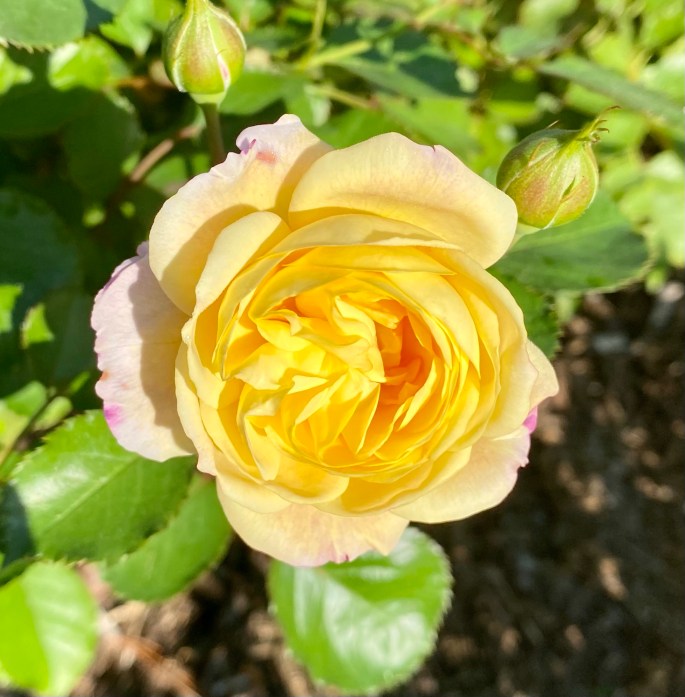
If you are familiar with my writing, you may have deduced that I have a significant appreciation for the Ritter Park Rose Garden. Throughout the year, I try to visit this local garden at least once per month, but more often if possible.  There is certain pleasure I derive from observing the various transformations of these bushes through each season.  I enjoy noticing the way their blossoms alter and progress through the seasons, and I even relish their stark, cut-back, bloomless appearance in winter. Throughout a large portion of the year, most bushes are not picture-perfect, but that fact does not take away from the positives each visit offers me.

It is not, per se, my attraction to roses that draws me to this garden, for I would happily regularly visit any formally planted botanical garden were there others within close proximity to my home. Rather, I have regard, not only for the miraculous seasonal changes provided by Mother Nature, but also an admiration and acknowledgement of its caregivers.  I have often encountered these seemingly tireless keepers of the garden tending to the needs of the plants in all seasons of weather and range of temperatures.  These garden custodians consistently employ their knowledge, skill, and attentiveness even though they most likely get paid a minimum income for implementing.  

“It’s the time you spent on your rose that makes your rose so important…You become responsible forever for what you’ve tamed.”–Emily Esfahani Smith

I was reminded of the talented rose gardeners while listening to bits of a podcast, ironically enough, while jogging through Ritter Park after a quick walk through of the rose garden.  The person interviewed held the basic belief that happiness is an elusive and ephemeral feeling that is not sustainable for long periods of time.  In fact, this self-proclaimed expert maintained that much shame and feelings of “less than” are associated with not feeling happy all of the time.  The same person further added that living a meaningful life was far more satisfying and sustainable than buying into the belief that one should be happy all of the time.

After about ten or so minutes of hearing this expert’s philosophical point of view, I turned off the podcast and let my mind search for greater understanding, or should I say meaning, as my feet continued their thump, thud, thump along the crushed gravel of the Ritter Park path.  My mind turned, examined, and played with this intriguing thesis.  I recalled that at one point there was a brief spike in marketing purpose-driven books and other media content, but when scrolling through current popular self-help authors, media influencers, and publications, many of these outlets pitch the if-only-you-do-this then you can lead a happy life.  This philosophy often focuses heavily on receiving and acquiring for the purpose of gratifying personal needs/wants rather than giving to or focusing on the needs of others.

The podcast had a point: there are hard times in life.  You, or a loved one, will get sick.  There is a possibility that you might lose and/or have to change your job and/or life role.  This may require learning to live in a new way, perhaps even in a new geographical location.  Income may be lost, gained, and even lost again.  Accidents will happen.  Loved ones will die.  I am told that even pandemics can occur!  The point is, none of us can always be happy.  In the words of the band R.E.M., “Everybody hurts, sometimes.”

Reflecting over the past few years, I realized the level of uncertainty, fear, and sadness many of us, myself included, have experienced due to COVID.  However, as I mulled over the podcast interview, I realized that at some point this past year, something changed within me.  In spite of experiencing some fairly significant discomfort due to changes and losses, I find myself once more satisfied with my work this year–even during this, my 35th career year in education.  If you had asked me last year, or even the year before, if I was content with my work, I would have told you that I was ready to quit, ready to walk away from it all, and look for a new path.  

“The least of things with a meaning is worth more in life than the greatest of things without it.”–Carl Jung 

However, this year, in spite of facing numerous challenges, my continued role as a teacher once more seems fulfilling–in spite of not having near the financial rewards as many of my peers with 35 years of experience in their chosen vocations.  What has been the difference?  The podcast thesis hit the nail on the head: it’s the meaning I derive once more from my work–which had been greatly reduced throughout the virtual experience.  This school year, I can once again witness firsthand the difference my job makes, especially those lightbulb moments, when a student’s face lights with the joy of new found knowledge or greater understanding.  While not every day is filled with those illuminating moments, and I am certainly not happy in every moment; I know what I do benefits the students–that is the difference.  

Nonetheless, not everyone can have a career from which they derive great meaning, but there are still multiple opportunities from which to acquire meaning. From parenting to volunteering, to various roles, responsibilities, and personal pursuits, there are many ways which any of us can create more meaningful ways of living–even if you aren’t “happy” every moment in which you are participating. Consider parenting, for example. Most parents, if they are honest, will confess to not always being happy.  However, when asked if their role as a parent adds meaning to their life, most will say, “yes.” Otherwise, who would want to become a parent?  

“As much as we might wish, none of us will be able to go through life without some kind of suffering. That’s why it’s crucial for us to learn to suffer well.”–Emily Esfahani Smith

 Part of our unique human experience is undergoing a wide range of emotions, so why should we believe we are “less than” because we are not, per se, happy.  Perhaps, as a human collective, especially in the first world, if we put greater emphasis on the development of fortitude, perseverance, and stamina–which are especially important skills during challenging times–we might not feel like a so-called “failure” when we are experiencing negative emotions, such as sadness, grief, loss and so forth.  

Suffering is a built in part of life.  While not all suffering is the same, and the aftermath varies from experience to experience, the fact that suffering temporarily robs one of happiness does not equate with a less meaningful life.  Rather than constantly searching for sources of happiness, we might all better benefit from participating in more meaningful activities, especially those that focus on contributing to others.  Then, when the trials come, and you know they will, you can reflect back to those meaningful moments and know that once you get through this tough time, you can live with purpose once more.  We cannot always be happy, but we can have a life filled with moments that matter and make a difference.