Pearls of Morning: Lessons from Spider Webs and Stillness

“Heavy dew this morning and every spider web in the garden is strong with pearls of moisture…. webs wherever I look, all shining things of silver beauty.–Edwin Way Teale

A close-up of a dewy spider web illuminated by streetlights in a quiet early morning setting, with blurred traffic lights in the background.

The Quiet Wonder Before Dawn 🌅

It was an early fall morning. Darkness still clung to the earth in a cool embrace. The traffic lights—green, yellow, red—continued their rhythm despite the empty streets. The air was cool and humid, and the hush before dawn rested easily upon the road. Pausing at the red light before continuing my jog, I noticed a spider web dappled with dew within the frame of the traffic light. I stopped in my tracks; upon closer inspection, I saw countless spider webs, draped with baubles of dew, hung from light poles and electric lines—even within the traffic lights themselves.

Hidden Beauty in Plain Sight🚦

I was awestruck by the beauty of the webs, looking ever-festive in the glow of lights—an unexpected wonder, shimmering high above me. After a few moments of appreciating the beauty, I jogged on through town, questions forming in my mind. How did they get so high? Why had I not previously noticed something so extraordinary hiding in plain sight? How many other marvels were hiding in plain sight, waiting for someone to notice?

A serene landscape featuring rolling hills partially obscured by a thick layer of fog, bathed in soft, diffused light, creating an ethereal atmosphere.

When We Slow Down Enough to See 🤓

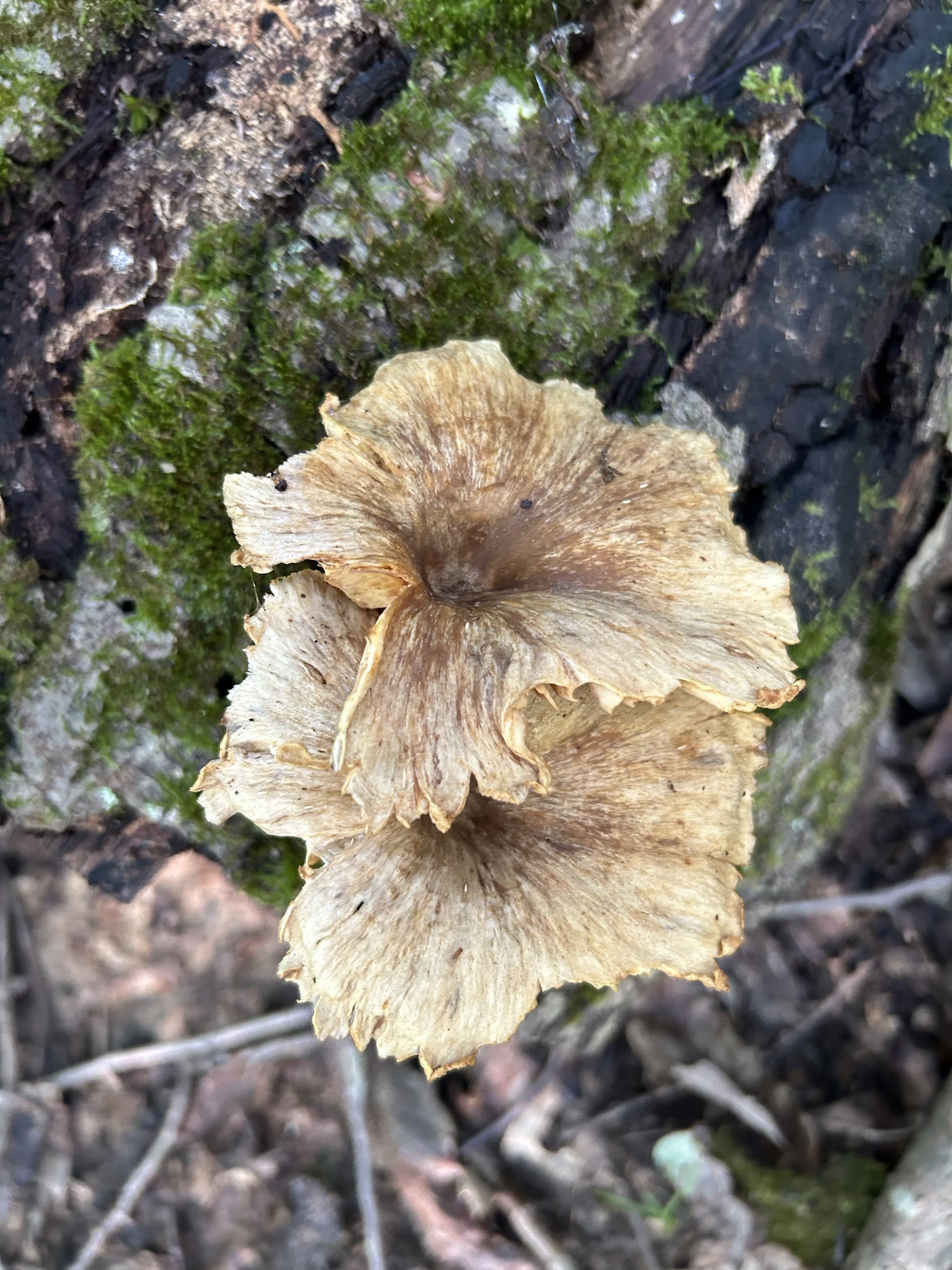
It occurred to me that more often than not, we rush through the routine of life overlooking these mini-marvels—the ballet of fall leaves chasséing from tree to stream, then pirouetting along water currents; sinuous streamers of fog tendrils meandering around hilltops; or, the multiplicity of ice crystals frosting over a car’s windshield to name a few. These wonders are woven into daily life: from the cantaloupe-colored brilliance of sunrise over the Ohio River to the glimmer of moonlight on a frost-covered lawn; from flower-like fungi blooming on fallen logs to a puppy seeing its own reflection in a puddle. Beauty surrounds us, waiting to be noticed. Like the invisible art gallery of spider webs in traffic lights on my morning jog, most go unnoticed until the light hits just right. However, when we take time to pause and pay attention, beauty will often reveal itself in unexpected yet common places, including stoplights.

A close-up image of a brownish mushroom growing on a tree trunk, highlighting its textured surface and natural surroundings.
Flower-like fungi “blossoming” from fallen tree branch

The Power of Morning Stillness 😌

That early-morning observation turned meditation centered my day. It offered more than one lesson and served as a reminder that the morning placidity can bring a sense of calming clarity before the noise of the day. Making time for stillness in the morning, whether sipping coffee, walking a beloved pet, or sitting in prayer meditation—offers an opportunity for spaciousness at the day’s start. A moment to center, notice, reflect, and connect. Even a few minutes of stillness can offer us an opportunity to ground ourselves and recalibrate our perspective. If we grow quiet enough, we may remember that peace resides within us. That is not to say that peace is the absence of movement, purpose, or challenge, but rather it is a strong presence within us—much like the hidden strength within the delicate spider web. 

A close-up of a spider web adorned with dewdrops, creating a sparkling effect against a blurred green background.
Photo by Pixabay on Pexels.com

Lessons from the Web: Resilience and Renewal 🕸️

As I reflected on the morning jog through town, I realized that each web represented perseverance, fortitude, and tenacity–three key qualities essential for growth. Each morning, orb-weaving spiders consume their protein-rich webs to reclaim the silk for rebuilding. This ensures the new web they build in the evening is fresh, sticky, and strong enough to catch plenty of prey. Through practice, the spiders gain strength and instinctively how to rebuild after storms and strong wind.

The spiders’ resilience serves as a reminder that we, too, have the grit to rebuild after disappointments, setbacks, and loss. Like the spider, rebuilding our lives is often quiet work that begins only after we have nourished body, mind, and spirit. The spider’s persistence mirrors our own–delicate and determined–reconstructing through incremental, small steps. Life, like the spider’s web, is fragile, yet we too possess tensile strength—centered in faith—that guides us as we restore, renew, and rebuild. 

A close-up view of a spider web adorned with numerous droplets of dew, reflecting light and creating a sparkling effect against a dark background.

The Threads That Bind Us 🕷️

The spider’s web, where no thread stands alone, echoes the interconnectedness of our own lives. We are part of a collective. As the light shone through the webs, each dew drop caught the light, refracting color and seemingly creating miniature worlds. Just as the traffic/street lights played across the spider webs’ dew drops, our connected lives reflect multiple roles–friend, spouse/partner, worker, neighbor, parent, child, citizen . . . . Each strand of life possesses a quiet strength that is integral to the whole. In fact, the integrity of the web depends upon the strength and resiliency of every strand. Each facet of our lives holds and reveals meaning; together, the varied strands of our lives unite the whole, creating an array of meaningful relationships.

A close-up view of a beautifully intricate spider web adorned with dew droplets, creating a delicate display of nature's artistry in black and white.
Photo by don chowdhury on Pexels.com

Finding the Extraordinary in the Ordinary 🌃

In the end, the light changed, and I crossed the street as the sun rose, erasing the glimmer of those webs. Yet the image remains—reminding me to keep looking for the extraordinary in ordinary places. Perhaps it waits in the quietude before dawn, a pause at a red light, or the hush of nightfall. So many interlaced moments shimmer within the droplets of daily life, waiting for those willing to see. Those silky webs may vanish with daylight, but their pearls of wisdom still glimmer within me, reminding me that beauty often hides in ordinary light.  

May we all learn to look a little longer, to pause at life’s red lights, and to notice the silken threads of beauty connecting us in the quiet hours of dawn.

The Power of Silence: Reflections on Mindfulness Retreat

In the silence of the heart, God speaks.” Mother Teresa

Photo by Ali Elfaziki on Pexels.com

Silent Retreat? 🧘‍♀️

I don’t remember exactly how the conversation went, but I was enjoying lunch with a friend on a Saturday when she told me she was attending a silent meditation retreat in two weeks, and asked if I would be interested in it. The retreat, she said, was sponsored by The Mindfulness Tree, a meditation community in Charleston, WV, and it would be led by Dr. Christine L. Blice-Baum, MDiv, DMA. Curiosity bloomed, and in a matter of days, I was also registered for the retreat.

In the days leading up to the retreat, I vacillated between feelings of excitement and thoughts of “what-have-I-got-myself-into?” The retreat required spending time in silence with complete strangers, excluding my friend, of course. I kept reminding myself that it wouldn’t be any different than going to an appointment or to the store with numerous others I don’t know. Never once, however, did it cross my mind that this retreat would provide multiple opportunities to come face-to-face with my mind’s resistance and its desire for distractibility.

Photo by Obi Onyeador on Pexels.com

Put away those devices 📲

Upon arrival, all participants in the retreat were asked to put up our phones and take off our smartwatches until the time of our departure. We had the choice to leave our devices in our car, in our own purse/bag, or stow them in a zip lock bag that was put away until the end of retreat.  I chose the latter option as a symbolic break-away from technology and, in all honesty, to reduce any temptation to peek in my bag at either device during the day. 

Not having technology was one of the first minor “discomforts” I repeatedly noticed. It began when I tried to check the outside temperature by looking at my wrist, and then did it several more times! What time is it? No smartwatch. Does the radar show my hometown receiving as much rain as here?  No phone. Blice-Baum just shared a great idea; I should type that in my notes. No phone. I should take a picture of the church’s pipe organ. No phone. Did my husband remember to  . . . . 

Participants in seated meditation.

Lessons of Stillness 🤫

This was my first a-ha moment. I was astounded to realize the amount of time my mind spends in a day consumed with thoughts of all the ways I can implement/use my smartphone and its companion watch. What’s crazy is that I am not a big user of social media, so I had this notion that giving up my devices would not be a big deal. While on one hand, it wasn’t, on the other hand, I was humbled to realize, social media consumer or not, my mind has been trained to be distracted by devices. 

The second big lesson had to do with a notion known as “custody of the eyes”–averting the gaze to avoid visual distractions in order to maintain focus. This practice was a challenge throughout the entirety of the session. 

The retreat schedule was well organized, sessions of seated meditation were interspersed with walking, movement, and standing mediations; however, my mind kept wandering and niggling me to look around at my surroundings. During walking and movement meditations, I had to keep redirecting my attention back to the meditation focus at hand because my mind had the tendency to wander off into people-watching mode. 

Participants take part in a silent walking meditation

The third lesson: I also squabbled with my mind’s habit of entering “squirrel-mode”–moments when something in the environment, or on the wall caught my attention, and my mind would launch off into associations with whatever my eyes had noticed. I knew I was distractible, but I never realized my mind was like a puppy visiting a new environment.

Another eye-opener occurred during our silent lunch. Blice-Baum, after sharing a prayer of gratitude and blessing for the food, led the participants through a short exercise of mindful eating. Then, we were directed to continue to enjoy our meal in silence, engaging all of our senses in the eating experience. This was when my mind really rebelled.  

Since I was a young girl reading the backs of cereal boxes at the breakfast table, I have always read while eating–newspapers, magazines, books–which were later replaced with digital versions. Without such distraction, I noticed my tendency to want to eat quickly and my eyes repeatedly searched around for something on which to focus other than my food. It took time for my mind to settle, slow down, and focus on taste and other sensations associated with the simple act of eating. This was a shocker because I love the taste, textures, and fragrance of food. In fact, I love to eat, but I clearly need to practice eating mindfully more often.

Group picture of participants.

Positive takeaways 🙌

In spite of all the mental obstacles and resistance I experienced throughout the retreat, I walked away feeling refreshed and renewed. Remaining fully focused and present on one’s own breath, a mantra, or an image isn’t easy, but there is something to be said about taking time to slow down and focus on one thing at a time. I felt as if I was coming home to my heart, and my own inner knowing, despite the fact I had to repeatedly redirect my mind like a toddler walking around the Tamarack Marketplace.

Would I do another silent meditation retreat? Absolutely! Many of the things that had been worrying me when I arrived at the retreat felt less weighty when I left. I experienced a recommitment to my personal practice of meditation/mindfulness and was inspired by new techniques to incorporate, not only in my own practice, but also to include with the yoga/mindfulness class I teach at school. Furthermore, in the days that have followed, there has been an overall increase in my sense of gratitude, along with a renewed sense of purpose. I have also noticed a calmer mind with a significant decrease in the power of those negative voices that love to chatter about in my head.

 Most of all, I am much more aware of how easily and quickly my mind can be distracted. These mental diversions on the surface seem as shiny and fun as a carousel ride to a young child, but they can lead to avoidance of the moment at hand–knowledge and understanding of what is going on in the here and now. Therefore, focus––especially given all the digital distractions–more than ever requires diligence, dedication, and continued redirection. And, one of the best ways to do this is the practice of meditation, mindfully completing tasks, or by simply connecting with our own breath.

Photo by Vie Studio on Pexels.com

Interested in Learning more?

If you are interested in learning more about meditation, would like more information about The Mindfulness Tree, or would like to connect with Blice-Baum, please visit www.themindfulnesstree.life

Dr. Christine L. Blice-Baum, MDiv, DMA

Finding Stillness at Charlton Lake Camp: A Reflection

“Only in quiet waters things mirror themselves undistorted. Only in a quiet mind is adequate perception of the world.”–Hans Marggolius

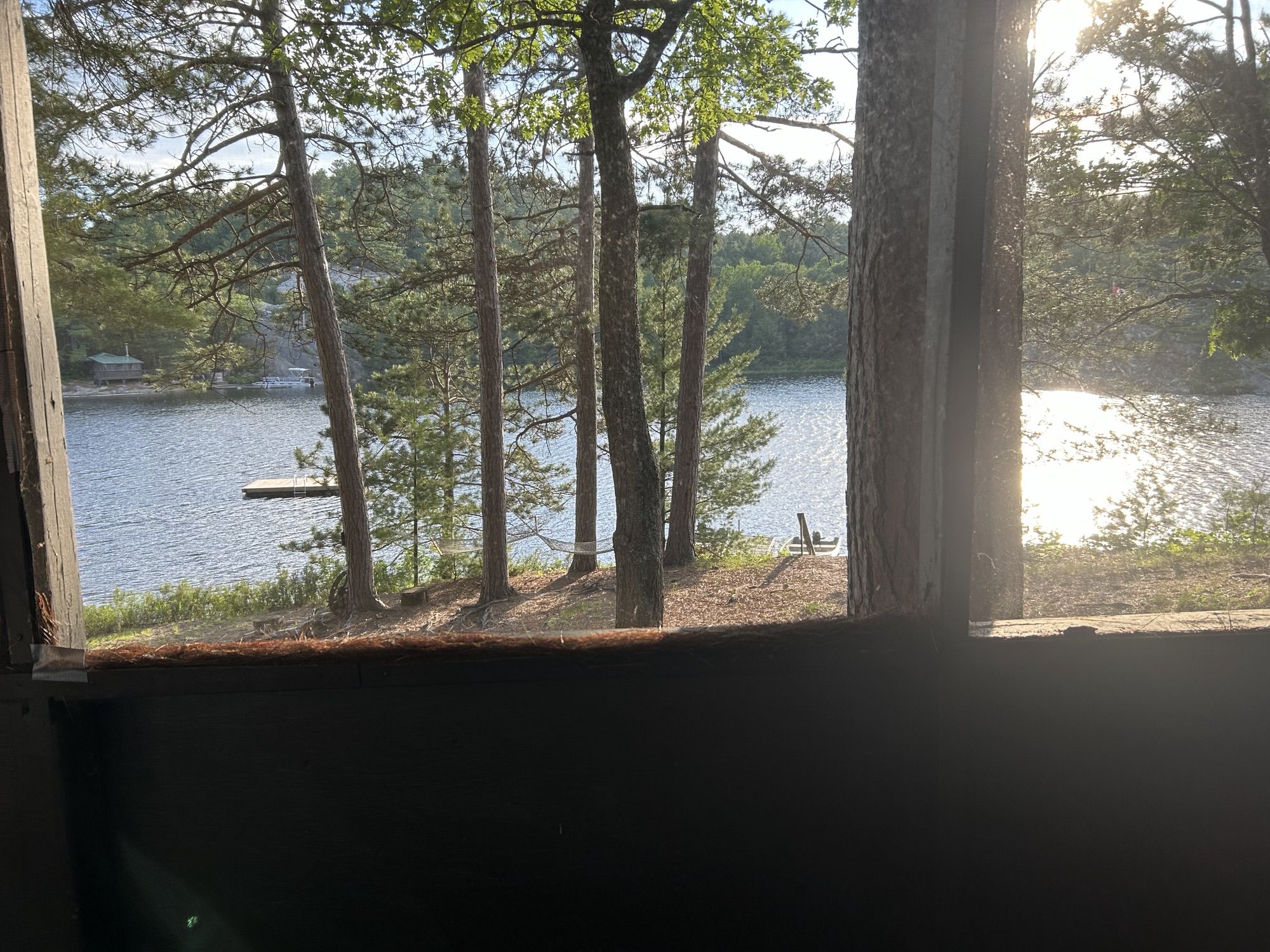
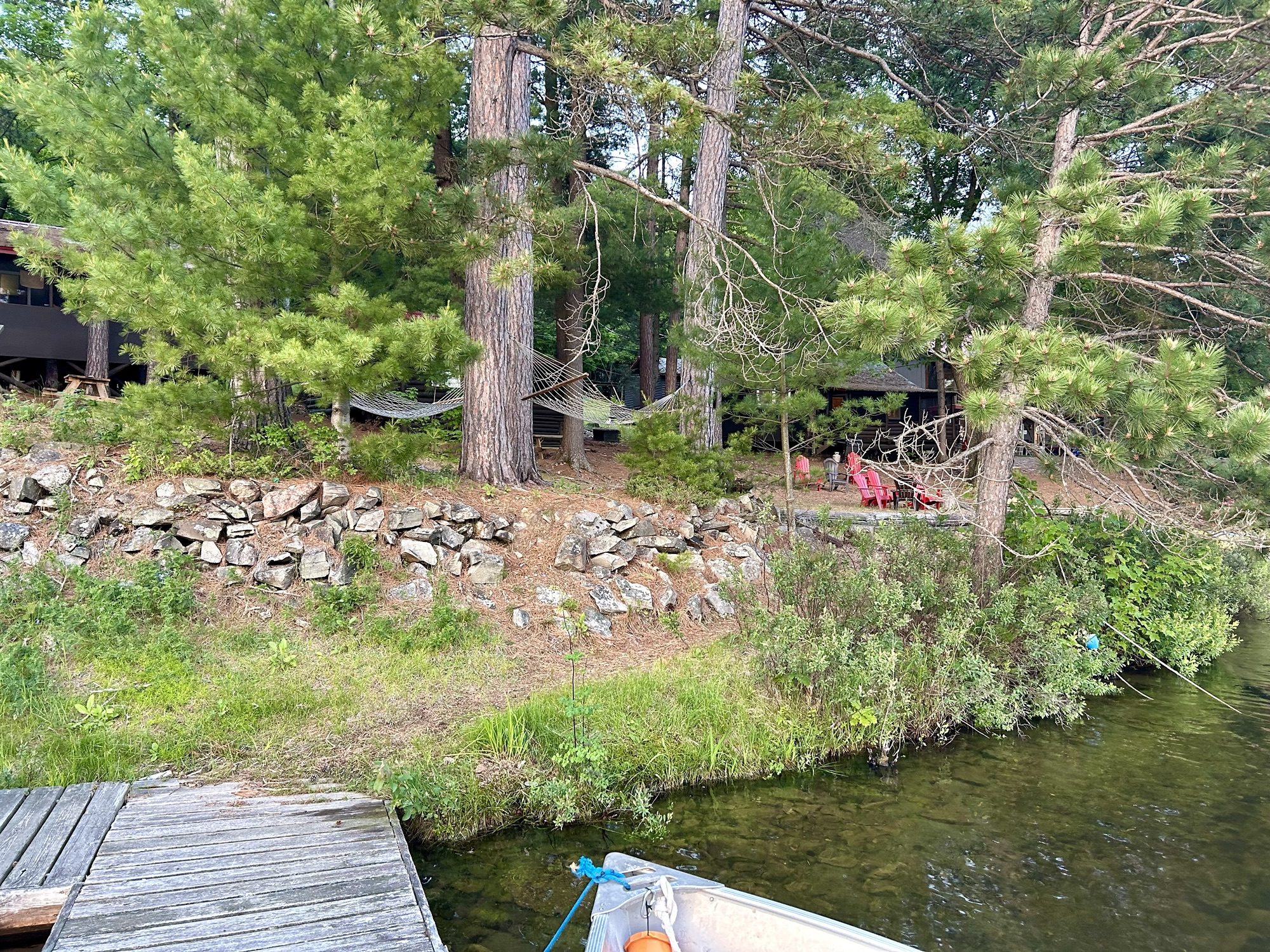
The view through the screened in porch overlooking Whitefish River a throughway to Charlton Lake, Frood Lake, and Cranberry Lake.

Still Waters 🏞️

I sat observing the waters of the Whitefish River flowing toward stillness–moving from one lake to the next, but in a relaxed state of flow that most often seemed to occur in the early morning or late evening.  Occasionally, something would break the surface, and rings would begin spreading outward from the epicenter. When this would happen, I often caught myself holding my breath in anticipation until the last ring dissipated, and the water was once more placid.  Then, with the stillness restored, I resumed my own cadence of breathing slow and steady, matching the river’s pulse.

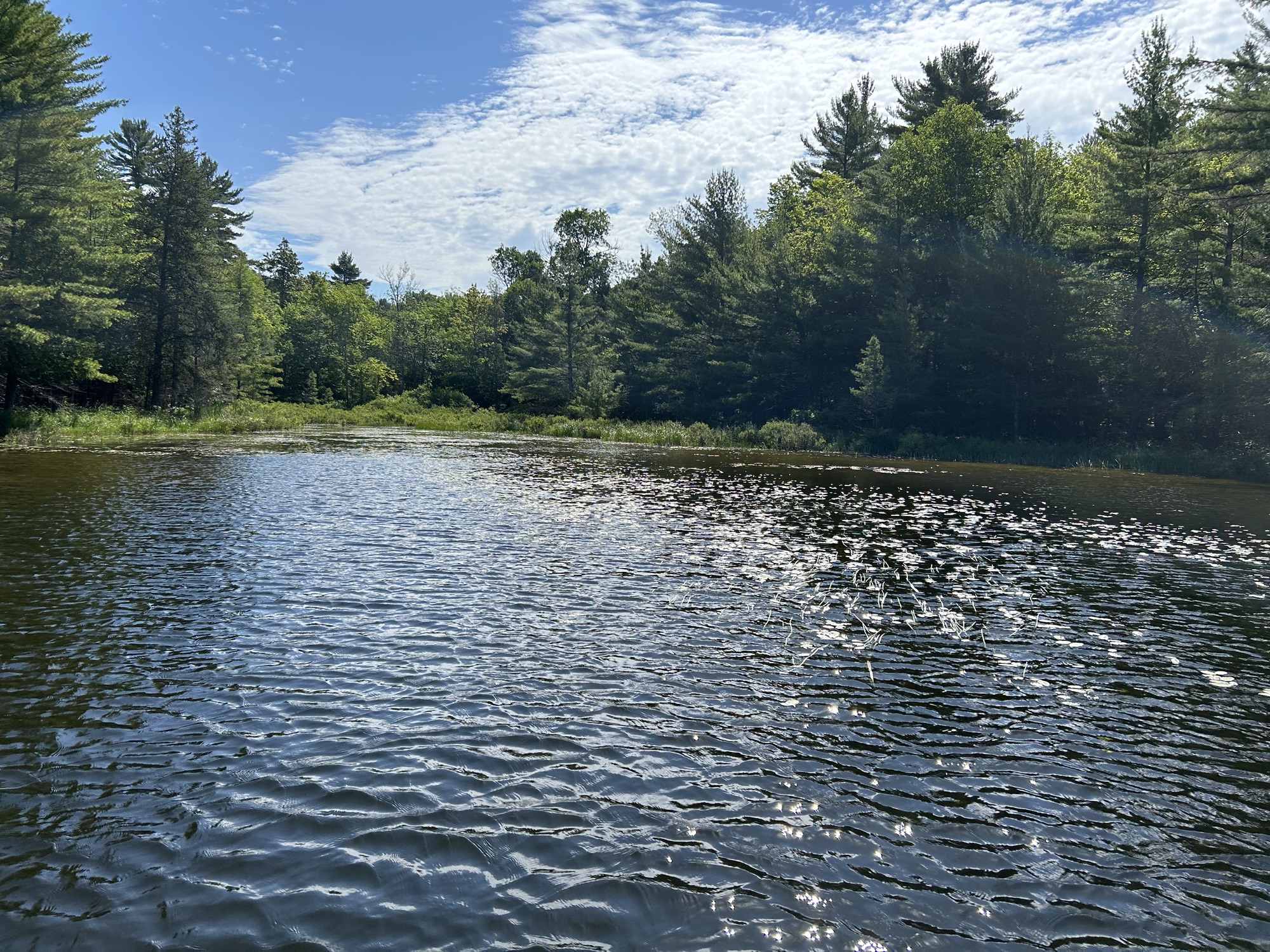
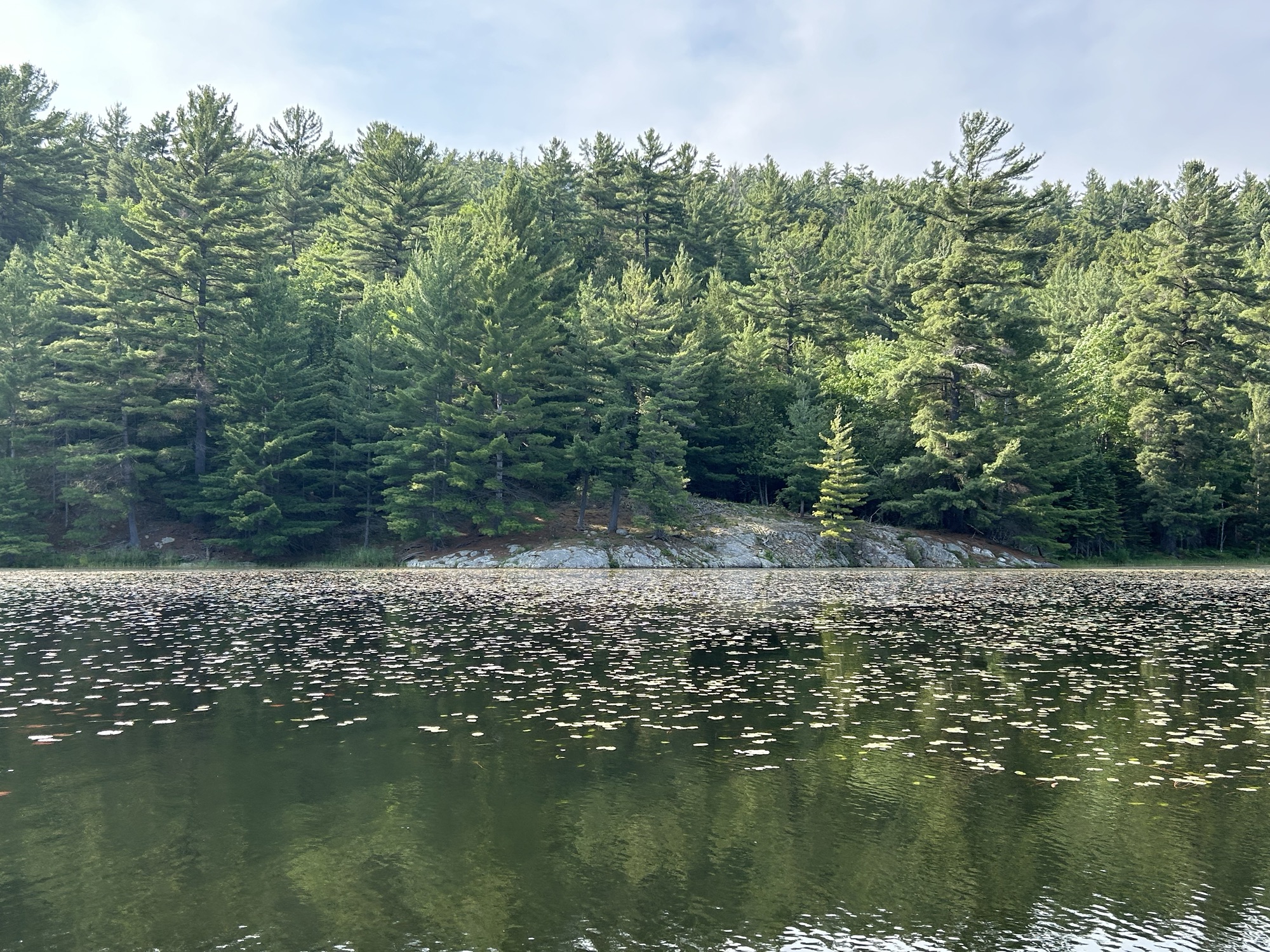
The peaceful, craggy rise of quartzite rise of the ancient La Cloche Mountains surrounding the lakes.

Lake Charlton Camp 🏕️

My husband, John, and I were staying in Charlton Lake Camp (CLC) located in Killarney Provincial Park, Willisville, Ontario. This was our second trip to CLC, situated in a natural showcase of diverse pines, surrounded by the white quartzite crests of the La Cloche Mountains and translucent, tea-stained waters of Charlton Lake, Frood Lake, and Cranberry Lake with the Whitefish River providing a throughway to the lakes. In the morning, CLC was filled with a wilderness chorus of birdsong, loon calls, bull frogs, lapping sounds of water against rocky shores, and, of course, the buzzing hum of countless varieties of insects. 

The cabin in which we stayed at Lake Charlton Camp is just beyond the steps that lead to the dock.

Settling into Quiet 🤫

Breathing in deeply, my lungs filled with the aromatic aromas of pines, damp soil, sunned rock, and a hint of morning coffee as I continued to sit and observe, communing with my surroundings. The sun would soon begin lifting above the craggy cliffs behind the cabin in which we stayed, and life would soon begin stirring with those gleaming rays. But, in that moment, hovering between the hush of night and the dawn of daybreak, there was a stillness in which my heart was soft and open–receptive to that still small voice that resides within.

Boating through Frood Lake with the La Cloche Mountains in the foreground.

Slipping into the Gap of peacefulness 😌

I once read that praying is talking to the Divine Creator; whereas, meditation is stilling the mind for the purpose of listening.  Sitting there on that screened porch on the cusp of a new day, I was reminded of that idea.  My heart, head, and soul had relaxed enough to hear the truth–to really parse the ongoing narratives that, when left unchecked, my brain tends to repeat on an endless loop. By settling into the surrounding peacefulness, I could focus on listening, and begin to see how many of those narratives were (and are) often baseless claims forged by past experiences, trauma, anxiety, negative self-talk/criticism, and even a little fear. 

Sitting, breathing calmly, and savoring CLC’s peaceful surroundings through my senses, I found I could let my mind rest easily as if the wheel of ceaseless chatter had ground to stop, or at the very least, slowed its revolution. Taking in a deep breath of the clean, wilderness air, I softened my gaze on the water and continued listening. 

Afternoon sun glistens off the calm waters of Frood Lake.

Riding the waves of emotional influence🌊

Matching my inner calmness to the stillness of the river led me to a realization. My own mind often mirrors those waters of CLC. My mind tends to be at its calmest in the early morning or at night–just before drifting off to sleep, letting go of the day’s worries.  However, once the day fully begins, I am immersed in work and various tasks with multiple decisions being made throughout the day.  As my decision making increases, my judging brain kicks into high gear.  With that continued judgment comes an inner dialogue often influenced and affected by emotions, which rise and fall throughout the day much like the water around me did during the week.

Throughout our time fishing, resting, and relaxing in CLC, I observed how the river and surrounding lakes could quickly become stirred up, rising and falling with the winds of the day, tossed about with a changing weather front, or even fill with large waves when an occasional boat sped across the waters to the farthest end of a lake. There were additional times, when for no discernable reason, the waters would suddenly ascend and descend, jostling the boat John and I were in. 

Riding out the waves of emotions can be similar to navigating a fishing boat over wave-filled waters.

Restless emotions 😬

Fishing during those moments of restless waters and winds was challenging.  The wind would take hold of a perfectly thrown cast and carry the line and lure in a completely different direction than intended. Likewise, when the waters were lifting and dipping with waves, the view beneath the waters was clouded and murky–not allowing the eye to determine if the boat was above rocks, a weed bed, a submerged tree, or any other number of possibilities. Conversely, during the moments of calm, settled waters, navigating and fishing those waters was fairly easy and what was beneath the boat was clearly visible.  

Looking out at the peaceful waters of Whitefish River through the screened porch.

The influence of a RAcing Mind 🤯

The riverview before me, in that early morning hour, was emblematic not only of ideal fishing waters, but also a peaceful state of mind.  Unfortunately, our modern world tends to create and drive the opposite effect–a constant flurry of stirred-up waters–our minds fidgety and/or frantic, racing from one thought to another, moving through agendas of busyness, entertainment, and avoidance. Therefore, if we don’t set aside time to allow our minds an opportunity to cease its chatter and rest easy, how can we ever feel calm and think clearly?

Settle into into the stillness.

The importance of intentional Quiet 🤫

Our inner dialogue is often affected by the changing weather of our emotions.  Those emotions vacillate and shift with each decision we make and with each event we encounter.  And while I fully admit that mind chatter, and all of the emotions that come with it, cannot necessarily be avoided, in similar manner to the weather fronts we experienced during my time at CLC, our emotions can vastly change within the course of a day, much less a week. Therefore, deliberately providing pockets of time for stillness allows us to detach from the emotional narratives, and instead, fosters listening to that still, small voice of knowing, which allows us to, well, “fish” for the truth.

Listen for the whisper of our Creator, the great I AM.

LeT us Listen for the whisper 👂

Ralph Waldo Emerson once penned, “Let us be silent, that we may hear the whisper of God.” What a powerful reminder of the importance of settling the mind, like the still waters that were before me on that morning at Charlton Lake Camp. The type of quiet we choose can be a formal meditation/reflection, but it could also be achieved through walking or other forms of exercise, tending to your flowers/plants, or simply sitting on the porch sipping coffee or tea and listening to the birds. It really doesn’t matter as long as it is an intentional moment set aside to calm those mental waters of ceaselessly, flowing chatter. Prioritizing time for quiet reflection or meditation, however you define it, allows the flow of our hearts and minds to settle, soften, and encounter the “whisper of God.” 

Willisville, Ontario

Mindful Breathing for Inner Peace: Embracing the Wisdom of Native American Tradition

“We are what our thoughts have made us; so take care about what you think. Words are secondary. Thoughts live; they travel far.”–Swami Vivekananda 

Author note: A reader requested I write another meditation.  I hope this benefits not only that reader, but anyone else who may be in need of a quiet mind, even if only for a few moments.  

Photo by Rachel Claire on Pexels.com

Wakeful Worries 😏

As I rose early on a recent morning, thoughts were bouncing around on the trampoline of my mind.  I had a to-do list that was growing and several creative ideas sprouting.  Overriding all of this, however, were stresses and worries springing about like jackrabbits in the desert. In fact, those negative thoughts, I realized with a sudden clarity, had been vying for residency in my mind for several weeks to the point they were disrupting my sleep.

Feeling the inner war, I opened a window, sat down in a chair near it–cup of coffee in hand–and welcomed nature’s morning muzak.  I took in a deep inhale, and slowly let it out. 

Inhaling, I felt the expanse of my ribs. Exhaling, I sensed bits of tension releasing. Focusing on my breath, I gently closed my eyes in an attempt to relax my body and release the mind noise.  Inhale, soften. Exhale, dissolve.

Photo by Anete Lusina on Pexels.com

Focused Breathing 😮‍💨

I am unsure how long I remained in this focused state of breathing, but soon, my mind drifted–as it tends to do–back into thoughts.  Thoughts of past events, worries of future events, and pressing concerns for the day ahead kept popping up. I had to keep redirecting my mind back to my breath and gently pushed aside those niggling thoughts.  It wasn’t easy.  Like a curious toddler trying to tempt fate, my mind kept circling back to those all-consuming worries and concerns.  

Inhale, redirect the mind back to the breath.  Exhale.  Let go of the negative thoughts jostling for attention. 

As my mind engaged in this game of ping-pong, I was reminded of a story I heard years ago during my yoga teacher training.  

Inhale, notice how easily the body can breathe.  Exhale, notice how naturally the body releases. 

Photo by Shelby Waltz on Pexels.com

The Parable of the two Wolves 🐺

The story, as I recall, is based on a Native American parable.  An old tribal leader was teaching his grandson about life. The grandfather tells his grandson that there is a fight going on inside of him. He describes it as a terrible fight between two wolves.  

Inhale, notice the ease of breath.

One wolf is evil, the story goes. He is filled with anger, envy, superiority, regret, greed, arrogance, self-pity, guilt, resentment, inferiority, lies, false-pride, and ego.  

Exhale, let go more.

The other wolf is good. He is filled with joy, peace, love, hope, serenity, humility, kindness, benevolence, empathy, generosity, truth, and compassion.  

Inhale, lungs fill.

The grandson thought about it for a minute, and then asked his grandfather, “Which wolf will win?” 

Exhale, lungs release.

The old tribal leader smiled and replied, “The wolf you feed will win.”

Inhale truth; exhale falsities. 

Photo by Polina Tankilevitch on Pexels.com

our Thoughts can be shackling ⛓️

I sat with the story, returning to the ebb and flow of my breath. The nourishment of the inhale continued to fill me with a sense of peace.  The long, slow exhale showered the soul, washing away worries, fears, and anxieties.

Many of us have experienced moments when we feel shackled by memories and traumas of past events. For some of us, those past occurrences created deeply-rooted fears, planted in our minds like cancerous tumors. Those seeds of fear from long-ago have a tendency to create clouds of self-doubt, blocking rays of hope and joy that can be found in the present moment.

Inhale, strength.  Exhale, dread.

However, there are times when all the present can offer you is a stem full of thorny events as if the sweet blossoms of life have been stolen. Illness, disease, work-day stressors, financial struggles, and numerous other difficulties prickle and needle our days with seemingly no balm for the soul. At these times, it can be easy to dip into the waters of sorrow, the woe-is-me story.

Inhale, perseverance. Exhale, detachment from the story.

Photo by Gary Barnes on Pexels.com

mindful connections 😌

However, even when we are surrounded by the chaos of life, there is a place of peace and ease. All it takes is a moment to reconnect with our breath, the river of calm and life-giving force within us. By giving up the struggle for one moment, we can let go of the bubbles of tension held within our depths, and allow them to rise and release with each exhale.  With each inhalation, we strengthen our connection to our True Source, our Infinite Creator.  With each exhalation, we can surrender our illusion of control and trust that all is as it should be.  

Inhale, fortitude. Exhale, liberate the mind.

By watching the ebb and flow of each inhale and exhale, we can lay down our burdens of our fear, doubt, and pain for the time being, and allow the Universe to carry the load for us. We can inhale the peace, and with the exhale, perceive the lightness of nothing is weighing us down in the moment. We can allow ourselves to feel the Divine creations that we are, and have faith in the process.  All is well in this moment as we breathe.

Inhale, trust.  Exhale, believe.

Photo by Arthur Brognoli on Pexels.com

breathe. connect. have faith. 😌

  In the same way that we trust our lungs to breathe for us–even when we are not focused on them–so too must we put our trust in our Creator and the flow of our life.  It doesn’t mean all will be perfect, for life is not simple. However, when life, and/or those around you, choose to feed the bad wolf, take a breath, and remind yourself that you have the power to choose to feed the good wolf, simply by pausing and taking a few deep breaths. 

Inhale, faith. Exhale, peace. 

One breath in, one breath out for peace and calm

 “We need to find God, and that cannot be found in noise and restlessness. God is a friend of silence. See how nature–trees, flowers, grass grows in silence . . . We need silence to be able to touch souls.” –Mother Teresa

Photo by John-Mark Smith on Pexels.com

The Miracle of EArly Morning 🌅

One of my favorite times of day is the stillness of the early morning.  Don’t get me wrong, depending upon how early I have to get up, it can be a chore to drag myself out of bed.  However, once I am up, enveloped by the hum of the house and the ambiance of the celebratory, daybreak birdsong, I feel a peace begin to zip up around me like my favorite hooded jacket. 

Now that daylight arrives earlier, it is especially delightful on the weekends to sit at my desk, steaming mug of coffee beside the laptop, and gaze out the open window as the birds continue their lilting praise of the arrival of daybreak. Sometimes I see the contrails from a jet writing across the sky.  Other times I observe the rustle of trees or my neighbor’s cat stalking some unseen prey. Regardless of what I notice, I take a deep breath, and invite the silence within.

Gazing out into the trees and grass of my backyard, there is a peacefulness of the Divine Presence.  Observing the continual miracle of seasonal change, I am bearing witness to the continuity, strength, and resiliency of nature.  With one breath in and one breath out, I can connect to Divine life force within, silently supplying me with continued strength.

Photo by Engin Akyurt on Pexels.com

Welcome the Silence 🤲

I continue to welcome the silence, and I allow it to wash over me, cleansing the stresses and worries of the night that interrupted my sleep.  I ask God to hold space for me within the silence as my soul settles into place. One breath in. One breath out. Each breath, rich in the silence, nourishing my peace of mind, if only for a few minutes.

Momentarily, I become part of the silence and my brain softens into the quiet, temporarily liberated from its continuous lists of things to do, notice, and concerns. One breath in. One breath out. I feel the silence breathing peace through me, filling my cells. I ask for the peace to live through me and to emanate from my actions, knowing even then, I will still stumble into mistakes.

The early morning silence centers and anchors me to the importance of being more mindful of the here and now.  One breath in. One breath out. I allow the silence to cultivate peace within that moment, and I ask that it remain with me as I move through my day, understanding that disturbances of my inner peace will also most likely occur throughout the day. I further pray the silence will infuse and imbue my day with moments of peace I can offer others, if only through the simple act of a smile or kind word.

Photo by Csankovszki Tibor on Pexels.com

Whispers of Silent Inspiration 🙏

If I am fortunate, the silence will sometimes whisper inspiration when I do encounter stress in a later moment. It only requires that I momentarily bring awareness to my breath, and once more, I can connect to the True Source filling my lungs, giving me life. One breath in.  One breath out. 

When the silent morning meditation begins to wind down, I become more aware of my surroundings and my own physical body.  I look for those poetic plane contrails, but they have usually vaporized, reminding me of the impermanence of struggles, strife, and life in general.  One breath in. One breath out. My words, my thoughts, my deeds are like those contrails, here, in this moment, but eventually given to the heavens.

Bringing awareness to the moment, I will feel the tendrils of morning silence loosening its grip, and I mourn briefly that I must leave its embrace. There are more words to be written, more students that need taught, and more people that need loved.  One breath in. One breath out. I remind myself that I can always come back to the comforting peace of the silence of my mind with one moment of conscious breathing. 

Photo by Dom J on Pexels.com

The antidote to noise and Chatter 🧘

It seems to me that we currently live in a world where many of us have forgotten, or even fear, silence.  Chatter and noise seem to flow in an endless supply, alongside daily routines filled with responsibilities and heaping portions of distractions. However, by seeking the solace of silence and focusing on your breath, if even for a few moments, we may discover our heart rate slows, racing thoughts may decrease, and the body may relax a bit.  One breath in.  One breath out. 

The older I get, the more my appreciation and need for silence grows.  If we listen too long to the noise of the media, news, traffic, screens, chatter, and so on, our stress increases, our worry increases, and our anxiety increases.  We forget that silence soothes our souls and brings us back to the presence of God within and around us. All it takes is one breath in and one breath out. 

That’s not the sky! That’s the clouds–Lessons in the 90-second rule

“You are not your thoughts.  You are the observer of your thoughts.”–Amit Ray

Photo by Pixabay on Pexels.com

Feelings Come and Go ☁️

It was between classes on a Friday afternoon. A male student entered my classroom, set his books down, and sauntered across the room towards the windows that line the wall of our third floor room. 

He looked as if he was preparing for a quick chat with his buddy when he randomly exclaimed, “Wow, look at that.  The sky looks flat.”

“Dude, that’s not the sky.  That’s the clouds!” a girl retorted.

A debate then ensued as to whether or not the sky and the clouds were one in the same. Several other students joined in the conversation until one student added with great authority that the clouds aren’t always in the sky, but the sky is always there. 

Listening to the student’s debate reminded me of a saying attributed to Thich Nhat Hanh, “Feelings come and go like clouds in a windy sky.”  Hanh taught this, in part, to demonstrate that we have the ability to be an observer of our mind’s thoughts.  I often phrase it like this, “Just because you think it, doesn’t mean it’s true.”

Photo by Yan Krukau on Pexels.com

The 90-second Rule ⏰

In fact, I ran across an interesting fact regarding the duration of emotions.  Neuroscientist and best selling author, Dr. Jill Bolte Taylor, Harvard trained and published, established that emotions only last for approximately 90 seconds.  According to Taylor, “When a person has a reaction to something in their environment,” she says, “there’s a 90-second chemical process that happens in the body; after that, any remaining emotional response is just the person choosing to stay in that emotional loop.”

Upon reading that fact, I almost felt called out, especially with regards to any emotional response after 90-seconds is personal choice.  Wow! That notion is super-charged with opportunities for self-regulation.  However, we all know that regulating emotions isn’t always easy. In fact, I suspect this requires practice for most of us.

Therefore, I want to step back to the clouds and sky scenario. Identifying and recognizing when our mind has gone off into what I call “thinking or story mode” due to an emotional reaction requires a certain level of mindfulness.  This is where knowing the rest of Hanh’s quote is important. “Feelings come and go like clouds in a windy sky. Conscious breathing is my anchor.”

Photo by Stas Knop on Pexels.com

Time for a Mindful Break ⏳

Learning to breathe through difficult moments in order to allow the emotion(s) to pass requires the ability to self-select the pause button. This also requires a certain level of awareness.  Practicing mindfulness can increase this awareness. 

Therefore, let’s play a game.  Come on, what have you got to lose, but a few more seconds added to reading this piece?

Softly close your eyes for 20-30 seconds and listen. Notice what you hear? The hum of the refrigerator? Birds chirping? Heater running? After perceiving and identifying the sounds you hear, open your eyes.  Notice you were able to identify the sounds, but that did not make you the sounds.

Now that you are warmed up, let’s do another one.  This time, take a good look at your surroundings. Pick one item near you and focus on it for a few seconds. What color is it?  Describe its shape. Identify its size.  Describe its function. Bring awareness to the fact you are identifying what you see, but you are separate from it.

Let’s try one more.  (I promise it’s the last one.) Gently close your eyes. Focus on the sensations in your body.  Do you feel air moving against your skin? Is there a part of your skin that is itchy, warm, cold, etc.? How does the fabric against your skin feel? After about 20-30 seconds, open your eyes.  There were numerous sensations you were able to name in those few seconds, but those sensations are separate from who YOU are.

 Practicing aspects of mindfulness is as simple as those three exercises–fostering an awareness of a “something,” giving it a name, and then observing it without judging it as good or bad.  When you do this, you are engaging your “observer mind,” which is an important skill for taking advantage of the 90-second rule. 

Photo by Keenan Constance on Pexels.com

Swatting away those negative thoughts 🙇‍♀️

 I don’t know about you, but I happen to have a mind that, when triggered, is very good at sending waves of negative thoughts and messages.  These antagonistic ideas can quickly commandeer my mind, and it can sometimes take significant time for me to become aware, much less observe those emotions objectively. Once I finally do, I try to imagine that my difficult feelings/thoughts are a pesky mosquito or bee buzzing around in my mind.

  The image encourages me to gently swat away challenging thoughts or feelings by reminding myself that even if I am thinking a certain way, it doesn’t mean it’s true.  Sometimes, I stay trapped in the loop of emotions, and I am reminded that I am a work in progress.  Other times, I can name the story or feelings, and I have the ability to send it on its way. 

I usually have to remind myself to stop judging the experience as good or bad–which I also tend to do. Then, I have to engage my curiosity and ask myself why am I thinking/feeling/reacting a certain way.  This can take a long period of time, and sometimes, I have to tell myself to accept the feeling/thought for the time being, and I can figure out the reason for the feeling later.  

I often find, through reflection, that many of my emotional responses are often caused by certain triggers or trained reactions from long ago.  I am especially prone to messaging that tends to make me feel “less than” others, but everyone has their own unique triggers. I also find I am more likely to be sent into a negative spiral if I am especially fatigued. 

Other common triggers may include, patronizing behavior, micro-management, someone not pulling their weight, someone criticizing you or your work, and so forth.  The thing is to begin to get curious and see if you can begin to identify your personal triggers. 

Photo by Liza Summer on Pexels.com

Tools for Dealing with Difficult Emotions 🔨🪛🔧

In the end, when it comes to emotions, we have 90-seconds in which our bodies chemically react to our triggers and attempts to send us into the “flight, fight, or freeze ” mode.  After that, we have the power to continue with one of those modes, or choose another direction, but it won’t be as easy as snapping a finger.

Knowledge of the 90-second rule does not allow us to avoid challenging emotions.  Instead, it is my hopes that it gives you (and me) the power to:

  • Identify what you are feeling (tight stomach, red face, rising heat, etc.) 
  • Gently ask yourself why you are experiencing it (What was the trigger?)
  • Name the emotion(s) (fear, anger, embarrassment, resentment, etc.)
  • Accept and allow those feelings
  • Offer yourself compassion and see if you can redirect your energy into a more positive endeavor.

Remembering that you have a choice when feeling strong emotions can be empowering, but it is not all rainbows, sunshine, and unicorns. Nonetheless, having tools to navigate through challenging emotions can make a difference, allowing us to eventually see through our cloudy and distorted thinking and perhaps get to the other side with a bit more grace and equanimity.  

Always wanting more? Try looking inward instead

Photo by Jensen R on Pexels.com

“Things are just that–things.  They don’t make us who we are.  They make us look better on the outside, even when we’re hollow on the inside.  They’re an illusion–the shiny objects that distract us from the really important things.”–Chelle Bliss 

Trapped in the Wax 🕯️

  The day had been cool and cloudy, and I had come home with a bit of fresh produce, including a variety of fruit.  Given the weather, I thought it seemed like the perfect time to light the fragrant candle, a gift from a student.  I did not think about the fact that fresh fruit, during certain times of the year, is often accompanied by tiny little flying insects.

There they were, though, tiny bugs trapped in the melted wax because they had been drawn to the light of the candle.  Their attraction to shiny things had caused their demise in the end.  I wonder what they sensed the candle light could offer them–if they felt the candle’s sparkling flame would somehow improve their lives.  

Did those bugs confuse the candlelight with sunlight or moonlight?  Did they think it would help them navigate through the otherwise overcast day?  Perhaps, those pests confused the candlelight with bright flowers that nourish insects with nectar?  Were they trying to escape some unseen predator and sense that the bright light would blind their predator from seeing them.  Then again, maybe they were the predators looking for a meal, or were they looking for a suitable mate?  

They were so attracted to the flames, they lost their way and became stuck in the melted wax.

Attracted to the Brilliance ✨

Even science doesn’t seem to know the exact reasons bugs are drawn to light, and it made me wonder why humans, likewise, are drawn to shiny things?  Big vehicles, the bigger and shinier the better.  Large homes filled with sparkling appliances, a multitude of large screens, and a variety of other collections, depending upon a person’s interests and means. Closets gorged on a feast of clothes and shoes. Not to mention the cultural attitude about prosperity: those with means have been “blessed.” (I’m not sure what that means for the rest of us.) 

Then there is the shininess of beauty, youth, and attractiveness, especially since our culture tends to place more value on the looks of youth over the experience and wisdom that comes with aging. Cosmetic injections, surgeries, and implants to change looks and/or stave off aging, no matter your gender.  Your face should be blemish-free–no saggy eyes, no droopy chin, and while a few laugh lines are acceptable on men, wrinkles are not so appealing on women. 

Photo by Jack Sparrow on Pexels.com

Window shopping 🛍️

We are attracted to the nectar of status, wealth, and beauty, and yet we are often as trapped as those insects, feeling as if what we have of it is not enough.  This drives us into a perpetual cycle of needing more things, needing more investments, needing more dressings to make us look shiny to others. We are window shopping the lives of others to see if our own shop window is as appealing and competitive-looking as our peers.

Do we, like insects, confuse the brilliance of status and/or youthful beauty with the light of inner peace that can help shine a path through life?  Do we sense that when times get overcast, the more things we have, the better able we will be to find our way through dark times?  Could our obsession with window dressings come from our own insatiable, ego-driven hunger?  Perhaps, we have an unspoken belief that we can protect ourselves from bad things happening to us if we attain a certain income status.  Then again, maybe these objects make us feel/seem more attractive to others, in the hope of luring some attention.

Photo by Pixabay on Pexels.com

Is it enough? 🤔

While I recognize that the words I write sound hyper-critical, please know that I am asking these same questions of myself.  Should I do more to “improve” my looks? Is my career enough at this point in my life? Afterall, I am choosing to remain an educator, rather than administrator, because I still find intrinsic value in what I do, even though it doesn’t have the same monetary value? 

My husband and I have a home, and it may not be the best.  But, it is dry, safe, and warm.  We have food on the table, and we certainly have clothes–albeit not necessarily the most up-to-date styles. At the end of my life, I often remind myself, I can’t take any of it with me.  Nonetheless, I also know I must save for those end-of-life years, for which I hope/think we are doing enough, but is it?  

Why do I sometimes feel I am not doing enough? Why do I feel like I should do more? Am I trapped in the wax of envy?  Am I trapped in the wax of our cultural beliefs of worth and value? Am I the only one with these questions/feelings? I don’t think so.

Photo by Arthur Brognoli on Pexels.com

Self-Reflection 🙏

I’ve concluded that it is only through self-reflection, contemplation, and meditative prayer that the answers are found.  What is right for me, may not be right for others.  By examining our attachments, we can begin to ask ourselves what things/what part of our lives are bringing us true fulfillment, and which are merely fueling our ego?  When we look deeply, we see that many, if not most of our things, paint an illusion of happiness for us.  

Much of what we have externally is impermanent.  Even our relationships, as much as we value them–have a limited time.  Therefore, through introspection, we can perhaps see the importance of living more fully in the present moment, completing our responsibilities without attaching to specific outcomes (because we really aren’t in as much control as we think we are) and surrendering the outcomes of our efforts to a higher power. 

By shifting our focus more frequently to our internal world, we can begin to detach more from our external trappings. Then, we can learn to dampen the sounds of our ego’s attachments to societal values, and discover richness and fulfillment that comes from fostering our own spiritual growth and the expanding sense of peace that comes with it. The more we shift to an internal focus, the less trapped we feel, and the more we can enjoy and appreciate this gift of living. 

Photo by James Wheeler on Pexels.com

Stuck On Flat Ground

“What you do makes a difference.  And you have to decide what kind of difference you want to make.”–Jane Goodall

Photo by Christina Morillo on Pexels.com

Sweeping ArounD 🧹

During the pandemic, I purchased a Roomba, an iRobot vacuum for which I could set a schedule for regular sweepings of the house.  There were three of us at the time, working from home and interacting a whole lot more with our two cats.  Thus, there was more than the normal amount of traffic in the main areas of our house, so the Roomba seemed like a good investment. 

It was great fun watching that little disc, affectionately named “Spot,” zip around the house whisking away the hair and dust while we worked.  At first, it seemed to move throughout the house in no certain order.  However, once its internal navigating system became familiar with the layout of our house, it didn’t take long for it to begin trekking over the carpet in precise patterns. We watched it move with intention, seemingly knowing where it was, where it wanted to go, and where it wanted to end before the battery needed to be recharged.

Photo by Kindel Media on Pexels.com

Stuck AGain 🤔

Lately, however, it’s been sending me messages that it ended its job, “stuck.”  At first, I wondered how it was possible for Roomba to be stuck on a flat surface? I supposed its battery simply didn’t have the strength it once had. Now, the problem has grown even bigger, not only is it still sending me messages that it is “stuck,”  but it is also no longer functioning properly, pushing the cat hair into multiple mini-piles all over the carpet.  Now, we come home to find the Roomba, at a stand still in the middle of an open, flat area of our house.  It’s as if it is so focused on getting finished before its battery dies that it’s not taking to properly execute its job–sweep the dust and cat hair.

 This reminded me that sometime in life, it’s not necessarily the challenges that get us,  but instead, it’s the everyday routine that can cause us to get stuck in a rut.  Our own internal navigation system focuses so much on the destination–be it the end of the day, the end of the work-week, the number of days until a holiday/vacation, the number of years to retirement, and so forth–that we forget to pay attention to the road over which we travel. Navigation systems require two things: Knowing where you are, and where you want to be? However, if you don’t pay attention to the route, you won’t get to your destination.

No Stopping until We Reach our Destination ✈️

Too often we are so focused on our self-defined destination that we forget where we are and overlook not only the pothole in the road or traffic jam ahead, but we also ignore the beautiful scenery that lines the route. Our eyes become so fixated on “the end” that we will blunder and stumble through the motions of life, forgetting that we have a purpose in the here and now, not just once we reach our destination. In the same way that part of traveling is paying attention to the route in order to arrive safely, we too cannot fully and satisfactorily arrive at any self-determined destination without fully focusing on the route in between.

Photo by JESHOOTS.com on Pexels.com

Agency over Urgency🚘

As a young teenage driver, my parents often advised me to,  “Give yourself enough time to arrive safely at your destination.”  This is a great reminder for moving through life.  It reduces urgency, so that we can have agency.  Remembering that we have a certain level of agency in situations, no matter what our jobs/roles/responsibilities are, serves as a reminder that we have a certain level of choice as to where we put our attention and how we choose to react to the proverbial potholes in the road of life.

When we were new drivers, we needed to master small tasks, such as, navigating traffic, how/when to turn at a stop sign, how to safely pass another driver, and so forth. Working on these skills over time was part of the process to becoming a successful driver.  Likewise, as young adults, we approached life and our newly found adult role with the trepidation of a newly licensed driver.  Over time, just like with driving, the more we participate in our new roles, the more our knowledge increases.  It’s only natural that we begin to modify and adapt our navigational skills as we gain a better understanding of where we are and the direction our life is taking.

Photo by Anna Tarazevich on Pexels.com

Inner Tune Up 🔧

However, it is easy to get stuck in the routine and lose sight of the actual route over which we travel.  We go through the motions, driving through life, but not really engaging with it. That’s when, like my iRobot, we need to reach out for “I-support” and perhaps do some trouble shooting.  We can do this through meditation, self-examination/reflection and also by connecting with the faith-based community of our choice, a trusted friend, family-member, or fellow mentor.  Through the process of self-reflection and reaching out to a trusted group or person, we can tune-up our inner-GPS, ensuring we are focused on our values and traveling, aka working, in alignment with them.

People-Centered Living 😃

Photo by Andrea Piacquadio on Pexels.com

When we focus more on our values, it helps us adhere to our destination’s route, but with less emphasis on the journey’s end and more emphasis on what is in front of us in the here and now. By observing who, or what, is in our day-to-day encounters, we might begin to see that we are more than our work.  Instead, we begin to live a more people-centered life, and not just work-centered lives.

Additionally, when we truly take the time to refocus on our values, we are taking time to also tune-up and adjust our own inner world, our internal navigation system. In the same way a fully functioning navigation system gets our cars to our ultimate destination, our internal pilot will wander all over the place without a robust, healthy internal world.  When our internal navigating system is off, we, too, become stuck on flat ground like my Roomba.

There’s nothing wrong with a daily routine.  They are necessary to complete life tasks.  However, let us not allow their regularity to cause us to overlook the very things that can feed our souls and enrich our life.  Let us take time to remember our core values, so that we are mindful of the destination without urgency, and use our agency to engage with the opportunities along the way. 

Pushing through limiting beliefs: the case for contemplative practice

“When I was a child, I spoke like a child, I thought like a child, I reasoned like a child; when I became an adult, I put an end to childish ways.”–Corinthians 13:11 NRSV

Photo by Pavel Danilyuk on Pexels.com

Push or pull 🚪

Years ago, when I first started dating my husband, we traveled to a local town center and parked in its parking garage.  In order to access the stairwell from the garage, you had to go through a set of glass doors, but we encountered a problem.  

The doors would not push open for us.  John tried.  I tried.  For the life of us, we could not get those doors to open.  We nervously stood there wondering if we would spend the entirety of our second date standing in a parking garage.  Finally, one of us, and by now, I do not remember who, read the sign on the door, “pull here.”  It was really that easy.  The doors opened as if by magic.

Sometimes we are focusing our energy on continuing to open doors that keep our beliefs limited.

This past week, I was reminded of that memory.  Throughout my workweek as an educator, I travel between the high school and the middle school, in order to teach classes.  Structurally, the two buildings are designed quite differently based upon the era in which they build.  Therefore, their doors are designed differently as well.

While I don’t have an issue, as you may have predicted, between pushing and pulling the doors open for either building, instead, it is remembering, on the high school side, which of the double doors leading to each floor is the correct door to pull to open.  Exiting any floor, both doors push open, but when entering the floor, only one door pulls open, and you guessed it, I tend to grab the wrong door and try to pull it open.  You’d think by now, I’d have it down.

When I once more tried to pull the wrong door open again this past Friday, I thought back to that second date with John, and I began to reflect on all the ways life can be like those doors.  How often do we continue to push through something in life, when really we only need to gently pull.  Or, how many times have we reached for the wrong door to open, when the “right” door was there all along?

How many times do we continue pull ourselves through the same doors in life, when all really need to do is pull open a new door.

Those unidentified LImiting Beliefs 🤔

Many of us, at one time or another, have allowed limiting beliefs to influence our choices and actions in life.  These beliefs could have been established in our childhood, steeped in the culture of our local environment, or even part of time-specific attitudes of a specific decade.  For example, you may have been raised in one set of faith practices and remained faithful to that belief system because it seemed like the “only one.”  Another example might be that you were raised in a community with a limited mindset, and therefore, that influenced a large portion of your choices in early adult years.  Then, again, due the decade or family situation in which you were raised, you may have only felt as if you could only pursue specific career paths.

None of the scenarios, or any of the other hundreds of examples, are inherently bad or wrong.  In fact, for many people, it works out just fine until one day it doesn’t.  Specifically, I recall a young lady I once knew. Throughout her young life, she was pushed by parents and their social group to focus on her looks, and she was encouraged to have boyfriends from a young age.  This young lady was beautiful, but she was also bright and kind hearted.  Still, the message she received was that her purpose was to finish high school, marry, and be a mother.

Again, there is nothing wrong with beauty, dating, marriage, and motherhood.  It was the fact that these ideas were valued and encouraged at a young, impressionable age, and indeed, she did what was expected of her. However, when she became pregnant by her senior year of high school and dropped out of school, she was suddenly the object of gossip and rumors.  Her parents were furious with her, unable to see their role in this situation.

Photo by Rafael Henrique on Pexels.com

Coming face to face with limited Beliefs 🧐

In one fell swoop, the young lady appeared to lose her support system, and her shift suddenly shifted from what she had been taught her whole life to the well-being of herself and her child. Eventually, she went to live with a friend and her family. 

It took her years of struggling, but eventually, I am told, the young woman moved out of the area, worked numerous part time jobs in an attempt to support herself and her child.  As her child grew, she began to take online classes.  First, she earned her GED, and later, she earned her associates degree in business.  Some years later, I learned this tenacious woman married and worked for a fairly large business firm.  She never had another child, and she rarely sees her family.  Her child, at last count, was in graduate school.

What I do remember about this young woman was that she once shared with me, early in her pregnancy, how she felt pushed to meet what she thought were the expectations of her.  She reflected that she had spent most of her teen years starving herself to maintain a certain size.  Her education was not prioritized, but rather her social life, specifically dating.  She was pushing through her youth to meet what she thought was her family and community expectation.

Photo by Ivan Bertolazzi on Pexels.com

Recognizing internalized beliefs 🤨

This is only one example. When we only know one way to push, that’s how we open doors in life.  Racism, sexism, bias against other religions or religious bias, prejudice, limiting beliefs about gender roles, and the list could continue, can be restrictive, and even detrimental, ideas that we may not realize we have internalized. These types of belief systems typically occur due to the way in which we were raised, the groups with whom we socialize, the community in which we live, or, the social media platforms we choose to follow.  

Many of us don’t recognize that we may have these internalized limited belief systems until something changes.  All of the sudden, we come face-to-face with a situation in which our beliefs will no longer open the proverbial life door.  For example, years after the young lady moved away, I ran into her mother.  Her mom was divorced, living in a different community, and added she was attending a completely different type of church.  

The mom openly shared with me her regrets about the way she raised and treated her daughter.  Hindsight–and a perspective shift–caused her to see life differently.  At that last encounter, she said she was trying to re-establish a relationship with her daughter, son-in-law, and grandchild.  I hope it worked out for her.

Photo by Matthias Zomer on Pexels.com

The case for Contemplative Practice 🙏

This is where having contemplative practice is important. Whether you do this through meditation, praying, formal scripture study with a trusted mentor, or simply set aside time to be with your own thoughts.  Self-examination and reflection of our actions and attitudes is critical for our personal growth as well as our spiritual growth. This includes taking time to identify areas in which we may still exhibit childish or limited beliefs, attitudes, and actions.  Once identified, the key is to consider the ways in which we can work to replace them with more mature, open-minded, and loving ways.

 In the end, we can keep moving through life pushing through doors based upon untested assumptions, or we can pause when we begin to feel resistance and ask ourselves if it’s time to pull, or at the very least, push open another door.  

Surrender and Accept Change

“And when the night is cloudy, there is still a light that shines on me, shine until tomorrow, let it be.”–Paul McCartney

Photo by Zeeshaan Shabbir on Pexels.com

During the height of the pandemic, I cultivated the habit of a daily meditation practice.  In particular, I often used an app that was free of charge for those in the service careers, including educators.  In addition to offering guided meditations, it also offered short (3-5 minute) video clips designed to bolster spirits, inspire courage, and calm feelings of anxiousness.

While I can’t say I was a regular viewer of those videos, I did enjoy, and often learn, from the ones I did watch.  One video in particular, used time-lapse photography to demonstrate the ways in which light changes throughout the day.  It was one of my favorites, so much so, that I saved the link to my laptop to rewatch from time-to-time

During this video, the narrator explains the way our experience of color changes over the course of a day and the science behind it. Beyond the obvious point of light brightening at the beginning of the day and darkening at the end of the day, there is a daily light progression that we may not perceive.  It allows us to experience every color of the light spectrum within one 24 hour period.  Much of this progression has to do with the nitrogen and oxygen in the atmosphere scattering the light waves coming from the sun and making the sky appear blue.

Photo by Skitterphoto on Pexels.com

At sunrise, we see more reds and oranges, while other colors, like greens, blues, and purples, appear darker and more muted.  Then, as the morning progresses, yellow light becomes the dominant color we tend to associate with sunlight. Meanwhile, the “yellow” sunlight reflected upon the so-called blue of the sky intensifies the color of anything that is green up until noon.  Then this same light/color progression begins to reverse itself throughout the remainder of the day until the sun sets.  As the sun returns to its lowest point on the horizon, the light returns to a red-orange hue, and then gradually fades into the blues and violets associated with night, illuminated by what we perceive as the white light of the moon. 

And so it is with life. Change happens daily, from moment to moment, and life never stays the same.  Like the changing of light rays throughout the day, many of these changes are so subtle, they are often not observed in the moment, such as the growth of our children, or our own aging process.  For example, a parent may not clearly see the day-to-day growth occurring within the physical development of their own child, until one day, they happen to notice the child’s clothes are suddenly too short/small.   Likewise, we may not discern our own aging process until we see a picture of ourself from as few as five years prior, and suddenly we are face-to-face with our own change.  

As an educator, I sometimes measure life in terms of an August to July school year, rather than the typical January to December calendar year, depending upon what is being measured.  Nonetheless, I recognize, now more than ever, that time is fluid, and it matters not how I measure time because it continues to flow and stream like the daily progression of light.

That being said, these past 12 months have been full of joys, changes, and of course, challenges. Many of these changes were immediately as visible as a bright sunrise over the Ohio River. While others shifts were less visible, but nonetheless impactful. Then there were those challenging dull hue moments that accompany the colors of night that felt as long as evening shadows.  In fact, there were moments when it felt like I was riding life’s carousel, returning, again and again, to the same point as if progress was at a standstill.

And yet, now I can look back and see that, indeed, even if I wasn’t directly observing it, change was occurring.  While my eyes may not directly witness every sunrise, nor catch sight of all of  night’s blues and violets, these events still occur–without or without my direct detection. An invisible force, a guiding hand, if you will, greater than you and I can comprehend, maintains this on-going, ever-moving cycle of change.  It is ever present, even during those darkest, bluest nights when we often feel alone with the shadow-side of life and wonder if the darkness will ever abate.  

Ultimately, the darkness ebbs, and the light does begin to flow, but precisely as the light/colors of the day must go through their unique progression, so too must the solutions and resolutions to those dark and lonely life challenges.  Life, like light, will go on and will continue, along with the Source, the maker of light and life.  Therefore, we must surrender to this knowledge.  Surrender to the what is, and to what will be; surrender to the notion that we are not in-control.

The lesson for me this 2022-2023 year, and it is a tough morsel to swallow, is that the only guarantee of life, like the light progression of our day, is change.  While I can try to control certain factors, such as schedule and routine, the choices I make, or even how I measure time, for the most part, what will be, will be. 

Thus, as long as I wake up, whether I rise with the cool dark blue of the predawn hours, or I get up with the bright orange and red light of sunrise, there is a Source shining, not only within me, but throughout all of life.  Therefore, as the light surrenders, rather than falls, to its daily course of change, it is likewise my job to see the illuminated gift of each day as I ride the ups and downs of this carousel called life.