Use the RAINDROP technique to weather life’s emotional storms

“Peace is this moment without thinking that it should be some other way, that you should feel some other thing, that your life should unfold according to your plans.”–Dorothy Hunt

Several months ago, during the fall of the year, I was walking on a local, circular path.  Suddenly, I heard the loud rev of an engine.  VROOM!  I saw a large SUV type vehicle, careening, plowing, and then swerving off the road, straight towards the path over which I walked.   

My heart began to race, and my thoughts quickened, trying to process what I was witnessing.  The SUV drove along the slope that forms a ditch line surrounding the path.  KREECH! The sound of metal collapsing was ear-splitting as the vehicle crashed into a heavily staked, metal line, thick and entwined like a rope, that supported a power line pole.  Fear raced through my veins as I ran towards the vehicle to see if the person inside was ok while grabbing my phone to call 911.

Photo by Mike B on Pexels.com

I find this event to be an excellent illustration of what it means to witness.  I was the bystander.  My senses heard, saw, and even felt this scene as it unfolded in a surreal manner.  This same skill of witnessing as a bystander is a tool we can use to help navigate difficult emotions/feelings when they come crashing into our life path.  And, let’s be honest, difficult emotions can be a regular occurrence at all stages of life.

From anxiety to depression to life event stressors and work stressors, I daresay none of us are immune to challenging emotions such as anger, insecurity, sadness, fear, and numerous other less-than-kind emotions.  This is where tapping into the bystander part of the brain can help us navigate through the mental storm clouds with a technique called RAIN and its counterpart DROP, acronyms first coined by Michele McDonald, a mindfulness teacher.

Photo by Ron Lach on Pexels.com

There are times when we may not initially recognize that our emotions/feelings are impacting our thinking, but with a bit of practice, we can begin to recognize that they are.  Actions such as, lack of focus/feeling distracted; binge eating/drinking/scrolling/watching; avoidance/procrastination, and so forth can be indicators that something is awry.  Even seemingly positive actions can be a side effect of not-so-great feelings trying to bubble to the surface, such as busyness; continuously working; over-exercising; frequent napping, and so on.

This is when the RAIN technique can be effective.  RAIN gently asks us to become a bystander in our minds to determine what we are feeling or perhaps trying to avoid feeling.  Then, it takes us through a process of reflection to bring us to a point of compassionate self-awareness.  Like all techniques, however, it takes practice, and it is not a one-stop-fix-all solution. However, it can be one more tool in life’s toolkit for managing difficulties and suffering.

Here are the steps, based upon my interpretation and personal application of the technique. However, it is worth noting that there are numerous free apps, videos, books, and websites that offer guided versions of this technique that can be quite helpful, especially in the beginning.

Recognize what is going on and name it. “I’m feeling angry, hurt, lonely, sad . . . .”  Then you might also notice if you’re judging those feelings or feeling guilty for having the feelings in the first place.

Acknowledge and Allow. Once you’ve named it, begin to witness your feelings as a bystander would at the scene of an accident. If thoughts pop up that tell you that “shouldn’t feel this way,” gently tell yourself that it is ok to have this feeling.  

Investigate your emotion/feeling with curiosity and interest minus judgment or blaming self or others. What are you feeling and where are you feeling? Similarly to the way I experienced the accident–first in my heart, next in my mind, and finally in my body–where in your body do you feel this emotion? How is it affecting you?  Do you want to cry, eat, move, hide, nap, and so on?

Natural Awareness, Non-identification and Nurture.  This is where you can tell yourself that just because you feel it, doesn’t mean it defines who you are.  Instead, use this as a lesson for how ________ (name the emotion) feels like, similar to the way you feel symptoms of a cold, the flu and so on. Then, take time to offer yourself compassion just as you do when experiencing a cold or flu. You could even place a hand on your heart center or gently pat your cheek as an act of self-compassion.

Contrastly, each stage (letter) of DROP to a corresponding, often knee-jerk, reaction to each step (letter) of the RAIN process.  It creates a greater understanding of those monkey mind tendencies that want to interrupt or impede the RAIN process in order to confuse the bystander role of our brain. 

Distraction and Delusion. Our brains would often rather distract or delude us from the truth of the matter instead of allowing us to recognize and name what we are really experiencing. 

Resistance. Sometimes, this means, we have to push past our mind’s initial resistance in order to allow and accept the emotion we are experiencing.

Obliviousness. When you take time to honestly investigate a so-called negative feeling, you are overcoming the self-obliviousness, the “I lie to myself all the time, but I never believe me” habit, so many of us unwittingly practice.

Personalization. Your feelings do not have to be the narrative of your life.  You might feel angry, but it doesn’t mean you’re an angry person. You might cry when you feel insecure, but it doesn’t mean you’re unworthy.  In other words, don’t make the emotion/feeling personal, it just is.

Raindrops are going to come and go in life, and some time periods are cloudier than others. There are times when it seems those rain-filled clouds will not leave.  And so it can be with our emotions.  We cannot always control the stormy feelings and thoughts that we encounter throughout life’s ups and downs, but we can choose to change our relationship to them. With the RAIN practice, we can tap into our brain’s ability to witness the impending storm clouds and offer ourselves an umbrella of self-compassion and understanding to help us weather the storms of life with a greater sense of resilient grace.  

Rain and Umbrella by Fu00e9lix Hilaire Buhot (French, 1847u20131898) is licensed under CC-CC0 1.0

Let your Life Be a Work of Art

“Make your lives a masterpiece, you only get one canvas.”–E. A. Bucchianeri, Brushstrokes of a Gadfly

Photo by Ana vu00ea Ana Fotografa on Pexels.com

I recently came across the line, “Let your life be a work of art.”  These words were spoken by the late Thich Nhat Hanh, and they inspired me to reflect upon their deeper meaning.  As often happens, I could feel the tendrils of my brain entwining around this notion and exploring all of its complexities.  In fact, the next day, I found myself in meditation asking myself how to “live artfully” and contribute more beauty to the world.

It seems to me that all lives are pregnant with possible ways to share unique artistry with others. While I know, as Bucchianeri once wrote, we only get one life canvas, I’d like to think, that with the gift of each new day, we are each bequeathed a new canvas on which to create. Therefore, how do we bring about awareness and intention to our daily opportunity to create quality life art? 

Photo by Steve Johnson on Pexels.com

I think many great religious and thought leaders would point to nourishing your innerworld as a start. Initially this may sound self-centered.  However, I am reminded of the repeated directive instructing passengers, when flying on an airline, “put the oxygen mask on yourself first before helping others.”  This is because you cannot be of assistance to another person, if you don’t have a one true source for life. 

Therefore, it makes sense to foster a rich, more faith-filled inner life in order to create a more inspired and productive outer life.  Personally, I know when I mindfully start my day with time set aside for thoughtful devotion and contemplation, my actions are apt to be more harmonious and positive with others.  In fact, I find that if my inner world is unclouded, my actions and choices are more thoughtful and in better service to others.  

Photo by Kelvin Valerio on Pexels.com

That said, I don’t think it’s a linear or perfect process, but a gentle ebb and flow. When we seek, pray, read, meditate, and/or focus upon living more peacefully, as described in most major religions, we can then draw from a wellspring of faith, purposely seeking guidance for serving others.  However, that doesn’t mean we always remember to do that.  Mistakes, stress, anxiety, emotional overload, and so forth, can take us off our A-game for a span of time, but like a swing responding to gravity, our faith can draw us back to the path. 

The more we return to cultivating that inner-world, the more we begin to live in closer alignment with our higher purpose.  Life, it seems, begins to evolve and flow with greater ease, enhancing our ability to constructively contribute to the world and others around us. The greater the sense of ease, the less resistance and/or friction in life, thereby allowing for more effective and productive communication and actions.  Thus, the “art” we hope to create in life, organically continues to evolve and spread to others.  

Photo by Kampus Production on Pexels.com

 In fact, at least based upon my current reflections on the subject, it seems to me, the more we get clear in our inner world, the more we learn to accept responsibility for our own actions and choices.  As we assume more responsibility for our own actions, we can begin to also foster more responsible reactions as well.  In fact, when our reactions become more moderated and considered, the more effectively we can generate a sense of calm, creating less distress in our own lives and the lives of those around us. 

Of course, writing about “life as art” is easier said than done. Nonetheless, I do believe it is worth trying. As with any work of art, the process is often filled with struggle, but as any artist can tell you, the process of creation can often be messy and imperfect.  Therefore, learning to artfully live with more intentionality and tempered reactivity is a process also permeated with struggle as it takes awareness, time, and a large quantity of patience with self and those around us. 

Photo by Afta Putta Gunawan on Pexels.com

However, by repeatedly returning to the cultivation of our inner life, our hearts and minds are gently reminded to remain in alignment with the higher purpose of our faith.  Even after those less-than-stellar days, that we all experience, we can return to our practice and consciously redirect.  In the end, this not only benefits you, but others also profit by your choices, and even more so, by your example.  This give and take of constructive and purposeful living creates a dynamic design of a colorful criss-cross of actions and interactions.

Admiring the beauty of a large pot of flowers, vincas, on my front porch brought me full circle in this “living artfully” thought exploration.  The flowers began as four tiny individual plants. In spite of all the crazy weather, the vincas have multiplied ten-fold, it seems, with eye popping color. The vincas are a reminder that our lives can flourish in similar fashion. 

Our Creator designed us with the ability to withstand dry times, heavy rains, and even stormy seasons. However, the more often we return to nurturing our inner world, the better able our True Source can work through us. By more frequently listening and surrendering to that deeper voice of God, the more we allow our lives to become the design of the Creator’s hands; and like the vincas on my porch, our lives can become unique and colorful works of art to which Hanh encouraged so many years ago. 

By creating the practice of cultivating our inner world, we can become aligned with our higher purpose.  Through the ebb and flow of practice, we learn to accept responsibility for actions, consider our reactions, and allow the "art" of our life to flow with greater ease.
Photo by Jennifer Murray on Pexels.com

Rocks in Your Head?

“It isn’t the mountains ahead to climb that wears you out; it’s the pebble in your shoe.”–Muhammad Ali

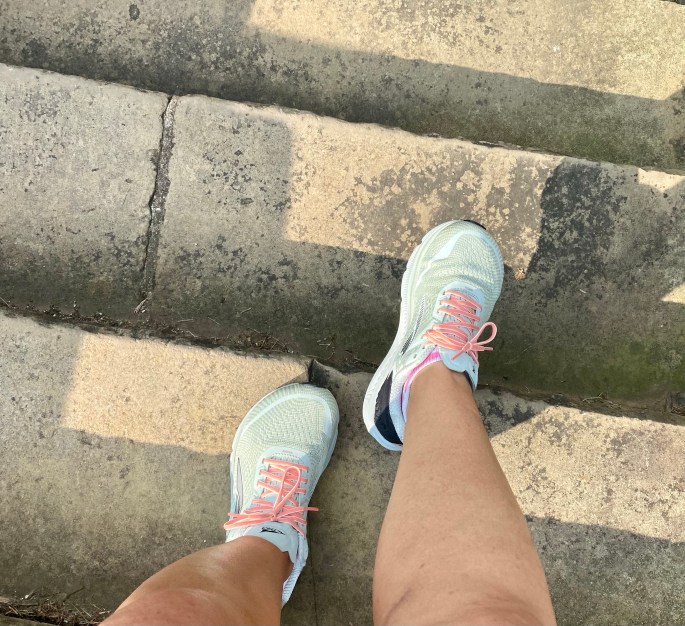
Have you ever been walking along and discovered a rock in your shoe?  It doesn’t seem to matter how small it is, suddenly, it is all that you can think about.  This is especially true if you are on a solo walk or run.  With each step, that multi-faceted, miniscule rock pokes and prods your foot until it becomes your sole focus. Likewise, if you are walking or running with another person, try as you might to ignore the aggravating rock, it remains in the periphery niggling away at your attention in spite of your best effort to focus on the unfolding conversation. 

Have you ever noticed how much more free and spacious your mind becomes if you pause long enough to take the rock out of your shoe?  If you’re with a friend, your concentration easily returns, and if you’re exercising alone, your mind relaxes and resumes its free-flow thought.  When this happens to me, I often ask myself, why did I take so long to shake that rock out of my shoe?  Why did I allow myself to be tormented by such a small thing?  

Photo by Matheus Natan on Pexels.com

Oddly enough, there are times that I will go an entire run or walk, and complete an errand or two, before I take time to slip off my shoe. Once home, I’ll sit down on the front stoop of my porch, take off my shoe and shake out scanty pebbles and/or debris. Slipping the shoe back on, it’s like putting on new footwear–all because I had been too stubborn, lazy, or petulant to take off my shoes and toss out the rocks.

After a recent moment of emptying the rocks out of my shoes, it occurred to me that those crushed rocks were quite a bit like thoughts that can sometimes run through my head.  These are often circular notions of self-doubt, self-criticism, or self-reproach.  Depending upon the day, situation, and/or context, the narrative can vary, but the ongoing, well-rehearsed mental skirmish between Naysayer Nellie and Wetblanket Wanda certainly know how to prick and needle my grey matter like the crushed detritus poking and prodding my foot when trapped in my shoe.

These pessimistic pests tend to most often join forces during times of stress, change, and/or increase in workload.  Sometimes, all it takes is one moment of so-called failure, frustration, or new challenge to inspire those two negative allies to vie for my attention as they quickly assemble a barrage of heated messages designed.  Then, like a challenging adolescent, they turn up the volume, in case I didn’t hear their propaganda the first hundred times!  

Ironically, I know their stories aren’t true. I recognize the disinformation for what it is; and yet, like the proverbial pebble in the shoe, I don’t quickly empty the shoe, or in this case, the prodding thoughts.  Instead, I allow those irksome ideas to create a foothold in consciousness, and repeatedly nettle away. It’s as if these defeatist messages have hijacked my brain.  

Photo by Kindel Media on Pexels.com

If I allow those obstructive thoughts to remain around long enough, like the shoe-bound pea gravel chafing my skin until blisters form, the negative mental chatter can create so much inflammation that my brain will begin its not-so-subtle messages of flight, fight, or freeze.  My head and heart will begin to pound, I will hold my breath, tighten parts of my body, such as my belly, back, or neck, and sleep becomes elusive or filled with nightmares.

What can I do?  Duh! Take off the proverbial shoe and shake out the rocks.  Not that it is easy, but I have to remind myself that thoughts are like clouds.  Even on the most overcast day, when all is gray and cloud-covered, the blue sky and the bright sun are still there–they have merely been hidden.  The sky is not the clouds, and I am not my thoughts–and neither are you, Dear Reader!  In fact, we are so much more than any negative messages sticking around in our heads. 

Photo by NEOSiAM 2021 on Pexels.com

 As I understand it, the emotional center of our brain is housed in the part of the area that evolved quite early in order to determine important life saving decisions such as, “Is this food poisonous or not?” or “Will this animal eat me?”  Once this area of the brain perceives something as dangerous–even if created by our own thoughts–this part of the brain won’t shut off until it feels safe.  (It is also worth noting that the same is true when this area of the brain experiences pleasure–it wants more and more.) 

However, we have another, more advanced part of the brain that allows humans to think, reason, make decisions, and plan.  Therefore, with practice, we can be aware of when the emotional center of the brain launches into its overwhelming fear-mongering.  We further have the capacity to choose whether or not we believe those negative stories, and we can also plan how to treat those thoughts when they do occur.  Furthermore, we can take daily actions to further reduce the rumbling rocky voices which are most often a product of fear . . . fear of failure, fear of success, fear of change, and fear of the unknown

“Remove the rock from your shoe rather than learn to limp comfortably.”–Stephen C. Paul

One of the best pieces of advice an acquaintance once shared with me:  “Stop yelling at yourself.”  She went on to ask if I would yell at my own daughter the way I think about myself.  When I said, no, she simply encouraged me to “play nice,” call fear by its rightful name, and then take steps to calm it down as you would with your own child.  

Many of the actions that can be taken to reduce negative/anxious thinking are not new suggestions.  Deep breathing, exercise, or simply walking away from a stressful situation for a specific time period are all actually quite helpful.  Other suggestions include: 

*Remind yourself of your past successes.

*Take small steps towards learning a new task. 

*Be willing to ask for help to reduce or understand new/heavy workloads.

*Talk to a trusted friend or family member–sometimes just naming your fears begins to tame them. 

*Write your problem on a piece of paper–dump it all, like you’re emptying your brain of pea gravel. The act of writing slows down the thoughts, relaxes your brains, and allows you to see things differently.  I’ve literally taken that written problem, slipped it under my pillow at night, and literally slept on it.  It never fails to surprise me how a little faith and trust that a solution will be found allows it to gradually unfold.  

Photo by Lisa on Pexels.com

*Learn to nurture and protect your thoughts. 

*Cultivate affirmative thoughts.

*Take preemptive action if you know certain situations trigger a strong emotional reaction. 

*Be gentle and kind with yourself. 

If you begin to notice your brain is launching into story mode, each time a thought attempts to pop into your head, try to mentally swipe it away like a fly at a picnic before it can grow.

The point is, just because you think something, doesn’t mean it’s true.  Sometimes the solution is as simple as shaking out rocks.  I’m not saying it’s easy; it’s not.  Nonetheless, it is worth remembering that emotions come and go, like ever changing weather, but they don’t have to permanently hijack your brain.  

Photo by Kelvin Valerio on Pexels.com