Embracing Aging: Opportunities for Growth

“Aging is not ‘lost youth’ but a new stage for opportunity and growth,” Betty Freidan 

Another Year Celebrated 🎂

Photo by Genaro Servu00edn on Pexels.com

By the time you read this, I will have added a new score to my age.  If life were a game, I’d definitely be a winning football score, and accruing a lead score in a basketball game. You know what?  I am okay with that.  Next year, I’ll be in a new decade, but for now, I plan on savoring my last full year in this decade. 

A Chance Encounter 👩🏽‍🦳

Photo by Mauru00edcio Mascaro on Pexels.com

The night before writing this piece, my husband, John, and I chaperoned a high school homecoming dance for the school in which we teach. It was held at a local country club. Throughout the evening, guests at the club’s restaurant often exited via the hall outside of the room, where the students were dancing, and I happened to be supervising. Many of the restaurant’s patrons tended to speak as they walked by, mostly asking questions about what group was inside the buffet/ballroom.

One lady was particularly chatty, energetic, and enthusiastic.  She talked out of one side of her mouth as if everything she was telling me was a secret for my ears only.  In particular, she wanted me to note that she refused to have any surgical enhancements done to her face, including botox, “. . . and don’t I look good?”

Sound Advice 🧑‍💼

Photo by RDNE Stock project on Pexels.com

Her comment made me smile as she went on to “give me some advice.”  She explained that she used to say that she was 78 years old, “but I wised up a few years ago.”  Instead, she states her age without adding the phrase, “years old.”  In her words, this reframed her way of thinking about her “years on earth,” and allows her to focus on the fact that she has “lived experience,” with room for more. 

She wrapped-up her short, one-sided conversation by saying, with a tilt of her head towards the room with dancing and singing students, that she didn’t want to “do that again.”  

“We’re supposed to age.  You know?  It’s part of life. The real question, honey, is, are you living?  It’s the living that counts!”  With that, she winked and walked away.

Conscious Aging

Photo by RDNE Stock project on Pexels.com

The unknown women’s spunk got me thinking about attitudes towards aging. It seemed she was echoing the idea of “conscious aging,” also known as “conscious eldering.” According to the Association of Health Care Journalists, the goal of conscious aging is aimed at shifting “attitudes and thinking away from self-limitation, isolation, and fear” to viewing the senior years as the time of life for pursuing “passion, engagement, and service in the community.” 

This same woman further touched on this point by talking about her lack of medical, anti-aging intervention. As it turns out, depending upon the source, the global anti-aging market is currently valued at $37-62 billion, and it is projected to grow in value to $65-93 billion.  These estimates speak to the fact that as a whole, we culturally tend to reject the aging process.

It is unfortunate because it creates a climate that fosters a fear of aging rather than viewing it as a natural and normal part of life. Therefore, it’s important to examine where our beliefs about aging come from.  Just because a parent/grandparent/other relative had a health condition associated with a certain age, doesn’t mean we will do that same. The stories we tell ourselves matter as they tend to affect and influence our attitudes, beliefs, and even our relationship with aging according to a 2023 New York Times article. 

Identify age-appropriate Role models

Photo by Yan Krukau on Pexels.com

In order to flip our own personal narratives about aging, let’s identify role models around us who embrace or model a healthy view of aging. They don’t have to be record-breaking 95-year olds, rather seniors who are active, engaged, and living with purpose. At the same time, let’s make choices related to aging that are authentic to our own values.  We may admire our 85-year old neighbor who still plays golf, colors their gray hair, and volunteers at a dog shelter, but it doesn’t mean all of their choices are right for us. Instead, let’s use that admiration as inspiration to forge our own unique path of embracing and fully living during the senior years.

Engage across decades

Photo by Andrea Piacquadio on Pexels.com

Additionally, let’s engage across generations. Interacting and engaging with all ages across a multitude of decades is beneficial for all.  It allows us to see a broad range of perspectives, which can prevent us from becoming too narrow-minded. And, in my experience, being around those who are younger, keeps us younger.

embrace change as a natural part of Life

Photo by Wellness Gallery Catalyst Foundation on Pexels.com

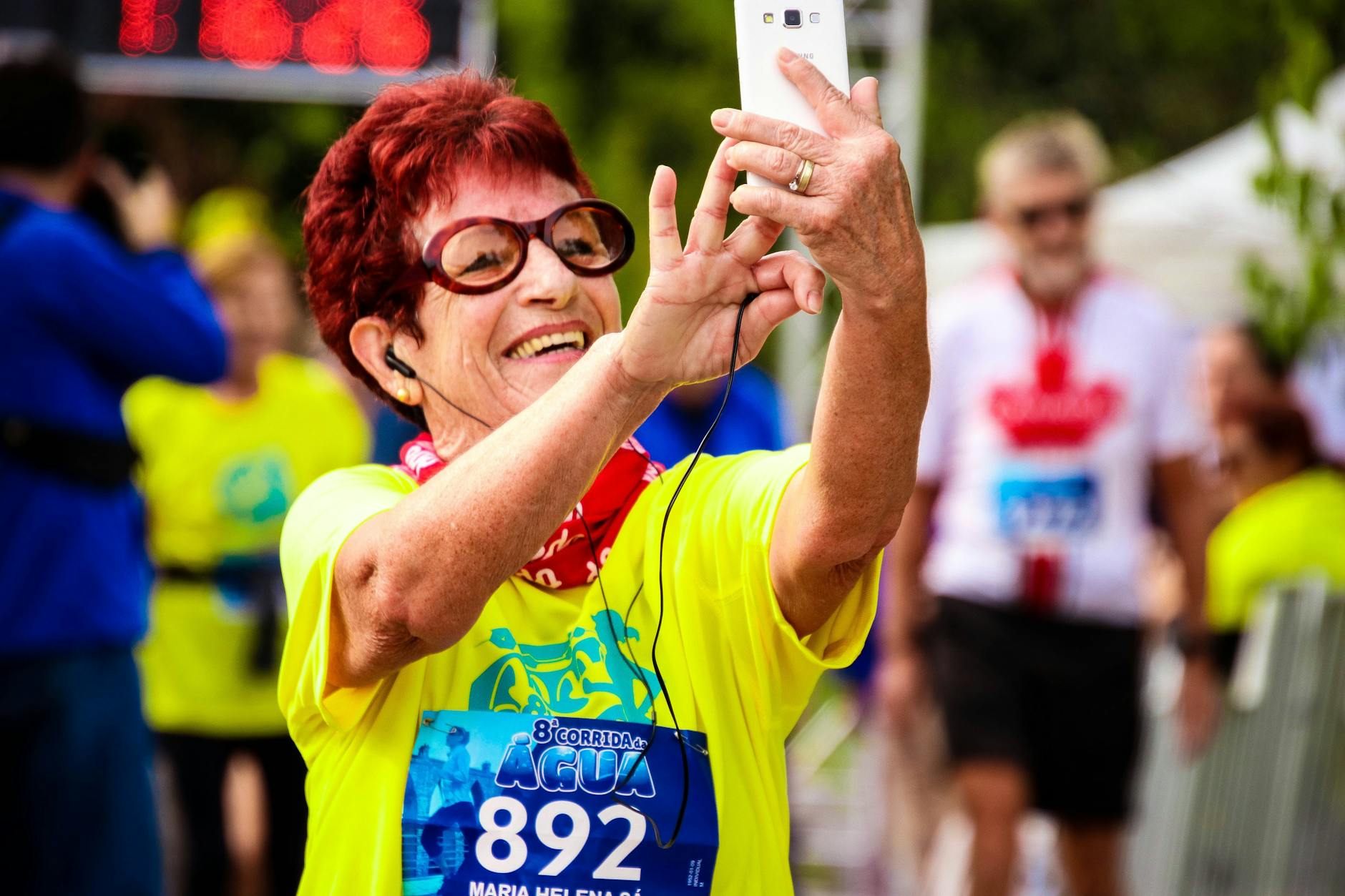
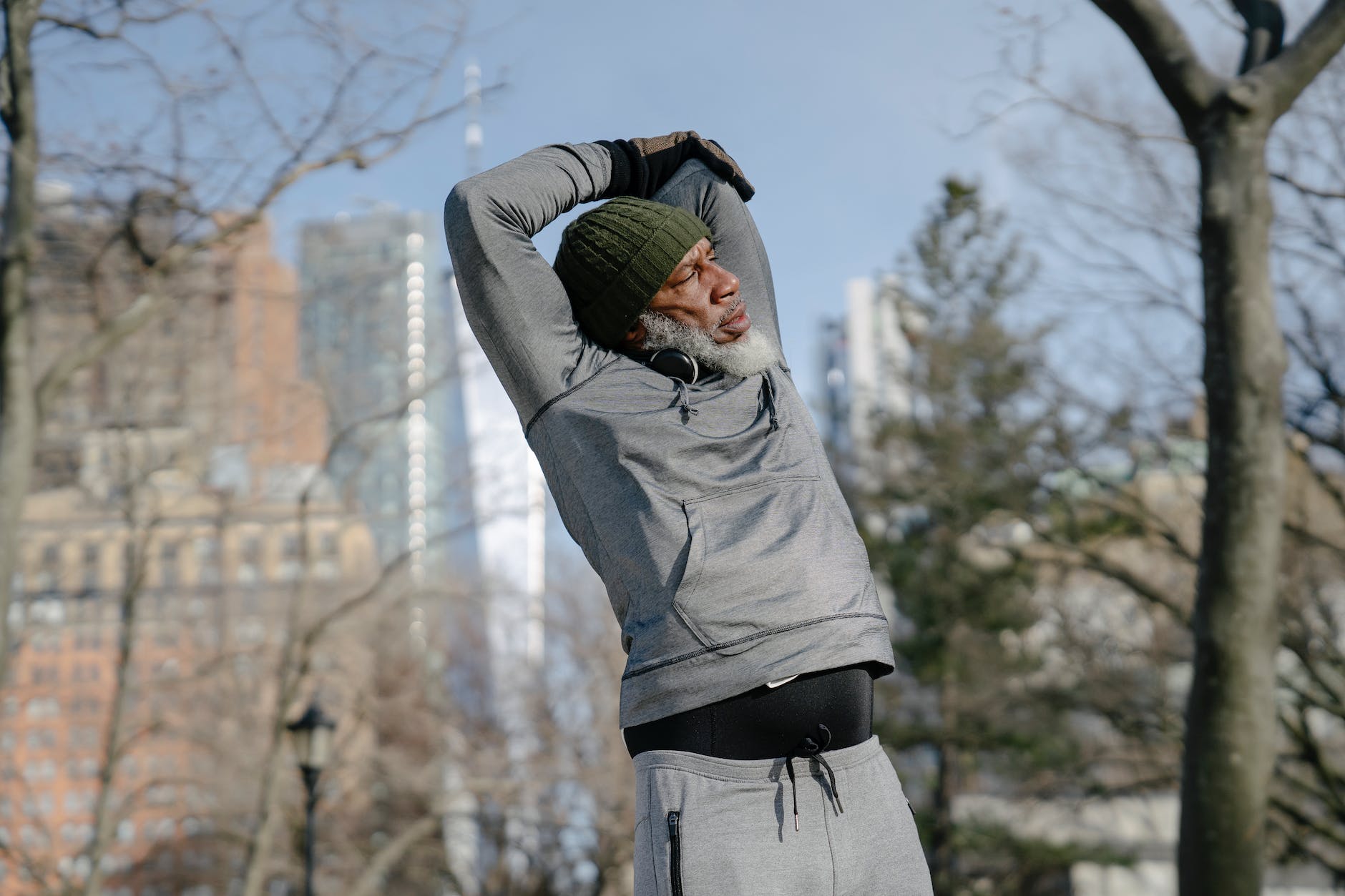
Another big issue related to aging is learning to cope with and accept change associated with the aging process. Conscious aging means just that–we are conscious of the aging process, which means we are dealing with age-related changes in our bodies as they occur. What it doesn’t mean is tossing in the proverbial towel and sitting on the sidelines. We still need to take care of ourselves by exercising and eating well, but we may need to adjust our expectations according to our own bodies’ needs–which varies from person to person.  For example, there are plenty of people older than me who can run faster, but I run at the pace that is best for me. 

Embrace REality with optimism

Photo by RUN 4 FFWPU on Pexels.com

Additionally, embrace reality, including the changes, optimistically.  For example, when training for a half-marathon, I focus my training on crossing the finish line, rather than focusing on my finish time.  I am grateful for a healthy body, and I am grateful that I can train for a marathon.  However, I still work full-time, and I have plenty of other interests, so I focus on the adventure that goes along with training and the joy that comes from experiencing the event instead of a specific finish time goal. 

Live with purpose

Photo by Andrea Piacquadio on Pexels.com

This brings me to my next point, let’s live and age with purpose. While I do have plans to eventually formally retire from full-time work, as long as my body and mind are healthy, I don’t ever see myself not engaged in some form of teaching. I may one day change to a setting outside the formal constraints of a school system, or focus instead on my writing, which is, for me, is a form of teaching. However, I optimistically plan to continue teaching, in some form, because it gives me purpose, allows me to help others, and keeps me cognitively and socially engaged with others. It is my fountain of youth!

learn new things

Photo by Kampus Production on Pexels.com

 Plus, teaching also forces me to continuously learn new things, which is beneficial at any age.  Furthermore, by consciously choosing to continue to work, older adults challenge societal ageist-constructs that often purport the notion that older adults aren’t as capable as their younger counterparts.  When in reality, most workplaces often benefit from employees across a spectrum of ages and experience levels.

In the end, the woman I met summed it up well when she pointed to the fact that humans are supposed to age, but it’s “the living that counts!”  Therefore, instead of focusing on the number of our age, let’s focus on living well.  

Make a difference.  Share the joy.  Celebrate life.

Photo by Kampus Production on Pexels.com

.

One breath in, one breath out for peace and calm

 “We need to find God, and that cannot be found in noise and restlessness. God is a friend of silence. See how nature–trees, flowers, grass grows in silence . . . We need silence to be able to touch souls.” –Mother Teresa

Photo by John-Mark Smith on Pexels.com

The Miracle of EArly Morning 🌅

One of my favorite times of day is the stillness of the early morning.  Don’t get me wrong, depending upon how early I have to get up, it can be a chore to drag myself out of bed.  However, once I am up, enveloped by the hum of the house and the ambiance of the celebratory, daybreak birdsong, I feel a peace begin to zip up around me like my favorite hooded jacket. 

Now that daylight arrives earlier, it is especially delightful on the weekends to sit at my desk, steaming mug of coffee beside the laptop, and gaze out the open window as the birds continue their lilting praise of the arrival of daybreak. Sometimes I see the contrails from a jet writing across the sky.  Other times I observe the rustle of trees or my neighbor’s cat stalking some unseen prey. Regardless of what I notice, I take a deep breath, and invite the silence within.

Gazing out into the trees and grass of my backyard, there is a peacefulness of the Divine Presence.  Observing the continual miracle of seasonal change, I am bearing witness to the continuity, strength, and resiliency of nature.  With one breath in and one breath out, I can connect to Divine life force within, silently supplying me with continued strength.

Photo by Engin Akyurt on Pexels.com

Welcome the Silence 🤲

I continue to welcome the silence, and I allow it to wash over me, cleansing the stresses and worries of the night that interrupted my sleep.  I ask God to hold space for me within the silence as my soul settles into place. One breath in. One breath out. Each breath, rich in the silence, nourishing my peace of mind, if only for a few minutes.

Momentarily, I become part of the silence and my brain softens into the quiet, temporarily liberated from its continuous lists of things to do, notice, and concerns. One breath in. One breath out. I feel the silence breathing peace through me, filling my cells. I ask for the peace to live through me and to emanate from my actions, knowing even then, I will still stumble into mistakes.

The early morning silence centers and anchors me to the importance of being more mindful of the here and now.  One breath in. One breath out. I allow the silence to cultivate peace within that moment, and I ask that it remain with me as I move through my day, understanding that disturbances of my inner peace will also most likely occur throughout the day. I further pray the silence will infuse and imbue my day with moments of peace I can offer others, if only through the simple act of a smile or kind word.

Photo by Csankovszki Tibor on Pexels.com

Whispers of Silent Inspiration 🙏

If I am fortunate, the silence will sometimes whisper inspiration when I do encounter stress in a later moment. It only requires that I momentarily bring awareness to my breath, and once more, I can connect to the True Source filling my lungs, giving me life. One breath in.  One breath out. 

When the silent morning meditation begins to wind down, I become more aware of my surroundings and my own physical body.  I look for those poetic plane contrails, but they have usually vaporized, reminding me of the impermanence of struggles, strife, and life in general.  One breath in. One breath out. My words, my thoughts, my deeds are like those contrails, here, in this moment, but eventually given to the heavens.

Bringing awareness to the moment, I will feel the tendrils of morning silence loosening its grip, and I mourn briefly that I must leave its embrace. There are more words to be written, more students that need taught, and more people that need loved.  One breath in. One breath out. I remind myself that I can always come back to the comforting peace of the silence of my mind with one moment of conscious breathing. 

Photo by Dom J on Pexels.com

The antidote to noise and Chatter 🧘

It seems to me that we currently live in a world where many of us have forgotten, or even fear, silence.  Chatter and noise seem to flow in an endless supply, alongside daily routines filled with responsibilities and heaping portions of distractions. However, by seeking the solace of silence and focusing on your breath, if even for a few moments, we may discover our heart rate slows, racing thoughts may decrease, and the body may relax a bit.  One breath in.  One breath out. 

The older I get, the more my appreciation and need for silence grows.  If we listen too long to the noise of the media, news, traffic, screens, chatter, and so on, our stress increases, our worry increases, and our anxiety increases.  We forget that silence soothes our souls and brings us back to the presence of God within and around us. All it takes is one breath in and one breath out. 

The chipped teapot: Seeing our “imperfections” for what they really are

“It’s made me realize that imperfect is perfectly comfortable to me. Whether it’s a city or my apartment, I feel most at home when things are somewhat flawed.”–Hoda Kotb

Chipped, but not broken.

I’m a Little TeaPot 🫖

I picked up the teapot.  It had a chip on the top of its deep navy shape. I could feel how simultaneously sad and angry I was.  The chip was my fault.  I had dropped the lid and broken a piece off revealing the original white unglazed pottery underneath.  

Suddenly, the spiral began.  Why am I such a clutz?  How could I be so stupid? What is wrong with me that I can’t simply hold on to a lid in soapy water?  Way to go, Steph.

I am familiar with that inner critical voice demanding so-called, “prefection.”  That voice is full of all of the things I should do, and it also lists all the ways I fail and fall short.  It is the voice that can sometimes make me cry when I sense I have let someone down or dropped the ball on something I “should” have done. 

Photo by Moe Magners on Pexels.com

coping skills 🥸

In my younger years, I tried a variety of coping mechanisms to quell that demanding, perfectionist voice. I attempted to ignore the inner critic, but until I was wise enough to know the difference, ignoring sometimes led to overlooking those helpful, intuitive signals.  I also tried projecting a big ego full of confidence to hide that voice of doubt–which, I quickly learned, was a sure way to epically fail.  Of course, there were the tried-and-not-so-true methods of numbing that critic with overeating, over drinking, or even overdoing, but that only made me more miserable. 

Listening to that inner critic has also led to procrastination. For example, if I know a specific big job/task needs to be completed, I can become paralyzed from completing it because my inner critic states it must be completed in a certain “perfect” manner, making the task seem more overwhelming than it is. This paralysis can lead to shame, guilt, and self-loathing because it points to “another failure” when left undone. 

Other times, it’s not so much about procrastination as much as it is that I am managing a wide array of interests, so I get side-tracked from one project to work on another. Nonetheless, focusing on those “other interests,” instead of the “one-big-thing,” can also instigate self-criticism because, “Why can’t I be more focused and stick to one thing?” 

Surely, there are others who fight this battle of perfectionism.  Right?  Based upon all of the various titles of best selling books centered around the topic of perfectionism, I certainly must not be alone in my battle.

A bowlful of encourage-mints!

Letting go of the Perfectionism script 📝

However, with age, my inner gaze, like my own vision, has changed. Letting go of perfection has, to a certain degree, been a natural part of the aging process.  Aging, and the life-wisdom that comes with it, empowers me to more closely see the reality of situations. 

For example, while writing this piece, I picked up an individually wrapped mint to pop in my mouth to allow it to slowly dissolve as I write.  Unfortunately, when I picked it up, I dropped the mint on the floor.  My first voice said, “Way to go, dork.  You broke the mint.  Now, you’ll end up crunching it, rather than slowly letting it dissolve.”  Fortunately, my wiser, older voice swiftly pointed out, “Now, you have two mints! Twice the enjoyment!”

Of course, this is a simple scenario, but it leads to my next point.  Learning to let go of the narrative of perfection is difficult, and it is more of a process than a destination.  Here’s the thing though.  My beautiful, albeit chipped, navy tea pot still works.  It still steeps my various teas perfectly, and it pours without spilling a drop. All I have to do is turn the lid, and no one has to see the chip. Thus, learning to turn, or flip, the narrative of that inner critical voice demanding “perfections” is likewise a great tool.

While there is nothing inherently wrong with setting high personal standards, leaving wiggle room for what is truly acceptable, is a much less stressful approach. It also helps deflate the bubble of shame often attached to rigid standards when we allow for a less-stringent approach.  

Photo by Karolina Grabowska on Pexels.com

Flawless 😎

Another strategy for releasing perfectionism’s grip is to observe that many of our so-called “personal flaws,” when viewed from a different perspective, are actually strengths.  For example, I might leave one task undone for a longer than “it should be” time period, but that is typically because I am pursuing a creative endeavor such as writing, cooking, or even planning how I will teach a concept to my students.  What’s wrong with that?  Like you, I also wear many hats, so why shouldn’t I give myself grace to focus on one task without pressure to do all tasks “now.”

The more we can learn to adapt an attitude of grace and self-acceptance the more likely the tentacles of perfectionism will begin to loosen.  By embracing our many strengths and talents, we can also feel the weight of shame lifting like a dark cloud shattering as sunlight breaks through. For example, in my own life, I am not the early bird at work in the morning, but that’s because I am a morning person.  I spend several hours completing numerous tasks at home before arriving at work, such as writing, exercising, grading papers, and so on.  Therefore, why should I feel ashamed of my productivity?  

Another skill that has also come with age is learning to focus less on so-called mistakes, and instead, making a point to respect the fact that any time I make a mistake, it fosters my own learning. Mistakes are, in reality, a path to learning to do something better and a tool for continuing to hone a skill.  One example of this was when I was adapting an old family recipe for pound cake to a gluten-free variation. I botched that cake twice before finally figuring out the best way to make it.  Even now, I continue to refine and improve not only that recipe, but also my own technique for baking gluten-free. It is through this acceptance and openness to allowing for mistakes that growth can occur.

Flip the narrative, like I flip the lid around on the teapot.

MUlishly imperfect ⭐️ 💫 🌟

In the end, that inner-critic with its attachment to being perfect is misleading and false. One look at nature reveals anomalies, asymmetries, and even accidents are all part of one big beautiful creation. 

Consider the mule.  It is the offspring of male donkey and a female horse.  It’s not a perfect horse, and it’s not a perfect donkey.  Instead, it possesses its own unique imperfect–some might even say, mulish– vibe, and so can we. 

While focusing less on our so-called flaws and more on strengths, leaving wiggle room for plan B (or C and D), and remaining open to the lessons of a mistake, may not lead to perfection, it sure can lead to a much more peaceful, approachable, and manageable way of living. It’s not easy, and it requires patient practice in the pursuit of learning to let go. However, with continued practice, we can begin to let go of that “perfect” narrative and become much more at ease with the “imperfect.”

Photo by Leeloo The First on Pexels.com

That’s not the sky! That’s the clouds–Lessons in the 90-second rule

“You are not your thoughts.  You are the observer of your thoughts.”–Amit Ray

Photo by Pixabay on Pexels.com

Feelings Come and Go ☁️

It was between classes on a Friday afternoon. A male student entered my classroom, set his books down, and sauntered across the room towards the windows that line the wall of our third floor room. 

He looked as if he was preparing for a quick chat with his buddy when he randomly exclaimed, “Wow, look at that.  The sky looks flat.”

“Dude, that’s not the sky.  That’s the clouds!” a girl retorted.

A debate then ensued as to whether or not the sky and the clouds were one in the same. Several other students joined in the conversation until one student added with great authority that the clouds aren’t always in the sky, but the sky is always there. 

Listening to the student’s debate reminded me of a saying attributed to Thich Nhat Hanh, “Feelings come and go like clouds in a windy sky.”  Hanh taught this, in part, to demonstrate that we have the ability to be an observer of our mind’s thoughts.  I often phrase it like this, “Just because you think it, doesn’t mean it’s true.”

Photo by Yan Krukau on Pexels.com

The 90-second Rule ⏰

In fact, I ran across an interesting fact regarding the duration of emotions.  Neuroscientist and best selling author, Dr. Jill Bolte Taylor, Harvard trained and published, established that emotions only last for approximately 90 seconds.  According to Taylor, “When a person has a reaction to something in their environment,” she says, “there’s a 90-second chemical process that happens in the body; after that, any remaining emotional response is just the person choosing to stay in that emotional loop.”

Upon reading that fact, I almost felt called out, especially with regards to any emotional response after 90-seconds is personal choice.  Wow! That notion is super-charged with opportunities for self-regulation.  However, we all know that regulating emotions isn’t always easy. In fact, I suspect this requires practice for most of us.

Therefore, I want to step back to the clouds and sky scenario. Identifying and recognizing when our mind has gone off into what I call “thinking or story mode” due to an emotional reaction requires a certain level of mindfulness.  This is where knowing the rest of Hanh’s quote is important. “Feelings come and go like clouds in a windy sky. Conscious breathing is my anchor.”

Photo by Stas Knop on Pexels.com

Time for a Mindful Break ⏳

Learning to breathe through difficult moments in order to allow the emotion(s) to pass requires the ability to self-select the pause button. This also requires a certain level of awareness.  Practicing mindfulness can increase this awareness. 

Therefore, let’s play a game.  Come on, what have you got to lose, but a few more seconds added to reading this piece?

Softly close your eyes for 20-30 seconds and listen. Notice what you hear? The hum of the refrigerator? Birds chirping? Heater running? After perceiving and identifying the sounds you hear, open your eyes.  Notice you were able to identify the sounds, but that did not make you the sounds.

Now that you are warmed up, let’s do another one.  This time, take a good look at your surroundings. Pick one item near you and focus on it for a few seconds. What color is it?  Describe its shape. Identify its size.  Describe its function. Bring awareness to the fact you are identifying what you see, but you are separate from it.

Let’s try one more.  (I promise it’s the last one.) Gently close your eyes. Focus on the sensations in your body.  Do you feel air moving against your skin? Is there a part of your skin that is itchy, warm, cold, etc.? How does the fabric against your skin feel? After about 20-30 seconds, open your eyes.  There were numerous sensations you were able to name in those few seconds, but those sensations are separate from who YOU are.

 Practicing aspects of mindfulness is as simple as those three exercises–fostering an awareness of a “something,” giving it a name, and then observing it without judging it as good or bad.  When you do this, you are engaging your “observer mind,” which is an important skill for taking advantage of the 90-second rule. 

Photo by Keenan Constance on Pexels.com

Swatting away those negative thoughts 🙇‍♀️

 I don’t know about you, but I happen to have a mind that, when triggered, is very good at sending waves of negative thoughts and messages.  These antagonistic ideas can quickly commandeer my mind, and it can sometimes take significant time for me to become aware, much less observe those emotions objectively. Once I finally do, I try to imagine that my difficult feelings/thoughts are a pesky mosquito or bee buzzing around in my mind.

  The image encourages me to gently swat away challenging thoughts or feelings by reminding myself that even if I am thinking a certain way, it doesn’t mean it’s true.  Sometimes, I stay trapped in the loop of emotions, and I am reminded that I am a work in progress.  Other times, I can name the story or feelings, and I have the ability to send it on its way. 

I usually have to remind myself to stop judging the experience as good or bad–which I also tend to do. Then, I have to engage my curiosity and ask myself why am I thinking/feeling/reacting a certain way.  This can take a long period of time, and sometimes, I have to tell myself to accept the feeling/thought for the time being, and I can figure out the reason for the feeling later.  

I often find, through reflection, that many of my emotional responses are often caused by certain triggers or trained reactions from long ago.  I am especially prone to messaging that tends to make me feel “less than” others, but everyone has their own unique triggers. I also find I am more likely to be sent into a negative spiral if I am especially fatigued. 

Other common triggers may include, patronizing behavior, micro-management, someone not pulling their weight, someone criticizing you or your work, and so forth.  The thing is to begin to get curious and see if you can begin to identify your personal triggers. 

Photo by Liza Summer on Pexels.com

Tools for Dealing with Difficult Emotions 🔨🪛🔧

In the end, when it comes to emotions, we have 90-seconds in which our bodies chemically react to our triggers and attempts to send us into the “flight, fight, or freeze ” mode.  After that, we have the power to continue with one of those modes, or choose another direction, but it won’t be as easy as snapping a finger.

Knowledge of the 90-second rule does not allow us to avoid challenging emotions.  Instead, it is my hopes that it gives you (and me) the power to:

  • Identify what you are feeling (tight stomach, red face, rising heat, etc.) 
  • Gently ask yourself why you are experiencing it (What was the trigger?)
  • Name the emotion(s) (fear, anger, embarrassment, resentment, etc.)
  • Accept and allow those feelings
  • Offer yourself compassion and see if you can redirect your energy into a more positive endeavor.

Remembering that you have a choice when feeling strong emotions can be empowering, but it is not all rainbows, sunshine, and unicorns. Nonetheless, having tools to navigate through challenging emotions can make a difference, allowing us to eventually see through our cloudy and distorted thinking and perhaps get to the other side with a bit more grace and equanimity.  

Unwrap your best holiday health: Ways to keep moving from Thanksgiving through those New Year’s Celebration

“Take care of your body. It’s the one place you have to live.”–Jim Rohn

This is my fifth installment of celebrating and encouraging movement for everyone.  If you’ve read my previous pieces, you already know that my goal is fairly simple.  I want to encourage everyone to move more in whatever manner works best for you, your body, and your schedule.  I do not believe in one-size fits all when it comes to fitness and health goals.  Instead, I am writing to explore techniques, habits, and motivations for incorporating more movement into life, even during the upcoming holiday season.

Why should you consider maintaining your movement/exercise routine during the weeks of Thanksgiving through the New Year celebration?  There are many possible reasons, but only you can decide your why(s).  Personally, it allows me to feel as if I have accomplished one positive thing for the day.  If everything else derails throughout the day, at least I exercised–even if it had to be for a reduced amount of time.  However, there are so many more valid reasons.

Photo by Julia Larson on Pexels.com

Increased movement and exercise is one positive way to combat the stress that often accompanies this season.  Although stress isn’t a disease, per se, it is the body’s physical, mental, and emotional responses to external events, especially change, which often occur from Thanksgiving through the New Year celebrations. High levels of holiday stress can detrimentally impact mental health.  However, being physically active throughout the holidays is a proven technique to significantly reduce stress levels.

Along the same lines, exercise during the holiday season can provide structure to your schedule. If you have already committed to moving more throughout your day/week, and you have already been consistently applying it, then continuing to follow through with that plan builds at least a sense of familiarity and comfort.  Even if you have to reduce your time and/or days for physical activity, there is at least that semblance of reassurance that you are choosing to still take care of yourself, which can increase the likelihood of making another healthier choice throughout your day/week.

Photo by Barbara Olsen on Pexels.com

As counterintuitive as it may seem, exercise gives you more energy during the holidays.  Harvard Health explains it this way. Increased movement and exercise increases oxygen circulation, which in turn, allows your body to energy more efficiently and therefore function better.  Furthermore, exercise increases cellular level changes, including augmenting the production of mitochondria inside your muscle cells. Having more mitochondria translates to your body possessing an adequate energy supply.  Plus, exercise boosts the production of the feel-good hormones that likewise make you feel more energetic.

Exercise and increased movement is a proven way to combat anxiety and depression, often associated with the holiday season. Let’s be honest, for many people, the holidays often serve as a reminder of loved ones and traditions lost to the past.  For others, the increased requirements for more socialization, or so-called holiday-expectations, can trigger the desire to curl up in a fetal position and hide until the season is over.  Furthermore, increased levels of darkness often precipitate seasonal affective disorders (SAD), a form of depression that affects approximately 10 million people annually. Physical activity is a proven method for reducing symptoms by releasing endorphins that increase positive feelings.  

Physical activity can reduce increased sedentary behavior associated with late fall and winter months. Colder and/or inclement weather can reduce motivation to get outside and move. It’s only natural to want to stay in and watch sporting events, stream series, or watch old movies while noshing your way through comfort food snacks and often calorie laden beverages.  While there’s nothing inherently wrong with these behaviors, too much inactivity is not beneficial to the body, mind, and even spirit.  A commitment to physical activity, even if it is laps around your house on commercial breaks during sporting events or between streaming episodes will go a long way promoting your overall well-being.

Photo by Andres Ayrton on Pexels.com

In spite of all of these benefits, it can still feel challenging to maintain that fitness plan or movement goals you have established for yourself in previous months.  However, there are ways that can help you overcome obstacles.  The key is finding the ones that work for you as no one method/approach works for everyone.

Walk, march, or even jog around the neighborhood, if weather permits, or inside your house.  Even walking, marching, or jogging in place is beneficial!  If you don’t have time for your usual amount of time, such as 20 or 30 minutes, break it up into smaller time periods spread throughout the day.  If that isn’t possible, even one shorter burst of activity is better than none!

Consider exercising with an app, DVD, or streaming platform.  There are numerous apps and platforms that are free or reasonably priced.  In fact, you can even look up “holiday themed workouts” on Youtube lasting anywhere from 10-30+ minutes!

Inexpensive, portable exercise equipment are the perfect solution when traveling.

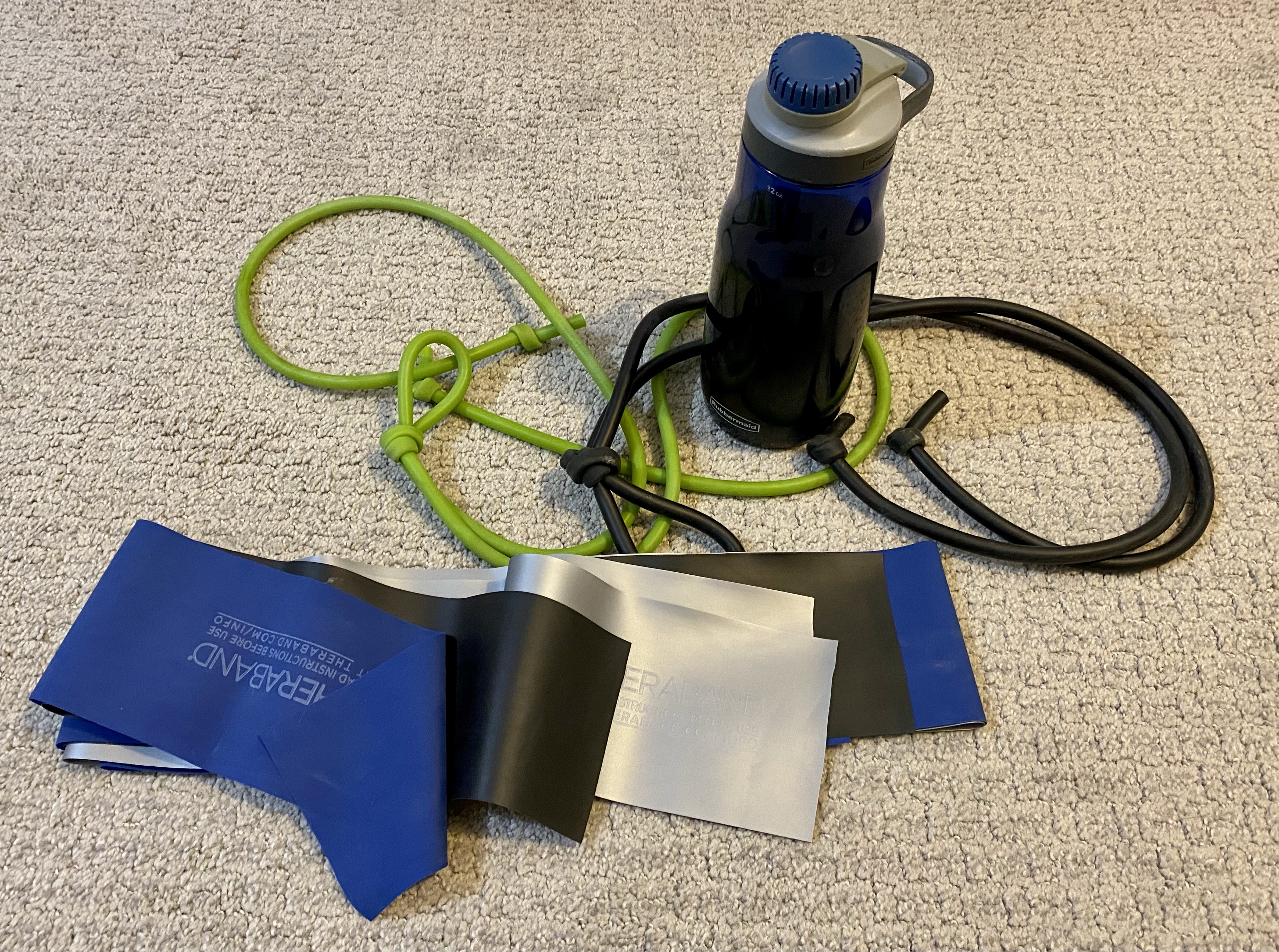
Invest in personal, home exercise equipment for use during inclement weather, traveling, or when short on time. Resistance bands and tubing, jump ropes, and exercise mats  are inexpensive, and easy to transport when traveling and/or visiting family/friends. The bands/tubing come in different sizes and resistant levels and require little training.  In fact, most come with a workout plan or can be found online.

Think outside the box, but keep it simple: 

  • Wake up 15-20 minutes earlier for a short movement period.  
  • Be mindful of the number of steps you take throughout the day, and challenge yourself to complete more than the day before.  
  • Wear exercise shoes when shopping and add power walk breaks in between stores or consider more frequent walks to your parked car after a store visit to stow away bags. 
  • Rethink your lunchtime, if your job allows, and use it as an opportunity for a short walk.
  • Challenge a fitness buddy to hold each other accountable to a realistic daily or weekly goal.
  • Complete bodyweight exercises throughout the day, such as push-ups against desk, body weight squats and lunges, chair tricep dips, twists, stretch, and so forth.  You might get a whole body workout by the day’s end!
  • Set realistic expectations and plan accordingly.  Consider reducing time/numbers of days per week, and then make a commitment to those.
  • Make movement part of the family/friend traditions if possible.  A family walk or dance session after a big holiday meal can not only improve digestion, but take the edge of any accumulated stress.
  • Make a holiday playlist.  It doesn’t have to be holiday music.  Instead, create a special playlist that motivates you when your energy is low.
  • Make sleep a priority too.  A well rested body moves with greater ease.
  • Hydrate consistently.  (Think of all the added sodium in those holiday treats.)

The holidays do not have to derail your exercise/movement routine.  There’s only one you and one body in which you live.  Therefore, think of physical activity during the holidays as the one gift you can give to yourself.  With a bit of flexibility, creative thinking, and determined mindset, you can continue to unwrap better health, one step, or choice of movement, at a time. 

Photo by Pavel Danilyuk on Pexels.com

The realness of depression and anxiety

Speaking with a child recently, she spoke to me of the very real pain she felt from her depression and anxiety.  She shared that one of her parents was embarrassed by her need for medication and therapy.  My heart broke for her, and I wished I could make her pain go away.  However, it is not that simple, and all I could do at the time was listen, so she felt heard.   

Photo by Mikhail Nilov on Pexels.com

The pain of depression, combined with the constant worry of anxiety is very real.  In fact, most of us have felt depressed at some point to a lesser or greater degree, depending upon circumstances.  In fact, my own experiences have been fairly short-lived, no more than 1-2 years, and I was able to continue on with work/life/education, albeit with great difficulty.  For some, it is a challenging seasonal event, tied to the anniversary of an event, holiday, or winter months. However, for many, depression, and its side-kick anxiety, is pervasive, lasting two or more years.

According to a March 2022 World Health Organization report, since the pandemic, there has been a 25% increase in the prevalence of depression and anxiety world wide, with young people and women having been most affected.  In addition, the National Institute of Mental Health adds that young people, aged 18-25, currently have the highest prevalence of mental illness, a whopping 30.6%.  Furthermore, in another WHO report, globally speaking, one in seven adolescents, aged 10-19, are currently experiencing some form of mental illness. Specifically, in the US, the American College of Obstetrician and Gynecologists reports that one in five youth, aged 9-17 years, are experiencing a diagnosable mental illness.  More sobering, acccording to the same report, suicide is the second leading cause of death among those aged 15-24 years old.

Photo by Pixabay on Pexels.com

As an educator, parent, and most of all, as a fellow human being, my heart breaks reading these statistics.  It only confirms what I am witnessing and encountering on a daily basis.  More teens and young adults with whom I come into contact on a regular basis are in real pain–whether I am aware of their mental anguish or not.  The most common mental illness among teens and young adults according to several health organizations include generalized anxiety, phobias, and depression.

However, it is not all grim.  Mental illness, especially among teens and young adults, is very treatable and manageable.  There are a wide-array of techniques and support systems designed to address the unique needs of each individual case, no matter the age. 

Treatment often starts with some form of psychotherapy, also known as counseling or therapy.  Therapy may last for only a short period, or over several years, depending upon the person.  It may focus on thoughts and feelings regarding current life, issues in the past, as well as concerns about the future.  Through therapy, the person not only feels supported and less isolated, but typically develops strategies and coping skills designed to address current mental health issues.  Additionally, therapy may also include ways to develop/strengthen specific relationships, overcome fears/insecurities, address past traumas, increase self-compassion and understanding, as well as create a plan for moving forward.

Photo by Polina Tankilevitch on Pexels.com

Medication is often another form of treatment used in tandem with therapy, but it does require monitoring of a psychiatrist or other trained medical doctor.  The most commonly used medications prescribed for depression and anxiety are safe and effective ways to treat mental illness.  Unfortunately, the wait times for such professionals, especially in recent times, can be months long.  

As a result, many school counselors, universities, family doctors, and churches/civic/community centers are stepping up their support for those in need of mental health support. Many universities offer access to free, or nearly, services via in-person, videolink, or phone.  Some church, civic, and community leaders are pooling services to likewise offer hotlines, group therapies, or other activities designed to promote and support mental health. 

Even once a person is diagnosed and in-treatment, progress takes time, and there can set-backs, as well as ups and downs, in the process; however, certain factors do help facilitate treatment/recovery.  These include:

  • Positive support from friends and family
  • Self-direction in determining own direction and goals for recovery
  • Positive environment living/working/educational setting
  • Financial stability
  • Self-responsibility to administer self care needs
The road for treatment, therapy, and recovery may be long and winding with ups and down, but with the right support and environment, a positive outcome can be achieved.

It is worth remembering that the therapy process is unique to each individual.  Those in therapy may not return to where they were before the illness.  Rather, the typical goal of therapy/medication is to increase a person’s ability to manage their own mental health using positive methods/coping strategies while still engaging with life.  

In the meantime, what can mere mortals do to foster and improve our own mental health? Ireland’s Public Health Agency offers five simple ways worth considering in order to maintain and improve our mental well being.  These include:

  • Connect-invest time in building relationships with family, friends, colleagues, and/or neighbors.
  • Be active– this doesn’t necessarily mean joining a gym, although it could, rather the focus is to move more, especially throughout your day, including walking
  • Keep learning-this boosts self-esteem and self-confidence as well as keeps the mind actively engaged
  • Take notice-increase awareness of the present moment; observe–without judgment–how thoughts and feelings fluctuate throughout the day, and how they may, or may not, affect the physical body
  • Give to others-acts of kindness, no matter how big or small, go a long way in helping others and positively impact personal mental well-being.

Mental illness is a very real thing, affecting nearly 50 million people in the United States, but there is hope. If you are experiencing mental health issues, do not be afraid to seek or ask for help.  And, please know that you are NOT alone. 

Furthermore, if you know someone who is suffering from a mental health issue, support them, offer forms of encouragement, and above all, let them know you care.  With so many silent sufferers in the world, it is more important than ever for us to be the light for one another.  

Now, more than ever, it is important to be the light for others with kind gestures, words, and deeds. ✨