Three Pauses: On breath, attention, and the quiet work of returning to ourselves

Almost everything will work again if you unplug it for a few minutes… including you.”–Anne Lamott

A Reminder to Pause

I was driving to work this past Monday after an extended break, thinking about my to-do list for the day, when an alarm on my phone began a soothing piano melody. Bringing my car to a rolling stop as I fell in line with traffic at a stop sign, I tapped the alarm off. I wanted to ignore it. Instead, I reminded myself this would help me complete those “to-do” lists with a more calm mind, so I paused my thinking and took three slow, deep breaths–the first of the day.

How a Friend Planted the Idea

This practice of setting a gentle sounding alarm as a reminder to take three deep breaths was a serendipitous seed of an idea that a friend unintentionally planted within me. We met for lunch one day, well before I returned to school from winter break. During the course of a deep conversation, her phone alarm accidentally went off. Surprised that it was going off, she quickly turned off the alarm and then–seemingly on a whim–said “Let’s take three deep breaths.” She shut her eyes and began inhaling, so I followed suit. Our conversation resumed afterwards and nothing more was said.

Turning an Accidental Moment into a Daily Practice

However, on the way home, I reflected upon how much better I felt after we took those three deep breaths. I further examined a few of the benefits that I knew regarding deep breathing. What would happen, I wondered, if I took time more often to take three deep breaths daily like I did with my friend? As I reflected over my typical work week and subsequent weekend, I identified three common times of the day, whether at work or not, in which pausing for three deep breaths would be beneficial. 

I realized that I would never remember to take time to do that without a reminder, which meant setting an alarm. Not any ol’ alarm sound would do.  Once home, I took a few moments, played around with various tones. My intention was to make the alarm sound invitational, not demanding. I knew if it felt like a chore, I would feel more resistant. Plus, the reality was I knew I wouldn’t be “perfect,” especially in the beginning and given the unpredictabilities that can occur on any given day.

Three Breaths, Three Times a Day

When the piano melody alarm now subtly tinkles, I pause what I am doing, close my eyes (if alone or not driving), and take three deep, expansive belly breaths. The alarms are set to ring before the arrival of students, during lunch, and at the end of the day, right after students leave. On the weekends, when I am busy with household chores and errands, the times still work well. 

Creating a Practice That Feels Gentle, Not Demanding

If I am alone, and not driving, I sometimes place one hand on my low belly and another hand on my heart. The hand placement reminds me to initiate the breath from my diaphragm and allow the air to expand the belly, then expand the ribs fully, and allow the inhale all the way up into the heart space. 

Other times, especially if I feel stressed or worried I place both hands on my heart in a gesture of self-care. Most of the time, however, I am not alone, given the nature of my job, but I can still pause and take three deep breaths without drawing any attention to myself. 

What Happens in the Body When We Breathe Deeply

Our bodies are miraculously created. They are designed, when properly cared for, to function like a high-performance team–each system working synergistically with other systems for the ultimate benefit of the whole. Pausing to take three deep breaths is my way of working with my body. The body responds by lowering the heart rate, decreasing blood pressure, and increasing a sense of calm. The body already knows how to do this. Taking deep breaths cooperates with the body’s natural process and simply allows it to intentionally happen.

When the Mind Begins to Follow the Breath

Our minds naturally follow the breath. If our breathing is short, shallow, or choppy, our mind readies itself for a stress-inducing event. Consistently setting aside time throughout the day to breathe in a relaxed, calm manner, even for a couple of minutes, incrementally creates a shift in our mind. While I wouldn’t say my practice has been transformative, per se, I would say that there are days my stress and anxiety are decreased, other days I notice a bit more mental clarity and focus, and other times I feel a subtle, but real, shift in my energy and vitality. While I cannot say I have eliminated all of the negative thoughts in mind, I am noticing that I am better able to handle my emotional response to a difficult moment with a bit more grace.

A Quiet Conversation Within

Another benefit I have observed is sometimes when I pause, I feel a connection to the “still, small voice within,” that source of wisdom that hovers beneath all of the distractions and noise. It is as if, for the briefest of moments during my busy day, my body, mind, and heart are at peace. I momentarily feel an overall sense of gratitude, a reminder of the positives in my life, despite those negatives that remain. There’s also a sense of connection to other hearts and souls moving in, around, and throughout my day. All told, it provides me with an overall feeling of solace.

Why Three Times a Day Matters

One thing I did not realize before starting this small practice is that by setting aside three times per day to take three deep breaths, it harnesses the power of the “rule of three.” The “rule of three”, I learned by happenstance a few days into my practice while I was listening to a podcast. This rule employs the principles of habit formation to increase focus, productivity, and well-being. The frequency of three breaths, three times per day is enough to establish the habit without it feeling overwhelming, which, lucky for me, is an important consideration. 

Imperfect Practice, Faithful Returning

Are there times I don’t heed the timer? There certainly are. I am not perfect, and I am not pretending it is easy to create a new habit. But I do continue to return to the practice, even if I miss a timer, or three, throughout the week. I know that when I do take time for that brief pause to nurture myself with a few deep breaths, I will show up better, more fully for myself and others.  

An Invitation, Not a Prescription

Perhaps there is a pause waiting for you too.

The Art of Conscious Breathing: Nurturing Mind, Body, and Soul

“The breath is the bridge which connects life to consciousness.”–Thich Nhat Hanh 

Students at the end of a yoga class with a seven minute meditation at the beginning of class (There were several absent on this particular day.)

Settle your mind 🧘

Settle your body onto your mat.  See if you can begin to settle your mind.

Soften your eyes.  All the muscles around each eye relax.  

Release the lines of your forehead; soften your ears, and allow the jaw line to release.

Let the shoulders melt away from your ears as your heart space softens.

Relax the muscles of your hips and legs while you rest in the knowledge that the earth can support you.

Feel the feet relax, allowing the arch and each toe to release.

Take a deep breath in.  Pause.  Sigh it out through your mouth. 

Whatever thoughts, worries, concerns that you had before entering this room, allow them to drift away on the stream of conscious breathing.

Another slow, deliberate inhale. Wait.  Now, exhale long, smooth, and controlled once more through your mouth.

Pause once you’ve fully exhaled and gently close your mouth, unless, of course, you are congested and cannot breathe through your nose. 

Inhale. Pause for a moment. Long, slow exhale through your nose.  

Follow the exhale until your lungs are fully emptied, and wait for a moment before you inhale again. 

Once more, be present with the inhale.  Intentionally allow for a pause.  Then, slowly, with full concentration, exhale–following the exhale until its full conclusion. 

Pause, and continue this conscious breathing for the next few minutes.  

If thoughts enter your head, recognize that you are thinking.  This is only natural.  Then, return your attention back to your breath.

Several of the students after yoga class that began with a seven minute meditation, a hour of yoga moves, and ended with ten minutes of relaxation pose, savasana.

Conscious breathing 😮‍💨

As I write these words, I find that my own breathing has slowed. My own heartbeat is slowing. My thoughts, worries, and concerns about how I will convey in writing what I want to share have begun to loosen their grip on my brain as I allow the words to flow in unison with my breath. 

This year in my school setting, I have the privilege of teaching a yoga/mindfulness class to high school students. It is a dream I have had for years finally coming to fruition. 17 students, 11 of which are males, which I find remarkable, signed up for the class.  Most, but not all, of the students are athletes, overloaded with the act of balancing coursework with their sports’ schedules and the desire to still have a typical teen social life.

However, when they walk through the gym doors, roll out their yoga mats, their job is to take a break from their very real, youthful concerns. It’s not easy. Like all of us, strands of stress and worries cling to their minds and bodies the way cooked noodles often cling to one another if the noodles have not been properly stirred during the cooking process.  My job is to stir the proverbial pot of their mind and guide their bodies through yoga movements that encourage the release, at least for a few moments of their day, from the stickiness of their constant concerns.

Photo by Oluremi Adebayo on Pexels.com

The Power of the Pause 🙏

The pause between breath reminds them, and really, all of us, of the importance of taking intentional pauses throughout our day to pay attention to the here and now.  Mentally pausing to let go of thoughts of the past, thoughts of future plans, and thoughts of all those unanswerable “what ifs” can be a valuable respite.  Taking a few moments to close the eyes, tune out the world, and focus on your in and out breath can release tension and provide a short rest for the mind, eyes, and body. 

Even on our busiest days, taking a short pause, enough for a few deep breaths, can renew and refresh your focus, especially if you are feeling anxious and/or stressed. By taking deep breaths, especially those in which you can extend the exhale, sends signals to the body to relax.

Photo by Kelvin Valerio on Pexels.com

TEnd and befriend 🧘🏿‍♂️

Based upon my limited understanding, longer exhales encourage the vagus nerve to send a signal to engage the parasympathetic system (think: rest and digest or tend and befriend system) and relax the sympathetic system (think: fight, flight, fawn, or freeze system). Those deep breaths, especially with the longer exhalations, let the body know that it is in a state of calm, so that it can “tend and befriend” the work challenge you must complete rather than “fight” it or all together mentally “freeze.”

In addition to soothing the mind and body, by consciously paying attention to our breathing, we can connect to the wonder of being alive, and the miracle that is our body.  Our bodies, with its amazing autonomic nervous system, automatically takes care of so many functions and unconscious processes without us having to think about it. We truly are marvelous creations.  Conscious breathing can be that bridge between our physical bodies and our conscious minds, as Thich Nhat Hanh pointed out. And, it is a tool for bringing our attention to the present moment.  After all, you can’t focus on your breathing and not be aware of the here and now.   

Photo by Andrea Piacquadio on Pexels.com

Conscious Breathing is the Link

In the end, taking time to intentionally connect with our breath offers numerous benefits. Deep breaths with long exhales can allay our fears, concerns, and worries.  It can bring a sense of calm in a short amount of time to an otherwise chaotic day.  Conscious breathing can invigorate and recharge the mind for an important and stressful project.  Furthermore, deep breathing can link our minds to our bodies while also bringing our attention to the present moment.  So pause, take a deep breath, or three, release the grip on your worries and burdens, and reconnect with here and now, and the font of peace that dwells within.

Photo by Andrea Piacquadio on Pexels.com

Finding Stillness at Charlton Lake Camp: A Reflection

“Only in quiet waters things mirror themselves undistorted. Only in a quiet mind is adequate perception of the world.”–Hans Marggolius

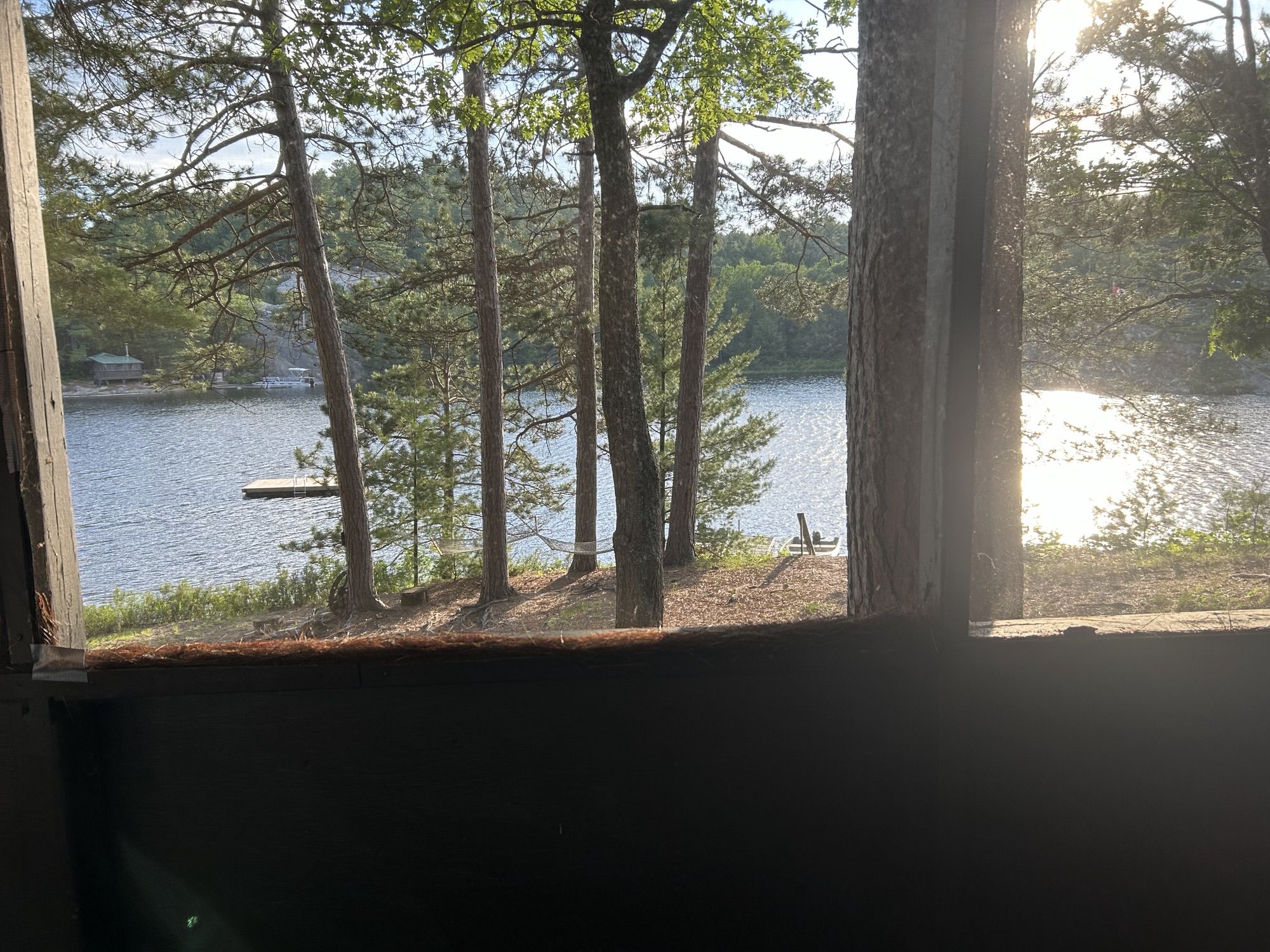
The view through the screened in porch overlooking Whitefish River a throughway to Charlton Lake, Frood Lake, and Cranberry Lake.

Still Waters 🏞️

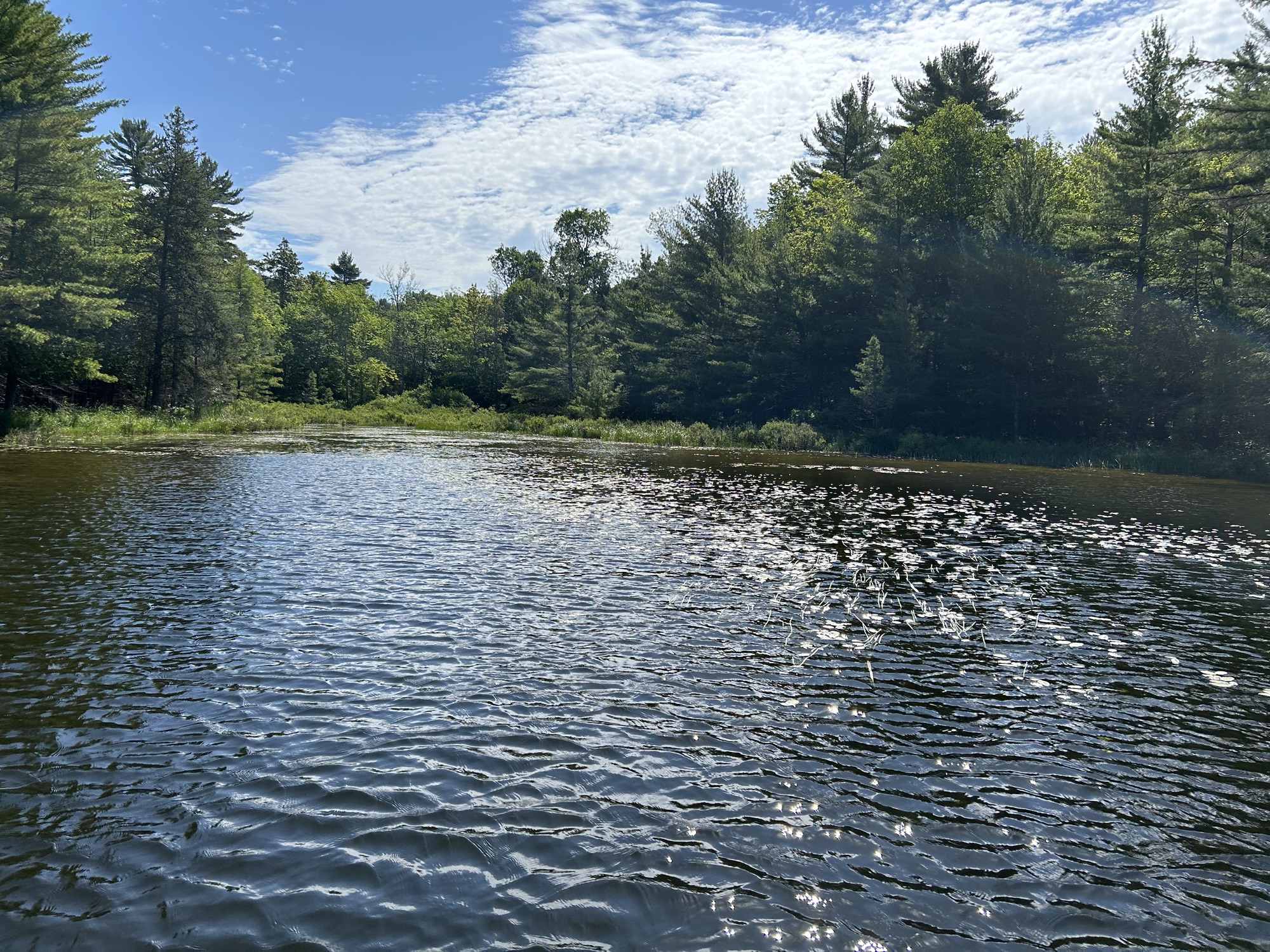
I sat observing the waters of the Whitefish River flowing toward stillness–moving from one lake to the next, but in a relaxed state of flow that most often seemed to occur in the early morning or late evening.  Occasionally, something would break the surface, and rings would begin spreading outward from the epicenter. When this would happen, I often caught myself holding my breath in anticipation until the last ring dissipated, and the water was once more placid.  Then, with the stillness restored, I resumed my own cadence of breathing slow and steady, matching the river’s pulse.

The peaceful, craggy rise of quartzite rise of the ancient La Cloche Mountains surrounding the lakes.

Lake Charlton Camp 🏕️

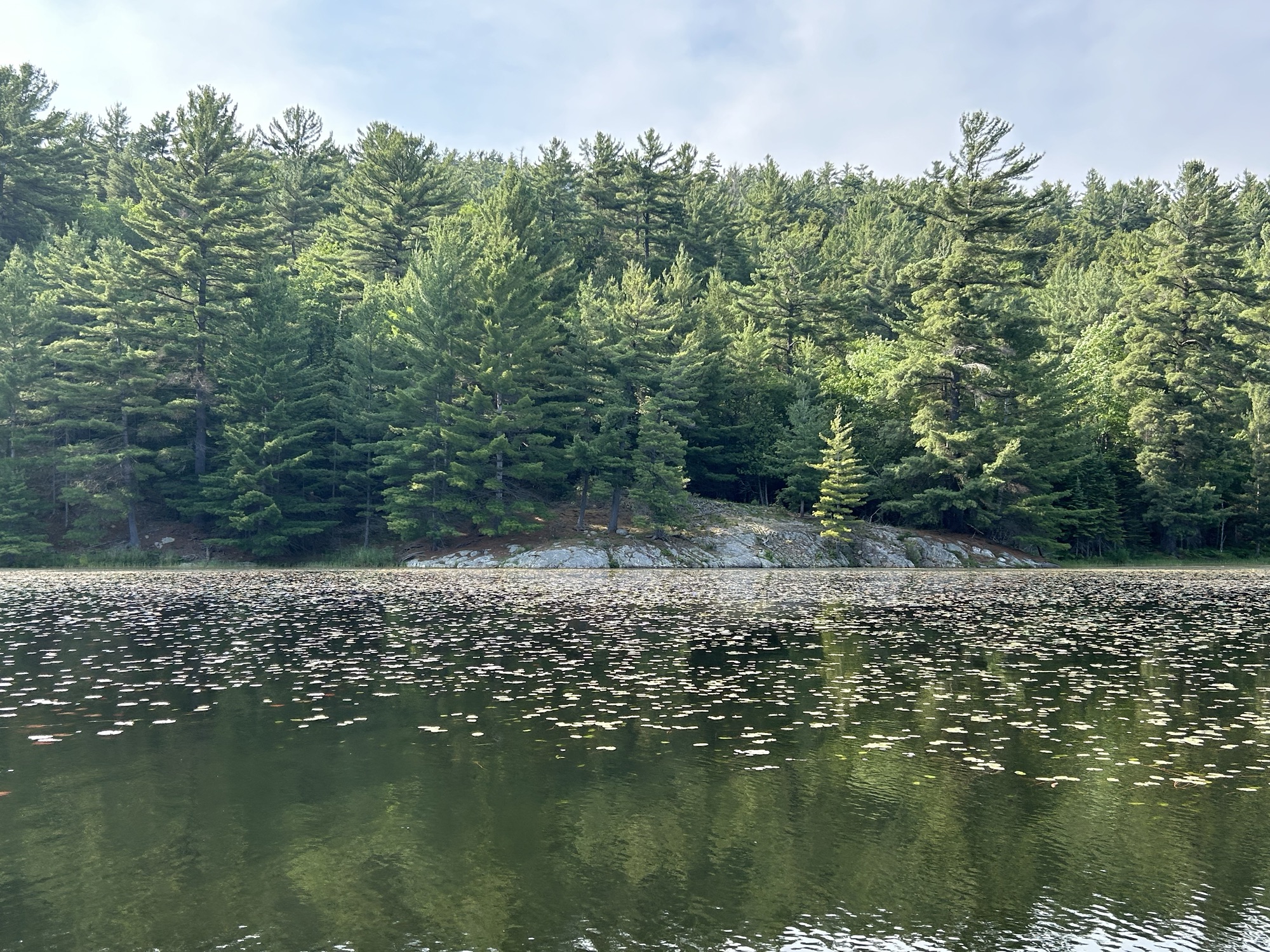
My husband, John, and I were staying in Charlton Lake Camp (CLC) located in Killarney Provincial Park, Willisville, Ontario. This was our second trip to CLC, situated in a natural showcase of diverse pines, surrounded by the white quartzite crests of the La Cloche Mountains and translucent, tea-stained waters of Charlton Lake, Frood Lake, and Cranberry Lake with the Whitefish River providing a throughway to the lakes. In the morning, CLC was filled with a wilderness chorus of birdsong, loon calls, bull frogs, lapping sounds of water against rocky shores, and, of course, the buzzing hum of countless varieties of insects. 

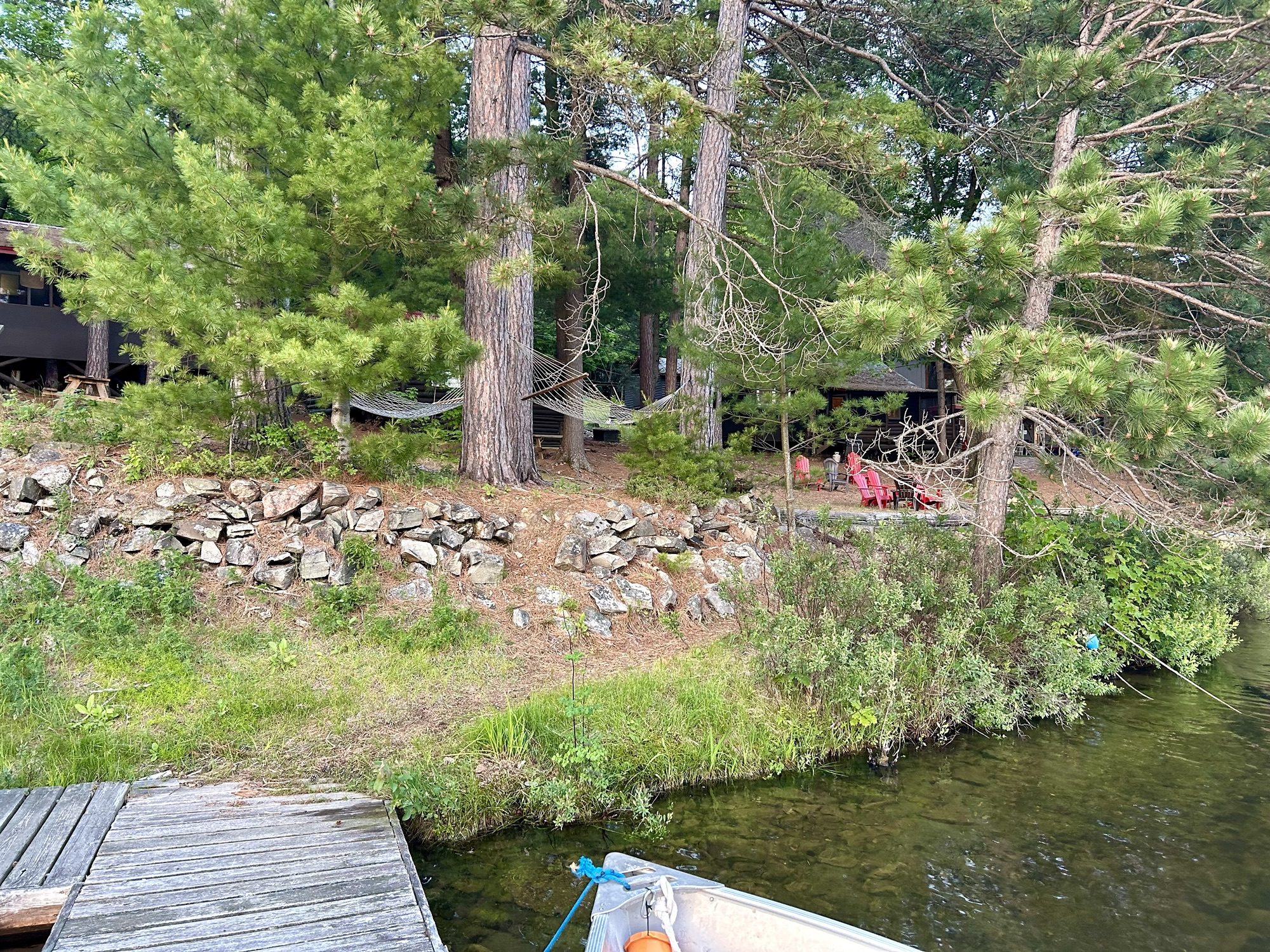
The cabin in which we stayed at Lake Charlton Camp is just beyond the steps that lead to the dock.

Settling into Quiet 🤫

Breathing in deeply, my lungs filled with the aromatic aromas of pines, damp soil, sunned rock, and a hint of morning coffee as I continued to sit and observe, communing with my surroundings. The sun would soon begin lifting above the craggy cliffs behind the cabin in which we stayed, and life would soon begin stirring with those gleaming rays. But, in that moment, hovering between the hush of night and the dawn of daybreak, there was a stillness in which my heart was soft and open–receptive to that still small voice that resides within.

Boating through Frood Lake with the La Cloche Mountains in the foreground.

Slipping into the Gap of peacefulness 😌

I once read that praying is talking to the Divine Creator; whereas, meditation is stilling the mind for the purpose of listening.  Sitting there on that screened porch on the cusp of a new day, I was reminded of that idea.  My heart, head, and soul had relaxed enough to hear the truth–to really parse the ongoing narratives that, when left unchecked, my brain tends to repeat on an endless loop. By settling into the surrounding peacefulness, I could focus on listening, and begin to see how many of those narratives were (and are) often baseless claims forged by past experiences, trauma, anxiety, negative self-talk/criticism, and even a little fear. 

Sitting, breathing calmly, and savoring CLC’s peaceful surroundings through my senses, I found I could let my mind rest easily as if the wheel of ceaseless chatter had ground to stop, or at the very least, slowed its revolution. Taking in a deep breath of the clean, wilderness air, I softened my gaze on the water and continued listening. 

Afternoon sun glistens off the calm waters of Frood Lake.

Riding the waves of emotional influence🌊

Matching my inner calmness to the stillness of the river led me to a realization. My own mind often mirrors those waters of CLC. My mind tends to be at its calmest in the early morning or at night–just before drifting off to sleep, letting go of the day’s worries.  However, once the day fully begins, I am immersed in work and various tasks with multiple decisions being made throughout the day.  As my decision making increases, my judging brain kicks into high gear.  With that continued judgment comes an inner dialogue often influenced and affected by emotions, which rise and fall throughout the day much like the water around me did during the week.

Throughout our time fishing, resting, and relaxing in CLC, I observed how the river and surrounding lakes could quickly become stirred up, rising and falling with the winds of the day, tossed about with a changing weather front, or even fill with large waves when an occasional boat sped across the waters to the farthest end of a lake. There were additional times, when for no discernable reason, the waters would suddenly ascend and descend, jostling the boat John and I were in. 

Riding out the waves of emotions can be similar to navigating a fishing boat over wave-filled waters.

Restless emotions 😬

Fishing during those moments of restless waters and winds was challenging.  The wind would take hold of a perfectly thrown cast and carry the line and lure in a completely different direction than intended. Likewise, when the waters were lifting and dipping with waves, the view beneath the waters was clouded and murky–not allowing the eye to determine if the boat was above rocks, a weed bed, a submerged tree, or any other number of possibilities. Conversely, during the moments of calm, settled waters, navigating and fishing those waters was fairly easy and what was beneath the boat was clearly visible.  

Looking out at the peaceful waters of Whitefish River through the screened porch.

The influence of a RAcing Mind 🤯

The riverview before me, in that early morning hour, was emblematic not only of ideal fishing waters, but also a peaceful state of mind.  Unfortunately, our modern world tends to create and drive the opposite effect–a constant flurry of stirred-up waters–our minds fidgety and/or frantic, racing from one thought to another, moving through agendas of busyness, entertainment, and avoidance. Therefore, if we don’t set aside time to allow our minds an opportunity to cease its chatter and rest easy, how can we ever feel calm and think clearly?

Settle into into the stillness.

The importance of intentional Quiet 🤫

Our inner dialogue is often affected by the changing weather of our emotions.  Those emotions vacillate and shift with each decision we make and with each event we encounter.  And while I fully admit that mind chatter, and all of the emotions that come with it, cannot necessarily be avoided, in similar manner to the weather fronts we experienced during my time at CLC, our emotions can vastly change within the course of a day, much less a week. Therefore, deliberately providing pockets of time for stillness allows us to detach from the emotional narratives, and instead, fosters listening to that still, small voice of knowing, which allows us to, well, “fish” for the truth.

Listen for the whisper of our Creator, the great I AM.

LeT us Listen for the whisper 👂

Ralph Waldo Emerson once penned, “Let us be silent, that we may hear the whisper of God.” What a powerful reminder of the importance of settling the mind, like the still waters that were before me on that morning at Charlton Lake Camp. The type of quiet we choose can be a formal meditation/reflection, but it could also be achieved through walking or other forms of exercise, tending to your flowers/plants, or simply sitting on the porch sipping coffee or tea and listening to the birds. It really doesn’t matter as long as it is an intentional moment set aside to calm those mental waters of ceaselessly, flowing chatter. Prioritizing time for quiet reflection or meditation, however you define it, allows the flow of our hearts and minds to settle, soften, and encounter the “whisper of God.” 

Willisville, Ontario

One breath in, one breath out for peace and calm

 “We need to find God, and that cannot be found in noise and restlessness. God is a friend of silence. See how nature–trees, flowers, grass grows in silence . . . We need silence to be able to touch souls.” –Mother Teresa

Photo by John-Mark Smith on Pexels.com

The Miracle of EArly Morning 🌅

One of my favorite times of day is the stillness of the early morning.  Don’t get me wrong, depending upon how early I have to get up, it can be a chore to drag myself out of bed.  However, once I am up, enveloped by the hum of the house and the ambiance of the celebratory, daybreak birdsong, I feel a peace begin to zip up around me like my favorite hooded jacket. 

Now that daylight arrives earlier, it is especially delightful on the weekends to sit at my desk, steaming mug of coffee beside the laptop, and gaze out the open window as the birds continue their lilting praise of the arrival of daybreak. Sometimes I see the contrails from a jet writing across the sky.  Other times I observe the rustle of trees or my neighbor’s cat stalking some unseen prey. Regardless of what I notice, I take a deep breath, and invite the silence within.

Gazing out into the trees and grass of my backyard, there is a peacefulness of the Divine Presence.  Observing the continual miracle of seasonal change, I am bearing witness to the continuity, strength, and resiliency of nature.  With one breath in and one breath out, I can connect to Divine life force within, silently supplying me with continued strength.

Photo by Engin Akyurt on Pexels.com

Welcome the Silence 🤲

I continue to welcome the silence, and I allow it to wash over me, cleansing the stresses and worries of the night that interrupted my sleep.  I ask God to hold space for me within the silence as my soul settles into place. One breath in. One breath out. Each breath, rich in the silence, nourishing my peace of mind, if only for a few minutes.

Momentarily, I become part of the silence and my brain softens into the quiet, temporarily liberated from its continuous lists of things to do, notice, and concerns. One breath in. One breath out. I feel the silence breathing peace through me, filling my cells. I ask for the peace to live through me and to emanate from my actions, knowing even then, I will still stumble into mistakes.

The early morning silence centers and anchors me to the importance of being more mindful of the here and now.  One breath in. One breath out. I allow the silence to cultivate peace within that moment, and I ask that it remain with me as I move through my day, understanding that disturbances of my inner peace will also most likely occur throughout the day. I further pray the silence will infuse and imbue my day with moments of peace I can offer others, if only through the simple act of a smile or kind word.

Photo by Csankovszki Tibor on Pexels.com

Whispers of Silent Inspiration 🙏

If I am fortunate, the silence will sometimes whisper inspiration when I do encounter stress in a later moment. It only requires that I momentarily bring awareness to my breath, and once more, I can connect to the True Source filling my lungs, giving me life. One breath in.  One breath out. 

When the silent morning meditation begins to wind down, I become more aware of my surroundings and my own physical body.  I look for those poetic plane contrails, but they have usually vaporized, reminding me of the impermanence of struggles, strife, and life in general.  One breath in. One breath out. My words, my thoughts, my deeds are like those contrails, here, in this moment, but eventually given to the heavens.

Bringing awareness to the moment, I will feel the tendrils of morning silence loosening its grip, and I mourn briefly that I must leave its embrace. There are more words to be written, more students that need taught, and more people that need loved.  One breath in. One breath out. I remind myself that I can always come back to the comforting peace of the silence of my mind with one moment of conscious breathing. 

Photo by Dom J on Pexels.com

The antidote to noise and Chatter 🧘

It seems to me that we currently live in a world where many of us have forgotten, or even fear, silence.  Chatter and noise seem to flow in an endless supply, alongside daily routines filled with responsibilities and heaping portions of distractions. However, by seeking the solace of silence and focusing on your breath, if even for a few moments, we may discover our heart rate slows, racing thoughts may decrease, and the body may relax a bit.  One breath in.  One breath out. 

The older I get, the more my appreciation and need for silence grows.  If we listen too long to the noise of the media, news, traffic, screens, chatter, and so on, our stress increases, our worry increases, and our anxiety increases.  We forget that silence soothes our souls and brings us back to the presence of God within and around us. All it takes is one breath in and one breath out. 

Get More Grounded: The Benefits and Lesson of Tree Pose

“Be like a tree. Stay grounded. Connect with your roots.  Turn over a new leaf. Bend before you break.  Enjoy your unique natural beauty. Keep growing.”–Joanne Raptis

Photo by SHVETS production on Pexels.com

The magic of Tree Pose 🌳

“Trees sway; get more grounded,” my husband chimed along with the yoga instructor on the DVD as we attempted tree pose on a Monday morning before work, the classic yoga balancing pose that requires standing on one leg. 

I appreciate tree pose for many reasons. It strengthens feet, spine, ankles, legs, and core.  Further, it opens the hip area, stretches the inner thigh and groin muscles.  Plus, it can improve one’s concentration and focus while simultaneously improving alignment of spine and posture.  Most of all, it is a pose of balance, which can help in a multitude of ways. 

Symbolically, tree pose serves up several lessons. However, one of the more literal lessons of tree pose is that of remaining in the present moment.  It’s nearly impossible to balance in tree pose and think into the future or reflect on the past because you end up falling out of the pose. I was reminded of those lessons this past Tuesday, or as I have come to know it as, “Twister (or Tornado) Tuesday.” 

Photo by Ralph W. lambrecht on Pexels.com

Shelter in Place 🌪️

As a veteran educator, I have experienced a wide-array of events, including those that require shelter-in-place. In fact, I can still recall the first time I experienced shelter-in-place with students 30+ years ago.  I was teaching in a mobile unit at a great distance from the main brick and mortar school building. The students under my care ranged from 5-12 years of age, and they had been identified as “severe behavior handicapped.”  

There were twelve students, ten boys and two girls.  Since this was the early 1990s, computers and cell phones were not widely available in the classroom setting. This classroom had an intercom type “phone” that only connected from the school office to the classroom.  It was through this “phone” that I received the message that the entire school was sheltering in place in the hallways.  The school received a call that a tornado had touched down in another part of the county and was heading our way. I was to gather my twelve, not-always-so-compliant students, and move them to the main building as quickly as possible.

By the time I received the “call,” a heavy metal concert of rain and wind had already begun, drumming and shaking the metal building rhymically with tantruming, angry torrents of sideways rain.  Quickly, the paraprofessionals and I helped the students into their school-issued red rain parkas, and that is when the resistance began.

“I am not going out in that rain.”

“I don’t like getting wet.”

“No, I won’t!”

“I’m scared!”

Whether it was the determined, I-am-not-kidding look in my eyes, Divine intervention, or a combination of both, the paraprofessionals and I miraculously gathered all of them in a line.  Holding hands as one unit, we began fighting our way through the class door that kept trying to swallow us back inside due to the enraged winds. Once outside, raindrops pelted any exposed skin, including the students’ face and heads as their hoods were immediately blown off.  We fought our way to the safety of the school while the passion of the rain and winds seemed to increase and determinedly tried to shove us backwards. 

By the time we made it to the school, none of us were dry as the pernicious storm found a way to penetrate even the sturdiest of rain coats.  Quickly, we hustled the students to the primary wing of the school, finding a piece of wall away from windows where they could drop to their knees and cover their heads, rivulets of water streaming over all of us, while adrenalin continued to accelerate my heart rate.

Photo by monicore on Pexels.com

Twister Tuesday 🪟

This memory bolted through my mind on “Twister Tuesday” as my classroom, and the surrounding classrooms, were filled with the strident sound of the emergency broadcast system sending an urgent message to seek shelter immediately. Our middle school classrooms are located on the top floor of our school building, and the entire middle school was directed to make their way to the first floor as quickly as possible. In order to do that, we had to run down three flights of stairs in a glass-lined stairwell. As we headed down, the irate storm quickly made its presence known.  Like Lyssa, a figure in Greek mythology who is said to drive others mad, the storm insanely clambered and clawed at the windows demanding to get inside, but meeting a wall of resistance.

Once downstairs, it was hot, crowded, and overripe with the odor of sweaty, nervous bodies as we sheltered in place away from doors and windows alongside first and second graders as well as preschoolers from the two- and three- year old classes. At times, there were crescendos of anxious voices of students–or, in the case of some of the little ones–crying. During other moments, there were a few older students who experienced panic attacks, but there were many more who remained calm.  There were even those selfless students who chose to hold, cuddle, and comfort younger preschoolers, focusing on the needs of others, rather than themselves.

Middle school students caring for the needs of preschoolers during a shelter in place scenario.

And if you Fall . . . Pick yourself 🆙

As I walked among the students, checking on them, assuring some, answering questions of others, my mind echoed with the words from the previous day, “Trees sway; get more grounded.”  And so, I ground down into my faith.  If the students and staff of my previous school survived that former storm way back in the 90s, surely we would survive this one too.  My emotions could sway like the tree on the inside, but the more I swayed, the more I reminded myself to ground down and try to remain balanced in the present moment in order to better focus on those around me.  

It wasn’t easy, and I wasn’t perfect.  But here’s the thing about tree pose. It’s a great way to practice falling. If you fall out of tree pose, you pick yourself up, and try to return to the pose once more.  

Like my beloved tree-pose, Twister Tuesday provided another stretch and realignment personally and professionally as well as to my faith. It challenged my focus and concentration in order to remain balanced.  And when I “fell,” forgetting to remain focused on the present moment, all I had to do was “pick myself up” and try to return to it once more. Most of all, that Tuesday served as a powerful reminder of the power of the True Source dwelling within and around us, always available to keep us grounded. 

Another middle school student getting grounded in the present moment of another’s need.