Use the RAINDROP technique to weather life’s emotional storms

“Peace is this moment without thinking that it should be some other way, that you should feel some other thing, that your life should unfold according to your plans.”–Dorothy Hunt

Several months ago, during the fall of the year, I was walking on a local, circular path.  Suddenly, I heard the loud rev of an engine.  VROOM!  I saw a large SUV type vehicle, careening, plowing, and then swerving off the road, straight towards the path over which I walked.   

My heart began to race, and my thoughts quickened, trying to process what I was witnessing.  The SUV drove along the slope that forms a ditch line surrounding the path.  KREECH! The sound of metal collapsing was ear-splitting as the vehicle crashed into a heavily staked, metal line, thick and entwined like a rope, that supported a power line pole.  Fear raced through my veins as I ran towards the vehicle to see if the person inside was ok while grabbing my phone to call 911.

Photo by Mike B on Pexels.com

I find this event to be an excellent illustration of what it means to witness.  I was the bystander.  My senses heard, saw, and even felt this scene as it unfolded in a surreal manner.  This same skill of witnessing as a bystander is a tool we can use to help navigate difficult emotions/feelings when they come crashing into our life path.  And, let’s be honest, difficult emotions can be a regular occurrence at all stages of life.

From anxiety to depression to life event stressors and work stressors, I daresay none of us are immune to challenging emotions such as anger, insecurity, sadness, fear, and numerous other less-than-kind emotions.  This is where tapping into the bystander part of the brain can help us navigate through the mental storm clouds with a technique called RAIN and its counterpart DROP, acronyms first coined by Michele McDonald, a mindfulness teacher.

Photo by Ron Lach on Pexels.com

There are times when we may not initially recognize that our emotions/feelings are impacting our thinking, but with a bit of practice, we can begin to recognize that they are.  Actions such as, lack of focus/feeling distracted; binge eating/drinking/scrolling/watching; avoidance/procrastination, and so forth can be indicators that something is awry.  Even seemingly positive actions can be a side effect of not-so-great feelings trying to bubble to the surface, such as busyness; continuously working; over-exercising; frequent napping, and so on.

This is when the RAIN technique can be effective.  RAIN gently asks us to become a bystander in our minds to determine what we are feeling or perhaps trying to avoid feeling.  Then, it takes us through a process of reflection to bring us to a point of compassionate self-awareness.  Like all techniques, however, it takes practice, and it is not a one-stop-fix-all solution. However, it can be one more tool in life’s toolkit for managing difficulties and suffering.

Here are the steps, based upon my interpretation and personal application of the technique. However, it is worth noting that there are numerous free apps, videos, books, and websites that offer guided versions of this technique that can be quite helpful, especially in the beginning.

Recognize what is going on and name it. “I’m feeling angry, hurt, lonely, sad . . . .”  Then you might also notice if you’re judging those feelings or feeling guilty for having the feelings in the first place.

Acknowledge and Allow. Once you’ve named it, begin to witness your feelings as a bystander would at the scene of an accident. If thoughts pop up that tell you that “shouldn’t feel this way,” gently tell yourself that it is ok to have this feeling.  

Investigate your emotion/feeling with curiosity and interest minus judgment or blaming self or others. What are you feeling and where are you feeling? Similarly to the way I experienced the accident–first in my heart, next in my mind, and finally in my body–where in your body do you feel this emotion? How is it affecting you?  Do you want to cry, eat, move, hide, nap, and so on?

Natural Awareness, Non-identification and Nurture.  This is where you can tell yourself that just because you feel it, doesn’t mean it defines who you are.  Instead, use this as a lesson for how ________ (name the emotion) feels like, similar to the way you feel symptoms of a cold, the flu and so on. Then, take time to offer yourself compassion just as you do when experiencing a cold or flu. You could even place a hand on your heart center or gently pat your cheek as an act of self-compassion.

Contrastly, each stage (letter) of DROP to a corresponding, often knee-jerk, reaction to each step (letter) of the RAIN process.  It creates a greater understanding of those monkey mind tendencies that want to interrupt or impede the RAIN process in order to confuse the bystander role of our brain. 

Distraction and Delusion. Our brains would often rather distract or delude us from the truth of the matter instead of allowing us to recognize and name what we are really experiencing. 

Resistance. Sometimes, this means, we have to push past our mind’s initial resistance in order to allow and accept the emotion we are experiencing.

Obliviousness. When you take time to honestly investigate a so-called negative feeling, you are overcoming the self-obliviousness, the “I lie to myself all the time, but I never believe me” habit, so many of us unwittingly practice.

Personalization. Your feelings do not have to be the narrative of your life.  You might feel angry, but it doesn’t mean you’re an angry person. You might cry when you feel insecure, but it doesn’t mean you’re unworthy.  In other words, don’t make the emotion/feeling personal, it just is.

Raindrops are going to come and go in life, and some time periods are cloudier than others. There are times when it seems those rain-filled clouds will not leave.  And so it can be with our emotions.  We cannot always control the stormy feelings and thoughts that we encounter throughout life’s ups and downs, but we can choose to change our relationship to them. With the RAIN practice, we can tap into our brain’s ability to witness the impending storm clouds and offer ourselves an umbrella of self-compassion and understanding to help us weather the storms of life with a greater sense of resilient grace.  

Rain and Umbrella by Fu00e9lix Hilaire Buhot (French, 1847u20131898) is licensed under CC-CC0 1.0

Gratitude over Attitude

“Gratitude is one of the strongest and most transformative states of being. It shifts your perspective from lack to abundance and allows you to focus on the good in your life, which in turn pulls more goodness into your reality.”–Jen Sincero

I caught myself complaining, AGAIN, about an irritant within my life. While I was doing this in the safe company of a trusted person, it was a habit I was beginning to recognize and for which I was beginning to feel I needed to personally address.  Therefore, I began to ponder why I have such a strong tendency to bellyache, fuss, and grumble?   Does my complaining make anything better?  Does it benefit anyone?

Furthermore, why is it our nature to yammer on about all the so called wrongs in our life?  Part of the reason, I know, is that in a polite world, we often bottle our frustrated feelings inside and continue to wear a smile on the outside.  This often leads to our complaints exploding out of our mouths with the first opportunity to release them in like-minded/sympathetic company. It plain ol’ feels good to liberate the tension–which, on one hand, is a healthy coping mechanism.  

Photo by Keira Burton on Pexels.com

But what happens when we keep going on?  Telling anyone and everyone who will listen to us about the perceived infractions.  As our audience changes and expands, so does the story, expanding in power and hijacking our brains. We might even post our complaint on social media, magnifying the story and giving us the impression that we are truly supported, and most of all, righteous, in our indignation.

What does this gain us?  Is it a sense of control?  A sense of support?  A sense of community?  Perhaps all of that and more, but since I am not a psychologist, I’ll leave that answer to the professionals.  Instead, all of these ponderings brought me to the importance of mindset. 

Photo by RODNAE Productions on Pexels.com

One of the more inspired lines that I’ve run across, previously written about, and regularly applied in my own life, is “mood follows action.”  It is a phrase I implement when I don’t feel like doing a particular task, such as getting up early, tackling a workout, or instigating work/chores.  Those three words remind me that once I complete the task, I will feel a sense of accomplishment, and my mood will lift as a result.  It is the dread that is often worse than the actual doing. I began to wonder if something similar was true with regards to complaining . . .

action = increased complaining = decreased gratefulness = negative mood

If I continue to choose the action of frequently complaining, particularly about the same thing, am I creating my own negative mood?  And if so, am I creating a bias towards these so-called “terrible” events, making them out to be more grievous than they actually were?  What if instead, like the eye doctor asking me if I preferred A or B,  I flipped my daily lens so that it was tinted with more gratitude and shaded less with attitude? 

action = reduced complaints + increased gratefulness = happier mood

Photo by Anna Shvets on Pexels.com

I took this thought even further and researched what the science said. It turns out that complaining can actually negatively harm your health, not to mention serve as a repellent to others.  First of all, it turns out that every time we complain, our brain rewires itself to produce more negative thinking. According to neuroscience, synapses that fire in the production of the complaint, wire together, making it easier, over time to react, complain, and think negatively with more frequency.

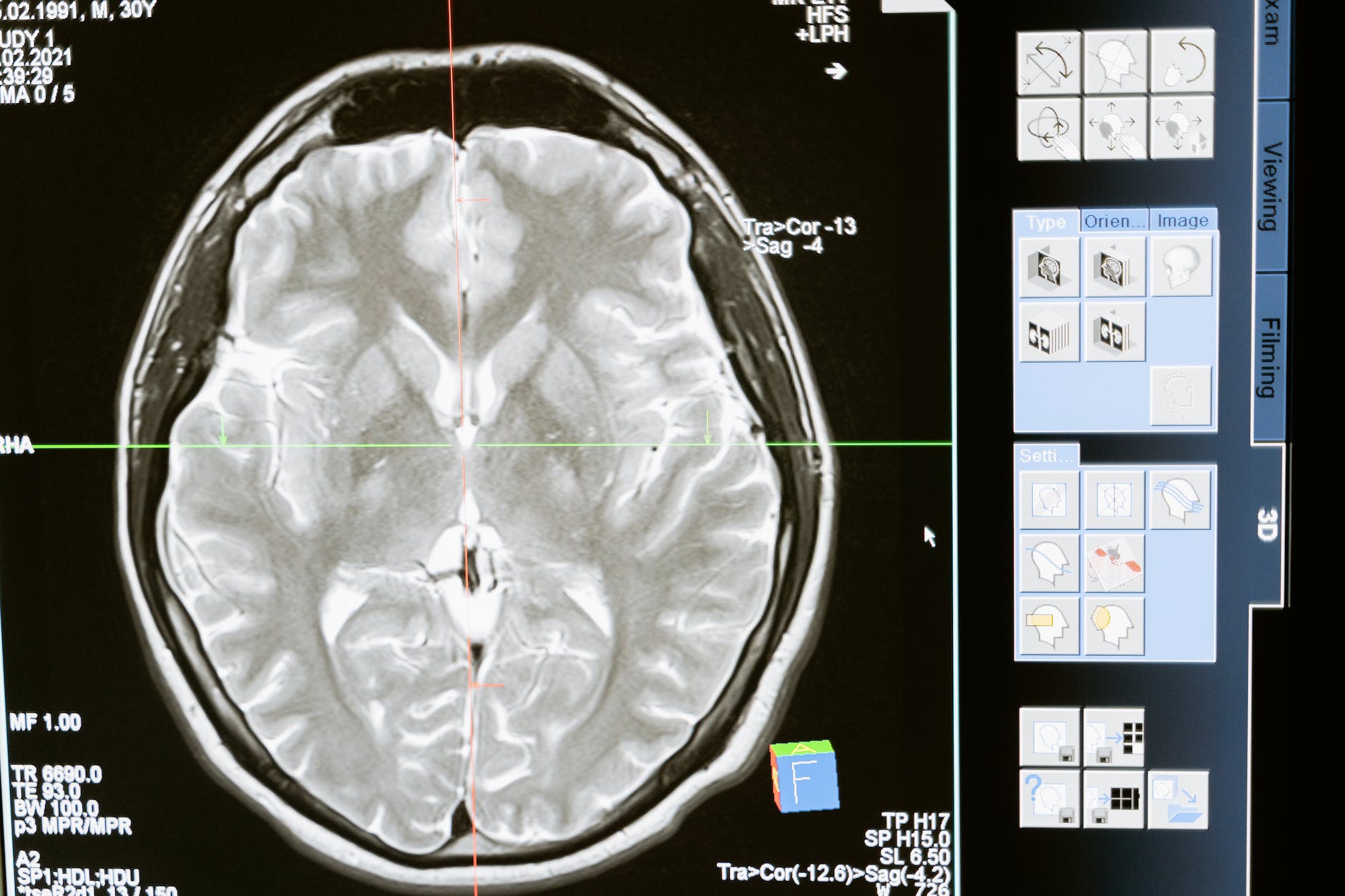
Negative thinking/stressing and complaining can damage the hippocampus, which is responsible for overall cognitive function, problem solving, and critical thinking.  The smaller the hippocampus, the greater our decline in memory and the less adaptive we are to change. The more we complain and/or focus on the negative, the more we increase our levels of stress, and, in turn, cortisol.  High cortisol levels decrease immune function and make us more susceptible to a wide variety of health problems such as sleep disruptions, digestive dysfunction, depression, and high blood pressure to name a few.

Photo by MART PRODUCTION on Pexels.com

Complaining, and an overall pessimistic attitude, can shorten our lifespan.  Research indicates that optimistic thinkers tend to live longer than proverbial pessimists. Additionally, like attracts like. The more positive or negative we are, the more we tend to attract others who do the same. In fact, our brains naturally mimic those with whom we most often associate through a process called neuronal mirroring. This is often due to our ability to feel empathy, which can be a positive thing, but it can backfire on us if we repeatedly surround ourselves with negative people.

Nonetheless, there is a time and place for complaining, but it is how you frame it, and to whom you speak, that makes a difference. If something is truly worthy of a complaint, think constructively when talking (or writing) about it.  Identify, before initiating the conversation or written evaluation begins, a clear purpose about the specific goal/desired behavior. Then behavioral experts encourage us to deliver the complaint like a sandwich.

Photo by Suzy Hazelwood on Pexels.com

Start positive, with a true and affirming comment. (This first step may require some thought and some reframing, but it is worth the time to get the listener/reader to pay attention.) Next, state the desired outcome/behavior in a matter-of-fact tone without accusation.  Then, follow this with another positive, but true, statement.  Below is a highly simplistic example, but it illustrates the point.  

“I really love shopping at this store because the employees are so friendly and helpful.  However, lately, I encountered issues with the pick-up system in which numerous items in my order are not bagged.  I’d like to continue shopping here, so I am wondering if there is a way to ensure my order is properly bagged on my next visit.”

If, however, someone is directing the criticism to you; own it, and empower yourself as an agent of change rather than victim. By taking ownership of the issue, we have the power to create a solution that works for us. In the end, we earn more respect for owning up to our own mistakes, flaws, or misperceptions. Furthermore, it allows us to be perceived as a problem solver with integrity.

Photo by RODNAE Productions on Pexels.com

One point worth remembering is that, while complaining can be a healthy way to relieve stress, we want to be careful with whom we confide, who is around us when we make these comments, and how often we are complaining.  If you know that you will feel better to get a grievance off  your chest, do-so with trustworthy companions in a private location–rather than on a platform for everyone to read or in an area in which anyone can hear.  Then move on, let it go, and identify at least one positive about your day/situation on which to focus, including your controlables–one of which is your attitude.  

By training ourselves to choose gratitude over attitude, we are more likely to see our blessings, promote our own mental and physical well-being, and increase our ability to perform tasks.  Furthermore, we may ultimately attract more good to our life by merely opening our eyes to seeing it.  For many of us, however, this takes practice and time.  Therefore, the next time you find yourself complaining, be like the eye doctor, flip the lens, determine the better view, and find something for which to be grateful.  

.  

If you must complain, do so. Then, flip the lens and look for the points for which to feel grateful.