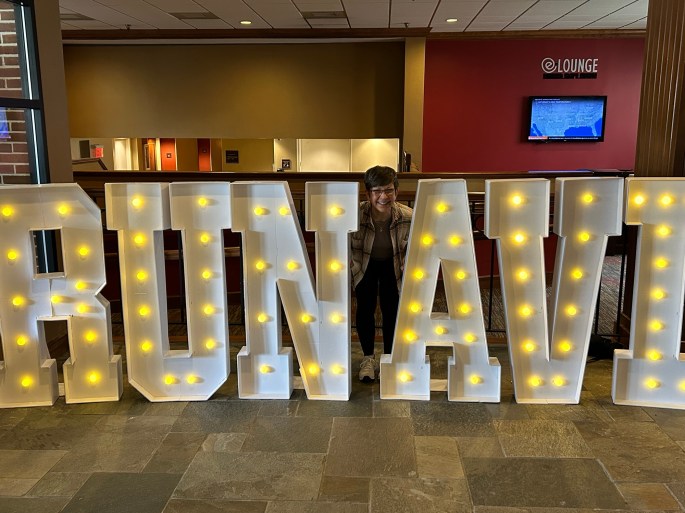
Embracing Limitations: Lessons from the Asheville Half Marathon

God, grant me the serenity to accept the things I can not change, the courage to change the things I can, and the wisdom to know the difference.”–Prayer for serenity
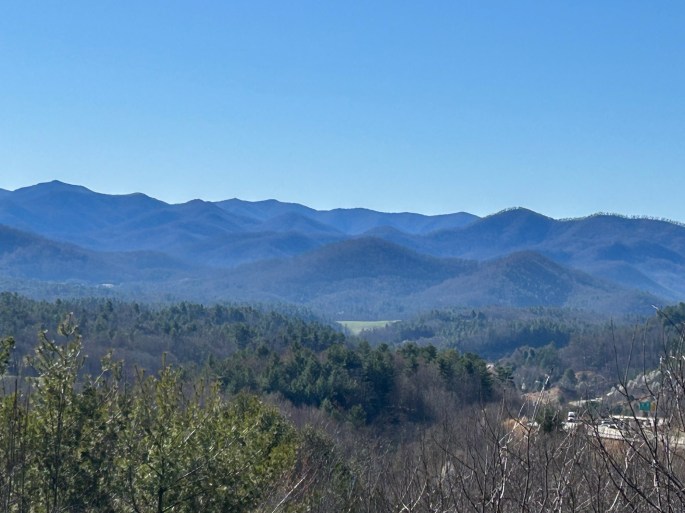
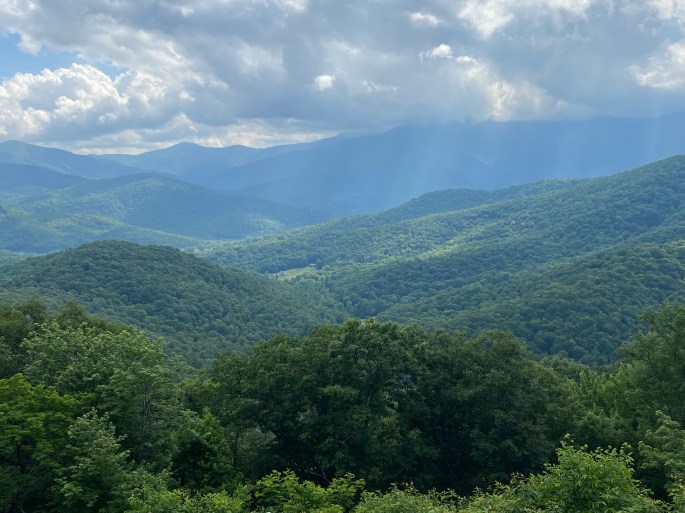
The Blue Ridge Mountains outside of Asheville, NC.

“the mountains are Calling . . .” ⛰️

I had been training for months, despite the challenges winter threw at me. Cold? I can handle it. Snow? I can run in it. Gusty wind? I can run that too. However, after my husband, John, and I crested hill after hill making our way into Asheville, North Carolina, I knew the town’s half marathon would offer a whole new level of challenge. 

To be clear, participating in the Asheville Half Marathon was an insignificant hurdle compared to what the people in Asheville, and all of the other residents of the surrounding areas/towns along US 23, have been facing as they deal with the aftermath of Hurricane Helene.

Driving along US 23, John, and I were able to witness that six months after Hurricane Helene angrily chewed through a large portion of the western Appalachian region, the recovery is still ongoing. However, the willful, and not-to-be-deterred, spirit of the residents was unmistakable. 
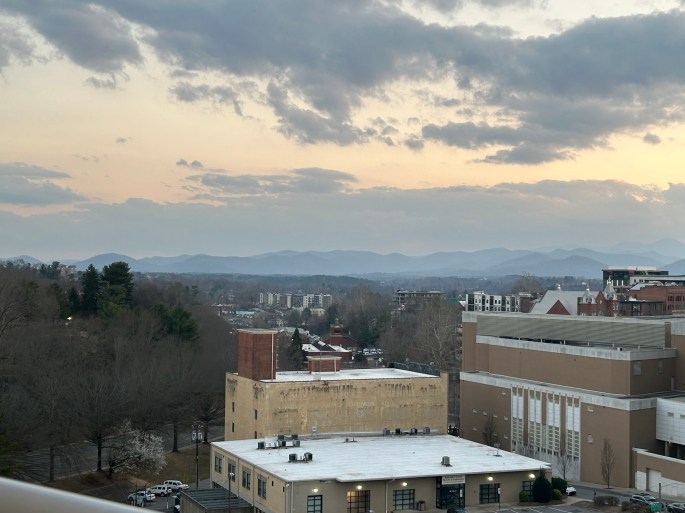
Rooftop view from Asheville of surrounding Blue Ridge Mountains.

A Tale of Two Sisters 👧 👧

This past fall, not long after Helene hit, the high school in which John and I work, welcomed two sisters into the student body.  They were from the Asheville area and were staying with relatives while their parents and older brother dealt with the devastation and destruction back home.

The girls were engaging and well-poised, especially considering their circumstances. Over the course of a couple months, I got to know them–not well due to the short duration of their stay–but well enough to swap personal stories from time to time. 

When they learned that like their dad, I often trained for half marathons, they immediately invited me to run the Asheville Half Marathon in March. They explained that by the time spring rolled around, the community would not be fully recovered, but the local economy would need the boost that runners and the accompanying spectators could bring. 

“You should definitely come, Ms. Hill.  You’d like the people of Asheville, especially the running community.” 

Once Asheville High School opened, the girls returned back home. And though I haven’t heard from them since, they planted a seed that grew into a shoot of curiosity. 
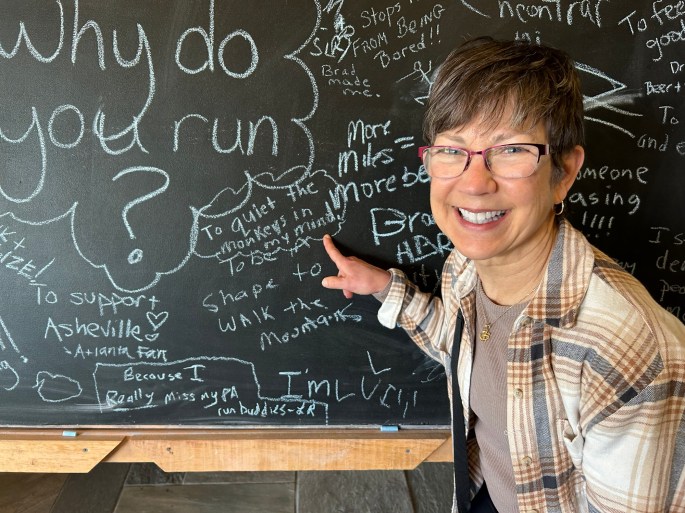
Runners were asked to sign the board stating why they ran.

Sign me up! 📝

Around Christmas, I checked the Asheville Marathon/Half Marathon website, and the powerful and persuasive prose describing the event increased my interest. The website’s editors artfully articulated the community’s belief in the significance of the annual running event. They stated the course’s route would not be “pristine or predictable.” Therefore, the event was for those who “thrive on resilience.” However, the line that sealed the deal stated, “If you’re ready to run in the face of adversity and be a part of Asheville’s comeback story, we can’t wait to see you on the start line!” 

John and I at gathering with other runners and spectators at the starting line before the race began.

Ready, set, Go! 🏁

Soon enough, on a chilly, dark March morning, I waited at the starting line with approximately 2,200 runners from 40 states and three countries who also heeded the call to help support Asheville, according to The Weather Channel. The positive vibe was palpable as runners mingled with spectators. Nonetheless, I was feeling a bit nervous as I recalled the half-marathon route’s elevation gain was nearly 800 feet, and its elevation loss was over 900.  

And, it was hilly.  From start to finish, there were no flat stretches. In the beginning, I read spectator signs claiming, “It’s all downhill from here,” with hope. It didn’t take long to realize those signs lied!  Even the finish line required running uphill, but I am “running” ahead of myself.

Running is a metaphor for living life, and it is always whispering (or sometimes shouting, as this event seemed to do) lessons to those of us willing to listen. Accepting limitations–was the lesson those relentless hills of Asheville taught me. Which makes sense since this is what many of the residents of Asheville and the western Appalachian area had to do during, and now after, the storm–accept and deal with limitations. 

Whether literal or metaphorical, storms of life cause us to suffer. As I repeatedly tried to power through those uphills during the first half, my ego kept telling me to push harder, creating suffering. However, as a late-in-life runner lacking inherent running talent, the reality is that race events for me are more about creating motivation and structure to consistently get me out the door to exercise. At the end of the day, I am not about to set any records; I am not even close to winning my age group, so why was I pushing so hard?

And so, it was on a hill, not long after milepost seven, that I decided to accept my limitations. Sure, I had trained on hills at home, but nothing like this. Why not power walk up the rest of the hills, and then run the downhill portions?
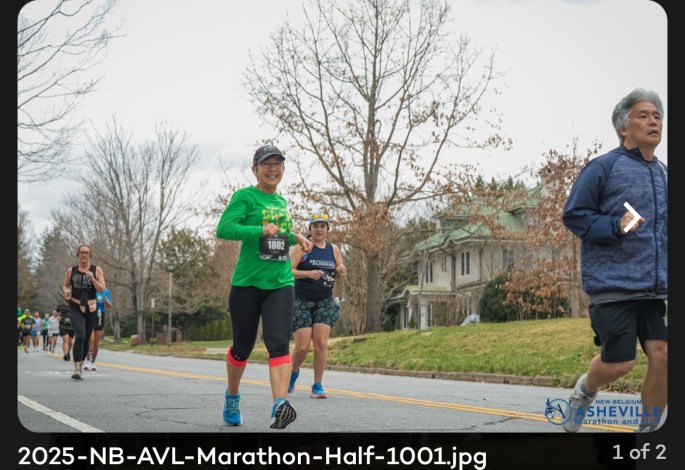
Asheville taught me to accept my limitations.

There is a newfound freedom in accepting one’s limitations 🏃‍♀️

Once I accepted my limitations, there was freedom. I had a new way of being present with the race challenges as they unfolded. This acceptance gave me permission to slow down, take in the sites, and feel a sense of gratitude for my health and ability to make this trip. 

Additionally, by walking the hills, I had more energy to offer encouragement to fellow runners I encountered who also seemed to be struggling. (After all, I run at the back of the pack, where we could all benefit from a little encouragement.) Furthermore, I was also able to offer thanks to the spectators who manned drink stations, rang cowbells, or waved motivating signs with clever phrases such as, “Touch here for power,” “You’re stronger than any storm,” or “You’re running better than our government.” 

By the time I crossed the uphill finish line, tears filled my eyes as I raised my hands in the air.  No, I wasn’t celebrating a personal record, but instead, I was able to celebrate that I crossed the finish line with grace, humility, and a lesson learned. 
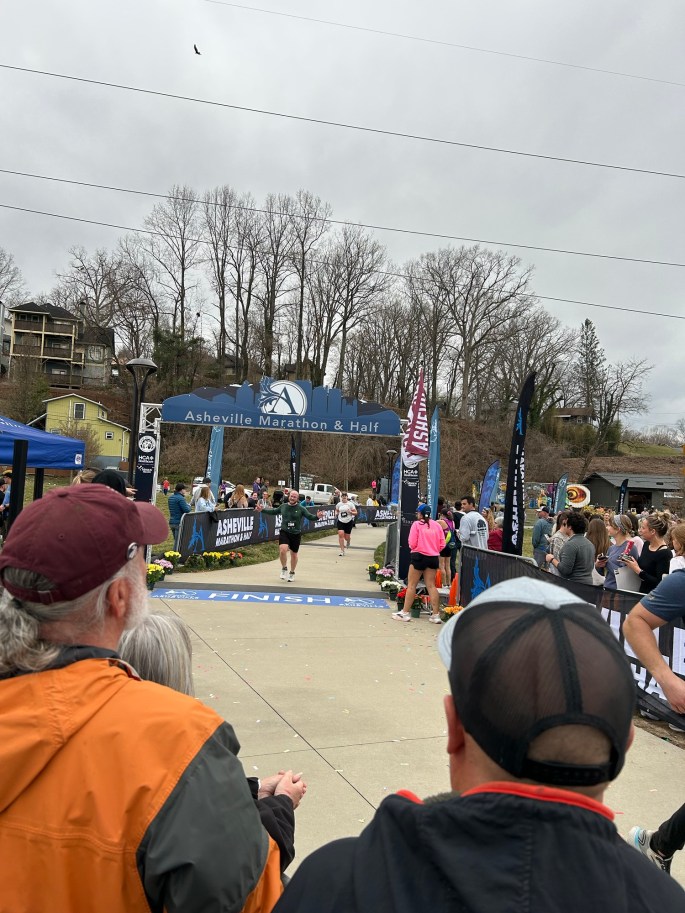
The AVL finish line of through which I would later cross humbled, and grateful, by another lesson running once more provided me.

The lesson? Transforming suffering can only occur if we are willing to be with it and accept the limitations it creates. Accepting limitations can be transformatively freeing, allowing us to lean into newly created possibilities we may not have been able to previously envision. I am not saying that accepting our limitations is not easy. However, once we let go of ego and embrace humility, it is possible to embrace the freedom that comes with focusing on what we CAN do.

Thank you , Asheville! I walk away from the finish line with grateful heart and a lesson learned. Furthermore, thank you, Hannah and Allison! I wish your family the best! 💜

Blossoming Amidst Difficulties: Lessons from Bodie Lighthouse

“Stuck between a rock and a hard place . . . You’d better stop. Put on a kind face.”–Mick Jagger and Keith Richards

Overcoming Rocky circumstances 🌺

I was walking quickly back to my vehicle with a couple of coffees in hand.  Wait. What did I just see? Walking back a few feet, I looked at the spot in between the concrete wall and the sidewalk that abutted to it. Oh my heavens! It was a flower!

How it was possible for a flower to grow in such a tight crevice was mind-boggling.  The blossoming plant was the very definition of being “stuck between a rock and a hard place.”

Photo by Pixabay on Pexels.com

How many life situations feel like that–thrusting us between rocky and hard circumstances? 

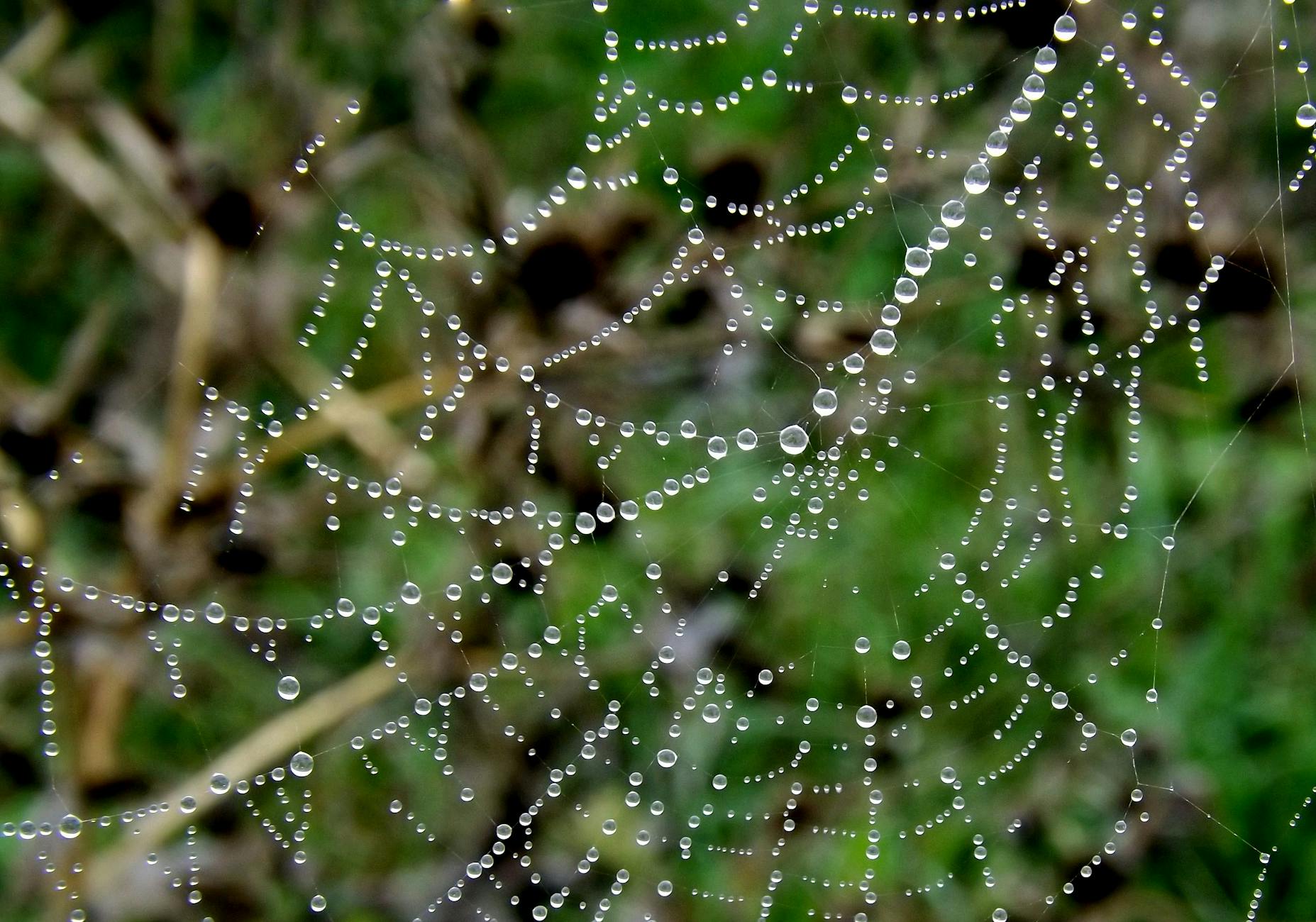
Most of us can identify times in which we were (or are) in situations in which there was no good solution or easy way out.  Like a praying mantis trapped in the web of a spider, our hands may be lifted in prayer, but the various strands of a difficult situation continue to remain sticky and taut. We can see life going on all around us, and yet, we remain stuck between an “unknown outcome” and “continued pain.” 

Confronting Difficulties 🪜

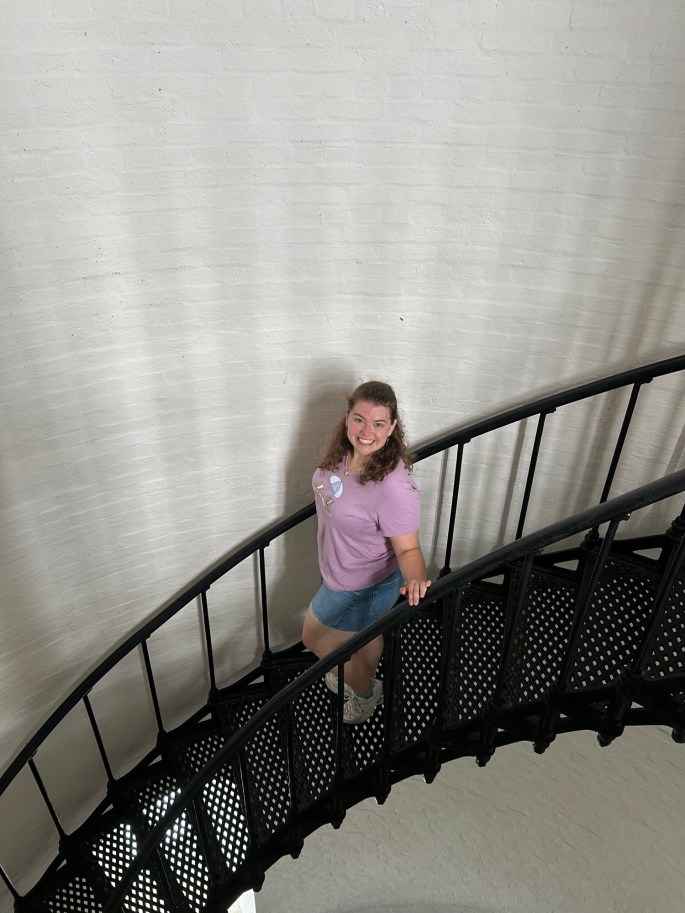
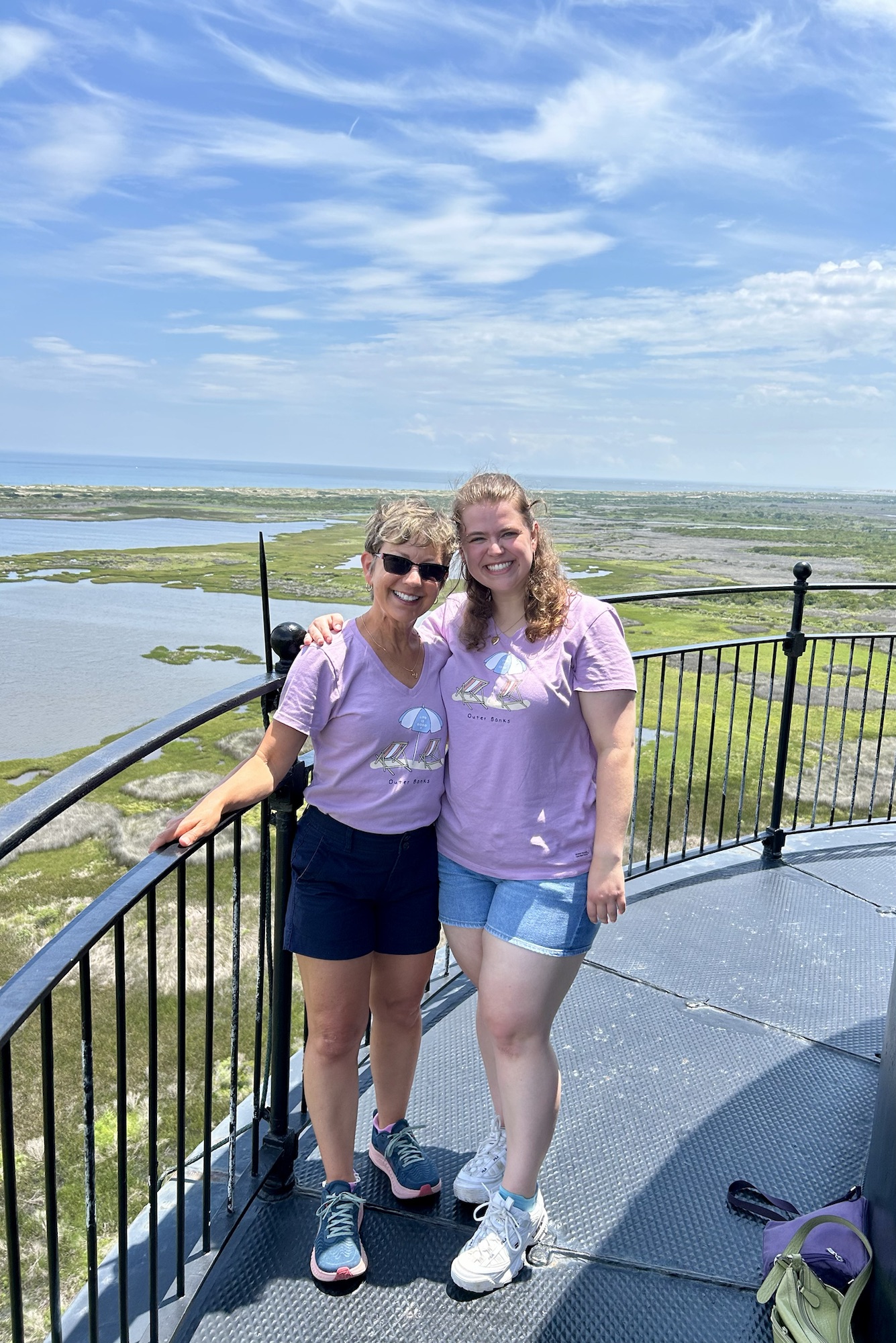
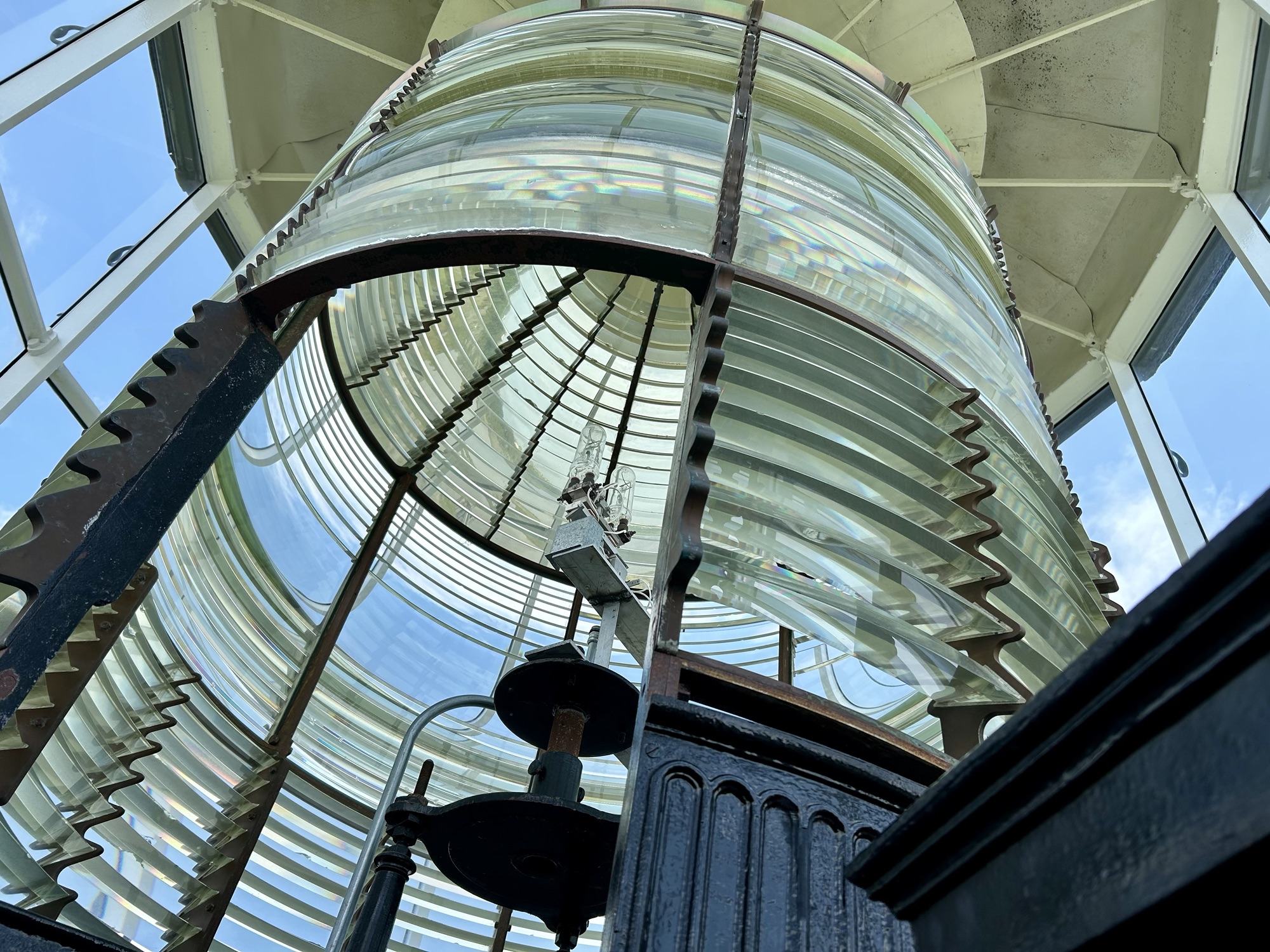
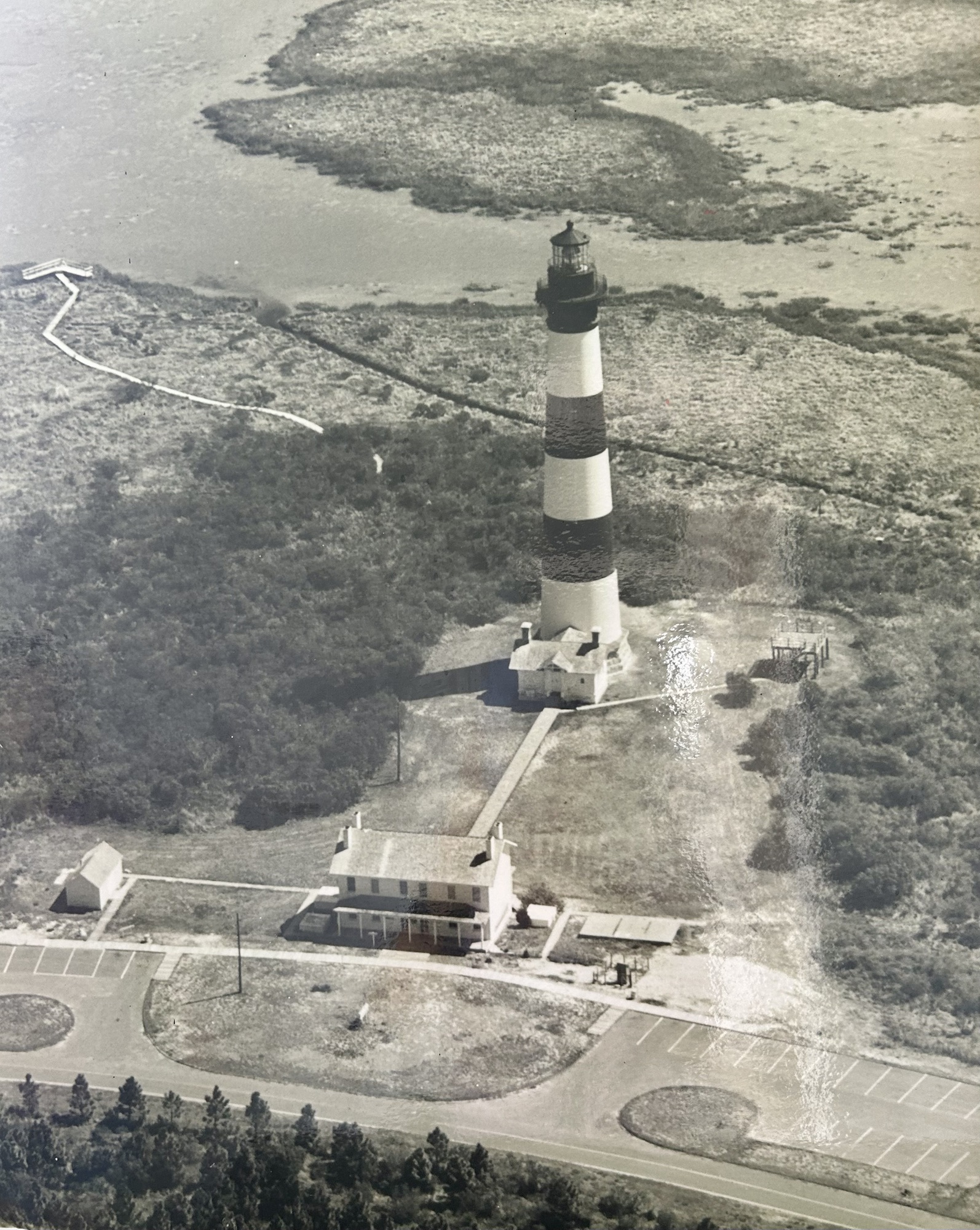
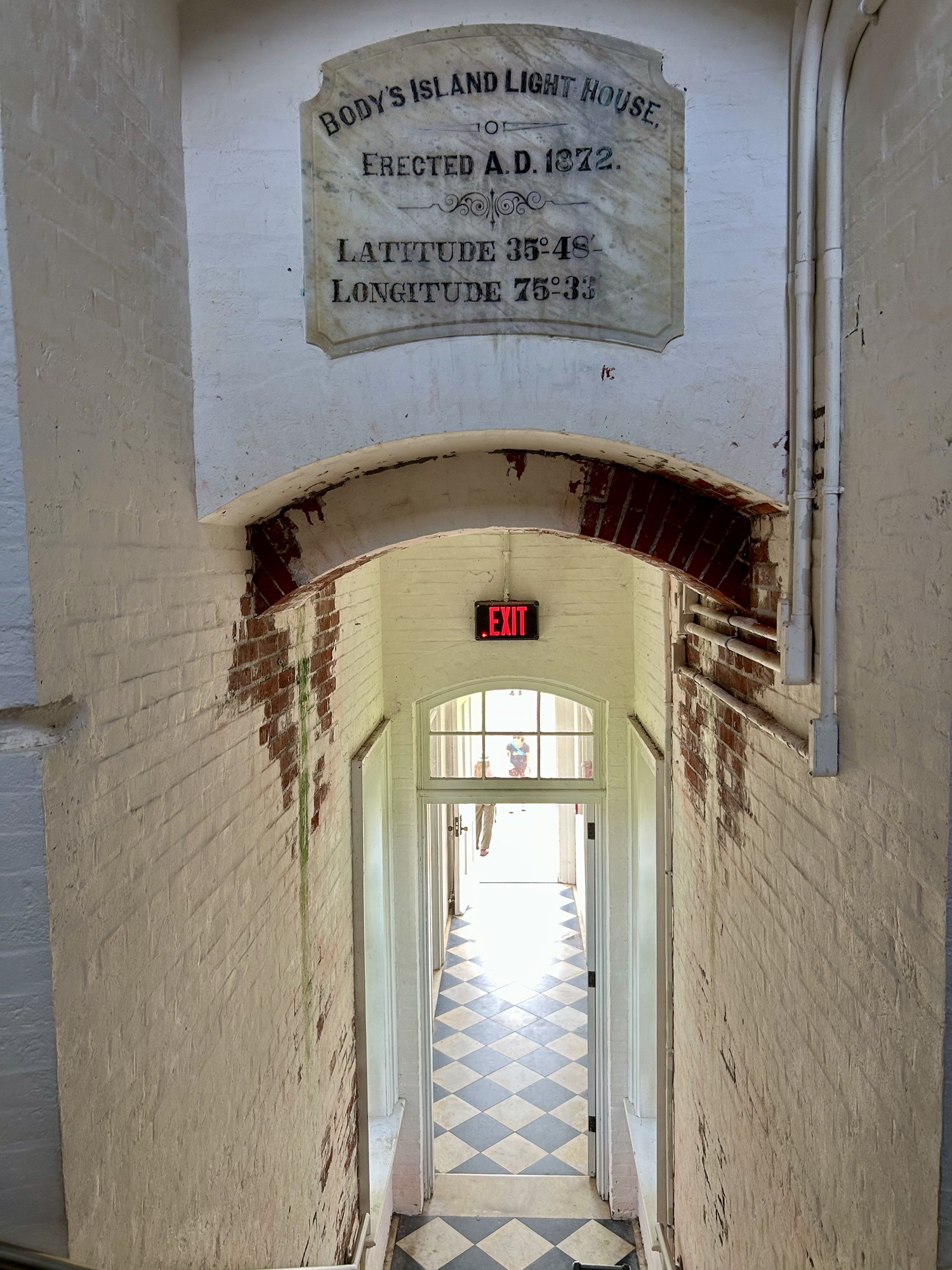
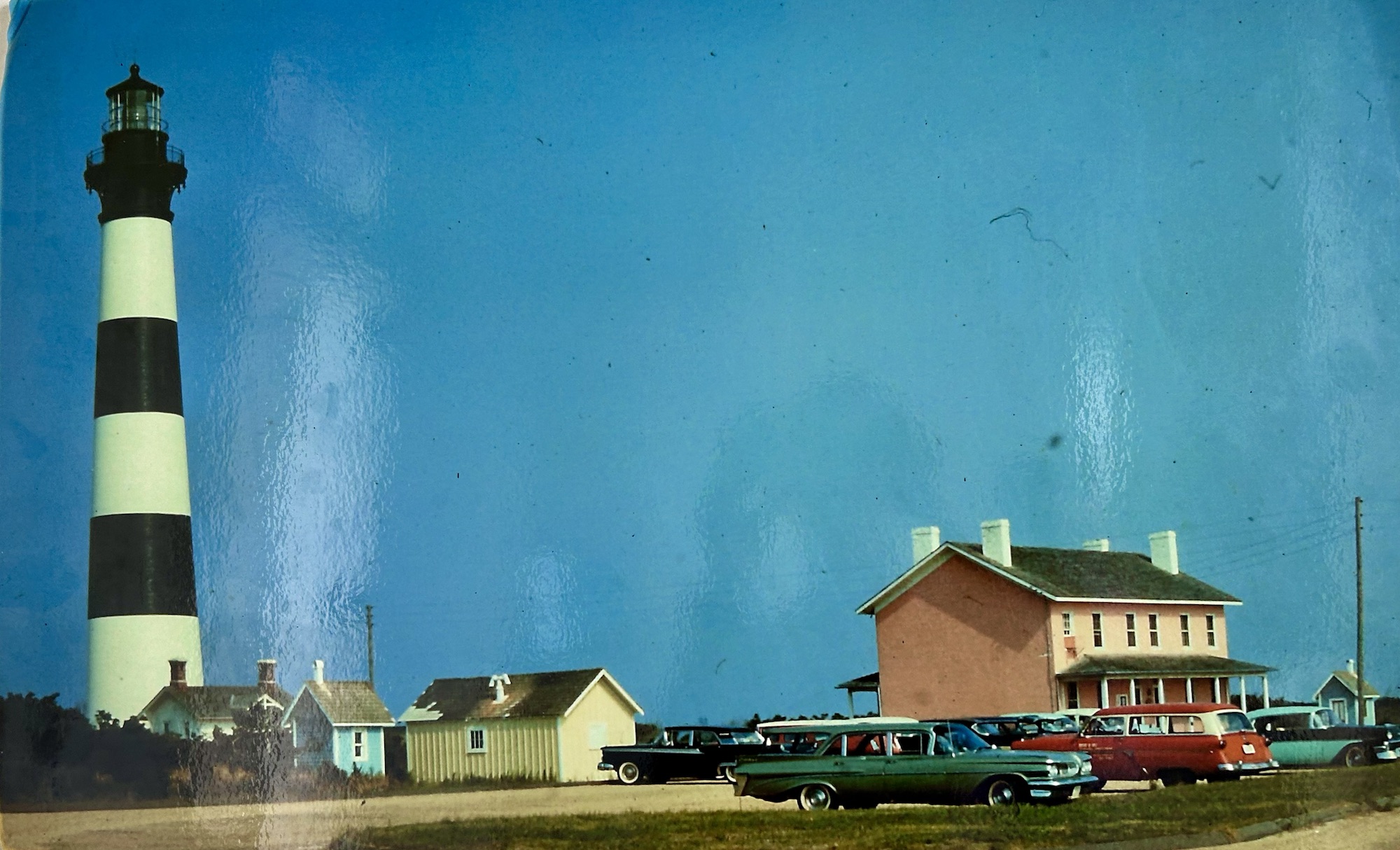
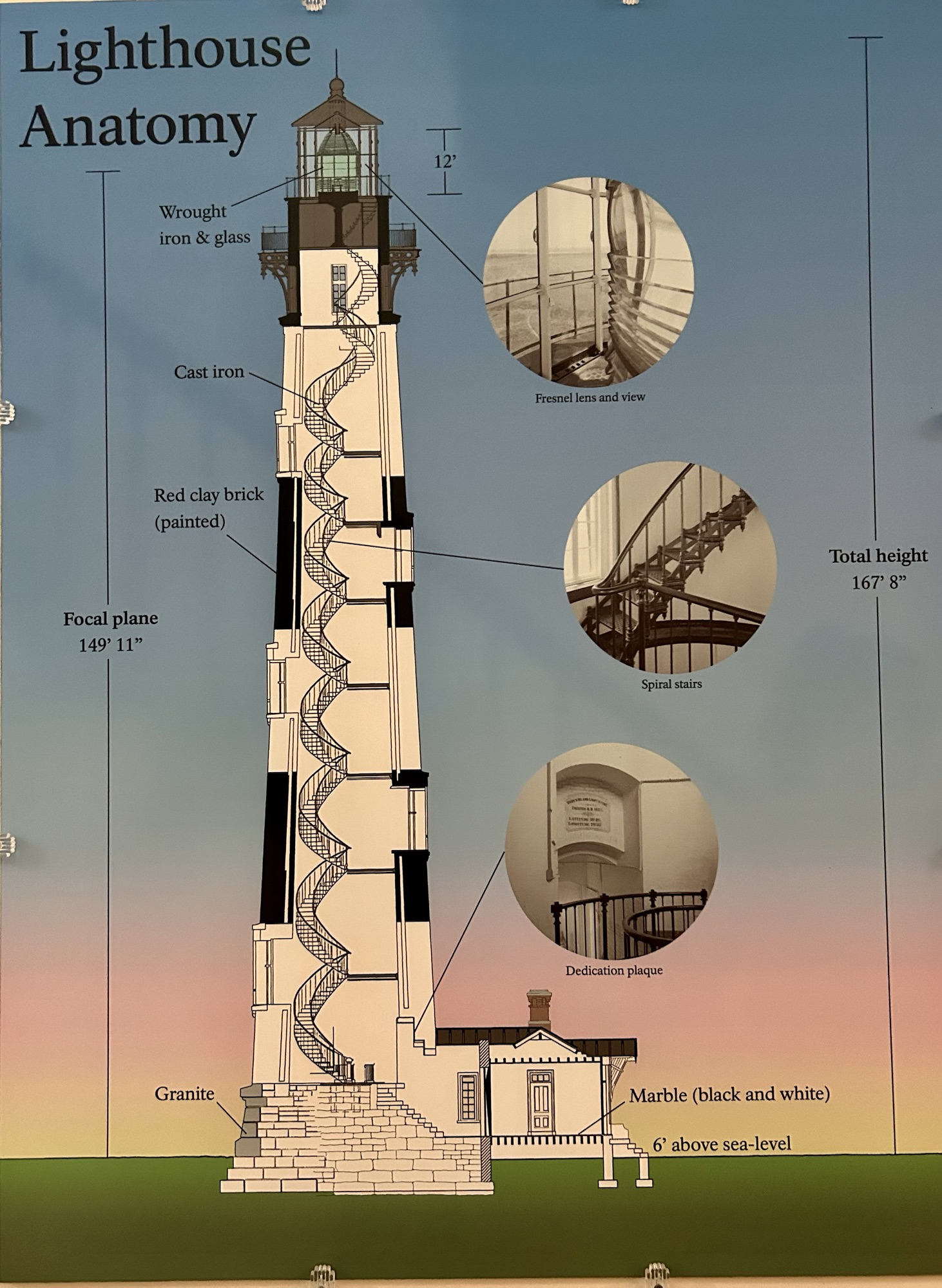
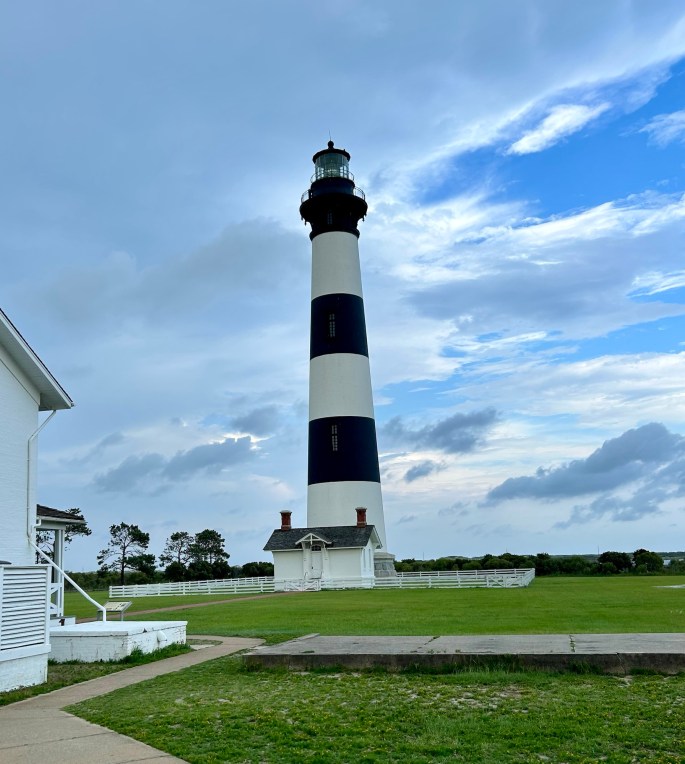
My daughter and I visited the Bodie (pronounced “body”) Lighthouse located on the Cape Hatteras National Seashore on a warm July afternoon. Once inside the lighthouse at the scheduled time, we were facing over 200 spiraling steps, equal to climbing 10 stories.  It contained no air conditioning; however, there were nine landings on which we could rest and catch our breath.

While climbing those steps, visitors must coordinate with other climbers as only one person at a time is allowed on a section of steps.  Therefore, when arriving at a landing, I had to yell “clear” to my daughter below, so she knew she could begin climbing the next section of steps.  Then, I had to listen and look above to the next section of steps to ensure there was no one coming down the steps from the top before I embarked to the next level. 

One step at a time 🚶🏽‍♀️

On and on we climbed.  Our thighs were burning, and none of the windows on the lighthouse’s walls were open.  Although there were small fans on each landing, they did little to prevent the sweat that accumulated on our brows and backs. Each time I reached a landing, I would marvel at the number of steps still above me, but I also felt a sense of amazement as I looked back down at the number of steps I had already climbed before shouting, “Clear!”

When we finally reached the top landing and were able to step outside onto the platform, the air felt exquisitely cool.  The breeze lifted and lightened our spirits, but it was the expansive view that took our breath away. 

A greater perspective 🌅

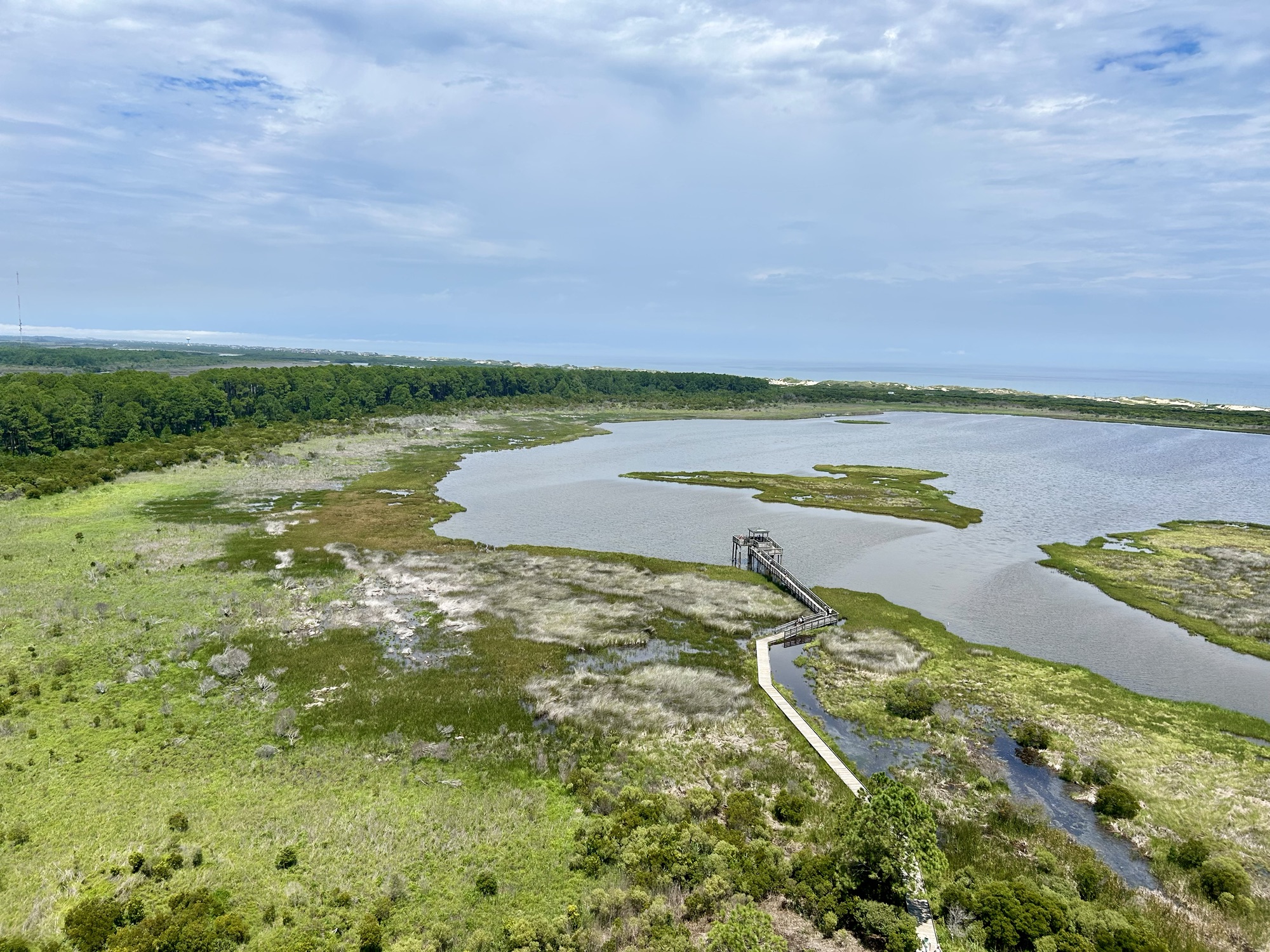
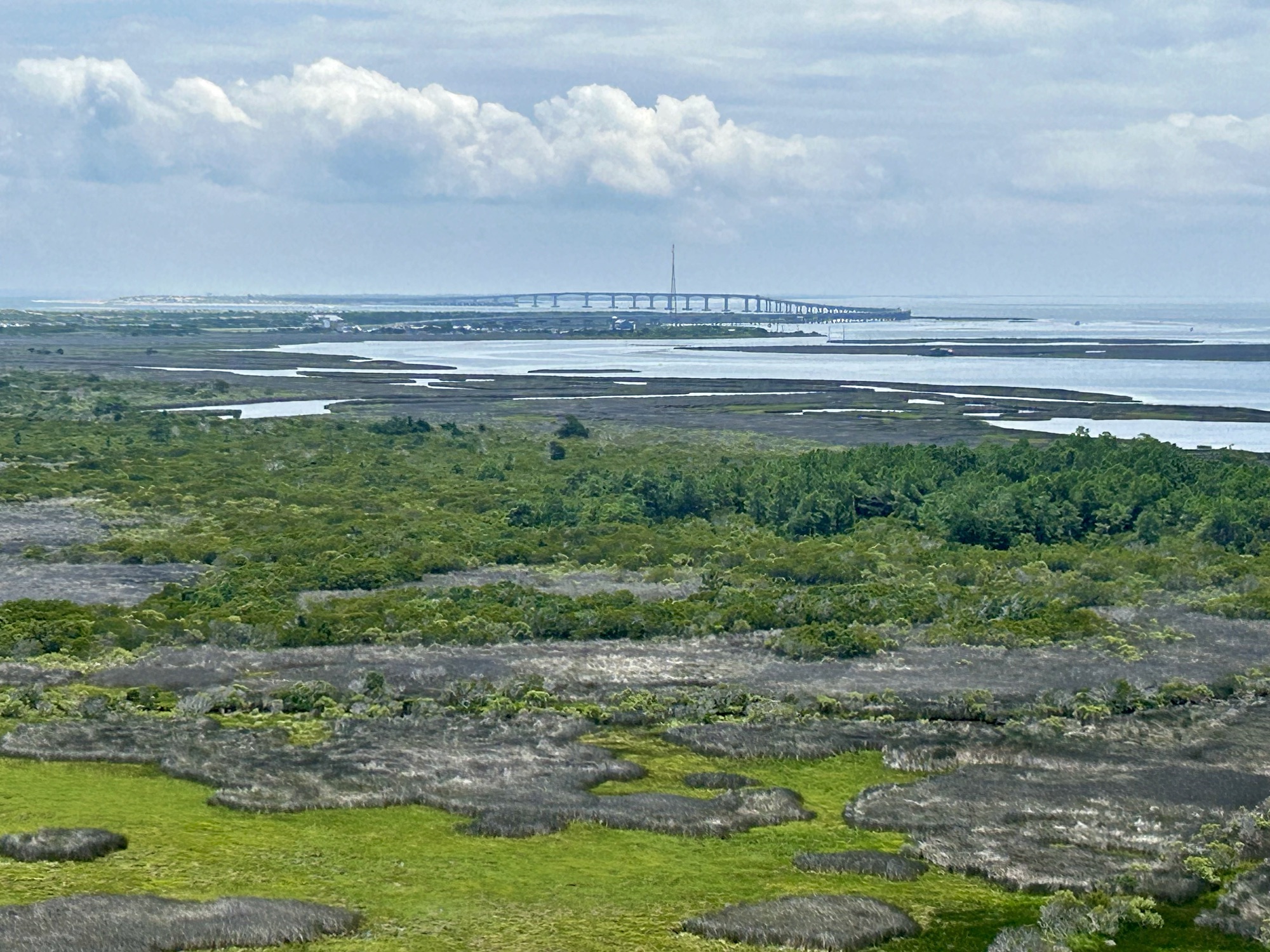
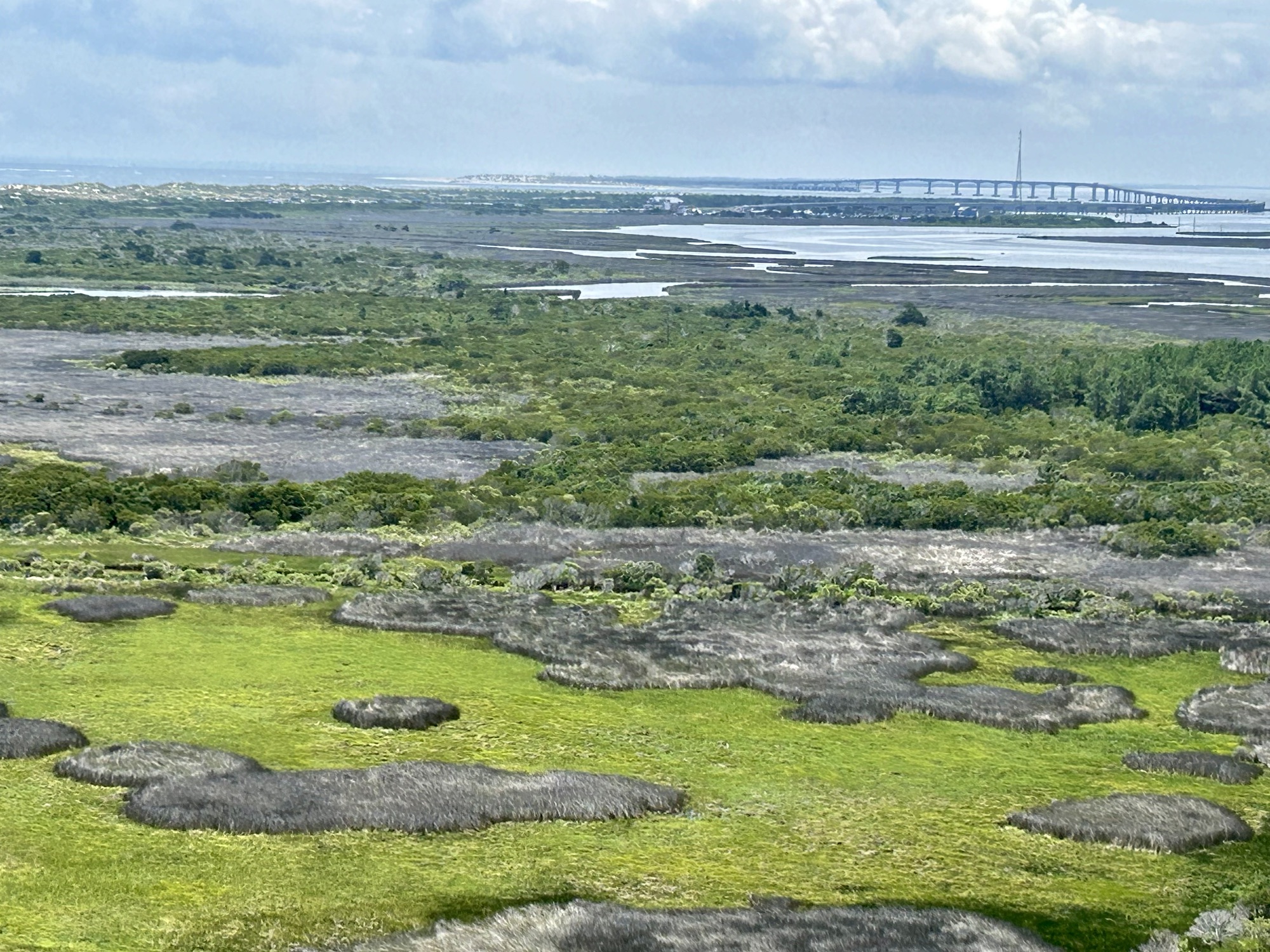
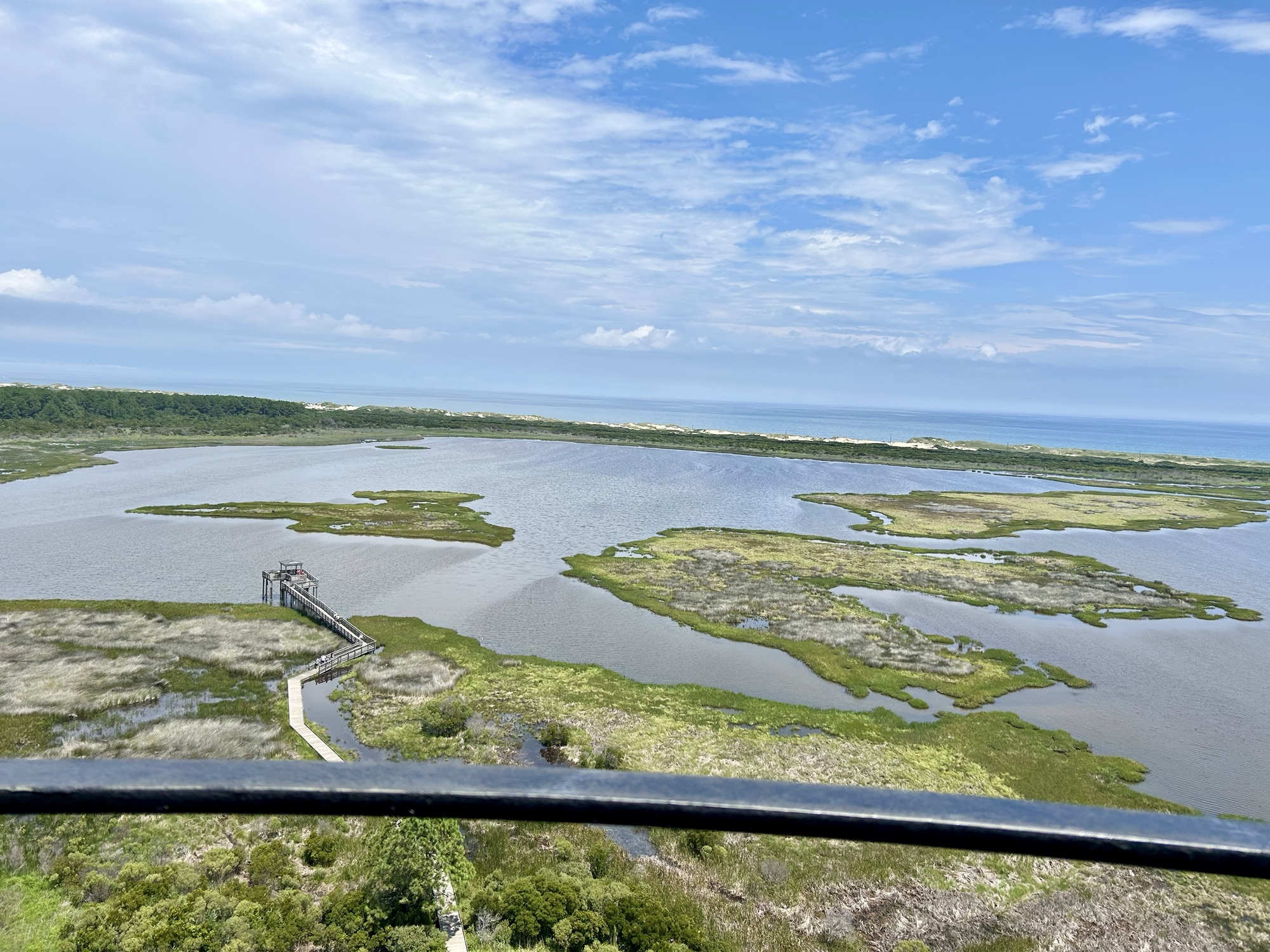
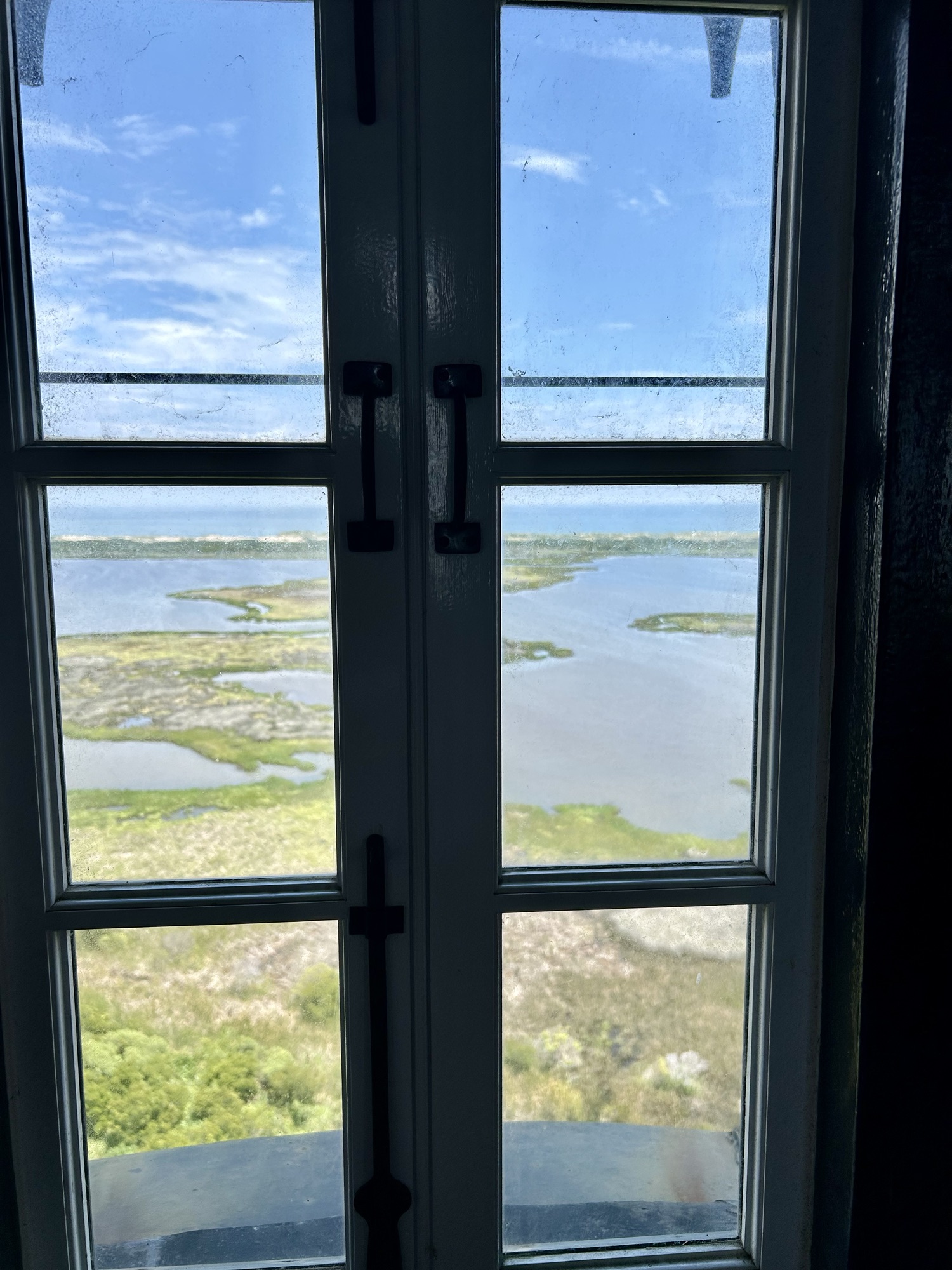
Spread out before us was 360 degrees of the sweeping sights of Bodie Island, Pamlico Sound, and the Atlantic Ocean.  Astonished by the surrounding marshlands, pine trees, distant bridges, the various bodies of water, and a map-like view of the vicinity, we appraised how different the Hatteras Seashore looked from a bird’s eye view. In fact, we realized that we only saw a fragment of what was all around us whenever we drove along NC Route 12 to and from the lighthouse.

We would have loved to have stayed longer, but our time was limited by default of the National Park visitor schedule.  Of course, the only way to exit was to climb down those 200+ steps, one level at a time.

The Only way Through is Through ⬇️

Just as the way up took time, especially coordinating with others, so did the climb down.  However, this time, it felt different.  We now possessed the confidence of knowing that we had conquered the climb and made it to the top.  We stepped down the steps with a certain satisfaction one feels from having successfully “blossomed,” as that flower did between the cracks, with the completion of a difficult task.  

Many of life’s struggles and challenges are like that lighthouse climb. 

Sometimes we face situations in life that are so difficult, we feel stuck.  If we don’t tie up our laces and start climbing, we’ll remain stuck, unable to move the boulder of a problem.  However, if we start climbing, it’s going to hurt, and we will sweat from the effort–at least proverbially speaking. 

Start climbing anyway

Similarly to those nine landings, we may climb over one rock, only to realize there are more to maneuver around. There are more sides, more stony surfaces relating to the struggle than we initially think.  Thus, there is more climbing to do, more problems to solve.  

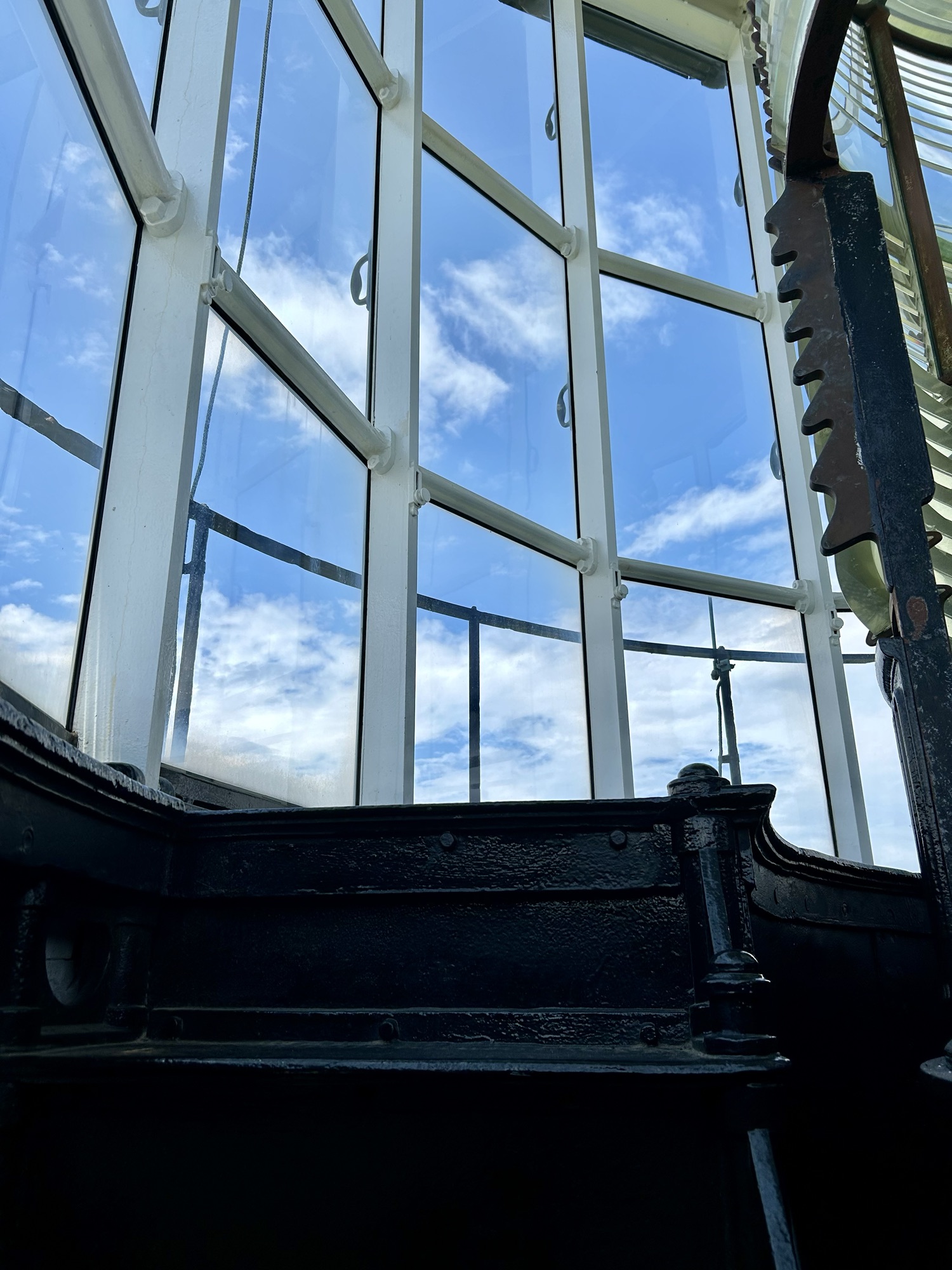
Looking through the lighthouse window, I could see the progress we were making.

Appreciate how far you have come

No matter how much more there is to go when dealing with life’s challenges/changes, it is worthwhile to notice how far you have come.

Taking a moment to pause and celebrate the challenges that you were able to “clear” is important. It not only serves as an opportunity for gratitude for what has been overcome, but also provides time to symbolically catch your breath before attempting to conquer the next step of the challenge.  Certainly, the “unknown” will remain in wait; however, by pausing and not rushing towards a quick solution, we are better able to gather enough strength for tackling the next part of the challenge.

Making the climb together made a difference.

Seek Support

When working through a life challenge, it is often beneficial to enlist the help of a friend or loved one.

Climbing up the Bodie Lighthouse steps, not only did I have my daughter with me, but there was a group who had reached the top before us. As they descended, they offered words of hope.

“The view is gorgeous from the top!”

“You’re almost there!”

“It is so worth the sweat!”

Seeds of encouragement, whether spoken or written, along with the presence of another dear soul helping us along the way, can make all the difference when we are striving from level to the next as we navigate the challenge/change.  

Invoking your Higher Power can light the way through rocky and rough patches.

Have Faith

Invoking the help of our Higher Power can offer further strength and resolve.

With each step taken, and each landing reached, hope increases.  When that sense of hope is nourished with support, encouragement, and faith, it fortifies us–feeling akin to love–a love that can see us through the difficult time.

Hope often feels akin to love. 💜

Eventually, each of life’s challenges and changes reach their pinnacle, allowing for a reprieve to bask in the breezes of accomplishment and the joy of the new lifeview. 

Of course, like those summer blossoms, we can’t remain on top forever.  Eventually, we all must descend from the height of accomplishment.  However, we can make that descent with a greater sense of resiliency, strength, and a deepened faith that we can not only move up, over, and around life’s rocks and hard places, but we can also help others do the same.

Craggy Life Lessons

“Yonder were the mountains:  The sunlight revealed their tiny heads and wide shoulders, craggy and purple, with small black trees, delicate as eyelashes, on their slopes.”–Paul Theroux 

It never ceases to amaze me the ways in which life can manage to not only survive, but thrive.  As an experienced educator, I have worked with countless students, including those who come from the most anemic of backgrounds–impoverished in experiences, impoverished in love/emotional support, or impoverished financially.  Miraculously, many of those disadvantaged students still manage to not only survive their hardscrabble circumstances, but also find enough sustenance outside of their own rocky homelife for growth.  These kids are like camels–able to soak up enough goodness and nutrition from one or two smaller sources, such as a church, school, sports, and so forth, that allow them to flourish through long stints of inadequate and insubstantial living situations.

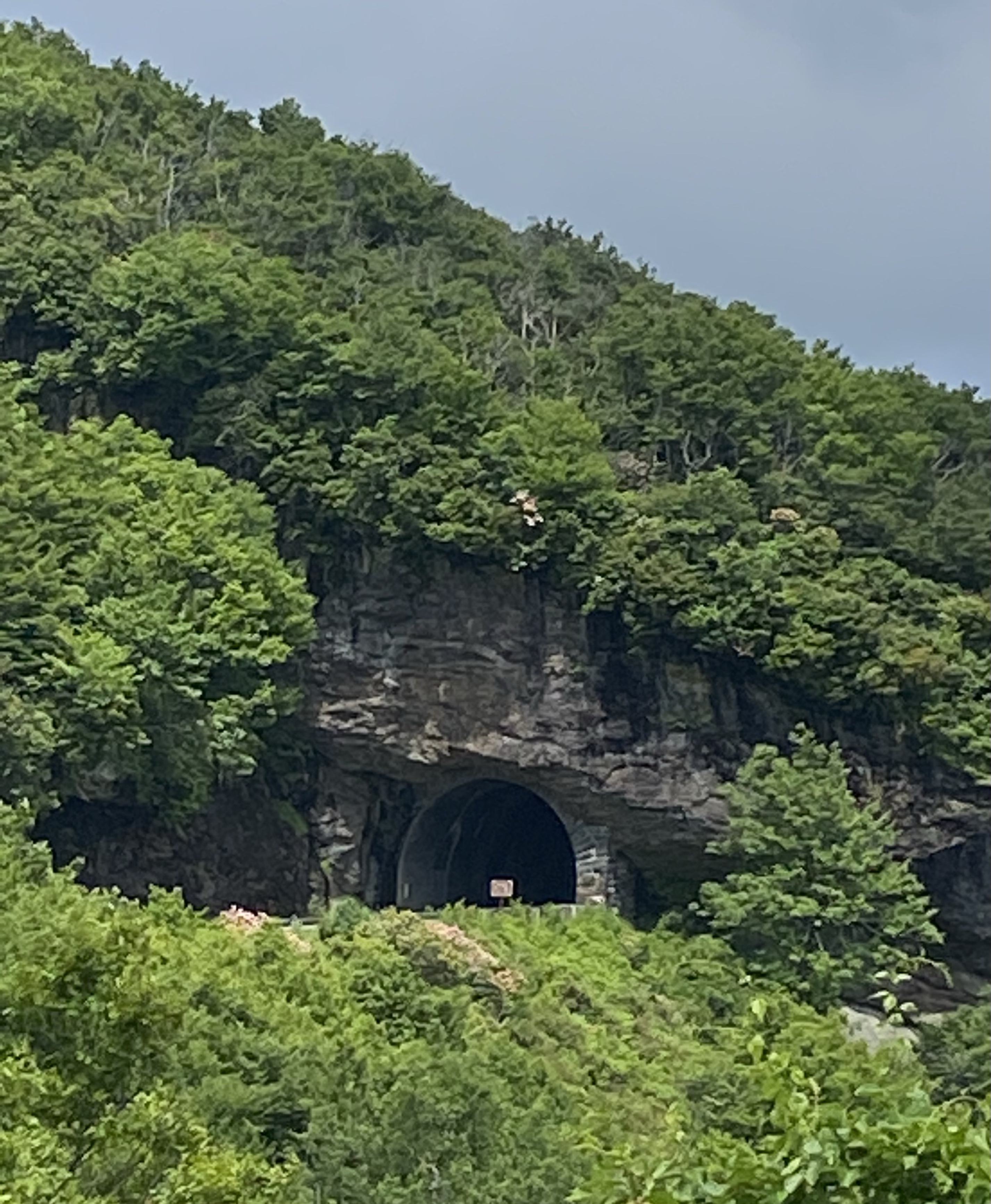
Craggy Pinnacle, elevation 5,817′, can be driven through via Blue Ridge Parkway tunnel or hiked to the top for epic 360 degree views.

Visiting Craggy Gardens, north of Asheville, NC and just off the Blue Ridge Parkway, I was reminded that not only can humans survive ramshackle environments, but also a wide array of plant life can likewise do the same. Craggy Gardens are part of the Great Craggy Mountains, or “the Craggies,” which is a rock-filled area of approximately 194 square miles in the Blue Ridge Mountains that border the Black Mountains.  The highest point of the Craggies is Craggy Dome rising at an elevation of 6,105 feet, but there are several other high peaks of interest in this unique geological and botanical habitat, including Craggy Pinnacle, through which visitors can drive and/or hike to the top along the scenic BRP. 

A few ancient symmetrical trees dot the bald of Craggy Flats which is mostly covered in grasses, shrubs, rocks, and few flowering plants.

The Great Craggy Mountains are known for its exposed rocky, aka “craggy,” surfaces, high altitudes with spectacular vistas, and an elevated bald known for its rhododendrons, mountain laurel, flame azalea, other colorful wildflowers, and heath.  There is both a picnic area at milepost 367.6 and the Craggy Garden Visitor’s Center at milepost 264.4; plus, there are several hiking trails for a variety of hiking skill levels. Additionally, the Craggy Mountains are known for its twisted trees, May-apple flowers, Turkscap lilies, autumnal leaf colors, the clusters of red berries that decorate the Ash trees in the fall, and its rare and endangered plant life.  In fact, according to the Blue Ridge Parkway Guide, “Craggy Gardens has been recognized by the state of North Carolina as a Natural Heritage Area and has also been recommended as a National Natural Landmark.”

During our visit to the Craggy Mountains, John, my husband, and I stopped at the Craggy Garden Visitor Center.  At an elevation of 5,497 feet, the air was significantly cooler than when we left town, hovering in the high 50s.  Inside the visitor center, a warm fire blazed in a wood burning stove in a far corner with several rocking chairs around its hearth.  Outside, posted along the front wall, was a map of the different hiking trails in the vicinity.  

The Craggy Pinnacle Tunnel as seen from the Craggy Garden Visitor Center.

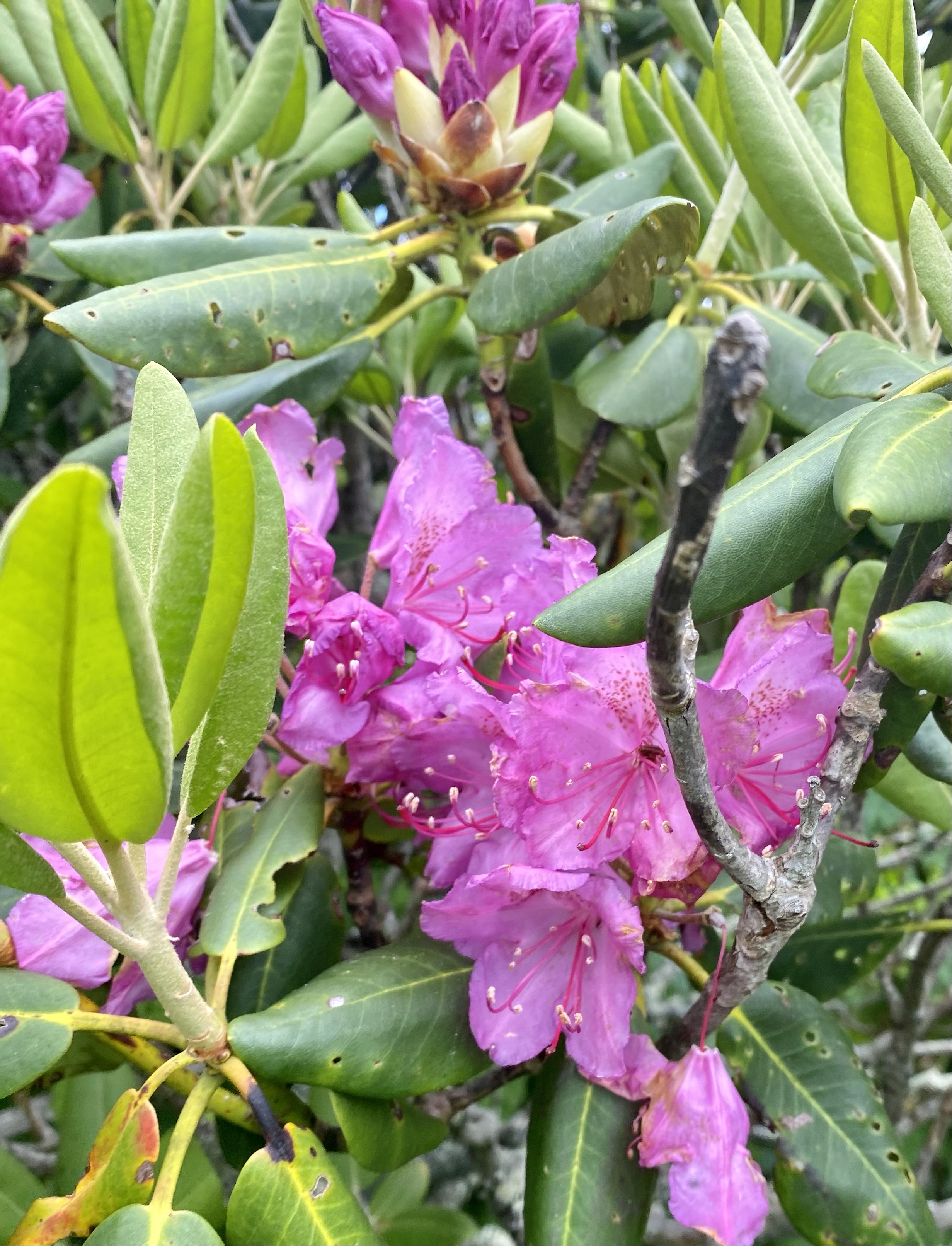
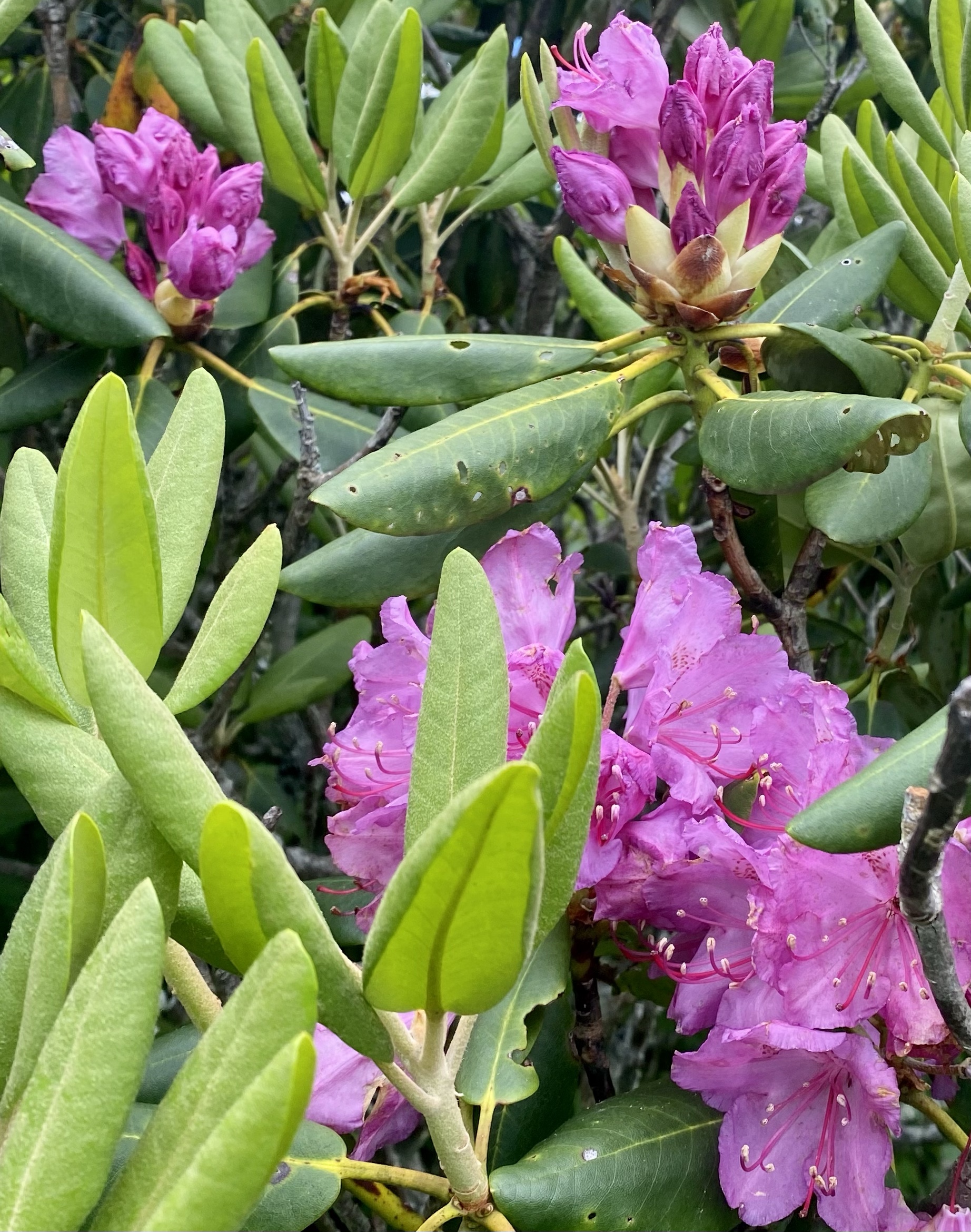
As newbies, we decided our first hiking experience in the Craggies should be uphill along Craggy Gardens Trail which led to the Craggy Flats at an elevation of 5,892 feet.  Since our visit was in late June, we were hoping to see the renowned Catawba rhododendron; however, John had already been warned that these infamous flowering pink and purple shrubs had come and gone with little fanfare.  Nonetheless, I was not to be deterred in my enthusiasm for the potential adventure that awaited along the trail.

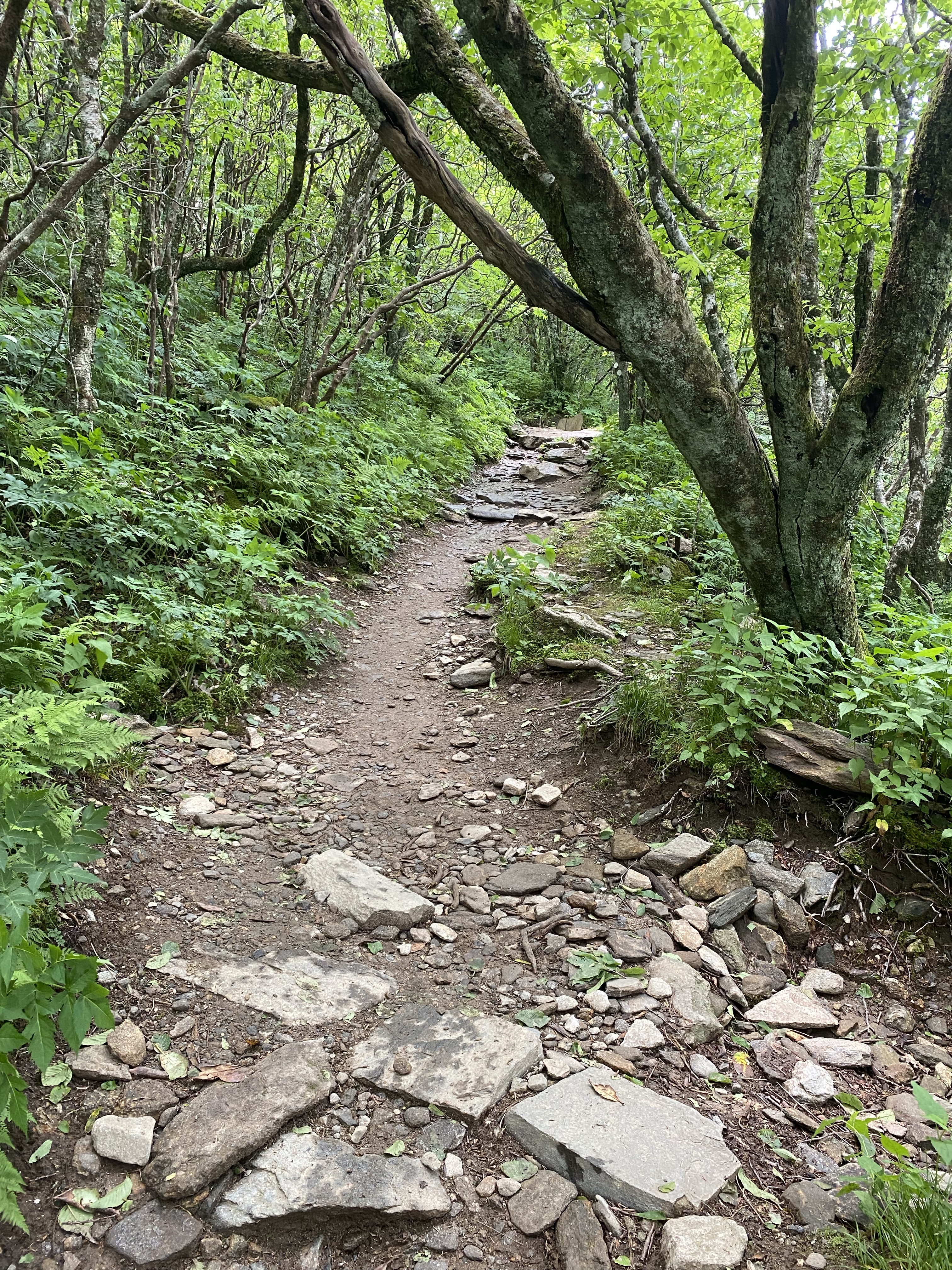
Craggy Garden Trail

  “Nature is a book of many pages and each page tells a fascinating story to him who learns her language. Our fertile valleys and craggy mountains recite an epic poem of geologic conflicts. The starry sky reveals gigantic suns and space and time without end.”–A. E. Douglass

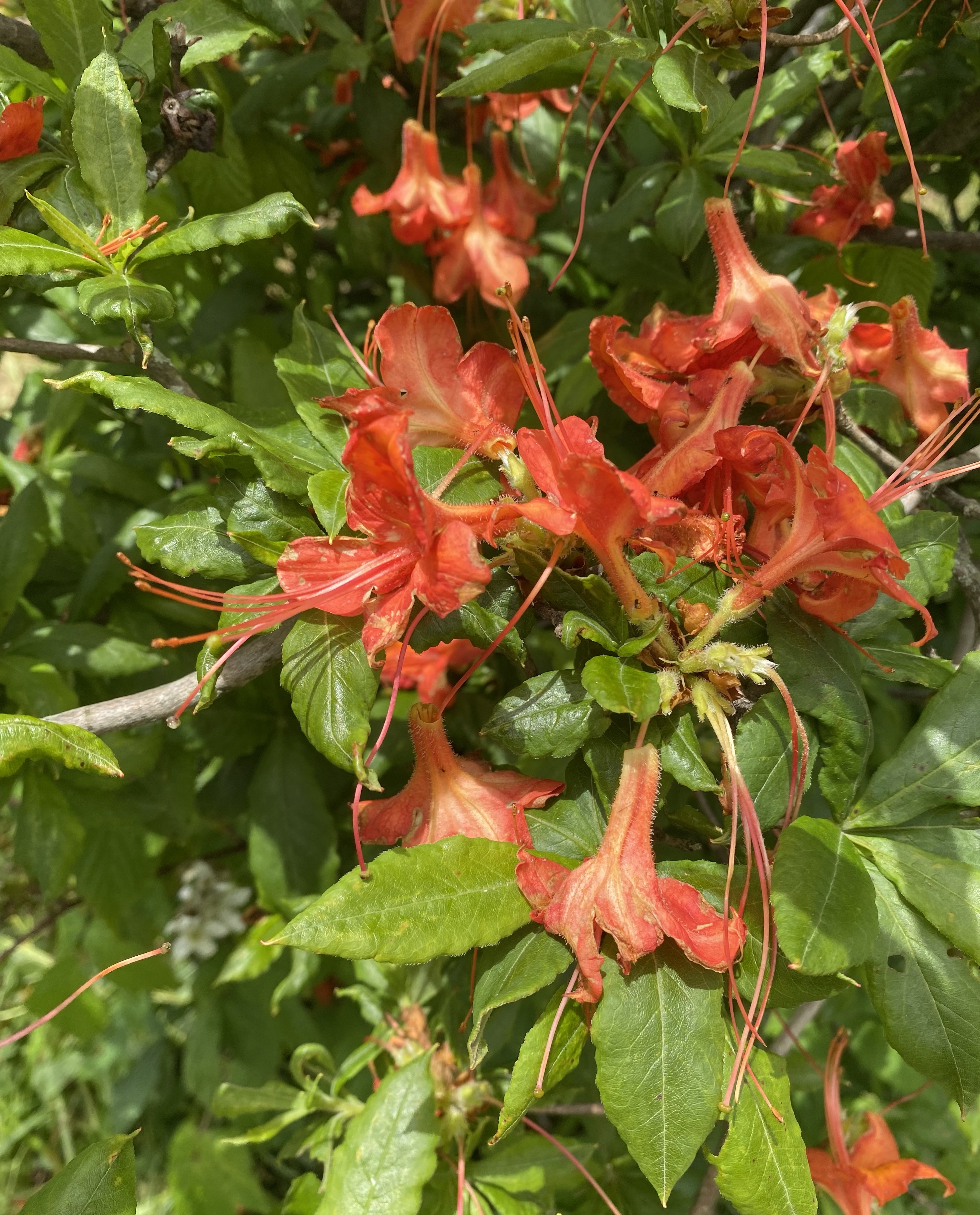
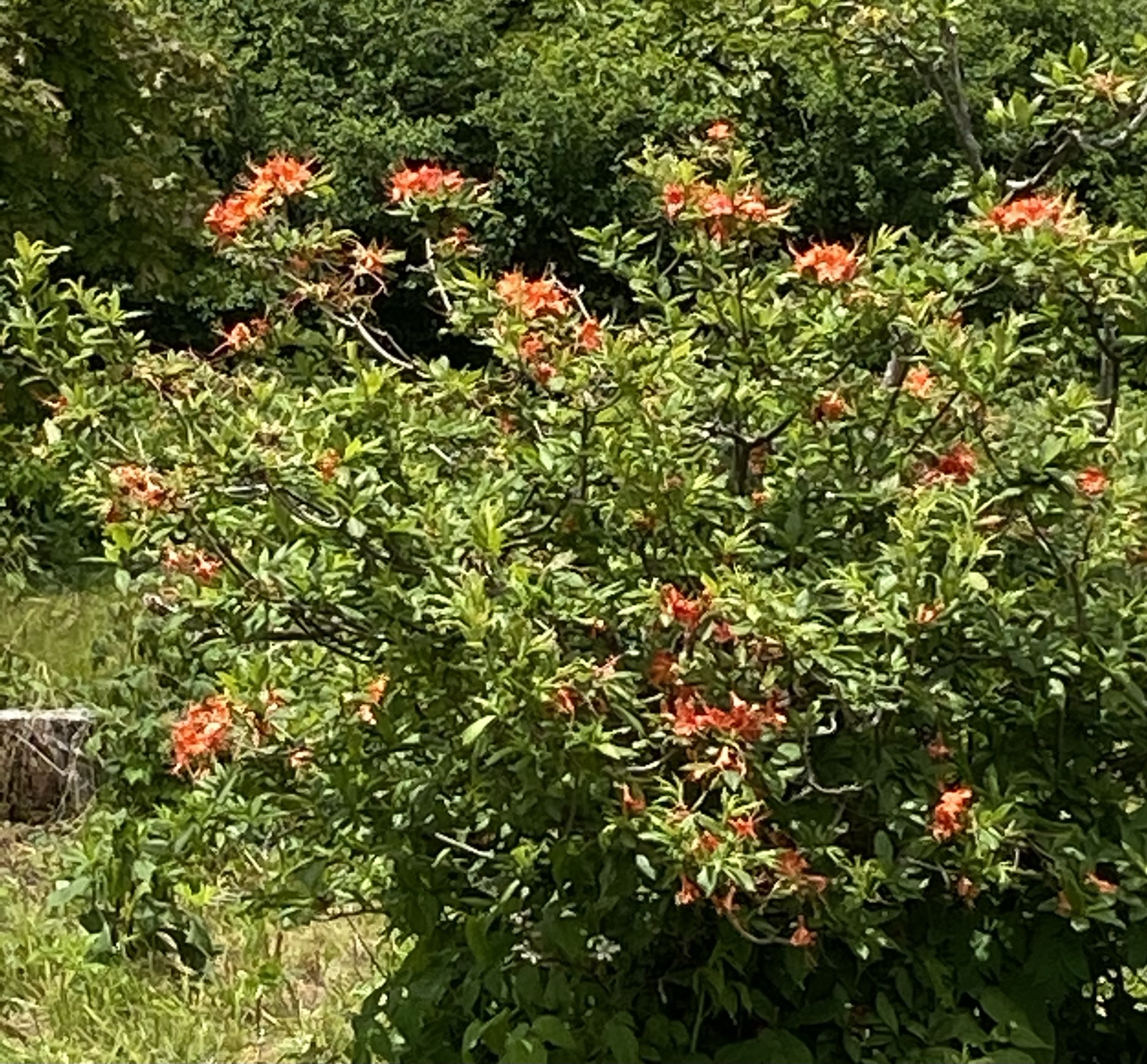
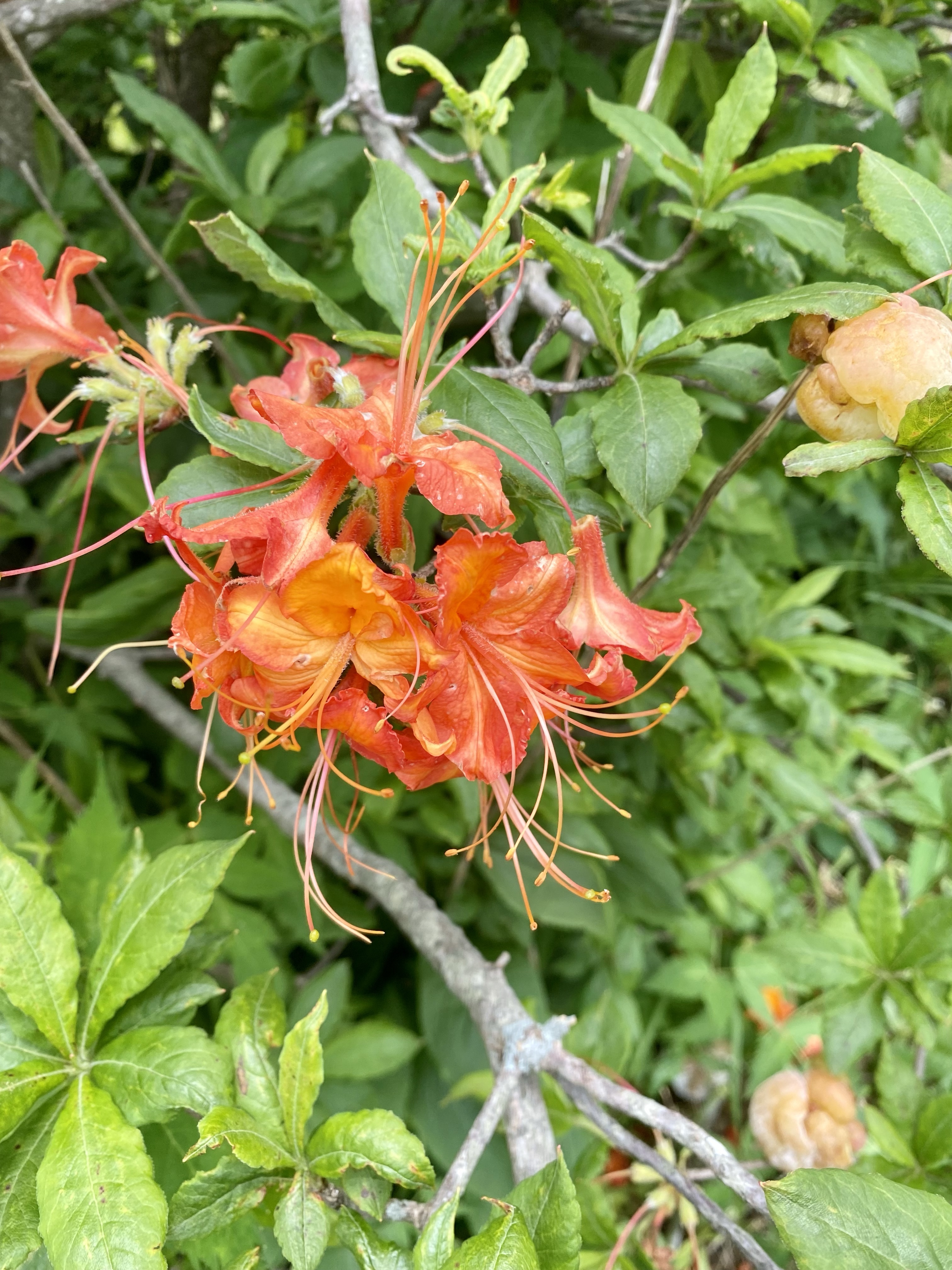
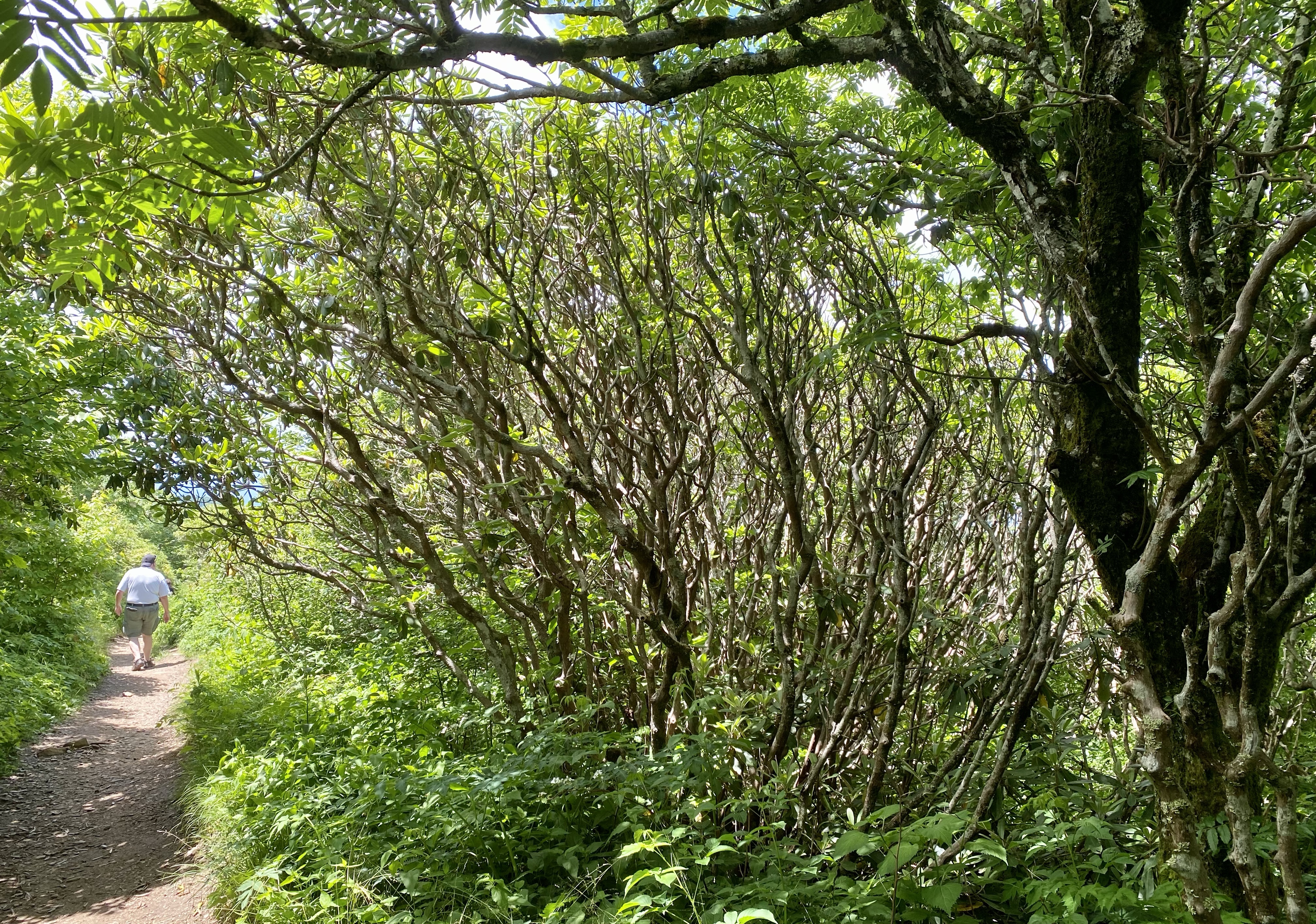
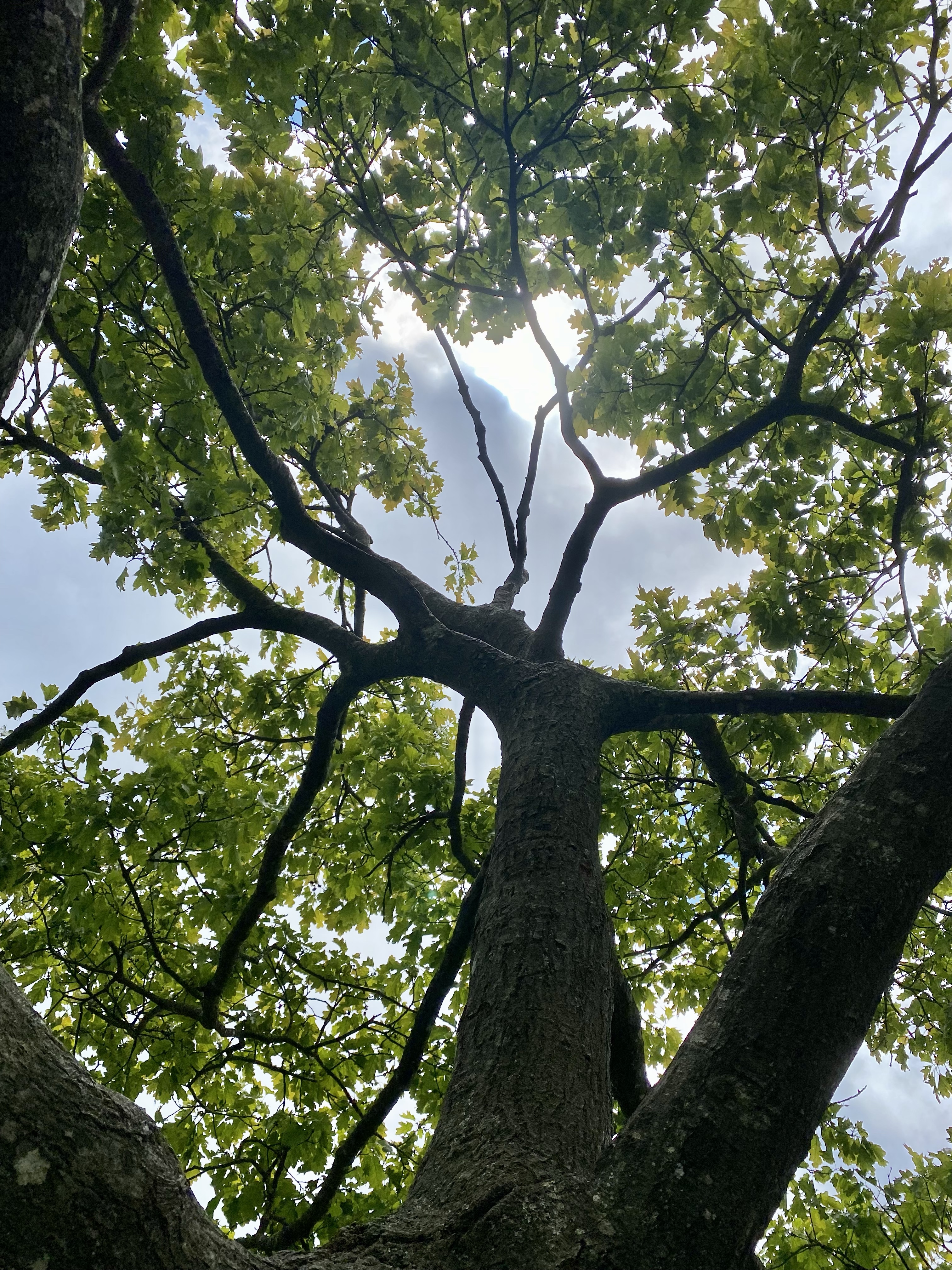
Trekking along the path, twisted trees and shrubs formed tattered tunnels through which we traversed higher into the altitude until we reached Craggy Flats.  This area is signified by a large shelter with paths going uphill to either side of the shelter.  Once at the top, the views were spectacular, allowing us to see layer upon layer of mountain line overlaid with cloud shadows.  While as a general rule, a bald is considered a treeless area, the Great Craggy Mountains’ bald was not entirely treeless as there were a few beauties with their broad limbs fanned out in perfect symmetry.  Mostly, the bald was covered with small flowers, grasses, dirt paths, and a few shrubs that were ablaze with orange flowers–a type of rodondendum called a flame azalea due to its flamboyant flowers.  

Vantage point of tree limbs

The Craggy Gardens Trail is often identified as one of the busiest trails in the area, but on the day/time John and I chose to explore it, there weren’t too many other hikers.  The hikers we did encounter were friendly and helpful, offering different pieces of advice for locating specific scenery.  In fact, one pair of sisters that I met during my exploration of the bald area remembered I was from Ohio and referred to me by shouting “Ohio!” whenever they found something of interest along the trail they thought I would want to see. 

The search for the Catawba Rhododendrone

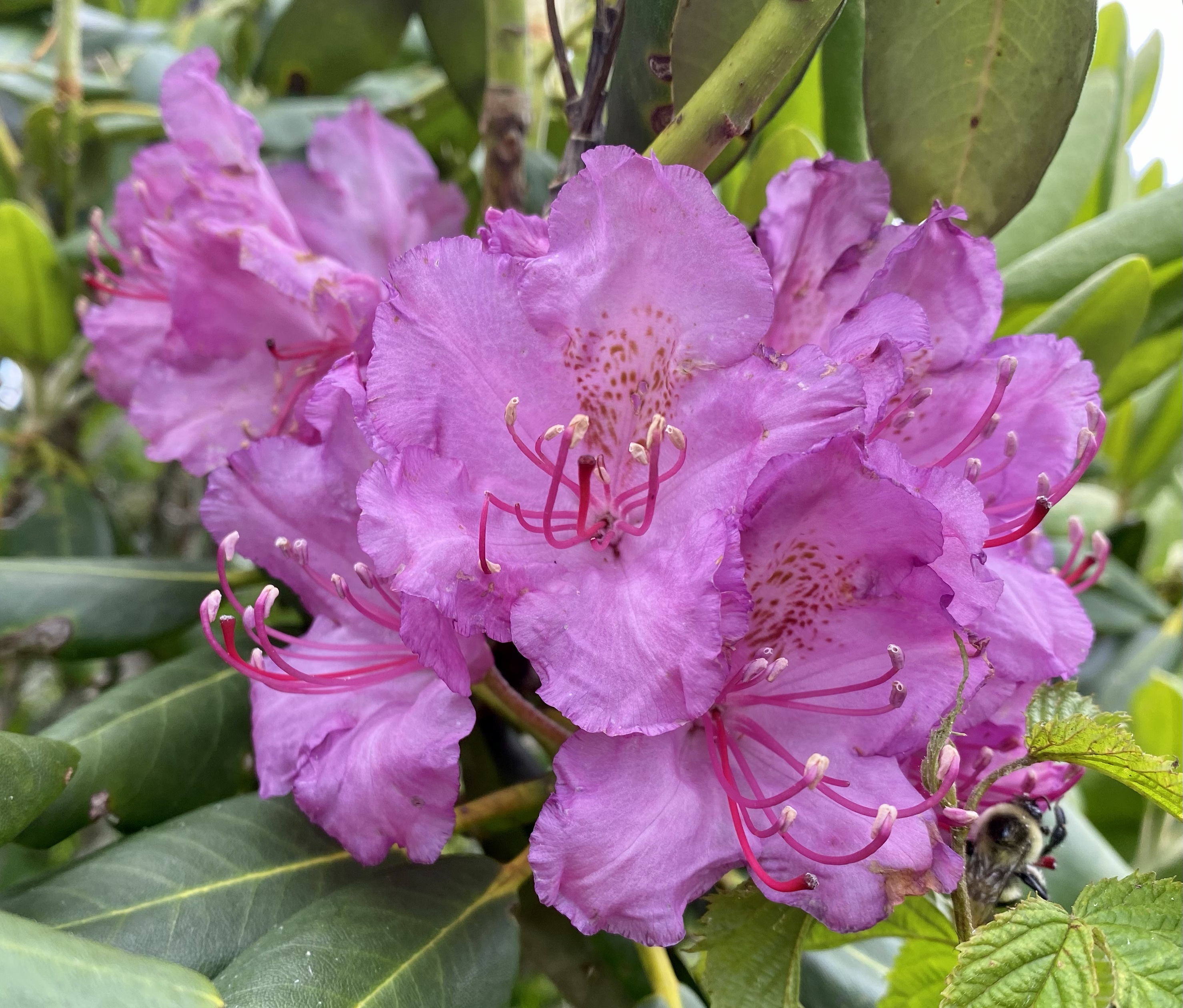
On the way down from the bald, at the base of the flat, was a rhododendron upon whose backside (the back of the official Craggy Gardens Trail) was covered in purple Catawba rhododendron blooms!  I trotted back up the off-the-beaten-path to the top bald where the two sisters were admiring the flame azalea. I recalled they were looking for Catawba blossoms to photograph, and I wanted them to know about the hidden purple gems I had just found.  Excitedly, I led them down the hill while they readied their cameras; then I headed back to a shelter area where John was resting.

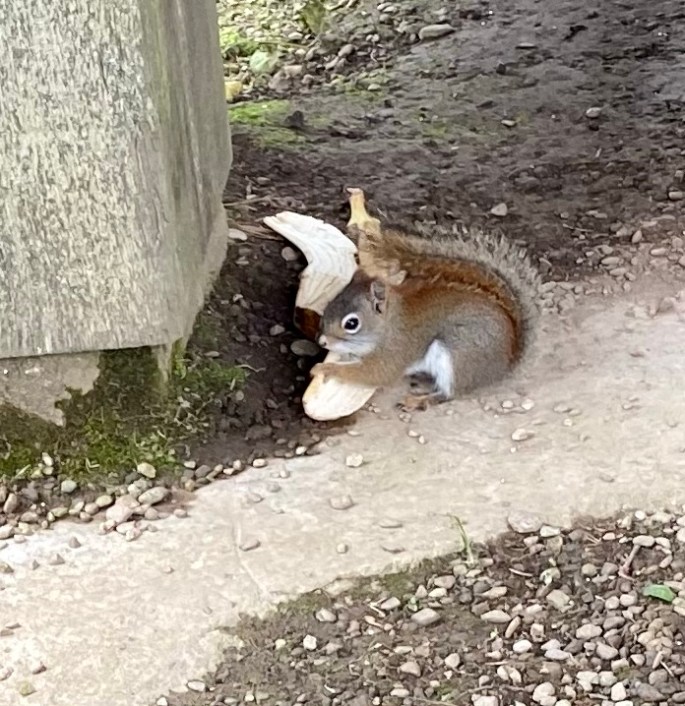
It seemed that while I was helping the sisters find rhododendron, John had made an acquaintance with a hungry squirrel that had discovered an abandoned banana peel.  It was quite the scene as John attempted to move in closer with his camera to video the squirrel. Meanwhile, the squirrel entertained John with its acrobatic attempts to eat the inside of the peel. It was certainly an “appealing” sight!

After the squirrely entertainment, John and I meandered down the hill to a gazebo overlooking the mountainside.  If we had chosen to continue further downhill, we would have traveled into the official Craggy Garden Picnic Area, but since we still wanted to visit Mount Mitchell, a bit further down the BRP, we chose to retrace our steps back to the visitor center.

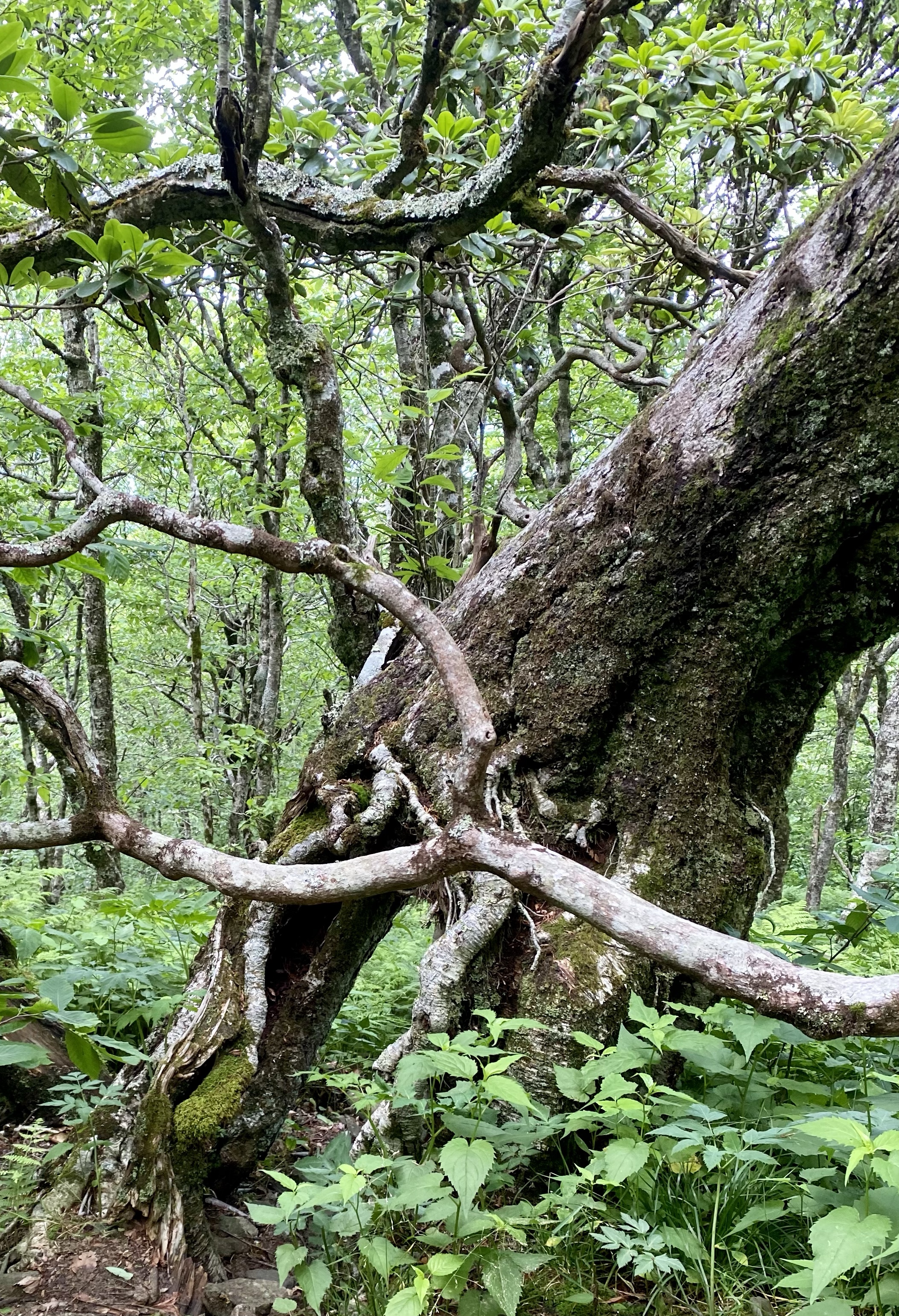
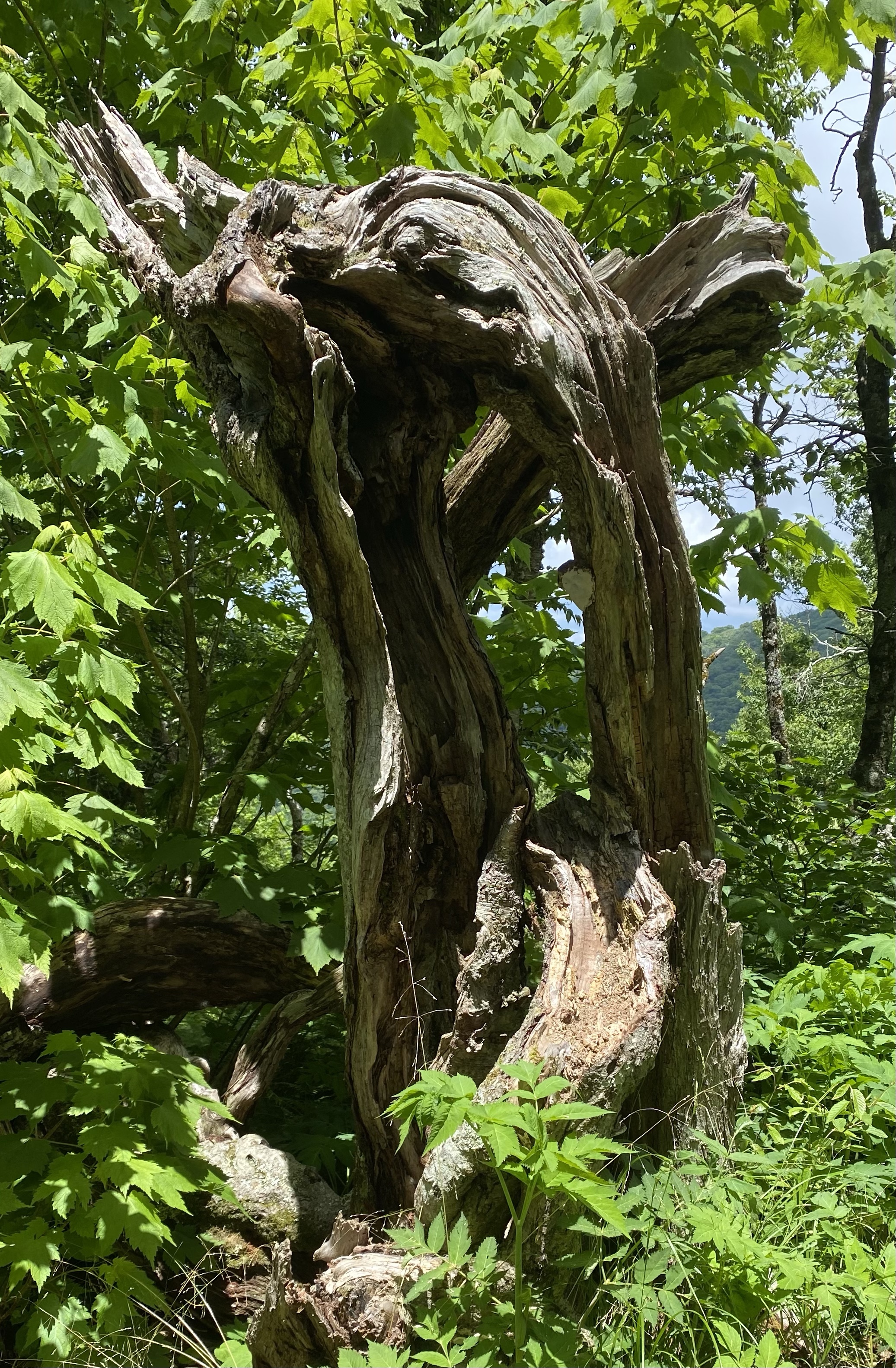
Walking back allowed me to more thoughtfully take in the gnarled trees and shrubs with roots winding over, around, and sometimes even through the rocky and rugged terrain.  Several roots appeared to have a large hole at the base of their trunks, and they still seemed to support life.  In fact, it was a marvel that any life at all could be supported in such a craggy area.

It further occurred to me that most lives–at some point in time–become rocky, rough, and even craggy, like several of my past students’ lives.  The miracle is that no matter how broken and stony life becomes for any of us, we have the ability to survive. Like the Craggy Mountain plants whose limbs twist this way and that to find the sunlight while their roots lengthen and stretch to find nourishment and water, we too, through faith and perseverance, can find ways to stretch, grow, and resiliently root into sources of life-sustaining nourishment.  Even if our roots develop a hole of loss, we can still rise up like the trees, shrubs, and other plant life of the Great Craggy Mountains.

Mount Mitchell and the Blue Ridge Parkway: An Inspiration to Soar High

“Mountains know secrets we need to learn. That it might take time, it might be hard, but if you just hold on long enough, you will find strength to rise up”–Tyler Knott 

As a kid, my dad loved to take the family out for a Sunday afternoon drive.  With no real destination in mind, it was a great, inexpensive way to calm rambunctious children. Put us in a warm car (This was the pre-air-conditioning days.) with the windows down, and the bright sun shining, we were all sure to be lulled into sleep–or at the very least tricked into quietude because there’s no sense trying to talk with open windows. 

I couldn’t help but think of those Sunday drives as John, my husband, and I made our way onto the Blue Ridge Parkway while staying in Black Mountain, NC.  Leaving town, we traveled west to Asheville in order to access the BRP. Moon roof opened and windows partially lowered, John and I relished the refreshing mountain air.  The higher in elevation we traveled, however, the higher our windows lifted as the air temperature decreased. Regardless of the temperature, we never tired of the breathtaking vistas along this ribbon of roadway.  It is no wonder that the BRP is often known as America’s Favorite Scenic Drive.

When traveling the BRP it was important to note that there were no gas stations along the way; however, there were plenty of places to hop off the parkway and travel into nearby towns to fill up.  The speed limit was 45 miles per hour, but steep curves and bicyclists slowed down speeds even more.  That was okay with John and me as we enjoyed our leisurely drive.  Furthermore, we couldn’t help but notice, in addition to a plethora of bicyclists, there were large numbers of motorcyclists taking advantage of the challenging, but spectacular winding stretch of road.  There were no tolls on this route, and nearly all of the stops along the way were free with plenty of places to picnic, take social media-worthy photos, hike/walk, or simply rest, relax, and take in the majestic scenery.  With mile markers and signage along the parkway, attractions and overlooks were easy to locate and identify. In fact, according to several sources, since being fully completed in 1987, the BRP has become the most visited National Park Service sites. 

With only a couple of days to explore the BRP due to torrential rains at the beginning of our stay, it was hard to decide which sites to visit.  Therefore, before heading to the BRP, I asked several Black Mountains residents for their favorite spots to visit and/or hike.  Mount Mitchell was a clear favorite.  Located about 35 miles north of Asheville at milepost 355.4, we could drive almost to the top of the highest mountain east of the Mississippi.  While driving to the “apex of the Appalachian Mountains,” John and I listened to the Mount Mitchell AM radio station with its delightful, homespun monologue that managed to be both entertaining and chock full of information. 

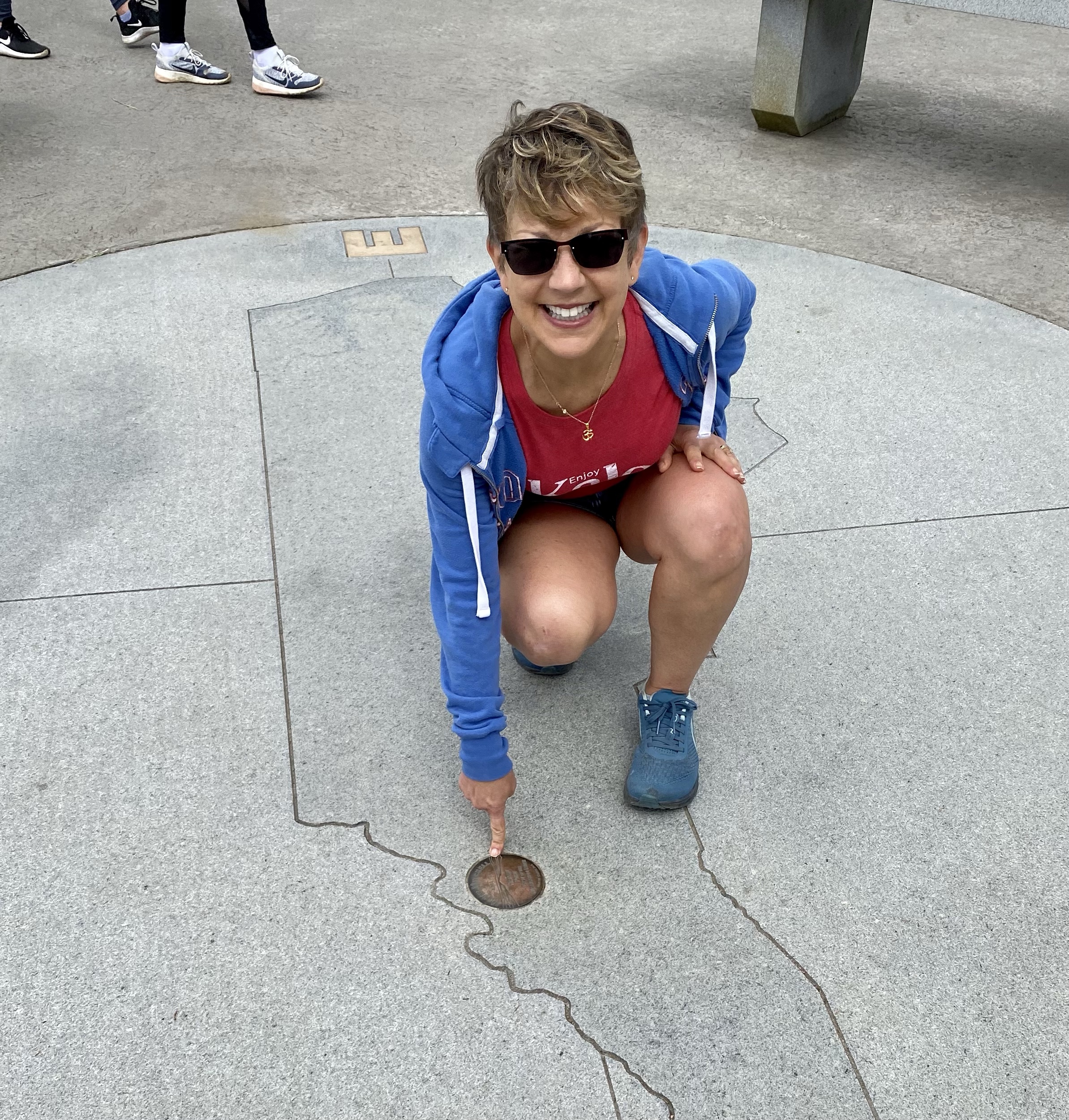
This marker shows the precise highest point east of the Mississippi.

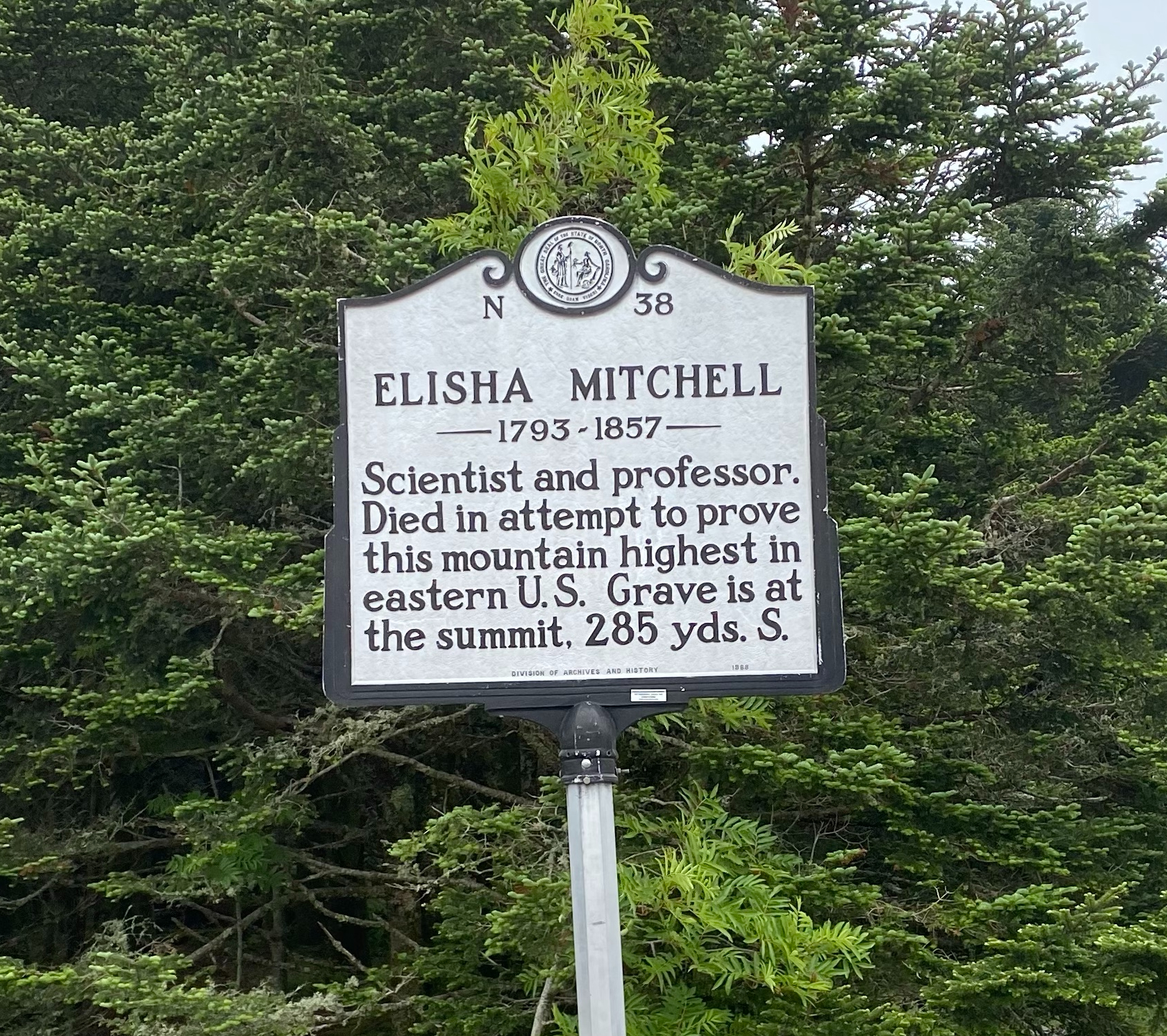
Of interest, Mount Mitchell is one peak located in the J-shaped Black Mountains which are considered part of the Blue Ridge Province of the Southern Appalachian.  It was once known by the Cherokee as Attakulla, which means “leaning wood” or “wood leaning up,” and was later named Black Dome by white settlers. However, the name officially changed in 1858 to commemorate Dr. Elisha Mitchell, a geologist, educator, Presbyterian minister, and beloved professor at the University of North Carolina, who passionately pursued his belief that Mount Mitchell was the highest peak in the Appalachian Mountains.

Dr. Mitchell’s story is epic and full of intrigue.  In fact, I could write pages on his story alone, but I’ll keep to simple facts.  Using barometric readings, mathematical formulas, as well as repeatedly journeying all over the mountainous terrain, Mitchell labored for years to prove his hypothesis. Sadly, in his zealous pursuit, Mitchell slipped and fell 60 feet into a pool at the bottom of what is now known as Mitchell Falls, ultimately hitting his head.  It is believed he died instantly.  Mitchell’s trail was doggedly tracked and his body found days later by well known mountain guide and storyteller, “Big Tom” Wilson, who had guided Mitchell on previous expeditions.

Without any of the modern technological advances, Mitchell’s work estimated the summit to be 6,672 feet. While scientists now know that Mount Mitchell is actually 6,684 feet high–Mitchell died not knowing how close his calculations were. His body is buried near the summit of his cherished Mount Mitchell to honor the magnitude and devotion of his work to this mountain.

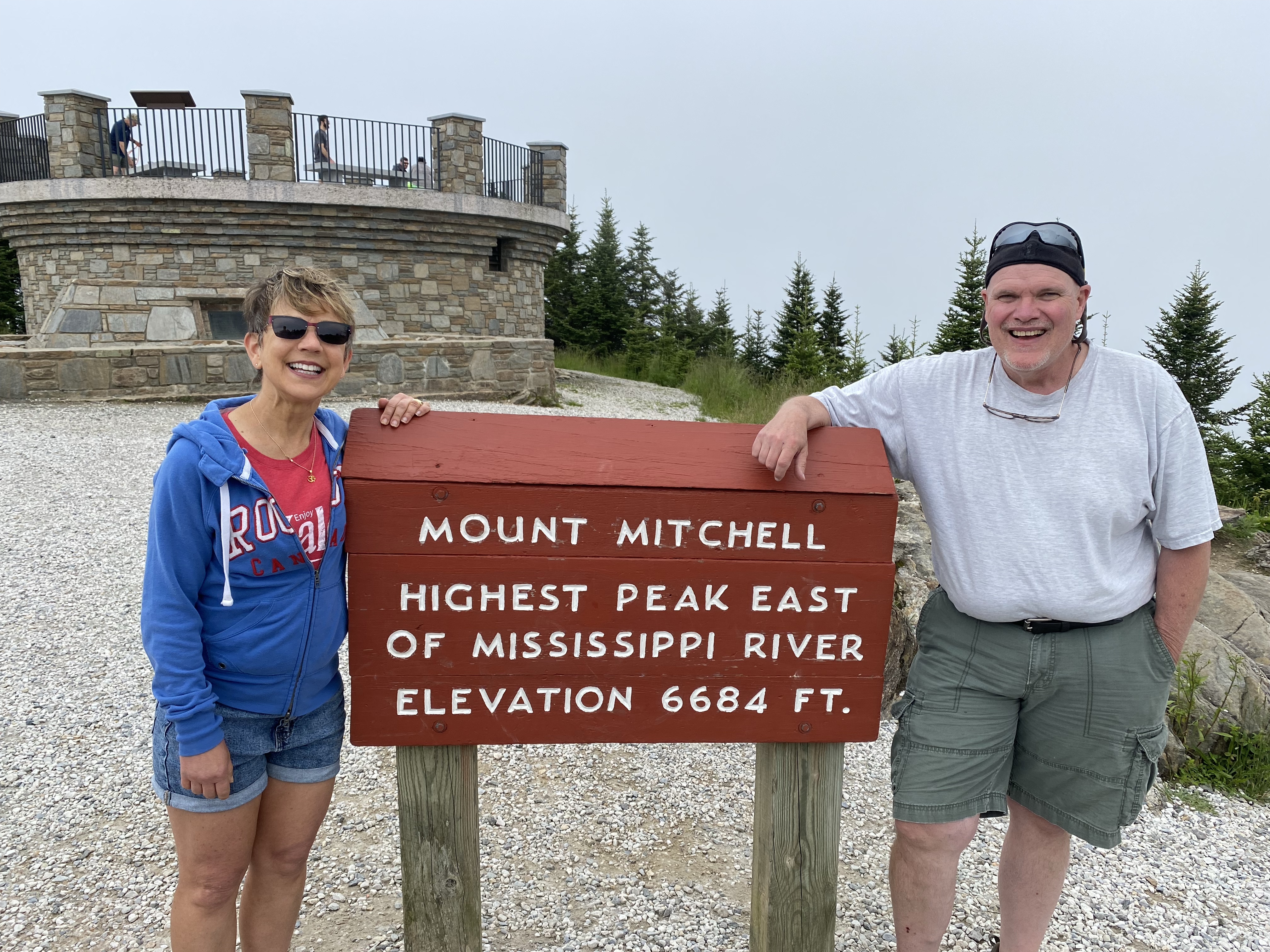
The observation deck and Dr. Elisha Mitchell’s burial site are located directly behind John and me in this picture.
Dr. Elisha Mitchell’s burial plaque. It is interesting to note that this marker refers to Mitchell first as “Reverend,” an indication of faith’s priority in his life.

From the parking lot, John and I made the short ¼ to ½ mile steep hike along the paved path to the observation deck at the summit with its 360 degree view.  Initially, our panorama was blurred due to ongoing cloud cover traveling over the multitude of mountain peaks.  However, when the sunlight finally broke through the mist, the views were heart-quickening. According to information read in the museum, we were viewing mountain tops as far as 85 miles away! 

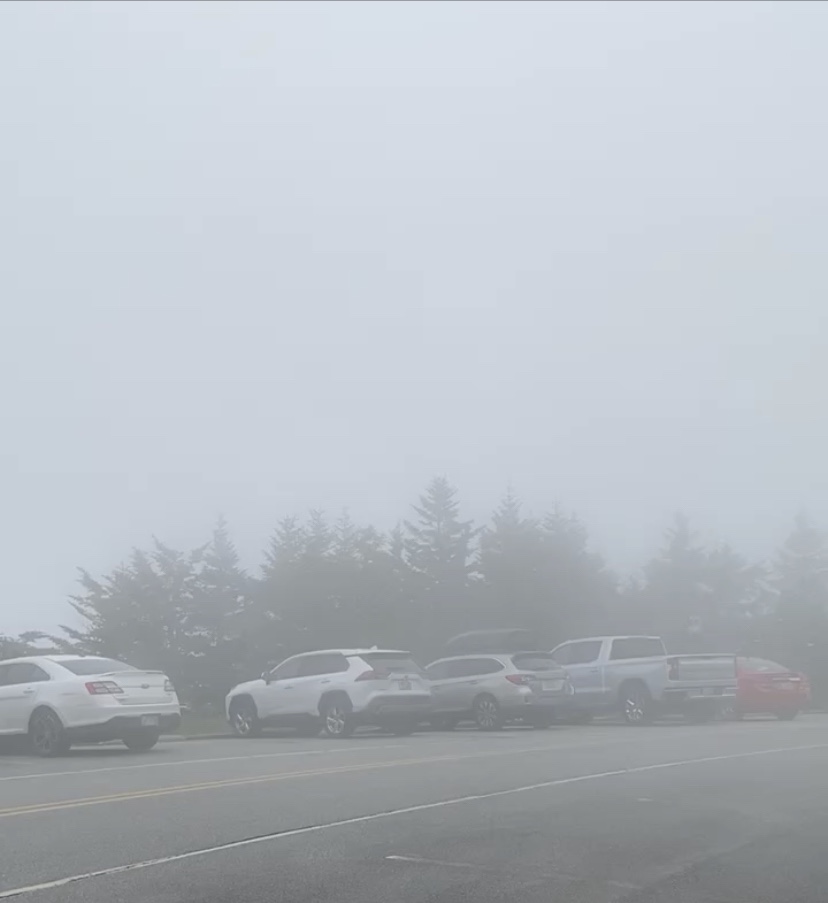
The cloud cover in parking lot when we first arrived at Mount Mitchell around 3:00 PM
Video of the cloud cover of parkinng lot.
Watching the clouds clear, allowing us to see mountain peaks 85 miles away.

No matter how tall the mountain is, it cannot block the sun. Tenacity and adversity are old foes.–Chinese Proverb

I felt as if I was floating on an island in the sky with the sun warming my skin. (It was around 50 degrees at the top, and it is worth noting that the top portion of Mitchell has a climate more similar to Canada than NC with many of its plants and animals reflective of northern Alpine country.) I couldn’t help but marvel at the wondrous carvings of mountain tops–at least that is how the layer upon layer of mountain peaks appeared to me.  In that moment, I sensed the greatness of our Creator, the awe of those old mountains, and felt gratitude for having the ability to be right there in that moment. It was one of those times that I placed my hand on my heart without thinking about it.  Then, realizing what I had done, I quickly moved my hand away–face feeling hot with embarrassment.

“We are now in the mountains, and they are in us, kindling enthusiasm, making every nerve quiver, filling every pore and cell of us.”–John Muir

Sauntering back down the path, only a few feet from the top, John and I took time to pause at the gravesite of Dr. Mitchell.  Reflecting over what I had learned about Mitchell’s life, it occurred to me that he was quite literally committed to maintaining higher ground with his fervent faith and understanding of science.  Even though this caused a rift between Dr. Mitchell and his former student, it did not deter Mitchell from his drive to uphold what the data substantiated and what he believed in his heart to be true.

In the early 1900s, the logging industry nearly decimated Mount Mitchell, raising concern across the state, including those of North Carolina governor, Locke Craig.  This led to the declaration of Mount Mitchill becoming North Carolina’s first state park in 1915.  Present day, Mount Mitchell State Park offers visitors seven hiking trails of varying lengths and challenge levels, a visitor’s center, museum, gift shop, and restaurant–although the restaurant is actually closed for remodeling until 2022. 

With more than 91 species of birds identified, an abundance of balsam firs–fragrant with the scent of Christmas–fresh blueberries, blackberries, and raspberries for visitor picking in August, an extensive number of rare plants and animals, and a number of dramatic historical stories attached to the mountain, I could not help but marvel at Mount Mitchell’s beauty and rich history. The story of Dr. Mitchell’s integrity, perseverance, and determination–along with the unparalleled mountain top views were/are a source of wonder, inspiration, and awe.  A visit to Mount Mitchell definitely leaves you feeling closer to the Divine and filled with a sense of the Creator’s peace.  

“Climb the mountains and get their good tidings. Nature’s peace will flow into you as sunshine flows into trees.”–John Muir

As seen on Instagram @ positiveenergyalways