Nutritious Maple Walnut Salad Inspired by Alzheimer’s Study | Health Recipe

“I am cautiously optimistic and very encouraged by these findings, which may give many people new hope and new choices,” Dr. Dean Ornish

highly anticipated study 📈
Photo by Greta Hoffman on Pexels.com

I recently returned from a trip to Ontario, Canada. While I was there, a major study, led by Dr. Dean Ornish, was released in BioMed Central’s Alzheimer’s Research and Therapy. This highly anticipated research was widely promoted across various news outlets weeks earlier. Despite the fact I had read the earlier press releases, reading the report, one peaceful early morning in a rustic cabin along the shores of backwoods lake, provided greater understanding.

As I have previously written, Alzheimer’s disease (AD) and dementia are part of the genetic make-up on both sides of my family history.  Watching it take the minds of my beloved grandparents was heartbreaking. Ultimately, they required extensive care in large part due to AD, the burden of which fell upon their children. Therefore, I want to do all that is possible to avoid placing that type of burden upon my loved ones.

Ornish’s study is the first controlled clinical trial to demonstrate that lifestyle habits can delay the onset and progression of mild cognitive impairment (MCI) or early dementia due to AD. The study initially enrolled 51 patients and their designated partners, aged 45-90, for 20 weeks, but two withdrew. Nonetheless, the study guided the remaining 49 patients through a series of interventions, including a plant-based diet; walking 30 minutes per day; strength training three days a week; stress management including yoga, breathing exercises, and meditation, to name a few; group support via Zoom meetings, and specific supplementation, all of which is clearly spelled out. 

Excitement Incitement 💡

The excitement of this study got my recipe-creating gears grinding, especially as a major heat wave sank its talons in a large swath of the U.S. and Canada, including where I was staying with my husband. With the extreme heat we were experiencing, the last thing I wanted to do was turn on the cabin’s stove or oven, especially since there was no air conditioning. Therefore, throughout our stay, I created several dinners of seriously large salads, adding additional inspiration for this month’s recipe.  

Of further influence was the wide availability of Canadian maple syrup.  In fact, I encountered a representative of White Meadows Farms, out of St. Catherine, Ontario.  This family-owned farm, established in 1937, has been harvesting sap to make maple syrup for over three generations. After one sample, my taste buds were “stuck” on the flavor of their dark syrup. I knew I had to put their syrup to good use as part of this recipe creation. After all, sweet moderation is an important part of good health.

Nuts for health 🌰
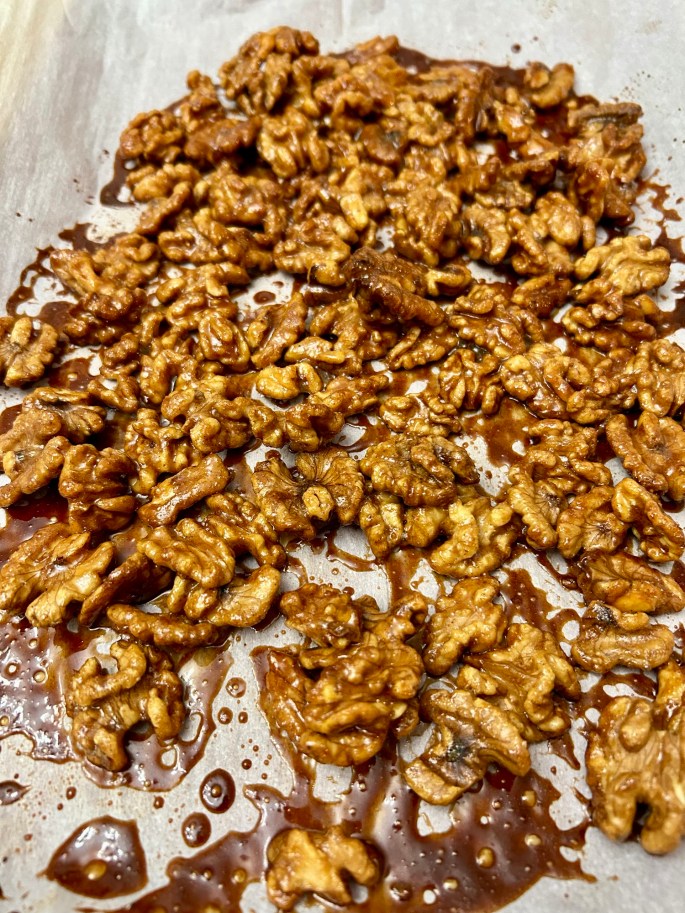
Another point of inspiration for this recipe was the wide availability of bulk walnuts at the local market near our camp. Nut and seeds are a healthy part of the Ornish diet. In fact, according to the Cleveland Clinic, walnuts provide a good source of omega-3 fats and antioxidants for heart health, benefit gut health due to their high fiber content, help stave off inflammation, and may reduce risks for certain cancers.  Additionally, those healthy fats and antioxidants may boost brain health–perhaps that is why walnuts are shaped like a brain!

A rainbow recipe of pride 🏳️‍🌈

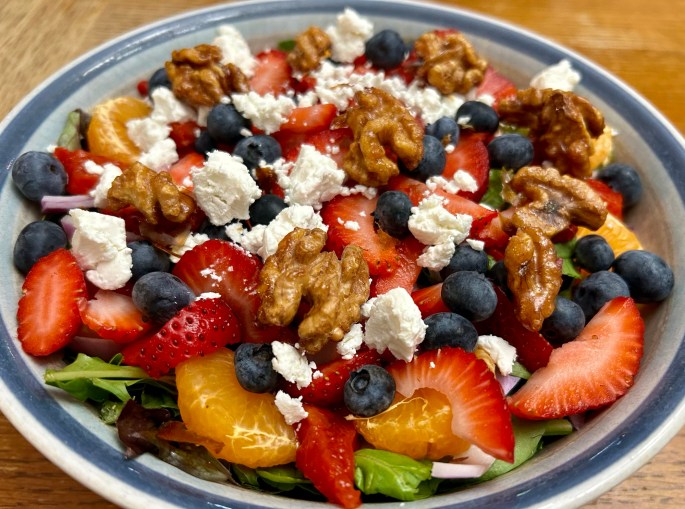
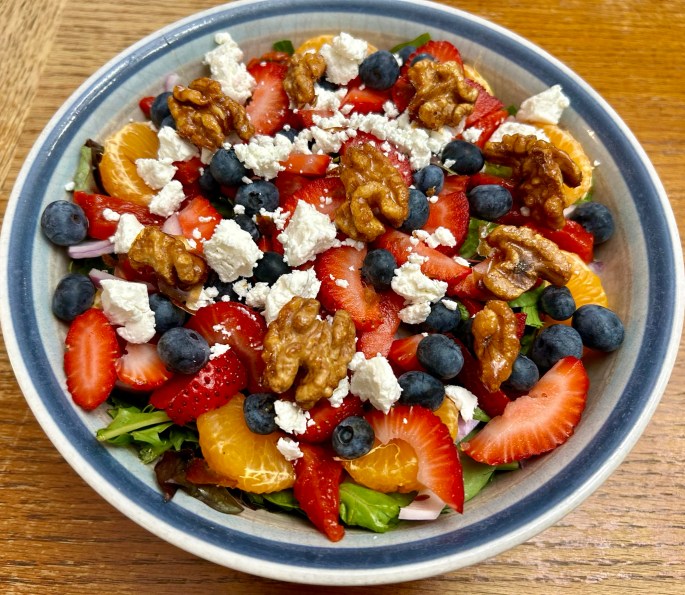
One final source of inspiration for this recipe was the fact that it was created during June, the month of Pride, dedicated to celebrating my friends and loved ones in the LGBTQ+ community, including my brother and two nieces.  It is with great, well, “pride” and celebration that this recipe will debut on June 28, International LGBTQ+ Day.  This gorgeous salad offers a RAINBOW of tasty colors and textures designed to nourish EVERY body.

From my home to yours, I wish you health, happiness, and hope for an optimistic future free from dementia and Alzheimer’s disease!
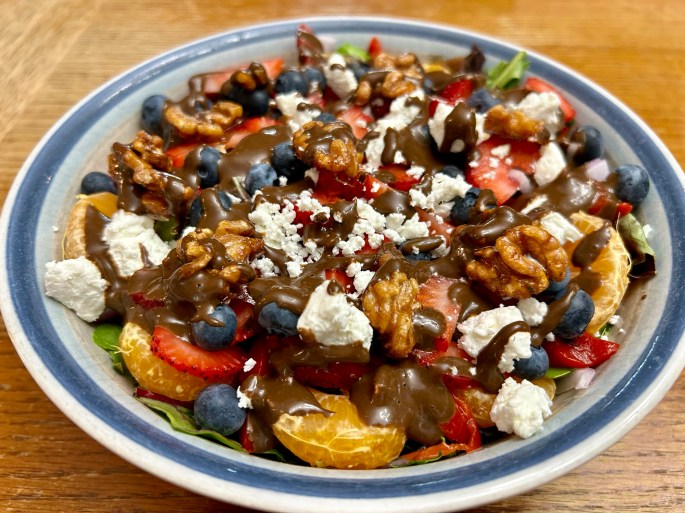
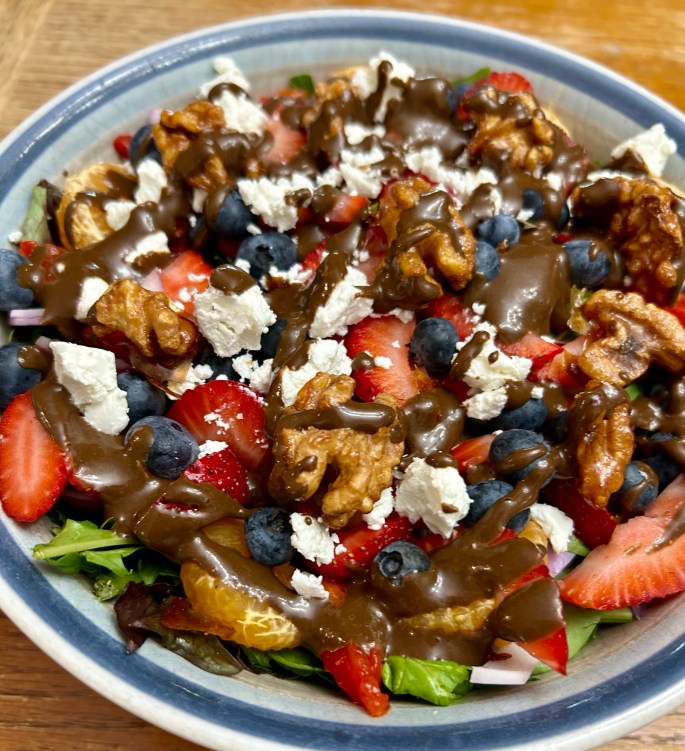
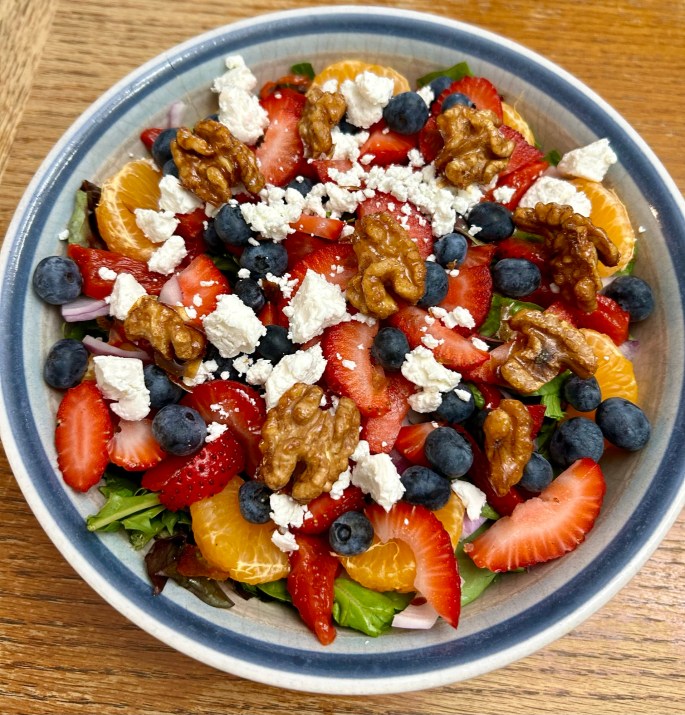
Rainbow salad with maple walnuts and vinaigrette, gluten-free with vegan options

Maple walnuts ingredients:

2 cups walnuts

⅓ cup pure maple syrup

½ to 1 teaspoon vanilla 

¼ to ½ teaspoon cinnamon 

⅛  teaspoon sea salt

Salad ingredients:

5 or more ounces of favorite baby greens

1 cup sliced strawberries

¾ cup blueberries

2-3 clementines, sectioned

½ sliced large red onion

½ cup roasted red peppers and/or shredded carrots

2-4 ounces goat, or equivalent vegan, cheese or 1 cup beans, drained and rinsed

Maple walnut balsamic vinaigrette ingredients:

¼ cup walnuts

½ cup water

¼ cup balsamic vinegar

2 tablespoons maple syrup

1 tablespoons dijon mustard

½ teaspoon dried onion powder

½ teaspoon dried oregano

⅛ teaspoon salt

Pepper to taste

Maple walnut directions:

Preheat oven to 350 degrees

Line baking pan with parchment paper or lightly grease and set aside

Place maple syrup in a small, microwave safe bowl.

Heat syrup for 30-60 seconds

Stir in vanilla, cinnamon, and sea salt until thoroughly mixed

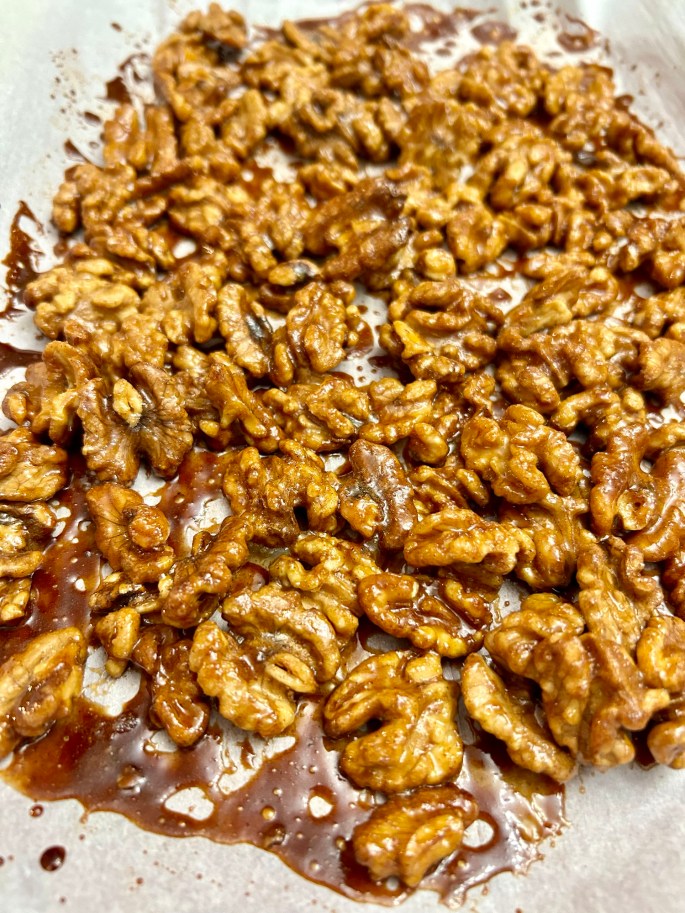
Pour syrup mixture over walnuts, and stir until well coated

Spread coated walnuts onto prepared baking sheet

Bake 5-7 minutes, then stir and rotate 

Continue baking for 3-5 minutes or until walnuts are golden brown

Remove walnuts from oven and allow to cool on baking sheet 

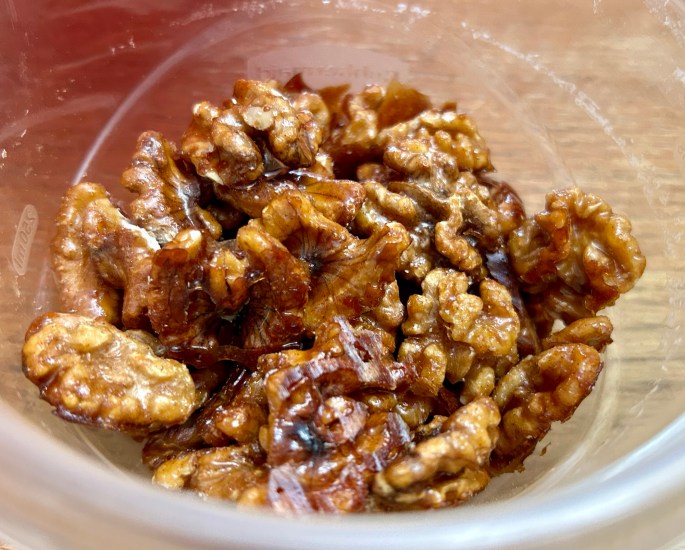
Break walnuts apart and store in airtight container or baggie for up to 3-4 for weeks

Enjoy these maple walnuts as a snack or sprinkle over salads, fruit bowls, oatmeal, yogurt parfaits, ice cream sundaes, etc 

Maple walnut balsamic vinaigrette directions:

Place all ingredients in high powered blender and blend until smooth, approximately 45 seconds

Pour into glass container (I like to use canning jar)

Store in refrigerator for up to 4 weeks

Makes approximately 1 cup dressing

To assemble salad:

Add greens to large salad bowl

Add sliced strawberries, blueberries, clementines, sliced red onion, sliced red pepper, and/or shredded carrots, if using.

Toss with desired amount of dressing, divide among plates/bowls and top with goat or vegan cheese (or top with beans instead, such as roasted chickpeas)

Serves 2-4
This recipe also took inspiration from the following websites and articles: Better with Cake, The Garden Grazer, Hello Nutritarian, “Effects of intensive lifestyle changes on the progression of mild cognitive impairment or early dementia due to Alzheimer’s disease: a randomized, controlled clinical trial,” an article on BioMed Central,“‘A study to give us hope’: Lifestyle changes improve Alzheimer’s symptoms for some,” an article on CNN, and Shane and Simple.


Simple Steps to Improve Brain Health and Reduce Risk for Alzheimer’s Disease and other forms of Dementia

with Tasty Thai-style Recipe to get you started

“A healthful, whole plant–based diet appears to yield the greatest risk reduction.”The Journal of Alzheimer’s Disease (published December 2023)

Photo by Kindel Media on Pexels.com

The statistics of Dementia 🔢

According to the World Health Organization, over 55 million people globally suffer from some form of dementia, and approximately 10 million new cases are identified each year. Of these cases, 60-70% of them will be identified as having Alzheimer’s Disease.  Additionally, women are most affected by dementia either directly or indirectly as a caregiver.

Family history and genetics are one obvious risk factor for dementia, but there are other contributing factors.  These include: age, head injury, high blood pressure, high cholesterol, cardiovascular disease, diabetes, smoking, social isolation, stress, and excess alcohol intake. As a further consideration, recent research points to the fact that a person’s diet can either increase or decrease risk of developing AD, and this is exciting news, especially on a personal level.

Family History of Dementia 👵🏼 👴🏻

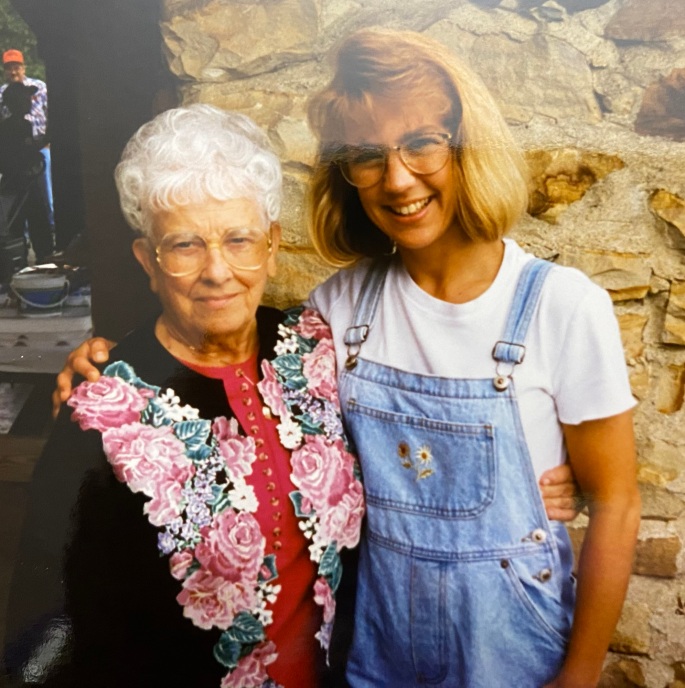
From a family lineage perspective, I am at high risk for developing some form of dementia, including Alzheimer’s Disease (AD).  My maternal grandfather (and his mother) suffered from AD, and my paternal grandmother lived with a form of dementia in her final years. This is of great concern to me for obvious reasons, but especially for my daughter. She is an only child, and I do not wish for my final years to be such a heavy lift for her without the support of siblings.

Therefore, I try to stay up to date on the latest developments for prevention as well as treatments. While there are dozens of promising treatments for AD currently researched around the world, at the time of writing this piece, there is still no known medical treatment to slow or stop the progression of AD.  It is considered fatal.

Dietary Habits can reduce or Increase Risk 🥦🍎🫛🍑

However, The Journal of Alzheimer’s Disease published, in December 2023, a comprehensive review of three decades worth of research that points to evidence that “dietary factors play important roles in the risk of AD.”  This review reveals that the dietary practice of reducing meat consumption, and increasing whole, plant-based food decreases one’s risk for AD.  Specific dietary approaches, such as MIND and DASH, appear to reduce one’s risk for AD  40-50%. However, the greatest reduction risk was found among those who did not include meat in their diet, and instead focused on whole grains, legumes, nuts/seeds, and plenty of fresh fruit and vegetables.

Photo by Centre for Ageing Better on Pexels.com

Lifestyle Habits that Reduce Risk of Dementia 🚶🚶🏽‍♀️

In addition to diet, there are other lifestyle habits that are also believed to reduce one’s risk for AD.  These include:

  • Not smoking
  • Daily physical activity for approximately 30 minutes per day
  • Maintaining a weight that is healthy for you
  • Consistent quality sleep, 7-8 hours worth
  • Social engagement
  • Mental/cognitive engagement
  • Limit alcohol consumption
  • Protection of head and protection from falls
Photo by Caio on Pexels.com

The Joy of a Plant-based Diet🍓🍆🫐🍠

Personally, I adopted a mostly whole food, plant-based diet nearly fifteen years ago for other health reasons. However, if eating this way also reduces my risk for AD, it is further motivation to continue.  

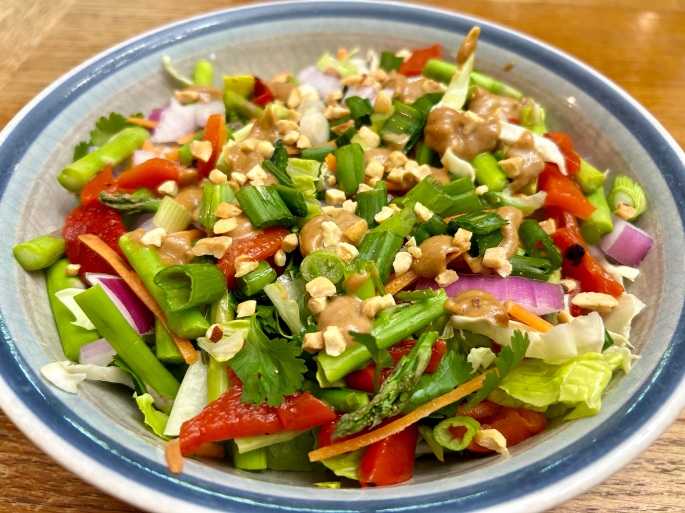
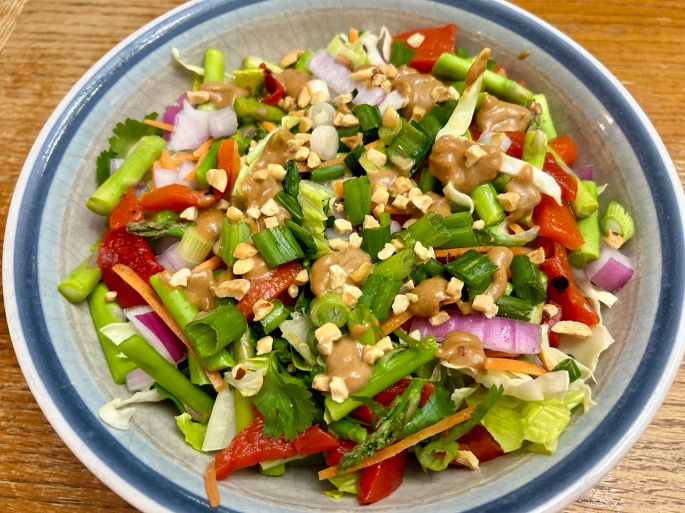
One of my greatest discoveries about a whole food, plant-based diet is that there are so many tasty ways to prepare foods.  I never feel deprived because my meals are full of an abundance of colorful, flavorful, and satiating foods.  A great example is the dip recipe below.  This peanut dressing/dip is beyond good!  It is tasty on salads (as shared here), but it is also wonderful mixed into stir-fry as a sauce, drizzled over a bowl or pasta recipes, and it makes a savory dip worthy for a crudités platter for a holiday cookout or social gathering.

Customizable REcipe🥗

The recipes below can easily be modified to suit personal taste or dietary preferences. For example, the peanut butter can be replaced with almond, cashew, or sunflower seed butter if desired.  The salad ingredients can be adapted too.  Don’t like cabbage?  Use all romaine.  Not a fan of asparagus?  Eliminate it.  Rather use red onion over scallions?  Go for it.

Anyway you prepare them, these recipes can be one tasty way to increase your consumption of healthful, whole, plant-based foods. Even if you are not willing to give up meat, research supports that consuming less meat and more plants will still provide some preventative measures against AD. Who knows? With the power of this type of research, you might even decide to try a few more recipes and incorporate even more plants into your diet! And the more you add, the more your body will benefit!

From my home to yours, here’s to your health, and especially preventing all forms of dementia to the degree possible! 

Recipes inspired by: Three Little Chickpeas, This Healthy Kitchen, and Detoxinista

Peanut Dressing/Dip (Thai style) (gluten free)

Ingredients:

½ cup natural peanut butter 

3 tablespoons tamari, liquid aminos, or soy sauce

2 tablespoons fresh lime juice

2 tablespoons maple syrup, honey, or agave

1 tablespoon rice wine vinegar

½ inch grated fresh ginger OR 1 ½ teaspoon ginger paste OR ¼ teaspoon ground ginger

1 teaspoon garlic powder

1 teaspoon onion powder

¼ teaspoon crushed red pepper or 2 teaspoon sriracha

3-5 tablespoons of water

Directions:

Either whisk together or use blender to blend all ingredients, gradually adding in water until reaching desired thickness, using less water for dip and more water for dressing 

Thai-style Salad (gluten free)

1 heart romaine lettuce, roughly chopped

3 cups slaw mix OR red & green cabbage, roughly chopped

1 red pepper, chopped

3-4 green onions, chopped

½ cup shredded carrots

½ cup fresh cilantro

5-6 stalks asparagus, chopped, optional

½ cup chopped peanuts or cashews, optional

Directions:

In a large bowl, toss together chopped lettuce, cabbage, red pepper, and green onion with shredded carrots.

Heat asparagus in microwave for 30-40 seconds and toss into salad

Drizzle with desired amount of dressing and top with chopped peanuts or cashews, if extra crunch is desired.

Makes 2 large servings or 4 small servings.

Store leftovers dressing in the refrigerator for up to two weeks.