Thrive Through Love: Lessons From Plants

We must cultivate our own garden.”–Voltaire 

Drooping from lack of water, my mosaic plant symbolizes our soul without enough attention, love, and supportive relationships.

As I walked into my classroom after spring break, making my way behind my desk, my mosaic plant greeted me with drooping leaves as if to say, “Where have you been?” 

“You poor thing!” I spoke aloud to it–as if it would reply. “I am so sorry. Let me get you some water.” 

Oh, sure, Dear Reader, roll-your-eyes and act as if you don’t talk to your plants. I have no shame in admitting it. Besides, scientific research has established that talking to your plants can create low-level vibrations that stimulate growth. However, since that is not the thesis of this essay, I won’t wander any further down that path. 

The unwatered mosaic plant had suffered alone in the silence of my classroom for well over a week without water. This particular plant requires frequent watering and rotation. When given this, it responds with perky growth and vivid color. Therefore, it was a sad, sickly sight. 

As I carefully began to water my plant, hanging limply in the pot, it reminded me of the way in which humans also need care and attention. Regular watering of plants supports photosynthesis and the roots ability to absorb nutrients from the soil, both of which foster growth. Likewise, when humans receive adequate hydration and adequate nutrition from a healthy, well-balanced diet, our bodies have a better chance of remaining healthy and vibrant.  

Plants, like humans, thrive best when nurtured from within and without.

Continuing to gently water and mist my wilted mosaic plant–yes, I was talking to it all the while–I was reminded of the ways in which humans can wilt from neglect. Our mind, body, and spirit, like my mosaic plant, need nurturing. Without it, our inner world can wither, and we will limp along with a spiritual heart that has a difficult time beating. 

However, with regular sprinklings of love, affection, and/or supportive relationships, our souls can remain hydrated. From faith-based practices to monthly outings with friends or family, from attention/love of a pet to simple interactions with a store clerk, and from exchanging kind words/texts with a neighbor, co-worker, or organization/club member to actions of self-care/love, there are countless ways in which our souls can be watered and nurtured. Therefore, it is vital that we practice engaging with others, so we won’t wilt from lack of love and support. 

Moving around the room to water my other plants, I realized they would soon need to be repotted with fresh, fertilized soil. Some would need a bigger pot than the container in which they currently dwelled. Fresh, fertilized soil, rich in nutrients, is vital for the health and well-being of my plants. New soil will provide a wide array of ingredients uniquely combined to fortify my plants against disease to help them grow healthy and strong.

Photo by cottonbro studio on Pexels.com

Likewise, in order for us to thrive, we, too, need nourishment from a variety of sources. One way we can thrive is by establishing and maintaining a purpose-filled life. This purpose can change and evolve over time as we age and mature, but it needs to be a purpose that not only compels us out of bed each morning, but fuels our life with meaning. 

Creating and maintaining meaningful connections with others, especially when linked to our purpose, can further enrich our lives deeply. Fortification can also be found by mentoring/helping others as well as surrounding ourselves with positive, supportive influences. These types of relationships can form a reciprocal, two-way street, much like plants form with people, which can facilitate an ongoing source of nourishment in our lives. 

Once all the plants were watered, I began rotating each pot to allow all parts of each plant equal time to face and absorb the warmth of sunlight. Sunshine, like water, is needed for photosynthesis. It is only through the process of photosynthesis that plants can have the food needed for growth. When plants face the challenge of living inside a building, they overcome that challenge by growing toward a window, even if it causes the plant to grow with a lean. 

Photo by Khanh Le on Pexels.com

We, too, need to lean into sunshine. The sunshine of positive experiences can imbue us with warmth and motivate us to keep going. That motivation is especially important when we are faced with challenges, as life is never obstacle-free. However, by facing the unique challenge(s) life tends to throw our way, we can eventually discover the unique joy of overcoming difficult circumstances, or at the very least, grow stronger and more resilient from the effort put into overcoming.  

And when those life-challenges seem endless, as they often do, lasting beyond what we think is possible, it warms and strengthens the soul to find pleasure in the little things. From the sweet embrace of a loved one to the sound of birdsong in the morning, from the taste of a great cup of coffee (or whatever) with a friend to the aroma of fresh cookies baking in the oven, or perhaps reading a new book or playing an instrument–whatever you choose, these small delights can be the rays of sunshine that help get us through those dark days of difficulty. 

The object lesson provided by my mosaic plant reminded me that no living thing– humans included–benefits from neglect. When we lose sight of love, meaningful connections, purpose, and positive experiences, we will internally wither, which can manifest itself as physical ailments and/or mental health issues. Without proper care and nurturing, we can grow disheartened, disinterested, and even emotionally distressed or traumatized. 

Photo by Tristan Le on Pexels.com

However, we all have the potential to thrive. Let us strive to offer love and understanding to others and to ourselves. When we see someone hurting, let us find ways to lift them up. 

Likewise, when we recognize our own heart is hurting, let us tend to our own needs through acts of self-compassion, reaching out to others, or seeking other positive means to act as rays of sunshine to lift our spirits. Our time on this earth is short, let us seek productive methods to nourish and enrich others as well as our own lives, so that our life garden can blossom and flourish, no matter where we are planted.

Seasonal Growth

“Every season is one of becoming, but not always one of blooming. Be gracious with your ever-evolving self.”— B. Oakman

This past May, John, my husband, and I were given nine tomato seedlings that our neighbor, Dianna, had started.  John purchased special potting soil, and I carefully planted those seedlings into large gardening containers.  They were my pet project this summer as I tended to them like a mother tends to a baby.  From suckering them to fertilizing them at specific points in the summer to monitoring the moisture in the soil to determine if I should water or not, I tried to be the best plant parent I could be. However, I knew that in spite of my best efforts, Mother Nature had more control than me.

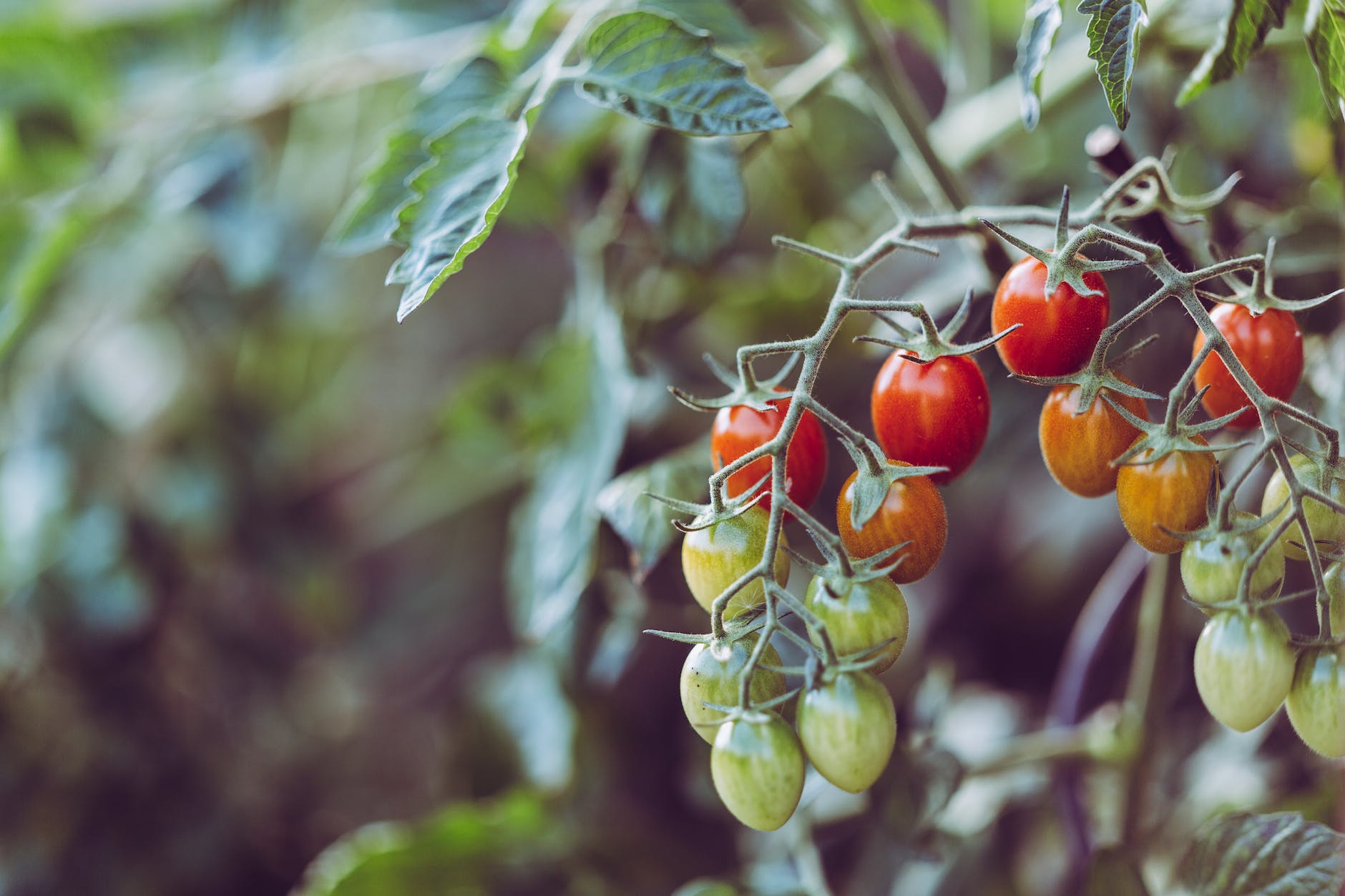
Nonetheless, John and I ooed and awed over the plants’ first golden blooms.  We gleefully counted the tiny green orbs that first formed in place of the blossoms, and we celebrated as they grew bigger, and more petite tomatoes began to emerge.  As their color gradually transformed from chartreuse to a yellow-orange, and then gently evolved from an orange-red to scarlett, our anticipation mounted for a plentiful harvest, to the degree nine-plants could produce. 

Photo by Markus Spiske on Pexels.com

By the first week of August, we had a bounty of tomatoes.  None of them were particularly large, but they were bursting with flavor–the perfect tangy blend of sweet, tart, and acid.  With our first pickings, I cut-up fresh cucumber and tomato to add to shawarma-spiced chickpeas for me, and made bacon, lettuce, and tomato sandwiches on homemade bread for John.  Throughout the week, there were salad plates topped with aromatic, zesty tomatoes alongside dinner, and veggie sticks and tomatoes in bowls for packed lunch.  Oh, the ways we can, and do, enjoy tomatoes!

Last weekend, I was out picking more tomatoes, and I reflected on a conversation with my dad the previous week.  He lives in Melbourne, FL, about an hour or so, east of Orlando.  He and my bonus mom, Pam, have a fenced-in backyard that they have transformed into a tropical paradise.  Vibrantly filled with plants that would never grow here locally, thrive in their backyard as they continue to learn more about the growing seasons of Florida.

In that recent phone conversation, Dad and I discussed the plants they were currently trying to grow, and the ones they would soon plant, once the temperatures cooled and moderated.  One plant he was eagerly anticipating growing were tomatoes.  He explained his plan to plant a couple of seedlings, then several weeks later, plant a couple more, then he’d plant another a few about a month after that, and so on.  Apparently, unlike here, fall is the perfect time to plant tomatoes, and throughout the winter months, he gets to reap the harvest.

Therefore, when I shared with him how well my tomato plants were producing, he bemoaned the fact he could not yet have a fresh garden tomato, but of course, encouraged John and me to enjoy our season while we could.  Nonetheless, he was looking forward to the season when he, too, could enjoy a fresh slicer tomato on a sandwich or chopped up in a salad.  We talked some more about his different growing season, and the types of tomatoes he planned to try to grow this upcoming year before moving on to other topics at hand.

Photo by Polina Tankilevitch on Pexels.com

As I reflected on this conversation while picking tomatoes, with each snip of my pruning shears, I was simultaneously filled with gratitude for each tender fruit, but I was also feeling a bit of sadness for the fact that I could not share these with Dad.  Then, I reminded myself that he would be enjoying tomatoes, most likely in December, January, and February when our area will be chilling to rain, sleet, ice, and snow with not a single fresh tomato in sight.  That’s when it hit me.

In the same way I can gather tomatoes in August and September, but Dad cannot until the winter months, we all have different growing seasons in life.  I began to think about all the ways in which we, as part of our humanity, often compare our current position in life with that of others in similar circumstances, age-range, or whatnot, and feel as if our situation/status falls short in comparison.  Personally, I often think of dreams and hopes I still hold for the future, but due to life, many of those notions must be put on-hold for the time-being.  However, the more I snipped tomatoes, the more I began to realize that perhaps instead of comparing, and thinking about where/what I think I should be doing, maybe I would be better benefitted to switch my focus to cultivating and nurturing those seeds of hope, and recognize that it’s not their growing season . . .yet.

Photo by Binyamin Mellish on Pexels.com

“Be aware of what season you are in and give yourself the grace to be there.”--Kristen Dalton

Just as it is the growing season for me in southern Ohio, but not for my Dad in central Florida, the same is true for life.  Our lives are filled with seasons too.  There are times when we must let go of notions and things that no longer serve us, like the trees do in fall, and the winds change the color of our lives with a flourish.  Other times, our lives are filled with great spaces of dormancy as harsh and bitter winds send us into a blanket of darkness.  Then, there are those moments in which we experience blooms of hope, sometimes even in the midst of a rainy season.  That is when the magic can occur.

Through our letting gos and goodbyes, through those dark and latent times, and even through downpours of sorrows and grief, there remain within each of us, planted seeds of possibility and potentiality.  Those seeds have their own growing seasons, but each person has different seasons and different times for harvesting.  It is our job to be aware of our season, cultivate our inner seeds, and trust that when the time is right, new growth will occur.

As it is wisely stated in the book of Ecclesiastes, “There is a time for everything, and a season for every activity under the heavens . . . .He has made everything beautiful in its time.” Therefore, we must put our faith in our Creator, and rest in knowing that our hopes and dreams are indeed being cultivated by a force greater than us; and when the season is right, our season for growth, and ultimately harvest, will one day come into fruition.

Photo by Pixabay on Pexels.com

Plants roots us in the present moment

Biophilia: Love of living things and nature that human beings innately possess”–hypothesis of Edwin O. Wilson 

Photo by Markus Spiske on Pexels.com

This summer, I have relished time spent caring for both my indoor and outdoor plants.  While I don’t have many compared to other gardeners and indoor horticulturists, I find that I don’t need a larger number to reap the benefits of caring for plants. In fact, I continue to be surprised by the numerous ways in which nurturing plants increases my sense of well-being, and my recent research dive supports this, and so much more, too.

First, the back story.  I have always been drawn to plants and nature.  As a young girl, I drove my mother nuts stealing popcorn kernels from the kitchen, filling paper cups with yard soil, and planting those kernels in those soil-filled cups.  I’d set them in my bedroom window sill, water them when they were dry, and watch them grow.  The part that really got to my mom was when I fancied myself a scientist, and I began conducting my own “experiments” by placing those corn filled paper cups in different windows, and even in a bathroom without a window, to see which plant grew best, making notations in a self-made booklet. 

Photo by Eva Bronzini on Pexels.com

Additionally, my dad was wonderful for taking my sibs and me for walks in the woods behind our house. While walking, he would point out the different trees, identify the various nuts, and pause for us to take in the marvels of mushrooms, tiny flowers, ferns, or other low-lying plants of interest that as kids, we might not have otherwise noticed.  In addition to all of the wondrous sights, there was an abundance of scents, sounds, and even fanciful touches to fill our young minds with wonder–only I am not so sure that we always felt that way when coming in contact with brier bush! Nonetheless, both of these childhood experiences never left my heart.

Fortunately, I married someone who loves the outdoor space as much as I do, and thus our travels typically include some form of nature exploration.  However, my relationship with growing my own plants did not get rekindled until the past several years.  Oh, to be certain, I tried caring for and raising plants in fits and starts, but my attempts most often ended in the Death Comes to the Plant written in tandem with complete lack of proper care and yours truly.

Photo by Jacob Colvin on Pexels.com

“Your intuitive powers increase when you are with plants because your mind is silenced and you become more aware of the present moment.”–Sanchita Pandey

I should firmly state, before I go any further, that I have MUCH more to learn when it comes to plant care, and I still have my fair share of murderous flops.  However, that is the wonderful thing about caring for the few plants I have successfully not assassinated, I am growing right along with them. One thing I do know for sure is that when I am fully focused on plant care, my mind is firmly glued in the present moment, and all other worries and stresses of my life fade, momentarily, from my awareness.  

Nurturing plants can reduce stress and anxiety. In fact, researchers in the UK concluded that working plants, whether indoors or out-of-doors, depending upon the patients’ setting, increased feelings of well-being among those with anxiety, depression, and even dementia.  In fact, in one town in England, Manchester, there are general practitioners so-called prescribing potted plant care for patients who are experiencing depression, anxiety, and loneliness.  Programs such as those known as “horticultural therapy” and “Docs prescribing plants” were only just the tip of the iceberg in my research

Photo by Michelle Leman on Pexels.com

Along the same stem, plants have also been shown to expedite patient recovery from long-term illness in the hospital as seen in studies dating back to at least 2002.  Patients with scenic views of nature or those who have plants and/or flowers within their surroundings, needed less pain medication and/or spent less time in the hospital than those patients who did not have these botanically natural sights. 

Additionally, NASA scientists, way back in the 1980s, determined that low-light houseplants demonstrated the ability to improve indoor air quality by reducing the amount of indoor pollutants and toxic substances. NASA even offers a complete list of approved plants. Studies on this topic have since been conducted at both Virginia Tech and Washington State University have further established that house plants are efficient air cleaners and that even having as little as 2% of the room filled with plants will create an impact on air quality. 

Photo by cottonbro on Pexels.com

Not only do houseplants clean the air, they moisturize it as well.  This is important during the winter season and in arid environments that tend to have little moisture in the air.  The vapor plants regularly release can be beneficial for those who regularly suffer from dry nasal passages especially. Furthermore, believe it or not, there are some plants that release oxygen into the air throughout the day.  One of them is a common house plant known as the Snake Plant and the other is the Gerbera Daisy, which is not commonly grown indoors, but with proper care can survive two to three years.

Other noted and researched benefits of plants include, but are not limited to

  • Increased focus and productivity, in the work and school environment
  • Increased and sharpened attention span
  • Improved positive outlook at work–even Amazon got into the research
  • Improved cognition
  • Serve as a reminder that our actions have power
  • Demonstrate in real time the importance of completing little things
Photo by Markus Spiske on Pexels.com

Growing plants can be such a meditative and calming act. Their care unites us, if only for a few moments, to the present moment.  Nurturing house plants, or any other gardening endeavor, serves as a reminder of the miracle of life and our natural link to nature. With each drop of a dead leaf, plants remind us of the importance of dropping that which no longer serves us. When plants wilt and droop from lack of care, then perk back up from the simple act of watering, it is a reminder that we too can recover from wilting periods of time. Tending to plants further reminds us it’s ok to go through seasons of dormancy, and plants further remind us that when something isn’t working, it’s also ok to troubleshoot or ask/search for help. 

In the end, at least for me, caring for plants fosters the joy of biophilia, my own inner craving for growth alongside nature, and my deeper, more expressive connection to our shared Creator, the ultimate horticulturist.