Embracing Limitations: Lessons from the Asheville Half Marathon

God, grant me the serenity to accept the things I can not change, the courage to change the things I can, and the wisdom to know the difference.”–Prayer for serenity
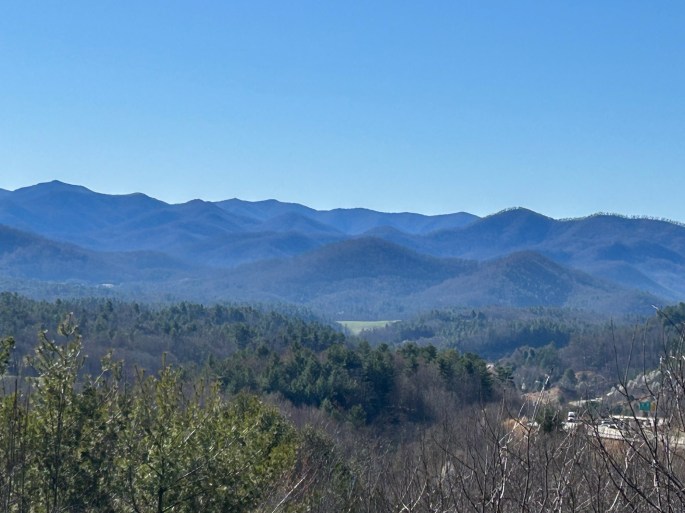
The Blue Ridge Mountains outside of Asheville, NC.

“the mountains are Calling . . .” ⛰️

I had been training for months, despite the challenges winter threw at me. Cold? I can handle it. Snow? I can run in it. Gusty wind? I can run that too. However, after my husband, John, and I crested hill after hill making our way into Asheville, North Carolina, I knew the town’s half marathon would offer a whole new level of challenge. 

To be clear, participating in the Asheville Half Marathon was an insignificant hurdle compared to what the people in Asheville, and all of the other residents of the surrounding areas/towns along US 23, have been facing as they deal with the aftermath of Hurricane Helene.

Driving along US 23, John, and I were able to witness that six months after Hurricane Helene angrily chewed through a large portion of the western Appalachian region, the recovery is still ongoing. However, the willful, and not-to-be-deterred, spirit of the residents was unmistakable. 
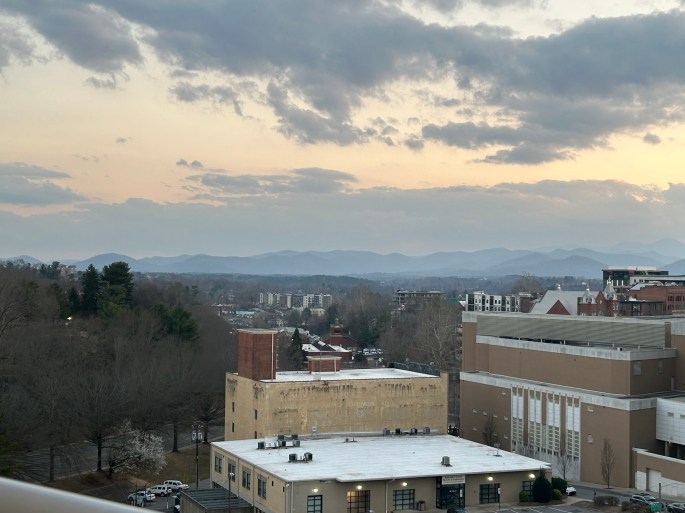
Rooftop view from Asheville of surrounding Blue Ridge Mountains.

A Tale of Two Sisters 👧 👧

This past fall, not long after Helene hit, the high school in which John and I work, welcomed two sisters into the student body.  They were from the Asheville area and were staying with relatives while their parents and older brother dealt with the devastation and destruction back home.

The girls were engaging and well-poised, especially considering their circumstances. Over the course of a couple months, I got to know them–not well due to the short duration of their stay–but well enough to swap personal stories from time to time. 

When they learned that like their dad, I often trained for half marathons, they immediately invited me to run the Asheville Half Marathon in March. They explained that by the time spring rolled around, the community would not be fully recovered, but the local economy would need the boost that runners and the accompanying spectators could bring. 

“You should definitely come, Ms. Hill.  You’d like the people of Asheville, especially the running community.” 

Once Asheville High School opened, the girls returned back home. And though I haven’t heard from them since, they planted a seed that grew into a shoot of curiosity. 
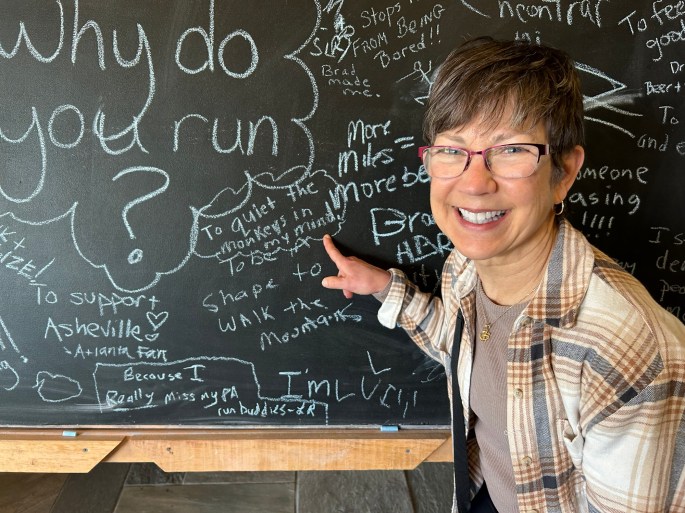
Runners were asked to sign the board stating why they ran.

Sign me up! 📝

Around Christmas, I checked the Asheville Marathon/Half Marathon website, and the powerful and persuasive prose describing the event increased my interest. The website’s editors artfully articulated the community’s belief in the significance of the annual running event. They stated the course’s route would not be “pristine or predictable.” Therefore, the event was for those who “thrive on resilience.” However, the line that sealed the deal stated, “If you’re ready to run in the face of adversity and be a part of Asheville’s comeback story, we can’t wait to see you on the start line!” 

John and I at gathering with other runners and spectators at the starting line before the race began.

Ready, set, Go! 🏁

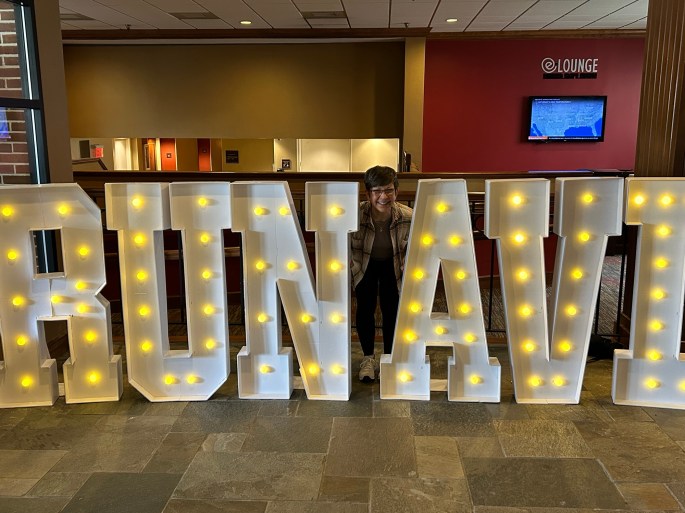
Soon enough, on a chilly, dark March morning, I waited at the starting line with approximately 2,200 runners from 40 states and three countries who also heeded the call to help support Asheville, according to The Weather Channel. The positive vibe was palpable as runners mingled with spectators. Nonetheless, I was feeling a bit nervous as I recalled the half-marathon route’s elevation gain was nearly 800 feet, and its elevation loss was over 900.  

And, it was hilly.  From start to finish, there were no flat stretches. In the beginning, I read spectator signs claiming, “It’s all downhill from here,” with hope. It didn’t take long to realize those signs lied!  Even the finish line required running uphill, but I am “running” ahead of myself.

Running is a metaphor for living life, and it is always whispering (or sometimes shouting, as this event seemed to do) lessons to those of us willing to listen. Accepting limitations–was the lesson those relentless hills of Asheville taught me. Which makes sense since this is what many of the residents of Asheville and the western Appalachian area had to do during, and now after, the storm–accept and deal with limitations. 

Whether literal or metaphorical, storms of life cause us to suffer. As I repeatedly tried to power through those uphills during the first half, my ego kept telling me to push harder, creating suffering. However, as a late-in-life runner lacking inherent running talent, the reality is that race events for me are more about creating motivation and structure to consistently get me out the door to exercise. At the end of the day, I am not about to set any records; I am not even close to winning my age group, so why was I pushing so hard?

And so, it was on a hill, not long after milepost seven, that I decided to accept my limitations. Sure, I had trained on hills at home, but nothing like this. Why not power walk up the rest of the hills, and then run the downhill portions?
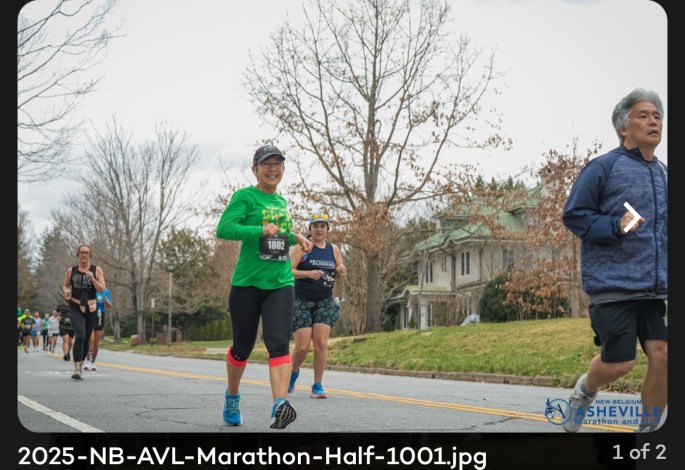
Asheville taught me to accept my limitations.

There is a newfound freedom in accepting one’s limitations 🏃‍♀️

Once I accepted my limitations, there was freedom. I had a new way of being present with the race challenges as they unfolded. This acceptance gave me permission to slow down, take in the sites, and feel a sense of gratitude for my health and ability to make this trip. 

Additionally, by walking the hills, I had more energy to offer encouragement to fellow runners I encountered who also seemed to be struggling. (After all, I run at the back of the pack, where we could all benefit from a little encouragement.) Furthermore, I was also able to offer thanks to the spectators who manned drink stations, rang cowbells, or waved motivating signs with clever phrases such as, “Touch here for power,” “You’re stronger than any storm,” or “You’re running better than our government.” 

By the time I crossed the uphill finish line, tears filled my eyes as I raised my hands in the air.  No, I wasn’t celebrating a personal record, but instead, I was able to celebrate that I crossed the finish line with grace, humility, and a lesson learned. 
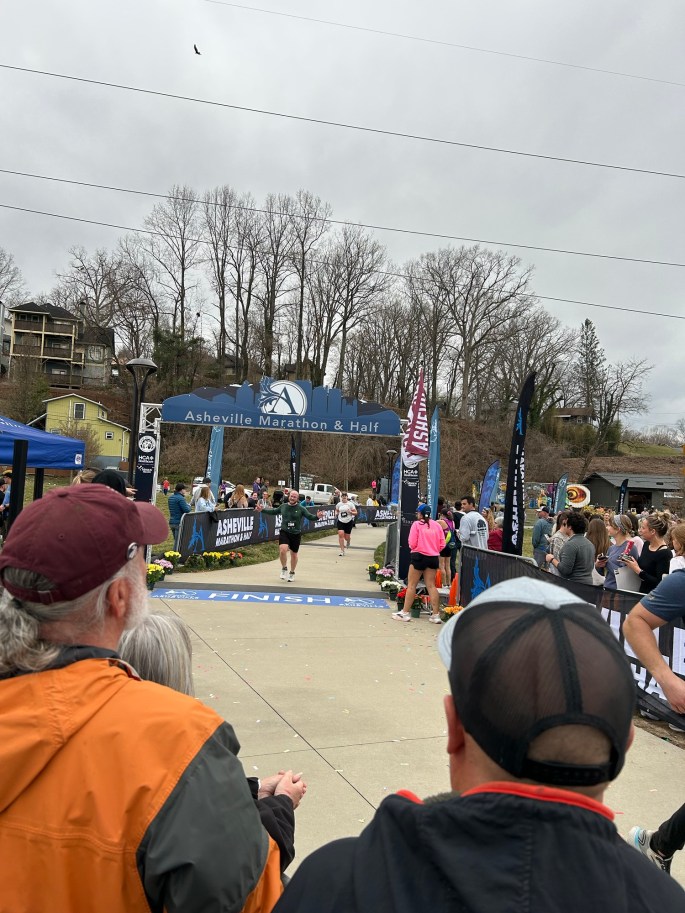
The AVL finish line of through which I would later cross humbled, and grateful, by another lesson running once more provided me.

The lesson? Transforming suffering can only occur if we are willing to be with it and accept the limitations it creates. Accepting limitations can be transformatively freeing, allowing us to lean into newly created possibilities we may not have been able to previously envision. I am not saying that accepting our limitations is not easy. However, once we let go of ego and embrace humility, it is possible to embrace the freedom that comes with focusing on what we CAN do.


Thank you , Asheville! I walk away from the finish line with grateful heart and a lesson learned. Furthermore, thank you, Hannah and Allison! I wish your family the best! 💜

Embracing Darkness: The Lotus Flower’s Lesson of Hope and Resilience

“Most people are afraid of suffering. But suffering is a kind of mud to help the lotus flower of happiness grow.  There can be no lotus flower without mud.”–Thích Nhất Hạnh

FAcing Difficult Days 😟

How many of us have endured through difficult and murky situations?  How many more of us have observed/supported a loved one undergoing a dark and/or dire situation?  Whether it is personal suffering or suffering of a loved one, we have all either experienced or observed painfully dark days; I know I have. 

Sometimes the difficulty can create so much suffering, it feels as if a pack of wolves have hunted us down, snipped and yipped at our heels, and are now chewing away at our insides.  Sleep may no longer feel like an escape, and even if part of the difficulty causes physical pain, it is often the pain caused by our own minds and heart that can hurt the most. 

Photo by Pixabay on Pexels.com

Quotes to Get you Through 📝

There are a couple of quotes and an image I have come to appreciate over the years. They tend to come to mind when I feel knocked down by life. I think of them as a mental antidote for counteracting my fear when facing down a difficult situation.

Keep getting up no matter how many times you fall.

One quote is a Japanese proverb: “Fall down seven times, stand up eight.” This saying is hope-centric, and it means a great deal to me.  It serves as a reminder that no matter how many times we make a mistake or life events knock us down, we must still find a way to get back up.  This doesn’t mean it’s easy.  Sometimes, all we can do is claw, crawl, and clatter until we find the resolve and strength to stand once more.

Rise like the sun

Another inspiring quote by Maya Angelou: “Still I rise.”  While the author writes of her oppressive and challenging experiences as a black woman, the phrase’s universal theme of resilience in the face of struggles can speak to all of us. Those three words are filled with a bold defiance in the face of suffering.

Photo by Celeste 2305 on Pexels.com

Lotus are Adaptable 🪷

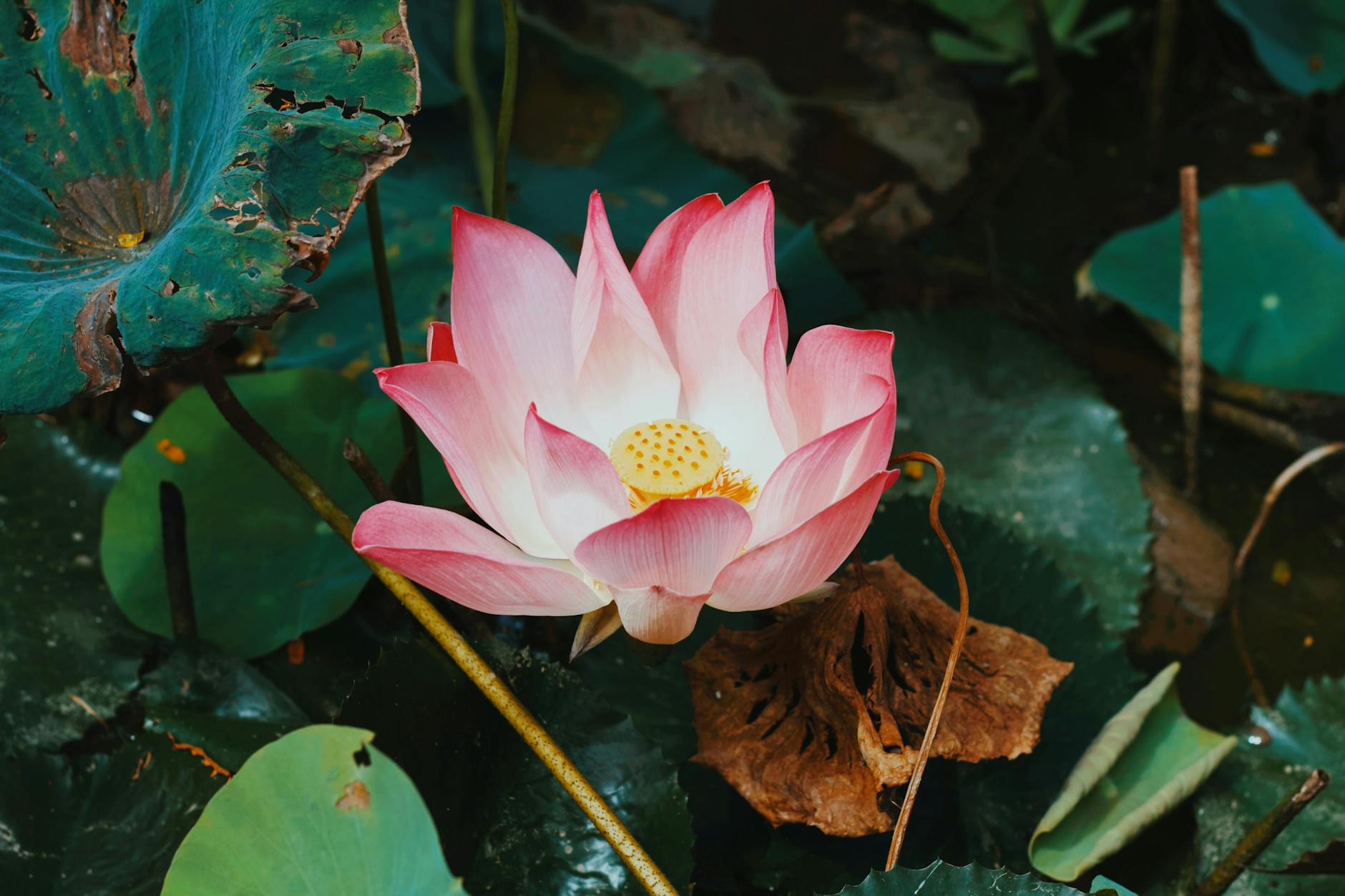
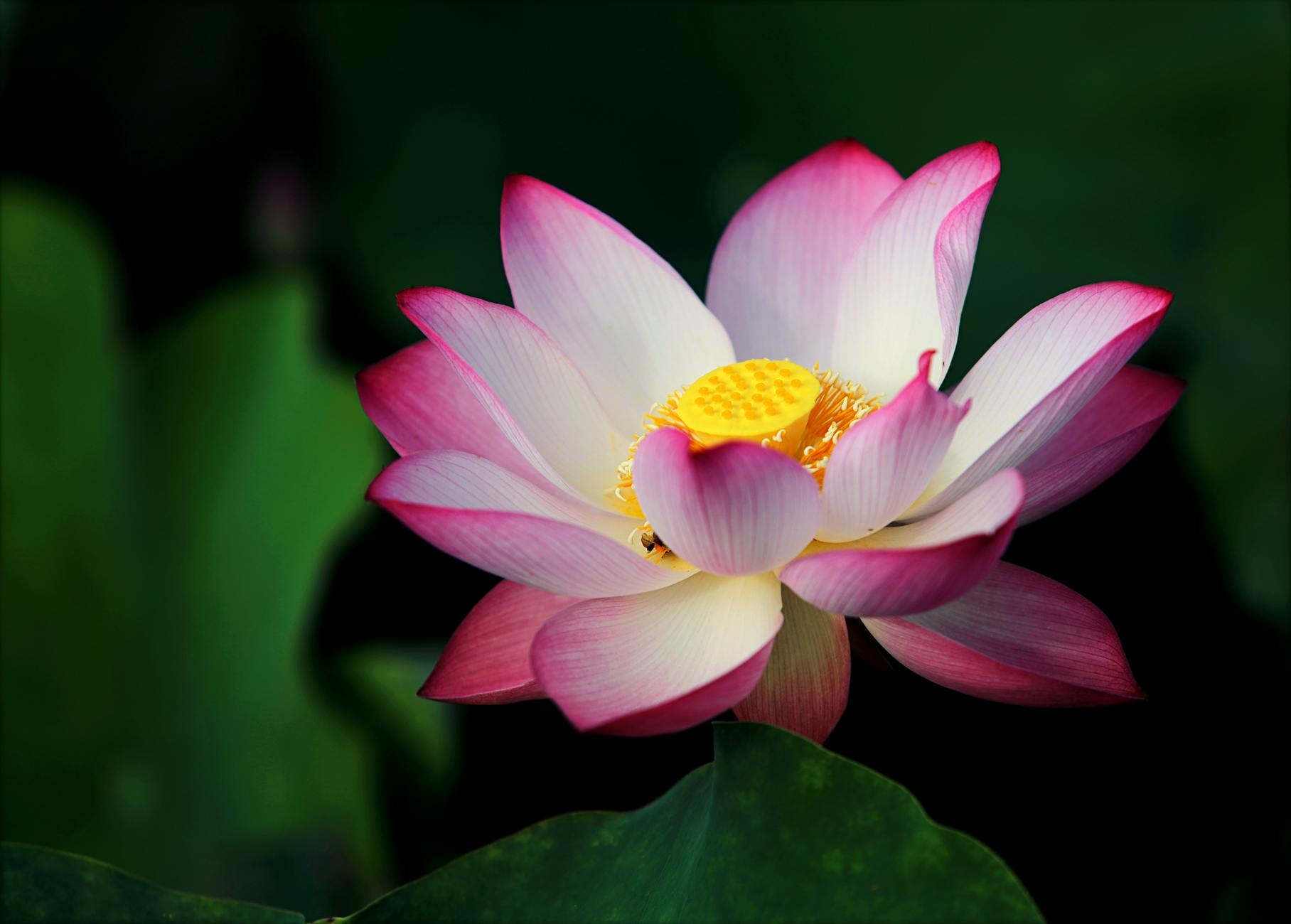
Both of those quotes culminate in the symbol of the lotus, the ultimate emblem of perseverance and tenacity. This aquatic flowering plant has been admired and a part of lore for centuries.  The more colorful lotus are tropical in nature and are most notably found in Asian countries.  However, the lotus plant is quite adaptable, and an American variation can be found along the east coast in waters ranging from Ontario, Canada to Florida. 

Lotus Persist 🌱

Because the lotus plant grows in a variety of environments, it has developed a method of ensuring its continuation. Once pollinated, the lotus releases large quantities of seeds into the environment. Many of these seeds will be eaten by aquatic life; however, the seeds, as I understand it, are quite durable.  Some lotus’ seeds can get up to 1.5 inches in size, surviving for several years, long past the life of the flower.  In fact, the seeds can persist in conditions that would prevent many other types of seeds from germinating. 

Lotus Aren’t AFraid of The Dark 🌑

Once germinated, the seeds begin sprouting in the mud, sending roots down even deeper into the muck.  Depending upon the plant and the depth of water, it can take from two weeks to two months for the plant to grow up to six feet tall through the murky water. As the round leaves reach the top of the water they can fan out in width up to 36+ inches wide. Once the plant has fully surfaced, the flower will begin to grow and ultimately bloom. 

Short life, Deeply rooted 🙏

Each American Lotus flower, with its butter yellow petals and fragrant aroma, will only last a few days, opening its petals during the day and closing the petals at night. The blossom appears to be free floating, but it remains rooted in the mud. During its short duration, the flower will bear seed pods that resemble the end of a watering can or shower head, ensuring multiple seeds from each flower will be dispersed back into its environment.

Lotuses ShaRe 🫱 🫲

Both the seeds and roots can be eaten, and parts of the plant can be used for medicinal purposes. Seeds pods can be dried and used in flower arrangement.  Additionally, due to the fact that lotus flourish easily in a variety of areas, even in the murkiest of waters, these plants provide shelter, habitat, and food for a variety of aquatic wildlife.  Each fall, however, the plants die away.

Gifts can arise from dark places

Therefore, the lotus is a prime example of the way in which gifts can rise from the darkest of places. Despite the fact the lotus is born in the mud, it rises to stand victoriously every spring.  Upon rising, its blossoms bear seeds to ensure it has a way to stand back up.

Seeds of hope, help, and healing

Beyond the fact the lotus has planned for its inevitable fall, it also offers seeds of hope and nourishment for others. Each flower produces an overabundance of seeds, many of which will settle into the mud for rebirth, but many more of those seeds will provide food for other living creatures. Additionally, those mud-buried lotus roots also provide nourishment not only to the plant itself, but can also nourish others.  Not to mention that the plant has medicinal qualities, offers shelter to others within its aquatic community, and beautifies a variety of environments.

Photo by Hiu1ebfu Hou00e0ng on Pexels.com

Lotus Life 𑁍

Let us live like the lotus flower. When we experience those dark and difficult times in our life, let us root down into the loam of our soul and allow faith to germinate a seed of hope. By rooting through the muck and into the nourishment of our faith, we can rise. It may take weeks, months, or even years, but we can rise and blossom once more.

Once on the surface, it is our job to produce good seeds of hope and help for others.  Even if our calm waters fade away and we find ourselves sinking into the inky dark once more, still we can rise.  We have done it before; we can do it again.  And with each new revival, our blooms can continue to offer more gifts to the world.  No matter how darkly rooted our past or present was/is, no matter the number of times it occurs, we can stand up, we can rise, we can bloom, and we can embody the lotus, offering shelter, nourishment, and healing hope to others.