Movement as Medicine: Staying Active in Your Older Adult Years

“Movement is medicine for creating change in a person’s physical, emotional, and mental states.”–Carol Welch

Photo by Roman Biernacki on Pexels.com

Let’s get Ready to Move! 🏃‍♀️

By the time you read this, I will be close to one week out from running (ok, jogging, “slogging”, whatever you want to call it) the Marshall University Half-Marathon. This annual community event motivates and inspires hundreds of locals and nonlocals to train, improve their current fitness level, and participate in the 5K, the half-, or the full-marathon distance.  Plus, it brings together a whole host of volunteers who support participants along the way.

Each year that I’ve participated, I hear numerous stories about those who haven’t trained for MUM, still participate, and do well.  My hats off to them; I appreciate that they can do that.  However, I find the training, and the build-up to the event, are part of the excitement and joy of the journey that includes completing the event.

Photo by RUN 4 FFWPU on Pexels.com

Giving meaning and purpose to Exercise through signing up ✍️

It typically takes weeks, or even months, of deliberation before I decide to sign up for a running event–even an annual event such as the MUM. Therefore, once I make the decision to pay the entry fee for an event, I am fully committed to a training plan. This is not because I have any desire to place or set records, but because signing up for an event is the extra motivation that gives meaning and purpose to my exercise.  Plus, it keeps me simultaneously excited and nervous in a good way.
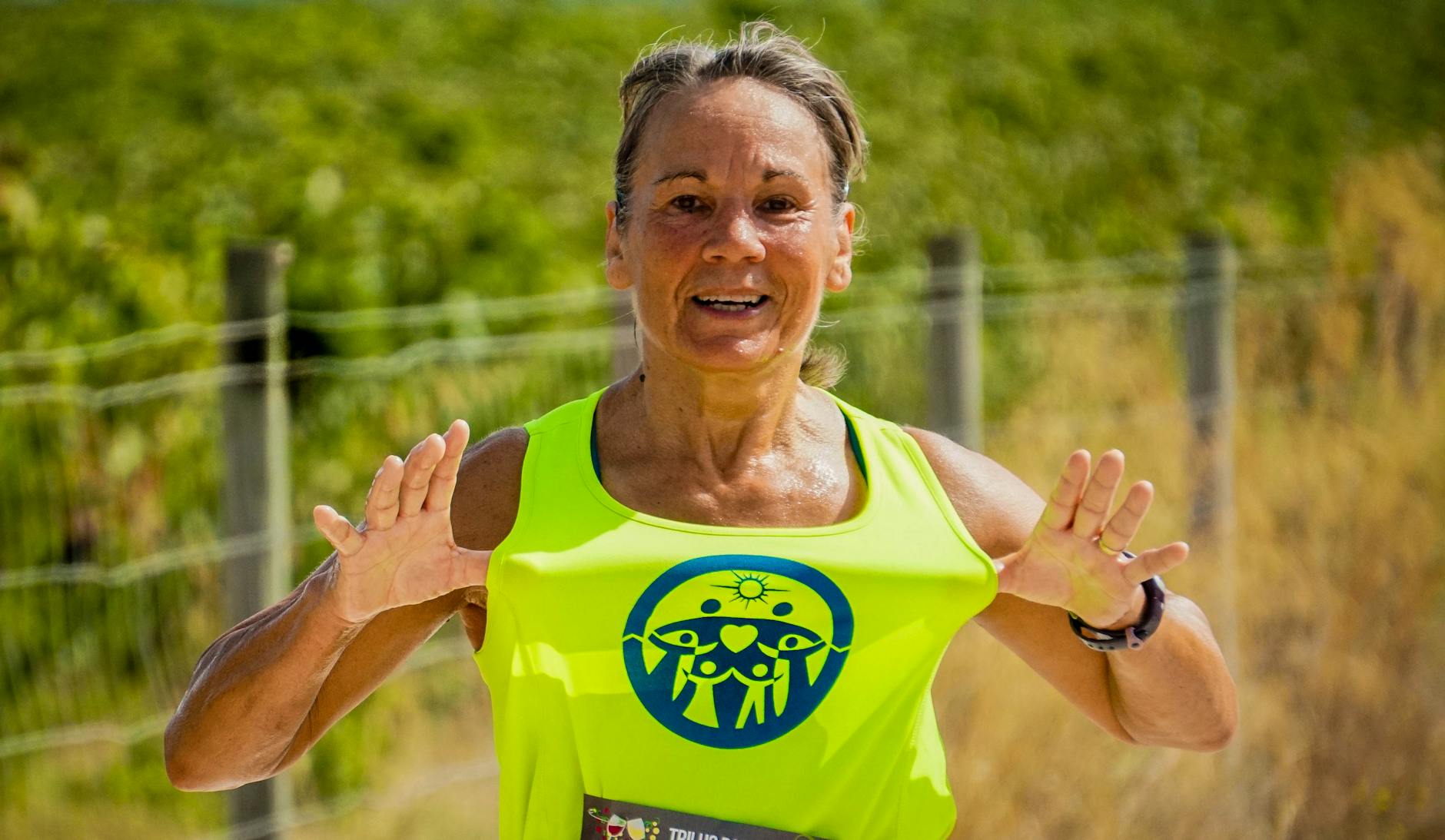
Photo by RUN 4 FFWPU on Pexels.com

Exercise at any age! 👵🏼

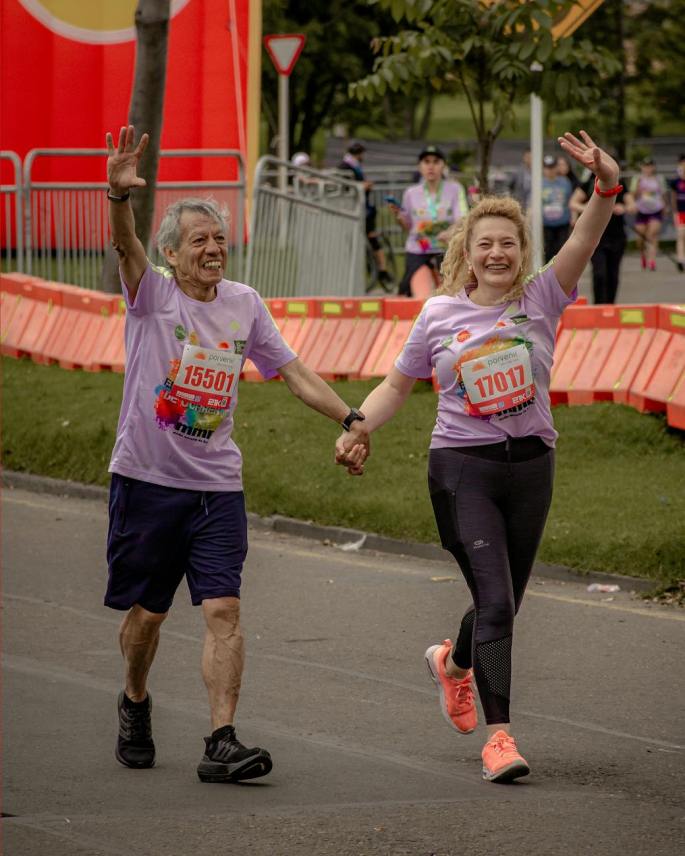
Still, I have those who ask me if running is still safe for someone at “my age.” News alert! There is no milestone-age at which you should cut-off exercise.  In fact, exercise and/or movement can, and probably should, be embraced across all ages, including those of us in the AARP years, which is anyone over the age of 50. That said, you do have to manage your expectations, but movement and/or structured exercise can be a healthy part of the “golden years.”

That said, of course, if you have had an injury or have certain health conditions, you must respect your body’s limits and boundaries, but it doesn’t mean you give up on exercise and/or purposeful movement forever.  By working with a healthcare professional, you can find ways to adapt, modify, and/or create your own exercise plan that fits your body’s unique needs.  
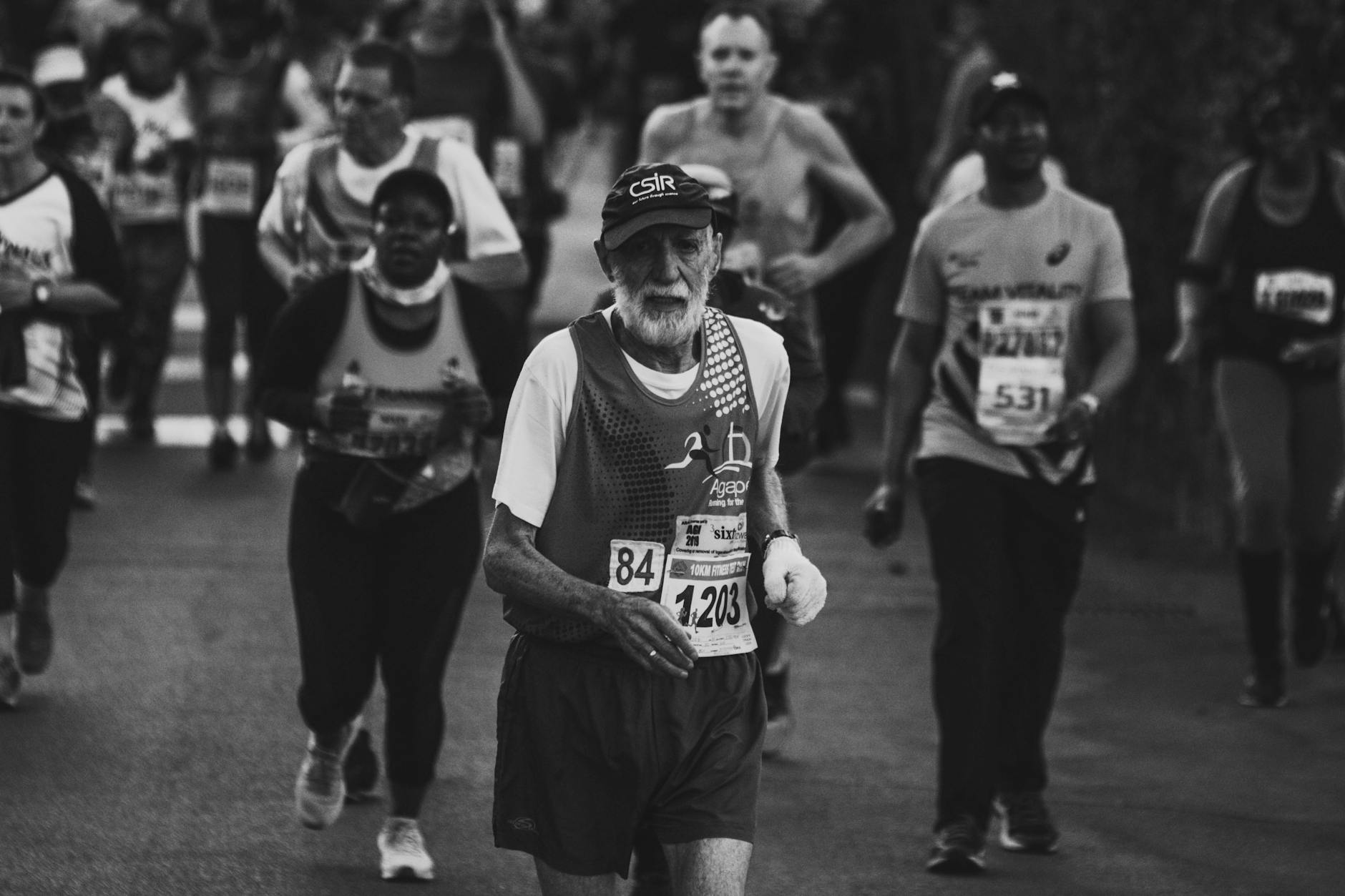
Photo by Vincent Peters on Pexels.com

Tips for moving through those senior years 🚶🏿‍♂️

Here are some key tips and pointers I’ve learned along the way, gathered from other senior exercisers, as well as a few I researched, when thinking about exercise/movement in the, a-hem, “senior” years.

  1. Establish meaningful AND realistic goals appropriate for where your body is now that motivate and excite you.  This is why I enjoy signing up for a half-marathon.  My mantra is: “Set your own pace, and run your race.”  I don’t put pressure on myself that running has to be or look a certain way.  No time is too slow, and I can take as many walk breaks as I need.  That said, you can approach ANY form of exercise in a similar manner 
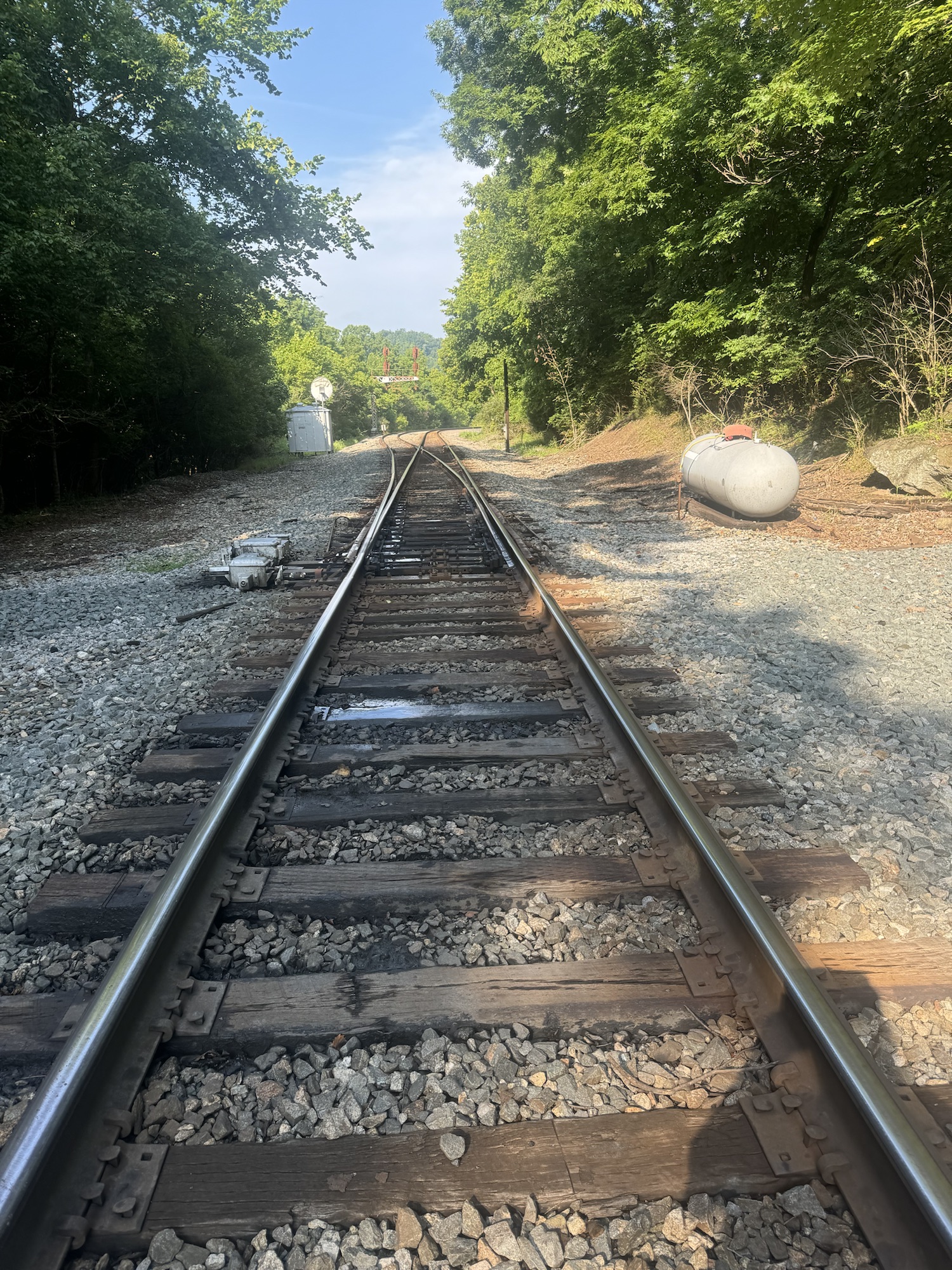
Set off in your own unique direction down the the tracks towards empowering your own health and fitness.
  1. Notice your narratives.  This is something that I have begun to notice more frequently. Reflect on how you talk/think about age with peers/friends/family AND self.  Is there often negative talk and thoughts associated with your current age and/or exercise?  Perhaps, you can begin to reframe those thoughts/chatter by leading by example.  Furthermore, look to role-models that motivate you to move more.  I personally often look at my Dad who still walks or hikes daily anywhere from 2-8 miles per day.
  1.  Find your edge. Whatever form of exercise we choose should challenge us, but not too much.  If something changes, and you sense you can do a little bit more, then do so.  But if doing a bit more causes serious discomfort, then back off, and try again another time. 
Map out your own fitness challenge.
  1. Strength train, stretch, and work on balance through practices such as yoga. The CDC in an article entitled,  “Older Adult Activity: An Overview,” states that in addition to cardiovascular exercise, such as jogging and walking, older adults also need to strength train and work on balance.  In fact, AARP offers a 10-minute, strength-training video that can be completed daily, seated or standing. 
  1. Manage your sleep and nutrition: There is a reason these two are often spoken/written about due to the fact both contribute positively, or negatively, towards your own health.  That said, one bad night’s sleep, one indulgent meal, or a day of eating very little, will not necessarily impact your overall health; however, consistently not getting enough sleep and not consuming proper nutrition will gradually, and negatively, begin to impact your physical and mental well-being. 
  1. Find your support or pave your own way.  There’s no one right fitness plan that works for everyone.  Find the type of movement/exercise that best suits your body and motivates you, which may mean exercising with a group, a friend, or at a club. That said, don’t be afraid to go it alone either and share the experience with others later.
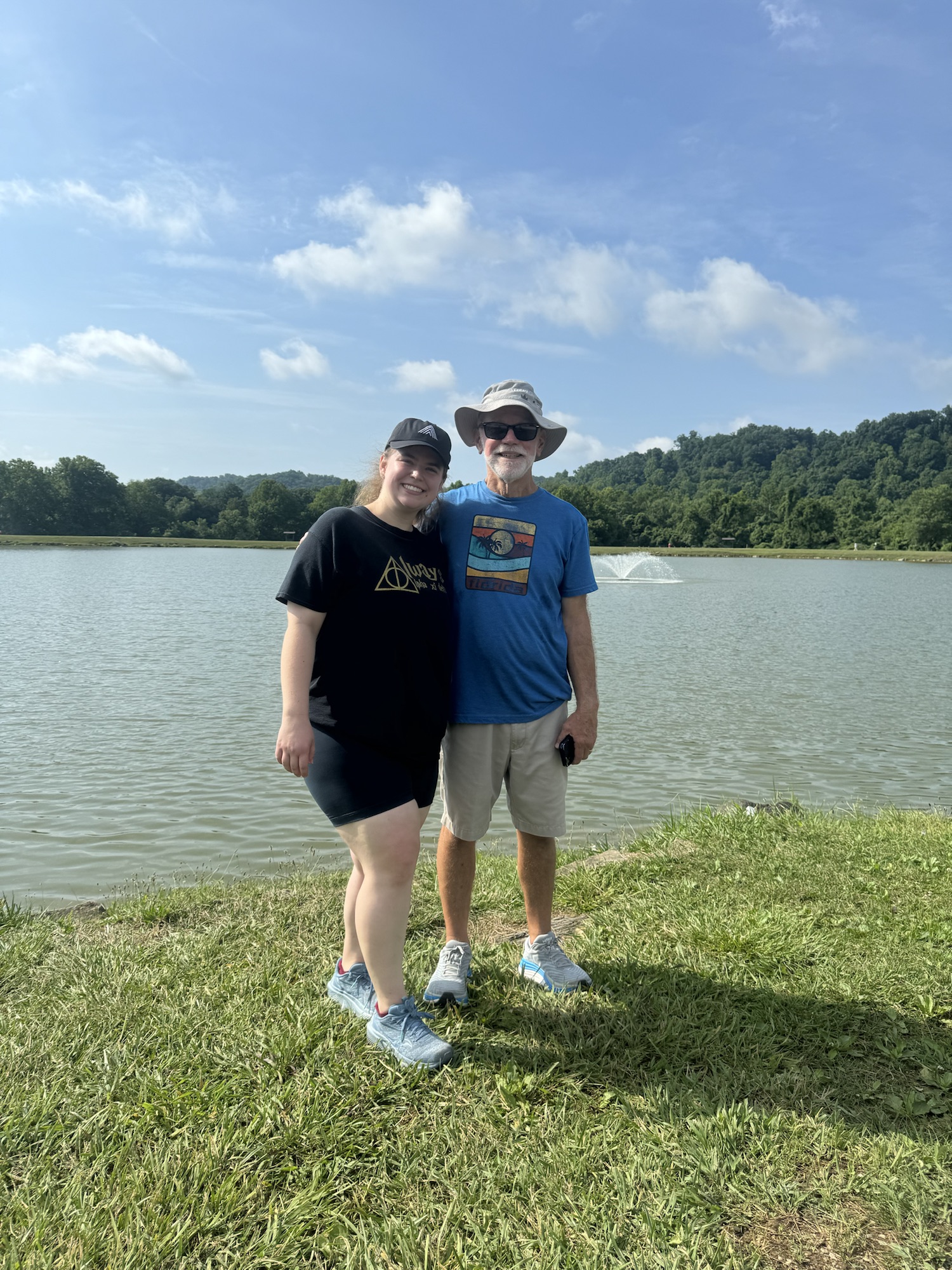
Find your support!
  1. Exercise can be therapy. Personally, I know my mental health greatly benefits from movement. The National Institutes of Health, The Mayo Clinic, Mount Sinai, and numerous other institutions all point to the fact that exercise is a mood and mental health booster.
  1.  Tune in to your body’s needs with honesty and integrity. If you’re sick, tired, and/or run down, then maybe a day or two of rest may be what you need. If a joint, such as knee, elbow, wrist, or ankle begins to feel irritated.  Be curious about it.  Are you pushing a certain exercise too hard, too often? Or, are you not moving enough? Learning to listen to the signals our bodies send us is an important part of the exercise/movement journey.
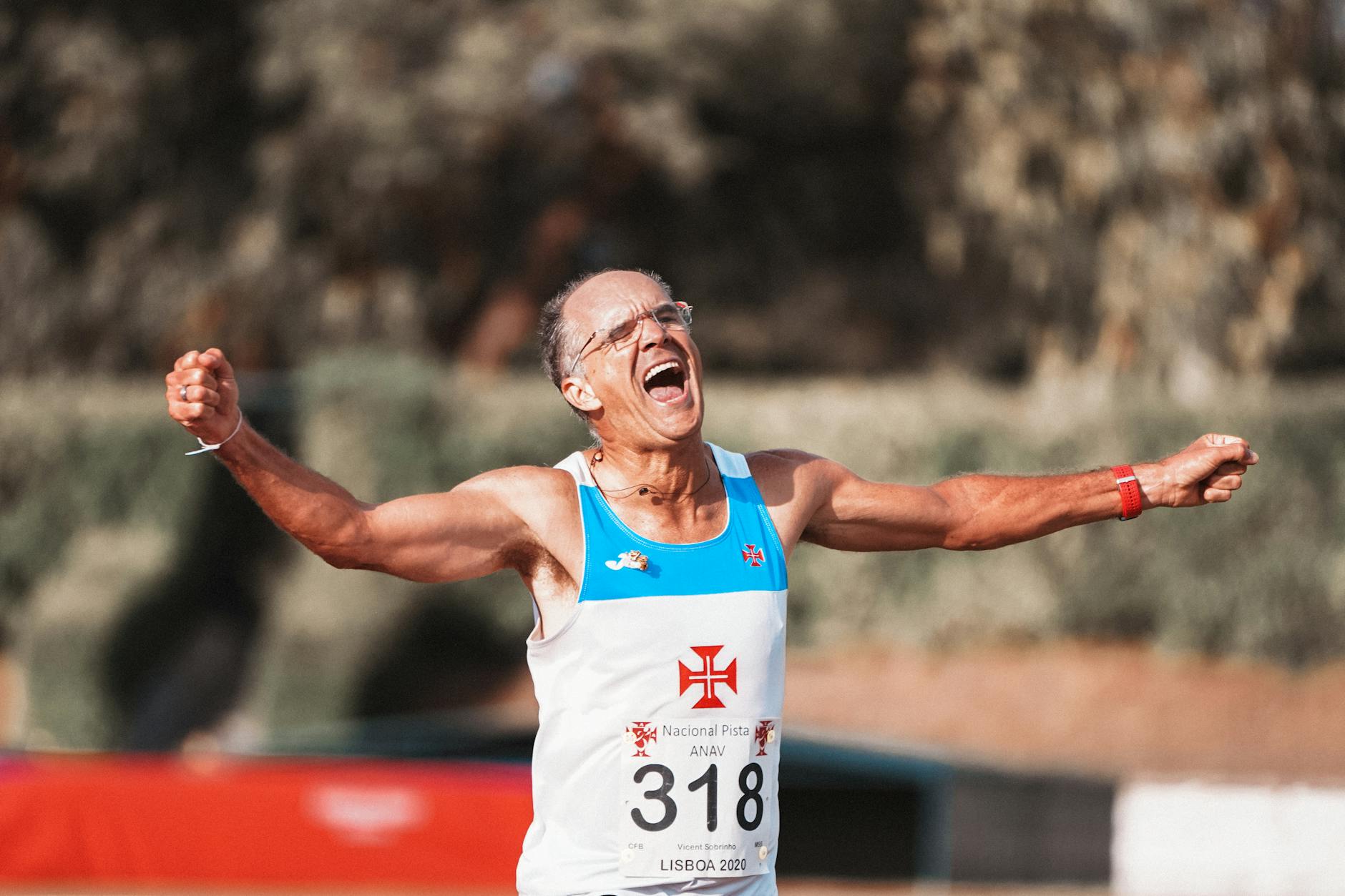
Photo by RUN 4 FFWPU on Pexels.com

movement is medicine! 💊

When it comes to movement, no matter your age, focus on the positives of the experience–whether it is spending time with friends, benefiting your mental health, or feeling more overall strength, steadiness, and/or energy. To be sure, it is often hard to get started, but it is often that feeling of accomplishment you have afterwards that can keep you going. Finally, for those in the official AARP years, keep in mind, “older” doesn’t have to mean sitting on the sidelines. Becoming and staying active, however you define it, truly is medicine for imbuing well-being: socially, mentally, and emotionally. 

Dad and I pausing for a moment during hike this past summer at Barboursville Park.


Five lessons that a post-surgery completion of a half-marathon taught me

. . . For truly I tell you, if you have faith the size of a mustard seed . . . nothing will be impossible for you.”–Matthew 17:20 (NRSVCE) 

Apple seed hopes 🍏

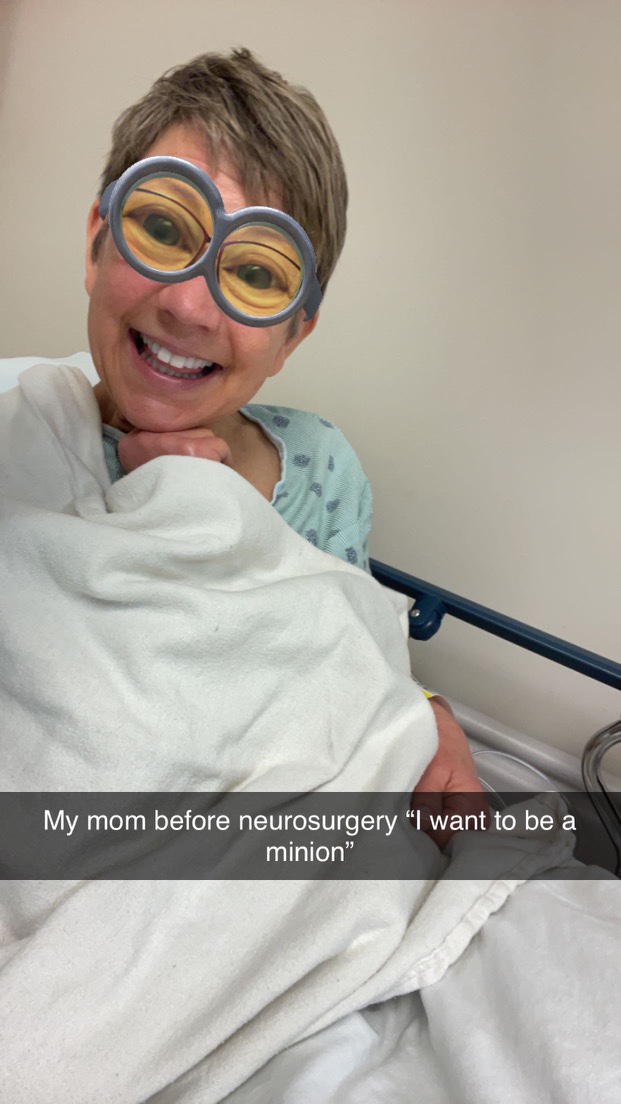
Back in April, my daughter, Maddie was having fun with the camera as we waited in a pre-operation room.

Recently, apples have been in season, and as I cut them up and deseed them, I can’t help but take notice of those small seeds–seeds full of possibility and hope.  And, while the seeds from those apples will no longer yield trees and fruit, the apple itself fuels my body as well as a hopeful attitude.

In fact, by the time you read this, Dear Reader, I can say with feelings of great joy that I completed the Marshall University Half-Marathon.  Albeit, that finish line was not quickly crossed, but because of seeds of hope, faith, and belief, it was nonetheless completed.  Besides, 13.1 miles is still the same distance, no matter the speed it takes to get there.

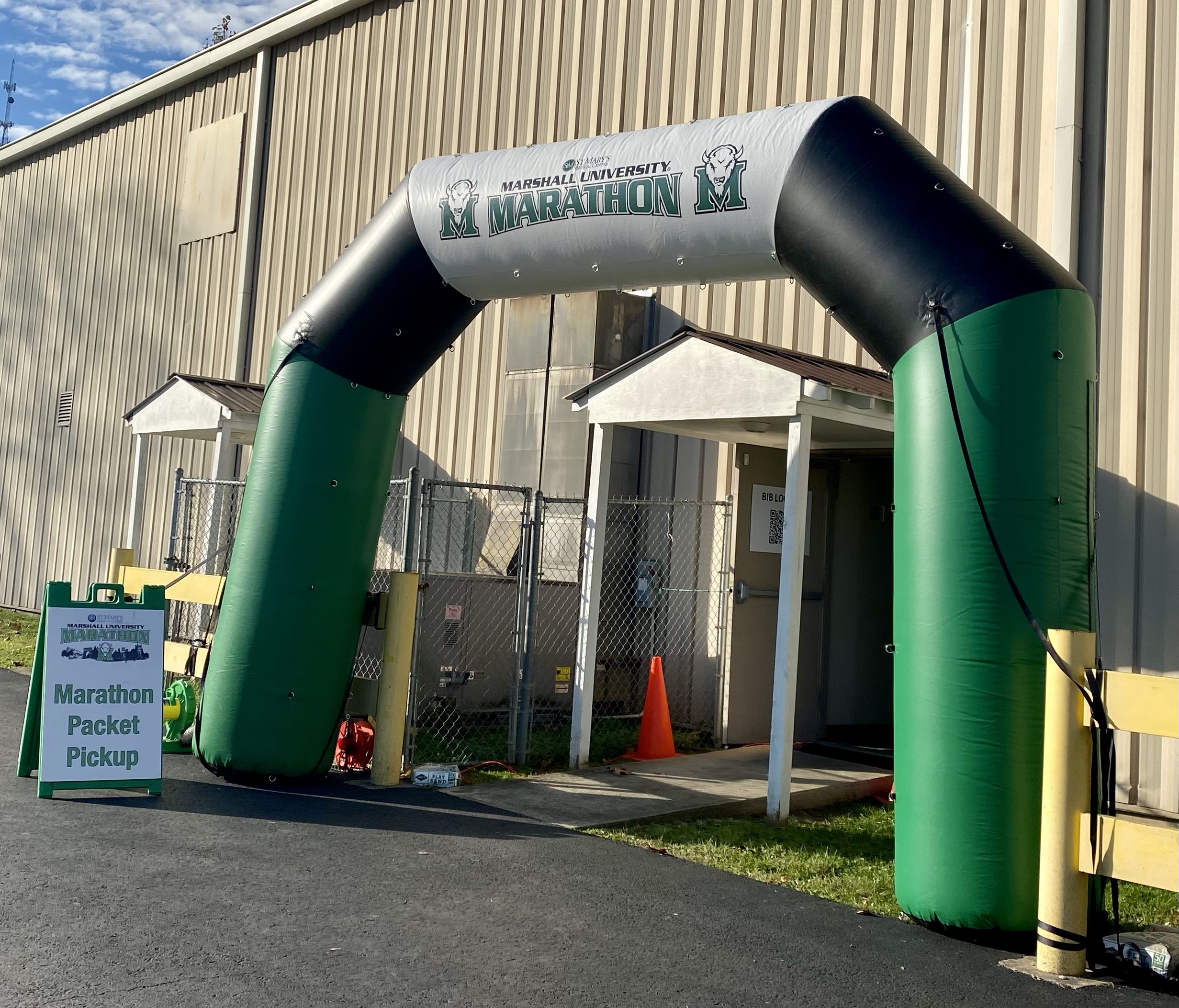
Walking into the pre-race packet pick-up, I was filled with hope.

For the record, I didn’t tell many people about my seed of hope outside of my husband and daughter because it was my own private manifestation of recovery.  In April, it seemed highly improbable.  However, as the months passed and my stamina improved, that seed of hope grew into a seedling and sprouted leaves of possibility.  

Fostering such a dream has taught me a thing, or five, as the case may be, and because running is really a metaphor for life, I thought I’d share those lessons with you.

Five Life Lessons from running 🏃‍♀️

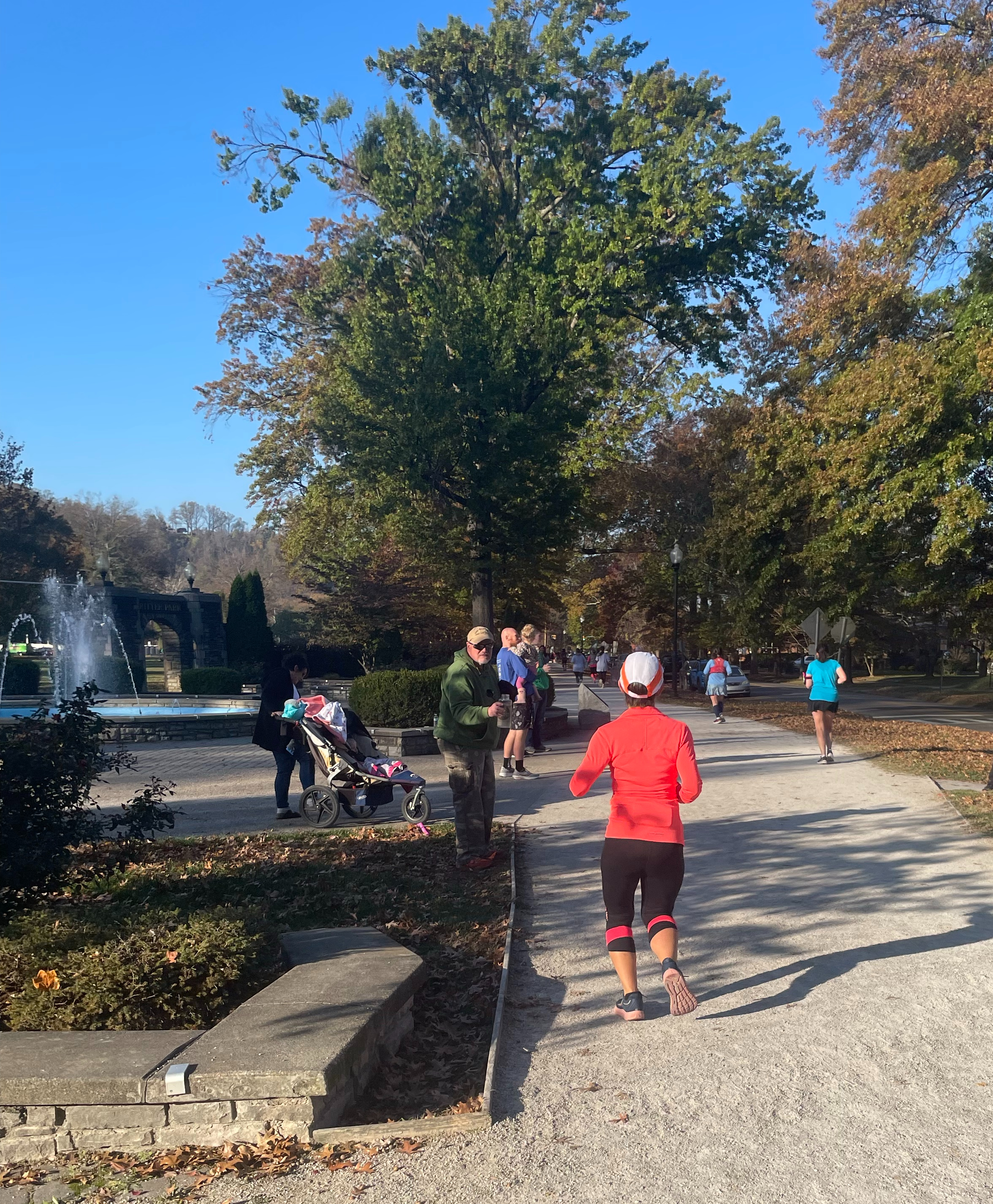
The runners are off and running . . .

Lesson 1: Small beginnings can engender bigger accomplishments.  At the beginning of April, immediately following spinal surgery on my neck, I was told to walk every hour as part of my recovery.  Even “trips around the dining room table” added up, the nurses told me.  The first few days were not easy, but I followed their advice, walking every waking hour, 5-10 minutes.  Eventually, I worked up to 15, 20, and 30 minutes, a few times per day.  Even then, I was dreaming of one day recovering enough to complete another half-marathon, but I didn’t know if it would ever be possible.  Nonetheless, I tucked the dream into the pocket of my heart.

Lesson 2: Savor the good moments, but don’t let the not-so-great ones trip you up.

During recovery there were some pretty rough days.  I tried not to let on, or even name them, lest I give them power over me.  Instead, I kept thinking of Dory, in Finding Nemo, who taught all of us to “just keep swimming.”  And, that is what I did.  I kept swimming, even on the days it felt I was going against the current.  When Dr. Saulle and his staff gave me the green light to slowly, but gradually, add in bouts of running to my walking, I was cautiously optimistic.  Nevertheless, since I had not been running for over three months, it was painfully slow going, but I held fast to the dream tucked into the pocket of my heart.

Run your own race; set your own pace.

Lesson 3: Race your own race; set your own pace. Throughout the late summer, early fall months, I kept plodding-on, alternating bouts of walking with running.  Gradually, the time spent running increased while the time spent walking decreased.  Nonetheless, some days I just didn’t have it in me to run, so I just kept walking. 

By mid-October, only a few weeks before the actual event, I registered for the MU Half-marathon with my fingers crossed.  I continued my own plan of walking and running.  In fact, on the morning of the event, as my husband, John, and I crossed the bridge into town, a strategy came to mind: “Run your own race, Steph, and set your own pace.”  While I did plan to run with a pacing group, I also decided to listen to my body and not force anything once I hit the streets running as I held fast to the dream tucked into the pocket of my heart.

THE BEST SUPPORT TEAM EVER!

Lesson 4:  Allow yourself to be supported. Our daughter, Maddie, met John and me at MU stadium.  They offered to be my team of support early on.  John carried my special hydration mix–my stomach is super sensitive–and Maddie took charge of keeping up with where I was on the course, and ultimately ran mile nine and mile 13 with me.  

Additionally, I ran with pacers Chad Fischer and Aubrey Netzel (names from MU Marathon site) for the first three miles, but I found that I kept moving slightly ahead of them.  Therefore, I decided to take a leap of faith and continue to run on my own at a slightly faster pace. For several miles, I ran with a woman named Angie who was running the full marathon, but eventually, we separated. Therefore, I soaked up all the good energy surrounding the runners, allowing me to always feel supported as I held fast to the dream tucked into the pocket of my heart.  

Feeling grateful for the love and support! 💜

Lesson 5:  Feel and share your gratitude.  Throughout these past months, whenever I felt down or frustrated, I reminded myself to feel grateful.  This was especially true when running the actual event. There were scores of volunteers along the route, and I tried to verbally thank each one I encountered, although I am sure I missed some.  Many of those volunteers would cheer and clap for the runners, even though they had other jobs to do as well. There was an impressive police presence, keeping the runners safe. Plus, there were numerous organizations and clubs providing drink stations along the course.  Additionally, there were some really fun signs to read, such as, “You’re running better than our government,” and “Run like someone just called you a jogger.”  

By the last mile, running side-by-side with Maddie, my heart overflowed with gratitude. In April, I was walking 5-10 minutes at a time. Seven months and two days after the surgery, I ran a half-marathon with only one walk break.  There are so many people for whom I feel grateful who made my recovery and ultimately the half-marathon possible–family, friends, and co-workers. Most of all, I am eternally grateful for John and Maddie who never once doubted the dream tucked in the pocket of my heart.  

Nurturing seeds of hope pays off.

In the end, Dear Reader, if we plant seeds of hope, regularly water them with faith in our True Source, put in the effort and work, and, of course, “just keep swimming” with strokes of belief–even on the hardest of days, we can set our own pace for running our own race, however we define it, and watch as our those seeds of hope blossom into possibilities.

“I have fought the good fight, I have finished the race, I have kept the faith.”–2 Timothy 4:7-8 (NIV)

Run your race, whatever it may be, your way!