Red-Tailed Hawk: Symbolism and Lessons for School Success

“A bird sitting on a tree is never afraid of the branch breaking, because its trust is not on the branch, but on its own wings.”–Charles Wardle
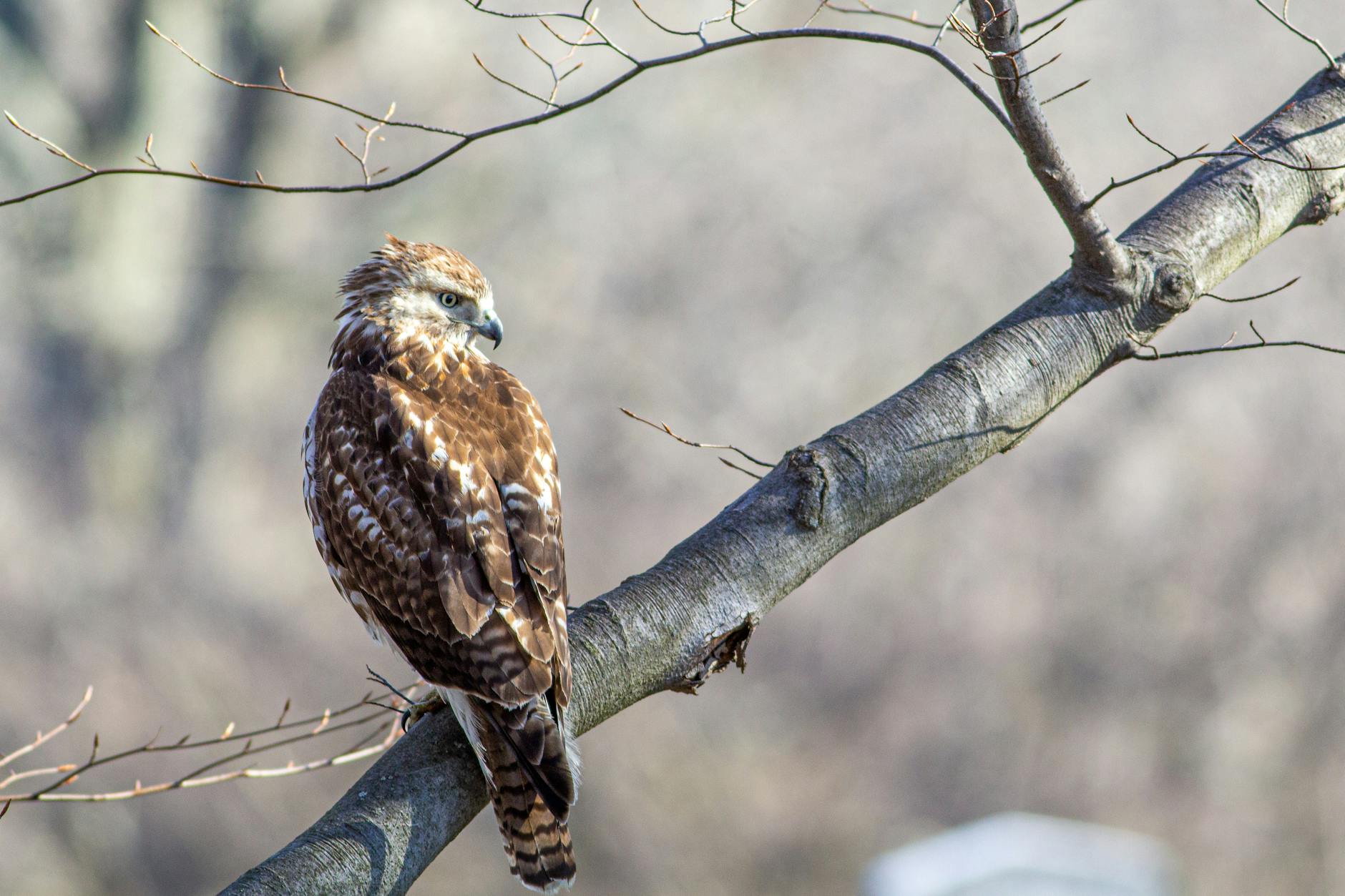
Photo by Jen Healy on Pexels.com

Frequent Encounters 👀

Lately, it seems I am regularly noticing red-tail hawks.  Sometimes I spy a hawk during my runs or walks, and other times, I will notice one while I am driving. I often see one perched on a pole or electric line. The neck tilts and turns this way and that as they take in the area, 180 degrees at a time, under their watchful eyes.  

Other times, I am able to observe the flick of a hawk’s red tail as it lifts into flight with an expansive, majestic wing span.  It will circle and soar on air currents, rising high as it gains a new perspective on the landscape below. Occasionally, I have the opportunity to watch one, with graceful power, dive, and in one fell swoop, swiftly scoop up its prey.  

Photo by Skyler Ewing on Pexels.com

Hawk-eyed facts 📝

Seeing hawks never fails to fill me with delight, no matter how frequently I catch a glimpse of one.  I often joke that the hawk is my “spirit animal,” my guide to admirable qualities. After all, hawks have excellent vision.  They can see five to eight times better than most humans.  Therefore, when they are sailing on the ocean of air currents, their accurate vision enables them to see the bigger picture.

In addition to their clear-eyed view, a red-tailed hawk can dive at speeds of up to 120 mph.  Combine a hawk’s speed with its visual acuity, a prey stands very little chance of escape.  Thus, a hawk has the ability to clearly see its goal and attain it.

Hawks are known for their ability to hunt and capture prey that can weigh as much as the hawk itself, anywhere from two to four pounds. That’s a strong lift, especially once in flight.  However, hawks mostly focus on small rodents, reptiles, amphibians, fish, and even insects. This means the hawk is realistic about the load it can carry.

The wingspan of an adult hawk is over four feet wide because hawks are meant to soar. In the book of Job, the 26th verse of chapter 39 reads, “Does the hawk take flight by your wisdom and spread its wings towards the south?” And, while this is a conversation between God and Job, it does seem to emphasize, to my untrained eyes, that there are times, when, like a hawk, we, too, have been gifted with the ability to spread our wings widely and leave an area/situation that no longer supports us.

Red-tailed hawks mate for life.  They build their nests together–each one gathering leafy branches and sticks. When it comes to having babies, they likewise co-parent.  Typically, the female will sit and incubate the eggs, while the male hunts and brings back food to her. Once the chicks hatch, the male continues to hunt and bring back food to the female.  In turn, she will then distribute the food in small pieces among the babies. In this way, hawks demonstrate the importance of dividing and sharing the load with one another.

Photo by Oleksandr P on Pexels.com

Lessons of the Hawk

Throughout the local area, students, teachers, administrators, and staff are returning, or will soon be returning, to school. Shelves of school supplies at popular stores have been wiped clean of their wares, and first day outfits or uniforms have been selected with care for annual back-to-school photos. All the while parents marvel at the rate at which their kids are growing as students–and teachers–wonder where summer went.

With the ringing of the school bells, it is worth remembering the lessons provided by the red-tailed hawk whether a parent, student, educator, or simply interested in supporting those in education.

Photo by Marko Klaric on Pexels.com

Focus on Big picture 🔎

 First, may we remember to focus on the bigger picture.  It is so easy, and even tempting, to get wrapped up in the minutiae of daily dramas.  Instead, let us be reminded of the hawk and soar above all of the little irritants that don’t add up to much of anything, and instead focus on the goal: education, growth, improvement, and so forth

Photo by Skitterphoto on Pexels.com

Clear goals 🎯

Along those same lines, by focusing on the bigger picture, let us be hawk-like and develop clear goals/intentions for the school year–tangible and measurable targets for success. By keeping a clear vision of these goals, students, parents, and teachers alike can adapt and adjust accordingly as we work towards them. It’s easy to get side-tracked, and it’s sometimes tempting to waiver or become distracted by some flash-in-the-pan idea.  However, by continuously circling back to the actual long-term goals, we can keep our aim true.

Photo by Tim Durgan on Pexels.com

Avoid overcommitting 😮

While all those target goals are important, it’s important to be realistic about the load we can carry. Just as the hawk can only hunt and capture predators weighing no more than it does, we too must be careful not to bite off more than we can chew.  Over-volunteering or overcommitting to too many teams/committees/clubs/events can weigh down students, educators, and parents alike.  Just because we can do something, doesn’t mean we should do it all.  Instead, it is more important to focus on what you love, what will stretch you best, and/or will leave time for recovery and rest in order to put our best foot forward.

Photo by RF._.studio on Pexels.com

Divide and Conquer ➗

One way to do this is to remember to divide and share the load.  Students can benefit from helping one another or working with a tutor.  Parents can divide and share the responsibilities of their kids’ school activities, sports, and all the home/care responsibilities that go with that.  Educators can likewise collaborate with one another and make use of resources designed to support learning.  We all benefit from helping each other make a school year successful.

Photo by Alexas Fotos on Pexels.com

Change can be Good 👍

However, it is important for us to recognize when we have bitten off more than we can chew. Burn-out for students, parents, and teachers is a very real thing and must be guarded against.  Therefore, learn to identify and recognize those times when you need to spread your wings and leave or change a situation.  

May this school year be the year of the red-tail hawk. May students, parents, educators, coaches, and anyone else involved have hawk-like vision and acuity. May wings spread on the currents of hope, compassion, empathy, and knowledge. May our aim be true, and may educational communities around the globe support and help one another in a spirit of kinship and joy.  Most of all, may we nourish our students with small bites of knowledge and success, so that they may ultimately one day, independently soar on their own air currents of success, however they define it.
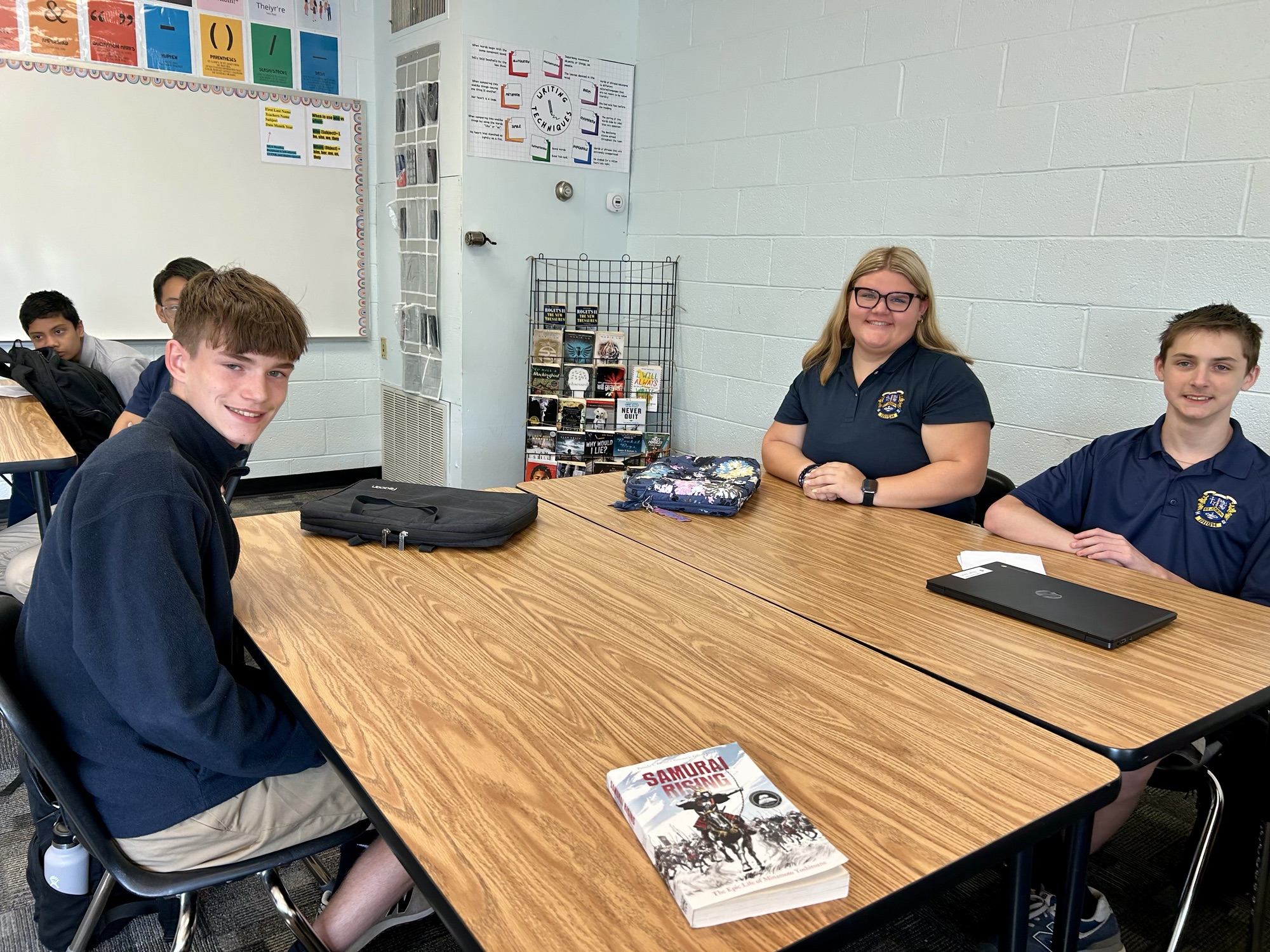
Ready for the new school year!
Effective Teaching and Coaching: Cultivating Student Achievement and Self-Improvement

Lessons from a Lifetime of Teaching series, Part 3

“The road to success is not a path you find, but a trail you blaze.”–Robert Breault

Author’s Note: This is the third installment of stories from decades of teaching students grades K-12.  It is my hope that by sharing these stories, I will cultivate lessons of compassion, empathy, and understanding

Photo by cottonbro studio on Pexels.com

Coaching requirement ⛹️‍♀️

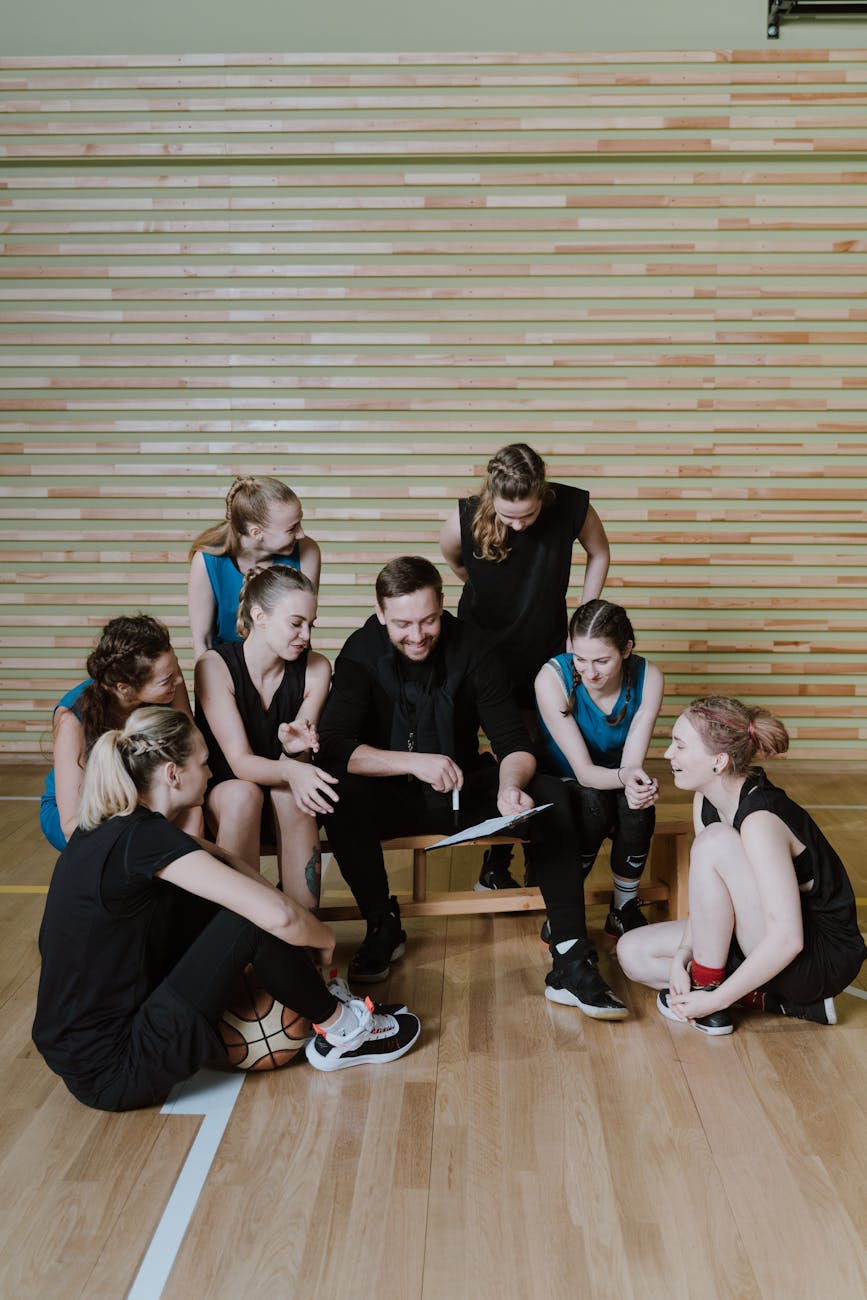
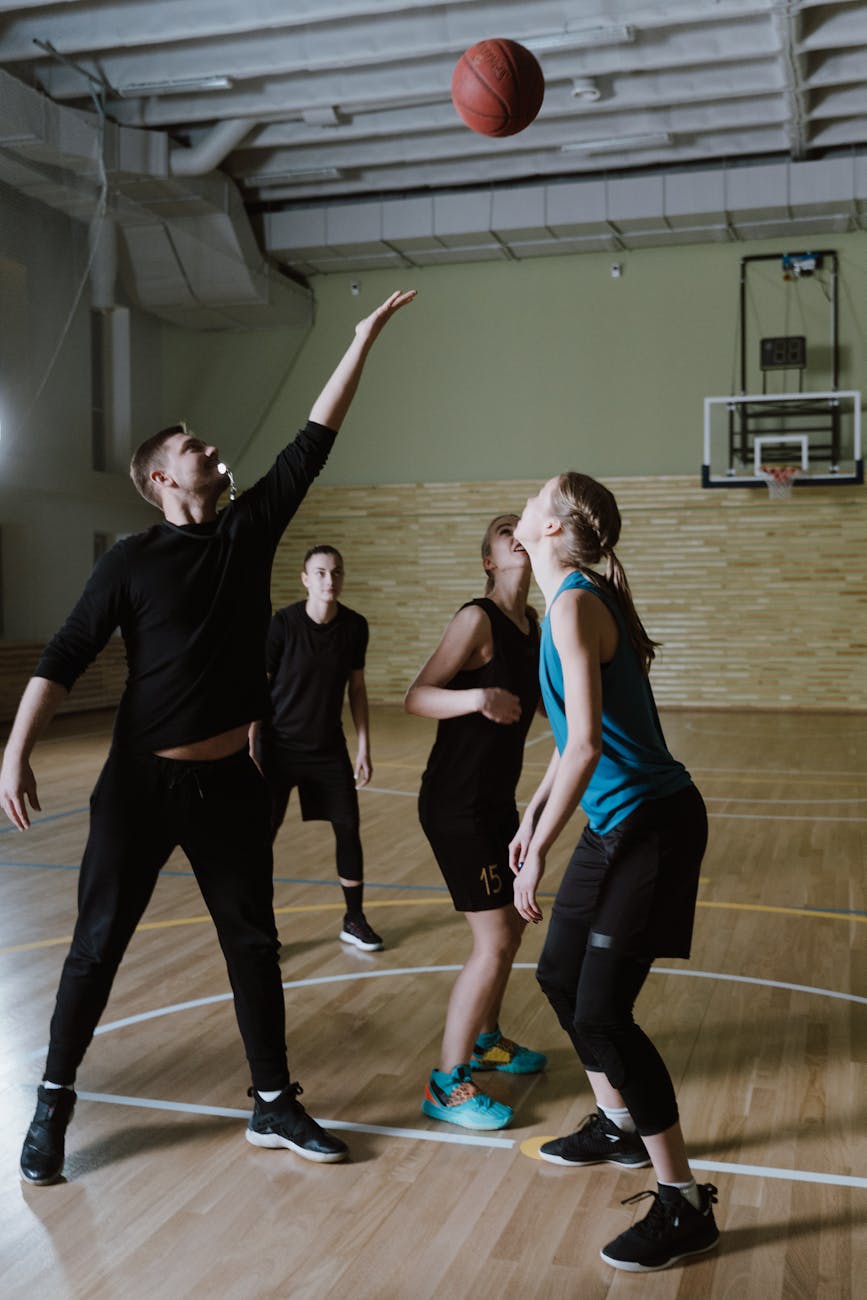
My educational career began at a rural Kentucky high school. I was one of five special education teachers. One of the requirements for teaching at this high school was coaching a team in some capacity. Therefore, I assisted with the women’s cross country and track teams. 

At the time, I didn’t know a thing about either sport, but the head coach of the cross country team was another special education teacher, Coach Bailey (name changed for privacy). I didn’t realize it when I first met him, but in the end, Bailey became a role model for me as an educator and coach.  

As luck would have it, our classrooms were side by side, divided only by a rolling chalkboard.  In the two years I worked with “Coach,” as everyone called him, I rarely heard him raise his voice, and if he did, you can bet he had a darn good reason. Mostly, Coach was a naturally soft-spoken man who could both nurture and challenge students and athletes alike.

Photo by cottonbro studio on Pexels.com

Meet the Coach 🏃‍♀️

Coach, in my mind, was “older” with salt and pepper straight hair parted down the center and a thick mustache.  His face was browned and weathered from years spent in the sun that contrasted his light aquamarine eyes.  His typical attire was khakis with a school logo polo shirt with a matching ball cap–the cap was only for sporting events. When the temperatures turned cold, he added a school logo v-neck polyester pullover that was popular with coaching staff in the late 80s.

On our first meeting, Coach gave me a tour of the “department facilities,” such as they were.  Three of the five special education classrooms were underneath the visitor side of the gym bleachers, and the other two classrooms were found at the end of the gym, just beyond the baseline.  As we walked, he politely introduced me to the faculty and staff we encountered. 

Later, when Coach discovered I had been assigned to “assist” him with the cross country team, he did not roll his eyes, sigh, or mutter under his breath upon hearing I had no coaching experience, which I feared he would do.  Instead, he said he was glad to have me as part of the team because the young ladies needed a female leader.

Photo by RUN 4 FFWPU on Pexels.com

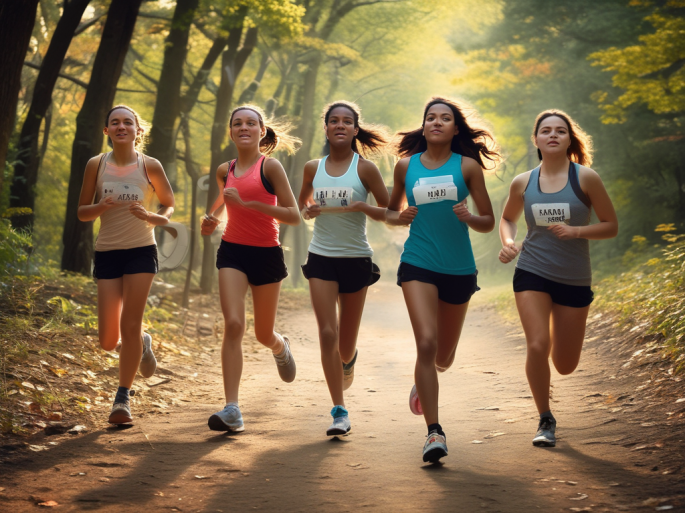
Ladies Cross Country Team 🏃‍♀️🏃‍♀️

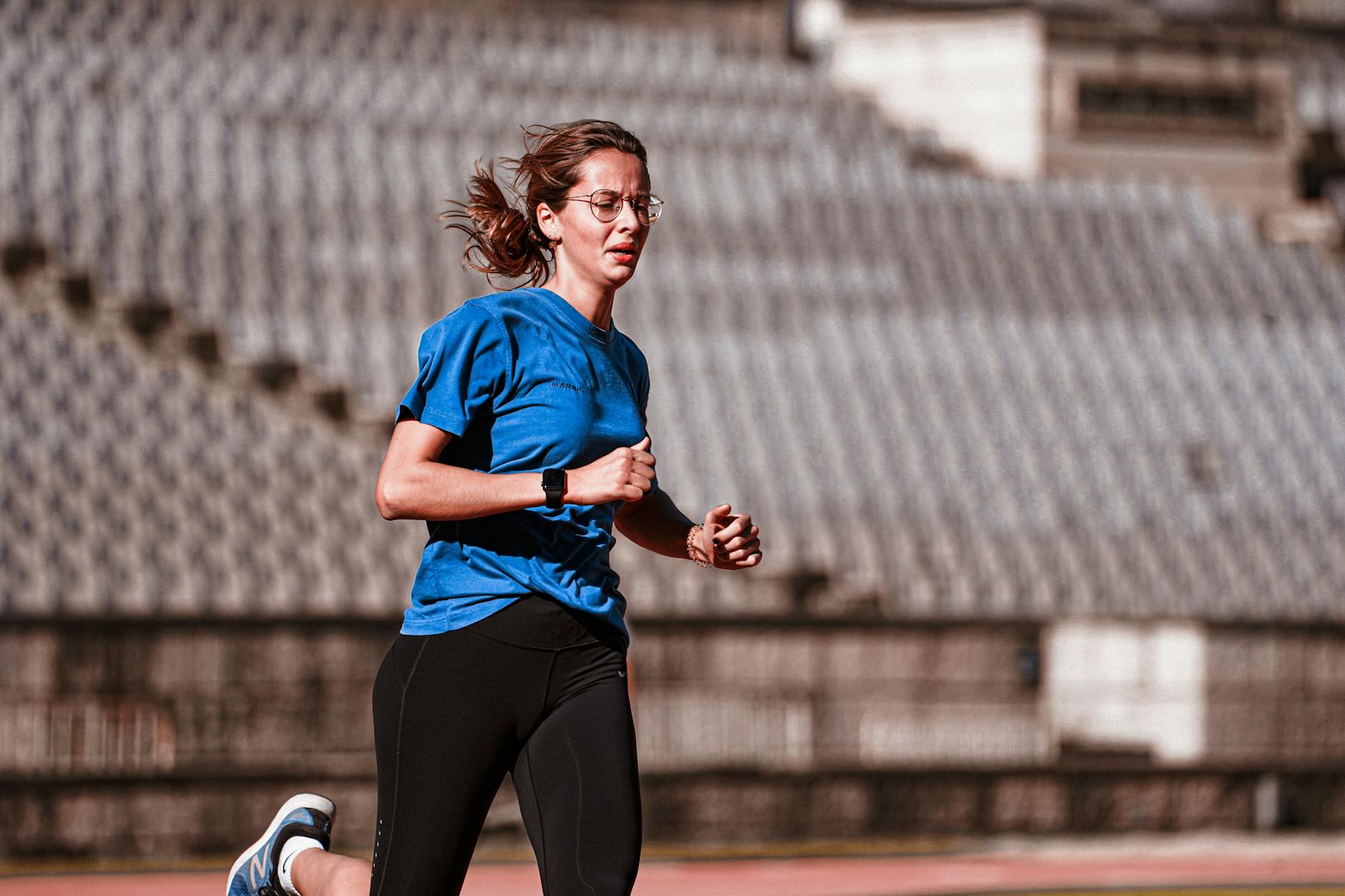
He then explained that the cross-country team had already begun practicing and invited me to join them that afternoon. It was then he asked if I ran.  Not wanting to disappoint him, I said that I did, which was sort of true. I had begun jogging during my last quarter of college just before graduating. I continued to jog two-three days per week around town after moving in with my grandparents that same summer, but I was by no means fast or knowledgeable about running beyond the basics. I knew I would have much to learn.

By 3:00 pm, I was on an access road along the Ohio River meeting the team. As Coach introduced me to the young ladies, they welcomed me with warm smiles.  As the weeks progressed, I would come to love these ladies, especially for the mature way they approached running, academics, and life in general. They were a driven group with gritty spirits, and they supported one another throughout the season even though they were competitors in races.

During this first practice, I learned that my job was to run, jog, or walk with whoever was at the back of the pack during the team’s long training runs while Coach rode his bike with the girls at the front of the group.  I was worried because I did not know if I had that level of fitness to keep up with even the so-called “slowest” runner.  

Photo by Tirachard Kumtanom on Pexels.com

The IMportance of Grit 💪

It turned out that there were two ladies who had joined the team with no running experience. Coach already knew they were not yet able to keep up with the other seasoned runners. Therefore, he asked that I remain steadfastly encouraging.  It was a role I relished. 

As the season progressed, one of the two newer runners was a “natural,” and was soon running with the rest of the team.  But Coach still insisted that I mostly focus on helping “Amy,” the runner who still struggled. He shared that while winning races was nice, developing stamina and perseverance were lifelong skills applicable to many settings, not just running.

Throughout the cross country season, Coach fostered a team attitude of, “You’re only in competition with your best time.”  His coaching style was gentle, but firm; supportive, but with high expectations.  However, those expectations were individualized to each runner, including Amy.  This philosophy was most evident after the regional meet.

Photo by Chiara Caldarola on Pexels.com

Individualized Success 🏅

We had two runners who finished in the top spots who qualified to move on to the sectional meet.  While Coach was happy with those two and praised their efforts, he also pointed out a few techniques they could use to improve their times for the next race.  

Additionally, since it was the last meet for the rest of the team, Coach took time to speak to each of the runners, showing them their running times from those hot days of August until the end of October.  All team members had improved significantly, and he made sure each runner knew how much they had achieved over the season. Coach conveyed heartfelt pride in each lady’s accomplishment, and he encouraged each one to run track in the spring.

Later, I watched Amy, who was always the last finisher for our team, walk over to her parents and chatter away about her improved times and how she couldn’t wait for spring track season.

Photo by Gerd Altmann on Pexels.com

Nudges of Success 🙌

Coach taught his students in the same manner in which he coached.  His expectations were high, but his capacity for compassion and empathy was deep. Coach was attentive and intentional when talking with students and athletes alike. He could be firm when needed, but mostly, he taught and coached with a gentle, kind, and encouraging spirit.

How fortunate was I to have taught with Coach for two years. He modeled that effective teaching–and coaching–is about the importance of each student–how you make them feel and the impact of motivating students to improve and stretch to be better versions of themselves. Every student’s best is different, and it is the job of a teacher and/or coach to see this and purposefully nudge each student forward to the next level in order for students to blaze their own trail of success.

Cultivate Inner Joy and Watch It Spread: Lessons from a Lifetime of Teaching, part 2

“The soul’s joy lies in doing.”–Percy Bysshe Shelley

Author’s Note: This is the second installment of stories from decades of teaching a wide array of students from grades K-12.  It is my hope that by sharing these stories, I will cultivate lessons of compassion, empathy, and understanding

Photo by Surja Sen Das Raj on Pexels.com

Bus Ride 🚌

My first two professional years were spent teaching students placed in special education classrooms in a large rural high school that served an entire county in Kentucky.  Some of my students faced a two-hour ride each morning and afternoon to get to and from school.  Those students rode a “feeder line” out of their hollow, or “holler,” as it was locally pronounced, because the roads were deemed unsafe for school bus passage.  The feeder line drove students to the end of the hollow where the students would then board their school bus.

School began at 8:00 and ended at 3:00, and students could begin arriving as early as 7:30.  This meant several of my students left their house around 5:30 am and would not arrive home until after 5:00 pm.  Additionally, the “holler” roads were often impassable during bad weather.  Therefore, there was a high rate of absenteeism among those students, especially during the winter months.

Photo by Pavel Danilyuk on Pexels.com

Learning methods 📝

One of those students who rode a feeder line was named “Gladys.” (Name change for privacy) Gladys had been identified as having a lower IQ. Reading and math were not easy for her.  It was as if Gladys’ brain was wired to process at a slower pace and needed expanded time to practice and play with whatever new skill she was learning.  

However, what worked to Gladys’ advantage was that she was incredibly verbal. When learning something new, most students, after instruction, think through the steps or the words to complete a task, but not Gladys. She would speak through each step and/or say each word aloud as she worked through assignments.  It seemed she had to have a conversation with herself in order to learn. 

Photo by Mary Taylor on Pexels.com

Joy Filled Spirit 😁

What I most appreciated about Gladys, however, was her spirit.  She was naturally joyful, but when she learned a new skill, she became highly animated.  And her joy was expressed in a loud and eager voice.

“Miss Musick, Miss Musick!  Did you hear that?  I read that story!  Want me to tell you all about it?”

“Miss Musick, Miss Musick!  I made change correctly!  You think the store will hire me?  I’ve always wanted to work at a cash register and push all those buttons!”

“Miss Musick, Miss Musick . . .” she sang out with every microstep of progress she made, a smile wide across her face.

On and on, Gladys would talk from the time she entered the classroom until it was time to go home.  On days she was absent, there was a void in the classroom.  However, upon Gladys’ return after an absence, her habit of sing-songing my name twice before asking or telling me something seemed to be in overdrive as if she had been saving up all her questions and thoughts to deposit them into the bank of our classroom.

My grandparents house that was viewed as a “mansion.”

Hope Filled adventure 🚙

I had much hope for Gladys.  So much so that I wrote to her parents and invited Gladys to come home with me after school one evening. She had not ventured out much beyond her “holler” except for school, and I wanted her to practice “applying for a job”.  Her parents agreed to this as long as it occurred on a school night, so Gladys could ride to school with me the next day.

At the time, I lived with my grandparents, 20 or so minutes from the high school.  Talking the entire ride to my grandparents home, I listened as she narrated all of the new things she was seeing for the first time.  When we arrived at the house, Gladys declared that I lived in a “mansion,” which gave me pause to consider what type of home she must live in. 

Once she met my grandparents and deposited her meager bag in the bedroom where she would sleep, I drove her to the fairly new Huntington Mall.  Gladys’ eyes were wide with wonder the entire drive, but when we walked inside the mall, she was beside herself. 

A shopping trip like none other 🛍️

Sounds of  “Miss Musick, Miss Musick!” followed me everywhere we walked. 

While I made a meager salary at that time, I knew I was making more than most of my students’ families brought in.  Therefore, when I could afford it, I would get items of genuine needs for my students, such as socks, sanitary supplies, toiletries, and even clothing items.  It wasn’t unusual for my grandparents to pitch in. With their help, I was able to get Gladys a couple warmer shirts (She mostly wore t-shirts.) and a warm coat for winter.  Plus, a few “fun” items: a packet of hair scrunchies, lip gloss, and a packet of  plastic bracelets that were popular at the time.  

For dinner, I took her to the Big Loafer–classic teenage food at the time–where Gladys talked more than she ate. After dinner, we practiced walking into stores and asking for job applications. It was the first time I ever noticed Gladys appear sheepish or lacking confidence in her own voice.  However, by the end, she could make her request in a clear and competent voice, even asking about interviews.

 I took the applications we gathered and made copies at school for my students, including Gladys, in order for them to practice reading and completing job applications. They also rehearsed appropriate ways to respond to interview questions.  Not that I expected my students to make the two-hour trip to the Huntington Mall to seek employment.  Rather, I wanted them to feel confident enough to apply for nearby jobs once they left high school. 

Hopeful application ✍️

Most of my students’ parents did not work; therefore, one of my biggest dreams for my students was that they would ultimately become gainfully employed and feel a sense of pride that comes from hard work.  I knew that I was fighting a difficult battle, but students like Gladys, whom I taught for two years, filled me with hope. 

Years later, I ran into one of my former co-workers who said that Gladys did indeed have a job at a local convenience store and had saved enough money to buy a used car that someone in her family helped her maintain.  

Photo by Andrea Piacquadio on Pexels.com

Joy is contagious 🤓

If I close my eyes, I can imagine Gladys’ sing-song voice greeting customers and cheerily chirping her way through each customer’s purchase. Gladys found joy in doing.  As a result, her cup of life bubbled and overflowed with contagious delight. One couldn’t help but smile and feel joy when interacting with Gladys. 

Finding joy in our day-to-day tasks and the infectious nature of a smile were the two life lessons Gladys modeled.  How fortunate was I to be her teacher.

See the soul and ignore the story: Lessons from a lifetime of teaching, part 1

Ignore the story and see the soul.  And remember to love. You’ll never regret it.–Seane Corn

First years of teaching 👩‍🏫

Over the decades of teaching, I have accrued numerous experiences.  Several of these stand-out memories occurred during my earlier years of education.  Therefore, in honor of another school year’s conclusion, I will share some of these memories over the coming weeks, and the many lessons these interactions provided. 

My first teaching position was at Kentucky high school in the late 80s.  Newly graduated and exceptionally young, I was ready to change the world.  Like all first year career experiences, the theoretical training of a university was quite different from the reality I faced.  

I was one of five special education teachers.  Our classrooms were separated from the rest of the school.  We were part of the gymnasium facilities, and my classroom was one of three under the visitor’s side of the bleachers. 

Lines of Separation 📚

In order to get to my “classroom,”  I had to walk through two other “classrooms.”  One wall was slanted because it was the underside of the bleachers, and one wall was a rolling chalkboard separating my classroom from another.  One wall was painted concrete block, and the other side was a giant metal wall with a locked door that stored the ROTC weapons.  The desks were mismatched leftovers from a previous era, and classroom supplies were limited.

My first day of school was filled with nerves, and the isolation of my situation led me to feel even more anxious. However, there was little time to dwell on it as the students began arriving.

The Encounter 🗣️

The last student to arrive stood over six feet in height and brawny.  (I would later learn he worked as a hired-hand at various tobacco farms across the county.)  With one cursory glance, he sized me up, spit tobacco on the floor, and picked me by my shirt collar.

“You ain’t teachin’ me nothin.  I ain’t here to learn.  Only here cause it’s the law.”

His startling blue eyes conveyed his disdain for me as we locked eyes.  I knew this was a make or break moment, and I was determined to not break. So I said the most brilliant set of words.

“Put. Me. Down.”

It was an intense moment.  On the inside, I was filled with fear.  Fear I would lose my job after only one day.  Fear I was about to get hurt.  Fear I wasn’t strong enough to withstand the discipline this job would require.

Wordless Truce ☮️

Outwardly, my eyes never wavered from his.  I would not be intimidated by him.  Seconds seemed to stretch, although I am certain this was not a long moment.  However, it was long enough for me to take in the acne scars on his face as well as a few other scars that looked as if he had experienced his fair share of altercations.  His blonde curly hair was cut in a mullet.

I was acutely aware of the other students’ quiet stares taking in the situation as I once more repeated, “Put. Me. Down.”

Through some act of Divine Intervention, or perhaps the I-am-not-messing-around look in my eye, the student put me down.  I recall the way he smugly looked around at the other students as if to convey he had shown me.  

Peace Offering 🕊️

I could have taken him to the office or written his behavior up, but I chose not to.  Even though I was inexperienced, I knew that would immediately build a wall between not only him, but the rest of the students and me.  Instead, I believed I needed to find out more about him, and work on building a relationship with him and the other students. But, I wasn’t sure how, or even if, it could be done.

In the meantime, once things cooled down, I gave him cleaning supplies and asked him to spit out his tobacco in the trashcan and clean up the floor. Then, I walked away and busied myself with other students.  It took several minutes before he started, but he did clean it up.

Seasons of Change 🍁❄️

By late fall, the young man would occasionally engage in conversations with me, especially if I focused on his knowledge of raising tobacco and his work ethic.  He explained that he had worked alongside his dad, but at some point that stopped.

By winter, I had learned that his father was disabled, and no longer worked, but apparently still knew how to lift his arm to drink and hit. This partly explained the young man’s tough-guy persona. The student often stayed overnight with buddies around the county, or during certain parts of the growing season, he’d stay over at the farms on which he was working.

Misdiagnosis 📖

By mid-year, I felt certain that the student was misidentified.  He was no doubt dyslexic, but that had nothing to do with his IQ or his abilities.  There were so many life and reading skills that I wanted to work with him on, but time was running out.  The young man was determined to quit school once he turned 18, even though he was only a junior. 

One class in which this young man thrived was shop.  He could build and repair seemingly anything.  One of the special education teachers often talked about the young man’s talent and sometimes hired this student for work on the teacher’s farm.

By March, I had established a good working relationship with the student.  I teased him about his haircut and cowboys boots, and he made jokes about my height and “easy” job. Along with the other students, he learned to read and complete job applications, manage a budget, how to dress/act during a job interview, and even how to plan, shop, and prepare a week’s worth of simple meals. He was even reading short books with adapted text about famous athletes. 

Rumor Has It 😔

One day in April, the young man did not show up for school.  That wasn’t unusual.  Many of my students had irregular attendance.  After his third consecutive day of absence, I went to see an administrator to inquire about the student’s absence. He said he would check into it, but the gossip among students said he wasn’t coming back. The young man had had his birthday.

I have no idea what became of this student.  I would like to think the best, but I am not so sure.  Maybe he has a job, family, and even grandkids by now.  I can only hope, but I’ll most likely never know..

Lessons learned 📝

Nevertheless, I am grateful for this student.  He was the first to teach me to ignore the bluster of the student’s story, and see their soul–see the person they can be at their best self and recognize their potential.  I accepted him as he was, envisioned a better future for him, and tried to help him see it too.  

He also taught me that no matter how hard I work with students, they are still individuals who will determine their own fate.  That was, and still remains, a hard lesson to swallow.  So instead, I will focus on his best, albeit unintentional, gift:  See the soul, not the story.  You will never regret it; I haven’t yet.

Educational Light: Reflections of a life of teaching

“Just as one candle lights another and can light thousands of other candles, so one heart illuminates another heart and can illuminate thousands of other hearts.”–Leo Tolstoy

Sweet Welcomes 🤗

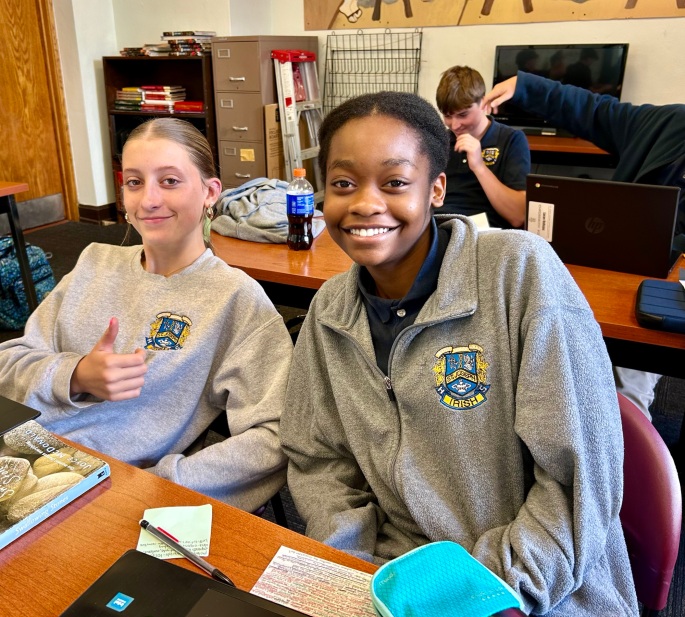
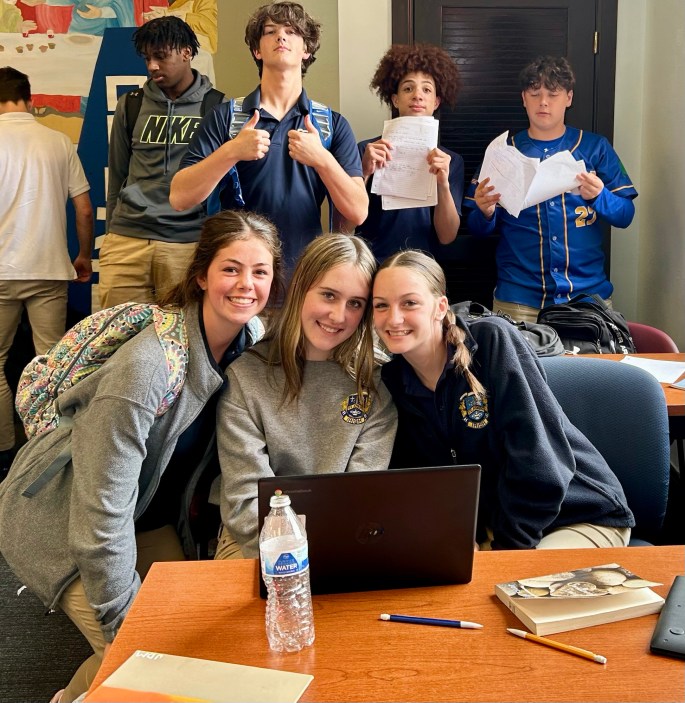
By the time you read this, Dear Reader, National Teacher Appreciation Week will be coming to an end. However, mine began, in its own unique way, the week prior.  As I walked into the high school on a Friday  after being out for a few days, an early arriving student exclaimed, “Ms. Hill, you’re back!  I missed you!” Then, she surprised me with a hug.

Later, before the beginning of mass, our weekly church service, another student said she was happy to see me as I sat down beside her.  Two rows in front of me, an additional student, and his buddies, all started waving at me with smiles on their faces.  I was definitely touched.

The Dog Ate My Homework 🐶

There are many times, as an educator, especially in more recent years, where it feels I am engaged in a battle with a myriad of student-distraction, and I therefore wonder what kind, if any, impact I can make in my students’ lives.  Video games, travel sports, youtube, and phones are just a few of the numerous diversions vying for students’ attention. “The dog ate my homework” excuse has been replaced with more modern tales. 

 “I stayed up late playing video games with my friends and lost track of time.”  

“I didn’t come to class this morning (or yesterday) because I was so tired from playing in the tournament this weekend.”  

“I completely forgot to ________ (read, study, write) because there was phone drama last night with my ________ (friends, boyfriend, girlfriend).”

“I performed four shows (or competitions) this past weekend, and I completely forgot about __________ (assignment).”

None of their distractions are any better or worse than distractions of the earlier decades in my career.  They are simply different.

Therefore, I do empathize with my students’ level of fatigue and distractions.  My teenage world was vastly different from their current teen world, but I still recall the angst, the hormones, the emotions, and my own unique set of distractions. Plus, I am professional enough to recognize that their excuses are not personal; it’s just their reality, shaped by society, parents, and peers.  

checking in 😃

Which is why I try to work with, rather than against, the current tide, taking time to talk to the students in order to get to know them.  What makes them tick?  What are their interests?  I try to notice when one, or several, are having a bad day, so I can check in with them and offer help or a compassionate ear.

Still, I am not perfect–not by any means.  There are days where all the best-laid instructional plans go wrong, technology in the classroom doesn’t work, and/or multiple interruptions occur.  On those days, I look around the empty classroom after students have exited and wonder if I am making a difference?  Am I preparing the students, not only for the next level of English, but also, am I adequately conveying that I care even more about the type of people they are becoming?  Am I making that personal connection that communicates to them that their life matters and is important? 

Words Matter 🗣️

As a writer and educator, I know that words matter. Words are tools.  Words can be used to build up another person, encourage a hurting soul, and foster a healthy relationship.  Likewise, words can deeply wound, leaving scars that can be felt for years. Therefore, when those students used their words to tell me that I was missed, it felt as if, perhaps, I do make a difference, even in a small way.

Later, that same day, I ran into a national chain store to pick up a couple of items.  As I was darting to the self-checkout station, a young lady greeted me with, “Hey, gorgeous!”

Now, at my age, that is not a line I often hear, but I also know from being around teens that is a phrase females will sometimes use with one another.  The speaker’s face was familiar, but my brain struggled to match the face to the correct moment in time. Then, I looked at her name badge.

It was a former student of mine from over 20 years ago during the time period in which I taught kindergarten. We talked for several moments, and she shared pictures of her two sons.  She caught me up on the lives of her siblings and parents. Listening to her talk, I took in her smile and dancing eyes.  I could tell she was happy, which, in turn, made my heart smile because, ultimately, I want all of my students to have an overall happy and successful life, however they define it.

Unforgettable Moments 🙌

As I prepared to walk away, I thanked her for stopping me and marveled that she would even recognize me. 

“How could I forget you?”

Those five words may not seem like much. They won’t grab national headlines, and they won’t earn me a six figure income.  Nor will her words put my name in lights.  Still, those words lit me up from within. Her words touched  me in ways headlines, money, and fame could never feel.  To know I made a difference with at least one past student, and to hopefully continue to affect current students to feel empowered about their own future choices is what continues to motivate me all these years later.

Thank you, Teachers 👩‍🏫 👨‍🏫

To all the educators who taught me, thank you.  I don’t need National Teachers Recognition Week to remind me of the impact your teaching had on me.  I continue to carry the torch you lit within me in your classrooms of long ago.

To all the educators in the trenches with me, thank you. Teaching is a challenging and often undervalued role, but the light you bring to your students matters.  And that is why we teach–to pass on the light to our students that was given to us. 

Thank you, Students 🙇 🙇‍♀️

Finally, to all of my students, past and present, thank you.  Thank you for sharing your light with me. You make my life richer, more interesting, and definitely a more engaging experience!  Never hide your light, continue to shine it, and may you bless the future world with your many talents and gifts.  Heaven knows, this ol’ world needs more light.

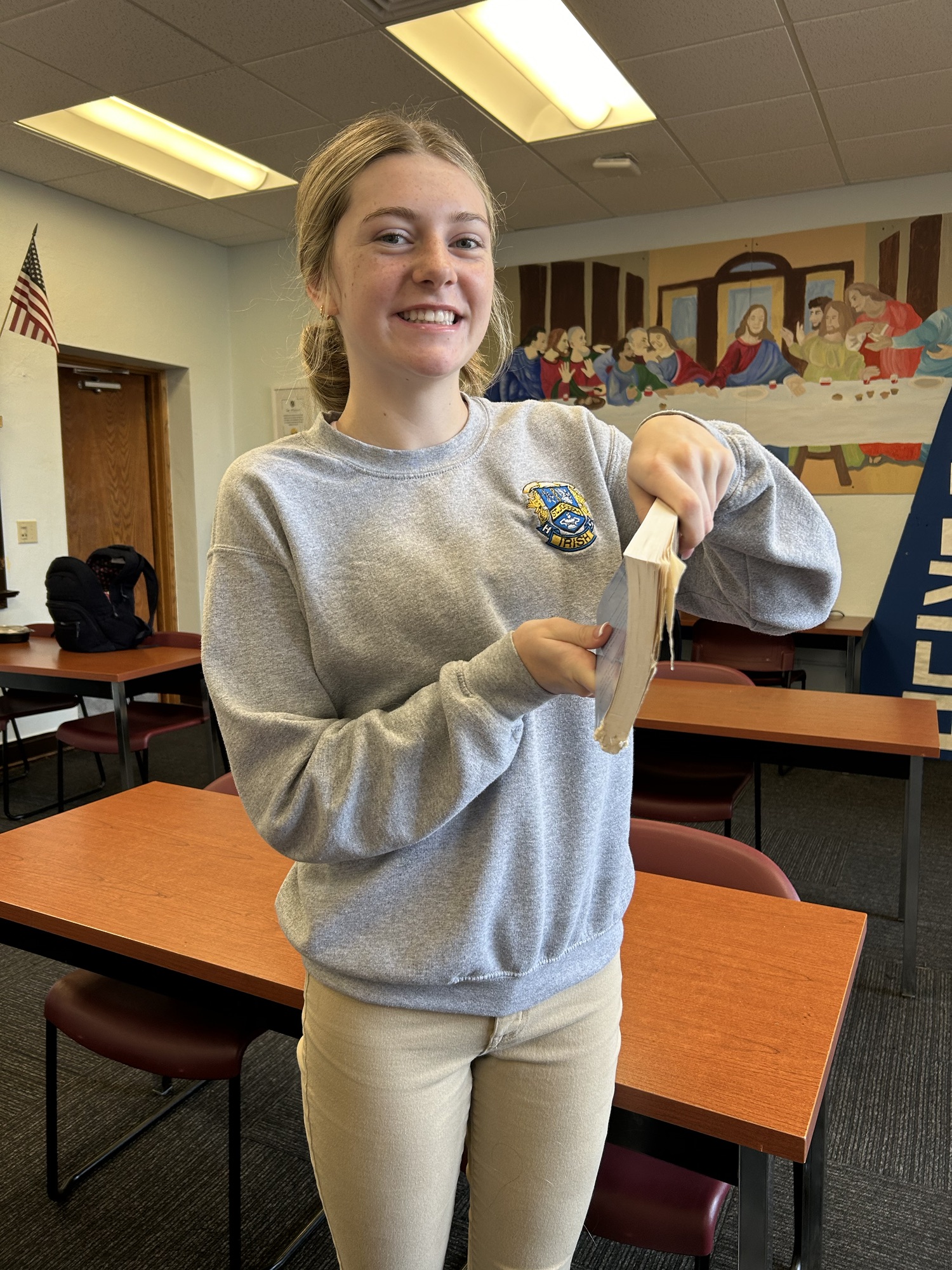
If you look closely, you can see, this student’s book, (Madelyn) was truly “eaten” by her dog. He took several bites out of the tops of the pages of the novel she was reading for my English 9 class.

The End of an Educational Experiment . . .for now

“What a long strange trip it’s been.”–Jerry Garcia

“Dear Ms. Hill,  Thank you for all of your hard work and patience.”

This was a one-sentence thank you note I received from a student in advance of the end of the academic school. I appreciated his sentiment and reflected over what I now think of as the “pandemic years of education”.  These past two academic school years have certainly tested teachers’, students’, and parents’ abilities to practice patience–both within ourselves and with one another in the educational community.  It forced all of the involved stakeholders to work in ways for which we were not prepared, and it stretched us to new limits.

As a middle school, 6-8 Reading Language Arts teacher, I have read countless student journals expressing their feelings of fear and uncertainty when the pandemic first began, their high levels of anxiety as well their feelings of isolation during their time in quarantine, their feelings of frustration during day-upon-day of virtual learning, and their exaperastion when dealing with glitchy/malfunctioning wifi or frozen devices.  Despite all of the pandemic educational vexations, students also wrote of their newfound appreciation for the value of the in-person community that schools foster.  Nonetheless, the scars of this experience, I fear, will remain with many of our students for years to come. 

“Reduced learning time has likely impeded student learning and also affected the development of the whole child.”–Economic Policy Institute

Meanwhile, when reflecting upon this pandemic experience with colleagues, both in the public and private school setting, many reflect upon the multiplicity of issues and/or frustrations, depending upon their unique school community.  Pedagogical adaptations seem to have been one of the major challenges often stated by the educators due to virtual learning, shortened school year, and/or hybrid learning.  Then, there were forced adjustments to instructional delivery in order to balance the engagement of virtual students while simultaneously instructing and attending to the needs of in-person students. This demanded that teachers refine and adapt instructional plans–often on-the-fly if there were wifi issues–in order to best facilitate student learning. Additionally, curriculum was often gleaned to the most essential learning objectives and standards also due to a shortened calendar year and/or class time and, in some cases, to allow for additional time to address the social/emotional needs of the students. Meanwhile, administrative tasks seemed to double with an endless supply of emails, on-line grading, and a multitude of spreadsheets and documentation monitoring student attendance, progress, or lack thereof.

Looking back over this experience, I feel as if I am standing on top of one mountain peak, but I can clearly see there are more summits to climb in the coming academic years.  From my current apex, I can tell you this.  Teachers and students should not judge themselves too harshly as this school year winds down.  Virtual teaching and learning during a pandemic was hard–plain and simple.  Students and teachers alike, across the country, were asked to exit their respective schools on March 13, 2020 with all of their personal/professional supplies and no preparation.  Then, on Monday, March 16, we were exhorted to embark on what would, at this point in my 30-plus years as an educator, be the most dramatic educational paradigm shift I have experienced that continued throughout the summer months of 2020 and on into the 2020-2021 school year for which we are now wrapping up.

One thing is for certain, the pandemic compelled teachers and students alike to establish a strong foundation in the employment of technology for educational purposes. The downside of this is that we also learned that technology is dependent upon access to wifi, devices that work, and equal access for all students to reliable devices and internet access.  While I was blessed to work in a school that offers equal access to devices (although our local wifi provider had MUCH to be desired), that was not the case for all schools.  Additionally, even with working devices, the importance of reliable internet service came to the forefront of the educational world as I witnessed in my own school.  As a teacher who committed to operating paperless during this school year, due to virtual learning, my students and I, very quickly, had to learn how to be incredibly patient when there was no service, certain platforms crashed, or devices simply froze. Which leads me to another lesson.

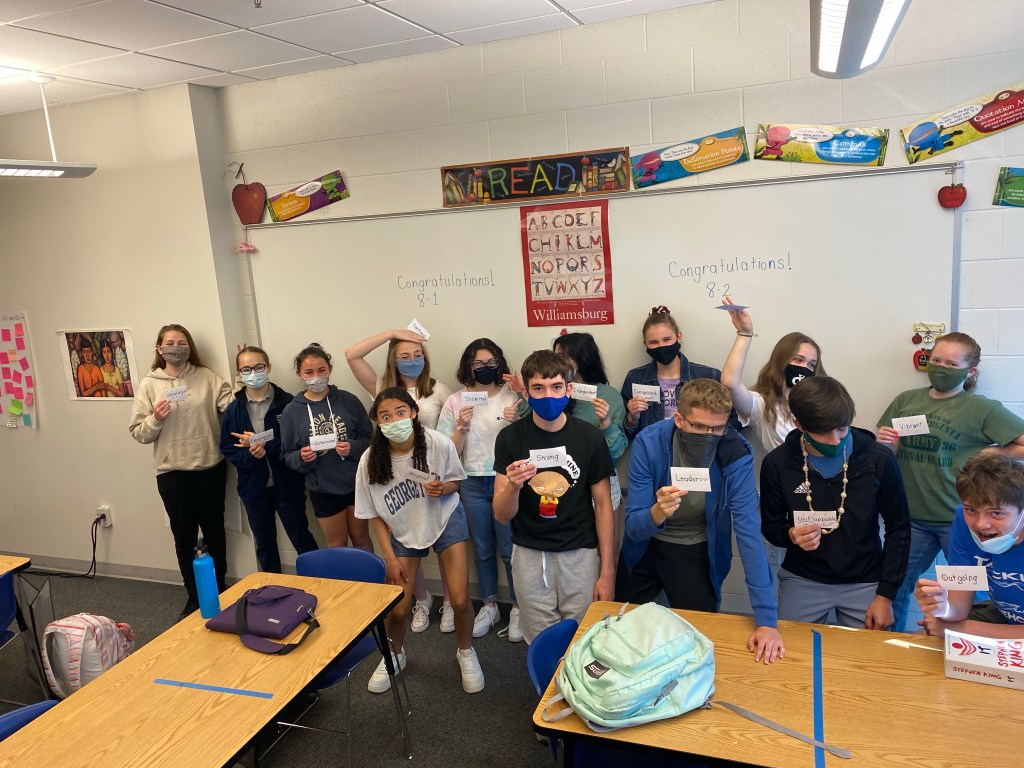
The last day of school for 1st period, 8th grade, Reading Language Arts students, for 2020-2021, whether in-person or virtual. Eventually, all but one student, returned to the classroom.

“It’s (COVID) taught us that technology can be wonderful, but it will never replace the value of people in safe but rigorous learning spaces talking, playing, and working together.”–Brad Olsen, Senior Fellow in the Center for Universal Education

The importance of local communities, administrators, teachers, students, and parents valuing and supporting one another cannot be overstated. Communities witnessed, very quickly, that not only do schools provide an education for their children, but they are also a reliable source of childcare that keeps children safe, fosters their social development, and supports their emotional and physical well-being.  Meanwhile, administrators, teachers, and students discovered the importance of the synergistic experience that happens with in-person classroom learning. While the remote learning model worked–and will probably continue in certain circumstances–there are real educational, social, and emotional benefits from interacting on-site with one another within the structured periphery of a school setting. 

The last day of school for my 8th grade, second period, Reading Language Arts class for 2020-2021, at times, many were virtual, and by the end of the year, all were in-person

“COVID-19 highlighted the essential role of child care for children, families, and the economy, and our serious underinvestment in the care sector.”–Daphna Bassok, Nonresident Senior Fellow in the Brown Center on Education Policy

While I have no doubt, next year will bring the educational system continued challenges from the lingering effects of this pandemic, I believe, overall, we have the ability to face them with an even greater capacity of compassion and empathy if we heed its many lessons.  The pandemic, it seems to me, has reinforced why it is crucial for the community at large to listen to the needs of educators, parents, and students.  It has given local leaders an opportunity to reflect upon the critical role of childcare and its contribution to the fiscal wellbeing of its community.  Likewise, the educational system must continue to rethink and adapt instruction in order to better facilitate student learning while continuing to cultivate ways to meet the emotional and physical needs of children, caregivers, and educators.  One-size does not fit all when it comes to technology, education, and childcare, but all affect and influence the successful functioning of the communities at large.  

In the end, I circle back to what my student simply wrote.  Thank you to the many who extended me patience through what has been one, if not the most, challenging 15 months of my career.  Many have granted me grace in moments of extreme stress and emotional duress, and for those unnamed moments, I am eternally grateful.  Here’s to summer break, and a fresh start on the coming school year.  May schools blessedly remain open.

First period class clowning around on their last day of school which was also a dress down day for their last day of 8th grade.
Second period, 8th grade, striking a pose on their last day of 8th grade which was also a dress down day.

We all need a little patience

“In a time of drastic change, it is the learners who inherit the future.”–Eric Hoffer

“Change is only felt when it is drastic.”–Lailah Gifty Akita

Dedicated to the teachers with whom I work, and all the other educators, near and far.

As I step into the warm shower, pulsating water beats down on my tight neck, my low back is still dully throbbing from the previous day’s efforts, and my feet, my heavens, my feet, they are pulsating from the constant pounding of walking on concrete.  

It’s Friday.  You can do this.  Everyone is feeling similar aches–it’s not just you.  Yes, but most others are a heckuva lot younger!  You can do this; you’ve done this before–albeit, not so drastic . . . or was it?

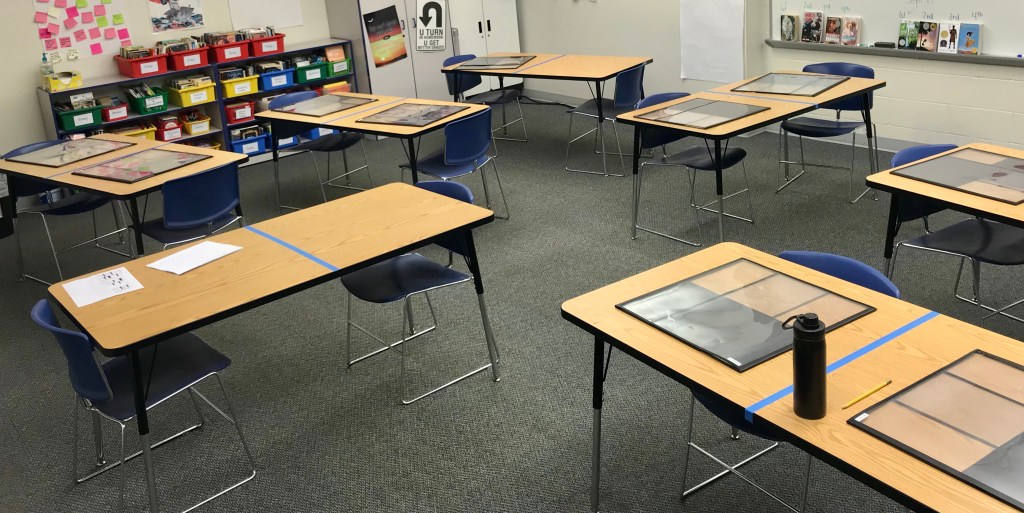
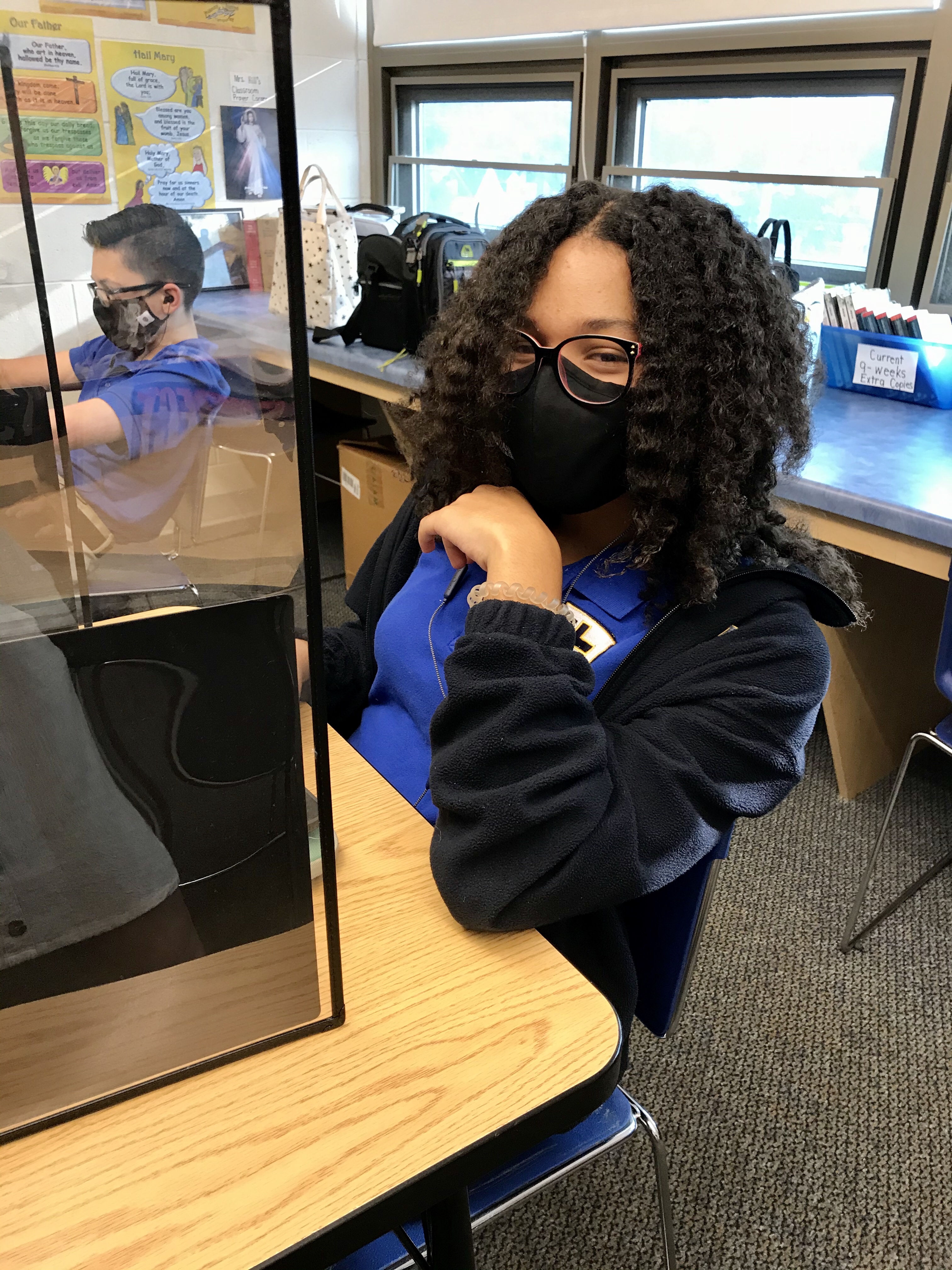
Students working at school in the age of COVID and an era of paperless (as close to it as possible) education.

I remember following the Special Education Coordinator of the county school district in which I had first been hired fresh out of college.  I felt proud, excited, and eager.  The clipped, rhythmic pace of her heels as they click-clacked across the tiled floor resounded–even more so when she continued on into the gym.  At the time I couldn’t understand why we were in the gym when she was supposed to be taking me to my classroom.  

Tables cleaned and sanitized well before 7:30 am when the students begin arriving to homeroom.

Eventually we made our way to the opposite side from which we entered, walked up some steps, and began walking under one side of the gym’s bleachers.  Clickety-clack, clackety-click, past what looked like one semi-formed classroom through another vaguely formed classroom until we reached the end.  This was to be my so-called classroom with not a single window.  No textbooks.  No materials.  Broken desks.  Dirty teacher desk.  Not even real walls for two sides–just the underside of bleachers, a rolling chalkboard, one concrete wall, and metal, padded locked door with Junior ROTC weapons stowed away behind it.  All 4’11’’ of me would be serving 15-25, 9-12 grades students in this space, the majority of which were lanky, long males who did not want to be there.

Gone were those meticulous lesson plans and the abundant, never ending resources of Ohio University.  The colorful, bright, window-lined classrooms arranged, organized, and utilized based upon the current, best educational practices were nowhere to be seen.  It was 1987, so there was no internet, certainly no cell phones, and those education journals to which I had been advised by academia to subscribe were certainly not going to be of help in this unbelievable setting.  This was a drastic change, and yet, I somehow found a way to make it work for two years before facing my next challenge . . . 

Moving on to another district, I was assigned to teach twelve, K-5 grade level students with severe behavior and emotional issues that often required restraint, in a metal portable classroom isolated from the rest of the school.  I was young and foolish enough to think this was a good idea–a good move for my career.  Certainly, it was financially speaking, but after one day of passive restraint training, I began to wonder.  

Although this classroom had four walls, it was empty and bare, save for a few tables and desks.  Then, there was the challenge of all those different age ranges.  Developmentally, a kindergartener is miles apart from a fifth grader.  The challenges and changes I faced over the next seven years, the unbelievable behaviors I witnessed, and the most heart-wrenching stories–seriously, seriously horrible–still haunt me to this day.  No child should undergo what those children went through.  Baby bottles filled with beer, children sexually abused, parents addicted to drugs and/or alcohol, older children responsible for numerous younger siblings while mom did tricks for drugs . . . the gut wrenching stories never seemed to have an end.  On top of all of this depravity, it was the early 90s, autism was not clearly understood and accurately identified as it is now.  Therefore, I also had several autistic students, mistakenly identified as “behavior disordered” alongside students who were often prone to violent outbursts.  Given the combination of all of these factors, I honestly do not know how I made it work–and yet, somehow Divine Providence helped me through it all.

I have experienced numerous changes in education since those first nine years of my careers, many of which were drastic, and all created unique circumstances for which I was ill-prepared, but none can compare to the combination of educating in the midst of COVID while simultaneously teaching both in-person and virtual students at the exact same time.  As an educator, my colleagues and I are tasked with keeping kids safe from a pandemic-worthy virus, care for their emotional well-being, and educate them in the socially distanced manner of their parents’ choosing–at school or from home–attending a regular schedule of classes through the technological wonders of the imperfect internet.

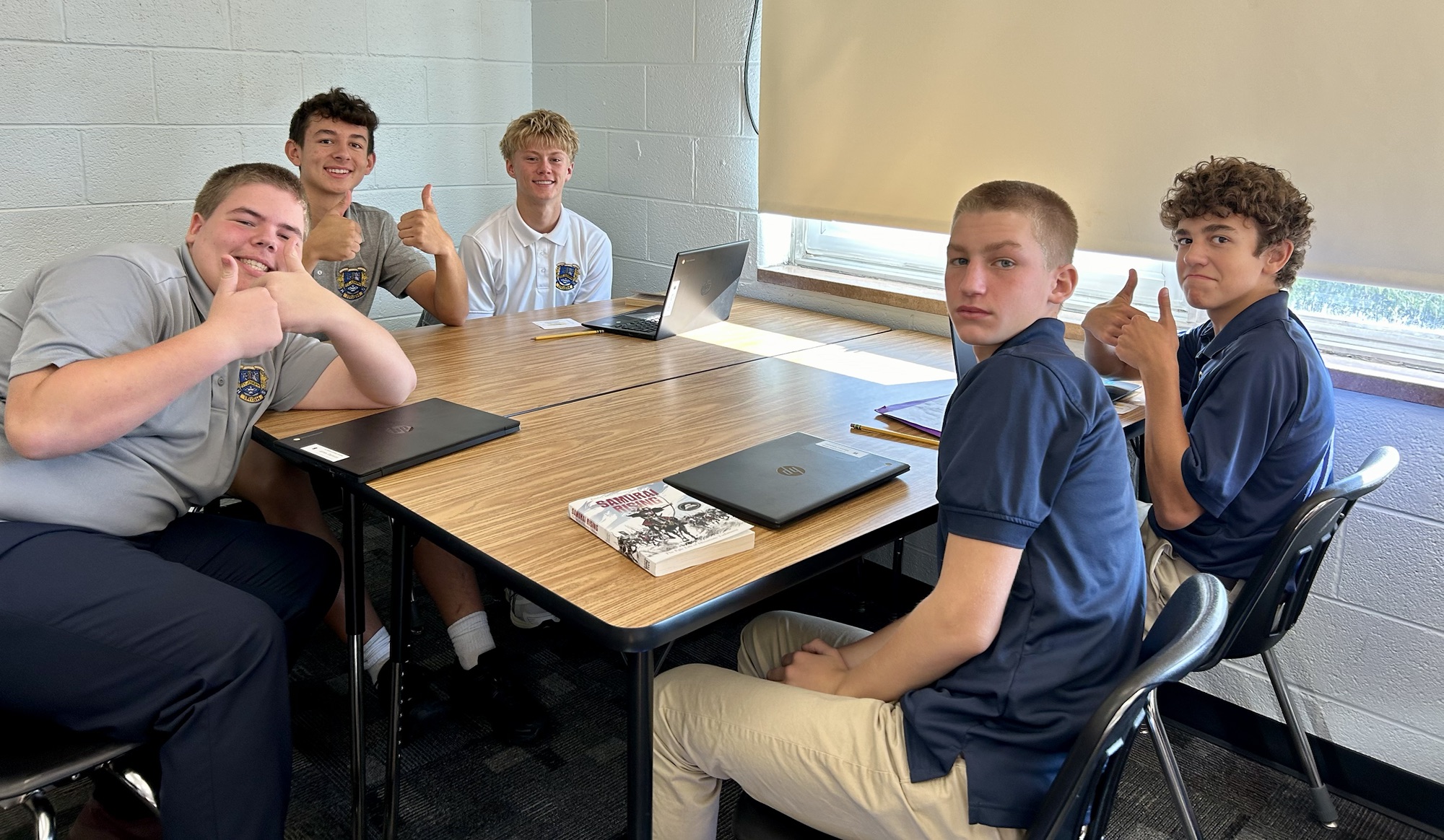
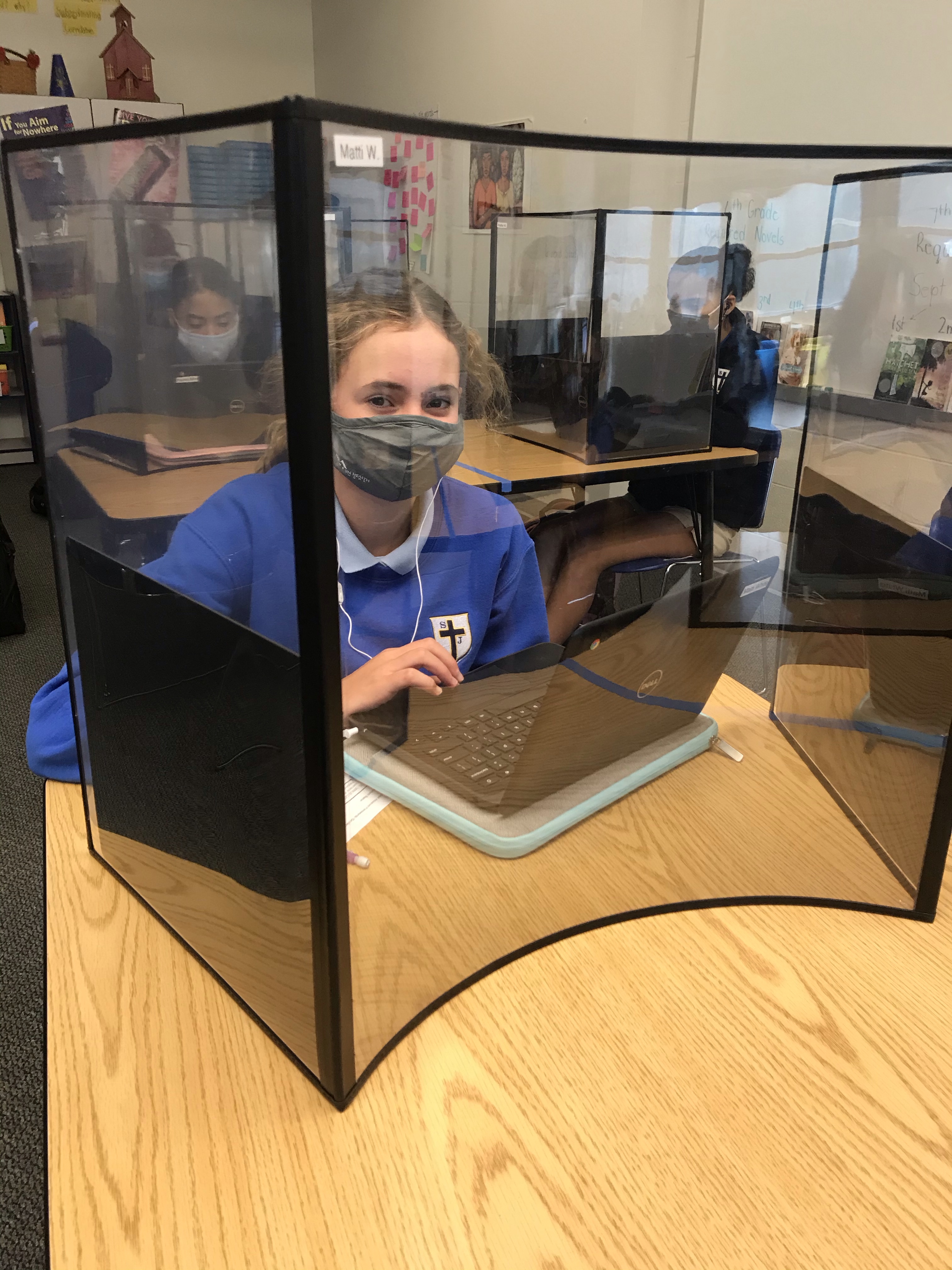
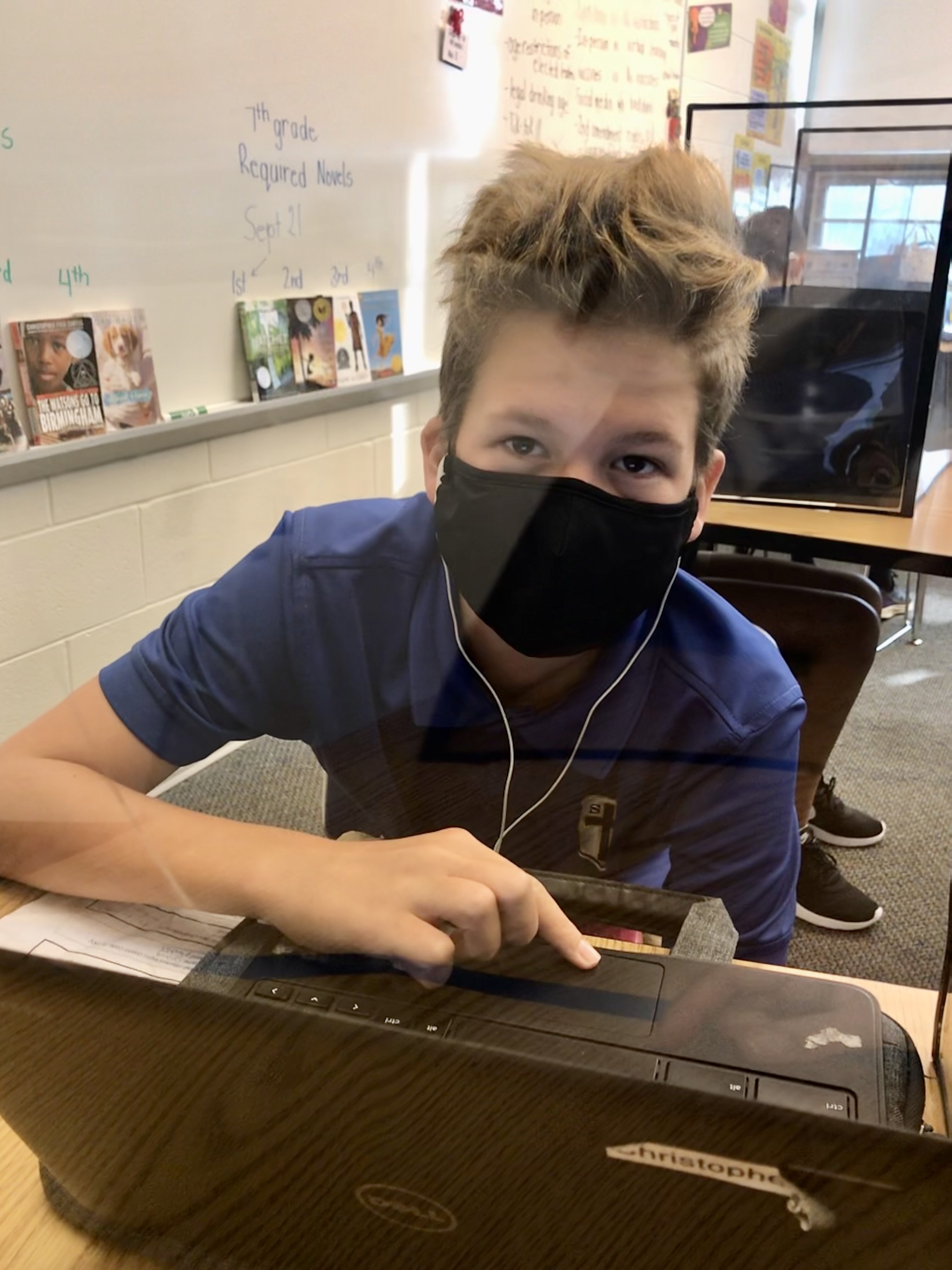
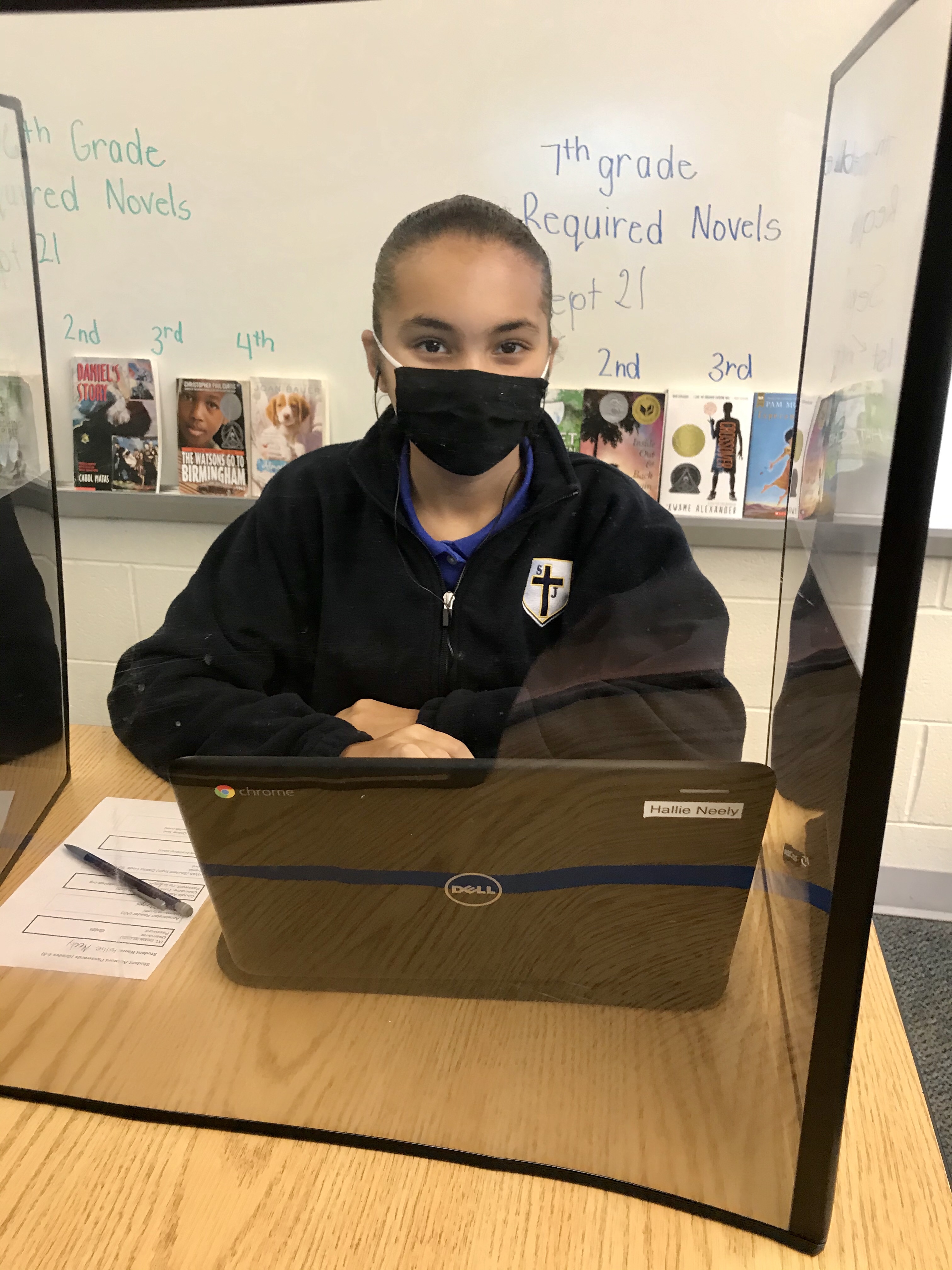
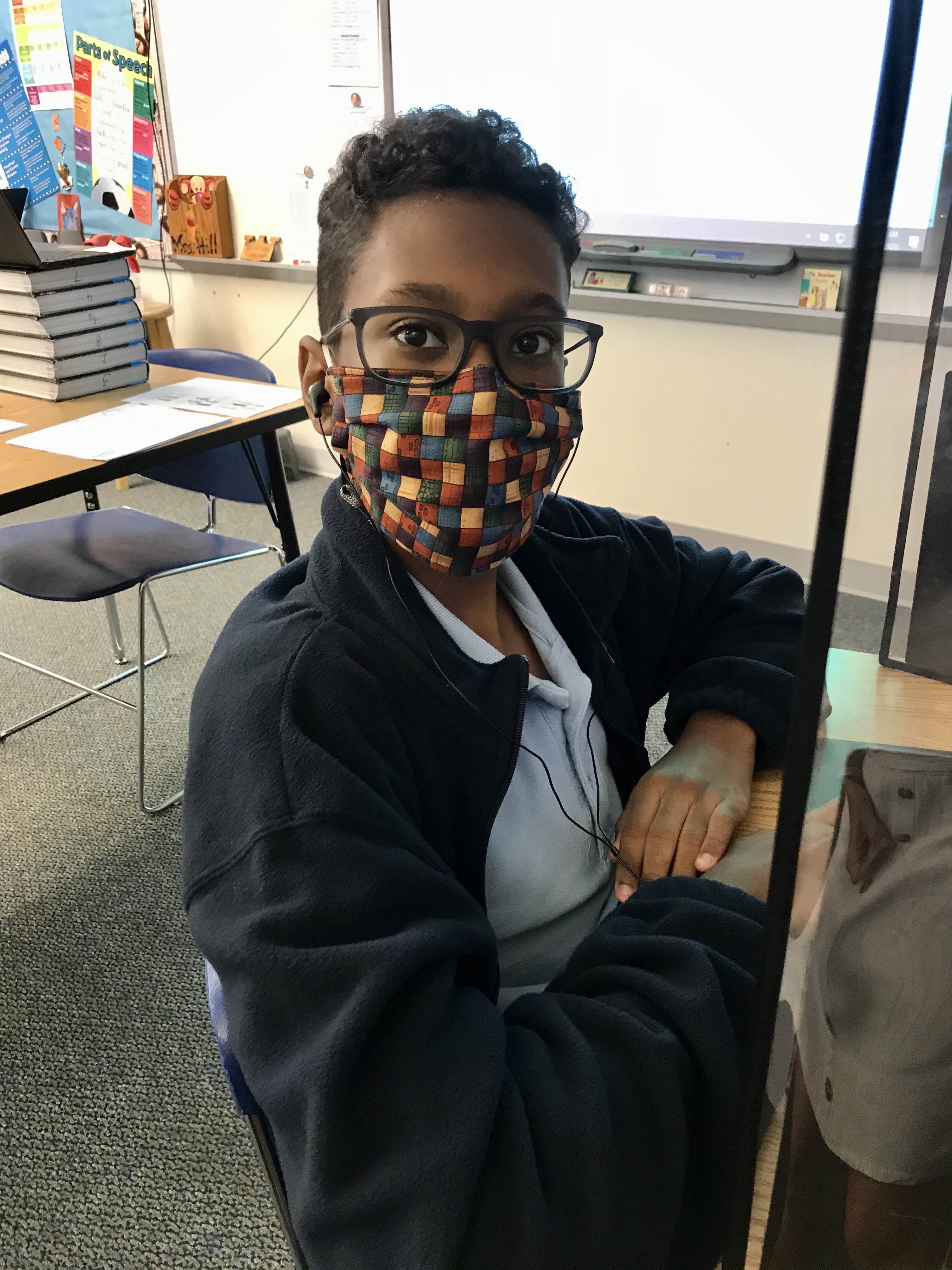
Each morning begins well before sunrise, in order to begin planning, organizing, and posting from home.  Arrival at school for teachers starts well before 7:00, as each teacher must mix fresh bottles of both disinfectant and sanitizer that is used before and after every class change.  Students begin arriving in our classrooms by 7:30 after going through a routine check of health questions, temperature check, and hand sanitizing procedures.  Classes officially begin by 8:10 after morning announcements, prayer, and pledge.  As students enter my classroom, they must wait until all tables are sanitized.  Then, I must quickly log in and connect my chromebook with my virtual students for that class period.  While I am doing this, in-person students set up their tri-fold, clear plastic dividers and log onto Google Classroom.  We are all masked, and by the end of the day, my voice, and those of my peers, are hoarse from projecting through the barrier of the material covering our mouths and noses.

The day begins mixing fresh batches of both disinfectant and sanitizer. Tables, light switches, door handles, class counters, and sink area all clean well before the 7:30 arrival of students.

While offering instruction, I am simultaneously monitoring, engaging, and facilitating with students within my classroom and those at home.  This also means I must work hard to be as paperless as possible for the benefit of all students, but especially those who are participating virtually.  Then, there are the technological glitches that can cause delays, interruptions, and malfunctions with both groups of students.  Additionally, I am trying to learn, assemble, and implement a multitude of on-line educational platforms to enhance, streamline, and engage all levels of students.  By the day’s end, my Fitbit watch consistently reveals that I have taken anywhere from 15,000-20,000 steps with minimum time spent outside of my classroom walls.  

If the first week is any indication, my work day will consist of a constant stream of decisions, sanitizing, and juggling–juggling in my mind to best meet the needs of both in-person and virtual learners–as I work to redefine the art of facilitating instruction.  Never in my previous educational training did I ever receive training on how to engage and instruct students in a meaningful way during a pandemic.  Nor have I ever seen so many of my fellow teachers experience such high levels of anxiety, stress, and discomfort as I have in one week of school.  The emails from students and parents never end, and it feels as if there is not enough time, nor enough of each teacher to go around. 

And yet, that experience of my early years tells me that we will all adapt, grow, and learn from this.  Educators are a formidable, flexible force driven by the passion to educate and care for all of those entrusted into our care.  However, educators, parents, and students all need extra doses of patience with one another, the ever-evolving educational technological tools, and with ourselves.  The type of drastic change we are undergoing requires much patience, tolerance, and a new level of understanding. Educators and educational institutions are all trying to rapidly respond to a situation for which there has been no previous experience.  There are bound to be countless bumps along this new educational trail which we are currently blazing.

Personally speaking, I am stepping out of my comfort zone, stepping up my game, and stepping into a new role that feels very uncomfortable.  I have never been the most technologically savvy person, but I am learning—some of it on my own through trial and error, but most of it from my professional peers as well as my students  Therefore, I implore parents of students, far and wide, please be patient with teachers and schools.  We want to educate and care for your child as badly as you do, but cutting remarks, critical emails, and sensationalized social media posts only undermine our efforts and morale.  Instead, kind words, thoughtful notes, and genuine appreciation for our efforts can go a long way in supporting our new role within your child’s life. We understand this isn’t easy for you as many of us are parents too.  We understand that you are your child’s number one advocate, and you want what is best for them, but so do we.  We want to keep everyone safe and healthy, both emotionally and physically, including ourselves.

In conclusion, let us focus on what connects us–the well-being and education of children.  Let us, as a community, be supportive of one another as we forge together through this brave new educational world; so that, one day, we can look back on this, as I do on my early years in education, and proudly declare, “We did it; we really did it.  Look how far we’ve come!”