The Lost Art of Delayed Gratification

“The longer you have to wait for something, the more you will appreciate it when it finally arrives. . . .  All good things are worth waiting for . . .”–Susan Gale

Photo by Pixabay on Pexels.com

Window of opportunity ⏱️

One of the more popular health trends that continues to grab headlines is around time-restricted eating or TRE.  It is a form of intermittent fasting in which a person chooses a window of time within a day, typically 6-12 hours, in which they eat.  During the time outside of this window, those following a TRE protocol, do not consume any other calories and drink only water, although there are some following a TRE plan that consume unsweetened tea or coffee. 

The idea of TRE is to reduce the amount of overall calories consumed in a day and to reduce less-positive habits such as eating late at night or snacking too much early in the day.  Besides the obvious benefits of managing body weight, scientific research  into TRE continues to show promising results, including reducing insulin resistance, reduction of inflammation and oxidative stress, can alter and improve the composition of the microbiome, and improved sleep to name a few. 

Photo by Yan Krukau on Pexels.com

Time to Eat 🍱

Time restricted eating is nothing new to me. In fact, my childhood taught this.  I grew up with a natural TRE called breakfast, lunch, dinner and no snacking in between.  Furthermore, my parents believed that if we didn’t like what was offered at a certain meal; well, we wouldn’t starve because I could eat again at the next meal.  

I can recall sitting in elementary school feeling my stomach growl.  Sure, I had breakfast, but we ate early in order to make the school bus.  I would look at the large classroom clock on the wall, counting down the time until the teacher l lined us up and walked us to lunch. Standing in line waiting for everyone to go to the restroom, wash their hands, and line back up, my mouth would water in anticipation of food.  By the time I sat down with the other students who had packed their lunches, I thought I would perish from hunger! But, oh how good that simple food tasted when I could finally take a bite!

By the time I got home from school, my stomach would once more be begging for food, but there was a hard-fast rule.  No snacking before dinner because you’ll ruin your appetite.  This was made more challenging if my parents had ordered a tray lunch from the school cafeteria, and I didn’t like the food.  Still, there was no debating–wait until dinner.

Fortunately, we tended to eat between 5:00 and 6:00 pm, so I didn’t have to wait too long.  However, I tended to be persnickety about certain food items, so if the meal consisted of a food (or foods) that I didn’t like, too bad for me–or any of my siblings for that matter–there was always breakfast.  We weren’t going to starve–even if we thought we would. 

Photo by August de Richelieu on Pexels.com

Delayed Gratification ⌚︎

The beauty of my parent’s rules, whether they intended it or not, was two-fold.  First, food tastes better when truly hungry.  It felt downright wonderful to have a hearty appetite as I sat down for a meal. The other skill learned was the art of delayed gratification.

Sure, I’ve went through phases, such as camps, overnight stays with friends or family, and later in college and as a young adult, where I ate completely differently than how I was raised–eating at irregular times and noshing on foods I would have never been able to eat at home. 

As an adult, I have also likewise gone through similar phases. It is more challenging now to have those structured meal times since food is so widely available at all hours of the day.  No wonder TRE is so popular now.  It brings back that structure and discipline in which I was raised.

The art of delayed gratification, given the immediacy that technology brings, is perhaps becoming a bit of a lost skill set. The ability to resist an immediate reward for a greater or more favorable reward later requires self-regulation and impulse control, skills that often get lost while scrolling through our various screens. However, delayed gratification is a skill that can be learned at any age, but it is not easy.

Photo by Pixabay on Pexels.com

Benefits of Delayed Gratification 🎓

Delayed gratification is what some parents try to teach their children by insisting that all homework must be completed before the kids are given permission to choose a more preferred activity.  It is what adults practice when saving for an important item, such as buying a new car, house, or even something as simple as setting aside money for rent, groceries, utilities, and other bills.  In fact, anytime we choose not to be distracted from our goals or priorities, we are practicing delaying gratification. 

Success in any endeavor, from career to finances, to the most mundane such as cleaning house to choosing when and what to eat, requires the ability to resist the temptation to do something easier (the distraction) and instead, complete something harder, such as studying for that next level career exam or simply choosing, as my parents taught me oh-so-long ago, only eat at meal times. 

Photo by SevenStorm JUHASZIMRUS on Pexels.com

So how do we get better at delayed gratification? ⤵️

There are multiple books, articles, and youtube videos designed to provide various methods. Some people like big changes all at once, such as TRE, leaning into some variation of:  Here’s the rules, the parameters, and the start date.  For certain personalities, a total overhaul of their habits works great.  

However, I tend to prefer more gentle approaches such as:

  • Start with one small change (habit) and stack it with an already existing habit, i.e. I already drink coffee in the morning, why not drink 8-12 ounces of water beforehand?
  • Repeat that change again the next day
  • Set a goal for continuing that new change/habit for a set amount of days with a planned celebration/reward upon reaching the goal
  • If you’re really resistant to completing something, set a timer for two minutes.  At the end of those two minutes, get started. (It sounds silly, but for some people, it works.)
  • Try the “if-then” principle: “If I do this,” (clean kitchen, set up budget, exercise . .), “then I can do this” (scroll through social media, read, nap, etc. . .).
  • Play mind games and daydream (Instead of focusing on what you want to do, daydream about all of the positive feelings you will undergo sticking to and achieving your plan.  Likewise, focus on the negative feelings you will experience if you give-in to a distraction.)
  • Offer forgiveness to yourself when you slip-up (and we all do), but then return to your goal again the next day.
Photo by RUN 4 FFWPU on Pexels.com

Make Delayed Gratification work for you! 😄

Ultimately, whether you are trying to stick to TRE, save for new tires on your vehicle, or make that next big career step, employing the art of delayed gratification can help you keep your goals at the forefront of your mind.  By keeping those goals small and achievable, you can visualize the steps along the path to success (better health, cleaner house, better finances, etc . . .), make peace with your distractions, focus more on your plan/goal, and face challenges (aka distractions) with a bit more self-composure and kindness to self. 

Move into Health, Part 10: Create a fitness plan that meets you where you are

Photo by MART PRODUCTION on Pexels.com

I came across a quote only days after my recent ACDF surgery by Oprah Winfrey that read, “Challenges are gifts that force us to search for a new center of gravity. Don’t fight them. Just find a new way to stand.” It accurately summed up what I have been trying to do as I recover.  Find new ways to stand, sit, sleep, work, walk, etc. . . Of course, I am blessed that my surgery did not require more than one night’s stay in the hospital, and wasn’t more serious.  Nonetheless, surgery is no joke and recovery is for real.

My movement was limited for days following surgery.  I had to learn to turn at the waist, rather than use my neck. Additionally, I had to focus on using my stomach muscles to get in and out of bed to avoid straining my neck. And, all forms of exercise, except for walking, was eliminated per staunch medical advice that my family took to heart with frequent reminders. (They didn’t need to worry, I truly wasn’t feeling like doing much during those first few days.)

Photo by SHVETS production on Pexels.com

Walking, I was told by the release nurse, was to be completed every hour, even if it meant only completing one lap around the dining room table before I sat back down.  However, I was encouraged, once I got past what the nurse called the “recliner days”–days when swelling and inflammation (aka pain) was at the highest level–to try to walk 10-15 minutes each hour.  I had just completed a half-marathon, albeit slowly, only weeks earlier, and now this was my new fitness plan. What a shift!

So why was walking so important, even on those days when I didn’t feel like moving?  Well, it turns out there are numerous valid reasons according to my doctor and as described in countless studies out of the Mayo Clinic, University of Wisconsin, and in a 2020 US News and World Report article. Here are a few of the reasons cited:

  • Prevention of post-surgery complications
  • Enhances blood flow throughout the body
  • Increases the flow of oxygen throughout the body
  • Accelerates wound healing
  • Strengthens muscles and bones
  • Improves digestion (aka ability to poop) and the function of urinary tract while reducing bloating and gas
  • Reduces risk for blood clots, infections, and lung issues, such as pneumonia
  • Boosts mood and self-esteem  

Why do I share all of this?  To make the point that my old fitness plan was, and currently is, no longer appropriate for me.  I had to adopt a fitness plan that meets my body’s needs where it is.  Therefore, my current movement plan consists of short segments of walking completed throughout the day as I remain home recovering, which complies with medical advice from my doctor and best meets the needs of my body.  

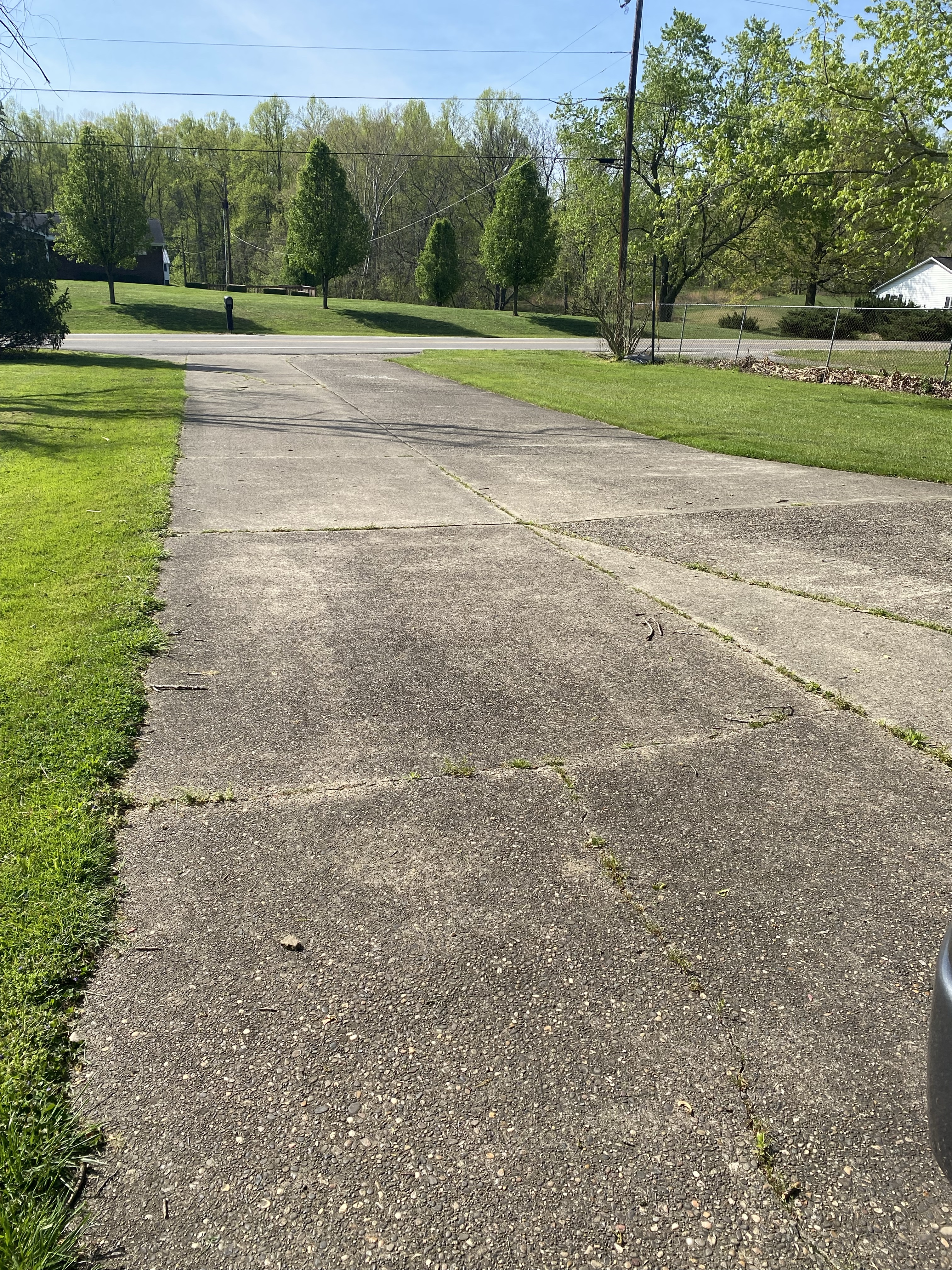
Gentle walking on my driveway or in my house is part of the slow and steady recovery plan.

At the time of writing this, I am entering my third week of recovery. After my two-week, post-operative appointment, I now have permission to begin to gently explore a few  strengthening exercises and stretches that can be completed without forward bending.  Additionally, I can begin to explore my neck range of motion with a few doctor approved neck stretches and strengthening exercises, but nothing more.  Slow and steady helps me find my new center of gravity.

Due to this experience, I want to continue to encourage you, Dear Reader, to carefully plan how you will enter, or reenter, your own exercise/movement plan this spring.  Create a plan that meets your needs, and commit to doing it–even if you don’t “feel like it.”  Personally speaking, I could feel angry and convince myself that if I can’t exercise the way I once did, then I won’t do anything at all. After all, it would be easy for me to sit around all day and use my surgery as an excuse to do nothing.  Conversely, I could try to push too hard with the delusion that, “The staff doesn’t really know ME,” and begin overdoing it with images of former, younger me dancing in my head

Instead, I have accepted the reality of my situation, rather than reject the medical advice I have been given.  They are the professionals, not me.  I have to meet my body where it’s at when it comes to fitness.  Sure, I have dreams of hiking again, walking (or jogging) the entire bike path of Ritter Park, and even practicing yoga with regularity, but none of those will ever happen if I don’t recover first.  And my first step in recovery is walking, so my body can focus on the miraculous work of healing.

Welcome walking into your life! You might be surprised by the benefits!

Therefore, no matter where you are, what shape you are in, or any other personal obstacles that you may be facing unbeknownst to me, I still encourage you to never give up on regularly incorporating movement into your day. Avoid the temptation to make excuses for yourself, but at the same time, don’t start off with a complicated plan.  Talk to your health care provider, and then start.

Start where you are.  If you don’t regularly move, then begin, like me, with short walks around your home, or up and down your driveway or sidewalk.  Do that 3-4 times per week.  The following week, add one more lap, or add five more minutes to your walk, and complete it 3-4 times per week.  Gradually, you will build up your time and the distance covered.  By keeping this up over several weeks, you will create the habit of moving.  Your body, lungs, and heart will be stronger, and I wouldn’t be surprised if you find you are reaping other unexpected benefits!

Think about this, my friends, if walking is scientifically established as one of the best tools for recovery after surgery, what can it do for you?  Don’t beat yourself up because you are no longer what you once were, you didn’t exercise over winter due to the cold weather, you’ve never really tried to exercise previously, or you’re somewhere in between, like me.  Start where you are at, and move one step at a time.  Rome wasn’t built in a day, and neither is fitness, but you have to take the first step, and spring is a great time to start.  

Here we go my friend, take my hand, let’s find that new center of gravity, and cross this bridge together, one healing step at a time.

Open the door to spring, and find your new center of gravity one small step at a time!

Baby Stepping into Growth

“Strive for progress, not perfection.”–Anonymous

During a recent conversation with a new mother, she shared with my husband, John, and me, the plight of her recent episode of sleepless nights.  The mother explained that her nearly ten month old daughter had learned the joys of pulling-up and cruising around furniture for short bursts of time.  Enamored with her newfound skill, the baby girl was now waking during the night in order to practice her newly discovered skills. While the new parent was thrilled and excited at the baby’s achievement of this new milestone, her eyes were rimmed with dark shadows due to her lack of sufficient sleep.  However, as the parent continued to share various stories of her baby’s zig-zag pattern of progression–crawling and rolling by day, pulling up and cruising by night–the mom’s eyes, nonetheless, sparkled with delight.

Initially, as many parents do, I reflected on my own daughter’s development.  She was much more interested in mastering her vocal and verbal skills at the nine-to ten month period.   Her interrupted sleep, at least at that age, was to wake and explore all the ways in which she could babble, vocalize, and soon enough, form meaningful words.  It wasn’t until the 10-11 month period that she became more interested in pulling up and cruising.  Even then, it seemed that she pulled up with the sole purpose to practice all the ways in which she could use her voice!

My daughter’s path of development was not better or worse than the parent’s child, rather it is an example of the varied and unique ways in which children’s bodies and brains develop. In fact, John and I took great amusement in the fact that our own daughter would be more interested in learning to talk before walking.  Likewise, the new mom did not criticize or compare her baby’s progress to that of a child who had mastered walking, rather she focused on her child’s progress.

Upon reflection, the next day, I realized that there was a nugget of wisdom in that story that was worthy of more contemplation.  Reflecting, not only my daughter’s unique mastery of walking, but also upon what I understand as an educator regarding child development, I recognize that learning is all about progress, not perfection.  In fact, the same is true for establishing new habits or making/adjusting to a drastic change in life.  Cultivating growth, change, and learning, in the real world, moves slowly through up and down periods of time.

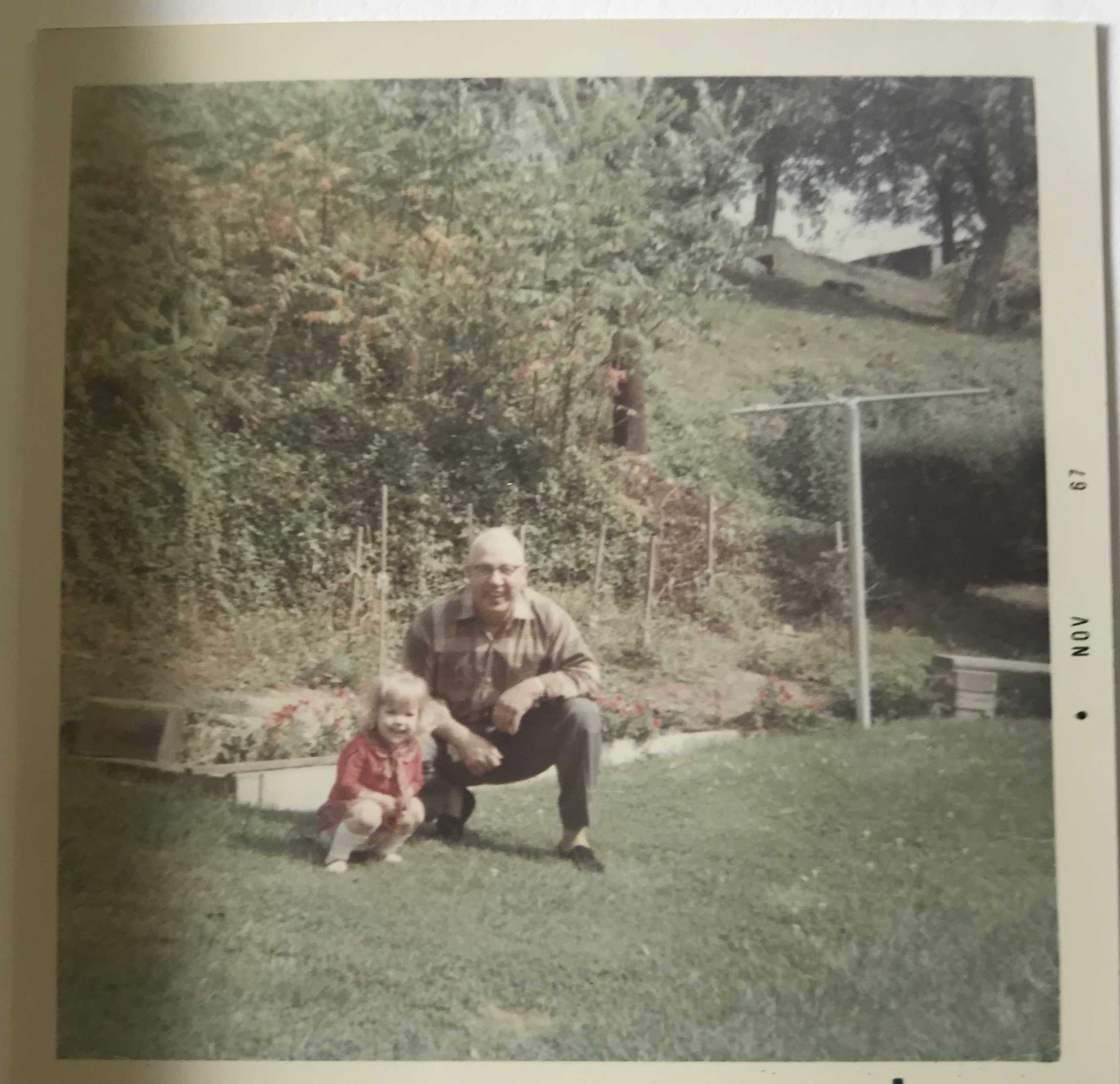
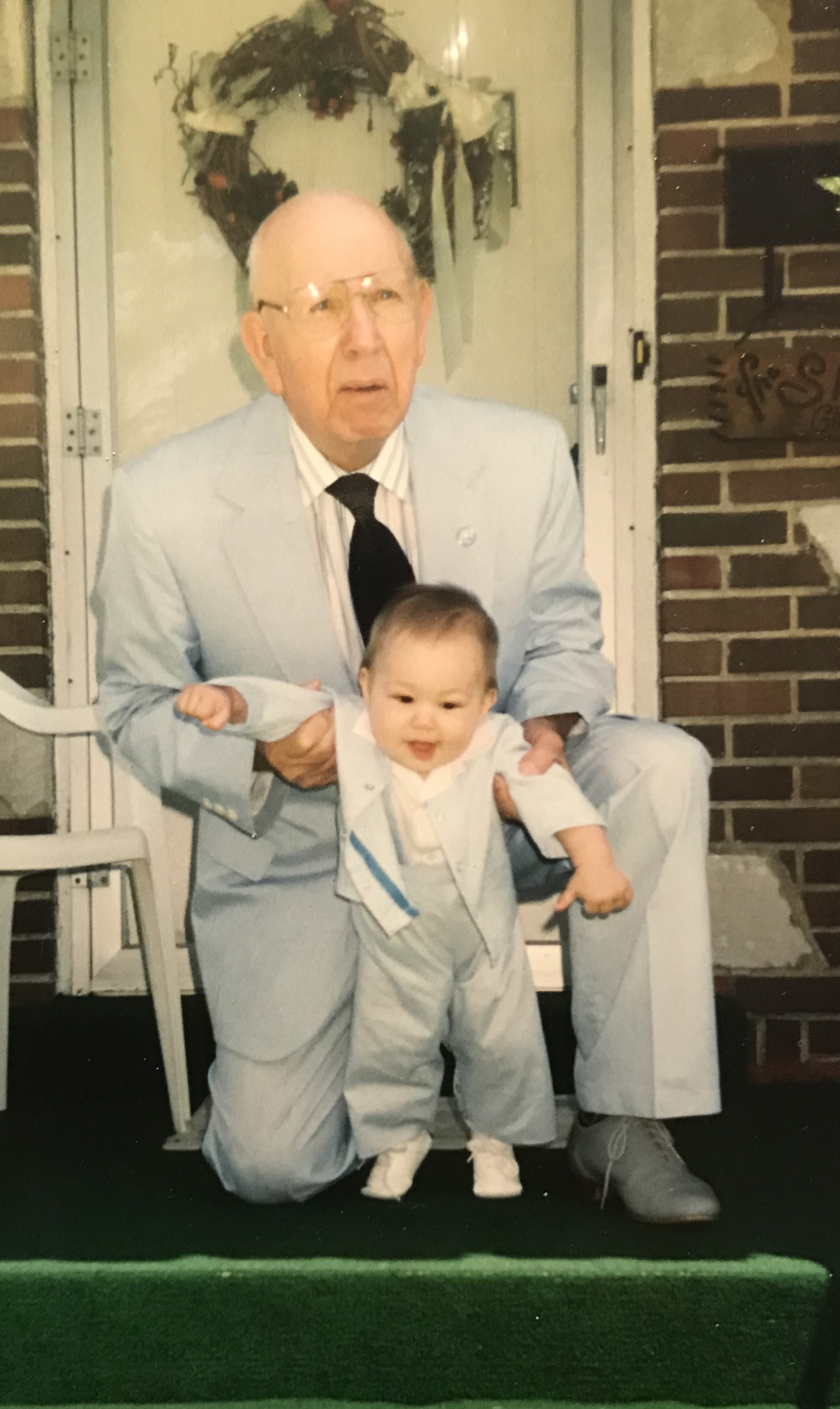
My parents did not compare my development as a toddler to that of my grandfather!

“Sometimes the smallest step in the right direction ends up being the biggest step of your life. Tiptoe if you must, but take a step.”–Naeem Callaway

Reflecting on the ways in which babies learn to walk, child development experts state there are certain milestones, such as, sitting, rolling over, crawling, pulling up, cruising, and so forth, that parents should expect. During the process, the baby will learn to balance while standing, then bounce while standing, and might revert back to rolling or crawling. Eventually, however, the child will return his or her interest to pulling up, and perhaps begin to attempt cruising, but may still go back to crawling for a while–or in the case my daughter–focus on developing verbal skills.  

The point is that while so-called experts can point to certain milestones of development, in reality all children learn to walk (and talk) at his or her own pace–some taking longer or shorter periods of time than others.  However, we never compare the child-learning-to-walk to a so-called “master-walker.” Can you imagine a parent or grandparent saying to a baby learning to walk, “Why aren’t you walking like so and so?”  Instead, we foster and encourage each, well, baby-step along the child’s unique time-line of progression.  Which led me to wonder why so many of us, myself included, don’t do that for ourselves?

Nor did my parents compare my brother’s baby steps to his older sister (me).

Why do we, as adults, compare our own progress–or for that matter the progress of school age children–to that of a so-called, “master.”  While having a goal is absolutely worthy, as the old adage states, “Rome wasn’t built in a day,” and neither is progress.  In fact, I often have conversations with parents of students that growth often happens in fits and starts.  Each student’s brains are wired uniquely, and thus learning never occurs in a straight upward angled line.  The same is also true for adult learning. 

All progress–be learning a new skill, establishing a new habit, or changing/eliminating a bad habit–looks more like the zig-zag pattern of learning to walk.  How many times per day does a baby who is learning to walk fall down?  Are we ever disappointed in the baby when he or she does this?  No!  Instead, as loving adults, we say words to encourage, foster, and inspire the child to try again.  In fact, I would argue, it is the adult’s positive attitude that is part of the baby’s motivation to get up and try again–at least until they are too tired.  Even then, as we put the baby to bed, we know that tomorrow’s is a new day, and he or she will be right back at it again in the attempt to learn to walk.

No matter how long or meandering the path toward progress is, keep on stepping into the version of your best self!

“If you can’t fly then run, if you can’t run then walk, if you can’t walk then crawl, but whatever you do you have to keep moving forward.”–Martin Luther King Jr.

Thus, this is the type of attitude that we should offer ourselves in our attempts to instigate personal change and growth.  Start with small steps towards the desired goal.  If you “backslide” and revert back to old habits, such as when babies revert back to crawling, get back up the next day, and try again.  Don’t compare yourself to others with self-defeating thoughts or other comparative notions. Each of us has our own distinctive way of learning, changing, and/or progressing.

I would have never told my daughter that she should give up on learning to walk, much less called her a failure when her interest in walking was put on pause for several weeks as she focused on her vocalization.  That was part of her own idiosyncratic pattern of growth, and the same holds true for our own attempts at growth and change. 

We all need a little help along the way towards our goals. Don’t be afraid to accept structure and help as needed!

According to the Kaizen principle that is often applied in the business world, improvements and growth in an organization most successfully occurs through small steps.  In fact, as best as I understand it, the Kaizen principle for growth and change encourages a business to create a culture in which employees plan, implement a small steps towards growth, periodically review whether or not the plan is working, then take action–either by taking the next small step forward or by refining/adjusting the current step.  With each successive step and revision, growth begins to occur. This principle can be applied to our own lives.

Stop comparing yourself to a master-image of perfection.  In fact, I encourage you to stop striving for a so-called image of perfection–after all, this is life, with all of its ingrained messiness and fallibilities.   Instead, foster progress.  Talk kindly to yourself as you would a child learning to walk.  If you fall down, it’s okay.  Cry if you must, but get up the next day, and try again. If you need to hold onto a structure for a while, as a baby must hold onto furniture in its attempt to master walking, remember the baby is developing its leg strength, and you are likewise building strength!  The point is to keep moving forward, no matter if it seems like you’re only making baby steps. Eventually you will attain your version of success that works for you.  

Photo by Juan Pablo Serrano Arenas on Pexels.com

Rocks in Your Head?

“It isn’t the mountains ahead to climb that wears you out; it’s the pebble in your shoe.”–Muhammad Ali

Have you ever been walking along and discovered a rock in your shoe?  It doesn’t seem to matter how small it is, suddenly, it is all that you can think about.  This is especially true if you are on a solo walk or run.  With each step, that multi-faceted, miniscule rock pokes and prods your foot until it becomes your sole focus. Likewise, if you are walking or running with another person, try as you might to ignore the aggravating rock, it remains in the periphery niggling away at your attention in spite of your best effort to focus on the unfolding conversation. 

Have you ever noticed how much more free and spacious your mind becomes if you pause long enough to take the rock out of your shoe?  If you’re with a friend, your concentration easily returns, and if you’re exercising alone, your mind relaxes and resumes its free-flow thought.  When this happens to me, I often ask myself, why did I take so long to shake that rock out of my shoe?  Why did I allow myself to be tormented by such a small thing?  

Photo by Matheus Natan on Pexels.com

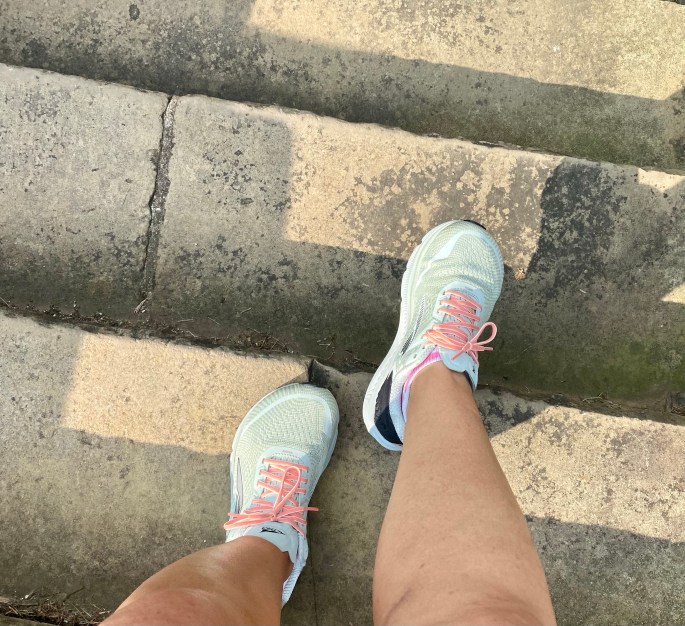
Oddly enough, there are times that I will go an entire run or walk, and complete an errand or two, before I take time to slip off my shoe. Once home, I’ll sit down on the front stoop of my porch, take off my shoe and shake out scanty pebbles and/or debris. Slipping the shoe back on, it’s like putting on new footwear–all because I had been too stubborn, lazy, or petulant to take off my shoes and toss out the rocks.

After a recent moment of emptying the rocks out of my shoes, it occurred to me that those crushed rocks were quite a bit like thoughts that can sometimes run through my head.  These are often circular notions of self-doubt, self-criticism, or self-reproach.  Depending upon the day, situation, and/or context, the narrative can vary, but the ongoing, well-rehearsed mental skirmish between Naysayer Nellie and Wetblanket Wanda certainly know how to prick and needle my grey matter like the crushed detritus poking and prodding my foot when trapped in my shoe.

These pessimistic pests tend to most often join forces during times of stress, change, and/or increase in workload.  Sometimes, all it takes is one moment of so-called failure, frustration, or new challenge to inspire those two negative allies to vie for my attention as they quickly assemble a barrage of heated messages designed.  Then, like a challenging adolescent, they turn up the volume, in case I didn’t hear their propaganda the first hundred times!  

Ironically, I know their stories aren’t true. I recognize the disinformation for what it is; and yet, like the proverbial pebble in the shoe, I don’t quickly empty the shoe, or in this case, the prodding thoughts.  Instead, I allow those irksome ideas to create a foothold in consciousness, and repeatedly nettle away. It’s as if these defeatist messages have hijacked my brain.  

Photo by Kindel Media on Pexels.com

If I allow those obstructive thoughts to remain around long enough, like the shoe-bound pea gravel chafing my skin until blisters form, the negative mental chatter can create so much inflammation that my brain will begin its not-so-subtle messages of flight, fight, or freeze.  My head and heart will begin to pound, I will hold my breath, tighten parts of my body, such as my belly, back, or neck, and sleep becomes elusive or filled with nightmares.

What can I do?  Duh! Take off the proverbial shoe and shake out the rocks.  Not that it is easy, but I have to remind myself that thoughts are like clouds.  Even on the most overcast day, when all is gray and cloud-covered, the blue sky and the bright sun are still there–they have merely been hidden.  The sky is not the clouds, and I am not my thoughts–and neither are you, Dear Reader!  In fact, we are so much more than any negative messages sticking around in our heads. 

Photo by NEOSiAM 2021 on Pexels.com

 As I understand it, the emotional center of our brain is housed in the part of the area that evolved quite early in order to determine important life saving decisions such as, “Is this food poisonous or not?” or “Will this animal eat me?”  Once this area of the brain perceives something as dangerous–even if created by our own thoughts–this part of the brain won’t shut off until it feels safe.  (It is also worth noting that the same is true when this area of the brain experiences pleasure–it wants more and more.) 

However, we have another, more advanced part of the brain that allows humans to think, reason, make decisions, and plan.  Therefore, with practice, we can be aware of when the emotional center of the brain launches into its overwhelming fear-mongering.  We further have the capacity to choose whether or not we believe those negative stories, and we can also plan how to treat those thoughts when they do occur.  Furthermore, we can take daily actions to further reduce the rumbling rocky voices which are most often a product of fear . . . fear of failure, fear of success, fear of change, and fear of the unknown

“Remove the rock from your shoe rather than learn to limp comfortably.”–Stephen C. Paul

One of the best pieces of advice an acquaintance once shared with me:  “Stop yelling at yourself.”  She went on to ask if I would yell at my own daughter the way I think about myself.  When I said, no, she simply encouraged me to “play nice,” call fear by its rightful name, and then take steps to calm it down as you would with your own child.  

Many of the actions that can be taken to reduce negative/anxious thinking are not new suggestions.  Deep breathing, exercise, or simply walking away from a stressful situation for a specific time period are all actually quite helpful.  Other suggestions include: 

*Remind yourself of your past successes.

*Take small steps towards learning a new task. 

*Be willing to ask for help to reduce or understand new/heavy workloads.

*Talk to a trusted friend or family member–sometimes just naming your fears begins to tame them. 

*Write your problem on a piece of paper–dump it all, like you’re emptying your brain of pea gravel. The act of writing slows down the thoughts, relaxes your brains, and allows you to see things differently.  I’ve literally taken that written problem, slipped it under my pillow at night, and literally slept on it.  It never fails to surprise me how a little faith and trust that a solution will be found allows it to gradually unfold.  

Photo by Lisa on Pexels.com

*Learn to nurture and protect your thoughts. 

*Cultivate affirmative thoughts.

*Take preemptive action if you know certain situations trigger a strong emotional reaction. 

*Be gentle and kind with yourself. 

If you begin to notice your brain is launching into story mode, each time a thought attempts to pop into your head, try to mentally swipe it away like a fly at a picnic before it can grow.

The point is, just because you think something, doesn’t mean it’s true.  Sometimes the solution is as simple as shaking out rocks.  I’m not saying it’s easy; it’s not.  Nonetheless, it is worth remembering that emotions come and go, like ever changing weather, but they don’t have to permanently hijack your brain.  

Photo by Kelvin Valerio on Pexels.com