The Power of Smiling: Benefits for Health and Happiness

“If you see someone without a smile today, give ‘em yours.”–Dolly Parton

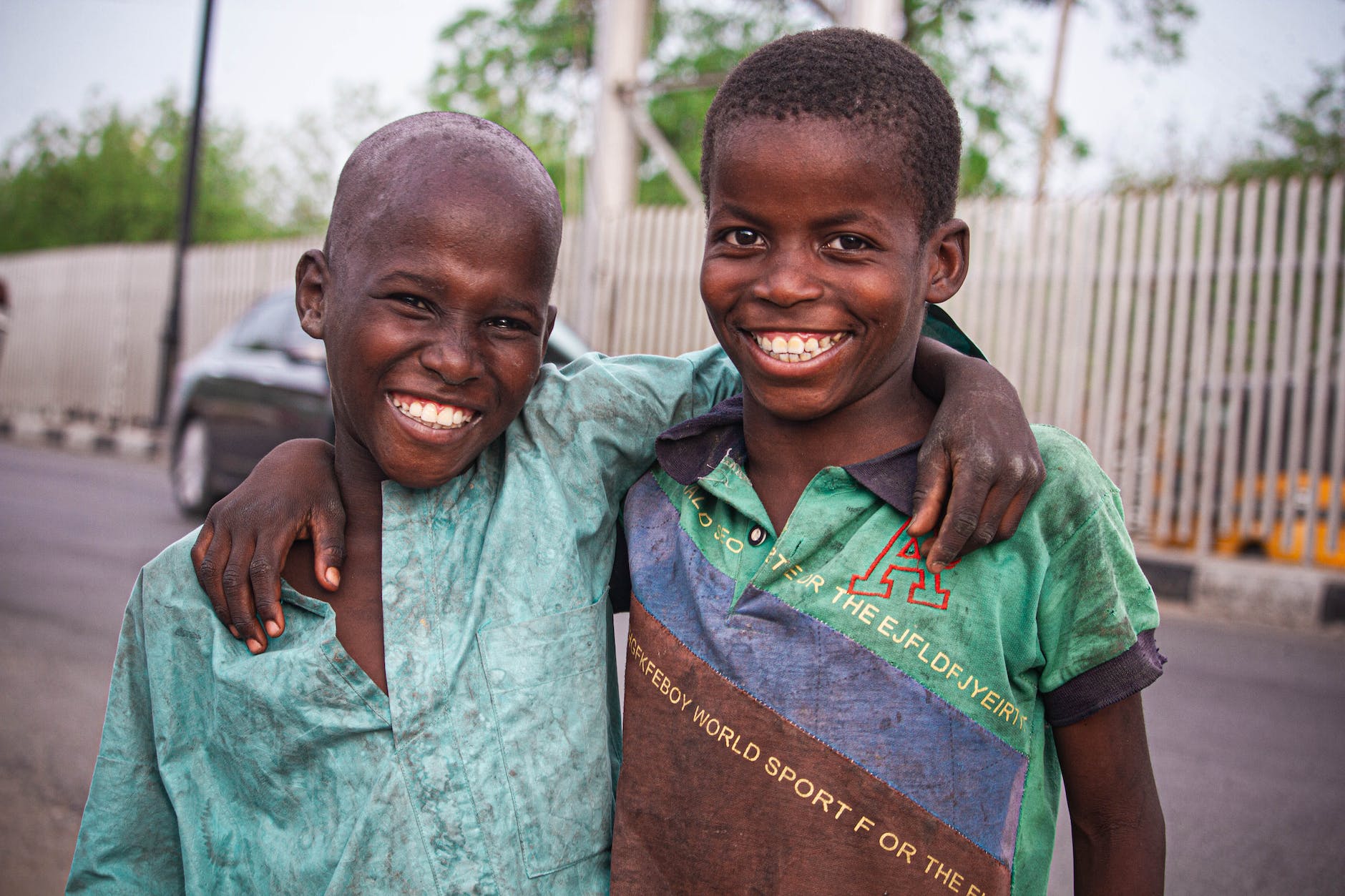
Photo by Adenir Figueiredo Carvalho on Pexels.com

How often do you smile? 😃

I recently came across a fact that stated children smile about 400 times per day . Whereas, most adults on average tend to smile anywhere from 20 times per day to, at the most, 50 times, depending upon their level of happiness for the day. That is a stark contrast!  

Whether you are grinning, beaming, twinkling, smiling from ear to ear, all smiles, or even offering a partial smile, when you look at another person, it tends to communicate a positive feeling.  Think about what happens when you see someone else smiling, especially a baby or toddler smiling–most of us typically smile in return!  I find even writing about seeing another person smile is instigating my own smile.

Photo by Teddy Joseph on Pexels.com

REasons we may not smile often 😒

In the words of the Joker, “Why so serious?” Why don’t we smile more often? What is it about adulting that doesn’t inspire us to smile more often?  According to a 2019 Psychology Today article, there are numerous adults who are simply not prone to smiling.  Reasons vary including: feeling shy or unsure of self; feeling self-conscious of own smile, especially if in need of dental work; believing it is silly or inappropriate to smile, especially those raised to not to smile frequently due to cultural or family mores; and, some don’t smile due to state of  their mental health. Furthermore, psychologists have also noted that when people have a smartphone in their hands, most of us are less likely to smile and engage because we are so focused on our phone screen. 

Photo by Mwabonje Ringa on Pexels.com

Benefits of smiling more 😁

Believe it or not, though, there are both physical and mental health benefits to smiling. First of all, dopamine, the feel-good chemical (neurotransmitter) in our brain, is released when we smile. Smiling also releases endorphins, a mild-pain reliever, and serotonin, an antidepressant that can reduce stress.  The more we smile, the more these neurotransmitters can work together to boost our overall sense of well-being, reduce our sense of pain, and increase our sense of positivity.

Smiling, along with laughter, causes our brain to also release neuropeptides which are small proteins found in the brain. These chemicals are known for staving off illness by initiating the body’s immune-system response to increase production of antibodies to fight off disease and illness. Along with warding off illness, there is evidence that smiling–and its cousin, laughter–can also help lower our blood pressure as well as heart rate.

Science still has more research to conduct regarding the specific benefits of smiling, according to the National Library of Medicine, but the studies consistently demonstrate that smiling produces a number of health-related benefits. Smiling more can foster a longer life by positively exerting influence over the immune system during times of acute stress or illness, improving recovery, and thereby reducing illness, or its duration, over time. Now, that’s worth smiling about!

Smiling also makes us appear more attractive and likable.  When we beam at another person, we are often considered courteous and trustworthy. In fact, shining those pearly whites also makes us appear more confident, successful, and knowledgeable.  Keep that in mind the next time you have an interview or have to give a presentation. 

Plus, smiling is contagious. When we smile at another person, it is hard for the other person not to smile back. To be sure, it doesn’t work on every person, but it can certainly go a long way to lightening the mood–even if it’s just our own.  So why not try smiling more? 

Photo by Kampus Production on Pexels.com

Practical, and not-so-practical, ways to increase those grins 😆

  • Practice smiling in the mirror: It sounds silly, but the more we practice smiling, the more confident we become at doing it. 
  • Try the smile challenge: One way to practice smiling more is to look up the different types of smiles.  Depending upon the source, most experts claim there are 18-19 types of identifiable smiles, but only six are for genuine happiness. Grab a friend and a mirror and see how many you can make. This is just silly enough to bring on some laughs and joy-filled smiles.
  • Waiting challenge: Stuck in a line at your favorite fast-casual dining or coffee shop?  Waiting in a doctor’s office? Waiting in any sort of line?  Instead of scrolling through your phone, try the smile challenge. See if you can maintain a gentle smile throughout the entirety of your wait, or see how many people you can make smile by smiling at them. 
  • Smile timers: Set reminders or post-it notes throughout the day to smile, especially for those time periods for which you know you most likely won’t feel like smiling. 
  • Create list(s), picture file, journal, or write positive post-it notes of things that naturally make you smile when you see/think about them. Purposely place them, so that you will encounter them throughout the day or week and be reminded to smile.
  • Daily smile challenge:  Challenge yourself to be the reason one (or more) person smiles today.  
  • Watch something funny: Whether choosing a social media/youtube reel/short, movies, comic strip, or other source jolliness, taking time to embrace humor is an immediate mood booster.
Photo by Craig Adderley on Pexels.com

unleash the power of your smile 😃

In the words of Buddy the Elf, from Elf, “I just like smiling.  Smiling’s my favorite.” And, now we know why. Smiling is a superpower, and it is not just for elves or children. Those grins are for all of us to enjoy in our everyday life. When we smile, our health, our well-being, and the well-being of those around us, benefits. So the next time you’re feeling down, frustrated, sick, or even angry, see if you can’t sneak in a smile or two.  Even if you don’t feel like it, the overall benefits seem to point to the fact that those few extra smiles might just be worth the effort. In the words of the late Jim Begg, “Before you put on that frown, make absolutely sure there are no smiles available.”

Cultivate Inner Joy and Watch It Spread: Lessons from a Lifetime of Teaching, part 2

“The soul’s joy lies in doing.”–Percy Bysshe Shelley

Author’s Note: This is the second installment of stories from decades of teaching a wide array of students from grades K-12.  It is my hope that by sharing these stories, I will cultivate lessons of compassion, empathy, and understanding

Photo by Surja Sen Das Raj on Pexels.com

Bus Ride 🚌

My first two professional years were spent teaching students placed in special education classrooms in a large rural high school that served an entire county in Kentucky.  Some of my students faced a two-hour ride each morning and afternoon to get to and from school.  Those students rode a “feeder line” out of their hollow, or “holler,” as it was locally pronounced, because the roads were deemed unsafe for school bus passage.  The feeder line drove students to the end of the hollow where the students would then board their school bus.

School began at 8:00 and ended at 3:00, and students could begin arriving as early as 7:30.  This meant several of my students left their house around 5:30 am and would not arrive home until after 5:00 pm.  Additionally, the “holler” roads were often impassable during bad weather.  Therefore, there was a high rate of absenteeism among those students, especially during the winter months.

Photo by Pavel Danilyuk on Pexels.com

Learning methods 📝

One of those students who rode a feeder line was named “Gladys.” (Name change for privacy) Gladys had been identified as having a lower IQ. Reading and math were not easy for her.  It was as if Gladys’ brain was wired to process at a slower pace and needed expanded time to practice and play with whatever new skill she was learning.  

However, what worked to Gladys’ advantage was that she was incredibly verbal. When learning something new, most students, after instruction, think through the steps or the words to complete a task, but not Gladys. She would speak through each step and/or say each word aloud as she worked through assignments.  It seemed she had to have a conversation with herself in order to learn. 

Photo by Mary Taylor on Pexels.com

Joy Filled Spirit 😁

What I most appreciated about Gladys, however, was her spirit.  She was naturally joyful, but when she learned a new skill, she became highly animated.  And her joy was expressed in a loud and eager voice.

“Miss Musick, Miss Musick!  Did you hear that?  I read that story!  Want me to tell you all about it?”

“Miss Musick, Miss Musick!  I made change correctly!  You think the store will hire me?  I’ve always wanted to work at a cash register and push all those buttons!”

“Miss Musick, Miss Musick . . .” she sang out with every microstep of progress she made, a smile wide across her face.

On and on, Gladys would talk from the time she entered the classroom until it was time to go home.  On days she was absent, there was a void in the classroom.  However, upon Gladys’ return after an absence, her habit of sing-songing my name twice before asking or telling me something seemed to be in overdrive as if she had been saving up all her questions and thoughts to deposit them into the bank of our classroom.

My grandparents house that was viewed as a “mansion.”

Hope Filled adventure 🚙

I had much hope for Gladys.  So much so that I wrote to her parents and invited Gladys to come home with me after school one evening. She had not ventured out much beyond her “holler” except for school, and I wanted her to practice “applying for a job”.  Her parents agreed to this as long as it occurred on a school night, so Gladys could ride to school with me the next day.

At the time, I lived with my grandparents, 20 or so minutes from the high school.  Talking the entire ride to my grandparents home, I listened as she narrated all of the new things she was seeing for the first time.  When we arrived at the house, Gladys declared that I lived in a “mansion,” which gave me pause to consider what type of home she must live in. 

Once she met my grandparents and deposited her meager bag in the bedroom where she would sleep, I drove her to the fairly new Huntington Mall.  Gladys’ eyes were wide with wonder the entire drive, but when we walked inside the mall, she was beside herself. 

A shopping trip like none other 🛍️

Sounds of  “Miss Musick, Miss Musick!” followed me everywhere we walked. 

While I made a meager salary at that time, I knew I was making more than most of my students’ families brought in.  Therefore, when I could afford it, I would get items of genuine needs for my students, such as socks, sanitary supplies, toiletries, and even clothing items.  It wasn’t unusual for my grandparents to pitch in. With their help, I was able to get Gladys a couple warmer shirts (She mostly wore t-shirts.) and a warm coat for winter.  Plus, a few “fun” items: a packet of hair scrunchies, lip gloss, and a packet of  plastic bracelets that were popular at the time.  

For dinner, I took her to the Big Loafer–classic teenage food at the time–where Gladys talked more than she ate. After dinner, we practiced walking into stores and asking for job applications. It was the first time I ever noticed Gladys appear sheepish or lacking confidence in her own voice.  However, by the end, she could make her request in a clear and competent voice, even asking about interviews.

 I took the applications we gathered and made copies at school for my students, including Gladys, in order for them to practice reading and completing job applications. They also rehearsed appropriate ways to respond to interview questions.  Not that I expected my students to make the two-hour trip to the Huntington Mall to seek employment.  Rather, I wanted them to feel confident enough to apply for nearby jobs once they left high school. 

Hopeful application ✍️

Most of my students’ parents did not work; therefore, one of my biggest dreams for my students was that they would ultimately become gainfully employed and feel a sense of pride that comes from hard work.  I knew that I was fighting a difficult battle, but students like Gladys, whom I taught for two years, filled me with hope. 

Years later, I ran into one of my former co-workers who said that Gladys did indeed have a job at a local convenience store and had saved enough money to buy a used car that someone in her family helped her maintain.  

Photo by Andrea Piacquadio on Pexels.com

Joy is contagious 🤓

If I close my eyes, I can imagine Gladys’ sing-song voice greeting customers and cheerily chirping her way through each customer’s purchase. Gladys found joy in doing.  As a result, her cup of life bubbled and overflowed with contagious delight. One couldn’t help but smile and feel joy when interacting with Gladys. 

Finding joy in our day-to-day tasks and the infectious nature of a smile were the two life lessons Gladys modeled.  How fortunate was I to be her teacher.

Through the eyes of a child

“Chin up, chin up. Everybody loves a happy face.’–E. B. White, Charlotte’s Web

“If in our daily life we can smile, if we can be peaceful and happy, not only we, but everyone will profit from it. This is the most basic kind of peace work.”–Thich Nhat Hanh

Landon and Grayson often greet me in the morning with bright-eyed smiles and plenty of discoveries about the morning.

One of the special joys in my life are the smiles of toddlers and young children at the school in which I work.  As an educator working on a school campus setting that provides care/education for children, ages 6-weeks through 12th grade in different buildings, I often see parents and other educators dropping off their children for daycare or preschool.  Some of the little ones are sleepy in the morning, others are crying, some are shy, and others walk in–or are carried in—with a smile on their face and a twinkle in their eye.  They jabber, babble, talk, or even sing with joy, depending upon their age/stage of development.  

I could be having a rough start to my day, but if I happen to walk through the campus parking lot alongside a staff member’s bright-eyed child, smile as wide as the sky itself, I can’t help but smile too.  Before long, the child has engaged me into a conversation, and all the previous negative energy of the morning fades.  I share in the delight of their discovery of a rock or a piece of mulch, and smile back enthusiastically when they show me their shoes, their mittens, or their hat.  They find happiness in the very things I tend to overlook or take for granted.

Then there are the babies–wrapped, swaddled, and layered into their parent’s arms.  Face peeking out over their caretaker’s shoulder, eyes blinking in the morning air.  Those large round orbs, of all shades, take me in, and then, as if I were a royal subject, reward me with a smile.  I can’t help but smile back.

Photo by Shanice McKenzie on Pexels.com

The babies, toddlers, and young children look at me and the scenario unfolding around them with fresh eyes and innate good cheer.  Eyes that are free from judgment.  Eyes that do see my age, my skin color, my size, or care about my socioeconomic status, religious/political affiliation, and so forth.  They only see me smiling back at them and hear my affirming voice.  

Possessing the ability to look at the world and others without motive is a powerful concept.  This is the lesson young children and babies teach, but because we are so busy, or our lives are so removed from young children, we miss the lesson.  Imagine, looking at each new day, event, person, even the great outdoors with fresh eyes.  What magic, what wonders, what friendly people do we miss because our brains have a tendency to be drawn to to-do lists, work, worries, irritations, conflicts, gossip, bad news, and so forth. 

However, children, until we teach them otherwise, are inherently open and accepting. They have no preconceptions about all the things we, as adults, begin to define, discern, and draw lines of division around.  A dog’s tail is a thing of wonder to a child.  Common dandelions are flower puffs to be plucked, sniffed, touched, and held as an object of fascination.  Birds are special creatures who fly and sing for their amusement. Time is of no consequence, and space is meant to be explored–be the space a sidewalk, yard, a floor, or even cabinets of a kitchen.

Miss Evalynn often greets me in the morning with bright, inquisitive eyes.

Of course, as adults, we cannot conduct ourselves exactly in the same manner as young children.  However, there are certain behaviors for which we can adopt and put into practice more often.  The first of which is smiling.  

The late Thich Nhat Hahn was once asked why someone should smile when they weren’t feeling happy.  He responded that smiling was a practice.  Hahn went on to explain that when we smile, we release tension from our face muscles which in turn releases body tension.  The less tension we have, the more we smile. And the more we smile, the more others notice, and in turn, they smile back, often initiating a chain event of others smiling too.  A smile, he explained, is “an ambassador of goodwill”.

The act of smiling is contagious, as Hahn pointed out, and a sincere smile has the potential to change the trajectory of a moment.  Imagine the power of one person smiling, which triggers another person to smile in response.  Then that person’s smile causes another person to smile, and so the chain continues.  This is the first lesson of young children.

Photo by Atsahyel Aaron on Pexels.com

Another lesson of young children is viewing the world and others with an open mind:  Looking widely, listening carefully, and taking in your surroundings without jumping to conclusions and immediately passing judgment.  Obviously, there are certain situations in which quick judgements/decisions are required; however, by remaining a calm, lucid, and observant presence, the more likely a pragmatic outcome can be achieved.  

Appreciation for the small things is another lesson provided by children.  When my own daughter was young, we would sometimes walk through the woods.  Her dad’s pant’s pockets would get weighed down from all of the “treasures” she would find along the way.  From sparkling rocks to a kaleidoscope of leaves–crimson, gold, and burnt orange, and from a discarded snail shell to a special stick perfect for digging, it was those little delights that added up to big pockets of joy!  The world continues to be full of small treasured moments that we too can collect along life’s path, if we view the world as a child. 

Photo by Ron Lach on Pexels.com

Finally, there is the lesson of the restorative power of laughter and the healing power of love.  One needs only to observe–or recall–the ease with which a child can transition from tears to laughter with the embrace of a trusted loved one, and then the way in which they can explode into laughter, when afterwards, an adult gives them a raspberry.  Laughter and love are also contagious, and as the children demonstrate to me on a regular basis, can be the salve to a world full of hurt and sorrow.

Therefore, I encourage you to try, if only for one day, or part of a day, to practice viewing the world with the eyes of a child.  Smile at others and even to yourself.  Observe events and others with openness and without motive.  Notice and gather the small blessings. Enjoy a good belly laugh, or five, and, like a child offering you a flower, offer love to others (think: generosity, gentleness, patience . . .), and see what happens.  Who knows how many lives/situations your child-like focus will affect . . . including your own!  

Photo by Darina Belonogova on Pexels.com

Choose Joy

Participate joyfully in the sorrows of the world.  We cannot cure the world of sorrow, but we can choose to live in joy.–Joseph Campbell

Photo by Archie Binamira on Pexels.com

There is a documentary about a Holocaust survivor named Gerda Weissmann Klein that I have watched on several occasions with students.  Her story is, like many Holocaust survivor stories, one of inspiration, hope, and even joy.  One of the lines that often comes back to me is when Weissmann Klein specifically addresses how she survived a death march towards the end of World War II.  Despite the fact this march occurred during the height of a brutally harsh winter, Wiessmann Klein was able to survive for a number of reasons, one of which included her ability to “occupy her mind.”

In simple terms, Weissmann Klein was able to take her mind’s focus off the cruel conditions around her.  Rather than brood over the extreme cold, her hunger, her fatigue or any other legitimate complaint, she colorfully described her intentional deliberations that could last all day, such as spending an entire day planning out her next birthday party, even though she had not been able to have one since the Nazi occupation.  However, it wasn’t so much the what of her thoughts, but the fact that she was able to focus/distract her mind away from the pain/discomfort that naturally accompanied her situation.  Instead she intentionally directed her attention towards ideas/notions/thoughts that safely allowed her to “escape” and feel some sense of happiness if only cerebrally.  It is this human ability to occupy one’s mind, or shift the mind’s attention/perspective, that is a powerful take-away from Weissmannn Klein’s story, and I believe is transferable to other, much less brutal situations.   

Photo by cottonbro on Pexels.com

Given the news, the pandemic, the  major weather events, and all of the sobering occurrences from the past few years, it is easy to allow our mind to focus on the what-is-wrong-in-the-world, whether you are looking at the big picture or sometimes even your own personal circumstances. I know I can easily get wrapped up in the negative and get a full-steam-on gripe session with the best of them.  On one hand, I know it can be beneficial to get the negativity off-your-chest; on the other hand, I also know that there is danger in dwelling or focusing on it for too long–at least for me.

In a similar manner, I’ve noticed that both positivity and negativity are contagious within myself and among others. If I enter work feeling grumpy, put-off, or focused on some negative happening, I tend to attract and may even catch myself seeking out negativity.  It’s not per se always a conscious choice, it just seems to happen that way.  As soon as I recognize it, I feel badly for having given that gray cloud permission to come along for a ride.  The real danger, it seems to me, is when negativity is left unaddressed.

Negative mindsets have a tendency to spiral out of control.  It may start with something as simple as an accidental spill or mess that throws off the morning routine, followed up by that s-l-o-w driver on the morning commute while listening to frustrating news on the radio.  This may then turn into a later than planned arrival at work, followed by unhappy/unpleasant conversation, followed by a work-related problem in need of addressing for uptenth time, and by the time lunch arrives–which is often a working lunch–negativity can feel as if it is bursting at the seams.  

I think Ms. Weissmann Klein was onto something when it comes to not defaulting to the negative. We must actively and intentionally teach our mind to choose joy.  No, it’s not easy, and yes, it sounds cliché.  However, I do believe that we have a choice of how we respond to our circumstances, but like all skills, it takes practice and thought.

Photo by David Orsborne on Pexels.com

I think the lyrics to a King and Country song entitled, “Joy,” best encapsulates this thought.  It is oh-so-easy to focus on all of those nightly news headlines that vie for our attention.  Easier still, is to become wrapped up in our personal headlines: illness, death, divorce, finances, job loss/stress, future uncertainties and so forth.  I can’t tell you how many times I’ve caught myself in the woe-is-me mind story; it’s so darn easy to do.  Here is what I am learning when I catch myself having fallen prey to pessimism.

Sometimes your joy is the source of your smile, but sometimes your smile can be the source of your joy. –Thich Nhat Hanh

Believe it or not, the simple act of smiling can be a lightswitch for our mindset.  I first discovered this through running, but I find it just as helpful in most other situations.  Whether it’s my legs and calves aching from the exertion of exercise, or it’s my shoulders and neck tightening in reaction to stress, as soon as I catch myself responding negatively to stress–to the degree possible–I focus on deeper breathing, relaxing the tightened areas, and adding a smile.  I smile at the sense of accomplishment I will feel once I have completed the goal; smile at the fact I am proud of myself for having caught myself slipping into negativity; smile at the fact that my body still has the ability to exercise, work, read–whatever. All of which leads to more smiling because, well, I am smiling–which leads to the release of feel-good hormones.

Photo by Pixabay on Pexels.com

I was talking to a sister recently about how we wake up with the best intentions to remain sunny and positive, and then one thing might set off the day, and BOOM, there goes the mindset.  My husband says, however, that is part of living in faith.  He reminds me that it’s not about perfection, but recognizing your imperfections–your humanity–and then trying again. 

In the words of King and Country, “. . . Oh, hear my prayer tonight, I’m singing to the sky/ Give me strength to raise my voice, let me testify . . . The time has come to make a choice

And I choose joy!

I can’t pretend to choose joy in every moment, nor am I not acknowledging the very realness of life, headlines, personal crises and all.  Nevertheless, even in the bad times, sorrows, and heartbreak and loss, I can choose my response, and I can choose to find at least one reason to smile.  

Photo by Pixabay on Pexels.com

Becoming

“To be what we are, and to become what we are capable of becoming, is the only end of life.”–Robert Louis Stevenson

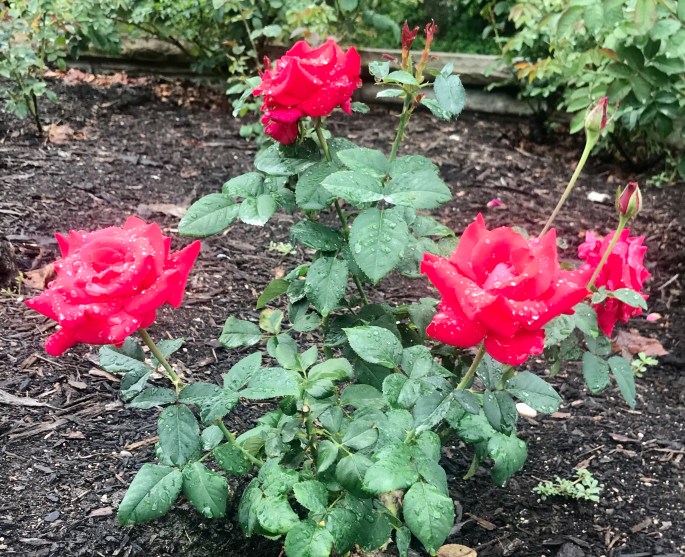
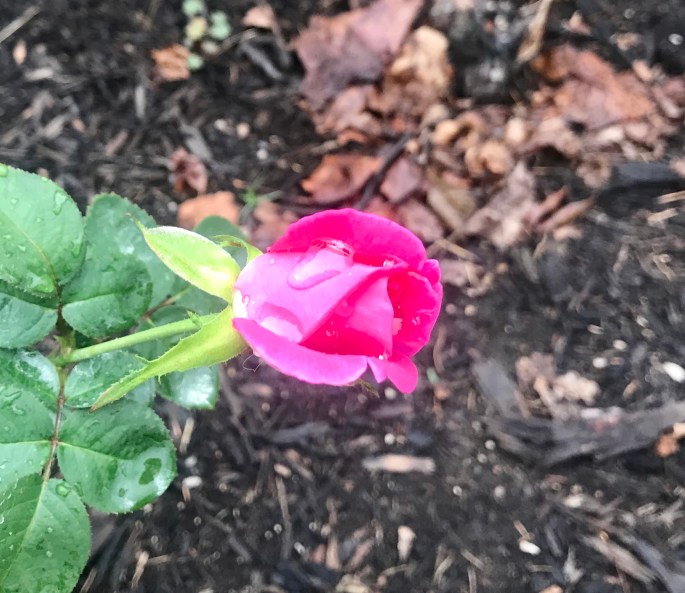
Standing on the crest of a small hill, my senses were heightened.  I could feel the weight and seemingly taste the moisture in the air. Scents of earth, rain, and floral encompassed me.  Dewy variations of pink, red, and coral stood out in contrast to the overcast dawn. Meanwhile, the unmistakable melody of creekwater rushing over rock, bed, and banks provided additional ambiance to the unfolding morning. There could be no mistaking it, this was a brief interlude before the showers once more resumed.

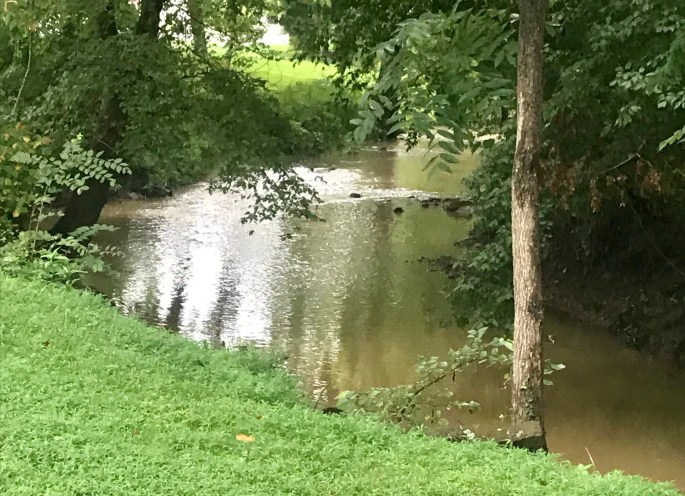
Down the hill I trotted, past the pristine rows of roses and on towards my companion for the next hour or so, Four Pole Creek, or “Four,” as I have come to think of it.  

“The more I run, the more I want to run, and the more I live a life conditioned and influenced and fashioned by running.  And the more I run, the more I am certain I am heading for my real goal:  to become the person I am.”–George Sheehan

Hello Friend.  My heavens, but you are swollen today, full as a tick bug, as my Papaw used to say, from the feast of overnight rain.  It’s good to see you looking lively today.  Your rhythmic song will be a welcome distraction from the noise in my mind.  

You see, a stunning new realization has recently taken root in my mind.  It whispers conspiratorially to me that I have reached a point in my life in which the years ahead are more likely to be less than the years I have lived.  What am I to do with this information, I ask you?  It is such a staggering revelation.

What’s more, my aqueous friend, the image reflected in my bathroom mirror no longer matches the image in my head.  There are these white hairs at my left temple and even more sprinkled throughout the parting of my hair.  Likewise, there are lines, especially when I smile, that run from the top of my cheekbone down towards my jaw line!   Tiny versions of those lines romp across the top of my lip, corners of my eyes, and all along my forehead.  How am I to be with this?

It seems I am not the only one changing.  I keep running across pictures from previous years in which family and friends look different.  They look incredibly young in those pictures–like unfledged, inexperienced youth.  I don’t recall that image.  In my mind, they are ever the responsible, mature, and wise people who never age, but remain frozen in time–never too young or old. 

Oh, and Four, there are all of these nagging aches and pains.  They niggle me awake during the night or flare up in the middle of work.  Sometimes, I down right hurt all over, and I can’t determine the cause.  However, I can tough out these minor hurts.  I can.  It’s the suffering of my loved ones that trouble me more.

I see my loved ones injured, battle-scarred, aging, and/or struggling.  You see, I want to help, to make them better, to help them feel whole again.  Even more than their ailing physical beings, I want to offer peace to the emotional wars waging within their minds and hearts.  I try.  I do try to help in small ways, but I am not a doctor–I don’t even play one on TV.  Thus, at times, I feel limited in what I can do to ease their burdens, pains, and sorrows.  

Still, it encourages me to see you full of vitality.  For a couple of weeks, you have been waning.  Your shallow flow lacked its usual energy and zip.  It is good to see your waters revived once more.

By the way, did you take care of the terrapin that I sent your way recently?  It was headed away from the safety of boundaries of your banks towards the traffic rolling alongside you.  I picked it up, even though it seemed offended by my action, and placed it carefully within your borders.  Hopefully, you were able to redirect its journey to safer ground.

As I was taking this picture, a couple days later, I was able to catch this image of a walnut falling into the water from the tree above.

Back to my original point, Four.  Have you any thoughts, ideas, or insight you can offer?  It seems as if your soundscape is whispering commentary.  Perhaps, if I quiet my head, I will hear it. 

“Life is a lively process of becoming.”–Douglas MacArthur

Four, I can’t help but notice that you have more riffles, rapids, and runs today. It’s nature’s way of breathing oxygen into your waters.  In return, your waters can give support to the life in, below, and around you.  

Earlier in the week, your waters were different.  They slowly glided from one pool to another. Of course, it was quite hot outside.  I couldn’t help but laugh at the number of neighborhood dogs splashing around or sitting in the cool shallows of those pools.  You remain ever the friend to the creatures in need, no matter levels and speed of your waters. 

 I have to ask though, do you ever hurt? Do pollutants irritate you?  What about those pesky people trying to reconfigure earth around you in order to build in the name of progress? Does that cause you pain as the drainage of rainwater and groundwater shift, ultimately influencing the levels and speed of your flow?  Do you mourn for your former self or for the forested neighbors that must have once lined your banks?  Regardless of those things for which you cannot control, it seems to me that you keep going, keep giving, keep supporting life to those in need of water.

Your waters are gathered from different sources. There are times, like today, when your waters are swift, becoming deep and darkened with the mud of debris, rocks, and earth.  Other times, like this past week, your waters are nearly still as you become shallow and more clear.  No matter what you are becoming, though, Dear Four, you remain ever Four Pole Creek, part of the Ohio River Watershed that feeds into the grand Mississippi River, and empties into the Gulf of Mexico flowing into the Atlantic Ocean.  Along the way, some of your water is evaporated into the air, cooled, condensed, and eventually returned to the earth–molecule by sweet molecule–a single droplet that is all part of the larger body of creation.

Four, in spite of your continuous changes, from the levels of your water, to the shapes you take; from the color of your waters, to the speed at which it flows; and from the lives that your waters support, to the beauty you offer the landscape, you are constantly evolving, ever changing, and continuously becoming.  Yet, you remain a creek, one creek in the great cycle of water.

“By being yourself, you put something wonderful into this world that was not there before.”–Edwin Elliot

Like you, Four, I am changing, and so is the life around me.  Some of my loved ones have flowed on to their heavenly shores, while many others remain bound to the earthly waters of life.  Like you, no matter my shape, my hurts, the gray at my temples, the lines of my face, or the pace at which I move . . . I am still me.  I will remain me–becoming, evolving, and adapting to the changes within and all around.

One day, I will dance among the ether of your molecules.  Together, joined by those who slipped ahead, we will become part of the Great cycle–the ever more and ever was. 

Thank you, Four.  Your song returned me to the hill of roses.  Back to where I started.  This running cycle is complete.  You were a fine companion.