Finding Inner Peace Amidst Chaos

“Better to keep yourself clean and bright; you are the window through which you must see the world.”–George Bernard Shaw

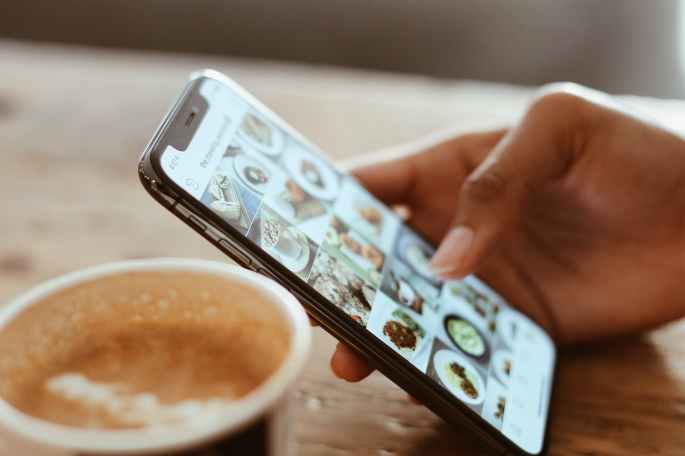
Photo by thevibrantmachine on Pexels.com

Anxiety provoking 😬

Over the past weeks, I find I am feeling increasingly anxious as I read or listen to the news and/or various social media platforms. There are world events with real human and environmental consequences that worry me. Children are dying from injury and/or starvation in numerous parts of the world.  Plus, the current political climate in our own country is so vitriolic and divisive, it can tie my stomach in knots if I listen or read about it for too long. 

A few days ago, I was leaving work after an especially long day.  Ready to shake off the day, I unloaded my daily work wares into the back of the vehicle, and hopped in the driver seat ready to get home and shake the dust of the day off.  I started the vehicle, and the radio automatically came on.  

Photo by Sindre Fs on Pexels.com

We have a choice 🙉

By word of explanation, I had been listening to a book on the way to school, but because the bluetooth had not yet connected, the radio, set to one of the local public radio stations, automatically defaulted on. Since it was between 5:00 and 6:00 pm, the news was on.  And while NPR is fortunately not one of the news outlets that seems to shout out every headline, it was in the middle of a story that, as my ears focused, began to make me feel worried, and I could once more feel my insides churning. 

I continued listening for a bit more as I headed out of town, but found myself increasingly feeling more anxious.  Suddenly, it occurred to me. I had a choice.  I didn’t have to listen. So, I turned not only the news off, but the entire media system in my vehicle, rolled my window slightly down, and allowed the fresh air to filter in. 

Photo by Aleksandar Andreev on Pexels.com

Connect to Your Breath 😮‍💨

Then, while I drove the rest of the way home, I took time to connect to my breath and to that still, inner voice. 

Inhale. Exhale. Release the jaw. 

Inhale. Longer exhale. Relax the shoulders down and release the grip in my gut. 

Long slow inhale, fill my lungs with fresh air flowing through the window. Pause. 

Then, a longer, relaxed exhale. Loosen the grip on the steering wheel and relax

 the lower body. 

I continued driving like this, using my breath as an aid to continue to relax other parts of my body that I had been unconsciously gripping tightly as the day progressed. I would not have noticed how tightly wound my body was if I had continued listening to the news.

Photo by cottonbro studio on Pexels.com

Connect to Gratitude 🙏

Once I felt a bit more relaxed, I tried to list, in my mind’s eye, five things for which I was grateful. Nothing could be too small, such as, feeling grateful because I had not forgotten my lunch on that day as I had forgotten it on the same day the previous week. But, even more so, I was also grateful for my health, my family, my home, and so on  . . . With each point of gratitude, I took time to pull that image up in my mind and genuinely reflect on at least one particular point of joy each one brought to my life.

Now, I will be honest, there were a few times when I lost my focus due to other drivers, deer crossing the road, or other random distractions.  If I found myself lost in thought, I brought my inner attention back to my breath first, and then back to points of gratitude.  

As I drove closer to home, I mindfully began to release concerns for which I could not control. I prayed for them, but ultimately, released my worries to God. I decided to trust and have faith that my concerns will ultimately work out for the best in ways I could not see or perhaps understand. It did not mean I was dismissing the issues that concern me–I was not.  Instead, I was releasing my stress over them because my anxiety would/will not affect their outcome.

Photo by Stanislav Kondratiev on Pexels.com

Shutting out the winds 🪟

Years ago, I read a story about a monk who had been writing a book.  This was the time period prior to computers, when one would alternate between handwriting manuscripts and typing the final drafts. This monk decided he needed to take a break from writing and went out for fresh air and a walk. 

He left open the windows of the small cottage in which he lived. And as he walked, the weather began to shift, and the wind began to pick up.  When he arrived home, an hour or so later, all of his neatly stacked papers for the book had been tossed about within the house. In order to tidy up the inside of his cottage and reorganize the manuscript, the monk had to close all of his windows to keep out the changing weather.

This story simply illustrates the point that sometimes, if we are consuming too much news, social media, family/friend drama, and so forth, our inner world suffers.  Like the monk’s cottage, the winds of life can toss our inner peace about.  Therefore, it is worth remembering we have a choice. We can choose to take time to shut out, turn off, or let go of the outside world/drama, so that we can turn inwardly, and focus on “tidying-up” the worry/concern/ anxiety inside of us.  
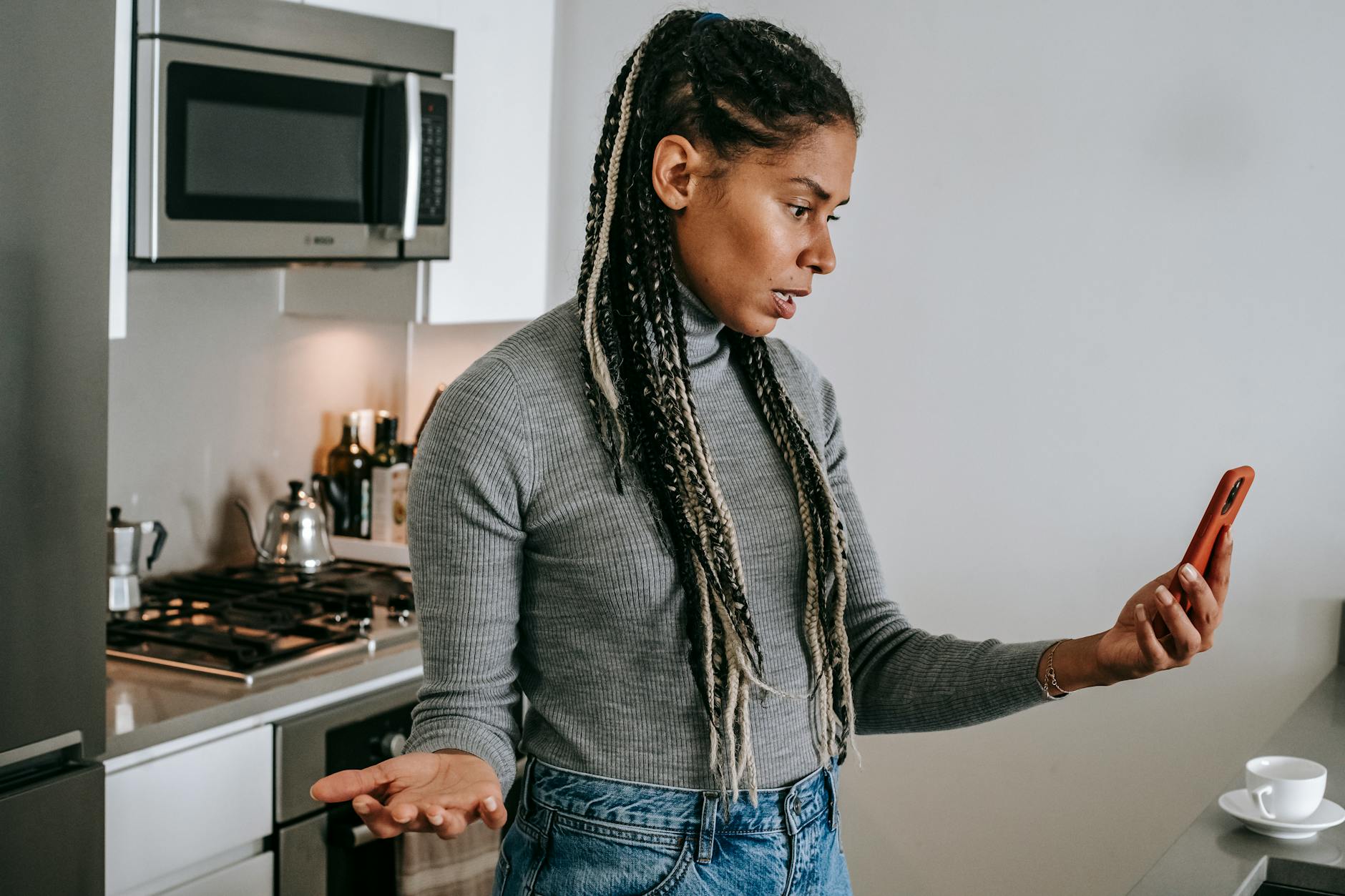
Photo by Alex Green on Pexels.com

It’s not always “breaking News,” so set boundaries 📰

We don’t have to read/listen/scroll through/watch the news and social media at regular intervals throughout the day.  We can take breaks from all of it. In fact, we are not of any benefit to ourselves, much less others, if we aren’t settled and at peace on the inside.  Thus, taking time to connect with your breath and that small, still inner voice can strengthen and renew you, filling you with a sense of calm/peace in order to help others and/or take on challenges.

While we don’t want to completely shut off the world and hide our light, we do have a choice as to where, when, and how much we participate.  Setting boundaries and/or taking breaks from what and how we choose to consume social media and news is within our power, and it doesn’t mean we are absconding from our civic or social responsibility to the world around us. 

Shine your Light 🕯️

If we hope to shine our light and engage in meaningful ways that can contribute to the betterment of our family, friends, community, and even world to the degree possible, we must also take time to close the proverbial outside windows and tend to our own inner world.  After all, even a candle must be protected from the wind in order to burn. 

How to capture those perfect holiday images and still remember the event

“Taking photos can help us remember certain things, but if we are completely reliant upon them, it can also impair and spoil our memories.”–Susan Blackmore for BBC Science Focus

Oh Those Annual HOliday Pics 🎞️

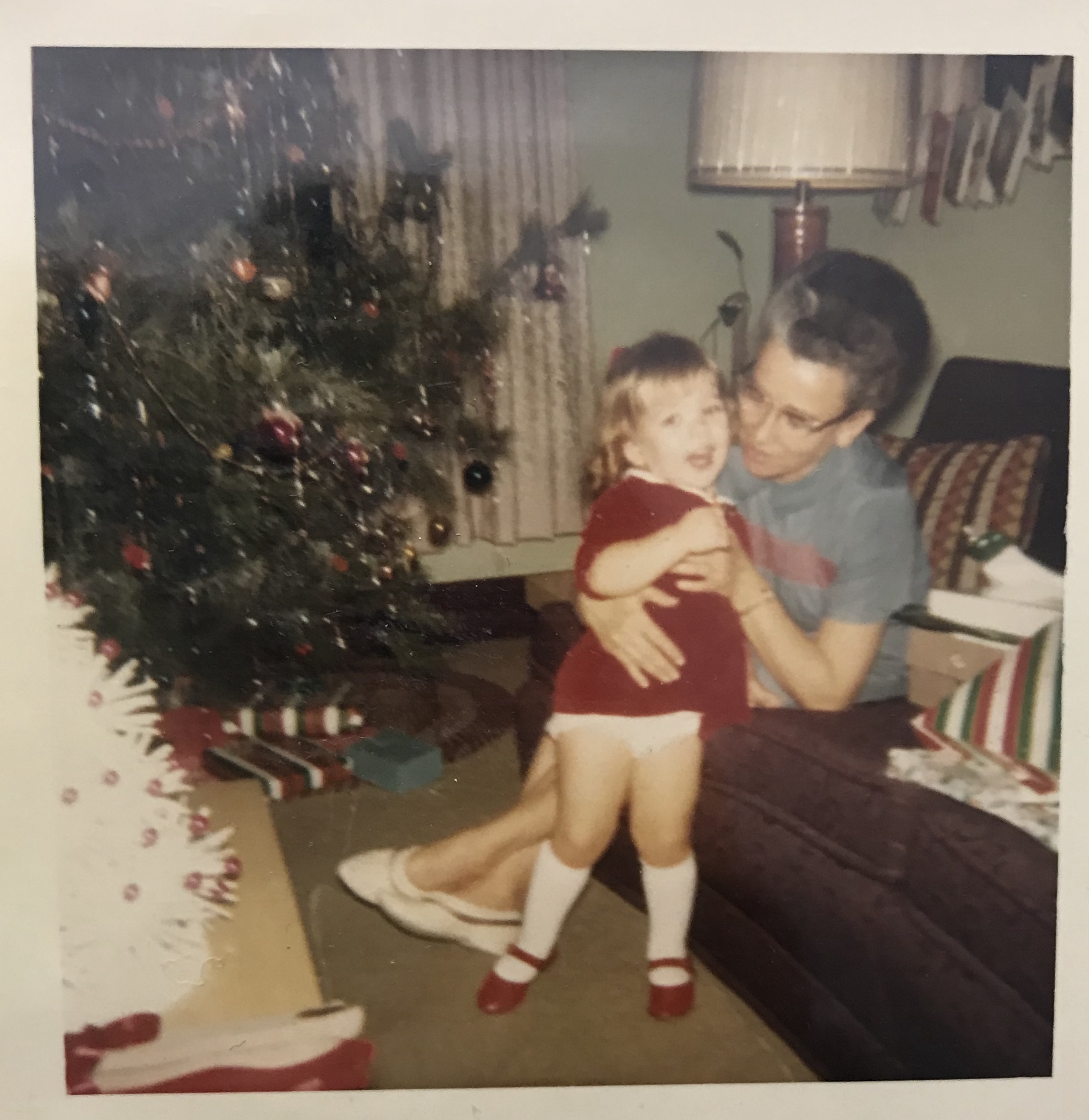
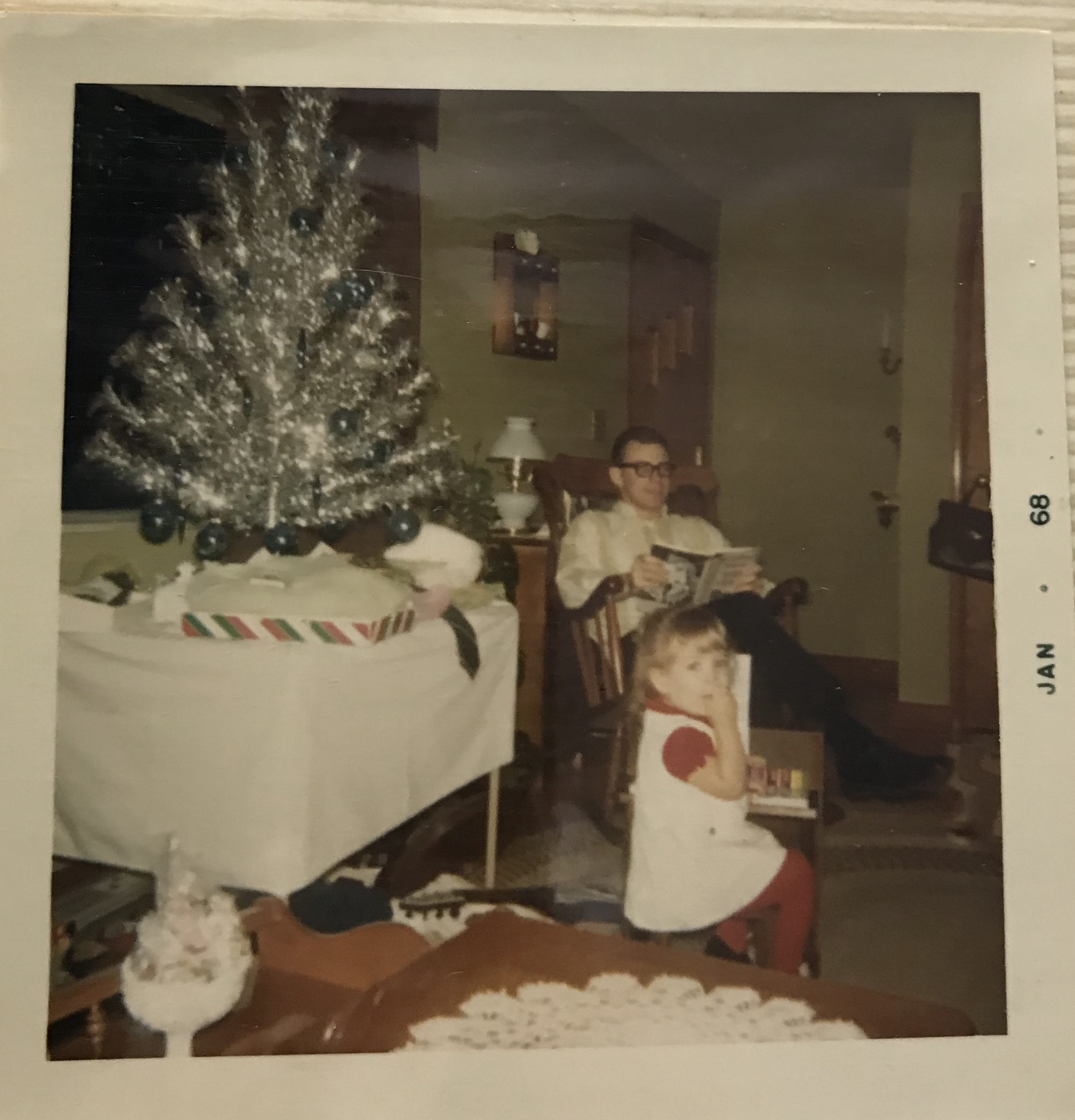
As the holiday season is now upon us, I am reminded of those annual childhood photographs my parents, like many, used to take of us.  There was always one of my three siblings and me holding our empty Christmas stockings on Christmas Eve.  Snapshots of us dressed up before some sort of Christmas performance, and pictures of us in our pajamas, rubbing the sleep out of our eyes before we opened our presents were also part of the mix.  Throw in a few more shots of Christmas brunch, one of us opening a “big” present, or another one riding a new bike, and it is clear that my family took pictures to memorialize special holiday moments.

I grew up in the era of cameras with film, now referred to as “vintage”. Film was not cheap, nor was the price to pay for developing it, which often required the film to be mailed away in a special envelope to a developing center with a one to two week wait period before the pictures arrived back to you.  As a result, it seemed to me that photography was more precious because the act of taking pictures was mostly saved for special occasions, such as birthdays, graduations, vacations, holidays, and so forth.  Plus, by the time an entire roll of film was used, sent off to the developers, and returned, it often made for a great surprise to see the time-line range of images on one roll of film.

How and Why We Now Take Photos 📸

Photo by Nicole Michalou on Pexels.com

All of that has changed in the current era of digital photography.  According to a 2022 BBC article , many older adults like me, still tend to use photos to commemorate special events and document special family/friend events.  However, younger generations tend to take many more photos and use them as a way to “communicate with peers, form identity, and bolster social bonds.” 

Additionally, the article added that many young people snap pictures to make a statement about how they are feeling at the moment.  However, I would argue that given the age of social media, people of all ages take more pictures than ever for the explicit purpose of instantly sharing a moment on various platforms. Therefore, taking photos is more than a tool of memorialization of events.

However, this comes with a bit of downside.  According to a 2021 NPR article, research as early as 2014 and conducted again in 2022 , has firmly established that “snapping too many pictures can actually harm the brain’s ability to retain memories.” Thus, while you instantly have access and the ability to share all the photos we want, the downside is loss of memory of the actual event.

Offloading our recollections?

Photo by RDNE Stock project on Pexels.com

It seems as if our brain will either offload the responsibility of remembering the moment because we are taking the photo, or we are so distracted by the process of taking and/or posting photos that we aren’t soaking up the moment in order to form or retain memories.  Therefore, this is a bit of a cautionary tale as we approach annual traditional gatherings of which many of us participate in one form or another.  

If we spend most of an event photographing and posting on social media, our brains are not cognitively engaged in gathering information about the event–the sounds, the sights, the textures, and so forth.  Despite the fact we might have scores of pictures from the occurrence, it turns out that we will not remember many of the details.  This is because those cognitive skills typically used for storage of memories were disengaged from the actual event and surroundings in order to focus on the photos and the media posts.

However, all is not lost. A 2017 study indicated that while the act of taking pictures is distracting to the brain, the preparation of the photo, framing the picture, zooming in and out on details, can sometimes enhance memory.  By contrast, according to a 2022 article published by the British Psychology Society, taking too many pictures impairs the memory due to attentional disengagement.  The trick, it seems, is to find the middle ground.

Photo by Any Lane on Pexels.com

How to Prevent memory Offload 🧠

For the sake of our memories, I’ve gathered a few helpful tips for navigating those holiday gatherings of family and friends in which you may want to balance the art of taking pictures and still recall the event while also capturing the perfect post for social media. 

  • If possible, have someone take the photos for you, allowing you to be more immersed in the moment, such as a designated friend or spouse.
  • If it’s not possible for someone else to take the photos, then take a few key photos, and put your phone away.  For example, take pictures at the beginning of the gathering and/or at the end, focusing the majority of your time enjoying the moment.
  • Additionally, be deliberate about what and when you take photos.  For example, think about the key moments ahead of time, to the degree possible, that you plan to photograph, and stick to your plan.
  • Focus on details when photographing a scene, instead of randomly snapping shots.  Research indicates that when you take time to focus and frame to capture the moment, you help the brain remember events better.
  • Wait until the event is over before you post. This serves two purposes.  First, it allows you to be more present during the actual gathering, soaking up the details that form memories.  Secondly, the act of closely examining and selecting photos to post AFTER the event will further strengthen your memory 

Photographic memory 📷

In the end, we all want nice photos we can look back on with fondness, commemorating those special moments.  However, we also need to spend time engaged and immersed in the gathering around us in order to establish those memories in the first place.

Therefore, make this a holiday season of “presence” and not just presents and photos.  Consider taking a few key pictures to preserve these special times, but then challenge yourself to put down the phones and feel the pleasure of full immersion and connection with those around you. After all, it’s time you may never again get.

While you’re scrolling, your life is rolling

“Social media is an amazing tool, but it’s really the face-to-face interaction that makes a long-term impact.”–Felicia Day

Most of us have been guilty of this.  I know I have.  However, having taken a huge step back for numerous months from my own personal use of social media, I often find it a point of fascination when I observe people in public who are engaged with the ¾-time dance of media consumption.  Scroll, scroll, tap.  Scroll, scroll, tap.  Scroll, scroll, tap.

Photo by Oleksandr Pidvalnyi on Pexels.com

Case in point, recently my husband, John, and I went to a nice restaurant for dinner.  We chose to sit at the small bar area for dinner–no waiting for a table and typically better, more attentive service.  Unfortunately, we picked the wrong night to go, and the restaurant–even the bar area–was slammed only minutes after we arrived.

While we waited (and waited) for food, the area in which we were seated became more and more crowded.  John and I were often bumped, jostled, and occasionally shoved in customers’ attempts to gain the bartender’s attention.  With so much background noise around us, it grew more difficult to talk, and I found myself drifting into people-watching mode.  

John calls this behavior, “Steph, the story writer mode.” This is because I will often lean in to him to share a narrative I’ve developed based upon my observations of others–nothing bad, just some made-up plot-line for a book that I could envision.  I like to think of it as one of my more creative and endearing habits, but I am not sure that John feels that way!  

But I digress . . .

Photo by Andrea Piacquadio on Pexels.com

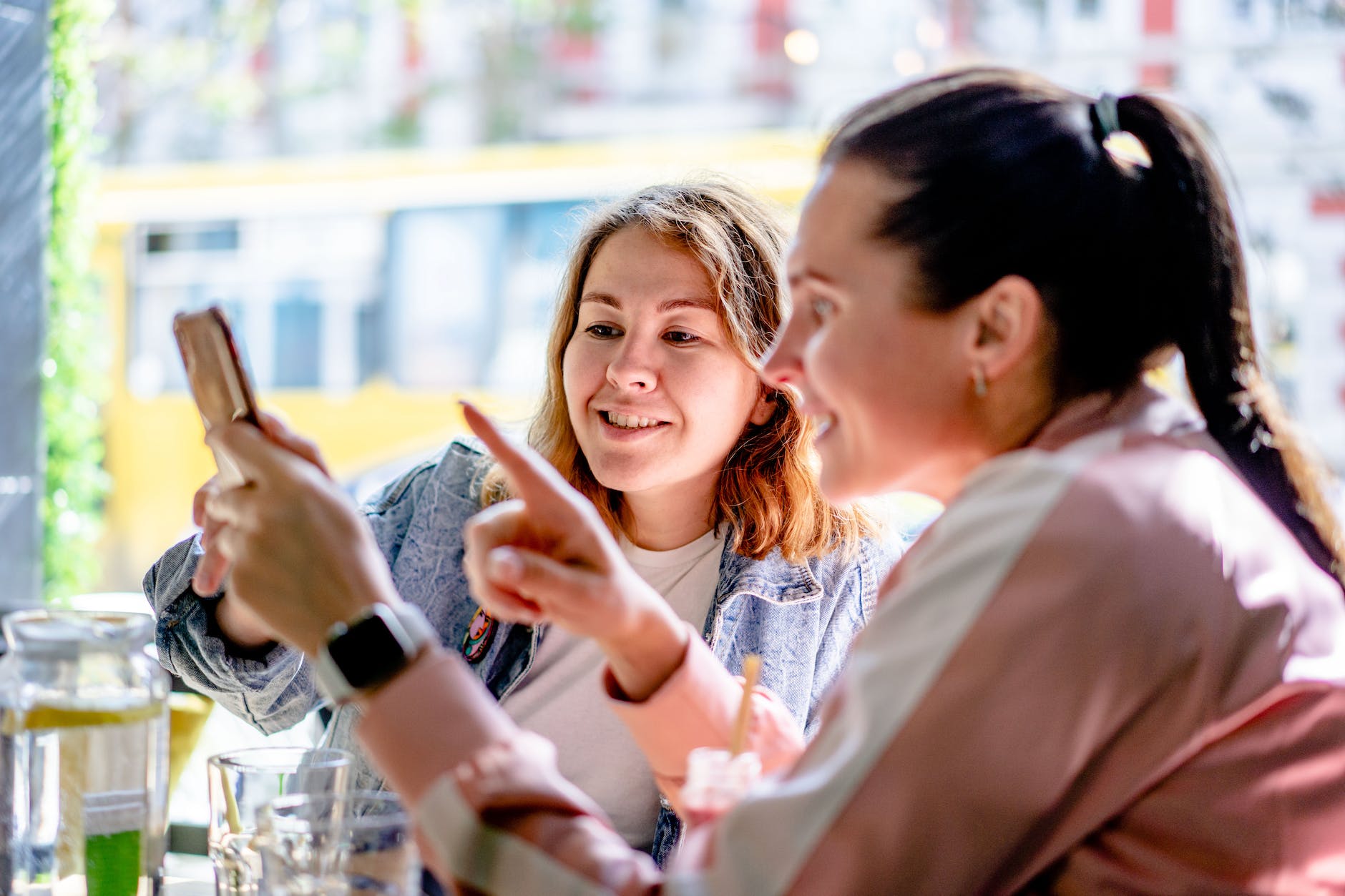
On this particular evening, I noticed two types of people.  Those standing, or sitting, waiting for a table without talking while ceaselessly scrolling and tapping on their phones, with the occasional lean-over-to-another-person to share an image on their phone.  Then there were those whose heads were collectively bent over a communal phone, laughing and commenting on screen images. 

One such group was close to me, and their conversation was so loud that I could not tune them out.  They were repeatedly making particularly cruel comments about what sounded to be their so-called friends’ social media feeds.  While I am not niave to the ways with which humans can be cruel and/or talk to one another, I still found this groups’ negativity and harsh judgment of friends to be exceptionally mean-spirited.  I felt as if someone in the room had purposely roused up a nest of wasps, and the insects’ anger was being unleashed upon those within hearing distance of this conversation.

Photo by fauxels on Pexels.com

Ultimately, John and I decided to get our food to go, and leave the negative environment.  Nonetheless, the moment stayed with me the next few days as I tried to process and understand what I observed.  

To begin, my instinct was to immediately think, in a self-righteous manner, “See this is what social media does.  It promotes and reinforces nothing but negative, hyper-competitive, social-comparing, cyberbullying, anxiety-driven behaviors.”  However, I know that is an unfair assessment.

Social media can offer positives.  It can allow for people miles apart to remain connected and easily facilitate communication, especially across time zones.  Furthermore, there are a wealth of sites offering support and coping mechanisms for those fighting serious physical and mental health conditions.  Additionally, there are numerous affirming informative communities for a wide array of specialized interests including physical and mental wellness, books, music, religious/philosophical pursuits, self-help/betterment, to name a mere few.

Therefore, I realized quickly my issue had more to do with the negative way in which social media can be used. For example, some of those I observed waiting for a table in a crowded entryway, may have social anxiety.  Therefore, flipping mindlessly through cute kitten and puppy videos could help ease the discomfort of being surrounded by strangers.  Perhaps, others have a tendency to become angry or rude during extended waits, so mindlessly scrolling through sports clips or silly dance moves takes the edge of their impatience, allowing them to pass the time more peacefully.

There might have been others who had had a particularly bad day, so they may have needed some positive or humorous images to settle their minds.  Others might have been using their wait time as an opportunity to get caught up on required reading, personal reading, or even the news of the day.  All of these are seemingly perfectly valid reasons.

Photo by Andrea Piacquadio on Pexels.com

But here’s my two-part concern: One, the vicious cycle of comparison (either as a point for confirming that your life is better than others, or fostering the belief that your life is lesser than others); and two, inaction–ignoring the present moment, failing to appreciate your surroundings, and/or overlooking an opportunity for real time engagement with the people who are present with you (or perhaps only a phone call away).  

In fact, the next day, as I watched what was clearly a mother and daughter in a coffee shop in which mom was doing the “scroll, scroll, tap” on her phone as the daughter looked around the coffee shop, picking at her food, a phrase came to mind, “While you’re scrolling, your life is rolling.”  

I am not sure if I made up that phrase, or if it was a phrase I had previously heard.  However, at that moment, as I waited for my own to-go order, it seemed fitting. The mom had an opportunity for real-time conversation with her daughter, but the moment was tragically passing.  One day, the daughter will no longer have time to get coffee and cake with her mom, and cherished moments, like the very one they were experiencing, will have passed.

Photo by Victor Freitas on Pexels.com

Of course, this mom could have had a very valid reason for being on her phone. After all, I was only in the shop for no more than five minutes, so I have no way of knowing.  The point is this, social media and the internet are a lot like the opening line to Star Trek, “Space–the final frontier.”  Our phones and other devices are tools, full of limitless possibilities and discoveries, but just like the Star-Trek crew, they are not replacements for real-life interactions.  

Our bodies, minds, and souls have a limited amount of energy and time.  In fact, our time and energy are precious commodities.  Therefore, what I have concluded is the importance of mindful awareness–not only of our use of social media, but also of the very pricelessness of the life that is around us.  Positive social media engagement, in strategically planned doses, can absolutely be beneficial, but it cannot replace those real-time conversations, interactions, and opportunities that surround us.  Bringing awareness to those real-time, life-connecting, and affirming relationships should be a priority in our day-to-day life over social media, before those opportunities pass us by.

Photo by Askar Abayev on Pexels.com