The Art of Conscious Breathing: Nurturing Mind, Body, and Soul

“The breath is the bridge which connects life to consciousness.”–Thich Nhat Hanh 

Students at the end of a yoga class with a seven minute meditation at the beginning of class (There were several absent on this particular day.)

Settle your mind 🧘

Settle your body onto your mat.  See if you can begin to settle your mind.

Soften your eyes.  All the muscles around each eye relax.  

Release the lines of your forehead; soften your ears, and allow the jaw line to release.

Let the shoulders melt away from your ears as your heart space softens.

Relax the muscles of your hips and legs while you rest in the knowledge that the earth can support you.

Feel the feet relax, allowing the arch and each toe to release.

Take a deep breath in.  Pause.  Sigh it out through your mouth. 

Whatever thoughts, worries, concerns that you had before entering this room, allow them to drift away on the stream of conscious breathing.

Another slow, deliberate inhale. Wait.  Now, exhale long, smooth, and controlled once more through your mouth.

Pause once you’ve fully exhaled and gently close your mouth, unless, of course, you are congested and cannot breathe through your nose. 

Inhale. Pause for a moment. Long, slow exhale through your nose.  

Follow the exhale until your lungs are fully emptied, and wait for a moment before you inhale again. 

Once more, be present with the inhale.  Intentionally allow for a pause.  Then, slowly, with full concentration, exhale–following the exhale until its full conclusion. 

Pause, and continue this conscious breathing for the next few minutes.  

If thoughts enter your head, recognize that you are thinking.  This is only natural.  Then, return your attention back to your breath.

Several of the students after yoga class that began with a seven minute meditation, a hour of yoga moves, and ended with ten minutes of relaxation pose, savasana.

Conscious breathing 😮‍💨

As I write these words, I find that my own breathing has slowed. My own heartbeat is slowing. My thoughts, worries, and concerns about how I will convey in writing what I want to share have begun to loosen their grip on my brain as I allow the words to flow in unison with my breath. 

This year in my school setting, I have the privilege of teaching a yoga/mindfulness class to high school students. It is a dream I have had for years finally coming to fruition. 17 students, 11 of which are males, which I find remarkable, signed up for the class.  Most, but not all, of the students are athletes, overloaded with the act of balancing coursework with their sports’ schedules and the desire to still have a typical teen social life.

However, when they walk through the gym doors, roll out their yoga mats, their job is to take a break from their very real, youthful concerns. It’s not easy. Like all of us, strands of stress and worries cling to their minds and bodies the way cooked noodles often cling to one another if the noodles have not been properly stirred during the cooking process.  My job is to stir the proverbial pot of their mind and guide their bodies through yoga movements that encourage the release, at least for a few moments of their day, from the stickiness of their constant concerns.

Photo by Oluremi Adebayo on Pexels.com

The Power of the Pause 🙏

The pause between breath reminds them, and really, all of us, of the importance of taking intentional pauses throughout our day to pay attention to the here and now.  Mentally pausing to let go of thoughts of the past, thoughts of future plans, and thoughts of all those unanswerable “what ifs” can be a valuable respite.  Taking a few moments to close the eyes, tune out the world, and focus on your in and out breath can release tension and provide a short rest for the mind, eyes, and body. 

Even on our busiest days, taking a short pause, enough for a few deep breaths, can renew and refresh your focus, especially if you are feeling anxious and/or stressed. By taking deep breaths, especially those in which you can extend the exhale, sends signals to the body to relax.

Photo by Kelvin Valerio on Pexels.com

TEnd and befriend 🧘🏿‍♂️

Based upon my limited understanding, longer exhales encourage the vagus nerve to send a signal to engage the parasympathetic system (think: rest and digest or tend and befriend system) and relax the sympathetic system (think: fight, flight, fawn, or freeze system). Those deep breaths, especially with the longer exhalations, let the body know that it is in a state of calm, so that it can “tend and befriend” the work challenge you must complete rather than “fight” it or all together mentally “freeze.”

In addition to soothing the mind and body, by consciously paying attention to our breathing, we can connect to the wonder of being alive, and the miracle that is our body.  Our bodies, with its amazing autonomic nervous system, automatically takes care of so many functions and unconscious processes without us having to think about it. We truly are marvelous creations.  Conscious breathing can be that bridge between our physical bodies and our conscious minds, as Thich Nhat Hanh pointed out. And, it is a tool for bringing our attention to the present moment.  After all, you can’t focus on your breathing and not be aware of the here and now.   

Photo by Andrea Piacquadio on Pexels.com

Conscious Breathing is the Link

In the end, taking time to intentionally connect with our breath offers numerous benefits. Deep breaths with long exhales can allay our fears, concerns, and worries.  It can bring a sense of calm in a short amount of time to an otherwise chaotic day.  Conscious breathing can invigorate and recharge the mind for an important and stressful project.  Furthermore, deep breathing can link our minds to our bodies while also bringing our attention to the present moment.  So pause, take a deep breath, or three, release the grip on your worries and burdens, and reconnect with here and now, and the font of peace that dwells within.
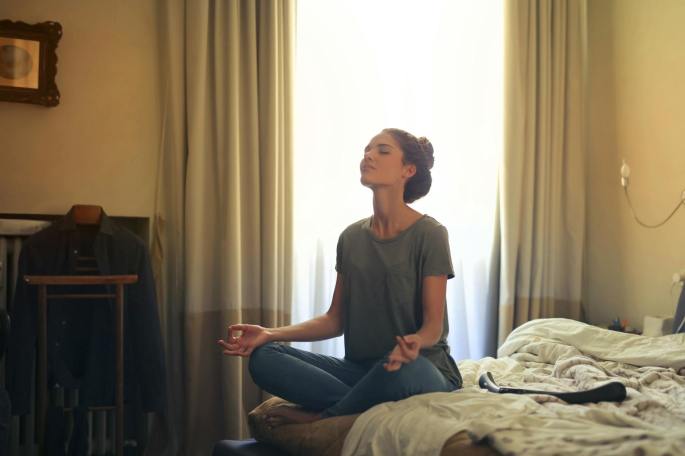
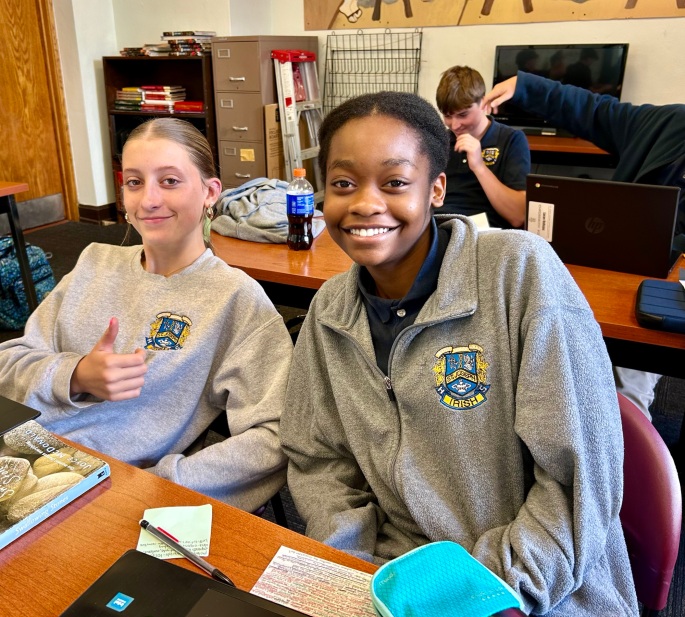
Photo by Andrea Piacquadio on Pexels.com

See the soul and ignore the story: Lessons from a lifetime of teaching, part 1

Ignore the story and see the soul.  And remember to love. You’ll never regret it.–Seane Corn

First years of teaching 👩‍🏫

Over the decades of teaching, I have accrued numerous experiences.  Several of these stand-out memories occurred during my earlier years of education.  Therefore, in honor of another school year’s conclusion, I will share some of these memories over the coming weeks, and the many lessons these interactions provided. 

My first teaching position was at Kentucky high school in the late 80s.  Newly graduated and exceptionally young, I was ready to change the world.  Like all first year career experiences, the theoretical training of a university was quite different from the reality I faced.  

I was one of five special education teachers.  Our classrooms were separated from the rest of the school.  We were part of the gymnasium facilities, and my classroom was one of three under the visitor’s side of the bleachers. 

Lines of Separation 📚

In order to get to my “classroom,”  I had to walk through two other “classrooms.”  One wall was slanted because it was the underside of the bleachers, and one wall was a rolling chalkboard separating my classroom from another.  One wall was painted concrete block, and the other side was a giant metal wall with a locked door that stored the ROTC weapons.  The desks were mismatched leftovers from a previous era, and classroom supplies were limited.

My first day of school was filled with nerves, and the isolation of my situation led me to feel even more anxious. However, there was little time to dwell on it as the students began arriving.

The Encounter 🗣️

The last student to arrive stood over six feet in height and brawny.  (I would later learn he worked as a hired-hand at various tobacco farms across the county.)  With one cursory glance, he sized me up, spit tobacco on the floor, and picked me by my shirt collar.

“You ain’t teachin’ me nothin.  I ain’t here to learn.  Only here cause it’s the law.”

His startling blue eyes conveyed his disdain for me as we locked eyes.  I knew this was a make or break moment, and I was determined to not break. So I said the most brilliant set of words.

“Put. Me. Down.”

It was an intense moment.  On the inside, I was filled with fear.  Fear I would lose my job after only one day.  Fear I was about to get hurt.  Fear I wasn’t strong enough to withstand the discipline this job would require.

Wordless Truce ☮️

Outwardly, my eyes never wavered from his.  I would not be intimidated by him.  Seconds seemed to stretch, although I am certain this was not a long moment.  However, it was long enough for me to take in the acne scars on his face as well as a few other scars that looked as if he had experienced his fair share of altercations.  His blonde curly hair was cut in a mullet.

I was acutely aware of the other students’ quiet stares taking in the situation as I once more repeated, “Put. Me. Down.”

Through some act of Divine Intervention, or perhaps the I-am-not-messing-around look in my eye, the student put me down.  I recall the way he smugly looked around at the other students as if to convey he had shown me.  

Peace Offering 🕊️

I could have taken him to the office or written his behavior up, but I chose not to.  Even though I was inexperienced, I knew that would immediately build a wall between not only him, but the rest of the students and me.  Instead, I believed I needed to find out more about him, and work on building a relationship with him and the other students. But, I wasn’t sure how, or even if, it could be done.

In the meantime, once things cooled down, I gave him cleaning supplies and asked him to spit out his tobacco in the trashcan and clean up the floor. Then, I walked away and busied myself with other students.  It took several minutes before he started, but he did clean it up.

Seasons of Change 🍁❄️

By late fall, the young man would occasionally engage in conversations with me, especially if I focused on his knowledge of raising tobacco and his work ethic.  He explained that he had worked alongside his dad, but at some point that stopped.

By winter, I had learned that his father was disabled, and no longer worked, but apparently still knew how to lift his arm to drink and hit. This partly explained the young man’s tough-guy persona. The student often stayed overnight with buddies around the county, or during certain parts of the growing season, he’d stay over at the farms on which he was working.

Misdiagnosis 📖

By mid-year, I felt certain that the student was misidentified.  He was no doubt dyslexic, but that had nothing to do with his IQ or his abilities.  There were so many life and reading skills that I wanted to work with him on, but time was running out.  The young man was determined to quit school once he turned 18, even though he was only a junior. 

One class in which this young man thrived was shop.  He could build and repair seemingly anything.  One of the special education teachers often talked about the young man’s talent and sometimes hired this student for work on the teacher’s farm.

By March, I had established a good working relationship with the student.  I teased him about his haircut and cowboys boots, and he made jokes about my height and “easy” job. Along with the other students, he learned to read and complete job applications, manage a budget, how to dress/act during a job interview, and even how to plan, shop, and prepare a week’s worth of simple meals. He was even reading short books with adapted text about famous athletes. 

Rumor Has It 😔

One day in April, the young man did not show up for school.  That wasn’t unusual.  Many of my students had irregular attendance.  After his third consecutive day of absence, I went to see an administrator to inquire about the student’s absence. He said he would check into it, but the gossip among students said he wasn’t coming back. The young man had had his birthday.

I have no idea what became of this student.  I would like to think the best, but I am not so sure.  Maybe he has a job, family, and even grandkids by now.  I can only hope, but I’ll most likely never know..

Lessons learned 📝

Nevertheless, I am grateful for this student.  He was the first to teach me to ignore the bluster of the student’s story, and see their soul–see the person they can be at their best self and recognize their potential.  I accepted him as he was, envisioned a better future for him, and tried to help him see it too.  

He also taught me that no matter how hard I work with students, they are still individuals who will determine their own fate.  That was, and still remains, a hard lesson to swallow.  So instead, I will focus on his best, albeit unintentional, gift:  See the soul, not the story.  You will never regret it; I haven’t yet.