Three Pauses: On breath, attention, and the quiet work of returning to ourselves

Almost everything will work again if you unplug it for a few minutes… including you.”–Anne Lamott

A Reminder to Pause

I was driving to work this past Monday after an extended break, thinking about my to-do list for the day, when an alarm on my phone began a soothing piano melody. Bringing my car to a rolling stop as I fell in line with traffic at a stop sign, I tapped the alarm off. I wanted to ignore it. Instead, I reminded myself this would help me complete those “to-do” lists with a more calm mind, so I paused my thinking and took three slow, deep breaths–the first of the day.

How a Friend Planted the Idea

This practice of setting a gentle sounding alarm as a reminder to take three deep breaths was a serendipitous seed of an idea that a friend unintentionally planted within me. We met for lunch one day, well before I returned to school from winter break. During the course of a deep conversation, her phone alarm accidentally went off. Surprised that it was going off, she quickly turned off the alarm and then–seemingly on a whim–said “Let’s take three deep breaths.” She shut her eyes and began inhaling, so I followed suit. Our conversation resumed afterwards and nothing more was said.

Turning an Accidental Moment into a Daily Practice

However, on the way home, I reflected upon how much better I felt after we took those three deep breaths. I further examined a few of the benefits that I knew regarding deep breathing. What would happen, I wondered, if I took time more often to take three deep breaths daily like I did with my friend? As I reflected over my typical work week and subsequent weekend, I identified three common times of the day, whether at work or not, in which pausing for three deep breaths would be beneficial. 

I realized that I would never remember to take time to do that without a reminder, which meant setting an alarm. Not any ol’ alarm sound would do.  Once home, I took a few moments, played around with various tones. My intention was to make the alarm sound invitational, not demanding. I knew if it felt like a chore, I would feel more resistant. Plus, the reality was I knew I wouldn’t be “perfect,” especially in the beginning and given the unpredictabilities that can occur on any given day.

Three Breaths, Three Times a Day

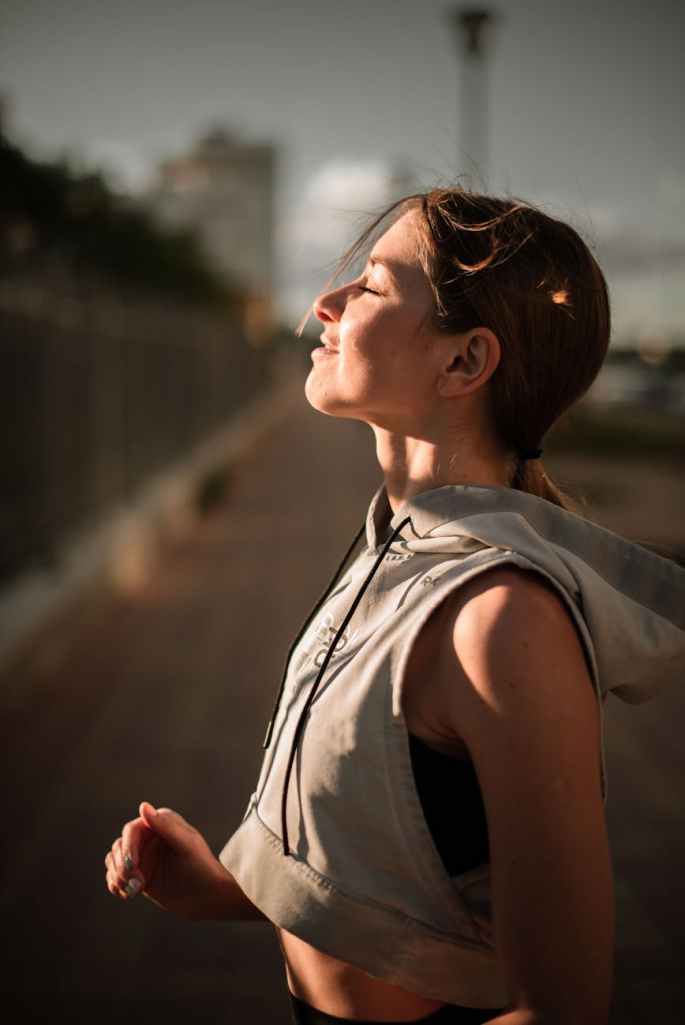
When the piano melody alarm now subtly tinkles, I pause what I am doing, close my eyes (if alone or not driving), and take three deep, expansive belly breaths. The alarms are set to ring before the arrival of students, during lunch, and at the end of the day, right after students leave. On the weekends, when I am busy with household chores and errands, the times still work well. 

Creating a Practice That Feels Gentle, Not Demanding

If I am alone, and not driving, I sometimes place one hand on my low belly and another hand on my heart. The hand placement reminds me to initiate the breath from my diaphragm and allow the air to expand the belly, then expand the ribs fully, and allow the inhale all the way up into the heart space. 

Other times, especially if I feel stressed or worried I place both hands on my heart in a gesture of self-care. Most of the time, however, I am not alone, given the nature of my job, but I can still pause and take three deep breaths without drawing any attention to myself. 

What Happens in the Body When We Breathe Deeply

Our bodies are miraculously created. They are designed, when properly cared for, to function like a high-performance team–each system working synergistically with other systems for the ultimate benefit of the whole. Pausing to take three deep breaths is my way of working with my body. The body responds by lowering the heart rate, decreasing blood pressure, and increasing a sense of calm. The body already knows how to do this. Taking deep breaths cooperates with the body’s natural process and simply allows it to intentionally happen.

When the Mind Begins to Follow the Breath

Our minds naturally follow the breath. If our breathing is short, shallow, or choppy, our mind readies itself for a stress-inducing event. Consistently setting aside time throughout the day to breathe in a relaxed, calm manner, even for a couple of minutes, incrementally creates a shift in our mind. While I wouldn’t say my practice has been transformative, per se, I would say that there are days my stress and anxiety are decreased, other days I notice a bit more mental clarity and focus, and other times I feel a subtle, but real, shift in my energy and vitality. While I cannot say I have eliminated all of the negative thoughts in mind, I am noticing that I am better able to handle my emotional response to a difficult moment with a bit more grace.

A Quiet Conversation Within

Another benefit I have observed is sometimes when I pause, I feel a connection to the “still, small voice within,” that source of wisdom that hovers beneath all of the distractions and noise. It is as if, for the briefest of moments during my busy day, my body, mind, and heart are at peace. I momentarily feel an overall sense of gratitude, a reminder of the positives in my life, despite those negatives that remain. There’s also a sense of connection to other hearts and souls moving in, around, and throughout my day. All told, it provides me with an overall feeling of solace.

Why Three Times a Day Matters

One thing I did not realize before starting this small practice is that by setting aside three times per day to take three deep breaths, it harnesses the power of the “rule of three.” The “rule of three”, I learned by happenstance a few days into my practice while I was listening to a podcast. This rule employs the principles of habit formation to increase focus, productivity, and well-being. The frequency of three breaths, three times per day is enough to establish the habit without it feeling overwhelming, which, lucky for me, is an important consideration. 

Imperfect Practice, Faithful Returning

Are there times I don’t heed the timer? There certainly are. I am not perfect, and I am not pretending it is easy to create a new habit. But I do continue to return to the practice, even if I miss a timer, or three, throughout the week. I know that when I do take time for that brief pause to nurture myself with a few deep breaths, I will show up better, more fully for myself and others.  

An Invitation, Not a Prescription

Perhaps there is a pause waiting for you too.
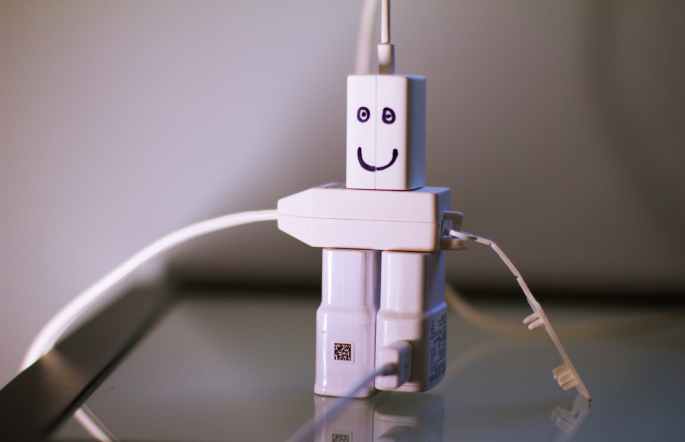
Sometimes We All Benefit From Unplugging

“Today, when nearly every question can be handled instantly by Siri, Google, or Alexa, we’re losing the habit of pausing to look inward, or to one another for answers.  But even Siri doesn’t know everything.  And Google can’t tell you why your son or daughter is feeling hopeless or excited, or why your significant other feels not so significant lately, or why you can’t shake chronic low-level anxiety that plagues you.”–Vironika Tugaleva

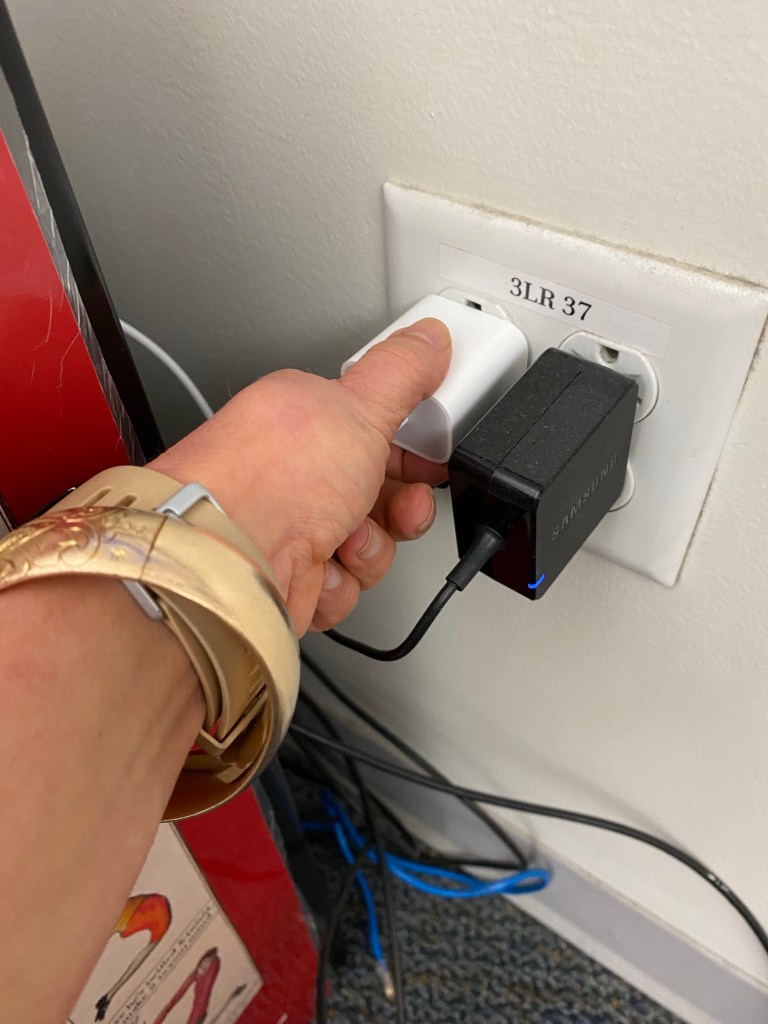
 My classroom now includes the integration of an Apple TV through which I connect a  computer or iPad in order to project content onto a whiteboard.  One day recently, it wasn’t working, and after completing a few troubleshooting steps, I was at a loss.  A co-worker suggested that I unplug the device for a short time, then plug it back in.  Which led me down a path of reflection . . .

It is amazing to think I incorporate the Apple TV with all of the other forms of technology in my classroom after beginning my career with little to no technology in the classroom, much less in my own life.

I find the technology I integrate into my classroom a point of marvel.  The most advanced technology that I used with my students during my early years of teaching in the late 1980s was a rolling chalkboard that was also magnetic!  Since then, the role of technology, not only in my classroom, but also in life in general, has remarkably transformed.  It reminds me of making a snowperson as a kid. 

Forming the largest part of the snowperson required concerted effort, and it was slow work. With each segment, however, the snowperson became easier to form, and the results came faster until everyone in the neighborhood had access to see and enjoy its newest member.  Eventually though, no matter how much more snow did or did not fall, the snowperson melted away into the soil, and the once novelty then became part of the neighborhood’s foundational ground without the kids and their families releasing it.

Photo by Balu00e1zs Benjamin on Pexels.com

In a similar, but much more complex fashion, technology became integral to humans.  First, its development was a slow, laborious process that required the endeavors of many. People would gather and marvel at the latest creation, until eventually those cow-spotted boxes became a common home delivery sighting. However, as information began to gather, momentum picked up, and soon the technological developments started evolving at an even more rapid pace until the technology melted and integrated into the very foundation of society, no longer a curiosity.

Information can be gathered in one or two keystrokes of a computer or handheld device.  Additionally, one can gather statistics, facts, figures, and so forth, at any time of the day or night.  As a general rule, this acquisition of material is neither good nor bad–it all comes down to the producer and user of information. Unfortunately, there seems to be a growing sea of pride developing among those who can amass large quantities of data, gathering facts in their head on a daily basis–as if the more data one can gather, the more important their opinion becomes. 

Photo by cottonbro on Pexels.com

This has also led to a new mantra regarding disdain for one another’s feelings.  I have seen it crudely phrased on bumper stickers and yard flags/signs, and I’ve likewise overheard it stated slightly more civilly (although often still aggressively) in conversations.  In fact, I have even made similar statements. However, I do believe there is a danger in discounting feelings/emotions. 

I could make the argument that those who state that they dismiss feelings or emotions are still unwittingly attached to their own.  This is due to the fact that their pursuit of intellectual facts/data/statistics, on which they make their various stands, is motivated by the good feelings that accompany their accumulation of data.  In fact, according to the latest data, the use of technology–even in intellectual pursuits–is designed to create positive sensations driven by dopamine, those feel-good chemicals released by the brain.  This is the exact same chemical response that is the force behind both positive habits and negative addictions.  Therefore, to say a person’s feelings don’t matter is ironic, since at the most biological level, it is dopamine driving one’s attachment to gather facts, data, and statistics.

Photo by Vie Studio on Pexels.com

Now, before I am sent outcries of defensive outrage, let me continue to lay out my points in order to get to my thesis.  I absolutely value knowledge, and I enjoy listening, reading, and discussing valid research content.  In fact, without it, I would not have an education, nor would I have a job.  In fact, without these intellectual endeavors, society as a whole would not have made many of the significant advances that contribute to our well-being.  

Instead, I think that the danger resides in valuing data/statics/facts above all else, causing us to lose sight of the importance of unplugging and listening to that still, small voice that resides within each of us.  It is that voice–that level of consciousness–that allows us to discern, not only right from wrong, but also develops and fosters those less-intellectual, but critical pursuits, such as compassion, empathy, communication, adaptability, creativity, interpersonal skills, teamwork, collaboration, and so forth . . . .   Without these so-called soft-skills, humanity is not any different from the technology on which I write this piece.

Photo by Alena Koval on Pexels.com

At the time of writing, the Northern Hemisphere is in the early stages of spring.  The ground is softening, and soon, the soil will be prepared for cultivation.  Branches, rocks, and any other debris will need to be removed, the soil will require proper tilling, leveling, and fertilization in order for those tiny seeds to grow into a harvest of bountiful, nutrient dense food. Likewise, it is only by unplugging and pulling ourselves away from devices that we can prepare, fertilize, remove mental detritus, and grow a harvest of intra- and inter- personal skills–which starts when we take time to plant inner-seeds of faith in order to grow our relationship with our Creator.

Faith is not about intellectuality–although people certainly try to do this.  Instead, I believe faith requires conviction, and that conviction comes from the cultivation of one’s inner world–the heart center, the residence of, yes, emotions. Faith is not tangible, it cannot statistically be verified.  However, I argue that without faith, we cannot fully develop emotionally.  In fact, I would go so far as to state that without faith, we cannot understand, offer, and receive love; and without love, we are little more than a “resounding gong or a clanging cymbal” as one of my favorite Bible verses states. 

Photo by Inna Lesyk on Pexels.com

 As such, I strongly suspect that many of the wars waged around us, both at home and abroad, have as much to do with a lack of faith and development of all those so-called soft skills, as they do intellectual evaluation of facts, statistics, and data. Unfortunately, we may not be able to control conflict around us, but we do have a choice in how often we unplug, look within, and cultivate/enrich our own faith/heart.  It is through these unplugged pauses that our faith becomes more strongly rooted, increasing our trust in the belief that Divine Providence will provide for a path through–maybe not the way we had hoped, but a plan, nonetheless, for all things to work towards the higher good.

So pardon me if I do value unplugging from all that input, and stand in the center of my faith–the heart of my emotions. I believe that it is through regular bouts of unplugging–even for short periods–that my faith is renewed, my resolve is strengthened, and I am refreshed and once more ready to move forward in the data-driven world–just as the Apple TV in my classroom ultimately did. The difference, however, between the Apple TV and me, however, comes down to my faith–my emotional heart center.  I believe the same is true for humanity.