Aging with Serenity

God, grant me the serenity to accept the things I cannot change, courage to change the things I can, and wisdom to know the difference.”–Serenity Prayer

Photo by Harshi Rateria on Pexels.com

After writing humorously about the aging process a few weeks ago, I ran across an article written by Paula Span, focusing on the research and work of Becca Levy, a psychologist, epidemiologist, and professor at the Yale School of Public Health. Part of Levy’s work specifically points to 7.5 years that can be added or subtracted from a person’s life based upon personal and societal attitudes towards aging.  Since then, my brain has picked up Levy’s thesis, as if it were an object of study, and has been manipulating it from all angles as I consider its premise with what I thought I knew and what I hope to understand/apply. 

And what do I know? I know that I definitely won’t be retiring during my 50s as I once believed. At one time, I harbored some resentment about this.  Then, we went through the pandemic, and I experienced the heat of transformation with millions of other people, like sand particles melting into glass.

Photo by Pixabay on Pexels.com

It was during the pandemic that I slowly began to observe many of my attachments to “how things should be,” such as my retirement age, and I began to undergo a practice of  learning to say “yes” more often to things that weren’t, “how they should be.”  It was, and continues to be, a very imperfect practice.  Learning to accept AND surrender to the things that I cannot change is NOT my natural inclination.  

In addition to my belief about retirement age, nearly ten years ago–I battled low back pain due to three bulging discs and an extra vertebra.  Without belaboring the topic, the pain led me down a meandering path of chiropractic care, regular epidural steroid injections, and ultimately two 12-week rounds of physical therapy.  Both well-meaning doctors and physical therapists, told me that I should never participate in any form of high intensity exercise, including running again.  I accepted this theory because, after all, they were the professionals, and besides I was getting to “that age”–whatever that means.  

Photo by Karolina Grabowska on Pexels.com

Fortunately, one physical therapist disagreed, suggesting that I should strengthen the weak muscles that were causing imbalances that led to my injury in the first place.  Then, if I continued to work on maintaining that strength and listen to my body, he believed that I could gradually resume running and other forms of exercise I had been told to avoid. His advice later proved to be spot-on.

Therefore, as the pandemic continued, work changed, living conditions changed, and exercise changed as we said goodbye to gyms and group exercise.  Work meant sitting for hours. Low back, hip pain, depression, and sleep disruption escalated. I learned that I was not made to sit for long periods, and I began to realize that in-person work was more beneficial to my life than I realized. 

Photo by Peter Olexa on Pexels.com

Through trial and error during the pandemic, I began to resume various forms of exercise that I had once abandoned, including running, and I began to rethink my belief system about my own aging process.  I started approaching my life, and my physical body, with a bit more curiosity–making observations, asking questions, forming hypotheses, testing them, and making adjustments. This continues today.

The pandemic forced me to make peace with the fact that I will work longer than I had originally planned because it is still beneficial for me. Furthermore, I have embraced my need for movement; I cannot sit for hours, and even if I could, it is NOT good for me physically or mentally.  Additionally, I need interaction with others, even if I am an introvert at heart.  However, I still value and honor my need for downtime, introspection, reflection, and quiet. 

Span’s article, combined with the pandemic experience, inspires me to seek the courage in the coming years to continue to change what I can, but to also hone my ability to know when I can’t.  This is only possible through the wisdom that comes with life experience, aka, aging.  Aging is not a point for which to attach shame, negative stereotyping, or embarrassment.  Instead, the process of aging should celebrate one’s life experiences and provide us with opportunities to not only apply the knowledge gained from these experiences to our own lives, but to also use them for the benefit of those with whom we interact and/or mentor.

Photo by Andrea Piacquadio on Pexels.com

To be certain, aging brings unavoidable changes in the physical body and in the way in which we think (and forget), but it is not necessarily a time for stopping, like much of our cultural cues teach us by celebrating youthful beauty, prowess, and achievement. In fact, after reading about Levy’s work, I realize there’s plenty of money to be made.  In fact, according to Span’s article, Dr. Levy and her colleagues estimate that “age discrimination, negative age stereotypes, and negative self-perceptions of aging lead to $63 billion in excess annual spending on common health conditions like cardiovascular disease, diabetes, and injuries,” not to mention all of the money made from products promising to turn back the clock. 

One of the most compelling examples of psychological absorption and damage of cultural ageism in Span’s article occurred when Levy took her 70-something grandmother shopping in a Florida grocery store and her grandmother fell over a crate left in an aisle. The grandmother’s injury was superficial, but it did bleed profusely.  When the grandmother suggested to the store owner that crates should not be left in an aisle, the store owner replied that “old people fall all the time, and maybe they shouldn’t be walking around.”  After that point, Levy observed that her once lively grandmother began to ask others to do tasks for her that she once regularly completed.  It was as if her grandmother began to subconsciously view the grocery store incident as her cue that she was old and incapable of caring for herself.

Photo by Eduardo Soares on Pexels.com

Meanwhile, in Blue Zone parts of the world, geographical locations in which people live the longest and are the healthiest, centenarians are celebrated as if they were highly acclaimed celebrities.  If these parts of the world can encourage, foster, and honor a culture where aging is not only accepted, but highly valued, why can’t we?  

Maybe I cannot change the current culture, but I can change my own personal view on the maturing process.  Wrinkles capture the adventures in the sun as well as countless moments of smiling. Gray hair celebrates the continuation of our inner child wanting to roam free and wild, and body aches/pains are a reminder to care for the vessel God gave us. 

I now know that phrases such as, “that age,” reflect cultural and social programmed attitudes that marketers, business, and the healthcare industry prefer is an ingrained part of our vocabulary.  While not every business or healthcare provider is personally invested in this ageism, I no longer desire to accept those marketers’ money-making, psychological damaging propaganda. What about you?

Photo by Chevanon Photography on Pexels.com

Fudgy, Healthier Brownies (With Black Beans)

“The primary reason diseases tend to run in families may be that diets tend to run in families.”–Michael Greger, How Not to Die: Discover the Foods Scientifically Proven to Prevent and Reverse Disease

When I read the above quote, it gave me reason to pause.  Hmm.  Reflecting on the generations that I knew within my family lineage, I realized three things.  One, I came from excellent cooks on both sides of the family.  Two, heart disease, cancer, and Alzheimers/dementia were clearly present on both my paternal and maternal sides of the family.  Thirdly, those same two facts could pretty much be applied to most of my husband’s, John, family heritage.

Photo by Pixabay on Pexels.com

Let’s be honest, food is often the center of gatherings, events, and holidays.  While food is nourishing to the body, it is also comfort, warmth, love, and care, all wrapped up in a flavorful and aromatic quilted blanket of tradition.  Every family has their own unique variation of food traditions.  Even in families where the art or time for cooking has been lost, there are still food-centered events.  People love food, and why not?  

Unfortunately, food doesn’t always love us back–depending upon the foods we choose to eat, the portions we consume, and the beverages we down with it.  That said, I am not writing to push any one way of eating, cooking, or approach to food in general.  It is my firm belief that lifestyle and diet is an experiment of N = 1. Everyone has a unique genetic make-up, body, and life circumstances, so who am I to know what works best for each individual.  However, I do think most can agree that consuming more plant based foods is never a bad thing.

Photo by Jb Jorge Barreto on Pexels.com

One of my most treasured family recipes is my Grandmother Helen’s brownies.  It is the go-to recipe I make for special occasions, and it is most often requested by my daughter, Maddie.  In fact, I created a gluten-free variation of it, so that I, too, can enjoy this wonderful and scrumptious treat.  Thus, it was the combination of the quote above and my love for my grandmother’s brownies that led me to the research I used as motivation to cobble together this recipe variation for brownies that includes more plant based foods and uses less sugar.  

I give credit and inspiration from the following sites: chocolatecoveredkatie.com, dailydozenmealplans.com, nutritionfacts.org, busbysbakery.com, and The Jaroudi Family on Youtube.  Their recipes, combined with my own experience, gave birth to this healthier variation of my grandmother’s brownies.  Don’t get me wrong, I still plan to bake Grandmother’s Helen’s version for special occasions–there’s no replacing it; however, this recipe will do, as Grandmother Helen used to say, “in a pinch,” in order to satisfy my sweet tooth, but still sneak in the healthful benefits of a few more plants into my day.

Photo by Isabella Mendes on Pexels.com

 From my heart to yours, I appreciate you reading this and wish you much health and vitality!  I hope this will be a recipe you try! However, based upon my experience, you may not want to let your tasters know there are black beans in the brownies until AFTER they’ve eaten it!  I’d love to hear your thoughts, and be sure to share your variations with me.

Recipe below pictures ⬇️

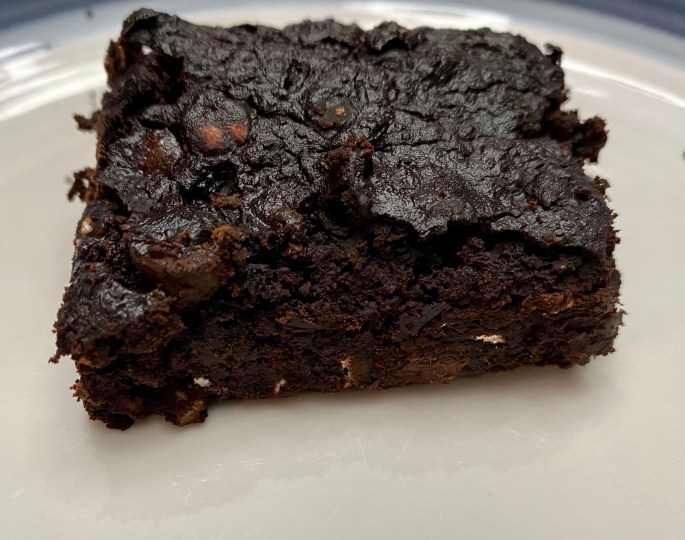
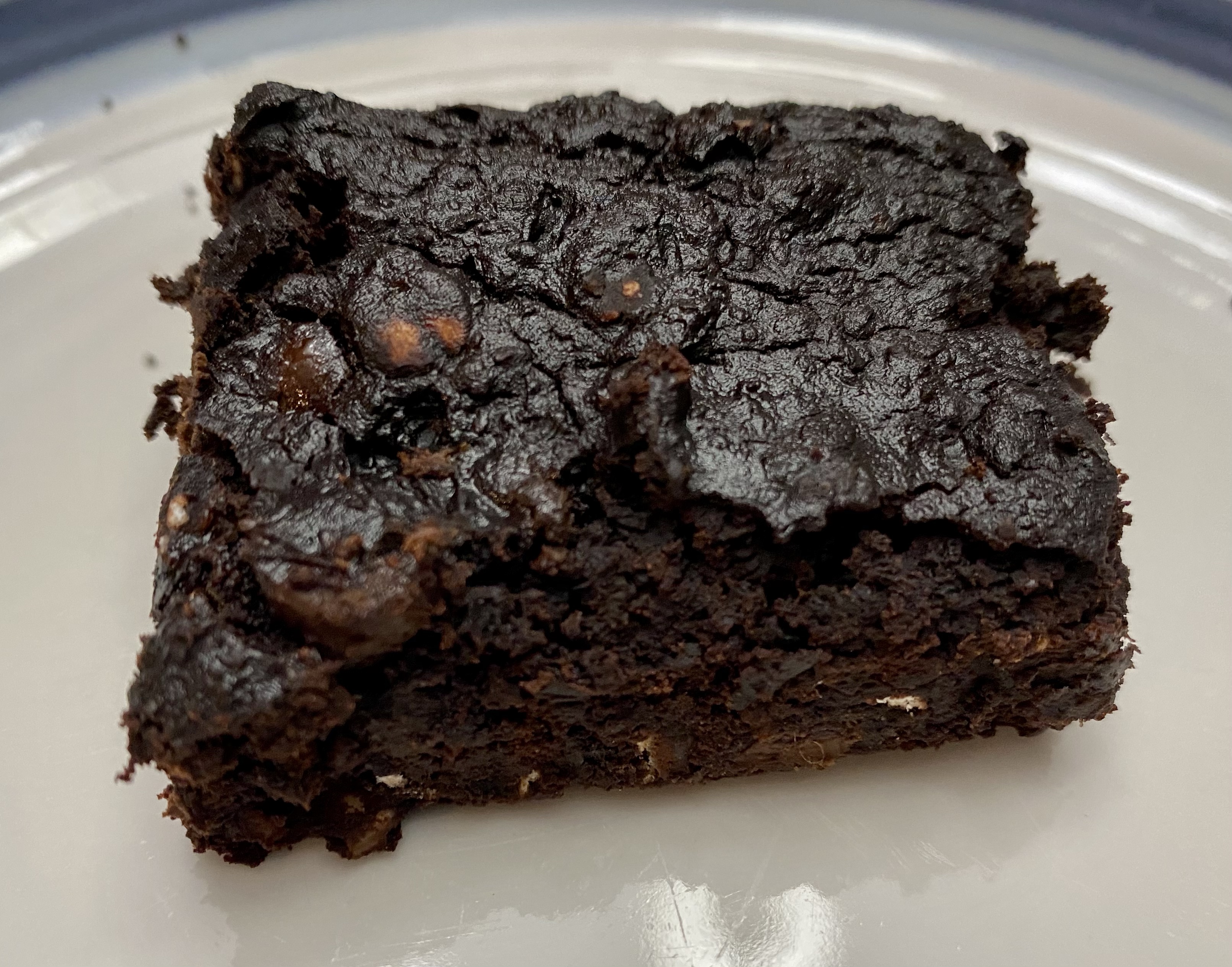
The humble black bean can be transformed into a fiber-rich, AND delicious, sweet treat!
You can mash those black beans with your high powered mixer!
Bake them up in a pan lined with parchment paper or nonstick spray.
Then dive into the ooey-gooeyness!

Fudgy, Healthier Brownies (With Black Beans)

Ingredients:

1 15-oz can black beans, drained and rinsed

2 fleggs* (can substitute with 2 eggs)

¾  cup cocoa powder

½ cup oats

½ cup applesauce (can substitute with ¼ cup vegetable oil)

½ teaspoon salt

½ cup sugar

1 tablespoon vanilla extract

1 tablespoon vinegar (apple cider or white)

1 teaspoon baking powder

1 teaspoon baking soda

½ cup or more chocolate chips

Optional: ½ cup chopped walnuts, pecans, hazelnuts to sprinkle on top of batter before baking OR 2-4 tablespoons of peanut or almond butter mixed into the batter before baking

Instructions:

If using flaxseed (fleggs) instead of eggs, add 2 tablespoon flaxseed to a small bowl, and add in 6 tablespoons of water.  Stir and place in the fridge for 5 minutes. 

Prepare square baking pan (8 x 8 or 9 x 9) by lining with parchment paper or spraying with nonstick cooking spray

Preheat the oven to 350 degrees.

In a food processor, high speed blender, or with a quality mixer set on higher setting, mash beans. (You can also do this by hand.)

In a large bowl, mix mashed beans with the rest of the ingredients EXCEPT chocolate chips and nuts if using. 

If using almond or peanut butter, it SHOULD be mixed into the batter.

Using a spoon, gently fold in chocolate chips (and/or nuts if desired) into the batter.

Pour batter into the prepared pan.  Add more chocolate chips and/or nuts if desired on top for decorative effect.

Bake for 20-25 minutes or until brownies begin to pull away from the sides of the pan.

Allow to cool 10+ minutes before serving.

Store leftovers in the fridge.  These brownies magically get better after a day in the refrigerator!

The Ceaseless Wonder and Amusement of Aging

“You don’t stop laughing when you grow old, you grow old when you stop laughing.”–George Bernard Shaw

Aging is a funny thing.  Only last week, I looked in the mirror at the end of a work day and thought I saw a streak of eyeliner running up the center of my brow bone toward an eyebrow–which seemed odd.  With a shrug, I thought, “Who knows?” as I tried to wipe it off.  Then, I just had to switch my gaze to the magnifying mirror, an addition whose assistance I seem to require on a daily basis. I should have realized–since this is not the first time it happened–what I thought was a makeup streak, turned out to be a new wrinkle.  Geesh!  Another serving of Fun-for-all Aging Humble Pie, whipped up by the Chef Life.

Photo by Lisa Fotios on Pexels.com

Heaven forbid, if I make comments about my age to my parents, they merely make jokes about it and offer encouraging comments, such as, “Just you wait,” or “You don’t know the half of it yet.”  Nonetheless, there are seemingly preternatural changes that are beginning to occur that give me pause.

For example, at work I am (along with my husband, John) in the top 5-10 oldest employees on staff; and in all honesty, we’re probably in the top five.  On the bright side, I am pretty sure it’s the first time in my life I can claim to have ever been ranked so highly! On the downside, I often pinch myself, wondering if I am in a dream state, when coworkers ask when/if I am close to retirement; or better yet, when they can have my job. It feels otherworldly to now be one of the teachers that is perceived as “old.” Of course, in my oh-so-ignorant early career years, I also thought I would be able to retire early in my 50s, and would already be working a not-so-serious retirement job. Ha! 

Photo by Nataliya Vaitkevich on Pexels.com

In addition to my recent elevation in work rankings, there are other insidious signs that I could be aging.  It seems my skin is now changing at an alarming rate as it thins, folds, hangs, and forms once unimaginable cavernous crevices and fanciful spots.  In fact, I am pretty sure I’ve spotted (pun-intended) a miniature Australian continent currently forming on one of my cheeks and Antarctica on the other! 

Then, there are body parts that are beginning to rearrange themselves in entertaining and unprecedented ways.  Who knew cellulite could be so shifty?  And, of course, the new found plot twists of balance, digestion, sleep, and the ever elusive recovery.  I mean, my goodness, aging is an amusement park of fun–no need to pay for the Tilt-a-whirl, Bumper cars, or Scrambler here–the aging body gratefully provides this amusement for free!  

Photo by Mariana Kurnyk on Pexels.com

In the midst of all this wholesome clean fun is a bit of good cheer! Since John is only a couple years older than me, he probably hasn’t noticed ANY of these so-called changes in me.  Right? After all, the changes in vision, as we age, is like walking through life in a perpetual tunnel of Funhouse mirrors.  I’m sure he’s never noticed my thinning, gray hair or any of the other deviant developments gifted to me by life.

Oh, and then there’s the shrinking height.  I can not begin to express the sheer amount of joy that GROWS within my heart, with each annual checkup, swelling my head to new proportions, as I am reminded that I have already scaled to my highest height of  4’11”, and I will never conquer anything taller. Instead, I have the good fortune of experiencing other parts of me that are now growing, like my ear lobes, nose, and jowls! Those are nasty rides of nonsense I’d rather put a stop to–the sooner the better! Sigh, I guess I am going to finally have to set aside runway model as potential retirement gig! 

Photo by SHVETS production on Pexels.com

Another fun fact? Getting lucky has a new definition.  I can’t tell you how many times I have had the titillating experience of walking into a room only to wonder, “Why am I here?”  If I remember BEFORE leaving the room, I think, “Yeah, Baby, I just got lucky.”  If, however, I start walking back and remember mid-path; well, that’s at least making it to third base.  If I return all the way to my original starting point, but then remember, I’ve at least scored a single or a double. If it is the middle of the night, or the next day, before I remember, that is a definite strike-out since it probably means I’ve left the ice cream or the cheese in the car to melt into a gelatinous gooey heap of spillage that I now need to clean up. 

While I don’t seem to have yet acquired some of my acquaintances and friends’ talents, I am told that with age, they now possess an even greater ability to multitask.  One friend claims she can sneeze, pass gas, pee, and laugh all at the same time.  Meanwhile, another person states that, like George Burns, when they bend down to tie their shoes, they look around to see if there’s anything else they could do while they are down there.  In fact, I can recall my Papaw once telling me that he was living in a haunted house with my grandmother as he claimed there were lots of unexplained sounds and smells floating around the place!

Photo by Arianna Tavaglione on Pexels.com

Recently, one of my 6th grade students asked me if I ever tried to rewind movies on Netflix after I finished them.  Before I could answer, another student jumped in and asked if I ever had to step over dinosaur dung when I was a kid.  While they were on this downward spiral of frivolity, another student, inspired by their knowledge of the Holy Land, asked if the Dead Sea was only sick when I was their age.  Youth, along with its pernicious sense of humor, is indeed wasted on the young!

In the meantime, I’ll keep plucking those gray hairs sprouting in random places like spring onions in a flower bed.  I’ll continue to write-off forgetful moments to, “Sometimers,” and I’ll continue to be grateful that cellphones and social media were NOT things when I was coming of age.  In fact, I am pretty sure in bourbon or wine years, I haven’t even begun to reach perfection, but I’m leaning closer!

Photo by Los Muertos Crew on Pexels.com

 So good news, Dear Readers, if you’re reading this, the best is yet to come–no matter your age.  It’s like riding a roller coaster, as our age keeps climbing, so does our sense of humor and our sense of humility as we watch other things start sliding. Besides, I prefer to think I’ll never be “over the hill”; after all, I’ll forget where the dog-gone hill is, or I’ll be too tired to climb it!

Here’s to life! With age comes wisdom, so I am eagerly anticipating my rise to near-genius level! In the meantime, as once suggested by the great Will Rogers, if we could perhaps get Congress to take issue with aging, we could at least be guaranteed that the aging process would be slowed down for years to come! 

Photo by Gagan Cambow on Pexels.com

Sometimes We All Benefit From Unplugging

“Today, when nearly every question can be handled instantly by Siri, Google, or Alexa, we’re losing the habit of pausing to look inward, or to one another for answers.  But even Siri doesn’t know everything.  And Google can’t tell you why your son or daughter is feeling hopeless or excited, or why your significant other feels not so significant lately, or why you can’t shake chronic low-level anxiety that plagues you.”–Vironika Tugaleva

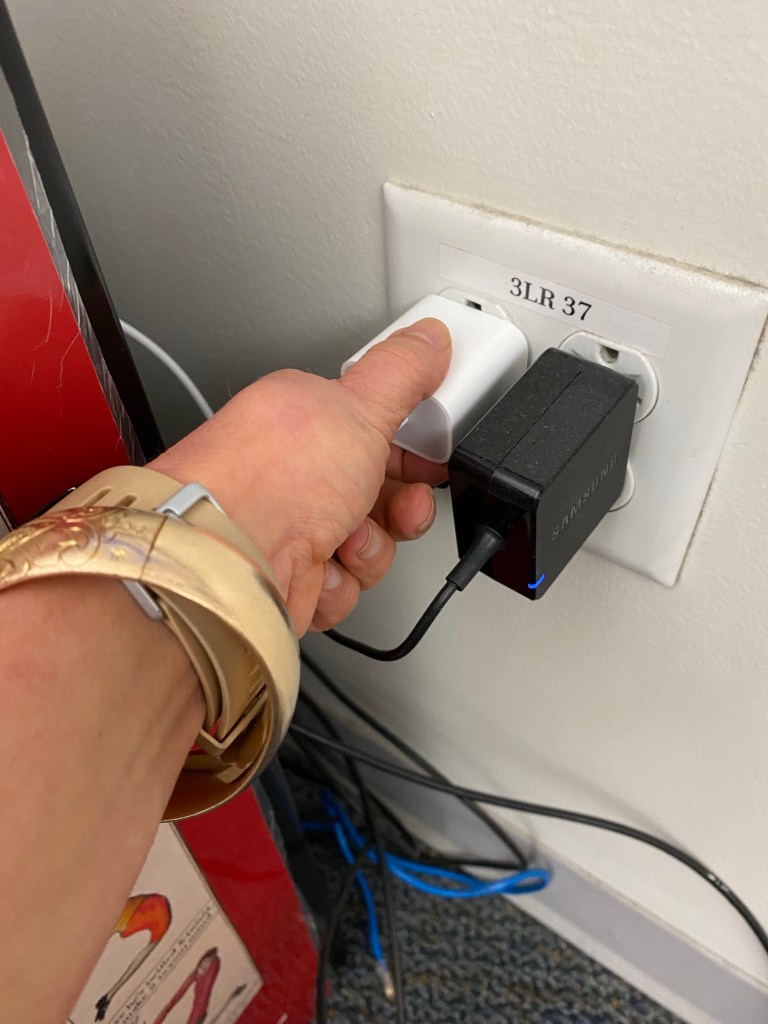
 My classroom now includes the integration of an Apple TV through which I connect a  computer or iPad in order to project content onto a whiteboard.  One day recently, it wasn’t working, and after completing a few troubleshooting steps, I was at a loss.  A co-worker suggested that I unplug the device for a short time, then plug it back in.  Which led me down a path of reflection . . .

It is amazing to think I incorporate the Apple TV with all of the other forms of technology in my classroom after beginning my career with little to no technology in the classroom, much less in my own life.

I find the technology I integrate into my classroom a point of marvel.  The most advanced technology that I used with my students during my early years of teaching in the late 1980s was a rolling chalkboard that was also magnetic!  Since then, the role of technology, not only in my classroom, but also in life in general, has remarkably transformed.  It reminds me of making a snowperson as a kid. 

Forming the largest part of the snowperson required concerted effort, and it was slow work. With each segment, however, the snowperson became easier to form, and the results came faster until everyone in the neighborhood had access to see and enjoy its newest member.  Eventually though, no matter how much more snow did or did not fall, the snowperson melted away into the soil, and the once novelty then became part of the neighborhood’s foundational ground without the kids and their families releasing it.

Photo by Balu00e1zs Benjamin on Pexels.com

In a similar, but much more complex fashion, technology became integral to humans.  First, its development was a slow, laborious process that required the endeavors of many. People would gather and marvel at the latest creation, until eventually those cow-spotted boxes became a common home delivery sighting. However, as information began to gather, momentum picked up, and soon the technological developments started evolving at an even more rapid pace until the technology melted and integrated into the very foundation of society, no longer a curiosity.

Information can be gathered in one or two keystrokes of a computer or handheld device.  Additionally, one can gather statistics, facts, figures, and so forth, at any time of the day or night.  As a general rule, this acquisition of material is neither good nor bad–it all comes down to the producer and user of information. Unfortunately, there seems to be a growing sea of pride developing among those who can amass large quantities of data, gathering facts in their head on a daily basis–as if the more data one can gather, the more important their opinion becomes. 

Photo by cottonbro on Pexels.com

This has also led to a new mantra regarding disdain for one another’s feelings.  I have seen it crudely phrased on bumper stickers and yard flags/signs, and I’ve likewise overheard it stated slightly more civilly (although often still aggressively) in conversations.  In fact, I have even made similar statements. However, I do believe there is a danger in discounting feelings/emotions. 

I could make the argument that those who state that they dismiss feelings or emotions are still unwittingly attached to their own.  This is due to the fact that their pursuit of intellectual facts/data/statistics, on which they make their various stands, is motivated by the good feelings that accompany their accumulation of data.  In fact, according to the latest data, the use of technology–even in intellectual pursuits–is designed to create positive sensations driven by dopamine, those feel-good chemicals released by the brain.  This is the exact same chemical response that is the force behind both positive habits and negative addictions.  Therefore, to say a person’s feelings don’t matter is ironic, since at the most biological level, it is dopamine driving one’s attachment to gather facts, data, and statistics.

Photo by Vie Studio on Pexels.com

Now, before I am sent outcries of defensive outrage, let me continue to lay out my points in order to get to my thesis.  I absolutely value knowledge, and I enjoy listening, reading, and discussing valid research content.  In fact, without it, I would not have an education, nor would I have a job.  In fact, without these intellectual endeavors, society as a whole would not have made many of the significant advances that contribute to our well-being.  

Instead, I think that the danger resides in valuing data/statics/facts above all else, causing us to lose sight of the importance of unplugging and listening to that still, small voice that resides within each of us.  It is that voice–that level of consciousness–that allows us to discern, not only right from wrong, but also develops and fosters those less-intellectual, but critical pursuits, such as compassion, empathy, communication, adaptability, creativity, interpersonal skills, teamwork, collaboration, and so forth . . . .   Without these so-called soft-skills, humanity is not any different from the technology on which I write this piece.

Photo by Alena Koval on Pexels.com

At the time of writing, the Northern Hemisphere is in the early stages of spring.  The ground is softening, and soon, the soil will be prepared for cultivation.  Branches, rocks, and any other debris will need to be removed, the soil will require proper tilling, leveling, and fertilization in order for those tiny seeds to grow into a harvest of bountiful, nutrient dense food. Likewise, it is only by unplugging and pulling ourselves away from devices that we can prepare, fertilize, remove mental detritus, and grow a harvest of intra- and inter- personal skills–which starts when we take time to plant inner-seeds of faith in order to grow our relationship with our Creator.

Faith is not about intellectuality–although people certainly try to do this.  Instead, I believe faith requires conviction, and that conviction comes from the cultivation of one’s inner world–the heart center, the residence of, yes, emotions. Faith is not tangible, it cannot statistically be verified.  However, I argue that without faith, we cannot fully develop emotionally.  In fact, I would go so far as to state that without faith, we cannot understand, offer, and receive love; and without love, we are little more than a “resounding gong or a clanging cymbal” as one of my favorite Bible verses states. 

Photo by Inna Lesyk on Pexels.com

 As such, I strongly suspect that many of the wars waged around us, both at home and abroad, have as much to do with a lack of faith and development of all those so-called soft skills, as they do intellectual evaluation of facts, statistics, and data. Unfortunately, we may not be able to control conflict around us, but we do have a choice in how often we unplug, look within, and cultivate/enrich our own faith/heart.  It is through these unplugged pauses that our faith becomes more strongly rooted, increasing our trust in the belief that Divine Providence will provide for a path through–maybe not the way we had hoped, but a plan, nonetheless, for all things to work towards the higher good.

So pardon me if I do value unplugging from all that input, and stand in the center of my faith–the heart of my emotions. I believe that it is through regular bouts of unplugging–even for short periods–that my faith is renewed, my resolve is strengthened, and I am refreshed and once more ready to move forward in the data-driven world–just as the Apple TV in my classroom ultimately did. The difference, however, between the Apple TV and me, however, comes down to my faith–my emotional heart center.  I believe the same is true for humanity. 

Virginia Beach is for Lovers

  “The calming movement of the sea along with the restless ocean breeze gently caresses me creating a soothing trance which lulls me to a place of peace.”–M. L. Borges

It had been one year since I had last seen the ocean and its companion shoreline.  Last March, (2021) when John, my husband, and I last visited the beach, it was for the Shamrock Marathon held annually at Virginia Beach. However, it was under COVID restrictions with limited dining and hotel options. Regardless, the creators and sponsors of the Shamrock Marathon found a way to create a safe and well-organized weekend getaway!

Flashforward one year, and we decided to return.  With COVID restrictions greatly reduced, there was more hotel and restaurant availability.  On the downside, overall prices were understandably higher to cover the past year’s losses.  Nonetheless, this did not seem to deter visitors for the 50th anniversary Shamrock Marathon weekend event as hotels were sold out throughout the town.  (I would later find out that for many hotels, this had less to do with room availability and more to do with lack of enough available support staff.)  Furthermore, with a weather forecast full of ample sunshine, light breezes, and temperatures hovering in the 60s and 70s, what was not to love? 

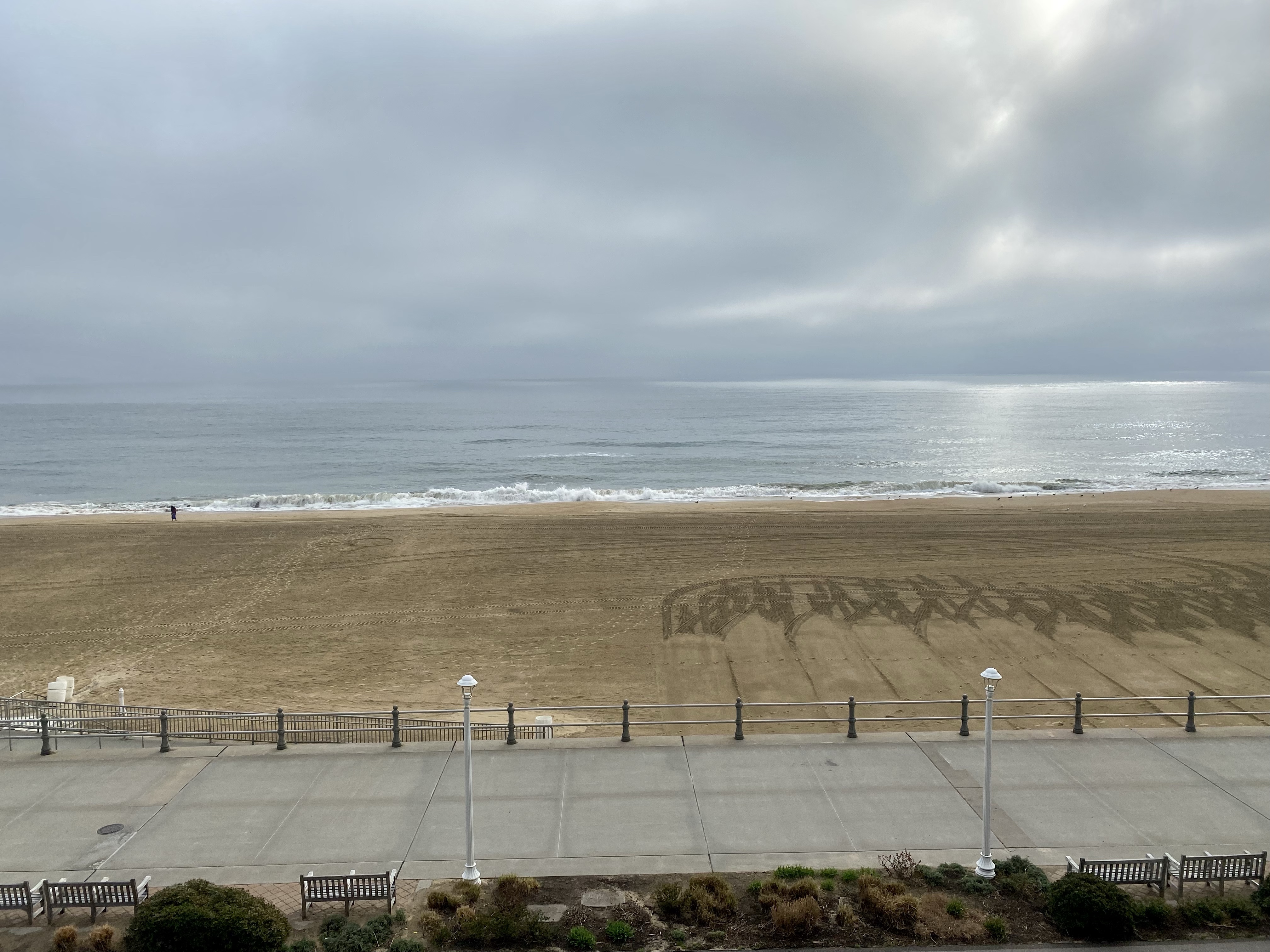
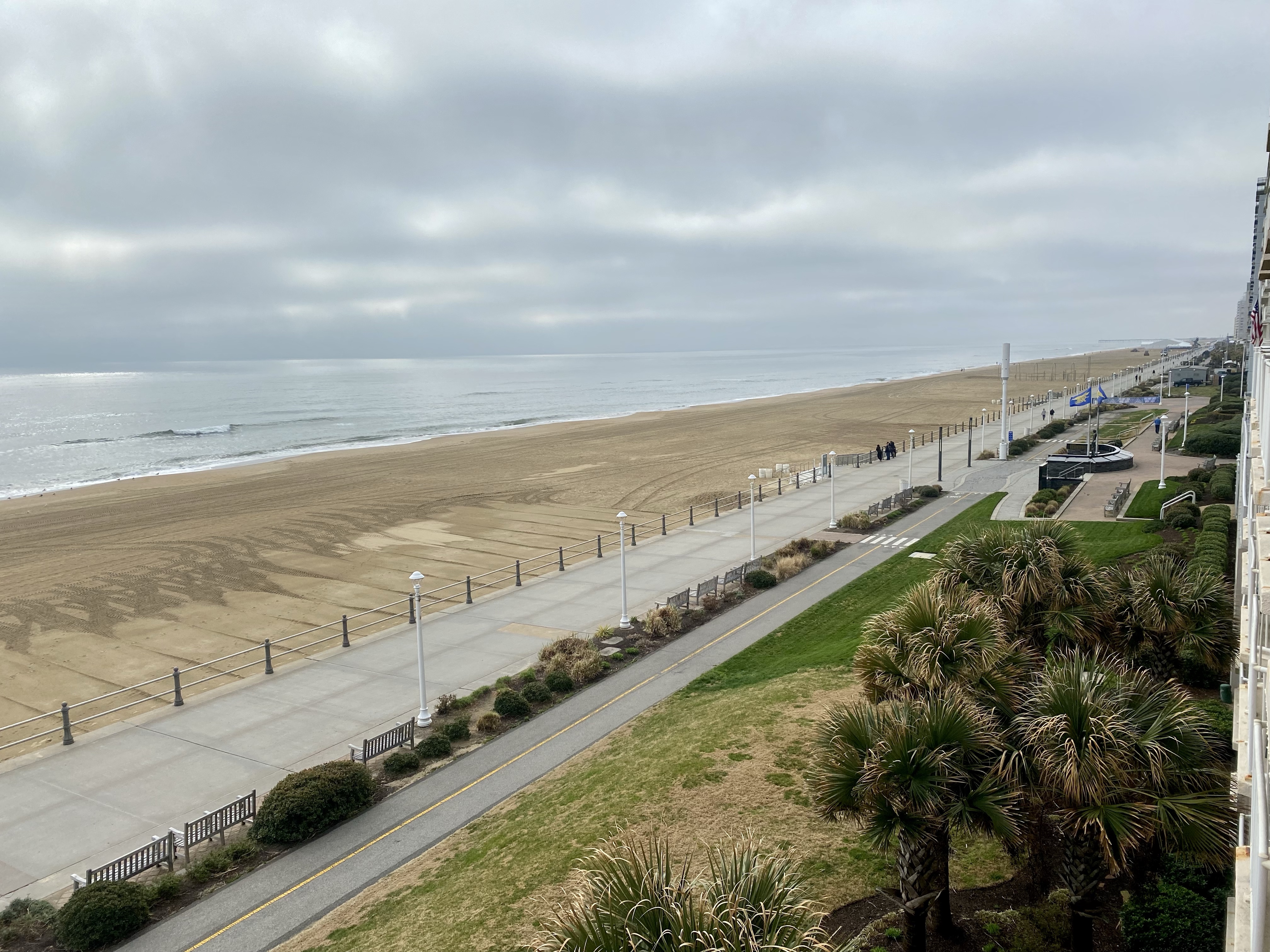
This year, John and I stayed at Holiday Inn & Suites North Beach.  Ideally situated alongside the north end of the VB boardwalk.  We were within walking distance to numerous dining choices as well as the King Neptune statue, the heart of the Shamrock events. The staff of this hotel was friendly and accommodating, and it was located next to the starting line for the marathon and half-marathon!  When you combine that with the ability to fall asleep listening to the waves gently lapping the shore, we are sure to return here on future trips.

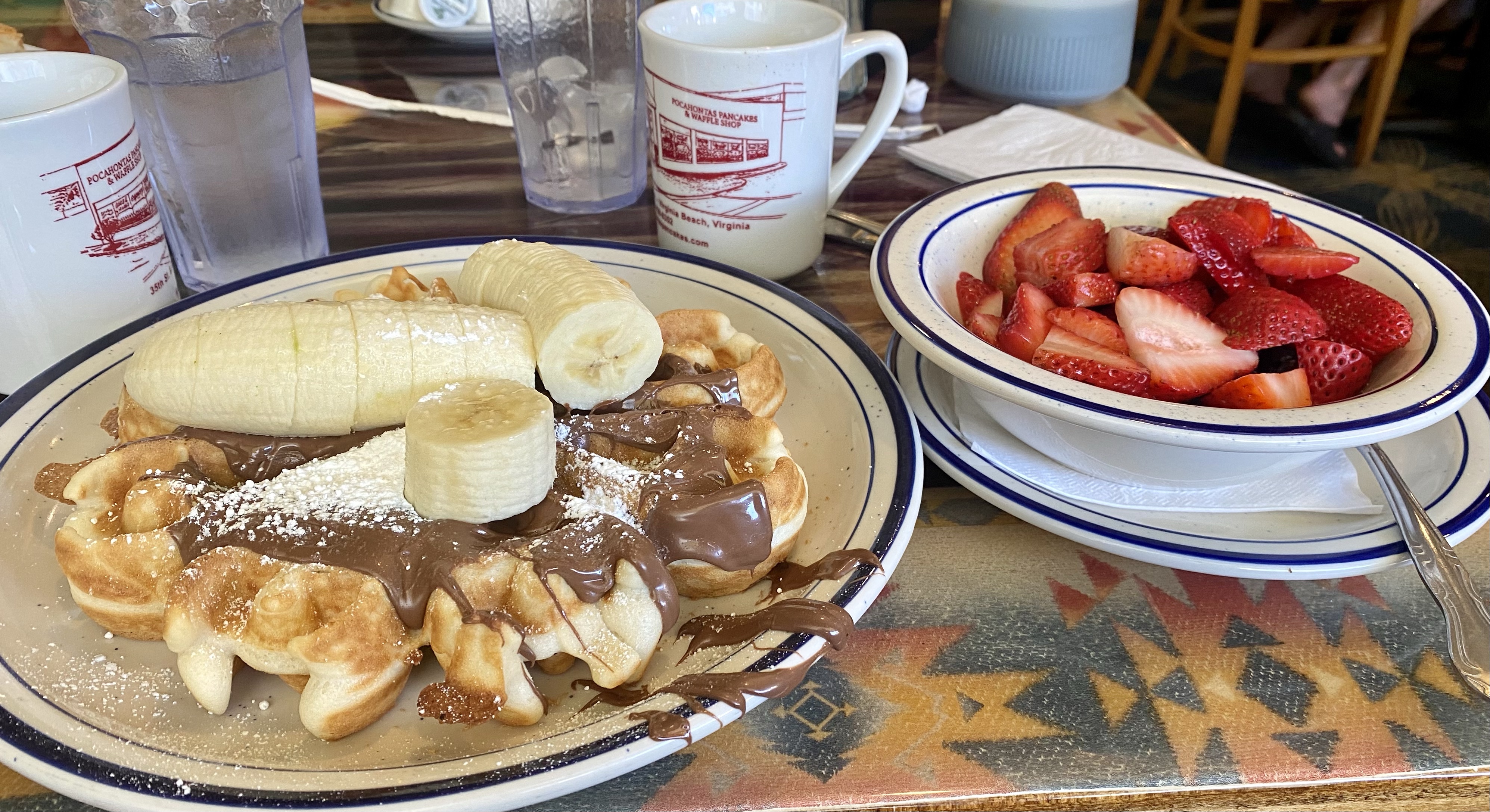
One dining spot for which we were eager to return was the infamous Pocahontas Pancake and Waffle House!  This iconic VB gem serves up breakfast and lunch, and visitors need to be ready to wait during peak hours.  No matter, it is worth the wait!  The wait staff is attentive, friendly, and since this was our second year to visit, we couldn’t help but take note that much of the wait staff was the same–a sure sign that this establishment is doing something right.  

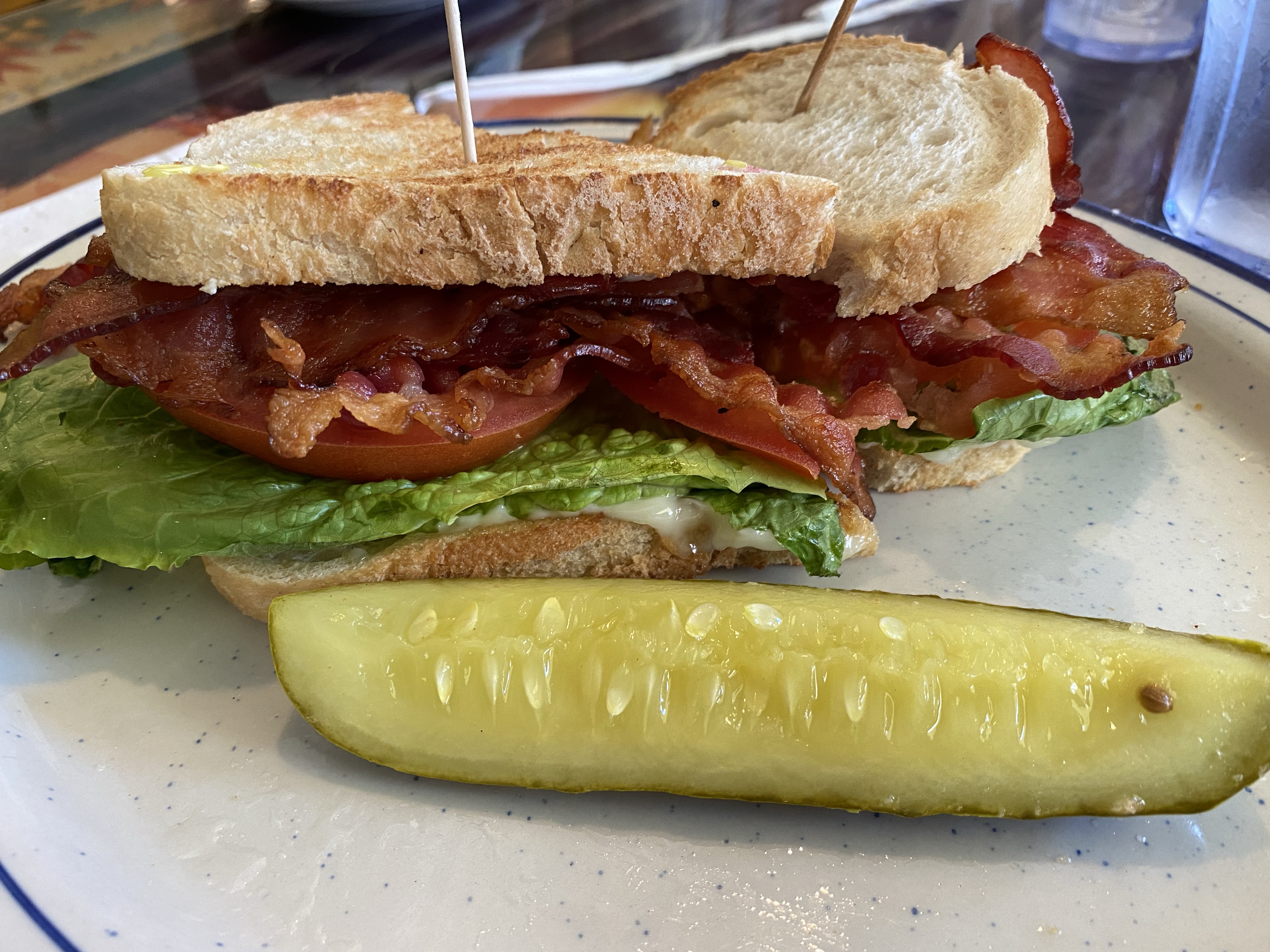
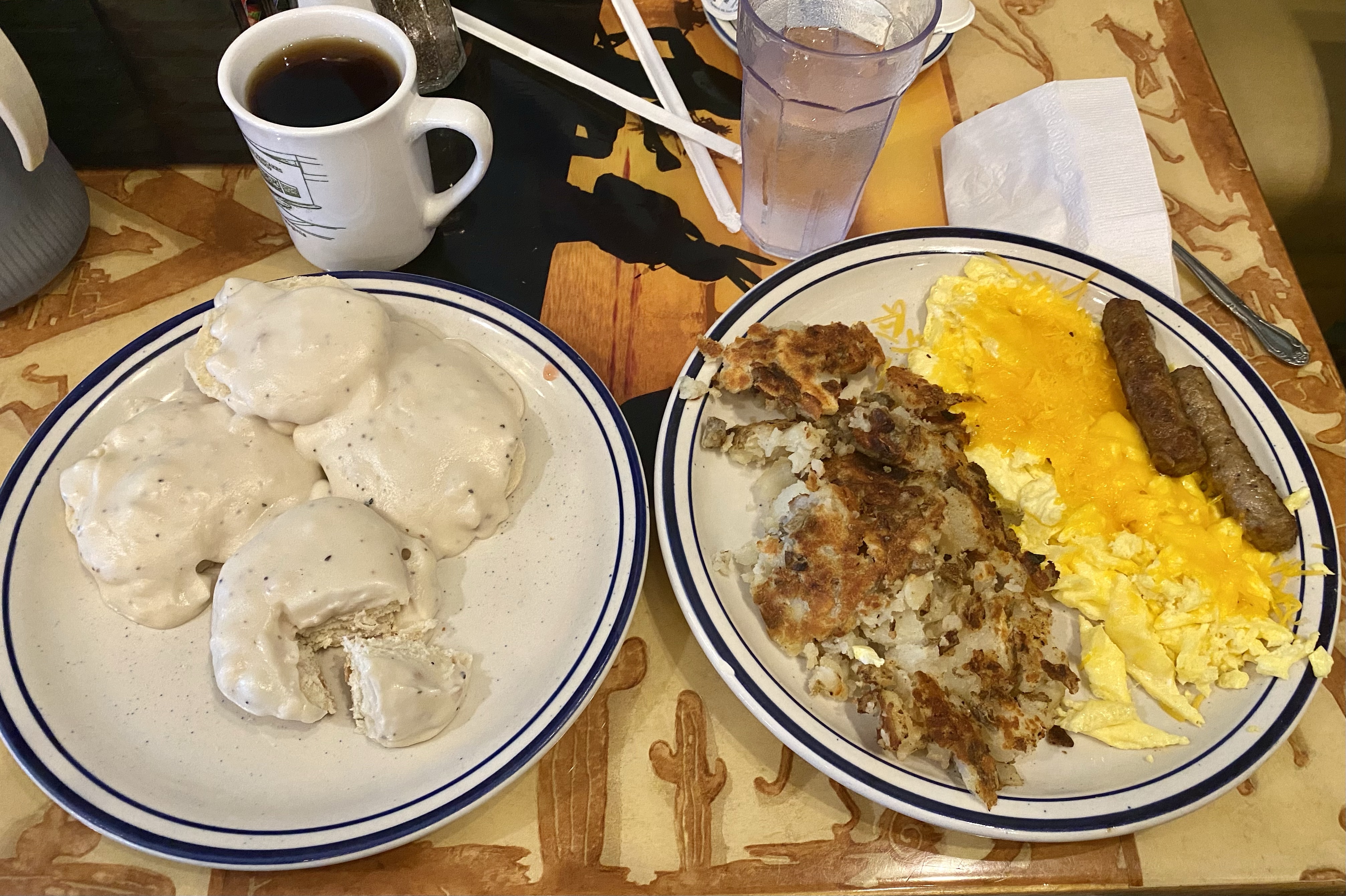
Looking over the menu at Pocahontas Pancakes is like reading a novella; they have so many choices!  I am in love with their gluten-free waffles since I cannot get those anywhere in the local Tri-state area.  Plus, they offer a wide array of scrumptious toppings. The fresh fruit bowl is actually fresh–not one of those thawed frozen fruit cups with underripe fruit, devoid of any taste.  John loves their sandwiches, biscuits, and eggs, and we both feast on their ample portions.  Oh, did I tell you about their signature, locally roasted coffee?? Mmm, Mmm, Mmm, this place, well, takes the cake!  What can I say? John and I both LOVE this restaurant and cannot recommend it enough!

Another local VB gem, we discovered last year, is Side Street Cantina.  This restaurant, located at the southern end of VB, features Peruvian-influenced Mexican fare, served up in a colorful atmosphere, filled with bold and lively artwork. Their housemade chips and salsa are fresh, crisp, and tasty.  Their menu offers a wide variety of signature dishes and cocktails for those so-inclined.  John ordered Arroz Con Pollo, and I ordered Vegetarian Fajitas.  Both meals were full of deliciousness!  While dining at Side Street, the manager, Alicia Mummert, recommended that we go visit her best friend, Julie, the manager at Mannino’s Italian Bistro for dinner one night.

Therefore, John and I decided to head to Mannino’s for our Friday night dinner–a perfect location for carb-loading before I ran my own virtual half-marathon on Saturday.  Entering this bistro felt warm, welcoming, and the aromas were mouth-watering.  Our server was none other than Julie’s daughter, Abigail (Abbi) and her friend, Katie. Along with Julie, these ladies were engaging, made excellent recommendations with regards to food and wine, and provided exceptional service.  The gluten free choices were as wide and varied as I have experienced in an Italian restaurant, and there were even a few gluten free dessert options!

  Ultimately, John chose Vitello Parmigiana with fresh melted mozzarella on top, and I savored every bite of the gluten free variation of Penne Semplice without sausage.  Additionally, I ordered their gluten free truffles to go.  (Fortunately, our room had a mini-fridge, and I was able to save a couple of those luscious truffles to take home!)  I have to say this meal fully fueled my 13.1 mile run the following morning; and best of all, NO digestive issues–which can sometimes be a real thing with some foods and long runs.  Mannino’s is another establishment John and I would highly recommend for those who love Italian!

Saturday night, after a half-marathon run, I was ready for some full-on not-so-healthy grub.  We decided to give Abbey Road Pub and Restaurant a try.  This eatery offers breakfast, lunch and dinner!  What’s more?  It makes the bold claim to have the BEST gluten-free menu in Virginia Beach!  Sounded like the perfect place for us to check out! Additionally, they also boast over 42 drafts and crafts, are certified Green Virginia, have a dog-friendly patio, and offer free parking for patrons.  Their menus were wide, varied, and while I could have easily eaten on the more healthy side, I chose to indulge on a plate of Nachos Supreme sans chili and served up with black beans instead. It was not my usual plant forward meal, but I did enjoy it with a fresh green salad!  (Hey, it’s all about balance–it’s not like I normally eat this way.)  Meanwhile, John splurged on Lobster Mac and Cheese.  Abbey Road had an upbeat and energetic vibe, it offered attentive service, and a uniquely diverse menu, including vegan and gluten-free options!   This is one place John and I will visit again, and we would also recommend it to those traveling in the Virginia Beach area!

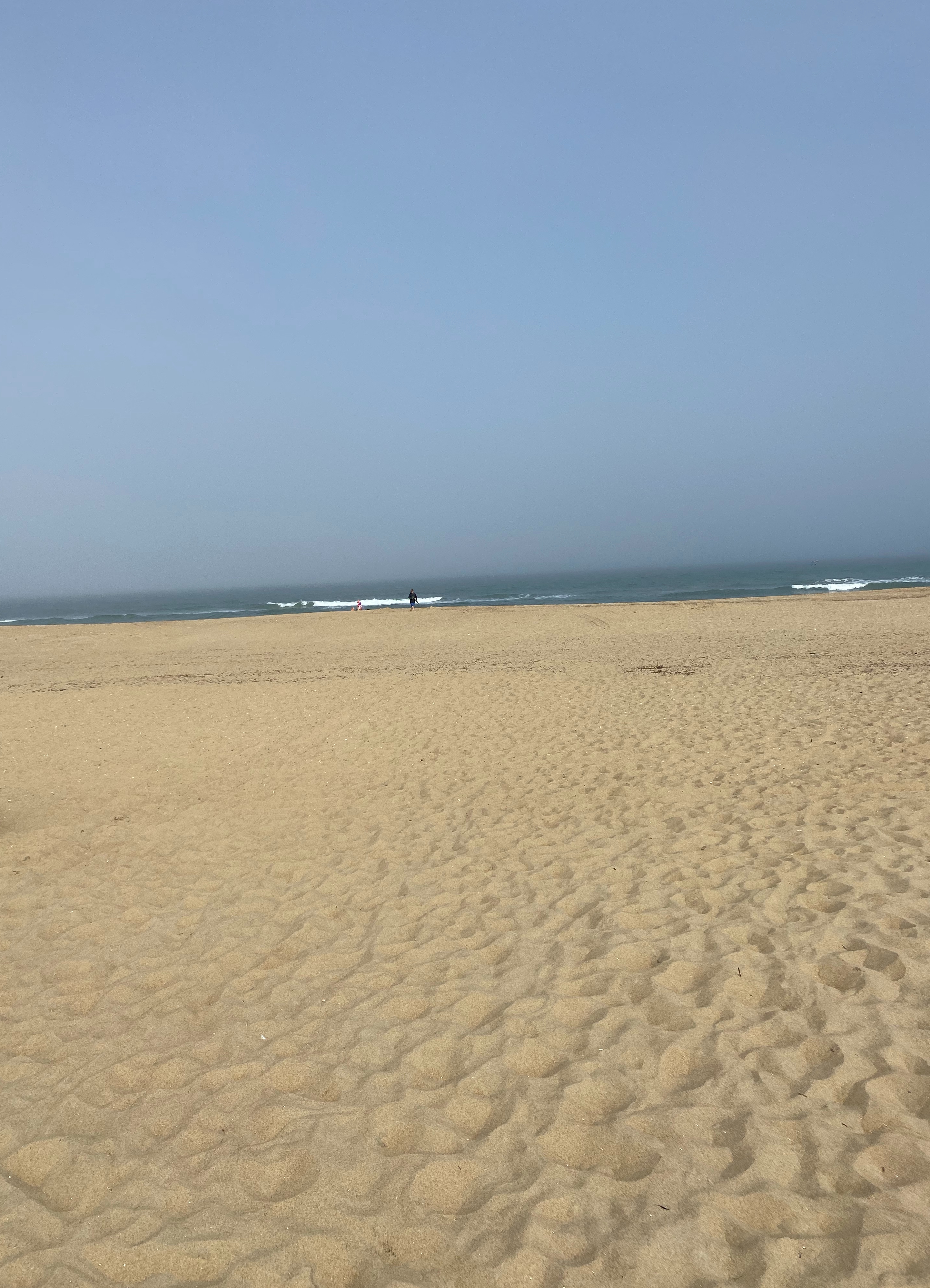
On a side note of interest, John and I visited Sandbridge Beach, one afternoon, and found that it reminded us somewhat of the Outer Banks of NC, full of ample vacation homes, both of new construction as well as traditional beach bungalows.  Located south of VB, it struck us as a more quiet area in which to stay, especially for those larger family/friend gatherings in which you are more than happy to complete your own cooking, relax, and soak in nothing but sand, shoreline, and ocean vibes!  

Regardless of which type of vacation you prefer, the VB area offers visitors plenty of options–from low-key to highly engaged and all choices in between.  The Shamrock Marathon weekend especially offers a family-friendly atmosphere, but is also chock of full options for adults.  And, if you love new food adventures, as John and I do, rest assured, Virginia Beach has plenty to offer.  Perhaps, it is true, Virginia is for lovers–lovers of fun, beach, sun, water, and, of course, food–glorious food! 

Sandbridge Beac

I Run, Therefore, I am a Runner

“No matter how slow you go, you are still lapping everybody on the couch,”–Unknown

I try to be careful about how I write/talk/post about my so-called running practice.  When doing so, I typically attempt to lower the expectations of the readers/listener with some sort of self-deprecating humor.  Why?  Beside the fact, that I can’t take myself too seriously, I’ve also had too many encounters with those competitive souls who immediately insist on knowing my stats/pace/race times in order to determine, it seems to me, how to best classify me:  Real competitive runner or the oh-aren’t-you-so-cute-in-your-attempts-to-jog?

Personally, I am not ashamed of my snail-like pace when I run, but I have allowed myself, at times, to feel less-than, especially in conversations with those runners who throw around finishing times and running paces like bodybuilders flexing their muscles in a gym mirror.  If running paces were bicep bulges, then mine would be that proverbial image of a skinny kid with biceps drooping down like a lowercase u.  Okay, maybe not the best illustration, but the point is this: I still cover the same distance and cross the same finish line as any other runner, and I have finally decided to no longer feel like a less-than runner because I am not as fast.

“We are all runners, some are just faster than others. I never met a fake runner.”–Bart Yasso

Since the week following Thanksgiving 2021, I followed a training plan for the 2022 Shamrock half marathon/marathon weekend in Virginia Beach.  I had previously trained for and ran this virtual event last year, which was highly restricted due to COVID.  Training, at that time, was challenging, not only because I was returning to running after several years of a hiatus, but also due to the snow, ice storms, flooding, and other winter events that seemed to plague last winter.  Therefore, most of my training, including those all important weekly long runs, were mostly completed on a treadmill.  

During 2021 Shamrock weekend, the Virginia Beach boardwalk was nearly devoid of visitors. This was not the case for 2022

This year, however, I committed to completing as many of my long Saturday runs as possible, outside, despite winter weather with the goal of running in Virginia Beach.  I also made changes to my weekday training, moving my workouts to early morning, before my workday began, as well as incorporating more strength training, stretching, and a weekly yoga session. Since this was the 50th anniversary of the Shamrock, it was sure to be a big event for the town, especially with many of the COVID restrictions of last year lifted.  Nonetheless, runners still had the option to run it virtually. 

Therefore, traveling to Virginia Beach this year, I knew I was ready to give it my best–nothing record breaking, but it was my best, and I was ready to enjoy the fruits of my consistent winter efforts!  Upon Thursday’s arrival, John, my husband, and I could sense the town’s atmosphere–full of anticipation, joy, and celebration.  Signs welcoming visitors were posted throughout, and we met numerous people in the service industry expressing their genuine excitement for the “first event of the season,” especially after the challenges of the past two years. 

The famous Shamrock sandcarving is safely blocked off until the day of the event.

On Friday, John and I interacted with an abundance of the participants while attending the Shamrock Sports and Fitness Expo. Like me, they were there to not only pick up their race day bib and shirt, but also to browse the vendors’ displays and soak up the levity leading up to the event. Walking around the large arena, what surprised me the most was that there were so many other runners who, like me, did not fit the so-called mental construct that is often associated with what it means to be a runner.  All ages, shapes, shades, sizes, and any other manner of differentiation–it seemed–were represented as if every possible background category box was checked. Oh, to-be-sure, there were plenty of competitive runners who obsessively talked to anyone who would listen about finish time, pacing, and other stats, but the majority of runners seemed to be there in order to have fun and relish the experience.

Let’s go!

Perhaps, I always knew this about running, and had not allowed myself to see this, but surrounded by the high spirited energy of all those different types of runners made me rethink my own feelings—so much that I recall telling John, over dinner that night, that I was no longer going to choose to feel less-than because I am not a fast or competitive runner.  

I run, and therefore I am a runner.  

Bottom line, I find joy in any movement, but especially running.  Running is what I do to reduce stress, increase my sense of energy and positivity, it provides me the ability to sleep soundly, and other countless benefits. Furthermore, after years of experiencing the captivity of an injury, I feel grateful for having the ability to recover and move my body freely.

Let’s make friends and have some fun!

Ultimately, this year, I decided to virtually run the half-marathon on Saturday, instead of Sunday, when the actual Shamrock was scheduled.  I made this choice in order to have the rest of Saturday, after my 13.1 mile run, to enjoy beach and relax before making the seven-hour drive home on Sunday.  This meant I would have to slightly modify the route, due to the fact the actual Shamrock course looped through Fort Story, and that section of the course would remain closed to runners the day before the event.  Nonetheless, if I ran the course as an out and back route, I would still cover 13.1 miles.

John and I were fortunate to watch a beautiful sunrise over the ocean the morning of my 13.1 mile virtual run.

Saturday morning, I began my personal half-marathon at the starting line area at 7:30, the official start time of the following day.  The roads were not closed, as they would have been during the actual event, so I had to carefully navigate the sidewalks through town and run the bike path section of the isolated, four-lane stretch of Shore Drive.  Fortunately, it was not a work day, so traffic wasn’t as busy as it might have otherwise been. Still, there were a few times in which I had to hop off the lane to make way for curb-hugging cars and/or bikes.  

As a runner, especially on those long runs, it’s always good to know where the “Elite Seats” are located!!

All the while, John kept driving in a loop, repeatedly checking on me, and shouting out encouragement through the car window.  As part of the plan, John met up with me at the halfway point.  This allowed me to pause for a quick drink break before turning around and heading back into town.  

Reaching the halfway point, I felt strong. However, since I had trained through winter, I was acclimated to cold temperatures.  It had been months since I had run in the 70 degree temperatures for which I found myself running.  Therefore, my pace began to slow the closer to the end I came.  Still, I finished.  I. Ran.  In fact, I ran slightly over 13.1 miles.

“Running slow isn’t a character flaw: Quitting is.”–Unknown

Dear Reader, I am a runner, and I will never allow myself to again feel slighted by my pace, my age, my stature, or any of those supercilious definitions–AND neither should you–no matter what your endeavors.  God designed our bodies for movement, and we should celebrate and enjoy that ability.  One day, Dear Reader, I may not be able to move freely, but that is not today . . . and so, I will continue to walk, hike, move, stretch, and, yes, even run. 

Time to start!
That feeling when it’s over, and the distance is covered!
John and I can relax now relax on the beach!

Mexican Enchilada Casserole–with Gluten-free and Plant powered options

“Life without Mexican food is no life at all.”–Unknown

Photo by RODNAE Productions on Pexels.com

Cooking in my home is a bit of a balancing act, especially since I am the only person who has to eat gluten-free due to celiac disease.  Additionally, I have a personal preference for eating a whole food plant-based diet.  It’s taken me years to figure out what works best for my body; so, I have no judgment for those who eat differently–including my own family.  Thankfully, I am blessed with a family that will eat leftovers.  This allows me to cook up oversized, flexible meals for them designed to last them a couple of days, leaving me time to also cook my own meals separately.

I must confess, however, that there are times I feel as if I fall into a cooking rut–repeating many of the same favorite meals for my family.  While they (rarely) complain, I do get excited when I stumble upon a new idea that could potentially work in a wide variety of ways to meet the needs of the omnivore and plant-based eater alike.  The recipe I am sharing with you today is one of those versatile dishes I created that was one part inspiration and another part desperation for a new idea.

Photo by Sabel Blanco on Pexels.com

I knew there was a pound of extra-lean ground beef in the fridge, and I had just restocked all of the typical Mexican-style condiments we frequently use.  My original plan was to make taco meat for my family, a frequent go-to, which can be used not only for tacos, but also for creating nachos, salads, stackers, bowls, and the like.  However, I recalled once making something I called Mexican lasagna years ago, but the recipe was long lost. Still, I couldn’t help but wonder if I could recreate a similar dish.

Research ensued, and cupboards were scoured.  Soon enough, a plan came together in my head.  I typed it all out before I began cooking; after all, if it turned out tasty, I wanted to be able to recreate it.  Plus, I figured, as I cooked, I could also easily type in adjustments to the recipe as needed.

As I cooked, the aromatic scents filled the kitchen.  The spicy fragrance was balanced and reminiscent of my younger years when I first began to learn my way around a kitchen.  Once in the oven, I let it cook, uncovered, and started checking on it around the 20 minute mark. Just as I had hoped, the sauce around the edges had started bubbling, and I could see the cheese beginning to transform into a luscious golden baked color complete with a bit of bubbling and browning.  I removed it after 25 minutes, setting it on hot pads to cool before serving.

This recipe was a home run with my husband and daughter.  They both found their own unique ways to top it.  Meanwhile, I created my own gluten free, plant-powered bowl version, and we rounded out the meal with chips and salsa.  

That said, if your family has a huge appetite, you could definitely serve up rice and/or more beans on the side.  You could even replace the black beans with corn in the casserole, and then serve black or refried beans on the side.  However you decide to vary this recipe, its ingredients are swappable and could easily be modified to suit your dietary needs or interest . . . even gluten free and/or plant-centered!  

From my home to yours, I share this recipe with you, and I am eager to hear how YOU decide to recreate it!  

Enchilada Casserole

Ingredients:

1 pound of lean ground beef (Can use plant-bant based crumbles for vegan.)

1 teaspoon minced garlic

1 cup diced onion

1 packet reduced sodium taco seasoning

½ cup water or favorite broth (I use a low-sodium vegetable.)

1 can red enchilada sauce

1 cup salsa

1 small can of chiles

6 large flour tortillas (Can use 9-corn tortillas, instead, for a gluten free option.)

1 15-ounce can black beans, drained

3 cups of thickly shredded cheddar or Mexican blend cheese (Use non-dairy cheese or skip altogether for vegan.)

Directions:

Preheat the oven to 350 degrees.

Prepare a 13 x 9 baking pan by lightly spraying it with cooking spray.

Over medium heat, in a large pan, brown ground beef, breaking it up while cooking.

Once thoroughly cooked, drain fat from meat, add in onion and garlic, cooking until onion is translucent (about another minute or two.)

Sprinkle meat with taco seasoning, stir in water or broth, allow to simmer for another minute or two.

Next, stir in enchilada sauce, salsa, and chiles into the meat mixture.

Simmer for another 3-4 minutes, stirring occasionally to prevent sticking.

Place the prepared baking pan on a couple of hot pads to protect the counter, pour ⅓ of the meat mixture into the pan, sprinkle ⅓ of a can of black beans over meat, followed by ⅓ of cheese, and top with two flour tortillas or 3 corn tortillas.

Layer the tortillas with another ⅓ of meat mixture, another ⅓ of beans, and another ⅓ of cheese.

Top with tortillas.

Repeat the process with remaining meat mixture, beans, and cheese.

Bake uncovered for 25-30 minutes, until the casserole is bubbling and cheese is beginning to brown.

Allow to cool 5 minutes before serving.

Top with desired toppings, such as guacamole, sour cream, chopped scallions, etc . . .

Makes 9 small servings or 6 generous servings.

Refrigerate leftovers for up to 5 days.

Reheats well and makes great leftovers

Photo by Los Muertos Crew on Pexels.com

Step into Faith: Mood follows action

“We often can’t see what God is doing in our lives, but God sees the whole picture and His plan for us clearly.”–Tony Dungy

Photo by Jonas Ferlin on Pexels.com

I sat staring, alternating between views of my snowy backyard, a March surprise from Mother Nature, and the white screen.  Minutes ticked by, but nothing happened.  Next, I began pursuing my favorite devotional sites.  Still, nothing there–at least nothing that inspired a writing idea.  Finally, I gave in and looked at my list of writing ideas–the list of ideas that have not yet come to fruition, but still hold potential.  All good candidates, but nothing was immediately striking my writer’s voice.

Typically, throughout the week, I will pause, and allow that still small voice to whisper an idea.  It sounds corny, to see it written, but it is true.  I’ve learned that by asking and trusting, an idea will ultimately arrive.  However, there are times when it seems that my alignment is off with the Ultimate Creator, the invisible hand that pens my stories.

Even now, when I reread those words above, I feel heat rising to my cheeks.  I can hear my inner-critic now reminding me that I am NOT an authority on faith, writing, or any combination of the two.  Simply put, I am one person who believes in God, the Divine Source of all creation and inspiration, but it doesn’t make me an expert on anything.  Therefore, who am I to type and share such bold statements?  All I know is I simply write to understand; and today, Divine Providence was slowly unveiling a lesson for me to learn–only I was not seeing that when I first sat down to write this piece.  

When working a jigsaw puzzle, I begin, like many, by first connecting the edge pieces to not only begin to see the shape of the ultimate goal, but also because it is typically an actionable and achievable first step. Putting together a puzzle can seem overwhelming when first looking at all of the mixed up pieces, especially if there are a large number of them and/or the pieces are tiny.  In fact, initially, it may feel downright impossible to put all of those pieces of the puzzle together to form any sort of image, much less match the image on the puzzle box. Nonetheless, by beginning, by starting with what you can do–the outside frame–piece by piece, your sense of possibility increases.

Likewise, life comes in stages.  Initially, it is a fairly linear process–one stage of development follows another.  However, eventually, often at multiple points throughout adulthood, you encounter an in-between stage–points in life that are not linearly progressive, but rather feel like holding spots.  Often, these holding patterns shift and evolve into new phases, but during the hold, life can feel uncertain and/or even stagnant. There are any variety of in-between stages, depending upon where you are in life and your unique life experiences.  

Conceivable stages could include an in-between stage of marriage and divorce or the aftermath that follows.  Another frequent holding pattern can sometimes occur in careers–the point at which you feel you are no longer upwardly moving or challenged.  Of course, there is the classic empty-nest syndrome–when you try to establish new routines/responsibilities and even renavigate your relationship(s) with your partner and adult-children.  Then, there can tragically be the in-between stage of long-term illness–either of self or care for another.  There are numerous other examples, but the point is this:  There are times in life where you can’t see the full picture–much less, predict the future.  The “next-step” is, quite frankly, not known by anyone other than God–and even that signal can seem crossed, busy, or even disconnected. 

Photo by Andres Ayrton on Pexels.com

These are often the moments that draw us closer to God through prayers for strength and/or answers; other situations can leave us feeling further removed from our faith due to doubt, fear, and uncertainty.  While I am no expert on faith or psychology, I can’t help but believe both responses are very human and very understandable.  What is the answer during these moments? This was my lesson to learn today as I wrote: take a step.  Find your so-called edge-pieces and start working bit-by-bit.

During the week prior to writing this piece, I was speaking with 8th grade students about a project for which they were working for my Reading Language Arts class.  Without going into too much detail, part of this project required that they choose four-plus pieces to write from four different categories of writing for which they were given a list.  They were looking overwhelmed by the project one day; therefore, in order to move them forward, I encouraged them to commit to only one piece of writing for the day.  

“Even if you don’t feel like it, pick what you perceive as an ‘easy’ piece and start.”

I knew, from my own recent 16-week training for a half-marathon, there were many days I, too, felt overwhelmed.  I was either paralyzed by the number of weeks still left on the calendar for training/conditioning, or I was not-feeling up to the run for the day, especially as that mileage increased.  However, the one thing I learned to be true from this round of training, is that mood follows action.  I may not “feel” like running, but if I simply begin without thinking–if I take one small actionable step–the simple act of starting, begins the momentum for continued action. Continued action leads to another training session checked off the plan, and one step closer to the goal. 

This is what I wanted those 8th graders to experience–the power of completing one small step.  Complete one piece of writing one day; then, come back to class the next time, and complete another piece.  One small success begets another small success, boosting confidence and the faith to tackle the next, more challenging step.  Like the large jigsaw puzzle, they didn’t have to see the whole picture in the beginning; their plans could be subject to change, but they had to take that first actionable step.  Then, step-by-step, the vision of their project could come into focus.

The writing of this piece, likewise, began with uncertainty–only the knowledge that I was supposed to write. I did not have a clear picture of how I would do it, or what nugget of understanding would be revealed in the end. I simply had to start typing; taking one small actionable step.  Piece by piece, the edges of the lesson formed first.  By faith, the rest began to gradually come together, until the entirety picture revealed itself to me. 

Dear Reader, like many of you, I, too, am (and have) experienced several versions of those “in-between” time periods of adulthood.  Without a clear picture of what the future holds, I am often unsure in which direction to step.  Therefore, let us continue to step into each day, one moment at a time, trusting that if we whisper and wait, while filling in the edge pieces, the Ultimate Creator will likewise continue to pen our story.

Photo by Pixabay on Pexels.com

Shadowy Thoughts

“It is only through the shadows that one comes to know the light,”–St. Catherine of Siena

Sunshine filtered through diaphanous clouds strung across a canvas of azure.  Inhaling gratefully, the pit-pat-pit-pat of my footfall maintained its slowly-as-I-go pace, as I headed along Third Avenue towards the campus of Marshall University.  Temperatures were hovering in the low 40s when I left the confines of Ritter Park and were predicted to rapidly rise into the 70s once the wind shifted and sky cleared.  It was a glorious morning for a run (or, in my case, a slow trot); time for my mind to likewise roam free.

It was about 40 minutes into my run that first revealed the beginnings of a lesson.  Rays began shining so brilliantly as the light of the sun began breaking free from the cloud cover. I was reminded of summer morning sunlight, especially at the beach when . . .

. . . the air is still cool, but the warmth of the sun, reflecting off the oceans waters, whispers of fiery heat to come.  Ocean breezes playfully tousle the hair of beachcombers walking the shore lines; their shadows cast long, accompanying their journey along the sand.  Birds call from above, and they too cast shadows of flight as they dip and dive at their prey . . . .

Photo by Travis Rupert on Pexels.com

Passing through part of the campus of MU, silhouettes of tall multiple structures stretched long and lean as I ran up, over, and around their contours thinking of all the potential possibilities that would typically pass over this walk if it were a weekday.  I was reminded of my former self on another campus, in another time.  It seemed like a lifetime ago.  Pit-pat-pit-pat, my continued cadence reminded me time waits for no one; like the dark building profiles, those university years were shadows of my former self.

Mind wandering once more, it circled back to the sunlight and the way it played hide and seek with each shadow I encountered.  How miraculous the sunlight had seemed this past week–one of those rare, early March weeks, when you know, despite the early morning chill, spring is around every corner, nook, and cranny.  It is that time when the earth remains cold, but soft–wafting with scents of melted snow, recent cold rain, and potential growth sprouting signs through the surface. Meanwhile, spring birdsong abounded each morning throughout the week, as the mating season began with the hope that winter’s shadow is finally shaken.

Photo by cottonbro on Pexels.com

Taking notice once more of my surroundings, I took in the expanse of St. Mary’s Hospital;  it’s shadow stretched towards the multitude of campus offshoots behind it.  How many visits have I made there for and/or with loved ones in the shadows of duress?  I began to name them in my head, one-by-one; and yet, my own daughter was born there–one of the most miraculous, brilliant days of life.  What a contradictory place, a hospital, filled with celebration, healing, and hope, but its shadows are filled with fear, illness, and stress.

Crossing over 29th Street, I moved back towards town along 5th avenue where the shadows flipped positions with my shift in direction. I caught a glimpse of my own shadow, appearing long and tall, cantering slowly alongside.  Do I really move like that because I know I am not that tall?  My head began to play games.  For the first time, my mind took notice of the leg fatigue and achiness, the swelling of my feet.  I have less than an hour, I remind the negative side of my brain, my own shadow-self.  Look how far you’ve come.  Think how proud you will feel knowing you did not quit. But I could quit.  I could walk the rest of the way.  I could even call my husband or daughter to come pick me up.  Why would you do that?  You can do this, mind over matter.  No sense believing your shadow, it’s only there because of the light. 

Wait, what? The shadow is there because of the light?

 I am not sure how it made sense, but there was something there, in that thought, in that moment.  Trying to grasp its meaning, its deeper lesson, my mind instead slipped back into the present moment as my feet made their way onto another side of MU campus.  People in colorful costumes were walking towards the campus’ Student Center.  Their colorfully adorned hair, swords, and/or light saber-sort of things, capes, and shields cast intricately shaped shadows that seemingly entered the building well before the actual person.  They must be headed to a comic-con celebration of the shadowy heroes of graphic design.

From 5th Avenue, I eventually made my way to 6th Ave, slowly edging closer to 8th Street for my final lap around Ritter Park as the sun continued to rise and the winds shifted in short, gusted outbursts.  Preparing to pass a presumably homeless gentleman who was walking with a grocery bag in one hand,  I voiced my approach that I would pass him on his left–not wanting to needlessly startle him. He turned to look at me.  His face was red with exposure, covered in a film of grime, his beard was in need of a shave, and his eyes were swollen, but within the center of each sparkled the hint of another life.

“Good morning, Sir.” 

He smiled a mostly toothless, friendly grin.  When he did not speak, I wished him a good day.  He raised a puffy pink hand, and shouted a cheer in my direction.  Within a split moment, his face seemed to fill with light, and for a fleeting instant, I saw the person/the child he once was.  Briefly choked with emotion, I wished desperately that I could somehow impart within him the same vision of potential that I saw within him, in the hopes he could; instead, step into the light and walk away from the shadow of addiction and/or mental illness.  Sadly, I could not, his fight was greater than I could imagine; so instead, I waved back to him, whispered a prayer of hope for his life, and continued on my way.

Returning to the welcoming, much softer path of the park, I completed my run through the dappled light of the Ritter Park loop.  Sections of the crushed limestone path were swathed in shade, and other parts were bathed in full-on sun. Newly established decorative, and highly symbolic, sunflowers dotted parts of the path, allegorical reminders of the shadows of hate and greed left unchecked on a global scale. Can the light of love and peace overcome this?  I can only pray and hope it does.

The sunlight had been a welcome sight, but it was bearing down nearly 30 degrees warmer than when I had first begun.  I was over-dressed and overheated. Nonetheless, I realized, as I walked uphill towards where I had parked, my sunlit run had brought both brightness and heat, cheer and defeat, mind over matter, and lessons of shadow-side of light. 

Photo by Elias Tigiser on Pexels.com

Life can indeed be filled with shadows–the darkness of depression, despair, hopelessness, sickness, and for some, even moments filled with greed, jealousy, hate, and numerous other forms of darkness I cannot begin to understand.  Of course, we cannot control the shadows of the world, but we can remind ourselves that where there is shadow, there can also be light.  Without the light, there is no shadow. It is a duality for which we must make peace.

In the meantime, it is up to each one of us, in those moments when we find ourselves dwelling in the shadows too long, to step out into the light.  We may not be able to do it alone; however, by relying on faith, and trusting in the Ultimate Creator of Light, we can, step-by-step, find the light once more.  Who knows?  Your light might be the light that leads another out of their own darkness.  

May your light shine brightly.

Photo by Matheus Bertelli on Pexels.com

The Power of Whitespace

Whitespace should not be considered merely “blank” space — it is the element of design that enables the objects on the page to exist.–The Segue Creative Team 

As a middle school Reading/Language Arts teacher for grades 6-8, I spend a good portion of my time teaching various writing techniques.  Currently, in my 7th grade classes, we are focused on writing various styles of poetry with the emphasis on exploring various elements of figurative language techniques and literary devices.  Of particular importance to writing poetry, I believe, is to draw the reader into an image/story/feeling in the way a good song has the power to  draw in the listener and attach a particular feeling/image to it. 

Part of the skill in writing a relatable poem is not only using specific words, figurative devices, and imagery, but also incorporating the power of white space.  In the same way my grandmother taught me that our eyes eat food before we taste it, a poem should likewise draw readers’ eyes into the arrangement of the piece first.  In order to do that, writers must learn to use the white space.

Photo by Du00f3 Castle on Pexels.com

Whitespace 

Creates

Balance and  Style

Although it is often called “negative” space, there is nothing negative about appropriate use of white space.  In fact, when duly used, white space increases readability–up to 25% according to some sources.  White space provides breathing room for the reader, a purposeful pause, or point of emphasis. It can create a sense of balance, harmony, and style.  The eye has time to “catch its breath” and focus on the meaning of each line, word, phrase.  A sense of play, intense emotion, or serious tone can also be emphasized and enhanced through the appropriate use of white space–adding power and emphasis to select words.  By giving students permission to incorporate white space, they are more focused on words that are specific and succinct.  This is an important and transferable skill when switching to more formal writing styles that require a clear, concise, and compelling writing style. 

Whitespace is THE fundamental building block of good design . . .  provides visual breathing room for the eye.–The Segue Creative Team

Photo by Robin Schreiner on Pexels.com

On a recent long Saturday morning run, it occurred to me that the notion of white space, as a mental construct, is underused and undervalued in our daily lives.  It is one of the things I most appreciate about my longer weekend runs is the fact that it gives me permission–and time–to let my mind wander.  Many, if not most, of my weekday runs are completed on a treadmill before I do a few strengthening exercises.  During these workouts, I typically wear headphones to listen to music, podcasts, or audible books–depending upon the workout and my mood/interest.  However, when I run outside, I rarely wear headphones; and thereby, I experience the freedom of mental whitespace.

Much of our daily life is consumed with some form of media content consumption.  From the time we get up and, quite often, until we go to bed, many of us are continually interacting and engaging with screens.  Emails, social media, work, news, even cooking, project-building, and other how-to content require some form of on-screen encounter. From content that is audible, to content that is visual, to an interplay of both, much of human interaction is now completed on-line.  As a result, our mind has become trained to repeatedly and frequently seek points of what I call distracted-focus.  Furthermore, it has never been easier to do this at any time, day or night.

Photo by PhotoMIX Company on Pexels.com

As society’s utilization of technology changes, shifts, and evolves, our minds have been forced to adapt.  Our phones wake us up, and while I can never do this for fear of falling back to sleep, I am told that many people remain in bed for several minutes, and upwards to an hour, upon waking, scrolling through media content that happened during those hours devoted to sleep. While we drive our kids to school, they are busy with screens, and we are engaged in handsfree calling or texting.  Once at work, many of us, myself included, utilize multiple devices at once as our eyes and minds shift back and forth from screen to screen, and, depending upon your career, from person to person.  At day’s end, despite eye fatigue and even brain drain, our minds still desire to scroll through social media and news outlets as the brain, like a tired toddler, still craves even more stimulation to keep going.  In a sense, our minds have become the proverbial “Energizer bunny,” continually banging on the drums of our consciousness for more, more, more.

Whitespace not only creates harmony, balance, and helps to brand a design. . . .–The Segue Creative Team

Photo by Pixabay on Pexels.com

Personally, I need breathing space, and I honestly believe that most of us do.  Time away from screens, schedules, and scintillating images/demands.  Unplugging from the visual and auditory distractions of our devices, provides our brain with whitespace–the space to pause and breathe.  I liken it to opening the door and letting a child, or even a pet, go outside to run off steam at the end of the work/school day. When you unplug, it frees the mind to mentally roam or simply be still.  By unplugging, you begin to notice the sounds of nature or even household appliances.  Unplug, and you might see things through new eyes–eyes that are fully focused, rather than distracted.  Unplug, and your senses have permission to roam–noticing the way air caresses your face, the aromas of your surroundings, the full flavor of your coffee, or other favorite beverage, as it dances over your taste buds.  Unplug, and you can breathe deeply and luxuriously as if you have all of the time in the world. Even your ability to think creatively and/or problem-solve increases more when you unplug.

Photo by Asad Photo Maldives on Pexels.com

In the same way white space creates harmony and balance to the design of a web page, book, or even a 7th grade poem, creating “white space” moments in life, allows us to also feel more harmonious, balanced, and perhaps even, peaceful.  As a deep breath or sigh is gratifying to the lungs, and bring calmness to a tough moment, time unplugged offers the mind moments to rest, refresh, and recharge, providing you with more clarity and the ability to focus on what’s really important as well as give you permission to see the extraneous for the distractions they actually are. 

 It doesn’t matter if you take a break from screens inside the comfort of your own home, or outside in fresh air, unplugging and not-doing, is never a waste of time, or well, waste of space.  I especially enjoy unplugging when I am outside for a run, walk, or hike, but I also have found white space moments in the quietude of a car with all distractions turned off, including radio, or in the quiet moments of my home when others are still sleeping or momentarily out.  The ability to unplug may not occur every day, but white space of the mind, be it vacations, exercise, hobbies, or other down-time moments, judiciously scattered throughout the week and/or even month, offers innumerable benefits and is certainly worth prioritizing.  

In the same way white space creates harmony and balance to the design of a book or web site, creating "white space" moments in life, allows us to feel more harmonious, balanced, and perhaps even more peaceful.
Photo by Mabel Amber on Pexels.com