Tamarack: A Cultural Day Trip in West Virginia

As those who have spent time in West Virginia know, this is truly a special place.”-Oliver Luck

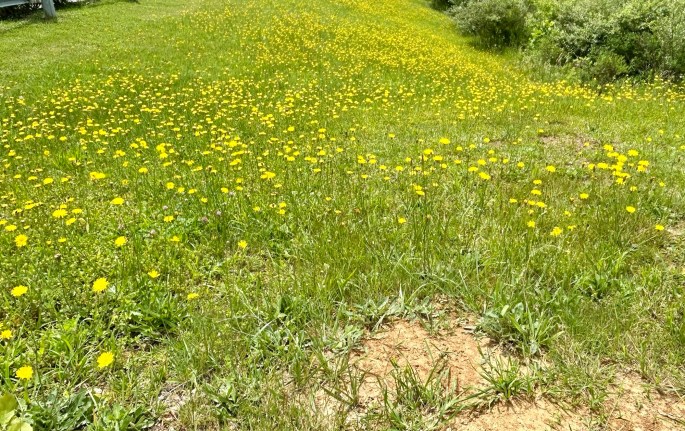
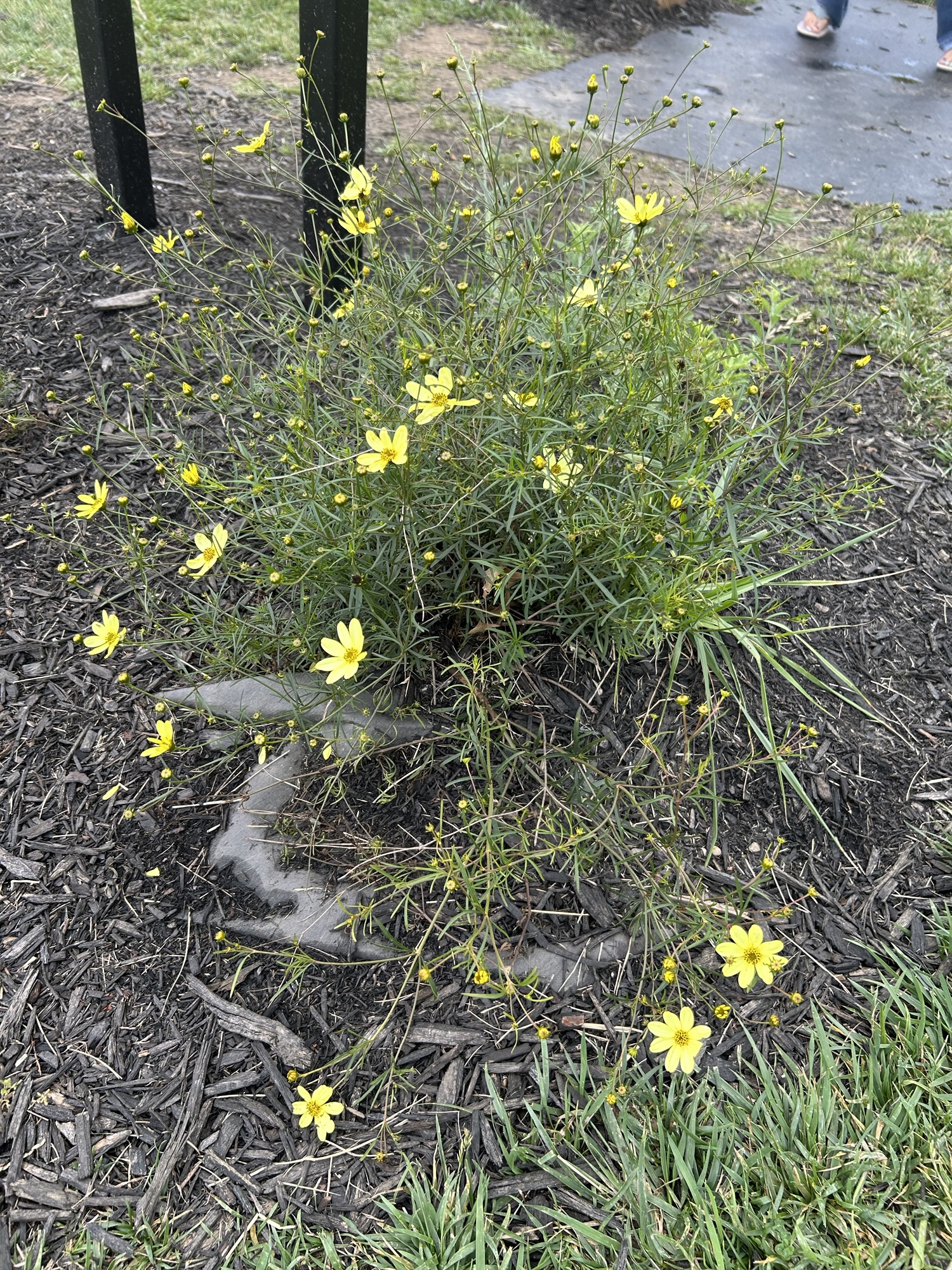
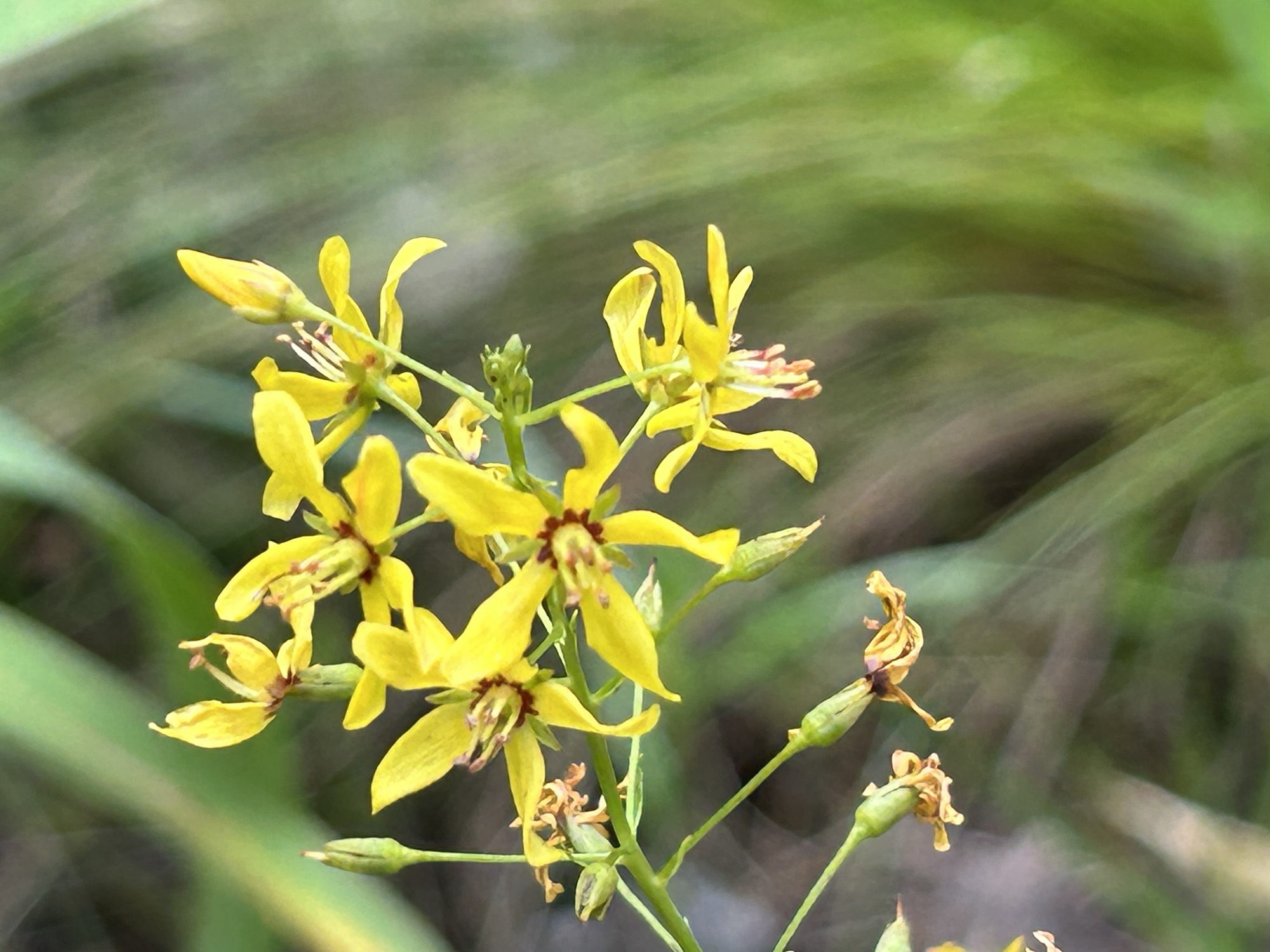
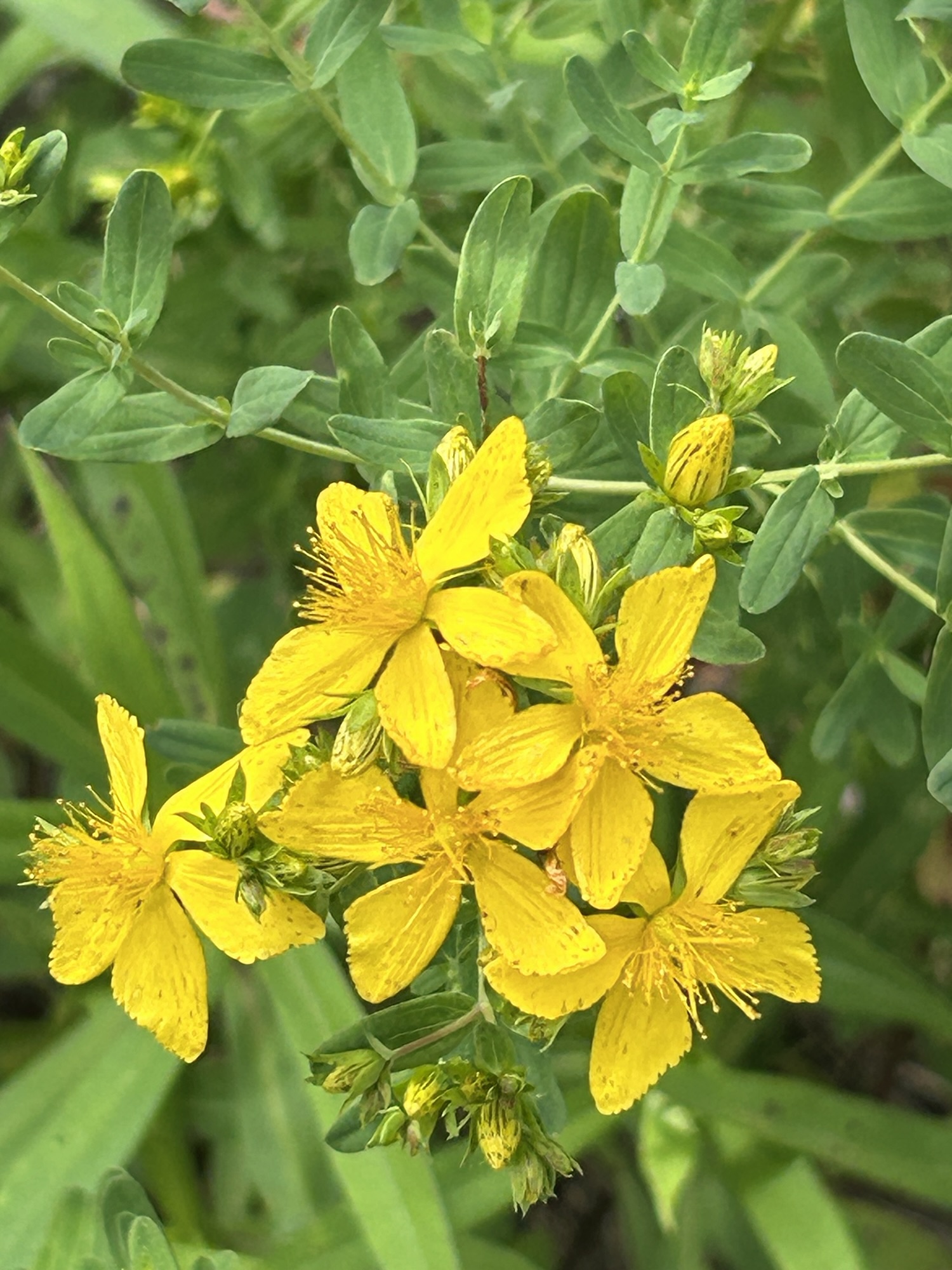
A vibrant field of bright yellow wildflowers blooming in a grassy area.
Yellow wildflowers in bloom along the fields surrounding Tamarack.

A Day Trip Decision 🚗

What started as a casual idea on the drive quickly turned into a relaxing and memorable day in Beckley, WV.

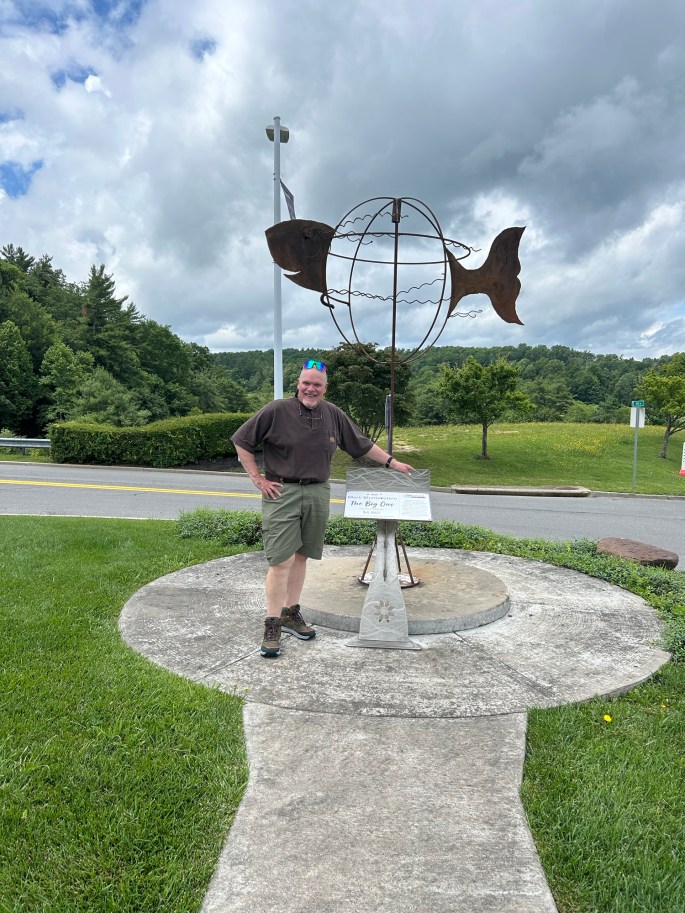
A man stands next to a large fish sculpture on a circular concrete platform, surrounded by grass and trees, under a cloudy sky.
John is standing in front of one of several outdoor sculptures found at Tamarack.

“Do you know where I’d like to go — and not just because we need a restroom break?”

My husband, John, laughed and, of course, asked where.

“Tamarack!”

That choice turned into a relaxing day trip full of fun. We were fortunate to have clear skies as we began the less than two-hour drive to Beckley, WV. On our way, we stopped in Charleston for a tasty brunch at a local restaurant, then continued to Tamarack–discovering it to be so much more than the quick roadside stops we’d made on past trips.

Wildflowers, Swings, and Sculptures 🌸

From fields of yellow blossoms to playful swings and striking outdoor art, Tamarack’s grounds are an experience in themselves.

A field of vibrant yellow wildflowers blooming in a grassy area, with lush greenery surrounding the scene.

Upon arrival, wild flowers bloomed in the fields surrounding the Tamarack’s grounds. John and I wandered the paths, pausing playfully to enjoy one of the West Virginia swings–part of the collections of swings installed at scenic spots in WV. This one looked over bright yellow blossoms dancing in the breeze..

Nearby stood a number of outdoor sculptures, each one well-crafted, yet playful, celebrating the wonders and beauty of WV. These pieces, scattered along a walking path, drew plenty of attention from visitors and added to the sense that Tamarack is far more than a rest stop–it’s a vibrant center for state arts, crafts, and cuisines.

The Vision Behind Tamarack 👷‍♂️

Born from a 1989 initiative, Tamarack set out to showcase “The Best of West Virginia” — and it continues that mission today.

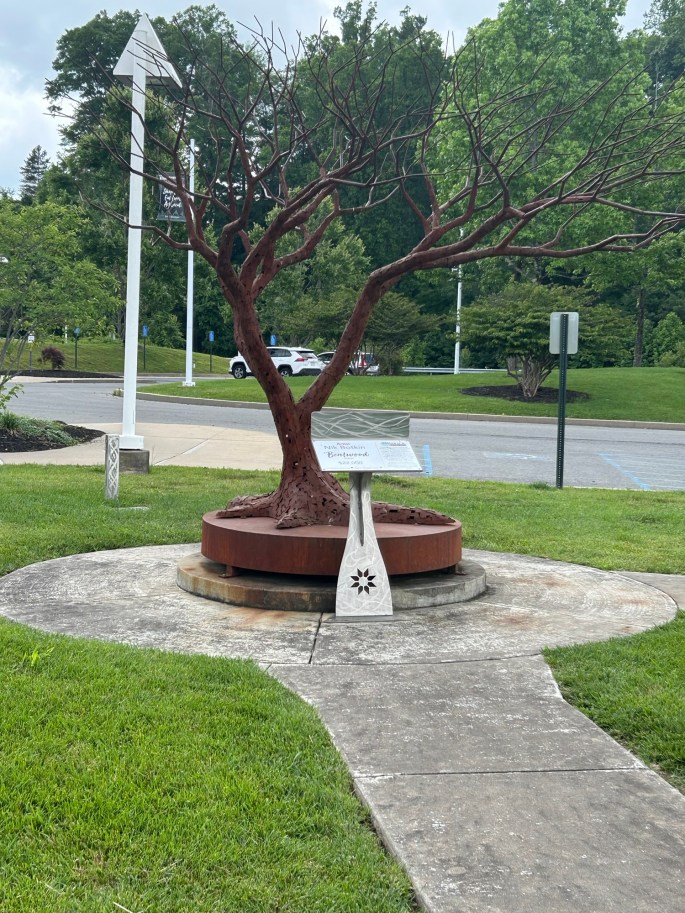
A sculptural tree installation with bare branches, situated on a circular stone base, with a descriptive plaque nearby.
One of several outdoor sculptures found around the entrance of Tamarack.

Envisioned in 1989 under Governor Gaston Caperton and opened in the mid-1990s, Tamarack was created as a way to promote and showcase WV artisans and boost local economy. Its mission is to feature the “Best of West Virginia” while fostering artistic excellence. Tamarack connects the Mountain State to the broader Appalachian community, celebrating heritage, pride, and craftsmanship. 

An Immersive Artistic Experience 🎨

Step inside and discover pottery, textiles, jewelry, woodworking, and edible creations — all crafted by local hands.

Showcase of handcrafted wooden tools and a chainsaw sculpture made by Matt Wilkinson from Boone County, WV, displayed in a glass case.
Amazing, one-of-a-kind craftsmanship can be found at Tamarack.

Inside, visitors are immersed in this time honored tradition. Displays feature pottery–including WV-made Fiestaware–woodworking, textiles, jewelry, painting, sketches, sculptures, and so much more. Locally produced treats abound: craft beers and ciders, wines, honey, syrups, jams, and even pet treats. Each item goes through a juried selection process, with artists submitting applications in hopes of earning the coveted title “Juried Artist of Tamarack.” Seasonal gallery exhibitions of local artists rotate by theme, each one planned months in advance.

Flavors of West Virginia 🥓

Whether it’s pepperoni rolls on the go or fried green tomatoes at the café, Tamarack serves up a true taste of the Mountain State.

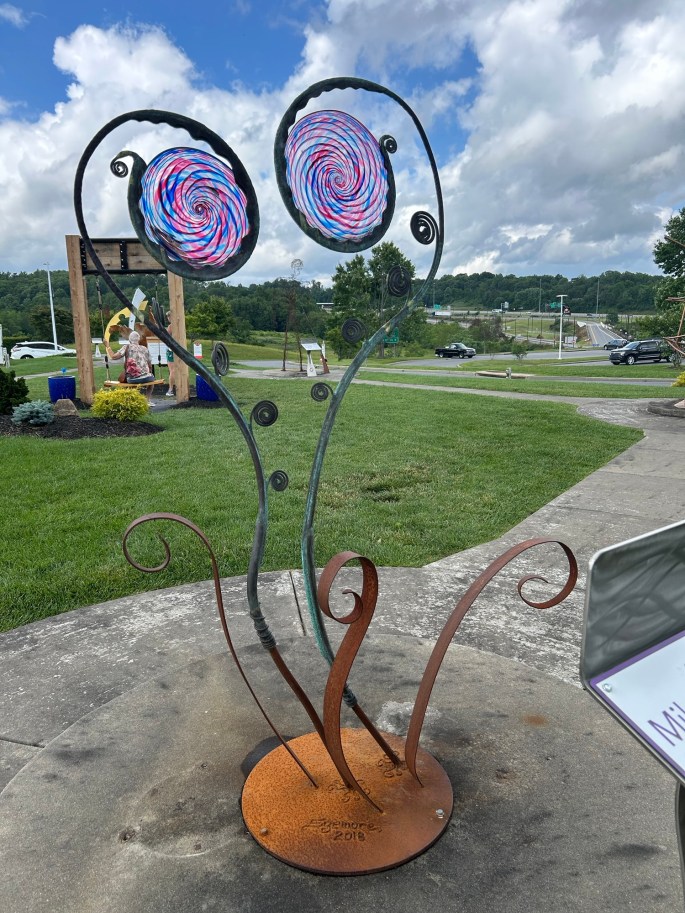
A colorful outdoor metal sculpture featuring two spiral-shaped elements atop slender, twisting stems, set against a grassy landscape and cloudy sky.
An outdoor sculpture at Tamarck.

If you arrive hungry, you’re in luck!  The cafe and quick market stand offer plenty of options. The market stocks cold beverages, ice cream and other sweet treats, snacks–many of which are gluten free and/or vegan–and West Virginia’s beloved pepperoni rolls. The cafe’s talented culinary team serves regional and seasonal favorites, such as fried green tomatoes, chicken pot pie, and the classic fried bologna sandwich. Breakfast is served from 9-11 a.m., with lunch/dinner being served from 11 a.m.-7 p.m., Monday through Saturday.  Gluten free and vegan/vegetarian options are available.

Live Music and Events 🪕

From courtyard concerts to seasonal festivals, Tamarack is alive with performances, artist demos, and community celebrations.

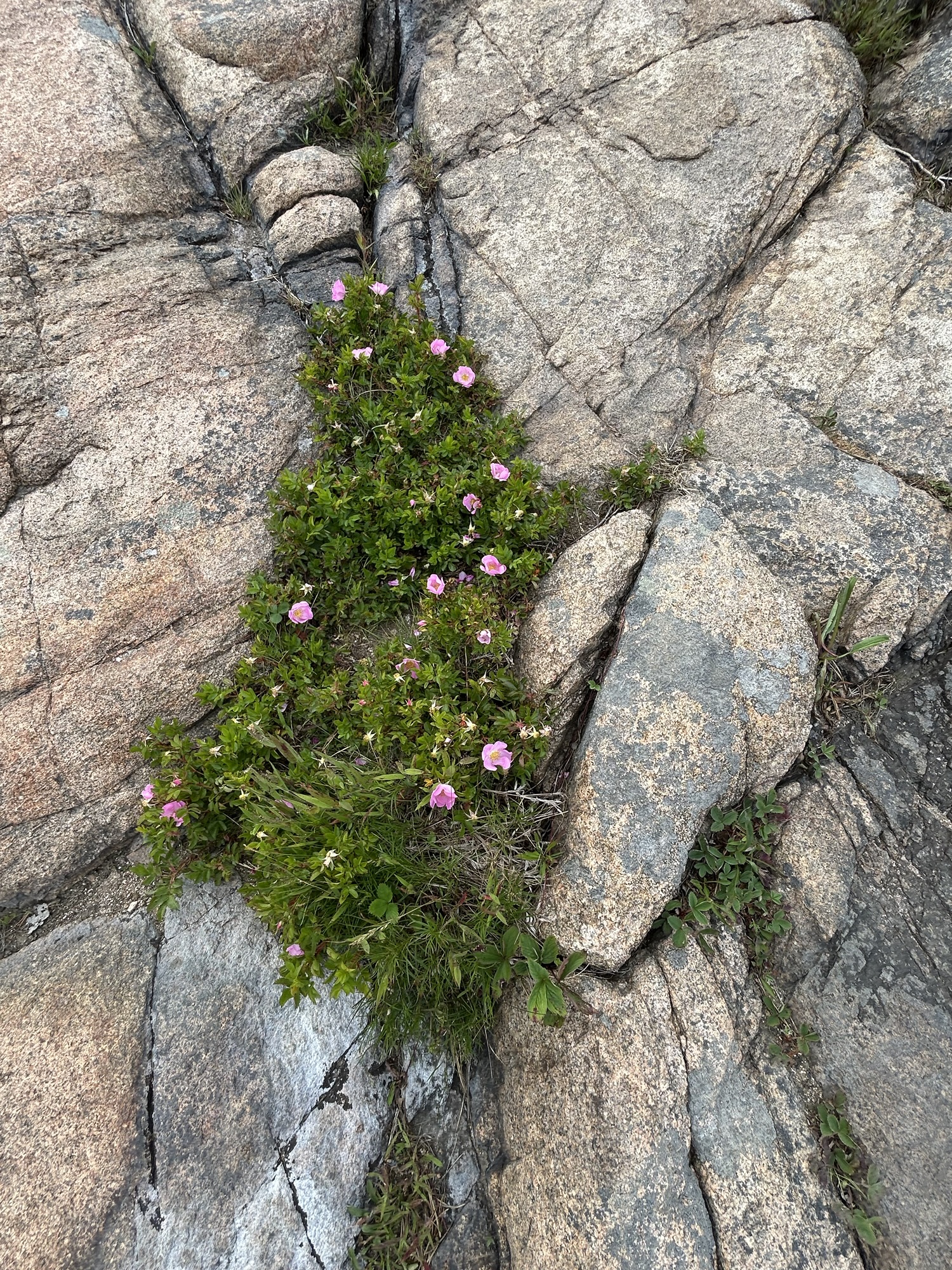
Vibrant pink flowers blooming amidst green foliage.

Tamarack offers live events throughout the year. Upcoming dates include Courtyard Concerts (Aug. 23, 12-3 pm), Dueling Pianos (Aug. 29), Fall Festival (Sept. 14), plus numerous artist demonstrations and book signings. 

An Afternoon Well Spent 🛍️

Shopping, chatting with artisans, and soaking up the atmosphere made our visit both inspiring and fun.

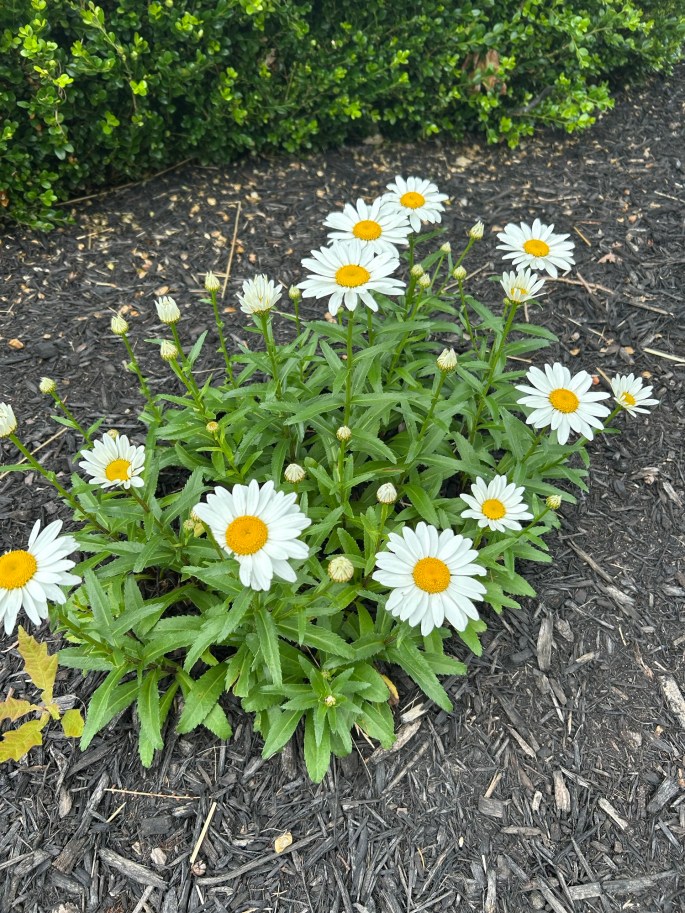
A close-up view of white daisies with yellow centers growing in a garden, surrounded by dark mulch and green foliage.

All in all, John and I spent a lovely afternoon strolling the gallery halls, shopping local artisans’ booths, and chatting with artists and staff. We picked up a few gifts and enjoyed admiring the plethora of regional talent. We even decided it would be the perfect spot for one-stop Christmas shopping.

If you are looking for a day-trip adventure within easy driving distance, consider visiting the Tamarack. Whether you love shopping, savor good food, appreciate art, or simply enjoy soaking up the atmosphere as John and I do, Tamarack is a cultural and creative escape close to home! 

Beyond Tamarack: Exploring Beckley

Pair your visit with the New River Gorge, Glade Creek Trail, or the Exhibition Coal Mine for a full weekend of adventure.

A rustic wooden side table with a round design featuring a dark finish and metal accents, standing on a carpeted surface.
A table handcrafted from a bourbon barrel for sale at the Tamarack.

If you want to make the weekend of it, Beckley offers plenty nearby:  the stunning New River Gorge National Park, Glade Creek Trail, Exhibition Coal Mine, historic landmark of Foster’s Main Street Tavern,  unique and local restaurants, and The Resort at Glade Springs  All told, they make for a weekend full of fun, flavor, and Appalachian charm.


A Perfect Getaway: Discovering Acadia National Park

“Keep close to Nature’s heart . . . and break clear away, once in a while, and climb a mountain or spend a week in the woods. Wash your spirit clean.”–John Muir 

A Place Where Mountains Meet the Sea ⛰️

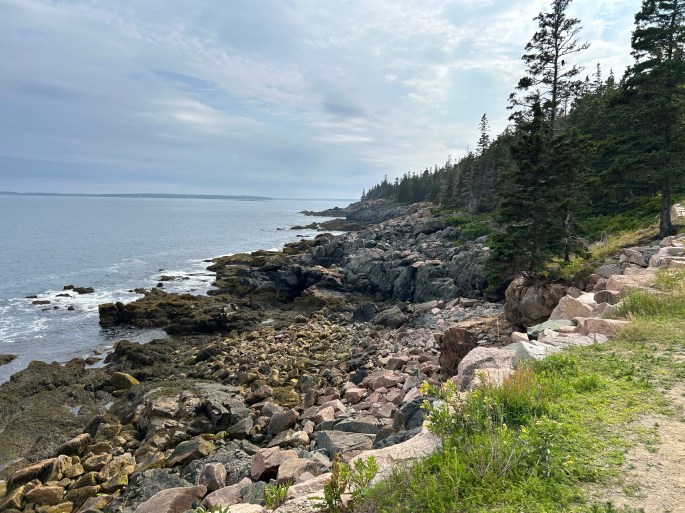
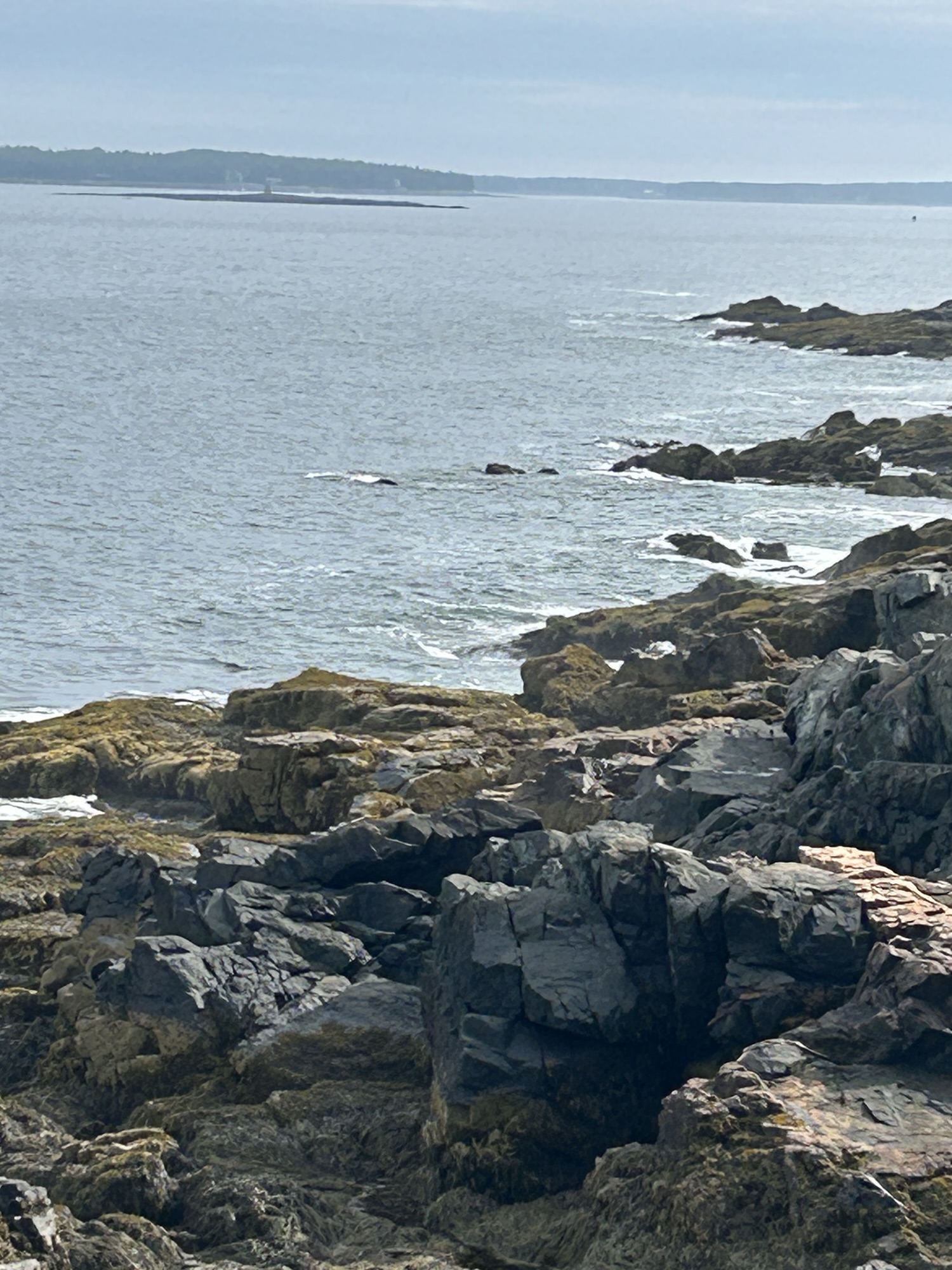
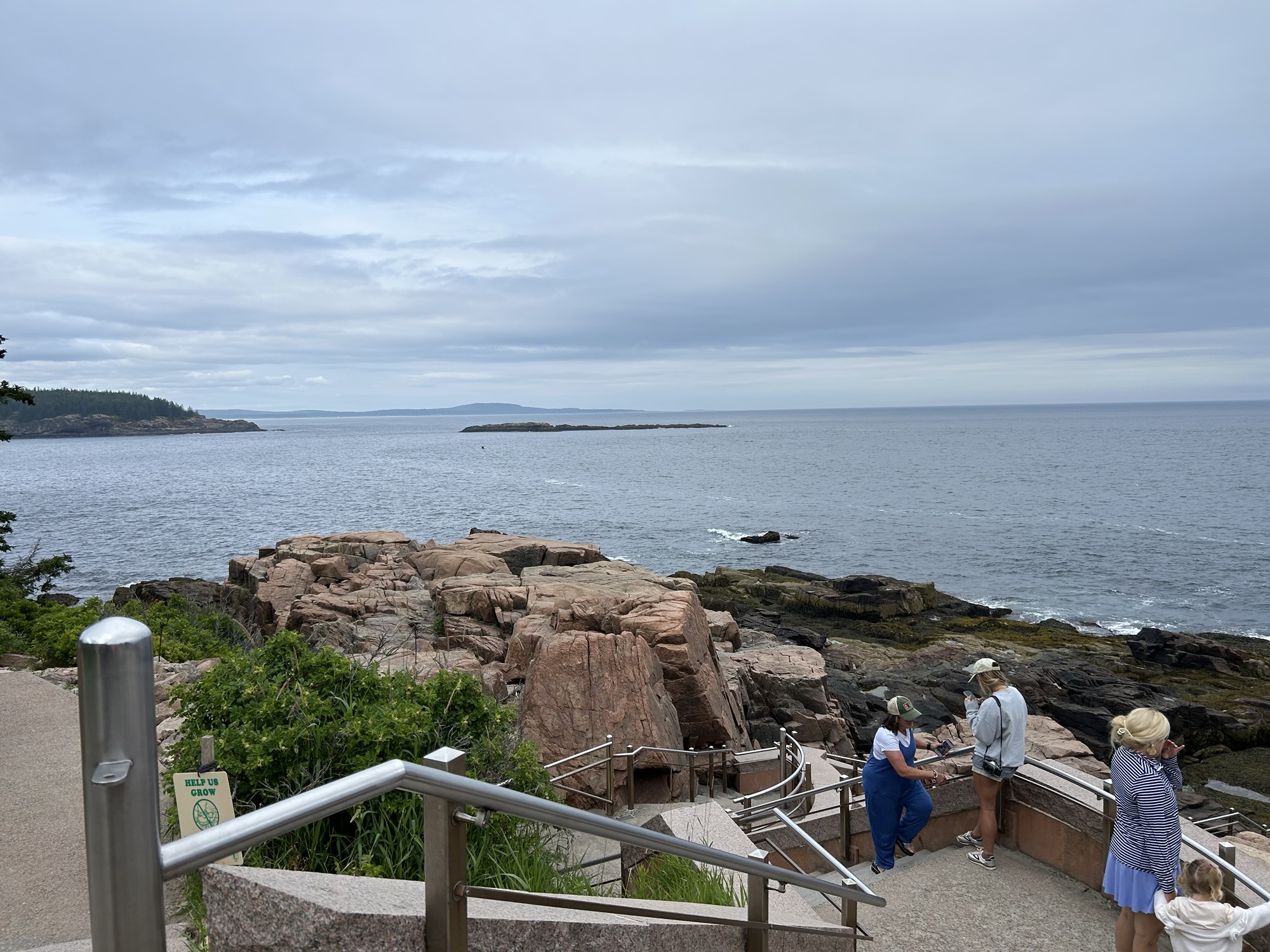
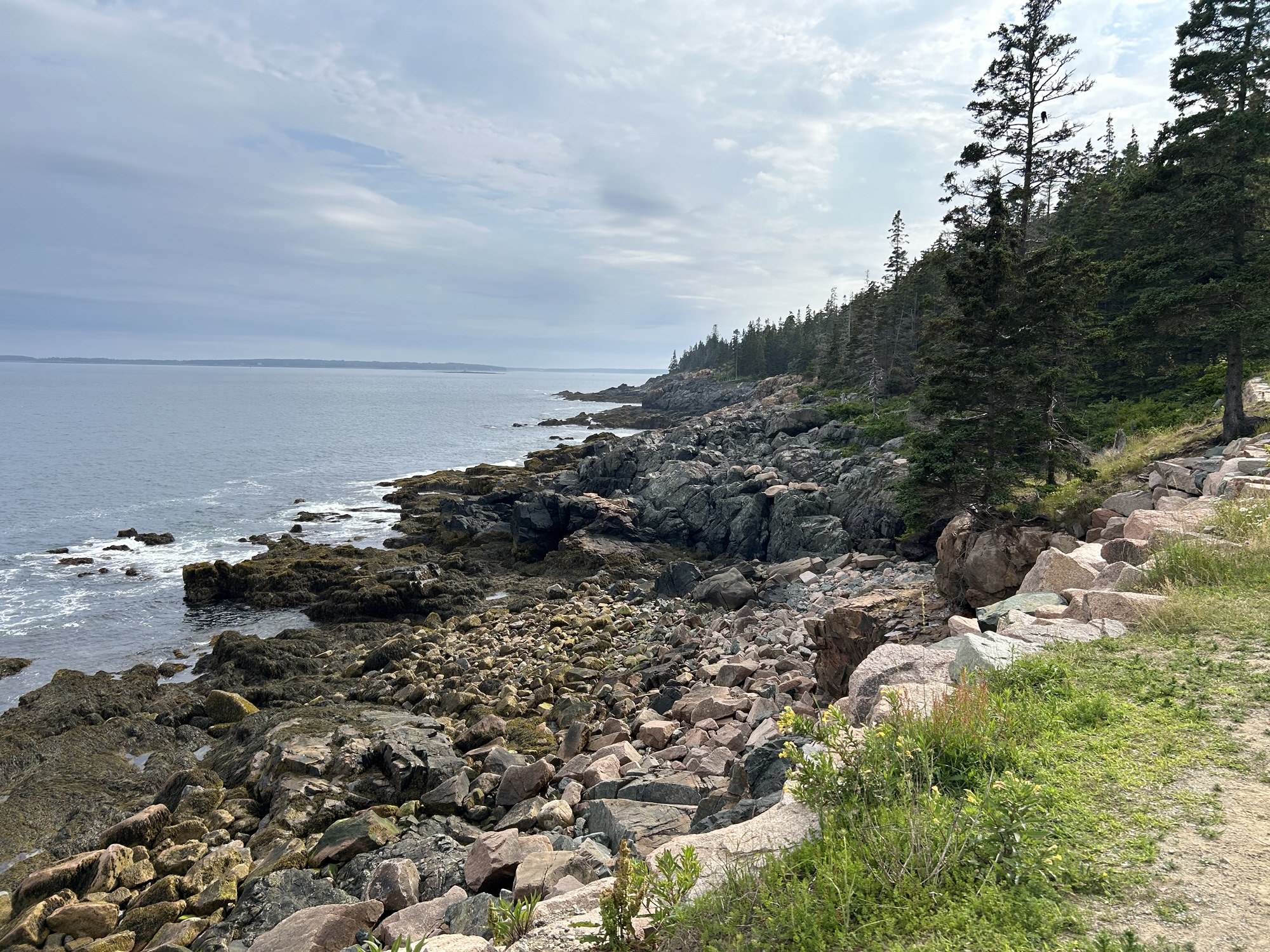
Rocky coastline of Acadia National Park with trees and calm sea under a cloudy sky.
One of the views along Park Loop Road in Acadia National Park.

“I heard that you’re heading to Acadia, too, this summer!  When are you going?”

That casual question was our first clue about Acadia’s dual nature—a place where the ocean meets the mountains and where natural wonder collides with popularity. John, my husband, and I hadn’t realized, when planning our trip, that Acadia National Park is one of the most visited parks in the U.S. 

Why Acadia Draws Millions 🌄

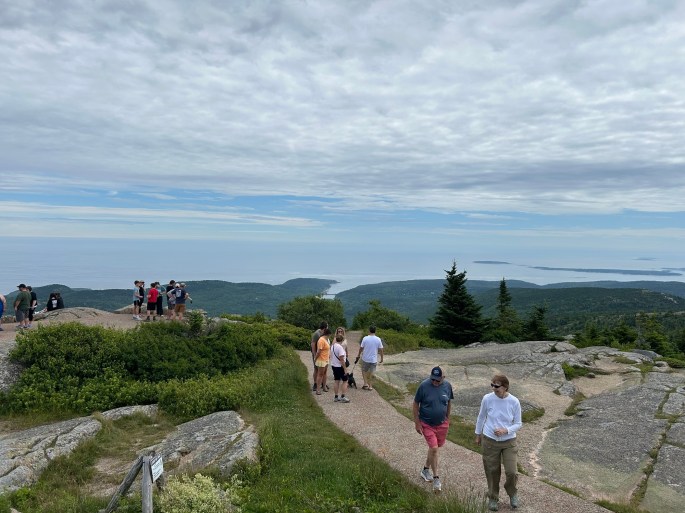
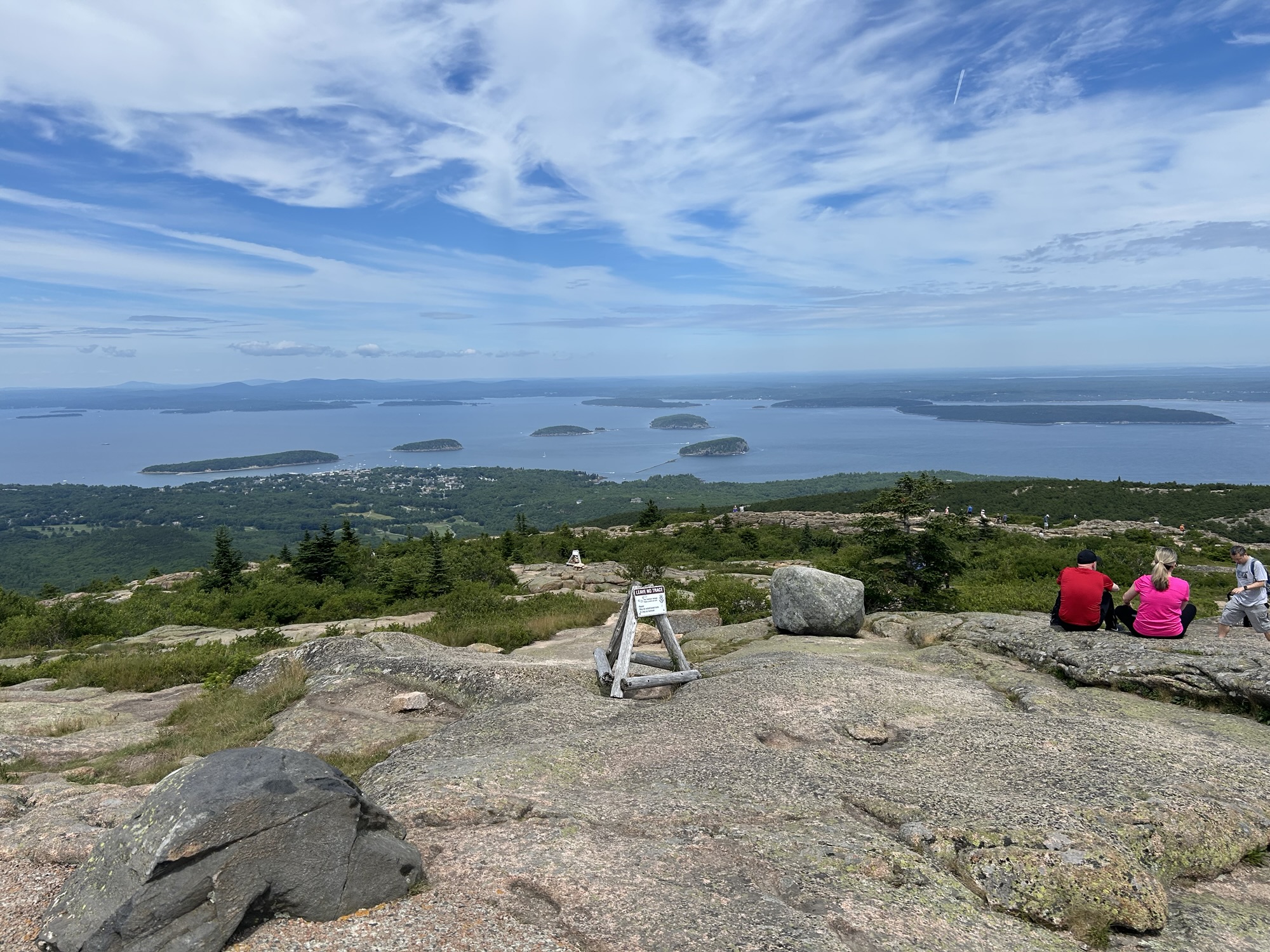
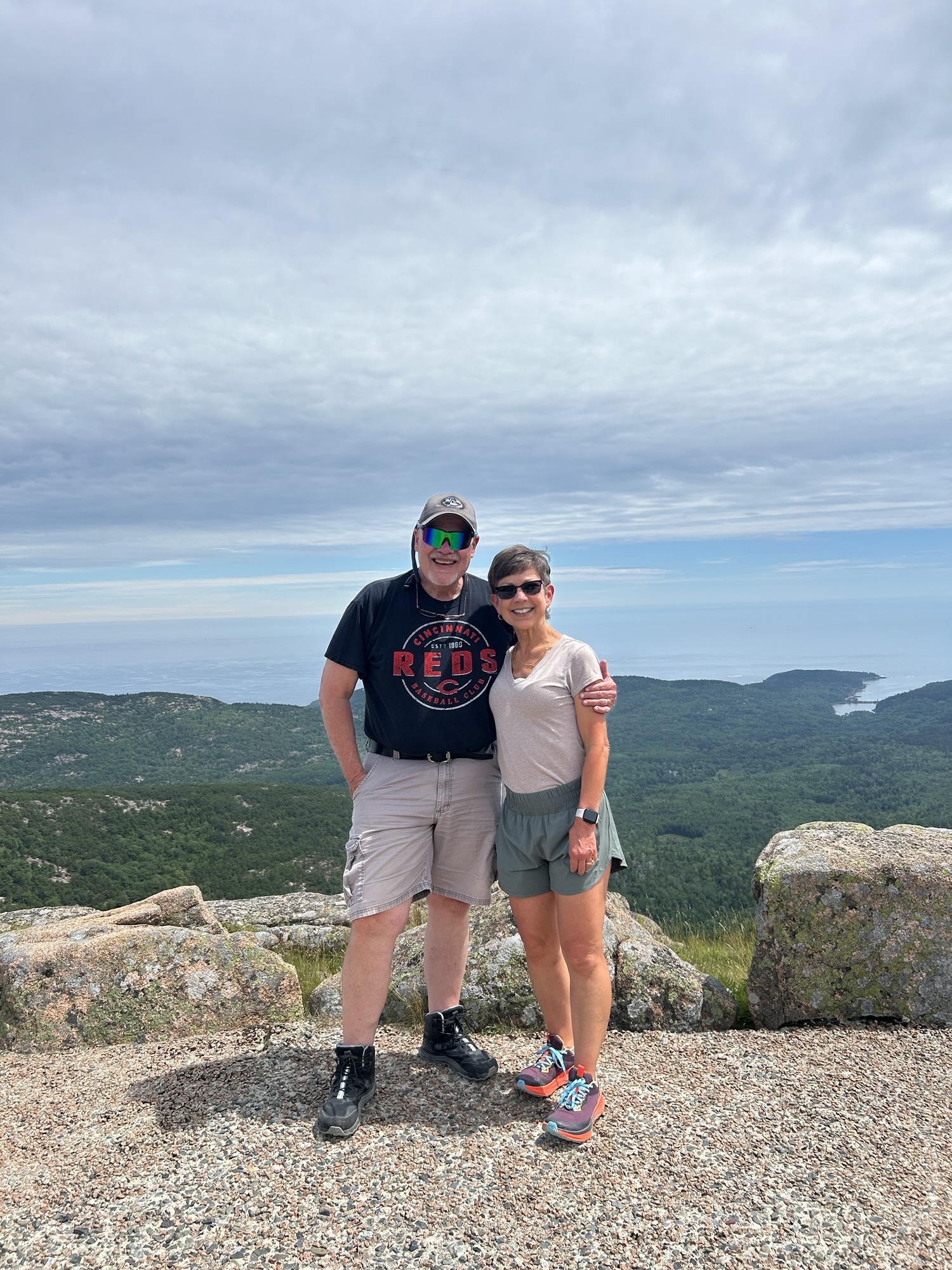
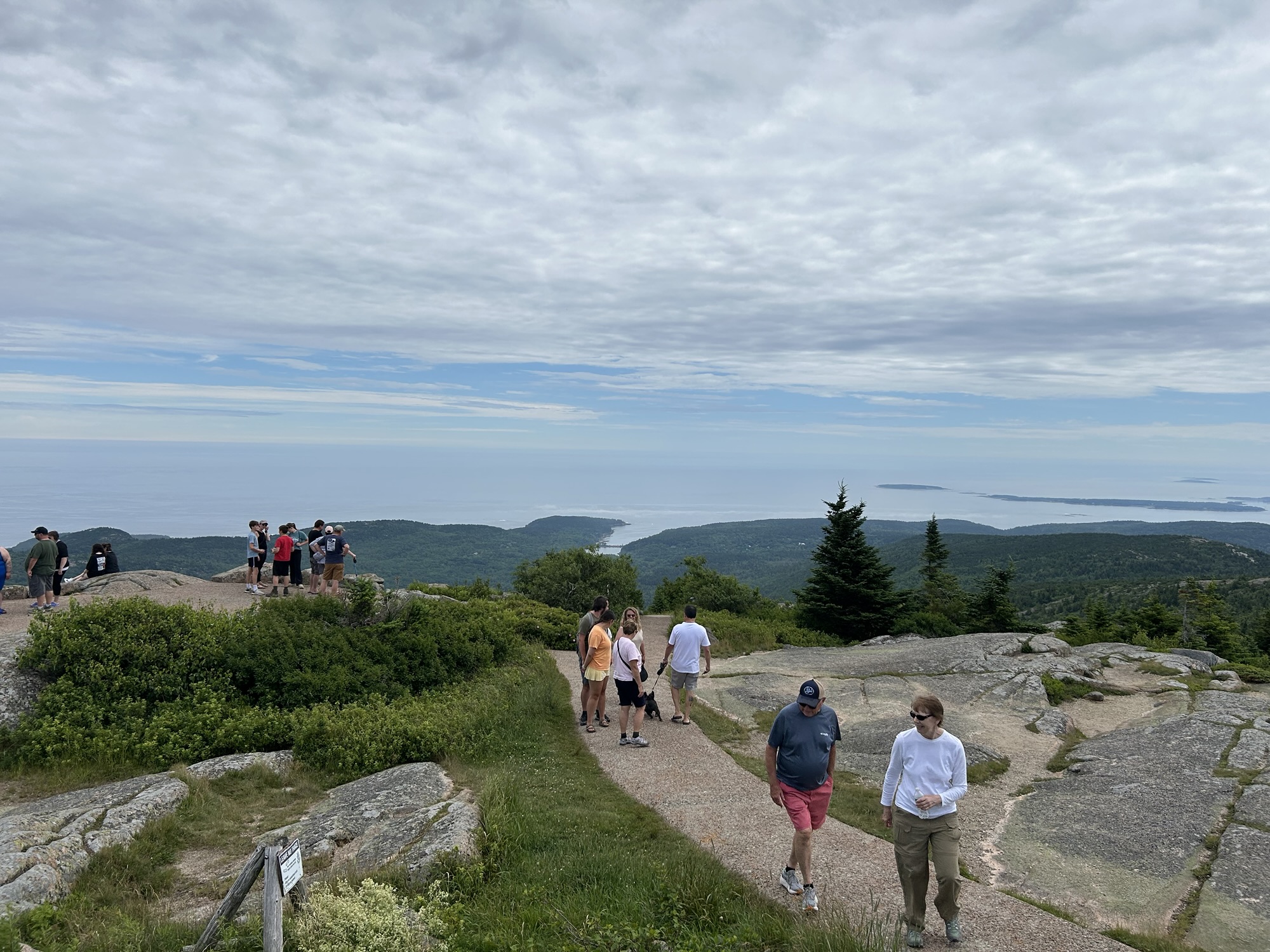
A group of hikers enjoying the scenic views from the summit of Cadillac Mountain in Acadia National Park, with lush greenery and ocean in the background under a cloudy sky.
View from atop Cadillac Mountain in Acadia National Park.

We now know why! With its dramatic coastlines, granite peaks, and network of trails, it’s no surprise Acadia draws over four million visitors a year, especially during July through September. Few places offer so much to do in a day: bike/jog/walk trails built by a millionaire at sunrise, summit a picturesque mountain, stroll a rocky shoreline, cross a tidal land bridge, and end the evening with a sunset dinner overlooking the bay

According to the National Park Service, Acadia ranks among the top-ten most visited national parks. Its compact size—about 50,000 acres—makes many attractions easily accessible. John and I spent five days exploring Acadia and Mount Desert Island, the largest island off the Maine coast encompassed within the park. Though we experienced several highlights, we left feeling we’d only scratched the surface. Therefore, we are already planning a return next summer.

A Cozy Stay in the Woods 🦌

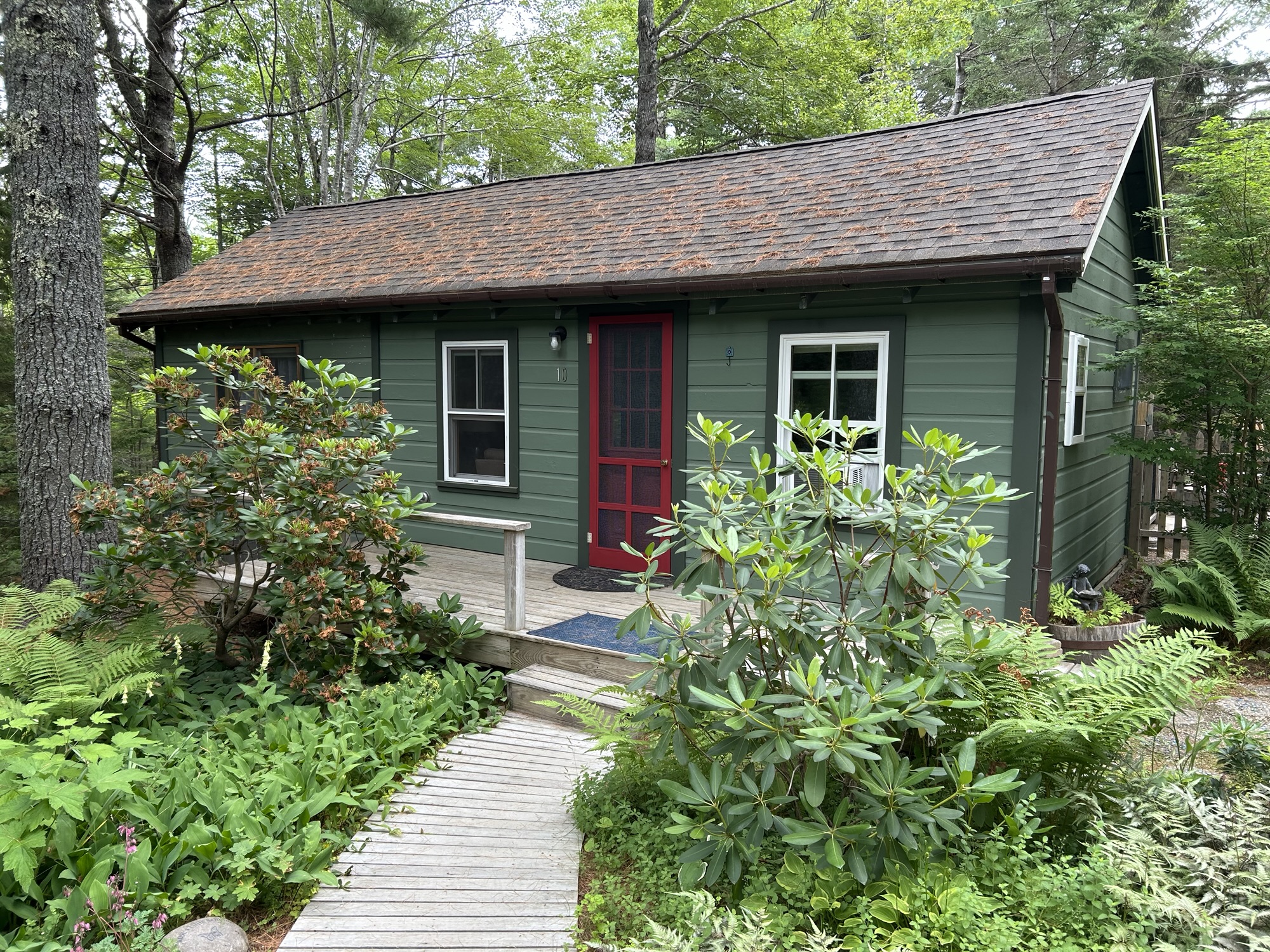
Our cozy cabin in the woods of Mount Desert Island, perfectly situated to all things Acadia.

We stayed in a cozy cabin, we found on VRBO, surrounded by acres of woods. However, in less than a three-minute drive, we were driving along a major route central to Acadia and the surrounding areas. In fact, its central location gave us short, easy access to major attractions, trails, and dining options.

Scenic Drives and Iconic Sights 🚘

The views along Park Loop Road were spectacularly stunning.

One of our favorite parts of our trip was driving the scenic 27-mile Park Loop Road. We used a narrated app that provided directions, history, and geology of the surrounding areas as we drove, taking in spectacular vistas. Stops included Sand Beach, Thunder Hole, and Otter Cliffs to name a few. We spent the day hiking and sightseeing along the sublime beauty of the route—a perfect introduction for first-time visitors. The downside?  The park road is heavily trafficked, especially midday, so parking can be a challenge for some stops.

Peace and Solitude on the Carriage Roads 🌅

I was fortunate to run Eagle Lake Loop each morning, one of the numerous paths that make up the Carriage Roads of Acadia National Park.

Most mornings, I ran on the peaceful Carriage Roads—45 miles of tree-lined trails donated by John D. Rockefeller Jr. originally built for horse-drawn carriages. These 16-foot-wide gravel paths follow the land’s natural contours and were built to preserve the line of hillsides, protect trees, and align with the landscape contour. The trails offer scenic views and safe, car-free routes for walkers, joggers, cyclists, and cross-country skiers. Additionally, several trails permit horseback riding. The potential downside to these peaceful and winding trails is that parking is limited at some trailheads and fills up quickly. Additionally, cell service is spotty, so plan ahead with trail maps.

Reflections at Jordan Pond 🥾

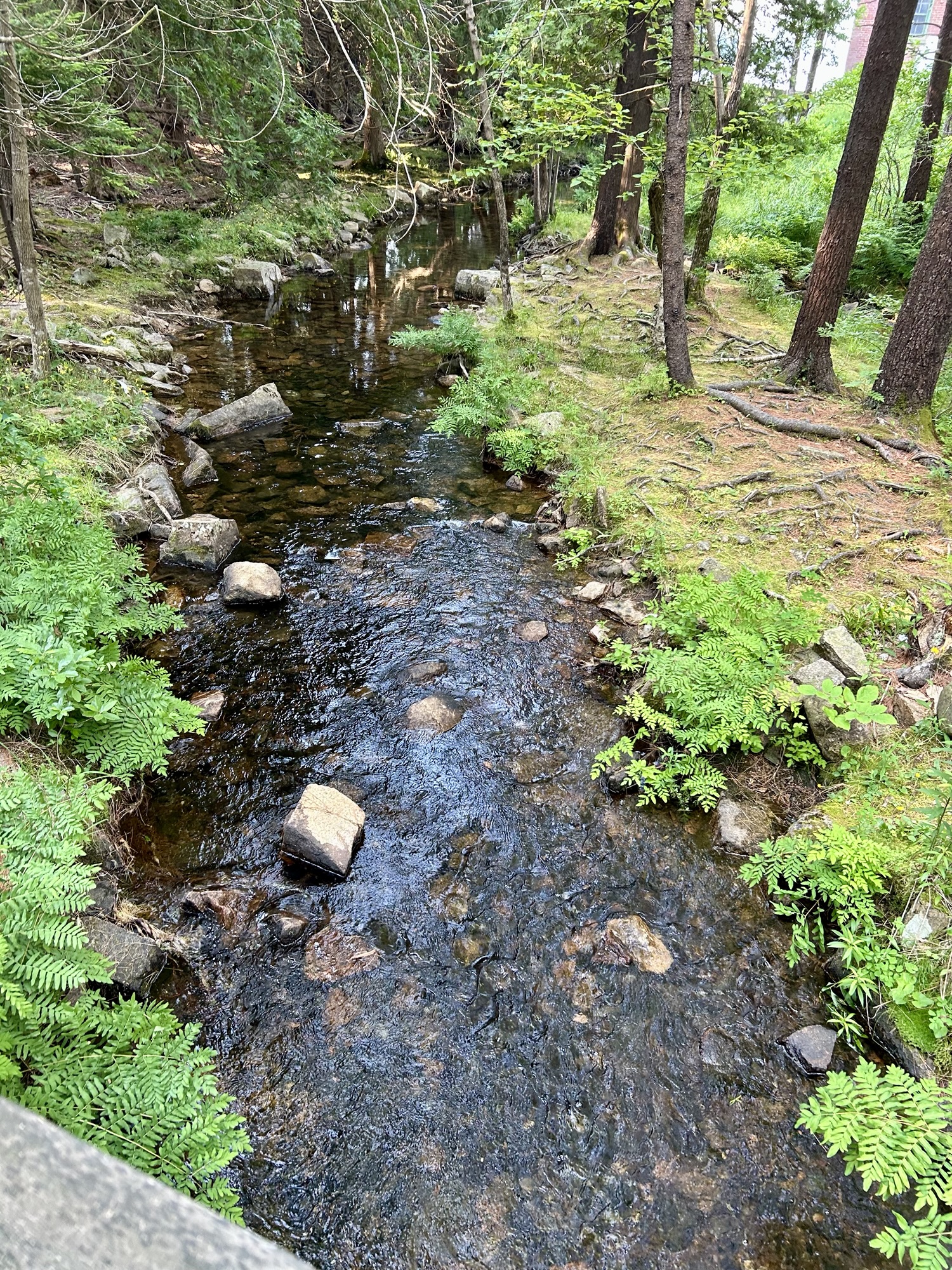
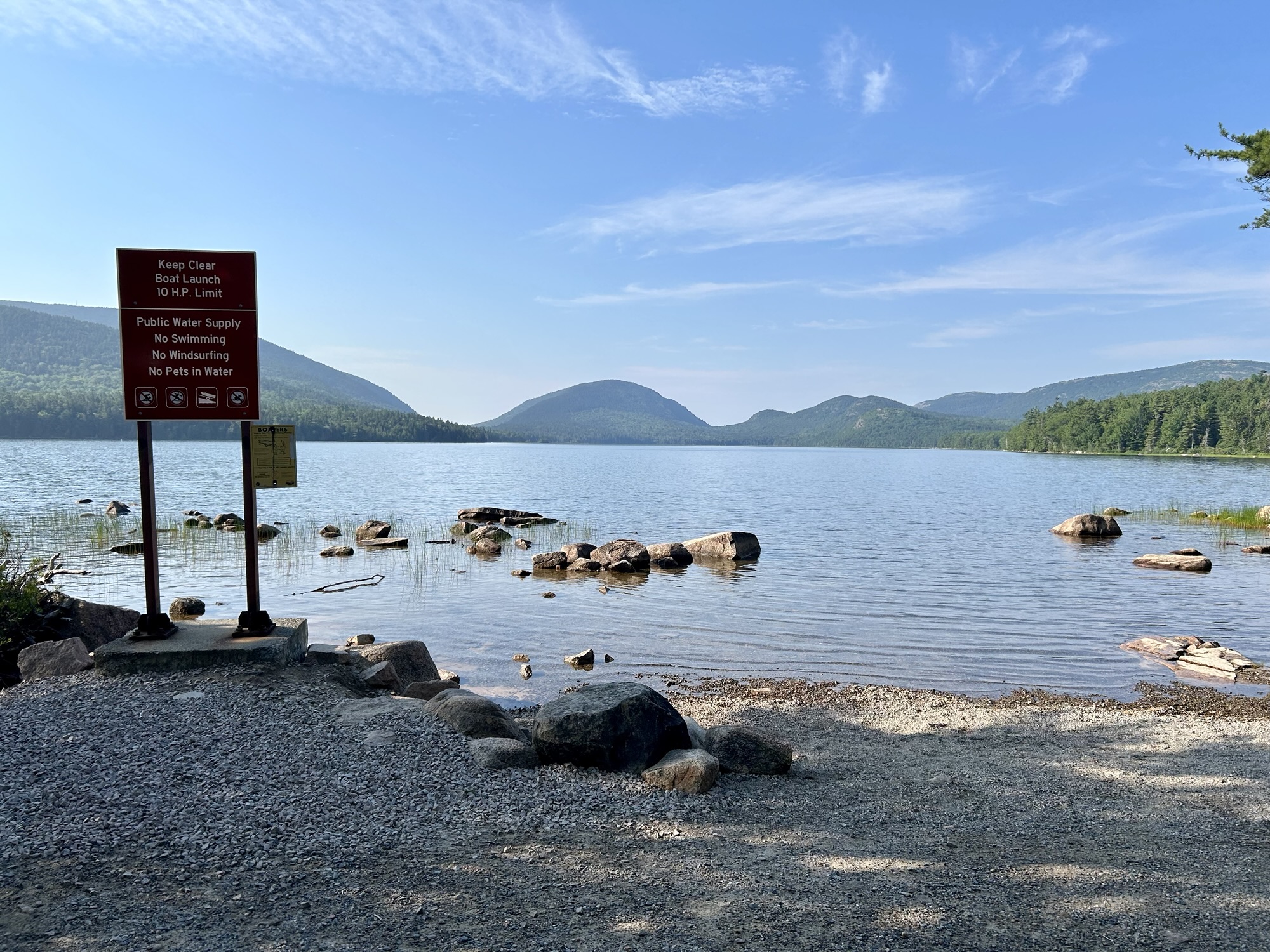
The water of Jordan Pond, and its trails, were pristine despite the foot traffic.

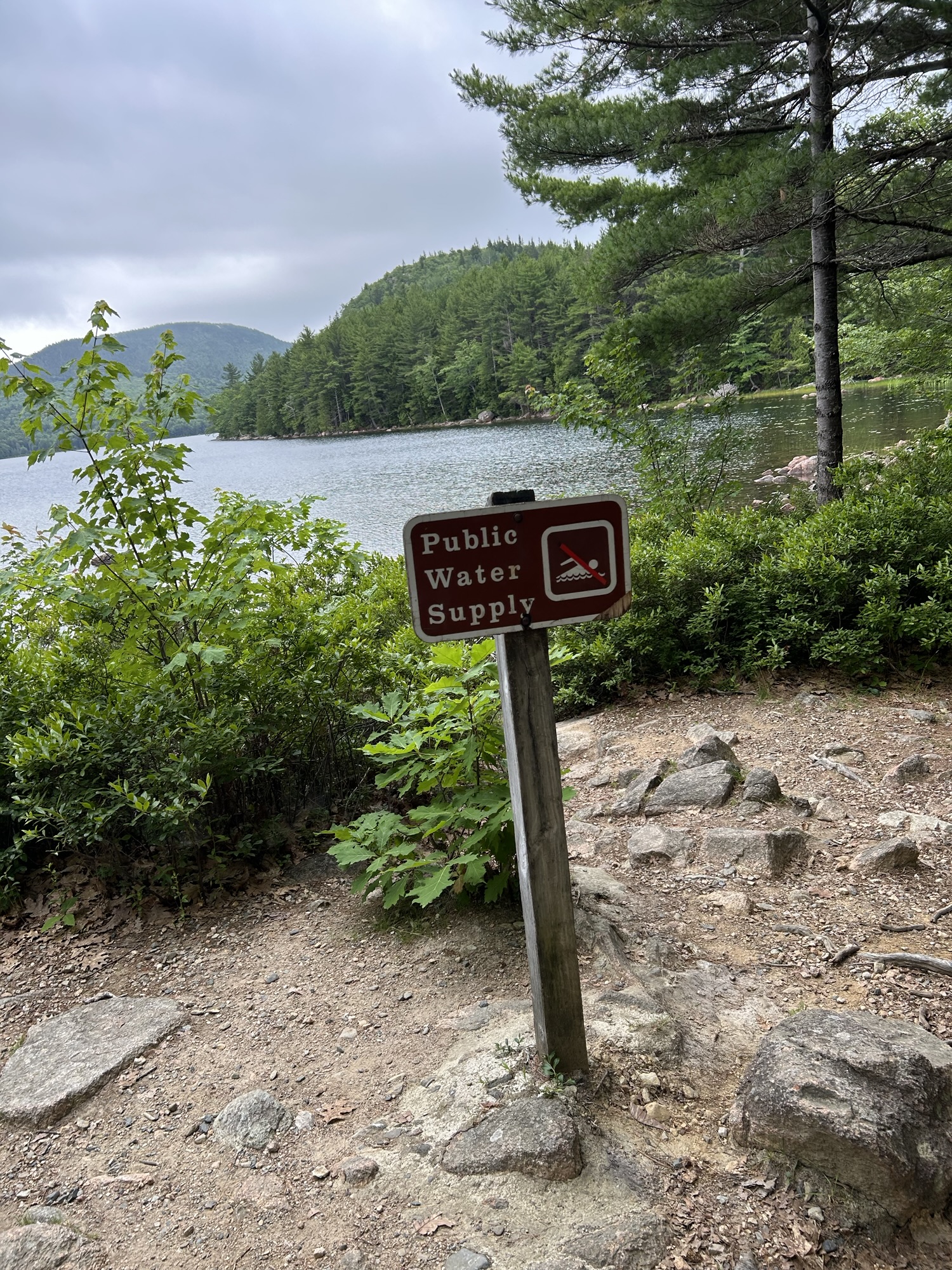
Another favorite site John and I enjoyed was the 3.3-mile Jordan Pond loop—a mostly flat trail with boardwalks and views of the Bubble Mountains reflected in crystal-clear water. In fact, swimming is prohibited to preserve its purity. At the trail’s end is the popular Jordan Pond House, renowned for its quintessential popovers as well as other refreshments/snacks. As with many Acadia spots, prepare for long waits for food and crowded trails during peak hours.

Cadillac Mountain’s Unforgettable Views 🌄

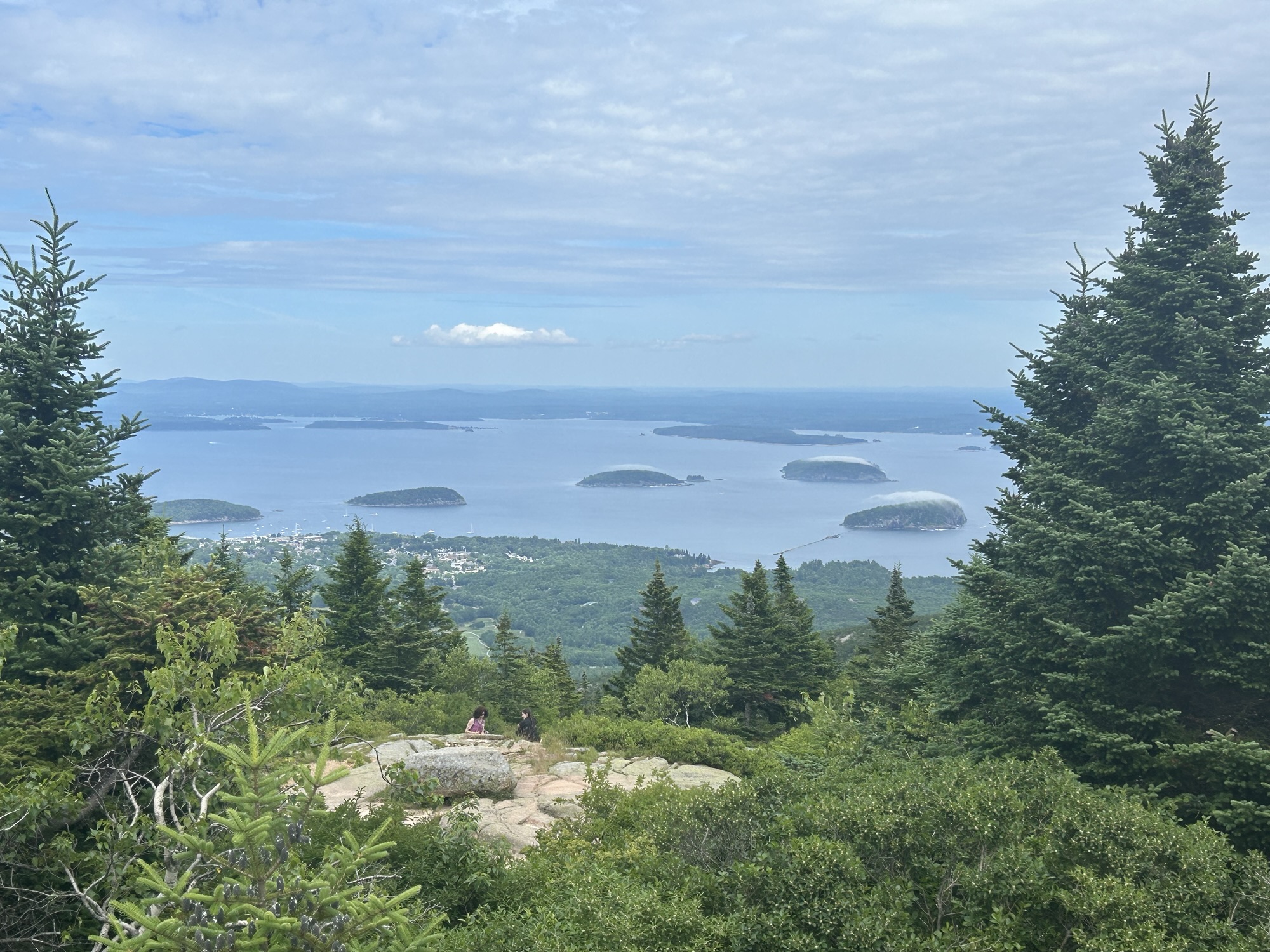
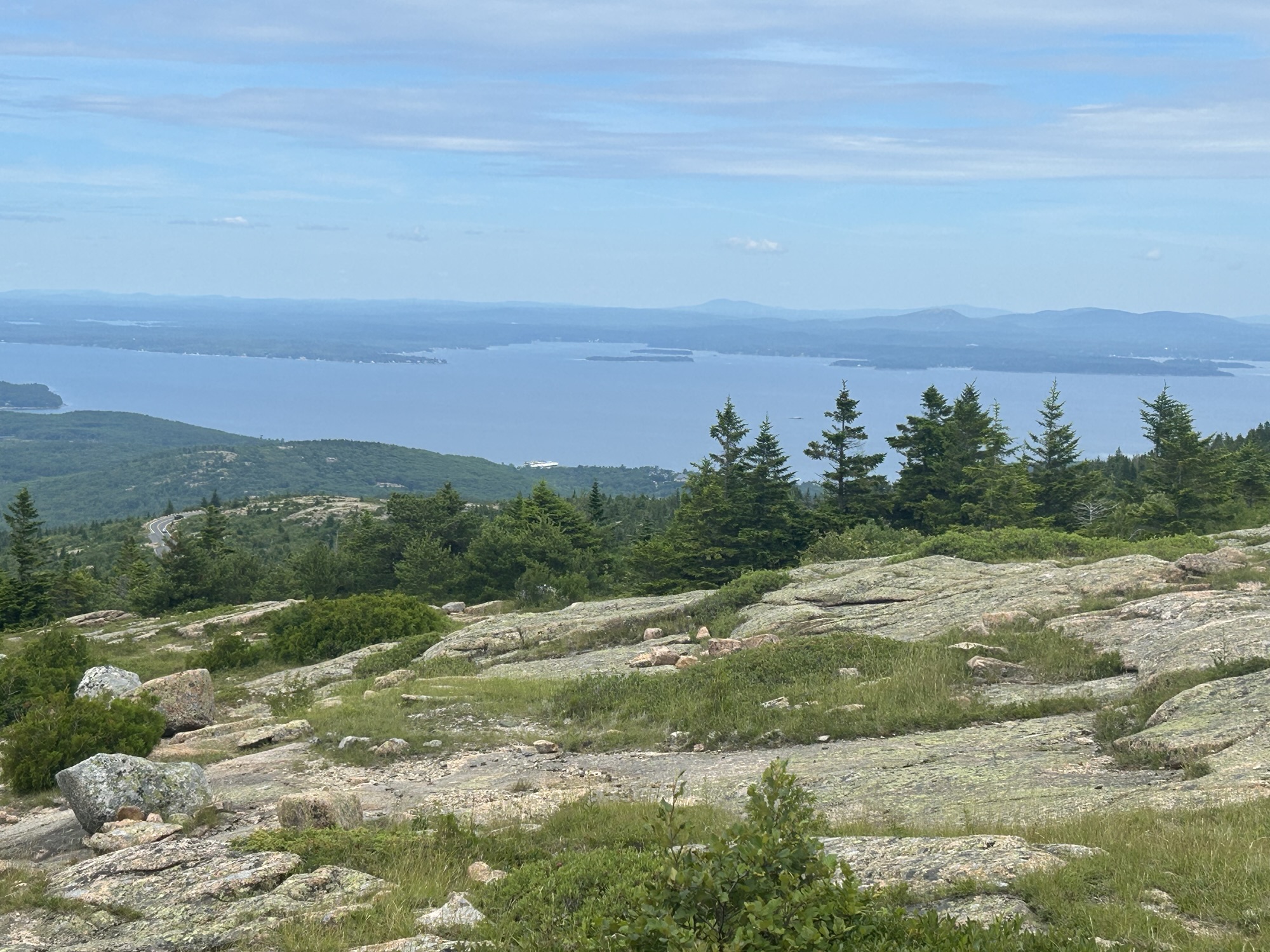
The views from Cadillac Mountain were breathtakingly beautiful.

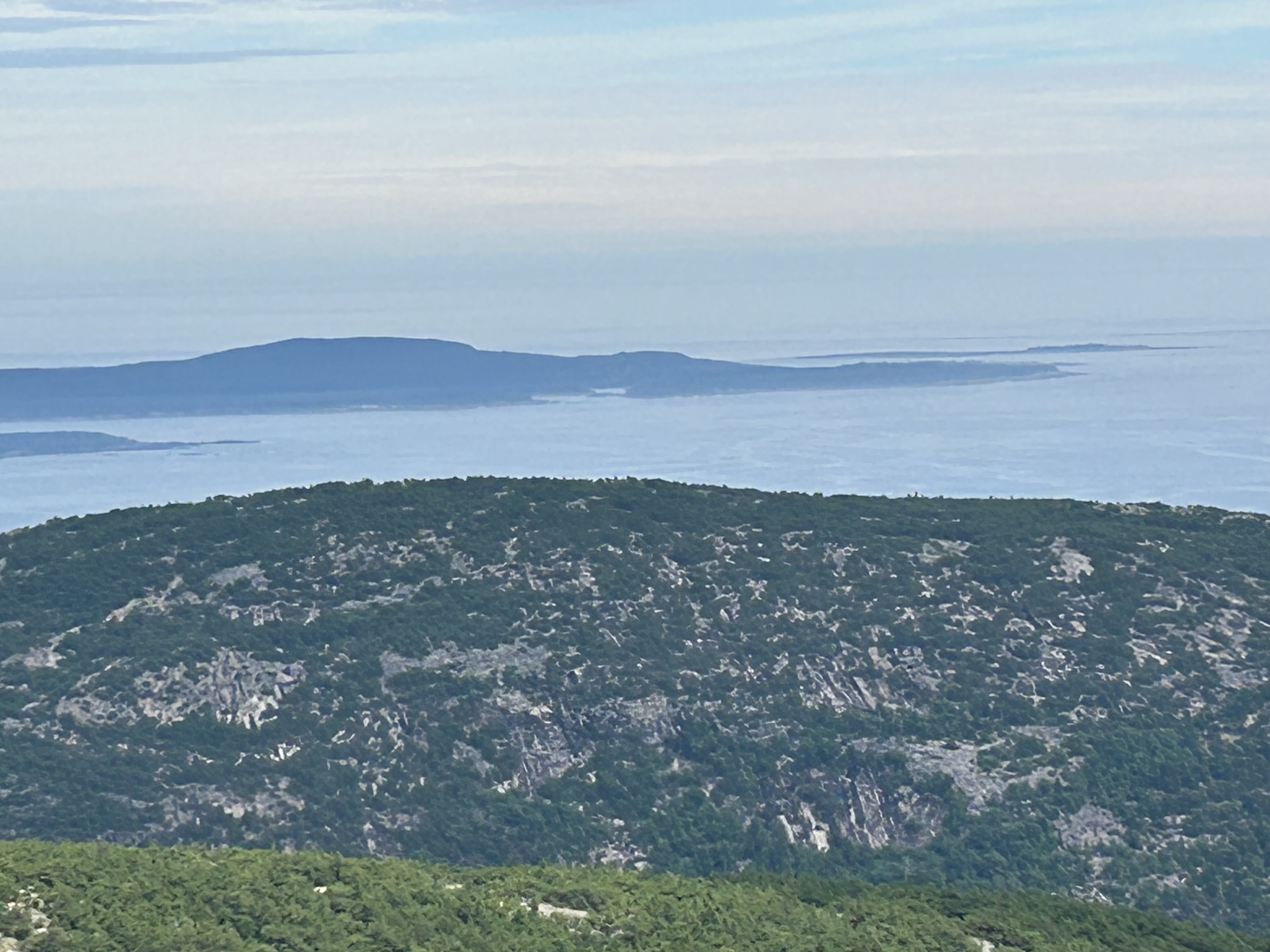
Cadillac Mountain, with its rocky, pink granite outcroppings, is the tallest peak on the eastern seaboard and a true gem of the park.  The summit offers stunning views of Frenchman Bay, Bar Harbor, and surrounding islands. Sunrise and sunset are especially popular times to visit, though weather can limit visibility. It is also a prominent spot for stargazing. Due to its popularity, the National Park Service requires advance reservations to drive the winding 3.5-mile summit road—an effective measure to reduce overcrowding.

Walking Across the Sea: Bar Island Trail 🚶🏽‍♀️🚶🏿‍♂️🚶

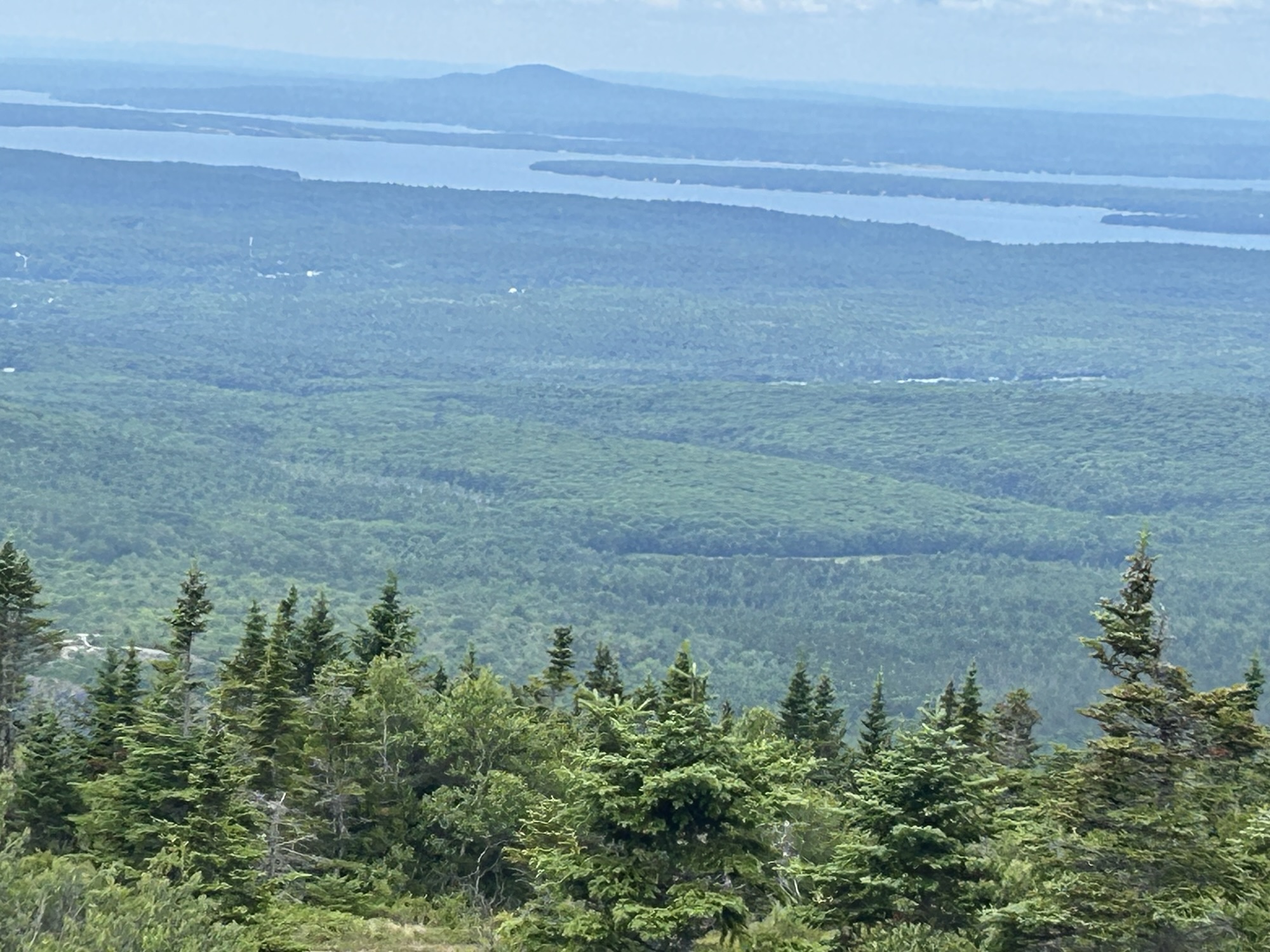
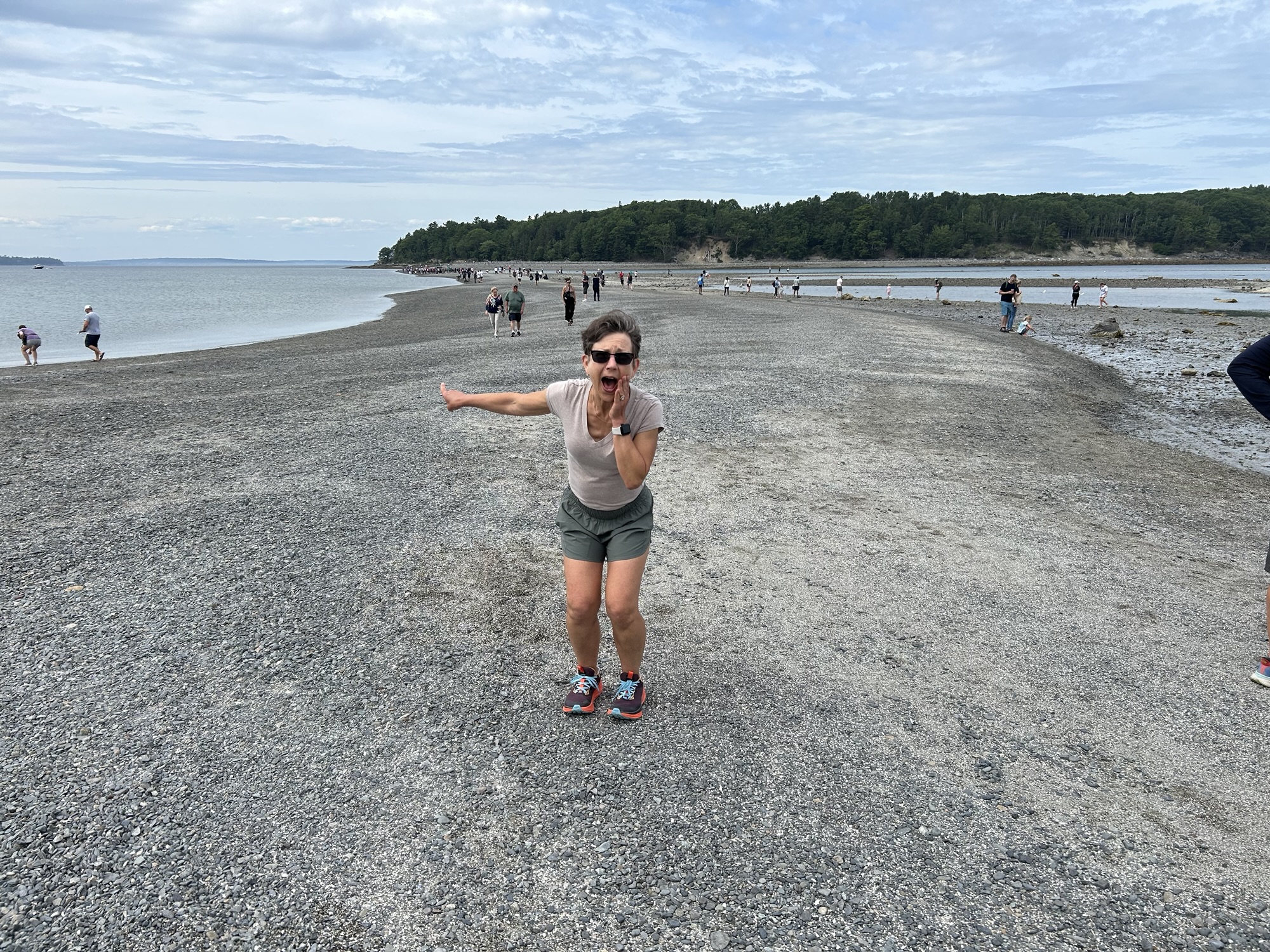
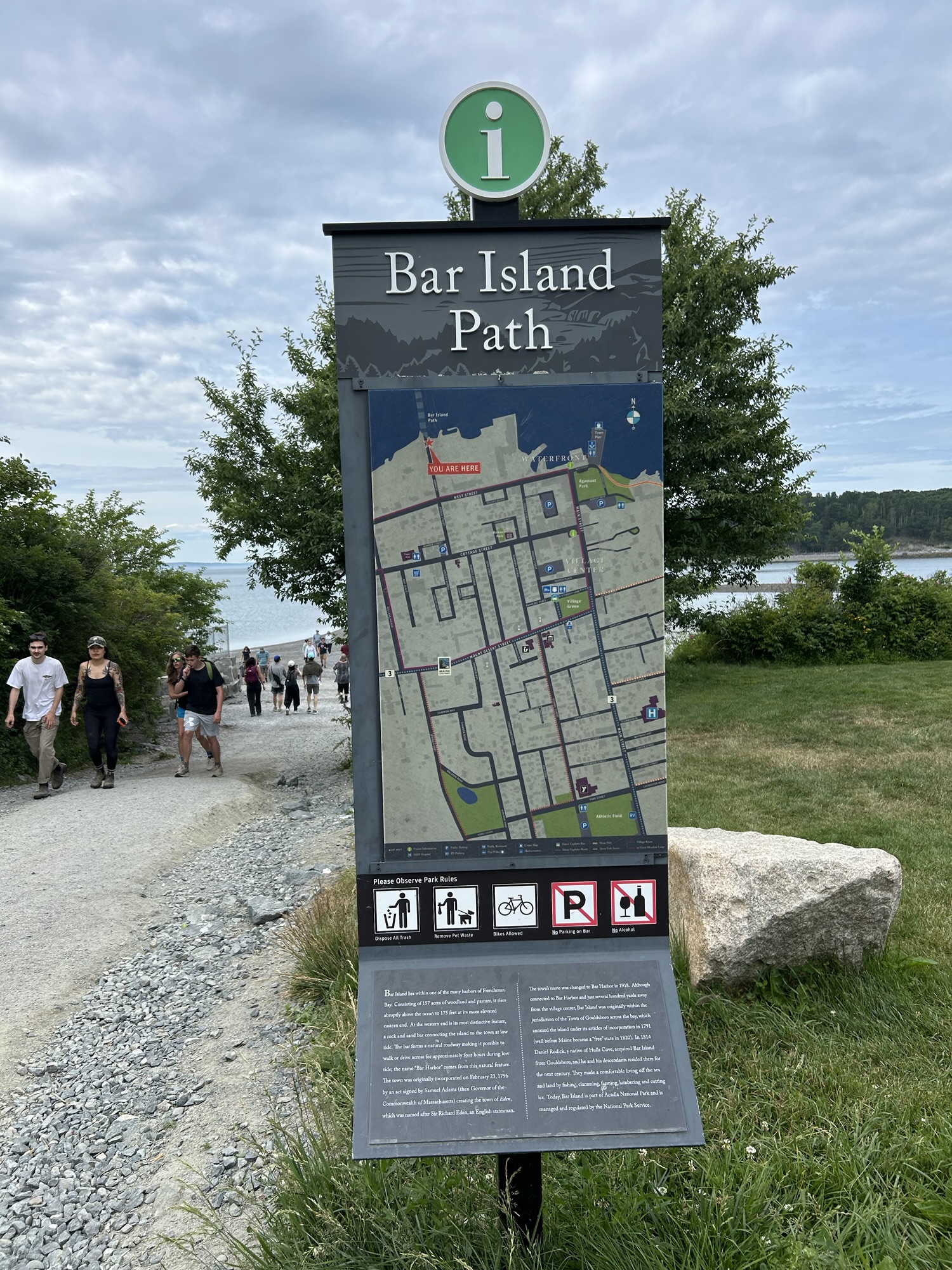
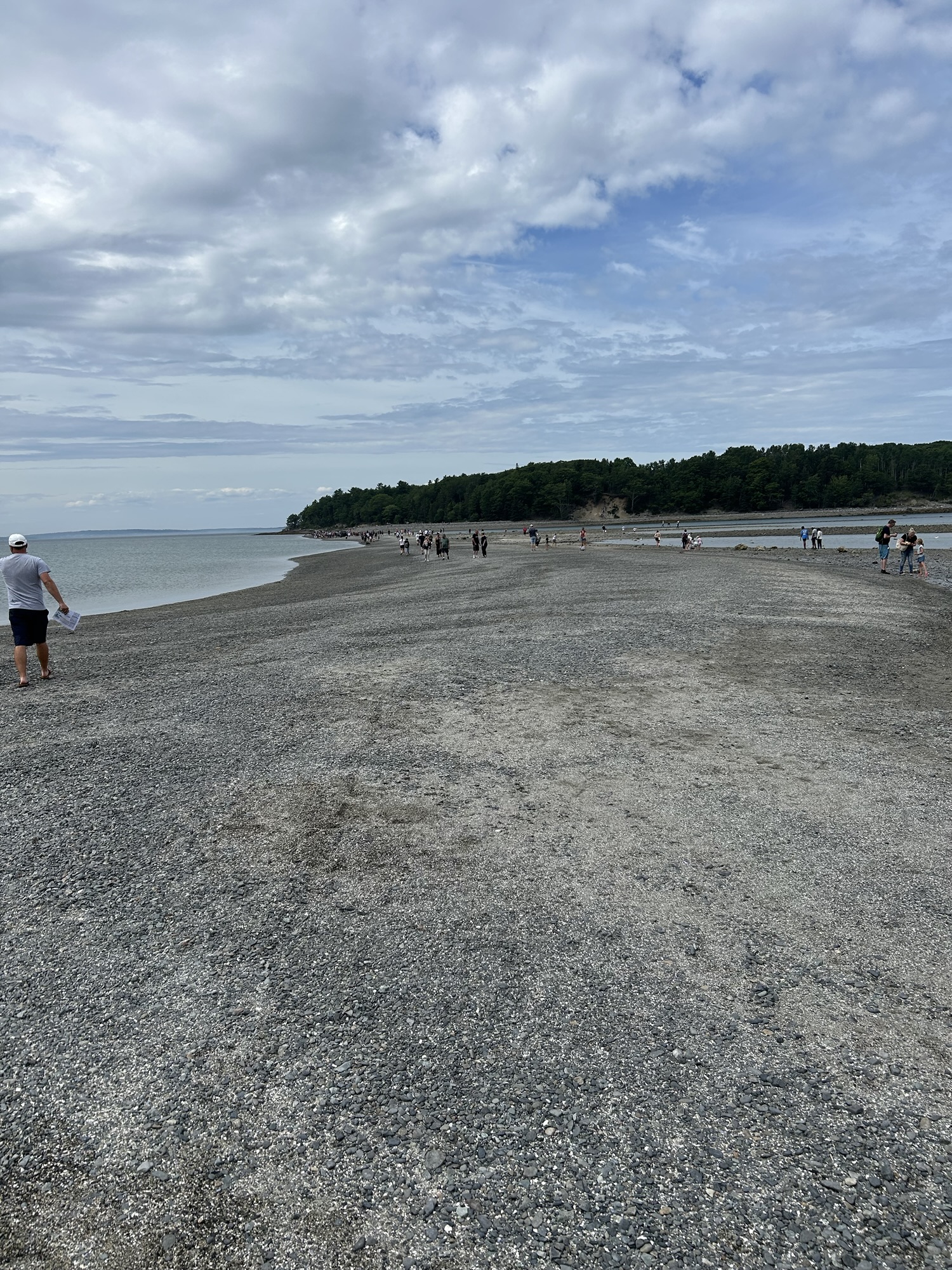
In the bottom center picture, I am standing at the edge of the path during high tide, the other pictures illustrate what the path looks like as the tide recedes. Notice the number of people waiting for the tide to fully recede in order to walk to the island.

One exceptionally unique trail in Acadia is the Bar Island Trail, a sand and gravel land bridge, which is only accessible at low tide. Visitors have about 90 minutes after low tide to cross and explore the short trail to the top of the island with views of Bar Harbor. Miss the low-tide window, and you’ll be stuck on the island for hours until the tide recedes again.

A Foodie’s Delight in Bar Harbor 🍦🍔🥗🍝🦞

Bar Harbor offers so many tasty places to eat!

Having unique and tasty dining experiences are a memorable part of most vacations, and the Bar Harbor/Mount Desert Island community does not disappoint. For such a small community, there is a diverse food scene: freshly caught seafood, lobster, and classic lobster rolls; decadent ice cream, baked goods, and sweets; pasta, pizza, steak, burgers, sandwiches as well as hearty breakfast options. What’s more, I was thrilled to find numerous restaurants offering gluten-free, vegetarian, and vegan options—plus staff who understood allergies and made dining easy. From cozy cafés to surf and turf spots, from pubs to roadside stands and burger joints, there are delectable treat possibilities for everyone.

The Spirit of Acadia

There are so many delightful places to visit on Mount Desert Island, Maine, in addition to Acadia National Park. It is definitely worth the trip!

Acadia National Park is absolutely worth visiting. While crowds, required park permits, occasional spotty cell service, and unpredictable weather can present challenges, they’re small trade-offs for what the park offers. Personally speaking, the scent of pristine pine, the crunch of gravel on quiet trails, the shimmer of granite in the sun, the morning mist over coastal shoreline, and the haunting call of a loon over a sparkling mountain lake left an indelible mark on my heart—one that refreshed my spirit and deepened my gratitude for our National Parks. I look forward to returning. Maybe I’ll see you there.

Navigating Dietary Restrictions While Traveling: Tips for Positive Food Adventures

“One of the most daunting parts of celiac or gluten sensitivity diagnosis is figuring out how to travel safely eating gluten free.”–Celiac Canada Association

A person holding a pink menu titled 'Rosie's Coffee' displaying various food and beverage options in a cafe setting.
Photo by Ron Lach on Pexels.com

When the Menu Doesn’t Work: Dining Out Dilemmas 🍽️

“Is your veggie burger gluten free?” I asked with crossed fingers

“No—we use breadcrumbs,” she replied.

Since I don’t eat meat, and the only gluten-free option was a bun, we had to leave. It was a trendy burger spot, but like many places, it couldn’t accommodate both my plant-based and gluten-free needs.

John, my husband, and I were visiting our daughter, Maddie, and her boyfriend, Connor, in Boston where Connor was currently completing a summer internship. John and I were on our way back home after spending several days in the Bar Harbor/Acadia National Park area in Maine. And, just as it had been in Maine, and really, how it ALWAYS is when dining out, finding places where I could eat was a challenge. 

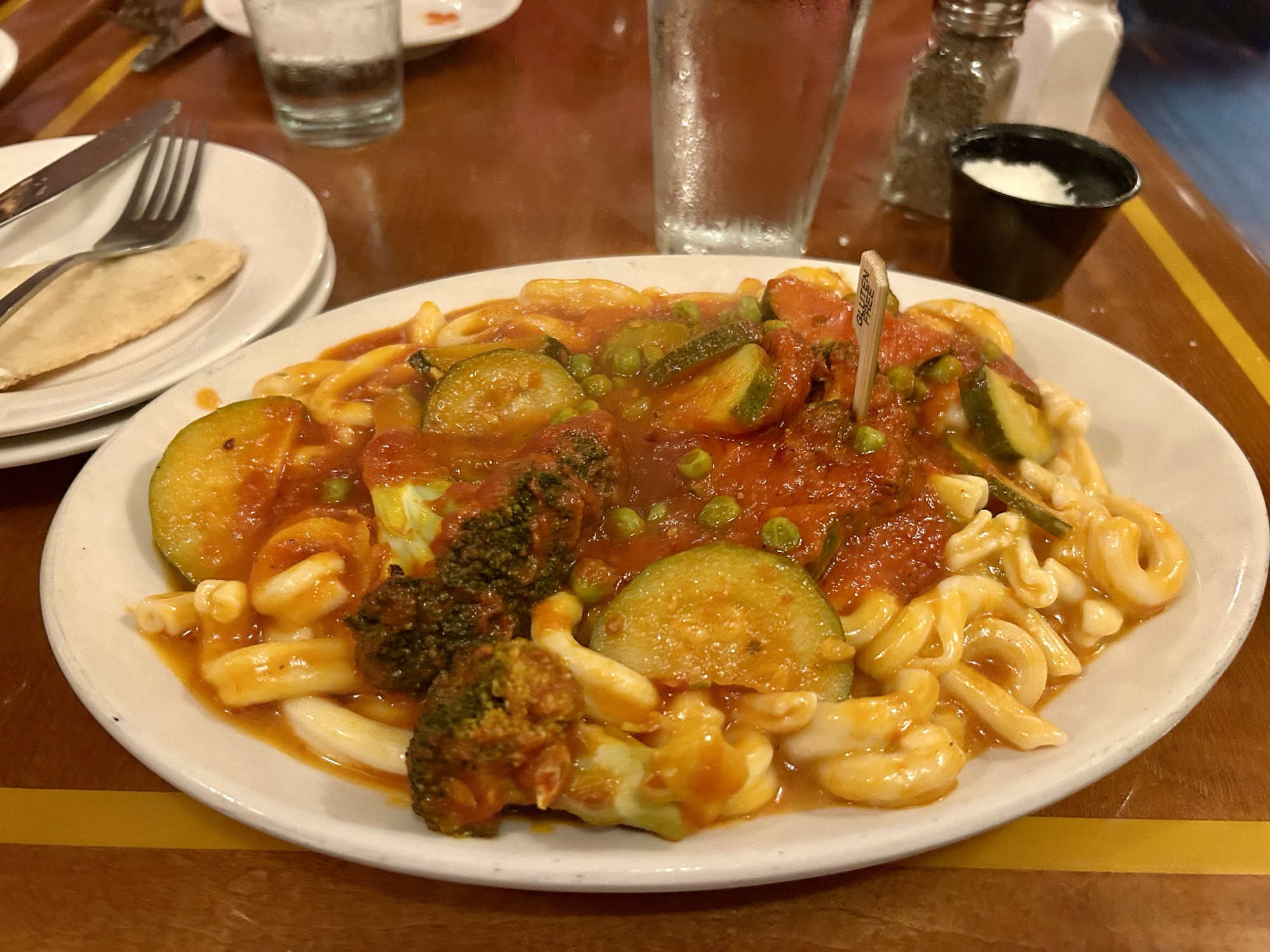
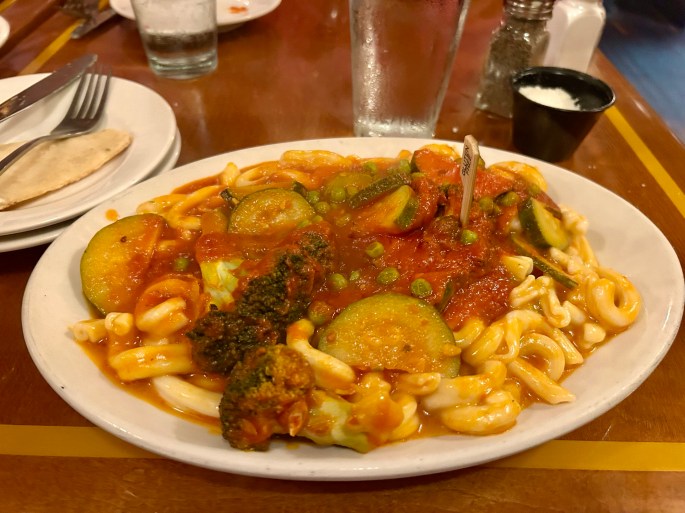
A plate of pasta topped with marinara sauce and mixed vegetables, including zucchini, broccoli, and peas, served in a restaurant setting.
Pasta is one of the hardest things to get when eating out. Fortunately, La Famiglia Giorgio’s Restaurant in Boston, MA, has an entire menu page devoted to those who need to eat gluten-free.

The Root of the Challenge: Living with Celiac Disease 🌾

The difficulty stems from the fact I have celiac disease–a chronic autoimmune disorder, as defined by Mayo Clinic, that is triggered when eating gluten, a protein found in wheat, rye, and barley. Consuming gluten significantly damages the small intestines of the person with celiac, preventing the absorption of essential nutrients, which can lead to serious health problems down the road. Additionally, the side effects of eating gluten are NOT pleasant– diarrhea, abdominal pain, nausea, reflux, fatigue as well as numerous other symptoms.

A bowl of granola topped with fresh berries and sliced apples, placed on a marble table next to a takeout coffee cup.
Eating gluten free and whole food plant based has helped my body heal and recover from decades of undiagnosed celiac disease. Tatte Bakery, Boston, MA

Why I Eat Plant-Based, Too 🍓🫐🥦🥗

I wasn’t diagnosed with celiac disease until my late 40s, after years of digestive issues and unnecessary medications. Healing began when I cut gluten and adopted a whole food, plant-based diet that excludes meat and most dairy. Eating a diet rich in plants bathes my body with the nutrients it was unable to previously absorb for most of my life.

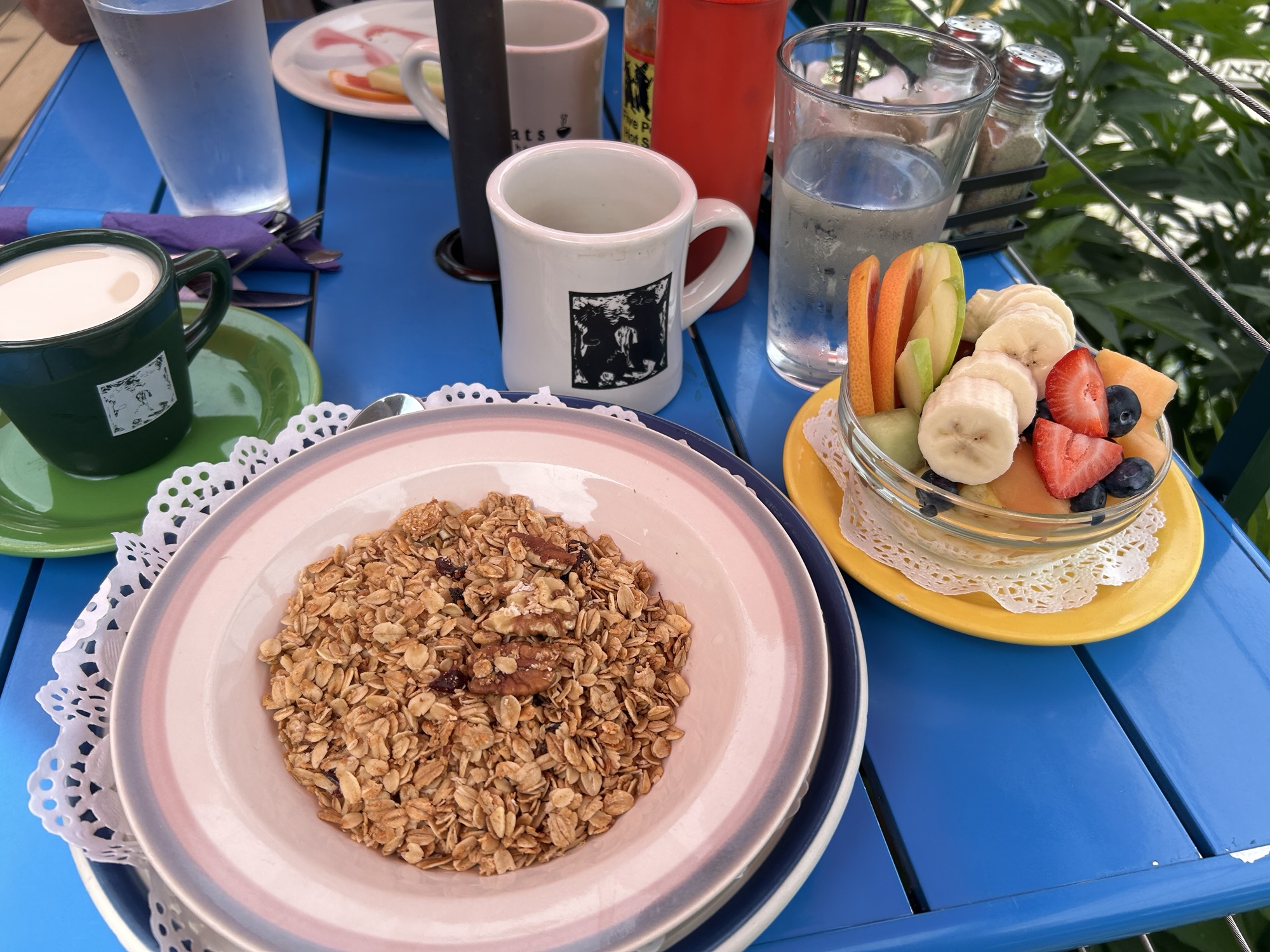
Two Cats Restaurant and Inn, Bar Harbor, ME

Travel: Inspiration and Complication 🌄

However, traveling with my dietary restrictions creates unique challenges.  On one hand, vacation sojourns are enriching, informative, and inspiring. These trips provide me with an opportunity to experience awe, wonder, and delight in the rich tapestry of life. On the other hand, travel requires deft navigation of dietary hazards. However, my trips have taught me that with a bit of planning, research, flexibility, and determination, I often discover and enjoy tasty culinary adventures as part of the travel experience.

Strict adherence to a gluten free diet is a necessity, especially when traveling. As anyone with celiac knows, it is no fun being stuck in a bathroom when you’re supposed to be out hiking, sightseeing, or experiencing a new setting. Additionally, I know that for my body, consuming meat and dairy products can also create digestive distress and discomfort. Therefore, those two dietary restrictions often limit my restaurant choices, create possibilities for cross-contamination, and can sometimes create a lack of understanding of restaurant staff.

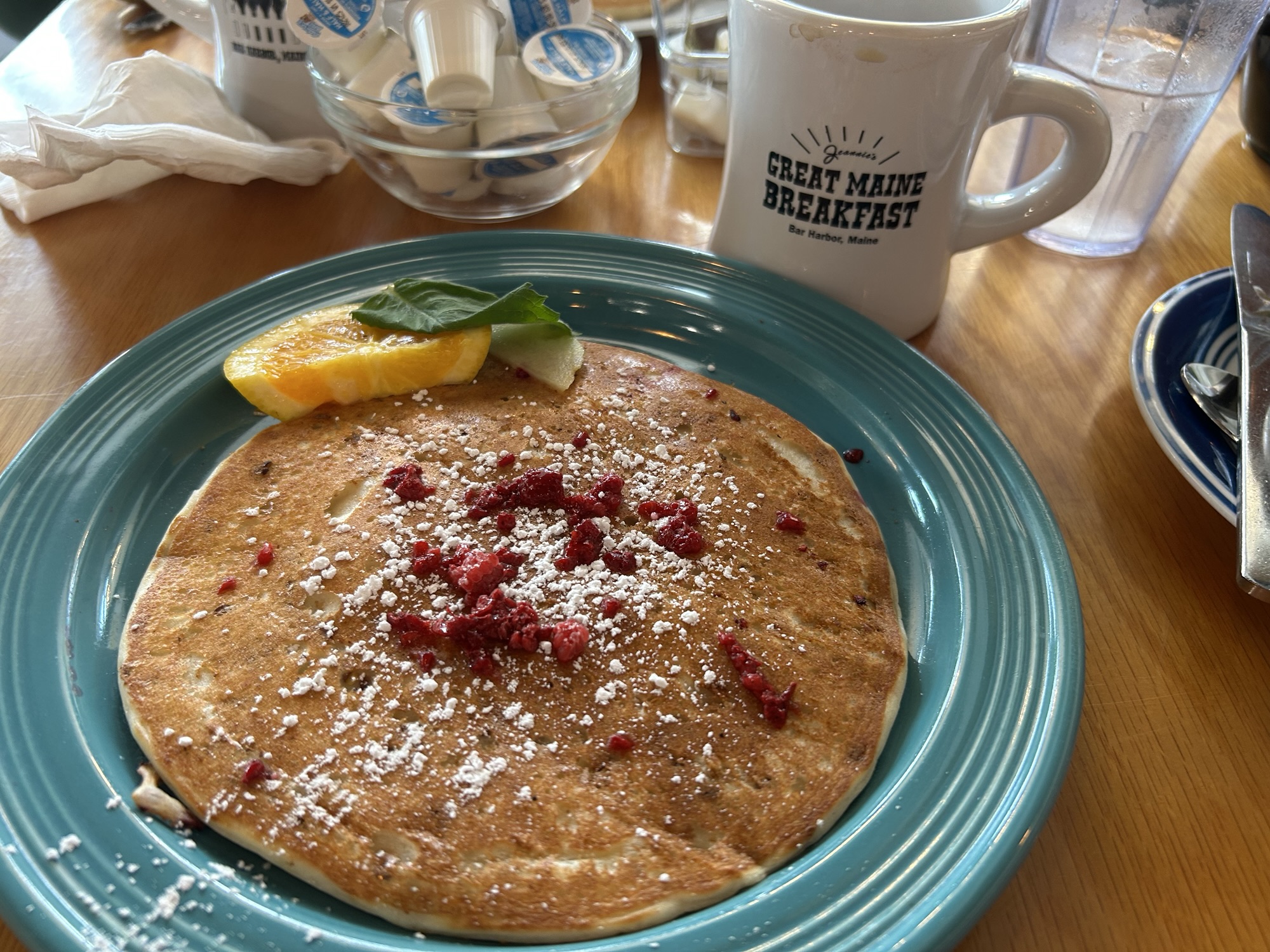
A plate of a gluten-free pancake topped with powdered sugar, raspberry pieces, and garnished with orange and mint leaves, next to a mug of coffee labeled 'Great Maine Breakfast'.
Gluten free pancakes with plenty of fresh fruit at Jeannie’s Great Maine Breakfast, Bar Harbor, ME.

Research Is My Best Travel Companion 💻

For example, John often completes dining research in advance of any trip.  He uses Trip Advisor and refines his search to restaurants identified as good choices for gluten free, vegan, and vegetarian diets. What he has discovered is that we have to look closely at menus because eateries tagged as “gluten friendly” are often limited to meat-based dishes, and establishments labeled as “vegan or vegetarian friendly” often involve choices that include wheat (noodles/pasta, seitan, breaded vegetables, and so forth). 

A plate featuring a burger topped with cheese, served alongside a small salad of mixed greens, red peppers, and a dipping sauce, with a side of steamed broccolini.
Blaze, Bar Harbor, ME offered numerous gluten free options on their menu, including this gluten free veggie burger with gluten free bun. YUM!

The Cross-Contamination Trap 🪤

Of further issue is the concern with cross contamination. For example, Mexican food can be a good choice for me; however, if the fryer used for tortilla chips is also used for cooking flour tortillas and meat, these factors can negatively impact my digestive system. Additionally, shared food prep areas, unclear labeling of menu items, and even communication between wait staff and kitchen can lead to hazards.  For instance, if I order a gluten-free pizza crust, but it is prepared on a commonly shared counter on which wheat pizza crust is rolled out, this might upset my digestive tract.  

I’ve also had the experience of ordering a gluten-free pizza crust and still getting a pizza made with wheat due to miscommunication. And, while the only other country in which I have traveled is the English speaking parts of Canada, I can only imagine the chance for miscommunication in a country in which I don’t speak the native language.

This is why advanced research is important when traveling.  When I don’t have a game plan, or plans change, as was the case when we tried to go to the burger establishment in Boston, things can very quickly go awry. I end up feeling terrible because I feel I am limiting my loved ones from having a positive dining experience. After all, part of the fun of traveling is eating in new places.

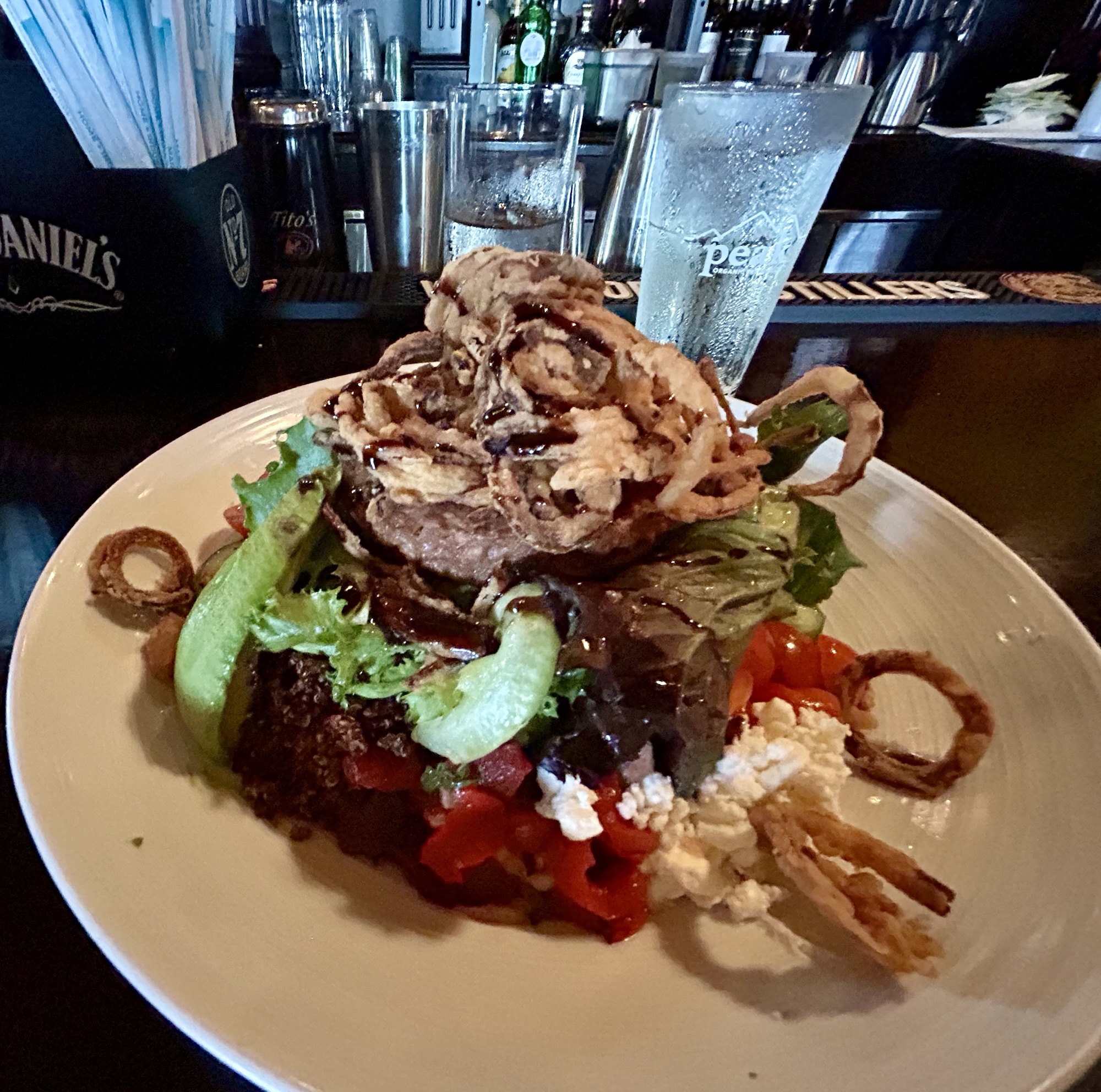
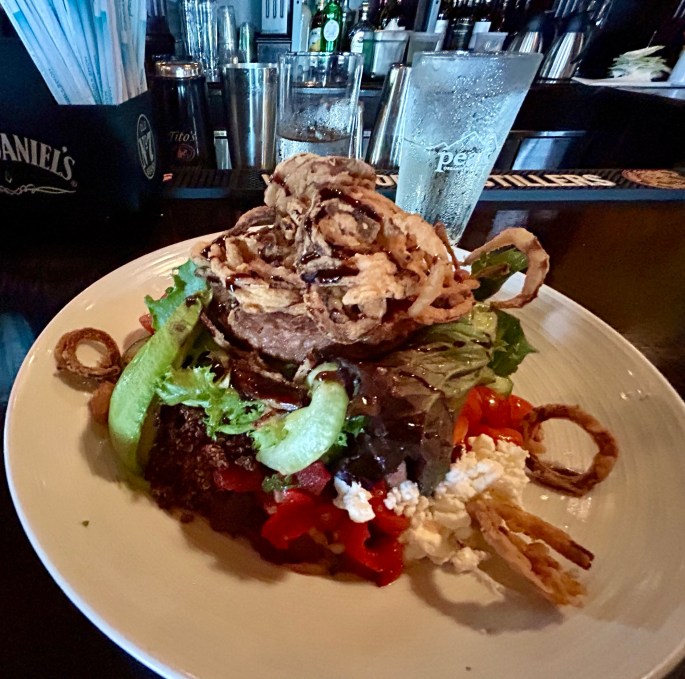
A colorful salad topped with a fried onion ring stack, featuring greens, tomatoes, and cheese, served at a bar setting.
The EARTH BOWL at Paddy’s Irish Pub & Restaurant, Bar Harbor, ME: Grilled , Gluten free, Plant-Based Burger, Tri-Color Quinoa, Roasted Pepper Salad, Heirloom Tomatoes, Garden Cucumbers, Ruby Red Beets, Avocado, Local Chevre, Sweet Balsamic Syrup.

Planning Ahead and Packing Smart 🧳

In addition to researching and using apps, such as Happy Cow, AllergyEats, and Find Me Gluten Free, John and I tend to stay in places with a microwave, refrigerator, and nearby grocery stores. I always pack food from home, and I’ve learned to bring supplemental items with me to restaurants if needed, such as gluten free bread, crackers, salad dressings, and so forth.

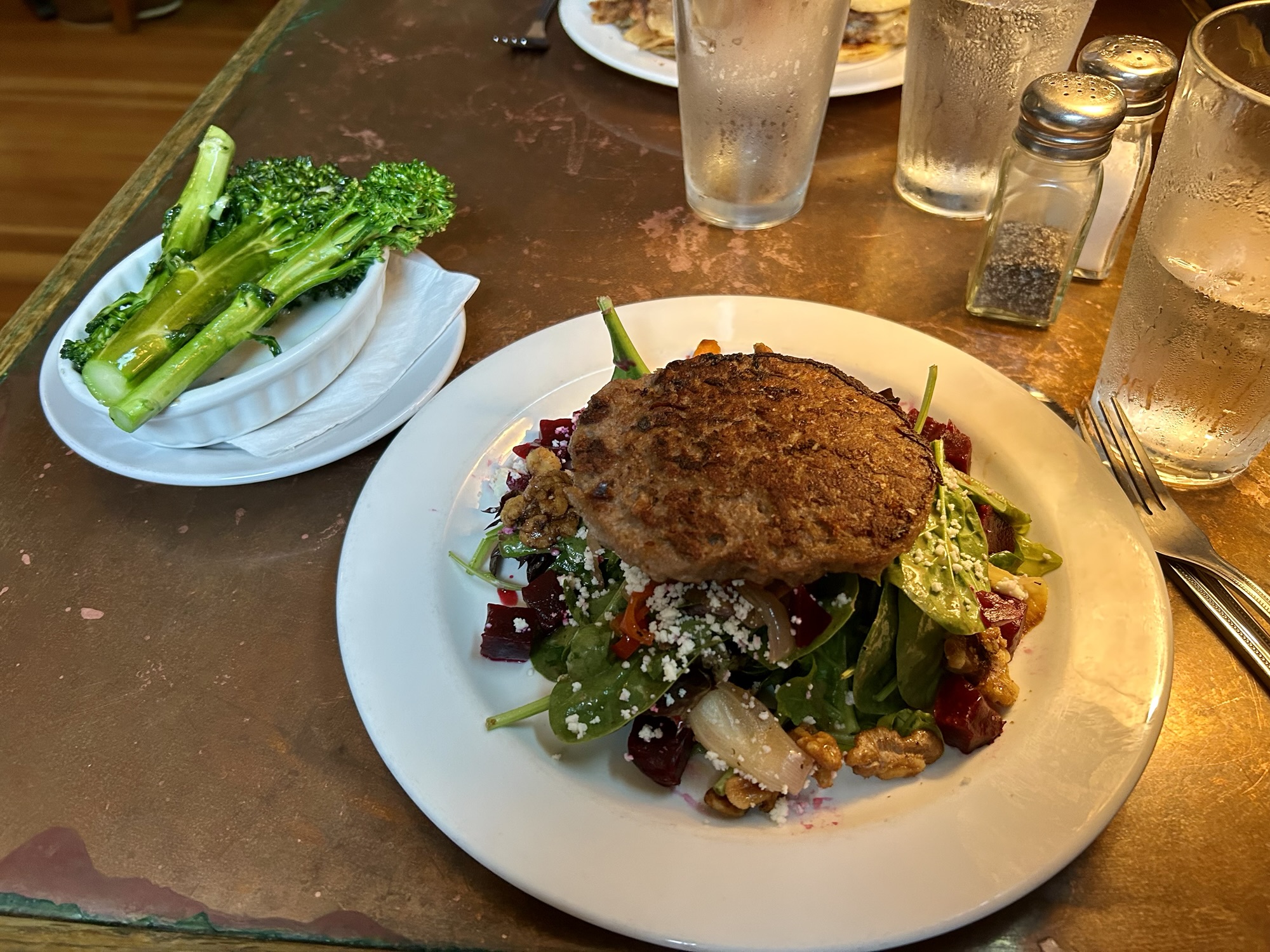
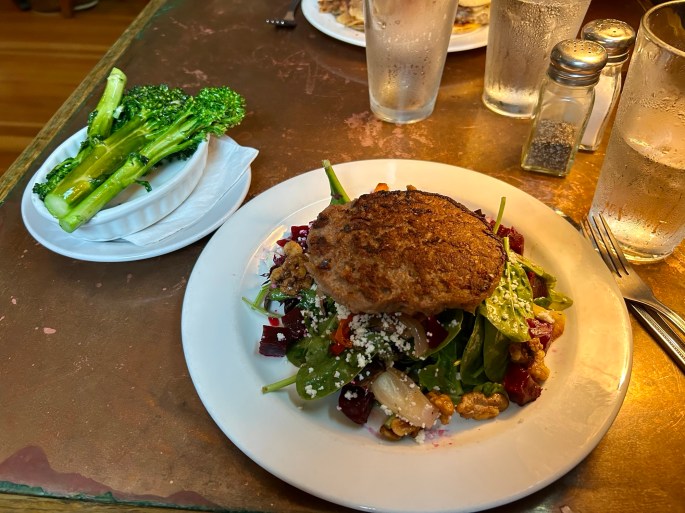
A plate of salad with mixed greens, nuts, and beets topped with a vegetable patty, accompanied by a side of steamed broccoli.
McKays Public House at Bar Harbor, ME: mixed greens tossed in maple dijon dressing, with roasted onions, carrots, and beets, feta cheese, candied walnuts topped with a gluten free veggie burger and served with a side of broccolini.

Connection and Communication: The Human Side of Dining 😊

I have also learned to befriend the wait staff.  Honestly, I try to do this anyway because I like meeting new people, and I cannot imagine how demanding it must be when working with the public, especially in popular travel destinations. When I politely explain my situation and dietary preferences to the staff without demanding it, most staff and chefs are willing to work with me. I have even had the rare chef visit my table to discuss the best way to prepare my food, which I appreciate more than words can adequately express.

A plate featuring a serving of colorful salad topped with various vegetables, accompanied by a side of grilled asparagus and a bowl of green beans. The setting appears to be a casual dining location.
Brewhouse Bowl BJ’s Restaurant and Brewhouse, Hagarstown, MD: Roasted barbacoa cauliflower; Peruvian quinoa + brown rice; black beans; corn + fire-roasted red pepper succotash; cucumbers; pickled red onions; pico de gallo; feta cheese; housemade guacamole; Greek yogurt crema; and,cilantro served with a side of broccoli and asparagus.

Flexibility and Food Choices: Finding Balance ⚖️

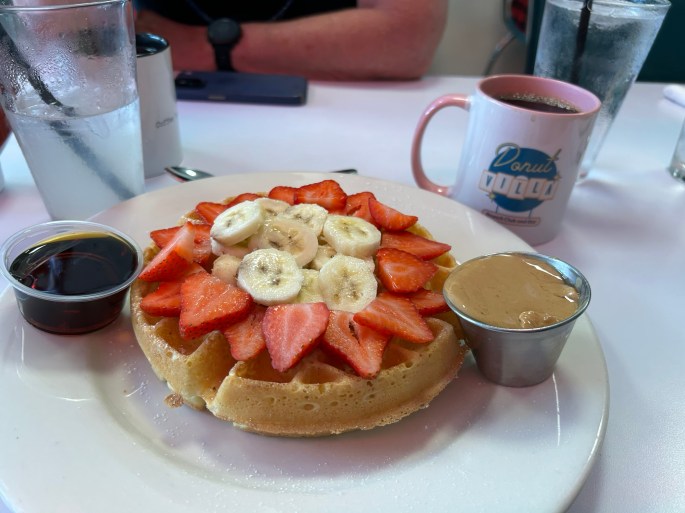
A plate with a waffle topped with sliced strawberries and bananas, accompanied by a small cup of peanut butter and a small container of syrup, set on a table with beverages in the background.
Gluten free, vegan Belgian waffle at Donut Villa Brunch Club and Bar, Boston, MA: topped with strawberries and banana served with sides of peanut butter and syrup.

One other thing I have learned to do is to compromise. While I prefer to eat whole food, plant based, I medically need to eat gluten free. Therefore, if it comes down to it, I will compromise somewhat on my plant based eating. For example, I don’t mind consuming a bit of goat or Parmesan cheese, yogurt, butter, or even the rare egg (think baked goods) if it allows my family to find meals they enjoy. Since I don’t regularly consume these products, I don’t think eating a bit here and there, such as during travel or other special occasions, will hurt me, and it makes the food feel like a real indulgence.

A plate of rice accompanied by a colorful vegetable curry, served with a side salad and a drink in the background.
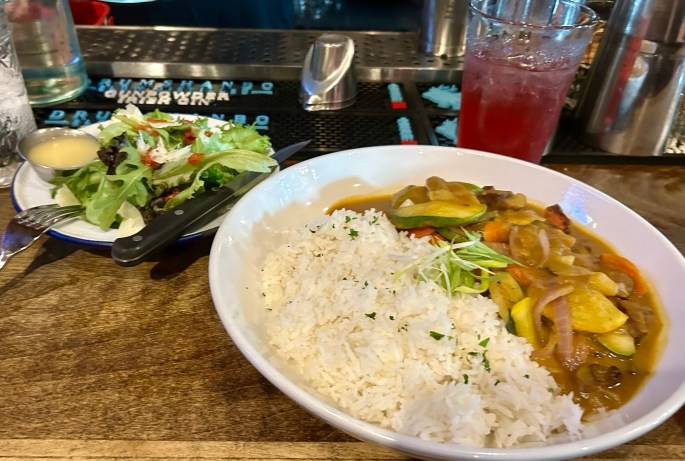
Butternut Squash Curry at Leary’s Landing Irish Pub, Bar Harbor, ME, with roasted seasonal vegetables and jasmine rice.

A New Way to Experience the World Through Food

Traveling with celiac disease and/or other dietary restrictions is undoubtedly challenging, but I have learned over the years that it is not impossible with enough preparation, advocacy, and an adventurous spirit.  I have found that I now value and appreciate eating establishments who craft foods to appeal to a wide array of dietary desires. Additionally, I have met unique and wonderful people while doing this, and I have enriched my own knowledge of possibilities when it comes to cuisine.  It’s like, well, having your gluten free cake and eating it too! 

A bowl of chia seed pudding topped with banana slices, strawberries, and blueberries, accompanied by two slices of toasted bread with peanut butter, served in a diner setting.
“Morning Jump Start” at J’s Diner, Hagarstown, MD, with chia pudding, berries, banana, coconut flakes, and toast with almond butter.

Share your experiences

If you have tips for traveling with dietary restrictions, or if you have experiences you’d like to share regarding traveling with dietary restrictions, please share your comments!

A sizzling plate of colorful sautéed vegetables served at a restaurant, accompanied by tortilla chips, condiments, a glass of water, and a bowl of black beans.
Fajitas at Angela’s, Taste of Puebla, Mexico, Boston, MA, with sauteed onions, green and red peppers. Comes with shredded cheese, pico de gallo, guacamole, sour cream and flour tortillas. Served with rice and beans.
A cup of chocolate ice cream with chocolate chunks on a paper napkin.
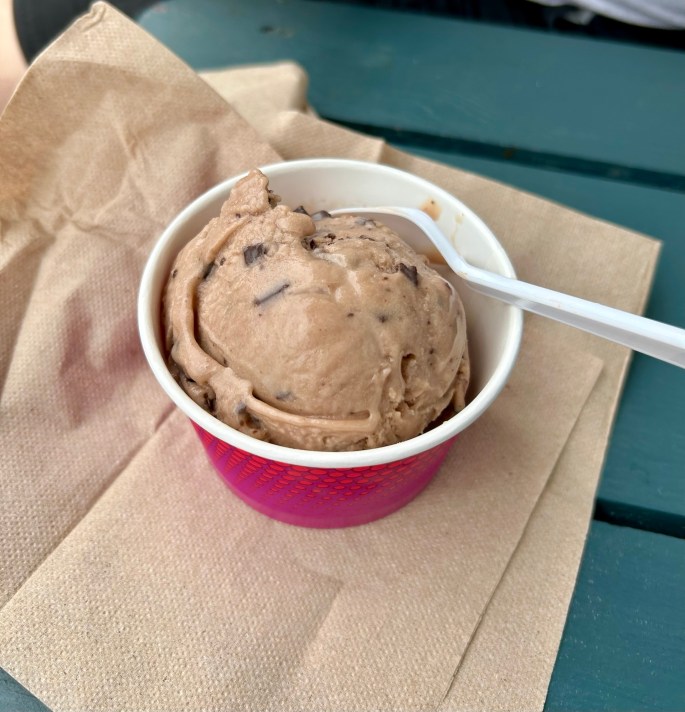
Plant based chocolate ice cream at Salt Shop, Sweet and Savory Snack Bar, Southwest Harbor, ME.

Navigating Life’s Construction Zones: A Path to Self-Improvement

Construction is a matter of optimism; it’s a matter of facing the future with optimism.”–Cesar Pelli

A construction site on a road featuring orange traffic barrels, traffic lights indicating a red signal, and a view of green hills in the background.
Photo by Robert So on Pexels.com

Summer Roads and Slowdowns: A Familiar Frustration 🚧

It’s the height of the summer travel season. This year, AAA projected that 61.6 million Americans will travel by car between June 28 and July 6. That’s a lot of drivers on the roads! And more likely than not, most of those drivers will encounter some sort of delays or rerouting due to construction. 

Those orange barrels, detour signs, and dusty, smoke-filled roads can wreak havoc on estimated times of arrival, impeding drivers’ progress. Traversing a construction-filled route recently, it occurred to me that just as roads need maintenance, upkeep, and improvement, our lives can also benefit from similar attention. In fact, summer road construction serves as an excellent reminder for how we, too, must assess, repair, and improve our own lives.

Like it or not, road repairs are a necessary part of travel. Winter and spring often ravage roads due to ice, snow, freeze, thaw, excessive rain and so forth.  Potholes, cracked pavement, faded lines, and broken shoulders or guardrails can reduce safety and severely damage tires, rims, alignment, suspension, and so forth. Thus, in order to function properly, roads require regular repair and upkeep. 

A woman in a pink blazer sitting at a table, looking stressed or overwhelmed while using a laptop.
Photo by Edward Jenner on Pexels.com

The Wear and Tear We Can’t Always See 😓

The same is true for our own lives; we, too, experience wear and tear, but it is expressed differently in each of us. Signs may include physical and/or mental fatigue, burn out, and/or incremental increase of poor habits.  Other signs might include unresolved conflict, a sense of drifting or lack of purpose; and/or for others, it could be increased feelings of anxiety, sadness, or indifference. Like potholes on a road, it is important to not ignore these symptoms and instead cultivate a sense of caring curiosity as if we were concerned for a child–only it is concern for ourself–and it begins with an honest self-assessment of our emotional, mental, physical, and even relational well-being.

A woman with red hair looks stressed while working on a laptop, resting her forehead on her hand, in a bright interior setting.
Photo by Alexander Dummer on Pexels.com

Reading the Signs: Time for a Personal Detour ↪️

As with construction, upon reflection we might discover that many of our difficulties and discomforts created ruts, broken shoulders and cracks in our own personal life. These impediments signal that we may need to reroute our own life in order to make internal repairs. In the same way construction zones temporarily create detours, rerouted traffic, and lane shifts, personal redirection can likewise be thought of as a temporary, but necessary setback for long-term improvement. 

A person sitting on a couch, resting their chin on their hand, looking thoughtfully at a laptop with papers and a pen on the table.
Photo by Keira Burton on Pexels.com

Detours with Purpose: Reframing Setbacks as Redirection ↩️

These life detours, be they physical-health and/or mental well-being crisis, a death, divorce, and so on, typically create obstacles–a change in what we think is “the plan.”  However, just as construction zones are there to repair the road, our healing, growth, and ability to move towards wholeness often begins as we experience these hurdles. Therefore, it is helpful to reframe our thinking around these life detours and obstacles as opportunities for not only healing, but also reflection, intervention, or a necessary challenge to a long-held personal perspective.

A woman sitting in a chair, looking contemplative and holding a pen near a notebook, with her hand resting on her forehead in a thoughtful manner.
Photo by cottonbro studio on Pexels.com

Grit, Heat, and Hard Work: The Labor of Self-Growth 🥵

Another important point to consider with regards to road construction is that the work crew must endure a wide array of weather conditions, including extreme heat and humidity that accompanies summer. A return to safe and smooth roads cannot occur without their effort, perseverance, sweat, and labor. Likewise, personal growth and/or physical healing often requires a similar level of grit. 

Whether we participate in therapy, work to improve or create beneficial habits, set clear–and perhaps new–boundaries, work to forgive, and/or learn a new skill or life lesson (or both), personal construction demands that we put in the work. Discomfort, like construction, is a necessity.  Growth and healing are not easy and rarely occur without challenge and effort.

Two women engaged in a conversation at a table in a modern office setting, with one woman wearing glasses and a blue dress, and the other facing away.
Photo by Christina Morillo on Pexels.com

Preventive Maintenance: Investing in Long-Term Well-Being 😃

Another important consideration to effective road repair is that maintenance should be ongoing, rather than deferred, as this can lead to greater road damage and travel hazard. By taking care of ongoing small issues as they arise, bigger problems can be prevented in the future. 

Similarly, our own “self-maintenance” is also a worthwhile investment in order to reduce the likelihood of a major life-repair. Taking time to invest in our own daily health through quality sleep, good nutrition, stress management, physical exercise, fostering healthy relationships, and even learning new things–can be thought of as small personal investments that pay dividends towards our own long term “infrastructure.”  

A woman and a man sitting on a couch engaged in a conversation, with a woman taking notes in the foreground. The room features plants and wall art.
Photo by Antoni Shkraba Studio on Pexels.com

Building a Support Crew: Don’t Travel Alone 😁

That said, sometimes personal maintenance can sometimes feel like “one more thing to do” especially when we’re in the midst of a life-storm. Therefore, it can be helpful to cultivate a “crew,” a few good people who can share our times of smooth sailing, encourage our development and/or maintenance of positive habits, and also support us during those bumpy passage days. Ultimately, with regular self-care maintenance and a good support crew, we can cultivate a strong inner foundation that is better able to withstand life’s pressures and storms.

Black and white image of a close embrace between a woman and a child, capturing a moment of warmth and connection.
Photo by Nataliya Vaitkevich on Pexels.com

Freshly Paved Paths: Signs of Inner Progress 🥹

One of the best parts of road construction occurs when it is finally completed. Routes are once more open, and the ease and smoothness of traveling these roads signals tangible progress. In fact, driving effortlessly over a direct route without detours, potholes, or bumps can be a liberating feeling. 

A smiling man with curly hair, laughing joyfully against a wooden background.
Photo by Pixabay on Pexels.com

Progress, Not Perfection: Life Is Always Under Construction 🦺

Unfortunately, it never lasts for long. Rainy season, freeze-thaw season, excessive travel, or 1,000 other scenarios means construction will once again occur, if not specifically on the newly refurbished route. It’s all part of the process of progress–one never attains perfection when it comes to infrastructure–there’s always room for improvement.

Equally, on the other side of our own personal repairs, detours, and/or maintenance, we gradually return to a sense of homeostasis.  Our rerouted life may possess a greater sense of clarity, restored confidence, better decision making skills, and perhaps even a deeper sense of joy. We, too, may feel the momentum to move forward in a renewed direction and embrace the possibilities that come with an unexpected, but freshly paved path.

Smiling woman wearing a cozy sweater, expressing joy and warmth.
Photo by Dellon Thomas on Pexels.com

Final Thoughts: Be the Engineer of Your Own Journey 👷

To be sure, summer construction can seem like a real drag on travel; however, it ultimately leads to new routes, expanded systems of travel that are safer and more efficient. However, even when the summer construction season comes to an end, the maintenance of these roads does not end, and that is worth remembering.

Likewise, summer construction reminds us that we are the engineers of our own lives. No, we cannot control everything that happens to us, but we can control our reactions AND we can also make repairs as needed as well as prevent some issues from arising. Therefore, let’s be as proactive as possible through regular sustainment of our own life-construction, so that when life’s storms create a pothole–or five–we are fortified with the strength our regular maintenance and upkeep provides us. In life, as in roads, it’s about progress, not perfection. 

I’ll see you out there on the road of life!

.

Running Beyond Age: Embracing Health and Freedom in Every Step

“Running is an act of creative self expression”–Lawrence van Lingen on Extramilest podcast

A Familiar Morning Scene: Defying the Stereotype 👟👟

Two older runners jogging together on a path surrounded by grass and wildflowers in a park during early morning.
Photo by Anastasia Shuraeva on Pexels.com

Picture this. It’s early on a warm Saturday morning in your local park. The sun is low on the horizon, and mist is rising above the grass and a meandering stream that runs alongside a crushed gravel path. The scent of a nearby rose garden is heady as two runners descend the hill following the path. Moving at a steady clip, one runner has a full head of white hair while the other is more salt than pepper. They are relaxed and chatting as they pass by.

This is a routine sighting for me on my weekend jogs. Numerous older runners, walkers, and run/walkers defying the stereotype through exercise, that aging equals physical decline. In fact, according to AARP, beginning in 2023, the average age of runners has risen. Some of the biggest gains are those 55 years and older, with numerous runners sticking to it well into their 60s, 70s, and 80s as witnessed in the ages of Boston Marathon finishers in recent years as well as other major marathons around the world. Of course, there’s no denying aging does change the body, so why do I see numbers of people my age and older consistently outside running and/or walking?

Running as Personal Ritual and Liberation 🏃‍♀️

Older man jogging outdoors in a gray hoodie and gloves, surrounded by tall grass with a calm sky in the background.
Photo by Barbara Olsen on Pexels.com

For many older individuals, like myself, running or run/walking becomes a personal manifestation of life–a ritualistic form of imaginative self expression that allows us to reconnect with our inner rhythm, identity, and self-determination. It creates a sense of freedom and play that we once had as a child. Additionally, running offers numerous benefits, including improved physical health, enhanced mental well-being, social connections, and a renewed sense of personal meaning, to name a few. 

The Science-Backed Physical Benefits of Running 🏃‍♂️

An older female runner smiling while participating in a race, wearing a bright pink tank top and bib number 12491, with greenery and other runners in the background.
Photo by khaoula Bkm on Pexels.com

I occasionally encounter critics who question the safety of running at “my age,” (a term used by my students); however, according to another 2023 AARP article, older runners just have to be “smart about it.” This is why many running groups often point beginners, including seniors, to using a run-walk-run method to establish a strong aerobic base. In fact, Cleveland Clinic, in a 2024 article, points to numerous physical health advantages to walking and/or running for all ages, but especially seniors. These advantages include:

  • Strengthens heart and improves circulation
  • Reduces risk of heart disease and stroke
  • Increases bone density, helping prevent osteoporosis 
  • Improves joint flexibility and maintains muscle function
  • Boosts metabolism and supports healthy aging
  • Improves blood sugar regulation and lowers risk for type 2 diabetes
  • Reduces risk of dementia and Alzheimer’s disease

Mental Health Gains: Silence the Inner Critic 🙉

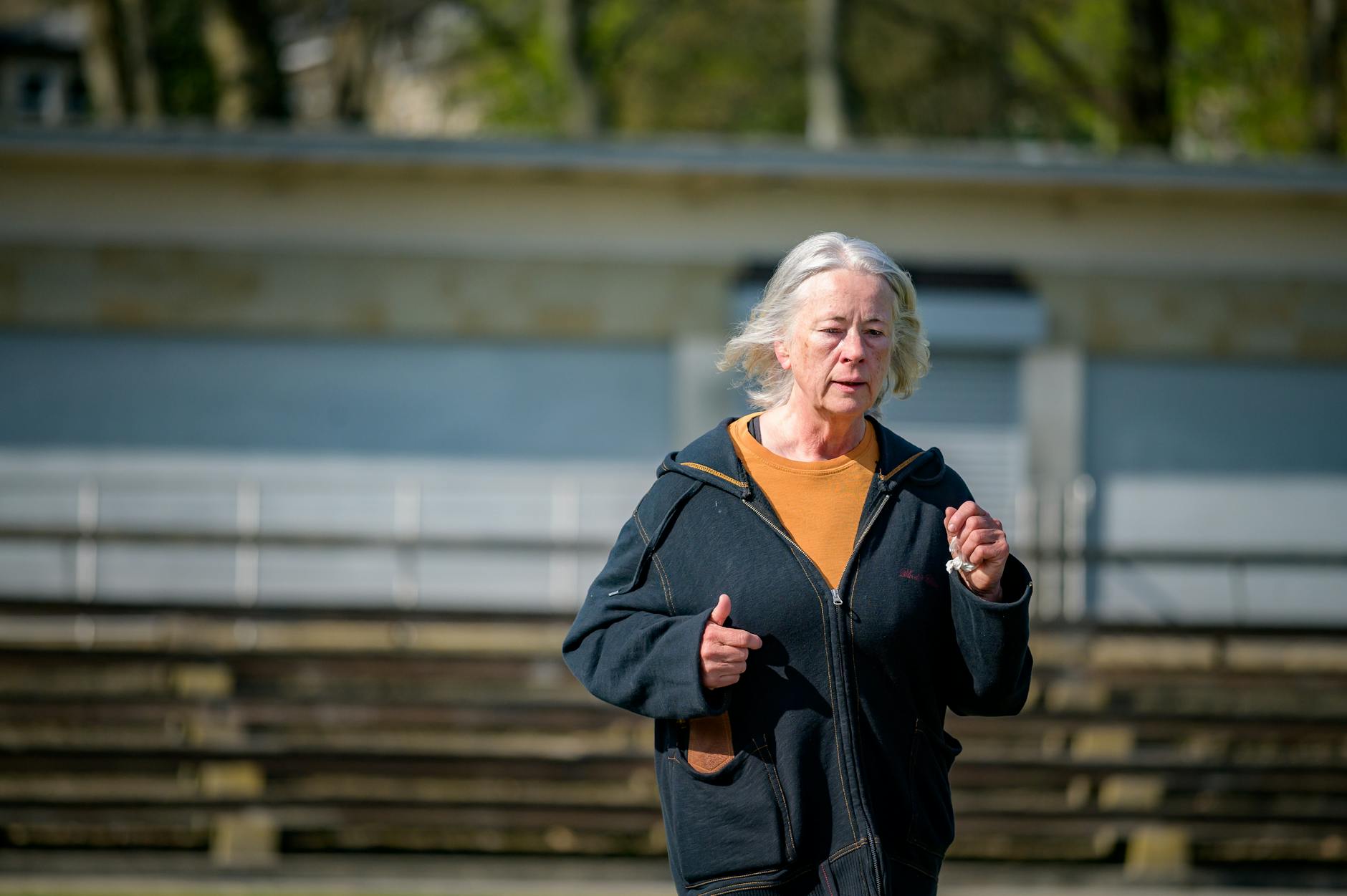
An older woman running outdoors in a black hoodie and orange shirt, focused on her exercise, with a blurred background of benches and greenery.
Photo by Centre for Ageing Better on Pexels.com

Certainly, the physical health benefits of running are important to me; however, one of the greatest advantages is the feelings of improved mental health and well-being. I often refer to monkeys living in my mind, and running allows me to rise above the swirling negative chatter that often clouds my mind. On days when it seems everything goes sideways, if I have completed my morning run, I can take solace in the fact that I completed at least one positive act, thereby helping me to keep symptoms of depression and anxiety at arm’s length. 

I also find running clears my head, improves thinking, and increases memory, which is a bonus as I age. In fact, running–and exercise in general–is like meditation in motion because it deeply connects me to my breath. Plus, it is a great source of stress reduction.

The Artistry of Movement: Running as a Creative Outlet ✍️

An older man with a full head of gray hair is pouring water from a cup over his head while running in a sunny outdoor setting. He wears a bright red athletic shirt and a race bib number 757. In the background, other runners can be seen along a palm tree-lined street.
Photo by Jou00e3o Godoy on Pexels.com

Running is also a form of innovative self-expression, for young and old alike. Like crafting one’s own piece of art, running showcases the beauty of a body in motion. It offers time for inspiration and reflection. Each run, like a canvas, offers the opportunity to tell a story, footstep-by-footstep. Personally, time spent running also allows me to process life as well as difficult, often buried, emotions, and it even sparks inspiration. My running, albeit slow, feels like an act of liberation, hope, and a tribute to the many obstacles I have overcome along the way. It is a symbol of inner strength, resilience, and freedom to be me–in a world that has often felt as if it boxed me in.

Spirituality, Solitude, and Social Connection 🙏

An older man running on a path surrounded by tall grass and trees on a sunny day.
Photo by Thomas Shockey on Pexels.com

For many runners, older and young, running offers an opportunity to hang out with other runners and socialize. However, some find that running solo, instead, creates a sacred space in which they can connect to their Higher Power, feeling that sense of peace and ease. Still others appreciate the opportunity to spend time in nature, soaking up fresh air and the beauty of Mother Earth.

A Healthy Routine for a Vibrant Life 🙌

Two female runners in matching orange and red jerseys sprint together, holding hands as they approach the finish line. They display expressions of determination and joy during a race.
Photo by RUN 4 FFWPU on Pexels.com

Running, for many, including myself, forms a meaningful structure to the day, a time set aside for one’s personal well-being and health.  This is important because there are numerous obligations and responsibilities that life often demands, even as we age. By setting aside regular time to run, sleep typically improves, which can be so elusive in older adults. Furthermore, those who run typically tend to eat better and don’t tend to abuse substances in order to better support their ability to run.

Staying Safe and Smart with Age 🤔

An older woman running outdoors, wearing a bright yellow tank top with a blue logo, smiling and gesturing with her hands. The background features greenery and a sunlit path.
Photo by RUN 4 FFWPU on Pexels.com

Of course, as we age, we do have to be safe about our exercise habits, which often begins with checking-in with a health-care provider. Additionally, I highly recommend finding good footwear that works for your own personal gait/foot-type; a local running store expert can help with this. Furthermore, as AARP points out, older runners should not go from “zero to 60.” Warm-ups and cool-downs are essential, and for those wanting to start running, a good walk-run program like Run Your Butt Off or the Run-walk-run training plans are two great ways to start. (I have personally used both and can attest to their gentle nature.) 

Other considerations as we age include running less on concrete and asphalt, if possible, and spending more time on softer surfaces, like the paths at local parks. Treadmills also offer a more cushioned surface, and they are a great option when weather is too hot, too cold, or otherwise uncomfortable. If you run at night or early morning, it is important to wear a headlamp and reflective vest for safety’s sake. Additionally, if you run alone, it is a good idea to let someone know where you are running and for how long. 

Every Run Is a Story: Movement as Becoming 🏃

A runner with a confident expression points at the camera while sporting a black sleeveless shirt with 'RUN lovers' printed on it, a race bib, and a headband, during an event in a sporting field.
Photo by RUN 4 FFWPU on Pexels.com

Bottom line, each run or run/walk/run is an adventure. Sure, some runs are less adventurous than others, but those moments offer an opportunity to learn about ourselves if we remain open and curious. Running (and walking) is accessible and fairly low-cost, and it is an effective way for older (and even younger) adults to improve their mental, physical, emotional, and even spiritual well-being. 

Beyond these benefits, running, for me, continues to remain a quiet act of self-expression. With each step and stride I take, I am writing a story, reclaiming my space and time, and paying homage to The Creator, celebrating this gift that is life. In this way, running transcends exercise and becomes a personal journey of becoming, no matter my age. 

With the right approach and mindset, whether you run, run-walk-run, or mostly walk, moving our bodies regularly can create joy and empower older adults to age well—proving that vitality truly has no age limit!

An older man with white hair smiles while wearing a jacket and a medal, standing among a group of people in a blurred background.
Photo by Roman Biernacki on Pexels.com

The Spirograph Effect: Creativity in Life Design

“Not all who wander are lost”–J.R.R. Tolkien

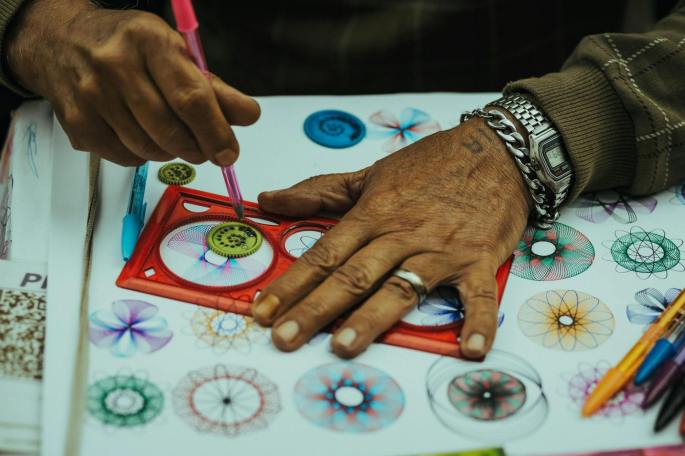
Close-up of hands using drawing tools to create a spiral geometric design on paper.

A Student’s Doodle Sparks a Memory✍️

Months ago, I observed a student drawing spiraling circles over and over on a sheet of notebook paper while participating in our class discussion. For some reason, I was reminded of an old toy my siblings and I once enjoyed: the Spirograph. I can’t remember which one of us received it, but we would sit together for what seemed like hours at the kitchen table drawing colorful, eye-popping (at least to us) geometric shapes.

Four children gathered around a table, smiling and drawing colorful patterns on a large sheet of paper using various markers.

Lessons Hidden in a Childhood Toy ꩜

Reflecting upon that long-ago childhood toy, led to the realization that the Spirograph illustrates the significance of specific concepts when it comes to creating our own life design, such as the influence of structure, patience, persistence, and the importance of celebrating our own unique individuality. It also emphasizes the value of working through natural constraints and trusting the process of learning through repetition. What’s more, the Spirograph demonstrates the relevance of trial and error–which often includes failure–as well as accepting the beauty that can be found in our so-called “imperfections”.

The Spirograph’s Ingenious Origins 👨‍🔬

To appreciate the genius of the spirograph as a toy, requires understanding a bit of its history. Denys Fisher, a British engineer, created it as a child’s play thing based upon various iterations, beginning as early as 1827. At the time of its original conception, it was used for advancing mathematical and engineering concepts. Spirograph, the toy, wasn’t available until 1965, and it went on to win “Toy of the Year” in 1967. Unbelievably, it is still available today.

This classic geometric drawing toy originally came with two transparent rings, two transparent bars, 18 clear wheels of varying sizes, two colored ink pens, pushpins, putty, and paper. Using the various tools, my siblings and I could draw precise, and quite mesmerizing, mathematical curves known as hypotrochoids, epitrochoids, and cycloids. With the switch of any one part, we could vary the size, shape, and geometry of intricate and, at the time, mind-boggling patterns. Essentially, the Spirograph is operated on a balance of limitation and creative freedom, which reflects much of the human experience.

A box of the original Spirograph design set, featuring colorful geometric designs and detailing the contents, including pieces and tools for creating intricate patterns.

Art Through Limits: Creative Freedom Within Structure 🎨

When one is drawing with the Spirograph, one has to adapt to its restrictions. The designs made by using the Spirograph are limited by the size and shape of the wheels and whether you are using the rack or the ring, as well as the color of the chosen pen(s) used to design a figure. Additionally, there are rules for creating specific outcomes as described in its guide book.  While it isn’t necessary to follow the laid-out directions, if one desires it to create a specific shape or design, one has to follow the step-by-step instructions.

This is similar to life in many ways. Influences in life vary from person to person and from family to family, often dependent upon experiences, education, and available information. Many individuals have followed very specific guidelines provided by parents, religion, schools, and even societal norms while others may have fewer influences. For many of us, following a structured timeline is how we landed in our current field/career path.  However, there are just as many, who followed a winding path of their own creation, and still produce a meaningful life experience. Like the Spirograph, following guidelines creates remarkable results for some people, while for others, grabbing the gears and turning them their own darn way works just as well.

Black and white abstract spiral pattern created with lines and arrows, resembling a geometric design.

The Power of Patience and Trusting the Process 🙏

When working with the Spirograph, my siblings and I had to have faith in the process. We had to further learn that creating something meaningful takes time. The desired design outcome emerged slowly, turn by turn, and layer upon layer. In sum, the Spirograph required us to have patience, trust the process, and stay the course. 

Similarly, our life journey takes time as we, hopefully, continuously evolve and grow. We may have times we question the process, or we may waiver in our faith, patience, and persistence. However, rushing life outcomes usually ends up backfiring. Moreover, the time required for personal growth fosters resilience, a much needed companion to patience. We only have one precious life, and as our life design unfolds, with all of its curves and angles, it is never worth rushing. 

A colorful doodle featuring spiraling circles and geometric shapes, reminiscent of designs created with a Spirograph toy.

Failure, Play, and the Magic of Repetition 🖍️

With the Spirograph, I recall that we often learned through repetition and play. We might draw the same shape over and over, sometimes changing the color, or merely changing the size. Other times, we followed the guidelines, and somehow still managed to “fail”!  And, yet, many of those so-called failures ended up being unique and pretty creations–even if they did not come out as planned. Other times, we would just “mess around” to see what we could create. Some results were not so spectacular, but other times, the creations were fairly impressive or, at the very least, provided us with a new understanding for creating specific curves and/or angles. 

Life can often be the same way. How many of us have experienced times where we “followed the rules,” doing what we were “supposed to do,” and still somehow managed to fall flat on our face. Years later, however, we may look back and realize that those “failings” led to something far greater than we could have ever imagined. Other times, a bit of experimentation leads to a new life path or experience that brings unexpected joy we might not have otherwise known. Thus, like the Spirograph, a playful and experimental mindset can lead to untold delights and adventures.

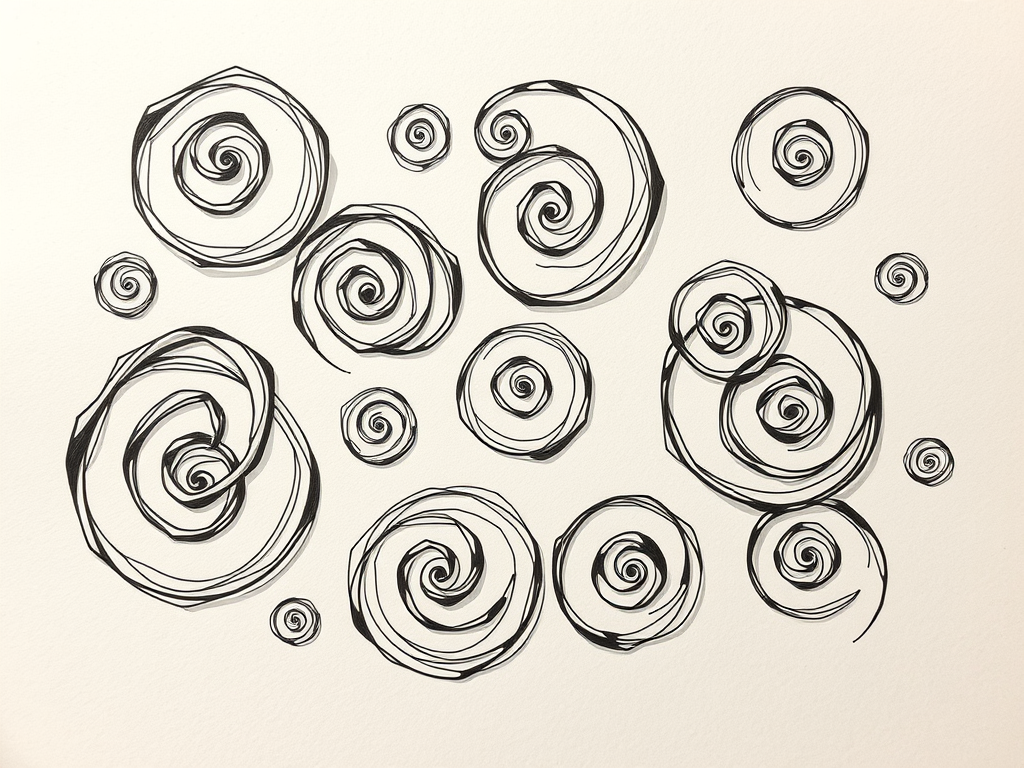
A collection of hand-drawn spirals in varying sizes, arranged artistically on a blank background.

The Beauty of Uniqueness in Design—and in Life 🖼️

Learning to welcome individual uniqueness was another life lesson the Spirograph provided. It often intrigued my young mind how my siblings and I could make the same design, but with a switch of pen color or pressure, or switch of a gear wheel, we could make each drawing unique, despite the fact we were essentially using the same tools. 

Sometimes, we would be surprised when trying to make the exact same shape, because we accidentally missed one of the required steps. Skipping one step, tended to create an irregular shape. Nonetheless, our younger selves marveled at the unique loveliness of the design. Our child-size egos told us we were pioneering artists in those moments!

Marks of Authenticity: Irregular Paths, Unique Lives

What a powerful reminder of the importance of celebrating our own–and others’– idiosyncrasies, including any so-called irregular paths. These individual characteristics and traits, as well as any “irregular paths’ traveled, are all marks of authenticity–that one-of-a-kind spice in our life serving. As humans, our genetic material is vastly similar across all humanity. Yet, this same genetic material still manages to create unique DNA characteristics, such as varying eye color, height, body shapes, and so forth. Furthermore, despite our similar genetic makeup, our lived experiences vary. In a sense, we are pioneering artists of our own lives.

A colorful collection of intricate geometric patterns resembling designs created with a Spirograph. The spirals and mandalas feature vibrant colors and diverse shapes, showcasing creativity and uniqueness.

Embracing Life’s Curves and Imperfections 🌀

Like the Spirograph of my childhood, we all deal with life constraints, no matter what path we try to create for ourselves. These life designs often, and sometimes repeatedly, require practice, patience, perseverance. Life also requires us to accept the many so-called imperfections and irregularities that come as part of the creative process. However, those “flawed” experiences give our life meaning and purpose. Therefore, it is worth remembering we have the power to play and create with the pen we have. All those curved lines and angles that make up our lives, including the missteps, are what continues to compose and create our magnificent, one-of-a-kind life design. Let’s embrace the possibilities.

Who’s ready to draw? ✍️

Transform Your Mindset: Embrace New Experiences

“Your perspective is always limited by how much you know. Expand your knowledge and you will transform your mind.”–Bruce H. Lipton

A black background with the words 'open to new OPPORTUNITIES.' written in white chalk-like font.
Photo by Anna Tarazevich on Pexels.com

Dreams That Spark Reflection and awaken the Mind 🎆

Recently, I have been experiencing an active dream life. While I do go through periods when I don’t recall my dreams, lately my nights have been filled with vivid, frightful nightmares. In my dreamlike state, I try to “change the channel,” but my mind keeps slipping right back into the same harrowing scenario. These restless nights inspired me to think about how in life, similar to TV (or any current media platform for that matter) without deliberately changing the channel, our point of view can become limited.

From Antennas to Awareness: Early Lessons in Limits 📺

As a child, there were no cable or streaming platforms.  Our family, like the families around us, relied on a TV antenna on top of the house in order to watch local stations.  Theoretically, we should have been able to watch three to four local stations–ABC, CBS, NBC, and PBS.  However, we were surrounded by hills, and as a result, most days, NBC was the only  station we could clearly view. I’d hear classmates talk about shows on other networks, but unless we visited my grandparents, who had better reception, our viewing options were limited.

Books: Windows to the world 📚

A woman reading a book while sitting by a window, illuminated by warm natural light.
Photo by Rahul Shah on Pexels.com

Fortunately, we did not rely on TV as we had access to a wide array of books and magazines through school, the bookmobile, at the house of my grandparents as well as in  my own home.  Therefore, my viewpoint expanded beyond my small-town bubble through reading.

College as a Catalyst for Perspective 🤔

Later, when I attended Ohio University, in Athens, OH, my worldview was dramatically shifted. Though Athens is no metropolis, the diversity of students, professors, and wide-array of sources of information was striking compared to what I had known in the Tri-State area. This was especially true since I lived in an international dorm with students from around the world. Conversations in these halls opened my eyes to new ways of living, thinking, and even eating.

Cultural Conversations and Culinary Discoveries

Water droplets cascading from a fountain, surrounded by a blurred green background.
Photo by CocaKolaLips on Pexels.com

My roommate from Singapore opened my eyes to the water shortages her country was experiencing at the time. In her home apartment complex, water was available only during scheduled times—long showers were out of the question. Her story stuck with me as a concrete example of the finiteness of water.

 Meanwhile, students from Denmark and Sweden introduced me to cheeses that I never before heard of, much less tasted.  A French student was the first person to introduce me to espresso, while students from Vietnam and Korea introduced me to a wide array of spices that would not have been locally available at that time.

Voices from Different Lives 😃

I had a classmate named Annette, the daughter of a military family, who’d lived all over the world. Her life experiences, and the breadth of cultural understanding, was remarkable. She was heads and shoulders above the rest of us in global knowledge and awareness.

In contrast, another classmate, Jerry, grew up on a nearby family farm on the outskirts of campus. He illustrated, first-hand, the struggles of family-farming, the weight of the financial hardship often felt by these families, and the deep faith it takes to persevere.

Spiritual Exploration Through Diverse Worship 🙏

Also, while attending OU, I visited churches of different denominations around campus. This provided direct experience with other forms of worship different from my own upbringing. Each service challenged and broadened my appreciation of varying faith communities.

Travel: Expanding the Map of Understanding 🗺️

As an adult, my perspective has continued to unfold through travel. My husband, daughter, and I have explored various parts of the U.S. from coast to coast and visited several Canadian provinces. During these trips we meet people from all walks of life. These encounters demonstrate the common threads of living as well as the unique–and some not so unique–struggles all humans face. These conversations continue to deepen my empathy and allow me to see cultural events, governmental policies, and life experiences through the eyes of others.

The Environment: Witnessing Earth’s Fragility 🌲

Since most of our travels center around natural and historic sites, my perspective has been further stretched in two important ways. First, traveling reinforces my profound respect for the limited nature of Earth’s resources. Over the years I have witnessed firsthand miles of forests decimated by logging or (most recently) flooding/storms, walked along shores of a fragile coastline in a constant state of erosion, and visited places in which the air quality was at near unbreathable levels due to drought-related dust storms or fires. These expeditions serve as tangible reminders that our environment is not infinite, and it is urgent that we protect/care for it.

History: Lessons in Perspective and Relevance 🧑‍🏫

Second, by visiting historical landmarks, walking historical streets, or exploring museums, it helps me recognize the values, struggles, and limitations of the times in which people once lived and how relevant the past is to today’s world. These excursions (along with reading historical and historical fiction books) demonstrate that history is not just a collection of dates and events; rather, it’s an expansive, unlimited lens–filled with countless lessons–through which we can understand human behavior, social progress (or lack thereof), and cultural identity. 

Most of all, visiting natural and historic attractions repeatedly instructs that what we take for granted—whether a forest or a freedom—can disappear without an ever-expanding viewpoint.

Perspective Lost and Perspective Gained

Without an intentional commitment to varied life experiences, our perspective is restricted and narrowed. We may not see the value of managing natural resources. Likewise, we might not be empathetic to those with cultural differences, and we might have little-to-no context of history and its importance. Without going beyond our comfort zone, we may not see the vastness and inclusiveness of a God so great, we cannot possibly pretend to understand.

Intentional Curiosity: How to Keep Changing the Channel

Therefore, it is important to seek out new experiences that challenge our assumptions and broaden our horizons. There is indisputable value in engaging with people whose lives are different from our own.  By engaging and listening more, judging less, and asking more questions, we are less likely to jump to conclusions while also allowing our assumptions to be tested. Visiting a worship service different from our own current practice or simply visiting a new place–even if it’s just across town–can offer further insight to the world around us. Even reading books, fiction or nonfiction, can also offer unique and salient views of others.

Shift Your View, Shape the World 🌎

In closing, I challenge all of us to avoid getting stuck in life as if in a dream. Instead, let’s keep changing the channel. With each click out of our comfort zone, we gain a more nuanced understanding, broaden our perspective, and foster greater compassion for the world and humanity itself. In fact, by doing so, we might not only expand our viewpoint, but we may also alter the viewpoint of someone else we meet along the way.

A collection of blue sticky notes with handwritten motivational words: 'ACCEPT', 'LOVE', 'SUPPORT', 'ADVOCATE', 'EMPOWER', 'TEACH', 'HOPE'.
Photo by Polina u2800 on Pexels.com

Cultivating Compassion in a Clamorous World

Your work is not to drag the world kicking and screaming into a new awareness.  Your job is to simply do your work . . .sacredly, secretly, silently . . .and those with ‘eyes to see and ears to hear’ will respond.”–Unknown

A row of shopping carts with red seats lined up in a parking area, creating a visual of retail readiness.
Photo by Ulrick Trappschuh on Pexels.com

A Quiet Act of Compassion 🤫

I was recently in a local dollar store. There was a person checking out that was $5.00 short of the total amount needed to pay their bill.  The clerk patiently waited while the person checking out asked their companion if they had cash on them. When the companion did have any cash, the clerk quietly offered to give the person the $5.00 stating, “I know what it’s like to come up short when it comes to money.”

This act of unpretentious compassion remained with me for days. The clerk was not doing it for recognition, she spoke too discreetly for that. If I had not been nearby when she offered the money, no one would have witnessed her act of generosity.  

In stark contrast to this sales clerk, however, we are enmeshed in a clamorous, overstimulating, attention-seeking era. Loud-speaking voices vye for our attention as do flashy images, catchy phrases, and repeated catch phrases–all playing the game of who can garner the most attention, especially on social media platforms, news outlets, and marketing campaigns. In fact, it often seems to me that bullying, arrogance, and even superficiality are now considered acceptable, if not desired, traits. While characteristics such as humility, deep listening, and thoughtful consideration are undervalued or overlooked. 

A man in a suit appears to be angrily shouting or expressing frustration while leaning over a wooden table.
Photo by Andrea Piacquadio on Pexels.com

The Clamor of Modern Society 📢

Furthermore, the use of repetitive, often vitriolic, messaging can undermine our own belief systems if we are not careful and purposeful with our daily habits. In fact, popular messaging and marketing, if exposed to it often enough, can even degrade the way we choose to comport ourselves on a daily basis. Our ability to remain authentically aligned to our core beliefs and values can be further degraded with continued exposure.

How do we remain steadfast in our core values, much less act as an agent of civility, courtesy, and even compassion with others, like that store clerk, in the midst of a popularized contrarianism?  Do we completely avoid social media, news outlets, and other outside sources of information and entertainment?  Do we cut ourselves off from the outside world and live as hermit?  Certainly not. 

Scrabble tiles arranged to spell 'WE RISE BY LIFTING OTHERS' against a plain white background.
Photo by Brett Jordan on Pexels.com

Cultivating Grounding Practices 🙏

I do believe it is possible to stay true and aligned to a path of decency and decorum. It does, however, require acting with a certain level of discipline, such as limiting time spent on social media, watching/reading news, streaming services, and so forth.  Additionally, it further requires creating habits/regular practices that support and deepen our foundational beliefs, such as prayer/meditation, regularly reading scriptures or sacred texts, and/or connecting with like-minded people that enhance, strengthen, and support our values. These deliberate habits of personal energy keeps us grounded and moving forward along a path of integrity.

A smiling woman in a black sleeveless top seated in a modern setting with green plants in the background.
Photo by Alexander Suhorucov on Pexels.com

Leading through authenticity 😃

By living authentically and intentionally, we don’t need a megaphone or platform to share our message.  Instead, we can focus on our primary responsibility, which is to cultivate our own work and/or calling in order to positively contribute to the world around us.  It is not necessary to proselytize and strive for attention in order to do this; our actions can speak for themselves.

If we choose to live and work from a place of inner strength, we can foster the power of a quiet presence, leading by example rather than boasting and posting all of the ways others should live/act/work. This doesn’t mean that we don’t set expectations for ourselves, or for others, if we happen to be in a leadership position, it just means we don’t publicly berate others who don’t meet those standards, nor do we boast about our own accomplishments. Rather, we can strive to strike a balance between leading by example and fostering an attitude of support in order to lift up others, so that they, too, can reach their potential. Helping others reach expectations can be achieved without a bully-pulpit.

A family walking by a lake, with an adult female holding a camera and interacting with a young child on a balance bike, while another adult male walks alongside them.
Photo by RDNE Stock project on Pexels.com

Trust the process

Of course, there will always be times of resistance and discouragement, both personally and when working with others. However, forcing or attempting to control often leads to more resistance.  I know as a teacher, and on a personal level, when asking a child–or myself for that matter–to learn a new and difficult task, the more I push the child, or myself, the more resistance I often encounter. 

Sometimes, we have to step back and trust the natural unfolding of awareness, which isn’t easy.  It often takes time, space, and many attempts that end in failure before the a-ha moment arrives. However, by allowing others, or ourselves, to awaken at their (our) own pace, we create a more sustainable and respectful relationship with others and/or with our own work

Two hands engaged in a handshake, symbolizing connection and support, with a group of people in the background.
Photo by RDNE Stock project on Pexels.com

Be a catalyst for change

The power to be a catalyst for change resides within ourselves and within others, but it doesn’t require force or brash tactics. Instead of being rude, loud, or stridently trying to convince or control others, we can choose instead to live with consistent habits that foster our integrity, allowing us to lead by example, and work for change through our actions, choosing to empower, encourage, and uplift those around us. By quietly setting an example, embodying our core values, faith, and beliefs, our presence can inspire and affect the world around us.

Generosity Ripples

Witnessing that one small act, served as a reminder that our energy and intentions have the power to make an impact. It further illustrates the importance of humble generosity–doing the right and/or kind thing quietly and habitually, without fanfare or need for attention, can still have a positive influence that spreads. Just as a spring petal falls from its tree and gently floats on currents of air until it lands on the waters of a nearby stream, creating ripples from the center of the stream to its banks, so do deeds of goodness and mercy continue on.

A quote encouraging kindness in a simple, elegant font on a light background.

Thrive Through Love: Lessons From Plants

We must cultivate our own garden.”–Voltaire 

Drooping from lack of water, my mosaic plant symbolizes our soul without enough attention, love, and supportive relationships.

As I walked into my classroom after spring break, making my way behind my desk, my mosaic plant greeted me with drooping leaves as if to say, “Where have you been?” 

“You poor thing!” I spoke aloud to it–as if it would reply. “I am so sorry. Let me get you some water.” 

Oh, sure, Dear Reader, roll-your-eyes and act as if you don’t talk to your plants. I have no shame in admitting it. Besides, scientific research has established that talking to your plants can create low-level vibrations that stimulate growth. However, since that is not the thesis of this essay, I won’t wander any further down that path. 

The unwatered mosaic plant had suffered alone in the silence of my classroom for well over a week without water. This particular plant requires frequent watering and rotation. When given this, it responds with perky growth and vivid color. Therefore, it was a sad, sickly sight. 

As I carefully began to water my plant, hanging limply in the pot, it reminded me of the way in which humans also need care and attention. Regular watering of plants supports photosynthesis and the roots ability to absorb nutrients from the soil, both of which foster growth. Likewise, when humans receive adequate hydration and adequate nutrition from a healthy, well-balanced diet, our bodies have a better chance of remaining healthy and vibrant.  

Plants, like humans, thrive best when nurtured from within and without.

Continuing to gently water and mist my wilted mosaic plant–yes, I was talking to it all the while–I was reminded of the ways in which humans can wilt from neglect. Our mind, body, and spirit, like my mosaic plant, need nurturing. Without it, our inner world can wither, and we will limp along with a spiritual heart that has a difficult time beating. 

However, with regular sprinklings of love, affection, and/or supportive relationships, our souls can remain hydrated. From faith-based practices to monthly outings with friends or family, from attention/love of a pet to simple interactions with a store clerk, and from exchanging kind words/texts with a neighbor, co-worker, or organization/club member to actions of self-care/love, there are countless ways in which our souls can be watered and nurtured. Therefore, it is vital that we practice engaging with others, so we won’t wilt from lack of love and support. 

Moving around the room to water my other plants, I realized they would soon need to be repotted with fresh, fertilized soil. Some would need a bigger pot than the container in which they currently dwelled. Fresh, fertilized soil, rich in nutrients, is vital for the health and well-being of my plants. New soil will provide a wide array of ingredients uniquely combined to fortify my plants against disease to help them grow healthy and strong.

Photo by cottonbro studio on Pexels.com

Likewise, in order for us to thrive, we, too, need nourishment from a variety of sources. One way we can thrive is by establishing and maintaining a purpose-filled life. This purpose can change and evolve over time as we age and mature, but it needs to be a purpose that not only compels us out of bed each morning, but fuels our life with meaning. 

Creating and maintaining meaningful connections with others, especially when linked to our purpose, can further enrich our lives deeply. Fortification can also be found by mentoring/helping others as well as surrounding ourselves with positive, supportive influences. These types of relationships can form a reciprocal, two-way street, much like plants form with people, which can facilitate an ongoing source of nourishment in our lives. 

Once all the plants were watered, I began rotating each pot to allow all parts of each plant equal time to face and absorb the warmth of sunlight. Sunshine, like water, is needed for photosynthesis. It is only through the process of photosynthesis that plants can have the food needed for growth. When plants face the challenge of living inside a building, they overcome that challenge by growing toward a window, even if it causes the plant to grow with a lean. 

Photo by Khanh Le on Pexels.com

We, too, need to lean into sunshine. The sunshine of positive experiences can imbue us with warmth and motivate us to keep going. That motivation is especially important when we are faced with challenges, as life is never obstacle-free. However, by facing the unique challenge(s) life tends to throw our way, we can eventually discover the unique joy of overcoming difficult circumstances, or at the very least, grow stronger and more resilient from the effort put into overcoming.  

And when those life-challenges seem endless, as they often do, lasting beyond what we think is possible, it warms and strengthens the soul to find pleasure in the little things. From the sweet embrace of a loved one to the sound of birdsong in the morning, from the taste of a great cup of coffee (or whatever) with a friend to the aroma of fresh cookies baking in the oven, or perhaps reading a new book or playing an instrument–whatever you choose, these small delights can be the rays of sunshine that help get us through those dark days of difficulty. 

The object lesson provided by my mosaic plant reminded me that no living thing– humans included–benefits from neglect. When we lose sight of love, meaningful connections, purpose, and positive experiences, we will internally wither, which can manifest itself as physical ailments and/or mental health issues. Without proper care and nurturing, we can grow disheartened, disinterested, and even emotionally distressed or traumatized. 

Photo by Tristan Le on Pexels.com

However, we all have the potential to thrive. Let us strive to offer love and understanding to others and to ourselves. When we see someone hurting, let us find ways to lift them up. 

Likewise, when we recognize our own heart is hurting, let us tend to our own needs through acts of self-compassion, reaching out to others, or seeking other positive means to act as rays of sunshine to lift our spirits. Our time on this earth is short, let us seek productive methods to nourish and enrich others as well as our own lives, so that our life garden can blossom and flourish, no matter where we are planted.

The Art of Loving Unconditionally: Lessons from A River Runs Through It

A scenic view of a river meandering through lush greenery under a blue sky with clouds.
The flow of a river.

Words of Wisdom From a Classic read 📖

One of my favorite stories is A River Runs Through It by Norman Maclean. It is an exquisitely written, semi-biographical account of Maclean, and his brother, Paul, growing up in Montana as sons of a Presbyterian minister who taught his boys the art of fly-fishing. The movie version, directed by Robert Redford, captures the earnest beauty of Maclean’s prose. Both pieces weave together a tapestry of thought-provoking life themes centered around family love and connection (including unconditional love for a family member), grace, the fragility and brevity of life, and the eternal nature of time, with the art of fly-fishing as a metaphor as the unifying thread. 

The story’s emphasis on the complicated nature of the brothers’ relationship make it especially compelling and heart-wrenching. Therefore, I have revisited both works on numerous occasions. Each time I reread the story, (and subsequently watch the film) I discover a new gem and/or am reminded of a favorite part, such as a well-written phrase, a turn of words, a point of symbolism, and so forth. My most recent encounter with Maclean’s work was towards the end of December. 

There is a set of lines that stirs my heart every time I read them: 

“So it is . . .that we can seldom help anybody.  Either we don’t know what part to give or maybe we don’t like to give any part of ourselves.  Then, more often than not, the part that is needed is not wanted. And, even more often, we do not have the part that is needed.”

“We are willing to help, Lord, but what if anything is needed?”

Two boys hiking together by a river, wearing casual outdoor clothing and smiling at each other.
AI generated by WordPress.

How do we help others? 🧍🧍‍♂️

As I once more read each word, underlining and contemplating them in the quiet hours of morning, I reflected upon how, with each reading, those words still ring true, but their meaning evolves as I progress in age and life experience. Those bittersweet words bring to mind loved ones and students over the years for whom I have tried to help.

More recently, students of one of my classes and I were discussing their currently assigned book. The main character in their book grew up in a rough set of circumstances, and through a series of unfortunate events, wound up incarcerated in a juvenile detention center. One of the questions that book raises is: Can someone overcome their circumstances and change with the right intervention/outside help? 

The students debated valid points. Some endorsed the possibility that people can overcome their environment and change for the better. Others pointed out the difficulty of changing what has been hard wired into you. 

As the discussion continued, a student asked me what I thought. All eyes in the circle turned to me.

A silhouetted hand reaching out, symbolizing support and connection.
Photo by lalesh aldarwish on Pexels.com

Bittersweet reminder 🤔

Maclean’s words echoed in my mind as I carefully considered my response. Memories flooded my mind–former students and more personal situations in which I have been truly willing to help– offering extra time, extra care, and extra love. In many cases I have researched and offered suggestions of help–probably way too many with the presumption of, “I can help them fix it,” whatever “it ” may be.  I’ve further ridden the waves of the person’s ups and downs as they strive to overcome and change. I have been, and I still am, willing to help; Lord knows, but as Maclean so eloquently articulated, “{I}we can seldom help anybody.”

Helping others is a complicated process for which our hearts may be in the right place. However, as Maclean points out: most change within another person is not in our control.  Perhaps being willing to help is the best any of us can do unless asked–and even then–we can only offer our support; it is the person who must do the work within.  

Maybe, our support and love will help instigate the needed change, but there’s a strong chance that it won’t. Therefore, it is not our job to “fix” others; it is, instead, our job to love them.  Of course, we can still sincerely believe in the person and continue to pray and hope that the person will overcome their difficult situation or change for the better, but in the meantime we must accept them as they are. 

 Rather than say all of this to my students, I kept it simple. I shared my belief that by nature, hope springs eternal for me when it comes to believing in my students’ (and others’) capabilities for growth and change. I don’t think I could have remained an educator for nearly four decades if I did not believe that change and growth is possible for all of my students. 

A woman with long hair, dressed in dark clothing, is shown in a contemplative pose with her hands clasped together in front of her, against a dark background illuminated with red and blue lighting.
Photo by Mikhail Nilov on Pexels.com

Be Present 🙏

And, while I didn’t share this with my students, my belief and hope flows into my own personal life, too. However, my profession and personal experiences continue to inform me that overcoming what has been ingrained into you at a young age, be it genetic, environmental, or both, is difficult, even with the best help and support.  Furthermore, my experience has also humbly informed me that assuming the person wants help or wants to change is arrogant and so is thinking that we know how to help them.
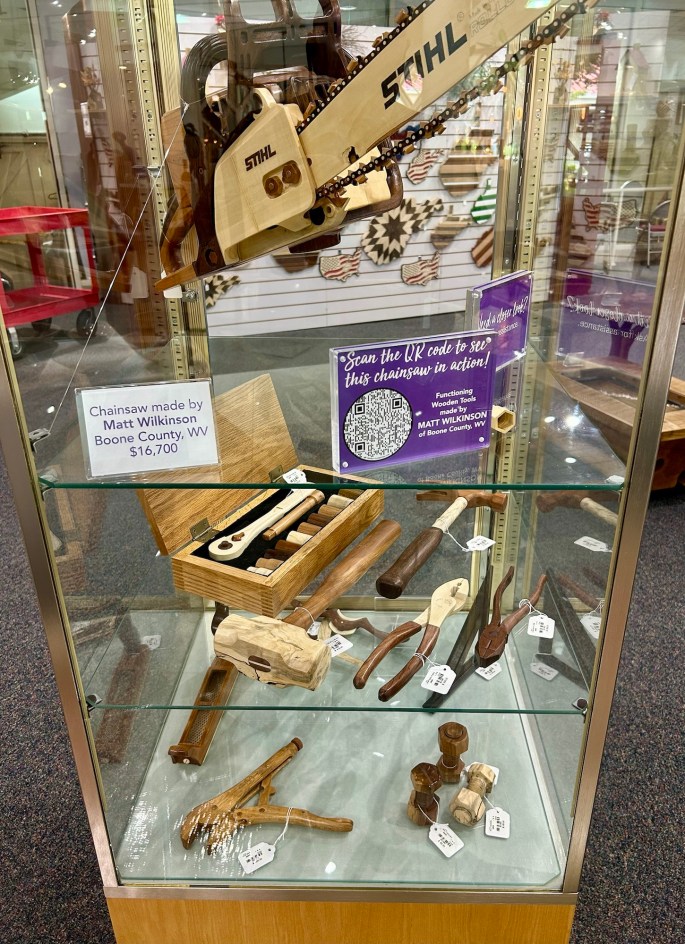

This doesn’t mean we have to give up; rather, I am beginning to believe it’s about presence. We can be there for them by simply spending time with them as appropriate.  Likewise, we can provide positive support and encouragement, such as, answering the phone when they call, replying to a text they send, or being available to chat. 

Likewise, it doesn’t mean we go overboard using up all of our time and resources, leaving us emotionally, physically, or financially spent. Rather it’s important to find that fine line of being there, but not too much; having firm boundaries, but a welcoming heart/spirit. Mostly though, it seems important that we allow love to flow from us, like the waters of Big Blackfoot River in Maclean’s novella, so maybe on the person’s worst day, they will at least know that they are loved.  They. Are. Loved.

A close-up view of colorful puzzle pieces surrounding the words 'Accept. Understand. Love.' on a white background.
Photo by Tara Winstead on Pexels.com

Unconditional love 💜

In the words of thought-leader and influencer, Brené Brown, we must come to peace with the fact that “When you love someone unconditionally, you accept them for who they are, flaws and all.” And that, in the end, just as Maclean had to learn, must be enough. We can only change ourselves, no matter how much we want to help another. 

A chalkboard with the words 'HERE TO HELP' written in white letters on a black background.
Photo by Anna Tarazevich on Pexels.com