A person walking alone on a winding forest path with autumn leaves and sunlight filtering through the trees

A Prayer to Become Art

Reflections on quiet lives, steady love, and the meaning we leave behind

Perhaps it is aging, or the fact that I read too many books. Perhaps it is because I am a sentimental fool. But lately, I’ve had a persistent thought—maybe more of a prayer. 

Let my life have meaning. Let it become art for someone.

Not headline art. Not museum-worthy art. 

Just something that helps another person survive a difficult season.

The Question That Stayed

I think this inner prayer began earlier this year while reading My Friends by Fredrik Backman. In it, I encountered a quote that gave me pause. I read and reread the words. 

 “Art is what we leave of ourselves in other people.

It was one of those quotes I immediately wrote down. From that moment on, a question kept returning to me: “What am I leaving in other people?” 

I began thinking about the people who had shaped my life, as well as those I had witnessed quietly shaping the lives of others. As I mulled it over, my heart ached a little. I found myself wondering what I had truly offered the world.

Quiet Lives

One of the first people who came to mind was my husband, John. He is a relational magnet. People are naturally drawn to his easygoing personality. He thrives publicly—the more people, the better. His students tell me all the time, sometimes sheepishly since I am also an educator, that John is their favorite teacher. I have always admired that quality in him.

Meanwhile, I am quieter, sometimes even awkward when it comes to small talk. I am comfortable and competent within the classroom, but less so outside of those four walls. 

The subjects John and I teach are different too. My class is harder to love because fewer kids read, and even fewer enjoy it. In the world of education, John’s class is birthday cake, while mine is more like broccoli. On my best days, maybe it’s a clementine—sweet and tangy, but still has to be peeled.

I love that for John, but I also wonder: is it the subject, or is it me? I do not always feel that I impact my students—or coworkers, friends, and family—in the same visible way he does. Still, I am trying to grow into a better, more open version of myself, though it does not come easily. 

Even so, I continue to prefer a quieter life. But can quiet lives still create “art”?  

Does quietly going about my work within the classroom make a difference? Can my passion for my students and subject still be felt through my actions?  

I try to create a structured, reliable classroom—one that challenges students while also giving them opportunities to succeed. I don’t want my students to fail, and I try to teach in ways that help them believe they can learn.  

But does the unspoken care matter? Does consistency leave residue in people? Must impact always be loud? 

The Art We Leave Behind

If “art” is what we leave of ourselves in other people, then I pray I leave behind a sense of love and worth. I hope others feel emotionally safe around me. I hope they sense that I believe in their ability to learn, adapt, and overcome life’s challenges. 

Hope springs eternal in me when it comes to my students, my family, my friends, and humanity itself. I pray that hope is felt.

I am more turtle than hare—more slow and steady than flash and flare. Still, I want to model a different way of moving through the world. I hope to show that aging does not have to diminish us, that nourishing our bodies does not have to be restrictive, and that fitness can take many forms. 

I want others to understand that you do not have to be loud to make a difference. To me, it matters more to live quietly and with integrity, trusting that perhaps someone, somewhere, might find strength or courage in an example of an ordinary life lived faithfully.

Most of all, I want to be the best mom I can to my now-adult daughter. I want to offer her emotional support and steadiness when she needs it, while also giving her the freedom to become fully herself—whether she chooses to live loudly or quietly. 

I want to continue nurturing the love between my husband and me, to love my family well, and to deepen the friendships I already have.

Let me leave warmth and gentleness behind.

Let me leave laughter and joy behind.

Let someone feel less alone because I lived.

Let someone believe their goals are possible.

Let my life be useful art in some small way.

Not grand.

Not immortal.

Just meaningful. 

What Holds

Marathon training changed what I thought was possible. It also taught me that some of life’s most important things aren’t meant to change.

“At the still point of the turning world. 

Neither flesh, nor fleshless; 

Neither from, nor towards; 

at the still point, there the dance is.” 

— T. S. Eliot

🌅 Morning Routine

It was still dark, cool but thankfully no longer the stinging cold of January. Reflective, fluorescent green straps and a chest lamp lit the road as I headed back to the car to meet my husband, John, finishing his workout at the gym. The first birds had begun, their harmonies promising the sun. I inhaled deeply and ran through the morning’s checklist.

Start the dishwasher once both showers were done. Finish herbal tea and refill my bottle with a hydration mix for work. Lunch was already packed—thankfully, my usual. Still left: pack my work bag, shower, and call my daughter. We typically chat most mornings while getting ready, fitting in conversation before the day takes over. Nothing unusual—just routine. 

By Thursday, fatigue would set in—work, early mornings, and daily workouts quietly draining both energy and focus. Routine wasn’t a matter of preference; it was, and still is, protection. Even then, something would likely slip through the cracks as the week wore on.

🧱 Building the Structure

I decided to run the Athens Marathon back in December, about a month after finishing the Marshall University Marathon. It felt like a way to give structure to the winter—to keep moving forward when it would have been easier not to. Paying the entry fee only strengthened that commitment.

It felt like stacking LEGO bricks into something precise. Each piece had to fit within the existing structure of life. Not everything is meant to change. Some things are meant to hold. 

Morning workouts were already the norm; they just needed to be retooled. Weekend runs grew longer. Laundry, errands, cleaning, and meal prep arranged themselves around them. The structure of the workweek held, so the miles moved earlier, stretching the edges of the day. At first, the fatigue of long runs was heavy. But the body adapted. Responsibilities did not. 

🕰️ What Changed—and What Didn’t

Brick-by-brick, I learned more about distance—and about myself. And still, there were only 24 hours in a day. Running became an integrated part of it, not the center. It provided energy for everything else. Life continued, steady as ever, carried by the constant presence and love of family and friends.

Beyond my own small routines, the world kept shifting—nationally and globally, in ways both loud and subtle. Change was constant, as it always is. And still, daily life asked the same things: to show up, to care for one another, and to keep going.

🫶 What Holds

In one sense, the training changed what I believed was possible. I stretched. I learned. I crossed the finish line. The goal was reached—but that was never the point.

Crossing that line was not about changing everything. It could not have occurred without what stayed constant—the steady and loving presence of family, the rhythm of daily life, the hope that carried me, the things that held when everything else was stretched.

The Professor Who Changed How I Think About Aging

The early June sun warmed my skin. I sat quietly along the shores of the Outer Banks of North Carolina. The page corners of a biology textbook and spiral-bound notebook—filled with sand and smeared ink—riffled in the chilly ocean breeze. 

I had just earned a master’s degree in 14 months while working full-time as a special education teacher. And I had a dream. I felt pulled to teach Kindergarten students—specifically those in need of early academic intervention. With my background in special education, I felt I was the ideal candidate for this role.

💭A Dream Interrupted

Unfortunately, I was told “no” in clear terms. I was not officially certified to teach kindergarten, despite holding a K-12 special education certificate. The position required a K-8 elementary education certification.

The requirement felt unfair and exhausting. I thought I had done everything “right” to teach this specific “special” class, but it still wasn’t enough. Rather than let this deter me, it became the basis for a new determination: earn that blasted K-8 Elementary certification if that was the last thing I did. Little did I know where, and to whom, this would lead me.

One month after earning my master’s degree, I enrolled at Marshall University. An advisor created a plan that required me to take two condensed summer courses—each just four-weeks long. The first class began the same week as a long-planned vacation my husband, John, and I had already paid for with another couple. If I did not take that summer course, I would have to wait another year before it was offered again.

📞 A Phone Call to Dr. Tarter

This was before email. Therefore, I needed to call to speak with the professor of the class, which ironically was a basic-level biology course with a lab. I called the office—determined, but a little scared. As a teacher, I knew this was a big ask. 

 “Would it be possible to miss the first week of a four-week summer session if I completed all the readings and assignments while I was away and made up the lab work upon my return?” 

This professor didn’t know me.  He didn’t know my work ethic. Missing a full four days of classes out of 16 total sessions was a significant deficit. I wasn’t even sure if I could do it, but I had to try. However, if he said “no,” it meant I would not earn the certification in time for the following school year.

His name was Dr. Tarter.  I don’t remember much about the conversation itself, but I do remember the knot in my stomach as I explained my situation and asked the question. I have a vague recollection of a protracted pause that was followed by a handful of pointed questions as my heart pounded. When he reluctantly consented, it was with a series of stipulations and a parting implication that I still may not pass the class. I assured him I would work hard to make up for the deficit my absence created.

🌊 Studying at the Shoreline

While my friends and husband read Cornwell, Grisham, Koontz, and King, I read about the characteristics of life, scientific method, cell structure, and cellular metabolism. They took long walks along the shore; I sat at the shore’s edge, feet in water, jotting notes in a college ruled notebook. When they stayed up late playing cards, I went to bed early, so I could get up to make flashcards and study in the early morning quiet. I was resolute in my commitment both to the requirements to teach the Kindergarten intervention class and to my hard work. I did not want Dr. Tarter to regret allowing me to miss the week.  

Upon returning to MU, my dedication continued. Much to my surprise, I thrived in Biology and the required lab. It turned out that Dr. Tarter was an excellent instructor, breaking down difficult concepts into clear, understandable ideas. Working in the lab with the guidance of a GA after class was invigorating. What was, at first, an intimidating environment, quickly became a playground for learning.

👩‍🏫 An Unexpected Offer

As the short summer session wound down, Dr. Tarter asked to speak to me after class. He explained he was surprised by my performance, especially considering I missed the first full week of classes. Then, he made an unexpected offer.  He asked if I would consider switching paths. I could work as a graduate assistant in his research lab, receive a small stipend and tuition support, and pursue a Master of Science in Biology. At the age of 29, Dr. Tarter was offering me a different future–one I had never thought possible as a young girl–becoming a scientist. 

I was shocked and torn from within. I. Could. Be. A. Scientist. 

And yet . . .

🤨 Too Old at Twenty-Nine?

There were bills to pay. I now had multiple student loans, and my husband still needed to complete his master’s. How could I ask him to wait another two years before he could start his advanced education? How would we get by on one salary? Worst of all, as I now reflect, I thought I was too old. Too old at age 29—can you imagine? 

 I said all this and more as I declined Dr. Tarter’s offer. I recall how he looked at me with eyes full of compassion and the wisdom that comes from decades of living. 

“Well, I suppose the possibilities of youth can still be held in our senior years.”

🤔 The Lesson That Remained

At times, I’ve often wondered what might have happened if I had accepted that offer— how different my life might have been?  But I don’t carry regret. Instead, I’m grateful that he saw something in me that I couldn’t see yet in myself—something I never believed I was truly capable of achieving. Youth was not what I thought it once was.

As I move through this new decade of life, I find myself near the age Dr. Tarter was when he made that offer. Just like he modeled then, I am committed to continuing to learn—to showing up to life with discipline and diligence. In fact, I am still evolving, despite the fact I never earned another degree. 

I think back to that biology and the spiral bound notebook—its water-stained pages fluttering in the salty air. Likewise, I hold onto that feeling of possibility that Dr. Tarter saw in me. He saw me as more than an educator. He saw another version of me and the possibilities contained within.

The notebook is long gone, and so is Dr. Tarter. But his lesson remains. He was right. Possibility doesn’t belong to youth. It belongs to those willing to keep reaching for it.

The Spirograph Effect: Creativity in Life Design

“Not all who wander are lost”–J.R.R. Tolkien

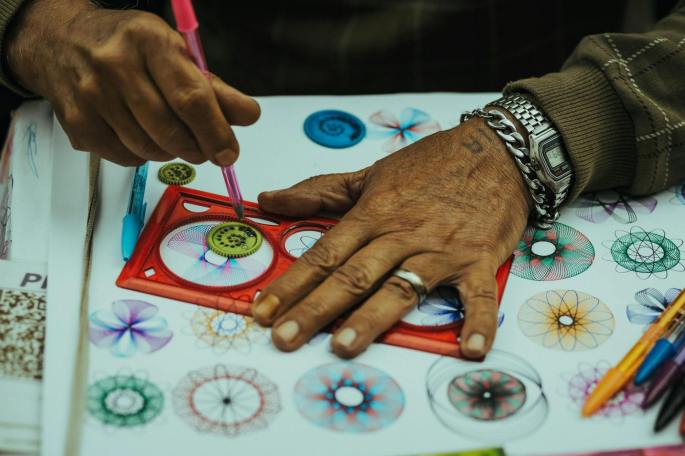
Close-up of hands using drawing tools to create a spiral geometric design on paper.

A Student’s Doodle Sparks a Memory✍️

Months ago, I observed a student drawing spiraling circles over and over on a sheet of notebook paper while participating in our class discussion. For some reason, I was reminded of an old toy my siblings and I once enjoyed: the Spirograph. I can’t remember which one of us received it, but we would sit together for what seemed like hours at the kitchen table drawing colorful, eye-popping (at least to us) geometric shapes.

Four children gathered around a table, smiling and drawing colorful patterns on a large sheet of paper using various markers.

Lessons Hidden in a Childhood Toy ꩜

Reflecting upon that long-ago childhood toy, led to the realization that the Spirograph illustrates the significance of specific concepts when it comes to creating our own life design, such as the influence of structure, patience, persistence, and the importance of celebrating our own unique individuality. It also emphasizes the value of working through natural constraints and trusting the process of learning through repetition. What’s more, the Spirograph demonstrates the relevance of trial and error–which often includes failure–as well as accepting the beauty that can be found in our so-called “imperfections”.

The Spirograph’s Ingenious Origins 👨‍🔬

To appreciate the genius of the spirograph as a toy, requires understanding a bit of its history. Denys Fisher, a British engineer, created it as a child’s play thing based upon various iterations, beginning as early as 1827. At the time of its original conception, it was used for advancing mathematical and engineering concepts. Spirograph, the toy, wasn’t available until 1965, and it went on to win “Toy of the Year” in 1967. Unbelievably, it is still available today.

This classic geometric drawing toy originally came with two transparent rings, two transparent bars, 18 clear wheels of varying sizes, two colored ink pens, pushpins, putty, and paper. Using the various tools, my siblings and I could draw precise, and quite mesmerizing, mathematical curves known as hypotrochoids, epitrochoids, and cycloids. With the switch of any one part, we could vary the size, shape, and geometry of intricate and, at the time, mind-boggling patterns. Essentially, the Spirograph is operated on a balance of limitation and creative freedom, which reflects much of the human experience.

A box of the original Spirograph design set, featuring colorful geometric designs and detailing the contents, including pieces and tools for creating intricate patterns.

Art Through Limits: Creative Freedom Within Structure 🎨

When one is drawing with the Spirograph, one has to adapt to its restrictions. The designs made by using the Spirograph are limited by the size and shape of the wheels and whether you are using the rack or the ring, as well as the color of the chosen pen(s) used to design a figure. Additionally, there are rules for creating specific outcomes as described in its guide book.  While it isn’t necessary to follow the laid-out directions, if one desires it to create a specific shape or design, one has to follow the step-by-step instructions.

This is similar to life in many ways. Influences in life vary from person to person and from family to family, often dependent upon experiences, education, and available information. Many individuals have followed very specific guidelines provided by parents, religion, schools, and even societal norms while others may have fewer influences. For many of us, following a structured timeline is how we landed in our current field/career path.  However, there are just as many, who followed a winding path of their own creation, and still produce a meaningful life experience. Like the Spirograph, following guidelines creates remarkable results for some people, while for others, grabbing the gears and turning them their own darn way works just as well.

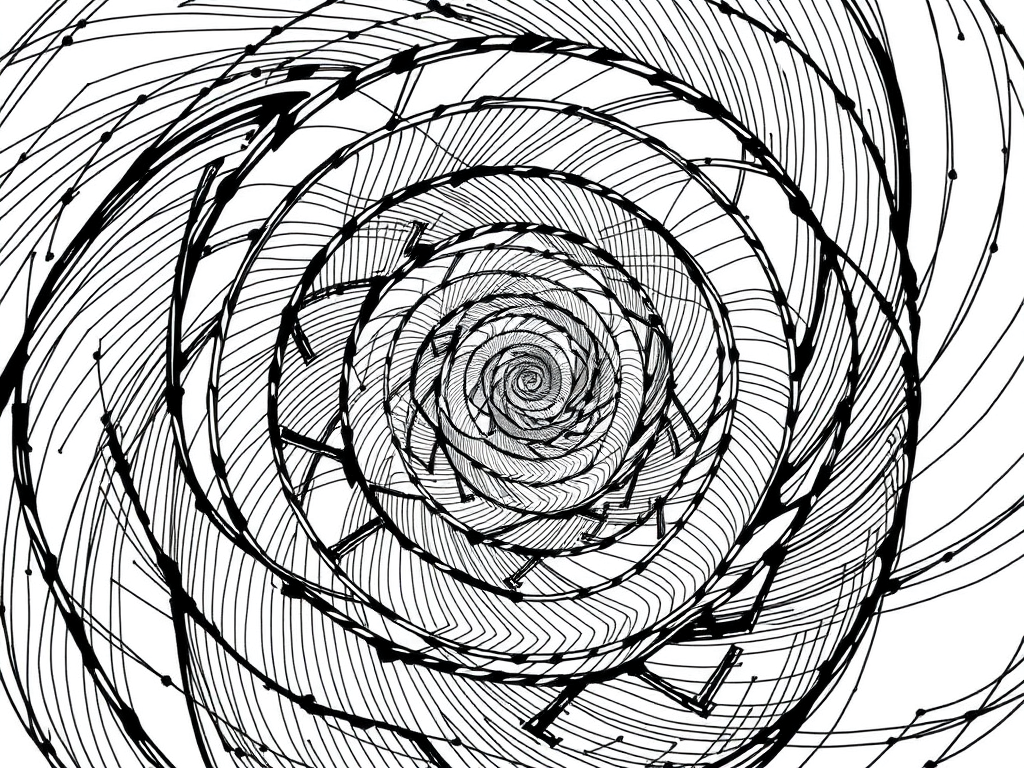
Black and white abstract spiral pattern created with lines and arrows, resembling a geometric design.

The Power of Patience and Trusting the Process 🙏

When working with the Spirograph, my siblings and I had to have faith in the process. We had to further learn that creating something meaningful takes time. The desired design outcome emerged slowly, turn by turn, and layer upon layer. In sum, the Spirograph required us to have patience, trust the process, and stay the course. 

Similarly, our life journey takes time as we, hopefully, continuously evolve and grow. We may have times we question the process, or we may waiver in our faith, patience, and persistence. However, rushing life outcomes usually ends up backfiring. Moreover, the time required for personal growth fosters resilience, a much needed companion to patience. We only have one precious life, and as our life design unfolds, with all of its curves and angles, it is never worth rushing. 

A colorful doodle featuring spiraling circles and geometric shapes, reminiscent of designs created with a Spirograph toy.

Failure, Play, and the Magic of Repetition 🖍️

With the Spirograph, I recall that we often learned through repetition and play. We might draw the same shape over and over, sometimes changing the color, or merely changing the size. Other times, we followed the guidelines, and somehow still managed to “fail”!  And, yet, many of those so-called failures ended up being unique and pretty creations–even if they did not come out as planned. Other times, we would just “mess around” to see what we could create. Some results were not so spectacular, but other times, the creations were fairly impressive or, at the very least, provided us with a new understanding for creating specific curves and/or angles. 

Life can often be the same way. How many of us have experienced times where we “followed the rules,” doing what we were “supposed to do,” and still somehow managed to fall flat on our face. Years later, however, we may look back and realize that those “failings” led to something far greater than we could have ever imagined. Other times, a bit of experimentation leads to a new life path or experience that brings unexpected joy we might not have otherwise known. Thus, like the Spirograph, a playful and experimental mindset can lead to untold delights and adventures.

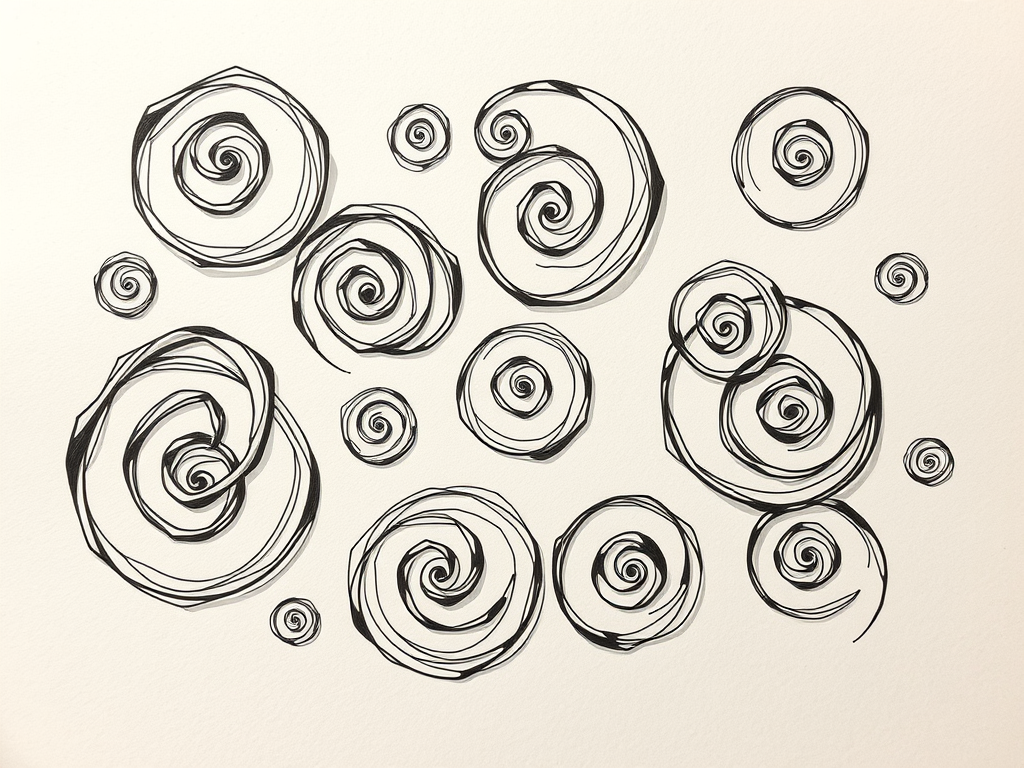
A collection of hand-drawn spirals in varying sizes, arranged artistically on a blank background.

The Beauty of Uniqueness in Design—and in Life 🖼️

Learning to welcome individual uniqueness was another life lesson the Spirograph provided. It often intrigued my young mind how my siblings and I could make the same design, but with a switch of pen color or pressure, or switch of a gear wheel, we could make each drawing unique, despite the fact we were essentially using the same tools. 

Sometimes, we would be surprised when trying to make the exact same shape, because we accidentally missed one of the required steps. Skipping one step, tended to create an irregular shape. Nonetheless, our younger selves marveled at the unique loveliness of the design. Our child-size egos told us we were pioneering artists in those moments!

Marks of Authenticity: Irregular Paths, Unique Lives

What a powerful reminder of the importance of celebrating our own–and others’– idiosyncrasies, including any so-called irregular paths. These individual characteristics and traits, as well as any “irregular paths’ traveled, are all marks of authenticity–that one-of-a-kind spice in our life serving. As humans, our genetic material is vastly similar across all humanity. Yet, this same genetic material still manages to create unique DNA characteristics, such as varying eye color, height, body shapes, and so forth. Furthermore, despite our similar genetic makeup, our lived experiences vary. In a sense, we are pioneering artists of our own lives.

A colorful collection of intricate geometric patterns resembling designs created with a Spirograph. The spirals and mandalas feature vibrant colors and diverse shapes, showcasing creativity and uniqueness.

Embracing Life’s Curves and Imperfections 🌀

Like the Spirograph of my childhood, we all deal with life constraints, no matter what path we try to create for ourselves. These life designs often, and sometimes repeatedly, require practice, patience, perseverance. Life also requires us to accept the many so-called imperfections and irregularities that come as part of the creative process. However, those “flawed” experiences give our life meaning and purpose. Therefore, it is worth remembering we have the power to play and create with the pen we have. All those curved lines and angles that make up our lives, including the missteps, are what continues to compose and create our magnificent, one-of-a-kind life design. Let’s embrace the possibilities.

Who’s ready to draw? ✍️

May There Always Be a June

“Even the prettiest flower will die one day. It’s nature’s way of teaching us that nothing lasts forever.”–unknown

“Hmm . . .” I think, more than say, with a deep inhale as I yawned awake.  It was a rare, cool morning–a break from the typical heat and humidity of early July.  The bedroom windows were open, and I breathed in the fragrance of dewy grass, damp earth, and flowers. It was the lingering sweet floral scent that began a series of reflections regarding the significance of June and its likeness to the human life cycle.

At the time I am writing this, it is the July 4 weekend–marking, in my mind, the midpoint of summer.  Once July 4 begins, it feels like the rest of summer swiftly sails by.  Ah, but June.  June is sanguine–full of enough bright cheer to hold old-man winter at bay.  The early spring blossoms such as daffodils, crocus, and tulips have long passed.  Aromatic honeysuckle begins its fading away as the summer perennials and annuals begin blooming brightly in rapid succession.  July may be full of celebrations, explosive displays–all red, white, and blue–but, I adore June–modest, optimistic, June, and the colorful, unique flowers that blossom and thrive with its invitation to summer.

Photo by Suvan Chowdhury on Pexels.com

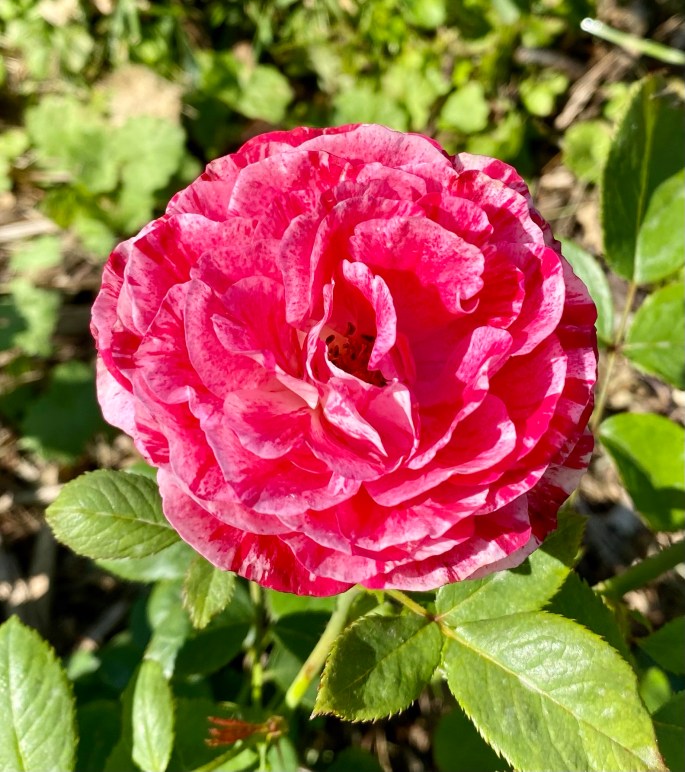
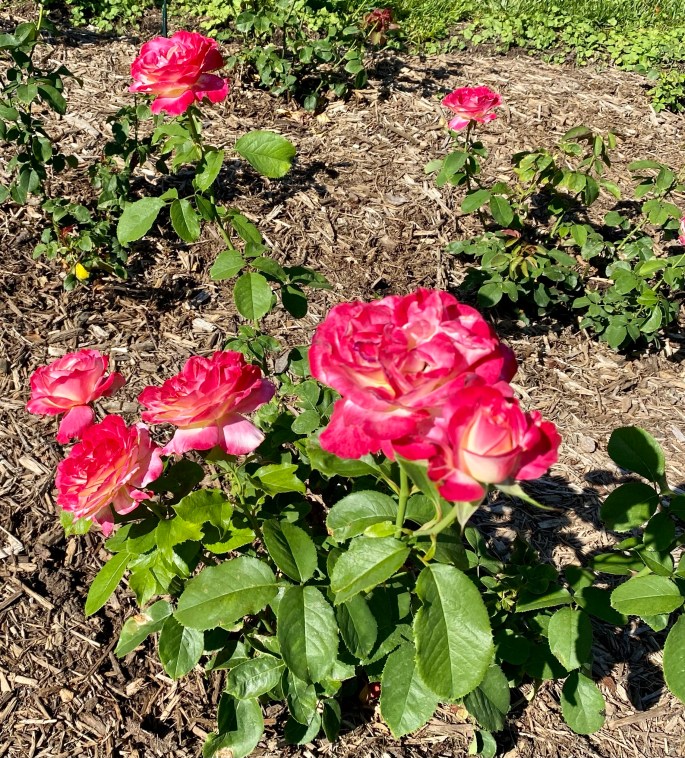
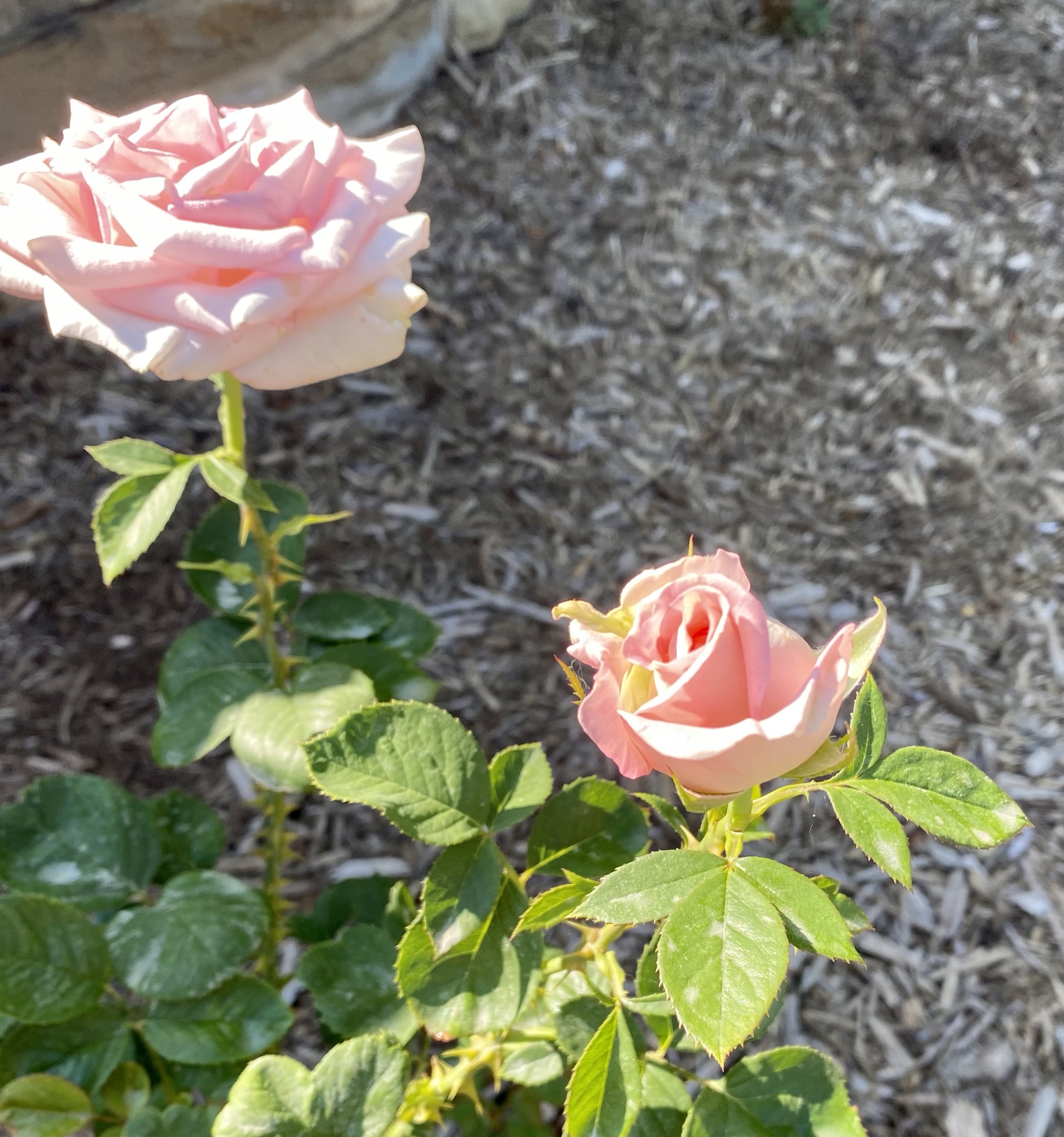
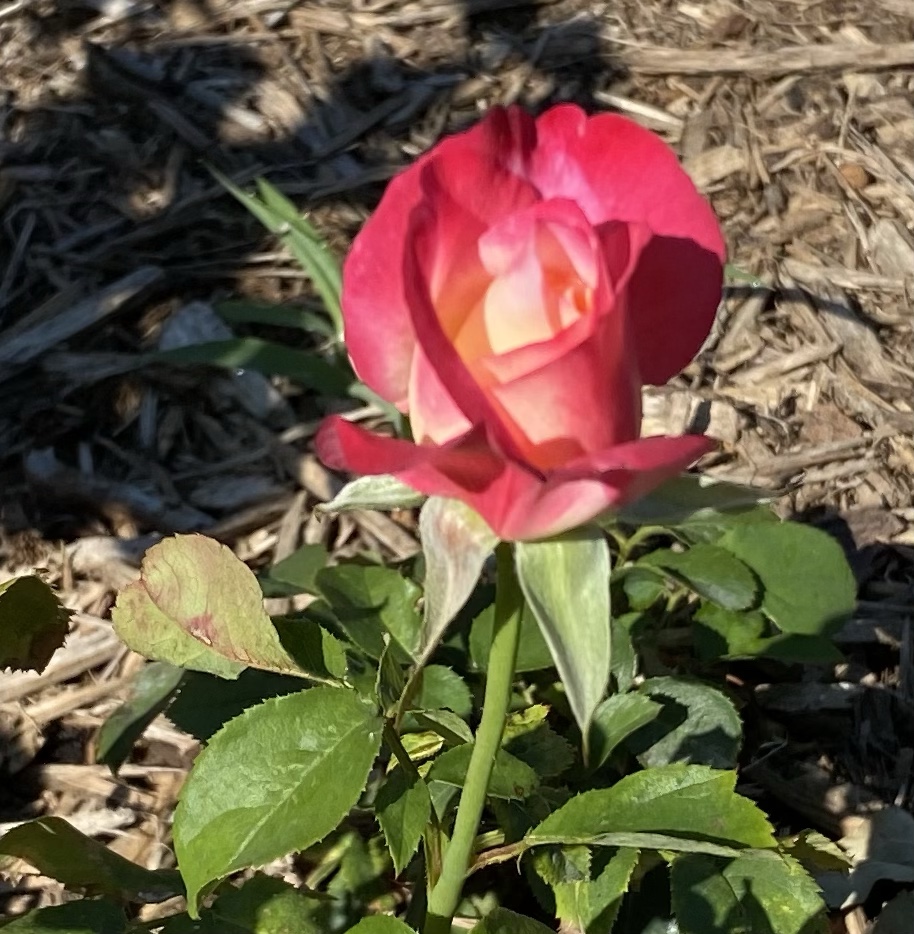
One morning, this past June, I was in Ritter Park to meet a friend for a walk.  However, the friend was running late, so I decided to meander up the old stone steps to the rose garden.  Sunshine, brilliantly glowed in its mid-morning slant, created a kaleidoscope of vivid colors, varying in texture, size, and shape. With no purpose other than to enjoy the moment, I wandered around the garden, drifting from one rose bush to the next, fascinated with all the minute differences not only among the varieties of rose bushes, but also among the flowers within the same bush.  Meanwhile, a gardener attentively tended the blooms.

Examining more closely, I noticed the various insects drawn to the roses. Bees, ants, beetles, moths and butterflies, flies, and even a few mosquitoes crawled, hovered, dove, and darted–busily buzzing about the roses with purposeful missions.  In one of the more isolated sections, closer to the wooded area of the park, I also observed a hummingbird dipping and diving among the various blossoms in a delightful, whirring dance of flight. As I let my gaze wander, my mind relaxed and began to make correlations with June, its flowers, and life.

“A rose can never be a sunflower, and a sunflower can never be a rose. All flowers are beautiful in their own way . . .”–Miranda Kerr

Each flower–from the number of petals to the size of each petal, from the varying life stages of each flower to the variances of color in each blossom–whether it be a rose in the Ritter Park garden or any one of the wide variety of flowers found in resident yards and public spaces–was, and is, a unique creation.  This is similar to the way each person, within the same family, or outside familial ties, is likewise a one-of-a-kind individual.  Flowers go through a dormant and a growing season of varying lengths, but all bloom seasonally, until they come to an end–whatever the life end may be. So it is with June and human life. 

The season of summer officially begins in June.  The air is sweet and heady with the fragrance of flowers. Winds and sunshine warm the air, and rain falls with purpose. Many plants are rooting and establishing while early spring greenery and blossoms are fading away into their dormancy. Daylight reaches its apex in June, while nighttime descends to its lowest point.  

Likewise, several key life events occurred and are honored in my own life each June.  I graduated from Ohio University in June.  Within that same month, I signed my first teaching contract, thus beginning the start of my career as an educator. Two year later, in June, I married my husband, an anniversary we have celebrated for 32 years.  Ten years later, our daughter was born in June.  As educators, my husband and I experience the arrival of each June as the beginning of a dormant period–an opportunity for reflection and renewal before a new school year begins in August.  Births and weddings, ebbs and flows, the highs and lows, and even celebrated endings.  It’s all there in June.

“All the flowers of tomorrow are in the seeds of today.”–Indian Proverb

I am but one person in the garden of many: my family, my work site, my community, and so forth.  All around me, younger lives are taking root, growing, and blossoming into their own personal expressions–making our collective garden more colorful and vibrant–buzzing with energy.  Meanwhile, I can’t help but notice that just as the flowers of June replace spring’s early blossoms, July has taken June’s place.  

Of course, one could argue that like the flowers, humans seem to be planted in dirt and threatened by weeds and all varieties of pestilence. However, when I was visiting the rose garden in June, it was the array of blossoms, in a rainbow of colors, that caught my eye, and made my heart smile.  They too were planted in dirt, confronted by pests and disease, but a gardener was there watching over them just as we have the Ultimate Gardener attending to our needs. 

The flowers offer their seeds and pollen to insects and birds to eat and disperse, ensuring more and different blooms for the future. Likewise, I pray that until my last petal drops, I am offering seeds of hope for others as June does for me.  One day, my memories of past Junes will fade away into permanent dormancy. In the meantime, I will savor the memories made this past June, find nourishment in the full blossoming of the July summer, and, in the weeks to come, accept August as the petals of summer begin to fall away, one by one.  

May there always be a June.