In addition to being a free-lance writer and creator of Steph Simply website, Stephanie is a 6-8 ELA educator at St. Joseph Catholic Middle School in Huntington, WV. She is also a RYT-200 certified yoga instructor as well as Reiki levels 1 and 2 certified. “Your work is not to drag the world kicking and screaming into a new awareness. Your job is to simply do your work… sacredly, secretly, silently … and those with ‘eyes to see and ears to hear’ will respond.’”–Unknown
“I will defend pumpkin until the day I die. It’s delicious. It’s healthy. I don’t understand the backlash. How did pumpkin become this embarrassing thing to love, but bacon is still the cool flavor to add to everything? I don’t have anything against bacon; just don’t come after pumpkin like it’s a crime to love an American staple.”—Anna Kendrick, Scrappy Little Nobody
Personally, I agree with the above passage. I, too, love pumpkin and eat it year-round! Pumpkin cookies, pumpkin muffins, pumpkin oatmeal, pumpkin pie, oh my! It is a versatile food worth eating year ‘round—especially since canned pumpkin is always available. Plus, I love pumpkin seeds too, but that is another story for another recipe!
Another versatile food I have fallen in love with is riced cauliflower. It is like a white canvas. It can be seasoned and combined in a multitude of ways. From smoothies to salads, from Asian-inspired stir-fries to Tex-Mex influences, and from hearty bowl-based dishes to plated mashed sides, riced cauliflower is one of the most versatile foods with which I cook! This recipe takes its versatility in a new and exciting direction—at least to me!
I like making this recipe ahead, and then packing it my workday lunch. It makes for a warm, cozy meal that makes lunchtime seem a bit more special than my usual cold salad and/or veggie sticks. I also like to make this ahead, and then eat it for breakfast! Yep, you read that right, breakfast. Why not start my day with vegetables. If I can add riced cauliflower to my smoothie, why not eat pumpkin risotto for breakfast?
Finally, this dish can also serve as a tasty side-dish for any meat-based meal. Serve it along side your favorite grilled fish, chicken or steak—add salad, and yummo! Additionally, it makes a great addition to a bowl—if you like creating bowl meals as I do—this is a perfect base to a jam-packed nutritional bowl! In fact, one night, I used it as a base and simply added stuffed mushroom on top. It was amazing!
From my home to yours, I wish you happy, healthy, and homemade meals.
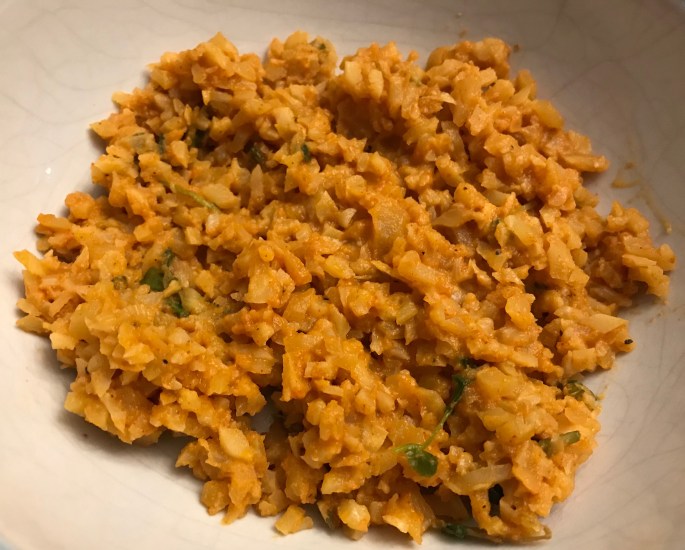
Low Carb, Gluten-free Pumpkin Risotto
Ingredients:
2 tablespoons olive oil (If you prefer cooking oil-free, use equivalent amount of favorite broth.)
¼ cup diced onion
Salt & pepper to taste
1-teaspoon paprika
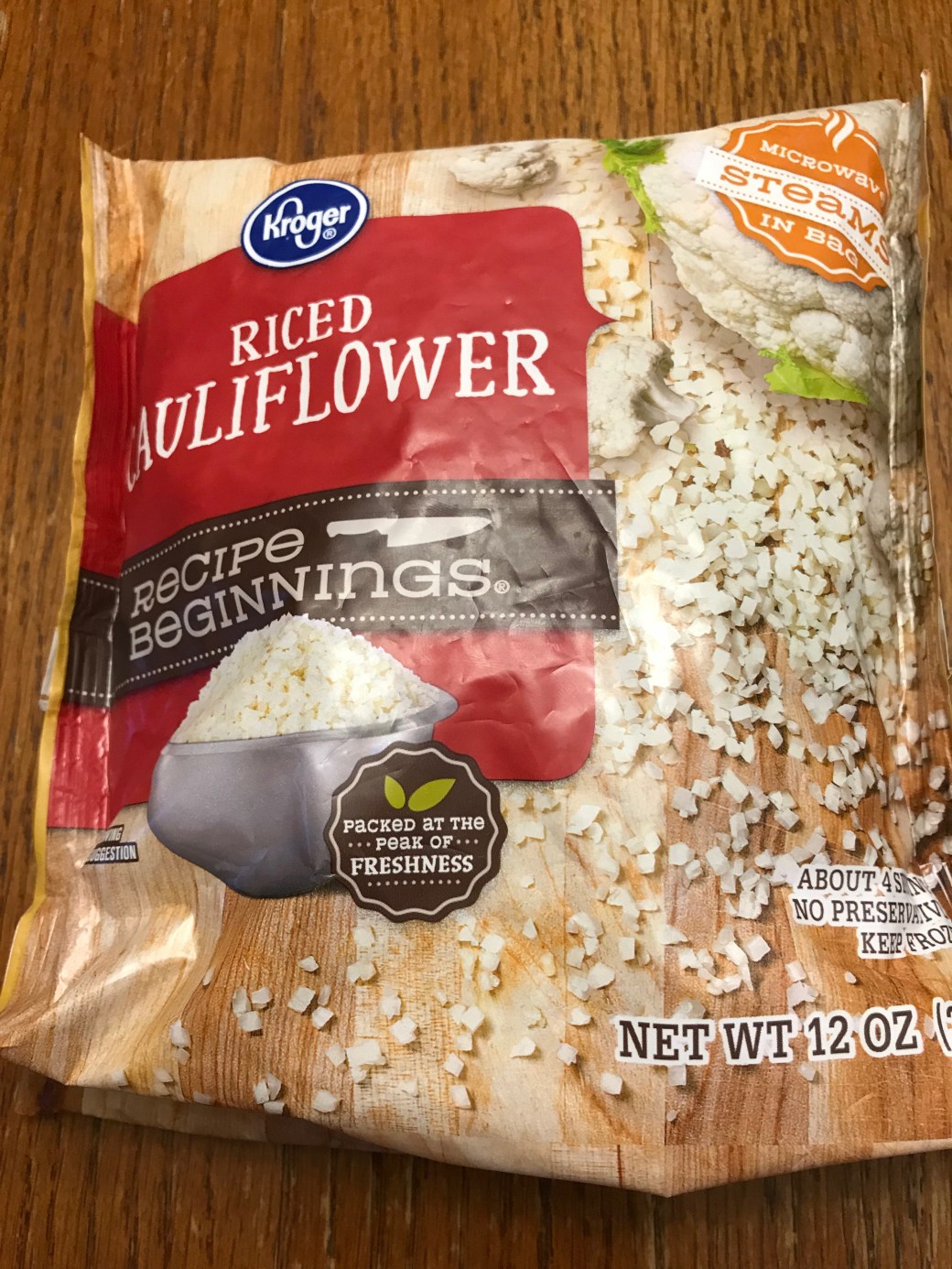
12-ounce bag riced cauliflower
¼ cup favorite type broth
½ cup pureed pumpkin (or butternut squash)
¼ cup Parmesan cheese (or nutritional yeast if want vegan version)
¼ cup fresh chopped parsley or frozen peas—if desired for color contrast
Directions:
In a large saucepan on medium heat, add olive oil, onion, salt, pepper, and paprika.
Stir until onion has softened and become translucent.
Stir in cauliflower until thoroughly combined.
Gently pour in broth, stir, and cover with lid.
Allow to simmer (gently bubble) 10-15 minutes. (You may need to stir occasionally to ensure cauliflower is not sticking to bottom of pan.)
Stir in pumpkin (or butternut squash) puree.
Then add Parmesan (or nutritional yeast).
Continue stirring and cooking until cauliflower is soft and mixture is thick like warm pudding.
Stir in parsley or peas if desired as well as more salt and pepper if needed.
Serve warm.
Makes 2-4 side servings (depending upon how big serving), or one huge meal-bowl!
“No person was ever honored for what he received. Honor has been the reward for what he gave.”—Calvin Coolidge
The year was 1987. 21 years wise and freshly graduated from college, I was ready to begin my teaching career. After making the long walk from the main part of the building that contained classrooms and administrative offices, through the cafeteria, past the concession stands area used during basketball season, through the entire length of the gym, up the back stairway that led to the underside of gym bleachers, through two other makeshift classrooms, separated by rolling chalkboards, I finally arrived in my “classroom.” I sighed, in a state of shock and dismay.
As seen on google free-stock images.
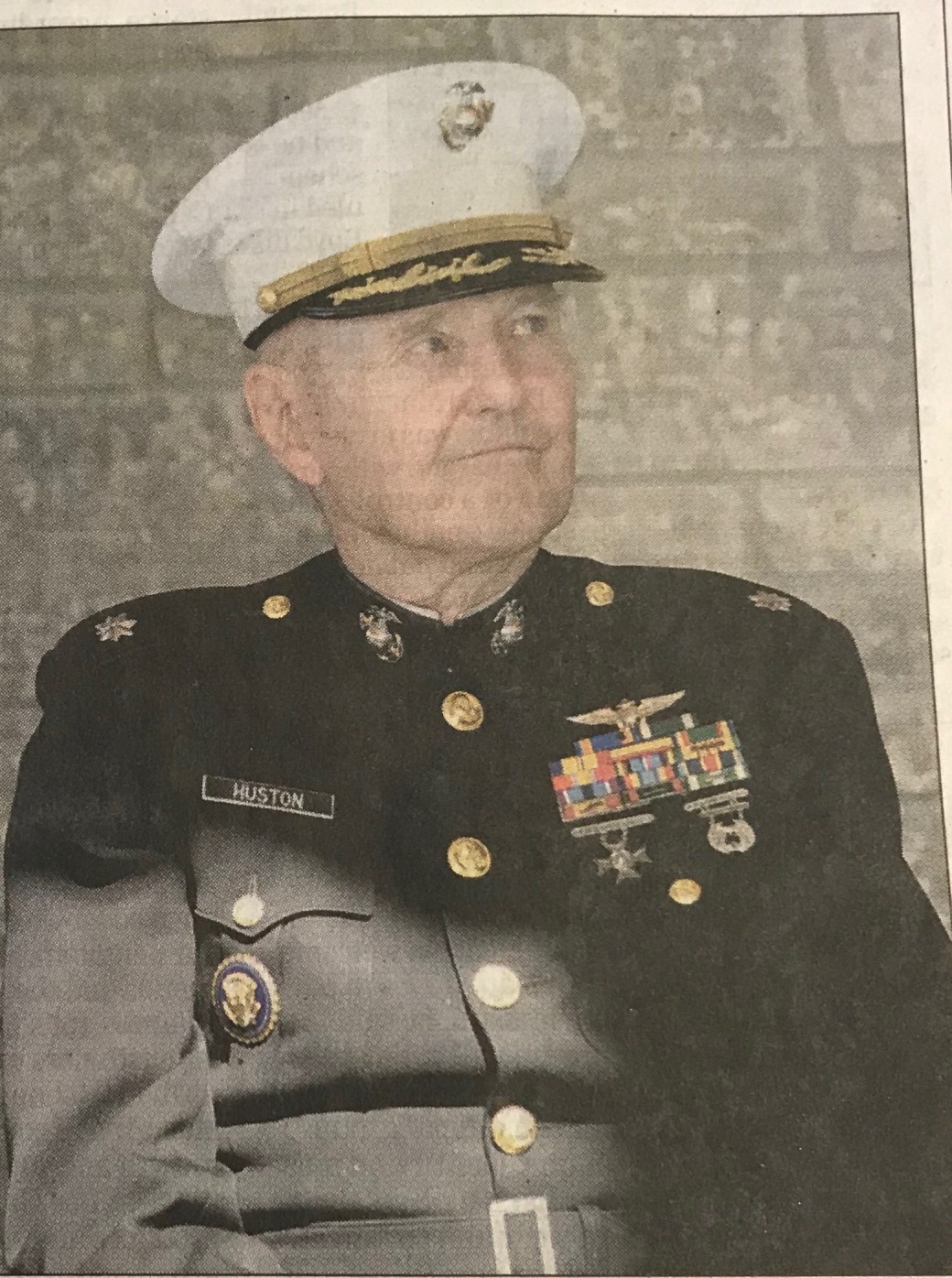
One “wall” was literally the underbelly of the gymnasium bleachers. Another “wall” was the rolling chalkboards by which I had passed. A third wall, across from the bleachers, was a painted concrete wall stained with yellow mold; and, the final wall, was a padded medal door that I would later learn was filled with weapons used by the Greenup County High School ROTC students. And, with those students would enter a man I would come to know as Marine retired Lt. Col. Vance Huston—a man I would consider a mentor during my first year of teaching and during his last year as an educator.
However, on that first day, weeks before students arrived, I looked around this so-called room and wondered if I had made a huge mistake. Was this the job meant for me? How could I ever be expected to teach in such dismissal surroundings with no window or source of natural light? I sat and stared. This was not the setting for which I prepared in the idyllic world of textbooks, professors, and idealistic future teachers.
Nonetheless, I threw back my shoulders and began the task of cleaning, tidying, and arranging the room as best I could. I was able to hang a few colorful posters/charts on the two-door metal cabinet that stood along the concrete wall, stacked a few battered textbooks that my 9-12 grade special educations students were supposed to use, as well as a few of my own reference books. I would make the best of the situation.
Thinking determined thoughts on that long ago end-of-July-day, I was startled by a man quietly entering my room. While I do not recall his exact words, I do remember his kind, twinkling eyes and warm smile. He said something about the fact that he wasn’t used to seeing teachers in their classrooms so early before the start of school. Then, he introduced himself as, “Col. Huston,” and offered his hand to shake.
As photographed by Kevin Goldy and published in the March 3 edition of The Daily Indepedent.
He was relaxed, confident, and warm. Sitting on the top of a student desk, he began asking questions, seemingly eager to figure out who I was. As I answered, I remember the way he would nod his head and simultaneously close his eyes as if trying remember each word I stated. He smiled frequently, and continued to engage me with questions.
After asking numerous questions, he launched into a personal story meant to serve as a mini-life lesson for me. That was the beginning of what would become a nearly daily occurrence at the end of each school day.
“Ms. Musick, how are you today?”
“Ms. Musick, did the kids treat you well?”
“Ms. Musick, how are you getting along?”
“Ms. Musick, how are you liking it here?”
No matter what question with which he began our conversation (after he was certain the padded door to the weapons rooms was locked and secure) he managed to turn my answer into a story/mini-lesson.
As seen on Instagram at heartcenteredrebalancing.
During these conversations, he revealed he was originally from and educated in California, and that I, too, must one day acquire a Masters Degree in Education as he had earned. He frequently talked of his Marine service that followed, for which he was commissioned in 1955. Never once, however, did he reveal that he was White House Helicopter support for Presidents Eisenhower, Kennedy, and Johnson from 1960-1964. He did certainly share that he flew Marine C-130s during two tours of Vietnam from 1965 (the year in which I was born) to 1970. And, while I knew he had survived a horrific helicopter crash that ultimately served as a vehicle for his deeply convicted faith, I never realized how bad the crash was until recently viewing the picture of mangled, twisted, and warped metal that was once the helicopter from which he, and the other men, miraculously walked away.
After his service in Vietnam, Lt. Col. Huston was a Commanding Officer of a wing equipment and repair squadron at Cherry Point, North Carolina. Next, he served as Executive Officer, Marine barracks, Subic Bay, Philippines. Finally, he rounded out his Marine service in Public Affairs at Marine Headquarters, Pentagon. Even with all his honors and experience, he spoke more often about his love for his wife, his children, his extended family, and his profound faith than anything else.
As originally ran in The Daily Independent and printed in the funeral home remembrance.
No matter what had occurred during a school day, I could count on Lt. Col. Huston to end my day with a smile. On days I was down, from lack of appropriate supplies, facilities, or plain of feeling isolated and lonely, Lt. Col. Huston was there to offer a quick story and smile. I never shared with him how lonely I felt that year, but I think he knew. In fact, I am fairly certain he was responsible for ensuring that one of the Assistant principals, Mr. Lyles, invited me to his office at least twice a month for coffee to “see how I was doing.”
When I began to show an interest in running and biking as a hobby, Lt. Col. Huston encouraged me. He offered tips as he was an avid runner, running 5-6 miles at a time, several days a week. In fact, it wasn’t unusual to drive down US 23 and see Lt. Col. Houston running alongside the road in grey sweatpants and a grey sweatshirt. Fitness, he stated, was an important discipline for the mind, body, and soul.
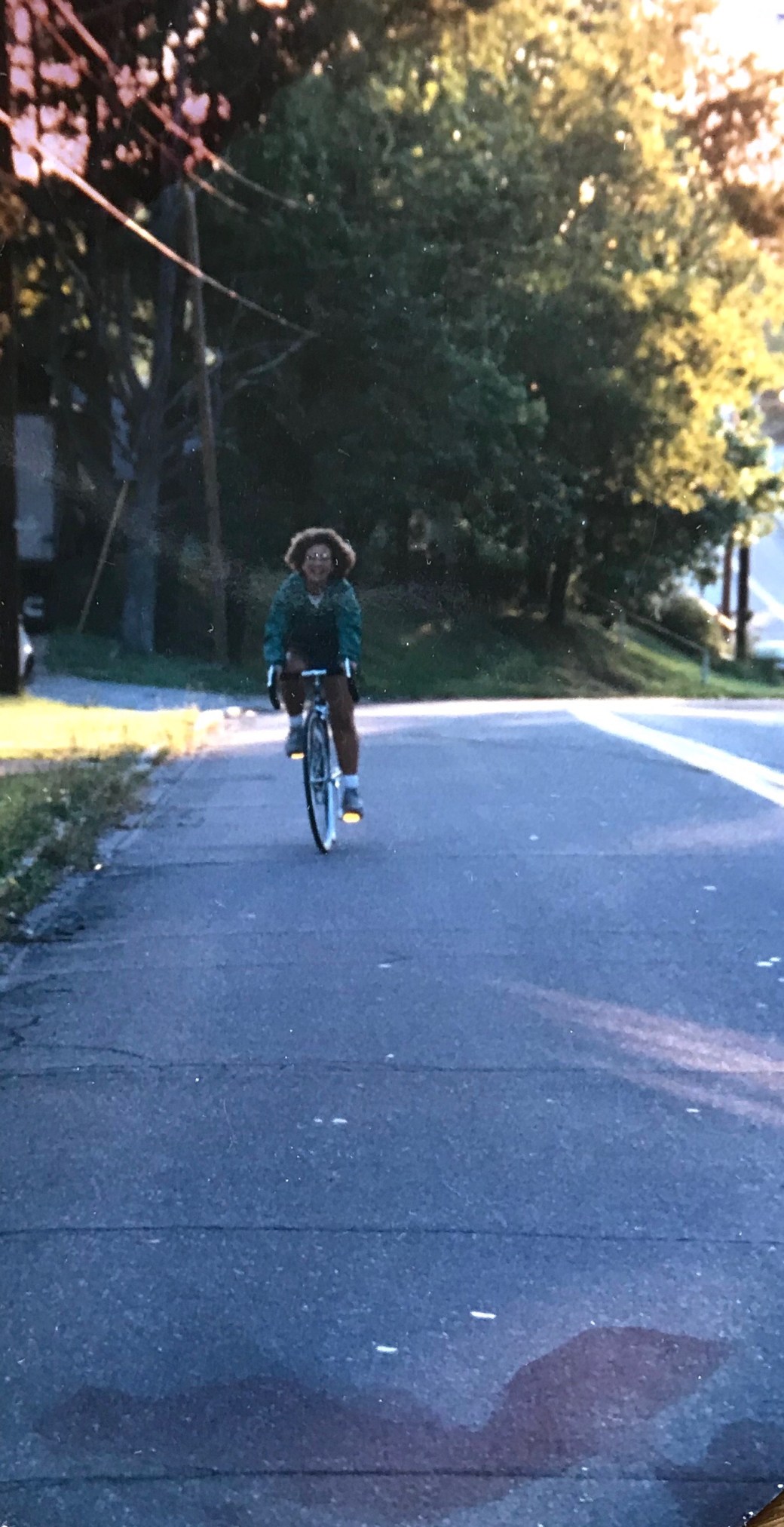
A picture taken of me biking by John in 1988–an activity/hobby Lt. Col. Huston encouraged.
Near the end of my first year of teaching, I shared with him that I had met man for whom I felt deep love and affection. His eyes truly shone then. From that point on, he gave me daily advice on how to make a relationship work and how to, one day, be a good parent.
“Put your spouse and children first. That is the key.”
After my first year at GCHS, Lt. Col. Huston retired, but he would regularly drop by school for visits just to, “see how I was getting along.” When he learned of my engagement to my now husband of nearly 30 years, he simply smiled and said he hoped I was as blessed as he had been in the love of his wife.
My husband, John Hill, and me on our wedding day, June 14, 1989. We were honored by the attendance of Lt. Col. Huston in his Marine dress blues.
June of 1989, Lt. Col. Huston honored me by making the 45-60 minute drive to attend my wedding in South Point, Ohio. He was stunning in his Marine dress blues. For a wedding present, he gave my husband and me an electric carving knife attached with a note of advice: “The words of the reckless pierce like a sword, but the words of the wise brings healing.”—Proverbs 12:18
Nearly 30 years later, we still have the electric knife Lt. Col. Huston gave us.
Lt. Col. Huston recently flew, this time on eagle’s wings, to meet his Creator, on March 1 of this year. He was 85 years old.
On March 7, my husband, John, and I made the 45-60 minute drive to pay our respects to his wife, Ella Mae, of 65 years, and the rest of his family. I learned upon his retirement from GCHS, he had not stopped mentoring others. His ministry continued through service to Meal-on-Wheels, Prison Ministry at the Federal Penitentiary in Summit, Bible study groups in the Greenup Country Detention Center, Gideon’s International, and at his beloved house of worship, Green County Methodist Church.
I was blessed to have been under Lt. Col. Huston’s watchful eye, even for a short time; and based on the number of people attending his viewing—there were hundreds, if not thousands more, that could also consider their lives enriched because of this honorable man.
May Lt. Col. Huston’s wings of faith eternally fly as inspiration and example to all.
“The river is one of my favorite metaphors, the symbol of the great flow of Life Itself. The river begins at Source, and returns to Source unerringly. This happens every single time, without exception. We are no different.”—Jeffery. R. Anderson
Beginning in her first year of life, my husband, John, and I traveled frequently with our daughter, Madelyn. The road trips took us to locations all over the United States and several locations in Canada. It was common, when Maddie was a young girl, for her to break down and cry dolorously for an hour or so, on our return drive home from these trips.
The first time this occurred, I asked her, with great concern, what was wrong. She explained that she did not want the vacation experience to end, and she wanted to remain in the location in which we had stayed. John and I would attempt to explain that the place would no longer seem special if we lived there. We further encouraged her to focus on all the good memories we created, and how wonderful it was to spend time together in such a special way. Despite our best efforts to cheer her, she was attached to her feeling, to her story. She had to cry as a way to release her grief and her attachment to the illusion that life should always be like vacation.
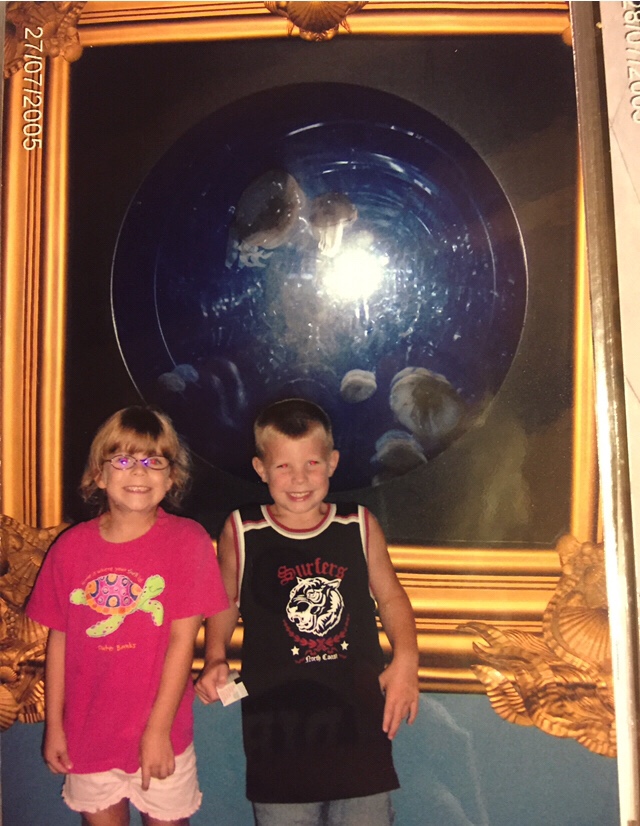
Maddie, pictured here with her cousin Johnny, on a trip to the Newport Aquarium. She cried when this trip was over.
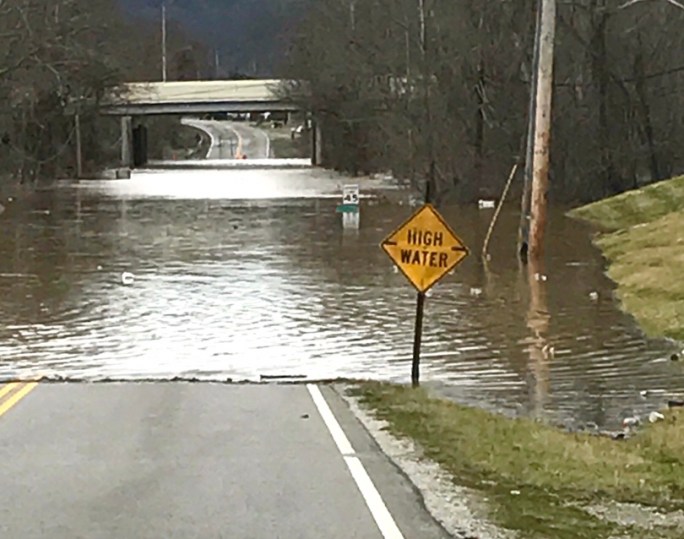
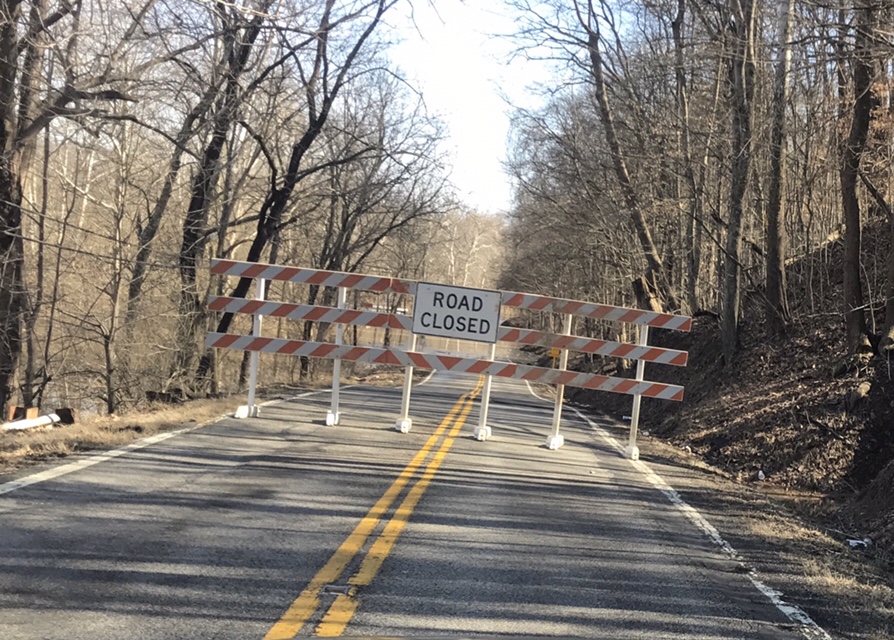
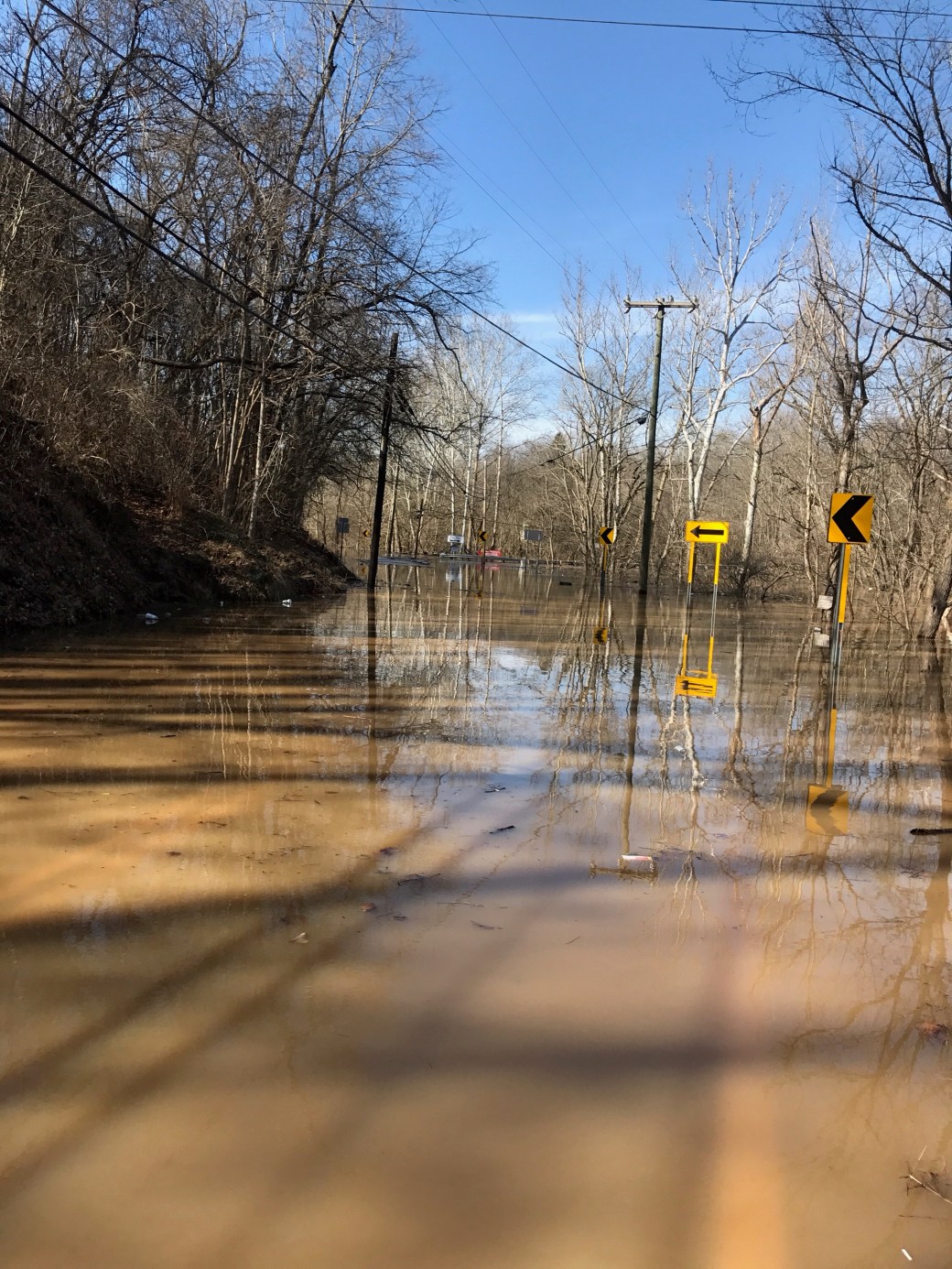
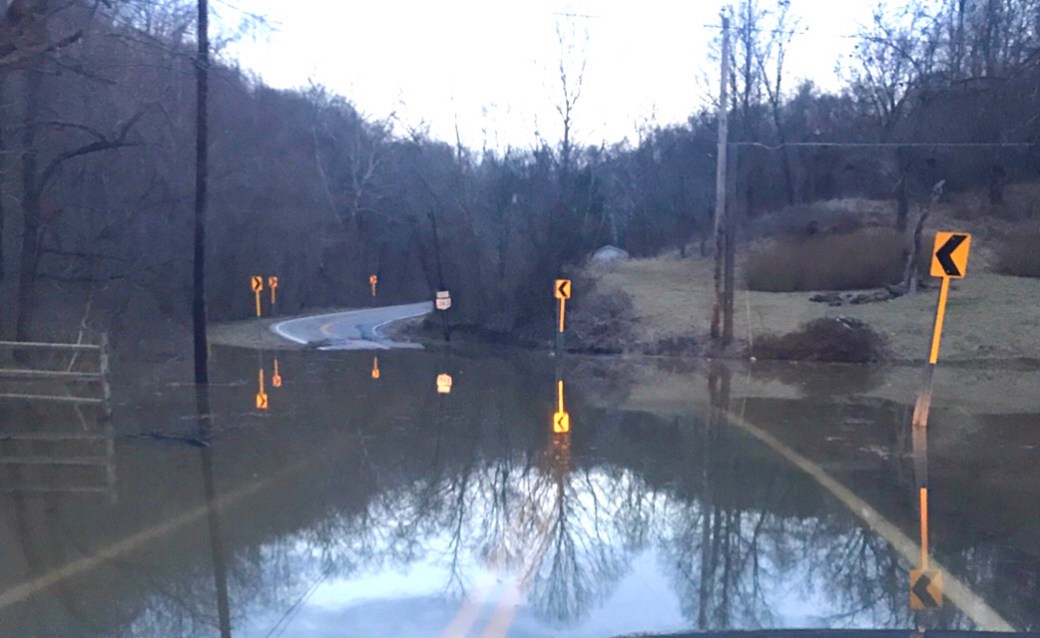
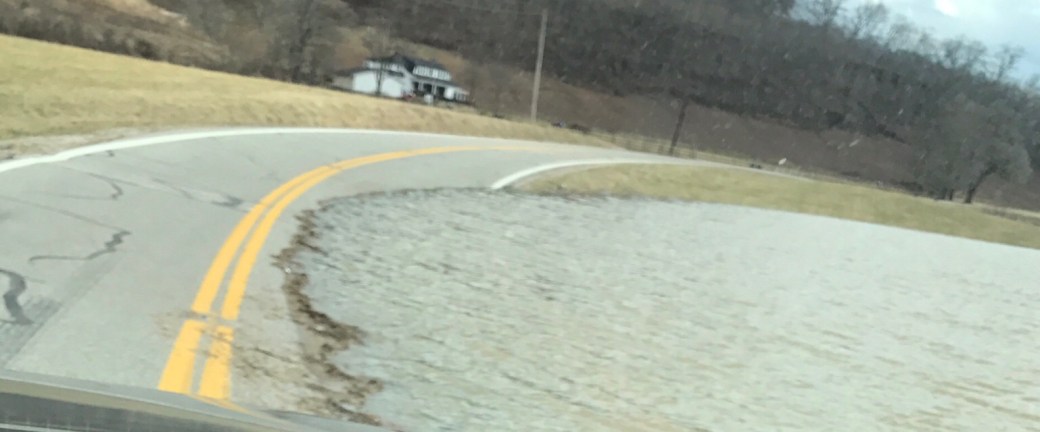
Likewise, the Ohio River has risen due to frequent and heavy rains and snowmelt. In fact, the mighty Ohio has risen to such levels that I recently watched with great interest as the floodwall gates, along the Ohio River in Huntington, WV, were closed to the public and sturdy-looking metal inserts were tightly locked into place. Furthermore, streams, such as nearby Symmes Creek, a 76.4-mile-long tributary of the Ohio River in southern Ohio, began to overflow their banks and spill out into roadways making travel challenging if not impossible.
Numerous residents were trapped in their homes unable to report to work due to road closures. Those who could get to work were often spending double, or even triple, the amount of drive time traveling to and from work. Additionally, there were homes either destroyed or damaged by floodwaters. These stories filled the news each evening as more predictions of rain filled the weather headlines.
Even as the waters began to recede though, other negative concerns have arisen. Roads that were already pocked with the small potholes from the freeze-thaw cycle of winter are now burgeoning with ever expanding potholes caused by the erosion of floodwaters. Furthermore, trash, debris, refuse, and junk litter the river and stream banks as well as the roadways. While our tendency is to focus on such negative implications of floodwaters, we tend forget that by their nature, rivers flood. It is part of their natural process; and, yes, there are actually benefits of a flood.
As best I understand it, the right amount of flooding is good for the flood plain lands that are often used for agriculture. Flooding makes these grounds more fertile and productive by overflowing the soil with vital and enriching nutrients. In return, fresh nutrients from the soil are also infused back into the rivers, lakes, and streams thereby improving the vitality for the fish and other wild life contained within. Sometimes, floodwaters relocate fish and other living organisms into other water bodies. This often improves and brings increased balance into the ecosystem as new predators and prey species are introduced into the aquatic population. Floodwaters also recharge the groundwater, which has overall benefits for humans and wildlife alike. Finally, I have to believe that the powerful way in which floodwaters spew out the physical trash also offers an overall benefit to the health of the water. Despite these benefits, it is human nature for us to resist flooding in the same way Maddie sorrowfully resisted the transition from vacation to normal life.
Both of these stories are a metaphor to an issue with which I have been wrestling– attachment to the story: How life should flow as written by the great know-it-all Steph. Life, like the Ohio River, should flow smoothly and remain within its known boundaries. Sure, the river bends and curves, but you see those ahead of time and know how to prepare for them. The fallacy with my attachment to this story is that if I were to really examine the river, I would see that it is in state of continual change. Some changes are almost imperceptible while other changes occur dramatically and sometimes cataclysmically.
Like the flooding, life’s so called catastrophes, as bad, as awful, and as troubling as they can seem, often have a positive side—even if those positives may not be recognizable until years later. Sometimes, the benefit may be as simple as an enhanced appreciation for health, family, and/or friends, while other advantages may include a more resilient immune system, mind, or emotional-well being. In spite of all of Maddie’s tears at the end of a vacation, she still grew and gained insight from each new place visited; and, as a result, she is more knowledgeable, open-minded, and can adapt easily to new situations.
When we attach to the story of how things should be, we actually create more personal mental suffering and anguish. Thus, we often cry and/or mourn what we perceive as loss, losing sight of all the good and wondrous events occurring all around us. It is often through those watershed moments, life is infusing us with nutrient-rich experiences that greater inform us, introduce new people and understandings, create more balance and harmony, as well as clears mental and physical debris and clutter.
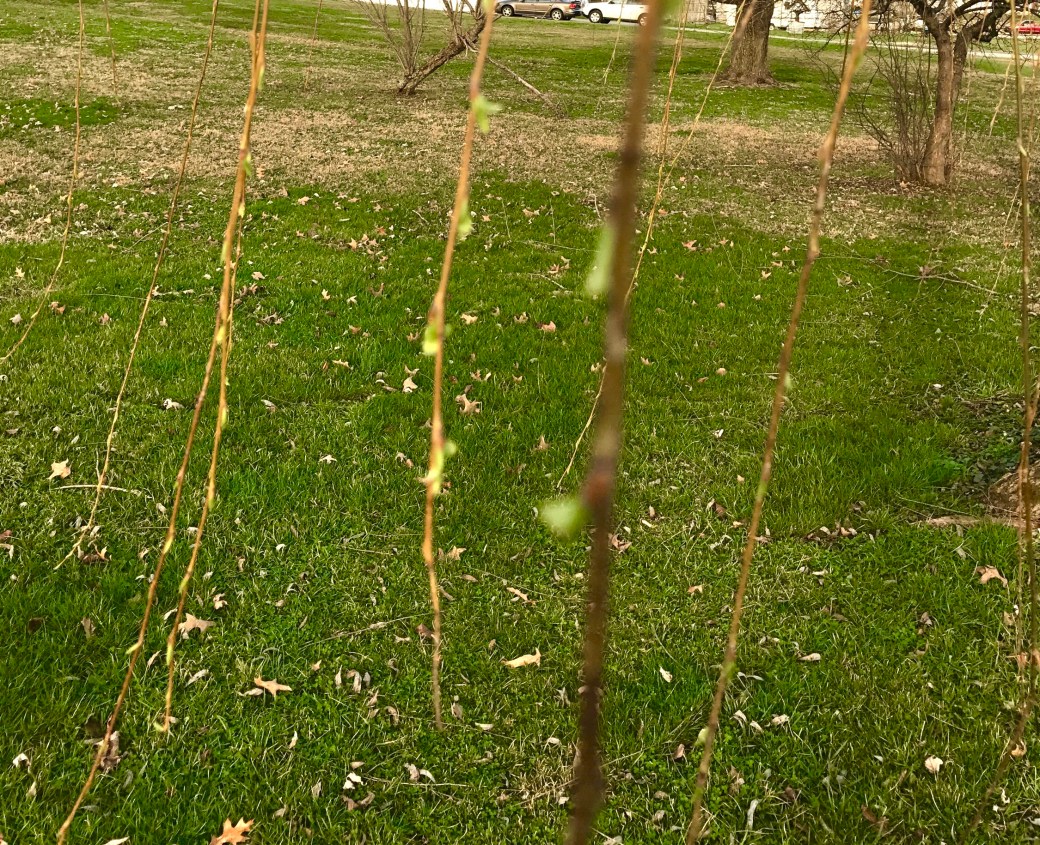
Meanwhile, during all of our collective worry and focus on the flooding, the cycle of life renewed itself. Spring peepers can now be heard at night, hyacinths have quietly bloomed, grass is beginning to grow, and our willow trees are sprouting new green leaves. When we detach from the story, we are able to see our watershed moments do indeed lead to our own spring-like renewal and return to us our source in the same way the river starts and ends at its source.
While much of our collective focus was on the rising waters, grass began to grow, spring peepers began their nocturnal chirpings, and our willow tree began to sprout new green leaves.
“Writing is a lot like making soup. My subconscious cooks the idea, but I have to sit down at the computer to pour it out.”—Robin Wells
Are you kidding me? It was week filled with single digit temperatures. In spite of the fact we were burning a fire in our wood-burning stove and our thermostat was set of 62F degrees, the heater was still kicking on. Of course, much of that had to do with the fact that we have a long ranch-style house, so the heat was unable to warm the entire length of our house. Brrr . . .
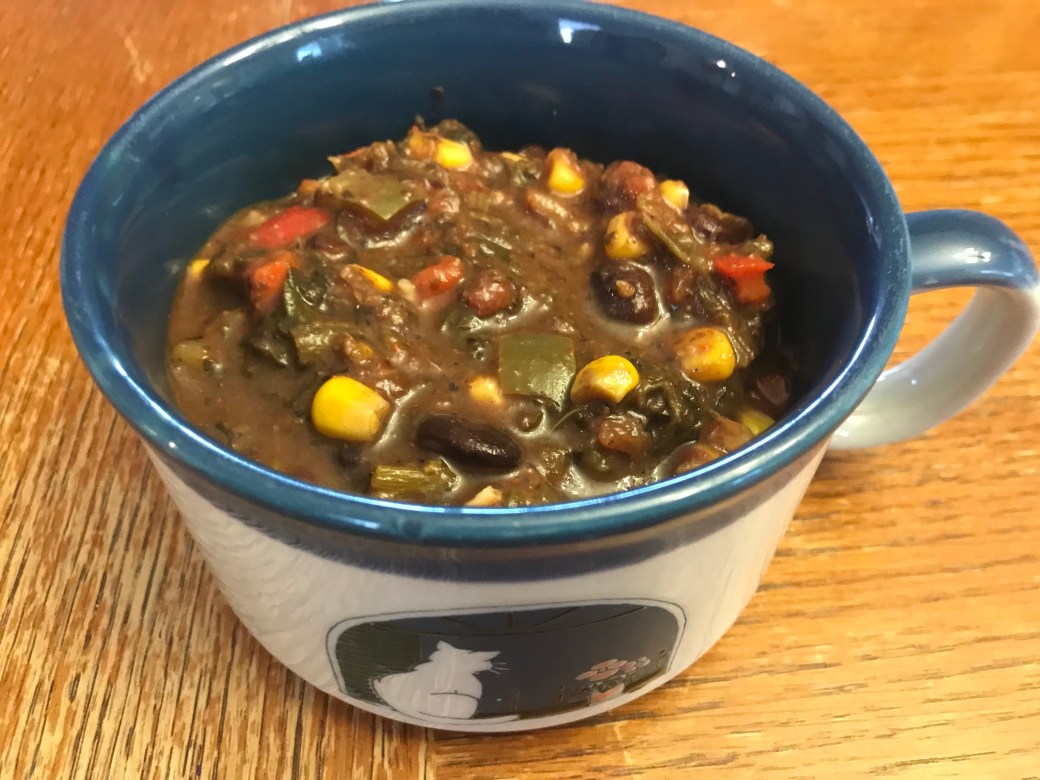
Below freezing weather calls for a hearty soup to warm the soul!
It seemed like a perfect week for soup! Black bean soup to be specific. Soup is not something we make year round. In fact, I go months without making it. However, nothing tastes better or seems to make the house feel warmer, than homemade soup cooking in the Crockpot!
Nothing like the smell of homemade soup simmering in a Crockpot . . . .
I used to make black bean soup from dried beans, but as a multi-tasker when it comes to the various roles/jobs I juggle, time often slips away from me quickly. Therefore, I opt for healthy short cuts when I can. Thus, using rinsed canned beans works just as well for me when it comes to using beans in soups and chili.
Drained and rinsed canned black beans & Mexi-corn.
This recipe is one of my favorites. It is a combination of several recipes I’ve tried over the years. All that past trial and error with black bean soup variations have informed the recipe-creation found below. It is beautiful combination of colors, flavors, and textures. Even my daughter, who is a very picky eater, likes this recipe because it is so similar to black bean chili.
You can serve this soup straight up in a bowl. It makes a super, or should I say, “souper,” dip into which to sink warm tortillas. However, it is also good to use when making nachos. In fact, this is my daughter’s favorite way in which to eat it. Additionally, you could use drained spoonfuls of it to create burritos, tacos, or enchiladas. Specifically, I have used leftovers of this soup to create a baked enchilada casserole. For cornbread lovers, this soup is great ladled over a crumbled up square, or two, of cornbread.
Regardless of how you serve it, this black bean soup is, well, “souper” delicious! (Once again, I could not resist the chance to be punny!) It is versatile enough, so that whether or not you are serving a large family, or just cooking for two, the leftovers won’t go to waste. Plus, it freezes a well—another bonus! Additionally, it makes a great meatless meal for Lent, Meatless Monday, or any other time you would like to take a break from meat, but still want a hearty meal. Try this recipe out any time you want your body and soul warmed!
From my home to yours, I wish you healthy, happy, homemade meals.
Hearty Black Bean Soup
Ingredients:
2-tablespoon olive oil (Can be made oil free and instead sauté vegetables in 2-tablespoons of broth.)
1 onion, diced (about 1 cup)
3 large cloves garlic, minced (about 1 tablespoon)
2 large bell peppers, preferably 1 green plus 1 of another color
1 stalk of celery, chopped
1 medium carrot, sliced
2 tablespoons chili powder
1-tablespoon ground cumin
1-tablespoon oregano
1 tablespoon cocoa powder
¼ teaspoon red pepper
Salt and pepper to taste
4 cups vegetable broth
4 cans (15 ounces each) black beans, drained
1 can (15 ounce) Mexican or whole kernel corn
1 can (14.5 ounce) tomatoes
2 cups frozen chopped spinach
Lime wedges
Directions:
Heat oil in large pot over medium-high heat.
Sauté onion, celery, carrots, and garlic for 5 minutes or until soft and onion translucent.
Stir in seasonings and cook for another minute or so.
Stir in broth, 2 cans of beans, and corn. Allow to simmer.
Meanwhile, in food processor or blender, process 2 cans of beans and tomatoes until smooth.
Stir into soup in mixture.
Stir in spinach.
Stir to boiling, reduce heat to medium and allow to simmer for 15 minutes; or, transfer soup into Crockpot and allow to simmer for several hours on low.
Makes 8 generous servings.
Serve with lime wedges to squeeze over soup once dished.
“February 15 is national gumdrop day.”—Foodimentary
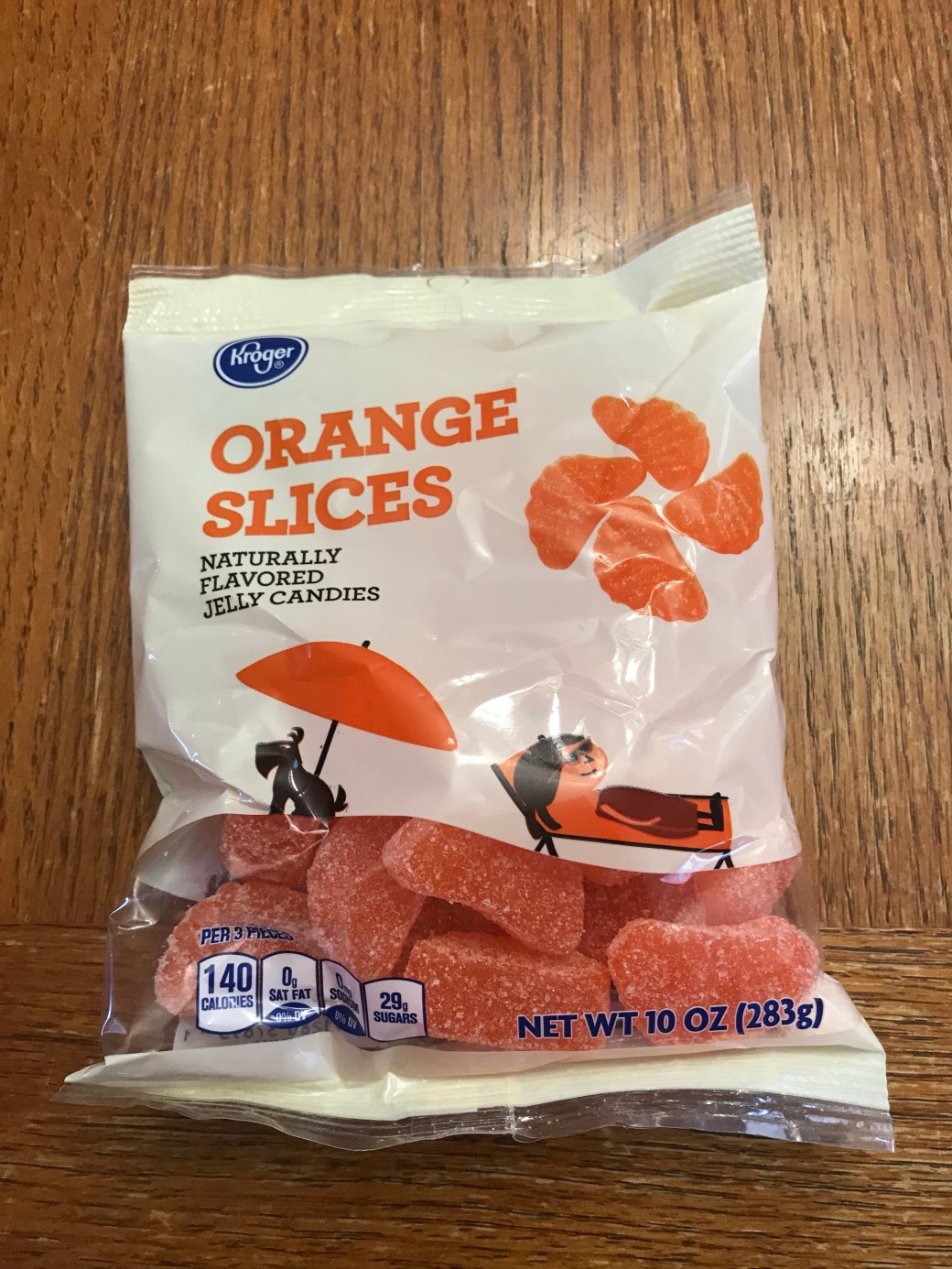
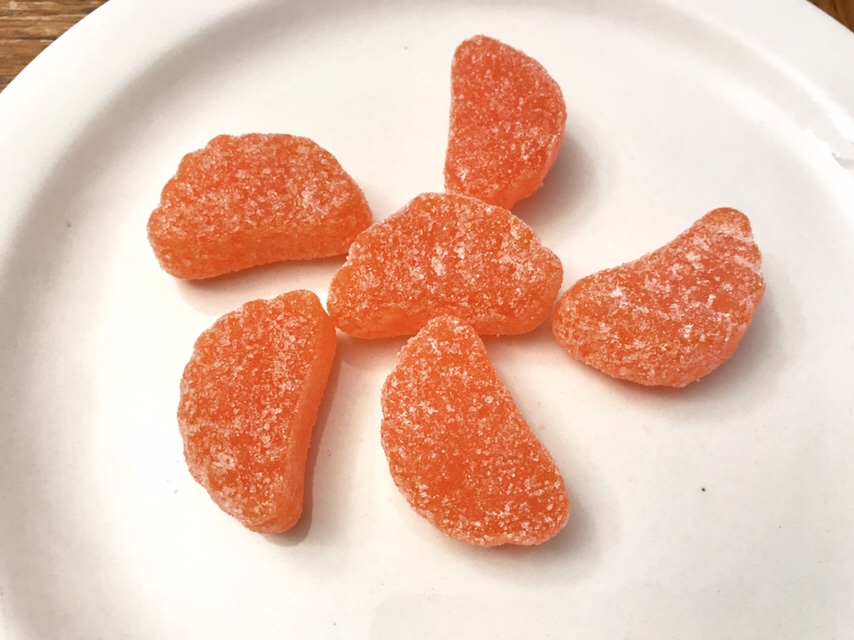
“Gumdrops, a fruit or spice flavored sugar coated gelatin candy, usually conical in shape. Other shapes and flavors: orange slices, licorice babies, and spearmint leaves.”—Foodimentary
The glow that hovered over the valley area in which my home sits became more luminous as the garage door gradually lifted, bursting through the opening as if there was a nearby three-alarm fire creating brilliant radiance. Instead, it was the light of sunrise filling the air with a soft blush. Glancing toward the hillside over which the sun was rising, the sky was filled with color like that of the interior flesh of a blood orange, then gradually became a more vivid orange—like biting into the middle of a candied orange slice that my grandfather, called, “Papaw” kept by the back door at the end of the kitchen counter.
Over the past two weeks, I have been fully blessed to bear witness to several blazing sunrises much like I was witnessing on that particular day. For whatever reason, these spectacular events of flame have recently been filling my heart with memories of Papaw and his candied orange slices. It is fitting, that on the day after Valentine’s Day, a day devoted to love, is National Gumdrop Day—which is what orange slices, by definition, are.
Still, I cannot talk about Papaw without also talking about his wife of over 60 years, the woman I called, “Grandmother.” These were my maternal grandparents with whom I spent a plethora of time during my childhood, teens, and even my young adult years. The mark they left still flows profoundly through my spirit much like the sunrise I described. Copious happy memories tied up in a simple house, with simple, but deeply proud, genuinely faith-filled, and ever loving people. Were they perfect? No, even in my idealized memory, I can recognize their flaws, but that does not reduce their love or my love for them.
What was once my grandparents house. My Papaw was so proud of this home he built on “high ground” as he had been flooded out of two other previous homes.
“Stethie,” my grandfather could never seem to say, “Stephie,” correctly. “Be sure and get you an orange slice as you go out the door. They’re good and fresh. Your grandmother just bought ‘em yesterday.”
I now recognize that was my Papaw’s way of he saying, “I love you. I am sorry to see you go—take something sweet with you as a slice of sweet love from your ol’ Papaw and Grandmother.”
My Grandmother, Helen, (middle) and my Papaw, Check, (right) sitting with one of their son’s (Leo) mother-in-law, that I only knew as “Nannie.” (Left)
Papaw loved to talk with strangers. In fact, in his later years, there were a few times I would take Grandmother and he grocery shopping. It seemed during those visits, Grandmother and I would often “lose” him. Grandmother would send him to get some particular item from across the store, and he would not return.
“Oh Dear, who is Check (my grandfather’s nickname) talking to now?” she would say after some time had past with worry and aggravation in her voice.
“Stethie, would you go see if you can find him?”
Papaw and Grandmother one Christmas at my childhood home.
Sure enough, I’d walk up and down the aisles and eventually spy Papaw with eyes a’twinkin’ as he talked-up another shopper. Sometimes, he knew them; most of the time, however, he did not. His fine, long-boned fingers, empty of the grocery item for which my Grandmother had sent him, gesticulated this way as he attempted to make his point. I would approach with respectful, polite caution, especially once he was in the early stages of Alzheimer’s, as I never knew what he would be saying.
His faded blue-gray eyes though never failed to light up upon seeing me approach as I often took him by the forearm and attempt to lead him away. Sometimes, he would stay put insisting upon introducing me to the person I rarely ever knew. Other times, he would nod his head as if that were his signal to suddenly remember what he was supposed to be doing and politely excuse himself.
Papaw on the front porch of his home with one of his great-grandkids, Wesley, from Texas. Wesley is wearing a blue suit sewn to match Papaw’s.
One time, I found him near tears, having dropped an egg and broken it on the grocery floor. I was reminded of a long ago story in which my middle sister, Traci, was a mere child and had accidently broken eggs while tagging along with Papaw at the grocery store. She cried so much, I am told, that it caused Papaw to cry too. There he stood, looking around, much in the way Traci must have looked as a child, guilty, shamed, and extremely sorrowful. I tried to get him to laugh it off, but it bothered him, as it was one of the few times he realized his mind was changing. Even as I type these words, my heart breaks for him in that moment.
There were a couple of other times in which he suspected the claws of Alzheimer’s were beginning to burrow into the recesses of his brain. His eyes would click, he would pause, shake his head, and return my gaze as if to say, “I am trying, Stethie, to clear the fog, but I can’t. Help me.” Sadly, I could not.
I was the first family member to recognize that Papaw had Alzheimer’s. At first, I was doubted, written off, or simply dismissed. I get it. Who wants to believe the gray cloud of Alzheimer’s had infiltrated their loved one’s brain like an identity thief stealing a credit card number. Where did the memories go? How could this happen?
It wasn’t too long after I took this picture that I began to realize Papaw was in the early stages of Alzheimer’s.
The gift of these sunrises reminds me of Papaw’s love. I was “his girl,” he would often say as he grabbed my arms and looked lovingly into my eyes. He told me to be like his sister and become an educated woman, because in his words, “Your ol’ Papaw here, only made to fifth grade, but I was the teacher’s pet! She kept me near her desk, and tied a string from her finger to mine, so I couldn’t get too far from her.”
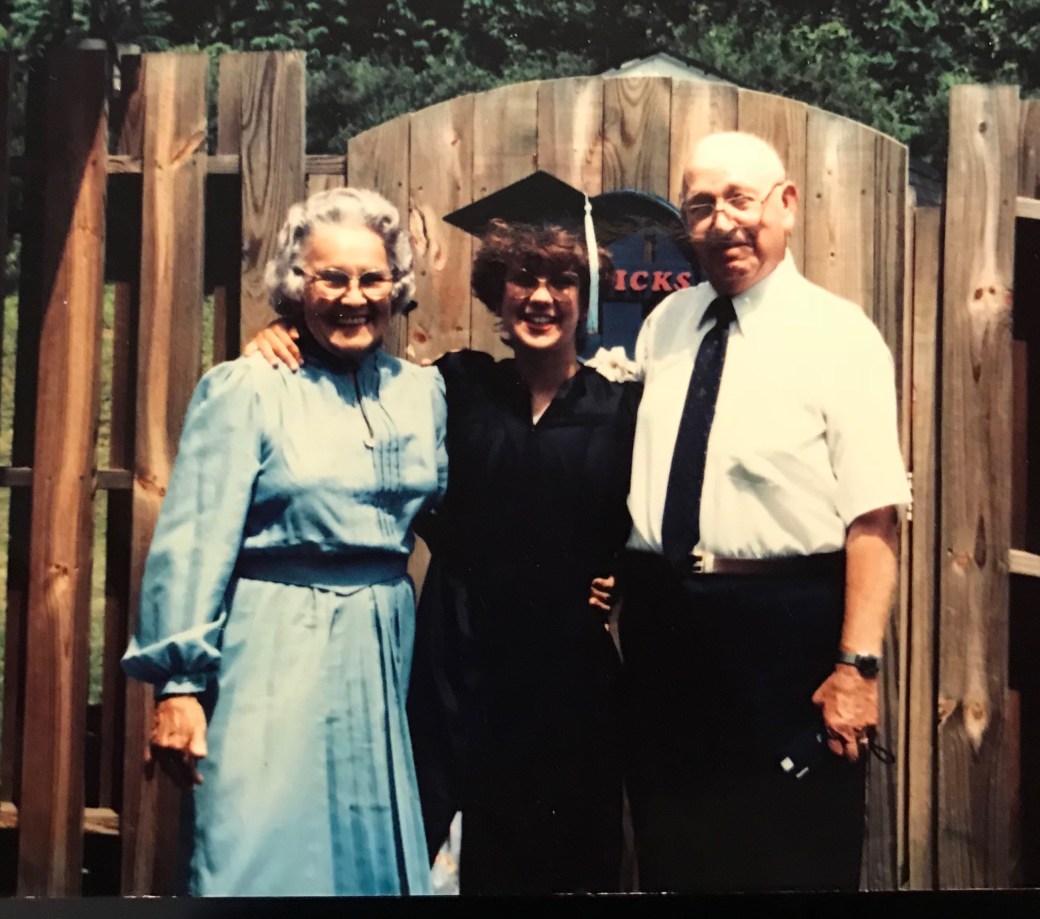
My absolute favorite picture of my grandparents taken in the side yard of my childhood home. They drove all the way to Athens, Ohio to watch me graduate from Ohio University. The pride written all over their face in this picture brings tears to my eyes to this day.
He loved his church, football, National Geographic magazines and learning random facts of trivia; traveling and gardening; railroading (CSX proud) and clipping coupons; Boy Scouting and collecting coins; saltines crumbled in bowl with milk poured over them on Sunday nights after church, sorghum on buttered canned biscuits, glazed donuts, and candied orange slices in a glass jar on the kitchen counter beside the back door. It is his memory, bound up in the orange-slice sunrises that have been warming my mornings of late. I feel his heavenly smile. I know he is telling Grandmother, “There goes my girl,” as I drive towards the embrace of the rising glow of love.
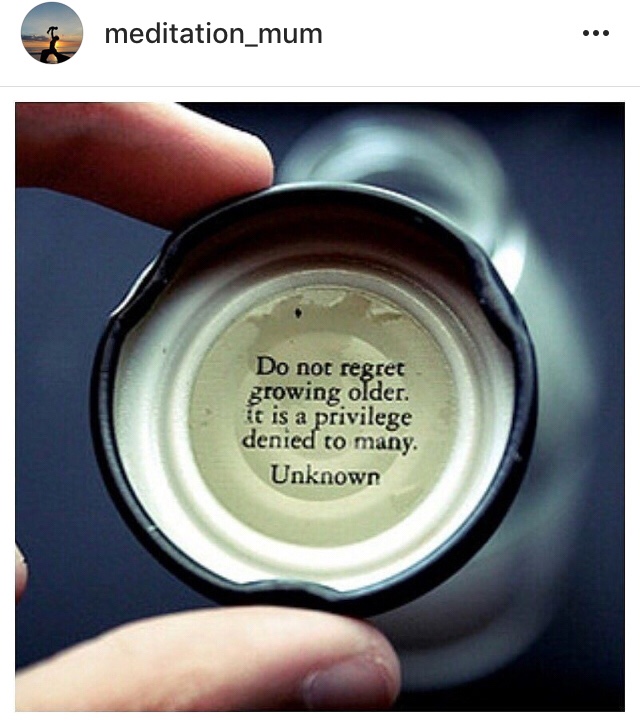
As seen on Instagram at meditation_mum.
Written with great love for Chester Arlen Slater aka “Papaw,” aka “Poppy-Check.” May his memory and love forever shine.
“It is better to keep the top half of the gas tank full.”—My Dad
“That is why we never give up. Though our bodies are dying, our spirits are being renewed every day.”– 2 Corinthians 4:16
This past week was Catholic Schools Week at the school in which my husband, John, and I teach. A special, fun-filled week with daily activities for students. The culminating experience occurs Friday with the annual 8th graders-versus-teachers event. Lasting a little more than an hour at the end of the school day, the students cheer, applaud, and yes, scream for their favorite “team.”
John and I can be seen in 8th graders vs. teachers: Who can eat fruit by the foot faster? Ultimately, an 8th grader won; and, sadly, I was pulled out for fear of food allergies.
This past Friday was made extra special as members of the Marshall University Football team stepped into the role of teachers for a flag football game. Energy, enthusiasm, and excitement were palpable—making this year’s closing occasion even more loud and frenetic! By the end, as we walked out of the gym, my ears were ringing, and I observed numerous exhausted students. Many of the students that I teach were resting with their heads down on the tables as they waited for their parents to pick them up. Their tanks were visibly empty.
When I was a new driver, I recall my Dad instructing me on the importance of never allowing my car to go much lower than a half-tank. I can still hear his advice.
“Steph, you never know what you might encounter on the road. You could get stuck in a traffic jam, or you could get stranded on an empty road late at night. Never let your gas gauge dip below half a tank, especially in the winter.”
Do you really want to stop and fill up a half-full tank on the way home from a long day of work, especially when the temperatures are dipping below freezing?
Of course, as a teenager, I doubted my Dad. It wasn’t like he was a professional mechanic. I mean, really, he worked in an office all day. What did he know?
It turns out, there are several valid reasons for keeping a vehicle’s gas tank above the half-full mark. These include avoiding mechanical issues; increased gas mileage; increased safety, especially during the extremes of summer and winter conditions; saving time; and ultimately, saving money. It occurred to me how very similar this is to life.
Huntington St. Joseph Catholic School 8th graders playing flag football with players from Marshall University.
Mechanical issues. As best I understand it, gas not only serves as fuel for the car, but also as a coolant for the fuel pump. Additionally, a nearly empty tank can cause the fuel pump to overheat. Furthermore, it can also increase the amount of gunk and sediment in the car’s tank, which can foul the fuel filter or clog the fuel injector. All of which can contribute to mechanical misfunction.
Likewise, our bodies need to be fueled with quality foods rather than processed. In the words of Michael Pollan, “Eat food. Not too much. Mostly plants.” Processed food (think bright, shiny packages) are usually full of “gunk and sediment,” such as excess sugar, preservatives, chemicals, and food colorings that foul up our body, and ultimately, our health. Just as we put our car’s health in mechanical jeopardy when we run our gas low, feeding our bodies processed foods runs our bodies low on nutrition while increasing the risk for a health break down.
Huntington St. Joseph Catholic School 8th graders playing flag football with players from Marshall University.
Gas Mileage. Increased fuel efficiency is another reason to keep the gas tank of a vehicle filled. Likewise, our bodies’ tanks need filled with 6-9 hours of sleep. Our body downshifts into repair-mode as we sleep, keeping our “engines” running more smoothly. A full night’s sleep fills our life-tank with copious benefits, including, increased memory; decreased inflammation; reduction of depression/anxiety; increased focus/attention; decreased likelihood of accidents or mistakes; reduction of stress, increased ability to maintain a healthy weight; increased longevity; and promotion of healing to name a few. Therefore, living a fully productive life requires nightly fill-ups of sleep.
Safety. Running a vehicle “on fumes” puts you, and any passengers with you, at risk for engine failure. Engine failure can cause a whole host of mechanical issues including loss of brakes and power steering. Plus, you risk becoming stranded—potentially in an unsafe situation.
Likewise, allowing our spiritual health to run on fumes not only weakens our mental health, but also deeply affects our soul. Regular routines of scripture reading, prayer, meditation, and participation in your house of worship continually refuels the heart and soul with abundant love and inspiration. Without a heart-centered faith connection, we too, run the risk of being spiritually stranded in a world filled with soul-sucking distractions. Divine Providence does not demand perfection, it just asks for regular faith-full fill-ups.
Gathering for a picture at the end of the flag football game.
Save Time. Sure, stopping to gas up takes time—not something you exactly want to do on the way home after a twelve-hour shift with an outside temperature below freezing. However, filling half a tank takes less time than refueling a whole; and, it’s much faster than the time needed for repairs if you perpetually run your car on fumes.
Likewise, skipping exercise seems like a perfect time-saver. However, in the long run, taking time to exercise will benefit you with increased energy; increased ability to maintain or lose weight; stronger bones and muscles; increased cardiovascular health; reduced risk of disease; improved skin health; increased sleep quality; increased brain and memory function; as well as reduced stress. People who do not exercise spend more time sick, visiting doctors and/or therapists, or even time in the hospital. Thus, taking time to top off your tank with regular bouts of moderate physical activity, in any form, is like making regular deposits of quality time towards the longevity of your life.
The official picture of our 8th graders to the MU football players.
Save Money. Regularly skimping on the expense of gas fill-ups until the last possible moment will not save money in the long run, especially if you end up needing a costly repair. The same is true for our own proverbial life-tanks. In our consumer driven world, we are repeatedly assaulted with images of the “good life.” From decked out, over-sized vehicles, to expansive, multi-roomed homes; from the current fashion trends, to the perfectly outfitted child; from the latest, greatest personal devices, to the newest, technologically most advanced home gadgets, from the picture perfect cup of coffee, to the over-the-top dining experience—the message is clear, in order to be happy, one must spend and spend a lot. Does all of this spending really fill our life tanks? Or do loving connections, both at home and with friends/loved ones, mean more? In the long run, I believe, regular doses of time spent with family, friends, and loved ones, even in the simplest of settings, is far more fulfilling than any non-human thing that can be purchased.
To be certain, living a full life is not as easy as filling up our car’s gas tank. Life is never perfect. Often, like the roads over which our cars travel, life can be filled with unexpected curves, congestion, and tie-ups. Nonetheless, just like lack of proper car maintenance can shorten the life and quality of our car, so can our life choices. I guess Dad knew what he was talking about after all—keep the tank full!
“It’s never too late to start something new, to do all those things that you’ve been longing to do.”—Dallas Clayton
“You’re never too old to set another goal or to dream a new dream.”—C.S. Lewis
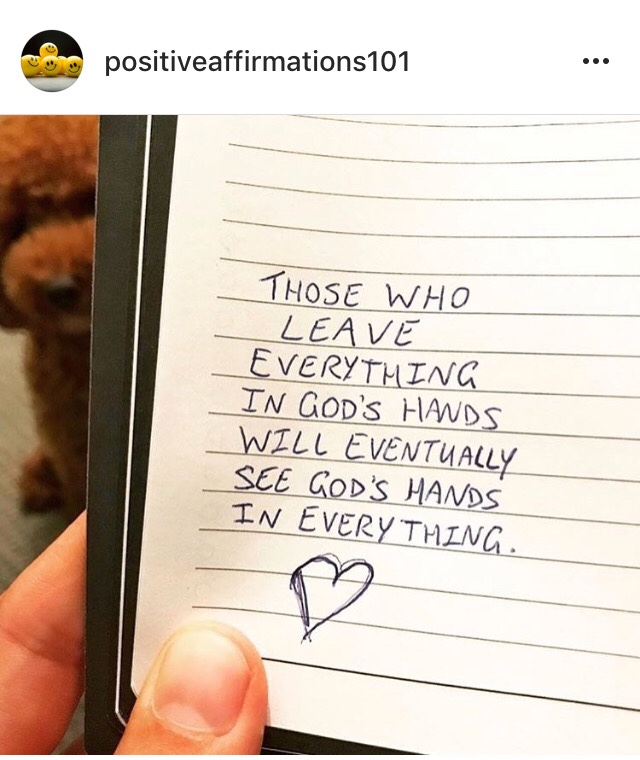
As seen on Instagram by positiveaffirmations101.
By the time you are reading this, Dear Reader, I will have embarked upon a new journey, well, semi-new. I have had many passions in my life as well as many dreams. I am blessed with the love of my family who has always supported the exploration of my passions. From teaching to traveling, from reading to once-upon-a-time running, from writing for the local newspaper to creating my own blog/website, from cooking-up recipes to learning about nutrition, and all my other past and present pursuits, my family has repeatedly said, “Do it.” Therefore, when I began to talk about pursuing Registered Yoga Teacher training (RYT)—they once again rallied around me, and said, “Yes, do it.”
Now, my new journey begins, and I couldn’t be more excited and more nervous all at the same time! Questions full of doubt fill me head: Will I be the oldest person in class? Can I manage working full-time, and keep up with my writing/blog, and study/read for RYT? Will my body hold up to the long stretches of sitting combined with long sessions of practicing yoga? Can I memorize and understand anatomy, biomechanics of movement, Sanskrit, foundational teaching methods, and all the other new information that will be required of me? What will my classmates be like? What about the instructors? Oh, the list could go on . . .
I am part of a group of 19 students going through Brown Dog Yoga Teacher Training.
Still, my husband, John, says, “I’m excited for you! I think this is your calling.” My daughter, Madelyn, encourages, “Mom, you’re going to be great! I’ve been telling my friends about what you’re doing.” My mom, dad, siblings, and other extended family members have chimed in their encouragement as well. Therefore, I am taking a leap of faith; I will step out of my comfort zone, and embrace the unknown.
As seen on Instagram by positiveaffirmations101.
RYT began with a long list of assigned readings. The first of many, I am told. I have read, underlined, highlighted, and written notes. Some of the readings were technical and filled with new vocabulary, and I struggled to understand them. However, I am going to put my faith in the instructors’ abilities to shed light on those subjects. Many of the readings were eye opening, while others were quite deep and profound. All of the material, however, inspires a sense of excitement over learning new information!
Required readings for RYT 2018!
I have encountered several people who are under the impression that yoga is a religion. It is most certainly not, nor is it associated with any specific religious affiliation. That said, I have read about, as well as encountered a number of people, such as priests, pastors, and lay people of various faith backgrounds who practice yoga for the sole purpose of settling and clearing their mind in order to strengthen and increase their ability to focus during prayers and the readings or studying of scripture. In fact, I have a friend who just recently shared with me that one of her pastors from a few years ago, was regularly required to participate in yoga classes, along with his fellow classmates, as an integral part of his Christian seminary education.
Additionally, I have yet to find any conflicts between my faith/belief system and the practice/teachings of yoga. If anything, I continue to discover many parallels. For example, part of my readings and practices for this month are centered on the ideas of nonviolence and purity in thoughts, words and actions. Next month’s lessons will focus on truthfulness as well as contentment and gratitude. Other months will concentrate on lessons of nonstealing, self-discipline, nonexcess, self-study, nonpossessivenes, and surrender. All of these ethical guidelines are worthy and noble, in my mind, no matter your religious views.
To be certain, the names of traditional yoga poses are rooted in one of the oldest, if not the oldest forms of recorded language, Sanskrit. Furthermore, while the numerous Sanskrit words can be found in religions other than Christianity, the names of the poses are not tied to those religions. They are quite simply the names of yoga postures and nothing more.
By becoming a yoga teacher, I will be able to share with others the one form of exercise I have been able to consistently practice for over 20 years. It was the only type of exercise for which I was given clearance to do for over a year after doctors discovered I had three bulging discs and an extra-vertebrae. Yoga increases the ability to focus, strengthens muscles and bones, increases flexibility, decreases stress, reduces reactiveness, and can calm and clear the mind just to name a few of its benefits. Additionally, yoga can be practiced in nearly any location, including home, and can last a short as five minutes to two hours or more, and all times in between. The workouts can be quite gentle, moderate, or rather vigorous; and, yoga can even be practiced in a chair!
I am eagerly anticipating the day for which I will step off my own yoga mat, and into the world as a certified yoga teacher. In a world full of stress, anxiety, and busyness; a world in which we frequently sit more than we stand; as well as a culture that often promotes the “no pain, no gain” philosophy, especially when it comes to exercise, I am extremely energized and enthused to soon be able to offer an alternative to the traditional grind, pound, and push workout. I look forward to sharing a form of exercise more than 5,000 years old that will enhance overall vitality and health of mind, body, and spirit. Therefore, I will study hard, read much, listen carefully, and keep my mind, as well as my heart, wide-open as I come full-circle within yoga.
“Advice from a blueberry: Be well-rounded. Soak up the sun. Find beauty in small things. Live a fruitful life. Be a good pick. It’s OK to be a little blue. Make sweet memories!”—Ilan Shamir
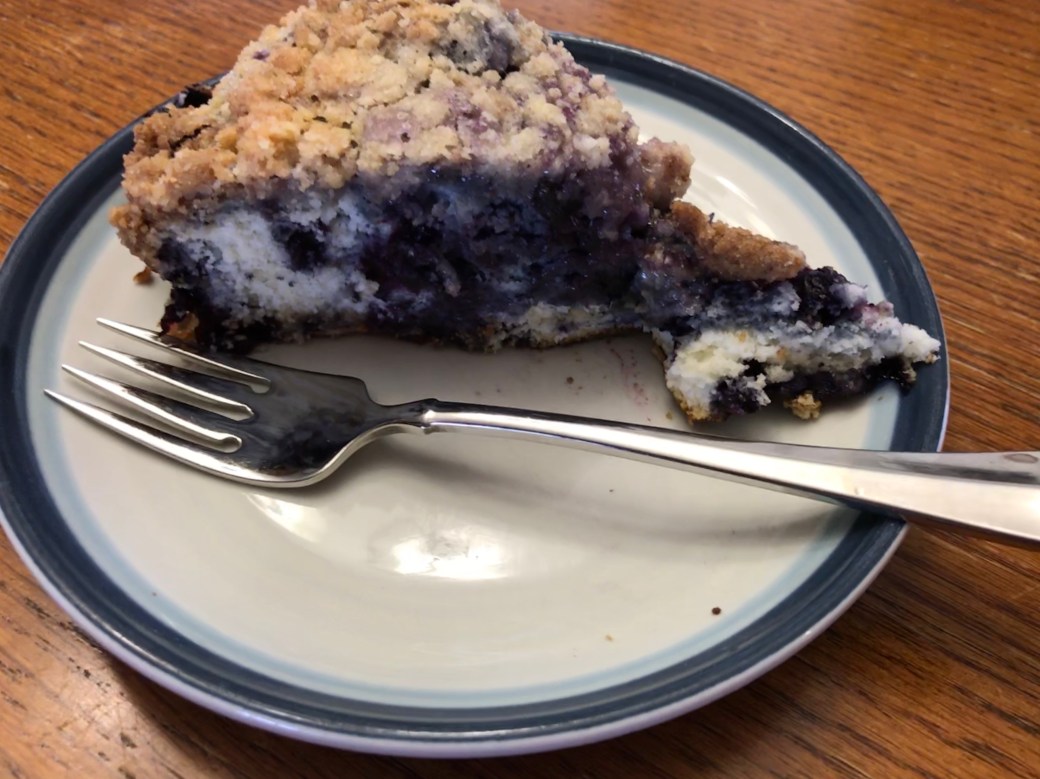
“Mom, why do you only make Blueberry Buckle for Christmas Brunch or when we have overnight company? Why can’t you make it more often . . .like when I come home this weekend?”
I was talking with my daughter, Madelyn, on the phone. She was coming home for a long weekend break from college this past fall. Her point was valid, I conceded, I did save Blueberry Buckle for special occasions. In the end, I agreed to make it this delectable breakfast treat more often, including the weekend when she came home.
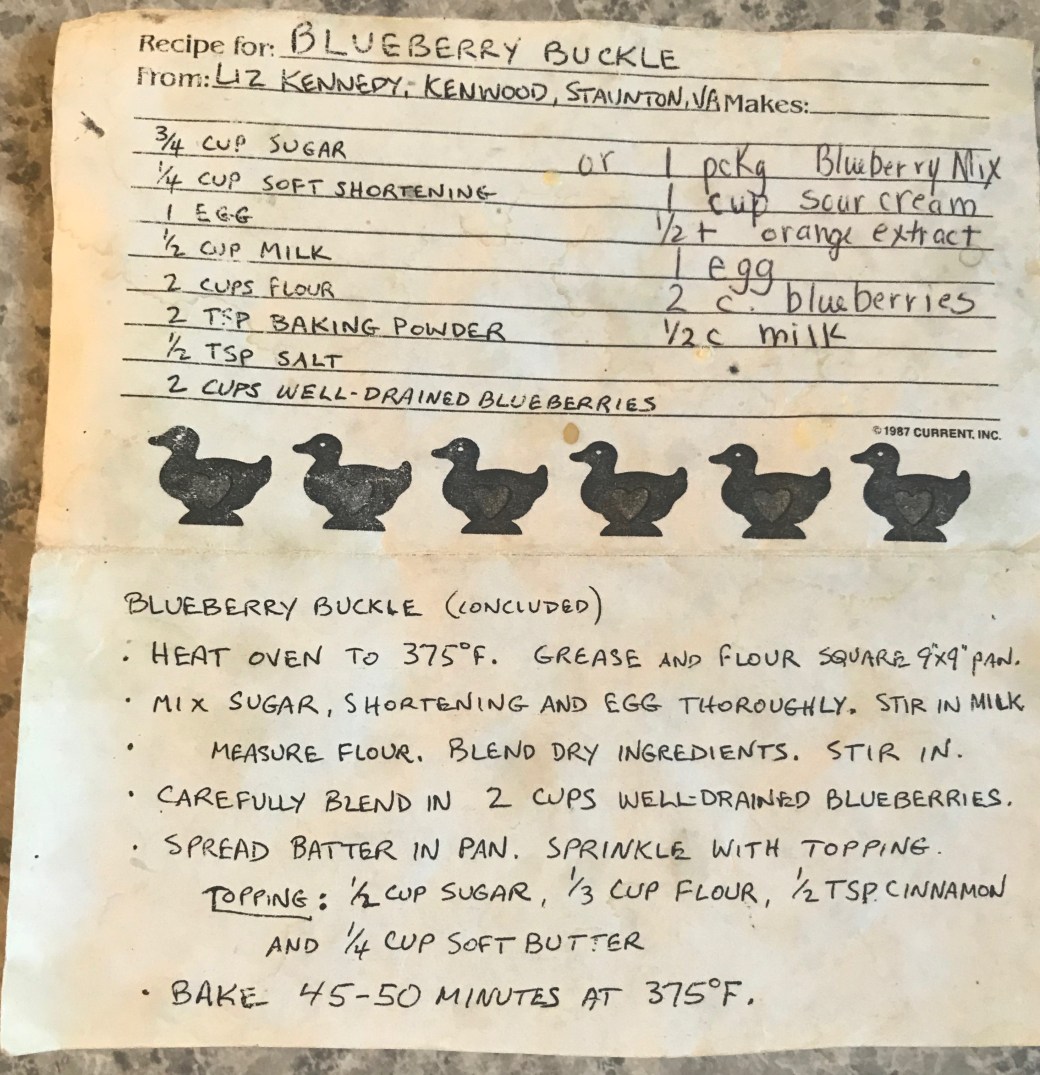
My husband, John, and I first discovered Blueberry Buckle in the early nineties when we frequently traveled to Staunton, VA, either as a weekend getaway, or as overnight stop on the way to or from the Outer Banks of North Carolina. In Staunton, we most often stayed in a bed and breakfast called, The Kenwood, and owned by the late Ed and Liz Kennedy.
Ed and Liz were complimentary pair. Ed, as best I recall, was scientist who retired from Corning. He was widely traveled, well read, and collector of nonfiction magazines such as the Smithsonian, American Heritage, and National Geographic to name a few. Happy to talk about nearly any given subject or offer advice for nearby historical sites, hiking trails, or scenic sites, Ed played the perfect gregarious host.
Meanwhile, Liz, a retired nurse who spent her life working in inner-city Boston hospitals, was more reserved. She was happy to remain behind the scenes cooking breakfast, knitting, or watching baseball. That said, John and I visited their B & B so often, that over the years, Liz warmed to John and me, and often talked with us as much as Ed.
It was Liz who gave me this recipe for Blueberry Buckle. She preferred baking recipes like Blueberry Buckle that could be made ahead, cut into individual servings, and frozen. Then, she could take the amount needed the night before to thaw, and warm them in the morning. She served often served blueberry buckle with some form of protein, a fresh bowl of seasonal mixed fruit, and the customers’ choices of juices, coffees, and/or teas.
I feel privileged to have this recipe because it was Liz’s policy to not share her recipes with customers at least not when they first began their business—and, we were their very first customers (but that is a different story for another day.) In fact, because we were frequent guests of their establishment, Liz would often come out after breakfast, sit down with us, and would talk for hours if we let her.
We enjoyed knowing Ed and Liz. We considered them friends. They were special people, and I think of them each time I make this recipe. Sharing recipes, such as this, is one of the reasons we love to travel—getting to know people from different geographic locations and experiencing “their” foods that we would have otherwise never before experienced.
While the recipe I share with you is mostly true to Liz’s original version, I have made a few minor adjustments. First, and most obvious, I replaced regular all-purpose flour with a gluten-free version. If you do not need a gluten-free version, then by all means, use your favorite flour. Additionally, Liz did not use orange extract—it is a “trick” I learned from other recipes with blueberries. Thus, feel free to leave it out or replace it with another favorite extract. (I have even read Blueberry Buckle recipes that use lemon zest instead of any extract.) Finally, feel to use other types of berries, shredded apples, or even rhubarb in place of blueberries—you may then want to play with various additions to the cake batter, such as cinnamon, vanilla extract, etc.
From my home to yours, I wish you an abundance of happy, healthy, and homemade meals. . . and a vacation adventure filled with wonderful people and new foods to try!
P.S. You don’t have to save this recipe for overnight guests or once-per-year events. Just ask my daughter!
Gluten-Free Blueberry Buckle
Cake ingredients:
¾ cup sugar
¼ cup shortening (or plant –derived replacement)
1 egg (or equivalent egg replacement)
½ cup favorite milk
½ teaspoon orange extract
2 cups gluten-free all purpose baking flour (I prefer cup-4-cup brand.)
2 teaspoons baking powder
½ teaspoon salt
2 cups blueberries (fresh or frozen)
Topping ingredients:
½ cup sugar
1/3-cup gluten free flour
½ teaspoon cinnamon
¼ cup soft butter (or equal plant-based equivalent)
Begin by measuring and setting aside ¼ cup butter (or plant based replacement) to allow it to soften.
Preheat oven to 375F degrees.
Prepare 9 x 9 square baking pan with nonstick cooking spray or coconut oil.
Begin with cake ingredients by thoroughly mixing ¾ cup sugar, shortening, and egg.
Stir in milk and orange extract.
In separate bowl, blend together gluten-free flour, baking powder, and salt.
Mix dry ingredients into wet ingredients.
Carefully blend in blueberries. (If using frozen blueberries, you can gently shake them in a zip lock bag with a bit of flour to prevent, or at least reduce, the batter turning purple.)
Spread batter into pan.
Reusing now empty dry ingredient bowl, (no sense dirtying another bowl) stir together dry topping ingredients: ½ sugar, 1/3 gluten free flour, and ¼ teaspoon cinnamon.
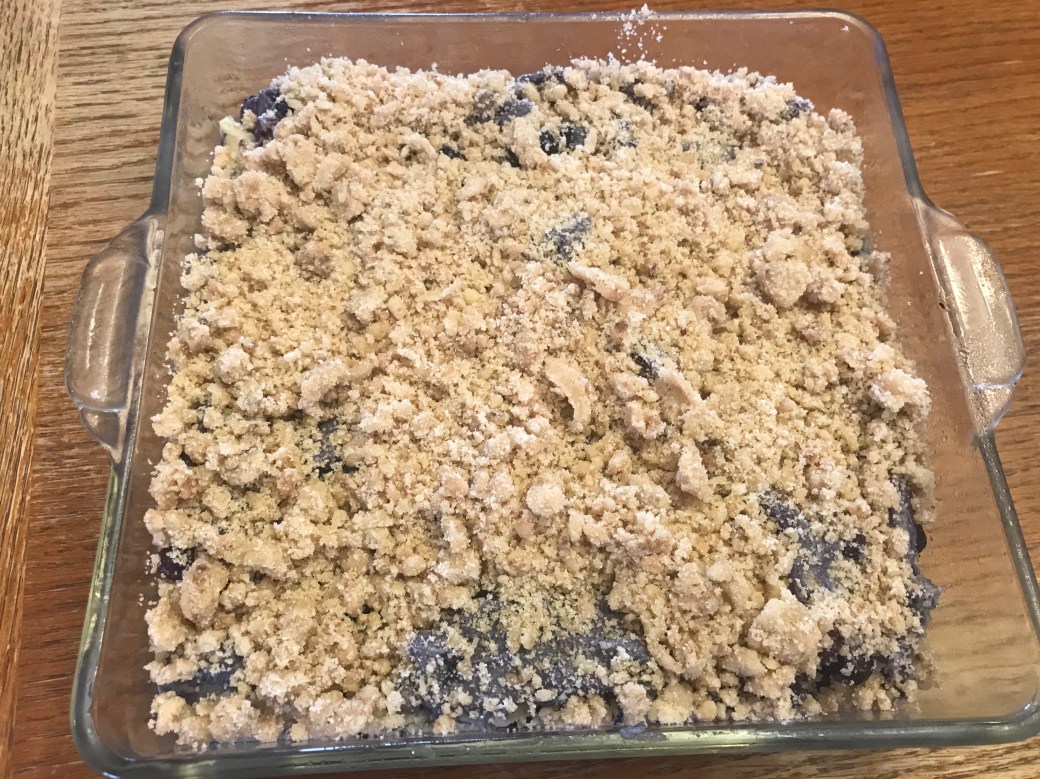
Once dry ingredient well mixed, stir in butter with fork, mashing and blending until soft crumbly topping forms.
Sprinkle the topping over batter.
Bake 45-50 minutes or until toothpick inserted in middle of cake comes out clean. (Please note, if using frozen blueberries, you do not need to thaw; however, the buckle may take a bit longer to bake.)
Serves 9, but recipe can be doubled as I frequently do this.
Further, once cut into squares, it’s great to freeze ahead for quick morning reheats.
“But listen to me. For one moment quit being sad. Hear blessing dropping their blossoms around you.”—Rumi
“There are always flowers for those who want to see them.”—Henri Matisse
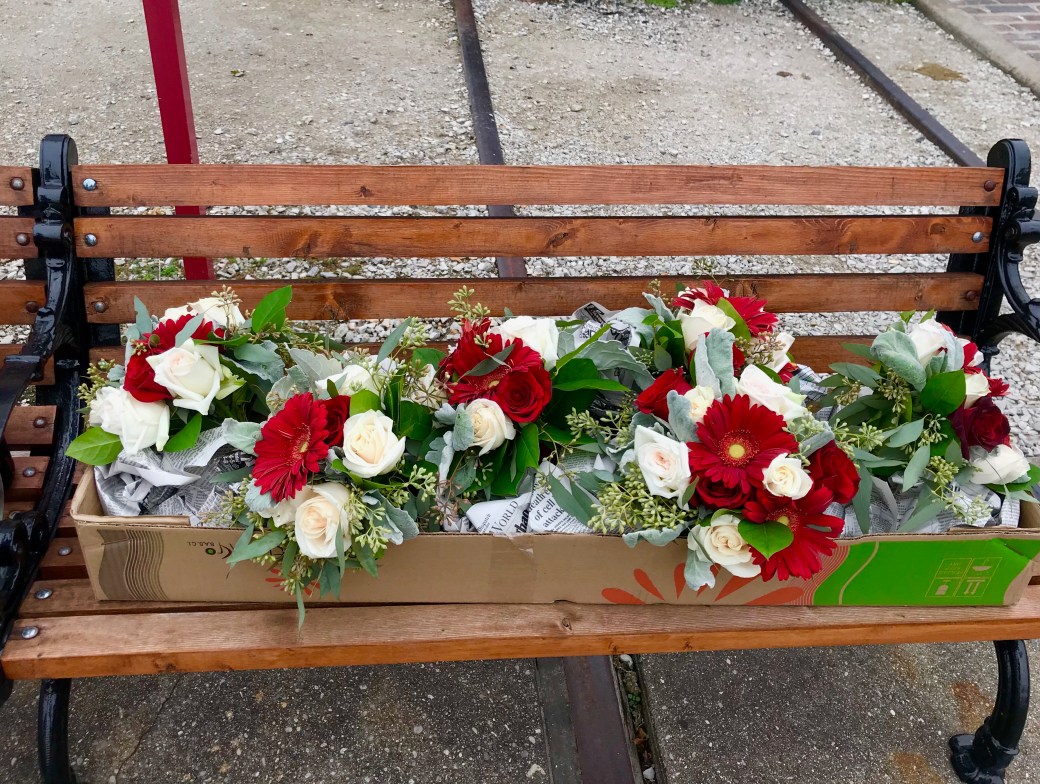
My Dad, Step-mom, Pam, and I were standing on the sidewalk outside of a quaint, downtown artisan shopping area of Huntington, WV, known as Heritage Station, a former B & O train station. It was a grey, chilly day, and we had just enjoyed breakfast in a charming coffee shop/diner. We were in the midst of saying our goodbyes when an unknown, well-dressed, young lady approached us rather quickly with her arms full of parcels.
“Would you watch these for me, please, while I run inside?”
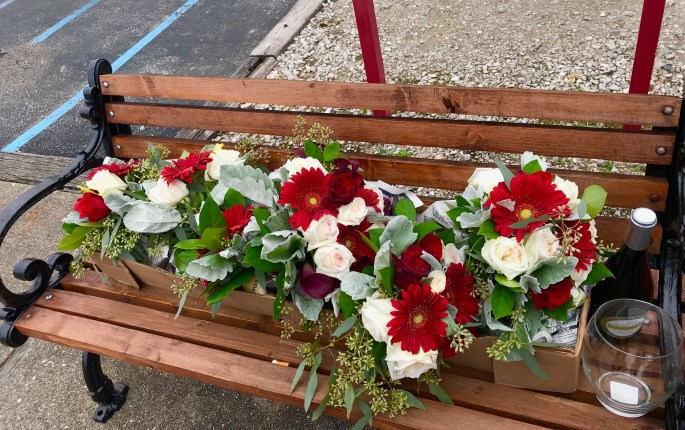
Without hesitation, we agreed, and she quickly placed down two boxes of beautifully arranged roses, a bottle of wine, and two glasses. She rapidly walked away, the irony of her rhythmic clickety-clack shoes were not lost me as we stood near an old train engine staring at the stunning bouquets in front of us.
Pam and I immediately began smelling and gently touching the fragrant petals. We were careful not to disturb the actual arrangements, as it was clear these flowers were for a special occasion.
The nameless female remained away for several minutes while the three of us continued to admire the brilliant garnet and snowy-white roses, mixed with an unknown multi-petaled crimson flower, and surrounded by varying shades of greenery. The vividness of these flowers was such a stark contrast to the overcast day surrounding us. I felt the gnawing tickle within the recesses of my brain sensing there was a lesson here for me to unearth; but it would take months for my heart to understand the divinely inspired message.
When my daughter was quite young, she would wake up fully charged and ready to go. Every day was an adventure for which she eagerly embraced. Even before eating breakfast and getting dressed, she would run about the house in her pajamas on those pint-sized legs full of energy, brimming with a perpetual smile, incessant talk, and an easy to find giggle. As the day progressed, it didn’t matter how neatly she was dressed, or how tidily I fixed her hair, by day’s end, her clothes were rumpled and stained while her hair was tousled and wildly flowing. This was because she whole-heartedly threw herself into engagement with any activity or person that came her way. It didn’t matter if was rainy, sunny, snowy, cloudy, spring, or fall—she loved life. And while, I rarely got the stains out of her clothes, I savored her enthusiastic, radiant energy even if it did wear me out at times. I often wished I could bottle up her spirit and inject it into others, including myself, during moments of difficulty.
My daughter was not old enough to have created stories in her mind. You know, the on-going loop that often plays in our heads. Stories such as, “I’m such a klutz;’ “I never do anything right;’ “I’m not good enough;” “They don’t like me;” “Today is a bad day;” “I have so much to do;” “I’m poor, rich, fat, skinny, ugly, pretty . . ..” The story titles are endless. And, if you’re like me, the “story” frequently plays like a broken record in the mind repeating the same line over and over.
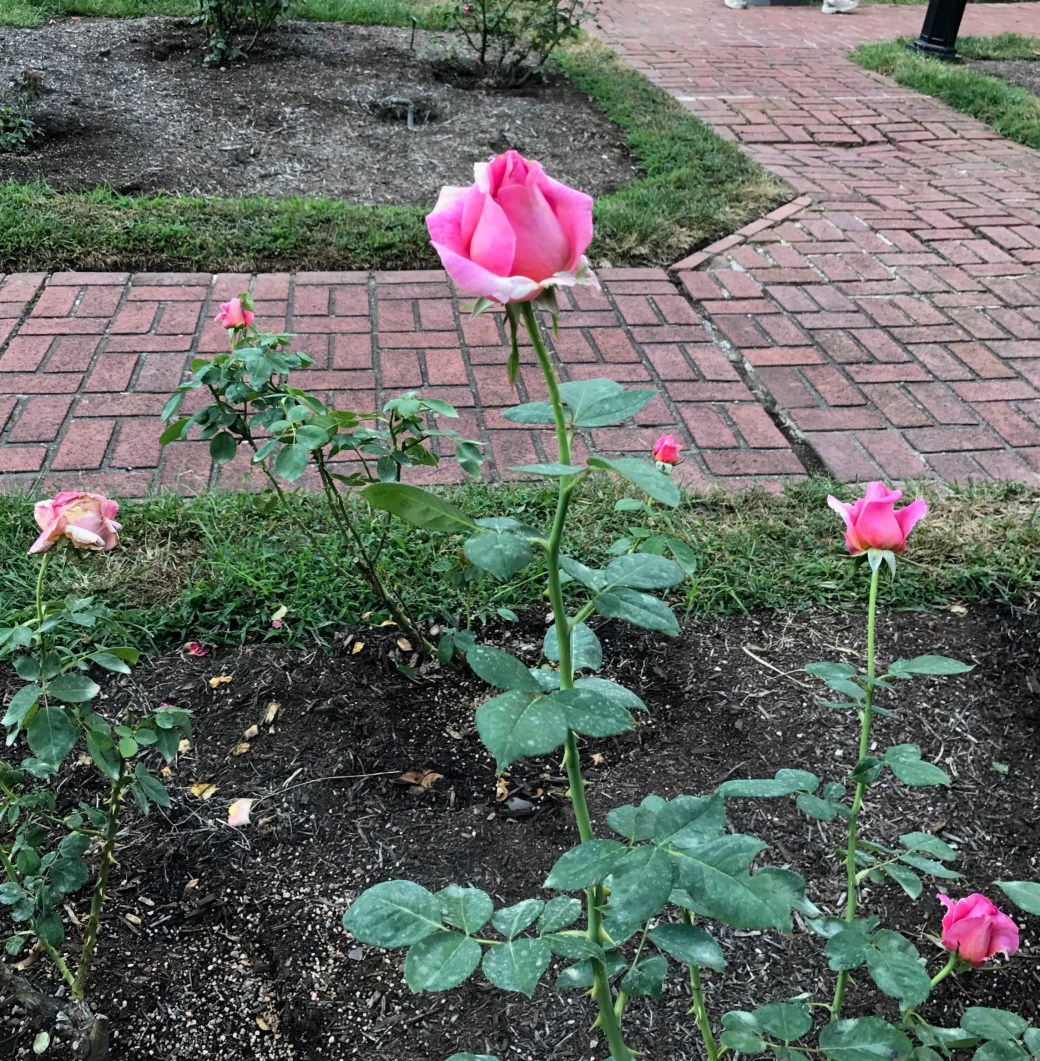
Recently, I encountered another gorgeous array of roses and multi-petaled flowers, only this time it was in the midst of a setting in which the majority of people were teary-eyed and sad. Suddenly, it hit me. We are all meant to be roses for one another in the garden of life.
We were divinely created by the one true Gardner to bud, bloom, and blossom while our feet are planted on this earthen soil. Therefore, from day to day and from situation to situation, we are often called upon to roll up our proverbial sleeves and get a little dirty, to engage with others, to offer a smile (or even a giggle) to another being, or to remain open to the possibilities, shifts, and changes in the day in a manner similar to which my daughter embraced life when she was a toddler.
Like the roses in the bouquets; we are individually layered with petals of beauty—think of them as gifts or talents. From the person who adds order to a house, office, or building by cleaning it, to the stylist who cuts and/or colors hair; from the garbage collector that keeps our surroundings clean; to the office administrator who contributes a seamlessly streamlined sense of organization—we are all created to add color and wonder to this world. Perhaps, then, we might want to consider acknowledging and honoring our Supreme gardener with words of thanksgiving and appreciation on a regular basis.
As I type these words, I am writing to myself as much as I am you, Dear Reader, because I, too, get wrapped up in my own head of narration. Frequently, I read suggestions regarding the practice of keeping a gratitude journal—which is an excellent and positive practice—as a way to refocus the lens of the mind. In fact, I have tried to keep one on several occasions, but have never fully made it a habit. Therefore, I am challenging myself, and you too, with the following notions.
Recognize when you have drifted off into story-land. Then, gently remind yourself that just as the gray clouds covered the sunshine on that autumn day with Dad and Pam, it doesn’t mean the sun wasn’t present.
Reframe the story. “Yes, I am often klutzy, but look at all the wonderful movements my body is capable of doing;” or, “Yes, this day seems challenging, but I can take it one step at a time.”
Recognize and state in that moment of your story-loop at least one event, thing, or person for which you are grateful, such as “I am grateful for my morning coffee.” “I am thankful for my car that transported me safely to work.” “I appreciate the unexpected and thoughtful text I received from a friend this morning.”
There is a saying about taking time to smell the roses that is well-worth remembering. So often, however, we focus solely on the daily thorns and irritations of life, rather than notice all numerous positives that also occurred. Although mindfully attempting to interrupt our monkey-minds of stories a few times per day with moments of gratitude may not eliminate life’s thorns; it might, however, offer a bit more perspective, allowing us to navigate those sharp, negative events with a little more grace and ease, and serve as a reminder that life is as short as the rose bud. And, in the end, when we look at roses, it is the bright blooms we first notice and appreciate, not the thorns.
“Dear one, I know that you are suffering, that is why I am here for you.”—Thich Nhat Hanh, True Love
“Jesus wept.”—John 11:35
As a kid, I took great pride in my Bible quiz knowledge. One of the various bits of trivia for which I knew the correct response was, “What is the shortest verse in the Bible?” Answer: “Jesus wept.” Yet, I never pondered its real meaning as youngster.
When my daughter, Madelyn, was quite young, she loved romping on the bed in the bedroom that belonged to my husband, John, and me near her bedtime. She giggled and squealed as her flaxen hair was tousled about as if it were party streamers while she bounced energetically on her knees, expending her last bits of energy.
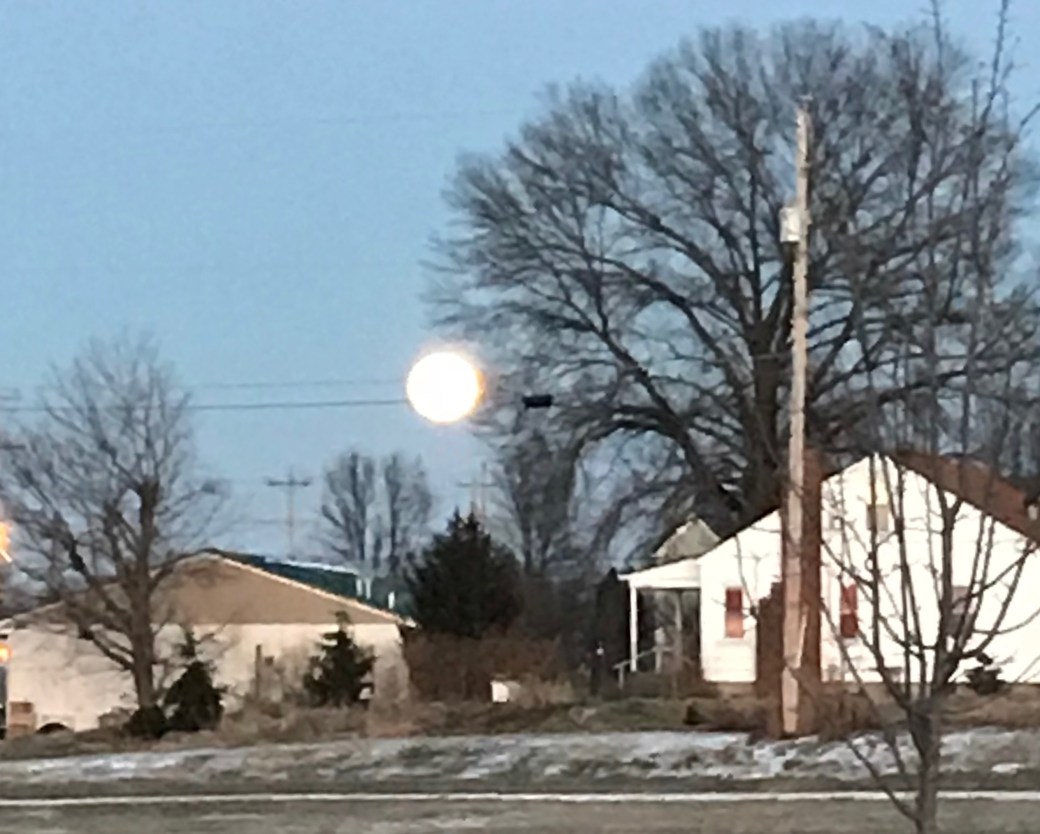
One full-moon evening, Madelyn made her usual mad-dash scramble up the traditional hope chest at the foot of our bed and over the ornately carved foot-post at the end of our bed when I heard her cry. I had been walking behind her, but had paused to pick something off the floor, so I did not observe her ascent. Instead, I looked up in time to see she was falling, and her cry was different—not the typical sounds of short-lived pain from an unexpected stumble.
Hustling towards Maddie, I scooped her up, and began to hold her close, but immediately withdrew my arms because it made her cry more. I attempted to find a way to take her into my arms without creating more pain. No matter how I adjusted my hold, she continued to screeched. Something was very wrong, my mom gut told me.
Later, during the process of moving Maddie to the car, placing her into the child safety seat, and carrying her into the hospital emergency room, I found myself constantly fumbling and inadvertently instigating more of her pain. My heart hurt every time I did this.
I hurt on two levels. One, I simply could not take her pain away. Secondly, in my attempt to comfort and/or give her help, I often caused more pain. Each howl of pain was as if I had the wind punched out of my gut. Why couldn’t I make her better? No answers came as tears stung my own eyes.
The reality was I could not, per se, make her better. I was not in control. In fact, as much as I’d like to think I am, I am not in control of life—at least with regards to others’ and events. I can only control my thoughts, my actions, and my reactions to situations. And, if I am honest, my thoughts are often a mess of clouds because I feel deeply and struggle to rise above those feelings. Thus my actions and reactions often fall short, just as they were on the night we discovered Maddie had a broken arm.
The more I tried to hold her close to me and offer what I thought was comfort, the more I was compressing her right forearm where the break had occurred. It was only at the hospital, when she decided to sit on my lap facing away from me, so that she could lean her head back on my chest allowing her arms to dangle freely that her cries were allayed. Later, the staff would surround her tiny arm with a large air cast to protect it and allow her to sleep until we could see an orthopedic doctor the next day.
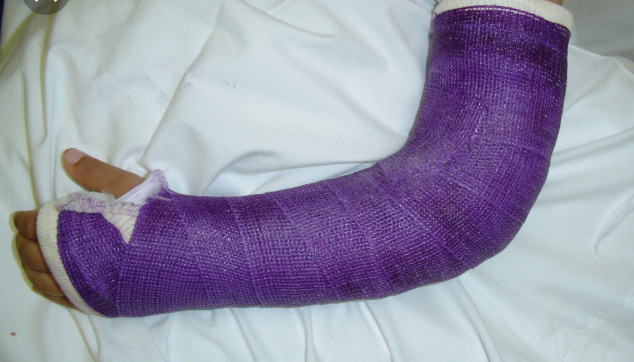
Maddie’s arm needed the space the air cast provided. It allowed her body to rest, so her body could begin the process of repairing her broken bone. Once the glittery, purple cast was later in place, she had a more firm armor of protection to allow the unseen God-created healing process to occur.
She wore that cast for weeks. It caused her skin to itch. Around the ends, where there was white fabric, it became gray and dingy—no matter how hard we tried to keep it clean. Additionally, a smell began to emanate from the cast after a few weeks. In spite of all of these perceived negatives, an unseen, miraculous work was ongoing underneath that faded purple cast.
Within six weeks, her arm was healed enough to remove the cast. The skin underneath was pale and withered looking. Furthermore, her arm was a weak from disuse, and the fine motor muscles of her hand had lost a bit of their dexterity. Time and space was still required for the final curative steps.
Through it all, John and I were with her. We helped when she really needed it, but we also encouraged her to do as much as she could independently including dressing, feeding, and playing. It was her right arm, and she was right handed, so it would have been a great disservice to do everything for her.
So it is with life. There are times when our loved ones are suffering, hurting, and experiencing unbearable pain. We want so badly to take their pain away from them that just as I did to my daughter. We push so hard to help, to say the right thing, or do the right thing that we unintentionally create more pain and/or suffering for our Dear one.
Often, our loved ones need our presence, but nothing more. They need to know they can lean against us, as Maddie did on me in the emergency room and allow their pain to just be. And just as I sat in that hospital waiting room with Maddie and John, putting our faith in unknown doctors, so too must we put our faith in the Divine. We may not understand why they have to suffer, but we can lean into our faith for support just as Maddie leaned against me, and I leaned against John on that long ago night.
Lastly, just as Maddie’s arm needed space and time to heal, so it is with suffering, pain, and illness. Neither John nor I could see all the extraordinary healing that was occurring in Maddie’s arm even when, from my outwardly senses, it appeared nothing was improving. We could not control the pace at which it was restored either. Yet, her body was mending at the precise God-created pace. And, just as John and I encouraged Maddie to do as much as she could independently to maintain some strength and deftness despite her injury, so too are we maintaining or building strength and resilience through suffering.
I cannot explain the “why” of human suffering. It still painfully wounds my heart and gut when I see other hurt. I often weep at the sight of seeing much pain especially when it comes to those near and dear to me. I want to take their pain away. I want to take control, but I cannot. And so, this is one of the many faith lessons on which I must continue to work and ponder; however, I am comforted with the knowledge that even Jesus wept upon seeing his loved ones hurting.












































 Steph Simply