There’s Always a LIttle More Left

“Effort is like toothpaste: you can usually squeeze out just a little bit more.”–attributed to a former pastor, Rev. Larry Brisker

Photo by PhotoMIX Company on Pexels.com

Have you ever been so tired that you feel a bit lightheaded?  I know I have personally experienced that feeling on more than one occasion, and it can be a bit worrisome.  Scenes of traffic accidents caused by the driver that fell asleep often enter my mind on those bone-tired days as my thoughts have a tendency for dramatic, worst case scenario. 

Recently, I was standing at my classroom whiteboard, writing something in preparation for the incoming class.  I could feel the lead weight of my fatigue as if I was wearing the heavy x-ray protective vest worn once a year during a regular dental check-up. The lined dark circles under my colleagues’ eyes that I had observed that morning revealed that I wasn’t the only one, and the students coming and going from my classroom looked just as worn down. 

As the next class began, I asked the students how they were doing before beginning instruction. One student honestly answered, “I’m really tired, Ms. Hill.  I just want to sleep.”

Other students piped in their agreement. I thoroughly understood.  Long gone were the well-rested days of August and September.  By this point in the school year, students’ stamina was wearing down.  Their growing bodies and minds were in need of a rest, but the school calendar stated it wasn’t yet time.    

Photo by Pixabay on Pexels.com

I needed to encourage them to hang on a bit longer.  Therefore, I shared with this particular group the lesson of the toothpaste tube courtesy of my own long, ago teen years.  It was handed down to me via an object lesson designed to emphasize the importance of the morning’s scripture reading given by a former, beloved pastor, Rev. Brisker. Unfortunately, I do not recall the scripture.  However, for the sake of illustrative purposes, I’ll use Luke 1:37, “For nothing will be impossible with God.” 

Sitting in the small sanctuary of the church in which my family attended about the time I entered my teen years, I sat with my red leather bound Bible with my name embossed in gold lettering across the bottom.  It was one of those Bibles with thumb-cut indexing, so that the user could find the books of the Bible with ease. While I cannot pretend that I was always this attentive–I was a teenager after all–I do recall paying attention long enough to look up the scripture the kindly pastor read . . . at least most weeks.

Photo by Vidal Balielo Jr. on Pexels.com

On this particular Sunday, I know that I was daydreaming as I gazed out one of the sanctuary windows.  At the time, the windows were not stained glass, but instead covered with wavy, flame shaped, pastel shades.  While I could not see outside, I could observe that the sun was shining brightly, and I was ready to get out into it.  Plus, I was probably hungry by that point too!  It was hearing his wife’s name, Rita, that caught my attention.

If ever there was a saint on earth, Rita was one!  Though she was full of good-humor, and loved to heartily laugh along with her husband, her gentle, tenderhearted nature always shone through her eyes.  Why was he talking about Rita in his sermon? 

Refocusing my attention, I realized Rev. Brisker was talking about their family budget in order to help make a point.  He described how the closer it got to payday, the more they had to stretch their budget in order to make ends meet–a relatable topic as one of four kids.  He described the way in which Rita and he had to constantly remind his own three kids to turn out lights, don’t waste products such as shampoo and other toiletries, serve yourself an amount of food that is only what you’ll eat, rather than waste food, and so forth.  These were certainly common themes in my own childhood household.

He then focused on the amount of toothpaste the kids tended to use.  This was the time period in which toothpaste tubes were made of some sort of collapsable metal. Rev. Brisker described the effort and pains Rita would take to squeeze and compactly roll the tube of toothpaste in order to “squeeze out a little bit more.”  It was then, Rev. B lowered the hammer.

With God, he proclaimed, nothing was impossible.  There was always a little bit more for each of us–more strength, more perseverance, more love, more patience, more kindness, more gentleness and so forth.  God’s budget was (and is) an endless supply designed to increase our strength and meet our needs.  Rev. B encouraged his flock to know that through prayer, and a bit of effort on our part, we could make it through whatever challenges we were facing.   From managing a family budget to facing down a personal crisis as well as any other number of obstacles in between, we could endure and squeeze out a little bit more.

I wish I could say that my students were super motivated and inspired by that story.  Most were rather unfazed.  However, that remembrance served as a powerful reminder to myself, and hopefully to you, Dear Reader, that we, too, can keep going.  There’s always a little more toothpaste in the tube of life.  Hang in there, my friends, hang in there.

Chocolate Peanut Butter Banana Bars

“What’s the point in having a sweet tooth if you don’t use it?”–unknown

I blame my parents.  Who else am I supposed to blame for my sweet tooth? While both of my parents eat an overall healthy diet, they also like their dessert from time to time. I confess, I am the same way.  It’s all about moderation and balance, and, well, never underestimating the power of chocolate . . . or peanut butter! 

I enjoy nearly any form of chocolate!

About a month ago, I baked my grandmother’s traditional recipe for chocolate frosted brownies.  It is a family favorite from an old 1930s or 40s vintage Betty Crocker cookbook.  While it is not vegan, I can say it is vegetarian; and anyway, I am not about so-called perfect eating.  Besides, it’s not like I bake Grandmother Helen’s brownies on a regular basis.

My mom had dinner with us on the evening that I baked brownies, so I sent a few home with her.  The next day, my daughter walked into the kitchen where I was food prepping my work lunches for the week, laughing and shaking her head.  She said that while talking to my mom on the phone, “Gran’ma confessed to spreading peanut butter all over the brownies before eating them.”

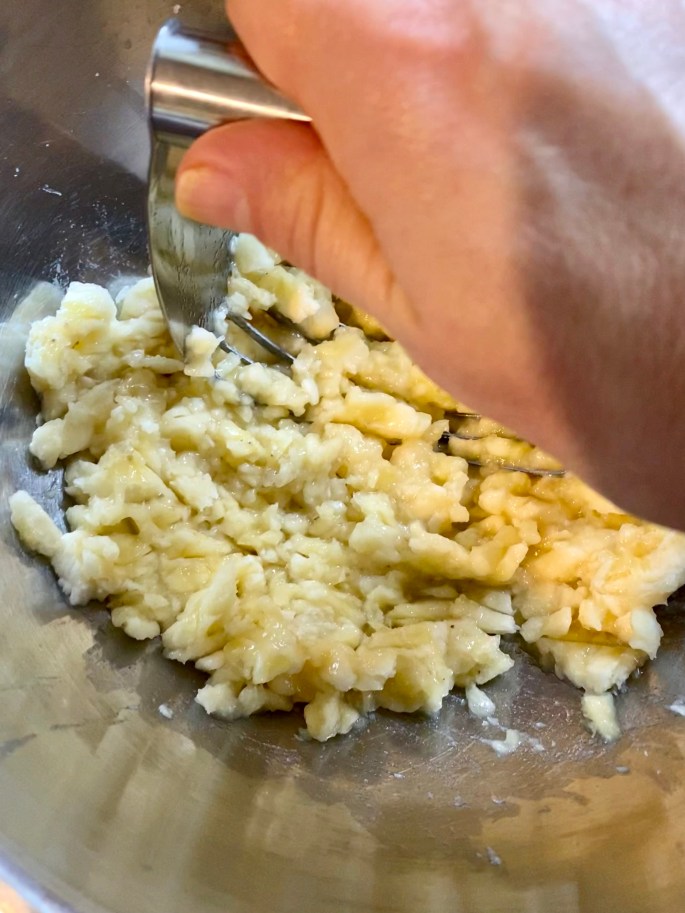
Mash up the banana first. I find a pastry cutter perfect for this!

At first, that seemed sacrilege!  How could she desecrate that beloved, treasured family recipe?  The horror of it!  What was she thinking?

“Sounds like a good idea to me!” said my husband.  “I just might try that!”

He had a point.  Peanut butter–and almond butter for that matter–are like dessert.  Nothing can improve a bad day like nut butter.  In fact, I would argue that nut butters, as a rule, have a certain calming quality to them!  During my younger years, when annoying bodily afflictions, such as acid reflux, were nearly non-existence, banana and peanut butter was one of my favorite go-to meals.  This led me to thinking . . .  which is always dangerous!

Stir in the peanut butter.
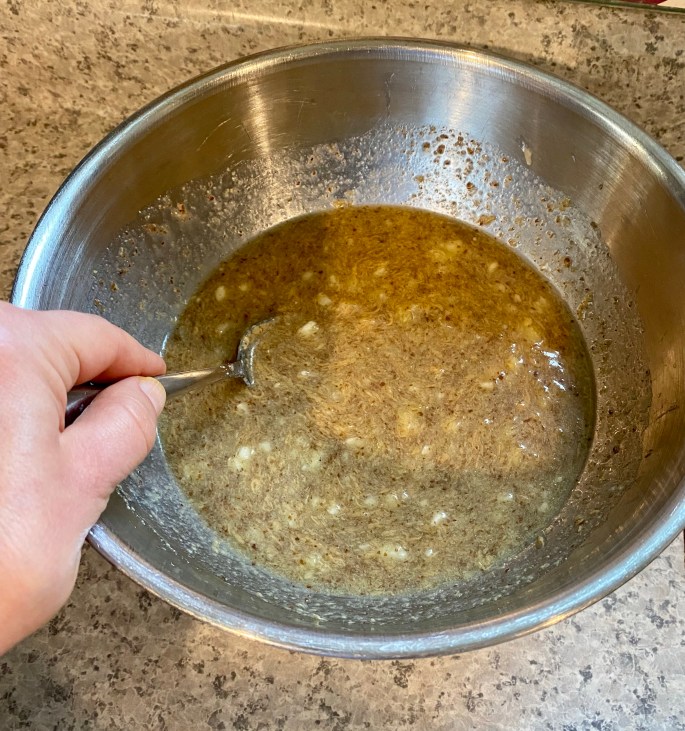
Add in the rest of the liquid ingredients.

I began to wonder if there was a plant-based, gluten-free compromise-recipe I could find or create.  Thus, my research began.  Scrolling through one web-site after another, I eventually landed on two different recipes. One recipe was from a web-site entitled, “It Doesn’t Taste Like Chicken,” and the other recipe was from a web-site called, “Purely Kaylie.”  

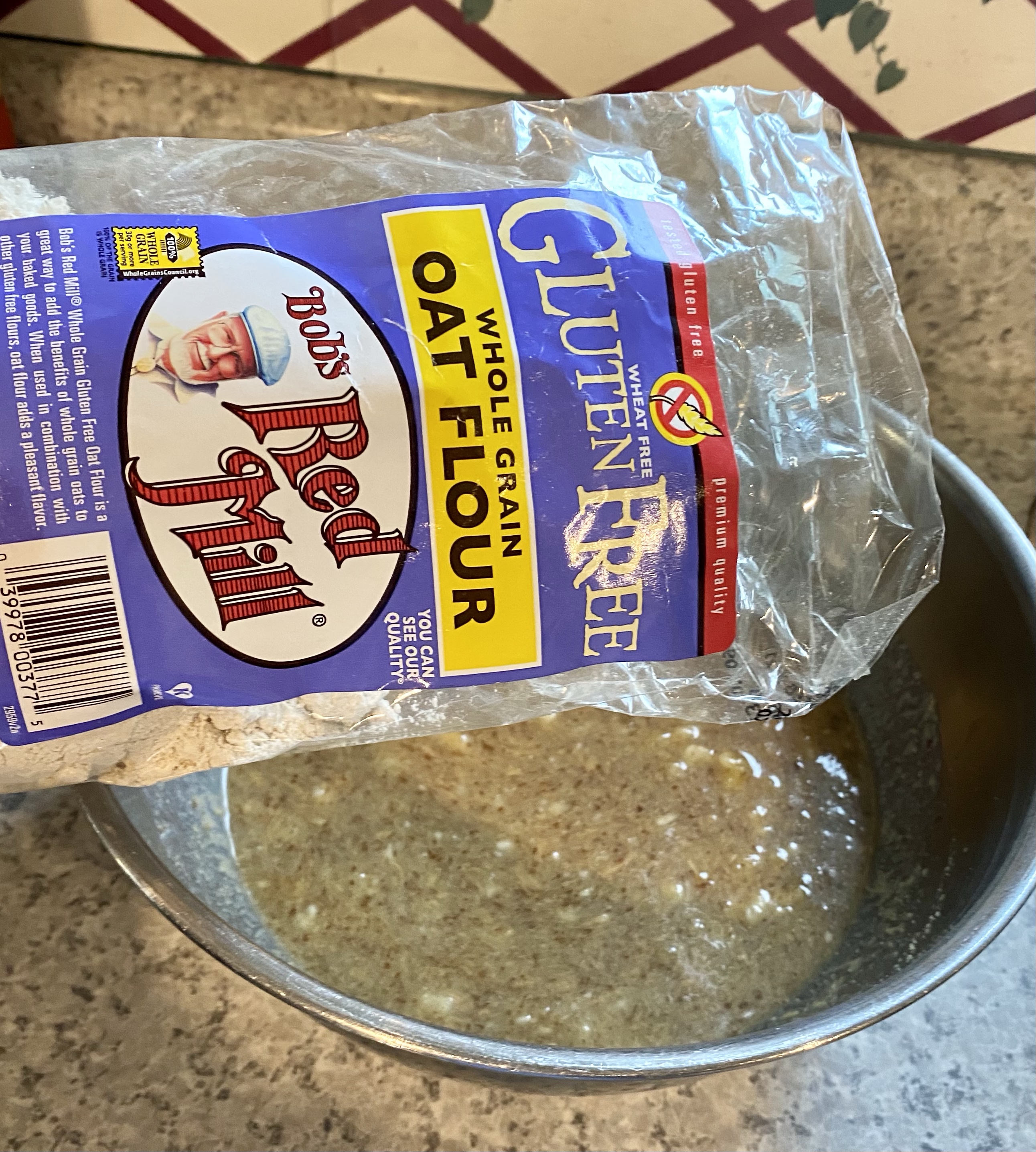
Add in the dry ingredients.

Using both of their recipes as scaffolding to create my own variation, I did a bit more research on baking with both oat milk and oat flour.  These two ingredients, I decided, would not only increase the nutritional value, (Read between the lines–ease the guilt of my sweet tooth!) but also eliminate gluten and dairy products since I have celiac disease and prefer to eat plant-based.  Additionally, I also conducted a bit of research on the science of baking with dutched cocoa, my preferred cocoa, and I learned that it bakes more effectively with baking powder, rather than baking soda.

Stir in chocolate chip and mix until just blended.
Pour batter into prepared pan and sprinkle with remaining chocolate chips.

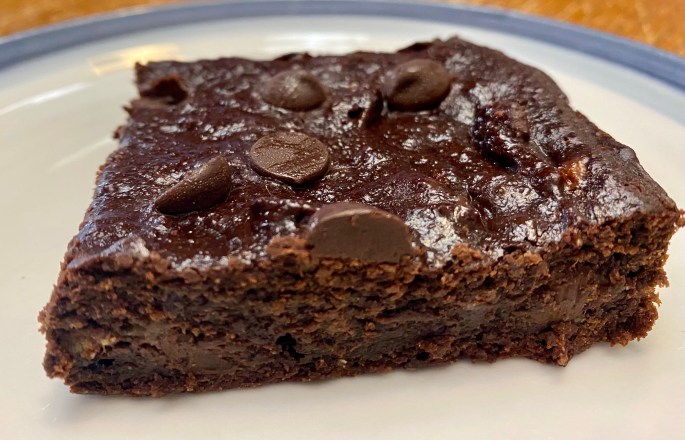
I made this recipe on a Saturday afternoon, and our entire home was redolent with the scent of baking chocolate.  The recipe was super-easy, requiring only one bowl, and honestly took no longer than 10 or so minutes of active kitchen time. The oven did the rest.  Once cooled, I cut the recipe into 9 generous sized squares and stored part of them in a plastic container in the fridge. I could have frozen them for future weekend cravings, but they did not last that long.

Give this recipe a try.  Enjoy it for breakfast, as a dessert, or a grab-and-go snack. It’s a mostly healthy, guilt-free way to have your cake and eat it too!  

All to cool before cutting into 9 generous squares.
Who prefers corner pieces???

Chocolate Peanut Butter Banana Bars

Ingredients: 

2 *fleggs (2 tablespoons of ground flax seeds + 6 tablespoons water)

1 cup ripe mashed banana–about 2-3 bananas (The bananas should have brown spots.)

1/2 cup sugar or equivalent sweetener

⅓ peanut butter

¼ cup favorite milk (I used oat-milk.)

1 teaspoon vanilla extract

1 cup flour (I used oat flour to keep it gluten-free, but any all-purpose flour would work.)

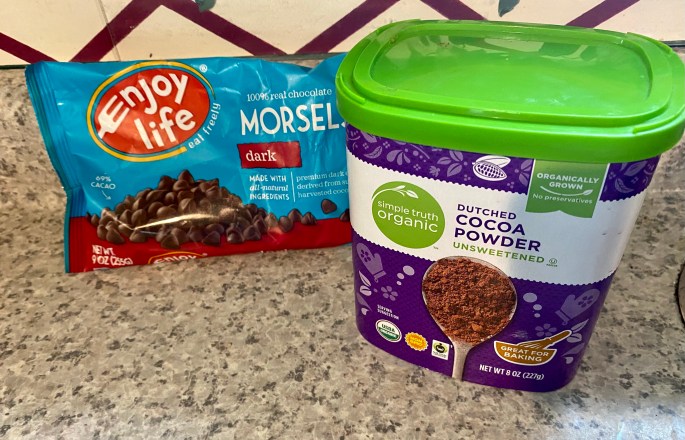
½ cup cocoa powder (I prefer to use Dutched Cocoa powder as it dissolves more quickly.)

½ teaspoon baking powder

½ teaspoon salt

⅔ cup chocolate chips (I use Enjoy Life chocolate chips.  They are dairy and allergy-friendly.)

Directions:

Combine ground flaxseed with water in a small bowl and set in the fridge for about 15 minutes to thicken.

Preheat the oven to 350 degrees.

Lightly coat, with nonstick cooking spray, a square 8 x 8 baking pan, or line it with parchment paper.

Mash banana in a large mixing bowl.

Mix in sugar, peanut butter, milk, vanilla extract, and flegg.

Stir in the dry ingredients–flour, cocoa powder, baking powder, & salt–but do not over mix. Gently fold in half of the chocolate chips.

Spread batter evenly as it will be fairly thick.

Sprinkle batter with remaining chocolate chips.

Bake for 35-40 minutes, or until a toothpick inserted in the center comes out clean.

Allow to cool for at least 10 minutes, preferably longer, before attempting to cut into 9-squares.

Store in an airtight container for up to a week in the refrigerator, or freeze for up to three months.

Mix ground flaxseed and water first. Set in fridge for about 15 minutes before using for best consistency according to my research.

*Flegg= flax “egg”, which is a plant-based, allergy friendly substitute for eggs.

Hiking Forward Into the Season of Now

“There is something in October sets the gypsy blood astir: we must rise and follow her , when from every hill of flame she calls, and calls each vagabond by name.”–William Bliss

Fall is the perfect time for hiking, walking, or simply heading out-of-doors for any sort of physical activity.  The changing landscape, crisp air, and the earthy scents of damp soil, decaying plant matter, and the musky-sweet scent of drifted piles of discarded leaves invigorate the soul.  After sluggish months of heat and humidity, autumn’s sudden drop in temperature is enough to not only add bounce to our step and inspire movement, but also create stirrings within.

Fresh air has a way of plowing the mental landscape into a bucolic pasture of peace and positivity–if only for a short while.  What miraculous logic lies in this seasonal change.  It is as if, by Divine design, that fall provides us with an opportunity to elevate the spirit, boost the body, and clear the consciousness in preparation for the impending darkness of winter months.  

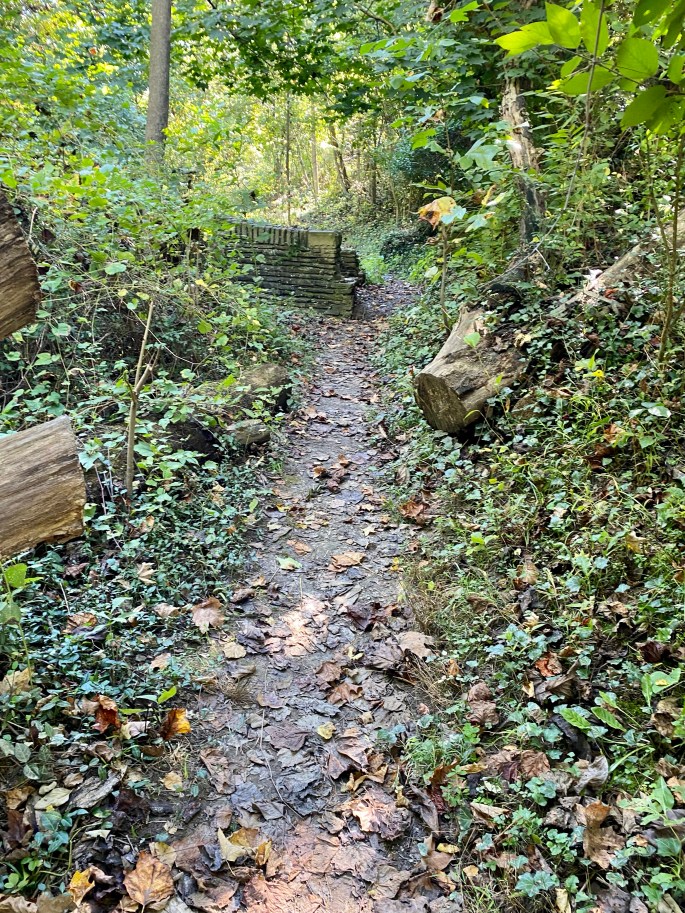
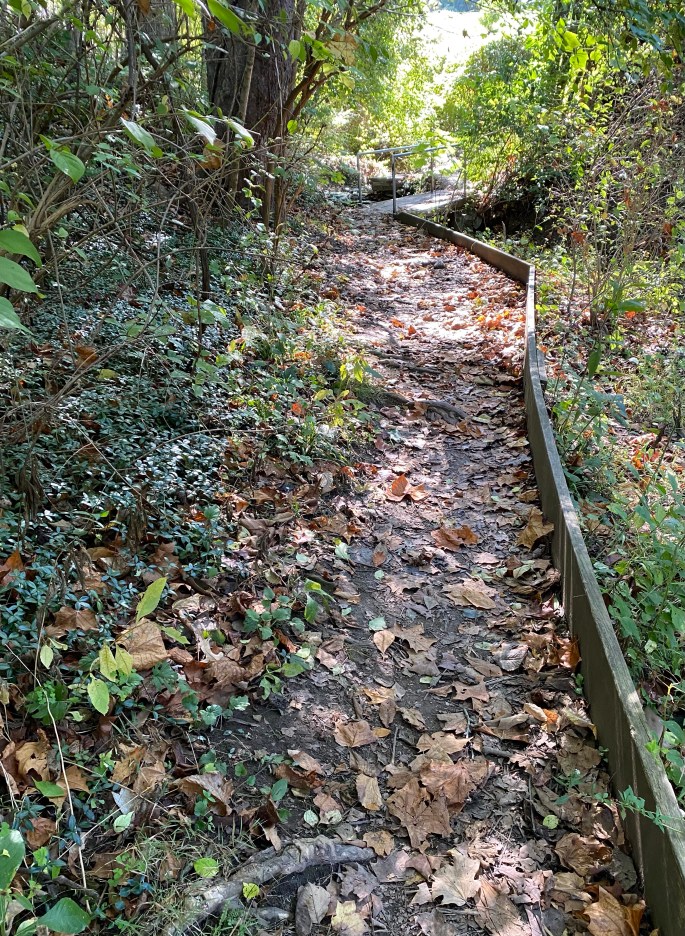
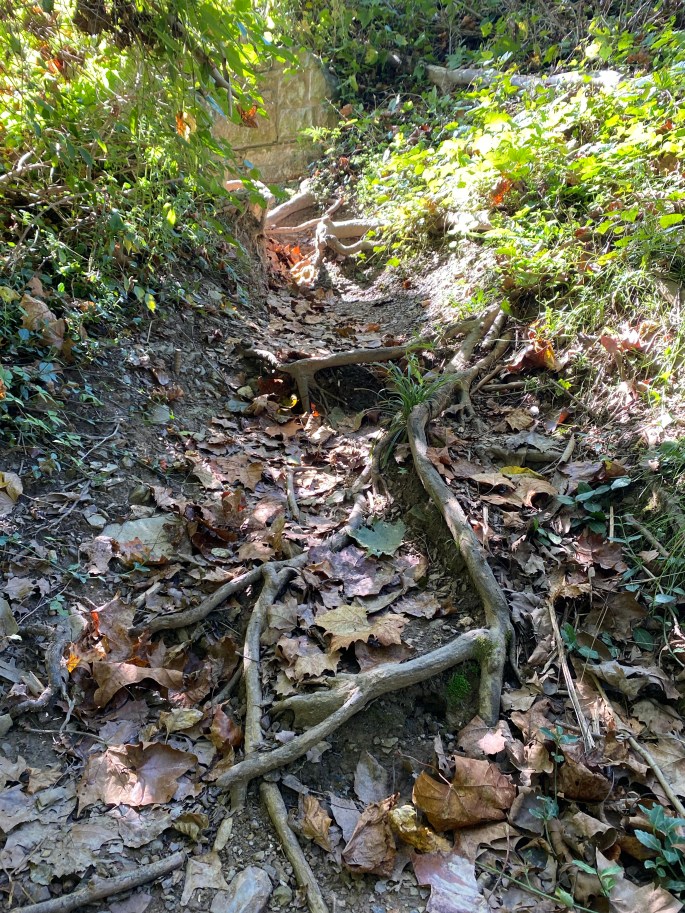
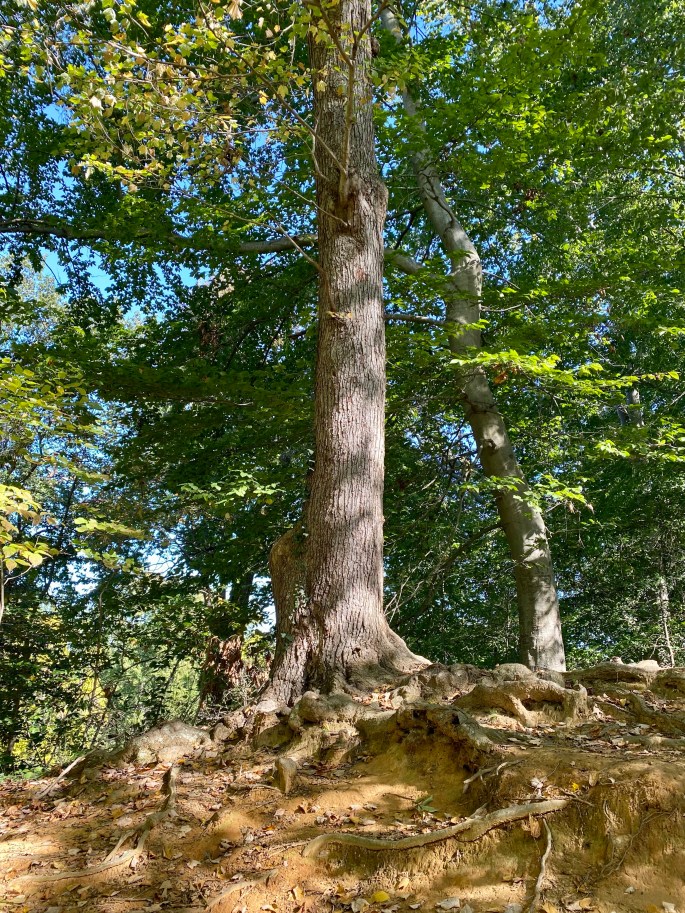
Walking this weekend along a favorite wooded path, I couldn’t help but follow these seasonal musings of my mind.  After a long, exceptionally challenging week, it felt both cleansing and healing to immerse myself in the quietude of nature.  No headset, nor blathering talk; no tedious tasks, nor irksome situations.  Like soaking in a warm, scented bubble bath, stepping onto the wooded path, I immediately felt submerged in the tranquil bathwater of autumn.

Before long, I was lost in the sounds of restless tree branches bouncing in the fall breeze, the humus scent of mulched debris, and the changing hues of leaves and grass.  Of course, my mind does not like to be quiet for long, and soon enough, childlike tantrums for attention interrupted my equanimity.  Without any warning, my mind began stumbling and bumbling through past events instead of anchoring to the present and peace of the surrounding natural world.

“I cannot endure to waste anything so precious as autumnal sunshine by staying in the house.”–Nathaniel Hawthorne

Isn’t memory a curious process?  You can forget about an event, experience, or moment. Then suddenly, as if tripping over a tree root along a smooth forest pathway, you tumble head first right into the past.  Like the long roots of trees, past episodes can be found along our life path, but often we are so focused on moving forward, we overlook those rooted memories that make up the tree of our life. This isn’t necessarily a bad thing, unless we haven’t made peace with certain past events.

In the ideal world, falterings into the past can be easily side-stepped, allowing us to keep moving ahead with ease.  Like the broken limb of a tree, these past happenings may have left us feeling as if a piece of our life was fragmented.  Sometimes, these can be small, mendable, events. Other times they are life-altering occurrences that sever ties with a friend, love, or even family member.  Divorce, death, loss of job/home/income, and other hurts can all leave us feeling as splintered as a proverbial tree trunk. 

At the time, it feels as if we will never be whole again; never able to grow, much less thrive.  However, like the maple tree that lost a major branch in a winter ice storm, our hearts, given time, do heal at the source of the break.  It may take several seasons to fully recover, but similarly to the mighty maple, once recovered, we find we can tap into the sweetness of life again.

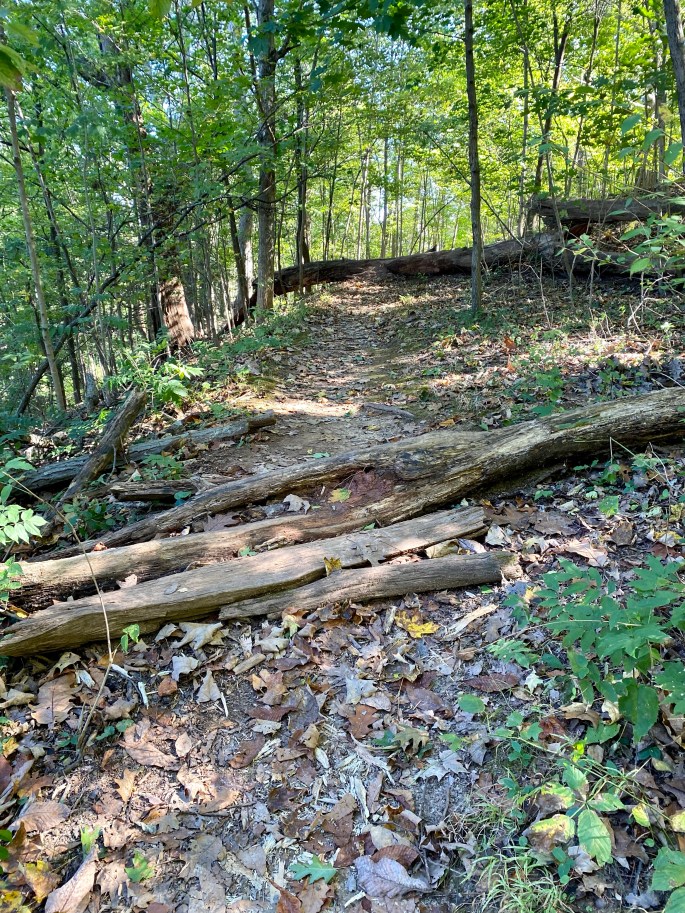
Some triggered memories, like a fallen log across the path, can seemingly be foreseen well ahead of time.  It could be a special celebration, a family or friend gathering/reunion, a party, or other organized event.  We see it well in advance–the potential to bump into branches of our past.  Therefore, we deliberate, strategize, and plan how we will not allow ourselves to be tripped up, to fall into past, negative behaviors, or other self-defeating notions.  If we’re fortunate, we trek through the event without a single obstacle tripping us up, and we wonder why we wasted all that time worrying. At other moments, we repeatedly flounder through multiple encounters without ever gaining a steady foothold due to overthinking or over-efforting.

Other memories we stumble across can be simple knee and/or palm scrapers–just a little momentary scuffle.  They are the unforeseen life encounters in which we come face-to-face with our past.  Like that hidden rock along a regular walking path, unearthed by heavy rainfall, we’re confidently moving forward when suddenly a buried memory triggers a brief, but sharp tumble.  Momentarily we are once more wounded, lost in the temporary feeling of pain, but quickly rise, wipe off the proverbial dirt of the past, and keep hiking on.

Then there are those rocky memories.  Those awkward, cringe-worthy moments of impulse, illogical, or otherwise preposterous life hiccups.  Like the rough part of a well-worn rocky path, all lives have these times. In fact, these memories, when randomly run across, can sometimes leave you doubled over with laughter as you fumble through recollections of those bumpy reminiscences. 

Aw, the path of life, like any good hike in the woods, is full of thorny patches, toppling obstructions, and adversarial pitfalls.  Nonetheless, our trails also meander through lush fields of golden moments, wound ‘round bends of colorful times, and over walkways of unexpected joy and bliss.  Through the seasons of memories, all the good and the bad, our life paths keep moving us forward. Thrusting us into the now of our lives. 

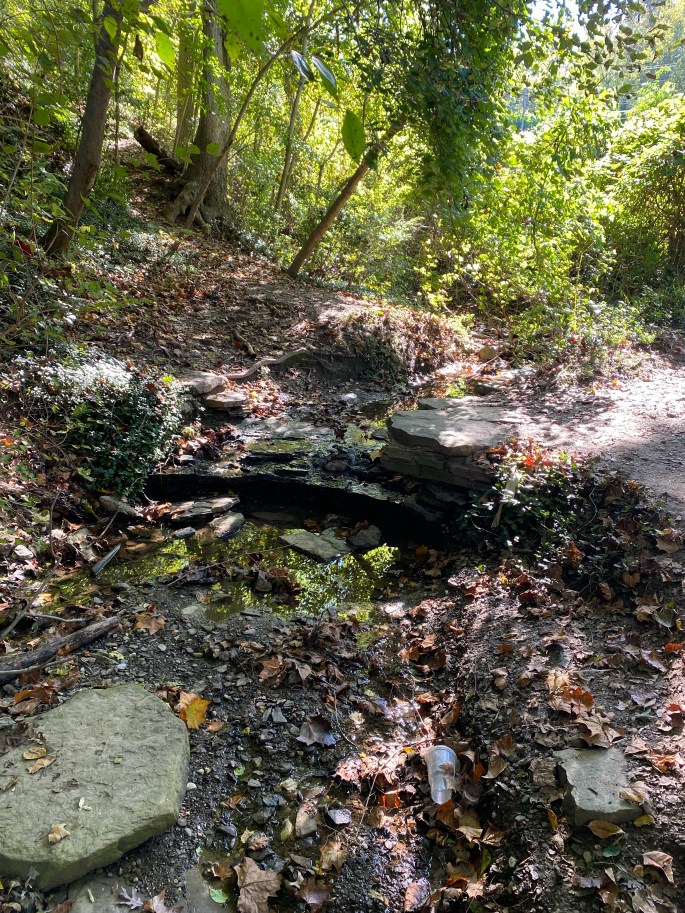
Clearing my mind, and shaking out its detritus of the past, I once more returned to the present moment of the autumnal walk. I felt the air brush softly against my cheek and watched a chubby, round-eyed raccoon waddle away from me. I left the past behind on that trail, decided to let the future take of itself, and began to once more soak up the present moment of the fall goodness, one glorious step at a time.  Oh, how I love October.

“I’m so glad we live in a world where there are Octobers.”–L. C. Montgomery, Anne of the Green Gables

All Work and No Play

Walking into work this past week, I began to make my way up the flights of stairs lined with windows.  Above the alley filled with cars, a squirrel scurried along a wire.  I paused long enough to observe this rodent. It scooted forward at an energetic pace, then paused, precariously balancing above the unsuspecting vehicles, then scampered along a bit further until it was out of sight. 

Continuing my ritualistic workday ascent, I reflected on the delicate balancing act of the trapeze-squirrel and the ways in which it reflected our current work culture. Since the onset of COVID, the demands and pressure upon the labor force have greatly increased. From longer work hours to added levels of responsibility, many workers feel a lack of control over their work environment–which are often becoming more socially toxic.  Additionally, workers frequently cite insufficient reward, a lack of fairness, and even a conflict of values with the ever increasing work demands.  It’s no wonder that many workers choose to walk away. Unfortunately, the downside for those who choose to remain is that they are merely expected to pick up the extra workload, usually without any appropriate compensation or support.

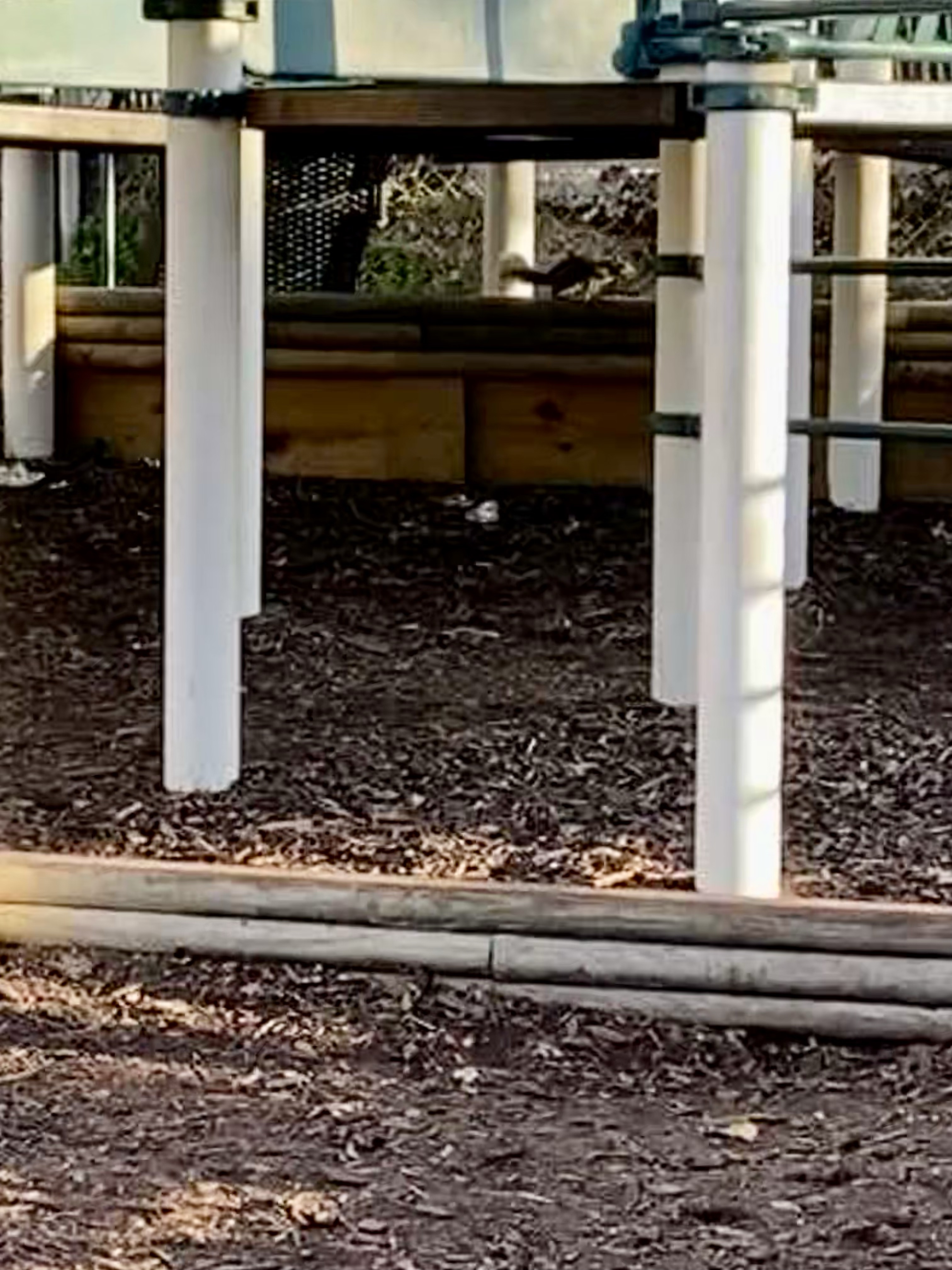
A squirrel on the playground at my own worksite in the evening sun. There is actually another squirrel nearby, but it dropped out of sight just as I clicked the photo.

To add further fuel to the fire, complaints of worker burnout are often met with the belief that there is something innately wrong with the employee–that the worker is “not the right fit,” or “not a team player,” rather than examine the workplace culture. This has led to one of the highest levels of “quit-rates” since the U.S. Bureau of Labor and Statistics began keeping records” according to their April 2021 data.   In fact, based on a growing body of evidence, it’s looking as if those business leaders who do not seriously rethink how they approach the workplace culture will most likely face issues with worker retention and shrinking work pools, leading to decreased productivity and/or unreliable timelines. 

While the term “burnout” has been around for decades, the World Health Organization only recently identified worker burnout as a real phenomenon beginning in 2019.  According to Dr Tedros Adhanom Ghebreyesus, WHO Director-General, worker burnout is caused by high levels of stress causing the worker to feel cynical and distant from their job which in turn affects their productivity, and more importantly, their personal health. He believes that burnout is a “serious health hazard”

Meanwhile the squirrel’s health is at risk as hawk waits above for his opportunity to attack.

“No job is worth the risk of stroke or heart disease.”–Dr Tedros Adhanom Ghebreyesus, WHO Director-General

To add further support to the WHO’s identification of worker burnout phenomenon, Winona State University has identified five distinct stages of burnout.  These stages include: 

The Honeymoon Stage:  The excitement of the new job/role/position does not allow the worker to realize their workload is unrealistically large as it can be easily written-off due to the newness of the job, but can soon enough push the worker into the next stage. 

The Balancing Stage:  The employee begins to struggle with life-work balance. As the scales tilt more towards work, fatigue, sleep disturbances, and early signs of dissatisfaction lead to self-detrimental, coping behaviors, such as increased drinking, eating, smoking, and other forms of escapism.  With continued worksite pressure, the employee is nudged closer to burnout.

The Chronic Stage:  The worker is now often filled with persistent anger/resentment, depression, chronic exhaustion, physical illness, and so forth. 

The Crisis Stage:  Without intervention, the worker is overwhelmed by feelings of jadeness, powerlessness, pessimistic thinking, and ready to walk away from not only the worksite, but their chosen professional field.  

The Enmeshment Stage: If this same worker remains, they move into “enmeshment,” a point in their career where they may be held in high regard by their coworkers, but on the inside, the worker feels like another cog-in-the-wheel, unhappy, and trapped–stuck in an unfulfilling role that leaves them dissatisfied.

“Burnout is nature’s way of telling you you’ve been going through the motions your soul has departed.”–Sam Keen

Finally sensing the danger, the squirrel runs away from the work site.

Unfortunately, management, administration, and/or owners can often be tone-deaf to their workers’ heightened levels of stress.  In fact, according to research, the self-help industry and employers appear to blame the workers. Therefore, many workers indeed accept the blame without question, and those workers who do express concerns to management, are often rebuffed with off-hand comments or insincere promises, such as:

“Working long hours never hurt anyone. I like to work long hours.”  

“I still find time to do x, y, or z, with all the demands I have.” 

“It’s only for the short-term, and you’re so good at what you do.” 

Other management teams will offer token trinkets, swag, and so called “social” events/meals–with the expectation that workers don’t break to enjoy the event or meal, but either grab-and-go-back-to-work or remain longer at the work site with co-workers.  Some businesses hold annual health or wellness meetings in which employees are instructed to regularly incorporate self-care practices, such as deep breathing, yoga, exercise, or take fresh air breaks, but in practice, the business maintains its habits of scheduling back-to-back meetings, emailing their workers late into the evening or throughout their weekend, and/or remains committed to the expectation that workers pick up an extra shift or assume an addition role with little to no opportunity for those self-care breaks, much less compensation.  In fact, the culture of many work-sites seem to have an unspoken creed that working longer hours with an increased load and no breaks is often seen as a badge of honor and an esteemed level of productivity. 

Photo by fauxels on Pexels.com

“Even the loveliest shoulders can bear but so much.”–Jill Alexander Essbaum

Worker burnout is, as one researcher writes, a “canary in the coalmine”  If the canary cannot breathe, it is not the canary’s fault but the coalmine, and so it is with burnout.  While there are some actions within the workers control, such as “setting boundaries” to the degree possible, attempting to get adequate rest, nutrition, and/or engaging in enjoyable activities outside of work–these practices can only go so far.  The less input/control workers have for their length of work hours, the type of activities in which they must engage, and little sense of fairness, the more likely burnout will continue. 

As I see it, this brave new work environment requires creative solutions. Enticing job fairs with their flashy flyers, free food, and dressed-up off-site location are merely bowls under the roof of a leaky attic–the leaking holes still remain within the structure, slowly eating away at the stability of the framework–but do not address the real issue.  

Photo by Phil Bearce on Pexels.com

Reflecting back to the squirrels, researchers know that squirrels are most active early in the day as they scatter collections of food in a variety of spots to stave off hunger during more meager times of the year. However, these active periods are also filled with moments of free-spirited play.  While young squirrels play the most, adult squirrels daily engage in some form of play, be it solitary or interactive.  As the day progresses, squirrels begin to wind down and spend up to 60% of their time sleeping. 

It is not unusual, at the end of my workday, to find several squirrels with their lively chitterings, dipping and diving with one another in a rambunctious game of chase.  Their high spirited antics never fail to make me smile in the slant of the evening sun. If I observe long enough, they take breaks here and there to gather food, dart away to some unseen cache, and quickly zip back for more frolicsome play.  I can’t help but wonder if the workplace could learn a lesson or two about what makes a healthy and productive work environment from our fellow squirrels.

Photo by NO NAME on Pexels.com

In Pursuit of The Meaningful Path

“It is the very pursuit of happiness that thwarts happiness.”–Viktor E. Frankl

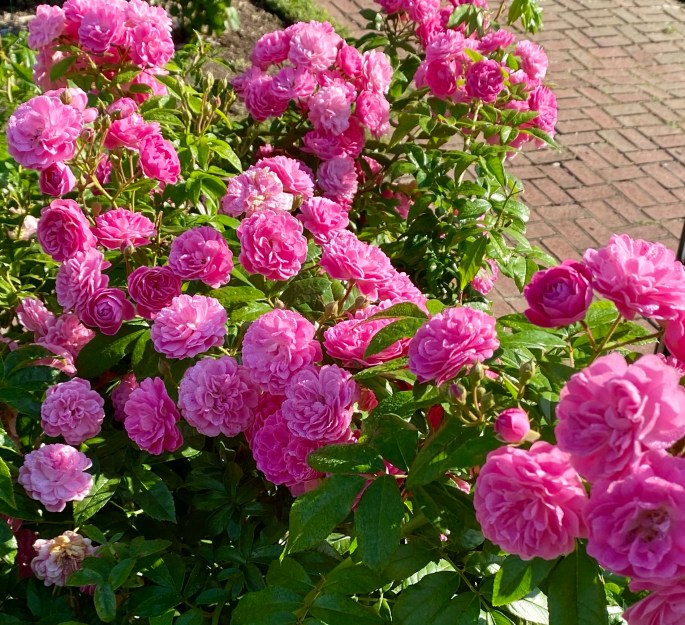
If you are familiar with my writing, you may have deduced that I have a significant appreciation for the Ritter Park Rose Garden. Throughout the year, I try to visit this local garden at least once per month, but more often if possible.  There is certain pleasure I derive from observing the various transformations of these bushes through each season.  I enjoy noticing the way their blossoms alter and progress through the seasons, and I even relish their stark, cut-back, bloomless appearance in winter. Throughout a large portion of the year, most bushes are not picture-perfect, but that fact does not take away from the positives each visit offers me.

It is not, per se, my attraction to roses that draws me to this garden, for I would happily regularly visit any formally planted botanical garden were there others within close proximity to my home. Rather, I have regard, not only for the miraculous seasonal changes provided by Mother Nature, but also an admiration and acknowledgement of its caregivers.  I have often encountered these seemingly tireless keepers of the garden tending to the needs of the plants in all seasons of weather and range of temperatures.  These garden custodians consistently employ their knowledge, skill, and attentiveness even though they most likely get paid a minimum income for implementing.  

“It’s the time you spent on your rose that makes your rose so important…You become responsible forever for what you’ve tamed.”–Emily Esfahani Smith

I was reminded of the talented rose gardeners while listening to bits of a podcast, ironically enough, while jogging through Ritter Park after a quick walk through of the rose garden.  The person interviewed held the basic belief that happiness is an elusive and ephemeral feeling that is not sustainable for long periods of time.  In fact, this self-proclaimed expert maintained that much shame and feelings of “less than” are associated with not feeling happy all of the time.  The same person further added that living a meaningful life was far more satisfying and sustainable than buying into the belief that one should be happy all of the time.

After about ten or so minutes of hearing this expert’s philosophical point of view, I turned off the podcast and let my mind search for greater understanding, or should I say meaning, as my feet continued their thump, thud, thump along the crushed gravel of the Ritter Park path.  My mind turned, examined, and played with this intriguing thesis.  I recalled that at one point there was a brief spike in marketing purpose-driven books and other media content, but when scrolling through current popular self-help authors, media influencers, and publications, many of these outlets pitch the if-only-you-do-this then you can lead a happy life.  This philosophy often focuses heavily on receiving and acquiring for the purpose of gratifying personal needs/wants rather than giving to or focusing on the needs of others.

The podcast had a point: there are hard times in life.  You, or a loved one, will get sick.  There is a possibility that you might lose and/or have to change your job and/or life role.  This may require learning to live in a new way, perhaps even in a new geographical location.  Income may be lost, gained, and even lost again.  Accidents will happen.  Loved ones will die.  I am told that even pandemics can occur!  The point is, none of us can always be happy.  In the words of the band R.E.M., “Everybody hurts, sometimes.”

Reflecting over the past few years, I realized the level of uncertainty, fear, and sadness many of us, myself included, have experienced due to COVID.  However, as I mulled over the podcast interview, I realized that at some point this past year, something changed within me.  In spite of experiencing some fairly significant discomfort due to changes and losses, I find myself once more satisfied with my work this year–even during this, my 35th career year in education.  If you had asked me last year, or even the year before, if I was content with my work, I would have told you that I was ready to quit, ready to walk away from it all, and look for a new path.  

“The least of things with a meaning is worth more in life than the greatest of things without it.”–Carl Jung 

However, this year, in spite of facing numerous challenges, my continued role as a teacher once more seems fulfilling–in spite of not having near the financial rewards as many of my peers with 35 years of experience in their chosen vocations.  What has been the difference?  The podcast thesis hit the nail on the head: it’s the meaning I derive once more from my work–which had been greatly reduced throughout the virtual experience.  This school year, I can once again witness firsthand the difference my job makes, especially those lightbulb moments, when a student’s face lights with the joy of new found knowledge or greater understanding.  While not every day is filled with those illuminating moments, and I am certainly not happy in every moment; I know what I do benefits the students–that is the difference.  

Nonetheless, not everyone can have a career from which they derive great meaning, but there are still multiple opportunities from which to acquire meaning. From parenting to volunteering, to various roles, responsibilities, and personal pursuits, there are many ways which any of us can create more meaningful ways of living–even if you aren’t “happy” every moment in which you are participating. Consider parenting, for example. Most parents, if they are honest, will confess to not always being happy.  However, when asked if their role as a parent adds meaning to their life, most will say, “yes.” Otherwise, who would want to become a parent?  

“As much as we might wish, none of us will be able to go through life without some kind of suffering. That’s why it’s crucial for us to learn to suffer well.”–Emily Esfahani Smith

 Part of our unique human experience is undergoing a wide range of emotions, so why should we believe we are “less than” because we are not, per se, happy.  Perhaps, as a human collective, especially in the first world, if we put greater emphasis on the development of fortitude, perseverance, and stamina–which are especially important skills during challenging times–we might not feel like a so-called “failure” when we are experiencing negative emotions, such as sadness, grief, loss and so forth.  

Suffering is a built in part of life.  While not all suffering is the same, and the aftermath varies from experience to experience, the fact that suffering temporarily robs one of happiness does not equate with a less meaningful life.  Rather than constantly searching for sources of happiness, we might all better benefit from participating in more meaningful activities, especially those that focus on contributing to others.  Then, when the trials come, and you know they will, you can reflect back to those meaningful moments and know that once you get through this tough time, you can live with purpose once more.  We cannot always be happy, but we can have a life filled with moments that matter and make a difference.

Sowing Blossoms of Memories

“Good memories are the key not to the past, but to the future.”–Corrie ten Boom.

Plant seeds of memories. Plants seeds of remembrance. Plant a memory garden.  Plant a garden of memories.  On and on my mind randomly spun, attempting to capture and interpret the essence of what my sleeping subconscious brain was trying to communicate to my waking mind.

It was 4:00 am on a Saturday morning.  During the workweek, I rise at that time, three of the five days, in order to make time to exercise before work; therefore, it is not uncommon for me to wake at this time on the weekends, only to roll back over and fall back asleep for a couple more hours.  However, my mind commanded, well semi-commanded, my attention.  It was trying to send a message from the netherworld of sleep.

Photo by Pixabay on Pexels.com

I do not know if this is true others, but quite often, during the night, my mind can sometimes chew over finding a solution to an on-going problem, refocus my attention to a point I had overlooked/forgotten, or–as was the case on Saturday– draw my awareness to a an idea, point, or lesson that life and/or Divine Providence, was attempting to teach me.  During my younger years, I found this helpful for retaining, learning, or understanding new information, especially when it came to taking a test.  Throughout the various changes in my career, this capability has augmented my ability to adapt, modify, and/or change roles.  Most often in my present life, that nocturnal niggle has become a reliable source of creative ideas and/or lessons in personal development for which I have learned to listen. 

Therefore, as I moved throughout my morning on Saturday, I kept mulling over those phrases.  In fact, my poor brother, at one point, was the recipient of my waxings about how those ideas came to be in my mind in the first place and what on earth those phrases were teaching/telling me.  It wasn’t until I made my way to Ritter Park late in the morning that the ideas began to bloom more fully.

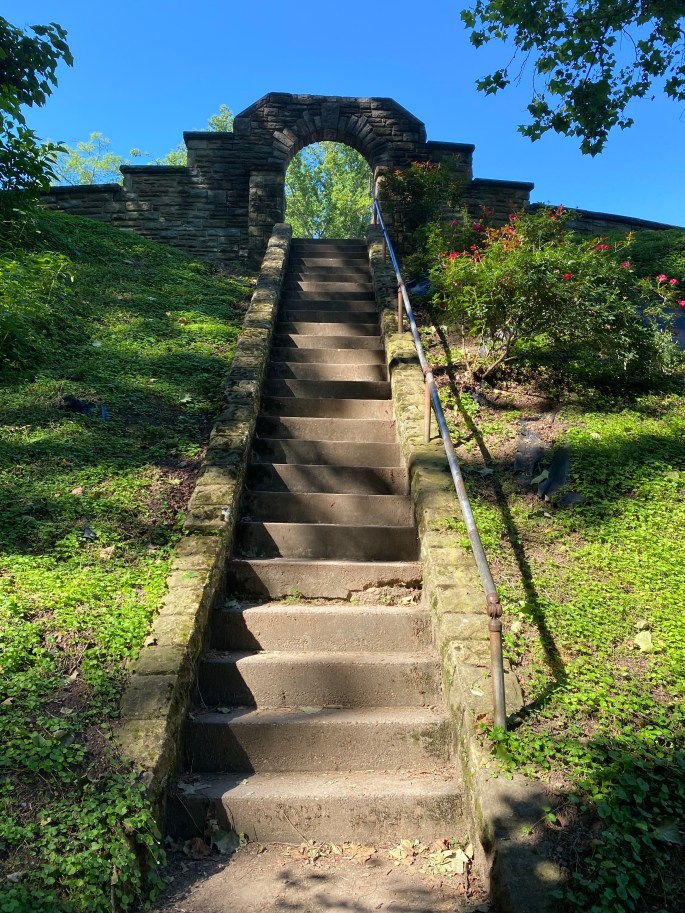
Since Saturday was my birthday, I decided, rather than run, I would walk and just enjoy the fall weather that had recently swept into the Tri-State area. The sun was in and out, fighting to shine its light through the moody clouds.  I made my way towards the steep stone stairs to the Rose Garden as I chose a funk and soul playlist in honor of the infamous Earth, Wind, and Fire classic, “September,” whose lyrics I often change to the “25th of September” instead of the 21st, when singing. Fortunately, for those whom I passed, I wisely chose NOT to sing aloud since I can’t carry a tune!

“God gave us memory, so that we might have roses in December.”–J.M. Barrie.

Making my way around the Rose Garden, I was reminded of the way in which summer flowers brilliantly bloom in early fall before the first frost.  It is as if they are sucking the last bit of joy juice out of the soil before fading with the falling leaves. Likewise, candles, just before they are about to burn out, tend to flicker their brightest light.  Am I in the fall of my life, I had to ask myself.  Is that what woke me at 4:00 am? 

With this birthday, my age shifted a bit closer to the sixth decade of life.  During the earlier morning conversation with my brother, we were discussing retirement plans–with all the big questions. To what age should we continue to work?  Remain in the same job or not?  How long do we want to work at the pace/pressure in which we currently work?  How long will we still be viable and contributing members of our chosen professions?  While we both agreed that we are probably both years away from that ultimate decision, we needed to be more cognizant of this impending reality.

Earth, Wind, and Fire morphed into Sam and Dave, followed by Marvin Gaye, and then the Isley Brothers. The happy-vibe music playlist continued to offer an upbeat soundtrack to my wandering mind as my feet moved in time with the beats. Words of Robert Frost’s poem, “Nothing Gold Can Stay” floated through my mind as I watched a leaf drift downward, side to side, and land gently on the trickling waters of Four Pole Creek . . .

“ . . . Her early leaf’s a flower;

But only so an hour.

Then leaf subsides to leaf . . .”

Am I planning seeds of memories?  Am I cultivating, nurturing, and caring for the blossoms in my memory garden?  Am I a good steward of my memories?  Are there more seeds I should be sewing in this garden?  Am I sharing my blooms and planting seeds in other gardens?  Does my garden of memories offer beauty, gentleness, and goodness to the world?  Does my memory garden reflect the Divine’s intention for my life, and am I improving the soil on which I was planted?  Ultimately, when I can no longer plant seeds of memories, will I still have blooms to hold in order to shine my brightest?

What about you, Dear Reader?  How is your memory garden?  Is there more good will that you can sow?  Are you cherishing the garden into which you were planted?  Are you dispersing more seeds of positivity and hope into the world as the dandelion sends out white seeds in the winds of spring and autumn? 

“. . . So dawn goes down to day.

Nothing gold can stay . . .”

Life is fleeting, but oh-so-sweet with people you love and cherish by your side.  Make a difference in the soil into which the Ultimate Gardener planted you.  Maybe you dream of a far away land, and one day, you may, indeed, get there.  In the meantime, make a difference in the garden into which you are now rooted.  Share your gifts, talents, and time.  It’s easy to go negative.  It’s easy to throw up your hands in surrender.  Neither choice, however, will plant a garden of good memories.  

May your memory garden, and mine, be long filled with blooms.


Made From Scratch Black Beans–The Magical Food

“Three of the most beneficial, longevity promoting, anticancer foods are green vegetables, beans, and onions.”–Joel Fuhrman  

Let’s face it, many people, myself included, lead hectic lives. Balancing the demands of our time and energy with the desires of a little bit of comfort and/or down time, while also knowing we need to set aside time for good nutrition, can feel like an impossible task, especially when it comes to our budgets.  With the costs of food, fuel, housing, and other living expenses rising, who doesn’t want to save a little money and shave a little time whenever possible?  Saving time and money, while maintaining one’s health and sanity, can seem elusive. 

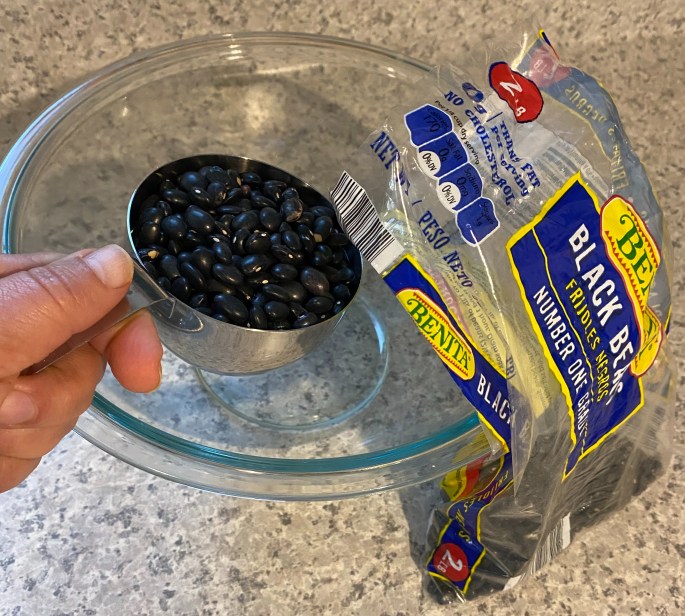
Black beans pack a cost-effective nutritional punch.

Enter the humble bag of dried beans–budget friendly, healthy, and honestly, not labor intensive! With a wide variety of beans from which to choose, dried beans are quite versatile. Even if you choose canned, beans are affordable on just about any budget and can be cooked into numerous recipes.  However, with a little bit of know-how, and especially with a pressure cooker–either electric or stove top–dried beans can be super easy to fix and much more economical than their canned counterparts.

Adding salt to the soaking water, in order to create a brine-soak, is optional. Some cooks debate whether or not you should, but most experts seem to agree that salt does allow the beans to soften even more.

Black beans and soybeans are the cornerstones of longevity diets around the world.”–Dan Buettner

 Beans are often one of the most overlooked, and even undervalued, sources of protein.  Chock full of iron, antioxidants, fiber and other nutrients, beans are a nutritional powerhouse that can be eaten daily.  In fact, regular consumption of beans is often considered an important dietary consideration in many longevity studies, including the popular, “Blue Zones,” coined by author, Dan Buettner, in his National Geographic article, “The Secrets of a Long Life,” and expanded upon in his book, The Blue Zones: Lessons for Living Longer from the People Who’ve Lived the Longest.  In fact, regular consumption of beans offers multiple benefits for the body.

Beans can soak up to 24 hours. The longer the soak, the softer they cook up, and the easier they are to digest.

A diet filled with regular consumption of beans and legumes can reduce LDL cholesterol by up to 5 percent!  In particular, black beans, with a whopping 15 grams of protein and 15 grams of fiber per one cup serving, have a low glycemic effect.  Therefore, eating black beans may reduce spikes in blood sugar, which may also lead to a reduction of risk for diabetes.  Additionally, the high fiber and high protein count of all beans, but in particular black beans, also keeps you feeling satiated longer which could lead to weight loss, or at the very least, maintenance of a healthy weight without feeling deprived. Black beans are also an excellent source of folate, manganese, magnesium, thiamine, and iron.  Talk about a nutritional dynamo!

Rinse well after soaking beans for desired length.

“Beans are such a nice, neutral canvas, you can make a big basic pot of them and then play around with them differently every day.”–Crescent Dragonwagon 

Black beans are versatile too. They are wonderful with almost any rice variation.  Stuff beans in tortillas or taco shells, sprinkle them on salads, add them to soup or chili, spoon them over potatoes, chips, or even fries. Black beans can also be made into brownies or added to a pan with a touch of oil and/or broth, heated up, and mashed into refrieds. They can also be blended into fun dips, such as black bean hummus. The choices are nearly limitless, as black beans–also known as turtle beans– have a mild, almost sweet flavor that lends itself well to a variety of spices and condiments as well as other additions, such as avocado, oranges, peppers, onions, tomatoes, spinach, kale, chili powder, cumin, salsa, garlic cilantro, chiles, to name a few.

Draining the cooking broth from the beans after cooking is a personal choice. I typically save most of the cooking broth, and use a slotted spoon for serving.

Come on, don’t be afraid.  Cooking beans from scratch isn’t hard, time consuming, or expensive.  If you don’t have a pressure cooker, you can always use a crock pot or cook low and slow on a stove for several hours–freeing your time up to do other tasks while keeping your budget in check.  

Open an inexpensive bag of beans, pour ’em into a bowl, add salt and water, then let them soak for up to 24 hours while you go about your life. When you’re ready, cook them up, and let the magic begin!

I encourage you to give this recipe a try.  If I can do it, anyone can do it!  Let me know how it goes!  I’d love to hear from you!

Leftovers can be stored in the fridge or up to a week or frozen for up to 3 months!

Ninja Foodie or Instant Pot Black Beans

Presoaking (Quick or Overnight)

1 cup dried black beans

3 cups water 

1 teaspoon kosher salt or ½ teaspoon table salt

Ninja Foodie or Instant Pot Black Beans

Adjust, eliminate, or add in spices to taste preferences.

1-2 teaspoon olive oil (optional) for those who prefer a little fat added to their beans

1-2 teaspoons minced garlic

½ cup chopped onion

1 cup soaked or dried black beans

1 dried ancho pepper or ½ teaspoon ground ancho chili powder 

½ teaspoon garlic powder

½ teaspoon onion powder

½ sea salt

½ teaspoon black pepper

2 teaspoons reduced sodium taco seasoning

2 cups of water

1 cup vegetable broth

Juice of 1 fresh lime (optional) 

Directions for soaking if preferred:

If using a traditional soaking method of  8-10 hours (although beans can be soaked longer–up to 24 hours–if preferred), place beans, water, and salt in a glass bowl. 

(Feel free to cover for the sake of cleanliness.)

Allow beans to soak either overnight or during the day while away at work. 

When ready to cook, drain in a colander or mesh basket and rinse well.

If using a quick soak method, place dried beans, salt, and water into a pan.

Cover and bring to a boil over medium-heat, and allow to simmer for 5 minutes.

Remove from heat and allow to cool to room temperature for approximately 30 minutes.

When ready to cook, drain in a colander or mesh basket and rinse well.

OR skip all of the presoak methods and simply measure out dried black beans and rinse well before using. 

Ninja Foodie or Instant pot cooking directions:

Swirl oil in the bottom of the pot if using.

Add in minced garlic and onions.

Next add in black beans.

If using a dried ancho pepper, place it on top of beans.

Sprinkle on desired spices–either following my list of ingredients, or go rogue by adding, eliminating, or adjusting the listed spices–they’re your beans after all!

Pour on water.

Fasten the pressure cooker lid and set the nozzle to seal.

Click high pressure, and set time for cooking.

IF beans have soaked, set cooking time for 5 minutes; IF beans have NOT soaked, set cooking time for 25 minutes.

Once the cooking cycle stops, allow the recipe to sit for at least 10 minutes (Do nothing with lid or seal.)

Carefully release the pressure seal, avoiding skin contact with the steam. (Trust me, it can burn!)

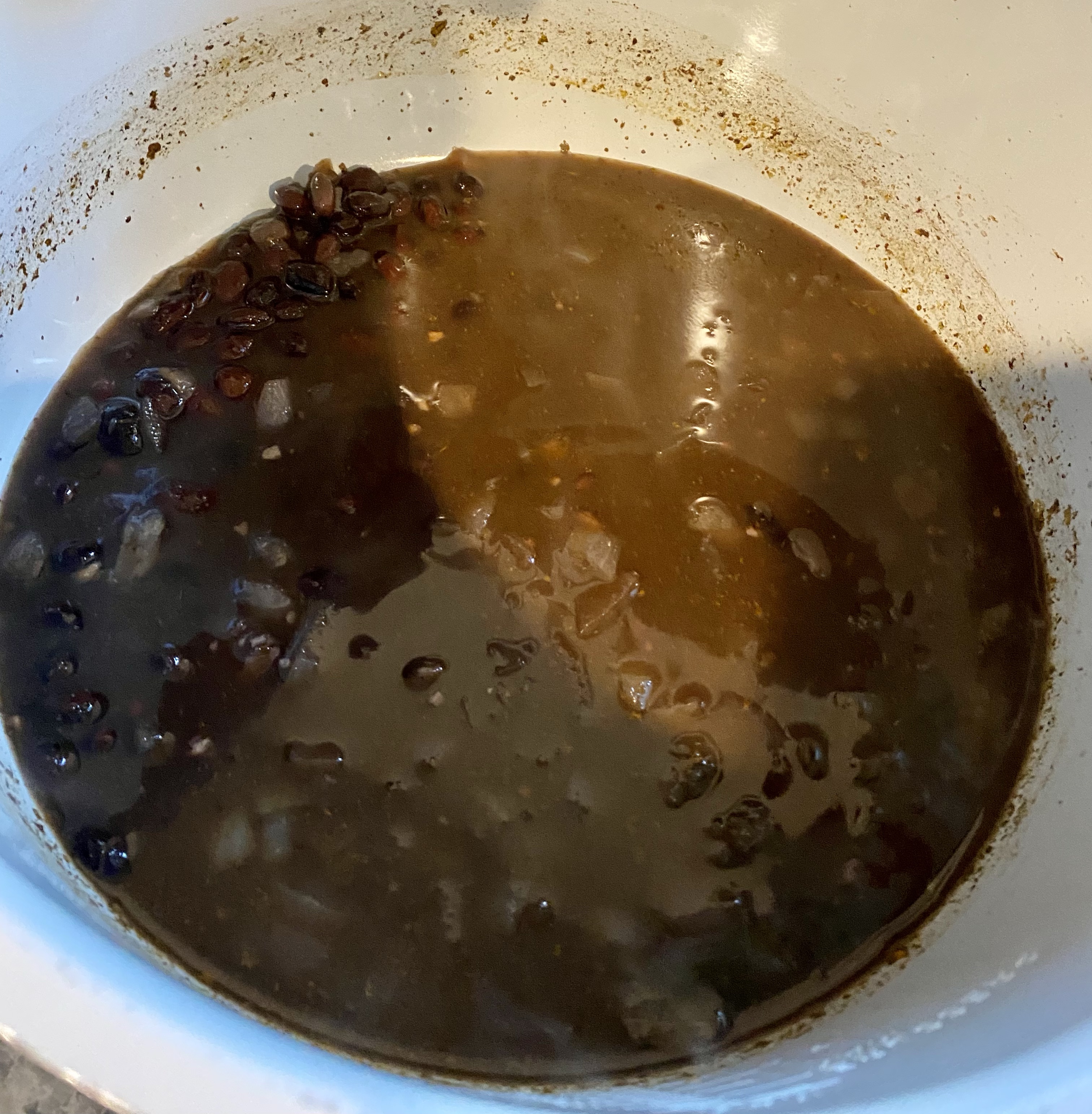
Once steam has fully released, carefully remove the lid, stir, and serve.

If you prefer, drain beans; however, I find that the beans store/taste/texture remains best when stored in a bit of their own broth, but it’s really personal preference.  We simply use a slotted spoon to ladle beans.

Can be stored up to one week in the refrigerator or in the freezer for up to 6 months.

Makes approximately 3 cups of cooked beans.

Recipe can be doubled! 

Add your favorite vegetables, starch, and condiment(s) to your made-from-scratch beans, and you’ve got one healthy meal!

Baby Stepping into Growth

“Strive for progress, not perfection.”–Anonymous

During a recent conversation with a new mother, she shared with my husband, John, and me, the plight of her recent episode of sleepless nights.  The mother explained that her nearly ten month old daughter had learned the joys of pulling-up and cruising around furniture for short bursts of time.  Enamored with her newfound skill, the baby girl was now waking during the night in order to practice her newly discovered skills. While the new parent was thrilled and excited at the baby’s achievement of this new milestone, her eyes were rimmed with dark shadows due to her lack of sufficient sleep.  However, as the parent continued to share various stories of her baby’s zig-zag pattern of progression–crawling and rolling by day, pulling up and cruising by night–the mom’s eyes, nonetheless, sparkled with delight.

Initially, as many parents do, I reflected on my own daughter’s development.  She was much more interested in mastering her vocal and verbal skills at the nine-to ten month period.   Her interrupted sleep, at least at that age, was to wake and explore all the ways in which she could babble, vocalize, and soon enough, form meaningful words.  It wasn’t until the 10-11 month period that she became more interested in pulling up and cruising.  Even then, it seemed that she pulled up with the sole purpose to practice all the ways in which she could use her voice!

My daughter’s path of development was not better or worse than the parent’s child, rather it is an example of the varied and unique ways in which children’s bodies and brains develop. In fact, John and I took great amusement in the fact that our own daughter would be more interested in learning to talk before walking.  Likewise, the new mom did not criticize or compare her baby’s progress to that of a child who had mastered walking, rather she focused on her child’s progress.

Upon reflection, the next day, I realized that there was a nugget of wisdom in that story that was worthy of more contemplation.  Reflecting, not only my daughter’s unique mastery of walking, but also upon what I understand as an educator regarding child development, I recognize that learning is all about progress, not perfection.  In fact, the same is true for establishing new habits or making/adjusting to a drastic change in life.  Cultivating growth, change, and learning, in the real world, moves slowly through up and down periods of time.

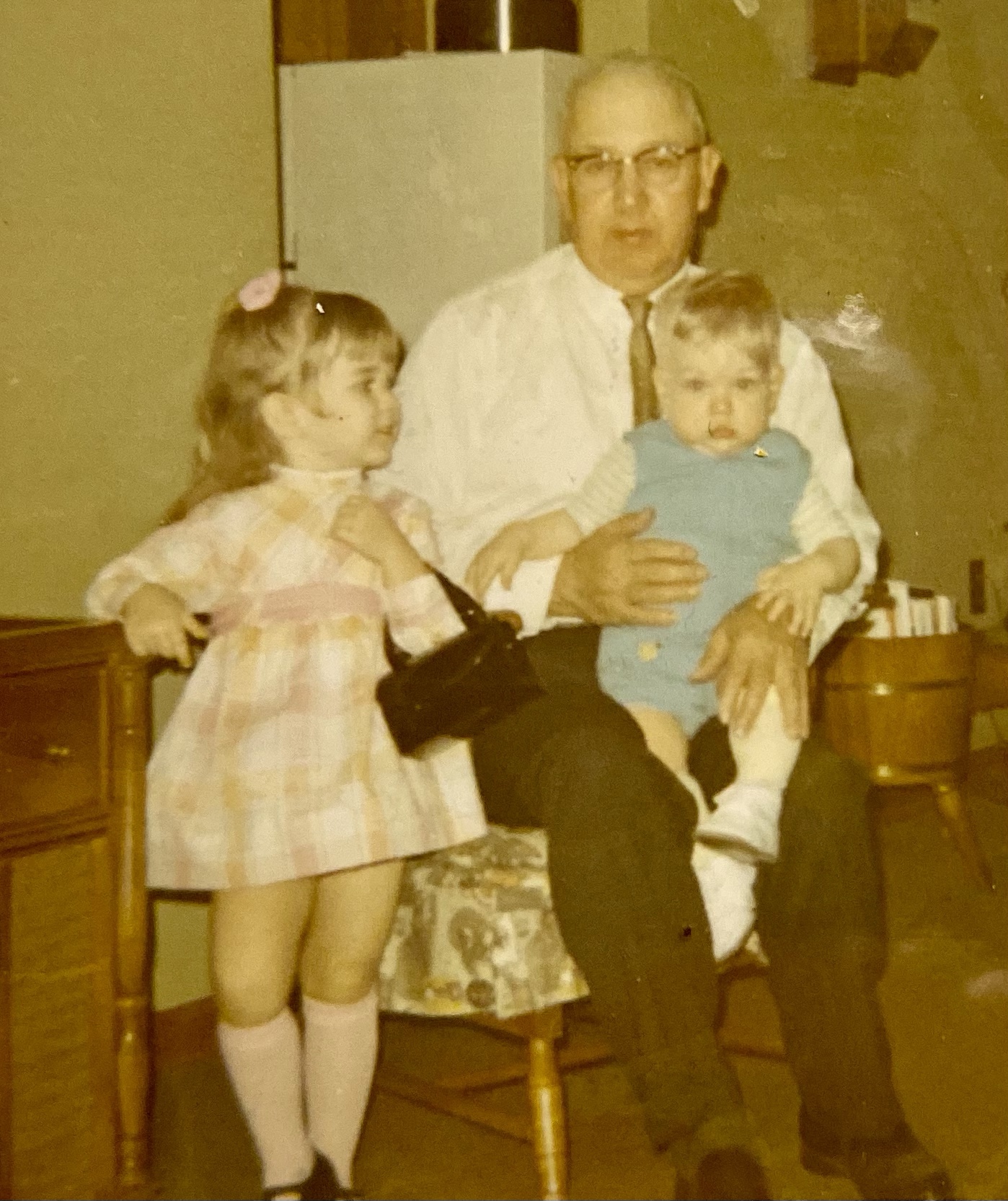
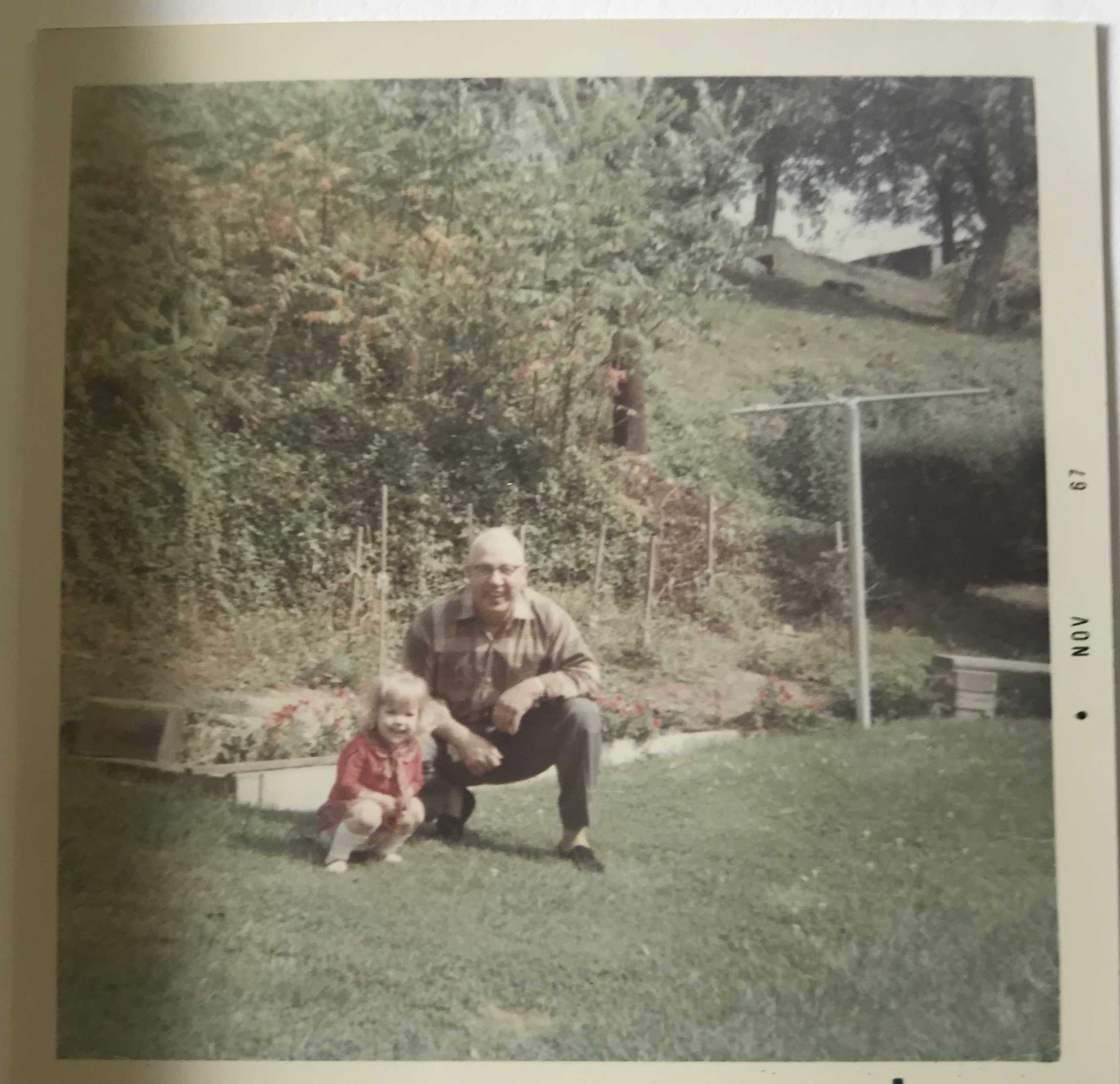
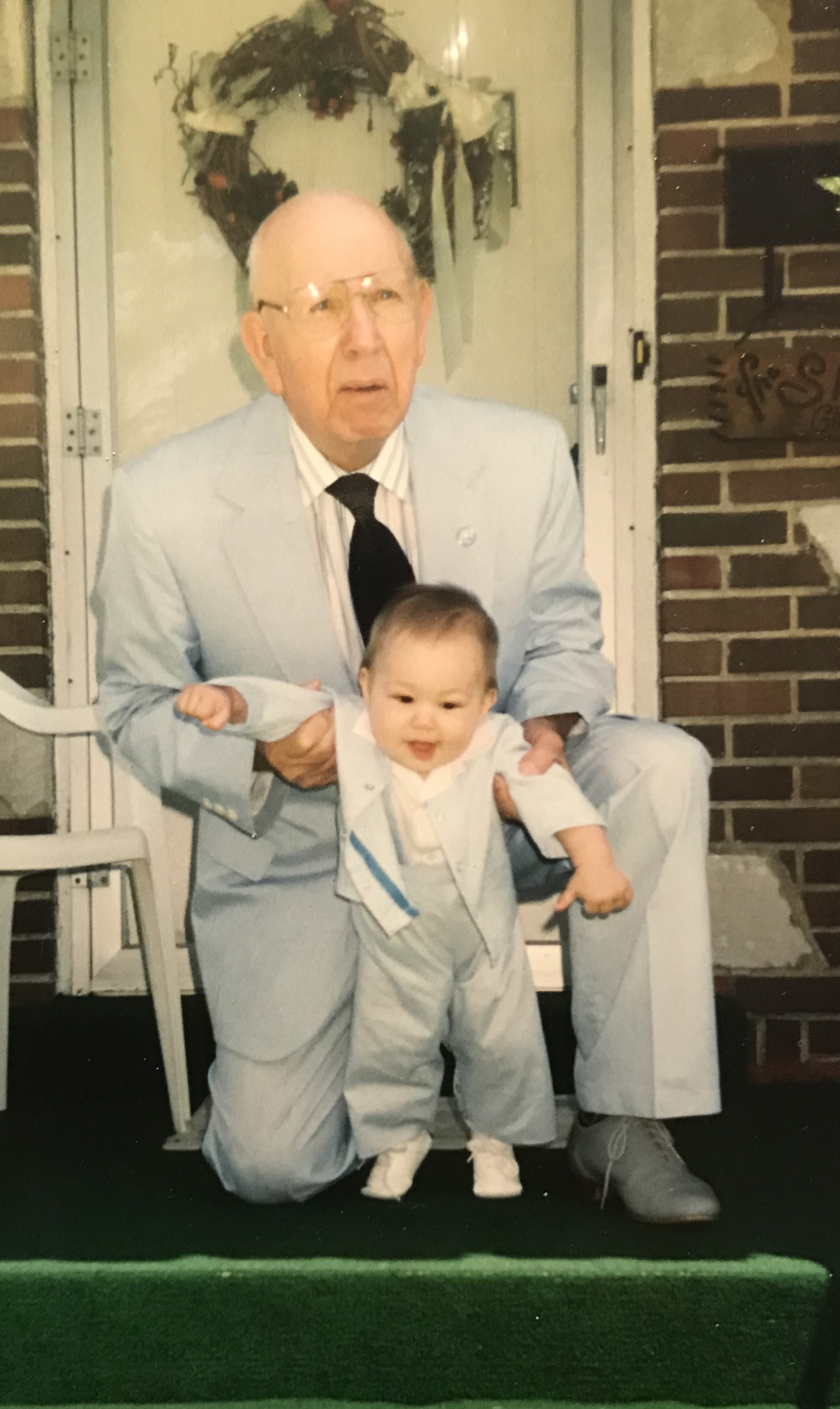
My parents did not compare my development as a toddler to that of my grandfather!

“Sometimes the smallest step in the right direction ends up being the biggest step of your life. Tiptoe if you must, but take a step.”–Naeem Callaway

Reflecting on the ways in which babies learn to walk, child development experts state there are certain milestones, such as, sitting, rolling over, crawling, pulling up, cruising, and so forth, that parents should expect. During the process, the baby will learn to balance while standing, then bounce while standing, and might revert back to rolling or crawling. Eventually, however, the child will return his or her interest to pulling up, and perhaps begin to attempt cruising, but may still go back to crawling for a while–or in the case my daughter–focus on developing verbal skills.  

The point is that while so-called experts can point to certain milestones of development, in reality all children learn to walk (and talk) at his or her own pace–some taking longer or shorter periods of time than others.  However, we never compare the child-learning-to-walk to a so-called “master-walker.” Can you imagine a parent or grandparent saying to a baby learning to walk, “Why aren’t you walking like so and so?”  Instead, we foster and encourage each, well, baby-step along the child’s unique time-line of progression.  Which led me to wonder why so many of us, myself included, don’t do that for ourselves?

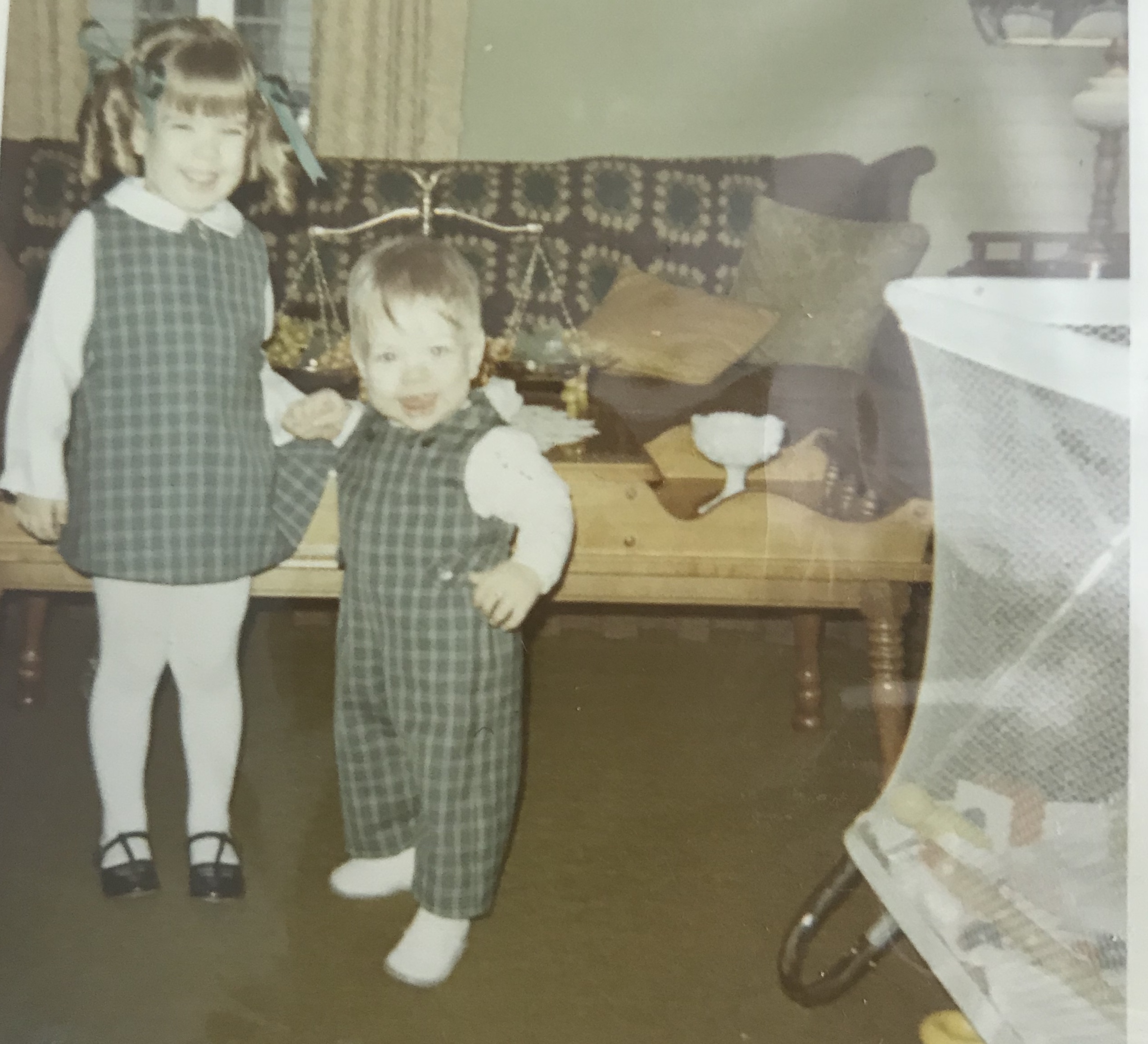
Nor did my parents compare my brother’s baby steps to his older sister (me).

Why do we, as adults, compare our own progress–or for that matter the progress of school age children–to that of a so-called, “master.”  While having a goal is absolutely worthy, as the old adage states, “Rome wasn’t built in a day,” and neither is progress.  In fact, I often have conversations with parents of students that growth often happens in fits and starts.  Each student’s brains are wired uniquely, and thus learning never occurs in a straight upward angled line.  The same is also true for adult learning. 

All progress–be learning a new skill, establishing a new habit, or changing/eliminating a bad habit–looks more like the zig-zag pattern of learning to walk.  How many times per day does a baby who is learning to walk fall down?  Are we ever disappointed in the baby when he or she does this?  No!  Instead, as loving adults, we say words to encourage, foster, and inspire the child to try again.  In fact, I would argue, it is the adult’s positive attitude that is part of the baby’s motivation to get up and try again–at least until they are too tired.  Even then, as we put the baby to bed, we know that tomorrow’s is a new day, and he or she will be right back at it again in the attempt to learn to walk.

No matter how long or meandering the path toward progress is, keep on stepping into the version of your best self!

“If you can’t fly then run, if you can’t run then walk, if you can’t walk then crawl, but whatever you do you have to keep moving forward.”–Martin Luther King Jr.

Thus, this is the type of attitude that we should offer ourselves in our attempts to instigate personal change and growth.  Start with small steps towards the desired goal.  If you “backslide” and revert back to old habits, such as when babies revert back to crawling, get back up the next day, and try again.  Don’t compare yourself to others with self-defeating thoughts or other comparative notions. Each of us has our own distinctive way of learning, changing, and/or progressing.

I would have never told my daughter that she should give up on learning to walk, much less called her a failure when her interest in walking was put on pause for several weeks as she focused on her vocalization.  That was part of her own idiosyncratic pattern of growth, and the same holds true for our own attempts at growth and change. 

We all need a little help along the way towards our goals. Don’t be afraid to accept structure and help as needed!

According to the Kaizen principle that is often applied in the business world, improvements and growth in an organization most successfully occurs through small steps.  In fact, as best as I understand it, the Kaizen principle for growth and change encourages a business to create a culture in which employees plan, implement a small steps towards growth, periodically review whether or not the plan is working, then take action–either by taking the next small step forward or by refining/adjusting the current step.  With each successive step and revision, growth begins to occur. This principle can be applied to our own lives.

Stop comparing yourself to a master-image of perfection.  In fact, I encourage you to stop striving for a so-called image of perfection–after all, this is life, with all of its ingrained messiness and fallibilities.   Instead, foster progress.  Talk kindly to yourself as you would a child learning to walk.  If you fall down, it’s okay.  Cry if you must, but get up the next day, and try again. If you need to hold onto a structure for a while, as a baby must hold onto furniture in its attempt to master walking, remember the baby is developing its leg strength, and you are likewise building strength!  The point is to keep moving forward, no matter if it seems like you’re only making baby steps. Eventually you will attain your version of success that works for you.  

Photo by Juan Pablo Serrano Arenas on Pexels.com

A Prayer for a Compassionate Heart

Do to others whatever you would have them do to you . . .”Matthew 7:12

As I descended the hill and made my way onto a major Ohio route, I saw the flag in front of me.  During these schismatic political times, I am not unfamiliar with numerous political variations of the American flag, but this one really bothered me.  I could feel its venomous bite, and like a poisonous snake, its toxin worked its way gradually into my consciousness.  

What is the purpose of a flag filled with hateful words?  Do they have kids?   If so, were they okay with their own children seeing those words?  This was also a major school bus route; those students would also read those words.  Did they think about them before hanging it up?  On and on my mind chewed on this image like one tries to chew taffy with its sticky consistency adhering like glue.

Miniature Old Glory hangs in my classroom.

It wasn’t long before a stereotypical image began filling my mind regarding the type of person who chose to hang the controversial flag.  Soon enough, the flag message became fodder for a few of my conversations–that is until my consciousness began to send me pangs of remorse and guilt.  

“Steph, you are pigeon-holing people you haven’t even met yet.  You don’t know that person, nor do you know the life they have lived.  Who do you think you are?  What makes you so great to sit in judgement?”

On and on my consciousness scolded me.  Then, came the remembrance of an image.  It was from my third grade classroom.  A small framed principle was hung beside the long ago classroom door, allowing it to be visible to those of us inside the classroom.  I was seated in the front of the classroom, due to my height, in a desk near the door, and consequently, the sign.  The image was embossed with golden flourishing, and the lettering was classically formatted in a bold black scripted font: “Do unto others as you would have done unto you.”  

As seen on Instagram @ drwaynedyer.

As best I can remember, this classic tenet was dulled with age, lacked any eye-catching appeal, and therefore I am fairly certain it wasn’t something to which I paid particularly close attention.  While memories of my third grade are as faded as that long-ago picture, I do seem to recall our teacher, Bonnie McKenzie, referring to the picture, from time to time, when any one of us was not acting kindly towards one another.  In fact, I have a hazy recollection of Ms. McKenzie, once standing beside the picture, and firmly instructing us that this was the most important rule in our classroom. 

It occurred to me that I had seen the very same thing somewhere in my grandparent’s house, but like all third grade minds, it wasn’t a precept I fully understood.  Rather, I interpreted it as a reminder to, “Be nice.”  Not that I always applied it, after all, I was a third grader, and life wasn’t always fair, but I’d like to think I mostly tried . . . at least until those angsty, hormonal teen years . . .

Regardless, I am now no longer a fledgling third grader and absolutely capable of understanding the golden rule more fully.  Therefore, I continued to wrestle with my consciousness over my self-imposed verdict of the flag for the rest of the evening.  My mind kept circling back to that darn third grade image, and I knew that if I was talking negatively about this unknown person, I was NOT practicing my beloved teacher’s guideline. 

Don’t get me wrong, I am sure Ms. McKenzie was as flawed and imperfect as the rest of us, but I would like to believe that it was important to her that she imparted the importance of this rule, above all others, to her students.  Thus, that is how I settled my mind.  

Do unto others the way your cat peacefully loves you! 😉

“To keep the Golden Rule we must put ourselves in other people’s places, but to do that consists in and depends upon picturing ourselves in their places.”–Harry Emerson Fosdick 

While I’d like to believe I’ve lived through a wide array of situations and therefore have a wide breadth of informed life experiences that grant me permission to quickly judge or criticize–it is one of my greatest ego-driven flaws.  One could argue, as I have, that the ability to discern quickly can be a strength in certain situations. However, quickly drawing conclusions is still deduced from my limited life experiences and perspective rather than taking time to place myself in the shoes of the other person.  

As the strangely linked cogs of my stored memories continued to churn their mental back and forth, my mind led me down another deep recess to the remembrance of an additional memory:  Rev. Larry Brisker, my one time pastor, teaching his flock about the concept of “agape love.”

Pets offer us unconditional love–no matter how we act, what mood we’re in, or what political/personal beliefs we have.

“Agape love is selfless love . . .the love God wants us to have isn’t just an emotion but a conscious act of the will–a deliberate decision on our part to put others ahead of ourselves.  This is the kind of love God has for us.”–Billy Graham

I cannot pretend to be an expert of Bible scripture, but I do faintly recall first learning about the concept of agape love from Rev. Brisker.  It was one of those rare teenage times when I truly focused on the sermon. (Sorry, Rev. Brisker, I wasn’t always focused, but in all fairness, I was awash in those darn, distracting teenage years.) As best as I can recall, Rev. Brisker’s message on agape love was based on a passage in Corinthians I often call, “The Love Chapter”.  In particular, it was the verse about the clanging cymbal that held my attention because, well, I thought it sounded cool. Ok, I was a kid, but the point wasn’t entirely lost on me.  

God loved us, period.  It wasn’t based on feeling or the hollow promises of impressive sounding words.  God’s love came from actions–not feelings–and that, Rev. Brisker explained, was the highest form of love and what we should all aspire to offer others–no matter what they believe or how they choose to act.  Of course, I am quite certain the Reverend was MUCH more eloquent than my memory.

Photo by Tima Miroshnichenko on Pexels.com

Therefore, Dear Reader, I recount both of these faint memories to share this conclusion.  In this extended season of recent years filled with uncertainty, political divide, and one series of crises after another–both home and abroad, it was, and is, my lesson to re-learn that when I am quick to judge, that I must step back, and try to see things from the other person’s perspective.  In fact, it is my prayer that my conscience continues to remind me to refrain from acting as a loud clanging cymbal filled with noise based only upon my perspective.  The bigger picture is NOT about me. 

Instead, I pray that I may humbly be reminded, as often as needed, to extend compassion and understanding to ALL.  May I work harder to find a more gracious, warm hearted attitude, and not be so quick to render judgement.  Otherwise, I am acting in a way that could be, and has been, hurtful if/when someone quickly passes judgement upon me.  

Therefore, as the Golden Rule encourages all of us to do, may we all offer understanding and patience to others in the same way we would expect it given to us.  We don’t have to agree on all fronts to find common ground that binds us together as fellow human beings.  Agape love challenges all of us to humbly serve and offer grace to all as our Creator does for us on a daily basis.

“You can have the ‘golden rule’ do unto others as you would have others do unto you. But then you take it one step farther where you just do good unto others, period. Just for the sake of it.”–Jennifer Beals 

Treat others as you would have them treat you!
Photo by mali maeder on Pexels.com
Mom told us to get out outside and play!

Cricket’s Song

“When the cricket’s song is the only song you hear, how peaceful the whole earth seems.”–Marty Rubin

My face masks were washed from the previous week of work.  The sun had already kissed the horizon’s forehead before slipping away into the dusk, but it was not yet full dark.  I headed towards the garage of our home with the clean masks in hand in order to stow them away with the others in a large ziplock baggie I keep in my car.  Stepping down onto the concrete pad, I was struck by the singing of a lone, unseen cricket.

Photo by NO NAME on Pexels.com

Goodbye, goodbye, goodbye . . .goodbye, goodbye, goodbye . . .goodbye, goodbye, goodbye . . .”  sang the hidden insect.

It seems as if it is a rite of seasonal passage for one cricket to find itself trapped in our garage. Even as a child, I seem to recall a single cricket trapped in my family’s garage, and later, the laundry room. In fact, I can once recall sitting on the step to the laundry room during a summer stay at home from college, listening to a lone cricket chirp its tune of summer’s end, and feeling both the mix of anticipation and sadness at the changing of seasons within my own life.  

Later in the week, having temporarily forgotten the guest residence of the cricket in our garage, my husband, John, and I exited out of our car after a dinner out, and we were greeted by the sound of our guest once more.

Photo by Neale LaSalle on Pexels.com

Goodbye, goodbye, goodbye . . .” our guest continued its mournful solo concert.

Even as I closed the garage door and turned off the light, I could still hear its song of summer’s end continuing despite no longer having an audience.  

Early the next morning, I walked out to the garage to once more stow away another item into the car.  The sun had not yet made its morning ascent, and the garage was filled with shadows and predawn edginess. As I reached for the garage door handle, I paused. The cricket was still singing its melancholic song.  I had to wonder at the miracle of this creature’s voice and sense of perseverance.  How could it continue to sing throughout the night–even if no one was there to appreciate it’s fine farewell chirrupings?

Entering the garage, its piping paused momentarily.  Then when no harm came its way, its singing resumed full strength as I made my way to the car with my belongings. Returning to the house, its trilling continued even as I shut the garage door.  

Goodbye, goodbye, goodbye . . .”  

“The crickets felt it was their duty to warn everybody that summertime cannot last forever.”–E.B. White

The cricket’s reminder that change is coming.  Summer’s warmth will soon be passing.  Leaves will soon slip the bondages of tree limbs, grasses will fade, and wintry winds will whir their chilly thoughts soon enough.  Silky time slips slowly through a faucet of seasons, drip by drip, slowly weathering away the husks of our bodies like water gradually wearing down a rock, eventually returning it to the dust of our Creator.

Photo by Vlad Bagacian on Pexels.com

Shortened days and longer nights, 

Football and band songs

Sweaters and caps, 

Bonfires and marshmallows 

Amber and red swirl over 

A ribbon of black  

Soon the first kiss of frost.

“Goodbye, goodbye, goodbye . . .  

It’s been a week since the unseen cricket took up residence in the collections that fill the garage. Since then another loved one has left the earth; perhaps he sings for him.

Life is short

Life is sweet

Love is a river of time

Filled and flowing 

With the rhythm of

Seasonal rains and

Periods of drought 

Through, over, and around

Ultimately, returning to the Source

Goodbye, goodbye, goodbye . . .”

The cricket bids you adieu, my friend. 

Dusk has slipped into night

Your tortured time 

Filled with shouts of pain

Has ceased into a timeless song of peace

Yet

Your imprint abides

Through students and players

O’er fields of dreams and

Work sites unseen

Through sons and grandchildren

And even four greats

Your legacy endures

May your hands be still at last

“Goodbye, goodbye, goodbye . . .” trills the cricket once more.

The cricket's song is a reminder that change is coming.  Goodbye warm summer days. Hello frosty autumn starts.  Soon we all will rest.