Nutritious Maple Walnut Salad Inspired by Alzheimer’s Study | Health Recipe

“I am cautiously optimistic and very encouraged by these findings, which may give many people new hope and new choices,” Dr. Dean Ornish

highly anticipated study 📈
Photo by Greta Hoffman on Pexels.com

I recently returned from a trip to Ontario, Canada. While I was there, a major study, led by Dr. Dean Ornish, was released in BioMed Central’s Alzheimer’s Research and Therapy. This highly anticipated research was widely promoted across various news outlets weeks earlier. Despite the fact I had read the earlier press releases, reading the report, one peaceful early morning in a rustic cabin along the shores of backwoods lake, provided greater understanding.

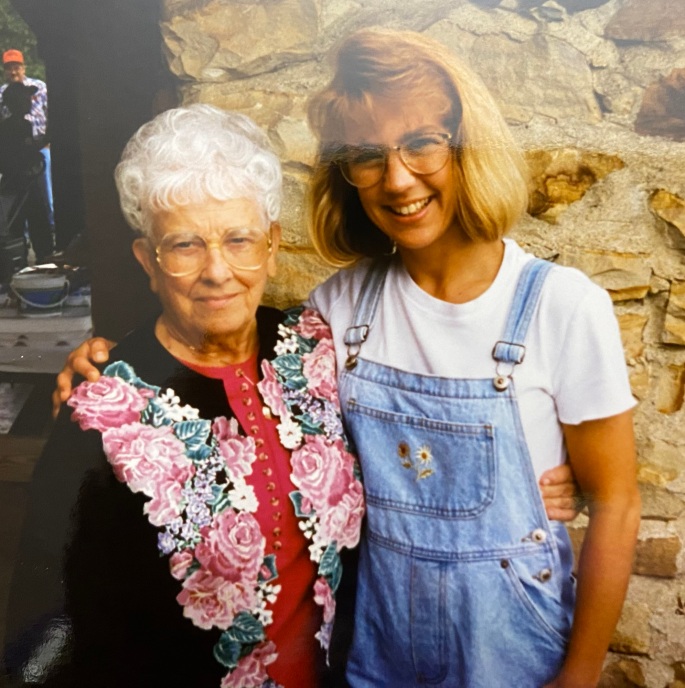
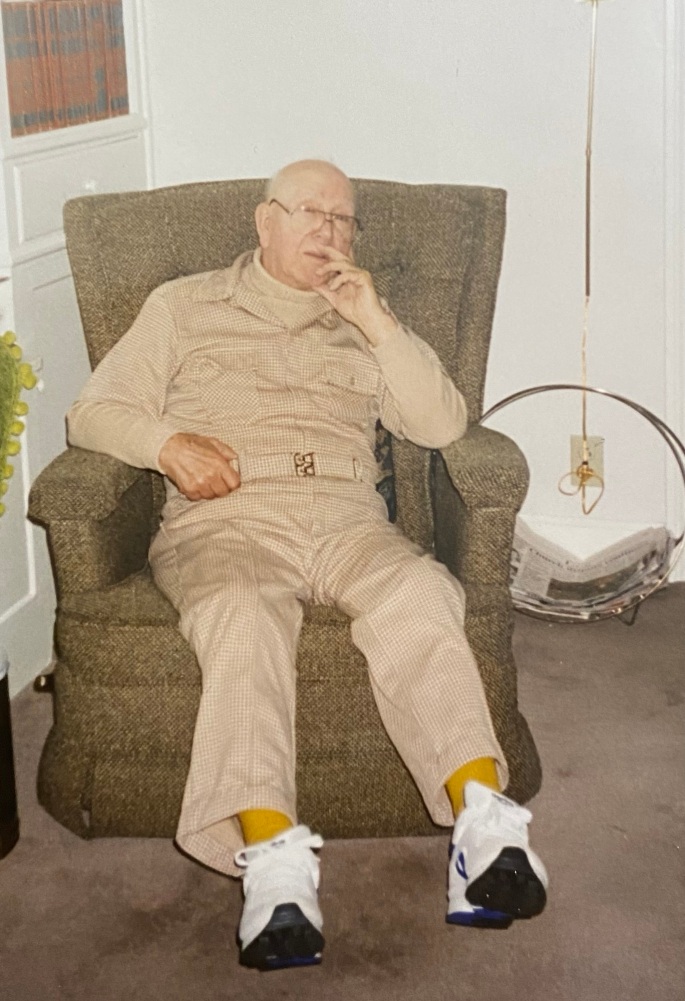
As I have previously written, Alzheimer’s disease (AD) and dementia are part of the genetic make-up on both sides of my family history.  Watching it take the minds of my beloved grandparents was heartbreaking. Ultimately, they required extensive care in large part due to AD, the burden of which fell upon their children. Therefore, I want to do all that is possible to avoid placing that type of burden upon my loved ones.

Ornish’s study is the first controlled clinical trial to demonstrate that lifestyle habits can delay the onset and progression of mild cognitive impairment (MCI) or early dementia due to AD. The study initially enrolled 51 patients and their designated partners, aged 45-90, for 20 weeks, but two withdrew. Nonetheless, the study guided the remaining 49 patients through a series of interventions, including a plant-based diet; walking 30 minutes per day; strength training three days a week; stress management including yoga, breathing exercises, and meditation, to name a few; group support via Zoom meetings, and specific supplementation, all of which is clearly spelled out. 

Excitement Incitement 💡

The excitement of this study got my recipe-creating gears grinding, especially as a major heat wave sank its talons in a large swath of the U.S. and Canada, including where I was staying with my husband. With the extreme heat we were experiencing, the last thing I wanted to do was turn on the cabin’s stove or oven, especially since there was no air conditioning. Therefore, throughout our stay, I created several dinners of seriously large salads, adding additional inspiration for this month’s recipe.  

Of further influence was the wide availability of Canadian maple syrup.  In fact, I encountered a representative of White Meadows Farms, out of St. Catherine, Ontario.  This family-owned farm, established in 1937, has been harvesting sap to make maple syrup for over three generations. After one sample, my taste buds were “stuck” on the flavor of their dark syrup. I knew I had to put their syrup to good use as part of this recipe creation. After all, sweet moderation is an important part of good health.

Nuts for health 🌰
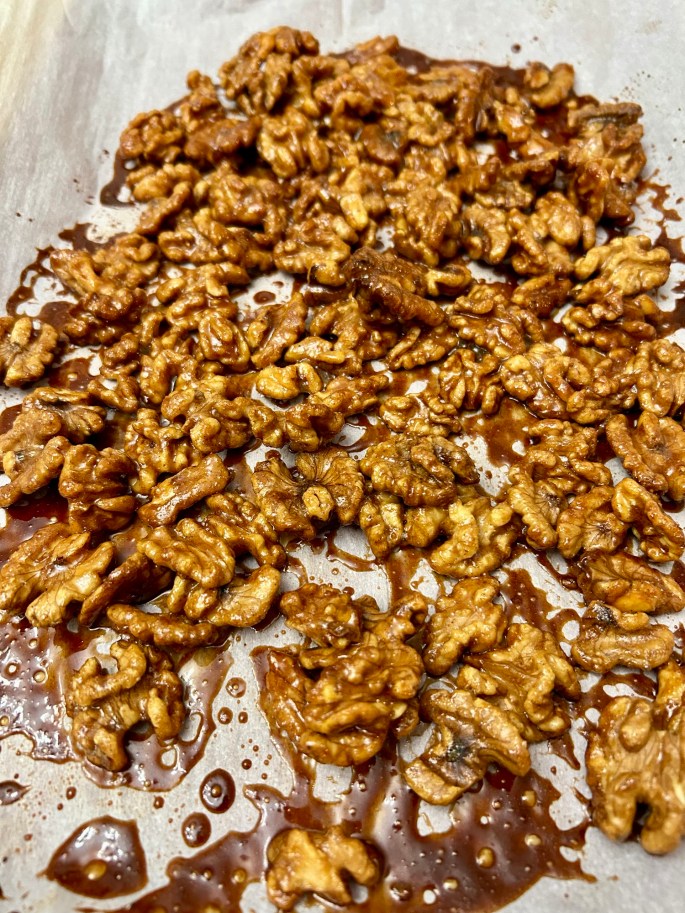
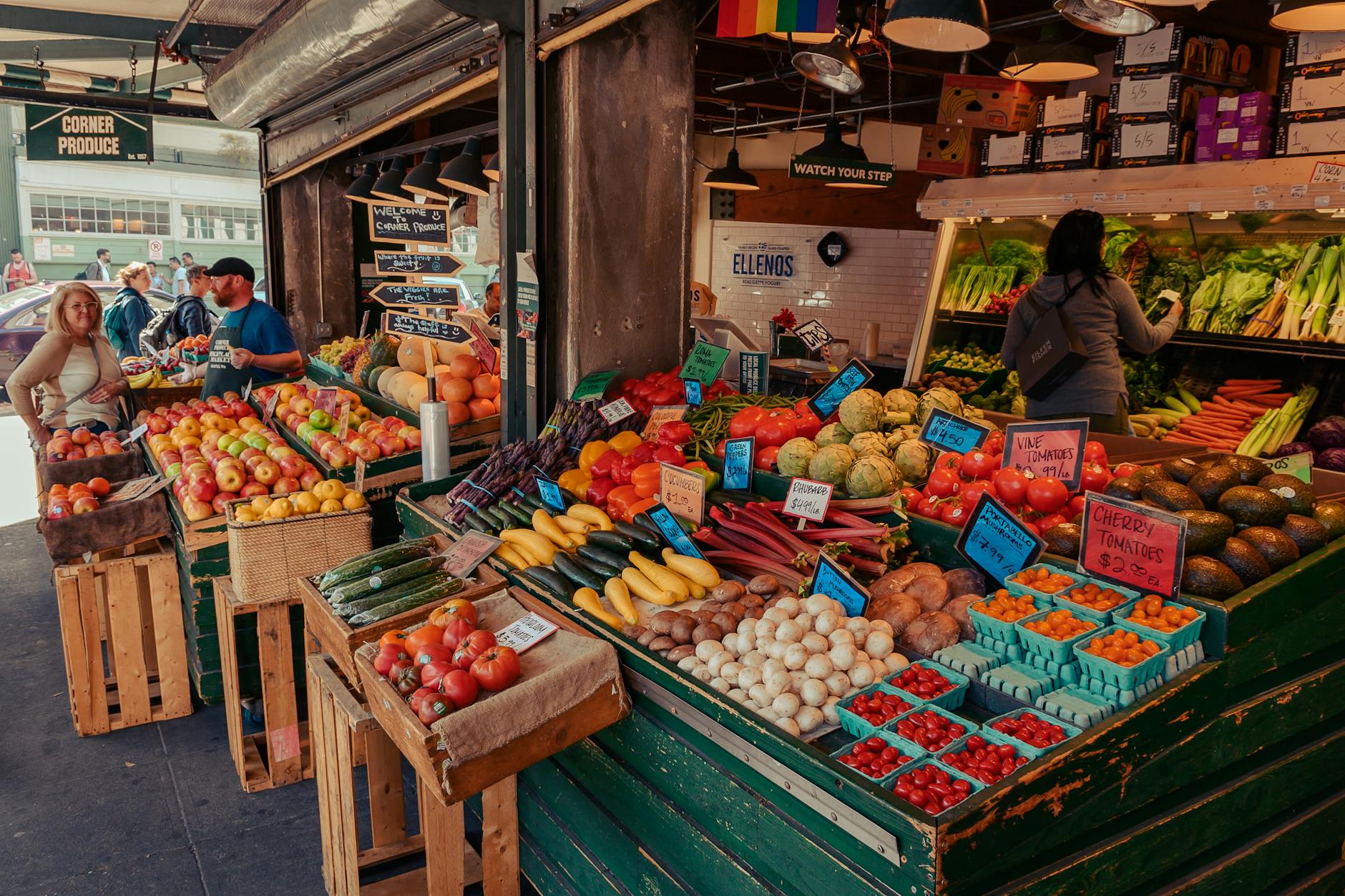
Another point of inspiration for this recipe was the wide availability of bulk walnuts at the local market near our camp. Nut and seeds are a healthy part of the Ornish diet. In fact, according to the Cleveland Clinic, walnuts provide a good source of omega-3 fats and antioxidants for heart health, benefit gut health due to their high fiber content, help stave off inflammation, and may reduce risks for certain cancers.  Additionally, those healthy fats and antioxidants may boost brain health–perhaps that is why walnuts are shaped like a brain!

A rainbow recipe of pride 🏳️‍🌈

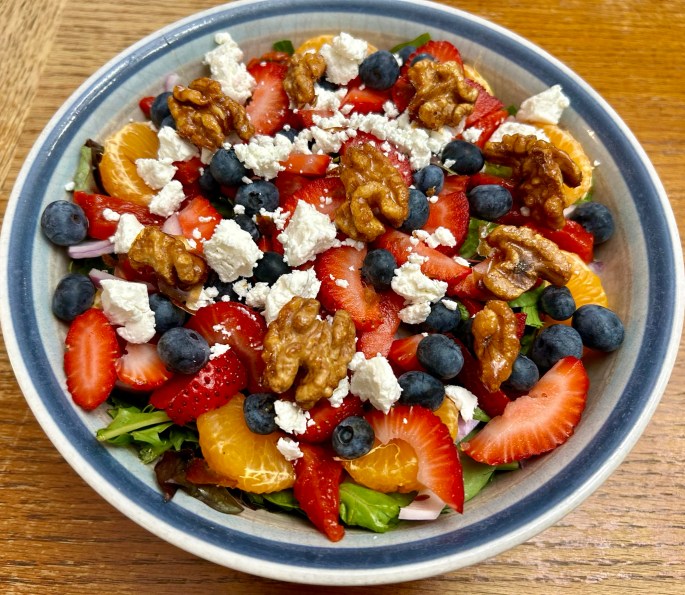
One final source of inspiration for this recipe was the fact that it was created during June, the month of Pride, dedicated to celebrating my friends and loved ones in the LGBTQ+ community, including my brother and two nieces.  It is with great, well, “pride” and celebration that this recipe will debut on June 28, International LGBTQ+ Day.  This gorgeous salad offers a RAINBOW of tasty colors and textures designed to nourish EVERY body.

From my home to yours, I wish you health, happiness, and hope for an optimistic future free from dementia and Alzheimer’s disease!
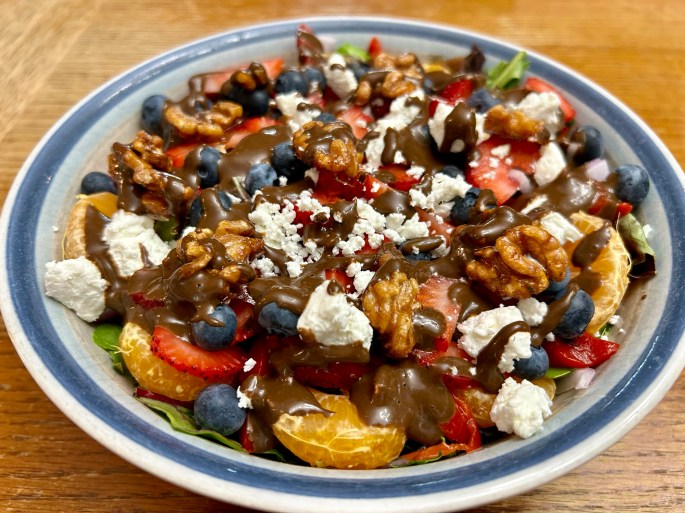
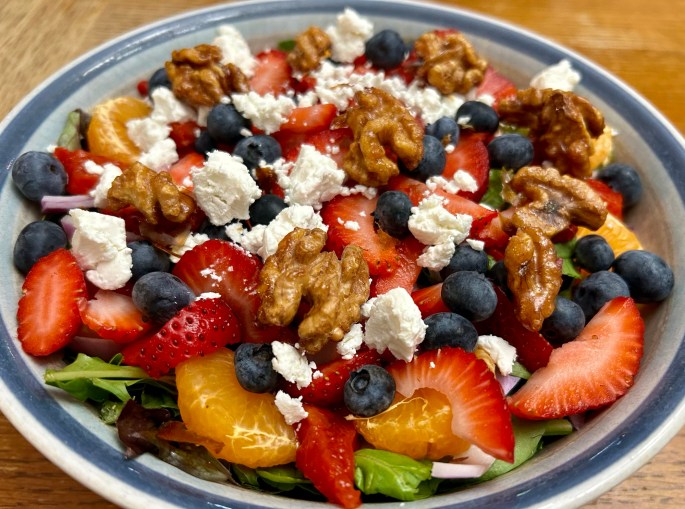
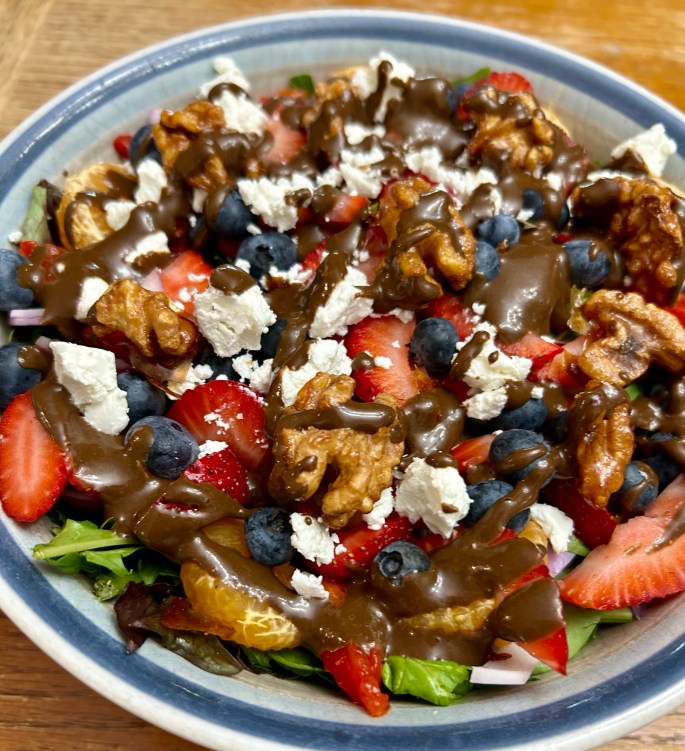
Rainbow salad with maple walnuts and vinaigrette, gluten-free with vegan options

Maple walnuts ingredients:

2 cups walnuts

⅓ cup pure maple syrup

½ to 1 teaspoon vanilla 

¼ to ½ teaspoon cinnamon 

⅛  teaspoon sea salt

Salad ingredients:

5 or more ounces of favorite baby greens

1 cup sliced strawberries

¾ cup blueberries

2-3 clementines, sectioned

½ sliced large red onion

½ cup roasted red peppers and/or shredded carrots

2-4 ounces goat, or equivalent vegan, cheese or 1 cup beans, drained and rinsed

Maple walnut balsamic vinaigrette ingredients:

¼ cup walnuts

½ cup water

¼ cup balsamic vinegar

2 tablespoons maple syrup

1 tablespoons dijon mustard

½ teaspoon dried onion powder

½ teaspoon dried oregano

⅛ teaspoon salt

Pepper to taste

Maple walnut directions:

Preheat oven to 350 degrees

Line baking pan with parchment paper or lightly grease and set aside

Place maple syrup in a small, microwave safe bowl.

Heat syrup for 30-60 seconds

Stir in vanilla, cinnamon, and sea salt until thoroughly mixed

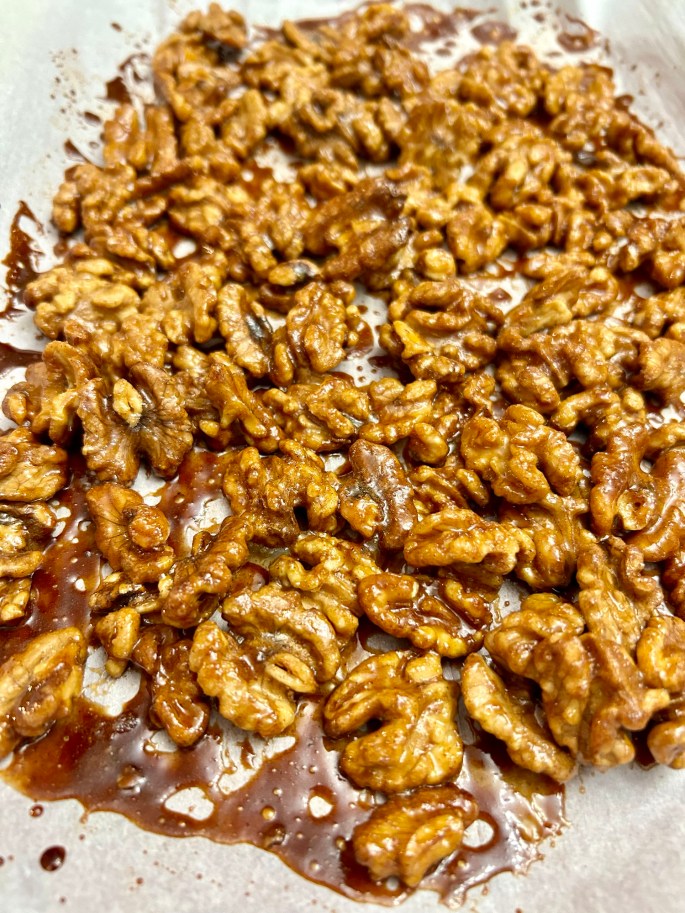
Pour syrup mixture over walnuts, and stir until well coated

Spread coated walnuts onto prepared baking sheet

Bake 5-7 minutes, then stir and rotate 

Continue baking for 3-5 minutes or until walnuts are golden brown

Remove walnuts from oven and allow to cool on baking sheet 

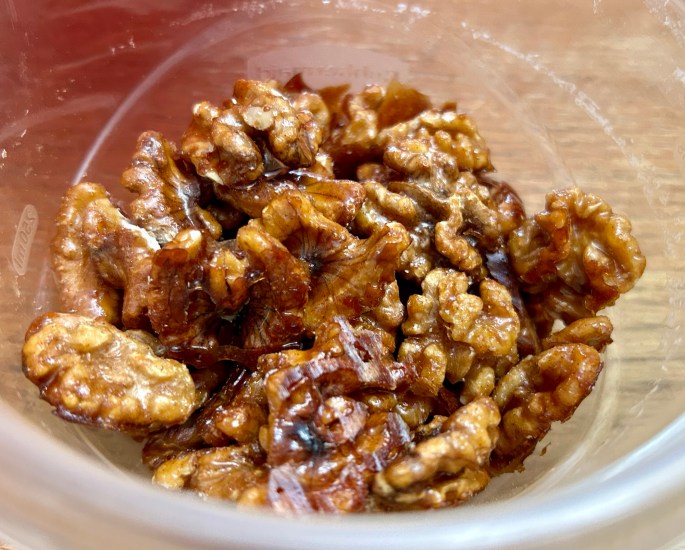
Break walnuts apart and store in airtight container or baggie for up to 3-4 for weeks

Enjoy these maple walnuts as a snack or sprinkle over salads, fruit bowls, oatmeal, yogurt parfaits, ice cream sundaes, etc 

Maple walnut balsamic vinaigrette directions:

Place all ingredients in high powered blender and blend until smooth, approximately 45 seconds

Pour into glass container (I like to use canning jar)

Store in refrigerator for up to 4 weeks

Makes approximately 1 cup dressing

To assemble salad:

Add greens to large salad bowl

Add sliced strawberries, blueberries, clementines, sliced red onion, sliced red pepper, and/or shredded carrots, if using.

Toss with desired amount of dressing, divide among plates/bowls and top with goat or vegan cheese (or top with beans instead, such as roasted chickpeas)

Serves 2-4
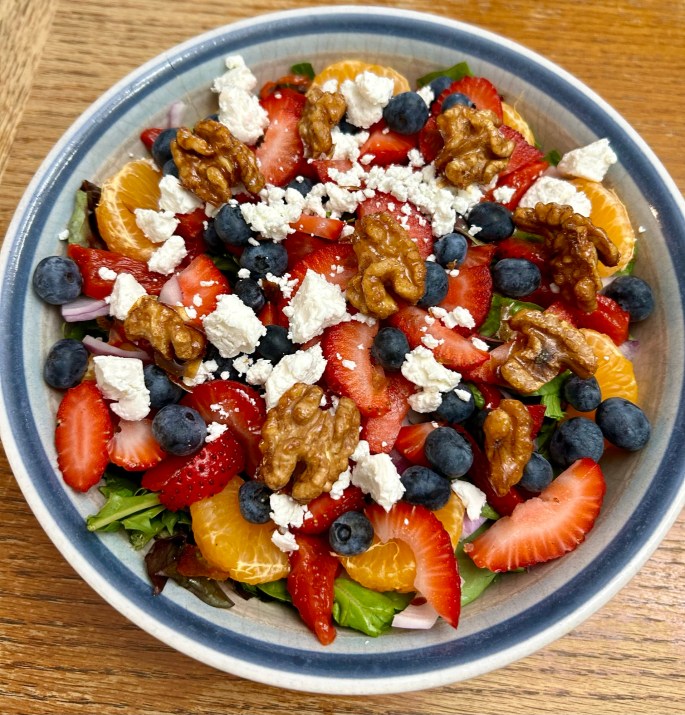
This recipe also took inspiration from the following websites and articles: Better with Cake, The Garden Grazer, Hello Nutritarian, “Effects of intensive lifestyle changes on the progression of mild cognitive impairment or early dementia due to Alzheimer’s disease: a randomized, controlled clinical trial,” an article on BioMed Central,“‘A study to give us hope’: Lifestyle changes improve Alzheimer’s symptoms for some,” an article on CNN, and Shane and Simple.

Simple Steps to Improve Brain Health and Reduce Risk for Alzheimer’s Disease and other forms of Dementia

with Tasty Thai-style Recipe to get you started

“A healthful, whole plant–based diet appears to yield the greatest risk reduction.”The Journal of Alzheimer’s Disease (published December 2023)

Photo by Kindel Media on Pexels.com

The statistics of Dementia 🔢

According to the World Health Organization, over 55 million people globally suffer from some form of dementia, and approximately 10 million new cases are identified each year. Of these cases, 60-70% of them will be identified as having Alzheimer’s Disease.  Additionally, women are most affected by dementia either directly or indirectly as a caregiver.

Family history and genetics are one obvious risk factor for dementia, but there are other contributing factors.  These include: age, head injury, high blood pressure, high cholesterol, cardiovascular disease, diabetes, smoking, social isolation, stress, and excess alcohol intake. As a further consideration, recent research points to the fact that a person’s diet can either increase or decrease risk of developing AD, and this is exciting news, especially on a personal level.

Family History of Dementia 👵🏼 👴🏻

From a family lineage perspective, I am at high risk for developing some form of dementia, including Alzheimer’s Disease (AD).  My maternal grandfather (and his mother) suffered from AD, and my paternal grandmother lived with a form of dementia in her final years. This is of great concern to me for obvious reasons, but especially for my daughter. She is an only child, and I do not wish for my final years to be such a heavy lift for her without the support of siblings.

Therefore, I try to stay up to date on the latest developments for prevention as well as treatments. While there are dozens of promising treatments for AD currently researched around the world, at the time of writing this piece, there is still no known medical treatment to slow or stop the progression of AD.  It is considered fatal.

Dietary Habits can reduce or Increase Risk 🥦🍎🫛🍑

However, The Journal of Alzheimer’s Disease published, in December 2023, a comprehensive review of three decades worth of research that points to evidence that “dietary factors play important roles in the risk of AD.”  This review reveals that the dietary practice of reducing meat consumption, and increasing whole, plant-based food decreases one’s risk for AD.  Specific dietary approaches, such as MIND and DASH, appear to reduce one’s risk for AD  40-50%. However, the greatest reduction risk was found among those who did not include meat in their diet, and instead focused on whole grains, legumes, nuts/seeds, and plenty of fresh fruit and vegetables.

Photo by Centre for Ageing Better on Pexels.com

Lifestyle Habits that Reduce Risk of Dementia 🚶🚶🏽‍♀️

In addition to diet, there are other lifestyle habits that are also believed to reduce one’s risk for AD.  These include:

  • Not smoking
  • Daily physical activity for approximately 30 minutes per day
  • Maintaining a weight that is healthy for you
  • Consistent quality sleep, 7-8 hours worth
  • Social engagement
  • Mental/cognitive engagement
  • Limit alcohol consumption
  • Protection of head and protection from falls
Photo by Caio on Pexels.com

The Joy of a Plant-based Diet🍓🍆🫐🍠

Personally, I adopted a mostly whole food, plant-based diet nearly fifteen years ago for other health reasons. However, if eating this way also reduces my risk for AD, it is further motivation to continue.  

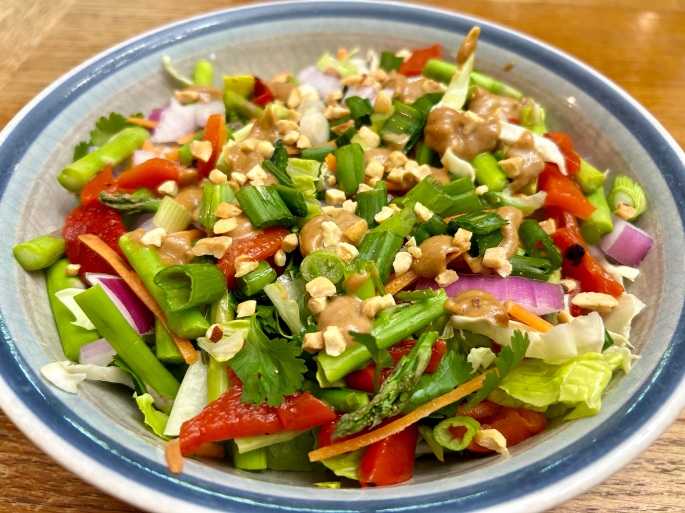
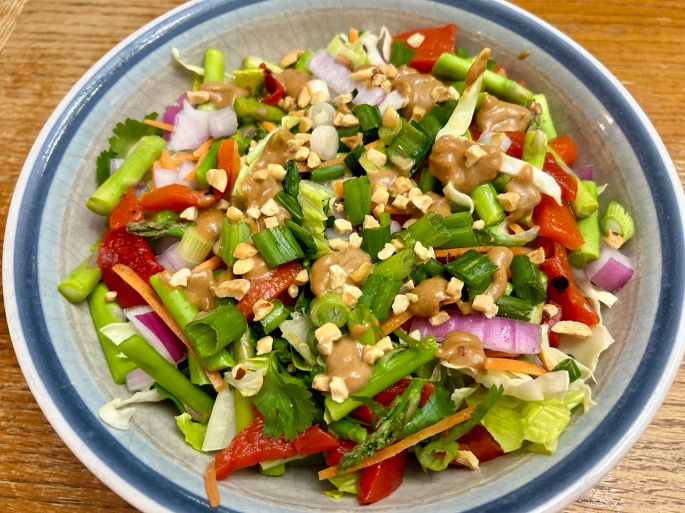
One of my greatest discoveries about a whole food, plant-based diet is that there are so many tasty ways to prepare foods.  I never feel deprived because my meals are full of an abundance of colorful, flavorful, and satiating foods.  A great example is the dip recipe below.  This peanut dressing/dip is beyond good!  It is tasty on salads (as shared here), but it is also wonderful mixed into stir-fry as a sauce, drizzled over a bowl or pasta recipes, and it makes a savory dip worthy for a crudités platter for a holiday cookout or social gathering.

Customizable REcipe🥗

The recipes below can easily be modified to suit personal taste or dietary preferences. For example, the peanut butter can be replaced with almond, cashew, or sunflower seed butter if desired.  The salad ingredients can be adapted too.  Don’t like cabbage?  Use all romaine.  Not a fan of asparagus?  Eliminate it.  Rather use red onion over scallions?  Go for it.

Anyway you prepare them, these recipes can be one tasty way to increase your consumption of healthful, whole, plant-based foods. Even if you are not willing to give up meat, research supports that consuming less meat and more plants will still provide some preventative measures against AD. Who knows? With the power of this type of research, you might even decide to try a few more recipes and incorporate even more plants into your diet! And the more you add, the more your body will benefit!

From my home to yours, here’s to your health, and especially preventing all forms of dementia to the degree possible! 

Recipes inspired by: Three Little Chickpeas, This Healthy Kitchen, and Detoxinista

Peanut Dressing/Dip (Thai style) (gluten free)

Ingredients:

½ cup natural peanut butter 

3 tablespoons tamari, liquid aminos, or soy sauce

2 tablespoons fresh lime juice

2 tablespoons maple syrup, honey, or agave

1 tablespoon rice wine vinegar

½ inch grated fresh ginger OR 1 ½ teaspoon ginger paste OR ¼ teaspoon ground ginger

1 teaspoon garlic powder

1 teaspoon onion powder

¼ teaspoon crushed red pepper or 2 teaspoon sriracha

3-5 tablespoons of water

Directions:

Either whisk together or use blender to blend all ingredients, gradually adding in water until reaching desired thickness, using less water for dip and more water for dressing 

Thai-style Salad (gluten free)

1 heart romaine lettuce, roughly chopped

3 cups slaw mix OR red & green cabbage, roughly chopped

1 red pepper, chopped

3-4 green onions, chopped

½ cup shredded carrots

½ cup fresh cilantro

5-6 stalks asparagus, chopped, optional

½ cup chopped peanuts or cashews, optional

Directions:

In a large bowl, toss together chopped lettuce, cabbage, red pepper, and green onion with shredded carrots.

Heat asparagus in microwave for 30-40 seconds and toss into salad

Drizzle with desired amount of dressing and top with chopped peanuts or cashews, if extra crunch is desired.

Makes 2 large servings or 4 small servings.

Store leftovers dressing in the refrigerator for up to two weeks.

An Ounce of Prevention Goes a Long Way to Preventing Dementia and Alzheimer’s Disease

Currently more than 55 million people live with dementia worldwide, and there are nearly 10 million new cases every year. . . . Alzheimer’s disease is the most common form of dementia and may contribute to 60-70% of cases. . . . Dementia is currently the seventh leading cause of death among all diseases and one of the major causes of disability and dependency among older people globally.”–World Health Organization, 2 September 2021

Photo by Nashua Volquez-Young on Pexels.com

It happens more often than I care to admit–the inability to come up with a particular word while engaged in conversation. In my mind, I can see the shape of the word lurking in the shadows of my brain.  Try as I might to shine a mental flashlight on the word, the word will continue to evade me in a cavernous pit of forgetfulness only to materialize a few hours, or even days, after the conversation has ended.

I have witnessed dementia grip one grandparent’s aging mind and Alzheimer’s disease affect another.  Then again, how many other people can say the same thing?  Therefore, why do I worry, when my brain stutters, sputters, and struggles with a word, misplacing an item, or wondering why I walked into a room?  Answer: because I do not want to be a burden to others.

Photo by Magda Ehlers on Pexels.com

That said, I dearly loved my Mamaw and my Papaw.  Even when they were in the throes of dementia and Alzhiemer’s respectively, I still adored them.  However, I was not responsible for their overall care and well-being.  That responsibility fell squarely upon the shoulders of my parents, their spouses, and their siblings. Instead, I was the grandchild who could visit, help-if asked–and leave as I pleased. I didn’t have to worry about the direct care and multitude of decisions that each diagnosis required–and those decisions, it seemed to me, grew in direct proportion with the disease’s progression.  

Mamaw had two children, and Papaw had three.  Even if one child was the legal guardian, they still had another sibling with whom they could confer regarding decisions, seeking help, or any of the other myriad of responsibilities that accompanies caring for a loved one with a form of dementia.  Whereas, I have one child.  One.  And in the words of Three Dog Night, “One is the loneliest number . . .”  I could cry thinking about putting that sort of responsibility upon her.  

My prayer is that dementia will not be my legacy to my daughter. Therefore, I have become somewhat obsessed with habits that could prevent dementia and Alzheimers. One quick recent search for, “preventing dementia and enhancing brain health,” and, according to Google, precisely, 1,500,000 results appeared in 0.56 seconds, many of which are considered “scholarly articles.”  Additionally, searching “habits that increase risk for dementia,” produced nearly as many results.  The point is that I am not alone in my desire to prevent and reduce risk for dementia.

Photo by Andrea Piacquadio on Pexels.com

Unfortunately, there is no known cure for dementia, and even the currently prescribed therapies and medicines have proven to have little efficacy. This is often due to the fact that developing any of the various types of dementia is believed to be a complex cocktail of factors including age, medical history, lifestyle factors, and genes. Consequently, numerous scholarly sources point to a number of preventative measures since most cases/types of dementia are not directly inherited. 

One of the most cited statistical links and effective measures to prevent dementia is regular participation in movement and exercise. Some sources break down the amount of time devoted to cardiovascular, strength, balance, and flexibility, with 150 minutes/week being gold standard. However, all agree that it is the consistent practice of exercise/movement that matters most.

Photo by Kindel Media on Pexels.com

Another point of agreement is the importance of consuming a healthy diet. In fact, many researchers point to the following diets: MIND, DASH, or Mediterranean as exemplary choices for prevention.  However, there are some research quibbles with regard to best diet practices.  One debate is over how much and/or what meat should, or should not, be eaten, although most seem to agree that fatty fish, such as salmon, is a solid preventative choice.  There is also some contention regarding the use, or disuse, of dairy, but the general consentment is that if you choose to consume dairy, pick low-fat products.  Most research agrees that the consumption of healthy fats–plant oils, seeds, nuts, and avocados– are an excellent choice.  However, the amount needed is not always a point of agreement.  Nonetheless, the research clearly points to an overall consumption of a high fiber diet that heavily emphasizes a wide variety of fresh vegetables, fruits, whole grains, and legumes; AND limits salt, sugar, saturated fats, and processed foods as effective and preventative practices.  

Alcohol consumption and sleep appear to have both positive and negative attributes when it comes to dementia prevention.  It appears that moderate alcohol consumption–no more than two drinks for men and one drink for women–specifically enjoyed with food, appears to be preventative.  However, drinking too much alcohol on a regular basis, seems to increase the likelihood of dementia.  Likewise, getting enough sleep, defined as 7-8 hours, on a regular basis is a preventative measure; conversely, getting too much sleep (10 or more hours), or not enough sleep (less than 6 hours), increases dementia risk. 

Photo by Max Vakhtbovych on Pexels.com

One of the more interesting bits of research centered around the practice of Kirtan Kriya (KK). It is a type of meditation, specifically 12-minutes long, that involves small hand movements, known as mudras. This ancient practice has been cited in several scientific journals as strongly linked to the prevention of dementia. In fact, several Alzheimer’s and dementia research groups offer/sponsor tutorial videos and articles on KK.

There are several other points of agreement among the scientific community for preventing and/or lowering the risk for dementia, including: 

  • Avoid, or quit, smoking
  • Stay mentally active, socially connected, and engaged in meaningful work/tasks
  • Care for mental health 
  • Manage blood pressure and/or diabetes
  • Schedule regular wellness checkups and preventative tests/screenings
  • Maintain a faith/spiritual/meditation practice(s).

While I did not discover anything ground-breaking in my recent research dive, it was clear to me that a few good habits of health go a long way.  Best of all, it’s never too late to increase a healthy habit or two.  Just as following the basic tenets of faith are important applications for spiritual well-being, implementation of basic health practices can go a long way in ensuring the vitality of life.  In the end, we may not be able to avoid dementia or other age-related illnesses, but we can make impactful choices in order to maintain a healthy, active, and balanced lifestyle for as long as possible.   

Photo by Andrea Piacquadio on Pexels.com

“Fear: False Evidence Appearing Real

“We are often more frightened than hurt; and we suffer more from imagination than reality.”–Seneca 

“Of all the liars in the world, sometimes the worst are our own fears.”–Rudyard Kipling

Photo by Kat Jayne on Pexels.com

FEAR:  False Evidence Appearing Real.  But is it really false?  Does the body truly know what is real versus perceived? 

Panic, anxiety, stress, depression, lethargy, mania . . . this is the vocabulary that describes very real reactions to F. E. A. R. 

Fight. Flight. Freeze.  Three words that seem perfectly harmless . . .until linked with the word, fear.

There are other words too:  cancer, stroke, heart disease, COVID, Rheumatoid arthritis, muscular dystrophy, aging, dying, murder, divorce, accident, fire, flood, hurricane . . .  and even the word, change–when viewed in isolation–not attached to oneself or a loved one–are words that can seem likewise benign, or at the very least, distant.

What do all of these words have in common?  They all have the potential to strike fear in both the recipient(s) and/or the supporting loved one(s) often triggering the fight, flight, or freeze response.  

Fear is a four-letter word that is often the king or queen of many minds, including my own, if left unchecked.  It can often be the source of increased heart rate, elevated blood pressure, racing thoughts, sleepless nights, shortness of breath, tightness in chest or other parts of the body, excessive worry, loss or increase of appetite, fatigue, headaches, and the list goes on.  None of us are immune.  Sometimes the fear is real and valid, other times, while it is still valid, it is often exacerbated by one’s mind.

Lack. Of. Control.  Fear creates a threat, and when the body/mind feels threatened, our nervous systems (sympathetic and parasympathetic) respond automatically in one of three ways:  fight, flight, or freeze. Fight-flight-or-freeze is not a conscious decision.  It is an automatic reaction for which you have little to no control. 

Photo by Suzy Hazelwood on Pexels.com

Recently, I viewed the documentary, Robin’s Wish.  This short film, a little over an hour long, alternates scenes of honoring/remembering Williams the actor and friend, as well as reflections/responses to his decline.  Ultimately, it wraps up with events from his tragic death, and the discovery that what was initially diagnosed as Parkinson’s disease was actually Lewy body dementia, the third most common type of dementia according to the Alzheimer’s Association, shedding new light and greater understanding for William’s untimely death.  It concludes with a note of hope:  Robin’s wish . . .

“I want to help people be less afraid,”–Robin Williams

As the film revealed, Williams battled various forms of fear his entire life.  Thus, learning that he wanted to help others be less afraid struck a heart note within me.  Williams brought laughter, joy, and mirth to audiences throughout the entirety of his prodigious career.  Through his comedic words and actions, Williams helped many feel less fearful–even if only for a short moment.

Personally, I understand battling fears as I am often filled with many sundry fears.  It is hard for me to recall being without them–although I have been told that I was fearless as a youngster.  Perhaps, it is my overactive imagination, my sensitive nature, or the unique hard-wiring of my brain, but feeling fearful has been a large part of my life.  

Most days, I “fake it ‘til I make it,” moving throughout life as if I don’t possess one single shred of fearfulness; and, it usually works.  I am able to take the fearful part of myself, box it, bound it up tightly, and store it far away in the attic of my inner world in hopes that it won’t escape.  Days, weeks, sometimes, months can go by, and not a tremor of fear is felt.  Then, like unexpected heavy rains in the middle of the night, the drip, drip, drip of fear begins to leak into my life.

It is those very fears that inspired me to write.  Beginning in those angsty middle school years, when I was fearful or did not understand something, I wrote.  Over those young years of my life, pages of journals and notebooks were filled; and then, I stopped.  My writing began to feel meaningless, trite, and purposeless; and therefore, not worth the effort. 

Photo by Dom J on Pexels.com

Decades later, my fears grew heavy once more, threatening to consume me if I didn’t do something.  I attempted to keep boxing them, rewrapping them, and shelving them here and there within the messy recesses of my being, but they kept slipping their binds.  Ironically, I could not give them a voice–I could not articulate them–just felt them in my body:  deep belly aches/flutters, pounding heart, accelerated thoughts, and worries–constant, constant worries.

Then, at the gentle, but dogged, nudging of a friend, I began writing again.  I wrote for no one in particular–just to work out the kinks, find my voice, and learn to once more articulate–at least through the written word. Sure enough, the fears began to loosen–not per se, leave, but at least they were becoming more tame–most days!

Reading Williams’ succinctly summed up quote, I realized that my own drive to not only write, but to share my words with others, is because I, too, want to help people feel less afraid and more focused on the positive.  In fact, I realize that was an underlying factor for likewise becoming an educator–to help children feel less afraid.  I am not sure if I have achieved either of these goals, and I know for certain that I have not, nor will not achieve to the level of Williams’ success.  Still, I can try to make a difference.  Even if I am only able to help one reader, or one student, feel they are not alone–reassure someone that they can “do hard things,” they can persevere, and they can live with fear without it ruling their life–then, I have achieved my goal.  While my writing, or teaching, will not earn an academy award, nor lead to fame or fortune, if it leaves a small mark within a life or two, then that is enough reward.

Photo by Mark Neal on Pexels.com

Recently, I was making my way down the Ritter Park path.  It was riddled with puddles after days of rain.  Unless you like mud-soaked shoes and ankles, you had to work with others to navigate through and around the numerous soggy patches of earth.  That is what life is about, working with others to get through the sloppy times.  Some of us do that on a large-scale, such as Robin Williams, and the rest of us have opportunities and moments in life in which we can help one another navigate through and around rough patches, using whatever gifts God has given us. 

Don’t ever think you are alone in your fears, Dear Reader.  You are not, and you can persist in spite of them. 

Photo by eberhard grossgasteiger on Pexels.com