Why Eat Apples Daily? Discover Their Surprising Benefits

“A diet rich in plant protein, fiber, and nuts lowers cholesterol and improves blood pressure.”–Chiavaroli, L, Nishi, SK, Khan, TA, et al. 

Photo by Mark Stebnicki on Pexels.com

Fall FAvorite 🍎

September brings the official start to fall, and this seasonal shift means apples are coming into season. Even though apples tend to be available year-round, the advent of fall means local apples are available, and the prices of apples at supermarkets will be their best.  Therefore, it’s a great time to take advantage of apples’ versatility and nutritional benefits.

Personally, apples are one of my favorite fruits.  I embrace the many varieties of apples for their various flavor profiles and textures, although I do tend to prefer the crisp varieties. What I especially appreciate about apples is that they can be a tasty part of any meal–breakfast, lunch, dinner–or simply as a snack.   
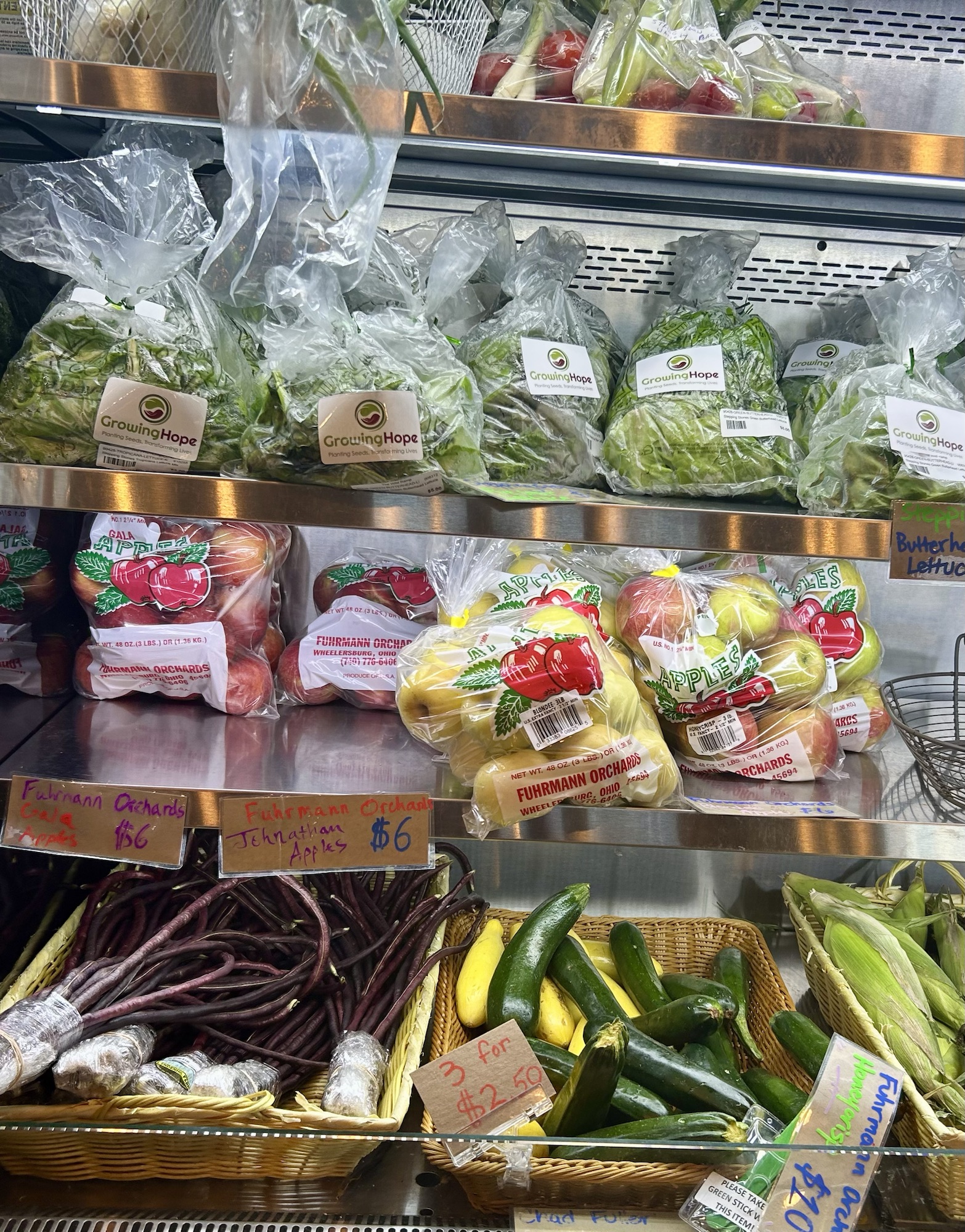
Fall is the perfect time to visit local market, such as The Wild Ramp, to pick up deals on locally grown, fresh apples.

Researched backed foods 🥦 🍓 🫑 🥕

Over the past couple of months, I have been preparing more recipes/meals based upon the latest research found in Alzheimer’s Research and Therapy. This study demonstrated that eating a plant-based diet can prevent and/or slow the progression of dementia due to Alzheimer’s Disease. Plus, eating this way can lower cholesterol and improve blood pressure. Since apples are definitely a plant, they fit right into this way of eating.

Now, for those of you who love your meat, I am not here to preach that it shouldn’t be eaten.  Personal diet preferences are not for me to decide, but I think we can all agree that fruits and vegetables benefit our health.  Therefore, why not lean into adding more plants into meals?  It doesn’t have to be an either/or thing!

Photo by Polina Tankilevitch on Pexels.com

Apple Benefits 🍏

Plus, who can argue against the humble apple? After all, there is a reason the old adage, “An apple a day keeps the doctor away,” is still around today. The Cleveland Clinic, in a post from August 2023, calls apples a “nutritional powerhouse.” The article’s author wrote that regularly consuming apples offers numerous health benefits because they are high in antioxidants–specifically quercetin–as well as fiber and water. In fact, a recent piece on Yahoo!Life stated that “Eating two apples a day may lower cholesterol.”  

Apples offer the following benefits:

  • Help meet daily fiber needs, which will stabilize blood sugar and creating a sense of fullness longer
  • Antioxidants that fight inflammation, which can lower risk for heart disease and dementia caused by Alzheimer’s
  • Help lower cholesterol and reduce blood pressure
  • Benefits the microbiome as they are full of pectin as well as both soluble and insoluble fiber
  • Promotes longevity by reducing risk for heart disease

Photo by RDNE Stock project on Pexels.com

A-peel-ing benefits 🍏🍎

Keep in mind that the skin of the apple is the most nutritionally dense part. A 2023 article on Healthline, states that the peel is the part of the apple with the most fiber.  Additionally, an apple with its skin intact has more vitamin K, vitamin, A, vitamin C, more calcium, and potassium than a peeled apple. 

So why not eat an apple or two per day?  It’s an easy and tasty way to get more plants into your diet. With all the varieties and flavor profiles, you’re sure to find one you like!  Head to your local farmer’s market or grocery store, stock up on your favorite varieties, and take advantage of their best pricing. The versatility of apples lend it to a wide range of recipes, such as the one I am sharing with you today. Then again, there’s no shame in eating at them as they are, which is my favorite way of enjoying an apple.

From my home to yours, I wish you a healthy and happy fall season!

This recipe was inspired by the following sites: Gimme Some Oven, Cait’s Plate, and Engine 2 Cookbook. Feel free to “doctor it up,” as my Grandmother Helen used to call it by adding and/or deleting ingredients that fit your tastes preferences!

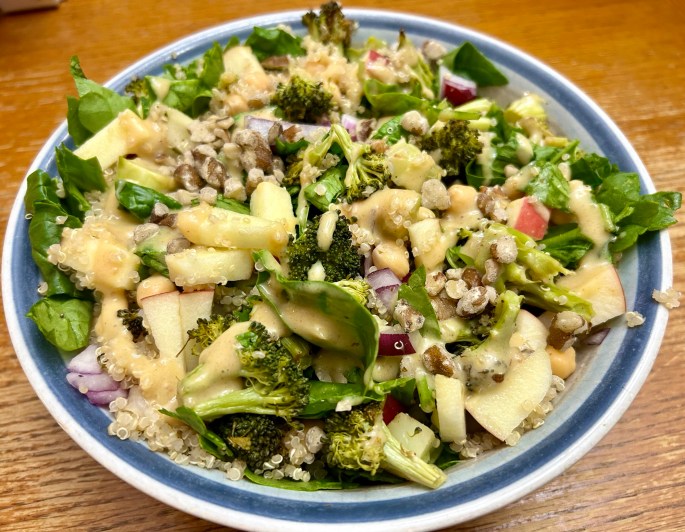
Quinoa Broccoli Apple Bowl with Sweet and Spicy Dressing

Gluten-free, dairy-free

Serves 2, but recipe can be doubled or tripled

Salad ingredients:

½ cup dry quinoa

1 cup vegetable broth

1 small head of broccoli, chopped into bite-size pieces

¼  teaspoon garlic powder

¼ teaspoon onion powder

Salt and pepper to taste

1 can (15 ounce) chickpeas, rinsed & drained

4 cups favorite salad greens, i.e. spinach, arugula, spring mix, etc

½ small red onion, chopped

1 apple, diced (favorite type)

¼ cup slivered almonds, chopped walnuts, or other favorite nut/seeds

Dressing ingredients:

½ cup unflavored, plant based milk

¼ cup Dijon mustard

¼ cup pure maple syrup

¼-½ ground red pepper (depending on level of desired heat)

⅛ teaspoon smoked paprika

⅛ teaspoon xanthan gum (a gluten-free thickener), optional

Directions:

Preheat oven 425 degrees

Coat baking dish (cookie sheet) with nonstick cooking spray or line a baking sheet with parchment paper

Clean and cut broccoli

Lightly spritz with olive oil and sprinkle seasonings (garlic powder, onion powder, salt, pepper)

Bake for 30+ minutes, stirring halfway through

Meanwhile, prepare quinoa according to package directions, using broth as the cooking liquid

While quinoa is cooking, prepare salad dressing by placing all ingredients in a glass jar and shaking well.  

Store dressing in refrigerator until ready to serve

To serve, divide salad greens and diced apple between 2 serving bowls

Divide and top salad with quinoa, broccoli, chickpeas, and onion

Drizzle with desired amount of dressing and top with nuts

Store unused dressing in sealed container in refrigerator for 2-3 weeks

Nutritious Maple Walnut Salad Inspired by Alzheimer’s Study | Health Recipe

“I am cautiously optimistic and very encouraged by these findings, which may give many people new hope and new choices,” Dr. Dean Ornish

highly anticipated study 📈

Photo by Greta Hoffman on Pexels.com

I recently returned from a trip to Ontario, Canada. While I was there, a major study, led by Dr. Dean Ornish, was released in BioMed Central’s Alzheimer’s Research and Therapy. This highly anticipated research was widely promoted across various news outlets weeks earlier. Despite the fact I had read the earlier press releases, reading the report, one peaceful early morning in a rustic cabin along the shores of backwoods lake, provided greater understanding.

As I have previously written, Alzheimer’s disease (AD) and dementia are part of the genetic make-up on both sides of my family history.  Watching it take the minds of my beloved grandparents was heartbreaking. Ultimately, they required extensive care in large part due to AD, the burden of which fell upon their children. Therefore, I want to do all that is possible to avoid placing that type of burden upon my loved ones.

Ornish’s study is the first controlled clinical trial to demonstrate that lifestyle habits can delay the onset and progression of mild cognitive impairment (MCI) or early dementia due to AD. The study initially enrolled 51 patients and their designated partners, aged 45-90, for 20 weeks, but two withdrew. Nonetheless, the study guided the remaining 49 patients through a series of interventions, including a plant-based diet; walking 30 minutes per day; strength training three days a week; stress management including yoga, breathing exercises, and meditation, to name a few; group support via Zoom meetings, and specific supplementation, all of which is clearly spelled out. 

Excitement Incitement 💡

The excitement of this study got my recipe-creating gears grinding, especially as a major heat wave sank its talons in a large swath of the U.S. and Canada, including where I was staying with my husband. With the extreme heat we were experiencing, the last thing I wanted to do was turn on the cabin’s stove or oven, especially since there was no air conditioning. Therefore, throughout our stay, I created several dinners of seriously large salads, adding additional inspiration for this month’s recipe.  

Of further influence was the wide availability of Canadian maple syrup.  In fact, I encountered a representative of White Meadows Farms, out of St. Catherine, Ontario.  This family-owned farm, established in 1937, has been harvesting sap to make maple syrup for over three generations. After one sample, my taste buds were “stuck” on the flavor of their dark syrup. I knew I had to put their syrup to good use as part of this recipe creation. After all, sweet moderation is an important part of good health.

Nuts for health 🌰

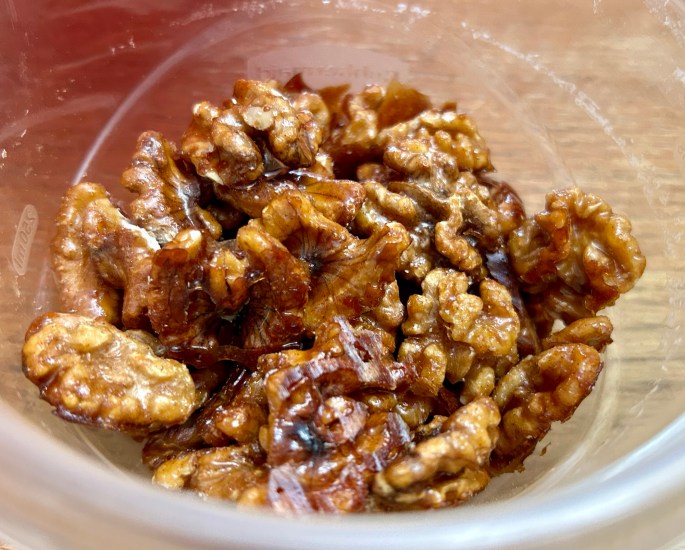
Another point of inspiration for this recipe was the wide availability of bulk walnuts at the local market near our camp. Nut and seeds are a healthy part of the Ornish diet. In fact, according to the Cleveland Clinic, walnuts provide a good source of omega-3 fats and antioxidants for heart health, benefit gut health due to their high fiber content, help stave off inflammation, and may reduce risks for certain cancers.  Additionally, those healthy fats and antioxidants may boost brain health–perhaps that is why walnuts are shaped like a brain!

A rainbow recipe of pride 🏳️‍🌈

One final source of inspiration for this recipe was the fact that it was created during June, the month of Pride, dedicated to celebrating my friends and loved ones in the LGBTQ+ community, including my brother and two nieces.  It is with great, well, “pride” and celebration that this recipe will debut on June 28, International LGBTQ+ Day.  This gorgeous salad offers a RAINBOW of tasty colors and textures designed to nourish EVERY body.

From my home to yours, I wish you health, happiness, and hope for an optimistic future free from dementia and Alzheimer’s disease!

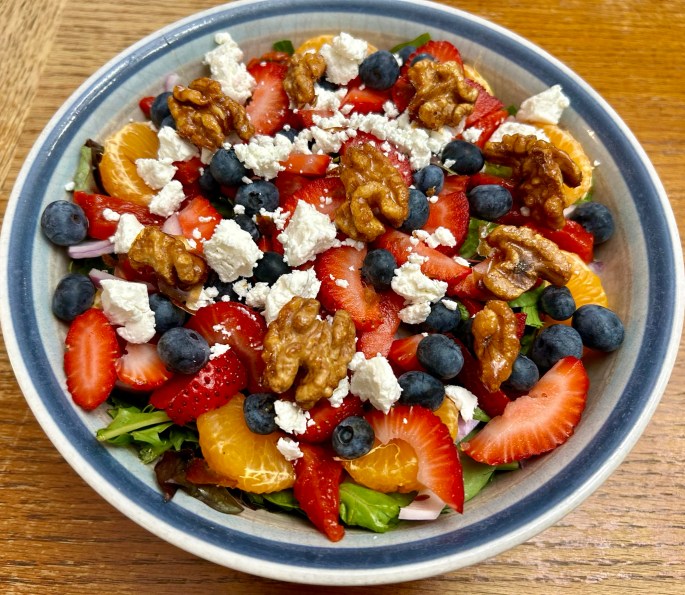
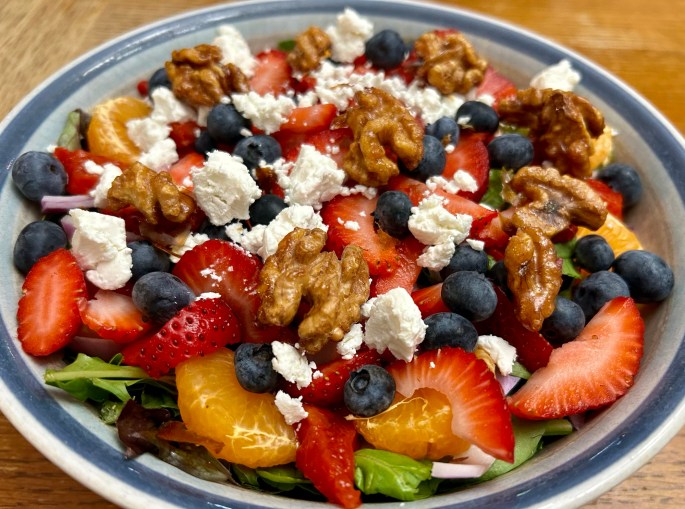
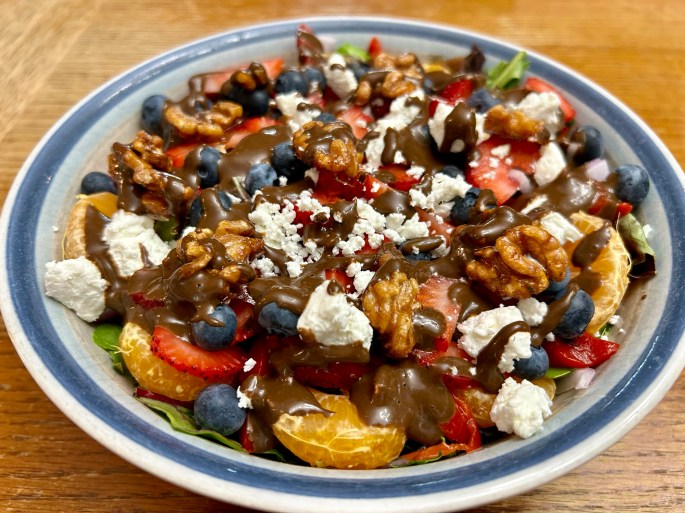
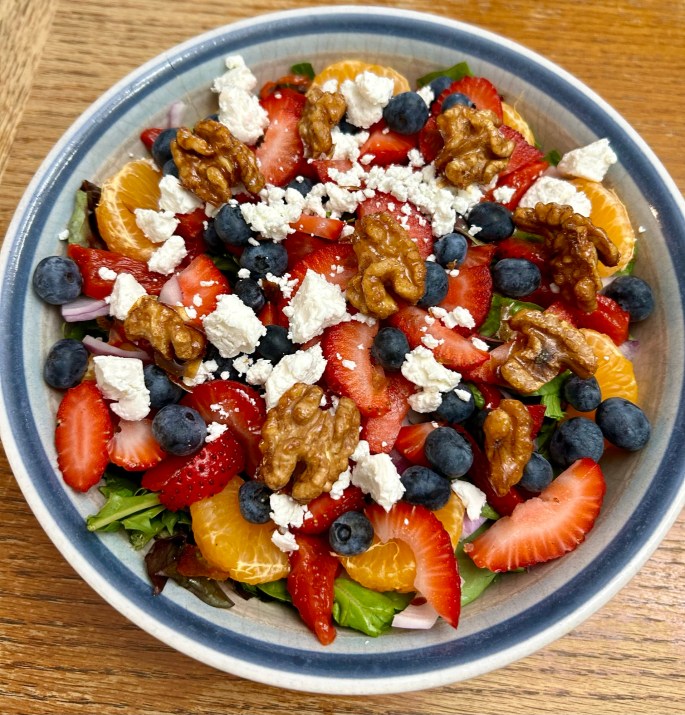
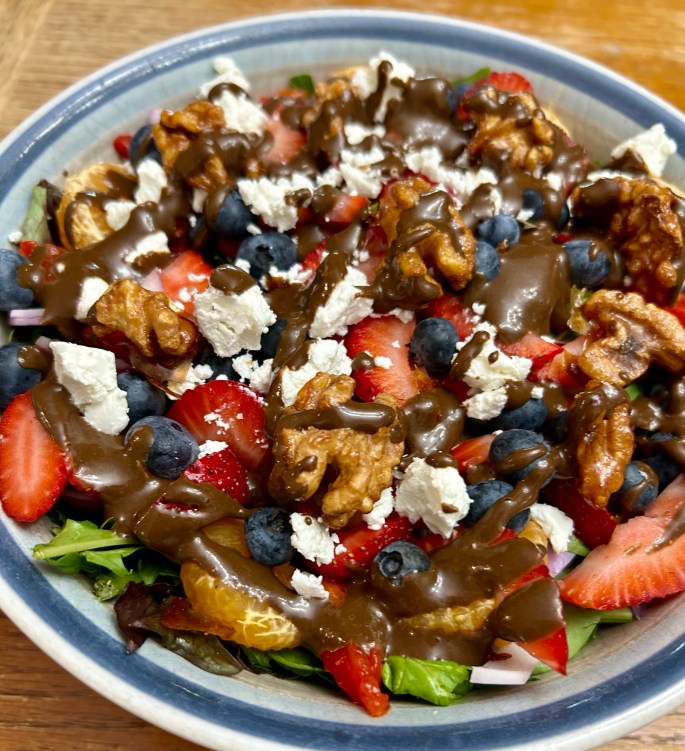
Rainbow salad with maple walnuts and vinaigrette, gluten-free with vegan options

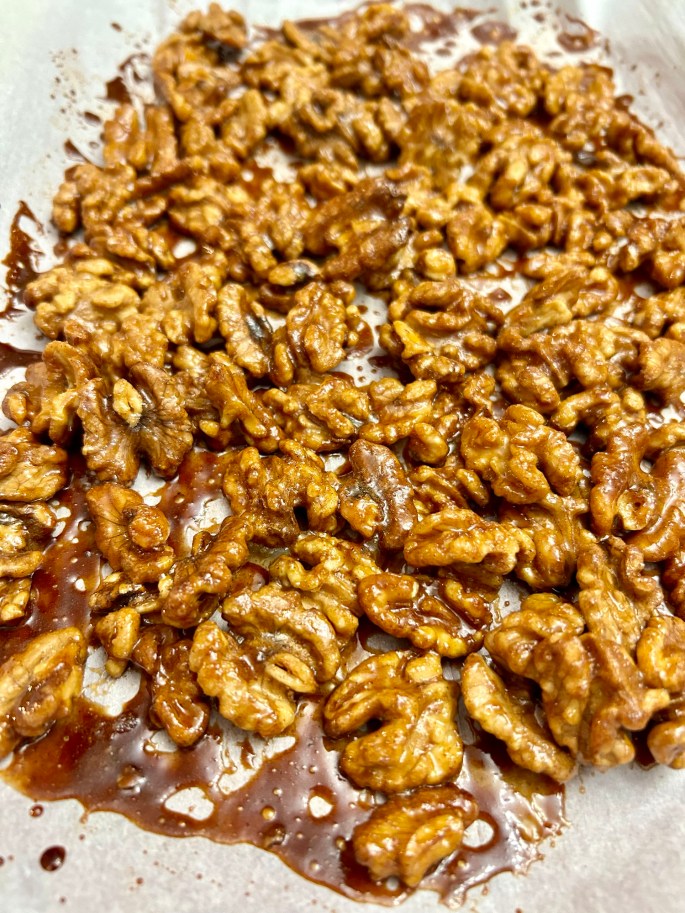
Maple walnuts ingredients:

2 cups walnuts

⅓ cup pure maple syrup

½ to 1 teaspoon vanilla 

¼ to ½ teaspoon cinnamon 

⅛  teaspoon sea salt

Salad ingredients:

5 or more ounces of favorite baby greens

1 cup sliced strawberries

¾ cup blueberries

2-3 clementines, sectioned

½ sliced large red onion

½ cup roasted red peppers and/or shredded carrots

2-4 ounces goat, or equivalent vegan, cheese or 1 cup beans, drained and rinsed

Maple walnut balsamic vinaigrette ingredients:

¼ cup walnuts

½ cup water

¼ cup balsamic vinegar

2 tablespoons maple syrup

1 tablespoons dijon mustard

½ teaspoon dried onion powder

½ teaspoon dried oregano

⅛ teaspoon salt

Pepper to taste

Maple walnut directions:

Preheat oven to 350 degrees

Line baking pan with parchment paper or lightly grease and set aside

Place maple syrup in a small, microwave safe bowl.

Heat syrup for 30-60 seconds

Stir in vanilla, cinnamon, and sea salt until thoroughly mixed

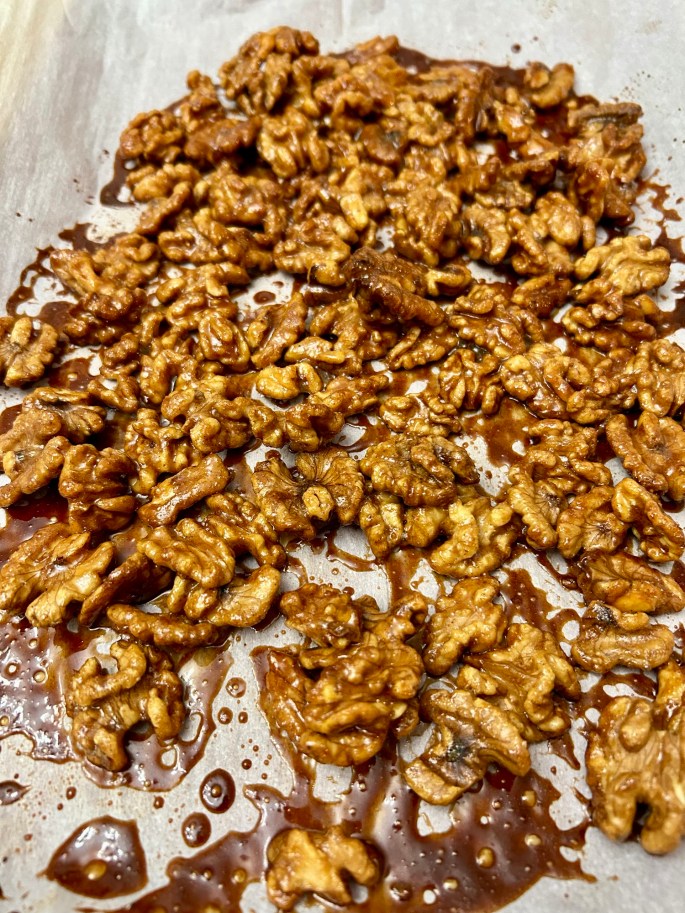
Pour syrup mixture over walnuts, and stir until well coated

Spread coated walnuts onto prepared baking sheet

Bake 5-7 minutes, then stir and rotate 

Continue baking for 3-5 minutes or until walnuts are golden brown

Remove walnuts from oven and allow to cool on baking sheet 

Break walnuts apart and store in airtight container or baggie for up to 3-4 for weeks

Enjoy these maple walnuts as a snack or sprinkle over salads, fruit bowls, oatmeal, yogurt parfaits, ice cream sundaes, etc 

Maple walnut balsamic vinaigrette directions:

Place all ingredients in high powered blender and blend until smooth, approximately 45 seconds

Pour into glass container (I like to use canning jar)

Store in refrigerator for up to 4 weeks

Makes approximately 1 cup dressing

To assemble salad:

Add greens to large salad bowl

Add sliced strawberries, blueberries, clementines, sliced red onion, sliced red pepper, and/or shredded carrots, if using.

Toss with desired amount of dressing, divide among plates/bowls and top with goat or vegan cheese (or top with beans instead, such as roasted chickpeas)

Serves 2-4

This recipe also took inspiration from the following websites and articles: Better with Cake, The Garden Grazer, Hello Nutritarian, “Effects of intensive lifestyle changes on the progression of mild cognitive impairment or early dementia due to Alzheimer’s disease: a randomized, controlled clinical trial,” an article on BioMed Central,“‘A study to give us hope’: Lifestyle changes improve Alzheimer’s symptoms for some,” an article on CNN, and Shane and Simple.