Finding Inner Peace Amidst Chaos

“Better to keep yourself clean and bright; you are the window through which you must see the world.”–George Bernard Shaw

Photo by thevibrantmachine on Pexels.com

Anxiety provoking 😬

Over the past weeks, I find I am feeling increasingly anxious as I read or listen to the news and/or various social media platforms. There are world events with real human and environmental consequences that worry me. Children are dying from injury and/or starvation in numerous parts of the world.  Plus, the current political climate in our own country is so vitriolic and divisive, it can tie my stomach in knots if I listen or read about it for too long. 

A few days ago, I was leaving work after an especially long day.  Ready to shake off the day, I unloaded my daily work wares into the back of the vehicle, and hopped in the driver seat ready to get home and shake the dust of the day off.  I started the vehicle, and the radio automatically came on.  

Photo by Sindre Fs on Pexels.com

We have a choice 🙉

By word of explanation, I had been listening to a book on the way to school, but because the bluetooth had not yet connected, the radio, set to one of the local public radio stations, automatically defaulted on. Since it was between 5:00 and 6:00 pm, the news was on.  And while NPR is fortunately not one of the news outlets that seems to shout out every headline, it was in the middle of a story that, as my ears focused, began to make me feel worried, and I could once more feel my insides churning. 

I continued listening for a bit more as I headed out of town, but found myself increasingly feeling more anxious.  Suddenly, it occurred to me. I had a choice.  I didn’t have to listen. So, I turned not only the news off, but the entire media system in my vehicle, rolled my window slightly down, and allowed the fresh air to filter in. 

Photo by Aleksandar Andreev on Pexels.com

Connect to Your Breath 😮‍💨

Then, while I drove the rest of the way home, I took time to connect to my breath and to that still, inner voice. 

Inhale. Exhale. Release the jaw. 

Inhale. Longer exhale. Relax the shoulders down and release the grip in my gut. 

Long slow inhale, fill my lungs with fresh air flowing through the window. Pause. 

Then, a longer, relaxed exhale. Loosen the grip on the steering wheel and relax

 the lower body. 

I continued driving like this, using my breath as an aid to continue to relax other parts of my body that I had been unconsciously gripping tightly as the day progressed. I would not have noticed how tightly wound my body was if I had continued listening to the news.

Photo by cottonbro studio on Pexels.com

Connect to Gratitude 🙏

Once I felt a bit more relaxed, I tried to list, in my mind’s eye, five things for which I was grateful. Nothing could be too small, such as, feeling grateful because I had not forgotten my lunch on that day as I had forgotten it on the same day the previous week. But, even more so, I was also grateful for my health, my family, my home, and so on  . . . With each point of gratitude, I took time to pull that image up in my mind and genuinely reflect on at least one particular point of joy each one brought to my life.

Now, I will be honest, there were a few times when I lost my focus due to other drivers, deer crossing the road, or other random distractions.  If I found myself lost in thought, I brought my inner attention back to my breath first, and then back to points of gratitude.  

As I drove closer to home, I mindfully began to release concerns for which I could not control. I prayed for them, but ultimately, released my worries to God. I decided to trust and have faith that my concerns will ultimately work out for the best in ways I could not see or perhaps understand. It did not mean I was dismissing the issues that concern me–I was not.  Instead, I was releasing my stress over them because my anxiety would/will not affect their outcome.

Photo by Stanislav Kondratiev on Pexels.com

Shutting out the winds 🪟

Years ago, I read a story about a monk who had been writing a book.  This was the time period prior to computers, when one would alternate between handwriting manuscripts and typing the final drafts. This monk decided he needed to take a break from writing and went out for fresh air and a walk. 

He left open the windows of the small cottage in which he lived. And as he walked, the weather began to shift, and the wind began to pick up.  When he arrived home, an hour or so later, all of his neatly stacked papers for the book had been tossed about within the house. In order to tidy up the inside of his cottage and reorganize the manuscript, the monk had to close all of his windows to keep out the changing weather.

This story simply illustrates the point that sometimes, if we are consuming too much news, social media, family/friend drama, and so forth, our inner world suffers.  Like the monk’s cottage, the winds of life can toss our inner peace about.  Therefore, it is worth remembering we have a choice. We can choose to take time to shut out, turn off, or let go of the outside world/drama, so that we can turn inwardly, and focus on “tidying-up” the worry/concern/ anxiety inside of us.  

Photo by Alex Green on Pexels.com

It’s not always “breaking News,” so set boundaries 📰

We don’t have to read/listen/scroll through/watch the news and social media at regular intervals throughout the day.  We can take breaks from all of it. In fact, we are not of any benefit to ourselves, much less others, if we aren’t settled and at peace on the inside.  Thus, taking time to connect with your breath and that small, still inner voice can strengthen and renew you, filling you with a sense of calm/peace in order to help others and/or take on challenges.

While we don’t want to completely shut off the world and hide our light, we do have a choice as to where, when, and how much we participate.  Setting boundaries and/or taking breaks from what and how we choose to consume social media and news is within our power, and it doesn’t mean we are absconding from our civic or social responsibility to the world around us. 

Shine your Light 🕯️

If we hope to shine our light and engage in meaningful ways that can contribute to the betterment of our family, friends, community, and even world to the degree possible, we must also take time to close the proverbial outside windows and tend to our own inner world.  After all, even a candle must be protected from the wind in order to burn. 

The Art of Conscious Breathing: Nurturing Mind, Body, and Soul

“The breath is the bridge which connects life to consciousness.”–Thich Nhat Hanh 

Students at the end of a yoga class with a seven minute meditation at the beginning of class (There were several absent on this particular day.)

Settle your mind 🧘

Settle your body onto your mat.  See if you can begin to settle your mind.

Soften your eyes.  All the muscles around each eye relax.  

Release the lines of your forehead; soften your ears, and allow the jaw line to release.

Let the shoulders melt away from your ears as your heart space softens.

Relax the muscles of your hips and legs while you rest in the knowledge that the earth can support you.

Feel the feet relax, allowing the arch and each toe to release.

Take a deep breath in.  Pause.  Sigh it out through your mouth. 

Whatever thoughts, worries, concerns that you had before entering this room, allow them to drift away on the stream of conscious breathing.

Another slow, deliberate inhale. Wait.  Now, exhale long, smooth, and controlled once more through your mouth.

Pause once you’ve fully exhaled and gently close your mouth, unless, of course, you are congested and cannot breathe through your nose. 

Inhale. Pause for a moment. Long, slow exhale through your nose.  

Follow the exhale until your lungs are fully emptied, and wait for a moment before you inhale again. 

Once more, be present with the inhale.  Intentionally allow for a pause.  Then, slowly, with full concentration, exhale–following the exhale until its full conclusion. 

Pause, and continue this conscious breathing for the next few minutes.  

If thoughts enter your head, recognize that you are thinking.  This is only natural.  Then, return your attention back to your breath.

Several of the students after yoga class that began with a seven minute meditation, a hour of yoga moves, and ended with ten minutes of relaxation pose, savasana.

Conscious breathing 😮‍💨

As I write these words, I find that my own breathing has slowed. My own heartbeat is slowing. My thoughts, worries, and concerns about how I will convey in writing what I want to share have begun to loosen their grip on my brain as I allow the words to flow in unison with my breath. 

This year in my school setting, I have the privilege of teaching a yoga/mindfulness class to high school students. It is a dream I have had for years finally coming to fruition. 17 students, 11 of which are males, which I find remarkable, signed up for the class.  Most, but not all, of the students are athletes, overloaded with the act of balancing coursework with their sports’ schedules and the desire to still have a typical teen social life.

However, when they walk through the gym doors, roll out their yoga mats, their job is to take a break from their very real, youthful concerns. It’s not easy. Like all of us, strands of stress and worries cling to their minds and bodies the way cooked noodles often cling to one another if the noodles have not been properly stirred during the cooking process.  My job is to stir the proverbial pot of their mind and guide their bodies through yoga movements that encourage the release, at least for a few moments of their day, from the stickiness of their constant concerns.

Photo by Oluremi Adebayo on Pexels.com

The Power of the Pause 🙏

The pause between breath reminds them, and really, all of us, of the importance of taking intentional pauses throughout our day to pay attention to the here and now.  Mentally pausing to let go of thoughts of the past, thoughts of future plans, and thoughts of all those unanswerable “what ifs” can be a valuable respite.  Taking a few moments to close the eyes, tune out the world, and focus on your in and out breath can release tension and provide a short rest for the mind, eyes, and body. 

Even on our busiest days, taking a short pause, enough for a few deep breaths, can renew and refresh your focus, especially if you are feeling anxious and/or stressed. By taking deep breaths, especially those in which you can extend the exhale, sends signals to the body to relax.

Photo by Kelvin Valerio on Pexels.com

TEnd and befriend 🧘🏿‍♂️

Based upon my limited understanding, longer exhales encourage the vagus nerve to send a signal to engage the parasympathetic system (think: rest and digest or tend and befriend system) and relax the sympathetic system (think: fight, flight, fawn, or freeze system). Those deep breaths, especially with the longer exhalations, let the body know that it is in a state of calm, so that it can “tend and befriend” the work challenge you must complete rather than “fight” it or all together mentally “freeze.”

In addition to soothing the mind and body, by consciously paying attention to our breathing, we can connect to the wonder of being alive, and the miracle that is our body.  Our bodies, with its amazing autonomic nervous system, automatically takes care of so many functions and unconscious processes without us having to think about it. We truly are marvelous creations.  Conscious breathing can be that bridge between our physical bodies and our conscious minds, as Thich Nhat Hanh pointed out. And, it is a tool for bringing our attention to the present moment.  After all, you can’t focus on your breathing and not be aware of the here and now.   

Photo by Andrea Piacquadio on Pexels.com

Conscious Breathing is the Link

In the end, taking time to intentionally connect with our breath offers numerous benefits. Deep breaths with long exhales can allay our fears, concerns, and worries.  It can bring a sense of calm in a short amount of time to an otherwise chaotic day.  Conscious breathing can invigorate and recharge the mind for an important and stressful project.  Furthermore, deep breathing can link our minds to our bodies while also bringing our attention to the present moment.  So pause, take a deep breath, or three, release the grip on your worries and burdens, and reconnect with here and now, and the font of peace that dwells within.

Photo by Andrea Piacquadio on Pexels.com

Use the RAINDROP technique to weather life’s emotional storms

“Peace is this moment without thinking that it should be some other way, that you should feel some other thing, that your life should unfold according to your plans.”–Dorothy Hunt

Several months ago, during the fall of the year, I was walking on a local, circular path.  Suddenly, I heard the loud rev of an engine.  VROOM!  I saw a large SUV type vehicle, careening, plowing, and then swerving off the road, straight towards the path over which I walked.   

My heart began to race, and my thoughts quickened, trying to process what I was witnessing.  The SUV drove along the slope that forms a ditch line surrounding the path.  KREECH! The sound of metal collapsing was ear-splitting as the vehicle crashed into a heavily staked, metal line, thick and entwined like a rope, that supported a power line pole.  Fear raced through my veins as I ran towards the vehicle to see if the person inside was ok while grabbing my phone to call 911.

Photo by Mike B on Pexels.com

I find this event to be an excellent illustration of what it means to witness.  I was the bystander.  My senses heard, saw, and even felt this scene as it unfolded in a surreal manner.  This same skill of witnessing as a bystander is a tool we can use to help navigate difficult emotions/feelings when they come crashing into our life path.  And, let’s be honest, difficult emotions can be a regular occurrence at all stages of life.

From anxiety to depression to life event stressors and work stressors, I daresay none of us are immune to challenging emotions such as anger, insecurity, sadness, fear, and numerous other less-than-kind emotions.  This is where tapping into the bystander part of the brain can help us navigate through the mental storm clouds with a technique called RAIN and its counterpart DROP, acronyms first coined by Michele McDonald, a mindfulness teacher.

Photo by Ron Lach on Pexels.com

There are times when we may not initially recognize that our emotions/feelings are impacting our thinking, but with a bit of practice, we can begin to recognize that they are.  Actions such as, lack of focus/feeling distracted; binge eating/drinking/scrolling/watching; avoidance/procrastination, and so forth can be indicators that something is awry.  Even seemingly positive actions can be a side effect of not-so-great feelings trying to bubble to the surface, such as busyness; continuously working; over-exercising; frequent napping, and so on.

This is when the RAIN technique can be effective.  RAIN gently asks us to become a bystander in our minds to determine what we are feeling or perhaps trying to avoid feeling.  Then, it takes us through a process of reflection to bring us to a point of compassionate self-awareness.  Like all techniques, however, it takes practice, and it is not a one-stop-fix-all solution. However, it can be one more tool in life’s toolkit for managing difficulties and suffering.

Here are the steps, based upon my interpretation and personal application of the technique. However, it is worth noting that there are numerous free apps, videos, books, and websites that offer guided versions of this technique that can be quite helpful, especially in the beginning.

Recognize what is going on and name it. “I’m feeling angry, hurt, lonely, sad . . . .”  Then you might also notice if you’re judging those feelings or feeling guilty for having the feelings in the first place.

Acknowledge and Allow. Once you’ve named it, begin to witness your feelings as a bystander would at the scene of an accident. If thoughts pop up that tell you that “shouldn’t feel this way,” gently tell yourself that it is ok to have this feeling.  

Investigate your emotion/feeling with curiosity and interest minus judgment or blaming self or others. What are you feeling and where are you feeling? Similarly to the way I experienced the accident–first in my heart, next in my mind, and finally in my body–where in your body do you feel this emotion? How is it affecting you?  Do you want to cry, eat, move, hide, nap, and so on?

Natural Awareness, Non-identification and Nurture.  This is where you can tell yourself that just because you feel it, doesn’t mean it defines who you are.  Instead, use this as a lesson for how ________ (name the emotion) feels like, similar to the way you feel symptoms of a cold, the flu and so on. Then, take time to offer yourself compassion just as you do when experiencing a cold or flu. You could even place a hand on your heart center or gently pat your cheek as an act of self-compassion.

Contrastly, each stage (letter) of DROP to a corresponding, often knee-jerk, reaction to each step (letter) of the RAIN process.  It creates a greater understanding of those monkey mind tendencies that want to interrupt or impede the RAIN process in order to confuse the bystander role of our brain. 

Distraction and Delusion. Our brains would often rather distract or delude us from the truth of the matter instead of allowing us to recognize and name what we are really experiencing. 

Resistance. Sometimes, this means, we have to push past our mind’s initial resistance in order to allow and accept the emotion we are experiencing.

Obliviousness. When you take time to honestly investigate a so-called negative feeling, you are overcoming the self-obliviousness, the “I lie to myself all the time, but I never believe me” habit, so many of us unwittingly practice.

Personalization. Your feelings do not have to be the narrative of your life.  You might feel angry, but it doesn’t mean you’re an angry person. You might cry when you feel insecure, but it doesn’t mean you’re unworthy.  In other words, don’t make the emotion/feeling personal, it just is.

Raindrops are going to come and go in life, and some time periods are cloudier than others. There are times when it seems those rain-filled clouds will not leave.  And so it can be with our emotions.  We cannot always control the stormy feelings and thoughts that we encounter throughout life’s ups and downs, but we can choose to change our relationship to them. With the RAIN practice, we can tap into our brain’s ability to witness the impending storm clouds and offer ourselves an umbrella of self-compassion and understanding to help us weather the storms of life with a greater sense of resilient grace.  

Rain and Umbrella by Fu00e9lix Hilaire Buhot (French, 1847u20131898) is licensed under CC-CC0 1.0

The realness of depression and anxiety

Speaking with a child recently, she spoke to me of the very real pain she felt from her depression and anxiety.  She shared that one of her parents was embarrassed by her need for medication and therapy.  My heart broke for her, and I wished I could make her pain go away.  However, it is not that simple, and all I could do at the time was listen, so she felt heard.   

Photo by Mikhail Nilov on Pexels.com

The pain of depression, combined with the constant worry of anxiety is very real.  In fact, most of us have felt depressed at some point to a lesser or greater degree, depending upon circumstances.  In fact, my own experiences have been fairly short-lived, no more than 1-2 years, and I was able to continue on with work/life/education, albeit with great difficulty.  For some, it is a challenging seasonal event, tied to the anniversary of an event, holiday, or winter months. However, for many, depression, and its side-kick anxiety, is pervasive, lasting two or more years.

According to a March 2022 World Health Organization report, since the pandemic, there has been a 25% increase in the prevalence of depression and anxiety world wide, with young people and women having been most affected.  In addition, the National Institute of Mental Health adds that young people, aged 18-25, currently have the highest prevalence of mental illness, a whopping 30.6%.  Furthermore, in another WHO report, globally speaking, one in seven adolescents, aged 10-19, are currently experiencing some form of mental illness. Specifically, in the US, the American College of Obstetrician and Gynecologists reports that one in five youth, aged 9-17 years, are experiencing a diagnosable mental illness.  More sobering, acccording to the same report, suicide is the second leading cause of death among those aged 15-24 years old.

Photo by Pixabay on Pexels.com

As an educator, parent, and most of all, as a fellow human being, my heart breaks reading these statistics.  It only confirms what I am witnessing and encountering on a daily basis.  More teens and young adults with whom I come into contact on a regular basis are in real pain–whether I am aware of their mental anguish or not.  The most common mental illness among teens and young adults according to several health organizations include generalized anxiety, phobias, and depression.

However, it is not all grim.  Mental illness, especially among teens and young adults, is very treatable and manageable.  There are a wide-array of techniques and support systems designed to address the unique needs of each individual case, no matter the age. 

Treatment often starts with some form of psychotherapy, also known as counseling or therapy.  Therapy may last for only a short period, or over several years, depending upon the person.  It may focus on thoughts and feelings regarding current life, issues in the past, as well as concerns about the future.  Through therapy, the person not only feels supported and less isolated, but typically develops strategies and coping skills designed to address current mental health issues.  Additionally, therapy may also include ways to develop/strengthen specific relationships, overcome fears/insecurities, address past traumas, increase self-compassion and understanding, as well as create a plan for moving forward.

Photo by Polina Tankilevitch on Pexels.com

Medication is often another form of treatment used in tandem with therapy, but it does require monitoring of a psychiatrist or other trained medical doctor.  The most commonly used medications prescribed for depression and anxiety are safe and effective ways to treat mental illness.  Unfortunately, the wait times for such professionals, especially in recent times, can be months long.  

As a result, many school counselors, universities, family doctors, and churches/civic/community centers are stepping up their support for those in need of mental health support. Many universities offer access to free, or nearly, services via in-person, videolink, or phone.  Some church, civic, and community leaders are pooling services to likewise offer hotlines, group therapies, or other activities designed to promote and support mental health. 

Even once a person is diagnosed and in-treatment, progress takes time, and there can set-backs, as well as ups and downs, in the process; however, certain factors do help facilitate treatment/recovery.  These include:

  • Positive support from friends and family
  • Self-direction in determining own direction and goals for recovery
  • Positive environment living/working/educational setting
  • Financial stability
  • Self-responsibility to administer self care needs
The road for treatment, therapy, and recovery may be long and winding with ups and down, but with the right support and environment, a positive outcome can be achieved.

It is worth remembering that the therapy process is unique to each individual.  Those in therapy may not return to where they were before the illness.  Rather, the typical goal of therapy/medication is to increase a person’s ability to manage their own mental health using positive methods/coping strategies while still engaging with life.  

In the meantime, what can mere mortals do to foster and improve our own mental health? Ireland’s Public Health Agency offers five simple ways worth considering in order to maintain and improve our mental well being.  These include:

  • Connect-invest time in building relationships with family, friends, colleagues, and/or neighbors.
  • Be active– this doesn’t necessarily mean joining a gym, although it could, rather the focus is to move more, especially throughout your day, including walking
  • Keep learning-this boosts self-esteem and self-confidence as well as keeps the mind actively engaged
  • Take notice-increase awareness of the present moment; observe–without judgment–how thoughts and feelings fluctuate throughout the day, and how they may, or may not, affect the physical body
  • Give to others-acts of kindness, no matter how big or small, go a long way in helping others and positively impact personal mental well-being.

Mental illness is a very real thing, affecting nearly 50 million people in the United States, but there is hope. If you are experiencing mental health issues, do not be afraid to seek or ask for help.  And, please know that you are NOT alone. 

Furthermore, if you know someone who is suffering from a mental health issue, support them, offer forms of encouragement, and above all, let them know you care.  With so many silent sufferers in the world, it is more important than ever for us to be the light for one another.  

Now, more than ever, it is important to be the light for others with kind gestures, words, and deeds. ✨

Anxiety Awareness

“Anxiety is a thin stream of fear trickling through the mind.  If encouraged, it cuts a channel into which all other thoughts are drained.”–Arthur Somers Roche

Our anxiety does not come from thinking about the future, but from wanting to control it.”– Kahlil Gibran

When I was in fourth grade, I had the privilege of traveling with my grandparents and a cousin. We had taken a train to Washington DC, and I have a dream like remembrance of riding in a taxi transporting us towards an airport from the train station.  It was the first time I had ever traveled in major city traffic.  We were propelled with what seemed like great velocity through busy traffic, zigging and zagging in and out of traffic, bright lights of oncoming and passing vehicles playing tag in the dark of an evening.  

The route took us through a menacing tunnel with blazing lights for the evening rush hour.  This was my first experience in such a claustrophobic, wreck-inducing, our-lives-were-about-to-end, multi-lane, city tunnel. We were hurtling through a tube of neon lights, clamorous noises, and untold dangers surrounded and threatened our yellow tin can.  My heart was racing; I felt simultaneously scared and angry.  

Photo by Alex Powell on Pexels.com

Danger! Danger!  We. Were. Out. of. Control.  We were going to die in a fiery collision of metal upon metal.

Like projectile shot from a military caliber cannon, we emerged unscathed from the tunnel, and signs indicated the airport was near.  That was when I saw the vwoop, vwoop, vwoop of the rotating light of the airport beacon.  That circling source of luminescence became the focus of my vision, my heart rate began to slow, and my rate of respiration resumed to more normal levels.  Safety was within sight.  I was calm again–although my poor Grandmother, I am quite certain, based upon her wide-eyes and ever-rubbing hands, was not. 

Photo by Vojtech Okenka on Pexels.com

As I think back on that experience, I can’t help but wonder what it would be like to feel that way ALL of the time.  In fact, I am told that feeling is quite similar to how someone with an anxiety disorder feels daily. In fact, generalized anxiety disorder, and its fraternal twin, depression, and the other siblings in this family of mental anguish including: panic disorder, social anxiety disorder, specific phobias, stress, obsessive-compulsive disorder, post-traumatic stress disorder, major depressive disorder, persistent depressive disorder, and their cousins of related illnesses often manifested and/or co-occurring with these disabling siblings, affect more than 40 million adults in the US alone.  Without including the population 18 years or younger, these illnesses affect 18.1% of the population– and that statistic was determined before COVID.  Sadly, it is estimated that nearly 80% of those affected by GAD, or other related disorder(s), do not seek professional help.

Like my first recollection of anxiety, it is perfectly normal to experience bouts of situational anxiety from time-to-time. However, it is when symptoms are persistent and pervasive, affecting day-to-day life, that anxiety can become a significant issue.  Unfortunately, because anxiety can express itself in numerous ways, many people may not realize that they are experiencing chronic anxiety.  Researching and preparing for this column, I soon discovered that I had very little understanding of this frequently occurring mental health issue.

Photo by Elina Krima on Pexels.com

While I did know there was a genetic component to anxiety, I did not realize that anxiety was twice as likely to occur in women than men.  Additionally, I understood that there was a relationship between anxiety and depression; however, I did not realize anxiety can cause memory problems and issues with anger.  Furthermore, I realized years ago that anxiety can cause physical symptoms, but I did not fully understand the way anxiety can increase one’s risk for health complications.  I also learned that those experiencing anxiety as adults, often begin experiencing this suffering in their childhood, and it is often misdiagnosed and treated as ADHD.

As an educator, I have anecdotally observed a rise in anxiety-related issues in students.  This fact bears out statistically according to the CDC which notes that a rise in anxiety, and related disorders, began to be observed between the years of 2007 to 2012. Additionally, according to the American Psychological Association in an article published in 2019, there was a significant rise in anxiety disorders among young adults during the decade between 2010 and 2020, well before the pandemic.

Numerous factors have been attributed to cause this increase of mental distress, including the rise of social media; however, the purpose of this writing is not to point a finger at sources.  Additionally, I am not trying to parade as an expert on the subject, because I am most certainly not.  Instead, I humbly write as someone who now realizes that not only have I experienced very real bouts of anxiety, but I have also witnessed countless others suffer from anxiety, and all of its variants, especially over the past few years. I hope my few words can shine a light on what can be done to help, support, and understand the very real anguish anxiety creates.

Photo by KEHN HERMANO on Pexels.com

One tip I repeatedly read is the importance of remaining calm, accepting, and patient with those experiencing anxiety with applying pressure to “get over it.”  Do not dismiss their fears with logic or rational arguments as this can feel belittling. This is especially important for those in the midst of a panic attack.  Additionally, listen openly without judgement and without offering advice, but instead ask if there is something that you can do.

If a friend or loved one is experiencing a panic attack, no matter how upsetting it is to witness, remain a calm presence.  Let the person know you are there.  Remind him or her to breathe deeply and slowly.  Stay with the person until they are calm; and again, it is okay to ask what she or he needs.  They may not need anything, but by simply asking the question, allows the person to know you care and encourages him or her to focus on the question rather than the sensations coursing through their body.  For some people, it may help to ask them to name one thing they can feel, see, hear, taste, and smell.  Panic attacks, however, are not the time for preaching, setting ultimatums, or any other perceived negative or judgmental behaviors.

Photo by Meru Bi on Pexels.com

Try to understand.  Read as much as you can on the subject.  Ask questions regarding what you can do to better help and/or support them, especially if they are prone to panic attacks.  Simply having a plan in place can offer assurance to both you and the person for whom you are supporting.

Additionally, encourage your friend or loved one to seek professional help.  Be willing to call and schedule the first appointment for them.  You may even need to help them figure out what to say to the doctor or therapist. Offer to drive and/or go with them to appointments in a show of support.  Be willing to attend therapy sessions with them to learn what you can do to help.  Group support, acupuncture, mindfulness techniques, cognitive behavioral therapy, and so forth, may also be helpful for the person experiencing anxiety.  Likewise, medications may be useful in order to better manage it. 

In the end, anxiety is not a simple matter of stress.  It is a very real mental disorder that affects millions of people daily, making even the most seemingly simple task a stress-inducing event.  Anxiety can be manifested in a wide variety of ways; and therefore, there is no one-size-fits-all form of treatment.  However, all expressions of anxiety require both personal and professional support.  If you, or a loved one, are experiencing symptoms of anxiety, know that you are not alone.  Help is available, and it is typically either a phone call or a click away.

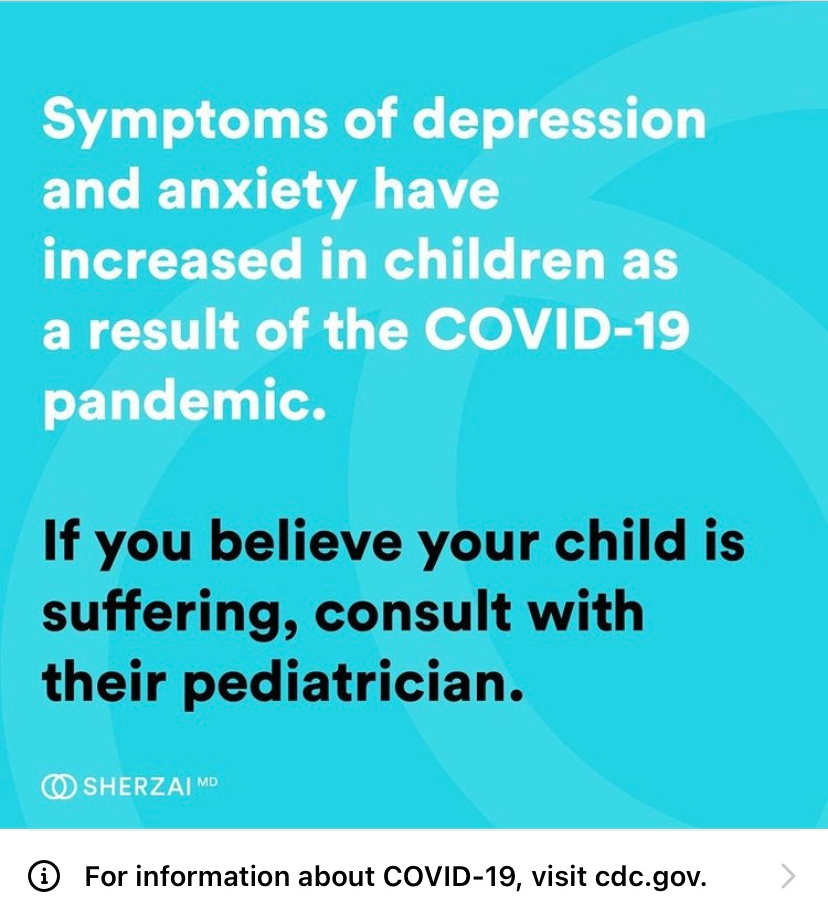
As seen on Instagram on sherzaimd

“Fear: False Evidence Appearing Real

“We are often more frightened than hurt; and we suffer more from imagination than reality.”–Seneca 

“Of all the liars in the world, sometimes the worst are our own fears.”–Rudyard Kipling

Photo by Kat Jayne on Pexels.com

FEAR:  False Evidence Appearing Real.  But is it really false?  Does the body truly know what is real versus perceived? 

Panic, anxiety, stress, depression, lethargy, mania . . . this is the vocabulary that describes very real reactions to F. E. A. R. 

Fight. Flight. Freeze.  Three words that seem perfectly harmless . . .until linked with the word, fear.

There are other words too:  cancer, stroke, heart disease, COVID, Rheumatoid arthritis, muscular dystrophy, aging, dying, murder, divorce, accident, fire, flood, hurricane . . .  and even the word, change–when viewed in isolation–not attached to oneself or a loved one–are words that can seem likewise benign, or at the very least, distant.

What do all of these words have in common?  They all have the potential to strike fear in both the recipient(s) and/or the supporting loved one(s) often triggering the fight, flight, or freeze response.  

Fear is a four-letter word that is often the king or queen of many minds, including my own, if left unchecked.  It can often be the source of increased heart rate, elevated blood pressure, racing thoughts, sleepless nights, shortness of breath, tightness in chest or other parts of the body, excessive worry, loss or increase of appetite, fatigue, headaches, and the list goes on.  None of us are immune.  Sometimes the fear is real and valid, other times, while it is still valid, it is often exacerbated by one’s mind.

Lack. Of. Control.  Fear creates a threat, and when the body/mind feels threatened, our nervous systems (sympathetic and parasympathetic) respond automatically in one of three ways:  fight, flight, or freeze. Fight-flight-or-freeze is not a conscious decision.  It is an automatic reaction for which you have little to no control. 

Photo by Suzy Hazelwood on Pexels.com

Recently, I viewed the documentary, Robin’s Wish.  This short film, a little over an hour long, alternates scenes of honoring/remembering Williams the actor and friend, as well as reflections/responses to his decline.  Ultimately, it wraps up with events from his tragic death, and the discovery that what was initially diagnosed as Parkinson’s disease was actually Lewy body dementia, the third most common type of dementia according to the Alzheimer’s Association, shedding new light and greater understanding for William’s untimely death.  It concludes with a note of hope:  Robin’s wish . . .

“I want to help people be less afraid,”–Robin Williams

As the film revealed, Williams battled various forms of fear his entire life.  Thus, learning that he wanted to help others be less afraid struck a heart note within me.  Williams brought laughter, joy, and mirth to audiences throughout the entirety of his prodigious career.  Through his comedic words and actions, Williams helped many feel less fearful–even if only for a short moment.

Personally, I understand battling fears as I am often filled with many sundry fears.  It is hard for me to recall being without them–although I have been told that I was fearless as a youngster.  Perhaps, it is my overactive imagination, my sensitive nature, or the unique hard-wiring of my brain, but feeling fearful has been a large part of my life.  

Most days, I “fake it ‘til I make it,” moving throughout life as if I don’t possess one single shred of fearfulness; and, it usually works.  I am able to take the fearful part of myself, box it, bound it up tightly, and store it far away in the attic of my inner world in hopes that it won’t escape.  Days, weeks, sometimes, months can go by, and not a tremor of fear is felt.  Then, like unexpected heavy rains in the middle of the night, the drip, drip, drip of fear begins to leak into my life.

It is those very fears that inspired me to write.  Beginning in those angsty middle school years, when I was fearful or did not understand something, I wrote.  Over those young years of my life, pages of journals and notebooks were filled; and then, I stopped.  My writing began to feel meaningless, trite, and purposeless; and therefore, not worth the effort. 

Photo by Dom J on Pexels.com

Decades later, my fears grew heavy once more, threatening to consume me if I didn’t do something.  I attempted to keep boxing them, rewrapping them, and shelving them here and there within the messy recesses of my being, but they kept slipping their binds.  Ironically, I could not give them a voice–I could not articulate them–just felt them in my body:  deep belly aches/flutters, pounding heart, accelerated thoughts, and worries–constant, constant worries.

Then, at the gentle, but dogged, nudging of a friend, I began writing again.  I wrote for no one in particular–just to work out the kinks, find my voice, and learn to once more articulate–at least through the written word. Sure enough, the fears began to loosen–not per se, leave, but at least they were becoming more tame–most days!

Reading Williams’ succinctly summed up quote, I realized that my own drive to not only write, but to share my words with others, is because I, too, want to help people feel less afraid and more focused on the positive.  In fact, I realize that was an underlying factor for likewise becoming an educator–to help children feel less afraid.  I am not sure if I have achieved either of these goals, and I know for certain that I have not, nor will not achieve to the level of Williams’ success.  Still, I can try to make a difference.  Even if I am only able to help one reader, or one student, feel they are not alone–reassure someone that they can “do hard things,” they can persevere, and they can live with fear without it ruling their life–then, I have achieved my goal.  While my writing, or teaching, will not earn an academy award, nor lead to fame or fortune, if it leaves a small mark within a life or two, then that is enough reward.

Photo by Mark Neal on Pexels.com

Recently, I was making my way down the Ritter Park path.  It was riddled with puddles after days of rain.  Unless you like mud-soaked shoes and ankles, you had to work with others to navigate through and around the numerous soggy patches of earth.  That is what life is about, working with others to get through the sloppy times.  Some of us do that on a large-scale, such as Robin Williams, and the rest of us have opportunities and moments in life in which we can help one another navigate through and around rough patches, using whatever gifts God has given us. 

Don’t ever think you are alone in your fears, Dear Reader.  You are not, and you can persist in spite of them. 

Photo by eberhard grossgasteiger on Pexels.com