The Power of Kindness: Good Thoughts, Good Words, and Good Deeds

“Be kind whenever possible. It is always possible.”Dalai Lama

Photo by Alexas Fotos on Pexels.com

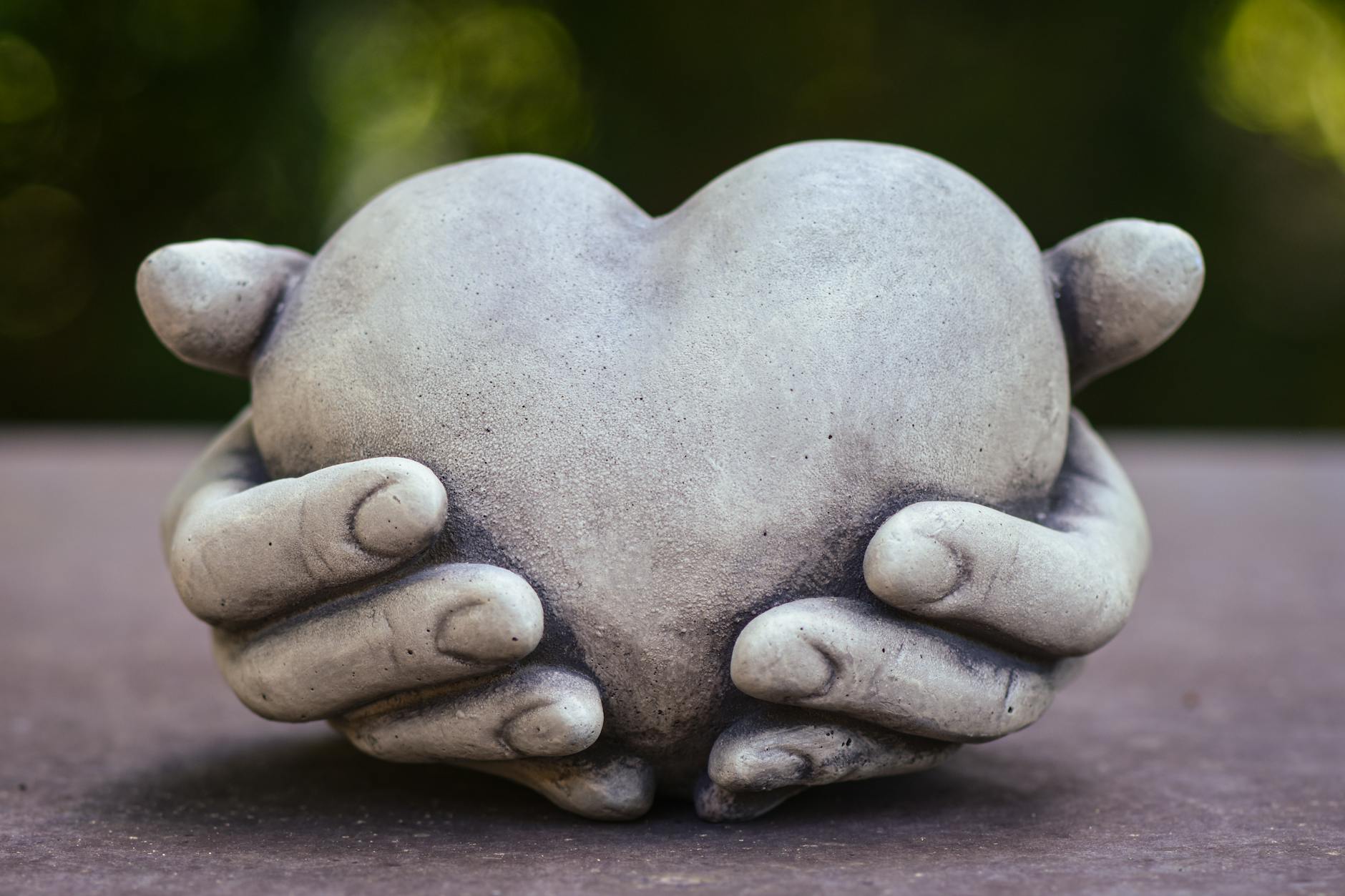
The shape of kindness ❤️

This past spring I viewed a documentary on various world religions, and one line  from this film really stood out. “Good thoughts, good words, and good deeds” is considered an essential teaching and practice of Zoroastrian faith. As I understand it, doing good deeds is not reward focused, but it’s more about thinking the best of others as well as doing good acts for its own sake. That maxim has remained with me all these months later.

At its core is kindness–kindness to others, and even, kindness to self. Kindness is one of those notions that gets tossed around in cutesy social media quotes and images, such as, “Spreading kindness like confetti!” or “In a world where you can be anything, be kind.”  While I love the intent around these images, it is easy to grow immune to their effects or even cynical.

Still, at the end of the day, kindness truly does matter. How many of us have been impacted by a rude, disrespectful, or all around unkind encounter?  I know I have. I walk or drive away feeling like Pig-Pen, a proverbial cloud of yuckiness clinging to me. Like lint on black pants, it seems that one act of unpleasantness appears to attract more of it. 

Photo by Craig Adderley on Pexels.com

Moods are contagious 🤧

For example, the day may begin with a car cutting you off on your drive into work. Preparing to walk into work, the lid to your new, supposedly, leak-proof coffee cup isn’t quite tight enough, and you end up entering your workplace with brown stains down that new light-colored shirt that, of course, you were wearing. 

After stopping by the restroom to try to blot off the stain as best you can, you open your computer only to find an email from that “thinks-they-are-so-special” client that sends you into another negative spiral. By the time lunchtime rolls around, and you realize you forgot your packed lunch at home that you actually took time to pack the night before, that cloud of negativity has burst open, and you feel soaked through with negative thoughts.

Photo by Christina Morillo on Pexels.com

Here to help 🤝

Kindness, however, often works the same way. What if the drive into work was eventless and traffic was light.  While the coffee still spills, a co-worker offers their Tide-pen to help make the stain less noticeable. When you open your inbox to email, you discover an email that includes words of appreciation from a hard-won client for a job well-done. 

When you discover that you left your packed lunch at home, another coworker offers to pick you up something while they are out on an errand, which gives you a bit of time to get caught up on a few other tasks you’ve been meaning to do. Meanwhile, you make a mental note to think of something nice you can do in return for that coworker later in the week. 

The same day, served up two ways.  Kindness can make a difference like that.  And the best part is that kindness does not require any special talent, money, or resources; we can cultivate it through our “thoughts, words, and deeds” as those of the Zoroastrian faith are encouraged to do.

Photo by Andrea Piacquadio on Pexels.com

Kind words and actions cost nothing but reap dividends 🤩

Offering to help others, saying or writing kind words, or simply being considerate are all ways of intentionally sharing kindness. Those simple acts can benefit others in ways that we may never be directly witnessed, but do not, nonetheless, detract from the worth of the actions. In fact, one small act of deliberate kindness, like its negative counterpart, can initiate a wave of positive events as one act leads to another and on to another.

Even if we offer a kind word or deed to others without expecting anything in return, those acts still benefit us. According to the Mayo Clinic, demonstrating kindness to others positively contributes to our sense of self-esteem, empathy, compassion, and boosts our mood. In the same 2023 article, the Mayo Clinic adds that acts of kindness lowers one’s blood pressure and levels of cortisol, a hormone directly related to stress.  Kindness can boost your mood and increase feelings of connectedness, thereby decreasing feelings of loneliness.  

Photo by Dziana Hasanbekava on Pexels.com

Benefits of Kindness 🧠

Kindness is also good for the mind.  When you do a thoughtful act, even as simple as sharing a pack of gum, offer words of encouragement, or even speak a simple compliment, you create physiological changes in your brain. With each kind act, dopamine and serotonin are released, creating feelings of well-being.  Meanwhile, the pleasure and reward centers of our brains are lit up. Additionally, kind acts and words can flood our bodies with endorphins, those “feel good” chemicals that boost mood and reduce sensations of pain and/or stress.

Kindness doesn’t have to just be focused on others; kind thoughts towards oneself is also as important and just as worthy of an endeavor.  Practicing kind self-talk that is positive and encouraging of self is worth-while, and much more beneficial than the negative loops that too easily circulate in our heads.  In addition to the practice of affirming and loving self-talk, fostering a sense of gratitude goes a long way to feeling kindness towards self and others. 

Photo by Kindel Media on Pexels.com

So many ways to offer Kindness 📝

Of course, there are the obvious kind actions such as volunteering and working/helping out with causes in which you believe.  However, there are other less overt, more subtle ways of generating kindness that are just as beneficial, if not more so!  Consider the following actions:

  • Call that friend or acquaintance that you haven’t seen in weeks 
  • Mail an old-fashioned postcard or letter to someone telling them how much they mean to you or you appreciate them
  • Write a handwritten thank you note the next time someone does something nice for you
  • Get flowers, candy, a cup of coffee, or a some other little treat for someone for no reason
  • Check in or call someone who is either sick or you know is going through a rough patch
  • Offer to take a shut-in to church, to the grocery store, or even to lunch
  • Buy a cake mix or cookie dough. Then, bake and share a treat with a neighbor or friend for no particular reason
  • Keep a gratitude journal to continue to foster good thoughts
Photo by Eva Bronzini on Pexels.com

everyone’s superpower 🦸‍♀️

The list could go on, but the point is, acts of kindness and generosity to others (and self) can be as big or small as you want.  “Good thoughts, good words, and good deeds”  put into actions, no matter the size, will always benefit others in some way.  

In the end, kindness is a big deal.  In fact, it’s a kinda superpower we all have the ability to possess. It merely takes a tad bit of thought and time. 

Rest, recovery, and self-care: All important aspects of fitness

Self-care is never a selfish act–it is simply good stewardship of the only gift I have, the gift I was put on this earth to offer to others.”–Parker Palmer

Photo by Madison Inouye on Pexels.com

In previous writings, I have written to encourage reluctant movers/exercisers to find ways to increase movement, mobility, and/or exercise into their daily routine.  I absolutely and wholeheartedly believe in the importance of moving more and sitting less.  There is a vast array of scientific evidence that demonstrates movement and gentle exercise increases mental and physical well-being, decreases diseases, and furthers longevity.  While it doesn’t make you bulletproof, there’s not denying its benefits.  That being said, there is also a time and place for self-care AND rest and recovery days as they are known in the fitness industry.

   Let’s first differentiate between the two as both are worthy and valuable tools.  Technically, self-care can be defined as anything you do to take care of yourself.  Self-care can, and should, include a wide range of activities that nurture your physical, mental, and spiritual well-being.  In an ever-evolving world in which more and more value is placed upon hustle, productivity, and work along with the expectation to either pass on vacation days, or if you do, then there is the pressure to continue to work on those days–taking time to care for self is more important than ever.  Plain and simple, self care is vital to the integrity of our own health, so we are more effective both in and out of the work-setting.

Photo by Hassan OUAJBIR on Pexels.com

Self care is a practice that can occur on any day of the week or at any time of day. It can be as simple as offering yourself kind words of praise or encouragement when you do something well, such as thinking, “I am proud of you for choosing to do this.”  However, it can also be an entire day, away from work and/or stress, filled with activities that feed your soul, mind, and body.  The point is, self care will vary from person to person and can encompass a variety of actions.

In fact, according to many health experts, areas for which self-care can occur includes many dimensions. Some of the more obvious areas comprise of spiritual, emotional, occupational, and physical well-being.  However, less obvious areas for self-care include intellectual, social, financial, and environmental.  Given these diverse facets for self-care, it creates a vast array of opportunities for self-care activities.  Here are a just a few ideas to get you thinking, but by no means are definitive:

  • Journaling, writing, drawing, creating
  • Spending time outside, gentle walks with pet, hike
  • Spending less and paying down credit cards
  • Reading/listening to books; watching a documentary
  • Change jobs/careers; Clean up that resume
  • Exercise; prioritize sleep; regular medical checkups
  • Volunteer; regularly scheduled social or family events
  • Pray, meditate; read inspirational scriptures; attend the worship service of your choice
Photo by Zen Chung on Pexels.com

Leaning into daily self-care activities leads to a healthier, more well-rounded life. Just as regular movement/exercise can vary from person to person, and from day to day, self-care will too.  Even when/if current life situations limit time for self-care, a little can go a long way in contributing to our overall well being.

Likewise, rest and recovery days can be part of the self-care plan, and should be essential part of your movement/exercise plan.  Adequate rest and a day or two devoted to recovery offers the body numerous benefits. While our muscles, heart, and lungs become more efficient when we repeatedly complete the same action, such as walking, running, cycling, weightlifting, playing tennis/golf/basketball, or any other sport/activity, it also places stress on those same areas.  Resting and/or a day away from those activities, allow the muscles, lungs, and heart to take a break and recover, allowing you to actually make more progress. 

Photo by Pixabay on Pexels.com

Recovery can include completing movements/exercises that are outside of one’s regular routine, such as walkers taking a day to bike, those who play specific sports taking a day to practice yoga, or runners taking a day to swim.  However, recovery can also be a day devoted to rest, or at the very least, a day in which exercise is avoided.  Both types of recovery, in addition to a regular sleep schedule and nutritious eating habits, benefit the body in numerous ways.

Recovery days reduce the likelihood of injury and allow the muscles to rest and repair.  It also reduces muscle fatigue that can decrease performance and reduces muscle pain and soreness. Adding an active recovery day, allows our bodies and minds to experience and try out new forms of exercise. While days completely devoid of exercise allows the body and mind to rest.  Both types of recovery improve your ability to sleep soundly, promote longevity, and reduce stress. 

Photo by Anastasia Shuraeva on Pexels.com

In the end, increasing daily movement and activity as well as the implementation of a regularly scheduled form of exercise are important, but more isn’t always better, especially for those who are competitive or prone to over-doing it.  As with most things in life, the key to any wellness program is finding the right balance that works for Y-O-U, and that may change from season to season and from decade to decade.  

Taking care of your body, mind, and spirit are important and worthwhile investments.  After all, each of us is a creation of the Divine, but we are only given this one life.  Let’s honor our Creator by respecting the unique creation that is each of us, and live our lives to the fullest, imbued with the vitality of a healthy mind, body, and spirit!

Photo by Barbara Olsen on Pexels.com

Marble Jar Living

“When you get tired, learn to rest, not quit.”–Bansky

I have a photo of myself from early in my teaching career.  It was taken in an old portable classroom, located a good distance from the rest of the K-5 elementary school in which I worked with students with severe behavioral problems.  Filled mostly with odds and ends of what the custodians and myself could piece together, and a few study carrols that a special education resource center provided, I was tasked to help students whose behavior was considered far too disruptive/dangerous for the so-called, “regular” classroom.  These students came from diverse backgrounds across the entirety of our rural county, rather than solely the local school community, and were aged five through twelve.  Complicating matters further, roughly 75 percent of the students had been affected by drugs and/or alcohol while in the womb.  The challenge to remediate behavior while educating these students was overwhelming at times.  As a look back, it was a good thing I was young and naive! 

While behavior management is not without its criticism, I found these techniques to be effective in this particular classroom setting.  One such practice that I employed was the marble jar.  Using an empty jar, I set a clear behavior goal, such as students engaged in on-task classwork for 15 minutes (without outbursts or tantrums).  Using a timer as a clear measure of time, I added a predetermined number of marbles to the jar each time the goal was successfully reached.  Students would then be praised, take a short three to five minute break, and then resume work again for another time period. However, if the behavior goal was not reached, I would remove that same number from the jar and remind students of their goal.  As the length of time increased for appropriate on-task behavior, the more marbles could be earned or detracted.  Once the jar was filled, we celebrated with a “reward” as determined by the students, such as an extra or longer recess, a “dance party,” extended storytime, popcorn party, and so forth.

Photo by Anthony on Pexels.com

I worked to make the marble jar, and other behavior management procedures, more class-owned.  Holding group meetings, students discussed and selected group and individual behavior goals.  We talked about red light, yellow light, and green light behaviors that detracted or benefitted their own learning and the classroom community as well as the power of personal choice/accountability of behavior.  

Writing about it now, it seems like such a simplistic, idyllic world.  It was FAR from that.  The developmental, emotional, and cognitive functioning levels in this K-5 classroom were an incredibly wide gulf. Furthermore, since it was the early 1990s, I recognize now that several of my students had been misidentified/misunderstood and were actually on the autism spectrum, but that was not as recognized as it is now.

If you ask my husband, John, he will tell you of the long hours this class demanded of me.  He will further tell you the physical toll it took upon me as the job often required the instructional aides and me to restrain students who were acting out.  Emotionally, I did not leave my job at the door.  Many students–not all–were impoverished, lacked resources, and/or returned to homes that were the source of their behavior issues in which to begin.

Photo by Grafixart_photo Samir BELHAMRA on Pexels.com

“It is not the mountain we conquer but ourselves.”–Edmund Hillary

I can recall days, and even weeks in that former special classroom, in which there were no more marbles to remove and none had been added.  These were discouraging time periods for me because, in my youth and arrogance, I could not understand why I could not make a difference.  Why couldn’t I make them want to change their behavior?  Why couldn’t I do this or do that?  It was a bitter pill to swallow; to know that no matter how much I loved and cared for these students, I could not make them change. In fact, while I could provide a safe and consistent classroom environment with clear procedures and boundaries as well as maintain a professional, caring, and calm demeanor, I could not control the chemistry in their body, the functioning of their brain, or their environment outside of the classroom.  However, I could choose to adapt my thinking. It wasn’t easy, and it took a long time.

My students were with me due to multiple negative events in their personal lives and/or educational history.  They did not need a visible representation of another failure, another negative.  Instead, they needed a visual representation of their success–a reminder that they can “do good.”  Therefore, I made the adaptation to quit removing marbles from the class jar–life was already doing that for them.  I added weekly “positive meetings” in which each student, staff, and me had to state at least one positive behavior/event/thing that they witnessed, thought, or chose to do.  We added at least one marble per positive observation during this pause in our week, and celebrated the good, no matter how small.  These meetings were difficult in the beginning, but with practice and grace, we all began to take notice throughout the week of the acts of “good” we needed to remember for our weekly meetings.  

Reflecting on those marble years, I realize that many of us (myself included) have spent much of 2020 and have continued into 2021 focusing on the marbles taken from our life jar.  One negative event upon another has left many of us, at times, feeling as if our life jar is empty. However, if we allow our minds/hearts to open, there has also been at least one–if not more–positive event(s) that have occurred during this same time period, and they need to be honored/remembered.

Therefore, I realize that like my early marble jar days of education, continually focusing on the losses of our proverbial life jars only reinforces the negative.  While the losses need to be remembered for perspective, and those lives lost need to be held within cherished memories, there remain many positive events that currently fill our life jars, such as family, friends, and life itself.  Additionally, COVID numbers are dropping, more vaccines are rolling out, and daily life is beginning to feel closer to normal, it is important to recognize and feel grateful for positive steps and events, no matter how small. 

“Practice makes permanent.”–Bobby Robson

Like those weekly positive meetings of long ago, let us likewise take time to pause, reflect/look for items/events/people for which to feel grateful, acknowledge these, and perhaps even offer a “positive statement” to at least one other person–even during those days & weeks when it feels as if no marbles other are being added.  It takes practice and patience as the brain seems to automatically focus on the negatives–at least mine does.  However, with regular pauses of gratitude and appreciation, we can begin to feel, well, more “pause-i-tive,” if not every day, then at least, with greater frequency.  

Gazing at that old classroom photo, I was reminded that seeing those marble moments is about practice, not perfection.  That is what I had to learn then, and it remains true today.  Positivity and gratitude take time to foster, and, like me, for many people, it is not easy, especially after so-called negative, life-altering experiences.  

Spring eventually arrives after winter; and yet, even spring has rainy days and downpours.  There is good and bad, light and dark in every season, every year, and sometimes every day.  If we only focus on the rains of spring, we miss the birdsong and blooms.  If we only focus on the darkness of night, we fail to see the brilliance of the sunrise that follows.  Plink, plink, marbles are available if only we take time to see them.

“God brings men into deep waters, not to drown them, but to cleanse them.”–John Aughey