Movement as Medicine: Staying Active in Your Older Adult Years

“Movement is medicine for creating change in a person’s physical, emotional, and mental states.”–Carol Welch

Photo by Roman Biernacki on Pexels.com

Let’s get Ready to Move! 🏃‍♀️

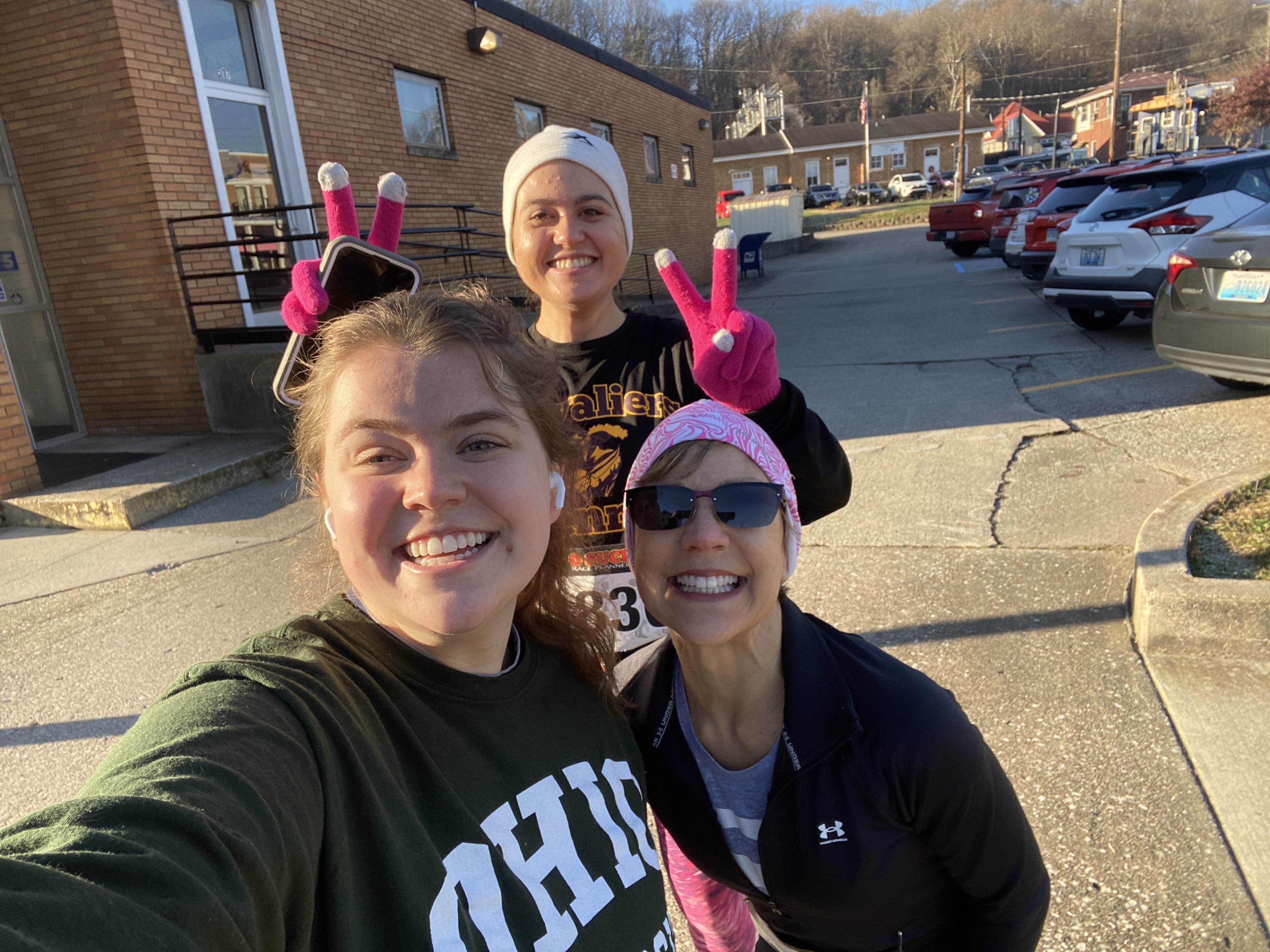
By the time you read this, I will be close to one week out from running (ok, jogging, “slogging”, whatever you want to call it) the Marshall University Half-Marathon. This annual community event motivates and inspires hundreds of locals and nonlocals to train, improve their current fitness level, and participate in the 5K, the half-, or the full-marathon distance.  Plus, it brings together a whole host of volunteers who support participants along the way.

Each year that I’ve participated, I hear numerous stories about those who haven’t trained for MUM, still participate, and do well.  My hats off to them; I appreciate that they can do that.  However, I find the training, and the build-up to the event, are part of the excitement and joy of the journey that includes completing the event.

Photo by RUN 4 FFWPU on Pexels.com

Giving meaning and purpose to Exercise through signing up ✍️

It typically takes weeks, or even months, of deliberation before I decide to sign up for a running event–even an annual event such as the MUM. Therefore, once I make the decision to pay the entry fee for an event, I am fully committed to a training plan. This is not because I have any desire to place or set records, but because signing up for an event is the extra motivation that gives meaning and purpose to my exercise.  Plus, it keeps me simultaneously excited and nervous in a good way.

Photo by RUN 4 FFWPU on Pexels.com

Exercise at any age! 👵🏼

Still, I have those who ask me if running is still safe for someone at “my age.” News alert! There is no milestone-age at which you should cut-off exercise.  In fact, exercise and/or movement can, and probably should, be embraced across all ages, including those of us in the AARP years, which is anyone over the age of 50. That said, you do have to manage your expectations, but movement and/or structured exercise can be a healthy part of the “golden years.”

That said, of course, if you have had an injury or have certain health conditions, you must respect your body’s limits and boundaries, but it doesn’t mean you give up on exercise and/or purposeful movement forever.  By working with a healthcare professional, you can find ways to adapt, modify, and/or create your own exercise plan that fits your body’s unique needs.  
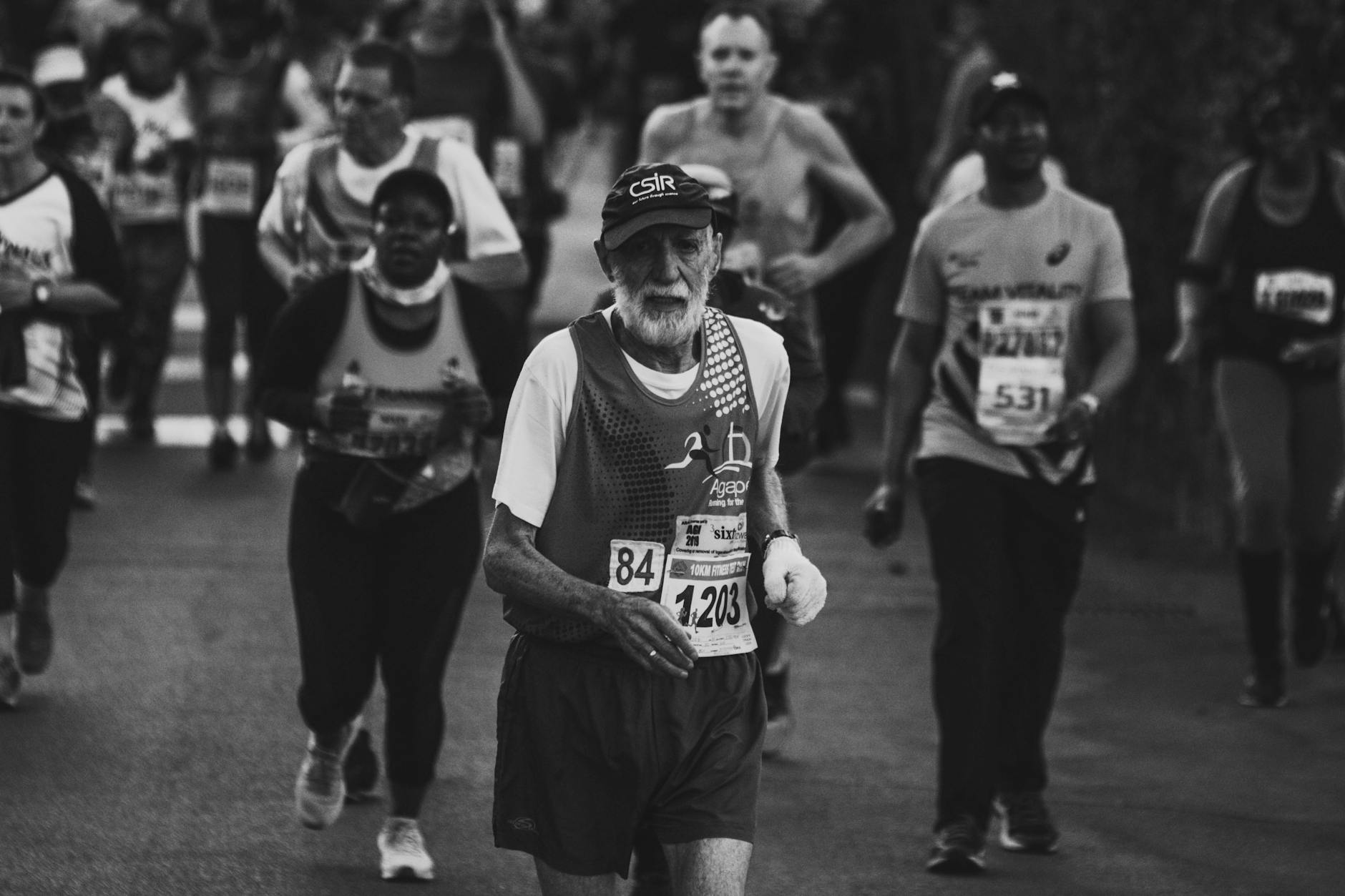
Photo by Vincent Peters on Pexels.com

Tips for moving through those senior years 🚶🏿‍♂️

Here are some key tips and pointers I’ve learned along the way, gathered from other senior exercisers, as well as a few I researched, when thinking about exercise/movement in the, a-hem, “senior” years.

  1. Establish meaningful AND realistic goals appropriate for where your body is now that motivate and excite you.  This is why I enjoy signing up for a half-marathon.  My mantra is: “Set your own pace, and run your race.”  I don’t put pressure on myself that running has to be or look a certain way.  No time is too slow, and I can take as many walk breaks as I need.  That said, you can approach ANY form of exercise in a similar manner 
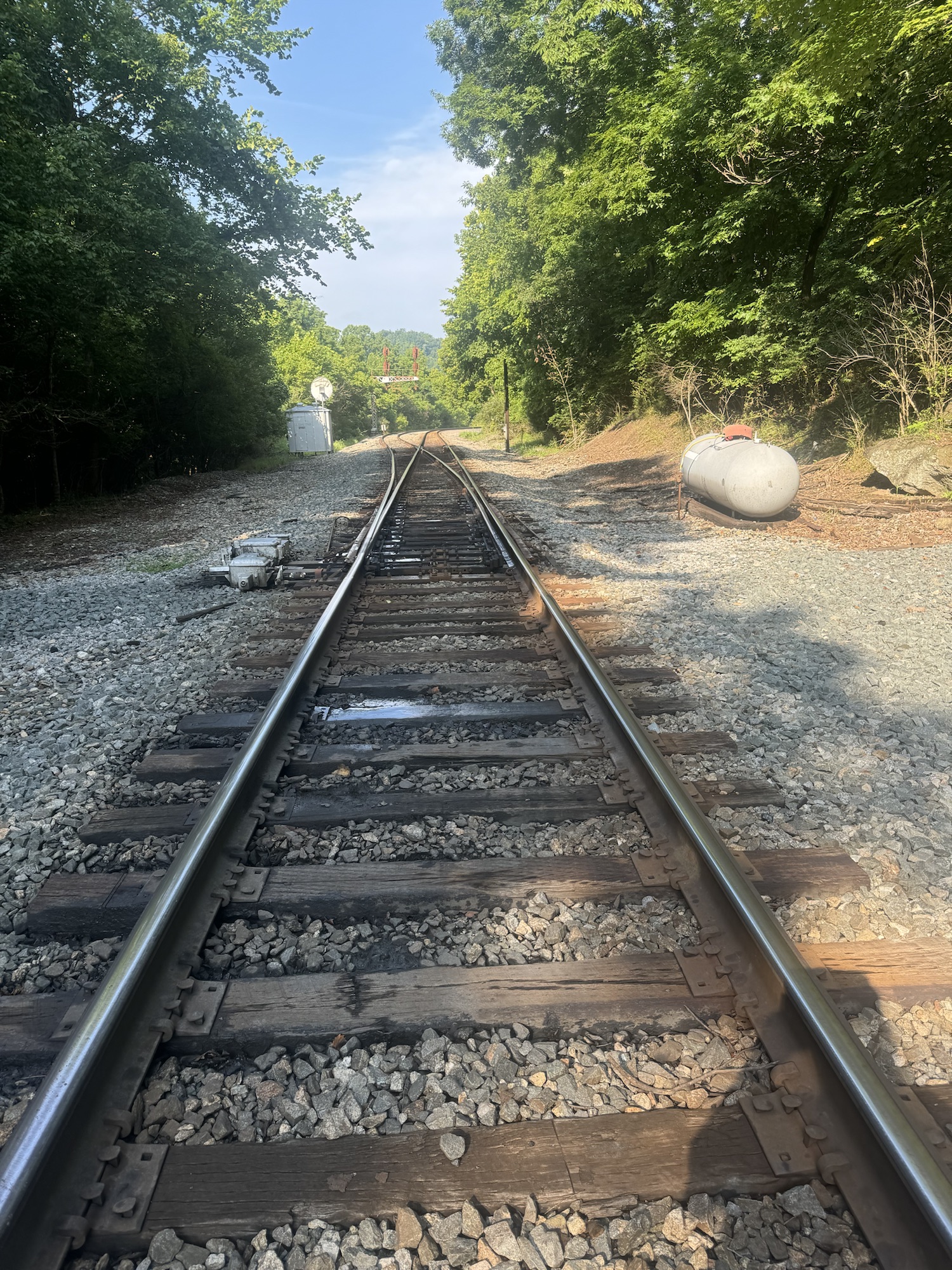
Set off in your own unique direction down the the tracks towards empowering your own health and fitness.
  1. Notice your narratives.  This is something that I have begun to notice more frequently. Reflect on how you talk/think about age with peers/friends/family AND self.  Is there often negative talk and thoughts associated with your current age and/or exercise?  Perhaps, you can begin to reframe those thoughts/chatter by leading by example.  Furthermore, look to role-models that motivate you to move more.  I personally often look at my Dad who still walks or hikes daily anywhere from 2-8 miles per day.
  1.  Find your edge. Whatever form of exercise we choose should challenge us, but not too much.  If something changes, and you sense you can do a little bit more, then do so.  But if doing a bit more causes serious discomfort, then back off, and try again another time. 
Map out your own fitness challenge.
  1. Strength train, stretch, and work on balance through practices such as yoga. The CDC in an article entitled,  “Older Adult Activity: An Overview,” states that in addition to cardiovascular exercise, such as jogging and walking, older adults also need to strength train and work on balance.  In fact, AARP offers a 10-minute, strength-training video that can be completed daily, seated or standing. 
  1. Manage your sleep and nutrition: There is a reason these two are often spoken/written about due to the fact both contribute positively, or negatively, towards your own health.  That said, one bad night’s sleep, one indulgent meal, or a day of eating very little, will not necessarily impact your overall health; however, consistently not getting enough sleep and not consuming proper nutrition will gradually, and negatively, begin to impact your physical and mental well-being. 
  1. Find your support or pave your own way.  There’s no one right fitness plan that works for everyone.  Find the type of movement/exercise that best suits your body and motivates you, which may mean exercising with a group, a friend, or at a club. That said, don’t be afraid to go it alone either and share the experience with others later.

Find your support!
  1. Exercise can be therapy. Personally, I know my mental health greatly benefits from movement. The National Institutes of Health, The Mayo Clinic, Mount Sinai, and numerous other institutions all point to the fact that exercise is a mood and mental health booster.
  1.  Tune in to your body’s needs with honesty and integrity. If you’re sick, tired, and/or run down, then maybe a day or two of rest may be what you need. If a joint, such as knee, elbow, wrist, or ankle begins to feel irritated.  Be curious about it.  Are you pushing a certain exercise too hard, too often? Or, are you not moving enough? Learning to listen to the signals our bodies send us is an important part of the exercise/movement journey.
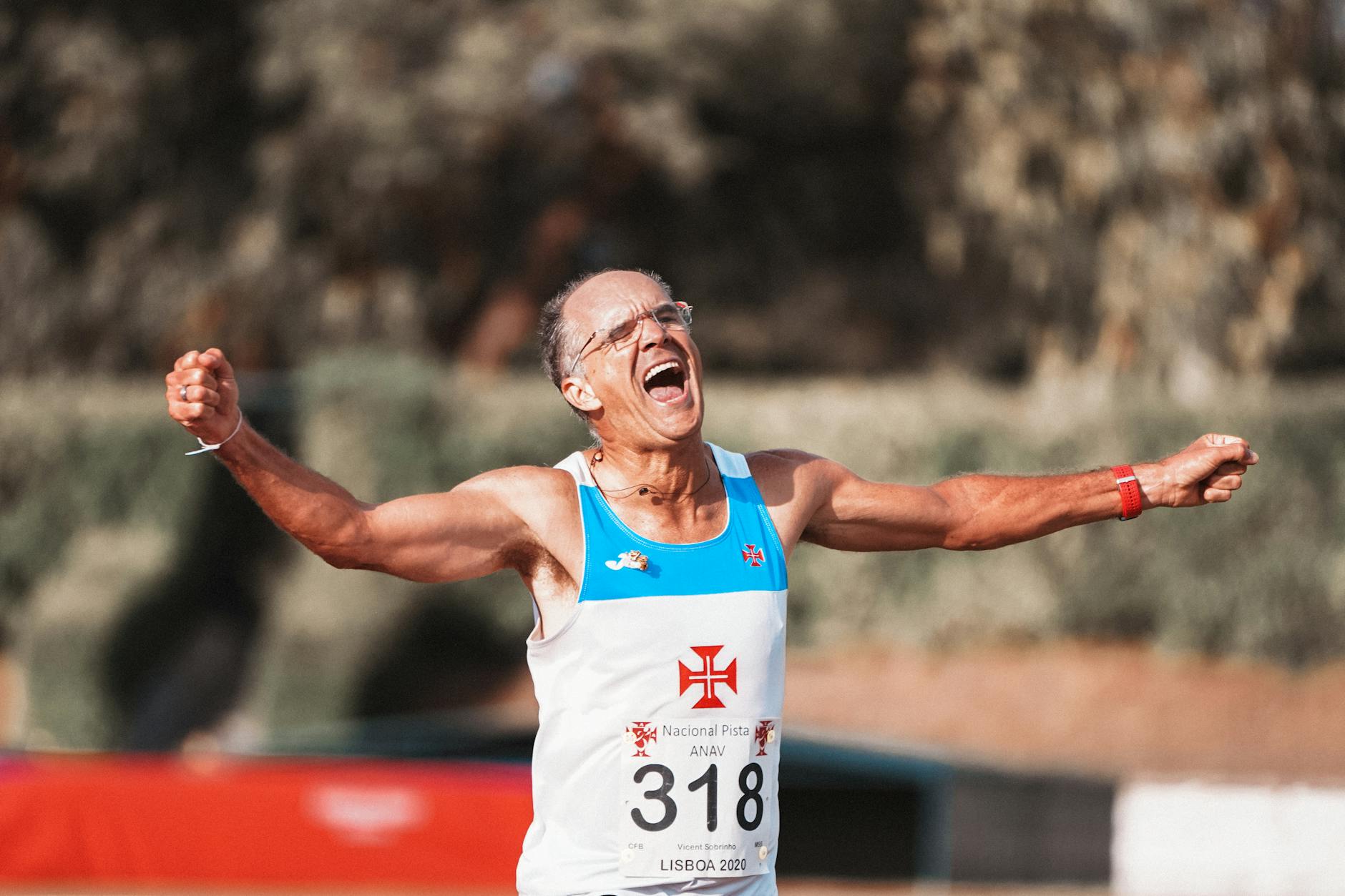
Photo by RUN 4 FFWPU on Pexels.com

movement is medicine! 💊

When it comes to movement, no matter your age, focus on the positives of the experience–whether it is spending time with friends, benefiting your mental health, or feeling more overall strength, steadiness, and/or energy. To be sure, it is often hard to get started, but it is often that feeling of accomplishment you have afterwards that can keep you going. Finally, for those in the official AARP years, keep in mind, “older” doesn’t have to mean sitting on the sidelines. Becoming and staying active, however you define it, truly is medicine for imbuing well-being: socially, mentally, and emotionally. 

Dad and I pausing for a moment during hike this past summer at Barboursville Park.


Exercise your right to JOY

“Around the world, people who are physically active are happier and more satisfied with their lives.”–Kelly McGonigal

“Movement awakes and activates many of our mental capacities.”–Carla Hannaford

Photo by Andrea Piacquadio on Pexels.com

I was going through the movements of getting ready for my work day half-heartedly listening to a podcast whose title had promised much.  Unfortunately, like many podcasts, it ended up being another interview designed to promote the sale of a book. My phone was off to the side, away from my point of focus, so I didn’t immediately stop the interview.  

Despite my lack of focus/interest, my ears perked up when I overhead a nugget of an idea.  Unfortunately, I cannot quote the idea precisely since I wasn’t fully focused.  However, the kernel of its intent resonated with me.  It was the idea that the main focus of exercise should not necessarily be to get “fit,” to maintain or lose weight, sleep better, or any of the other valid reasons.  Instead, the main goal of all exercise/movement should be to increase joy.

This was such an interesting thesis that I had to dive more into the topic, and it turns out science has quite a bit to say about this.  Of course, I nearly always feel better when I can integrate movement into my day.  Plus, I typically felt better after more “formal” exercise sessions.  However, this was all anecdotal.  

Photo by Pixabay on Pexels.com

Before diving into the research a few days later, my mind kept going back to the notion of reframing our relationship with exercise.  Dropping the typical exercise narratives–weight management, fitness goals, therapeutic/emotional release, better sleep and so forth was fascinating. Of course, exercise provides all of those goals and more, but the idea of letting those be the side dishes, and allowing joy to be the main course was intriguing.

After perusing numerous articles, I became super excited; I knew this information needed to be shared with my local community and beyond.  This felt especially important since I have previously written pieces fostering the notion that movement is for every unique body–even those with limitations, and it can be incorporated into daily life even on the busiest of days.  Armed with this information, I was ready to spread the word: More Movement = More Joy!  

Photo by Suzy Hazelwood on Pexels.com

Exercise, even in short bursts of time, improves one mood. A study conducted by West Virginia University found that middle school students who regularly exercise feel overall happier.  This was a no brainer! Ask any educator what their students’ behavior and mood is like on days they don’t have recess versus days they get it, and you’ll most likely get an earful.  Kids instinctively know they need movement, and if they can’t get it via the playground, athletics, dance, etc.–they are going to find ways to move more animatedly in the classroom.  Otherwise, if kept from moving, they become sullen, whiney, moody, or even combative/confrontational. And, this is also true for adults.

Interestingly, in one study, researchers determined specific movements that not only are associated with the feeling of joy, but also enhance the joy when completed.  These include: reaching, swaying, bouncing, shaking, jumping, and an action called, “celebration,” an action that mimics tossing confetti overhead with both hands. One researcher, Kelly McGonigal, writing for the New York Times, created, shared, and posted a video in the article, “The Joy Workout”, based upon these specific movements.  The video is approximately eight minutes long, and can be easily accessed through a quick click of keys.  (It is important to note, after giving it a try myself, not all movements are appropriate for those with limited mobility or injuries; however, movements could be modified or even completed while sitting.)  

Photo by Harsh Raj Gond on Pexels.com

Another interesting study I ran across stated that simply standing, sitting, or moving with a more open posture, as opposed to a closed posture, can likewise increase positive feelings.  Moreover, a smaller 2021 study focused on participants who were asked to go through a series of movements similar to those McGonigal studied.  Once more, movement, even those completed in a seated posture, increased feelings of happiness. Clearly, exercising with the goal of joy in mind is not a crazy notion.

My research continued, including studies from the University of Michigan, University of Iowa, University of Texas, and Northeastern University, just to name a few.  What I found was that scientists tended to agree that all forms of exercise/movement are beneficial when performed safely.  That said, aerobic exercise currently seems to have a slight edge overall in brain boosting potential, but that may be because it appears to be the most researched. However, all conclude that exercise and movement benefit the young, seniors, and all ages in between.  Whether a short burst of activity or a more formal workout, movement ameliorates the effects of depression and anxiety by boosting the production of serotonin, and other feel-good chemicals and decreasing stress-inducing hormones. 

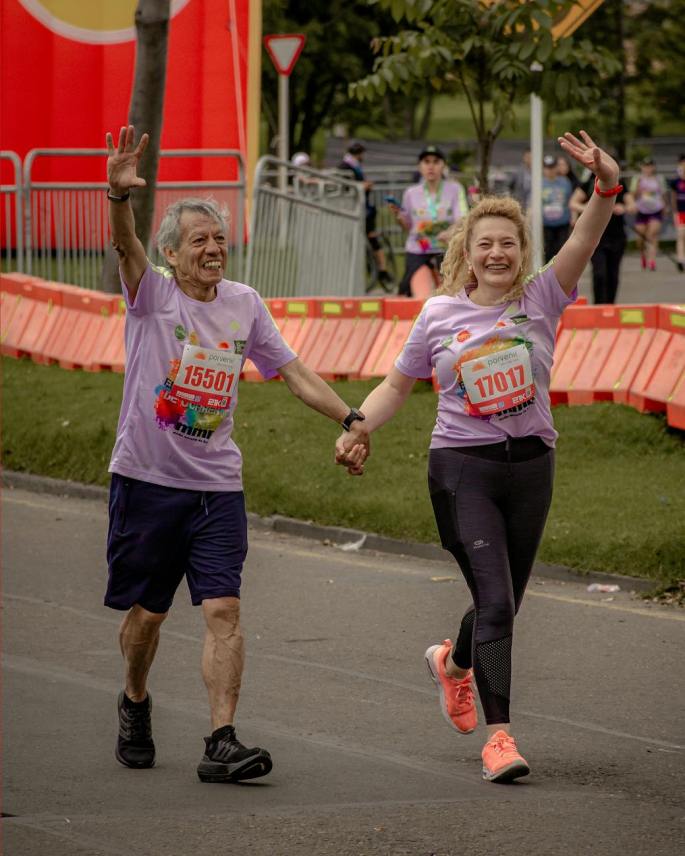
Exercise your right to enJOY movement with friends and family.

When we move, we increase our heart rate, which, in turn, moves more oxygen to the brain. As numerous studies indicate, increased oxygen to the brain mitigates symptoms of anxiety and depression. Furthermore, movement/exercise, when repeated frequently enough, can give rise to new neurons in the hippocampus, the area of the brain responsible for not only emotions, but also memory and learning!  This means that movement/exercise not only affects your brain in the moment in which you are participating, but it also makes positive structural changes over time.

So back to “The Joy Workout.” Does it work?  Well, only you can decide that. I will say that I found it clever, cute, and definitely made me smile.  However, you do not have to do “The Joy Workout” in order to feel joy in movement.  I found multiple, what I like to call, “movement-snacks,” videos and apps that offer 10-minute or less movement breaks if that’s your thing, such as the 7-minute workout, available on-line and in app version.  

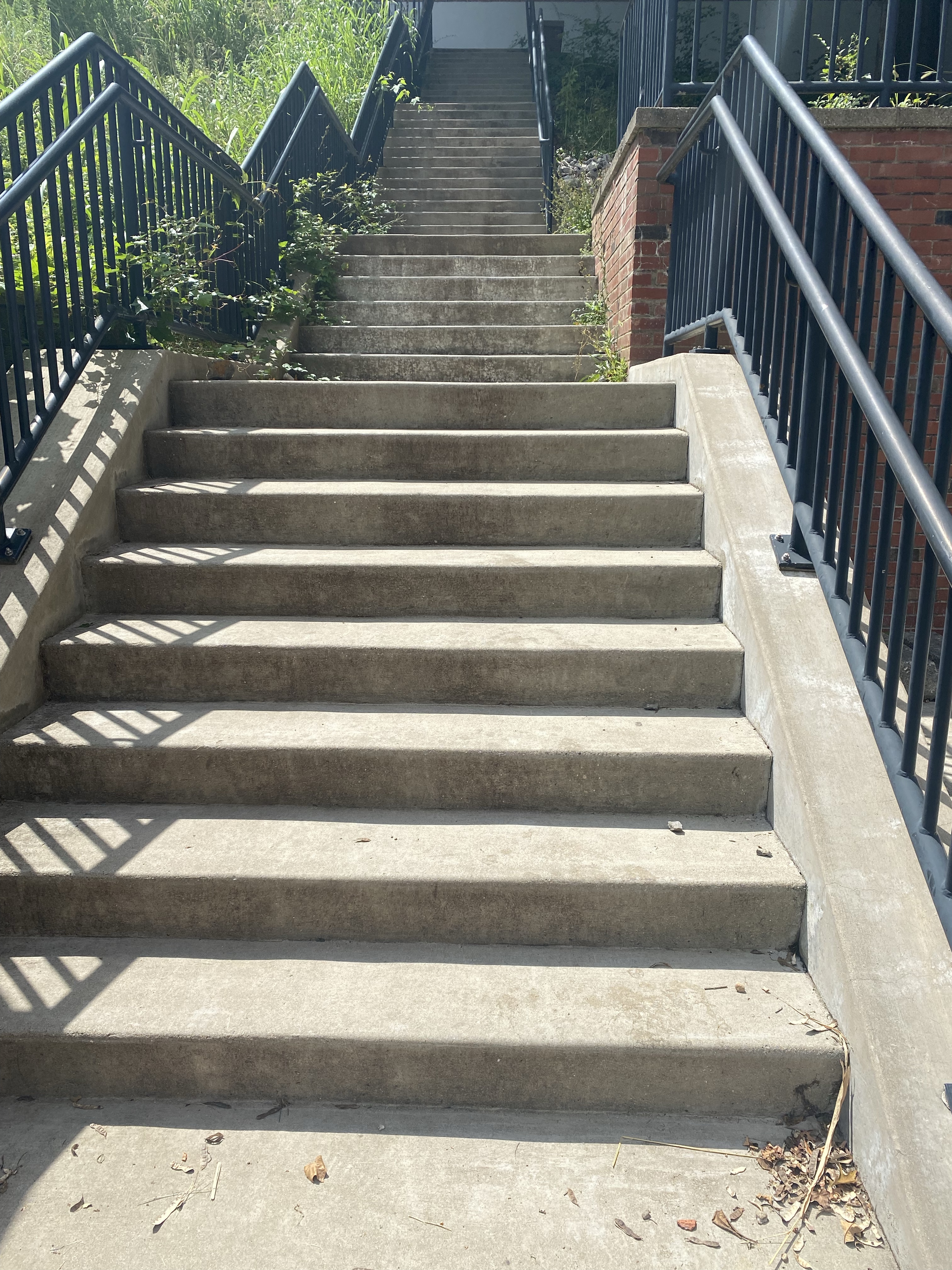
Joy can be increased through movement, step-by-step.

Of course, there are so many other ways to increase movement from taking short walk breaks, to parking farther away from your destination, from walking to another floor for a restroom break to simply stretching or walking/marching in place on commercial or pop-up breaks, and so much more. The important thing, researchers noted, is that you find ways to move and/or exercise that you enjoy, that can easily be incorporated into your daily routine, so that you will do them on a regular basis in order to reap all those joyful benefits.

Ultimately, who doesn’t want to feel more joy moving into the new year?  Help boost yourself towards that goal by determining ways you like to move.  The worst movement mistakes you can make are inactivity or repeatedly moving/exercise in a way in which you dread it.  Let’s keep it simple.  Focus on moving more, smiling more, and feeling more joy overall.  It doesn’t have to be any more complicated than that.

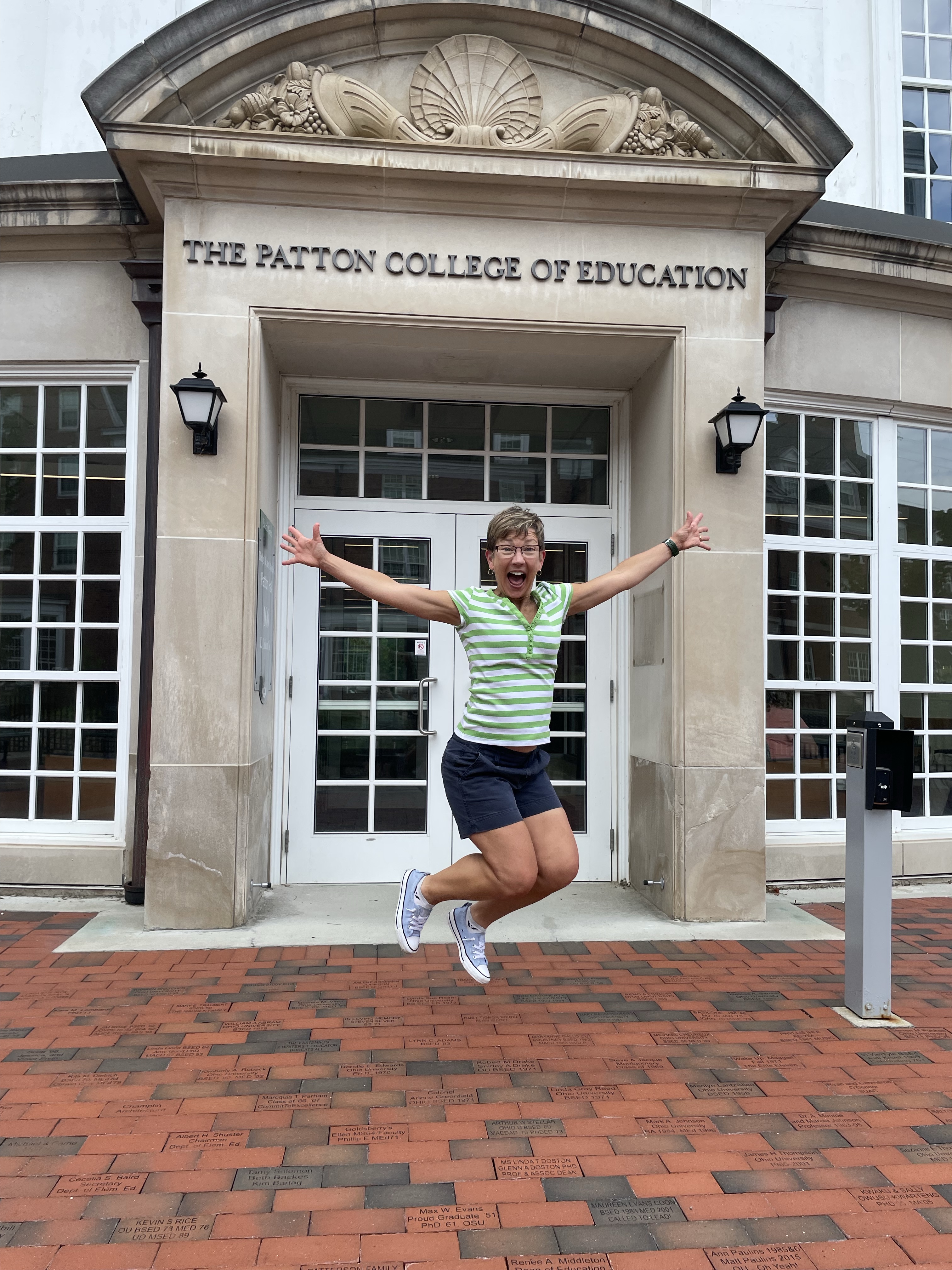
Take a leap of faith, move for joy!