Be Good to One Another: On unseen suffering and the quiet work of kindness

On a winter morning downtown, a moment of waiting becomes a reflection on mental health, unseen suffering, and the quiet work of choosing kindness in a fragile world.

A Morning at the Intersection🚦

It was a cold, cloudy Saturday morning. I was waiting for the traffic light to change at a major downtown intersection.  All around, Christmas decorations, lights, and baubles sparkled as people dressed for a special occasion hurried towards the city’s arena. I wondered about the unusual sight of numerous people on the sidewalks at this time of day. With sudden clarity, I realized it was the university’s December graduation as groups passed in caps, gowns, tassels, and hoods. 

When We Cannot Know, We Must Care👤

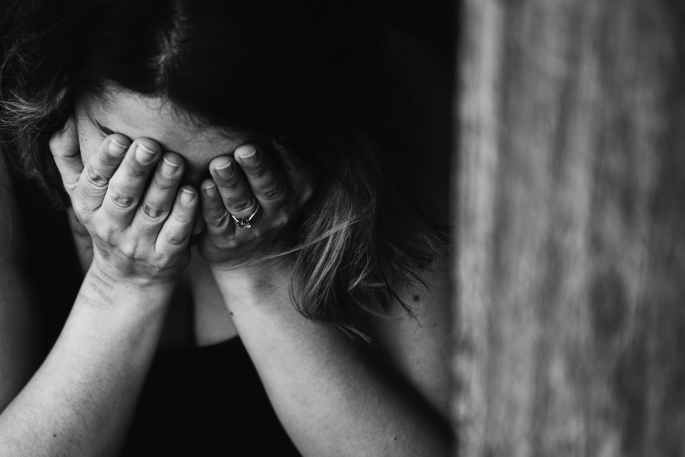
Thinking back to my own daughter’s December graduation, I marveled how life marched on. Groups of people smiling, nodding, waving to one another, braced against the cold, hurriedly moving in a line like train cars linked together on one track bound to the same destination. Recent events came to mind, and I pondered the idea that surface appearances often bely the hidden interior lives of others–a reality social media has exacerbated. Suffering can be tucked away into hidden pockets so that even those closest may not see or know the hidden torment that lurks inside another human’s heart.

Why Unknowing Requires Care ❤️‍🩹

These groups of families, friends, and loved ones believe they know one another. And maybe they do … but maybe they don’t. This precise unknowing is why we need to care for one another–even when it seems futile. Many people carry burdens, traumas, fears, and anxieties that they either don’t share, or don’t know how to process, much less put into words. It is not necessarily a failure; it is part of the human experience that is difficult to understand. We must acknowledge that we may never truly know another person–even those closest to us. Thus, we must offer care, or at the very least, small kindnesses, to others.

“Be Good to One Another” 🫂

I continued to watch in fascination, lost in rumination, as more and more people, dressed in their finery, flowed out of the parking garages on either side of the traffic light. A long-ago, beloved priest’s words came to mind as I continued to watch and wait. “Be good to one another,” he would say at the conclusion of each church service. His words were simple, but their implications were profound. 

What kind of world would we have if more people were simply “good to one another”? If we listened to one another without trying to “fix” anything–personally, this is a hard one, and I suspect I am not the only one. What would happen if we checked in more frequently with another person, even if it feels awkward or tense? What if we responded with more gentleness, kindness, or at the very least, decent courtesy, even when we are tired, rushed, or unsure? Choosing deliberate actions that are kind or respectful does not require insight into another person’s pain, but it does require us to recognize their humanity. 

A Cup of Coffee, a Choice ☕️

I am reminded of a recent incident in which I was running through town. I witnessed an older, unhoused gentleman knock on the window of a man in a car outside of a coffee shop. The man inside of the car leapt out, yelling untold obscenities at the man who knocked. The disheveled, unhoused man kept saying, “I was just going to ask you for a cup of coffee.” The man who had been inside his car became louder and more aggressive. I felt so helpless as I watched in horror. Fortunately, a woman, older than me, walked out of the coffee shop, whispered to the gray-haired man, took him by the arm, and gave him a cup of coffee while the other man continued to spew vitriol. I was so touched by this gentle act. It reminded me of a yoga teacher from an old DVD who stated, “Go out and bless the world because the world needs it.” 

Have We Learned How to Show Up for One Another? 🫴

As I watched the graduation celebration train continue, I couldn’t help but wonder, in spite of all of their book and applied learning, they also learned how to show up for one another? Do they possess the empathy required to “bless” the world? Do they have the skills to offer patience when it is required, hold space when needed, and withhold judgment when encountering dissension or differences?  These are important questions not only recent graduates need to consider, but so do many others, myself included.

Resisting a Hardened Heart 🖤

These are big asks, I know. I try and fail regularly. Nonetheless, I cannot help but believe that striving to be a “perfect” human being matters far less than not allowing the world to harden us, so that we can respond more often with kindness. The key is remembering to reset, when we act unkindly, and try again in our interactions with one another. The world will not be healed by perfection, but rather when we lean into our interactions with one another with presence, awareness, and sensitivity.

Being a Warrior for Peace 😌

The same DVD yoga teacher also advised, “Be a warrior, not a worrier.”  While he typically said this as a point of humor during one of the “warrior” poses yoga is known for, the intent of the message has never been lost on me. Embodying the spirit of a warrior for empathy, gentleness, or kindness, is about offering hope without turning a blind eye to the harsh realities–pain, suffering, fear, or ignorance.  Being a “peaceful warrior” is about a willingness to care without expectations, choosing engagement–however you define it–over withdrawal into a cocoon of hopelessness. It is a practice of continually showing up, even in the smallest of ways.

Choosing Kindness, Again and Again ☺️

I know all too well that kindness will not save everyone, and caring for another does not come with control over another person’s choices. It is further worth acknowledging that our actions, no matter how well-intended, may not help, but it doesn’t mean we should not try. Send that text. Remain quiet and allow the other person’s pause to speak. Ask sincere questions and listen with genuine interest and without expectations. Smile at that stranger.  Offer to help another person–even a cup of coffee to an unhoused man. We never know how actions can impact another person, so please choose kindness over and over. Choose kindness.

As you move through your own daily encounters, consider an idea echoed by numerous writers: “A smile on the outside is often silent suffering on the inside.” 

I invite you, Dear Reader, to notice, reach out, and bless the world quietly with intentional acts of kindness. May we provide flickers of hope and peace in a world often determined to snuff out the light.

A Blessing at the Light 🙏

The traffic light changed.  I drove away, whispering the priest’s words to the strangers celebrating graduation, “Be good to one another. Please, please, please be good to one another above all else.” 

.

Trusting before a surgery

Photo by Jonathan Borba on Pexels.com

A quote attributed to voice actor, Billy West, states, “Life is for living.  I was a little scared before surgery ‘cause of the release you sign that says there’s always a very small percent chance that you’ll die during the operation.”  This quote pretty much sums up how I feel as I write this piece the morning before I have a fairly common neck surgery.  I am a little scared, but I am going to trust.  Trust my surgeon; trust that Divine Providence will guide his hands, eyes, and mind; trust the surgical team that will be in there with me; and be at ease knowing I am loved and supported by a community of family and friends.

As fate would have it, I was recently listening to a guided meditation designed to focus on my breathing in order to reduce anxiety. The meditation teacher ended the session by explaining that if you mix up the letters of TRUST, you can create the word, strut.  Therefore, by trusting in the Divine, you can “strut” into the future in the confidence that you are held and beloved.  Needless to say, I love word-play, so that idea grabbed my attention, leading me down a further path of thought . . . 

Photo by Sharefaith on Pexels.com

It led me to reflect on a popular acronym for the word, FEAR: false evidence appearing real.  The closer to the date of my surgery, the more real the fear has felt, which seems so silly to the logical part of my mind.  Honestly, I think a large part of it has had to do with the overwhelming task of preparing to be out of commission for at least four weeks.  This is due to the fact that I am not naturally organized, so to try to think through all the different details that needed to be addressed, especially with regards to my classroom as well as several other items, seemed daunting.

Another reason I think the feelings of fear increased was because well-intentioned friends and family members began asking, the week before my procedure, how I felt.  Up until they started asking, I hadn’t really felt/thought too much about the procedure.  I mean, after all, if you don’t think about it, it can’t hurt you, right?!?!

Photo by Pixabay on Pexels.com

Seriously, I knew that those who asked were sincerely trying to connect with me, or let me know they cared and/or were interested in my well-being.  For that, I am eternally grateful.  Which led me to create my own word-play-acronym for FEAR:  friendly embrace affecting (my) resistance. 

For weeks, I had resisted thinking/dwelling upon the impending procedure.  Heart-felt questions expressed by loved ones allowed me to face my resistance to the surgery, express my feelings (fairly) openly and honest, and offered me a metaphorical embrace of support, care, and/or love–which is often hard to accept when you are used to being the one who gives it to others.

In fact, this FEAR–friendly embrace affecting (my) resistance–has allowed me to see that if I am going to give to others, I have to humbly accept when others give to me, even if it feels uncomfortable.  For example, I had a student stop me after class and ask me to not worry about them while I was gone.  She offered me a note, along with a beautifully handwritten prayer from her Baháʼí faith.

 “Let us pray for you now,” she said.  I was moved to tears.

A beautiful prayer from the Bahá’í faith written by a student for me.

Our school and church priest stopped me to say that he would be praying for me.  I didn’t even know he knew!

A parent filled a paper box to the brim with individually wrapped items for my post-surgery care, complete with four night shirts with buttons up the front, so as to avoid having to pull clothes over my neck incision.  There were teas, chocolates, books, a coloring meditation book created by her son’s uncle, colored pencils, a massaging tool, cold/hot pack, and several other considerate touches that I would not have thought of.  Plus, she showered me with messages of encouragement.  This was yet another example of a friendly embrace affecting (my) resistance.

A very thoughtful care package.

My daughter asked the university in which she is enrolled in a 12-month, fast-track graduate program, for permission to be absent for a couple days to help me out.  John, my husband of nearly 34 years, took the entire week off work, something he would never do under normal circumstances.  My parents have been praying, my siblings have been texting/sending funny memes, friends have been reaching out and sending both text and video messages.  All friendly embraces affecting (my) resistance.

So about the fear . . . yes, it is present as I write these words.  Yes, I feel it in my gut and in my slightly elevated heart rate.  However, by the time you have read this, Dear Reader, I will have TRUST(ed) the Divine and the many guided, well-trained hands of the surgical room, and I will have STRUT(ed) into my recovery phase.  It will not be an easy process, most likely; however, any kind of healing process is slow and full of challenges.  Nonetheless, “I will FEAR no evil,” and I will continue to try my best to allow those friendly embraces to affect (my likely) resistance along the recovery route. 

Photo by Andres Ayrton on Pexels.com

“Fear: False Evidence Appearing Real

“We are often more frightened than hurt; and we suffer more from imagination than reality.”–Seneca 

“Of all the liars in the world, sometimes the worst are our own fears.”–Rudyard Kipling

Photo by Kat Jayne on Pexels.com

FEAR:  False Evidence Appearing Real.  But is it really false?  Does the body truly know what is real versus perceived? 

Panic, anxiety, stress, depression, lethargy, mania . . . this is the vocabulary that describes very real reactions to F. E. A. R. 

Fight. Flight. Freeze.  Three words that seem perfectly harmless . . .until linked with the word, fear.

There are other words too:  cancer, stroke, heart disease, COVID, Rheumatoid arthritis, muscular dystrophy, aging, dying, murder, divorce, accident, fire, flood, hurricane . . .  and even the word, change–when viewed in isolation–not attached to oneself or a loved one–are words that can seem likewise benign, or at the very least, distant.

What do all of these words have in common?  They all have the potential to strike fear in both the recipient(s) and/or the supporting loved one(s) often triggering the fight, flight, or freeze response.  

Fear is a four-letter word that is often the king or queen of many minds, including my own, if left unchecked.  It can often be the source of increased heart rate, elevated blood pressure, racing thoughts, sleepless nights, shortness of breath, tightness in chest or other parts of the body, excessive worry, loss or increase of appetite, fatigue, headaches, and the list goes on.  None of us are immune.  Sometimes the fear is real and valid, other times, while it is still valid, it is often exacerbated by one’s mind.

Lack. Of. Control.  Fear creates a threat, and when the body/mind feels threatened, our nervous systems (sympathetic and parasympathetic) respond automatically in one of three ways:  fight, flight, or freeze. Fight-flight-or-freeze is not a conscious decision.  It is an automatic reaction for which you have little to no control. 

Photo by Suzy Hazelwood on Pexels.com

Recently, I viewed the documentary, Robin’s Wish.  This short film, a little over an hour long, alternates scenes of honoring/remembering Williams the actor and friend, as well as reflections/responses to his decline.  Ultimately, it wraps up with events from his tragic death, and the discovery that what was initially diagnosed as Parkinson’s disease was actually Lewy body dementia, the third most common type of dementia according to the Alzheimer’s Association, shedding new light and greater understanding for William’s untimely death.  It concludes with a note of hope:  Robin’s wish . . .

“I want to help people be less afraid,”–Robin Williams

As the film revealed, Williams battled various forms of fear his entire life.  Thus, learning that he wanted to help others be less afraid struck a heart note within me.  Williams brought laughter, joy, and mirth to audiences throughout the entirety of his prodigious career.  Through his comedic words and actions, Williams helped many feel less fearful–even if only for a short moment.

Personally, I understand battling fears as I am often filled with many sundry fears.  It is hard for me to recall being without them–although I have been told that I was fearless as a youngster.  Perhaps, it is my overactive imagination, my sensitive nature, or the unique hard-wiring of my brain, but feeling fearful has been a large part of my life.  

Most days, I “fake it ‘til I make it,” moving throughout life as if I don’t possess one single shred of fearfulness; and, it usually works.  I am able to take the fearful part of myself, box it, bound it up tightly, and store it far away in the attic of my inner world in hopes that it won’t escape.  Days, weeks, sometimes, months can go by, and not a tremor of fear is felt.  Then, like unexpected heavy rains in the middle of the night, the drip, drip, drip of fear begins to leak into my life.

It is those very fears that inspired me to write.  Beginning in those angsty middle school years, when I was fearful or did not understand something, I wrote.  Over those young years of my life, pages of journals and notebooks were filled; and then, I stopped.  My writing began to feel meaningless, trite, and purposeless; and therefore, not worth the effort. 

Photo by Dom J on Pexels.com

Decades later, my fears grew heavy once more, threatening to consume me if I didn’t do something.  I attempted to keep boxing them, rewrapping them, and shelving them here and there within the messy recesses of my being, but they kept slipping their binds.  Ironically, I could not give them a voice–I could not articulate them–just felt them in my body:  deep belly aches/flutters, pounding heart, accelerated thoughts, and worries–constant, constant worries.

Then, at the gentle, but dogged, nudging of a friend, I began writing again.  I wrote for no one in particular–just to work out the kinks, find my voice, and learn to once more articulate–at least through the written word. Sure enough, the fears began to loosen–not per se, leave, but at least they were becoming more tame–most days!

Reading Williams’ succinctly summed up quote, I realized that my own drive to not only write, but to share my words with others, is because I, too, want to help people feel less afraid and more focused on the positive.  In fact, I realize that was an underlying factor for likewise becoming an educator–to help children feel less afraid.  I am not sure if I have achieved either of these goals, and I know for certain that I have not, nor will not achieve to the level of Williams’ success.  Still, I can try to make a difference.  Even if I am only able to help one reader, or one student, feel they are not alone–reassure someone that they can “do hard things,” they can persevere, and they can live with fear without it ruling their life–then, I have achieved my goal.  While my writing, or teaching, will not earn an academy award, nor lead to fame or fortune, if it leaves a small mark within a life or two, then that is enough reward.

Photo by Mark Neal on Pexels.com

Recently, I was making my way down the Ritter Park path.  It was riddled with puddles after days of rain.  Unless you like mud-soaked shoes and ankles, you had to work with others to navigate through and around the numerous soggy patches of earth.  That is what life is about, working with others to get through the sloppy times.  Some of us do that on a large-scale, such as Robin Williams, and the rest of us have opportunities and moments in life in which we can help one another navigate through and around rough patches, using whatever gifts God has given us. 

Don’t ever think you are alone in your fears, Dear Reader.  You are not, and you can persist in spite of them. 

Photo by eberhard grossgasteiger on Pexels.com